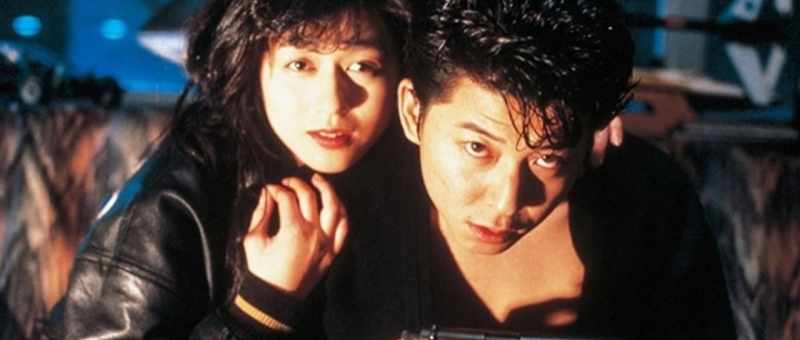
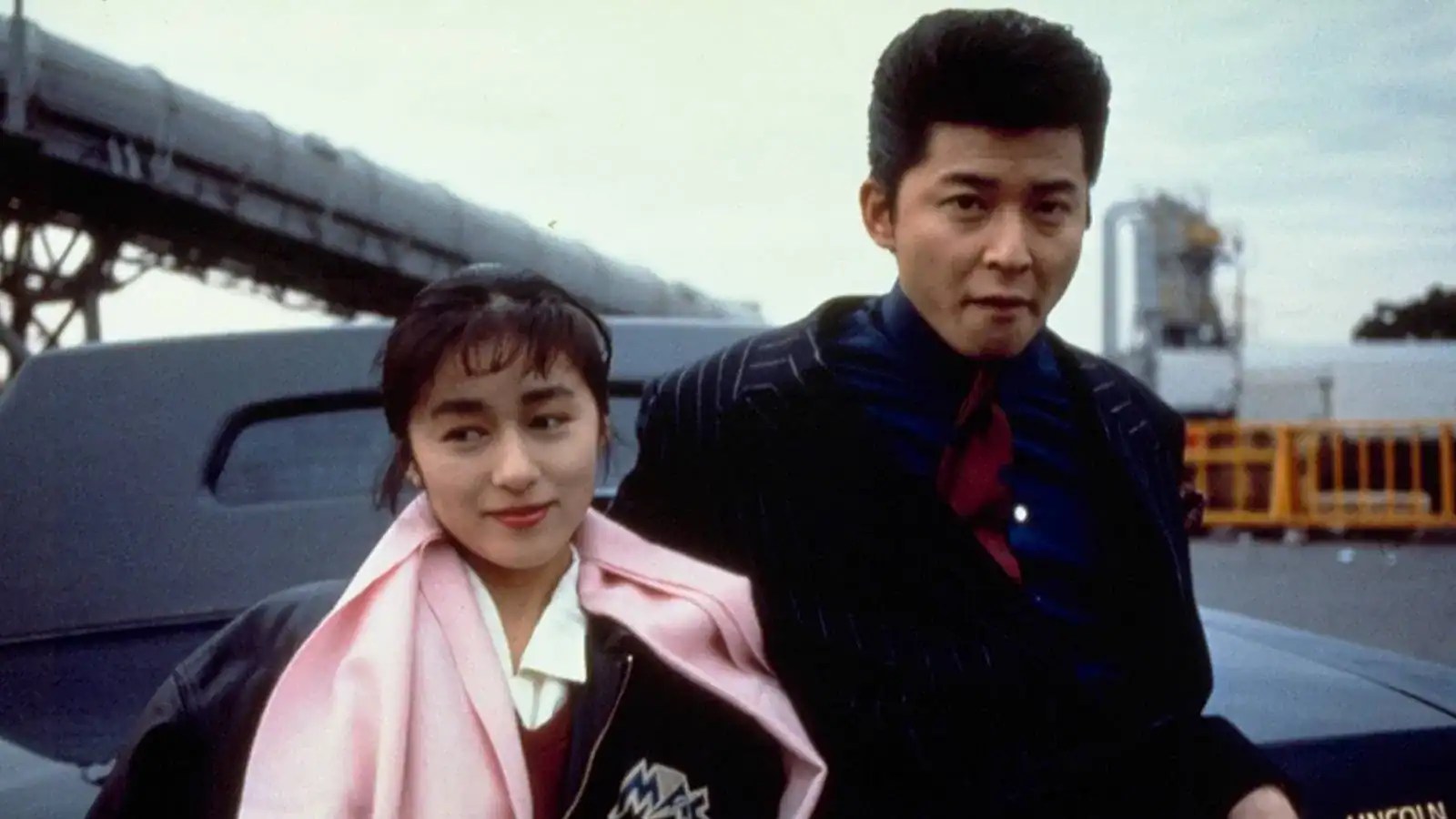
Neo Chinpira: Zoom Goes the Bullet (ネオ チンピラ 鉄砲玉ぴゅ~, Banmei Takahashi, 1990)

In the classic yazkua films of old, going to prison for the gang could be a badge of honour and one of the ways you could catapult yourself into the higher ranks. By the 1990s, however, the yakuza is a much depleted force and it seems few are willing to give up years of their lives on a point of honour for an uncertain reward. At least, that’s how it is for most of the gangsters at the centre of Banmei Takahashi’s Neo Chinpira: Zoom Goes the Bullet (ネオ チンピラ 鉄砲玉ぴゅ~, Neo Chinpira: Teppodama Pyu) , a slacker comedy in which a young hanger on faces a dilemma when he’s made the lookout on a squad sent to bump off a rival only for his squamates go to great lengths to injure themselves first so they won’t have to go through with it.

Junko (Sho Aikawa) is an unlikely hero. With a rockabilly quiff and a red jacket, he’s nominally the driver for gangster Yoshikawa (Toru Minegishi) which means he gets to drive his limo and act like a big man for a while making calls on his carphone. But as much as Junko shows off to his girlfriend Noriko, a hostess at a Korean bar, by instructing the landlady not to clear up his empty bottles because they’ll make a good weapon in an emergency, he’s otherwise something of a joke. The limo ends up getting “stolen” by a young woman who just likes American cars and sexually aroused by gunfire.

Even Yumeko (Chikako Aoyama) chuckles that Junko sounds like a girl when he says he wants to see the ocean while they’re driving around. “Junko” is ordinarily a girl’s name. He picked it up as a kind of hazing based on an alternate reading of his name kanji. She says the same thing again when he reveals he’s never brought a girl back to his place before, probably because it’s in a disused building he was given to manage where he’s surrounded by junk like an old barber’s chair and pinball machine while the figure of Humphrey Bogart in the Maltese Falcon looks down at him from a poster as if embodying his unattainable gangster dreams. As masculine icons go, Junko is also plagued by his uncle, Mizuta (Joe Shishido), a legendary gangster and representative of old school yakuza who take the code seriously and wouldn’t put up with people like Junko’s colleagues who engage in “zooming”, deliberately shooting themselves to get out of being ordered to carry out a hit. He’s not overly impressed by Junko either, unable to understand why he’d become an errand boy for a petty gangster rather than be his own boss as a small-time crook.

Junko’s dilemma is whether he’s really up to this task and will be to go through with it or will end up chickening out and injuring himself too. Crows are more cowardly than they seem, Yumeko explains in an obvious allegory for the yakuza. They pick a place and defend it as a group, while their numbers are way up lately so their individual turfs are shrinking. But now Junko’s all on his own and filled with uncertainty not knowing if he can pass this rite of passage and be accorded a man or will forever be trapped in a liminal space of adolescence never to be taken seriously or make any progress in his life. In an effort to toughen up, he swaps his red jacket for a suit and finally puts on a shiny leather overcoat, ripping off the buttons to bind it more tightly around him with the belt as if it were a kind of armour. 

Somehow the lighthearted ridiculousness of this world of bumbling yakuza and creepy corrupt cops lends an additional poignancy to Junko’s final gesture as he sets off on his path, not really believing he will return. He doesn’t even wait for the pictures he had taken at a photo booth. They won’t be much use to him where he’s going, but at the same time it’s like he’s treading water never quite getting closer to his destination but continuing along his long sad walk. Banmei Takahashi sticks firmly to his pink film roots, sticking in a weird sex scene at regular intervals as Yumeko becomes enraptured by pistols, but also has quite a lot of fun with his “uncool” gangsters and the lost young man who looks up to them while perhaps knowing that this image of stone cold masculinity only really exists in the movies.
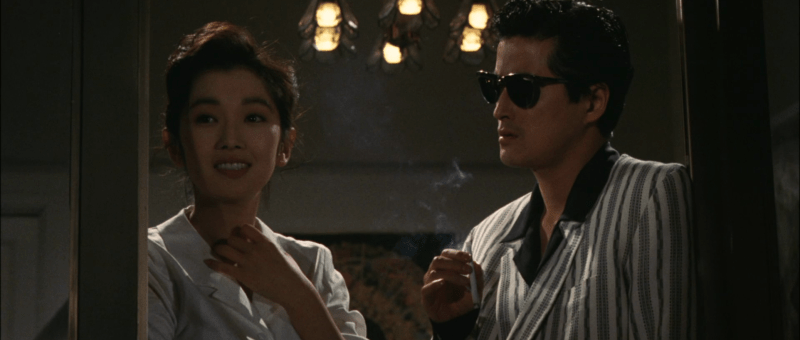
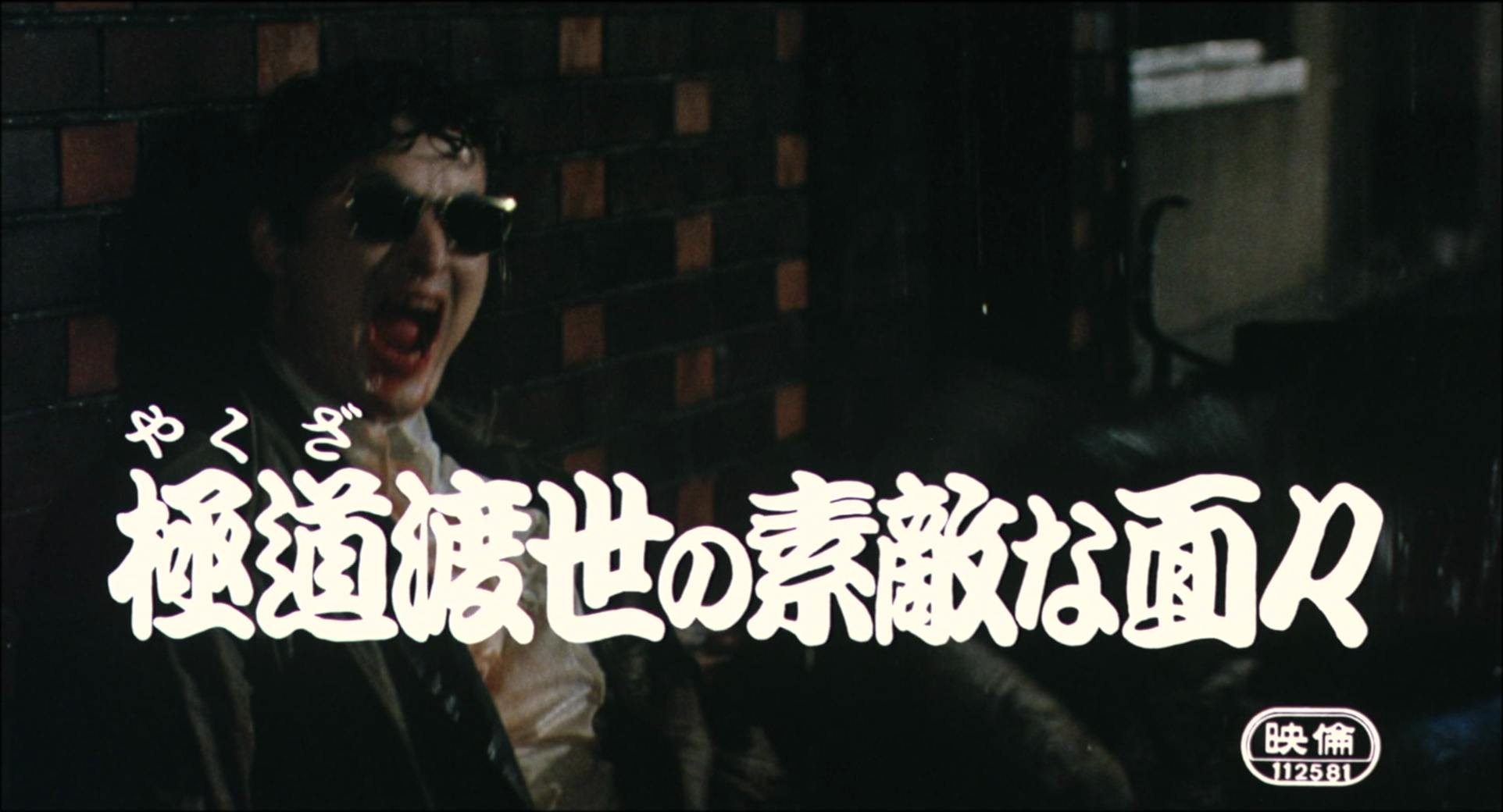
Those Swell Yakuza (極道渡世の素敵な面々, Seiji Izumi, 1988)

The yakuza movies of the post-war era had largely depicted the gangster world as being one of internecine desperation and even if the hero was a pure-hearted defender of a traditional honour code those around him were anything but honourable. By the late 1980s, however, the yakuza were increasingly seen as an outdated institution amid the high rise office blocks of a prosperous Bubble-era Japan in which the street thug had given way to more corporatised kinds of organised crime. 

This might help to explain the ironic title of Seiji Izumi’s 1988 comedy Those Swell Yakuza (極道渡世の素敵な面々, Yakuza Tosei no Sutekina Menmen) which simultaneously presents a nostalgic view of gangster cool and a way of life which is more rooted in the everyday existence of a contemporary petty outlaw. The hero, 24-year-old Ryo (Takanori Jinnai), is a former banker who evidently rejected the heavily corporatised nature of the Bubble-era society and left his stable job to open a record store which subsequently went bankrupt leaving him with huge debts to yakuza loansharks. It’s these debts he’s trying to escape by wandering into a mahjong parlour and getting carried away with his early success despite the advice of steady hand Nakagawa (Takeshi Kusaka) who eventually covers his losses when it turns out that Ryo started playing without any stake money. A ageing yakuza, Nakagawa takes him outside to teach him a lesson explaining that the parlour is run by Taiwanese gangsters and he’s lucky to be leaving with his life. Nevertheless, Nakagawa is impressed by his hutzpah and leaves his business card in case Ryo has the desire to get in touch. 

Ryo’s decision to become a yakuza reflects both a sense of emptiness in the Bubble-era society and a nostalgic longing for post-war gangsterism and the theoretical “freedom” is represents to a man like Ryo though of course there’s not so much autonomy to be had in the life of a petty footsoldier who is always beholden to the whims of his boss. Nakagawa becomes to him a kind of father figure, though he’s also someone who has largely lost out in having achieved little in the realms of gangsterdom while his friend and contemporary Kanzaki (Hideo Murota) has successfully climbed the ladder to become a high ranking officer. Kanzaki takes him to task for visiting the mahjong parlour in part because the Taiwanese gang has gained a reputation for dealing with drugs of which their organisation does not approve and it would present a problem if his connections to them were to come out during any potential anti-drug action by the police. By the film’s conclusion, Nakagawa has become something of a tragic figure more or less excluded from the yakuza world while his body is ravaged by alcoholism and his finances by gambling addiction. 

Ryo, meanwhile, seems to live the yakuza dream. He gets stabbed while defending a bar hostess from a yakuza from a different gang and then meets the love of his life, Keiko (Yumi Aso), who similarly rejects the constraints of the contemporary society by refusing the marriage arranged by her father for his own benefit to spend three years waiting for Ryo who goes to prison after shooting Kanzaki in the arm to avenge a slight against Nakagawa who also cuts off his finger to fulfil the codes of yakuza honour. Wandering around in sunshades and flashy suits, Ryo soon attracts a fiercely loyal band of followers of his own and despite the tragedy of losing one of his men to an assassin proves adept in navigating the yakuza world to present an idealised image of masculine cool perfectly tailored to the Bubble era.

Despite the shooting that landed him in prison and the mission of revenge he leaves his own wedding (after the ceremony) to complete in the film’s conclusion, Ryo’s yakuza existence is otherwise fairly non-violent and based in a kind of trickery that makes him seem clever rather than exploitative given that as Nakagawa had suggested the way forward for the modern yakuza is scams not drugs. As one of his prison buddies puts it, there are old school gangsters like Ryo ready to die for the clan, and then there are those like himself intent on filling their boots. Largely, most of these guys are old school yakuza who do obey the code and have some kind of scruples about how they make their money which adds to their aspirational allure as Ryo seems to lead a fairly charmed life of idealised masculinity with a pretty wife and fancy apartment seemingly free of the petty oppressions faced by workaday salarymen. Izumi makes frequent reference to classic Toei gangster pictures from a decade previously with appearance from from genre stalwarts such as Hideo Murota, Nobuo Ando, and Mikio Narita, but lends the action a contemporary spin in the ironic sense of cool even if the implications of ambiguous ending may be far less upbeat.