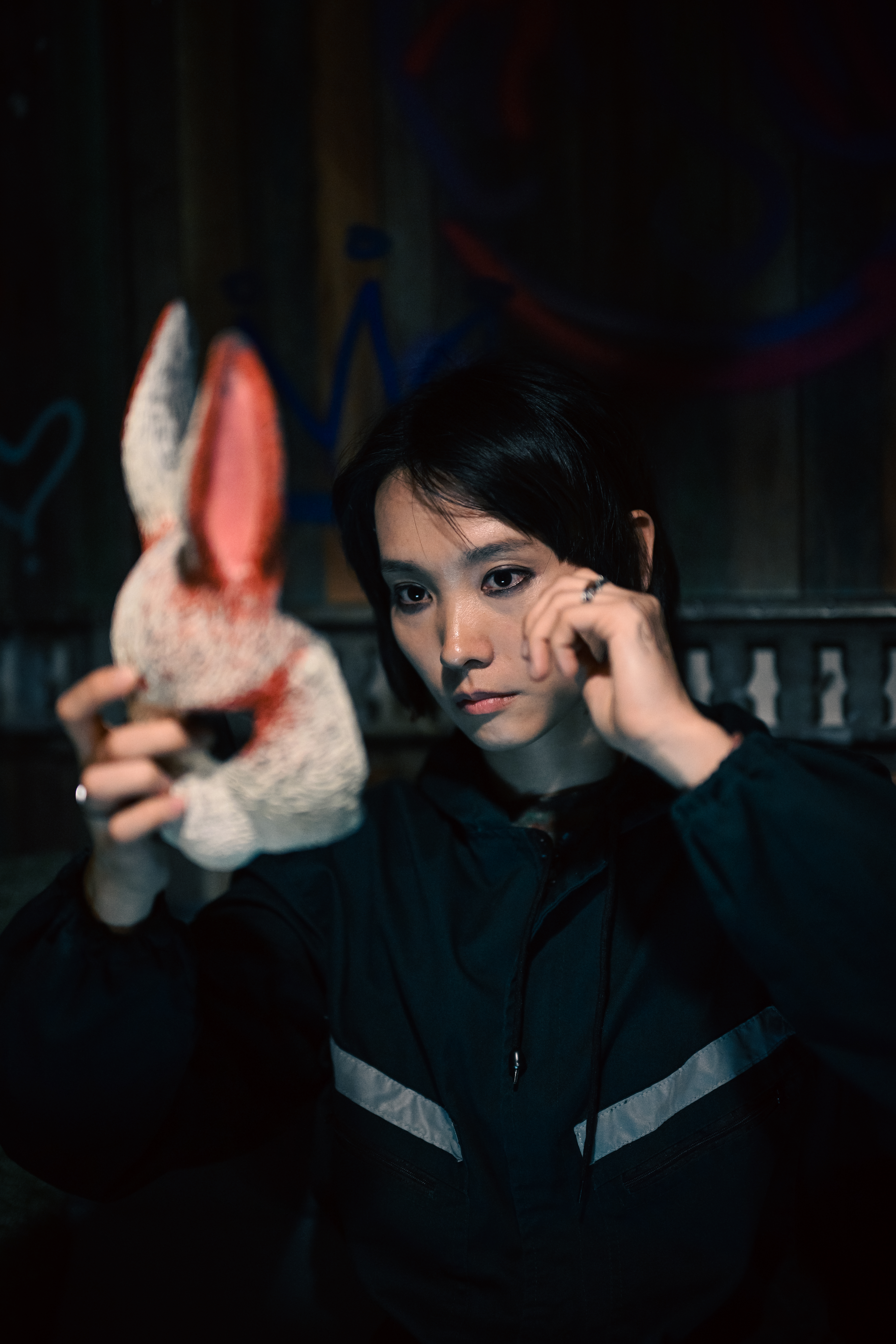
Smashing Frank (搗破法蘭克, Trevor Choi, 2025)

Youth’s attempt to televise its revolution results in unforeseen consequences in Trevor Choi’s crime thriller Smashing Frank (搗破法蘭克). Giving Hong Kong a kind of comic book gloss, Choi locates the source of corruption in a thuggish gangster posing as a businessman and laundering his ill-gotten gains through a fake church all while claiming to be working for the prosperity of the city. Fed up with a world so obviously corrupt, Ayla (Hedwig Tam) and her friends attempt to fight back through theft and their mission of becoming robbery influencers in social media. 

It later becomes apparent that Ayla is doing most of this as a kind of revenge. Her sister took her own life after being sexually assaulted and becoming pregnant, while Ayla sacrificed her own bright future by assaulting a “rich pervert”. Despite having gained a first-class degree and being on track for a job as a hotel manager, Ayla now appears to have gone rogue and has lost faith in mainstream society and law enforcement which turns a blind eye to certain crimes to keep the peace. After being sentenced to community service, she teams up with childhood friend Hugo (Locker Lam) and Tao Chun (Kaki Sham), a man convicted of voyeurism who becomes their getaway driver, to do crime she describes as a kind of performance art.

Yet Ayla claims she’s no kind of Robin Hood and mainly in this for herself and the glory, explaining that she uploads the videos for “fun”. Nevertheless, she eventually realises that everything links back to the Unity Haven Church and its shady CEO, Ho (Ben Yuen). Ho has already been featured in the news having been accused of misusing church funds and as the gang discover may have links to human trafficking and child exploitation. But he’s also pretty well entrenched within the infrastructure of the city and otherwise untouchable. As such, he comes to represent the corrupt authoritarianism of the contemporary society while Ayla and Frank echo the protestors of recent years. Given the opportunity for a giant payout, Ayla tells Ho where to go and explains that her generation never got to have nice things, so the reason she robbed his jewellery shop was to show them that luxurious mansions were being built in the slums. 

He may be one of the old men that’s ruining the world, but despite herself, Ayla seems to be consumed with a sense of injustice that the rich get away with their crimes while people like her sister and grandmother are left to suffer. Through her influencer revolution, she intends Frank to become a kind of militia resisting the hyper capitalistic society on behalf of the youth it has betrayed. As Hugo says, if he had a regular job he’d never be able to buy a house anyway while others seem equally fed up with disappointing corporate existences that no longer provide a decent quality of life. Ho may be all about making the city prosper, but it’s mostly for himself and his friends rather than the wider society. 

Chelsea (Renci Yeung), Chun’s former associate running badger games, even says that they didn’t really care that she blackmailed them because they had bigger things to worry about. There is then a kind of solidarity that exists between the team in their shared victimisation under men like Ho and desire for the liberation of those like them that gives their mission a weight beyond simple rebellion, even if the constant flirtation between Chelsea and Ayla dangles like an unresolved plot thread. Even so, Ayla’s recklessness reeks of desperation as Hugo points out they may all die the following day but perhaps it wouldn’t be so bad as continuing to live like this. The nihilism that colours their lives is all pervasive, and perhaps a reaction to the imposition of authoritarianism and failure of the protest movement that causes Ayla to launch her revolution in the distinctly youthful space of the internet and spread the word through social media which those like Ho cannot fully control. Hong Kong media does not, she claims, report on certain crimes in the interests of making the city feel safe and stable for men like Ho which is why she had to televise her revolution herself. It may be a forlorn hope, but it’s all she appears to have while otherwise trapped in a world of constant corruption.


Smashing Frank screened as part of this year’s New York Asian Film Festival.

Trailer (Traditional Chinese / English subtitles)

Let It Ghost (猛鬼3寶, Wong Hoi, 2022)

A collection of conflicted souls find themselves haunted by the ills of their society in the directorial debut from Wong Hoi, Let it Ghost (猛鬼3寶). Very much in the tradition of Hong Kong horror comedy, the three-part anthology takes pot shots at everything from hypocritical, narcissistic TV stars, and chauvinistic, homophobic men, to familial displacement caused by rampant gentrification while asking questions about who is haunting who in a society which seems to be constantly eroding around the edges.

The hero of the first chapter, Lark, is a self-centred actor currently playing the lead in the hit TV show Incarcerated Detective in which he has the nonsensical catchphrase “Justice will always stand on the side of Justice”. Though playing a figure of moral authority onscreen, Lark is privately anything but and is becoming fed up with the show because it’s getting in the way of his burgeoning movie career. Wong makes some subtle digs at how the entertainment industry works with Lark kept out at a drinking party with useful people he clearly doesn’t like but has to get along with while needing to get back for night shoots. When he gets pulled over by a cop, he panics because he’s been drinking but it turns out the guy was just a fan who wants an autograph. The policeman’s failure to investigate him turns deadly when a sleepy Lark ends up running over a young woman and then pushing her body down a mountain to conceal the crime. 

Lark finds himself quite literally haunted by the spectre of his guilt when he realises that the young woman he killed was the guest actress for the episode in which she was supposed to be playing a ghost. Taking method acting to extremes, she turns up anyway prompting some ironic comments from the director about representation and the Hong Kong spirit before he makes full use of her now unkillable body to get exactly the effect he wants for the scene. A late twist hints at Lark’s self-obsession and insecurity if also perhaps the mutability of stardom in which no one is ever really irreplaceable. 

Like Lark, the hero of the second chapter, Kwan, is also somewhat insecure but mostly in his lowly status as a taxi driver while his materialistic girlfriend appears resentful that he can’t give her a standard of life to match that of her snotty rich girl friends. In a recurrent motif, Kwan keeps making a point that he isn’t “homophobic” but several times makes homophobic remarks and later tells a young woman that the boys love manga she’s reading “defies the Chinese values of man and wife”, while titles of books in his cab include “cute wife, obey me tonight” and “Domineering Driver and the Dainty Wife”. An attempt to impress his girlfriend with a cheap “staycation” backfires when she is possessed by a “horny ghost” whose insatiable appetites eventually become more than he can handle. The film walks a fine line between satirising Kwan’s toxic masculinity and patriarchal views and accidentally endorsing them, potentially spilling over into homophobia in the punchline of its possession gag. 

In part three meanwhile, the venue is a moribund shopping mall where a young woman runs a bridal shop inherited from her mother. The half-shuttered mall already has a ghostly quality, as Fong points out no one goes to malls anymore, and it could in a sense be she and her friends that are haunting it though there is a more literal ghost of an abandoned child as a kind of symbol of the “orphans” of gentrification displaced from their homes and left with nowhere to go. Fong and her friend Edward decide to look for a nice couple to look after the ghost, Kat, who would then be reincarnated as their child but struggle with unexpected interference from a kung fu exorcist working for security who want to get rid of Kat so the building can be sold. 

There is quite a lot of haunting going on, be it the grim spectres of celebrity culture, sexism, or the gradual erasure of the old society which brings about its own ghosts in the eerie sense of emptiness with which abandoned buildings are imbued. Cynical humour and a thick slice of irony lend each of these ghostly tales a satirical quality hinting at the unreality of the everyday marked by a sense of displacement and emptiness in a disappearing Hong Kong. 


Let It Ghost screens at the BFI Southbank on 14th July as part of Focus Hong Kong.

Original trailer (English subtitles)

Mama’s Affair (阿媽有咗第二個, Kearen Pang, 2022)

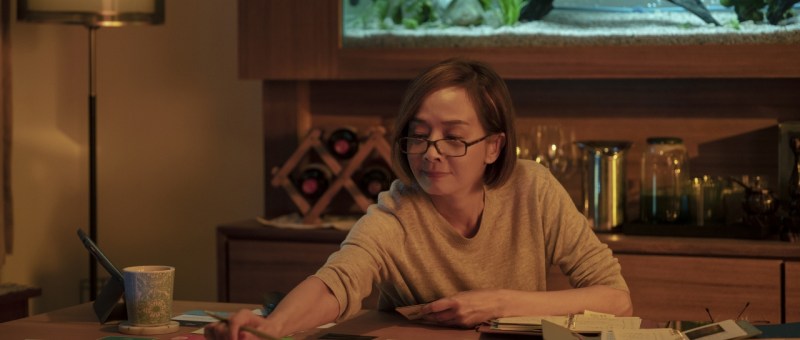
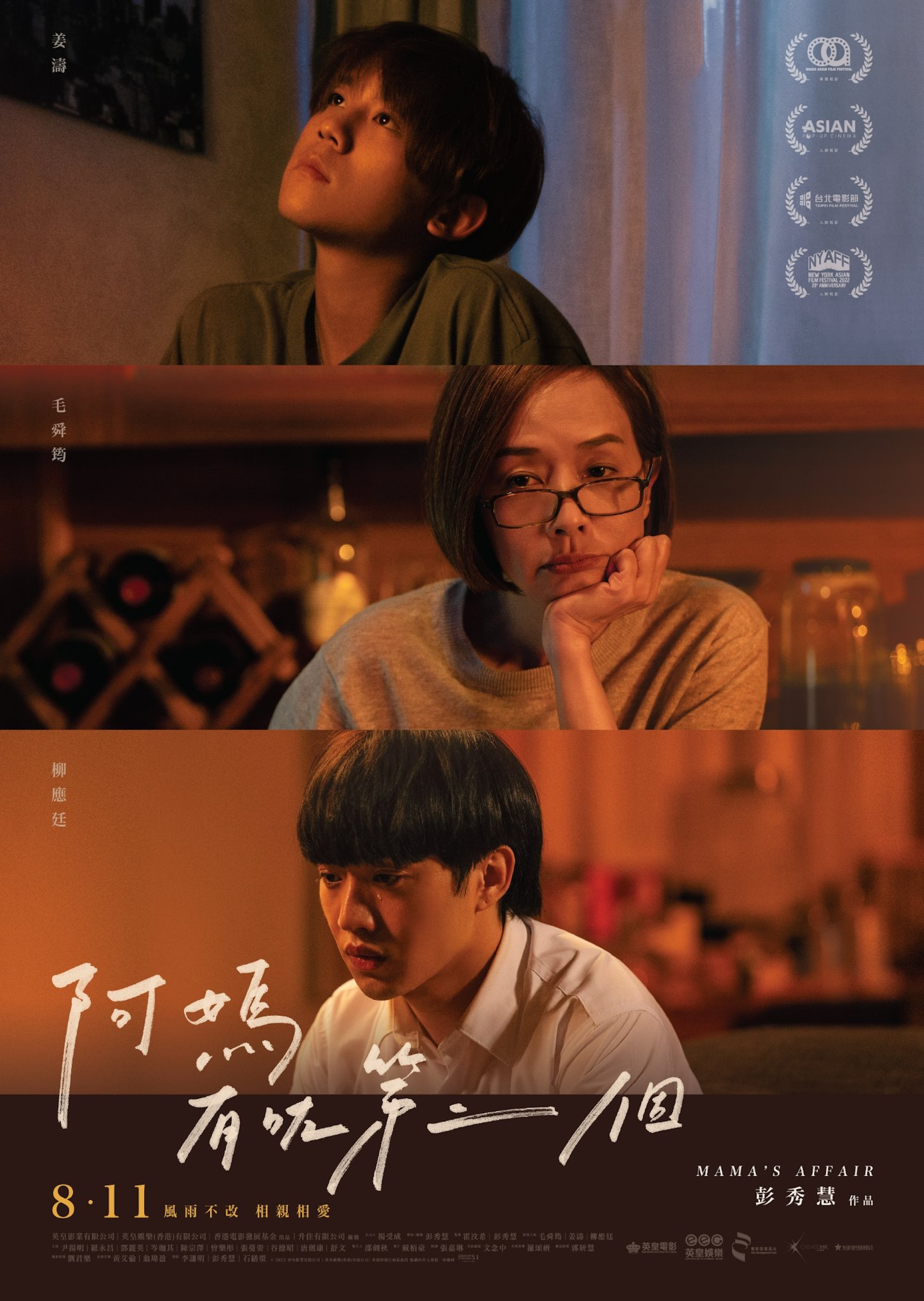
A middle-aged woman finds her desire to take back her life after the failure of her marriage frustrated by her teenage son’s resentment and the lingering patriarchal social codes of the contemporary society in Kearen Pang’s familial dramedy Mama’s Affair (阿媽有咗第二個). The “affair” of the title is an ironic take on her new maternal relationship with a young man she takes under her wing framing it as in a way cheating on her son which is clearly the way he feels about it, while it’s clear that some still view her desire to find fulfilment outside of her role as a wife and mother as a betrayal of her family. 

Before her son was born, Mei-fung (Teresa Mo Shun-kwan) was a top talent manager at a record label but gave up her job at her husband’s insistence after suffering a miscarriage. With her son, Jonathan (Jer Lau of boyband Mirror), about to graduate high school and hoping to get into Cambridge University, she decides to re-enter the world of work but soon discovers that those she once helped in their careers are not necessarily keen to repay the favour. An old associate more or less laughs her out of the room suggesting she’s simply too old for the music business and recommends she join another old friend at his music company which turns out to be a school for small children. She takes the job anyway and quickly bonds with the two younger employees who introduce her to Fang Ching (Keung To of boyband Mirror), a young man with a prodigious talent for song and dance that has Mei-fung thinking of getting back into the management game.  

Though Jonathan had mostly reacted with indifference to his mother’s decision to return to work, claiming that he’d long wanted more independence anyway, he can’t seem to let go of a sense of resentment towards Ching which is compounded by his confusion surrounding the status of his parents’ marriage which it seems had long gone cold. His father Yan has moved out and though Jonathan doesn’t know it is having a baby with an old friend of his mother’s all of which informs his feelings of displacement as if he’s been pushed out of the family circle fearing that Mei-fung has gone out and got herself a new son who admittedly seems to appreciate her more. Displaced from his own family by tragic circumstances, Ching does indeed value the small things Jonathan has begin to resent in teenage angst yet is also unexpectedly sensitive and mindful of the ways in which his relationship with Mei-fung and presence in the household may be affecting Jonathan who is still struggling to come to terms with his parents’ decision to end their marriage without even really telling him. 

In an another ironic note it’s Mei-fung’s maternity which is positioned as her key strength as a manager, quietly lending support and encouragement that allows Ching to reach his full potential. On Ching’s arrival to the studio a mother had come in to the school with her young son who was bawling his eyes out because he wanted to join a dance class but the mother wouldn’t let him because she said he was too fat and would only embarrass himself only to be proved wrong when Ching invites him to try out on the dance floor demonstrating both the damage that can be done by a judgmental parent and the positive influence of an actively supportive environment. While Mei-fung keeps telling Jonathan he needs to learn to look after himself, she patiently nurtures Ching and eventually encourages to him sort out his complicated feelings towards his family while helping him achieve his dreams as an artist. 

In some ways, Mei-fung never really transcends the role of mother or escapes the tendency to define her role in relation to the two boys while somewhat resentful of all she was forced to give up because of the patriarchal, authoritarian mindset of the husband who later left her for a younger woman. Jonathan and Ching eventually sort things out through a good old fashioned fist fight generating a kind of brotherhood that leaves each of them equally displaced but also finding firmer footing more secure in their roles and relationships. “No one can handle everything alone” Ching wisely advises, as each of the trio develops a kind of independence founded on mutual solidarity, Mei-fung reclaiming her right to an individual life while giving each of the boys the courage to go off and pursue their destinies through the superpower of maternal love. 


Mama’s Affair is in UK cinemas from 19th August courtesy of CineAsia.

UK trailer (English subtitles)

My Indian Boyfriend (我的印度男友, Sri Kishore, 2021)

An awkward young man from India begins to see new possibilities in life after falling for his beautiful neighbour in Sri Kishore’s comic melodrama My Indian Boyfriend (我的印度男友). Billed as the first ever Indian-style film made in Hong Kong, Kishore’s musical romance has already come in for a degree of criticism with some objecting to what they see as a pun on a racial slur in the film’s original Cantonese title (which has since been changed) though the cross-cultural love at the film’s centre does perhaps attempt to overcome a sense of division even if cultural differences are not in the end what keeps the couple apart so much as their individual circumstances. 

The hero, Krishna (Karan Cholia), is the youngest of three siblings and moved to Hong Kong with his family as a child but has been unable to settle, finding it difficult to get a job and repeatedly stating a desire to return to India. Jasmine (Shirley Chan Yan-Yin), meanwhile, is a model and dance instructor technically engaged to sleazy businessman Richard (Justin Cheung Kin Sing) to whom she feels indebted because he took care of her family when her father died but otherwise appears not to like very much possibly because of his worryingly controlling, possessive personality. In fact, the pair’s first meeting is brokered by Richard’s unsolicited racist provocation on spotting Krishna and his Chinese friend Kong (Kaki Sham) outside the building into which Jasmine is about to move generating a sense of animosity that proves difficult to dissipate until Krishna discovers that Jasmine is actually a friend of his sister’s and thereafter falls in love with her. 

It has to be said that Krishna’s obsessive courtship crosses the line of what is considered appropriate, quite clearly making Jasmine uncomfortable and leaving her in a difficult position because of her friendship with the rest of the family. We can see that Richard is definitely bad for her (and every other woman on the planet), but to begin with it’s not clear Krishna is much better save for the fairly low bar that when he realises his behaviour is problematic he does agree to back off if occasionally trying to badger Jasmine into a platonic friendship while warning her against marrying Richard whom she already agrees is likely to make her extremely unhappy. 

Richard meanwhile is continually spitting chips, both incredibly jealous and intensely racist throwing racial slurs around at random and later sending in some of his hired thugs to have Krishna beaten up though it’s unclear why he thought doing either of these things would help to endear him to Jasmine even as he continues to leverage the financial assistance he’s given her family to imply she has no other choice but to become his wife in recompense. In fact neither of the men really give much thought to what Jasmine might want, nor does her mother (Griselda Yeung) take her feelings into consideration coming from an earlier time in which financial stability was the only concern either oblivious to Richard’s many red flags or thinking they’re worth putting up with so long he continues to provide a comfortable life. Even so Richard’s obvious racism does not seem to be so far out of line with society around him, Krishna finding himself constantly facing xenophobic microaggressions with even a prospective employer taking one look at him and openly remarking that they don’t hire South Asians followed by a justification based on a series of offensive racial stereotypes. 

The constant xenophobia along with his father’s incessant criticism fuels Krishna’s sense of futility along with his half-hearted desire to return to India where he perhaps feels he might do better free from the twin pressures of unfair parental expectation and societal prejudice. Nevertheless, his love for Jasmine forces him to confront himself and turn his life around now given a reason to start making a concrete life for himself in Hong Kong while her love for him strays a little into the uncomfortable as she’s won over by the force of his feelings and thereafter turns him into a kind of project, a fixer upper boyfriend, restoring his sense of confidence by embracing his talent for dancing so that he can begin to make something of himself while she continues to struggle with her mother’s disapproval not only because of her prejudice towards Krishna on the grounds of his ethnicity but her insistence on the debt they owe to Richard. But then as Krishna says love is love whether it’s in India or Hong Kong, and will eventually conquer all. Featuring several Bollywood-style musical sequences and some fairly questionable twists typical of romantic melodrama, Kishore’s light hearted love story does at least embody a sense of cross-cultural flow as the lovers (and their families) overcome their various prejudices to embrace the love they have for each other. 


My Indian Boyfriend screened as part of Osaka Asian Film Festival 2022

Original trailer (Traditional Chinese/English subtitles)

Far Far Away (緣路山旮旯, Amos Why, 2021)

An introverted IT specialist gets a crash course in romance when he accidentally ends up dating a series of women from the far flung corners of the land in Amos Why’s charming romantic comedy, Far Far Away (緣路山旮旯). An occasionally subversive love letter to a disappearing Hong Kong, Why’s elegantly scripted romance also presents a snapshot of the contemporary society in exploring the various reasons each of the women has rejected the high status, consumerist lifestyle of the cities in favour of a more bespoke happiness elsewhere. 

At 28, Hau (Kaki Shum) has had only one relationship and is still unsure why his previous girlfriend, a former co-worker, broke up with him. His sympathetic hometown friends are forever trying to set him up while he nurses a gentle crush on another woman from the office, A Lee, but is too shy to say anything and worried that her reluctance when colleagues suggest he drive her home after a night out implies that she finds his company uncomfortable. That is not as it turns out quite the case, the reason she didn’t want him to drive her home is that she’d moved from an upscale, prestigious area to a small rural town far out of the city because she broke up with her boyfriend and couldn’t afford the rent but didn’t want anyone to know. 

The constant obsession with men driving women home becomes a minor plot point with several of the women actively questioning why it’s necessary and occasionally even offended while forcing Hau to admit that in most cases he’s offering because he wants to spend more time with them rather than out of a general concern for their safety or simple convenience. Having abandoned the dating app he was working on at work to concentrate on a delivery/map service, he ends up bouncing all around Hong Kong visiting various women even venturing to places so far out he needs to apply for a separate permit to enter while beginning to rethink his life choices realising that the reason he’s so set on stubbornly occupying his family’s flat in the city is rooted in his childhood trauma of having lost his mother to illness and his father to the Mainland in a symbolic orphanhood that hints at the anxieties of contemporary Hong Kong. Hau’s recently married friends discuss the possibility of having children but admit that they don’t really want to do it unless they can move abroad, Hau later speculating they will go to Taiwan while his friend who goes by the ironic name “Jude Law” has a British National (Overseas) Passport. Hau himself admits that he’d never really given it much thought until recently when a prospective partner asks him if he’d ever considered moving abroad mostly to confirm he won’t suddenly announce he’s leaving once they start dating seriously because almost no one can see a future for themselves in a changing Hong Kong.

Meanwhile, each of the women has made a decision to prioritise something else rather than join the city rat race from a youthful young woman living in an idyllic coastal town while determined to marry at 29 to Hau’s college friend Melanie (Jennifer Yu Heung-Ying) who chose to work for an NGO because of the better work/life balance that meant she wouldn’t be pressured into endless overtime. Then again another of Hau’s suitors appears to be just as ambitious as any other city dweller while viewing herself superior because her family bought a flat in a provincial area 25 years previously at a preferential rate and then sold it to her at below market value but more than they paid originally which strikes Hau as an odd arrangement between parent and child but speaks to the penny pinching mean spiritedness that leads her to blow up at him because he left a nice tip at a restaurant where service was included in the bill. An artist friend is willing to put up with primitive conditions in a remote mountain village because she’d rather have the stars than city lights, while each of the women also worry that any attempt at romance is always doomed to failure because no matter how keen they are or claim to be sooner or later the guys all ask them to move back to the city prioritising their own convenience while ignoring all of the reasons they chose to live in these very specific places. 

Eventually Hau becomes the exception, realising that the where isn’t the most important question acknowledging that perhaps he’s the one who ought to move in deciding to let go of the childhood trauma in his family home in order to make a new one of his own having figured out what he wants out of life and who he wants to spend it with which in the end dictates the where. Sometimes, love is just around the corner if you’re willing to go and have a look. A gentle celebration of a disappearing Hong Kong both literally and metaphorically, Why’s charming rom-com sends its hero on a roundtrip to love figuring out his place in the world in finding that home really is where the heart is. 


Far Far Away screened as part of Osaka Asian Film Festival 2022

Original trailer (English subtitles)

Images: (C)2021 DOT 2 DOT CREATION LIMITED

Weeds on Fire (點五步, Steve Chan Chi-Fat, 2016)

“Even though disappointed, do not lose hope” reads a piece of graffiti in the closing moments of Steve Chan Chi-fat’s nostalgic coming-of-age drama Weeds on Fire (點五步). Though touted as a baseball movie, as incongruous as that may sound given that the sport is a niche interest in contemporary Hong Kong, Chan’s strangely hopeful if quietly melancholy tale of ‘80s Sha Tin is bookended by scenes of the present day city in the midst of the Umbrella Movement protests the story the hero wants to offer seemingly intended for an audience of dejected youngsters as confused and disappointed as he once was in order to encourage them that what’s important isn’t winning or losing but staying the course and gaining the confidence to take the first step. 

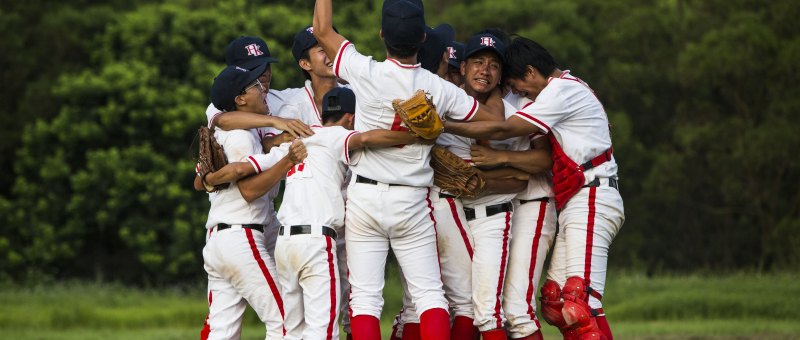
Now in his mid-40s, Lung (Lam Yiu-sing) casts his mind back to the Hong Kong of 1984 when he lived on a rundown council estate in Sha Tin and attended a high school with a less than stellar academic record. A shy and nerdy boy, he was often bullied but always had childhood friend Wai (Tony Wu Tsz-tung), physically imposing and with a confident swagger, at his back. When the city comes up with additional funding for schools to use in the promotion of sport their enterprising headmaster Lu Kwong-fai (Liu Kai-chi) hatches on the idea of starting the region’s very first local high school baseball team, recruiting both Wai and Lung in the hope of teaching them teamwork and discipline. Nevertheless, being teammates begins to place a strain on their friendship and it becomes clear that the boys are destined for different paths. Wai quits the team in a huff and leaves school, mooching round in pool bars and hanging out with triads while Lung steps up to the plate but is troubled by the loss of his friendship and the fracturing relationship between his unhappily married parents. 

Chan somewhat unsubtly ties Lung’s personal development to that of Hong Kong as he finds himself coming of age in era of anxiety. The world is literally changing around him, 1984 being as says the year that the redevelopment of Sha Tin began in earnest while it also marked the signing of the Sino-British Declaration paving the way for the transfer of power in the 1997 Handover. A young man, Lung wants to “change” himself in that he longs for the confidence to ask out a young woman he’s developed a crush on but is too shy and disappointed in himself for doing nothing when witnessing her being harassed by a drunken creep in the lift of the apartment block where they both live. Yet in other ways change frightens him and really he wants everything to stay the same believing that saying nothing will maintain the status quo only to realise that there are situations over which he has no real control. 

His headmaster and coach of the baseball team Lu admits that he set Wai and Lung against each other in order to encourage him to come out from his friend’s shadow embracing his own identity and discovering a sense of self-confidence. Yet Lung continues to struggle, a little lost unable to find clear direction in his life while everything changes around him occasionally consumed by a sense of despair as perhaps are the young protestors in believing their movement has failed. In baseball what he realises that it isn’t about winning or losing but having the confidence to step up to the plate, subtly telling the protestors to hang in there because there’s still time to turn this around. “I never said we had to win”, inspirational coach Lu reminds the boys, “but I did say never give up!”.

Loosely based on the real life story of the Shatin Martins though as the closing credit reel reveals the original team were primary school children rather than high schoolers, Chan shifts away from sporting drama towards the more familiar youth movie metaphor of two former friends heading in different directions, the good boy knuckling down while the “bad” becomes a victim of his own hotheaded arrogance even if managing to repair his fractured friendship with Lung before tragedy strikes. Filled with memories of Handover anxiety and a healthy dose of ‘80s nostalgia, the film’s incongruous jauntiness is perhaps at odds with the gravity of the tale though that is perhaps itself part of the message the older Lung has for the young. “This is the city where I grew up. It’s become increasingly unfamiliar” he laments striding through streets filled with tents occupied by student protestors, sympathising with their cause while offering them a note of melancholy hope in his own, sometimes painful, tale of finding his feet in a changing Hong Kong. 


Weeds on Fire streams in Poland until Nov. 29 as part of the 15th Five Flavours Film Festival.

Original trailer (English subtitles)

Sugar Street Studio (糖街製片廠, Sunny Lau, 2021)

“People have always been scarier than ghosts” according to the hero of Sunny Lau’s retro horror comedy, Sugar Street Studio (糖街製片廠). He is not in a sense wrong, the gang of down on their luck filmmakers unexpectedly uncovering a minor historical injustice while operating an “authentic” haunted house, and while the ghosts may be scary they are merely attempting to connect and right an old wrong. Filled with cynical humour, Lau’s witty screenplay is often disparaging of the contemporary Hong Kong film industry and an increasingly cutthroat society but finds unexpected pathos in the romantic tragedy at its centre. 

As the film opens, fast talking producer Pierre (Matt Chow Hoi-Kwong) has been hauled in front of mob boss Choi (Eric Kot Man-fai) who wants to know what the holdup is on their mutual film project. Boss Choi meanwhile has another problem in that the hotpot restaurant he’s just bought isn’t doing so well owing to the place being haunted. Ever enterprising Pierre comes up with a new idea: opening an “authentic” haunted house on the same site featuring real ghosts while shooting a movie in the same location. Getting the green light, Pierre enlists prosthetics guy Gary (Yatho Wong) to design the interiors for a horror show inspired by the real life studio fire of 30-years previously supposedly started by a clown in resentment after being turned down by the leading lady. 

Hoping to get more information, the guys talk to surviving actor Uncle Cheong (Chan Kwok-pong) who spins them a tale of his own heroism, claiming that he tried to intervene when the clown attacked his girlfriend and co-star but had to step out only to return after getting a pager message about the fire and attempt to save what lives he could. Perhaps unexpectedly, Cheong is all for their haunted house endeavour even making an appearance on opening night, but the gang can’t help but feel there must be more to this strange tale of arson and revenge. 

Mildmannered in the extreme, Gary finds himself conflicted in running Pierre’s unusual enterprise, wondering if it’s corrupting him or then again “Maybe to survive in Hong Kong, being mean is a basic necessity”. “Conning people diligently in Hong Kong is the path to success”, according to his friend even as they ironically prepare to open their “authentic” haunted house where encounters with “real” ghosts quickly find an audience who believe screaming in supernatural terror has therapeutic effects that can ease the depression and anxiety they feel as young people in contemporary Hong Kong. 

Pierre sells the haunted house idea partly on the strength that no one makes horror movies anymore because, famously, you can’t sell them on the Mainland and so co-productions aren’t interested. He describes Gary as the “tumour that’s killing the Hong Kong film industry” while constantly talking a big game, like a stereotypical producer willing to say everything and everything in order to get ahead, even hobnobbing with triads. “Hong Kong Cinema is all about discipline” he ironically claims despite being massively behind on all his projects, giving Gary a dressing down for being a few days late with his designs. 

“Some things don’t need to be completely understood” a zany medium claims, somewhat duplicitously, but it’s not until their own encounter with the ghost that the gang start to pick up on the dark legacy of the studio fire making use, possibly, of an unfair prejudice against clowns to sell the idea of a madman killer driven insane by lust and resentment towards a woman who had rejected him. What they discover is a sad tale of frustrated love, wounded male ego, and bitter regret that has perhaps manifested itself as a deeply held grudge as the guilty party holds on to their guilt and shame despite themselves. “It’s never too late to turn back” the villain is cautioned by a now elderly shaman, but in some ways it is, especially if you’ve already donned the clown suit of vicarious violence, “all debts must be paid”.  

Making the most of its whimsical premise, the increasingly surreal tale doesn’t skimp on the horror imagery with its scarred ghosts and scary clowns but also harks back to the horror comedies of old with its sutras and seals as the gang attempt to solve the mystery and right a historical injustice. Filled with amusing meta references to the contemporary Hong Kong film industry, ironic satire, and absurdist gags Lau’s charmingly off the wall comedy has only sympathy for its lovelorn ghosts of a bygone era and the hapless film crew attempting to navigate the vagaries of an often absurd industry.


Sugar Street Studio streams worldwide until 2nd July as part of this year’s hybrid edition Udine Far East Film Festival.

Original trailer (English subtitles)

One Second Champion (一秒拳王, Chiu Sin-Hang, 2020)

“All things in their being are good for something” little Yan is told by a sympathetic TV presenter slightly unconvinced by his short-lived celebrity as the “One Second Wonder”. It may not sound like the most complimentary nickname, but in this case it’s intended in the kindest sense referring to the kid’s uncanny ability to see into the future if only for one second. As a child he’d told the TV audience that he wanted to grow up and find a way to use his superpower to contribute to society, but now a dejected middle-aged man the hero of Chiu Sin-Hang’s One Second Champion (一秒拳王) is something of a loser, imbued with a sense of defeat and not quite so much trading on past glory as using his “superpower” as a party trick to earn extra cash. 

As he tells us, Yan (Endy Chow Kwok-yin) was born during a storm, a power cut threatening his new life and leaving him apparently dead for one second to which he attributes the cause of his strange ability. All things considered, however, being able to see one second ahead is almost useless. What good is it to predict the winning lottery numbers or the winner of a horse race if you’ve no time to buy a ticket or place a bet? A nerdy sort of child unfairly thrust into the spotlight as the “One Second Wonder”, Yan has become a defeated middle-aged man working in the bar of an old friend while trying to pay off gambling debts accrued trying to raise the money for an operation for his son, Chi-leung (Hung Cheuk Lok), who is deaf. His total lack of self-esteem is rammed home when Chi-leung points out a classmate who’s been bullying him, often ripping out and damaging his hearing aid. Though Yan vows to talk to the school and the boy’s parents to sort it out, he quickly backs own even trying to force Chi-leung to apologise to the bully in front of his equally intimidating mum. 

The one arena where seeing one second ahead may in fact be valuable is in the middle of a fight which is what brings him to the attention of aspiring boxer Shun (Chiu Sin-hang). Faced with esteem issues of his own, Shun struggles in the ring partly due to his asthma and partly ongoing anxiety as a result of trauma having seen his dad behaving strangely after a fight. Aside from personal success, his desire is to resurrect his dad’s old gym, eventually teaming up with Yan after hearing of his strange ability and hoping his success might help attract more members. In this positive environment, Yan starts to regain a sense of confidence, getting a smart new haircut and paying more attention to personal grooming, while impressing his young son with his unexpected success not to mention reflecting that his “useless” ability might not be so useless after all. 

But then, after a traumatic incident he fears his special powers may be gone and is faced with another choice in whether to continue boxing as a “real” boxer or go back to the defeated life he used to live. Boxing shouldn’t be about gimmicks, according to a young pretty boy star (Chanon Santinatornkul) with an ironic, if sometimes cruel, devotion to the craft marketed like an idol by his ambitious manager, but Yan has to wonder if there’s more to him than the “One Second Wonder”. The conclusion that he comes to is that, as the TV presenter had said, everything’s good for something, one second can make a huge difference, and every choice you make counts. Win or lose, what matters is making the most of your time so why wait when you could start right away. A soulful tale of self-acceptance, the power of mutual solidarity, and the restorative qualities of physical discipline, Chiu Sin-Hang’s warmhearted drama is an ode to forging your own destiny, one second at a time, while remaining true to yourself. “Our superpower is never giving up” Yan tells his young son, no longer so afraid of the sound of his own heart beating, as they walk off into the sunset One Second Champions win or lose. 


One Second Champion streams worldwide (excl. China/Spain/Canada) until 2nd July as part of this year’s hybrid edition Udine Far East Film Festival.

Original trailer (English / Traditional Chinese subtitles)

My Prince Edward (金都, Norris Wong Yee Lam, 2019)

(C)My Prince Edward Film Production Limited

“Why do you all think that marriage means happily ever after?” A conflicted young woman asks the man attempting to railroad her into a life of conventional respectability. “It doesn’t mean that” he explains, “But there’s no happiness if you don’t get married”. In 21st century Hong Kong can it still really be that a woman’s success or failure is measured by her age at marriage? The debut film from Norris Wong Yee Lam, My Prince Edward finds its heroine asking if there isn’t more to life than marrying a man you don’t love because it’s what everyone seems to expect. 

31-year-old Fong (Stephy Tang Lai-yan) has been in a committed relationship with wedding photographer Edward (Chu Pak Hong) for the last seven years, but she’s been keeping a secret from him. 10 years previously, she and her friend Yee (Eman Lam Yee-man) underwent sham marriages to Mainlanders in return for cash so they could rent a flat with a third friend, Mabel. Fong believed that the agency would deal with her “husband” on their own, arranging his Hong Kong residency permit and thereafter a divorce but although Yee’s “marriage” went off without a hitch, Fong’s hit a snag in that the agent was arrested so her husband never got his ID card and she never got her divorce. The reason she’s worried now is that she overheard Edward tell his assistant to photoshop his client’s marriage certificate to redact any mention that he’s been married before to avoid potential embarrassment at the ceremony.

The fact is, Edward is a strangely conservative, patriarchal sort of man and she knows he might not be very understanding even if she sits him down and explains that she’s technically still married to someone else. Everything might have carried on as normal if Edward had not taken it upon himself to make an ostentatious public proposal that Fong could hardly have refused even if she’d wanted to. The public proposal is perhaps another manifestation of Edward’s manipulative tendencies, but is also mostly undertaken to please his conservative and equally possessive mother (Nina Paw Hee-ching) with whom he still shares a joint bank account at the age of 31. Too afraid to face the potential consequences of the pair finding out, Fong attempts to track down her “husband”, Yang Shuwei (Jin Kaijie), to convince him to co-sign the divorce papers so they can come through before her mother-in-law’s preferred wedding date in a few months’ time. 

The grand irony is that Fong only did the sham marriage because she felt trapped by her conservative parents who objected to a teenage romance. She moved out to find freedom, but now feels trapped within the claustrophobic district of Prince Edward and most particularly the Golden Plaza shopping centre which houses her apartment and the bridal shop where she works which is next-door to Edward’s photography studio. She wanted to move into a swanky new flat, but Edward’s mother is dead set on buying the place where they currently live so Edward won’t have to move, an arrangement which suits him fine. Edward, meanwhile, is prone to jealous rages and Fong can hardly leave the apartment without getting 30 messages asking where she is and when she’ll be back. 

It turns out that “freedom” was what Shuwei was looking for too. He wanted a Hong Kong ID card as a stepping stone to going to America, hoping to make worldwide travel easier than with a PRC passport. Ironically, he can’t understand why Fong puts up with Edward’s prehistoric attitude and encourages her to reconsider marrying a man who’s already borderline abusive. Fong doesn’t quite want to admit it to herself but she feels the same, only she doesn’t have the courage to resist. She’s been successfully keeping Edward at arm’s length all these years, but now that the subject of marriage has been raised she’ll have to make a firm a decision. 

Working in the bridal shop she sees enough stressed out, unhappy couples going through the motions to realise that it’s not all sunshine and flowers, while it sounds like her family life was not exactly a bed of roses growing up. What she can’t seem to do, however, is to give herself permission not to marry. Unexpectedly getting his wings clipped, Shuwei asks her what it is she wanted to do and where she wanted to go, questions that no one else has really asked and Fong doesn’t know the answers to. If she stays with Edward, she might never find out. Like the flipped over turtle she tried to rescue from a pet shop, Fong runs the risk of swapping one tank for another, ending up trapped inside the Golden Plaza for the rest of her life being bossed around by her mother-in-law and walking on egg shells around the fragile Edward which seems like a heavy price to pay simply to be accounted respectable. “You don’t know what freedom is” Shuwei scolds her, confused that she chooses to stay when she has the choice to be anywhere she wants. The real Prince Edward gave up his throne for love, choosing one kind of freedom at least or perhaps just swapping one tank for another. Fong doesn’t know where she wants to go, but is beginning to realise that she has a choice and choosing herself is no bad thing. 


My Prince Edward screens on March 8/12 as part of this year’s Osaka Asian Film Festival.

Original trailer (English / Traditional Chinese subtitles)

Fagara (花椒之味, Heiward Mak, 2019)

Fagara poster 2“We remember the bad and forget the good” a regretful mother laments, trying to find the right words to connect with her emotionally distant daughter. Heiward Mak’s adaptation of the Amy Cheung novel Fagara (花椒之味, Hjiāo zhī Wèi) melts a subtle One China narrative into a heartwarming meditation on unexpected connections and the modern family as three women from three cultures discover an instant and easy bond, meeting as sisters in adulthood united in a shared sense of hurt and disappointment but learning to find the good among the bad as they process the legacy of their late father and the pain he left behind.

Harried middle-aged travel agent Acacia (Sammi Cheng Sau-man) spends her days fending off junk calls and booking discreet getaways for executives going on “business trips” with their secretaries. So, when she gets a panicked message that her estranged father Ha Leung (Kenny Bee) is in hospital she naturally assumes it’s a scam, only it’s not – she needs to get across the Harbour to Victoria Hospital, but in a motif that will be repeated finds it difficult to get a cab willing to take her. By the time she arrives, it’s too late. Her dad has passed away. So little does she know about him that she has to double check what year he was born on his driving licence, passed to her by a young man working at her father’s “family” hotpot restaurant.

On charging his phone, Acacia is shocked to discover that he’s been exchanging text messages with two other young women, apparently his daughters from other relationships in Taiwan and on the Mainland. Thinking they ought to at least know, Acacia invites them to the funeral, which, embarrassingly enough, she has arranged as a Taoist ceremony because she was unaware her father was actually a Buddhist (something apparently known to some of the other guests only they were too polite to say). Meeting for the first time and setting aside their mutual resentments, the three women find an easy connection, uniting to save the restaurant by figuring out Ha Leung’s secret recipe for his famed Fagara soup.

Though Mak largely minimises the obvious political allegory in favour of the human story, it’s impossible to miss the message that these three women are all daughters of the One China, let down by a well meaning but flawed “father” who nevertheless loved them all if imperfectly. Given the current tensions, some might find the implications of that message trite at best, but you can’t argue with the positivities of finding common ground as children failed by distant paternity, or as Acacia puts us, “regardless of the choice he made, he hurt us all”.

Cherry (Li Xiaofeng), the daughter from the Mainland, counters that she was never “hurt” because she was never anyone’s “choice”. Abandoned twice over, Cherry has lived with her grandmother (Wu Yanshu) since her mother remarried in Canada, leaving her behind. A young woman of her times, she’s staked everything on Instagram fame, rejecting the idea of marriage in favour of perpetual independence but unselfishly. The most family oriented of the sisters, she is determined to take care of her grandmother even while she tries to push her away partly in vanity, afraid to let her see the vulnerability of ageing, and partly not wanting to feel as if she’s trapped her granddaughter in a life of servitude to an old woman that will leave her lonely in her own old age.

Acacia meanwhile also remains lukewarm on the idea of “family”, resentful towards her father and insecure in her relationships, breaking up with a meek but supportive fiancée (Andy Lau Tak-wah) because he was only ever bold enough to say he was “OK” with getting married. Striking up a friendship with a cheerful doctor (Richie Jen Hsien-chi) who knew her father, she meditates on her future while trying to sort out her complicated feelings about her father’s “family” hotpot shop.  What she discovers is that her father, while useless at the business of family, had a gift for the family business, turning the hotpot shop into a makeshift community offering second chances to those who couldn’t find them elsewhere.

Uncle Leung, as they called him, was also the only one to encourage Taiwanese daughter Branch (Megan Lai) to follow her dreams when everyone else told her to give up and settle down. Unlike Acacia and Cherry, Branch has a relationship, albeit a strained one, with her mother (Liu Juei-chi) who, as she reveals to Acacia, struggles to connect with her daughter, never quite knowing the right words to say, always striking on the ones sure to work the wound. Heavily coded as gay, Branch is aloof and closed off, literally shutting a devoted young woman out of her life, but begins to brighten on connecting with her sisters, shifting from silent but deeply felt sadness at the funeral to a cheerful solidarity helping to make the restaurant a success. Of course, it turns out that the secret ingredient in the soup was memories of everyone Ha Leung had loved, literally a “family hotpot”. Finally learning to remember the good as well as the bad, Acacia finds the strength to forgive her father, seizing her independence and driving off into a freer future full of possibility but with her sisters, in spirit at least, right alongside her.


Fagara was screened as part of the 2019 Five Flavours Film Festival.

Original trailer (English subtitles)