
Yakushima’s Illusion (たしかにあった幻, Naomi Kawase, 2025)

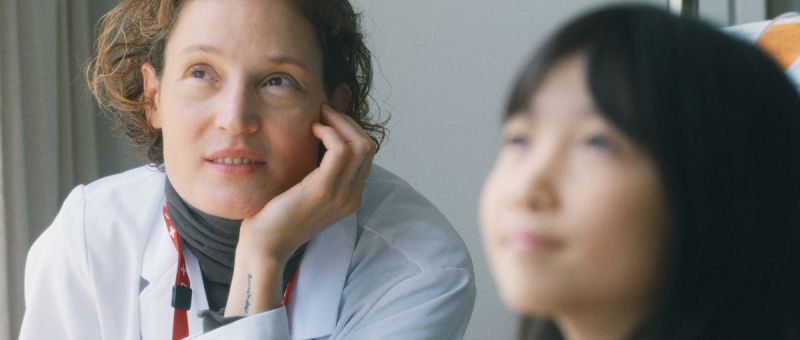
When is it that you can say someone is really dead? Grief-stricken paediatric organ transplant co-ordinator Corry (Vicky Krieps) finds herself pondering just this question while in Japan exploring differing attitudes to transplant surgery in Naomi Kawase’s latest, Yakushima’s Illusion (たしかにあった幻, Tashika ni Atta Maboroshi). Returning to her roots, Kawase includes several documentary-style sequences in which Japanese medical staff discuss traditional notions of life and death along with those relating to organ transplantation which remains taboo even in an otherwise advanced medical society.

One doctor relates that his own child had a transplant and they were plagued with harassment for “stealing” people’s organs. There’s a kind of ghoulishness in play, as if this practice were unholy in some way or were taking on a debt that can never be repaid. But from the perspective of the parents of children waiting for matches, there is indeed an undeniable sense of guilt involved given the knowledge that for their child to survive, another must have died and another parent just like them has suffered a loss. When a match finally comes up for one little boy, his mother feels conflicted knowing that a little girl that was ahead of them in the queue didn’t make it  and now it’s like they’ve taken her slot. Meanwhile the parents of the child that died battle their grief and confusion but decide to allow his organs to be made made available so that he will in some sense at least on. 

In this case, it was a heart transplant which presents the most complicated of existential questions given that traditionally death is marked by the cessation of the heart beating. Even when brain death has occurred, the body is considered to be living which obviously makes something like organ harvesting difficult if the patient is still considered to be “alive”. But on the other hand, it also means that death is infinitely postponed when the cessation of the heartbeat cannot be confirmed. Corry is haunted by the memory of an lover who disappeared without a trace and later discovers his family are trying to have him declared dead to smooth over an inheritance issue, though she objects because to her Jin is still alive even he’s not around.

It’s on Yakushima that Corry first meets Jin (Kanichiro), and one could say that he’s the illusion of the title. Indeed the Japanese title hints at his ethereal quality in translating as something like “the apparition that was really there”. He has an otherworldly quality and seems to exist outside of time with his old-fashioned camera and impish personality. Part of the film is set around Tanabata which is rooted in the tale of the Cowherd and the Weaver, Orihime and Hikiboshi, who were separated by a river and permitted to meet only on one day a year. This mythical quality adds to the sense that perhaps Jin was more ghost than man, a figment of Corry’s memory or a manifestation of her desires who was nevertheless himself consumed by loneliness. In a phenomenon known as “johatsu” in which people suddenly disappear without warning, Jin leaves her life as abruptly as he entered it leaving her with a series of regrets and lingering questions. 

It’s this shifting sense of dislocation with which the film plays in moving, as Jin describes it, through the shifting moments of the heart exchanging linear time for emotional chronology. Having lost her mother in childbirth, Corry is consumed by a fear of abandonment and incurable loneliness that is compounded by the fact that people really do disappear from her life with alarming frequency which is perhaps why she is so invested in saving the lives of these young children. Bonding with a couple who lost their son to illness and now operate a bento stand supporting other parents, she searches for a way to let go without letting go which she perhaps finds in the serenity of nature now captured with sweeping drone shots such as that which takes us inside a tree in search of the self. Frequent cameos from former Kawase collaborators such as Machiko Ono and Masatoshi Nagase in small roles add to the elegiac feeling even if the final message seems to be that life goes on in the image of a still beating heart giving new life and new hope even in the midst of death and loss.


Yakushima’s Illusion screened as part of this year’s LEAFF.

Hotel Iris (艾莉絲旅館, Hiroshi Okuhara, 2021)

You can check out any time you like, but you can never really leave the titular Hotel Iris (艾莉絲旅館) at the centre of centre of Hiroshi Okuhara’s Taiwan-set erotic mystery drama adapted from the novel by Yoko Ogawa. At least, so it seems to be for heroine Mari (Lucia), a youngish woman stultified by a dull existence and controlling, possessive mother while haunted by the memory of her late father murdered when she was still a child. The goddess Iris, so we’re told, could fly to any place she wanted on her rainbow wings as perhaps does Mari, in a sense, in her circular, sado-masochistic, and largely epistolary romance with a middle-aged Japanese translator of Russian literature (Masatoshi Nagase). 

On an otherwise dull if stormy night, Mari is alerted by the sound of a woman screaming while manning the front desk. On investigation she finds an older gentleman violently beating a sex worker who manages to escape down the stairs while he calmly walks his way out. Despite this violent, dangerous episode Mari is intrigued rather than frightened, handed a crumpled note and drawn to the malevolent presence. Spotting him in the town she follows him to the beach where he explains he lives on a near by island across a makeshift bridge cut off at high tide which he likens to that of Iris’ rainbow connecting the worlds of the living and the dead. 

Mari may in a sense be chasing death in the figure of the middle-aged man who also obviously recalls the image of her absent father, she taking him on a kind of date to ice cream (which he does not appear to enjoy) by the sea as her father had done when she was a child. Yet the relationship that develops between them is erotic rather than romantic, Mari discovering a sense of empowerment in submission to the older man’s sexualised violence as he strips and binds her, tearing her clothes while watching himself in the mirror.

The presence of mirrors is central to their relationship, or perhaps to Mari’s fantasy as she reflects on the multiplicities of self it offers her along with a sense of endlessness as if she and the middle-aged man had begun to inhabit a world of two behind the glass. When she questions his true identity he replies only “I am You” which she later returns to him, “You are me”, signalling the selflessness which now exists between them if also leading us to question how much of this is happening merely in Mari’s mind bored behind the counter of the Iris and longing for escape. She borrows the name of an absent childhood friend, “Mary”, for her correspondence with the middle-aged man in order to keep her relationship with him secret from her mother while the main character in his book is also co-incidentally named “Mari” giving her at least three mirrored personas in this already complicated relationship one of which actively controlled by the middle-aged man and another by her mother. 

Meanwhile Mari begins to doubt him, witnessing a display of irrational violence and later hearing that the body of another sex worker has been discovered in the town. He told her he had no family since his wife passed away but turns out to have a mute nephew who later claims to be his stepson said to have lost his tongue to cancer though we later wonder if that is really case. In seducing the nephew/stepson she takes on a more dominant, masculinised role while he is later feminised by the middle-aged man if also becoming an embodiment of the triangular griefs that bind them, the boy for his mother, Mari for her father, and the middle-aged man for the wife is rumoured to have killed. 

Okuhara is not so much interested in solving the literal mystery of the middle-aged man’s potential as a covert serial killer as exposing Mari’s inner psychodrama as she attempts to process the unanswered questions of her father’s death, literally haunted by the image of him wondering whether or not she as loved as a child while straining to break free of her mother’s controlling impulses but otherwise trapped within the oppressive atmosphere of the Hotel Iris. Caught between Taiwan and Japan, Mari occupies a liminal state of constant inertia while spreading her rainbow wings in search of danger and excitement. Shot with a moody ethereality, Okuhara’s poetic psychodrama captures an almost gothic sense of intensity as the heroine investigates the mystery of herself through transgressive relationships with the living and the dead on permanently shifting sands. 


Original trailer (no subtitles)

Promised Land (プロミスト・ランド, Masashi Iijima, 2024)

An avalanche approaches a small town in Japan, a harbinger of change in which the centuries old practice of bear hunting has finally been put to rest by government directive. The buried question at the centre of Masashi Iijima’s Promised Land (プロミスト・ランド) is who exactly that land has been promised to and what the rights and responsibilities surrounding it are in the midst of a changing society in which there may longer be a place for the hunter.

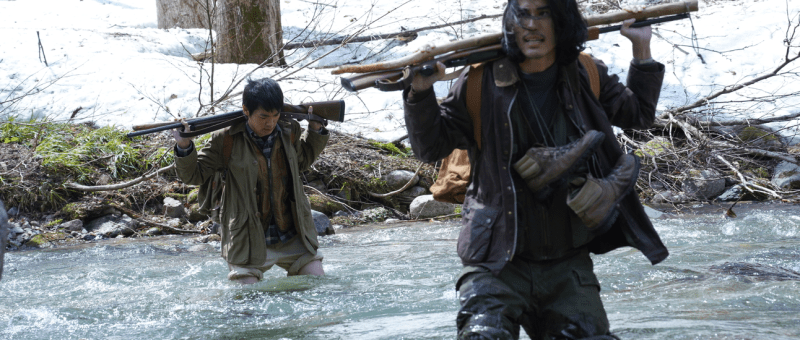
Some might argue that there shouldn’t be, and it has to be said this is one ancient tradition that’s increasingly hard to defend. Set in 1983, the film finds the “Matagi”, or traditional hunter, already all but extinct even before the head of the local association (which appears to only have five members) calls them all together and tells them the hunt is off for that year due to a preservation order by local government. One of the younger members, Rei (Kanichiro), immediately objects sensing that if the hunt is canceled this year it will never be held again. He says he thinks it’s unfair as it’s industry encroaching on the forests that has led to a decrease in the bear population rather than overhunting while another of the men takes constant pops at rich men from the city who come in and treat hunting like a hobby failing to abide by any of their rules such as not shooting mothers with their cubs.

The hunters seem to think of themselves as keeping nature in check, “culling” the bears to keep the mountain safe though there’s no sign that they are any real danger to humans and anyway their numbers are now depleted. There doesn’t seem to be any other way to defend this practice outside of tradition, but it’s evidently something very important to Rei, important enough to constitute a large part of his identity. Thus he alone is determined to defy the order and kill a bear anyway even though he knows there’s a good chance of going to prison for illegal hunting and being branded a poacher. 

Rei ropes in Nobu (Rairu Sugita), a childhood friend who apparently owes a debt to him having received a blood transfusion from him when he was four and now deeply resents having that fact wielded against him all these years later. Unlike Rei, Nobu is a much more modern young man whose father makes fun of him for wearing fashionable clothes and perfume. He hates working on his father’s farm and longs to escape the moribund small town and its brutal traditions such as the bear hunt he’s been roped into since birth just because like many things his ancestors always did it. While hunting for a bear, the pair have an opportunity to talk, Rei admitting that hunting and the gun represent for him the essence of the man he once was while reeling from the breakdown of his marriage to a woman he failed to support when she failed to fit in to village life. He recounts the story of a banker he did some work for who says that he envies the freedom of his life as a landscape gardener while he sits in a prison all day counting other people’s money but when he asks him why he does’t give it a try the man just backtracks and starts making excuses.

Rei seems to be wondering what true freedom means and perhaps feels he doesn’t really have it, asserting dominance over the mountain by killing the bear to regain control over his life. He calls the bears a gift from the mountain god as if they existed only for him to kill, though it’s difficult to see why his tradition or need for raw masculinity is worth more than a living creature’s life. When he eventually kills a bear, the film hovers on the ritualistic quality of the act as Nobu and Rei bend over the body, wafting it with leaves, and skinning its pelt before drinking its blood. This is an act of cruelty more of necessity. They have no need of the pelt or meat, do not make a major part of their income from selling them, and the bear did not threaten them. This is in short a tradition that can safely be left by the wayside, but by the film’s conclusion the two men seem to have switched positions Rei now pondering leaving the village while Nobu seemingly has a renewed desire to stay and preserve these old traditions. Perhaps it is his promised land after all, or else was intended to exist for the bears as creatures of nature free from the destructive forces of humanity.


Promised Land screened as part of this year’s Camera Japan.

Original trailer (no subtitles)

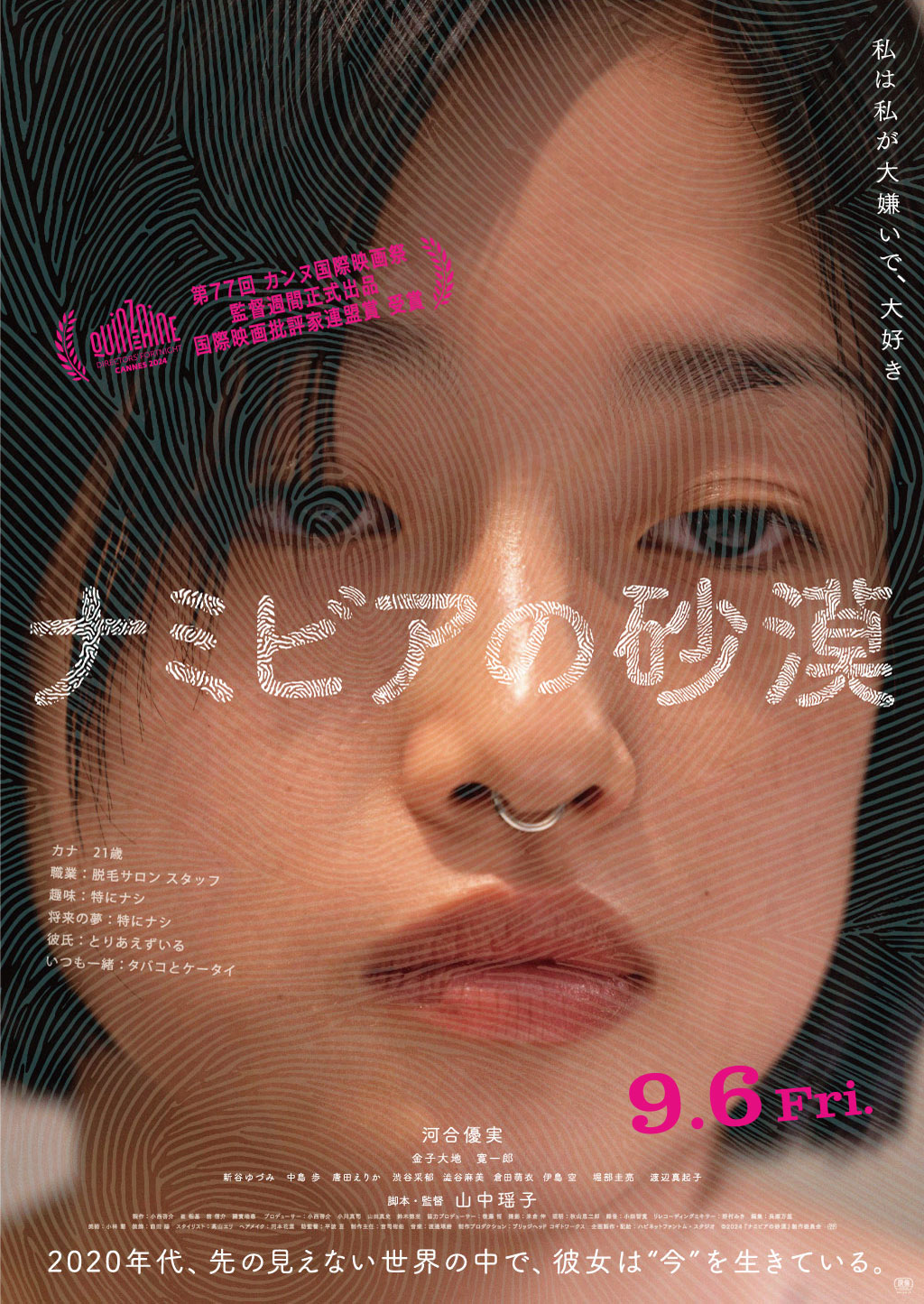
Desert of Namibia (ナミビアの砂漠, Yoko Yamanaka, 2024)

There’s a moment in Yoko Yamanaka’s quietly enraged character study Desert of Namibia (ナミビアの砂漠, Namibia no Sabaku) in which the heroine, Kana (Yuumi Kawai), finds herself stood at a crossroads. It might be tempting to read it as a symbol of her indecision, knowing she has to nix one of her two boyfriends but vacillating over which, but it’s more that she exists permanently between two states and as she later says may not really understand herself or the world around her.

We can see this in the opening sequence in which Kana fails to respond to her friend’s emotional distress when she tells her that a mutual acquaintance has taken their own life. She seems bored, indifferent, not really listening until suggesting that the pair hit a host club together in an attempt to cheer her friend up. But Kana soon leaves her friend behind, making excuses about an early start to meet a man we first think is her boyfriend but is actually the bit on the side. She cuddles up to him in a taxi and tells him that she wants to go visit his parents (right now, in the middle of the night) to see photo albums of his childhood but later returns home to the man she lives with who patiently holds her hair as she throws up into the toilet while asking politely how her friend is.

Perhaps the problem is that Honda (Kanichiro) is too nice, too respectable for the flighty Kana. He’s an estate agent with a cosy and well kept flat where he likes to make hamburgers from scratch and is otherwise very considerate of Kana’s needs little suspecting she’s seeing another man on the side. In Hayashi (Daichi Kaneko) she may see someone a little more exciting but is equally terrified when he asks her to break up with Honda and date him exclusively. She cheerfully bickers with Honda about his upcoming business trip, urging him to stand up to his boss if he tries to make him go to a sex club. Honda says he’ll just refuse, but of course doesn’t making a heartfelt confession on his return. The problem isn’t really that he slept with a sex worker or was unfaithful, but that he couldn’t stand up to his boss and allowed himself to be controlled by Japan’s overarching, hierarchal social structure, did something he thought was wrong and did not want to do to keep his boss happy and maintain his career prospects. 

Kana doesn’t actually care about the sex, but it gives her an excuse to jump ship to Hayashi taking Honda’s fridge, and its frozen hamburgers, with her as she disappears completely from his life. But it’s at this point that her mental state begins to decline. She meets Hayashi’s well to do, upper middle class family who are actually very nice to her (even if randomly bringing up the fact her mother’s Chinese hints at latent prejudice) but feels out of place and inadequate especially on discovering that Hayashi had a previous girlfriend by the same name who may have aborted his child. Abortion seems to be a red button issue for Kana, possibly bringing up some long buried trauma of her own. She seems disconnected from her family and wanders restlessly around suburban areas while later hinting at resentment towards her father who may have in some way abused her. Her rage seems to escalate, culminating in physical abuse of Hayashi who resists but doesn’t really fight back. She craves his attention, but he wants to be left alone. 

In her spare time, she watches videos of animals in the Namibian desert, suggesting that what she might actually crave is an unstimulating environment or a more peaceful solitude but at the same time yearns for male attention. Only 21, she seems somehow older but is also unbalanced by a new colleague at work who is like her spiky and rebellious and two years younger. An unsympathetic online psychiatrist tells her she may be bipolar or have borderline personality or something else completely but is dismissive assuming she can’t afford his fees so tells her her problems are too big to solve. She sees a more sympathetic female psychiatrist in person who helps her begin to understand something of herself, but exposes her loneliness when she tries to invite her out to dinner as if she were a friend. Abstracted from herself, she disassociates and has an out of body vision of watching herself and Hayashi wrestling as if she were watching animals in the Namibian desert, staring blankly as she often does unable to comprehend herself or the world around her. 

Filming in a boxy 4:3, Yamanaka lends an air of constant tension and constraint to Kana’s world. The psychiatrist tells her that she imprisons herself in believing there’s a way she ought to feel but doesn’t when everyone is free within their minds redefining her Namibian dreamscape as the only place she is really free to be herself yet can only watch rather than directly access. “I don’t understand” she tells Hayashi when he asks her what “ting bu dong” means in a conversation with her family where her mother is apparently still somehow absent as if illuminating the entirety of her life and with it an ironic new understanding of herself. 


Desert of Namibia screened as part of this year’s Camera Japan.

Trailer

Okiku and the World (せかいのおきく, Junji Sakamoto, 2023)

“Where does Edo’s poop go?” it’s a question a child might ask but the rest of us somehow gloss over. In the modern world, if we were suddenly confronted with a lot of problematic poop, we’d have to pay someone to come and take it away and that person might then get paid twice for selling it on. In old Edo, however, manure merchants had to buy their raw materials (well, aside from those they could produce themselves) in the hope of selling them on to peasant farmers desperate for fertiliser. Junji Sakamoto’s Okiku and the World (せかいのおきく, Sekai no Okiku) takes a wry look at this circular economy in the dying days of the feudal era and in the end asks us if a samurai’s shit is really any better than anyone else’s.

In a sense it might be, given that historically samurai are better fed but even they are beginning to feel the pinch these days. Sakamoto opens in 1858 which is the year the Treaty of Amity and Commerce between Japan and the United States was signed opening the door to trade with other nations after two centuries of isolation. It is also 10 years before the Meiji Restoration and the eventual abolition of the samurai. Okiku (Haru Kuroki) is just one woman struggling with this moment of social change. Her samurai father Genbei (Koichi Sato) has been kicked out of his clan for challenging corrupt authority, so now she supports him teaching calligraphy at a local temple while the pair live in a rundown tenement in a forgotten corner of the city. 

Fittingly enough, Okiku’s name and the film’s title with it is written in hiragana, but the character usually used to write it is that for chrysanthemum which is also of course a stand in for Japan itself. Genbei muses on what the world is, defining it as an expanse of skies and lamenting that those who have only just realised that the world is vast are ironically unable to look past their small corner of it amid the chaos of the bakumatsu era and what he describes as continual “unrest”. But then politics have little relevance to those living in this particular corner of the world or for those who quite literally shovel the shit day in day out just to be able to shit themselves. 

Chuji (Kanichiro) and Yusuke (Sosuke Ikematsu) are manure men who purchase excrement from local communities and fine samurai houses to sell on to provincial farmers, transporting it by boat to a silo out in the country they occasionally bulk out with mud seeing as they’re paid by weight. Yusuke rails against his subjugation, revealing that at one particularly low point he was asked to wipe a samurai’s bum while otherwise constantly humiliated by their doorman who really does seem to think his shit’s better than anyone else’s. But as Yusuke points out, samurai or common man everyone eats and shits even if he describes himself as a literal bottom feeder who is nevertheless essential to the Edo-era economy. Without men like him, the samurai wouldn’t eat either because they’d have no crops to buy. Chuji may berate him for being all mouth and no trousers, but times are changing. Even he later mounts resistance by flinging his produce at a now powerless samurai. 

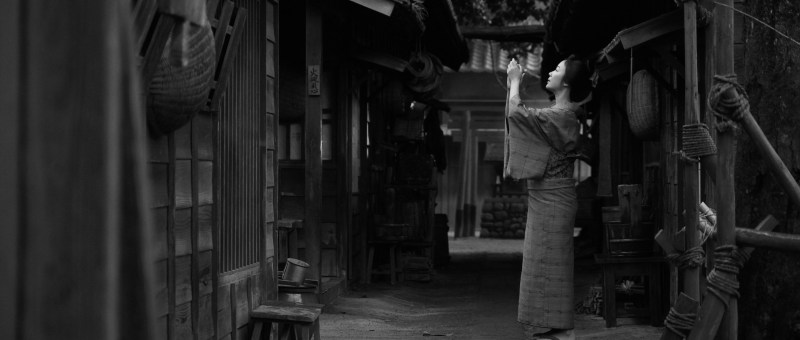
Okiku meanwhile has been rendered mute, her voice silenced by the cruelties of the feudal order leaving her struggling to rediscover her place. She has fallen in love with Chuji, but they think they come from worlds even as they witness them merging and realise there is only one vast expanse under an unending sky. In a decade’s time, it won’t mean anything that Okiku is a samurai’s daughter and Chuji an illiterate peasant but for the moment every step towards each other is transgressive and requires courage in breaking an unthinkable taboo. Sakamoto homes in on the muddiness of this “hopeless shitty world”, the unending drudgery and nihilistic futility of feudalistic life but finally offers his shit-shovelling heroes a new sense of possibility amid the ever expanding vistas of a new society. Presented as a series of black and white vignettes each except the last ending in a moment of vibrant colour, the film finally discovers a sense of serenity as Okiku prepares to reenter the world having finally come to understand her place within it.


Okiku and the World screened as part of this year’s Nippon Connection.

International trailer (English subtitles)