Lonely Castle in the Mirror (かがみの孤城, Keiichi Hara, 2022)

Kokoro isn’t “lying” when she complains of a stomach ache to avoid going to school, it’s just that it’s the anxiety she feels at the prospect that is making her physically ill. Based on a novel by Mizuki Tsujimura, Keiichi Hara’s fantasy-infused anime Lonely Castle in the Mirror (かがみの孤城, Kagami no Kojo) explores the effects of school phobia in uniting a series of teenagers who each for one reason or another have turned away from education often because of bullying or the rigidity of the contemporary schools system. 

As we discover, Kokoro (Ami Toma) gradually stopped going to school after her life was made a misery by manipulative popular girl Sanada who operates a small clique of bullying minions yet appears all sweetness and light with the teaching staff. Unable to fully explain what’s been going on, Kokoro largely remains at home while her understanding mother (Kumiko Aso) explores opportunities in alternative teaching and tries to support her as best she can. Though the film is very sympathetic towards Kokoro and the children in insisting that it isn’t their fault they can’t attend school but the fault of an unaccommodating system, it perhaps misses an opportunity to fully commit to educational diversity when the end goal becomes getting Koroko back in class undaunted by the presence of her bully. 

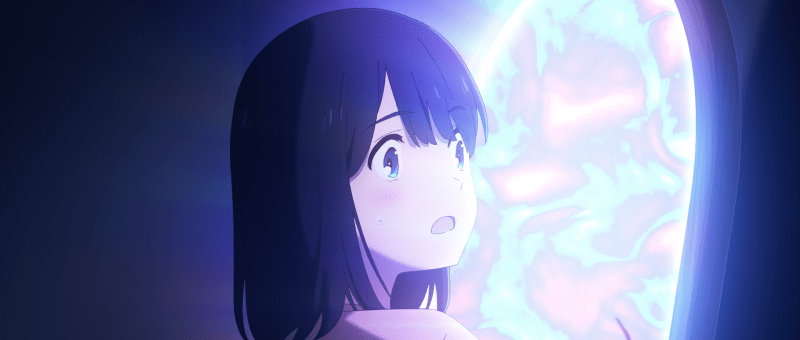
Nevertheless, it offers her another outlet when the mirror in her bedroom suddenly becomes a magic portal that transports her to a fantasy fairytale castle where she meets six other school phobic teens who are all dealing with similar issues. A young girl in wolf mask informs her that they have until the end of the school year to locate a key which if turned will grant one, but only one, of their wishes. When the key is turned, they will all lose their memory so it’s unclear if they will know whether or not the wish was granted but in any case are left with a choice between achieving their dreams and the new friendships they’ve formed at the castle. The issues that plague each of them are various from bullying to dealing with grief, purposelessness, a feeling of not fitting in, parental expectations, and an implication of sexual abuse at the hands of a close relative. As the Wolf Queen tells them “collaboration is beautiful” and it is the connections they forge with each other that give them strength to go back out into the world while each vowing to pay it forward and make sure to stand up to injustice by protecting other vulnerable kids like themselves when they’re able to. 

Even so, Kokoro takes her time on even deciding whether or not to use the mirror and for some reason the castle is only open business hours Japan time. If they stay past five they’ll be eaten by wolves! Many things about the fantasy land do not add up and Kokoro begins to worry that it’s all taking place in her head, her new friends aren’t really real, and she’s being driven out of her mind by the stress of being the victim of a campaign of harassment she can’t even escape by staying home minding her own business. But through her experiences she is finally able to gain the courage to speak out against her bullying while supported by her steadfast mother and an earnest teacher who is keen to find the best solution for each of her pupils rather than trying to force them back into a one size fits all educational system. 

In any case, Kokoro’s quest is to find her way back through the looking glass to rediscover her sense of self and take her place in mainstream society free of the sense of loneliness and inferiority she had felt while being bullied by Sanada and her clique of popular girls though in an ironic touch the film does not extend the same empathy to her or ask why Sanada has an apparent need to need to pick a target to destroy. A variable animation quality and occasional clash of styles sometimes frustrate what is at heart a poignant tale of finding strength in solidarity and learning to take care of each other in a world powered more by compassion than an unthinking devotion to the status quo.


Lonely Castle in the Mirror screened as part of this year’s Nippon Connection.

International trailer (English subtitles)

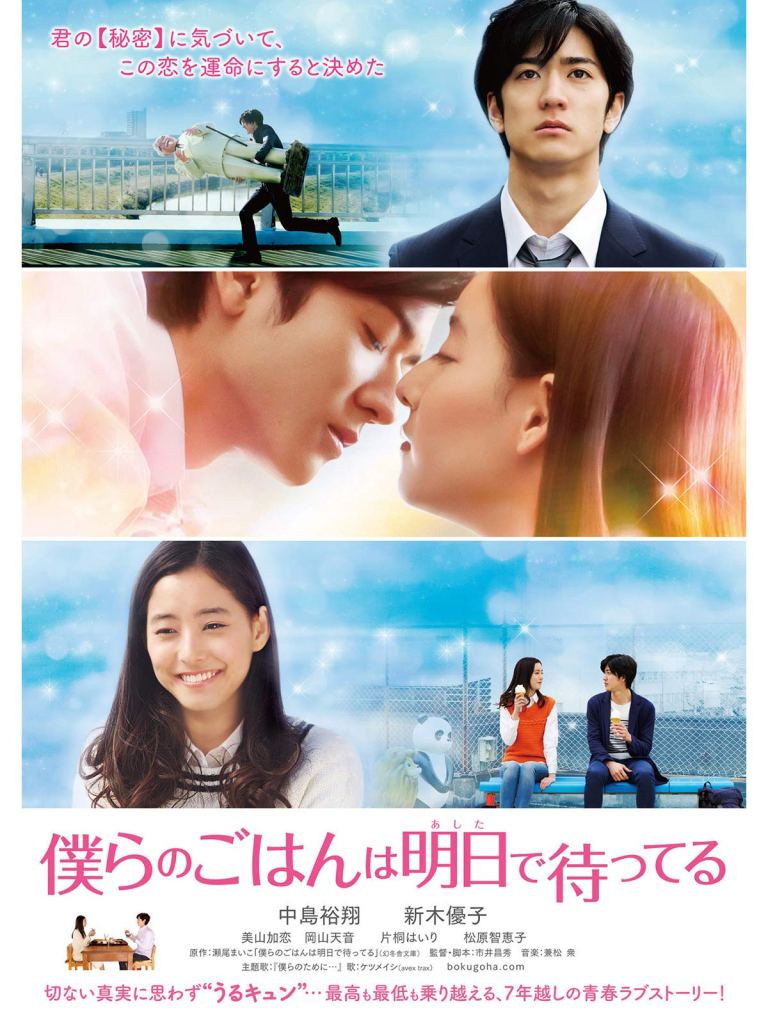
Our Meal For Tomorrow (僕らのごはんは明日で待ってる, Masahide Ichii, 2017)

Eat, drink, and be merry, as they say, for tomorrow we may be gone. The hero of Masahide Ichii’s Our Meal for Tomorrow (僕らのごはんは明日で待ってる, Bokura no Gohan wa Ashita de Matteru) has committed himself to the first of those, is still too young to be much interested in the second, and is resolutely failing at the third. Somewhat gloomy and introverted, he has decided on a course of self-isolation, convinced that it’s better not to get attached because all attachment ends in heartbreak, but a life without sensation is barely a life at all and in the end all you can do is live while you’re alive taking your pleasure where you can. 

Young Ryota (Yuto Nakajima) is a dreamy high school boy with his head in the clouds. Bamboozled into participation in a sack race relay with pretty classmate Koharu (Yuko Araki) he approaches the matter in characteristically analytical fashion, eventually realising that he, taller and stronger (physically at least), will have to take the lead if they are to move forward. Off the track, however, that’s a lesson he finds difficult to learn. After their victory, Koharu stuns Ryota by confessing that she asked him to join her in the sack race precisely because she has a crush on him. He panics and apparently turns her down, but eventually reconsiders.

Their romance continues in typical high school fashion, only strengthening as they prepare to move on to new stages in their lives in heading off to uni while idly dreaming of an imagined future with the family they will forge together as adults. There is however a shadow hanging over their love. The reason Ryota is so brooding and contemplative is because he’s reeling over the death of his older brother from an illness, something he tries to “discuss” (or more accurately monologue) with Koharu but she abruptly cuts him off because she has more important things to do than listen to a long sad story she feels she already understands. He, meanwhile, never quite thinks to ask her very much about her life outside of him and is both hurt and slightly resentful when she casually mentions that she’s had her share of loss too which is why she’s so keen to start a family of her own. 

Ryota may be the contemplative sort, but he’s also the type that likes to talk out loud about his feelings without feeling the need to hold anything back. Koharu meanwhile is precisely the opposite. She might be upfront about what she wants and direct in stating her desires, but she’s also resolutely uncurious, dislikes talking about “unpleasant” things, and is content to let the mystery linger where Ryota wants to know absolutely everything (but without actually asking any questions). Taking a (solo) holiday, he finds himself alone among a gaggle of middle-aged women taking a break from their husbands who explain to him that small secrecies are an entirely normal and in fact essential element of a healthy relationship. Without them, their lives would not be possible.

It was a quest for self knowledge, however, which took him to Thailand. Ironically, he went “alone” but as part of a tour group, whereas Koharu took the opportunity to go to Australia and hunt gemstones entirely by herself only to be confronted by a sense of loneliness in wanting to turn to someone with whom to share the moment but finding no one there. In sync to a point, they are still not quite ready to act as one, Koharu confessing that it’s undoubtedly easier to do things on your own, laying bare the shyness that unpins her deceptively outgoing personality in her fear of the awkwardness that comes with shared intimacy. 

That intimacy is something Ryota craves but also fears. He’s afraid of getting attached, she’s afraid of getting bored. Ryota compares his fear of falling in love to the sense of emptiness one feels when a movie ends, or perhaps the act of enjoying a beautifully cooked steak but knowing that the meal will all too soon be over. Koharu points out that a never ending steak would be a hellish nightmare, implying that it’s better to just enjoy the steak until you’re full and then be thankful for a delicious meal. That’s something she too finds hard to accept, however, when she discovers that her dreams of a picture perfect family may be impossible to achieve. She pulls away, isolating herself, nobly trying to spare Ryota the pain of witnessing her suffering. An old lady (Hairi Katagiri) advises him to be foolish in love, make an uncharacteristically grand gesture. The future may not be quite the way you pictured it, but that’s no reason you can’t be happy with what you have while you have it. No one knows what may come. Savour the moment while the moment lasts, everything else is for another day.


Screened as part of the Japan Foundation Touring Film Programme 2020.

Original trailer (no subtitles)

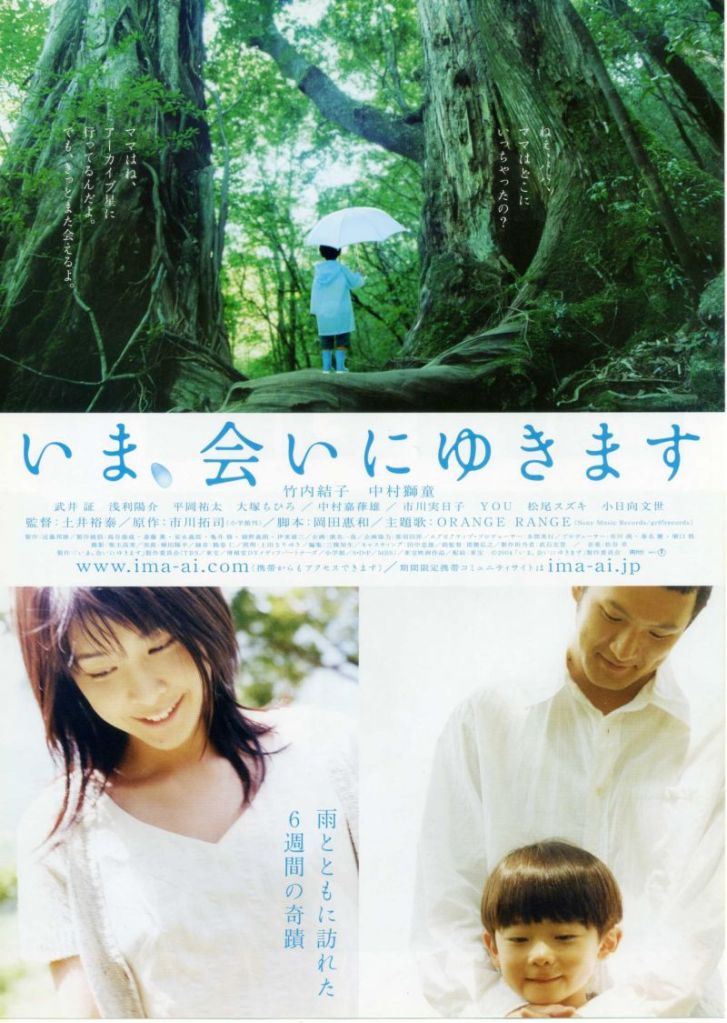
Be With You (いま、会いにゆきます, Nobuhiro Doi, 2004)

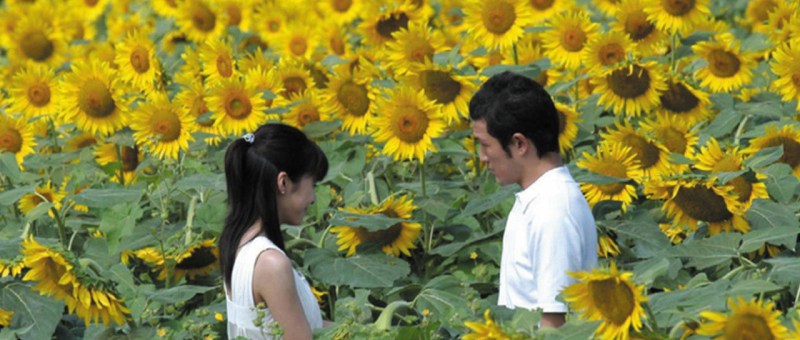
be-with-youWhen it comes to tragic romances, no one does them better than Japan. Adapted from a best selling novel by Takuji Ichikawa, Be With You (いま、会いにゆきます, Ima, ai ni Yukimasu) is very much part of the “Jun-ai” or “pure love” boom kickstarted by Crying Out Love In the Center of the World released the same year but taps into Japan’s long history of supernaturally tinged love stories, filled with the weight of impending tragedy and the essential transience of the human experience.

Like many such tales, Be With You begins with a framing sequence set 12 years after the main events, but unusually it’s directed from the point of view of the soon-to-be 18 year old, Yuji (Yuta Hiraoka). Receiving a birthday cake from a bakery which has apparently only stayed open because of its promise to deliver birthday cakes to him every year until he turns 18, Yuji begins to reflect on the “miracle” which he and his father experienced all those years ago.

Yuji’s mother passed away at the age of 28 when he was only 5 years old. However, before she died, Mio (Yuko Takeuchi) had prepared a special picture book for Yuji to try and help him process what was happening. In the book, Mio has gone to a place called “Archive Star” and will return for the first rainy season a year after her death. Improbable as it is, Yuji and his father Takumi (Shido Nakamura) discover a woman who looks exactly like Mio lost in the forest during the first rains. Stunned the pair take her home but Mio has no knowledge of her former life as a wife and mother. Gradually, Mio begins to fall in love with her husband all over again whilst bonding with her young son, but their happiness is short lived as Mio realises her time with them is limited.

Because Mio can’t remember, we experience the love story between the teenage Takumi and Mio firstly through his eyes as he tells her of his unrequited high school crush when she sat at the desk across from him for two years during in which he was too shy to say anything. Later we hear the same story again from Mio’s perspective through her diary where we learn, not altogether surprisingly, that she felt the same way. The pair mirror each other throughout their courtship, wanting to say something but lacking the courage and looking for excuses to try and push the situation in a better direction. Other than the mutually unresolved attempts at phone calls and an unreturned pen, Mio and Takumi essentially relive their original romance in the brief time they are able to share together from repeated motifs of untied shoelaces and clumsiness with a bicycle, to innocent in pocket hand holding.

Takumi has an ongoing medical condition which interferes with his motor functions, slowing him down and giving him an air of soulful melancholy later compounded by his romantic tragedy. Having been a champion runner on a sports scholarship to college, the diagnosis causes extreme disruption to his life and leads him to the typically jun-ai decision to break up with Mio because he feels as if he’d be a burden to her. A year after Mio passed away, Takumi is doing his best to bring up his son but is a little distant and struggling to take care of the domestic environment. When Mio realises that she can’t take care of them forever, she switches her focus to trying to prepare her husband and son for life alone – teaching Yuji how to fry eggs and do the laundry, whilst renewing her emotional bond with Takumi. There’s no happy ending in store for Mio, the loss cannot be avoided and perhaps it might even be worse to have had this brief respite from the ongoing pain, but the six week rainy season does, at least, provide an opportunity to say those things that might have otherwise gone unsaid.

Nobuhiro Doi films in a typically elegant fashion making great use of the area’s natural beauty to create a fairy tale atmosphere from the mysterious, life giving forest. The poignancy of the tale is all the deeper knowing that Mio eventually understood what would happen to her, but chose a brief life with Takumi and her son over the possibility of a longer one without them. Heartbreakingly sad, yet a testament to the importance of appreciating the present which all too soon becomes the past, Be With You is a genuinely romantic love story, not only between a husband and a wife but an entire family carrying the weight of a tragic loss but easing the burden by treasuring the memory of the intense love shared between them.


Original trailer (no subtitles)