Samurai Fury (室町無頼, Yu Irie, 2025)

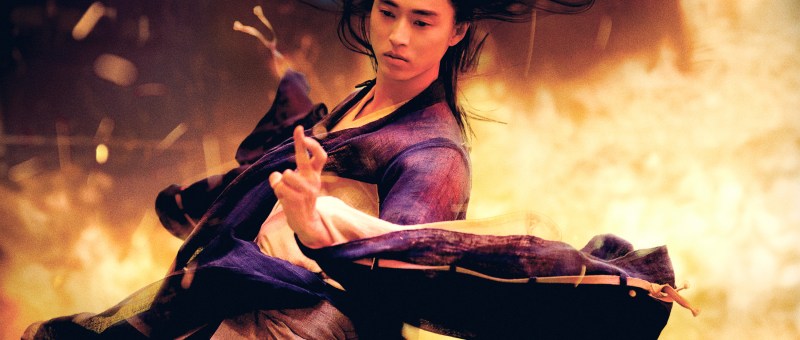
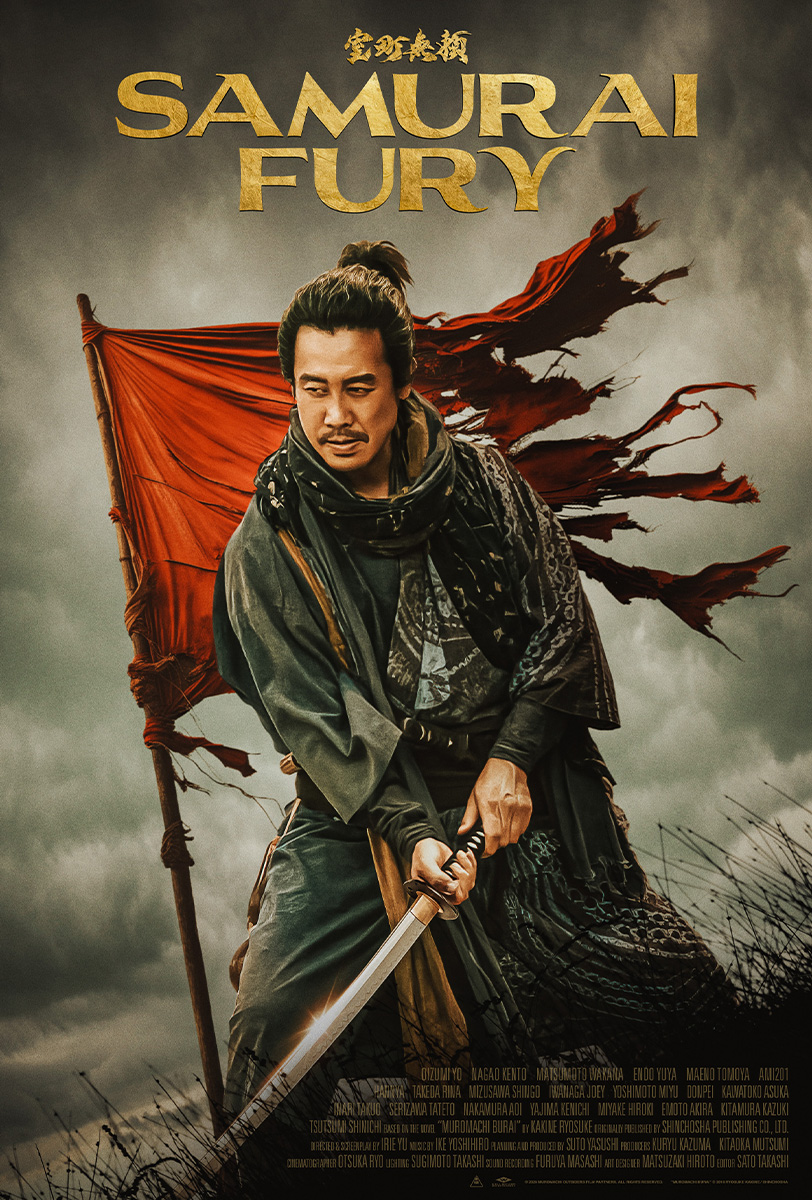
Retitled Samurai Fury (室町無頼, Muromachi Burai) for it’s US release, Yu Irie’s Muromachi Outsiders is indeed a tale of righteous anger though like many jidaigeki the rage is directed towards the corrupt samurai class and wielded by a ronin with a noble heart. Based on a novel by Ryosuke Kakine, it recounts a rebellion that took place five years before the Onin War that would lead to the end the Ashikaga Shogunate and initiate the Sengoku or warring states period that lasted until the Tokugawa era began. 

The cause is, really, the incompetent government of shogun Ashikaga Yoshimasa (Aoi Nakamura) who is largely seen here gazing out at his view from the palace in Kyoto which he is obsessed with rebuilding. Meanwhile, famine has taken hold following a period of drought that ended with a typhoon and flooding of the river Kamo, and the starvation has also led to a plague. Between the lack of food and disease, 82,000 people will die, but the government doesn’t really do anything because they don’t think the lives of peasants are all that important. This is of course very shortsighted because someone has to plant all that rice that gets delivered to the palace and they can’t do that if they’re too busy starving to death. In the opening sequences, peasants are whipped and beaten as they transport a giant rock for the shogun’s new garden, though when it gets there he doesn’t like it. Meanwhile, a giant pile of bodies in approximately the same shape is dumped at the edge of the river where they’re burning the dead.

The farmers are forced to take such onerous jobs for extra money because they can’t produce enough to pay their taxes which the samurai keep putting up. To make up the shortfall, they have to take out loans from usurious monks who seize their property or take their wives and daughters when they can’t pay. A young man pressed into working for debt collectors from the temple is told to kill a man who owed them money but hits the barrel beside him instead and exposes him for keeping his seed grain without which he won’t be able to plant more rice but they’re going to take that anyway which means that in the end everyone is going to starve. A village favoured by the hero, Hyoe (Yo Oizumi), is also subject raids from disenfranchised ronin who’ve taken to banditry to survive. 

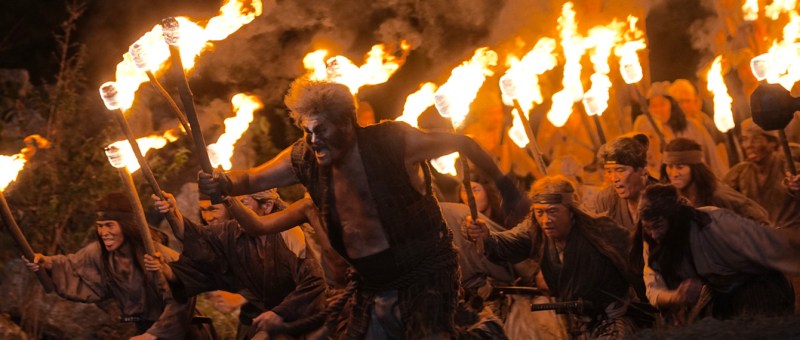
Hyoe is also a ronin, but in his life of wandering he’s found a kind of freedom even as he straddles an awkward line, sometimes working with an old friend from the same clan, Doken (Shinichi Tsutsumi), who has turned the other way and is now the security chief for the government in Kyoto with his own gang of bandit dent collectors. Hyoe’s role is, ostensibly, to stop peasant uprisings, which he does, but mostly because he knows they’re pointless and the farmers armed with little more than hoes and stolen armour will simply be massacred, but he’s also secretly plotting a giant rebellion of his own, harnassing the forces of the ronin and the fed up peasants to storm the capital, burn the debt agreements, and rescue the women taken in lieu of payment. 

But to do so means he’ll have to betray his oldest friend and that he likely won’t survive. Still he thinks someone’s got to do something about this rotten world and sees a better one beyond it if only they can throw off the yoke of the samurai class that thinks peasants are the same bugs to squeezed dry under their boots. That’s perhaps why he trains a young successor, knowing that can’t remake the world with just this one assault on the mechanisms of government and that even if they get rid of the drunken fool Lord Nawa (Kazuki Kitamura), someone not all that different will pop up in his place. “Tax is supposed to improve people lives,” one of the revolters screams at a young soldier, not pay for a new wing at the palace, though it’s a lesson the young shogun seems incapable of learning even as the city burns all around him. 

Taking a leaf out of The Betrayal’s book, the climax is a lengthy action sequence in which Hyoe’s apprentice Saizo (Kento Nagao) takes on half the Kyoto garrison single-handed armed only with his staff. Though the themes are common enough for jidaigeki, though in truth jidaigeki mainly refers to films set in the Edo era under the Tokugawa peace, Irie modernises the way battle is depicted to incorporate wuxia-style wirework and rooftop chases along with martial arts training sequences for the young Saizo who learns the way of the warrior from a cackling old man with a long white beard (Akira Emoto) who has also taken in a young Korean woman (Rina Takeda) who was sold to a brothel by her father in just another one of the injustices of the era but has now become a badass archer and another of Hyoe’s righteous avengers. Solidarity is it seems the best weapon, along with biding your time and knowing when to retreat because this is a war that’s never really won but only held back while the powers that be never really learn.


Samurai Fury is released Digitally in the US Oct. 7 courtesy of Well Go USA.

Trailer (English subtitles)
Sham (でっちあげ ~殺人教師と呼ばれた男, Takashi Miike, 2025) [Fantasia 2025]

After a couple of hundred years of corporatising culture, sham apologies have become an unfortunate phenomenon all over the world. Corporations in particular will often offer a fairly meaningless apology that acknowledges a minimal level of responsibility but does not bind them to recompense those they’ve wronged nor put right anything that their conduct has made wrong. The problem is that an apology has become a kind of sticking plaster that allows us all to move on but doesn’t really solve anything and may even prevent us from doing so because it turns us all into accidental liars who are primed to say “sorry” to make the situation go away even it wasn’t actually our fault.

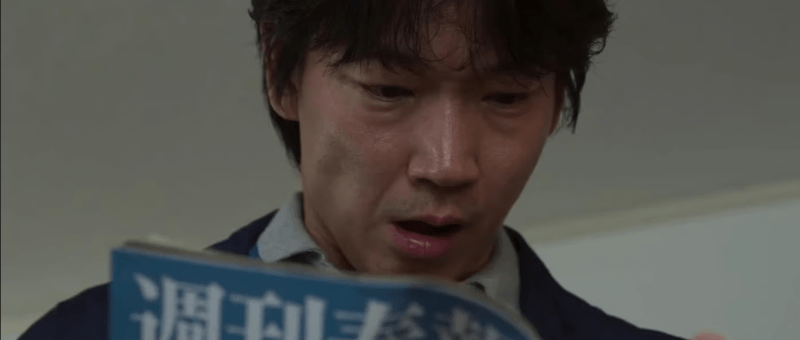
That’s essentially what happens to Seiichi (Go Ayano), previously an unremarkable primary school teacher with a teenage son of his own and an apparently happy home. Inspired by a real life case, Takashi Miike’s courtroom drama Sham (でっちあげ ~殺人教師と呼ばれた男, Detchiage: Satsujin Kyoshi to Yobareta Otoko) flirts with ambiguities but in keeping with its themes eventually descends into a defence of the well-meaning man as its hero becomes so embroiled in the injustice being done to him that he doesn’t see that he is not entirely blameless. Though we’re first introduced to him as the “homicidal teacher” the papers describe him as, the film’s title leaves us in no doubt that his account is the truer. But it remains a fact that during his conversation with Ritsuko (Ko Shibasaki), the mother of the boy Seiichi is accused of racially bullying, he did remark that Takuto’s American grandfather may explain his unique characteristics which is perhaps within the realms of thoughtless things well-meaning people say in awkward conversations but hints at a level of latent societal prejudice. In any case, that the fact his conversation with Ritsuko ended up drifting towards subjects like bloodlines and the Pacific War is not ideal, while Seiichi should probably have been more mindful of his politically neutral position as an educator. 

Likewise, he doesn’t dispute that he tapped Takuto lightly on the cheek to “educate” him that it hurt when he slapped another boy, Junya, who, according to Seiichi, he was bullying. He probably shouldn’t have done this either, even if some may see it merely as common sense in teaching the children that violence is wrong, as ironic as that may be. In any case, the film is on Seiichi’s side and insistent that he did not treat Takuto any differently on account of his non-Japanese ancestor nor spout off any of the racist nonsense that Ritsuko attributes to him. But the major problem is that Seiichi is mild-mannered and also a product of this society. He tries to protest his innocence, but is pressured by his headmaster to apologise anyway which is, of course, a form of lying, something they discourage the children from doing. In the end he goes along with it, because it’s easier to just say “sorry” and hope it goes away rather than address the real issues. 

It’s this sham society that the film seems to be critiquing, even if its message gets lost among its intertwining plot threads as Seiichi effectively finds himself bullied by an empowered tabloid media formenting mob justice against what it brands a far-right fascist teacher as a means of selling papers through generating outrage. While he is scrutinised and scorned, no one bothers to look into Ritsuko’s story which is already full of holes such as why, if she’s so protective as a mother, she waited for her son to be a victim of “corporal punishment” 18 times before complaining to the school. Little motivation is given for Ritusko’s actions, though Miike films her and her husband with an an almost vampiric sense of unease as they appear eerily in black on their way to the school. Unhinged herself, the answers may lie in Ritsuko’s own childhood and her yearning for a protective mother figure, not to mention the sophistication of being a child returning from abroad with good education and prospects for the future.

Seiichi refocuses his closing statement on Takuto, insisting that he doesn’t blame him for “lying”, but it’s perhaps also try that he is a kind of victim too whose own actions can only be explained by a closer look at his relationship with his mother and familial environment. But it turns out that it really is easier to just say “sorry” and move on. Even the psychiatrists seem more interested in treating Ritsuko like a customer whose wishes must be obeyed than earnestly trying to help Takuto even if his issues don’t seem to be as serious as his mother might have it. But according to Seiichi, telling a child off is the purest expression of love. If everyone carries on with sham apologies, nothing really changes and kids like Takuto get forgotten about as everyone falls over themselves to make the situation go away. No one really cares about the truth, and so it becomes an inconvenience to social cohesion in which those who insist on speaking it are hounded down until they agree with the majority and meekly say “sorry” while those in the wrong nod their heads and continue with their lives free of blame or consequence.


 Sham screened as part of this year’s Fantasia International Film Festival.

Trailer (English subtitles)

The Yin Yang Master Zero (陰陽師ゼロ, Shimako Sato, 2024)

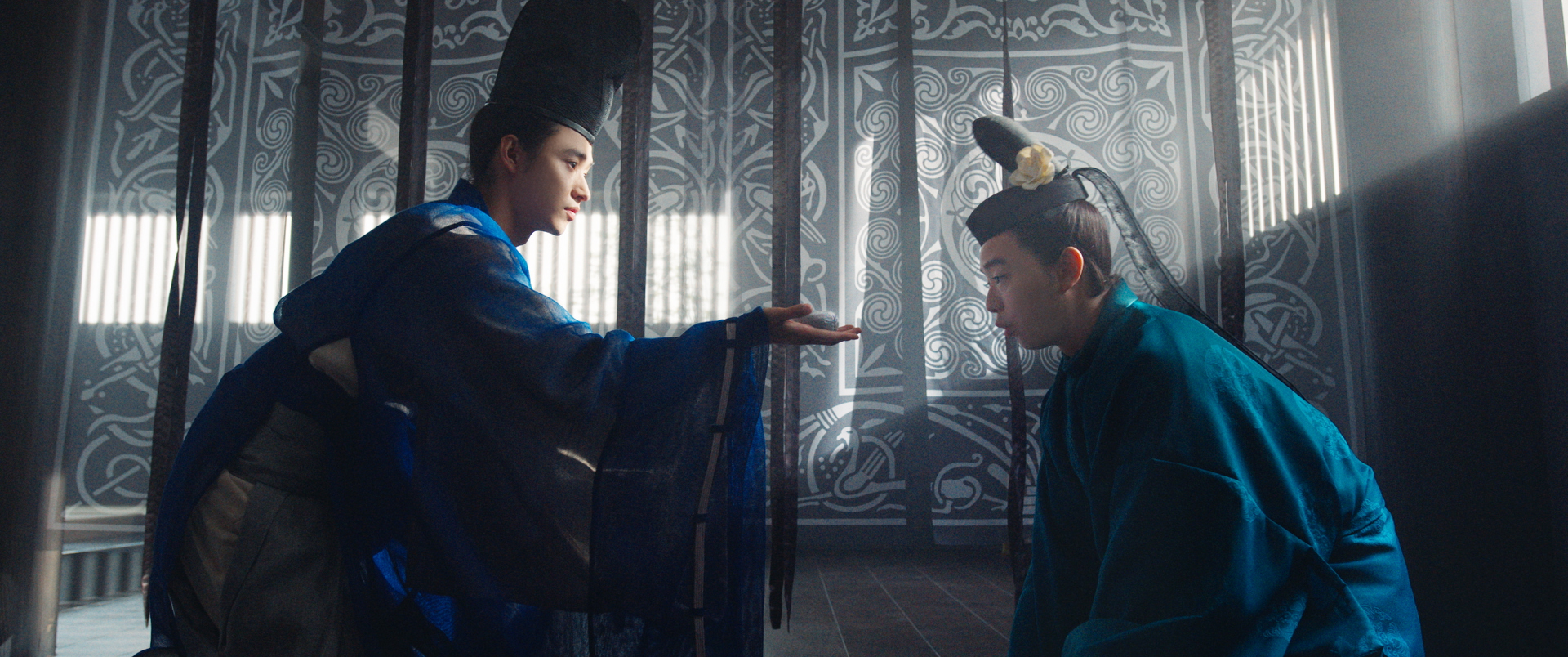
In the Heian era, who was it that kept the social order in check if not the onmyoji or “Yin Yang Master”? Shimako Sato’s big budget fantasy drama is technically a kind of prequel origin story adapted from Baku Yumemakura’s series of novels which were previously adapted as pair of movies in the early 2000s, and introducing the young Abe no Seimei (Kento Yamazaki), a Detective Dee-esque exorcist working as a state magician to protect the nation from supernatural threats such as demons and curses in an era in which ordinary people lived side-by-side with goblins and monsters.

That said, Seimei doesn’t really believe in that sort of thing, though in an ironic twist knows it to have a kind of truth at least, and is sick of being called out to look at a potential goblin infestation that turns out to be nothing more than a creaky old house settling amid the changeable weather. Which is all to say, he is both an earnest scientist looking for rational explanations to strange phenomena and an excellent diviner who can catch a dragon spirit in a bottle. In a touch of the Sherlock Holmes, he’s also gruff and aloof, distinctly uninterested in achieving high position and makes no secret of his contempt for his fellow alchemists insisting the Ying Yang Masters merely perpetuate superstitions to keep people frightened and themselves in employment.

When one of the other alchemists turns up dead of a suspected curse, the cat is set amongst the pigeons as the young apprentices respond to the offer of his higher status spot of they can solve the crime. This of course exposes their own greed and vanity as they each fall over each other desperate for a chance to get another foot on the ladder in a hierarchal system, a step that must be taken if they’re to make it all the way to the position of the emperor’s advisor on spiritual matters. Seimei’s disinterest further arouses suspicion against him with a fellow alchemist already 45 years old and stuck at the bottom rank directly accusing him of the crime perhaps less out of a genuine conviction than a desire to advance himself. 

In any case, Seimei investigates in a more modern, scientific way gaining access to crime scene and corpse ironically through a connection he’s made at court to an influential musician, Hiromasa (Shota Sometani), who hired him to sort out a problem the princess, Yoshiko (Nao Honda), was having with snapping strings on her harp. That turned out to be caused by a giant golden dragon spirit which Seimei later claims represented her feelings for Hiromasa, who is also quietly in love with her, which are somewhat forbidden because of the class difference between them. In this way, the spirits are merely a manifestation of the conflict between personal feelings and the social order as Yoshiko finds herself all but powerless, a princess in a golden cage to be sent wherever she is called with no real say over her fate. 

Fittingly, these feelings are resolved in a kind of artificial reality that Seimei believes to be a space of shared consciousness though he’s also fond of remarking on the malleability of “reality” and the ways in which vision and perspective can be manipulated. Then again, he also says all that matters is what they are seeing and experiencing in that very moment which is as good a benchmark for objective reality as anything else. There is something quite poignant about his developing relationship with Hiromasa which has its homoerotic qualities even as he becomes the “idiot” stand in for the audience, a kind of Watson figure that Seimei can explain everything to so that he can explain it to us. Even we can see the restrictions of the court and the irony in the eventual victory of “order” rather than personal freedom as volatile emotional forces must be put back in their bottles lest they create problems for everyone. Such conditions will doubtless create a series of cases of Seimei and Hiromasa to solve in a potential series starring the ace exorcist and his flautist friend in a Heian society beautifully brought to life by Sato’s sumptuous production design and flair for fantasy action.


The Yin Yang Master Zero screened as part of this year’s New York Asian Film Festival

Original trailer (English subtitles)

Let’s Go Karaoke! (カラオケ行こ!, Nobuhiro Yamashita, 2023)

Singing is serious business. In Nobuhiro Yamashita’s adaptation of the manga by Yama Wayama Let’s Go Karaoke! (カラオケ行こ!Karaoke Ikou!), it’s matter of life and death, metaphorically at least, for a young man confronting adolescence and a zany gangster who seems kind of lonely but is desperate to learn how not to embarrass himself at the boss’ big sing off so he won’t be subjected to a homemade tattoo of his most hated motif.

The irony is perhaps that this kind of yakuza at least doesn’t really exist anymore and “Crazy Kid” Kyoji (Go Ayano) is in many ways a ghost of bygone days inhabiting a Showa-era shopping arcade soon to be torn down and replaced by a luxury hotel. Meanwhile, high schooler Satomi (Jun Saito) is also facing a kind of apocalypse in that he’s a boy a soprano whose voice has begun to change. His encroaching puberty leads him to blame himself when the school choir only places third during the nationals not making it to finals. But it’s at this concert that Kyoji first hears his “angelic” voice and decides he’s the perfect person to teach him how sing, intimidating him into an impromptu karaoke session.

As Satomi later points out, adults don’t invite kids to karaoke and this arrangement would be odd even if Kyoji were not an old school yakuza with a severed finger in his glove compartment. Of course, Satomi’s frightened but cannot really say no offering a few words of advice by daring to tell Kyoji that his falsetto is  “sickening” and he should stop waving his hands around if he wants to master the art of singing. It is also doesn’t help that his choice of song, Kurenai by X Japan, a hair rock epic mostly written in broken English, is a song of manly melodrama which requires a good deal of screaming. Despite having enlisted Satomi, Kyoji talks about one of his fellow footsoldiers as if he’s died when he’s only decided to get some professional singing lessons in an effort not to come last and end up with a lame tattoo.

Yamashita frames both their challenges as the same, Satomi fearing a social death and the death of his youth if he takes to the stage at what he’s sure would be his final concert and his voice cracks while Kyoji, ironically enough, does not really fear a literal death but the pain and humiliation of being branded by the boss for being bad at karaoke. Despite their differences a genuine a sense of friendship does arise between them, if also a possibly inappropriate homoerotic tension, as they support each other towards their shared goals and learn to sing from the heart which was apparently the real problem with Satomi’s school choir seemingly more obsessed with technique and correctness than the simple joy of singing. 

Hovering on a precipice, Satomi exists in a liminal space in his own way as ghostly as Kyoji surrounded by the obsolete. In his school film club, of which he is an honorary member, they watch VHS tapes of classics such as White Heat, Casablanca, and Bicycle Thieves which can only be watched once because the player’s broken and you can’t rewind anymore. His world’s on the brink of eclipse, and his friendship with Kyoji is a harbinger of a darker, more adult world but also one that’s less frightening than it ought to be with its admittedly scary gangsters obsessed with karaoke and bad tattoos. He starts to wonder if Kyoji was even real or some kind of imaginary friend appearing to help him deal with his impending adolescence and what it means for his singing career, but is finally reassured by a piece of concrete evidence confirming at least that it did really happen if leaving him with a sense of loneliness once their quests have come to an end. Surreal in its cheerful darkness, Yamashita’s heartfelt drama is an advocation for the for the healing powers of karaoke and the importance of singing from from the heart no matter how it might sound to those you who may themselves shed a few manly tears over a song about lost love and absent friends.


Let’s Go Karaoke! screened as part of this year’s Nippon Connection

Original trailer (English subtitles)
From the End of the World (世界の終わりから, Kazuaki Kiriya, 2023)

Charged with the responsibility of saving the world, a teenage girl wonders if she should in Kazuaki Kiriya’s pre-apocalyptic drama, From the End of the World (世界の終わりから, Sekai no Owari kara). After all, the suffering will continue. People will continue to be cruel and selfish. Maybe it’s better to let humanity fizzle out and least save the planet. But really whether any of this is “real” or not, what’s she’s looking for is an escape from her grief and loneliness and a world that is a little kinder and less self-destructive. 

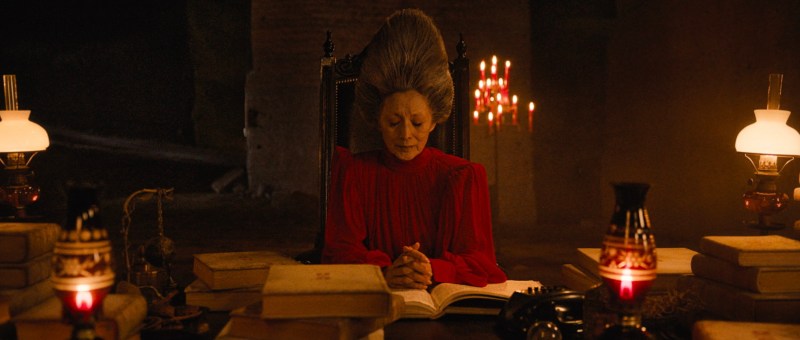
Shortly after losing her grandmother, who had been raising her after her parents were killed in a car accident, Hana (Aoi Ito) begins having strange dreams where she’s cast back to what seems to be feudal Japan where she meets a young indigenous girl whose family have been wiped out by marauding samurai. The girl’s guardian, an older woman (Mari Natsuki), explains to her that her arrival in this place has been foretold by some kind of scripture painted on the ceiling of a cave and that her duty is to deliver a letter to a shrine. Not too long later, she’s accosted by some kind of mysterious authority which seems very interested in her dreams, eventually taking her to a strange base in another cave where she meets an old woman (also Mari Natsuki) who looks exactly like the one saw in her dream. The world will apparently end in two week’s time, though she alone has the ability to alter what has been written through the power of her dreams which allows her to change people’s thoughts and thereby rewrite their destiny. 

She does not do this deliberately, but reacts instinctively to the events she encounters which the old woman claims exist in the “Sea of Sentiment”, a great confluence of human thought on which the world is built. “Understanding things is overrated. Everything’s an illusion. What’s important is your feelings,” another mysterious presence (Kazuki Kitamura) tells her, a man who exists between dream and reality and would rather the world end because as long as it exists he cannot die. In some respects, he may represent Hana’s depression suggesting that to continue to live is only to prolong her suffering and that it’s better for everyone to simply give in and let fate take its course while she weighs up kindness and vengeance using her newfound powers for “selfish” reasons to end the torment she’s been suffering at the hands of a bullying classmate who’s long been blackmailing her in taking advantage of her precarious position as a financially disadvantaged orphan. 

The quest that the old woman sends her on is really into the depths of her own heart which is wounded not only by a medical issue she seems to have forgotten but a pair of childhood traumas buried behind a door she did not want to open. The real message that she’s supposed to deliver has its own paradoxical sense of poignancy, “from the end of the world to you in the future”, which signals her nihilism and despair but also a desire for some kind of continuation or rebirth in a better, kinder world less marked by suffering or selfishness. Then again, the way of achieving that world is still rooted in violence only of a more knowing kind that heads off one particular kind of disaster and allows Hana to save “herself” in all her incarnations, but perhaps doesn’t do very much to change the human “foolishness” to which the old woman ascribes humanity’s destruction.  

Logically, it doesn’t quite hang together and not all of it makes sense (understanding things is overrated), but it has its own kind of internal consistency even if at times somewhat incoherent as it well might be if it were all the dream of a lonely teenage girl who’s given up on the idea of a future for herself because her life has been too full of suffering and unfairness. It’s no coincide the date of the end of the world is set for the same day as her high school graduation ceremony. Her world really is ending if in a less literal way leaving her all alone and forced into a more concrete adulthood while her peers get to chase their dreams a little longer by moving on to higher education while she’ll have to look for work to support herself. She may feel that nothing she does makes any difference and that she is powerless to change her fate, but also realises that she is not as alone as she thought. Featuring top notch production values and some striking production design, Kiriya’s sci-fi action drama is quietly touching in its final resolution that despite everything Hana still wants to love the world even if it’s making it very difficult. 


From the End of the World screens in New York Aug. 5 as part of this year’s JAPAN CUTS.

Teaser trailer (no subtitles)

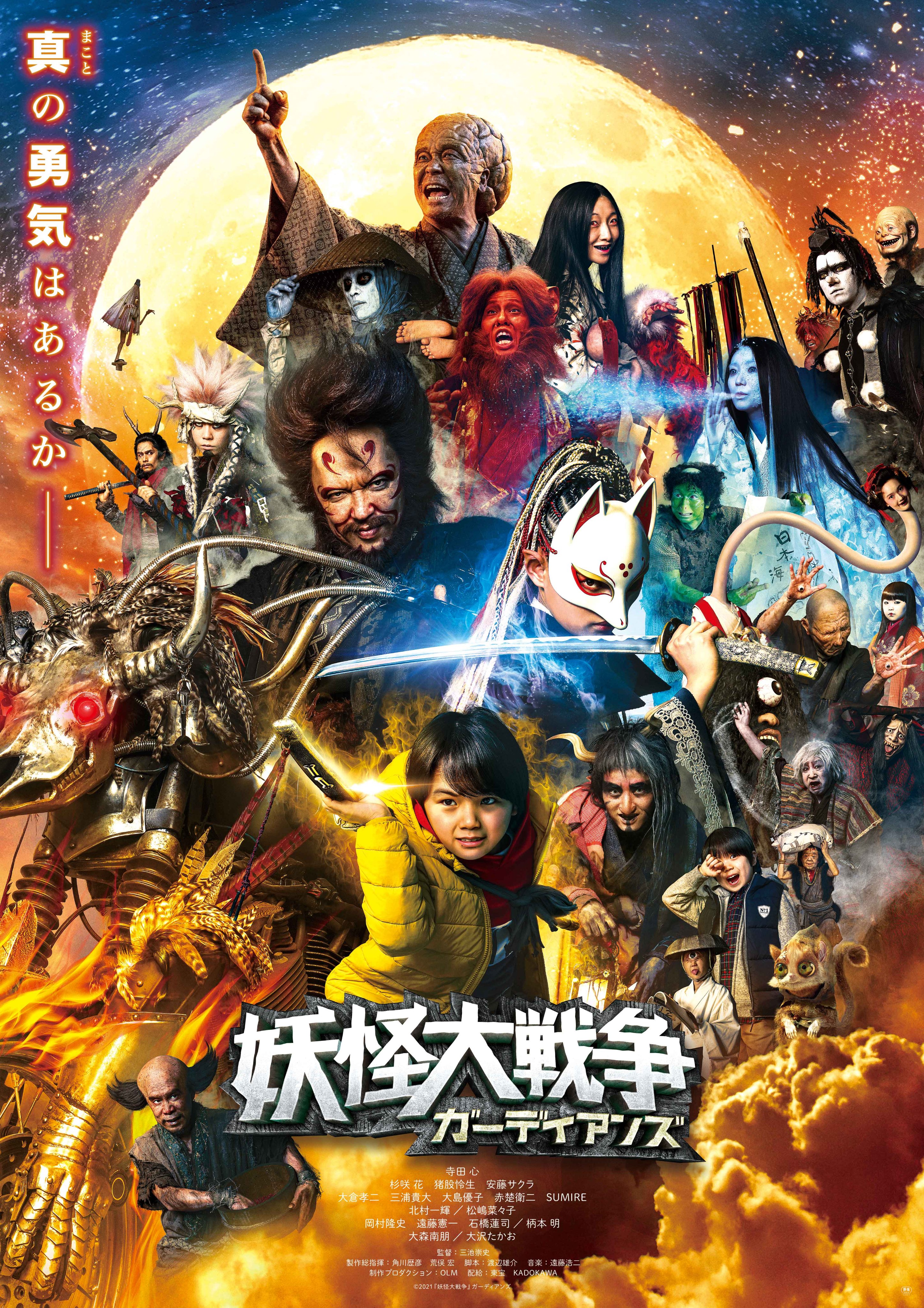
The Great Yokai War: Guardians (妖怪大戦争 ガーディアンズ, Takashi Miike, 2021)

An anxious little boy struggling with his growing responsibility finds himself charged with saving the world in Takashi Miike’s return to the realms of folklore, Great Yokai War: Guardians (妖怪大戦争 ガーディアンズ, Yokai Daisenso Guardians). Not quite a sequel to the 2005 supernatural drama, Guardians once stars a child hero trying to come to terms with his place in the world, but this time takes on another dimension as the pint-sized hero determines to embrace his “humanity” through the very qualities the yokai fear are largely absent among those who “kill and cheat their own kind”. 

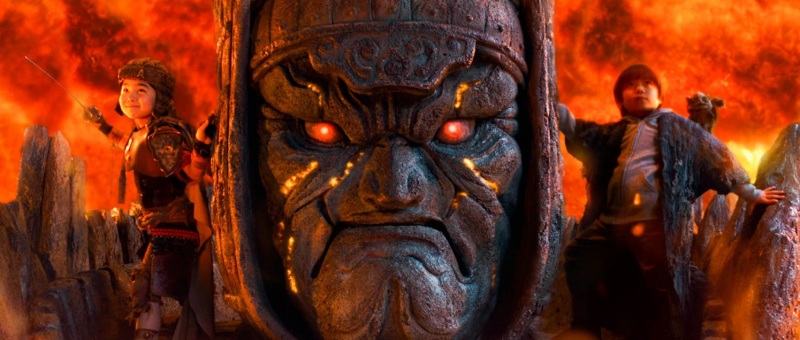
Young Kei (Kokoro Terada) has recently lost his father and as the oldest child has gained an additional responsibility especially towards his younger brother, Dai (Rei Inomata). The other children meanwhile think of him as a scaredy-cat, a small gang of them exploring a disused shrine from which they each pick a fortune from a small box, Kei’s being an ominous red sheet otherwise blank. While Kei had hesitated to enter, Dai did as he was told and waited outside but longed to be included, excited rather than frightened by the creepy old buildings. Later that night, Kei is woken up by a scary yokai leaning over him in bed, covering up one eye so he can see him. Running away in fright the boy finds himself in another world, surrounded by dozens more scary yokai who tell him he’s the descendent of a legendary Edo-era yokai hunter and it’s time for him to accept his destiny by helping the yokai avoid disaster. It just so happens that a bunch of sea creatures trapped underneath a fault line have banded together in a huge ball of resentment that is currently barreling towards Tokyo. The yokai are particularly worried that the monster which they’ve named “Yokaiju” (see what they did there?) will break the seal over the city and release a nameless evil. 

The yokai first tried asking for help among themselves at the “Yammit” or Yokai Summit recently held in Beijing at which supernatural monsters from across the world including vampires, mermaids, and even Bigfoot meet, but were roundly rebuffed. Japanese yokai rarely carry weapons, and they’ve already tried asking Yokaiju nicely not to destroy Tokyo, so they need some help. The yokai that that Kei encounters are mostly of the harmless kind like the guy who just stands around holding tofu or the one who creepily washes azuki beans at inappropriate moments, what they want Kei to do is help them wake up General Bujin, the god war, though others fear the cure may be worse than the disease. Some yokai are even of the opinion that letting Yokaiju run riot is no big deal because humans are generally awful anyway and so deserve little sympathy. 

Little Kei, however, is a counter to their argument. They constantly ask him if he really has the courage to carry his mission through, even at one point taking his brother Dai instead, while Kei struggles with himself understandably afraid of his new destiny. Back in the “real” world, he is of course entirely anxious about his responsibilities as a “big brother” now that his father’s no longer around and especially as his mother is a nurse meaning she often has to work late helping other people. He is however determined to keep his promise to look after Dai, mustering all his courage to push through the scary world of monsters to save him from being sacrificed to General Bujin. He also acts with kindness and generosity of spirit, even on being betrayed by a yokai expressing only sympathy that he’s glad the lonely monster turned out to have more friends than he thought, while also making a point of stopping to save even the bad demons who were trying to kill him after they’re trapped by rockfall because “you can’t just leave a suffering person”. 

Kei’s solution is, ultimately, love not war. Faced with the giant resentment monster he chooses to soothe its pain, teaching the yokai a thing or two about themselves as they rediscover their ancient capacity for compassion and forgiveness. It’s the brothers’ love for each other which eventually saves the world, leading even the most cynical of yokai to hope that the spirit of kindness in this generation might be enough to bring about a human revolution. A good old-fashioned family adventure, Guardians’ charmingly grotesque production design and childlike view of the twilight world of spirits and demons carries genuine magic while its wholesome messages of kindness, acceptance, and personal responsibility can’t help but warm the hardest of hearts. 


The Great Yokai War: Guardians screens on Aug. 28 and Sept. 1 as part of this year’s Japan Cuts.

Original trailer (no subtitles)

The Battle: Roar to Victory (봉오동 전투, Won Shin-yeon, 2019)

The Battle roar to voctory poster 1Besides seeing the birth of Korean cinema, 1919 was something of a flashpoint in the nation’s 20th century history. Japan had annexed Korea in 1910, thereafter instituting an increasingly brutal colonialist regime. On March 1, 1919 the people rose up in an act of mass protest inspired by the provision for “Self-Determination” included in US president Woodrow Wilson’s 14 Points speech outlining a path towards enduring peace. Though the protest was peaceful, it was quickly suppressed by Japanese troops resulting in thousands of deaths and mass incarcerations.

The Battle: Roar to Victory (봉오동 전투, Bongodong Jeontoo) situates itself a year after the protest as the Independence Movement began to intensify, and is inspired by real life events apparently often absent from the textbooks in which several factions eventually came together to wipe out an “elite’ squad of Japanese troops which had been put together to take down guerrilla Resistance fighters. Our heroes have been charged with collecting money from a fundraiser and conveying it to the Independence Movement in exile in Shanghai but are drawn into a wider battle against Japanese brutality on their way.

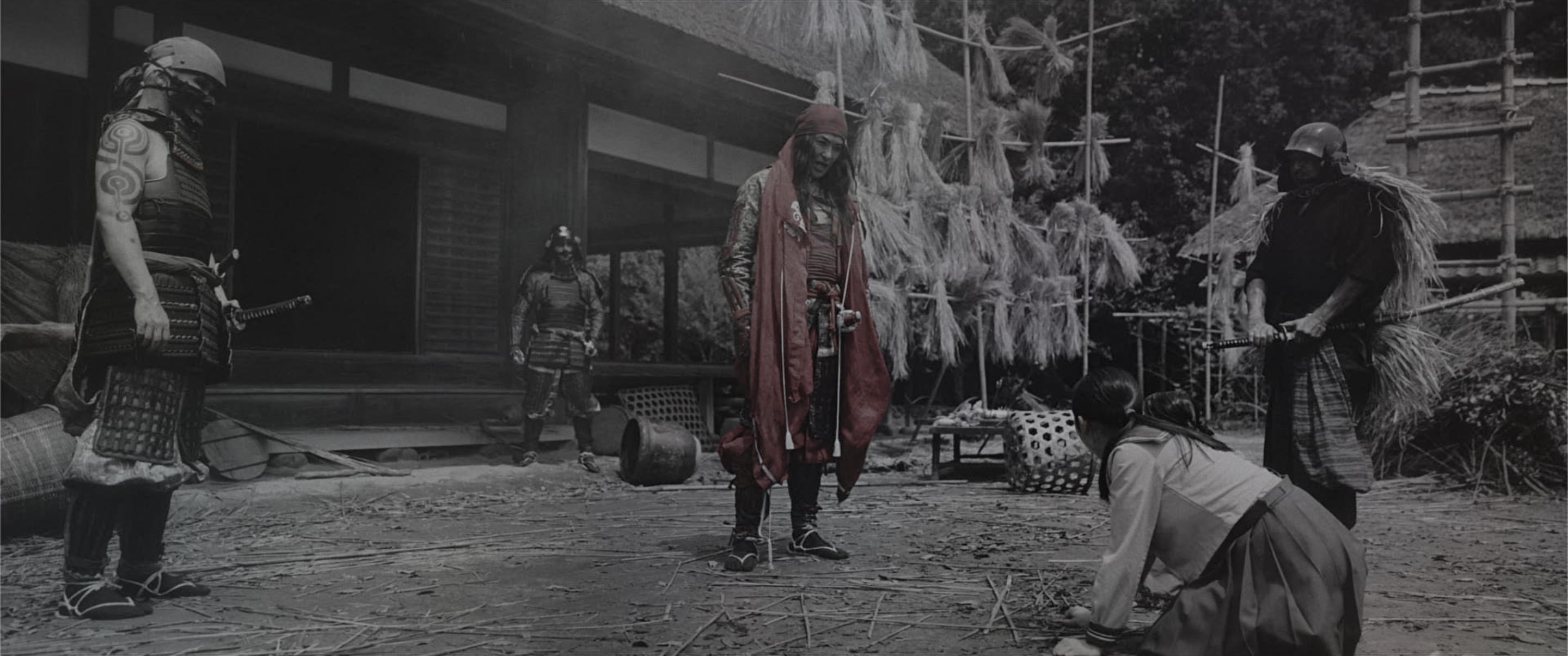
The Japanese colonial forces are indeed brutal, if often cowardly. When we first meet crazed commander Yasukawa (Kazuki Kitamura), he’s butchering a tiger in some kind of symbolic act of intense barbarity. To smoke out the Resistance fundraiser, the Japanese military begin razing villages, killing the men and raping the women, even going so far as to shoot small children for sport. When veteran Resistance fighter Hae-cheol (Yoo Hae-jin) raids a command post, he makes a point of taking a hostage who himself seems to be a teenage recruit. Hae-cheol lets the boy live not only out of a sense of compassion, but also because he wants him to take what he’s seen back to Japan, including the aftermath of a Japanese assault on an ordinary Korean village.

Yukio (Kotaro Daigo), as the boy later gives his name, is, unlike his fellow officers, conflicted and confused. Apparently a member of the elite himself, the son of a prominent military figure, Yukio gave up a bright academic future to join the army and find out what it is that Japan does with its advanced weaponry. Asked what he thinks now that he’s seen for himself, he says that he’s ashamed, that his worst fears have been confirmed. According to Yukio, his nation is suffering from an intense inferiority complex which is leading it to commit acts of extreme barbarity in order convince itself it is equal to any other imperial power.

The Japanese officers veer from the crazed, bloodthirsty Yasukawa who views his mission as some kind of hunting expedition, to the merely weak and cowardly. The Independence fighters, however, come from all over Korea speaking many dialects (some less mutually intelligible than others) and with many different motivations but all with the desire to free their country from Japanese oppression. Ace captain Jang-ha (Ryu Jun-yeol) is a born soldier, but those who support him are largely street fighters and “bandits” not always welcomed into the movement by the so-called intellectual “nobles” running the show from a position of social superiority. Then again, as Hae-cheol puts it, no one can be sure how many guerrilla soldiers there are because any farmer is a potential sleeper agent.

In any case, the Resistance fighters pursue their mission selflessly, manipulating the complacent Japanese troops to lure them into a mass ambush while trying to ensure the money still makes its way to Shanghai to preserve the movement. Despite the “Roar to Victory” subtitle, it’s important to note that the Independence Movement was still in a nascent state and would continue opposing Japanese oppression until Korea’s liberation at the end of the war. Covering the legendary battle of Battle of Fengwudong, the film ends with forward motion as the Resistance commander (a late and great cameo from a giant of Korean cinema) points ahead towards the next target, the well known Battle of Cheongsanri, in which the Japanese military reportedly suffered over 1200 casualties at the hands of Independence forces. Overly gory and lacking in subtlety, The Battle: Roar to Victory is unabashedly patriotic but does its best to suggest the costs and compromises of guerrilla warfare as its selfless heroes put aside their differences to fight for a better Korea.


The Battle: Roar to Victory was screened as part of the 2019 London East Asia Film Festival.

Original trailer (English subtitles)

https://www.youtube.com/watch?v=3j__4TEyzxI

Tonight, at the Movies (今夜、ロマンス劇場で, Hideki Takeuchi, 2018)

Tonight, at the Movies posterThe romance of the silver screen is one that never fades. Cinema has long been in love with itself, wilfully trapped inside the nostalgia of its own origins and youthful glory days. Nevertheless, we love it too and it’s a rare film fan who can resist the allure of the golden age backlot. With Tonight, at the Movies (今夜、ロマンス劇場で, Konya, Romansu Gekijo de, AKA Color Me True) Hideki Takeuchi becomes the latest in a long line of directors including Koki Mitani and Yoji Yamada to pay homage to world of classic Japanese cinema only this time he opts for a double rainbow as his eternal dreamer hero laments the loss of ‘30s glamour in the declining movie world of 1960 while his older self looks back on the bygone pleasures of his youth.

In 1960, Kenji (Kentaro Sakaguchi) is an assistant director at Kyoei film studios. Well, AD is what it says on his payslip, but Kenji is a mild mannered sort who mostly ends up doing odd jobs like ferrying props around and painting backdrops, mostly because he’s too much of a soft touch to push for anything else. The shy and beautiful daughter of the studio chief, Toko Naruse (Tsubasa Honda) – note the name, has fallen for him, but Kenji only has eyes for the silver screen. He spends his evenings at the local rep cinema “Romance Theatre” where he watches the daily programme and then bribes the owner (Akira Emoto) to make use of the projection booth after hours to watch his favourite forgotten classic, “The Tomboy Princess and the Jolly Beasts”. After a freak lightning strike and power outage, Kenji is shocked to discover that Miyuki (Haruka Ayase), the Tomboy Princess herself, has escaped from the silver screen and ventured into the Technicolor world.

After opening within the world of the film within the film, Takeuchi hops us forward to the contemporary era of cellphones and an ageing society as a kindly nurse laments that no one ever seems to come and see her favourite patient, Mr. Makino (Go Kato), except his granddaughter who everyone agrees is unnecessarily cold towards him. Makino is something of a key name in Japanese movie history having belonged to Shozo Makino who is often regarded as the father of Japanese cinema, and to his son Masahiro who was best known for his jidaigeki but also for his love of song and dance as seen in such cheerful hits as Singing Lovebirds which seems to have in part inspired the brief musical number in The Tomboy Princess sung by her Jolly Beasts in true ‘30s style. As we assume, Mr. Makino is Kenji 50 years later though we quickly realise that he was not able to live up to the promise of his name and never became the top film director of his dreams.

This is (partly) because we meet Kenji at what is really the beginning of an end. By 1960, the golden age was drawing to a close and studios were beginning to feel the heat from the growing popularity of television. In 10 years time, Kenji’s studio will no longer exist and the industry will have undergone a series of seismic shifts that will forever change the cinematic landscape. Yet even now Kenji is looking back rather than forwards – he worships the world of twenty years previously with its cheerful if nonsensical musical adventures and most particularly that of the Tomboy Princess who dares to rebel against her destiny by leaving her life of comfort behind to seek adventure in a foreign land, ours.

As the voice over from the melancholy rep cinema manager reminds us, film is fleeting but even forgotten films have the magical power to bring colour to someone’s heart. Both Kenji and the cinema manager have a deep seated reverence for movie making and feel almost sorry for the myriad films lying dormant in rusty cans waiting for someone to find them. The heroine of just such a film, Miyuki in turn is a lonely cinema ghost whose era has long since passed.

In Kenji she has finally found an adoring audience though the pair remain separated by an invisible screen even as their fated romance proceeds along the expected lines. Taken as metaphor, Kenji’s all encompassing obsession with a character from an old movie is not especially healthy and later leads him to reject the possibility of a full and conventional romance with a woman who loves him as well as give up on his dreams of movie making. He has, in a sense, decided to marry “cinema” with all the questionable aspects of that decision. In this case, however, “cinema” has taken real physical form even if that form is not available to him physically. Kenji and Miyuki remain on two sides of an invisible screen, but it is clear that the love flows both ways and, perhaps crucially, causes them both pain in their inability to exist fully within the same physical space. 

Filled with a wealth of references to cinema classics from Japan and beyond, Tonight, at the Movies is a beautiful fairytale romance well worthy of its cinematic pedigree. Cinema is a theoretical paradox where permanence and impermanence meet thanks to the magic of the movies. Nostalgia may be a trap, but it’s a beautiful one to fall into.


Tonight, at the Movies was screened as part of the 2019 Japan Foundation Touring Film Programme.

Original trailer (no subtitles)

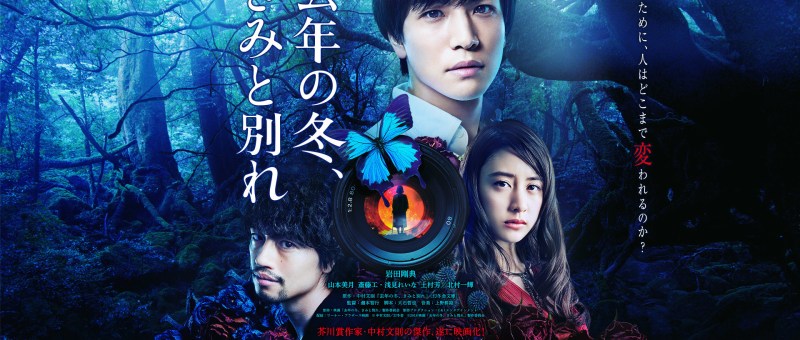
Last Winter, We Parted (去年の冬、きみと別れ, Tomoyuki Takimoto, 2018)

Last Winter we Parted posterAmong the most promising young writers of Japan, the work of Fuminori Nakamura is, it has to be said, extremely dark. Adapted by Grasshopper’s Tomoyuki Takimoto, Last Winter We, We Parted (去年の冬、きみと別れ, Kyonen no Fuyu, Kimi to Wakare) is as poetic an exploration of the dark side of desire as its title implies. Parting is, it turns out, not so much sweet sorrow as a wrenching act of existential dissonance that requires an absenting of the self and the creation of a new dark entity rising from the ashes of a once pure soul.

The tale begins in flames as a blind model, Akiko (Kaho Tsuchimura), burns to death in the studio of a respected photographer, Kiharazaka (Takumi Saito). Kiharazaka claims the fire was an accident and that he tried to save the victim but was not able to. Others claim that Kiharazaka had kidnapped Akiko and held her prisoner before deliberately setting fire to her in order to photograph a body burning alive. Released on a suspended sentence, Kiharazaka remains the focus of media attention which is where freelance writer Yakumo (Takanori Iwata) enters the picture. He is convinced Akiko’s death was not an accident and fascinated by an eerily oppressive photograph taken by Kiharazaka has approached a mainstream news organisation with a pitch for a book profiling the famously enigmatic figure with the ulterior motive of exposing the darkness of his soul.

The exposure of the authentic is the concern that binds Yakumo and Kiharazaka in a mutually destructive act of artistic inquiry. Kiharazaka’s most famous and only real success of a photograph features a whirl of butterflies that feels oddly like drowning as if pulled towards something dark and oppressive. Like the butterflies he observed, Kiharazaka instils fear while beguiling, a good looking man who seems to make a habit of luring vulnerable women into his web of destruction with a promise of intimate recognition, that he alone is able to truly see them and bring their true selves to the surface in act of artistic connection. Inspired by Akutagawa’s Hell Screen, he photographs only what he sees but craves darkness and violence, eventually, as Yakumo fears, allowing his need for fiery visions of hellish brutality to push him into heinous acts of human cruelty.

Meanwhile, Yakumo searches for an explanation behind Kiharazaka’s unsettling nature, trying to expose his own true face through (ostensibly) less violent means. He discovers that Kiharazaka and his sister Akari (Reina Asami) were orphaned after a violent attack in their home during which they were also injured. He hears that they may have endured years of abuse and cruelty at the hands of their father and that both are in some way warped, locked into an incestuous world of pain and suffering. A high school friend warns him that Kiharazaka has a magpie-like tendency to steal the things of others and that Akiko probably had a boyfriend which is what made her sparkle to Kiharazaka’s monstrous eyes. Still, Yakumo dangles his own fiancée, Yuriko (Mizuki Yamamoto), in front of the dangerous man as if daring him to take her while Kiharazaka declares himself captivated by her failure to know her “true self” which only he can expose.

Of course, not all is as it seems and there are several layers of “truth” in play as Yakumo continues his investigation and becomes further entangled in the spiderweb of Kiharazaka’s warped existence. Later, hearing from Akiko, she reminds us that there are other ways of “seeing” and that in the end she was not the one who was “blind” to the reality. Akiko’s boyfriend lost her precisely because he feared doing so, became over protective and patronising, and ruined their true connection through an over anxious preoccupation with unseen threat. Love can constrain as well as liberate, it makes people do dark things in its name and provokes chaos and confusion in place of happiness and harmony. Like the butterflies it can beguile while instilling fear.

Yet that same darkness also fuels art as in Kiharazaka’s distressing photographs and Yakumo’s all encompassing need to fulfil his “dream” of becoming an author. Vengeance takes many forms but all of them are destructive and in order to achieve it, one must enact a murder of the self leaving nothing behind other than a burnt out husk once the bloody business is done. A wretched tale of inescapable torments, the legacy of violence, frustrated loves, and the dark side of desire, Last Winter, We Parted is a suitably poetic exploration of the nihilistic despair in the hearts of its corrupted heroes living for love but only through a spiritual death.


Original trailer (no subtitles)

The Scythian Lamb (羊の木, Daihachi Yoshida, 2017)

Scythian Lamb posterSometimes life hands you two parallel crises and allows one to become the solution to the other. So it is for the bureaucrats at the centre of Daihachi Yoshida’s The Scythian Lamb (羊の木, Hitsuji no Ki). The prisons are overcrowded while rural Japan faces extinction thanks to depopulation. Ergo, why not parole some of those “low risk” prisoners whose problems have perhaps been caused by urban living and lack of community support on the condition that they move to the country for a period of at least ten years and contribute to a traditional way of life. The prisoners get a fresh start where no one knows them or what they might have done in the past, and the town gets an influx of new, dynamic energy eager to make a real go of things. Of course, there might be some resistance if people knew their town was effectively importing criminality, but that’s a prejudice everyone has an interest in resisting so the project will operate in total secrecy.

Not even civil servant Tsukisue (Ryo Nishikido), who has been tasked with rounding up the new recruits, was aware of their previous place of residence until he started to wonder why they were all so unusual and evasive. Tsukisue likes to think of himself as an open-minded, kind and supportive person, and so is disappointed in himself to feel some resistance to the idea of suddenly welcoming six convicts into his quiet little town, especially on learning that despite being rated “low risk” they are each convicted murderers. Thus when a “murder” suddenly happens in the middle of town, Tsukisue can’t help drawing the “obvious” conclusion even if he hates himself for it afterwards when it is revealed the murder wasn’t a murder at all but a stupid drunken accident.

The ex-cons themselves are an eccentric collection of wounded people, changed both by their crimes and their experiences inside. Many inmates released from prison find it difficult to reintegrate into society, especially as most firms will not hire people with criminal records which is one of the many reasons no one is to know where the new residents came from. Yet, there are kind and understanding people who are willing to look past the unfortunate circumstances that led to someone finding themselves convicted of a crime such as the barber (Yuji Nakamura) who reveals his own difficult past and happiness in being able to help someone else, or the woman from the dry cleaners (Tamae Ando) who is upset by other people’s reaction to her new recruit who, it has to be said, looks like something out of Battles without Honour. Tsukisue doesn’t know anything about these people save for the fact they’ve killed and has, unavoidably, made a judgement based on that fact without the full details, little knowing that one, for example, killed her abusive boyfriend after years of torture or that another’s crime was more accident than design.

Tsukisue later becomes friends with one of the convicts, Miyakoshi (Ryuhei Matsuda), whose distant yet penetrating stare makes him a rather strange presence. Miyakoshi is the happiest to find himself living in the small coastal town, enjoying the lack of stimulation rather than resenting the boredom as some of the other new residents do. Despite his obvious inability to “read the air”, Miyakoshi is quite touched by Tsukisue’s kindness and by the way he treated him as a “normal” person despite his violent criminal past, excited to have made a real “friend” at last. Trouble begins to brew when Miyakoshi joins Tsukisue’s garage band and takes a liking to another of its members – Aya (Fumino Kimura), another returnee from Tokyo with a mysterious past though this time without a prison background. Tsukisue has had a long standing crush on Aya since high school but has always been too shy to say anything. He thought now was his chance and is stunned and irritated to realise Miyakoshi might have beaten him to it and, even worse, given him another opportunity to disappoint himself though doing something unforgivable in a moment of pique.

The bureaucrat in charge of the scheme wanted it kept secret in part because he was afraid the criminals might find each other and start some sort of secret murderer’s club (betraying another kind of prejudice) which actually turns out not to be so far fetched, though the main moral of the story is that kindness, understanding, and emotional support go a long way towards keeping the peace. Meanwhile, another of the convicts has taken to “planting” dead animals inspired by a plate she finds on a refuse site featuring a decoration of a “Scythian Lamb” – a plant that grows sheep which die when severed from their roots, and the evil fish god Nororo sits atop the cliffs in reminder of the perils of the sea. The Scythian Lamb is a poignant exploration of the right to start again no matter what might have gone before or how old you are. It might not always be possible to escape the past, and for some it may be more difficult than others, but the plant withers off the vine and there’s nothing like good roots for ensuring its survival.


Screened at the 20th Udine Far East Film Festival.

Original trailer (English subtitles)