Flames of a Flower (火の華, Oudai Kojima, 2024)

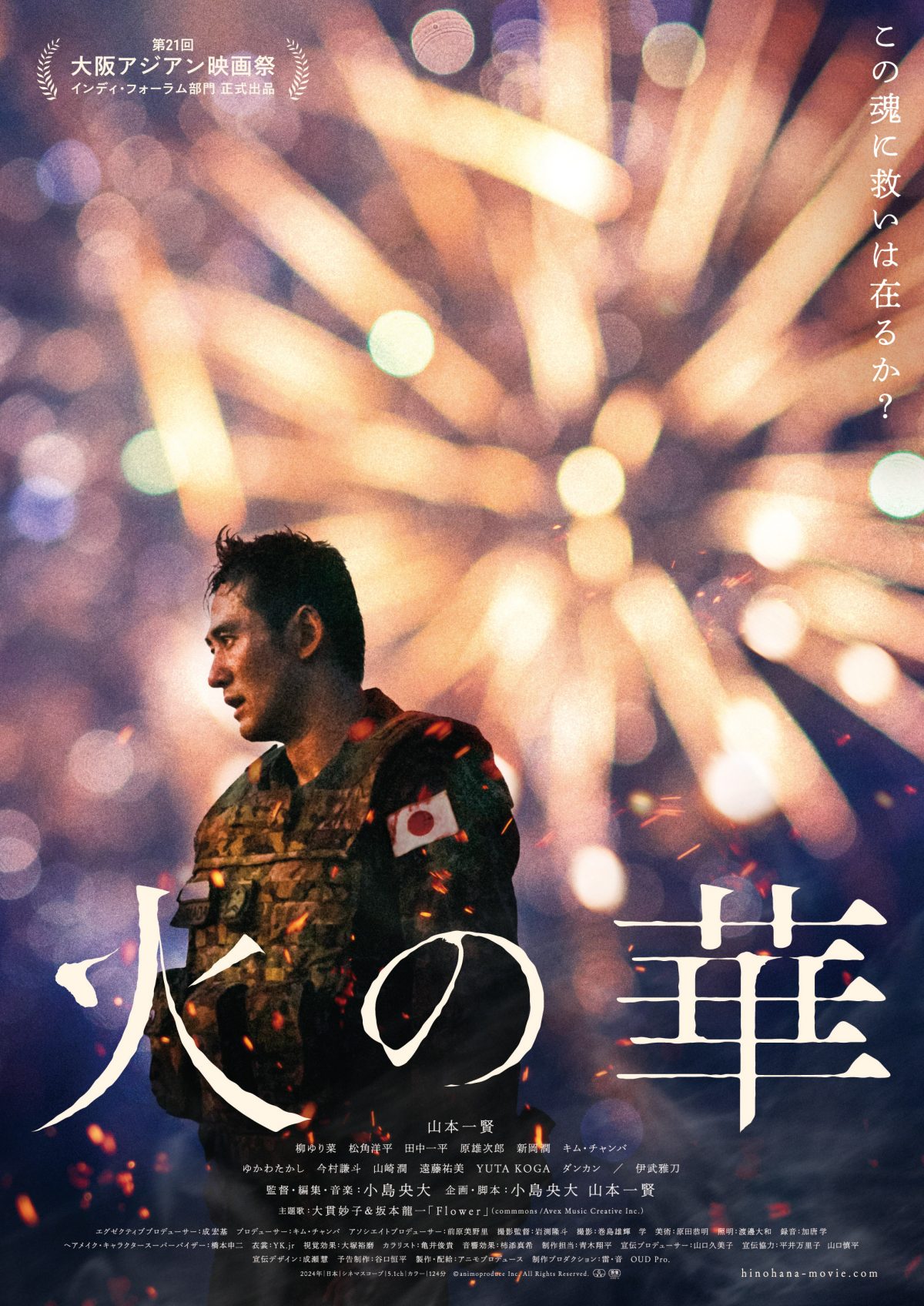
A former soldier finds it difficult to adjust to civilian life after becoming involved in a fire fight in which a close friend died while on a peace-keeping mission in South Sudan in Oudai Kojima’s politically-inflected drama, Flames of a Flower (火の華, Hi no Hana). The film takes its title from the literal meaning of the Japanese word for fireworks, but its hero is also in some senses closely aligned with a flower, both as a kind of sacrificial object burned after outliving its usefulness, and in also slowly growing in the nurturing environment of a family-run fireworks factory until finally coming into bloom.

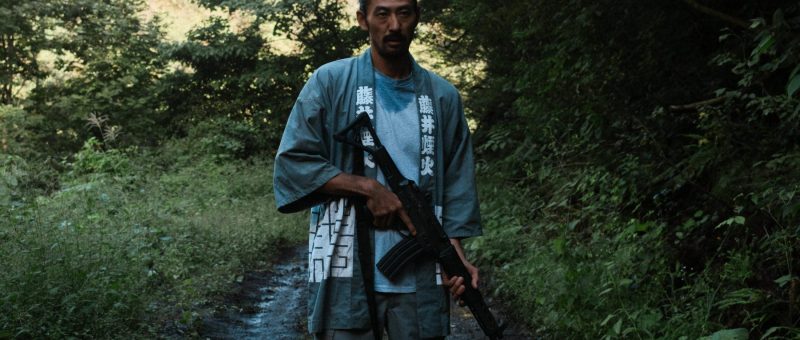
Shimada’s (Ikken Yamamoto) growth is only, however, one side of the story as the film draws inspiration from a real-life incident of a Japanese soldier dying in a combat situation in Sudan which was covered up by the authorities as, under the pacifist constitution, Self Defence Force troops are not supposed to be deployed in combat areas while on peace-keeping missions. While serving in South Sudan, Shimada’s troop is ambushed and he is forced to shoot a child soldier when his comrade and close friend is killed after having put his gun down in an attempt to defuse the situation. While he and fellow soldier Tanaka (Ippei Tanaka) attempt to get Furukawa to a hospital, Captain Ito (Yohei Matsukado) is left behind and thereafter presumed to have been killed. On his return, Shimada is forced to sign confidentiality documents that prevent him from talking about what really happened on the grounds of national security, while the authorities report that Furukawa and Ito died as a result of a traffic accident.

It’s this inability to speak the truth that informs Shimada’s trauma as much as it is the physical stressors of the battlefield or his guilt over having to kill the child soldier. Two years after the incident, he’s working as a welder in a small factory but experiences a flashback which causes him to assault a colleague. Though his boss is sympathetic, he has no other option than to let Shimada go, but introduces him to a friend, Fujii (Masato Ibu), who runs a fireworks factory and seems to have a track record with rehabilitating those with difficult backgrounds. Working in a fireworks factory might not seem the best option given Shimada’s condition, but at the same time it gives him the opportunity to do something more constructive with the same material that caused so much destruction while he was a soldier. The film plays on this dichotomy, Shimada later visiting Sudan again to teach the children about fireworks as a means of explaining to them that they have a choice between using gunpowder for fear and killing or making something beautiful, but at the same time it ignores the third option which is obviously just not to have anything to do with gunpowder in the first place. 

Showing the children the fireworks plays into the idea that children are cruelly robbed of their dreams by egotistical adults, hinting both at the children who are forced to become soldiers, and Fujii’s own regret that he would not let his daughter Akiko (Yurina Yanagi) become a fireworks technician. She has since become a florist working with a literal kind of flowers and also helping Shimada with his recovery. His former comrades, however, have largely become consumed with anger and rage against the government for its lack of transparency. Ito, having survived, has formed a militia after meeting a former member of the Japanese Red Army and is planning some kind of revolutionary action to change the society.

Exactly how they mean to change it isn’t altogether clear aside from a clear desire for transparency and also an end to Japan’s dependence on the US for defence which they argue drags them into situations they don’t belong in because of American foreign policy they might not necessarily agree with. They don’t quite state if that means having a standing army that could go to war if necessary, or if they still believe in pacfism but want the Americans out. In any case, they plan to expose the fact that the government prioritises its diplomatic arrangements over the lives of ordinary citizens while keeping from them that this puts Japanese troops in danger overseas. 

A subsequent plot by a government official working with a Chinese gangster (Kim Chang-bak) who Shimada meets after ironically becoming involved with trading illegal weapons, further muddies the waters, though the film is at its best in exploring the ways in which Shimada is able to come to accommodation with himself while being supported by those at the fireworks factory who become a kind of surrogate family. This sense of community is, the film suggests, what prevents him from jumping off the deep end like his former comrades who have become dangerously fixated on revenge. Though at times its politics may seem muddled or obscure, the film is at least at pains to stress that war and violence are choices that are often made by those who won’t have to suffer the consequences, when it is much easier to channel those same resources into something beautiful that can bring hope and enrich lives rather than destroying them.


Flames of a Flower screened as part of this year’s Camera Japan.

Trailer (no subtitles)

Let’s Go Karaoke! (カラオケ行こ!, Nobuhiro Yamashita, 2023)

Singing is serious business. In Nobuhiro Yamashita’s adaptation of the manga by Yama Wayama Let’s Go Karaoke! (カラオケ行こ!Karaoke Ikou!), it’s matter of life and death, metaphorically at least, for a young man confronting adolescence and a zany gangster who seems kind of lonely but is desperate to learn how not to embarrass himself at the boss’ big sing off so he won’t be subjected to a homemade tattoo of his most hated motif.

The irony is perhaps that this kind of yakuza at least doesn’t really exist anymore and “Crazy Kid” Kyoji (Go Ayano) is in many ways a ghost of bygone days inhabiting a Showa-era shopping arcade soon to be torn down and replaced by a luxury hotel. Meanwhile, high schooler Satomi (Jun Saito) is also facing a kind of apocalypse in that he’s a boy a soprano whose voice has begun to change. His encroaching puberty leads him to blame himself when the school choir only places third during the nationals not making it to finals. But it’s at this concert that Kyoji first hears his “angelic” voice and decides he’s the perfect person to teach him how sing, intimidating him into an impromptu karaoke session.

As Satomi later points out, adults don’t invite kids to karaoke and this arrangement would be odd even if Kyoji were not an old school yakuza with a severed finger in his glove compartment. Of course, Satomi’s frightened but cannot really say no offering a few words of advice by daring to tell Kyoji that his falsetto is  “sickening” and he should stop waving his hands around if he wants to master the art of singing. It is also doesn’t help that his choice of song, Kurenai by X Japan, a hair rock epic mostly written in broken English, is a song of manly melodrama which requires a good deal of screaming. Despite having enlisted Satomi, Kyoji talks about one of his fellow footsoldiers as if he’s died when he’s only decided to get some professional singing lessons in an effort not to come last and end up with a lame tattoo.

Yamashita frames both their challenges as the same, Satomi fearing a social death and the death of his youth if he takes to the stage at what he’s sure would be his final concert and his voice cracks while Kyoji, ironically enough, does not really fear a literal death but the pain and humiliation of being branded by the boss for being bad at karaoke. Despite their differences a genuine a sense of friendship does arise between them, if also a possibly inappropriate homoerotic tension, as they support each other towards their shared goals and learn to sing from the heart which was apparently the real problem with Satomi’s school choir seemingly more obsessed with technique and correctness than the simple joy of singing. 

Hovering on a precipice, Satomi exists in a liminal space in his own way as ghostly as Kyoji surrounded by the obsolete. In his school film club, of which he is an honorary member, they watch VHS tapes of classics such as White Heat, Casablanca, and Bicycle Thieves which can only be watched once because the player’s broken and you can’t rewind anymore. His world’s on the brink of eclipse, and his friendship with Kyoji is a harbinger of a darker, more adult world but also one that’s less frightening than it ought to be with its admittedly scary gangsters obsessed with karaoke and bad tattoos. He starts to wonder if Kyoji was even real or some kind of imaginary friend appearing to help him deal with his impending adolescence and what it means for his singing career, but is finally reassured by a piece of concrete evidence confirming at least that it did really happen if leaving him with a sense of loneliness once their quests have come to an end. Surreal in its cheerful darkness, Yamashita’s heartfelt drama is an advocation for the for the healing powers of karaoke and the importance of singing from from the heart no matter how it might sound to those you who may themselves shed a few manly tears over a song about lost love and absent friends.


Let’s Go Karaoke! screened as part of this year’s Nippon Connection

Original trailer (English subtitles)

OUT (Hiroshi Shinagawa, 2023)

Delinquent dramas have been having a bit of a moment over the last few years and like many Hiroshi Shinagawa’s manga adaptation OUT is a comic retro throwback to the genre’s ‘80s heyday. Some of the action may seem a little a outdated, but macho posturing will never really go out of style and there is genuine heart in the newfound brotherhood between local punk Kaname (Koshi Mizukami) and the recently released Tatsuya (Yuki Kura) who is torn between trying to go straight and rejoining the ultra manly society of the biker gangs.

Then again it quickly becomes clear that part of the problem is too many people have already given up on Tatsuya and are eagerly relishing the prospect of his failure. Having spent a few months in juvenile detention for fighting, he’s no desire to go back but is also resentful about the lack of control he now has over his life if grateful to have been taken in by an uncle and aunt who run a Korean barbecue restaurant in Chiba. Their faith in him makes him want to live up to it, but equally he can’t bring himself not to respond to challenges of masculinity rather comically insisting that he square off with new rival Kaname through a game of sumo so he won’t break the terms of his parole by hitting someone. As might be expected, the two men become friends through fighting but Kaname turns out to be the deputy leader of a local biker gang bringing Tatsuya once more into contact with random and pointless violence. 

This is the double meaning of “out”, not only that Tatsuya is “out” of juvie and and outsider to the gangs in Chiba but also and outlaw by nature who can’t be tamed by the demands of the civil society. Yet what he’s confronted by is a new sense of masculinity that’s not founded solely on dominance through violence, status or macho posturing but love and brotherhood. A young woman he takes a liking to, Chihiro (Yuki Yoda), wastes no time telling him she thinks he’s pathetic in his ongoing obsession with his male pride while trying to make him realise that there are people who care for him and would be upset if he went and got himself killed which makes his whole way of life completely irresponsible.

But at the same time, the rival gang that’s after his new friends has shifted into violence and murder, making money through trafficking drugs and blackmailing women into sex work after incapacitating them and threatening them with sex tapes. Obviously, even his newfound code of manliness means he must stand up to this new kind of injustice even if it sends him back to prison. What he learns from Chihiro is that kindness is more attractive than coolness while his uncle gives him a similar lesson, econouraing him to channel his rebellious energy in a more positive direction just as he now dedicates his whole life to protecting his wife and the restaurant. 

Shinagawa approaches the material with a sense of humour undercutting the ridiculousness of the male posturing with gently mocking affection. He maintains some of the key elements of the genre such as the surreal manga-style hairdos while embracing its essential outlandishness. The fight scenes themselves are also surprisingly violent if also a little ironic as he cuts between gang leader Atchan (Kotaro Daigo) jumping on a guy’s face to Tatsuya’s aunt remarking that he seems like a nice kid. Some degree of CGI has evidently been employed to aid the visceral of the violence as we think we see faces coming in for a pummelling along with impressive drop kicks, though the mass brawls are in themselves well choreographed and dynamic while remaining within the realms of what a petty street punk could do reasonably do. Shinagawa also leans into the manga origins with frequent use of line drawings in scene transitions and character introductions. In essence Tatsuya is attempting to reclaim his self-esteem, finally embracing the of repeated phrase “Im stupid, but I’m not trash” to claim the right to live a less chaotic life while recommitting himself to knuckling down in the barbecue restaurant in defiance of those who thought him to be worthless, finally out of his self-imposed prison and into a happier future.


 OUT screened as part of the 18th Season of Asian Pop-Up Cinema.

Original trailer (English subtitles)