
Linda Linda Linda (リンダ リンダ リンダ, Nobuhiro Yamashita, 2005)

“We’ve only got a little more time to be the real us,” according to a young woman making a promo video for the upcoming school festival, but who really is the “real us”? Now celebrating its 20th anniversary, Nobuhiro Yamashita’s wistful high school dramedy Linda, Linda, Linda (リンダ リンダ リンダ) is in many ways about the process of coming into being along with the anxieties of what comes next. “We won’t end here,” the girl later adds, “We won’t let our high school days become a memory,” yet they already are in a kind of contemporaneous nostalgia and elegy for idealised youth.

Or at least, there’s already a kind of reaching back taking place as the tracks the girls pick for a replacement act are by The Blue Hearts, a 1980s punk band that has become a kind of cultural touchstone echoing a sense of youthful alienation and rebellion. “Linda Linda” is the kind of song everyone knows, and even if for some reason they don’t or don’t even speak Japanese, can at least join in with the riotous chorus. It’s this sense of universality that eventually gives it its power as torrential rain brings the entire school inside just in time to see the girls’ belated act and find themselves captivated by its infectious energy and an identification with their own sense of insecure anxiety.

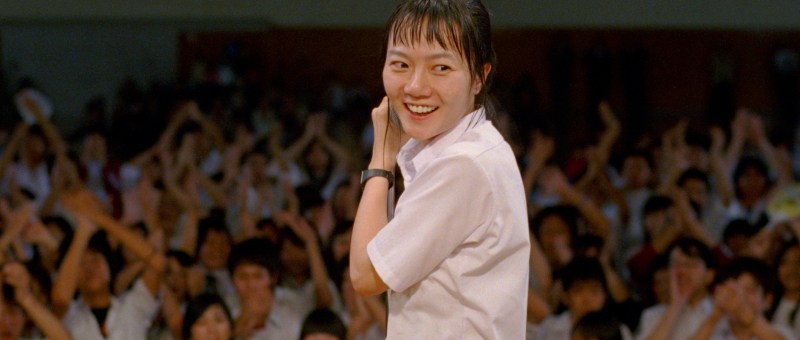
It’s also the serendipitous rain that allows lonely songstress Takako an opportunity to perform having previously declined to do because it’s no fun playing on your own and all her former bandmates graduated the previous year. Moe, the girl who broke her fingers playing basketball in PE leaving the original band members unable to take the to the stage, also gets an opportunity to sing having otherwise been denied a moment of closure in being prevented from taking part in her final school festival. While Moe feels intensely guilty about rendering all their time spent rehearsing somewhat pointless, it’s really the drama between founding members Kei and Rinko that leads to the band’s demise in Rinko’s conviction that it’s “meaningless” to continue while the others decide to go ahead anyway asking Korean exchange student Son (Bae Doona) to be their vocalist because she just happened to come down the stairs at the right moment and said yes because she didn’t really understand what they were saying.

Prior to her involvement with the band, Son had been a rather isolated figure trapped in the “Japan-Korea Culture Exchange Exhibit” which seems to have been more her teacher’s idea than her own and in any case gets no actual visitors. Her Japanese is a bit limited and most of her interactions are with a little girl who lends her manga to help her learn quickly, but becoming part of the band allows her to find her voice both literally and figuratively in taking the lead as the vocalist. A boy who claims to have fallen in love with her (Kenichi Matsuyama) goes to the trouble of learning a long speech in Korean to convey his feelings, yet a bemused Son replies to him in Japanese that she’s pretty indifferent to his existence before switching to Korean to explain that she’s leaving because she’d rather be hanging out with her friends with an expression that implies she’s only just realised that’s what they are. By contrast, she has a bilingual conversation with guitarist Kei (Yu Kashii) in which they seem to understand each other perfectly and each express how glad they are that they got to be in the band together. 

Similarly, it’s the concert itself that seems to heal rifts with a simple “Are you alright?” from Rinko (Takayo Mimura) to Kei whose friendship might, as someone says, essentially be too close for them to really get along. Drummer Kyoko (Aki Maeda) decides to declare her feelings for a longstanding crush before the concert. In the end she doesn’t manage it, but it doesn’t quite matter somehow because their performance is itself a kind of coming into being in which “the real us” comes into focus if also in a moment that itself becomes romanticised or idealised as an encapsulation of youth. Yamashita travels through the school festival as if it were a passage from one state of being to another, from the noodle stalls and crepe stands to haunted houses and the boy creating his own moment through encapsulating them on film, before ending with an unending song “so we can laugh tomorrow,” and the “real us” lives on.


Linda Linda Linda opens in US cinemas 5th September courtesy of GKIDS.

Trailer (English subtitles)
Brave: Gunjo Senki (ブレイブ -群青戦記-, Katsuyuki Motohiro, 2021)

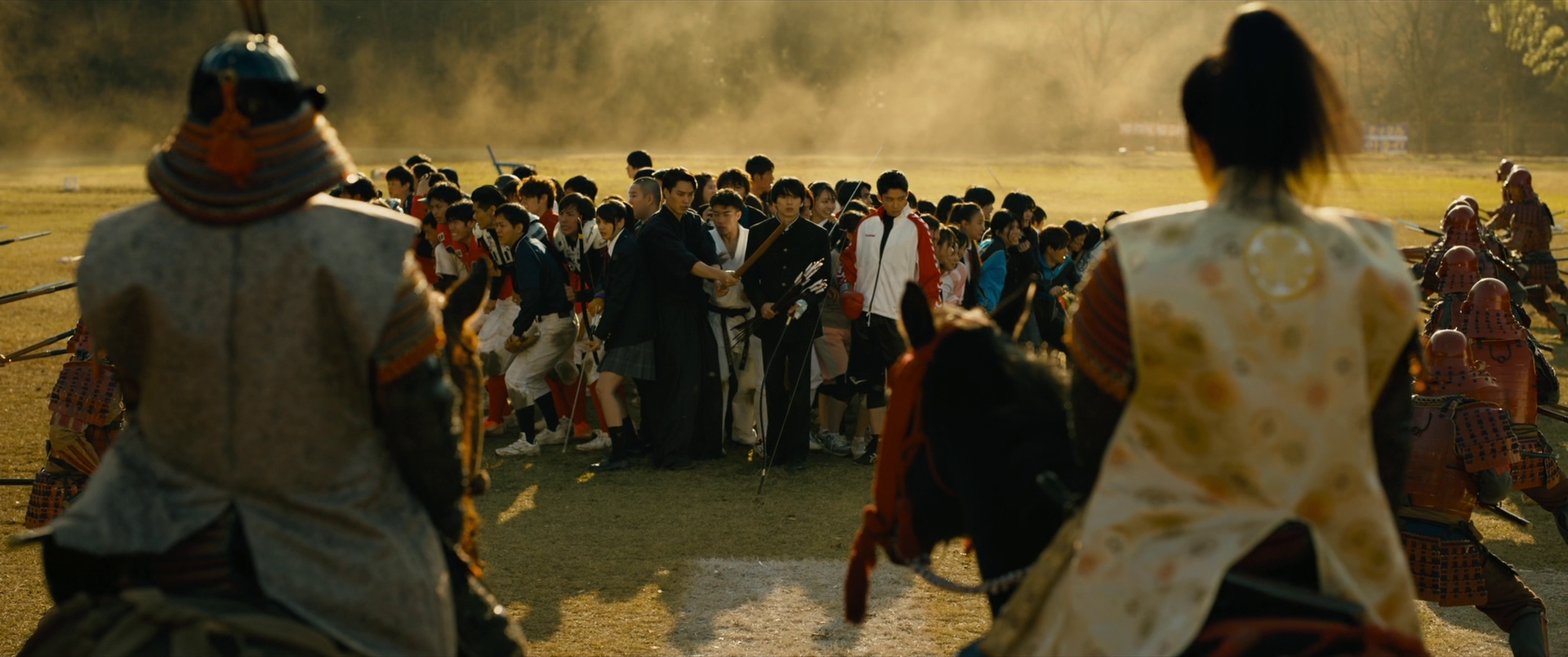
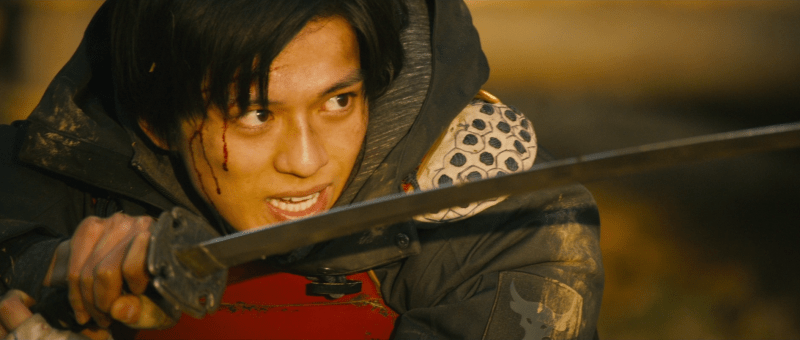
A young man with a total lack of confidence in himself begins discover his inner strength after being sent back to the Sengoku era in Katsuyuki Motohiro’s timeslip drama adapted from the manga by Masaki Kasahara, Brave: Gunjo Senki (ブレイブ -群青戦記-). Fighting a battle for the future, the kids finds themselves at a moment of historical change and caught between the titanic forces of clashing armies but paradoxically discover that they want the same thing, something the kids have always taken for granted, an age of peace in which all are free to live together happily. 

For all those reasons it’s a just as well that Aoi (Mackenyu), a diffident member of the archery club, is a keen history buff even if he declares himself uninterested in winning competitions or becoming a champion. When warriors in 16th century armour begin assaulting the school, he’s well placed to guess what might be going on inferring from some of the names involved that they must have been thrown back to the year 1560 which was something of a turning point in Japanese history marked by the battle of Okehazama in which the outnumbered forces of Oda Nobunaga (Kenichi Matsuyama) scored a significant victory against those of Imagawa Yoshimoto setting Nobunaga on a path towards the unification of Japan. 

Though armed with foreknowledge, the kids are obviously ill-equipped to cope with the demands of life in the Sengoku era having no combat experience yet this institution happens to be one of the most prominent sporting schools in the nation boasting a host of national champions all of whom discover that their athletic skills can easily be repurposed for warfare from the archers and kendo enthusiasts to the baseball and American football players while those in the various science clubs set about investigating how they got here and how they might get back. 

Despite being thrust into a leadership role after impressing warlord Motoyasu (Haruma Miura) who will one day become Tokugawa Ieyasu and oust Nobunaga as ruler of a unified Japan, Aoi remains diffident and fearful unable to fire his bow often walking away from the fight despite his friends’ encouragement. His problem, as is repeatedly pointed out, is that he has no self-confidence and cannot believe in himself sufficiently to act when the occasion calls. Yet through his gentle mentoring at the hands of Motoyasu, he begins to come into his own as a Sengoku era strategist realising that he has something to spur him on in the desire to protect those close to him.

This is not, however, a wholly positive thing. Despite introducing Aoi’s childhood friend Haruka (Hirona Yamazaki) as a talented archer who is much more willing to step up to the fight, the film quickly relegates her to the role of damsel in distress as it does the majority of female students many of whom are also top athletes with useful skills while the assault squad venturing to rescue students taken hostage by evil retainer Yanada Matsuna is, aside from Haruka, exclusively male. Conversely, the guys are given an opportunity to express their fear and sadness each thinking of their mothers as they prepare to risk their lives to save their friends. 

For Aoi, his friends become the light that show him the way while he remains preoccupied with history realising that nefarious forces are trying to manipulate it so that their age of peace will never arrive and Japan will exist in a state of darkness for all eternity. Though often depicted as cruel dictator this Nobunaga seems to want end the darkness by bringing about an age of peace through the unification of Japan taking solace in the idea that these strange people in their weird castle wearing bizarre clothes are from an age in which war is a distant memory meaning at least that his dream came to pass. At heart, it’s a battle between an emo teen who wants to paint the world with the darkness inside him, and a diffident young man turning away from hate and violence while finding strength in the presence and support of his friends. Boasting some impressive effects and high octane battle sequences imbued with a quirky humour as the kids use their sport skills, kicking footballs armed with bombs or throwing fiery baseballs at the confused retainers, Brave: Gunjo Senki sees its diffident hero not only taking charge of his personal destiny but the national in believing that the best way to support his friends is to make sure the world of peace they’ve always enjoyed will again come to pass. 


Original trailer (no subtitles)

Dreaming of the Meridian Arc (大河への道, Kenji Nakanishi, 2022)

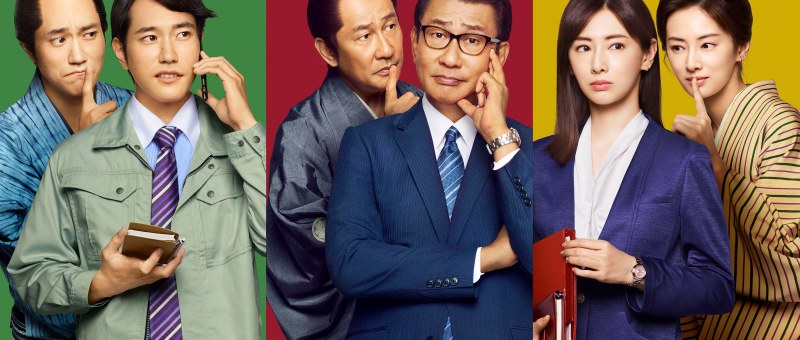
As it turns out, the modern world is not so different from the feudal after all. After realising that their friend and mentor has passed away, a team working together to create an accurate map of Japan in the early 19th century are immediately worried that their project will be axed as a part of a cost cutting exercise at the hands of the penny-pinching Shogun. Inspired by Shinosuke Tatekawa’s rakugo story, Kenji Nakanishi’s heartwarming dramedy Dreaming of the Meridian Arc (大河への道, Taiga e no Michi) tells parallel tales of hardworking civil servants trying to put their town on the map and Edo-era officials trying to avoid incurring the Shogun’s displeasure so they can ensure their late friend’s life’s work will eventually be finished. 

In the present day, the small town of Katori is trying to think of ways to raise its profile but according to junior civil servant Kinoshita (Kenichi Matsuyama) the programme proposed by the tourist board has little to offer in simply imitating the initiatives of other better known cities. As he points out, if tourists want to experience life in olden times there are lots of places they can do that already. Chief of General Affairs Ikemoto (Kiichi Nakai) idly suggests that they try and get local historical personannage Chukei-san, better known as Ino Tadataka the man who completed the first accurate map of the Japanese islands, featured as the subject of a year-long historical TV drama. Of course, Kobayashi from the tourist board (Keiko Kitagawa) thinks it’s a silly idea, but the governor likes it so Ikemoto now has a very difficult job not least because the governor wants him to convince a grumpy writer who hasn’t written anything in 20 years to handle the script. 

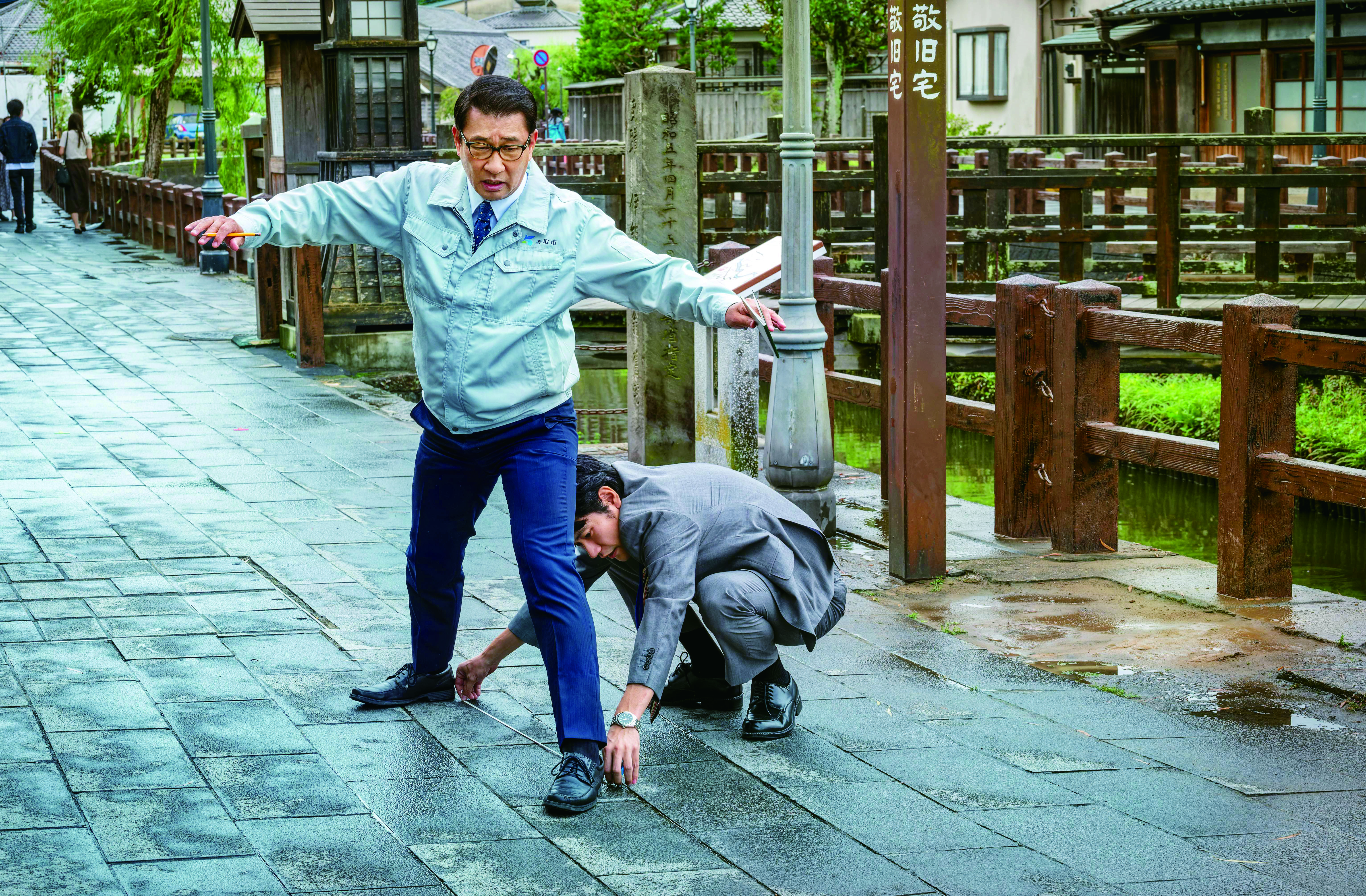
The reason Kato (Isao Hashizume) retired from screenwriting is that he too was fed up with placating commercially-minded executives and isn’t prepared to work on anything in which he doesn’t have full creative control which might be a problem a civil servant like Ikemoto could sympathise with if he wasn’t so desperate to bring him on board. It can’t be denied that the story of the map’s creation is itself fascinating if only in its technical detail of how these men were able to complete a map which almost perfectly aligns with modern aerial photography using only the technology of the early 19th century. As Kato points out, Tadataka was already in his 70s and the bulk of the work is simply walking all around Japan measuring it step by step. He’d only begun the project because he wanted to figure out the size of the earth by charting the Meridian Arc, but figured that out right away and still went on to work on the map for reasons largely unknown though later hinting a sense of anxiety in the late Edo society in believing that understanding the shape of the nation’s coastlines was the key to national defence in the wake of a Russian attack that had cost two of Tadataka’s local helpers their lives. 

Yet the drama idea is pretty much dead in the water after realising that Tadataka “died” three years before the map was completed. Fearing they’d lose their funding, Tadataka’s team buried him in secret and told people he was simply out on location while trying to finish the map before anyone found out knowing that their lives were at risk if the Shogun discovered they’d been lying to him and assumed they’d been doing it to continue claiming Tadataka’s stipend. To ram his point home, Nakanishi has the civil servants taking on the role of the mapmakers in Kato’s putative version of the story as they come together as a team to finish their mentor’s project but are eventually forgotten by history in much the same way as Ikemoto and his team will eventually be even as they too work for their betterment of their nation by taking care of the community. Ikemoto becomes something of a Tadataka figure, deciding to pickup a new skill in middle-age and aiming high in perfecting it (while slightly misleading the boss as he does so). A heartwarming tale of the value of teamwork and the perils of bureaucratic cost cutting, Nakanishi’s historical dramedy implies that not so much as changed in 200 years but that’s not entirely a bad thing as the dedicated team of civil servants do their best to put their city on the map.


Dreaming of the Meridian Arc screens at Japan Society New York on Nov. 12 as part of The Female Gaze: Women Filmmakers from JAPAN CUTS and Beyond.

Original trailer (no subtitles)

Images: ©2022 “Dreaming of the Meridian Arc” Film Partners

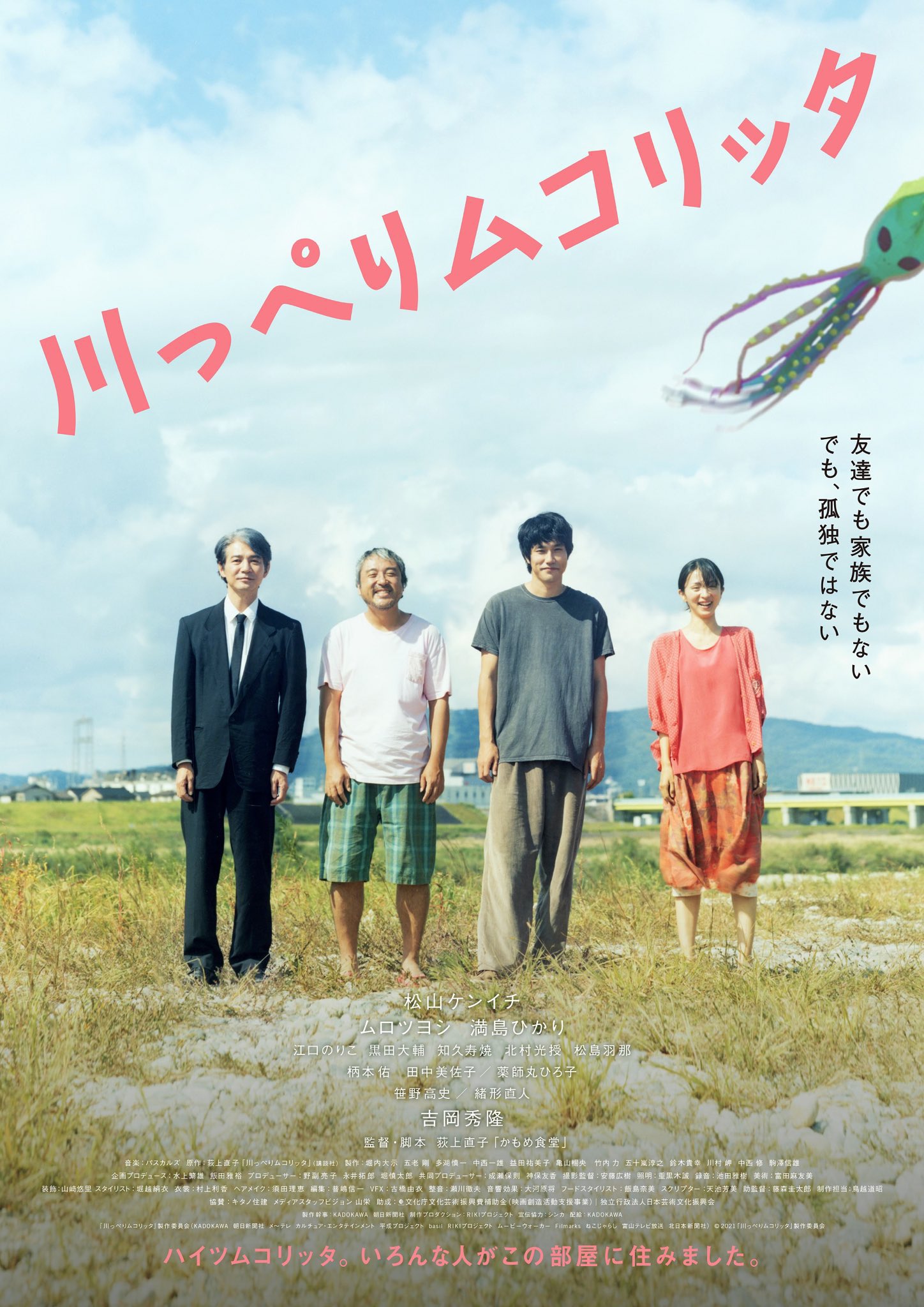
Riverside Mukolitta (川っぺりムコリッタ, Naoko Ogigami, 2021)

The spectre of death hangs over the protagonists of Naoko Ogigami’s adaptation of her own novel Riverside Mukolitta (川っぺりムコリッタ, Kawapperi Mukolitta) despite the sunniness and serenity of the riverside community where they live. They are each, in their own way, grieving and sometimes even for themselves in fear of a far off lonely death or else wondering what it’s all for and if this persistent suffering is really worth it, but eventually find a kind of solidarity in togetherness that can at least make the unbearable bearable. 

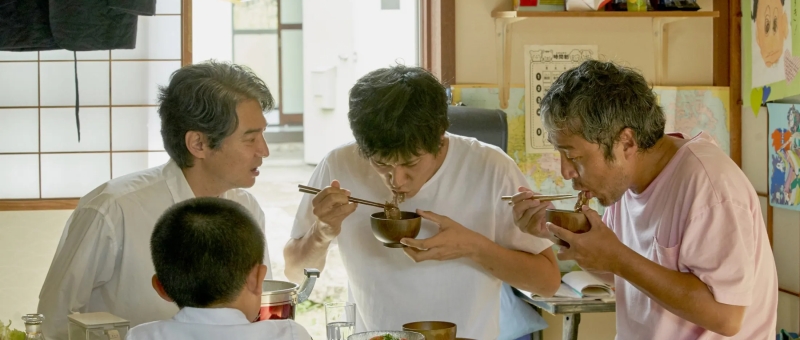
Recently released from prison, Yamada (Kenichi Matsuyama) has been sent to a remote rural village to start again with a job in a fermented squid factory and an apartment in a small row of houses by the river. His landlady Shiori (Hikari Mitsushima), an eccentric young woman with a little girl, assures him that though the building is 50 years old and many have passed through during that time no one has yet died in his unit. His neighbours Mizoguchi (Hidetaka Yoshioka) and his small besuited son Yoichi traipse the local area selling discounted tombstones reminding potential customers that no one lives forever and it might remove some of the burden of living to have your affairs in order for when you die. If all that weren’t enough, the last house in the row is thought to be haunted by an old lady whose ghost sometimes appears to water the flowers so they don’t turn to weed. Arriving home one day, Yamada discovers a letter from the local council letting him know that his estranged father has passed away in a lonely death and his remains are ready to collect at the town hall at his earliest convenience. 

Yamada is a man who keeps himself to himself, clearly ambivalent in trying to adjust to his new life wondering if he really deserves the opportunity to start again and if there’s any point in doing so. Seeing as his parents divorced when he was four and he had no further contact with his father, he is unsure if he wants the responsibility of his ashes which will of course contain additional expense for some kind of funeral. He meditates on the fates of “those who are not thought to exist”, such as the many homeless people who live by the river and are swept away by typhoons, and the elderly who die nameless and alone. When he ventures to the town hall, he discovers an entire room filled unclaimed remains some of which remain anonymous while the sympathetic civil servant (Tasuku Emoto) explains that in general they keep them for a year and then bury them together if no one comes forward to claim them. Aside from the staff members at the crematorium, the civil servant was the only person present at his father’s cremation which at any rate must be quite an emotional burden for him though he is familiar with the case and willing to talk Yamada through his father’s final days. 

Meanwhile, he’s bamboozled into an awkward friendship with the strange man from next-door (Tsuyoshi Muro) who brands himself a “minimalist” and claims to be self-sufficient in the summer at least with the veg he grows in the garden behind their apartments but insists on using Yamada’s bath because his is broken and he doesn’t have the means to fix it. Giving in to Shimada’s rather aggressive attempts at connection, Yamada comes to feel the power of community in finding acceptance from the other residents in the small row of apartments along with the paternal influence of his boss at the factory and the kindness of an older woman who works there. Yoichi, the tombstone seller’s son, is fond of playing on a junk heap which is in its way a graveyard of forgotten and discarded things from rotary telephones to CRT TVs and broken air conditioners, while he and Shiori’s daughter Kayo try to contact aliens from a purgatorial space where the living and the dead almost co-exist. Taking place at the height of summer during the Bon festival when the mortal world and the other are at their closet, Ogigami’s laidback style gives way to a gentle profundity in the transient nature of existence but also in the small joys and accidental connections that give it meaning. 


Riverside Mukolitta screened as part of this year’s Camera Japan.

Original trailer (no subtitles)

Noise (ノイズ, Ryuichi Hiroki, 2022)

The dark heart of small-town Japan is fully exposed in Ryuichi Hiroki’s ironic tale of murder and mass deception, Noise (ノイズ). “It’s for the sake of the island” the heroes are fond of claiming, one morally dubious justification leading to another as they contemplate the greater good saving their town while eroding its soul assuming of course that it had one to begin with. Addressing everything from rural depopulation to a back to the land philosophy, Hiroki’s quietly escalating drama imbues its “idyllic” wholesome island with an unsettling sense of quasi-spiritual unease as its well-meaning hero begins to buy in to his own saviourhood deciding all things are permissible so long as they serve the town. 

Following a recent trend, Keita’s (Tatsuya Fujiwara) big plan for saving the island is through the cultivation of black figs which he hopes to turn into a local industry boosting the economy and encouraging young people from the mainland to repopulate the rapidly ageing village. Ironically enough, it’s this that brings him to the attention of recently released ex-offender Mutsuo (Daichi Watanabe) whose kindly probation officer has brought him to the island in the hope of finding him an honest job so he can restart his life in a wholesome and supportive environment. Unfortunately, however, Mutso suddenly kills the old man for no particular reason and then begins wandering the island generally acting suspiciously and alarming the islanders including Keita’s best friend Jun (Kenichi Matsuyama), a hunter. When Keita returns home and discovers the bottle he’d seen Mutso drinking from lying in his garden and his small daughter Erina missing, he assumes the worst. He, Jun, and their childhood friend Shin (Ryunosuke Kamiki) recently returned to the island to take over as its one and only policeman, finally track Mutsuo down to one of the greenhouses and challenge him only for Mutsuo to fall over and hit his head during the tussle. 

Obviously on a personal level it’s not an ideal situation for the three guys but their first thoughts are for the island. Keita was supposed to be its saviour and now he’s killed someone in right under the figs that were supposed to rescue the economy. If this gets out it’s game over for everyone. The first lesson new policeman Shin had been taught by his departing predecessor (Susumu Terajima) had been that a policeman’s job is about more than enforcing the law and sometimes what’s “right” might not be “best” for the town using the example of a middle-aged woman with a history of bad driving who’d hit a wild boar. If she lost her license the family’s life would become impossible, so seeing as it’s “only” an animal, perhaps it’s better not to bother logging it as a “crime”. Faced with this situation, Shin decides the greater good of the island is more important and that covering up the crime is best thing for everyone only to be caught out when mainland police arrive having been alerted by the probation officer’s daughter. 

The situation is complicated by the fact that the town had been in the running for a government development grant based on the potential of the figs which gives everyone a reason not to want the scandal of a murder taking place on the “idyllic” wholesome island where according to the mayor, Shoji (Kimiko Yo), there is “absolutely no crime”. That may largely be true especially given the attitude of local law enforcement but is also an ironic statement seeing as we later discover Shoji apparently cannot sleep without her trusty taser by her side, just in case. Having lied in trying to cover up the murder, Keita is later forced to get even more of the townspeople involved in the conspiracy while they are it seems surprisingly happy to help because they believe in him as the saviour of the town and are prepared to do pretty much anything to help save the island. 

Stoic yet omniscient police detective Hatakeyama (Masatoshi Nagase) sneers at the villagers’ tendency to see all outsiders as enemies. “Typical of a dying town” he adds, commenting on the way the combination of isolation and desperation has brought the townspeople together as they present a united front in the face of the things they think threaten their small-town wholesomeness, some objecting to the idea of new residents moving in a fear which is ironically borne out in the arrival of a man like Mutsuo. Yet their small town wasn’t all that wholesome to begin with. Shoji had told the three guys to eliminate the “noise” that disturbs the island though in the end it isn’t’ so much Mutsuo who created the disturbance as their own quasi-religious determination to save the island by whatever means necessary. Keita wants to save the island because the island once saved him, but in saving it like this he ironically destroys the very qualities he hoped to preserve in building their new future on blood and lies. 

Meanwhile the strain of trying to conceal a murder exposes the cracks in the foundations of the friendship between the men, earnest policeman Shin continually conflicted in betraying his own ideals, while hunter Jun’s personal insecurity in continually playing second fiddle to saviour Keita who is so obsessed with the idea of being the island’s chosen one that he never notices the pain in each of his friends, gives rise to a degree of instability in their otherwise carefully crafted plan. Maybe this island isn’t so idyllic after all, keeping a dark hold on the bewitched Keita as his increasingly worried wife Kana (Haru Kuroki) suggests concerned he’s “becoming someone else” in buying in to his own messianic hype. “What are you trying to protect?” Hatakeyama had asked him hinting at the dark side of the furusato spirit but also at his misplaced priorities as the forces of greed and anxiety threaten to consume the wholesome soul of moribund small-town Japan. 


Noise streams in Europe until 30th April as part of this year’s Udine Far East Film Festival.

international trailer (English subtitles)

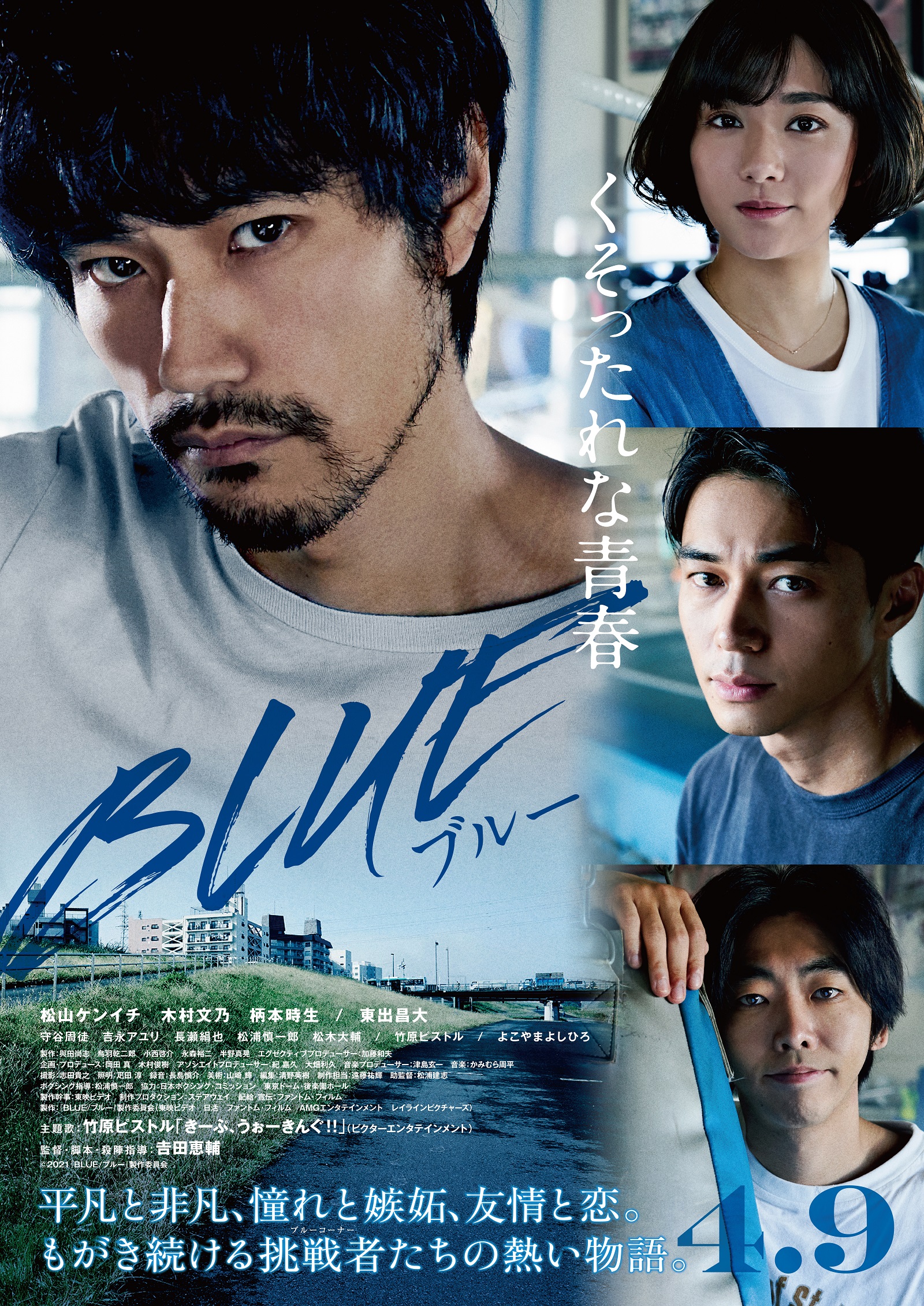
Blue (BLUE/ブルー, Keisuke Yoshida, 2021)

“Let me walk on my own feet” a defeated boxer insists, reminding us that his victory is in getting up even if he always loses. The heroes of Keisuke Yoshida’s Blue (BLUE/ブルー) are by and large “losers”, though the act of winning lies not so much in knocking out your opponent as in continuing to show up for the fight. Blue is not only a state of mind, but also the colour of the challenger’s corner, the spiritual home of these dejected underdogs who refuse to lie down even when seemingly defeated. 

Urita (Kenichi Matsuyama), for example, stays in boxing because there’s nothing else he wants to do though in truth he’s not much good at the sport. What he is good at is encouraging others and even if he’s a bust in the ring he’s an excellent coach and warmhearted mentor. His friend, Ogawa (Masahiro Higashide), meanwhile, is on track to take the national title but is also in denial about a medical condition that could end his career in the ring. And then there’s Narasaki (Tokio Emoto) who only took up boxing because of an offhand comment from a girl he fancied at the pachinko parlour where he works after he got beaten up by a teenager while feeling his masculinity challenged by a handsome coworker. 

Narasaki rocks up at the gym and refuses to do anything very strenuous because he only wants to look like someone who boxes, not actually box. Nevertheless, he discovers a genuine aptitude for the sport, gradually overcoming his fear of getting of hurt as he begins to enjoy the discipline of training. His journey directly contrasts with that of one of the other young hopefuls at the club who originally knocks him out during their first sparring match but later falls victim to his own egotism, insisting that he doesn’t need to take advice from a “loser” like Urita and has his own way of doing things. In his characteristic way, Urita just smiles and reminds him it’s important to master the basics but the hotheaded youngster won’t listen, blaming his lack of success on everyone else before getting himself seriously injured trying to prove his own way is superior. 

It’s the basic moves which later prove valuable to Narasaki as he attempts to take on a powerful rival, a reminder that there’s no substitute for nailing the fundamentals. Talking over their respective differences, Ogawa wonders if he really loves boxing as much as Urita does but has then to accept that “passion and talent are different” which is why he’s succeeding where Urita failed. In any case, it’s less about winning in the ring than it is about hard work and mastery of a craft. Smarting from his own early defeat, Narasaki also snaps back that he doesn’t want a loser’s advice only to bitterly regret it afterwards, realising that Urita’s strengths lie at the side of the ring rather than inside it. 

While Ogawa battles his illness, Narasaki also finds himself conflicted caring for his elderly grandmother and feeling guilty that his newfound love for boxing has led him to neglect her. Urita battles a sense of resentment and despair he covers with good humour in being fully aware that he doesn’t have what takes while attempting to encourage others only latterly confessing that a part of him always hoped Ogawa would lose. The demands of a sporting life may have endangered familial and romantic relationships but the guys do at least have each other and the familial camaraderie of the gym.

The important thing, the film seems to say, is to keep fighting, win or lose. Experiencing various setbacks, the guys each find themselves inhabiting their own internal rings, unable to let go of boxing glory no matter how elusive it may prove to be. Yoshida plays with genre norms such as training montages and ring-set climaxes, but also undercuts them in his frequent allusions to defeat allowing the heroes to lose and sometimes repeatedly solely so that they can get right back up again, on their own feet, ready to fight for something be that mastering the art of boxing or simply gaining a new sense of personal empowerment born of determination and self belief as they recommit to learning the “basics” of a fulfilling life. 


Blue streams in Europe (excl. Spain/Andorra) until 2nd July as part of this year’s hybrid edition Udine Far East Film Festival.

Original trailer (English subtitles)
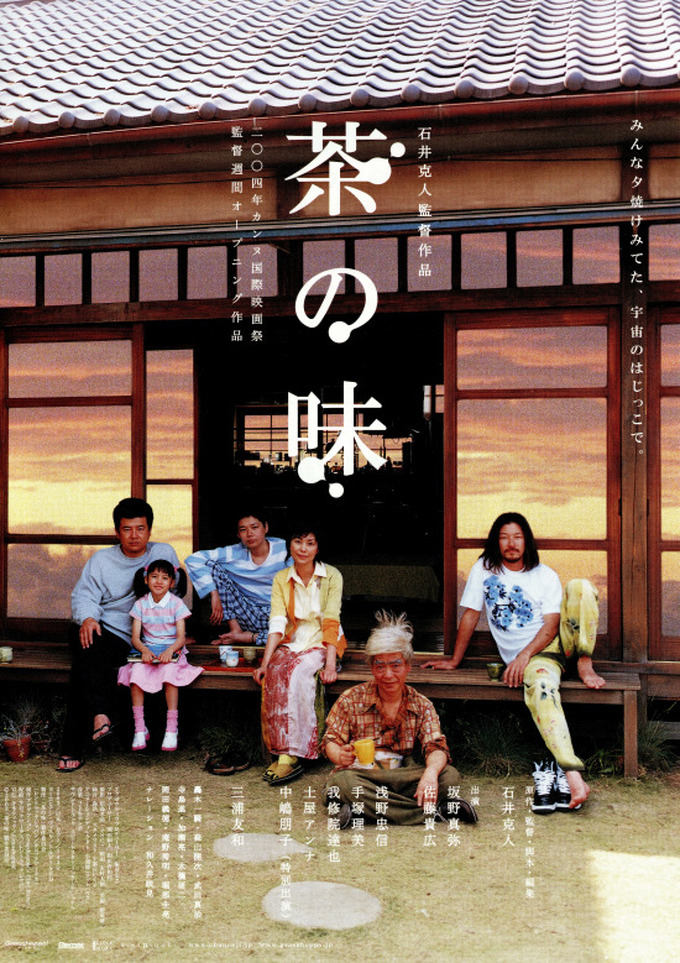
The Taste of Tea (茶の味, Katsuhito Ishii, 2004)

Katsuhito Ishii is among a small coterie of directors who developed a cult following in the early 2000s but have since fallen by the wayside. In Ishii’s case, that may partly be because he chose to shuttle between live action and animation, continuing to work on short films and TV projects with the consequence that he’s directed only five (solo) features since his 1998 debut Shark Skin Man and Peach Hip Girl, the last of which, grisly manga adaptation Smuggler, was released back in 2011. Smuggler had perhaps taken him back to the “Tarantino-esque” (Ishii also worked on the animated sequence for Kill Bill), as they were sold at the time, absurdist gangster dramas of his earlier career, but all these years later it is something altogether softer if no less strange that has stood the test of time. 

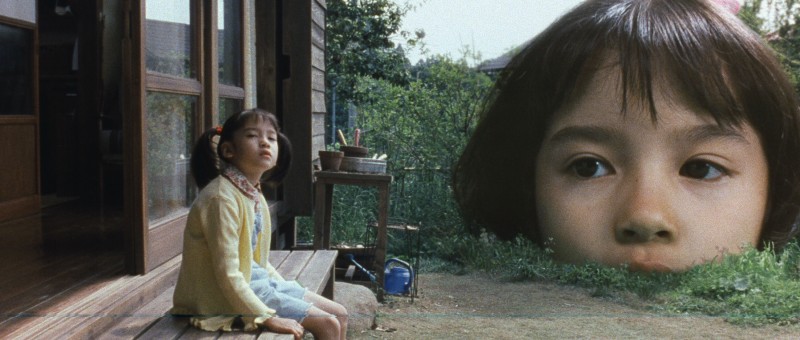
2004’s The Taste of Tea (茶の味, Cha no Aji) with its Ozu-esque title, rural setting, and preference for meditative long takes, is a “conventional” family drama. A collection of surreal episodes in the life of an ordinary family living in the countryside in the contemporary era, there are no real crises though each member is perhaps heading into an individual point of transition which, in the main, they cope with alone. Son Hajime (Takahiro Sato), whose flat-out running opens the film, is in the midst of adolescent romantic confusion while his younger sister Sachiko (Maya Banno) is quite literally plagued by self-consciousness, haunted by a giant version of herself continually staring at her. Mum Yoshiko (Satomi Tezuka) is making an indie animation at her kitchen table in an attempt to assert herself outside of her role as wife and mother, while dad Nobuo (Tomokazu Miura), a hypnotherapist, is a barely visible presence. And then there’s grandad Akira (Tatsuya Gashuin), a playful figure tormenting the children while helping Yoshiko figure out the bizarre poses needed for her project. 

Ishii signals his commitment to the surreal during the opening sequence which begins in darkness with only the sound of Hajime’s panting as he chases the train which will take his love away from him. Sadly he is too late, she is already gone and he can’t even console himself that he did his best because he knows deep down that even if he saw her he would have not have had the courage to say what he wanted to say which in any case he could have said at any other time but never did. As he’s thinking, a bulge develops in his forehead from which emerges a small train, carrying her out of his present and into a nebulous other space of memory. Nevertheless, it’s not long before Hajime finds a new love, a blissed out expression permanently on his face as he dreams of go-playing transfer student Aoi (Anna Tsuchiya). 

For all the idyllic countryside, however, there is darkness even here as the children each discover, Hajime and his dad witnessing a yakuza altercation outside the station, and Sachiko given the fright of her life by a “mud man” in a patch of ground technically out of bounds but central to her quest to be free of her other self. Uncle Ayano (Tadanobu Asano), an aimless young man working as a sound mixer undergoing a wistful moment of his own in insincerely congratulating his high school girlfriend on her marriage, tells his niece and nephew of his own strange haunting incident involving a ghostly gangster (Susumu Terajima) from which he thinks he was able to escape after learning how to do a backflip on the monkey bars. As it happens, that wasn’t it at all, but even small achievements have value as Sachiko discovers on realising that someone else was watching her struggle from a distance and evidently envisaged for her a happy resolution, a giant sunflower eventually engulfing all with a wave of love that also marks a point of transition, washing away its anxiety.  

A timeless portrait of rural family life, Ishii’s vision is surreal but also very ordinary and filled with the details of small-town living with all of its various eccentricities from two nerdy guys working on their robot cosplay to baseball playing gangsters and avant-garde dancers performing for no one on the shore. “It’s more cool than weird, and it stays in your head” Yoshiko says of a song composed by eccentric third brother Todoroki (Ikki Todoroki) in praise of mountains. The Taste of Tea has a strange and enduring flavour, savouring the surreal in the everyday, but finding always a sense of joy and serenity in the small moments of triumph and happiness that constitute a life. 


The Taste of Tea is released on blu-ray in the UK on 5th October courtesy of Third Window Films in a set which also includes a 90-minute making of feature and the “Super Big” animation.

Original trailer (English subtitles)

Miyamoto (宮本から君へ, Tetsuya Mariko, 2019)

Three years after Destruction Babies, Tetsuya Mariko returns with another ultra-violent though strangely humorous masculinity drama as a mild-mannered salaryman embarks on a quest to win the heart of his one true love by proving himself a man even if aware that his efforts are entirely meaningless while he strikes out where it counts. Inspired by Hideki Arai’s manga, Mariko previously adapted Miyamoto (宮本から君へ, Miyamoto kara Kimi e) as a late night TV drama with the majority of the cast reprising their roles for the big screen feature.

As the film opens, the titular Miyamoto (Sosuke Ikematsu) is walking bruised and bloodied through a children’s park, staring at his unrecognisable face in the hazy mirror of a public bathroom. A regular salaryman, he’s later taken to task by his boss (Kanji Furutachi). After all, how does he expect people to do business with him when he’s lost all his front teeth and has his arm in a sling? His boss reminds him he’s about to be married and will soon be a father so perhaps a little more forward-thinking responsibility is in order. It seems that Miyamoto got into some kind of fight and improbably enough he won, the other guy apparently in hospital not to recover for months though thankfully he does not want to press charges. Nevertheless, Miyamoto seems strangely cheerful, happy in himself as he takes his bride to be, Yasuko (Yu Aoi), home to meet his parents who don’t disapprove but are extremely put out by his continued secrecy especially as Yasuko is already pregnant though something tells us there’s much more to this than your average shotgun wedding.  

Skipping back between the present day of the happily settled couple and the various stages of their courtship we begin to see a pattern developing as the hapless young salaryman falls for the pretty office lady only to discover she was technically using him to break up with an obsessive ex struggling to accept that their relationship is over. Challenged by bohemian playboy Yuji (Arata Iura), Miyamoto instinctively barks out that Yasuko is a special woman and he will protect her at all costs though the jury’s out on how exactly he plans to do that. In any case, Yuji exits and even if unconvinced, Yasuko is taken in by the idea of finding a protector. But Miyamoto is less than true to his word. When it really counts, he lets her down, passed out drunk as she’s assaulted by a friend from his rugby team (Wataru Ichinose). What ensues is partly, in his mind, a means of making amends to her by getting his revenge and a quest to reclaim his self-respect by asserting his masculinity in besting his girlfriend’s rapist in a fight. “It was me he insulted” Miyamoto somewhat problematically insists, rage shovelling rice into his mouth directly from the cooker while Yasuko can barely contain her resentment and exasperation with his continued failure to follow through while painting himself as the victim in her rape. 

Consumed by toxic masculinity, Miyamoto does indeed frame everything through the prism of his fracturing manhood, never jealous or abusive but comparing himself unfavourably to the other men in Yasuko’s life and convincing himself the way to beat them all is by proving himself the most manly through the medium of pugilism. Meanwhile, he emotionally neglects the woman he claims to love and promised to protect, temporarily distancing himself from her while he embarks on his quest, leaving her entirely alone to deal with her trauma. Yasuko makes it clear that she doesn’t care about his pointless and idiotic need to validate himself through male violence, but he does it anyway and then expects her to be impressed (which she isn’t, really). In any case he freely admits he did it all for himself, literally shredding his rival’s manhood in order to retake his own in addition to gaining an extremely ironic form of revenge.  

Absurd and ridiculous as it is, Miyamoto’s quest does at least allow him to gain the self-confidence which will eventually allow him to patch things up with Yasuko, ironically by affirming that he no longer sees the need to look for approval and will protect her and their new family forevermore. A dark satire of fragile masculinity filled with cartoonish yet surprisingly graphic violence, Mariko’s third feature nevertheless retreats from the pure nihilism of Destruction Babies towards a more positive if perhaps equally uncomfortable resolution as the no longer quite so insecure Miyamoto prepares to enter a new phase of his life as a paternal figure and protector of a family.


Miyamoto streams in the US via the Smart Cinema app until Sept.12 as part of this year’s New York Asian Film Festival.

Original trailer (no subtitles)

Saint Young Men (聖☆おにいさん, Yuichi Fukuda, 2018)

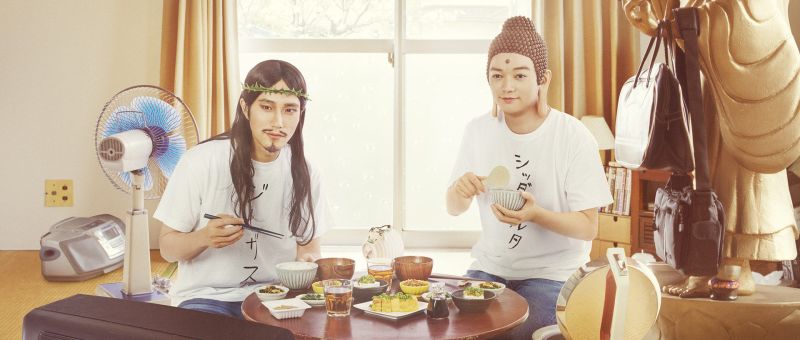
Saint young men posterWhat if Buddha and Jesus were flatmates in modern day Tokyo? Hikaru Nakamura’s much loved manga Saint Young Men (聖☆おにいさん, Saint Oniisan) attempted to find out, casting the two holy beings as conventional manga slackers on “vacation” in the mortal realm, supposedly researching modern Japanese society. A firm favourite with fans, the franchise has already been adapted into a popular anime and now receives the live action treatment from none other than Gintama’s Yuichi Fukuda.

Split into a series of short vignettes mostly featuring only Jesus (Kenichi Matsuyama) and Buddha (Shota Sometani) in their apartment, Saint Young Men first aired as a 10-part web series before being compiled into a 70-minute movie. The central conceit is that Jesus is a cheerful if slightly feckless hippy, while Buddha is the calm and the responsible one making sure he’s well looked after. Perhaps surprisingly, Saint Young Men presents its vision of contemporary Japan from the point of view of the two guys as they explore everyday life, occasionally including explanatory narration from a distant authorial voice which, presumably, contains information widely known to the target audience, such as an explanations of “White Day” – Japan’s secondary Valentines in which men given chocolates are expected to return the favour with gifts three times the cost, and spring festival “Setsubun” in which beans are thrown at people wearing ogre masks to frighten off bad luck.

For the two guys these are fascinating little anthropological details they can get quite excited about despite their thousands of years of existence. On a trip to the convenience store, Jesus is thrilled to think he’s finally “made it” after 2000 years because some high school girls said he looked like Johnny Depp. Buddha goes to see if he looks like someone too, but the girls immediately recognise him as looking “like Buddha” which is both a disappointment and somehow validating. Meanwhile, he laments that the majority of his artistic renderings have only captured him in his “fat period” rather than the handsome figure he currently cuts. 

Bickering like an old married couple, the guys fight about the usual things – money, and the irresponsible use of it. Jesus has a bad habit of buying random stuff he doesn’t need off the internet, causing Buddha to get so annoyed he starts physically glowing and only calms down when Jesus gives him a present, a manga artist’s starter kit. Sadly, Buddha is proved right when Jesus gets bored with his random electric pottery wheel after only a few minutes, but is witness to an unexpected miracle when the clay is magically transformed into bread, turning the wheel into a “bread oven” with which Jesus seems very pleased only to tire of it just as quickly.

Trying to keep their “real” identities secret, the guys are keen to keep their abilities behind closed doors – something Buddha forgets when he hatches on the great idea of levitating to save floor space. Jesus comes home and quickly closes the curtains in case someone thinks they’re some kind of weird cult. The guys consider moving somewhere with a little more room, but discover that even for holy beings it’s almost impossible to find a decent apartment in modern day Tokyo that doesn’t cost the Earth. The primary reason Jesus wanted to move, however, is not so much that the apartment’s a little poky for two full-grown guys, but that the other place was gated which means he won’t be getting bothered by cold calling newspaper sales representatives.

Jesus may be too nice to keep saying no to pushy salesmen, but Buddha has a few unexpected trust issues. Faint from hunger, the guys think about ordering a take away, but Buddha is a strict vegetarian and worries about the chain of communication involved in food preparation. He can only trust that the restaurant follows the instructions he gives them honestly and that the delivery guy won’t do anything weird with the food on his way over. In the end, you just have to have faith, but Buddha is struggling while Jesus is content to let it all hang out. Something similar occurs when earnest Buddha unwisely meditates for hours in the beautiful snow in only his ironic T-shirt and catches a cold with only Jesus to nurse him. Jesus wants to take him to the hospital, but they don’t have insurance and don’t want to risk extortionate medical bills. Jesus’ healing powers apparently don’t work on other holy beings, and so he finds himself healing a bunch of people at the hospital to earn a free visit from a doctor with whom Buddha can only communicate through possession and telepathy.

Obviously very low budget and mostly starring just the two guys with additional appearances from their middle-aged landlady and the confused doctor, Saint Young Men is very much a Fukuda production bearing his familiar hallmark of waiting slightly too long for a joke land, which it often does not. Though seeing all 10 episodes in one go necessarily flags up their essential sameness, they do provide an amusing exploration of slacker life in contemporary Japan with occasional forays into warmhearted cross-cultural exchanges between the serious Buddha and scatterbrained Jesus.


Original trailer (no subtitles)

Promare (プロメア, Hiroyuki Imaishi, 2019)

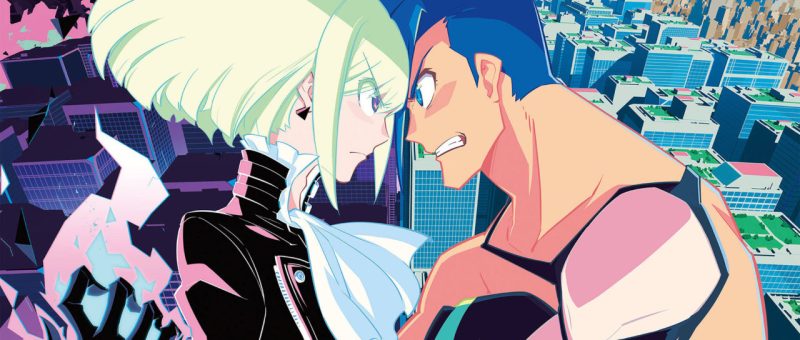
Promare poster 1It’s one of life’s ironies, sometimes the best way to stop a fire is to scorch the earth. The heroes of Studio Trigger’s first theatrical feature co-produced with XFLAG, Promare (プロメア, Puromea), are embodiments of fire and ice – a “mutant” who can shoot flames from his fingertips, and a fireman with a “burning soul”. Yet what they discover is that there is a peculiar power in their innate contradictions, actively harnessing the energy of their opposition to combat a man who thinks nothing of burning the world to save his own skin.

Our hero, Galo (Kenichi Matsuyama), is a firefighter with the Burning Rescue squad who has a talent for cheesy one liners and an overinflated sense of confidence in his own abilities. 30 years previously, the world was plagued by a series of strange incidents of spontaneous combustion later attributed to the “Burnish” phenomenon in which some members of humanity developed a mutation that allowed them to manipulate fire. The danger eventually died down, but the “Burnish” as they came to be known continued to exist in society as a kind of oppressed underclass, viewed with fear and suspicion and largely unable to live “normal” lives even if they wanted to. On a supposedly “routine” job, Galo unexpectedly encounters the leader of the Mad Burnish “terrorist” organisation and determines to bring him in, eventually awarded a medal for his pains.

As might be assumed, however, all is not as it seems. The Burning Rescue squad work for Galo’s mentor, Kray Foresight (Masato Sakai), now the governor and an enormously wealthy, influential man thanks to his advances in scientific firefighting technology. Kray reveals that the Earth is sitting on a volatile layer of magma somehow connected to the existence of the Burnish which threatens to destroy the planet if it cannot be properly controlled. This is a kind of justification for Kray’s ultra hardline stance against the Burnish who are hunted down and captured by the Freeze Force (see what they did there?) simply for living their lives even if they have committed no crimes.

Despite the nature of their work, the Burning Rescue squad are a more progressive bunch. They don’t approve of the social prejudice against the Burnish many of whom are just minding their own business and pose no threat to anyone, nor do they approve of the role the Freeze Force seems to play in their society. Mostly what they care about is stopping fires and making sure people endangered by them are eventually saved. They know that the Freeze Force’s persecution of the Burnish is at best counterproductive and fuelling the kind of resentment that makes them want to burn things. Wandering into the Mad Burnish hideout, Galo sees a different side to their struggle and learns a few home truths about his own side from the dashing rebel leader Lio Fotia (Taichi Saotome).

Burning Rescue and the Mad Burnish ought to be opposing poles but display a curious symmetry in their fierce loyalty to their own and emphasis on team work. Others, meanwhile, think only of themselves, coming up with nefarious plans to let the planet burn and move to a new intergalactic home with a starter stock of the most “valuable” 10,000 humans while everyone else succumbs to the flames. The Burnish become merely fuel, sacrificed for a “greater good” for a “chosen few”.

Galo and Lio think they’re “chosen ones” too, in a sense, but are flatly told that their role in events is really just fortuitous coincidence. Nevertheless, the fate of the world depends on their ability to bridge their differences, harnessing the unique capabilities of fire meeting ice against the forces of cold self-interest. Sometimes the only way to stop a fire is to let it burn out bright, which is what the guys discover in trying to find a way to quell that troublesome magma. Recreating the anarchic spirit of Kill la Kill, Studio Trigger’s first theatrical feature is a colourful riot of post-modern absurdity, but has its heart firmly in the right place with a strong progressive pro-diversity message in which we save the world only by saving each other.


Original trailer (English subtitles)