I Did It My Way (潛行, Jason Kwan, 2023)

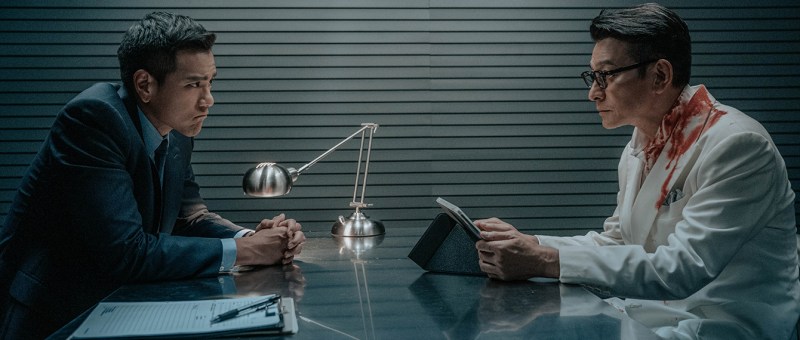
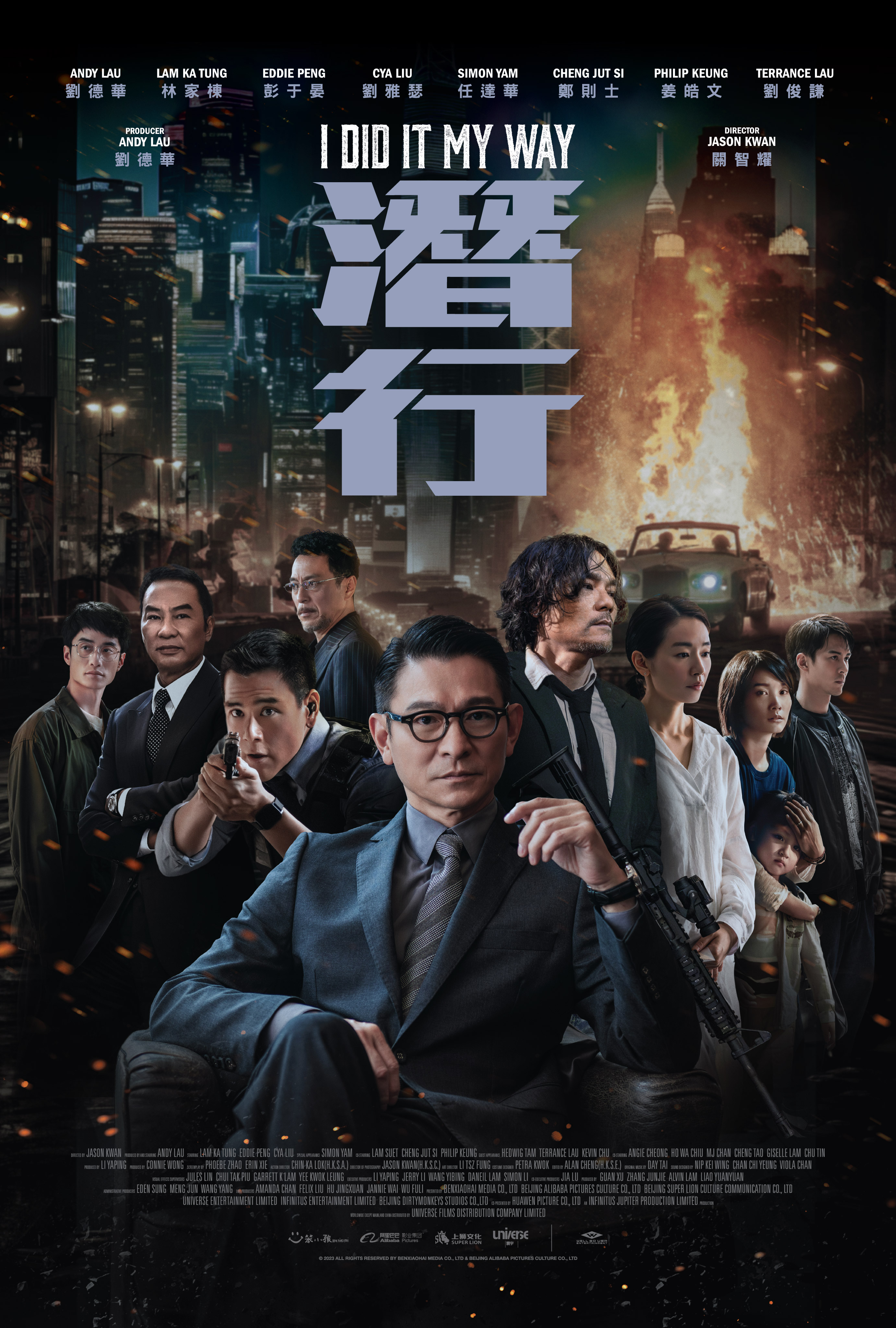
“Oldies are still the best,” one bad guy tells another while listening to a retro pop song about the inability to distinguish good from evil, “life was simpler back then.” Jason Kwon’s I Did it My Way (潛行) is in many ways an attempt to recapture the action classics of the 90s starring many of the same A-listers though they are all 30 years older and in some cases really ageing out of the kinds of roles they’re accustomed to playing in these kinds of films. Nevertheless, the action is updated for the contemporary era in its unsubtle messaging that drugs and cyber crime are bad, while the police are definitely good and will always win.

Indeed, barrister George Lam (Andy Lau Tak-wah) is not a particularly sympathetic villain and is given little justification for his crimes save doing things his way. Cybercrime specialist Eddie Fong (Edward Peng Yu-Yan) isn’t terribly sympathetic either, but mostly because of his bullheaded earnestness. Chung Kam-ming (Simon Yam Tat-wah) asks him to work with regular narcotics cop Yuen (Lam Suet), but Eddie originally refuses, insisting that they formed their new cybercrimes squad because the “old ways” weren’t working, so it’s better that they keep their investigations separate, which is of course quite rude to Yuen especially as he goes on to add that Chung’s only asked him out of politeness and professional deference. Chung, however, reminds them that they’re all part of one big family and should learn to work together. 

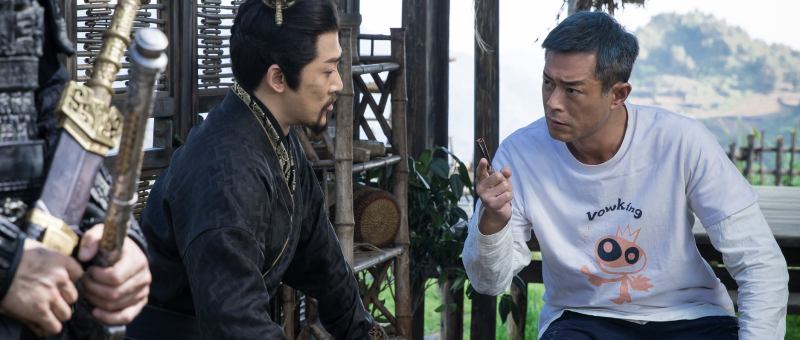
One might think that a criminal enterprise is also a kind of family, but it’s shown to be illegitimate in comparison to that of the police. Yuen’s undercover agent, Sau Ho (Gordon Lam Ka-tung), has a family he’s trying to protect, as does Lam who is about to marry his much younger pregnant girlfriend. For them, family is also a weakness because it gives them a reason to be afraid not to mention something to lose. Beginning to suspect him, Lam uses Sau Ho’s wife and son as leverage, symbolically taking them hostage along with Sau Ho’s promised future that would allow him to emigrate for a life of freedom under a new identity. 

Like the song says, Sau Ho is also struggling to define his identity as an undercover cop caught between his original desire to fight crime and the criminal lifestyle he’s been forced to live which leaves him never quite sure what side he’s actually on. Lam claims he only started dealing drugs after his girlfriend was raped and subsequently developed depression but that’s too late for him to turn back and so he’s gone all in. There is a kind of brotherhood that arises between them that’s permanently strained by their positioning on either side of this line and the inevitability of confrontation. Fong promises to save Sau Ho, but he failed to save most of their other undercover officers, while Sau Ho and Lam pledge to save each other, though the act of salvation could mean different things to each of them while both torn between their respective codes and the natural connection that’s been fostered by their long years working together as part of the gang. 

The severing of this connection is again part of the price for their involvement with crime, with Lam led to believe that his choices have ironically robbed him of the pleasant familial future he dreamed of, while Sau Ho is returned to the familial embrace of the police force. Chung is repositioned as a benevolent father who can save his men, while Eddie too is forced to reintegrate by working with the other officers to fight cybercrimes which often intersect with those of other divisions. While the film includes several action sequences, it also insists that the major battle takes place online between hackers and police computer specialists, dramatising these online fights with CGI to slightly better effect than 2023’s Cyber Heist but still struggling to move on from an outdated iconography of the web. Even so, it’s clear that crime never pays even if a policewoman asks herself if it’s really worth it on a trip to the police cemetery. The sun has come out once again, making the dividing line between good and evil clear if also reinforcing the paternalistic authority of law enforcement under which living life “my way” will never be tolerated.


I Did It My Way is available digitally in the US courtesy of Well Go USA.

Trailer (English subtitles)

Little Red Sweet (紅豆, Vincent Chow, 2024)

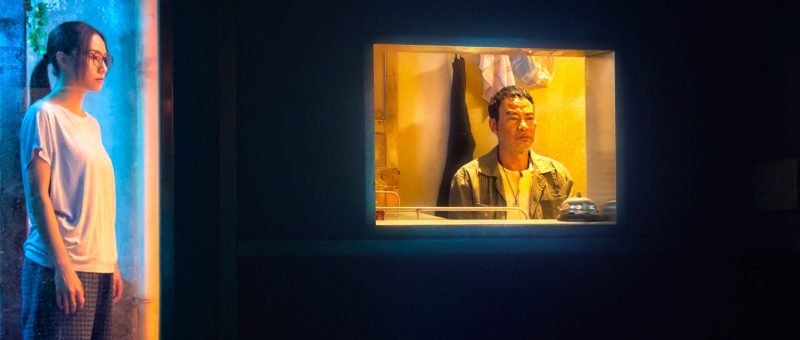
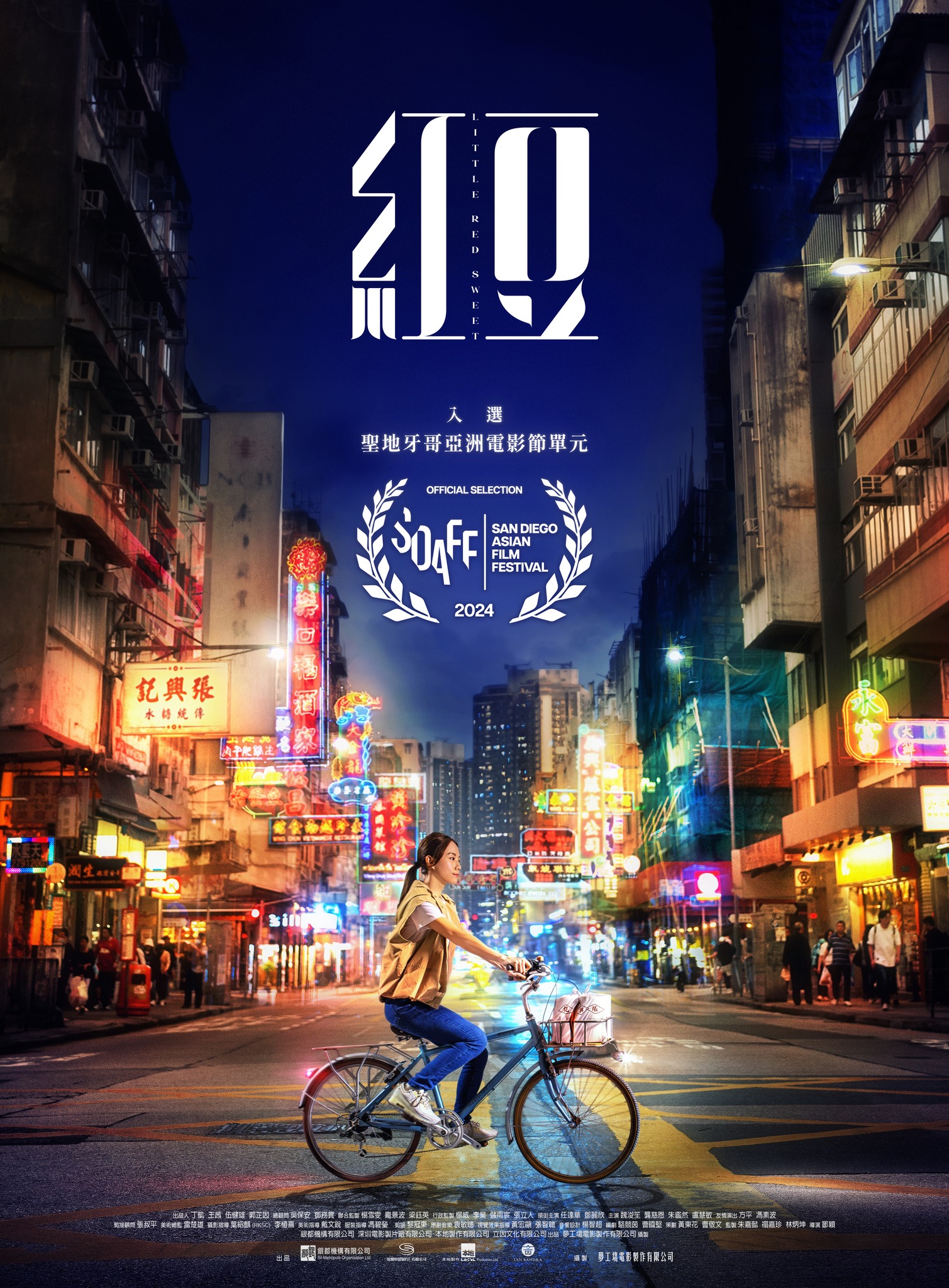
Towards the conclusion of Vincent Chow’s poignant drama Little Red Sweet (紅豆), the heroine says she thinks her family’s sweet soup shop is important because it helps people hang on to memories through food. Like many, May (Stephy Tang) seems to be displaced in a Hong Kong that’s changing all around her while other things stay frustratingly the same from her father’s (Simon Yam) refusal to teach her the family recipe because he wanted to pass the shop onto his son to her brother’s sexist assumptions that the housework is her responsibility while staying home playing games rather than helping in the shop.

Indeed, it’s not until matriarch Lin (Mimi Kung) suffers a stroke that everything she did for the family is thrown into stark relief. It’s clear she did most of the heavy lifting at the shop, especially when it comes to customer interactions which are not May’s father’s forte. He doesn’t speak English and has to fetch Lin when a pair of tourists want to pay. Unable to run the shop alone, he asks his son Boyo (Jeffrey Ngai) to help, but he refuses despite having no other obligations as a cram school student who mainly stays home and plays games. Boyo doesn’t help with the housework either, simply expecting that May will take care of it and him despite his ongoing obnoxiousness. 

Because of his refusal, May finds herself giving up her dream job as an air stewardess to help out in the shop though her father won’t let her near the kitchen and seems as if he’d still ideally like to hand the shop down to his son or perhaps close it for good to free both children from the burden of caring for its legacy. May’s job as an air stewardess may have symbolised her desire for escape but also reflects her rootlessness and sense of displacement. Before her mother was taken ill, she’d suggested using her staff discount to go on a family holiday which would have been their first because her father never wanted to close the shop though it was obviously not to be nor could she repair their familial bonds through her work. Both she and her tentative love interest (Kevin Chu) recall how low the planes seemed to fly when they were children and how distant they seem now reflecting not a broadening of their horizons but the impossibility of escape along with a loss of intimacy and the widening spaces between people.

But as Canadian-Hong Kong travel writer Soar says, it’s the people not the place and it’s the sense of community that May values in the old-fashioned shopping arcade that is inevitably targeted for redevelopment threatening the future of the shop. First trying to resist the march of progress, May eventually starts looking at new spaces but the ones she sees are slick, modern, and devoid of both warmth and character. A journalist who comes to interview May asks her why she wants to carry on a shop selling traditional desserts that might not be so popular among the younger generation but May says that it’s important as they help people hang on to their memories as if she were also talking about an older Hong Kong that is fast disappearing the soul of which lies in the sense of comfort this sweet bean soup provides. Eventually she’s presented with a choice, like many of her generation wondering whether to take her memories somewhere else or stay and try to salvage something from rapidly receding past. 

Her father’s eventual capitulation in agreeing to teach her how to make the family’s iconic sweet red bean soup is akin to a baton being passed, but also a sign of progress in accepting her as his heir rather than insisting on the feckless Boyo whom he also takes to task for his reluctance to look after himself and assumption that it’s his sister’s job to cook and clean for him. Though perhaps bittersweet, there is indeed something poignant in May’s determination to remake a home in a shrinking Hong Kong where community matters and kindnesses are repaid with interest years after they’d seemingly been forgotten. As Soar had said, it’s the people not the place or in another sense perhaps it amounts to the same thing and the taste of home you only find in the warming sweetness of red bean soup.


Little Red Sweet screens Nov. 8/11 as part of this year’s San Diego Asian Film Festival.

Original trailer (no subtitles)

Sisterhood (骨妹, Tracy Choi, 2016)

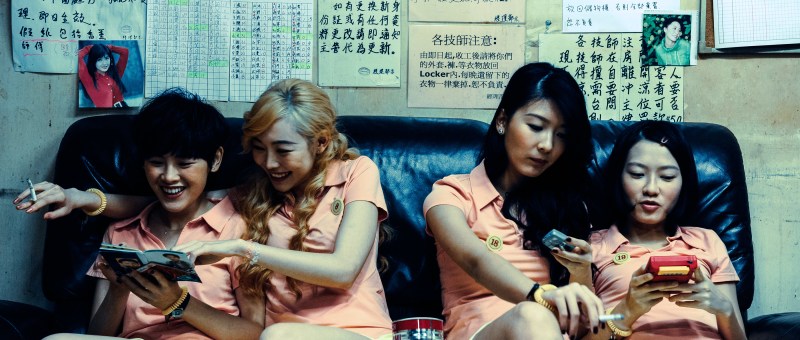
Middle-aged regret and irreconcilable loss bring one lonely woman home from exile in Tracy Choi’s melancholy exploration of impossible love and illusionary futures, Sisterhood (骨妹, Gwat Mui). Moving from present day Taiwan to pre-handover Macao, Choi’s emotionally complex drama is both a chronicle of changing times and not as the collection of women at its centre attempt to protect themselves from a relentlessly patriarchal society through female solidarity only to see their fragile bonds disrupted by a political sea change. 

Choi opens in the present day with a now almost middle-aged Sei (Gigi Leung Wing-kei) visiting a doctor’s surgery after fracturing her wrist, apparently the result of an all too common drunken accident. Now living in Taiwan and running a small inn with her devoted husband who is perhaps overly supportive in his willingness to enable her drinking on the grounds that it keeps her “happy”, Sei appears to be quietly miserable. Spotting an ad in a newspaper telling her that an old friend, Ling (Jennifer Yu Heung-ying), with whom she’d long since lost touch has passed away jolts her out of her inertia, journeying back into the past as she finds herself travelling to a very different Macao to that of her youth in which the young Sei (Fish Liew) worked as a masseuse and was part of a quartet of close friends trying to survive the indignities of life on the margins through shared sisterhood. 

Sei’s “breakup” with Ling occurs on the very day that Macao returns to China, her friends seemingly thereafter scattering as she finds herself agreeing to a rebound marriage with an earnest Taiwanese customer who abruptly proposed on their very first date. We hear Ling tell her that she has found a man willing to marry her, but that her son Lok is an obstacle and so she plans to send him to the Mainland, cruelly ignoring the part that Sei has been playing in their lives as a co-parent even if, as we discover, the relationship between the two women goes largely undefined. Having moved in with her after losing her apartment, it is Sei who is there to support Ling when she becomes unexpectedly pregnant by a casual boyfriend/customer, eventually convincing her to have the baby by assuring her they’ll raise it together, but despite their pledges to stay together always the spectre of heteronormativity hangs over them constantly. Mocked in the street by a couple of old busybodies, Ling reacts with extreme sensitivity to the word “lesbian”, quickly moving her hand away from Sei’s as they push their son together in his pushchair lest conclusions be drawn from their closeness. Sei, by contrast, pays it no mind though this could easily be because she knows it isn’t “true”, at least in any concrete sense. The two women are evidently not lovers, if perhaps in love, but so impossible does their relationship seem to them that they lack the ability to recognise it let alone envisage its future. 

It is perhaps this degree of internalised shame that leads Ling to push Sei away, believing either that she will be “happier” in a heterosexual relationship, that she is in some way preventing her from living a more socially conventional life, or just afraid of her own feelings in assuming they are not returned and that she does not in any case deserve romantic happiness. The irony being that Sei’s married life seems to have been one of miserable emptiness and regret, stubbornly attempting to make the conventional work without quite knowing what the cause of her pain really is. On her return to post-handover Macao, she’s confronted with the failed futures of all her friends, one now a young grandmother owning her own business but forced to work herself to the bone to provide for her family, and the other near destitute and alone, floundering in the casino paradise of the upscale modern city. Meeting the now grown Lok she confides that she’s happy for him because lost as he is he has choices they never had in their young lives in which they did anything they could just to survive. 

The female solidarity which had enabled the four women to navigate a world in which they were encouraged to believe that their only option was to gain access to male economic power has thoroughly broken down in the post-handover society, and so Sei’s return is also a healing in helping to repair the broken bonds between her friends and restore the “sisterhood” which had been ruptured by the passing of an era. She can no longer repair her relationship with Ling and is perhaps left with a sense of longing and regret for an irretrievable past, but in coming to an understanding of her youth, her own feelings and desires, she gains the self-knowledge denied to her during her 15 years of exile, finally in a sense returning “home”. 


Sisterhood is available to stream in the UK 23rd October to 5th November via Barbican on Demand as part of this year’s Queer East Film Festival.

Original trailer (English subtitles)

Shock Wave (拆彈專家, Herman Yau, 2017)

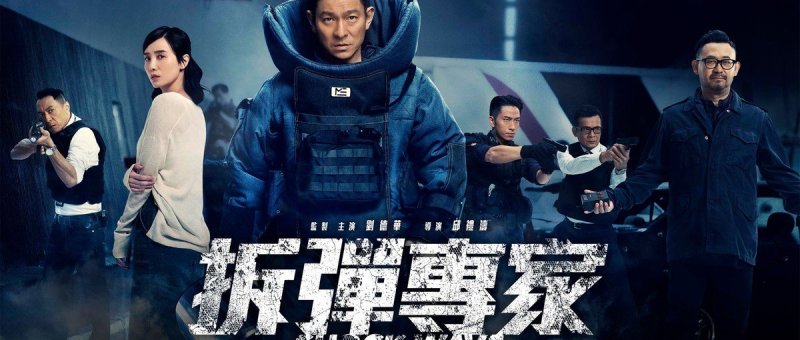
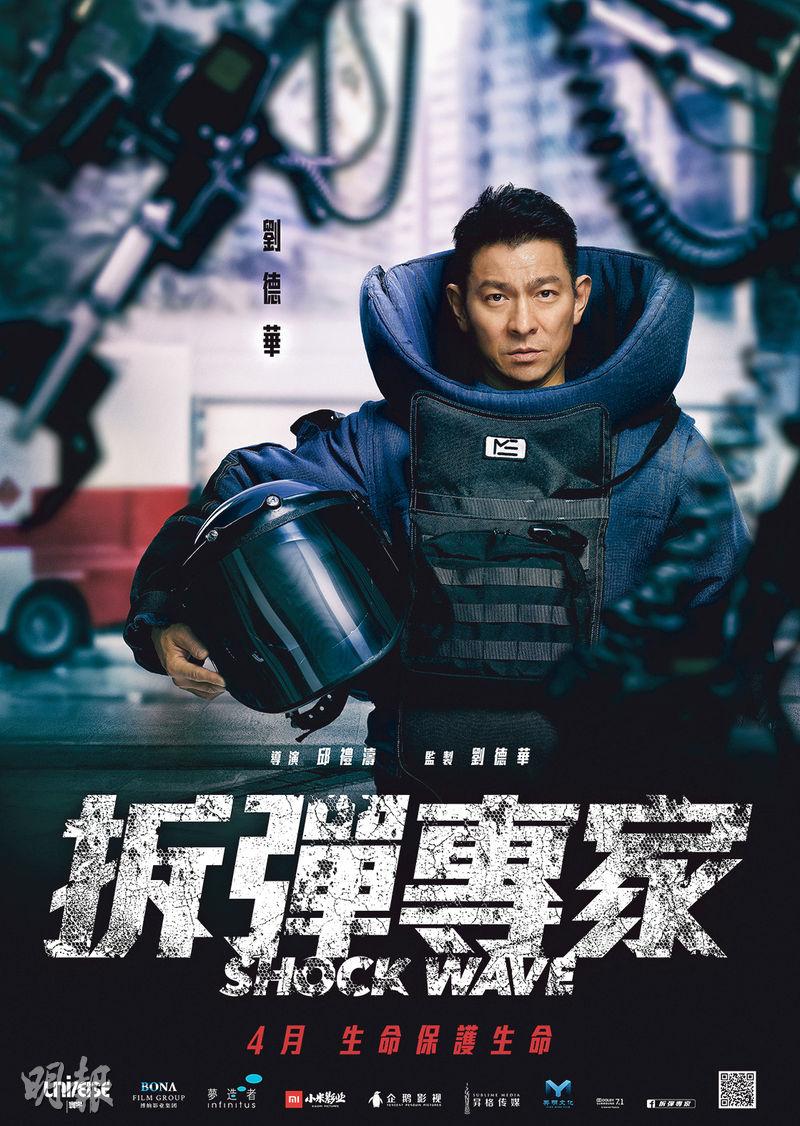
shock wave posterRecent Hong Kong action cinema has not exactly been known for its hero cops. Most often, one brave and valiant officer stands up for justice when all around him are corrupt or acting in self interest rather than for the good of the people. Shock Wave (拆彈專家) sees Herman Yau reteam with veteran actor Andy Lau turning in another fine action performance at 55 years of age as a dedicated, highly skilled and righteous bomb disposal officer who becomes the target of a mad bomber after blowing his cover in an undercover operation. These are universally good cops fighting an insane terrorist whose intense desire for revenge and familial reunion is primed to reduce Hong Kong’s central infrastructure to a smoking mess.

Some years prior to the main action, J S Cheung (Andy Lau) is undercover with a gang of bomb loving bank robbers. When they decide to load up a few taxis with explosives, Cheung just can’t let innocent people and fellow officers get caught in the crossfire and so he blows his cover and tips the cops off to the weaponised motor vehicles. Head honcho of the gang, Blast (Jiang Wu), is not best pleased especially as his younger brother Biao (Wang Ziyi) gets himself arrested. Flash forward to the present day and Blast has come up with his plot for revenge – placing large amounts of explosives in the Cross Harbour Tunnel and taking everyone in the general area hostage until the authorities agree to release his brother and he’s satisfied himself in outwitting Cheung.

In this at least Shock Wave fits neatly into the mad bomber genre as Blast goes to great lengths to terrorise the public for irrational and entirely selfish reasons. Blast’s original twin motives centre on a need to get his brother out of prison and the need to destroy Cheung but Biao has decided one of the reasons he quite liked being in prison was that Blast wasn’t there and Cheung isn’t really interested in playing Blast’s game. Blast, as his brother points out, is someone who rarely considers the thoughts or emotions of other people, acting selfishly and assuming his own desires are the only ones which matter. This essential selfishness is echoed in a fairly subtle point about the financial impact of the tunnel crisis and how others stand to profit from it while hundreds people remain terrified and captive inside a giant tube surrounded by water which may soon collapse if Blast loses his temper.

Th mad bomber may be a cinematic staple but Shock Wave relies too heavily on familiar genre elements to make much on an impact of its own. Characterisation is often shallow in the hero cop vs insane criminal set up with supporting characters reduced to a single prominent emotion. The inevitable romantic subplot gives Cheung an emotionally fragile, recently divorced school teacher as an angelic girlfriend only to have her experience sudden qualms about getting involved with someone who does such a dangerous job.

Even if the narrative fails to impress, Yau produces an exciting visual spectacle reportedly spending vast sums of money building an exact replica of the Cross Harbour Tunnel. Filled with explosions, gunfights, and high octane action Yau keeps the tension high by turning the dial right down as Cheung and his gang do their thing with cool, calm military precision disarming everything from C4 to unexploded World War II bombs.  At two hours, Shock Wave is pushing the ideal for an action thriller but largely makes its lengthy running time count despite a number of underdeveloped subplots.

A vehicle for Lau who also takes a producer credit, Shock Wave is defined by his performance as the dashing and heroic member of the bomb disposal squad. Jiang Wu’s mad bomber provides hearty support but is never given much to do other than emphasise his villainy with sneering taunts and occasional acts of cruelty. Cheung’s schoolteacher girlfriend Carmen, played by Song Li, is about as generic as they come seeming only to exist for the classic girlfriend in peril plot device but Song and Lau have good chemistry and the relationship does at least help to up the otherwise absent emotional content. Simply put, Shock Wave is an excuse for the ageing Lau to play the action hero once again and he plays it to the hilt. At times frustratingly formulaic, Shock Wave does manage to maintain the tension until the grippingly explosive finale whilst also paying tribute to those who run towards the crisis rather than away from it in full knowledge of the price they may pay in coming to the defence of ordinary people.


Shock Wave was the closing film of the 19th Udine Far East Film Festival and will also be released in UK cinemas from 5th May.

Original trailer (English subtitles)

https://www.youtube.com/watch?v=7YZctVaaNEw