Frosted Window (흐린 창문 너머의 누군가, Kim Jong-kwan, 2025)

The title Frosted Window (흐린 창문 너머의 누군가, heulin changmun neomeoui nugunga) refers to the film’s final segment, a meta meditation on grief and loss, but, on the other hand, it’s true enough that we sometimes look at the world through a blurred lens and meet each other through an imperfect abstraction. A three-part portmanteau film, each of the segments takes place in a different season, with the opening titles perhaps standing in for an otherwise unseen spring, and reflect the director’s flights of fancy in imagining the lives of those living in the quiet backstreets of Seochon in Seoul, which is known for its literary associations and historical architecture.

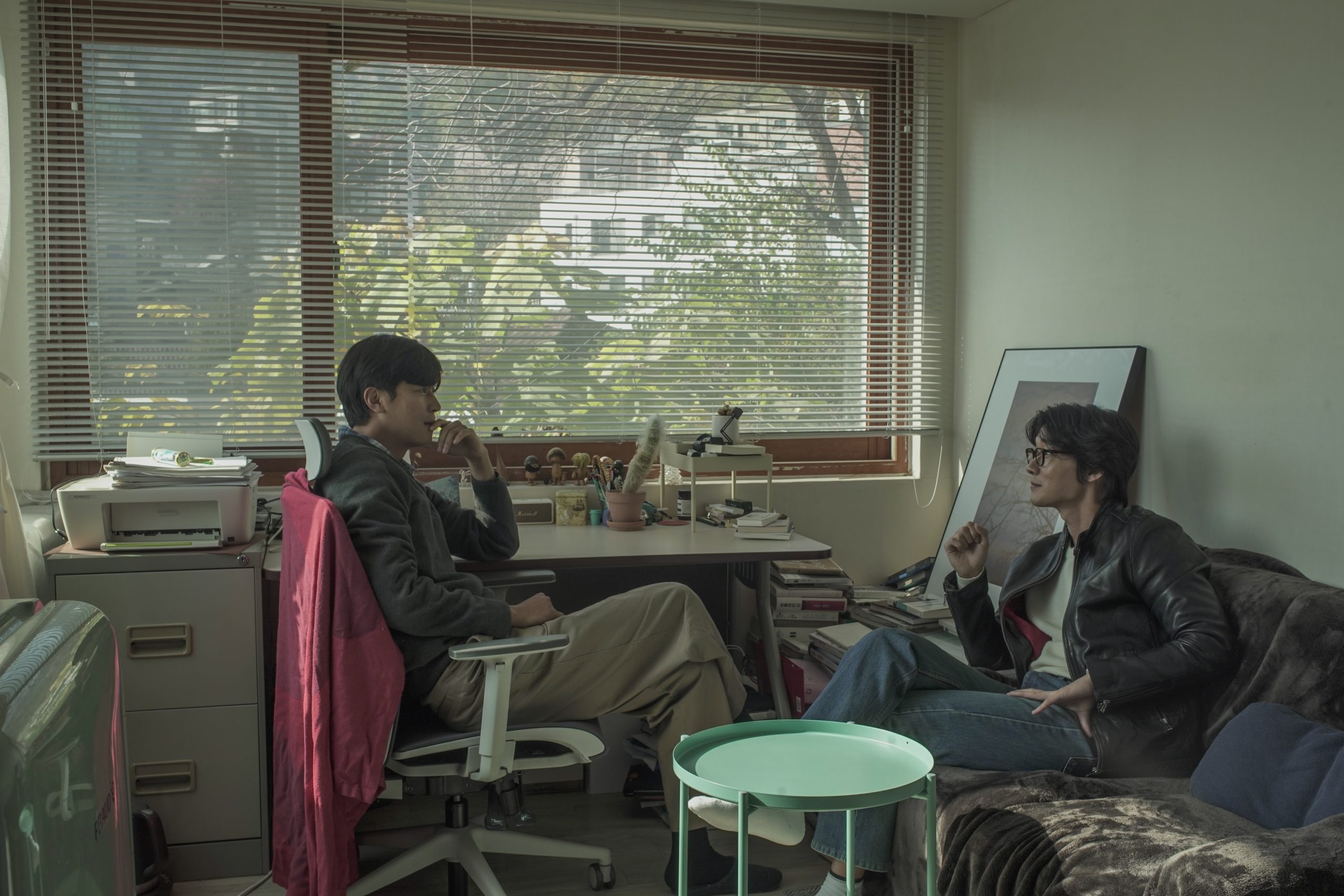
It may be its maze-like quality that gives rise to so many differing tales, but in the first segment, at least, it stands in as another place as a lovelorn artist tries to pick up various women by bothering them while they are minding their own business in public places. The first is in a German coffee shop, where he speaks to a woman in English assuming her to be a foreigner because she has international vibes and is reading a book in German, but she is actually Korean, if having lived abroad for many years, which is awkward. Nevertheless, he carries on trying to chat her up while she tolerates him. Eventually he gets the message and leaves, trying to pick up another foreign woman in the street before backing off when she’s joined by a foreign man. The artist seems to a romantic who finds inspiration in these quests for love and advises his friend, a blocked writer, to go for a walk in search of romance in order to reawaken his creativity.

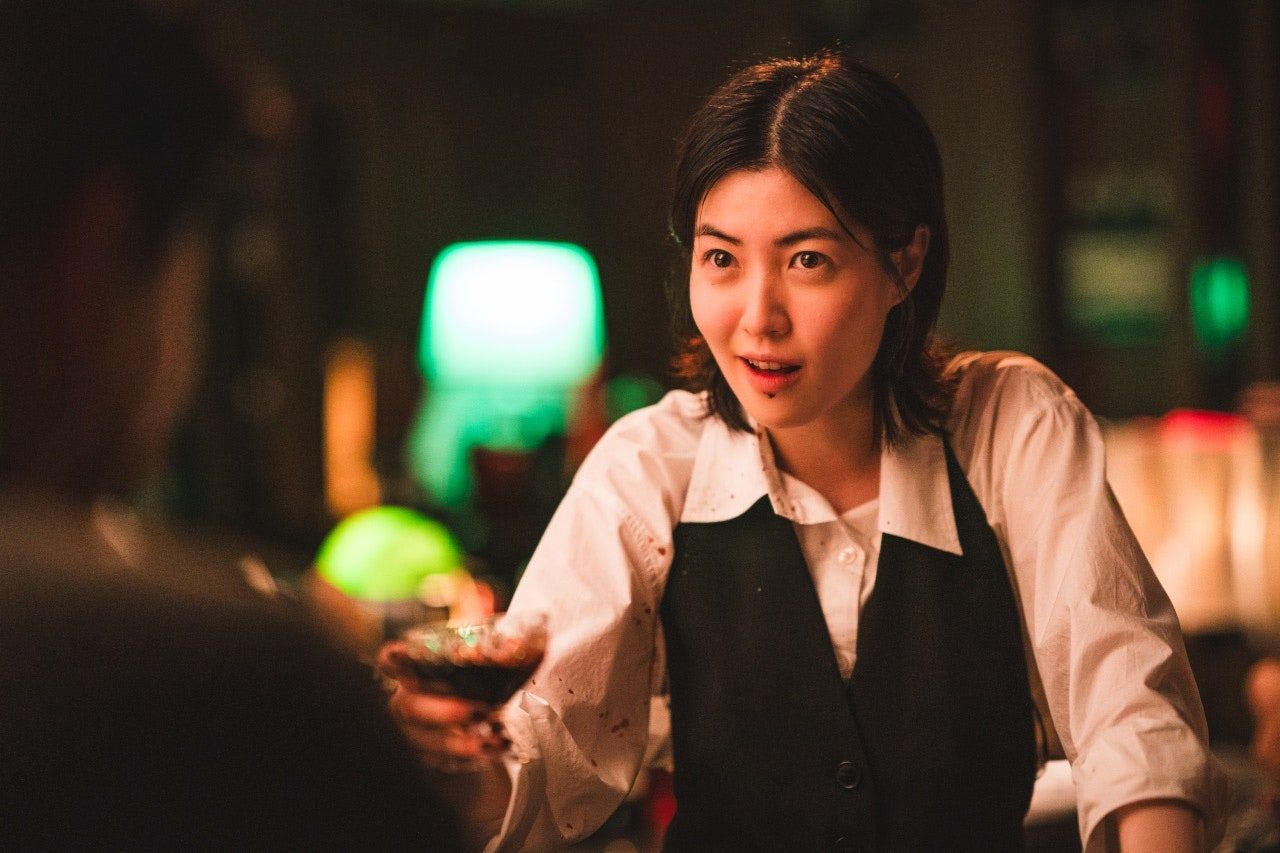
But a man who is also a blocked writer played by the same actor turns up in the second part where he is both an observer and an object. A woman calls a man to an upscale bar and drinks expensive whisky with him. The man is clearly interested in her, though he has a girlfriend he’s become tired of but won’t break up with, but she seems uninterested in him even as she continues to behave flirtatiously. There’s obviously something else going on, but it’s not originally clear if she wanted to toy with him a while, is making fun of him by exploiting his attraction to her to get him to make a fool of himself (to which he gladly obliges), or has something against his unseen girlfriend, on whom this is all very unfair no matter which way you look at it. It is, however, a performance for the barman, who watches silently until the woman comes back later to ask him what he thought.

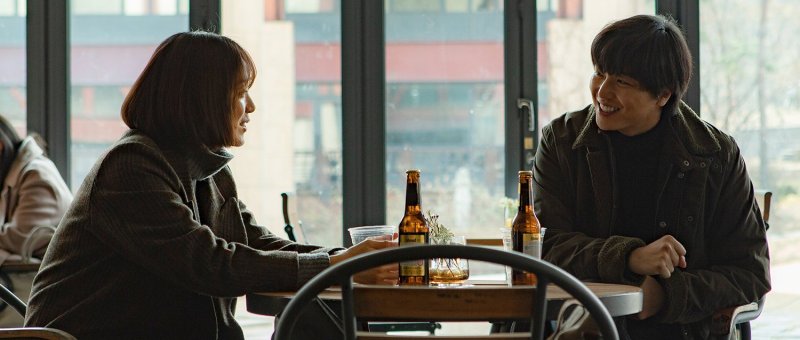
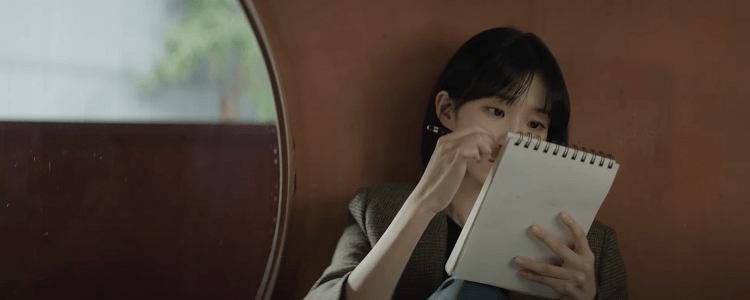
The woman, a local beautician, along with another from the florist’s who reunites with the artist in the October-set first tale, reappear in the last one echoing the sense of a fictional world that begins to take over as one story gives way to another. This time we have two artists, an actress who has been taking some time out, and a female film director she has worked with previously, who meet by chance in a cafe of which this area seems to have a lot considering its size. As the director outlines the story, we see the actress playing her role blurring the lines between the layers of “reality” present in this segment and the film as a whole. We have been, in some ways, like the barman passive observers with each of these tales performed for our benefit, but this last meta segment allows the actress to begin processing the weight of a loss which may be her own.

She is saved, in a way, by the friendly atmosphere of Seochon and the kindness of strangers that restore her sense of self-worth, both as an actress and person. The actress tells the director that though she had taken only a small break, people had already forgotten her and so her return to acting has been more difficult than anticipated with no offers of major roles, only smallish, walk-on parts. The encounter with a fan shows her that she had been missed and there are those who are waiting to see her again on screen, so her life and career had not been pointless and there is a path forward for her in the wake of her loss. This is perhaps testament to the frosty window of Seochon, home to a thousand stories, and a gentle warmth that seems to emanate even in the depths of winter. 


Frosted Window screened as part of this year’s London Korean Film Festival.

Trailer (English subtitles)
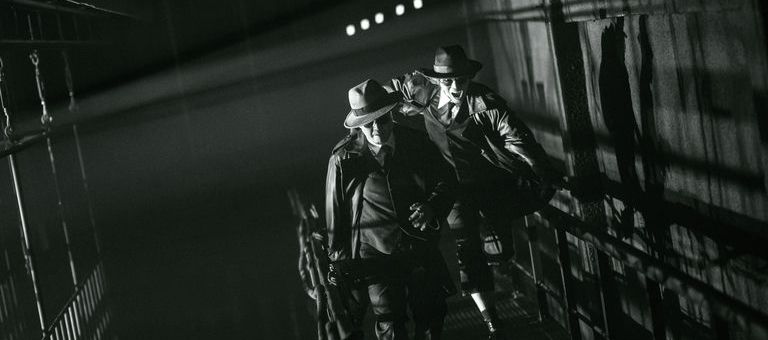
The Killers (더 킬러스, Kim Jong-kwan & Roh Deok & Chang Hang-jun & Lee Myung-se, 2024)

Led by Lee Myung-se, The Killers (더 킬러스) was originally billed as a six-part anthology film featuring different takes on the short story by Ernest Hemingway, but somewhere along the way took a kind of detour and now arrives as a four partner with a looser theme revolving around noir and crime cinema. Frequently referencing the Edward Hopper painting Nighthawks, the film hints at urban loneliness and a haunting sense of futility along with the mythic quality of noir as a tale that tells itself.

At least that’s in part how it is for unreliable the narrator of the first episode, a petty gangster who wakes up in a mysterious bar after being cornered by rival thugs. While in there he meets a similarly lost, middle-aged film director in the middle of a strange date with a fawning young woman who’ve definitely wandered into the wrong place. A sense absurdity is echoed in the fact that the man continues to sit in the bar oblivious to the knife in his back until the bar lady pulls it out for him and exposes the real reason why she lures lonely souls to this strange place out of time. Even so, thanks to her dark initiation the gangster is able to become himself and stand up against the rival thugs who were bullying him with his newfound “feistiness” having overcome something of the futility of black and white, classic noir opening sequence.

That’s something that never really happens for the heroes of part two who are a trio of youngsters trapped in Hell Joseon unable to escape their lives as cut price contract killers working below minimum wage for a chaotic company in which everything has been sub-contracted into oblivion. Ironically, one had dreams of becoming a policeman and another a nun while the third has recently had plastic surgery in the hope of landing an acting gig and claims he’s not in this for the money but to make the world a better place. Seeing their work as a public service, they tell each other that it’s wrong to grumble over their unfair pay because other people get less and are otherwise incapable of standing up for themselves until they take a leaf out of the boss’ book and try a subcontracting of their own which doesn’t quite go to plan.

While the first two episodes had been set in the present day the second two are set during the long years of dictatorship, the first sometime in the 1960s under the rule of President Park as an undercover detective and two men who appear to be unsubtle KCIA agents descend on a noirish, rundown bar with a picture of Nighthawks on the wall waiting for a mysterious fugitive to arrive. They don’t appear to know anything about why their target needs to be caught or who he is save for a daffodil tattoo on his arm and are merely they shady figures of authoritarian power we can infer are hot on the tracks of someone hostile to the regime. In any case, they are they are about to have the tables turned on them in a demonstration of their inefficacy in their power.

It’s the fourth and final piece unmistakably directed by Lee himself, however, that brings the themes to the four as it opens with an allusion to the assassination of President Park as the narrator tells us that it is 1979 and someone sent a bullet into the heart of darkness but the darkness did not die. The two goons who later show up are KCIA thugs working for the new king Chun Doo-hwan come to threaten the denizens of the cafe which include a man called “Smile” because he can’t and a woman called “Voice” because she has none while trapped inside an authoritarian regime. Inhabitants of Diaspora City, a home to the exiled, they have only a small hole to another world which affords them the ability to dream. Relentlessly surreal the segment is marked by Lee’s characteristic visual flair and sense of noirish melancholy that extends all the way out to a world more recognisably our own though no less lonely or oppressive.


The Killers screened as part of this year’s New York Asian Film Festival.

Josée (조제, Kim Jong-kwan, 2020)

When Isshin Inudo’s adaptation of the 1984 short story by Seiko Tanabe Josée, The Tiger and The Fish was released back in 2003, it quickly gained popularity across Asia and is fondly remembered by many as a melancholy love story neatly anticipating the junai boom that would arrive a year later. Nevertheless, almost 20 years on the film’s depiction of disability might seem very of its time while its heavy focus on the male hero’s internal conflict realising that in the end he wasn’t strong enough to fight for love may also seem misplaced. Very loosely inspired by the same short story, Kim Jong-kwan’s Josée (조제) while still largely told from the hero’s point of view does its best to redress the balance in returning agency to the heroine as she resolves to live a freer and more independent life if still to a degree confined by an internal sense of ableism. 

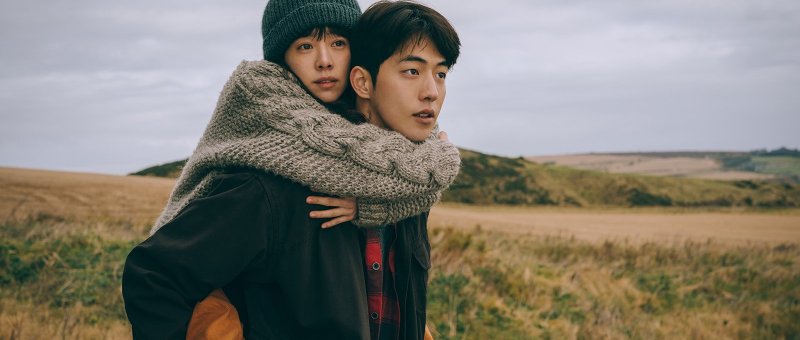
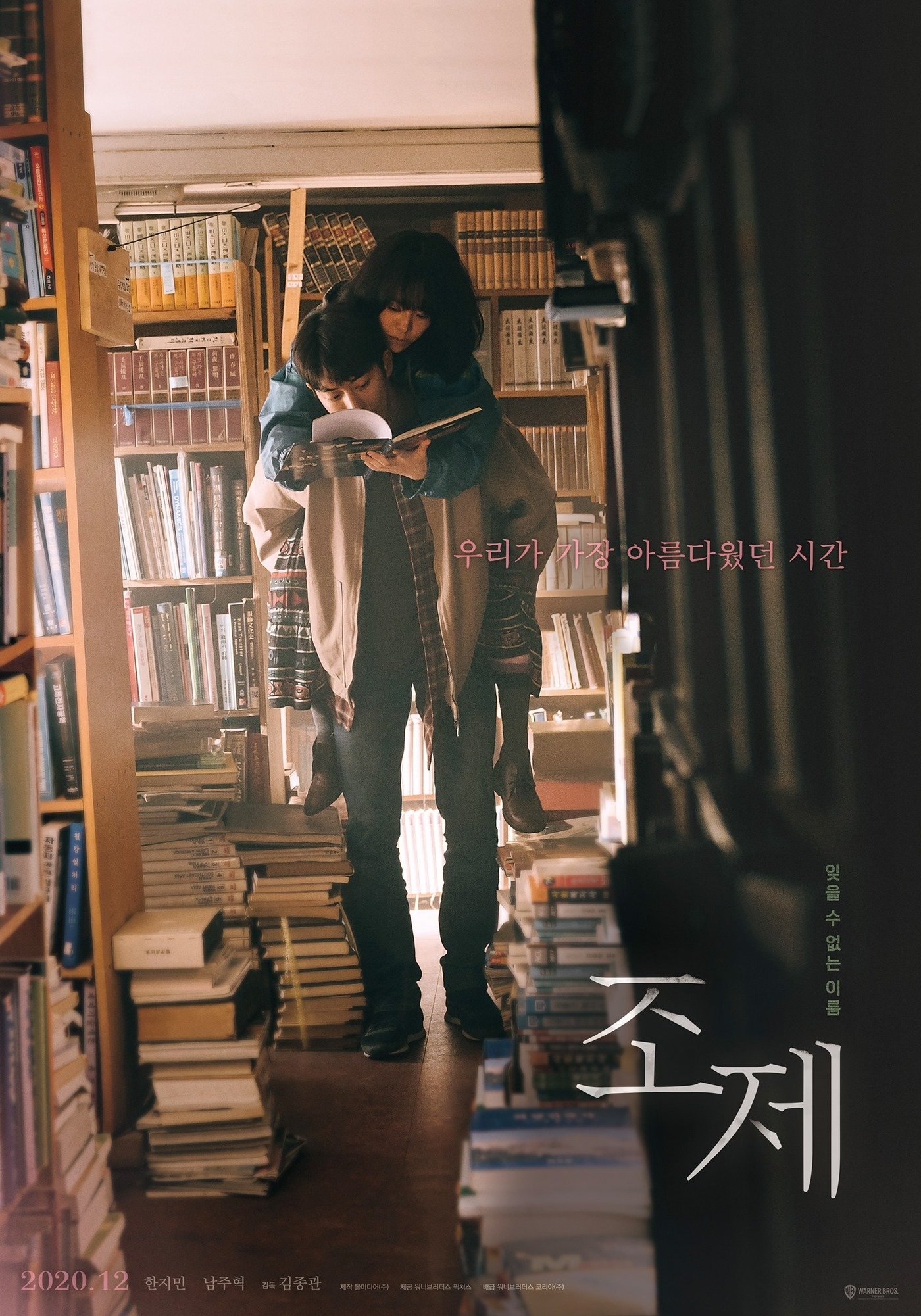
As the film opens, Josée (Han Ji-min) is lying in the road having been thrown out of her electric wheelchair. Student Young-seok (Nam Joo-hyuk) comes to her rescue, grabbing a nearby stool while inspecting the chair only to discover the wheel is broken and the power is out. Thinking quickly he borrows a wheelbarrow from a storeowner and takes both her and the wheelchair back to her home where he’s treated to a meal but also endures Josée’s scorn, she feeling quite ambivalent thinking that she should repay his kindness but also not really wanting to engage with him. Young-seok meanwhile is somewhat captivated by her mystery, later helping her grandmother out after spotting her struggling with a heavy cabinet in the street and thereafter becoming a regular fixture in the young woman’s home. 

Unlike the earlier version, the reasons for Joseé’s largely self-imposed isolation are internal rather than to do with social stigma towards disability or a history of abuse. Nevertheless she harbours a degree of trauma owing to having been abandoned as a child and is reluctant to form close relationships with others which is one reason why she rebuffs Young-seok’s attempts at friendship believing he too would one day leave her while there is also a rather large age gap between them, Young-seok still a student in his early 20s while it appears Josée is at least 10 – 15 years older. Through Young-seok’s intervention Josée discovers that there are systems in place she could go to for support along with community organisations that are keen to help her live independently as an integrated member of society the only reason she had not found them before being her desire for isolation partly caused by the mistaken belief she is wanted by the police. 

Young-seok meanwhile despite his earnest desire to help her is still somewhat immature, naively asking his sometime college girlfriend insensitive questions about her rent and living arrangements while unable to understand the consequences of his actions in carrying on an affair with one of his professors and being exploited by another. Josée accuses him of pitying her which he perhaps does but is also drawn to her because of her sense of mystery discovering that little of what she says of herself is true, merely the expression of the escapist fantasies she uses to overcome the inertia of her life. The irony is that Young-seok is attracted to her precisely because of this quality of otherness and unknowability, while through forming a relationship with him she grows to know and love herself, finally accepting that she is worthy of love if also perhaps viewing herself as a burden as if she would trap Young-seok with her in world of isolation unfairly denying him the right to the fullness of the life. 

Because of her isolation Josée experiences the world differently, living vicariously through books travelling the world in spirit if not in body. Her marginalisation is compounded by her poverty, unable to afford the things that would make her life easier and unaware that there is help available because of her distrust of of authority figures born of her previous experiences which contributes to her desire for solitude. Yet through her relationship with Young-seok she begins to develop a sense of possibility, embracing her independence in driving an adapted car at the film’s conclusion while reconnecting with a childhood friend and his partner not to mention having a little cat to take care of at home. “I’m OK now, I’m not lonely” she offers, if a little sadly, romanticising the memory of love if not its actuality. Imbued with a deep sense of romantic melancholy, Kim’s richly textured drama nevertheless hands agency back to Josée who finally comes to love and accept herself through loving and being loved by another person seizing her independence to live a full and active life but ready to accept the help and support of others as she does so. 


Josée screens 14th November as part of this year’s London Korean Film Festival.

International trailer (English subtitles)

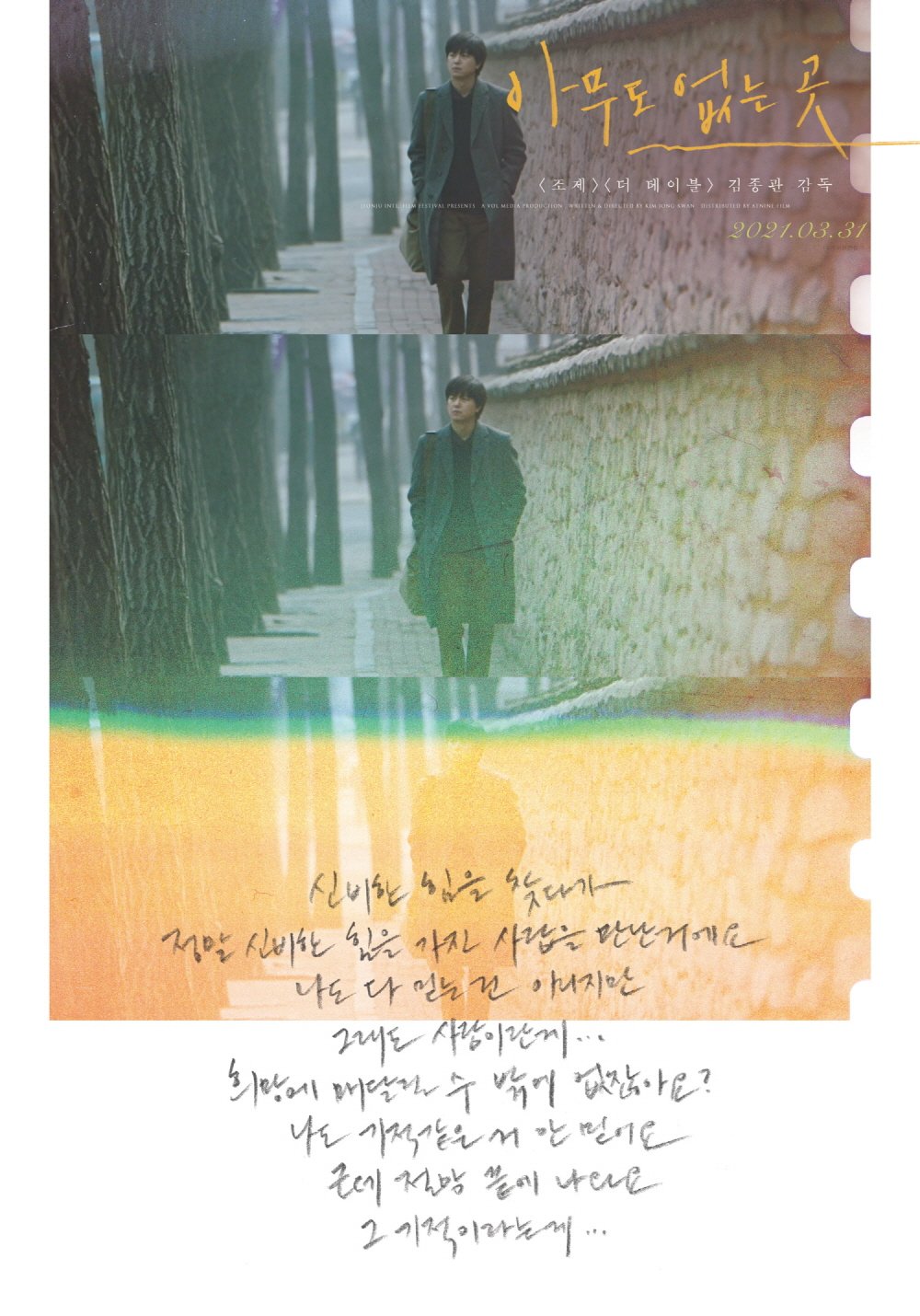
Shades of the Heart (아무도 없는 곳, Kim Jong-kwan, 2021)

“I see hope! Let’s change direction” a distressed woman shouts in a park, “We should follow the wind, let’s hold hands that way you won’t get lost.” Her interjection is perhaps unexpected, in its own way sad, but also a sign offered to the melancholy protagonist of Kim Jong-kwan’s Shades of the Heart (아무도 없는 곳, Amoodo Eobneun Got), a man who has become without quite realising it “someone who waits” yet through encounters serendipitous and otherwise begins to see new paths in front of him, turning a corner into another story.

Novelist Chang-seok (Yeon Woo-Jin) has just returned to Seoul after seven years abroad following the breakdown of his marriage in the UK. He has begun to have strange dreams, seeing an older version of himself and presumably his wife walk away from him and eventually disappear. Yet each of the people he meets is also in someway burdened by a sense of loss or despair, his first meeting with his mother who appears to have some kind of dementia and does not initially recognise him thinking once again she’s on her first date with his father. Her sadness is the loss of past and present but also of future, telling her son on finally recognising him not to smoke so much so he won’t die young like his dad. 

Chang-seok had apparently given up smoking, but is motivated to start again perhaps seeing little point in extending his life, accepting some unusual Indonesian cigarettes from a former colleague now his editor who eventually tells him of her failed love affair with a young exchange student which apparently ended partly because he could not acclimatise himself to the harsh winters of Seoul. The other reason perhaps echoes something in Chang-seok’s own life though also tinged with a different sense of sadness. A serendipitous meeting with a former acquaintance meanwhile takes a turn for the strange, photographer Sung-ha (Kim Sang-Ho) somewhat manic in his ecstasy in having run into Chang-seok explaining that his wife is terminally ill yet a Buddhist monk had told him he’d run into someone he knew who would bring him luck. On the other hand, Sung-ha also shows him a vial of cyanide he’s managed to procure apparently planning to use it to take his own life after his wife dies but now filled with an almost certainly false hope in the strange power of religious mysticism. “I don’t believe in all that, but people.. they need to hang their hope on something” he explains.

Chang-seok may not have much of a sense of hope, but what little he has he’s hung on people or on art. He is forever “waiting” for someone who may or may not arrive or even exist, making notes in his notebook or wandering around the surprisingly lonely streets of Seoul after dark pausing by the now obsolete phone booths filled with the detritus of city life unsure whether or not to make a call. His final conversation is with a woman who tells him that she has no memories of her own, having been robbed of her past, and more, in an accident and now “buys” them off her customers swapping free drinks for personal stories while writing poems about their lives. “No one is coming, but he became someone who waits” she writes of Chang-seok, their meeting oddly mirroring his first in its mixture of fiction and reality along with relationships forged through the exchange of stories true or otherwise. As he’d said, sometimes a made up story can be the more truthful. 

“But they come in the depth of despair, miracles” Sung-ha had added hopefully seconds after saying he didn’t believe in them, each of Chang-seok’s encounters a tiny miracle in itself. Imbued with a deep sense of melancholy and loneliness, Kim’s delicately scripted ethereal drama is an exercise in grief and despair Chang-seok’s sense of fiction and reality beginning to blur even as he begins to find the urge to write again and with it perhaps to live again too. “I see hope!” the woman shouts once more, restored something as she takes her place in a new story, Chang-seok turning the corner and beginning once again to dream. 


Shades of the Heart screens 14th November as part of this year’s London Korean Film Festival.

Original trailer (English subtitles)

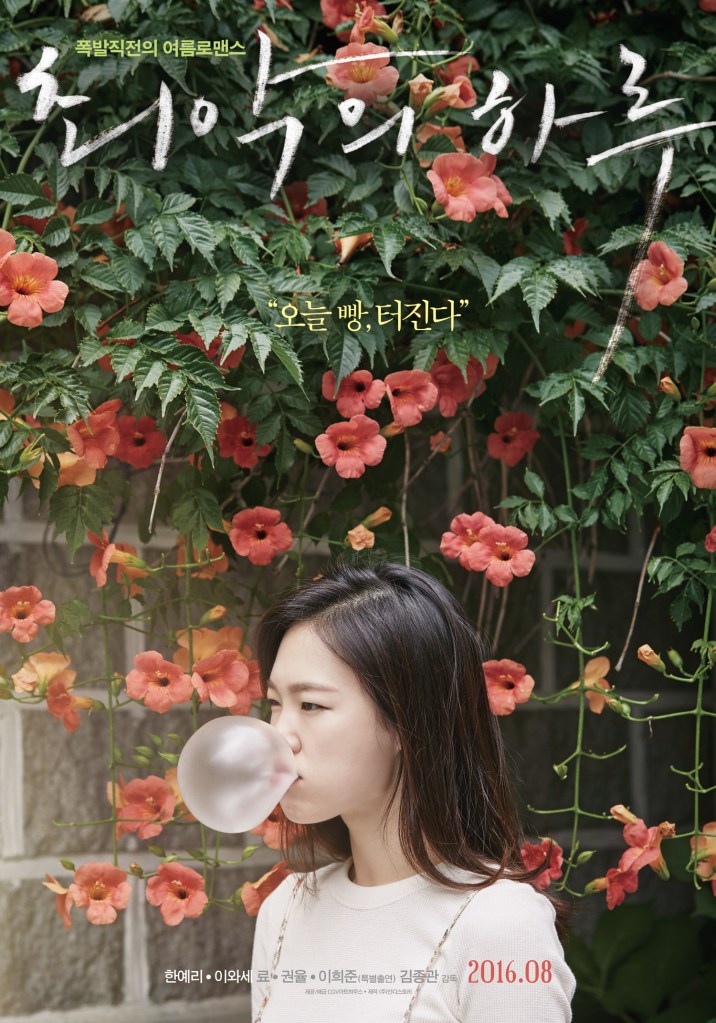
Worst Woman (최악의 하루, Kim Jong-kwan, 2016)

movie_imageKim Jong-kwan’s award winning unexpected indie box office hit has been given the rather odd English title of Worst Woman (최악의 하루, Choeakui Haru) in contrast with the original Korean which simply means “The Worst Day”. In fact, the film is about two people – an aspiring Korean actress with problems in her personal life, and a Japanese writer visiting for the launch of the Korean translation of his novel, each of whom is indeed having an exceptionally unlucky day. Part walking and talking, part split focus romantic comedy, Worst Woman is a polished piece of indie filmmaking anchored by quality performances and an interesting approach to its material.

Eun-hee (Han Ye-ri) is supposed to be rehearsing for a play but somehow she’s not really into it, much to the consternation of her coach. Heading off to meet up with her vacuous soap star boyfriend, Hyun-Oh (Kwon Yool ), Eun-hee runs into a hopelessly lost Japanese man who asks her for directions but mangles the pronunciation of the address leaving her with little idea of the destination. Nevertheless, Eun-hee eventually helps the mysterious traveller, Ryohei (Ryo Iwase), find the place he’s looking for only to realise he’s been given the completely the wrong time and there’s no one there to meet him. The pair then decide to have coffee together in a nearby cafe before Eun-hee leaves to track down Hyun-oh.

At this point their paths diverge but each is in for a disastrous day. Eun-hee argues with Hyun-oh about a previous (married) boyfriend before teasing him about his decision to wear a face mask and sunglasses “in case someone recognises him” (hilariously, he still gets snapped when a passing woman realises only a celebrity would be wearing such an attention seeking disguise). The playful argument suddenly turns ugly when Hyun-oh calls Eun-hee by another girl’s name leading her to dump him on the spot and leave as quickly as possible. Moping around, she posts a picture of the view from the park on Twitter which “concerns” the aforementioned married ex-boyfriend, Woon-Chul (Lee Hee-joon), who also wants to take Eun-hee for coffee in an attempt to rehash the past.

Meanwhile, Ryohei has finally met up with his publisher but quickly discovers his book launch is not all that it seemed to be. Not only has the venue changed, but only two people have turned up (and even that was an accident). Making the best of things, Ryohei takes the “guests” to a nearby coffee shop and attempts to talk to them about literature with mixed results. The apologetic publisher is Ryohei’s biggest supporter, translating the book himself and determined to share it with his fellow countrymen, but has problems of his own which mean that the Korean edition of Ryohei’s novel is set to remain on the shelf a little longer.

Chatting awkwardly in English in the cafe, Eun-hee asks Ryohei what he does for a living to which he jokingly replies that he “lies”. His job is, in essence, to make things up – he’s a novelist, albeit one with only a single book to his name. Eun-hee laughs and says she’s same, only she’s an actress, and like Ryohei she is not yet famous or even particularly successful. In fact, Eun-hee has been giving the performance of her life off stage where lying has become something of a bad habit. Though she had told Hyun-oh about her relationship with Woon-chul, even explaining that he was a married man, it appears that perhaps she hadn’t been sharing the whole truth with either man. Needless to say, her taste in men has not served her well and the choice between the petty and self obsessed Hyun-oh and the possessive, persistent and obsessive Woon-chul may not be worth making.

If Eun-hee’s romantic difficulties undermine her sense of self confidence, Ryohei gets a professional dressing down from a bilingual journalist (Choi Yu-hwa) who claims to be a fan of his work but has serious questions about his approach to character. Why, she asks him, does he create such violent and sadistic scenarios and then allow his characters to suffer within them. If the writer is god, does he not owe it to his creations to show a little benevolence? Ryohei is a put out to receive such an underhanded criticism during an interview, especially as he doesn’t consider himself to be a cruel person, but now realises that perhaps his world view is a little bleaker than he’d previously thought.

Both having experienced one of those days which throw everything else into stark relief, the pair run into each other again at twilight in the picturesque Namsan Park. Eun-hee revisits the opening monologue from her play, now managing to breathe life into the lines informed by her recent experiences, before reuniting with Ryohei and making another surprising suggestion – that they set off on a long walk along the park trail which she has never managed to complete. The opening narration from Ryohei told us that he’d been dreaming a lot of his home town and had, unusually, come up with a story idea whilst travelling. Smarting from the criticisms of the journalist and realising many of the characters he’s denied a happy ending to are slightly lost, essentially nice women just like Eun-hee, Ryohei decides that it’s time to make an exception. He imagines the same place he is right now, only it’s snowing and a woman is looking nervously back along the path. This time there is no need to worry, he doesn’t know all the details yet, but this woman is definitely going to be happy, at least someday.

Featuring a light jazz score and indie-style straightforward direction, Worst Woman recalls both the distant irony of Hong Sang-soo and other recent cross-cultural romances such as A Midsummer’s Fantasia (which also starred leading man Ryo Iwase) and Hong’s own Hill of Freedom. A tale of city serendipity, the film makes use of constant reoccurring motifs from coffee shops and national parks to professional insecurity and confused relationships but even if Eun-hee has been playing the role of herself with both of the men in her life, her connection with Ryohei seems to have a more authentic quality. Light yet poignant and filled with sophisticated comic touches, Worst Woman is a delightful late summer romance which ends on a refreshingly upbeat, open ended, note careful to leave the door open for these two frustrated artists to make the best of their worst day.


Reviewed at the 2016 London East Asia Film Festival.

Original trailer (English subtitles)