Red Nails (홍이, Hwang Seul-gi, 2024)

A not quite middle-aged woman watches as her mother takes an aerobics class with other similarly aged people at a nursing home. The attendant turns to her and remarks that it can’t have been an easy decision, leading us to think that she has reluctantly decided her mother may be better off living where she can be properly looked after. But Hong (Jang Sun) has actually arrived to take her mother home. Not because she’s had a change of heart, and not exactly because she’s having a hard time and can’t afford to pay for the home any more, but because she’s realised her estranged mother’s a cash cow and the only one she has left to tap.

Hwang Seul-gi’s complex drama Red Nails (홍이, Hong-i) never shies away from its heroine’s flaws even if it tries its best to empathise with her. Hong is clearly irresponsible with money. The piled up boxes in her living room hint that she may have fallen victim to a multi-level marketing scam, but whatever the root causes are, she’s pretty much bankrupt with the bailiffs about to be sent in to seize her goods due to her phenomenally large debts. Even so, we later see her going on shopping sprees as if she were trying to fill some sort of void through guilty consumerism that is really just punishing herself by making her situation even worse. 

Hong’s borrowed money from an ex-boyfriend who has since married someone else but continues to sleep with her while badgering Hong for his money back, claiming his wife’ll throw a fit if he doesn’t get it. Meanwhile, she’s engaged in a fantasy romance with a man from an app, Jin-woo, whom she misleads about her financial circumstances and later uses when she needs a free ride. Hong has a habit of taking advantage of people, including her mother’s old friend Hae-joo who agrees to watch her in the day. Hong often messes her around, staying out late without calling and just expecting Hae-joo is figure something out. Hae-joo eventually confronts her about her unreasonable behaviour while taking advantage of her free labour, but Hong tries to give her money as if that was the problem. Hae-joo is insulted, and bringing money into the equation only threatens to change the nature of the relationship. It makes Hae-joo feel cheap and used when she had been doing this as a friend because she cared about Seo-hee. 

Seo-hee, meanwhile, seems ambivalent about her new living standards and, at times, berates Hong complaining that she wishes she’d never been born. It’s not clear what happened in Hong’s childhood, but they evidently did not get on and still don’t now. Seo-hee wants to go home, complaining that there’s a thief in the house though whether or not she knows that Hong has been dipping into her savings to pay off her debts, she’s still aware that she brought home because she needed money rather than companionship. 

But then Hong is also lonely, and her romance with Jin-woo is an attempt to escape her disappointing circumstances. Her ex suggests she once dreamed of becoming a teacher, but is currently teaching a literacy class for a group of older woman at a local institute where she also cleans the toilets. She also has a second job directing traffic at a construction site where the foreman hates her, docking her pay for neglecting her duties by using her phone while on the job. She cannot her escape her debts through any legitimate means, though that hardly justifies stealing from her mother. 

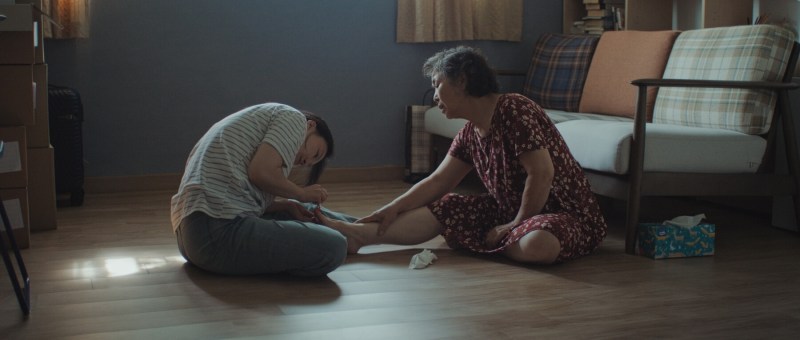
Even so, it appears that on some level Hong wanted comfort and companionship along with her mother’s approval. As they live together, they begin to draw closer but at the same time it’s clear that they remember things differently, though whether Hong is right to blame Seo-hee’s dementia or has misremembered herself is destined to be an eternal mystery. Hong tries to fulfil her mother’s dream of lighting sparklers, but the pair are yelled by some kind of environmental officer and forced to put them out. Hong looks on forlornly as the glow fades away as if symbolising the flame going out of the relationship between the two women. Despite their growing closeness, there are some things that it seems can never really be made up and all Hong really has is a frustrated memory of a longed-for closeness that can never really be.

Red Nails screened as part of this year’s London Korean Film Festival.

Trailer (no subtitles)
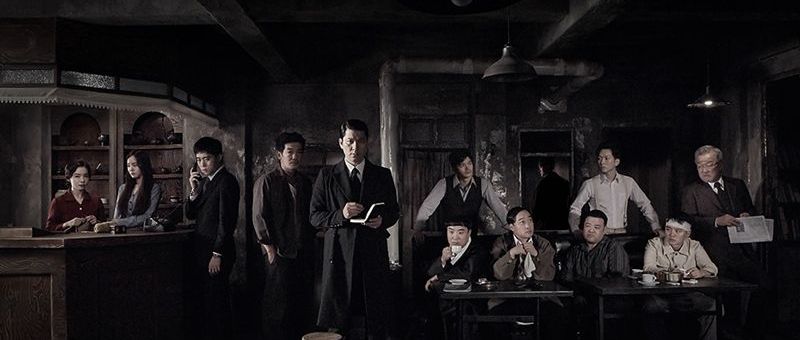
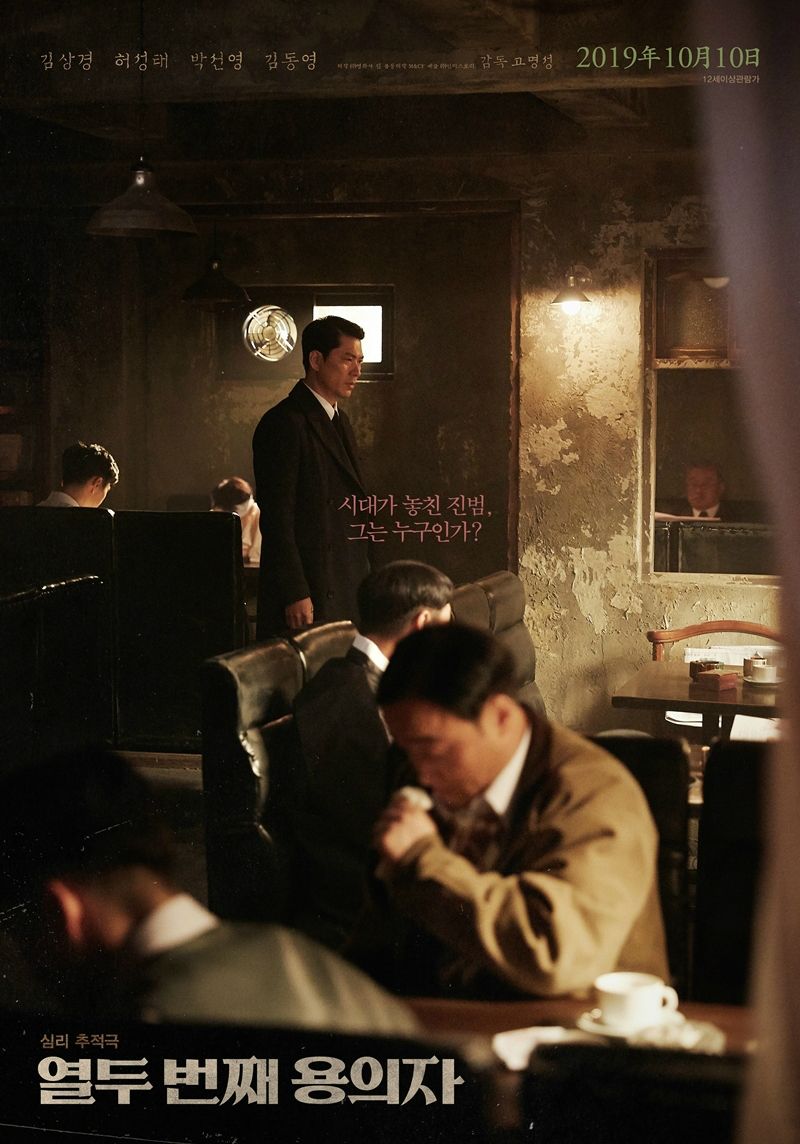
The 12th Suspect (열두 번째 용의자, Ko Myoung-sung, 2019)

An inspector calls on a small group of artists in the immediate aftermath of the Korean War in Ko Myoung-sung’s taut psychological thriller, The 12th Suspect (열두 번째 용의자, Yeoldu beonjjae Yonguija). Set almost entirely within a tiny tea house, Ko’s steely drama lays bare the contradictions of the new society in slide towards authoritarianism which is itself a product of the failure to deal with the legacy of the colonial past while preoccupied about the “communist” threat in the quite literally divided nation. 

The Oriental Teahouse is home to a collection of poets, painters, and Bohemians seeking refuge from the everyday difficulties of life in the post-war city. Their peaceful idyll is rocked by the revelations that one of their number, Doo-hwan, died on a mountain the previous evening most likely murdered. As it turns out, no one seems to have liked Doo-hwan very much. He was “hateful and ignorant” not to mention a bad poet though many are sceptical of the story wondering if he might simply have had an accident. In any case, the newcomer to the cafe turns out to be a policeman, Ki-chae (Kim Sang-kyung), who confirms that Doo-hwan died of a gunshot wound and sets about asking a series of increasingly intense questions about his relations with the cafe’s denizens. 

To begin with, Ki-chae seems to be a Columbo-like avuncular detective, polite and sympathetic in his questioning until revealing his true purpose at which he turns into something of a firebreathing demon with a very particular vision of “justice”, hunting down “communist spies” in order to keep the South safe. As the murder weapon appears to be a Soviet-issue pistol, he assumes the killer(s) may be linked to the North accusing one of the patrons of having aided and abetted a cousin who was on the other side while throwing a book on Stalin at a university professor who desperately tries to explain that he’s had it since studying in Russia in his youth when times were different. 

Meanwhile, the policeman’s authoritarian sense of justice is gradually exposed as a kind of fascim born of his experiences under Japanese colonial rule. Doo-hwan may have died because of his actions during in the war when he collaborated with Japanese officers agreeing to send young men from his village as conscript soldiers to die for Japan on the frontlines or else as exploited slave labour in the coal mines. Ki-chae is hiding his own dark past while his quest for justice is riddled with corruption masked as patriotism as he vows to wipe out the “communist” threat in order to build a more secure Korea. “The existence of communists is a great misfortune to this country and also a danger” he adds before descending into a violent rage stamping on the face of his interviewee. 

His almost hysterical anti-communism is manifested in a general hatred for the kind of people who frequent the Oriental Teahouse, firstly taking them to task for their lifestyles in a time of chaos and privation while later viewing them as cowardly shirkers evading their duty to go to war. “I won’t let you ruin our country” he snarls while simultaneously embarking on an ill thought through argument that the communists are unfairly benefitting from the dire economic situation to “provoke good people”. He justifies his actions in insisting that everything he does is in order to prevent another “horrible war” while continuing to intimidate them into some kind of confession. His questioning reveals the petty jealousies and minor tensions between the artists along with the unreliability of their testimony while eventually exposing their small acts of resistance, cafe owner Suk-hyeon (Heo Sung-tae) determined to stand up to authoritarianism rather than forever be oppressed by it though others it seems are frightened enough by the potential dangers of rebellion to consider turning on their friends and allies. Locked in the tiny cafe with two soldiers blocking the exit, the artists are cornered and terrified as Ki-chae pits one against the other while all around them the prognosis looks bleak in a society in which men like Ki-chae wield ultimate power controlling the future through burying the past.


Original trailer (English subtitles)

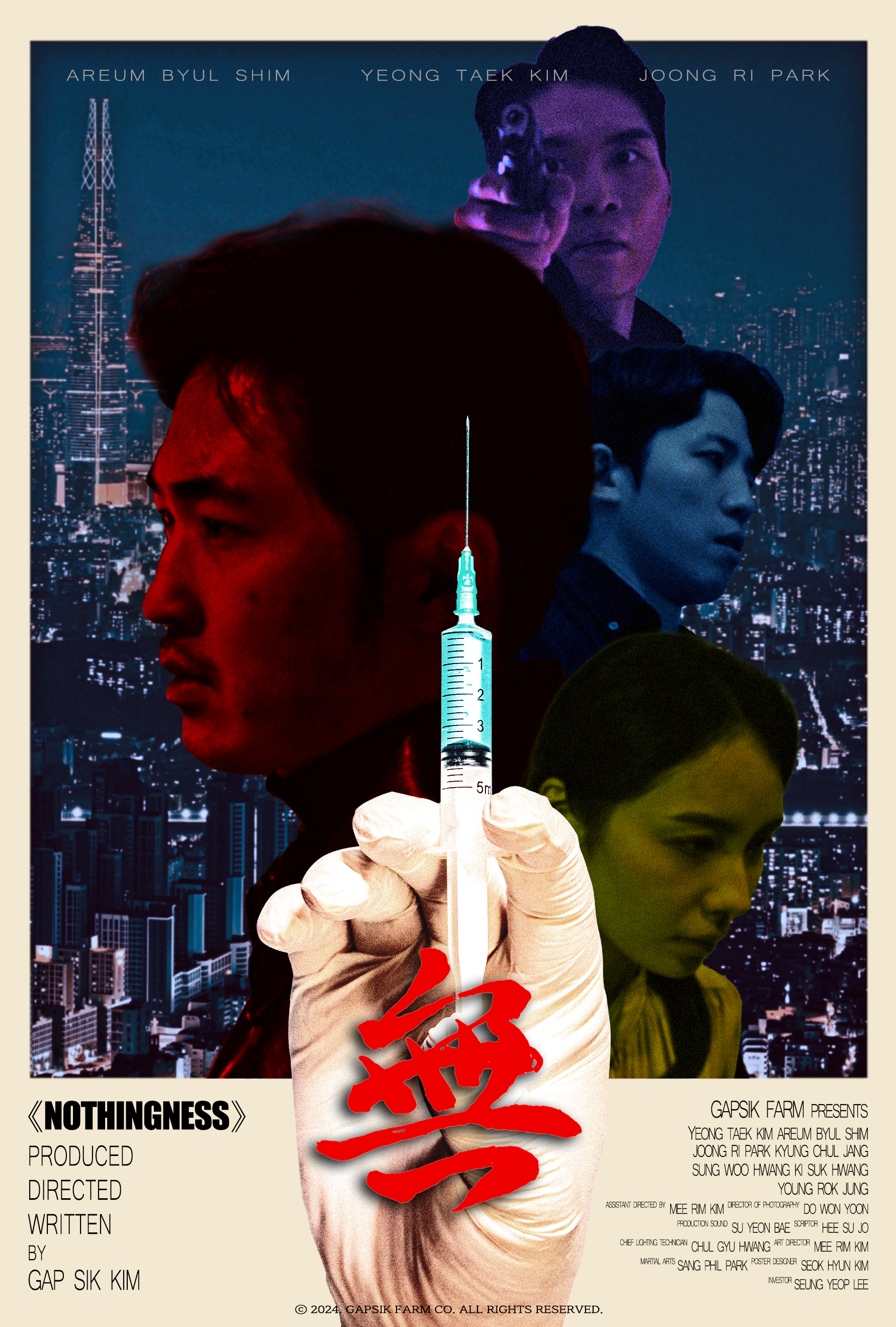
Nothingness (無, Kim Gap Sik, 2024)

What are we without our violent impulses? In Kim Gap Sik’s sci-fi-inflected noir Nothingness (無, 무, Mu), a shady corporation has produced a new drug that inhibits the tendency for violence with those unwilling to take it exiled to the “City of Dreams”. But what does it mean to live with inhibition, and can we really call ourselves free if we are prevented from acting on our baser instincts?

At least, it seems to be slowly eating away at former policeman Young-il (Kim Yeong-taek) who has been placed on suspension and forced to take drug R-3 after dispatching violent serial killer and former childhood friend Jong-ha (Hwang Sung-woo). Young-il is now in a relationship with Jong-ha’s former girlfriend Yeon-jeong (Shim Areum-byul) but lives a depressed and aimless life devoid of purpose or meaning. Dangling the prospect of reinstatement, his former partner informs him that Jong-ha’s DNA has been found at a crime scene hinting that he is alive and has escaped from the City of Dreams to return to Seoul to enact his revenge.

Through his investigations,Young-il comes to discover that Jong-ha is part of a group that apparently intends to cast the world into “nothingness”. Jong-ha claims that he is now someone who has no name, hometown, or nationality and has transgressed the borders of what is considered to be a meaningful life. Young-il meanwhile struggles with himself, gravitating towards suicide while his doctor ignores his complaints. Resentful that he has been unfairly cast out of the police force he obsesses over the idea of reinstatement in part as a bridge to a happier life with Yeon-jeong but also finds himself conflicted.

After all, he’s told Jong-ha wants to “turn the world into nothingness”, but arguably so do those who invented R-3, reducing him to a zombie-like state of numbness and despair out of fear that he may at some point commit an act of violence. The creator of R-3, for whom Yeon-jeong works, explains that the people have traded freedom for security though she is becoming convinced that what he cares about is lining his own pockets indifferent to the side effects of his wonder drug including the suicidal ideation that plagues Young-il. Young-il suggests taking a trip back to their hometown, but Yeon-jeong is against it, certain that everything there has changed. A fugitive from City of Dreams he encounters tells him those like him who refuse to take the drug have lost their hometowns or perhaps never really had one in this harsh and judgemental world from which they have already been exiled for insisting on their freedom over the enforced authoritarianism that revokes their power to resist. 

The man also warns him that his former partner and other officers routinely collect protection money in the area and if he’s reinstated as a policeman he probably he will too robbing him of a position of righteousness in his quest to neutralise serial killer Jong-ha who is now targeting employees of the company that manufactures R-3. Accusing her boss of wanting to turn the world into obedient dogs, Yeon-jeong begins to reconsider her commitment to her work pleased by the “violent” sight of a child stomping in the park and no longer able to go along with the kind of side effects that plague Young-il or the wilful suppression of human nature.

As the threat of a nuclear strike hovers in the background, Kim conjures a sense of existential dread caught between those attaining a zen-like sate of emptiness and those like Young-il unable to escape their own despair. Seemingly inspired by Blade Runner and classic noir cinema, Kim uses voiceover and a jazz synth score to bring out the neo noir themes while often filming in an intense darkness that echoes the murkiness of the world inhabited by Young-il, a lost soul searching for himself in a world of decreasing autonomy. Meanwhile, his mirror image Jong-ha takes on an almost mythical quality as an embodiment of nothingness and destructive nihilism that in itself becomes means of resisting a corrupt society. Making the most of its modest budget, Kim’s elegantly lensed noir presents a bleak vision of a near future world coloured only by despair and emptiness in which there is no freedom or safety and as Young-il is reminded cares little for men like him.


Original trailer (no subtitles)

A Wing and a Prayer (동에 번쩍 서에 번쩍, Lee Kwang-kuk, 2022)

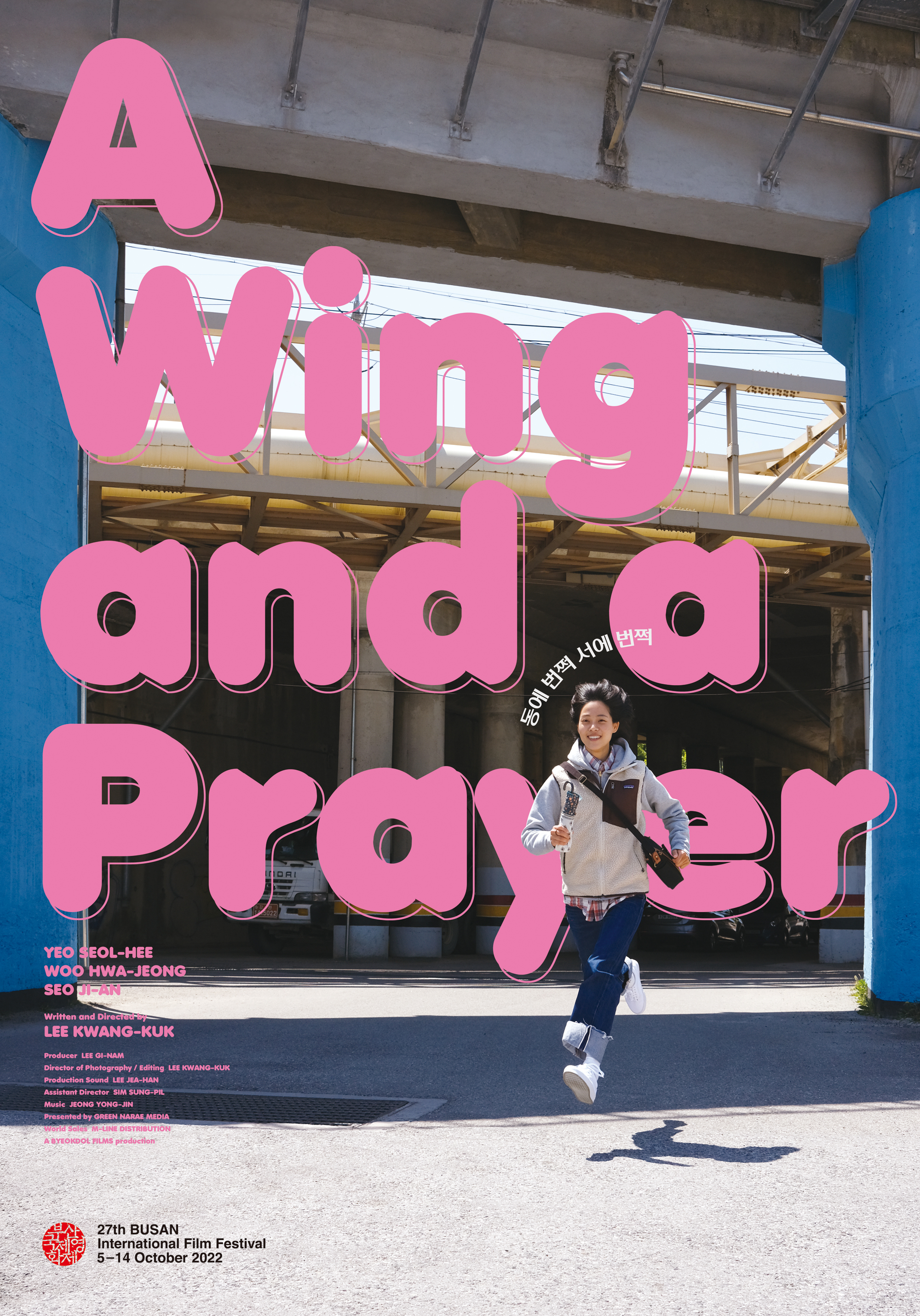
A pair of 25 year olds find themselves marooned in adolescence thanks to the precarious socio-economic conditions of contemporary Korea in Lee Kwang-kuk’s indie dramedy A Wing and a Prayer (동에 번쩍 서에 번쩍, Dong-e Beonjjeog Seo-e Beonjjeog). Not quite as quirky as Lee’s previous work, the film nevertheless finds its twin protagonists undergoing parallel journeys while each preoccupied with the progression to adulthood and what that might actually mean in real terms while perhaps guilty of a childish naivety in their vision of what it is to be grown up.

Seol-hee (Yeo Seo-hee) and Hwa-jeong (Woo Hwa-jeong) are best friends and roommates each currently without jobs and feeling lost without clear direction for their future. Seol-hee was on track to be an athlete but was forced to give up following injury. At an interview for a job in a coffee shop she’s asked a series of questions which seem to her somewhat unnecessary. “Do I need a dream in order to work here?” she asks, “Can’t I just make good coffee and try my best at everything?” Predictably, her answer does not go down well with the interviewer and it seems unlikely she’s going to get this job though Seol-hee remains cheerful and upbeat unable to understand why everyone keeps pressing her about her hopes and dreams when she’s just trying to live. By contrast, Hwa-jeong has reached the final stages for a job at a company and feels her interview went well so she’s optimistic that this time it really might work out.

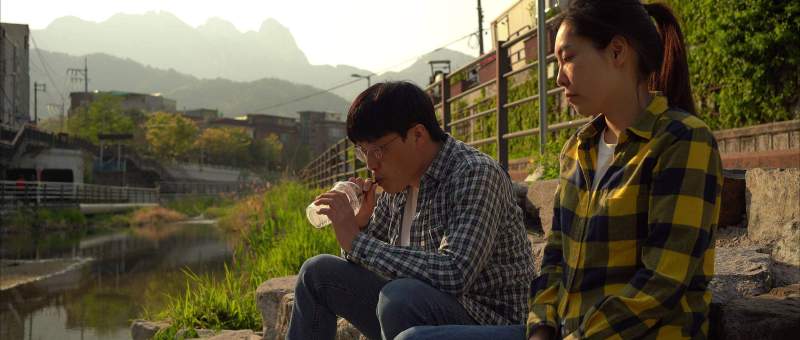
Though in quite different places, the pair decide to take an impromptu trip to the seaside to wish on the sunrise only to fall asleep and completely miss the moment. The mismatch in their circumstances comes to the fore when Hwa-jeong reveals that with their lease about to come to an end she’d like to try living on her own, “like a real adult”. Of course, that’s quite destabilising and hurtful for Seol-hee who has no real expectation of being able to get the kind of job that would let her find an apartment she could rent on her own. After a small argument, the pair end up separated and on parallel adventures as Seol-hee bonds with a slightly older woman, Ji-an (Seo Ji-an), whose life has been ruined by unresolved trauma caused by high school bullying while Hwang-jeong meets a high schooler, also bullied, who is looking for her missing parrot. 

When Hwang-jeong comes to the rescue of the high school girl after she’s lured by bullies who claimed to have info on her parrot, it’s obvious that they immediately recognise her as an “adult” though she holds little sway over them. Hwang-jeong is fond of saying that she isn’t a kid anymore, but it’s also clear that getting a job is central to her definition of adulthood. When the high school girl asks what she does for a living, Hwang-jeong answers pre-emptively that she’s a “respectable company employee” to which the high school girl replies “an adult” but then goes on to ask at exactly what age one becomes one. Hwang-jeong has no answer, because perhaps it’s not an age after all but a state of being. 

She also accuses Seol-hee of behaving like a child as they continue to argue about Hwang-jeong’s plans for solo adulting. Seol-hee meanwhile finds herself trying to help another lost woman who is herself arrested but trying to break of the “jail” she feels she’s been placed in by an overprotective mother she nevertheless feels may be ashamed of her for her own “failure” to progress into a more conventional adulthood. Like the high school girl Seol-hee claims she has no friends and tries to make one of Ji-an only she refuses. On seeing the flyers for the lost parrot, which Seol-hee herself at times resembles, she wonders if recapturing it is the right thing to do or if it wouldn’t be happier flying free rather than trapped within a cage that to Seol-hee represents conventionality and socially accepted ideals of success.

They’re all lonely, wounded, and insecure, afraid of talking to each other about their worries because of the internalised shame of feeling to meet the demands of “adulthood” despite, in all but the case of the high school girl, being well over the age of majority. The high school girl herself may represent Hwang-jeong’s refusal to confront her past while throwing herself into an adulthood she hasn’t quite earned just as the parrot represents both her friendship with Seol-hee and the elusiveness of their future, but it also returns to her the sense of positivity she may have been missing just as Seol-hee’s care of Ji-an also allows her to take care of herself. They might not quite be adults, but then who really is and at least they have a little more clarity about that means and what they want out of life in the realisation that they aren’t alone and not least in their worries.


A Wing and a Prayer screens 10th November as part of this year’s London Korean Film Festival.

Original trailer (English subtitles)

Hot in Day, Cold at Night (낮에는 덥고 밤에는 춥고, Park Song-yeol, 2021)

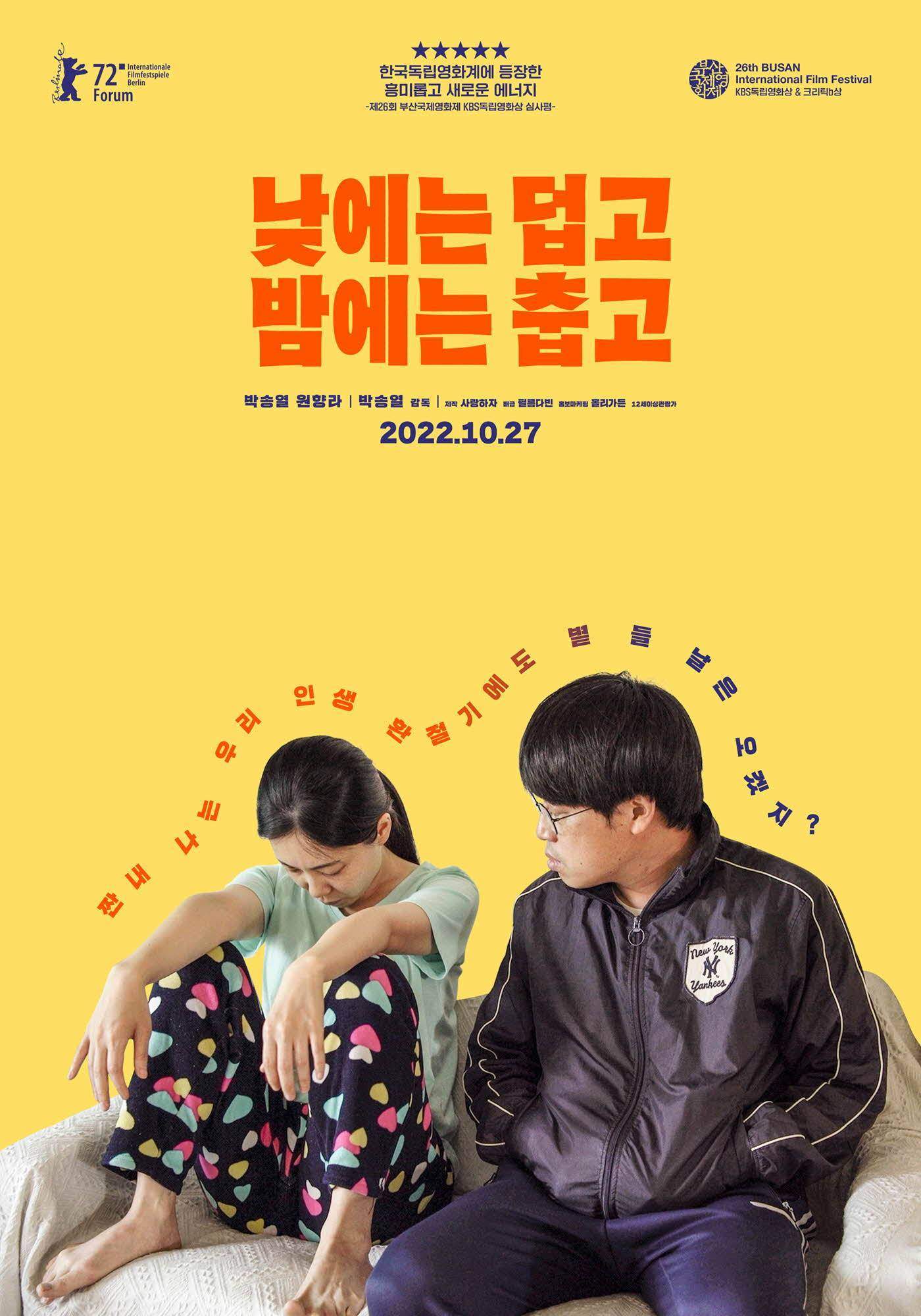
Anyone can have a run of bad luck, but when it’s happening to everyone at the same time perhaps it’s time to admit that something isn’t working. The latest film to tackle life on the margins of an increasingly unequal society, Park Song-yeol’s scrappy indie drama Hot in Day, Cold at Night (낮에는 덥고 밤에는 춥고, Naj-eneun deobgo bam-eneun chubgo) follows one ordinary couple who’ve found themselves jobless and are just trying to keep their heads above the water without losing either their dignity or humanity. 

Young-tae (Park Song-yeol) was working as a delivery driver until an accident with his bike left out him out of work and now he can’t seem to find anything else. His wife Jeong-hee (Won Hyangra), formerly a teacher, is also unemployed and in the process of applying for new positions which seem to be thin on the ground. They aren’t proud and are willing to do whatever is available, each of them reeling off a list of all the casual jobs they’ve done including those that are dangerous or exploitative, but they just can’t seem to catch a break. Mainly, they’re on the same page though differ slightly in their approaches to life, Jeong-hee feeling that her softhearted husband is too much of a pushover and shouldn’t always be so understanding when comes to getting what’s he’s owed. 

A case in point being his decision to lend their professional camera to a friend, Myung-su, who pays them a token rental fee and swears to return it in two weeks when he’s made enough money to buy his own but soon stops returning Young-tae’s calls. Unreturned calls become a repeated motif emphasising how money and the shame associated with not having it can disrupt even close and longstanding relationships. Jeong-hee experiences something similar with school friend Mi-sun who calls in a loan but abruptly stops talking to her after what appears to be a slightly dodgy arrangement getting Jeong-hee to sub for her at a school which goes south over a misunderstanding with the address causing Jeong-hee to ruin a good opportunity (and possibly Mi-sun’s reputation) by arriving late. 

Young-tae has his own series of interview disappointments, Myung-su getting him an opportunity through the “relative of an acquaintance’s friend” which takes a turn for the strange when the interviewer starts asking awkward questions such as whether Young-tae has any sick relatives at home because people apparently take too much time off claiming they have to take care of someone who’s ill. Another possibility sees a friend call out of the blue after 20 years which predictably turns out to be linked to a pyramid scheme.  “My identity just vanishes” Young-tae exclaims of all his soulless causal jobs, “your self-esteem just gets destroyed”. He takes a job as a proxy driver but is faced either with the tedious talk of much wealthier customers throwing their money around in the back or else harangued by drunken fares who don’t agree with this driving practice or the route he’s chosen. 

There is only so much anyone can take though Young-tae’s threshold is higher than most, keeping his cool and trying to get on with his work in the hope that happier days are coming. “There’s no such thing as easy money” he concedes, even as Jeong-hee goes behind his back to take out an ill-advised loan from loansharks who send passive aggressive messages wishing her “peace and wellbeing” while breathing down her neck for the repayments before going so far as to turn up at her mother’s door looking for money. The fact that Jeong-hee didn’t just ask her mother for help in the first place hints the secondary effects of their poverty in their intense embarrassment which further isolates them from wider society even if they hadn’t fallen out with most of their friends over money. A primary motivator for Jeong-hee getting the loan is seeing all her siblings, who each have several children, preparing gifts and money for her mother’s birthday which is something they as a couple were unable to do though it’s Young-tae who appears to feel the most awkward, guilty to be eating food at the party while bringing no gift even if that shouldn’t really be the way it works. 

Young-tae is the sort of person who likes to do things properly and sees the best in people but even he starts to feel like a mug on realising that Myung-su sold his camera ages ago, insisting he pay him back fairly and a little more for the betrayal only to feel guilty and give him back some of the money. Myung-su just accepts it without even offering an apology for acting in such a reprehensible manner but is later seen to have bought a new car which doesn’t tally with his claims of absolute desperation. It’s enough to drive anybody crazy, but really what can you do? Young-tae meditates on petty revenge, but eventually thinks better of it. It wouldn’t make any difference anyway. Quite obviously made for a shoestring and imperfect in execution, the film’s scrappiness perfectly matches that of its heroes who find themselves just muddling along trying live comfortable lives in one the world’s richest cities but discovering little more than loneliness and disappointment. 


Hot in Day, Cold at Night screened as part of this year’s London Korean Film Festival.

Original trailer (English subtitles)

Chorokbam (초록밤, Yoon Seo-jin, 2021) [Fantasia 2022]

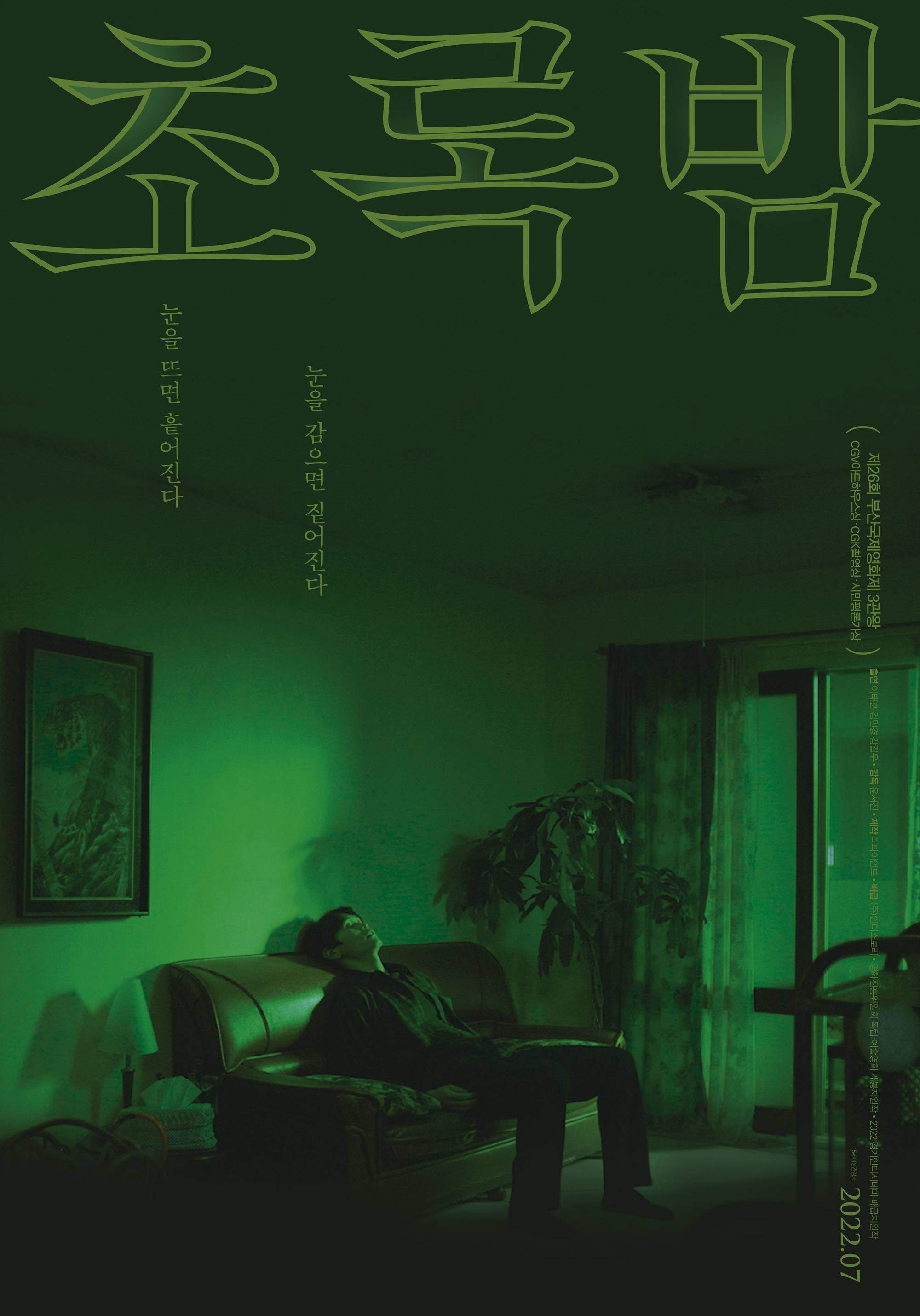
A small family contends with the persistent unfairness of contemporary Korean society in Yoon Seo-jin’s slow burn indie drama, Chorokbam (초록밤). Translated literally, the title means “green night”, the family often bathed in a neon green that seems to reflect their sense of despair and anguish unable to envisage much of a future for themselves in a world ruled by greed and envy which leaves them little option other than to become insensitive to the joy and pain of others. 

As the film opens, the nightwatchman patriarch is busy giving out parking tickets when he suddenly spots a cat hanging from from a children’s climbing frame. Shocked and feeling pity for the small creature, he cuts it down and buries it by the green light of the moon but finds little sympathy when relating his traumatic discovery to his wife. The nightwatchman’s wife is preoccupied with more practical affairs, irritated by her husband’s annoying habits such as leaving the bathroom door open and not washing his hands after finishing his business, while their grown-up son Won-hyung wants to get married but can’t afford a place to live on his salary as a care worker. When it comes to that, they’re soon to be turfed out themselves because their landlord wants to tear the building down. 

Matters come to a head when the grandfather passes away, the nightwatchman’s sisters getting into an actual physical altercation at the wake while loudly complaining about who did or didn’t pay for the funeral. Totting up the condolence money they accuse supposedly cheapskate guests of freeloading, implying they only turned up for a free meal that they have in a sense stolen. Meanwhile, the sisters also want to ensure that their father’s house is sold quickly so they can divvy up the inheritance. What they realise, however, is that there were things about their father’s life they may not have known which raise questions about moral responsibility when it comes to dealing with the affairs of someone who has died. 

The nightwatchman comes to identify with the strangled cat, though the spectre of hanging seems to loom over the rest of the picture with even the nightwatchman’s wife eventually discovering the body of someone whose death she may unwittingly have contributed to. She complains about her husband’s fecklessness, that he, who barely talks at all, makes her deal with anything unpleasant including his hotheaded sisters. She tells him that she regrets marrying into his “horrible” family and is thoroughly sick of dealing with them only to be pursued by a wounded dog with whom she perhaps also identifies. The nightwatchman’s wife is often excluded from the frame, a disembodied voice from behind a wall as she is as she feeds her husband breakfast and again when he asks her to deal with an emotionally difficult situation in a cafe. The nightwatchman simply smokes by a widow as if physically removing himself from the scene. 

Won-hyung meanwhile becomes increasingly resentful with his friends’ wedding coming up, unable to escape the feeling of belittlement in being unable to marry or move forward with his life with little prospect that anything will change. Yoon frames the family’s dilemmas with a deadpan realism, bathing the everyday grimness of their lives in an putrescent green that suggests there may be no escape from this maddening society where all relationships are built on transaction. The family are doing their best but are also estranged from each other, the nightwatchman barely speaking while his wife is left to deal with the uncertainty of their lives alone. She even laments they’ll likely not see the sisters again until the next person dies because their familial connection is essentially hollow and valueless in a society ruled by money. 

The nightwatchman comes to think of himself as a strangled cat, finding himself facing a noose during a poetic dream sequence that encourages him to think of suicide as the only possible escape from his impossible situation. Bleak in the extreme, Kim’s slow burn drama paints an unflattering portrait of the contemporary society as one in which all hope has long been lost leaving only dread and despair in its wake. 


Chorokbam screened as part of this year’s Fantasia International Film Festival.

Original trailer (English subtitles)

Trans (트랜스, Do Naeri, 2021)

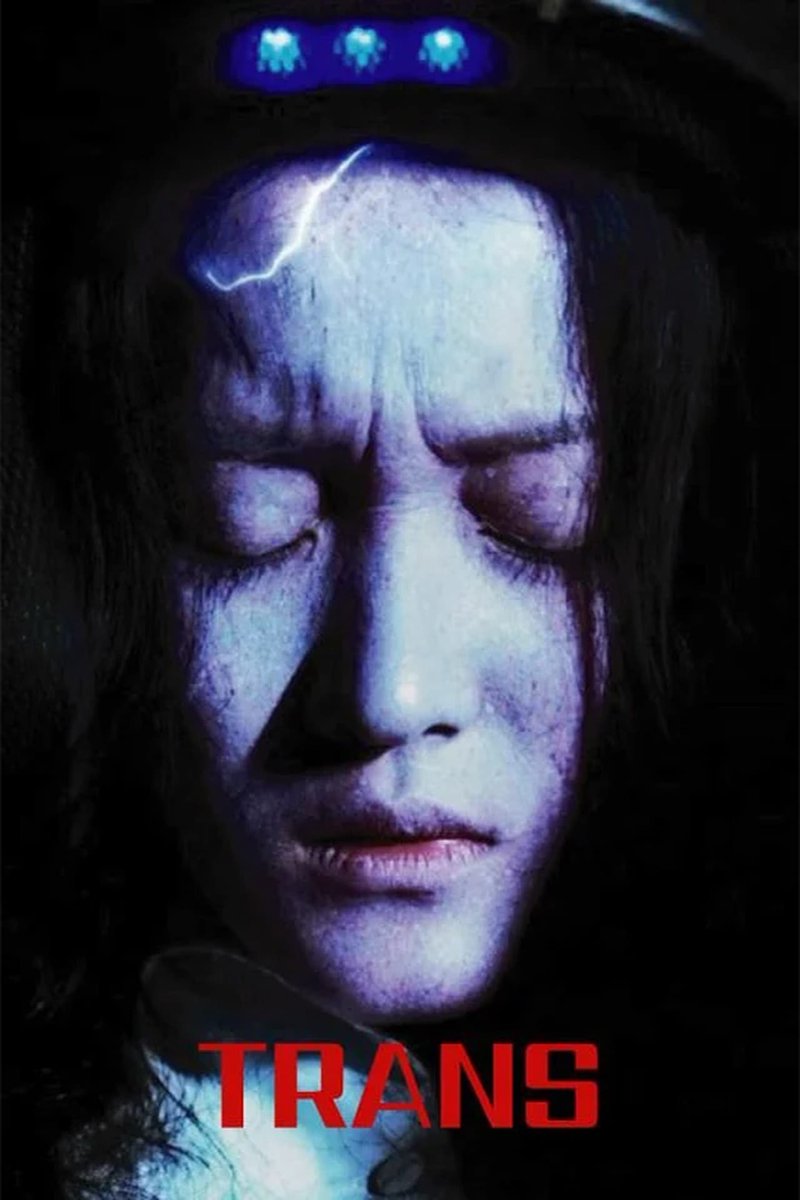
The troubled heroine of Do Naeri’s sci-fi psychodrama Trans (트랜스) finds herself quite literally “stuck in a deep loop” while attempting to transcend herself and escape her teenage angst. Playing with new religion imagery, Do’s elliptical drama sends the young woman on a quest for self-apotheosis through physical transformation, a literal obliteration of the self in order to be reborn as something more than human, yet internally conflicted in the costs and implications of such a “rebirth” even while her consciousness seemingly fractures under the weight of its demands. 

Then again, perhaps all of this is just fantasy returning us repeatedly to the opening scenes in which high schooler Minyoung is awoken from her reverie by a woman’s scream that might in some sense be her own. A classmate’s body has been spotted draped over a tree, his face and torso marked with what seem to be electrical burns. According to the police, Minyoung was the last person to be in contact with Taeyong which in itself seems odd as we’re immediately shown flashbacks of him bullying her because of her bulimia, attempting to shove junk food into her face. On one such occasion she’s rescued by fellow student Itae, wearing a mask and firing some sort of laser gun. Itae later takes her to his secret lab where he researches the concept of transhumanism believing that the next step in human evolution lies in hacking the brain, enhancing human physicality with technological augmentation such as the chip he has implanted on his chest apparently given to him to “cure” his OCD. 

Taeyong’s quasi-fascist ramblings take on the language of new religion, talking of electrical “baptism”, death and resurrection, eventually directing a mystical prayer to the sky as if requesting divine blessing for his transcendence of the human form. Such language may be perfectly tailored to Minyoung whose only other interaction we see is with a dubious online church in which she questions her mentor on the nature of evil, asking why God could not have just made humanity “perfect” to begin with only for her mentor to suggest that evil is a choice that proves free will ensuring that humans are not just mindless robots following divine orders. Mindless robots is however what Taeyong believes humanity to be, his quest for transcendence apparently also one of revolution hoping to obliterate humanity as it is once and for all. He may in some sense reflect Minyoung’s alienation, a desire for revenge against a society by which she feels rejected, while fellow classmate Nochul perhaps reflects her concurrent anxiety. 

Yet there is something dangerous in Itae’s insistence that Minyoung is merely “stuck in a loop” and that certain behaviours or aspects of personality regarded as “disorders” are all the fault of faulty wiring and can simply be “fixed” by rebooting the system through electronic shock without ever considering the reasons those feelings or behaviours may have come to exist. He prays on Minyoung’s desire for control and dangles the promise of empowerment while merely using her in his plan to bring about the destruction of humanity while implying she may have already entered a state of “trans” which is why her world keeps repeating itself with details slightly altered until finally reaching the source of her trauma and uncovering the “truth” of her reality as defined by her own consciousness.  

This may all indeed be in her head to one extent or another as she looks for a way to transcend herself, her sense of alienation, dysphoria with her surroundings, and spiritual despair led astray by some worryingly fascististic philosophy advanced by a teenage mad scientist hellbent on the destruction of “low class robots” and the creation of a new superman through engineered evolution apparently using little more than a MacBook Air and a series of TV screens, his chief piece of equipment a modified motorcycle helmet. Careering through transhumanism to teleportation, invisibility, parallel universes, and time travel there is much that makes little literal sense as Minyoung constructs and deconstructs identities while repeatedly remaking her world if not quite to her liking then at least to her satisfaction only perhaps to wish she could return to a state of ignorance, human once again. 


Trailer (English subtitles)

Action Dongja (액션동자, Yongminne, 2020)

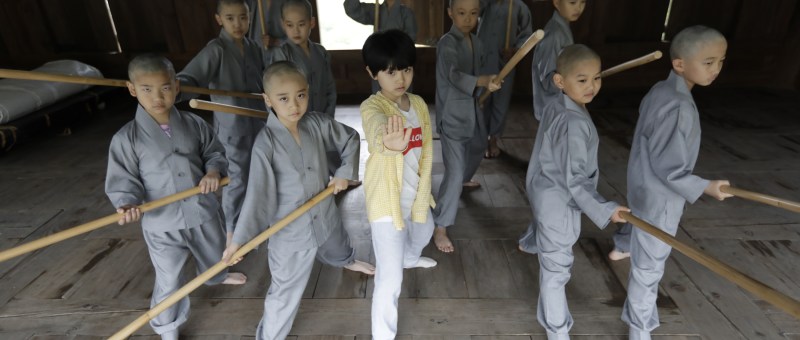
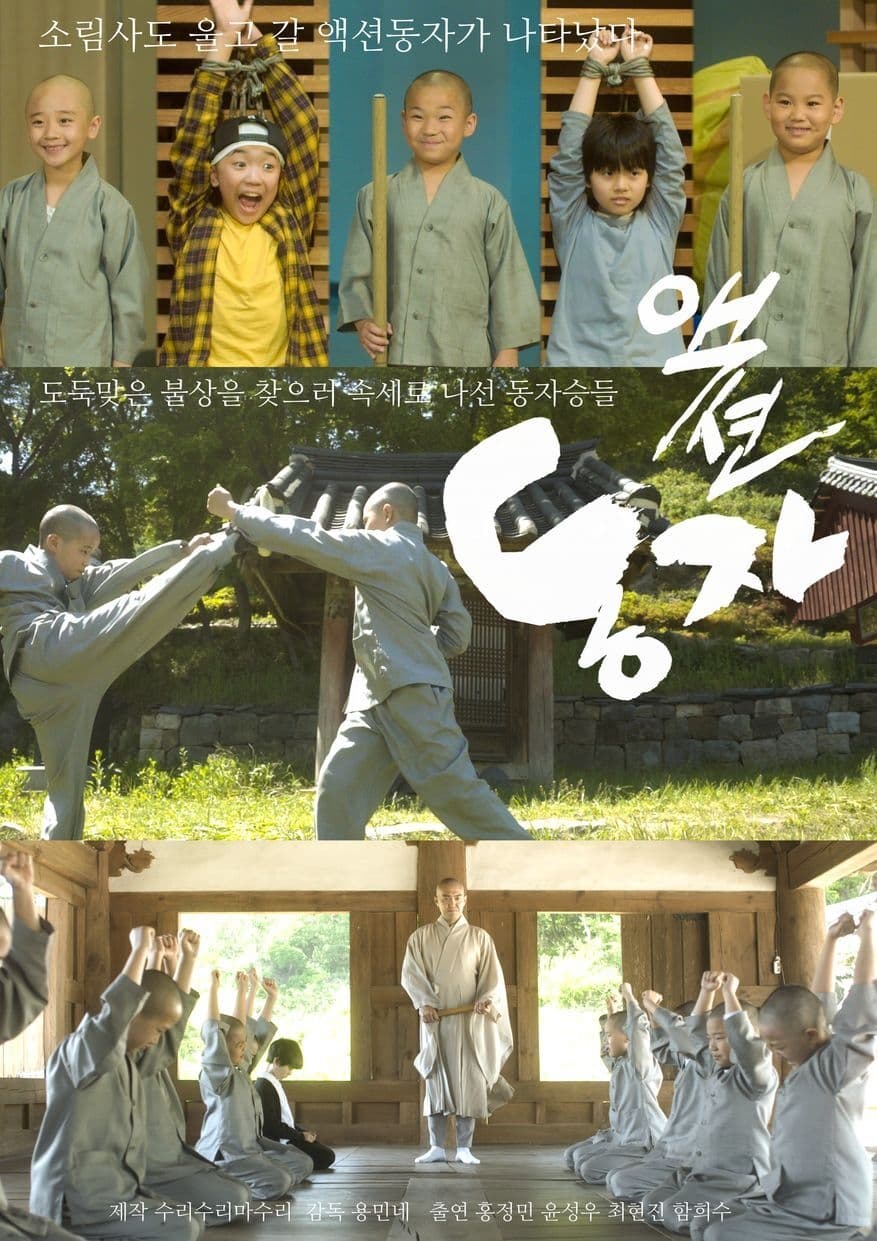
Four little monks discover brotherhood in their shared sadnesses as they valiantly chase down a gang of evil robbers specialising in thieving ancient relics from Buddhist temples in Yongminne’s slapstick kids adventure movie Action Dongja (액션동자). Exposing a societal prejudice against orphans along while upending a few stereotypical notions about monks, Yongminne’s warmhearted drama is equal parts a coming-of-age tale for each of the pint-sized monastics and Home Alone-style heist movie as the kids plot how to take down the crooks using their unique skillsets.

Little Jingu has had it tough. He lost his parents at a young age and has been separated from his younger sister. Now his grandmother who was raising him has died and another woman whom the grandma had apparently asked to take care of him has decided to dump him at the temple instead. Apparently Christian, the woman planned to leave him at an orphanage but thought the temple might be better because he’ll be near his grandmother’s resting place. As might be expected, Jingu does not take well to his new life. Not only is he overcome with grief having lost all of his family members, his home, and everything he knew but he didn’t ask for this very regimented existence and it’s obviously an extreme adjustment which might explain why he’s become mute, sullen, and withdrawn. Nevertheless, one very cheerful and friendly boy nicknamed “piggy” because of his bottomless stomach, extra sensitive nose, and obsession with food keeps trying to make friends with him even coming to his aid when he’s hazed by a couple of local kids at school and later bailed out by two top martial artists, the kind and sensitive Jeongbeop and the exceedingly mean and authoritarian Gajin. 

Jeongbeop explains to the bullies that it’s not right to bully those weaker than yourself and so they had no choice other than to defend themselves, asking for forgiveness as they leave. That doesn’t make much difference to the monks, however, when the boys’ parents turn up to throw their weight around insisting that they don’t want kids like these at their sons’ school virtually accusing the temple of training up little thugs. “Kids without parents are the ones who lie” one fires back, unwilling to believe her good little son could have misrepresented himself while reflecting a societal prejudice towards those who have no family. The younger of the two monks tries to defend the boys, insisting that it’s hardly their fault they’re orphans, but the chief monk is quick to placate the parents while perhaps sending mixed messages punishing Jingu and the other boys but later taking them out for Korean barbecue. Though many Buddhist monks are vegetarian, it is not strictly required and in any case the boys are too young to be expected to adhere entirely to asceticism yet the group’s presence once again arouses a degree of suspicion and resentment as opposed to mere surprise in an irrationally annoyed couple on a nearby table. 

Meanwhile, the boys are also rejected by their peers who unfairly blame them when their temple is robbed, the chief monk stabbed, and a precious picture scroll stolen. Jingu happened to see the face of the man who did the stabbing, but is unable to say anything later telling his new friends when they hatch a plan to catch the thieves themselves as a way of regaining the respect of the other boys and getting justice for the chief monk. In true heist movie style, Jingu who has not yet had his ordination takes the other kids shopping so they can better blend in, the gang even becoming temporary street performers Piggy rapping sutras while the other two do a martial arts display, to pick up extra cash after getting pickpocketed in the big bad city. Unexpectedly it’s Piggy who saves the day with his famously well-attuned sense of smell, picking up the scent of incense on a suspicious man at the port. Bonding during their mission, the boys come to an understanding of their various traumas and the ways in which they inform some of their behaviour generating a sense of brotherhood as they band together to take down the robbers. An old-fashioned kids adventure with a monastic twist, Action Dongja is a charming tale of unconventional found family in which the lonely hero learns to find his place while chasing bad guys and solving crime.


Action Dongja streamed as part of Yubari International Fantastic Film Festival 2021.

The Basement (지하실, Choi Yang-hyun, 2021)

Two weeks doesn’t seem like a very long time. You might think you can stick anything out for two weeks if you know it will definitely be over in 14 days, but what if you don’t know when or if it’ll end and 14 days turns into 28 with no sign it might not turn into 42? In some ways that might seem like a familiar situation at the present moment, but it’s one that comes to define the lives of an affluent upper-middle class family in Choi Yang-hyun’s pandemic allegory The Basement (지하실, Jihasil). 

When the alert goes out that South Korea is under attack with a nuclear missile apparently on its way the Choi family dutifully obey the emergency text on their phone and take refuge in the basement intending to stay the advised two weeks until the radiation will have decreased to acceptable levels. Unfortunately, however, once down there they realise their preparations have not been thorough enough, the power is out and they’ve left the suitcase containing clothing and emergency supplies upstairs. With phone lines jammed, no radio reception, and no way of keeping in contact with the outside world they have no idea if the strike actually took place or if their friends and family members made it to safety. 

Placed under such strain, it’s understandable that small grievances and tensions in the family are quick to arise. Wife Hayeon seems particularly irritated by her practically minded husband Dongbaek, describing him as “immature” and complaining that he’s never really put his family first preferring to spend his weekends playing golf with the boys. Not helping matters, Dongbaek sadly reflects that he “probably” won’t be able to go on that work jolly golfing in Thailand the following week which whatever way you look at it is not a primary concern in the present moment. She also complains that he made such a fuss buying all this expensive camping equipment that he hardly ever used but at least it’s paying off now during their accidental holiday in the dank and depressing basement of their well-appointed detached home in the suburbs of an area described as “Korea’s Silicon Valley”. Dongbaek meanwhile reflects that he’s glad they sold their Gangnam flat for a spacious house (even if they’re trapped in one room of it) because even if they’d probably have made a bundle on the housing market if this hadn’t happened, they’d be gonners as inner-city apartment dwellers. 

Nevertheless, the first crisis occurs when the family begin hearing the sound of a neighbour frantically calling to them from outside apparently unable to reach her husband or son and looking for some kind of human support. Teenage daughter Jiseon wants to open the door, but her mother is conflicted and Dongbaek dead against it. The woman’s distress clues them in to the fact that something bad really has happened on the surface, but they’ve only so many resources and Dongbaek apparently doesn’t want to share while Jiseon can’t understand how he could be so heartless as to listen to someone screaming for help and not open his door. 

He meanwhile is more invested in finding practical solutions, trying to solve the bathroom problem they neglected to think of previously while setting up a water still to catch moisture from the wooden ceiling beams, repeatedly making reference to his time in the army and disaster preparedness training. Yet the problem they can’t solve is the anxiety, how will they ever know if it’s really safe to come out especially as the radio, once it’s working, gives contradictory messages either suggesting everything’s fine or that North Korea has occupied Seoul. Practically speaking, they can’t stay down here forever, there’s only so much food and some of them are already beginning to experience ill-effects from staying so long in the dark and damp. Sooner or later they’ll have to overcome their growing sense of anxiety for the unknown outside and brave the new reality. A claustrophobic chamber drama starring only three actors with occasional outside voices, Choi’s pandemic adjacent drama explores how one family attempt to come to terms with impending apocalypse while combatting boredom in equal measure to fear and despair but discovers that togetherness and endurance are perhaps the key skills for survival. 


The Basement streamed as part of Yubari International Fantastic Film Festival 2021.

International trailer (English subtitles)

Kim Min-young of the Report Card (성적표의 김민영, Lee Jae-eun & Lim Ji-sun, 2021)

Does surviving in the modern society necessarily mean sacrificing your essential self? The eponymous Kim Min-young of the Report Card (성적표의 김민영, Seongjeongpyoui Kim Min-young) says she wants to transfer from her regional uni to one in Seoul because her classmates are “too Korean” and she finds them tedious, but is simultaneously mean to and dismissive of the film’s heroine, Junghee (Kim Ju-a), who has defiantly decided to follow her own path rather than the one society lays in front of her. 

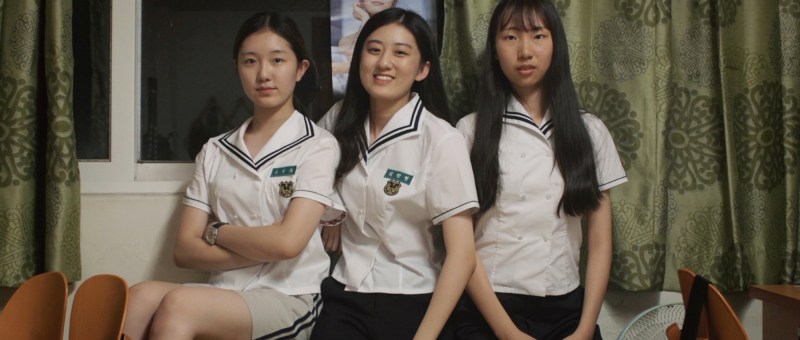
As the film opens, Junghee is one of three members of the “acrostic poetry club” along with her high school roommate Min-young (Yoon Seo-young), and a girl from down the hall Sanna (Son Da-hyun). Sadly, they’ve decided to wind the club up because they’re only 100 days out from the college entrance exams and need the extra time to study. We never find out exactly how well Junghee fared or whether her decision to lend her watch to an anxious boy (who does not pass) affected her grade, but in any case she does not attend university deciding instead to look for work while Min-young leaves to study nursing in Daegu. 

The third girl, Sanna, as we later discover did the best of the three and went all the way to Harvard. The trio had vowed to carry on the poetry club via Skype, Sanna making time for her friends even though the time difference makes it inconvenient while Min-young seemingly can’t be bothered to turn up. Nor can she really take time out for Junghee’s calls, her friend a little put out to hear loud party music in the background while trying to share important news. Even so, she’s delighted when Min-young suddenly invites her to visit her staying at her brother’s vacant apartment in Seoul during the summer holidays especially as she’d just been let go from the random job she’d managed to get manning the desk at a moribund tennis club. 

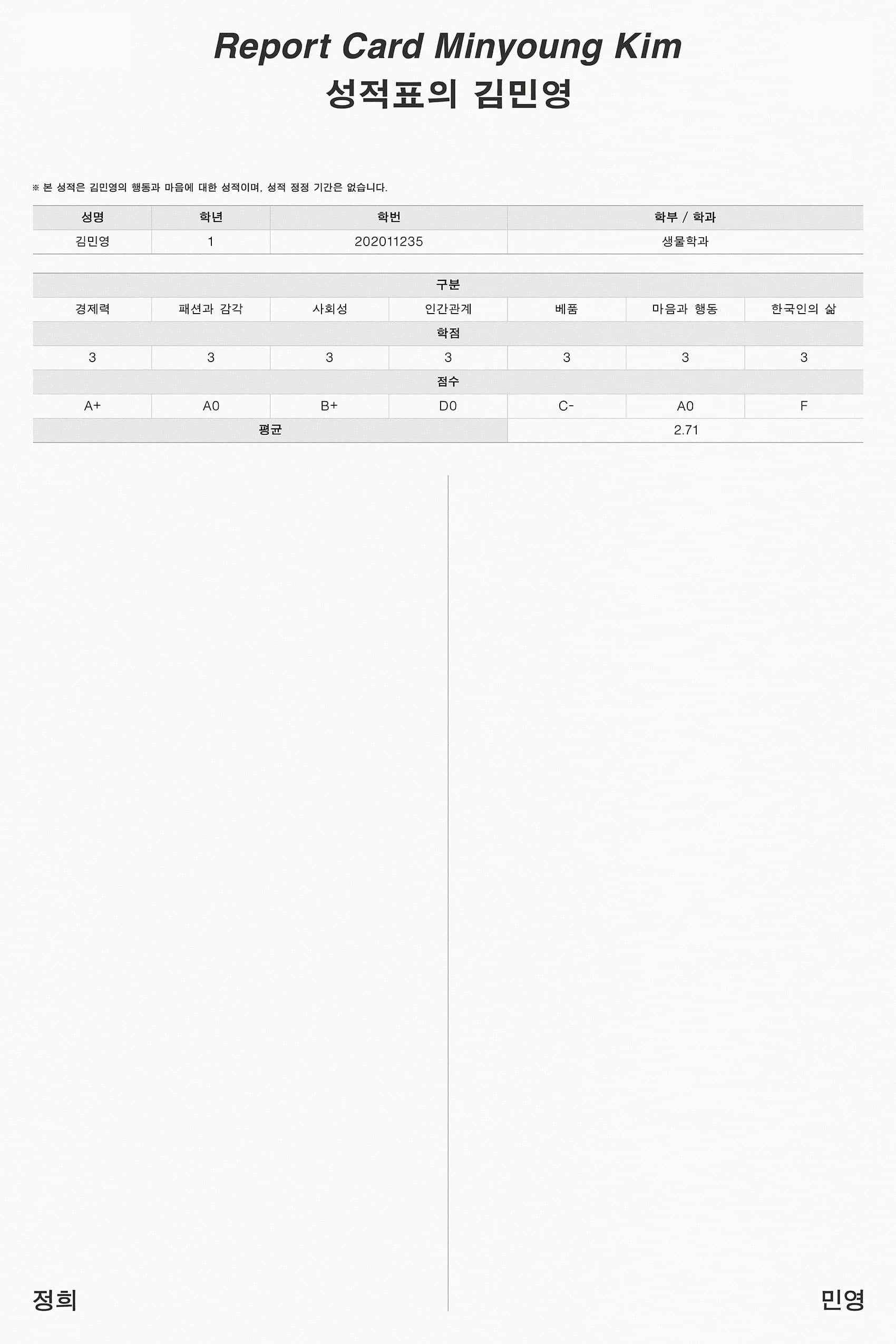
It’s in the Seoul apartment, a messy and chaotic place, that the differences between the two formerly close friends come to the surface. Despite having expressly invited her friend to come, Min-young isn’t really interested hanging out and is in the middle of some kind of crisis obsessing over a single bad grade on her end of term report card. Together they try to formulate a letter of complaint to the professor, Junghee doing her best to be supportive while privately wondering if Min-young isn’t being a little childish and that if she wanted a better grade she should have studied harder. Meanwhile, Min-young runs down all of Junghee’s life choices, constantly telling her she needs to be “realistic” and that she probably won’t get anywhere with her artwork in terms of financial viability. 

Junghee is visibly hurt by Min-young’s superior attitude, but in the interests of having a pleasant day chooses to let it go even while Min-young continues to ignore her. Even so the difference between them is perhaps at the heart of Min-young’s ironic “too Korean” comment about her new uni friends, criticising them for the conventionality to which she too aspires, singing the praises of Seoul but most particularly for its three floor claw game emporiums. A quick look at Min-young’s diary when she abruptly takes off leaving Junghee alone in the apartment reveals that in actuality she envies Junghee for her boundless imagination and willingness to be her true self rather than blindly trying to fit in while finding herself out of place among her new friends. Her opening poem hinted at low self-esteem and an insecurity about the future that perhaps leaves her a little self-involved, projecting her anxieties onto Junghee who is eventually forced to defend herself by pointing out that she has her own reality which is important to her no matter what those like Min-young may have to say about it. 

In the kindest of ways and with true generosity of spirit, Junghee writes the report card of the title praising her friend for her better qualities while pointing out her faults as supportively as she can. Giving her an “F” for “Koreanness” she advises her that she’s the one who is suffering because she worries too much about what other people think, searching for conventional “stability” rather than embracing her true self and ought to become “less Korean” in order to ease some of her anxiety. Offering a mild critique of a socially oppressive culture, Lee & Lim’s quirky drama with its random asides and flights of fancy makes a case for the right to dream positing the quiet yet free spirited Junghee as the more mature of the two women having embraced her true self and decided to follow her own path while being kind to those still trying to find their way. 


Kim Min-young of the Report Card screened as part of this year’s San Diego Asian Film Festival

Original trailer (English subtitles)