The Fake (UK Anime Network Review)

2013 - The Fake (still 7

Another Korean Film Festival review just gone live on UK Anime Network, this time a new animated effort from the director of King of Pigs – The Fake.


Yeon Sang-ho’s previous film, The King of Pigs, was the first Korean animation to be screened at Cannes and was nothing if not a bleak look at the prevalence and long term effects of bullying in the Korean high school system. His next film, The Fake, is another dark exposé but this time of another great pillar of Korean society – evangelical religion. False prophets abound as Yeon takes us on a difficult journey through the nature of faith, desperation and the exploitation of human weakness.

A small Korean town is slowly being dismantled before being sacrificed for new damming project. The people of the town are being appropriately compensated by the government, but still they’ll have to pick up and start again somewhere else even though many of them are already past retirement age. Two new forces are descending on this once ordinary town – one offers hope in the form of an evangelical preacher who claims to cure the sick and offers a place in a new paradise (to those with the money to buy a ticket – places strictly limited, terms and conditions may apply) and the other a violent drunkard, Min-chul, who wastes no time in wreaking havoc on the lives of his wife and daughter. Unfortunately, Min-chul picks a fight with the wrong person and is the only one to realise that the preacher’s “backer” is notorious fraudster currently wanted by police for a string of similar crimes. Sometimes the truth comes in unpleasant packages, and being the sort man he is, who would believe Min-chul when he’s the only one who’s seen through this “fake” miracle?

It goes without saying that like The King of Pigs, the world depicted in the The Fake is utterly bleak and without even the faintest glimmerings of hope. Every character is flawed, very few have any redeeming features at all and almost nothing good happens in the entire course of film. However, it is marginally more subtle than King of Pigs which is a much welcome upgrade over the previous film’s excesses. Faced with such a bleak situation, it isn’t surprising that the entire town has fallen hook, line and sinker for the false hope offered by the eerily cult-like preacher and his camp of evangelicals. The preacher himself may once have been a genuine man of god, but his business minded backer acts totally without compunction and is only interested in cold, hard cash. Peddling “holy water” as a supposed curative, neither the preacher nor the business man seem to care that one of their biggest supporters is currently suffering from tuberculosis and foregoing modern medicine in favour of this spiritual treatment – after all, the con is nearly played out and they’ll be on their way before their spurious claims are exposed.

Their only adversary is Min-chul, a man so rude and violent that people stopped paying attention to him years ago. It doesn’t help that Min-chul is much less interested in the injustice of the fraudulent operation than he is in taking personal revenge against the group, firstly because of what happened the first time he met the businessman and secondly because they threaten to take away his wife and daughter which seems to be the thing that most frightens him. Nevertheless, he is a dogged pursuer and his constant attention is enough to put the fraudsters on edge. The real horrifying truth is that some of these people half know the reality already, they just don’t want to hear it. It’s much easier to just believe in the false hope offered to you than to face a hopeless reality in which you have no control and no possibilities. If someone tells you they can carry your burdens for you and make it all OK, you likely won’t want to listen to someone who says differently and the fact of the matter is you’re very unlikely to trust someone you didn’t like very much in the first place no matter how sensible their arguments maybe.

In terms of animation style, The Fake offers a slight upgrade over The King of Pigs whilst retaining a similar aesthetic. Yeo overuses the shaky-cam effects which have an oddly rhythmical, computerised feeling which becomes distracting and works against their intended purpose but overall the The Fake feels much more accomplished in terms of production values. It’s a cynical message and hardly an original one, but The Fake offers its own take on the nature of faith and organised religion and bar a few missteps does so with a much more nuanced eye than The King of Pigs. Intensely bleak, violent and unremitting, The Fake is definitely not for the faint of heart but is a definite step up from The King of Pigs and ironically offers a ray of hope for serious animation in Korea.

 

A Hard Day (끝까지 간다, Kim Sung-hoon, 2014)

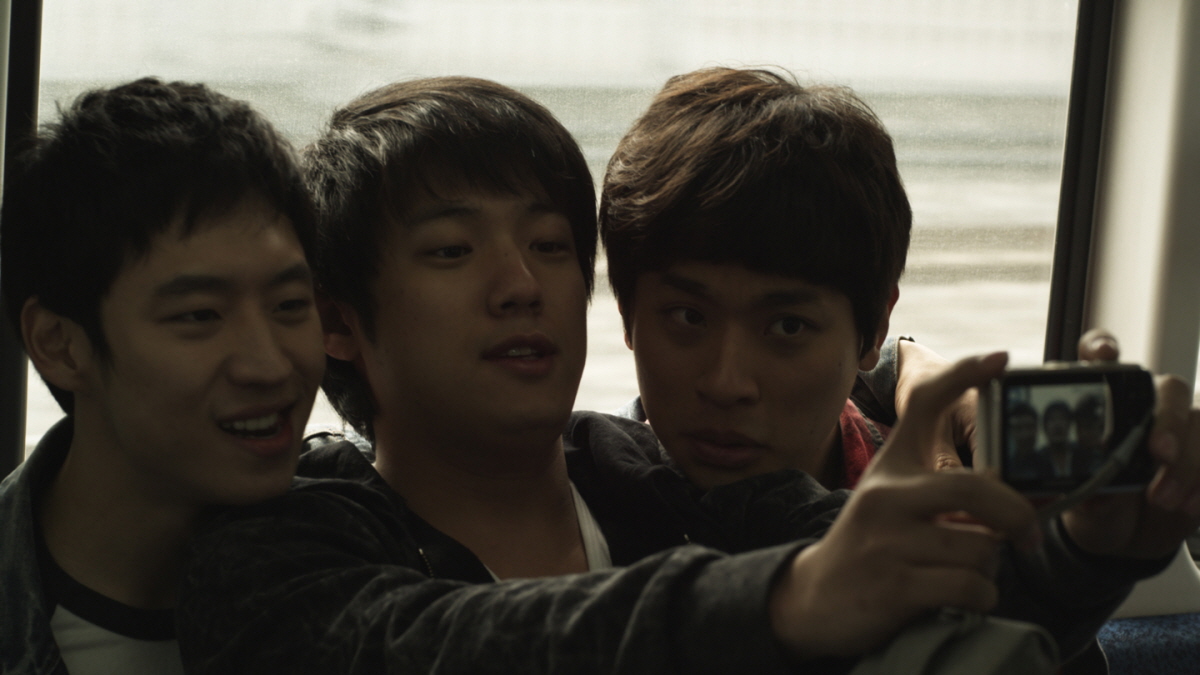
2014 - A Hard Day (still 2)In an unprecedented level of activity, here is another review up on UK-anime.net – this time Korean black comedy crime thriller, A Hard Day (끝까지 간다, Kkeutkkaji Ganda) which was shown at the London Film Festival and the London Korean Film Festival and is now out on DVD from Studio Canal.


For most people, a “hard day” probably means things like not being able to find a parking space, missing your train, the office coffee machine being broken and your boss having a mental breakdown right on the office floor but for not-totally-honest-but-sort-of-OK Seoul policeman Gun-su “hard” doesn’t quite begin to cover it.

Gun-su is driving furiously and arguing with his wife on the phone because he’s skipped out on his own mother’s funeral to rush to “an important work matter” which just happens to be that he has the only key to a drawer which contains some dodgy stuff it would have been better for internal affairs not to find – and internal affairs are on their way to have a look right now. So pre-occupied with the funeral, probable career ending misery and the possibility of dropping his fellow squad members right in it, Gun-su is driving way too fast. Consequently he hits something which turns out to be man. Totally stressed out by this point, Gun-su does the most sensible thing possible and puts the body in the boot of his car and continues on to the police station. Just when he thinks he’s finally gotten away with these very difficult circumstances, things only get worse as the guy the he knocked over turns out to be the wanted felon his now disgraced team have been assigned to track down. Oh, and then it turns out somebody saw him take the body too and is keen on a spot of blackmail. Really, you couldn’t make it up!

Some might say the Korean crime thriller format is all played out by this point, but what A Hard Day brings to the genre is a slice of totally black humour that you rarely see these days. Gun-su is obviously not an honest guy, but he’s not a criminal mastermind either and his fairly haphazard way of finding interesting solutions to serious problems is a joy to watch. This isn’t the first film where someone happens on the idea of hiding a body in a coffin, but it might be the first where said person uses a set of yellow balloons to block a security camera, his daughter’s remote control soldier to pull a body through an air conditioning duct and his shoelaces to prize the wooden nails out of his own mother’s coffin to safely deposit an inconvenient corpse inside. Gun-su (mostly) manages to stay one step ahead of whatever’s coming for him, albeit almost by accident and with Clouseau like ability to emerge unscathed from every deadly scrape. He’s definitely only slightly on the right side of the law but still you can’t help willing him on in his ever more dastardly deeds as he tries to outwit his mysterious opponent.

Though it does run a little long, refreshingly the plot remains fairly tight though it is literally one thing after another for poor old Gun-su. A blackly comic police thriller, A Hard Day isn’t claiming to be anything other than a genre piece but it does what it does with a healthy degree of style and confidence. The action scenes are well done and often fairly spectacular but they never dominate the film, taking a back seat to some cleverly crafted character dynamics. Frequent Hong Sang-soo collaborator Lee Sung-kyun excels as the slippery Gun-su whose chief weapon is his utter desperation while his nemesis, played by Cho Jing-woong, turns in an appropriately menacing turn as a seemingly omniscient master criminal.

Yes, A Hard Day contains a number of standard genre tropes that some may call clichés, but it uses them with such finesse that impossible not to be entertained by them. Bumbling, corrupt policemen come up against unstoppable criminals only to find their detective bones reactivating at exactly the wrong moment and threatening to make everything ten times worse while the situation snowballs all around them. However, A Hard Day also has its cheeky and subversive side and ends on a brilliantly a-moralistic note that one doesn’t normally associate with Korean cinema in particular. It may not be the most original of films, but A Hard Day is heaps of morbidly comic fun!


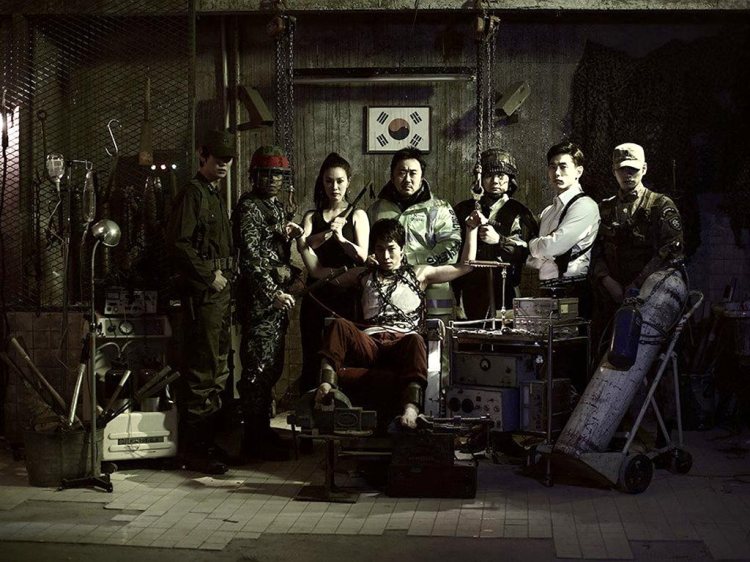
One on One (일대일, Kim Ki-duk, 2014)

9ae7eea7-3b8a-4212-96ca-023eb8b5cdd5wallpaper1Review of Kim Ki-duk’s latest from the London Korean Film Festival up at UK Anime Network.


Kim Ki-duk is back with another frankly baffling state of the nation style assault on contemporary Korean values. In contrast with much of his other work, One On One is much more dependent on plot and dialogue and has a much more straight forward yet distant shooting style than the poetic and painterly scenes we often see from him. Like his other films however, it employs shocking episodes of violence to expose some of society’s festering wounds though perhaps this time it’s with the eyes of a curious anthropologist rather than an embittered social investigator.

This oddly symmetrical tale begins with the shockingly matter of fact murder of a young schoolgirl by a gang of seven masked aggressors. Following this seemingly senseless crime another group of seven, this time a group of vigilantes brought together by a desire for some kind of personal vengeance against society, have taken it upon themselves to avenge this killing by kidnapping each of the seven perpetrators and torturing them until they confess and give some kind of information regarding the true nature of the crime. In another duality, the “villains” are all well to do, successful underlings whereas the “vigilantes” are generally working-class people who’ve lost out in the current economic climate and in some cases are living in dire poverty through no fault of their own. The villains offer several different reactions or explanations for their involvement in such a heinous crime varying from “I was just following orders” or “it was for the common good” to “what does it matter, I have status and can do as I please” but at the end of the day those on both sides will have to realise that the lines between good and bad are much more fluid than most people would like to think and that eventually you will have to decide for yourself not just where you stand but who it is you really are.

One on One often feels like a slightly underbaked pudding, the flavour is good (mostly) but it’s gone a bit soggy in the middle. The symmetrical nature of the two sets of seven is interesting as is the direct mirroring of their social statuses but somehow the ideas don’t quite feel developed enough and even end up feeling a little too neat or obvious. The elite group who murdered the school girl in the beginning are all successful people with seemingly no particular worries in their lives other than being caught up in a hierarchical system and unable to climb the ladder fast enough. When one of the men whose explanation is simply that this isn’t his fault, he was only following orders and whoever gave the order is to blame is reminded that one day he may be the one giving the orders he seems to regard it simply as the natural order of things. He and some of the others seem to have an unshakeable faith that they would not have been asked to do this (and presumably other “crimes” too) had it not been of vital importance for the survival of the Republic of South Korea. Where this “faith” comes from remains unclear, though it offers the slim justification of the fanatic for the senseless murder of a teenage girl. Some of these men wanted to get ahead and simply didn’t care what they had to do to get there, but others at least thought their actions had  a noble purpose no matter how terrifyingly awful the task they’ve been assigned.

The group of vigilantes by contrast are mostly those who’ve been disadvantaged by the current climate of Korean society. One is living on instant ramen, which as is pointed out by the group’s leader is a staple food for the poor but simply “a snack” for the rich, whilst trying to save money for his wife’s medical treatment and fend off various loan sharks. Another is living outside his old tenement building in a tent with his mother who seems to be suffering with dementia because they have nowhere else to go. The young men are angry that even if they’ve done everything right – got a degree, been abroad, learned English, they still can’t get those steady white collar jobs and a leg up into the middle classes like they were always promised. The one aberration in the group is its only female whose anger stems from being involved in an abusive relationship which she nevertheless does not seem keen to end. It isn’t difficult to see where their anger stems from and for most of them the vigilante activities are a way of taking a personal revenge against society as a whole by taking these entitled, well connected “thugs” down a peg or two and trying to make them realise the true nature of their societal roles.

However, things start to fall apart towards the end where Kim allows his message to become a little too muddy. There are good bad guys and bad good guys, nobody’s perfect and perhaps nobody even wants to be – can you really build a society when everyone has completely lost sight of any kind of human compassion? At one point some of the vigilantes attempt to make the best of their situation by exclaiming “ah, at least we aren’t in North Korea” which just makes you half wonder if North Korea isn’t just a giant government conspiracy designed to maintain the status quo by allowing the lowest members of society to feel good enough about their situation to avoid any revolutionary grumblings from the proletariat. The title card at the end flashes up the following three words “Who Am I?” with no other explanation to whom they might pertain. Like all the best riddles there might be several answers to that multifaceted problem though they may end up saying more about those who answer than those who posed the question.


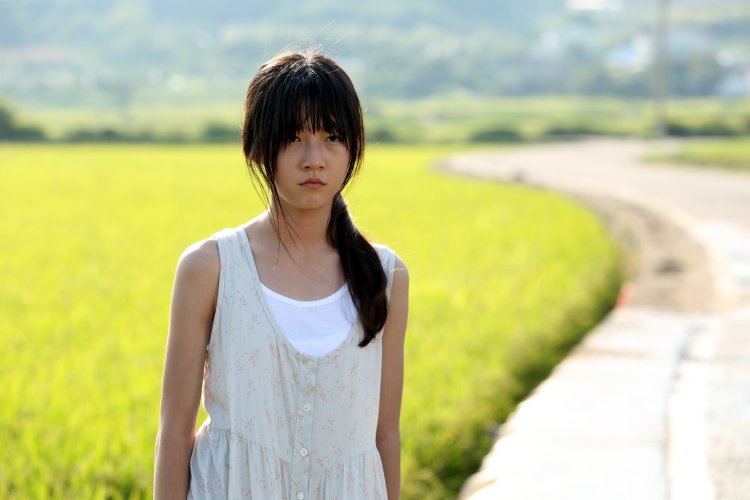
A Girl at My Door (도희야, July Jung, 2014)

fullsizephoto427951Review of A Girl at My Door from the London Film Festival up at UK-anime.net. This is also playing at the London Korean Film Festival which opens today with a gala screening of Kundo: Age of the Rampant. Director July Jung will be at the LKFF screening on 7th November for a Q&A tootickets still available!


You’d never know it, but A Girl at My Door is actually the first feature film from promising new Korean director July Jung. Produced by well regarded Korean auteur Lee Chang-dong (Poetry, Oasis, Peppermint Candy), the film evidently benefits from some of his expertise but it would be a mistake to over emphasise his involvement. Like Lee’s films A Girl at My Door is a tightly plotted character drama that opens up to explore a whole host of social issues but Jung has certainly been able to put her own stamp on the project and if A Girl at My Door is anything to go by, she is very much a talent on the rise.

Lee Young-nam (Bae Doona) has just arrived in the little hick town she’s been exiled to thanks to some kind of undisclosed infraction committed in Seoul. As the town’s new police chief, she’s thrust into the largely male world of local law enforcement and forced to acclimatise to small town politics with hardly enough time to breathe. Lee is also a high functioning alcoholic who guzzles soju from refilled litre bottles of water though her colleagues don’t seem to have noticed and her work is barely affected. After catching sight of the same young girl who seems to be constantly running away from someone or other, Lee eventually intervenes when a group of teenagers are picking on her. Do-hee is a troubled teenager from a violent home where, abandoned by her mother, she’s ‘cared for’ by a step father and resentful drunken grandmother. Do-hee quickly fixates on Lee and her superficially fearless attitude and eventually Lee has taken the girl in and offered her a place of solace way from the chaos of her home life. However, no matter how good one’s intentions may be, others will twist the facts to their own advantage and doing the right thing can often prove dangerous.

Possibly one of the benefits of having a high profile producer like Lee Chang-dong is that you’re able to get yourself a high profile cast of talented actors for your first film despite not having a proven track record or industry clout of your own. Bae Doona’s performance of the largely silent Lee is nothing short of extraordinary. There’s a sort of defiance in Lee’s silence, an unwillingness to speak because she knows there’s very little point. All we can glean about what happened in Seoul is that her dismissal has something to do with the fact that Lee is gay – something that is accidentally discovered by exactly the wrong person when Lee’s ex-partner comes to town. It’s not so much that she’s keeping that secret from the townspeople, but more that she knows it’s going to be a problem and she’s unwilling to deny it either. After all, she’s been here before and she knows how this scenario plays out. Taking in someone else’s child can be a dangerous thing for anyone, but as one policeman later puts it “it’s different when a homosexual does it” and even the most innocent, well meaning of gestures suddenly becomes something sordid and dirty. Lee’s world weary attitude seems to imply she half expected this would happen, still – there was a girl at her door, what else could she do?

Bae Doona is equally matched by the already fairly experienced teenage actress Kim Sae-ron as the troubled young girl, Do-hee. A mess of contradictions, Do-hee is both vulnerable and dangerous. One of the villagers refers to her as a monster and she certainly has a dark side which can be selfish and manipulative as well as a tendency towards fantasy. However, at the root of things she’s just a lonely, abandoned, unloved and unwanted child. Of course, as soon as someone shows her the slightest hint of kindness she will latch on and become fearful of losing even that extremely slight glimpse of affection. Perhaps therefore, she says things that aren’t quite true without fully understanding their implications and ironically risks ruining the fragile happiness she’s so desperate to cling to. It is quite an extraordinary performance from such a young actress – Kim Sae-ron manages to unify all of Do-hee’s contradictory sides into a convincing, and ultimately quite moving, whole.

A Girl at My Door does have its social issue dimension – the exploitation of illegal immigrants, small town politics, homophobia, sexism and of course unwanted children are all themes at some point touched on through the film, but what is at heart is a character drama about two lonely women who both find new strengths thanks to their unexpected friendship. Jung has crafted a charming and moving film that is only improved by its tremendous feeling of stillness. Beautifully shot and full of intriguing ambiguities, A Girl at My Door is a fantastically assured debut feature which hints at a very interesting career ahead for director July Jung.


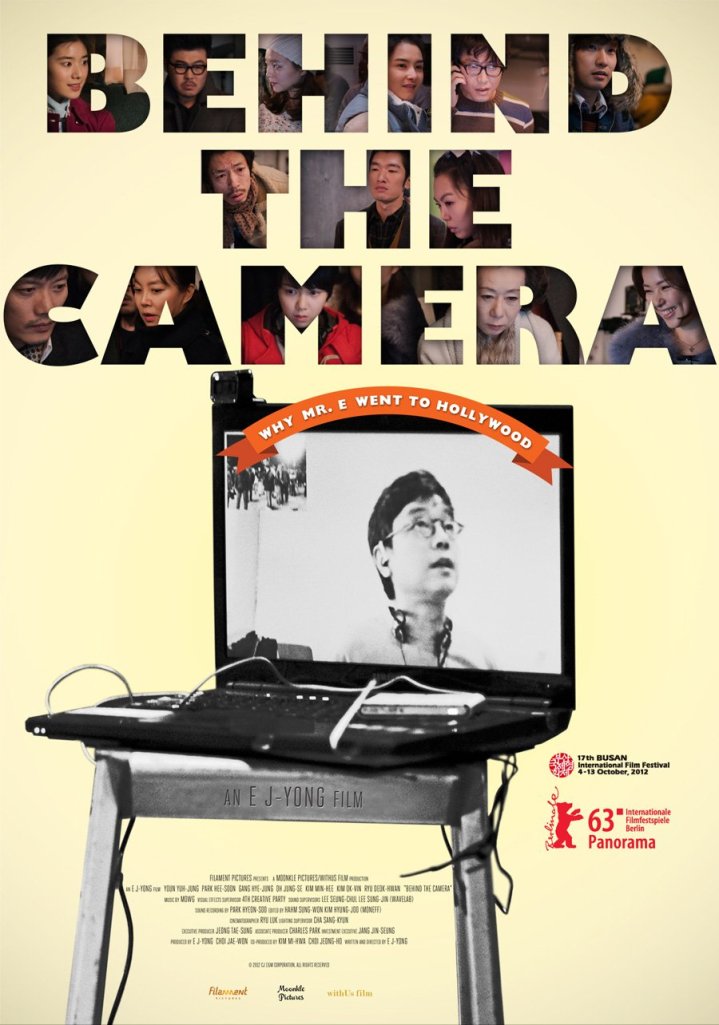
Behind the Camera (뒷담화: 감독이 미쳤어요, E J-yong, 2013)


fullsizephoto273825Review of Korean meta documentary style comedy up at UK-anime.net


When Korean director E J-yong was commissioned to make a short film as an advertisement for Samsung, he thought to himself what a wonderful idea it would be if he could test modern technology to its limits and direct the film remotely from a hotel room in LA. In particularly meta touch, the script he’s designed for the film also features a Korean director remotely directing a film the only difference being that the fake director is doing it because his overseas girlfriend is in town and he’s trying to avoid having to choose between love and money. Like E’s previous film, Actresses, which got some of Korea’s most talented actresses together for a fashion shoot where they proceeded to trash talk the industry and each other, Behind the Camera is fiercely funny behind the scenes style mockumentary where the lines between reality and fiction are anything but clear.

As the film begins, some of Korea’s best known talent has been assembled for a preliminary meeting regarding the short film they’re going to be making over the next two days – only there’s one very important person who doesn’t seem to have arrived yet. Coming as a surprise to some, the producer then stands up and makes an announcement that this film is going to be a little different, in fact the first of its kind, as the director will not be present on set at any point during the shoot but will be supervising from LA via Skype! Some members of cast take this better than others, especially as they lose wireless contact almost as soon E starts trying to explain the nature of the concept. Predictably, some don’t even believe he’s really in LA at all just engaging in a elaborate practical joke but others regard the whole thing as a farce and vaguely insulting to their status in the industry. As time moves on, the crew gradually start just ignoring E and doing their own thing and it’s clear one or two of them have their eyes on the director’s chair. Can you really direct a film from half way across the world and still realise your vision in the same way you would if you were really standing on the set? What’s more, is the idea of a director in itself anything more than vain conceit if all you do is say ‘yes’, ‘no’, and ‘cut’?

In the wrong hands, films with this sort of conceit can go horribly wrong. Often too clever by half, anything with a meta construct has a serious risk of ending up on the wrong side of pretentious but it’s clear that E J-yong’s intentions are a world away from any such self aggrandisement. Essentially a bolted on companion piece to his Samsung commercial (what a fantastic use of time!) what E has crafted is a warm and witty backstage look at the movie making business. Completely unafraid to poke fun at himself as the director with a high concept who may or may not be in Hollywood trying to make in America like his friends Park Chan-wook, Kim Ji-woon and Bong Joon-ho (now he’s made a film in Hollywood even if it wasn’t a Hollywood film), Behind the Camera takes what could be a fairly thin joke and unpacks it in such a witty fashion that it easily sustains itself over the course of a full length film.

Like Actresses, Behind the Camera assembles a whole host of Korean cinema talent with actors, actresses and industry personnel mostly playing themselves. Some of the funniest moments in the film occur when the cast and crew are just hanging out together and chatting generally about various things. Yun Yoe-jong had taken a brief break from filming Im Sang-soo’s A Taste of Money in order to take part in this mini-project as a favour to E who hasn’t even bothered to turn up! In fact she originally told him she was too busy but after he sent her a depressing photo of himself begging her to star in his film she gave in. If anyone has earned the right to a few salty and spiky retorts after such a long and illustrious career it’s certainly Yun Yeo-jong and witnessing her intense displeasure with the entire endeavour is one of the highlights of the film. There are also plenty of meta references to the Korean film industry and cinema history for those who are well versed enough to pick up on them.

At first glance, Behind the Camera might sound like one of those precious industry “mockmentaries”  that are never quite as funny as they think they are, but Behind the Camera is different precisely because it isn’t afraid to turn the camera around and expose what really goes on backstage. You genuinely can’t tell what is ‘real’ and what is ‘constructed’ but what is certainly true is that Behind the Camera’s warm and humorous outlook make it one of the funniest Korean comedies of recent times.


Pluto (명왕성, Shin Su-won, 2013)

GSEOiWzAs we’ve seen lately, there are certainly no shortage of films looking at the complicated and often harsh world of high school in Korea. Pluto (명왕성, Myungwangsung) takes a sideways look at the darker side of academic excellence when the praise and prestige of being one of the top students becomes almost like a drug and makes otherwise bright young people do things even a heroin addict in serious need of a fix might at least feel bad about afterwards with an all encompassing sense of entitlement that gives them a lifetime free pass for even the worst transgression.

June (David Lee) is a bright young boy from a regular high school who’s just transferred into an elite boarding school educating the country’s next great hopes. He may have been a top student at his old school, but here he’s merely average as the school hotshots are pretty quick to point out. Here, the top ten students are treated like princelings – a special computerised teaching room, no curfew, better rooms, better resources and they can more or less do what they like so long as they keep their grades up. Occasionally someone manages to bump one of the top ten from the list but they quickly get kicked out again. The top ten operate like some kind of swatters mafia – they all stick rigidly together, swapping hot tips for the upcoming exams that they refuse to share with the others and engaging in a series of increasingly cruel “pranks” they term rabbit hunts.

The film opens with the police finding the body of the previously number one student Yu-jin (Sung Joon) in a wood with June’s phone lying next him having been used to film the entire grisly affair. June is arrested for the murder but is released after his alibi checks out. Sick of all the struggle and unfairness, June puts his particular talents to use to try and teach the world a lesson about the sort of people this system is producing.

The picture Pluto paints of the Korean schools system is a frankly frightening one in which academic success is virtually bought and paid for or guaranteed by class credentials. Yes, the top students obviously must have ability – some of their activities may come close to cheating but interestingly nobody seems to want to try actual deception to get ahead. However, that natural ability has clearly been bolstered by their parents’ wealth. Attending an elite school and spending more than some people earn on private tutors geared towards knowing how to get into the best universities undoubtedly gives them advantages which are out of reach for others no matter how smart they may be. Perhaps that’s fair enough in a capitalist society, they didn’t ask to be born to rich parents and who would turn that sort of help down if offered it? However, though they may possess the virtues of discipline, hard work and a desire to succeed what they lack is any sort of empathy or even common human decency. Engaging in a series of manipulative hazing exercises, the elite group will stop at nothing to protect their status specialising in thuggery, blackmail, rape and even murder. The sort of people this system is advancing are not the sort of people you want running your schools and hospitals, they are morally bankrupt and only care about their own standing in the eyes of others.

Perhaps it’s fitting that this elite boarding school is housed inside a former compound of the Korean secret police, including a subterranean layer of prison-like tunnels once used as a torture chamber. Aside from the obvious school as torture analogies, much of them film seems to be about what people choose to ‘unsee’. The headmaster of the high school is aware of the ‘untoward’ behaviour of some of his pupils but refuses to do anything in case it upsets their well connected parents, damages the reputation of his school or has an adverse effect on those all important test results. The ‘Pluto’ of the title is referenced in June’s university application essay on the demotion of Pluto from the accepted list of planets. He argues that this is unfair and a fallacy as it’s illogical to measure anything by its proximity to the sun which is, after all, just another star which will eventually die like all the others. Just because it’s a little different looking, you shouldn’t necessarily categorise it as being in some way ‘inferior’ based on a set of fairly flimsy criteria. June, like Pluto, hovers in uncertain orbit on the periphery – always wanting in but perpetually locked out. Naturally gifted but from an ‘ordinary’ background where his single mother sells insurance for OK money, June can’t hope to compete with these elite kids even if his capabilities may be greater. A lot of decisions have already been made as to what people choose to see, have chosen to regard as an ideal, even if the reality is painfully obvious.

Though oddly funny in places for such a hard hitting film, Pluto is a difficult watch at times and paints a depressing picture of the high pressured nature of the Korean educational system and of human nature in general. The elite group are universally awful people who run the gamut from arrogant, entitled prigs to snivelling cowards which makes it difficult to feel any sort of sympathy and you start to long for bad things to happen to them which somewhat undermines the film’s premise. Perhaps the problem is just that they were awful people who were enabled by a system rather than people who started out good and were corrupted by it. Stylishly shot and supported by well grounded performances from its young cast, Pluto is a welcome addition to this perhaps overcrowded genre which brings more than a few new thought provoking ideas to the table.


Review of first Pluto published by UK Anime Network.

Poetry


Last year’s winner of the Cannes award for screenwriting, Lee Chang-dong’s Poetry is the story of one women’s yearning to see the beauty of life and finding that often it’s only to be found in its blackest tragedies. Mija (Yun Jung-Hee), a sixty-five year old woman, is caring for her grandson in a tiny apartment of the edges of a city when simple aches and pains lead to the discovery of a serious health problem. Having seen a poster for a local adult education class in poetry writing, and recalling a teacher once predicted she’d one day become a poet she decides to enroll. In the midst of this she also discovers that her grandson has done something unthinkable, and that the reactions of others to these events ranges from the nonchalant to the wildly self interested. Bewildered by the conspiracy of these conflicting crises, Mija must reach an understanding of what must happen now and learn to see the beauty of life in all its ugliness so that she can finally write her own poem.

Although it has a gentle melancholy, Poetry is not quite as depressing as it sounds and is in the end deeply beautiful. Yun Jung-Hee’s performance is breathtaking, never straying too far into melodrama she keeps a film that might have become overwrought firmly rooted whilst allowing the audience to totally empathise with her character. It’s no wonder that this won the screen writing prize at Cannes last year as it’s incredibly well written and hugely literate.

Poetry is a beautiful film that everyone would benefit from seeing. It’s a real shame that this is the first of Lee Chang-Dong’s films to be released in the UK, hopefully it won’t be the last!