 Park Chan-wook has something of a track record when it comes to bending literary sources in unexpected ways – who else would have thought of adding vampires to Thérèse Raquin and actually managed to make it work? In The Handmaiden (아가씨, Agasshi), his first return to Korean filmmaking after Stoker’s foray into American Gothic, Park adapts Sarah Waters’ Fingersmith – a Dickensian tale of love and the multilayered con, and relocates it to 1930s Korea under Japanese rule.
Ambivalent attitudes to the Japanese is a key element exploited by a ruthless conman posing as “Count Fujiwara” (Ha Jung-woo) in order to seduce a lonely heiress. To complete his elaborate plan, he needs the help of pickpocket extraordinaire, Sook-hee (Kim Tae-Ri), whom he will install as a maid in the household so she can subtly sell the virtues of the dashing nobleman to the innocent flower trapped in a well of opulence.
On arriving at the curiously constructed mansion which is an elegant architectural mix of Korean, Japanese, and English country estate, Sook-hee is quite literally out of place in the upperclass environment a world away from her home in a den of petty of thieves doubling as a baby farm. Another thing she had not quite banked on was that her new mistress, Hideko (Kim Min-hee), would be quite so pretty. A serious spanner is thrown in the works as a mutual attraction builds up between the two women who, for reasons which become apparent, are being pulled in separate directions by other desires.
Park retains Waters’ tripartite structure even if he jettisons the final plot reveal for a less intricate tale of liberation and escape. Beginning with Sook-hee’s narrative he introduces us to the first layer of the con but also to Sook-hee and her down and dirty home in the criminal underworld. Chosen by the Count for her supposed lack of intellect and innocent naivety, Sook-hee is not quite at home among her family either. Both believing the promise that the babies they collect and sell in Japan will be going on to better lives and lamenting the cruelty of the whole business in wanting to mother the lot of them, Sook-hee is soft presence yet she also wants to prove herself as adept at criminality as her legendary, now deceased, mother.
It’s this essential warmth which eventually attracts Hideko’s attention. The much talked about tooth filing scene in which Sook-hee takes out a thimble to soften a lacerating sharpness in her mistress’ mouth is not just notable for the oddly erotic quality born of the obvious suggestive motion, unavoidable intimacy created by the closeness of bodies, and the growing desire of fleeting, furtive glances, but for its essential kindness. Moving into Hideko’s perspective for the second chapter, more is learned about her damaged past filled with cruelty and abuse. Orphaned and brought to Japan as a small child by her pornography obsessed uncle so that he might train her to entertain him with readings of erotic literature before he eventually marries her to inherit the family fortune, Hideko has never known anything as simple as unguarded goodness.
Caught up in a long con, the choice remains whether to blow cover and declare one’s hand or play the thing through to the end, however painful it may be. Park takes a different route than in the original novel which makes both of its heroines the victims of someone else’s avaricious plot of revenge against the cruelty of an unequal world, eventually reinforcing their bond by a shared rejection of their victimhood, but even when their passions eventually erupt the lovemaking begins as a another “con” where Sook-hee takes on the role of the Count, “educating” the assumedly “innocent” Hideko in the ways of desire.
Trapped within an oppressive gilded cage of a prison, Hideko has become the embodiment of desire for her cruel and eccentric uncle and the groups of men he invites to listen to her read erotic literature as if reciting a classical play. Complete with sideshows of sex dolls and theatrical scenery, Hideko is forced to act out the scenes from the books as an actress on the stage for an audience rapt in silence. Unable to escape alone, Hideko is offered new hope by Sook-hee’s straightforward outrage which allows the pair to destroy or repurpose the instruments of their oppression for their own pleasure. This is, in essence, their form of revenge in which they simply remove themselves from an abusive environment leaving the men behind to wonder at what’s gone wrong and later to destroy themselves without any additional help.
Filled with a gothic sense of impossible desires and uncertain judgements, The Handmaiden is unafraid of the genre’s melodramatic roots but is all the better for it. Beautifully photographed, this opulent world of swishing ball gowns and gloved hands is undercut by the ugliness of quisling collaborator Kouzuki and his basement of horrors. Erotically charged but ultimately driven by love, The Handmaiden is another unconventionally romantic effort from Park albeit one coloured by his characteristic sense of gothic darkness.
Reviewed at 2016 London East Asia Film Festival.
Original trailer (English subtitles)
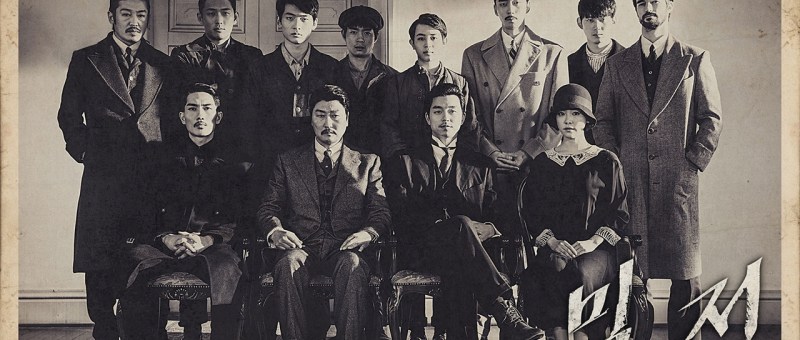
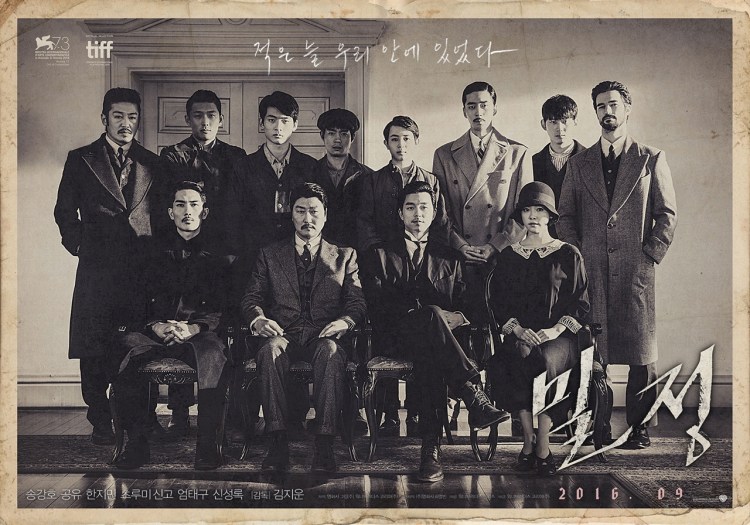 When the country of your birth has been occupied by another nation, what do you do? Do you fight back, insist on your independence and expel the tyrants, or quickly bow to your new overlords and resign yourself to no longer being what you once were? Kim Jee-woon becomes the latest director to take a look at Korea’s colonial past with the Resistance based thriller Age of Shadows (밀정, Miljung) which owes more than a little to Melville’s similarly titled Army of Shadows, as well as classic cold war spy dramas The Third Man and The Spy Who Came in From the Cold.
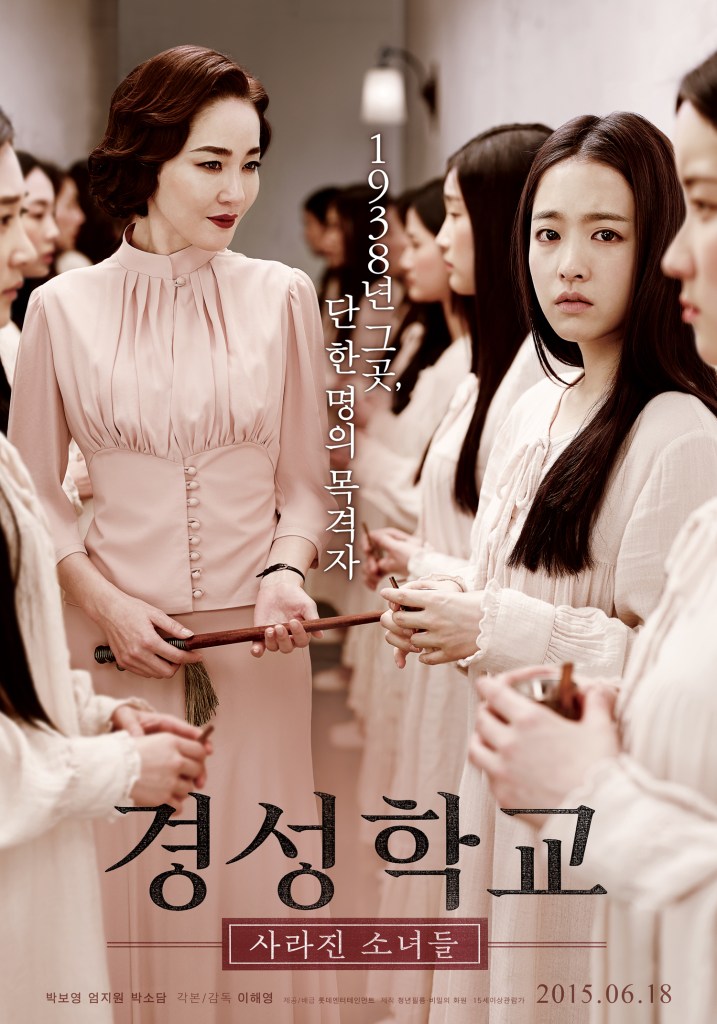 The Silenced (경성학교: 사라진 소녀들, Gyeongseonghakyoo: Sarajin Sonyeodeul) has all the classic genre aspects of the boarding school horror story familiar to fans of gothic literature everywhere, but this is no Victorian tale of repressed sexuality and hallucinatory psychosis. What The Silence does is take all of these essential elements and remix them as a metaphor for the horror of colonialism. Surrounded by quislings and forced into submission in order to survive, how does the essential soul of an oppressed people survive? The Silence would seem to argue that perhaps it can’t, but can evolve and learn to resist its colonisers even if it has to bend to do so.
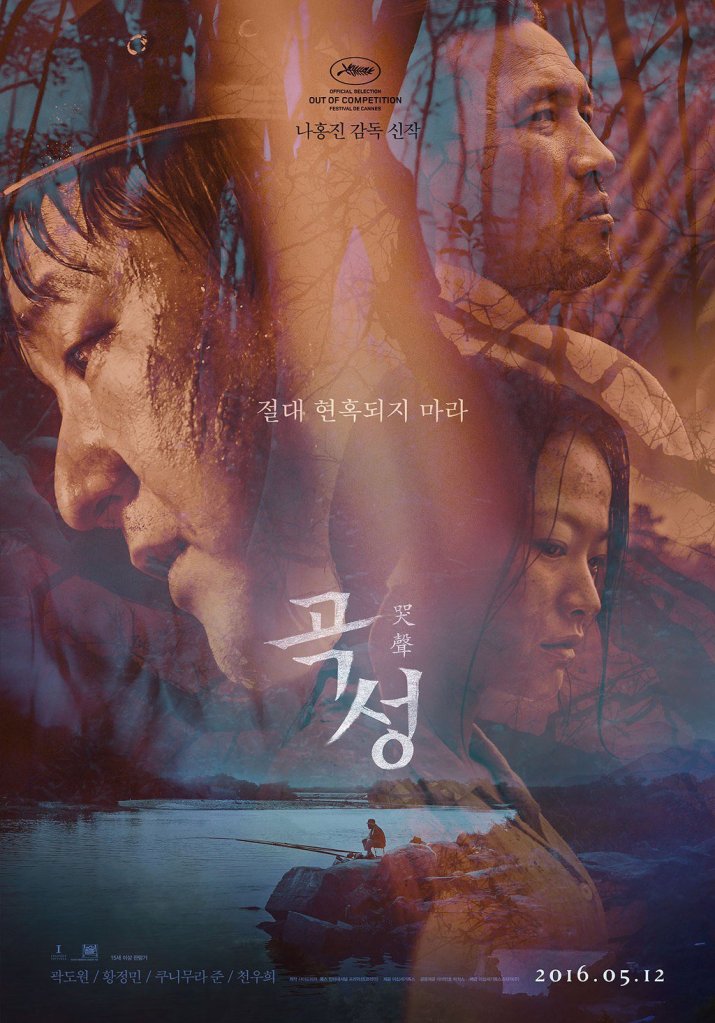 For the world’s more full of weeping than you can understand – the residents of Goksung, the setting for Na Hong-jin’s nihilistic horror movie The Wailing (곡성, Goksung), might be inclined to agree with Yeats if only because the name of their town is also a homonym for the “sound of weeping”. There is plenty to weep over, and in places Na’s film begins to feel like one long plaintive cry reaching far back to the dawn of time but the main wounds are comparatively more recent – colonisation, not only of a landscape but of a soul. When it comes to gods, should you trust one over another simply because of its country of origin or is your faith to be bestowed in something with more universal application?
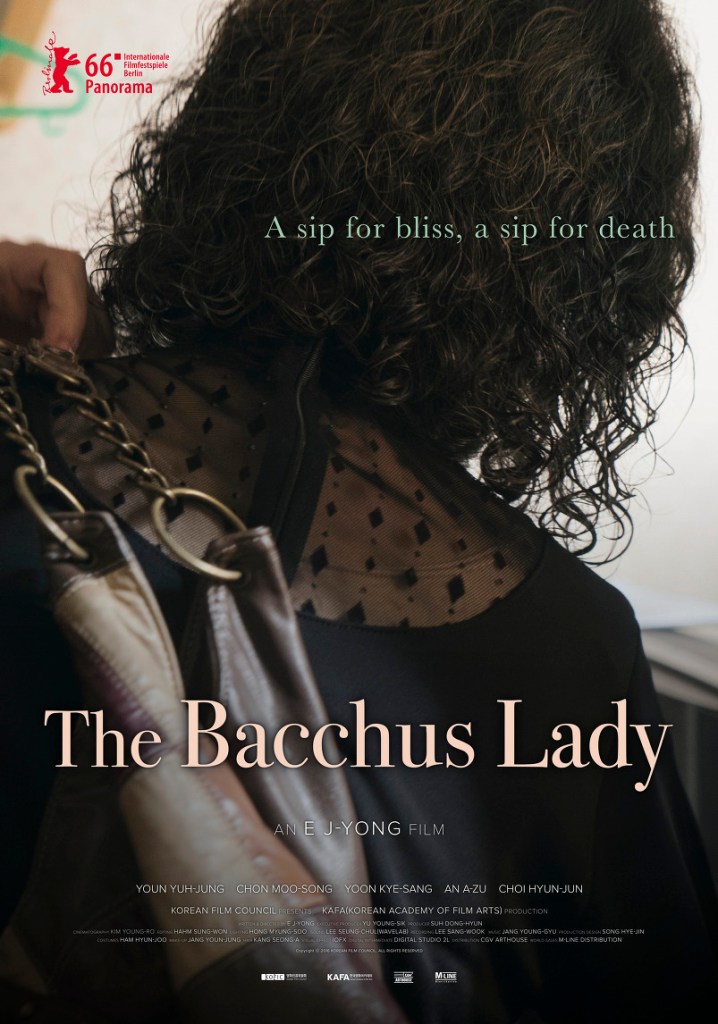 Rather than a Maenad in a divine frenzy driven by drunkenness, lust, and hedonistic fury, a “Bacchus Lady” is a humorous nickname used for the older women who solicit men in Korean parks by euphemistically offering to sell them a bottle of Bacchus energy drink. E J-yong reteams with veteran Korean actress Youn Yuh-jung to tell the tragic story of Youn So-young, hooker with a heart of gold and now a member of the older generation permitted to slip through the cracks in the absence of familial connections.
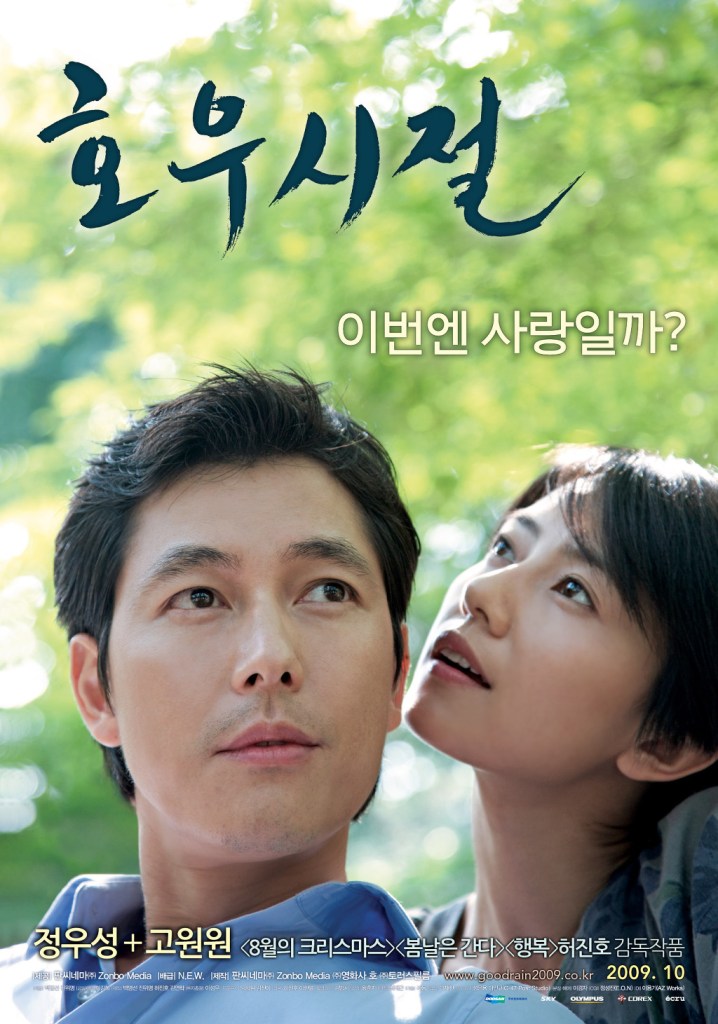 Hur Jin-ho’s A Good Rain Knows (호우시절, Howoosijeol) was originally developed as a short intended to form part of the China/Korea collaborative omnibus film Chengdu, I Love You which was created as a tribute to the area following the devastating 2008 earthquake. However, Hur came to the conclusion that his tale of modern day cross cultural romance required more scope than the tripartite omnibus structure would allow and decided to go solo (Chengdu, I Love You was later released with just Fruit Chan and Cui Jian’s efforts alone). Very much Korean in terms of tone and structure, Hur uses his central love story to explore the effects time, memory, culture, and personal trauma on the lives of everyday people.
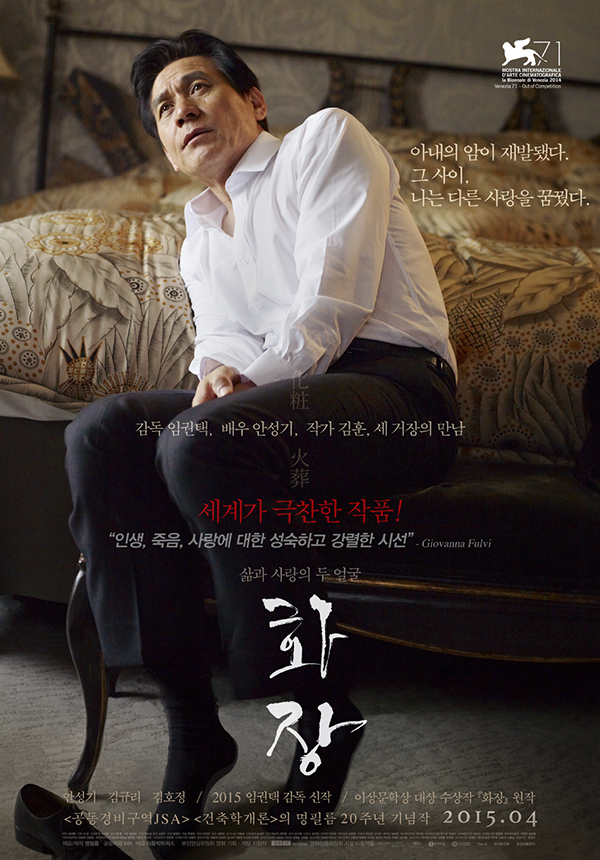 The 102nd film from veteran Korean film director Im Kwon-taek may appear close to the bone in its depictions death, suffering, and the long look back on a life filled with the quiet kind of love but Revivre (화장, Hwajang) is anything but afraid to ask the questions most would not want to hear as the light dwindles. The inner journey is just too hazy, as one man puts it, unknowingly commenting on the human condition, yet Im does manage bring us nicely into focus, if only for a moment.
 In 1925 an avid cave explorer, Floyd Collins, became trapped in a narrow crawl space. Though he was discovered and help came with food and water, a cave in left him sealed off down there and fourteen days later he died of thirst and exposure. As tragic as this obviously is, Floyd Collins is remembered for another reason – his rescue became one of the earliest mass media crazes. The surrounding media furore also inspired the 1951 Billy Wilder classic Ace in the Hole in which a grizzled reporter attempts to manipulate the fate of a man trapped in a cave for the maximum media coverage with the consequence that his delays cost the man his life. Jung-soo, a father on his way home with a birthday cake for his young daughter is about to join the marooned underground club when a shoddily built tunnel collapses sealing him inside. Unfortunately for Jung-soo, he finds that times have not changed all that much.
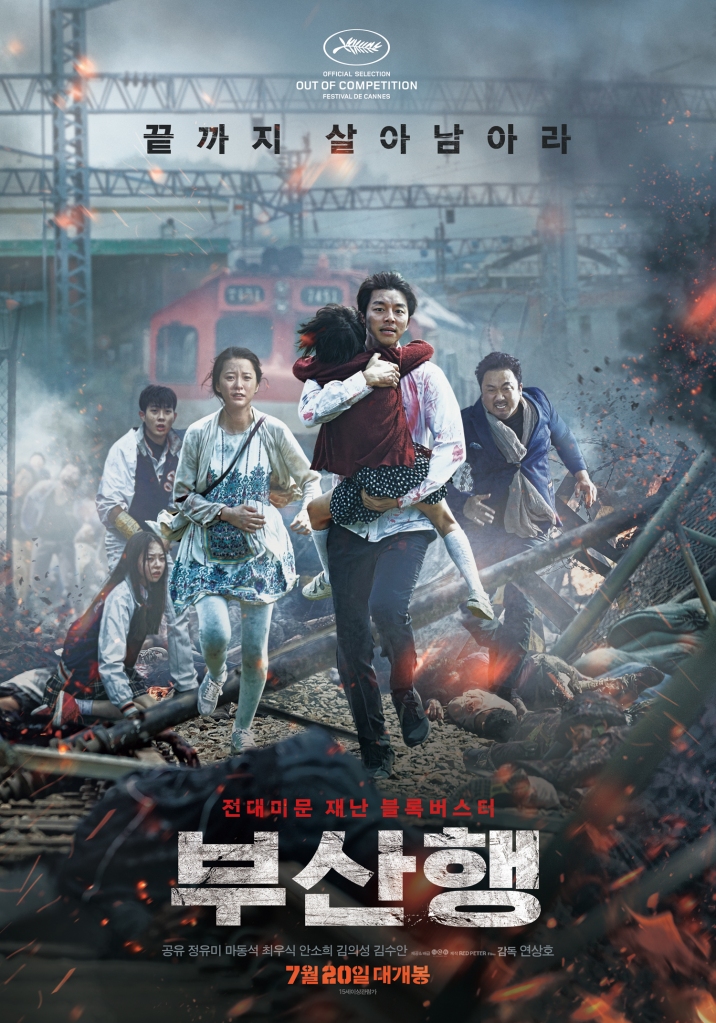 Many people all over the world find themselves on the zombie express each day, ready for arrival at drone central, but at least their fellow passengers are of the slack jawed and sleep deprived kind, soon be revived at their chosen destination with the magic elixir known as coffee. The unfortunate passengers on an early morning train to Busan have something much more serious to deal with. The live action debut from one of the leading lights of Korean animation Yeon Sang-ho, Train to Busan (부산행, Busanhaeng) pays homage to the best of the zombie genre providing both high octane action from its fast zombie monsters and subtle political commentary as a humanity’s best and worst qualities battle it out for survival in the most extreme of situations.
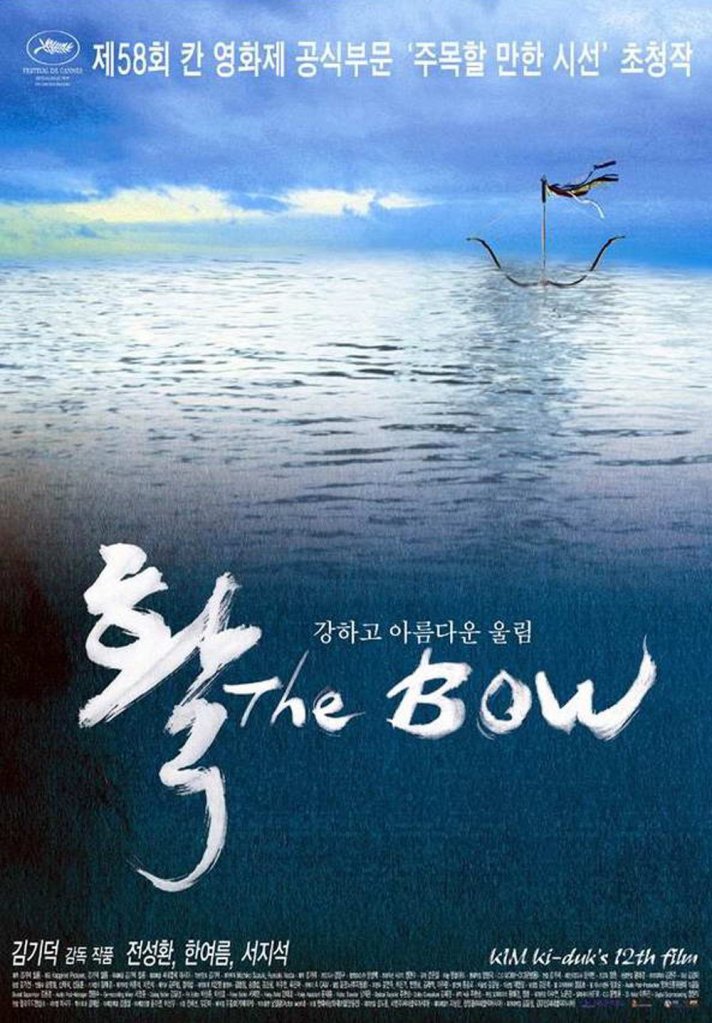 Kim Ki-duk is not known for his conventional approach to morality but even so his 12th feature, The Bow (활, Hwal), takes things to a whole new level of uncomfortable complexity. While nowhere near as extreme as some of Kim’s other work, The Bow takes the form of a fable as an old man and a young girl remain locked inside a mutually dependent relationship which, one way to another, is about to change forever.
