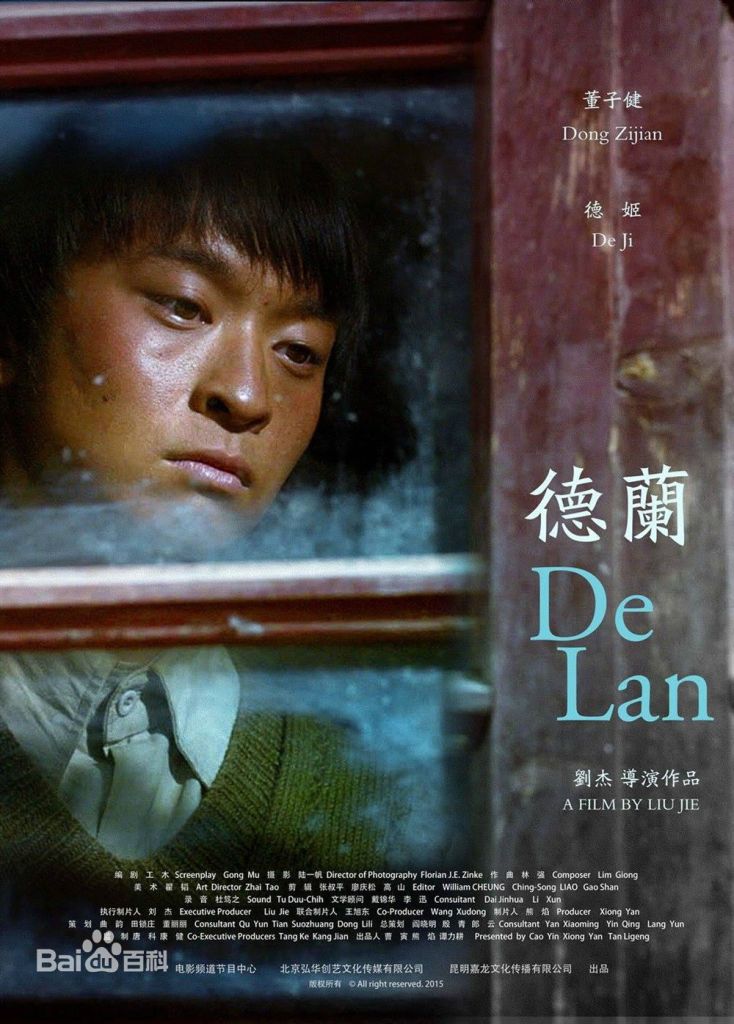
 Set in 1984 in a rural Chinese backwater, De Lan (德蘭) is named not for its central character, but for his first love – a mountain woman far from home in search of a missing relative. Tasked with following De Lan (De Ji), Wang (Dong Zijian) finds himself entering a strange new world which he is incapable of fully understanding, not least because he doesn’t speak the language. A wordless love story between the tragic De Lan and the adolescent Wang is destined to end unhappily, but will affect both of them in quite profound ways.
Wang’s father has been missing for three months, and what’s worse is that around 2000 yuan went missing with him. Mr. Wang had been the loans officer for the local party office in this dreary mountain town and now the best idea anyone has come up with is for Wang to take over the position and pay back the missing money with deductions from his wages (this should take around ten years). Hardly fair, but what can you do? Wang’s first assignment is to take an audit of a mountain town where the residents have a lot of outstanding payments. Seeing as they’re heading to the same place, Wang is to accompany a mountain woman, De Lan, who had been travelling around local towns looking for a missing person but has now run out of money and must go home alone.
Wang is told to trust De Lan when it comes to the terrain, but that he should keep control of the food supplies in case she tries to run off. All things considered, the people at the foot of the mountains, aren’t very well disposed to those at the top. Wang is young and unused to walking such long distances, frustrating De Lan with his inability to keep up and frequent needs to rest. Nevertheless a kind of mutual affection seems to build up between them but largely goes unspoken and unacknowledged. Finding himself installed in De Lan’s home, Wang begins to feel very awkward indeed, unable to work out the strange family dynamic between the gruff man with the lame leg, ancient blind old woman, and the feisty De Lan.
Wang has, after all, been sent to the town to collect on loans – an entirely pointless enterprise as no one here has any money. Wang’s father was a much loved presence, mostly because he always came with cash and never pressed them on repayments. His son, with a father’s debt around his neck, is not quite so nonchalant. Calling a village meeting with no notice, Wang makes it clear he won’t be following his father’s lax approach and will not be issuing any new loans, rather he will be calling in the old ones. This does not make him popular in the village.
Eventually he changes his mind and decides to flash some cash but his worst assumptions are confirmed when the villagers, far from using the money they claimed to so desperately need to survive to invest in their businesses, club together to buy all the booze in the surrounding area and have a giant party. Originally put out by their trickery and De Lan’s ongoing unavailability, Wang suddenly finds himself trying some of their liquor and joining in with a dance around the fire. Perhaps learning to adjust to the Earthy, less ordered way of life, Wang has embraced the new found freedom of the place, but he will also discover that it only runs so deep.
De Lan’s life has undoubtedly been a difficult one which she faces with stoic resignation. Shared between two men and longing only for a child, De Lan has very little say in anything that happens to her yet she was able to set off all alone to look for her missing person. During the trip, De Lan is dismayed when a teenage boy in a home they spend a night in makes a vulgar comment about her body, leading her to try to leave as soon as possible only for Wang to pledge his protection. De Lan is aware of the dangers of the road, as well as the constraints placed on her life, whereas as Wang is still naive enough to think his physical strength and government position would be enough to keep De Lan any safer than she would be alone.
As Wang’s feelings for De Lan grow he fantasises about saving her from this strange, cold household though he barely stops to ask himself if saving is really what she wants. Unable to speak the local dialect, Wang necessarily needs to rely on look and gesture which is largely how he and De Lan have come to communicate – a pure kind of dialogue without need of words. Wang’s love for De Lan is destined to cost him dearly both in financial and emotional terms. A beautifully sad tale of frustrated first love set against the picturesque Chinese countryside and inside it’s much less pretty political system, De Lan is the story of one man’s transition from adolescence to manhood through heartbreak, filled with quiet, yet intense, emotion.
Reviewed at the 2016 London East Asia Film Festival.
Trailer (English subtitles)

 “Asia is a paradise for men” though not for anyone else, if Bangkok Nites (バンコクナイツ) is anything to go by. In Tomita’s previous film,
 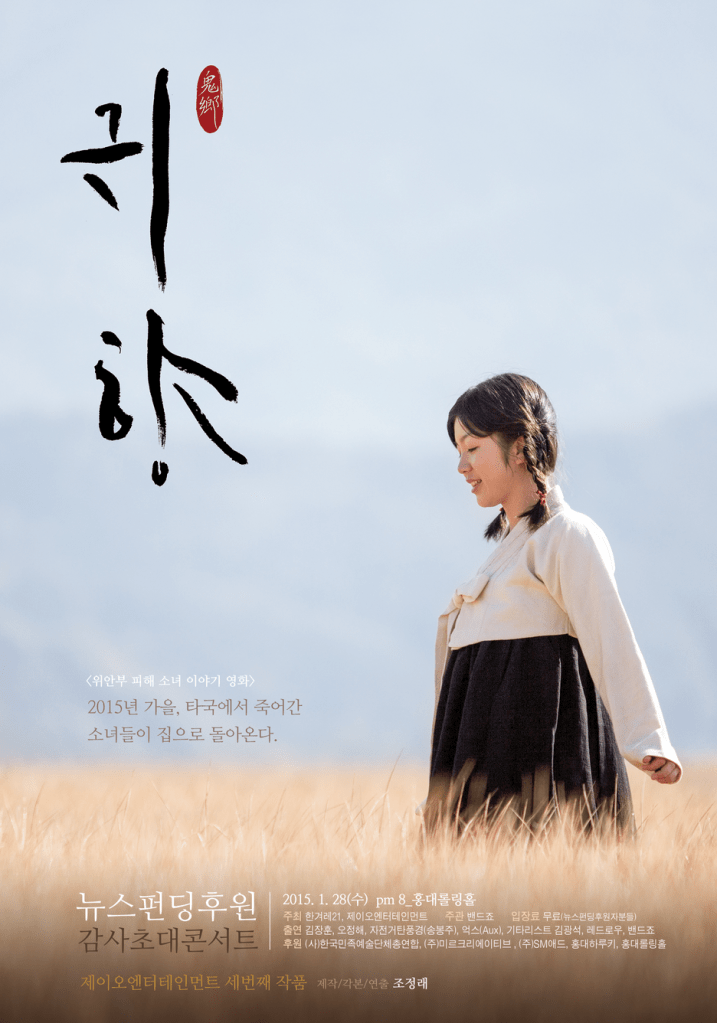 Of all the awful things that happened in the middle part of the 20th century, the trafficking, incarceration, enslavement and forced prostitution of women and girls from across Asia (including at least 65 Dutch women in what is now known as Indonesia) who were abducted for use as “comfort women” by the Japanese military remains one of the least discussed and most controversial. The issue (arguably) runs most deeply in Korea which had been experiencing a prolonged and often brutal era of colonial rule even prior to the intensification of hostilities in the early 1940s. The torment these women faced did not end with the ceasefire as entrenched social attitudes left them not only with a lifetime of physical and psychological trauma but also internalised shame which made it difficult for them to talk about their experiences even to those closest to them. Now more than ever, it is important that this story be told and the long suffering of these women, many of whom are no longer with us, is finally acknowledged.
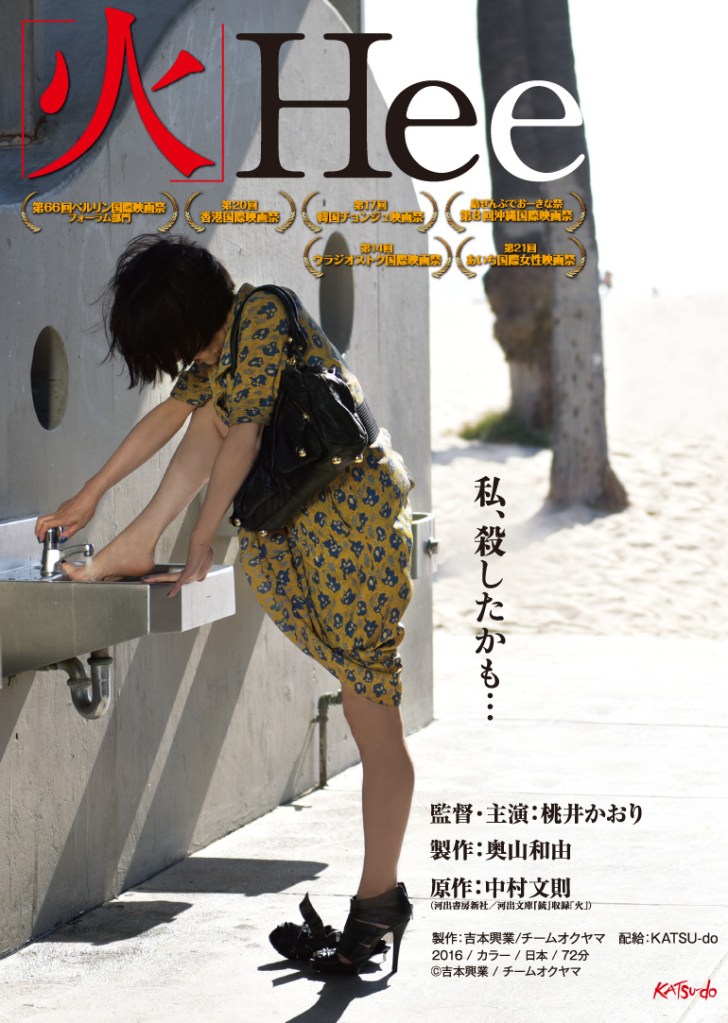 One of Japan’s best known actresses with a career spanning over forty years, Kaori Momoi is perhaps just as well known for her outspoken and refreshingly direct approach to interviews as she is for her work with such esteemed directors as Akira Kurosawa, Kon Ichikawa, Yoji Yamada, and Shohei Imamura. One of the few Japanese actors to have made a successful international career starring in Hollywood movies such as Rob Marshall’s Memoirs of a Geisha and international art house fare in Alexander Sukurov’s The Sun, Momoi currently lives in LA and is even reportedly preparing to play Scarlett Johansson’s mother in the upcoming US live action adaptation of Ghost in the Shell. It’s perhaps less surprising then that in choosing to adapt a short story by one of Japan’s best young writers, Fuminori Nakamura, Momoi has chosen to shift the story to LA whilst maintaining its Japanese characters.
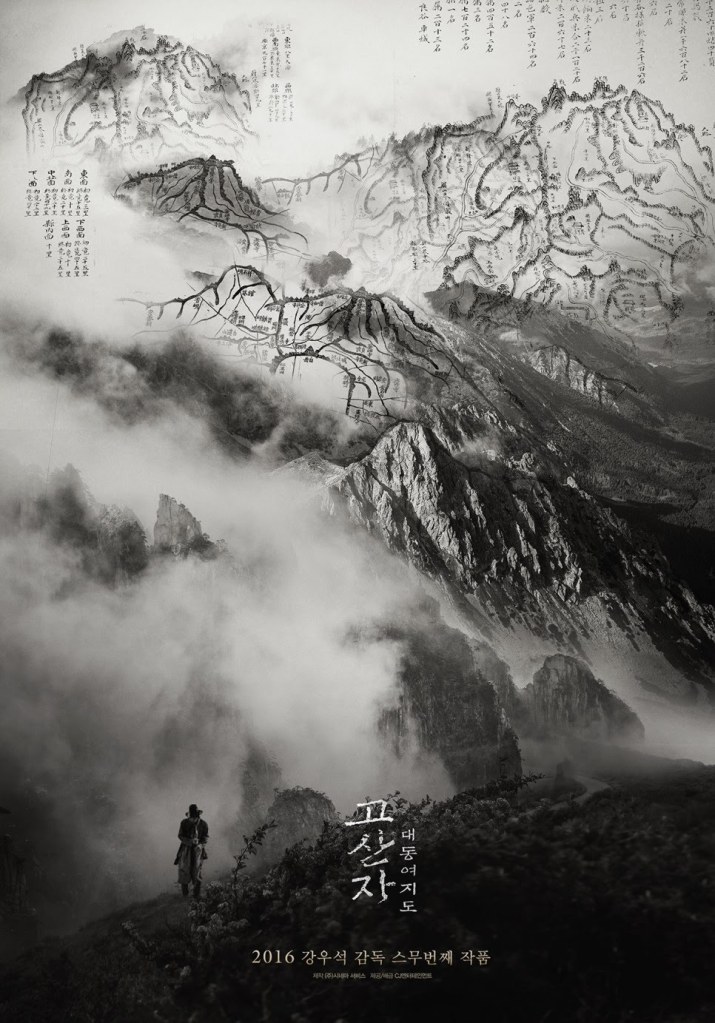 The map is not the territory – as the old adage goes. There’s always a difference between the thing itself and the perception of it but, as the “hero” of The Map Against the World (고산자, 대동여지도, Gosanja, Daedongyeojido) points out, if you’re about to set off on a long journey it’s a good idea to not to rely on a linear map else you’ll run out of good shoes long before you reach your destination. Kim Jeong-ho (Cha Seung-Won) was, apparently, a real person (though little is known about him) who set out to make a proper map of the Korean peninsula after a cartographic error led to the death of his father and many other men from his village when they ran out of resources crossing what they thought was one mountain but turned out to be one mountain range.
 Koji Fukada first ventured into the family drama arena with the darkly comic satire
  There are three kinds of actors – those who wait for roles, those who choose roles, and those who make roles for themselves. Ageing actress Go Ju-yeon (Kim Hye-soo) claims to be the third type, but at any rate she’s currently between gigs and facing professional scandals and personal crises from each and every direction. An unusual family drama, Familyhood (굿바이 싱글, Gotbai Singkeul, AKA Goodbye Single) is the coming of age story of a middle aged woman finally forced into adulthood through an unlikely friendship with a pregnant teenage girl.
 Kim Jong-kwan’s award winning unexpected indie box office hit has been given the rather odd English title of Worst Woman (최악의 하루, Choeakui Haru) in contrast with the original Korean which simply means “The Worst Day”. In fact, the film is about two people – an aspiring Korean actress with problems in her personal life, and a Japanese writer visiting for the launch of the Korean translation of his novel, each of whom is indeed having an exceptionally unlucky day. Part walking and talking, part split focus romantic comedy, Worst Woman is a polished piece of indie filmmaking anchored by quality performances and an interesting approach to its material.
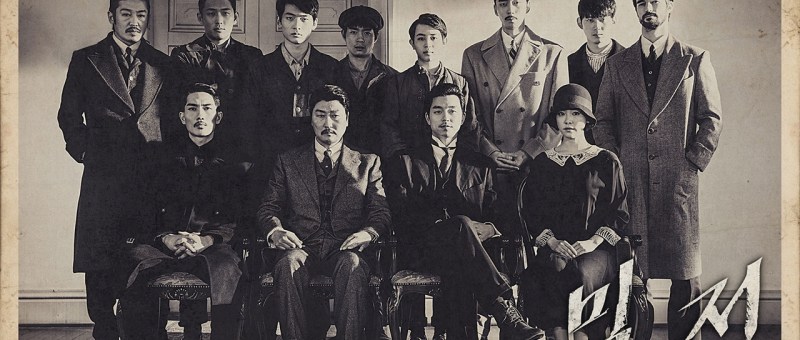
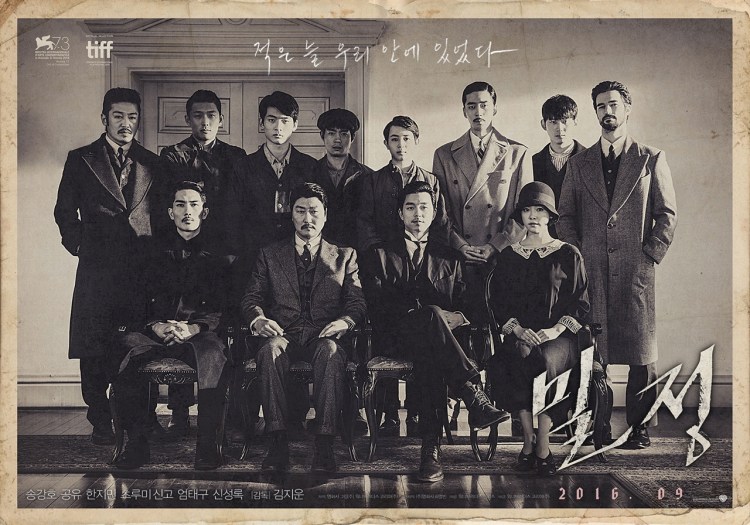 When the country of your birth has been occupied by another nation, what do you do? Do you fight back, insist on your independence and expel the tyrants, or quickly bow to your new overlords and resign yourself to no longer being what you once were? Kim Jee-woon becomes the latest director to take a look at Korea’s colonial past with the Resistance based thriller Age of Shadows (밀정, Miljung) which owes more than a little to Melville’s similarly titled Army of Shadows, as well as classic cold war spy dramas The Third Man and The Spy Who Came in From the Cold.
 Windows on Worlds