Long Live the King (롱 리브 더 킹: 목포 영웅, Kang Yoon-sung, 2019)

long live the king poster 1Back in the good old days, gangsters used to make a case for themselves that they were standing up for the little guy and protecting those who couldn’t protect themselves. Of course that wasn’t quite the truth, but one can’t deny how closely small town thuggery and political office can resemble one another. Following his breakout hit The Outlaws, Kang Yoon-sung returns with web comic adaptation Long Live the King (롱 리브 더 킹: 목포 영웅, Long Live the King: Mokpo Yeongwoong), another unconventional comedy in which a surprisingly loveable rogue rediscovers his national pride and finds a more positive direction in which to channel his desire to be helpful.

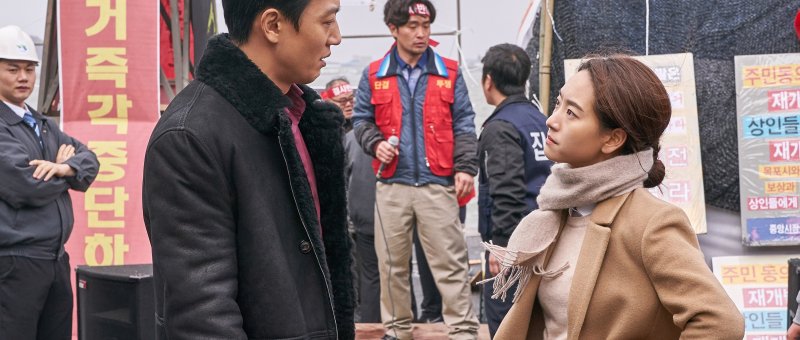
Se-chool (Kim Rae-won) is a notorious thug with a traumatic past currently working with a local gang hired to clear a small protest of stall owners trying to cling on to a traditional market space in working class Mokpo where a developer wants to build a theme park and upscale skyscraper. A feisty young lawyer, So-hyun (Won Jin-a), is working with the protesters on their case and has no problem telling the gangsters where to get off. Impressed, Se-chool is smitten and starts to wonder if he’s on the wrong side but his attempts to get So-hyun’s attention – being strangely nice to the protestors, buying everyone lunch etc, spectacularly backfire. Only when he hears about another man, Hwang-bo (Choi Moo-sung), who used to be a gangster but has now reformed and become a social justice campaigner running a small not-for-profit cafe serving meals to the vulnerable, does he begin to see an opening, vowing to give up the gangster life and commit himself to serving the people of Mokpo.

The irony is that everyone seems to think that Se-chool has a hidden agenda, but his only agenda is the obvious one in that he wants to win So-hyun’s heart even if that means he has to shape up and learn to become a decent person rather than a heartless gangster thug. Known as the king of the nightlife, Se-chool is regarded as a slightly eccentric, good time guy, so his sudden desire to go “legit” is met with bemusement rather than surprise, but old habits are hard to shake and it takes a while for him to realise that trying to help people with his fists is not the best way to go about it. Punching out some punks making trouble in a cafe gets him an earful from the proprietress who explains that she owes a lot of money to the guys’ gang so Se-chool’s chivalry has probably caused her a series of potentially serious problems she assumes he won’t be on hand to help her out with. Nevertheless, he retains his desire to wade in and do his bit, becoming a surprise local hero when he puts himself in danger to ensure the unconscious driver of a crashed bus gets out safely while the other passengers make their escape.

Meanwhile, local politics is starting to heat up. Venal politician Choi Man-su (Choi Gwi-hwa) is up for re-election and running on a platform of making Mokpo great again. It comes as no surprise that Man-su is deep into the corrupt theme park project and outsourcing general thuggery to Se-chool’s arch-enemy which eventually includes taking out potential rivals like Hwang-bo whose approval ratings are soaring while voters are becoming tired of Man-su’s big money tactics and insincere messaging. Soon enough, Se-chool is persuaded to enter the race seeing as his “local hero” persona puts him in good stead to oppose Man-su’s establishment credentials. But, in order to get elected and convince So-hyun he’s really changed, he’ll have to finally face his traumatic gangster past while learning to be open and honest with his feelings.

Kang goes in hard for the business of politics, taking pot-shots not only at corrupt establishment figures in so tight with organised crime that they’re little more than jumped up gangsters, but also at ambitious party hoppers, and misguided mobsters who think they’re onto the big ticket by hooking up with “legitimate” power. Poor Se-chool, meanwhile, actually thought he was doing “proper business” in his persona as a besuited gangster of the new, corporatised school little thinking about the little guy as he unwittingly went about his ultra-capitalist agenda. Heading for broad comedy, Long Live the King misses an opportunity for serious satire but has undeniable heart as the misused hero learns to accept himself in being accepted by others, falling in love not only with a feisty activist lawyer but with community spirit and progressive politics as he vows to fight for a better future for the people of Mokpo while opposing the inherent corruption in the system embodied by men like Man-su who feel themselves entitled to exploit solely by virtue of their own superiority.


Long Live the King was screened as part of the 2019 London East Asia Film Festival.

International trailer (English subtitles)

https://www.youtube.com/watch?v=34P-kidRXkU

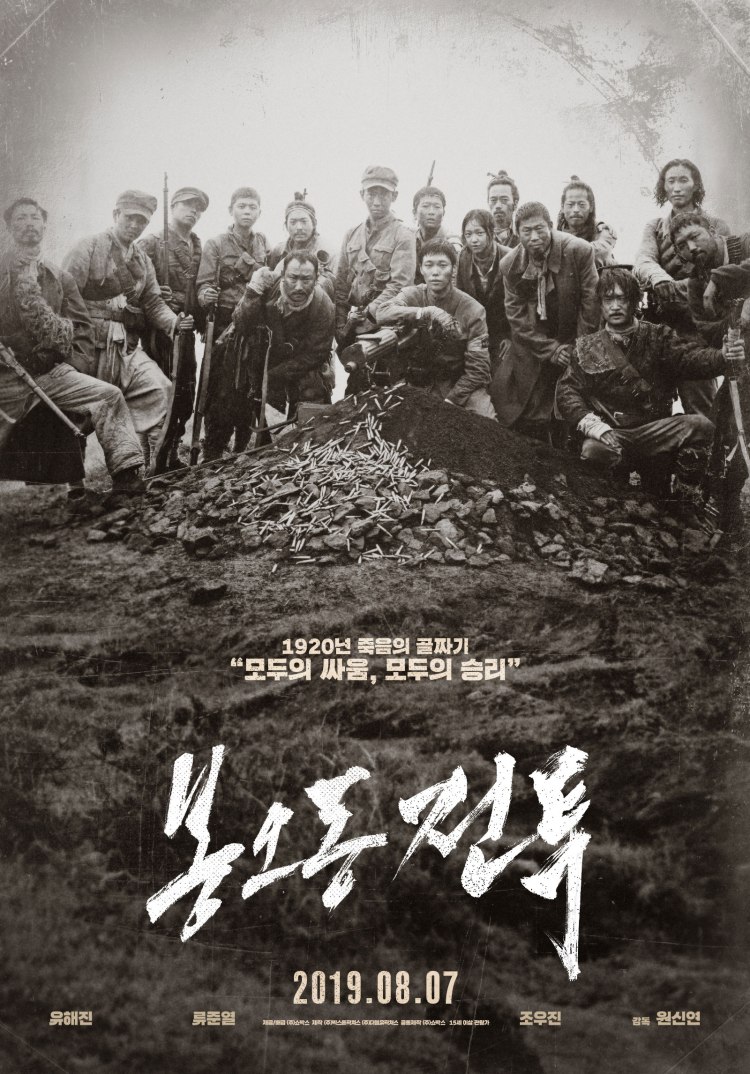
The Battle: Roar to Victory (봉오동 전투, Won Shin-yeon, 2019)

The Battle roar to voctory poster 1Besides seeing the birth of Korean cinema, 1919 was something of a flashpoint in the nation’s 20th century history. Japan had annexed Korea in 1910, thereafter instituting an increasingly brutal colonialist regime. On March 1, 1919 the people rose up in an act of mass protest inspired by the provision for “Self-Determination” included in US president Woodrow Wilson’s 14 Points speech outlining a path towards enduring peace. Though the protest was peaceful, it was quickly suppressed by Japanese troops resulting in thousands of deaths and mass incarcerations.

The Battle: Roar to Victory (봉오동 전투, Bongodong Jeontoo) situates itself a year after the protest as the Independence Movement began to intensify, and is inspired by real life events apparently often absent from the textbooks in which several factions eventually came together to wipe out an “elite’ squad of Japanese troops which had been put together to take down guerrilla Resistance fighters. Our heroes have been charged with collecting money from a fundraiser and conveying it to the Independence Movement in exile in Shanghai but are drawn into a wider battle against Japanese brutality on their way.

The Japanese colonial forces are indeed brutal, if often cowardly. When we first meet crazed commander Yasukawa (Kazuki Kitamura), he’s butchering a tiger in some kind of symbolic act of intense barbarity. To smoke out the Resistance fundraiser, the Japanese military begin razing villages, killing the men and raping the women, even going so far as to shoot small children for sport. When veteran Resistance fighter Hae-cheol (Yoo Hae-jin) raids a command post, he makes a point of taking a hostage who himself seems to be a teenage recruit. Hae-cheol lets the boy live not only out of a sense of compassion, but also because he wants him to take what he’s seen back to Japan, including the aftermath of a Japanese assault on an ordinary Korean village.

Yukio (Kotaro Daigo), as the boy later gives his name, is, unlike his fellow officers, conflicted and confused. Apparently a member of the elite himself, the son of a prominent military figure, Yukio gave up a bright academic future to join the army and find out what it is that Japan does with its advanced weaponry. Asked what he thinks now that he’s seen for himself, he says that he’s ashamed, that his worst fears have been confirmed. According to Yukio, his nation is suffering from an intense inferiority complex which is leading it to commit acts of extreme barbarity in order convince itself it is equal to any other imperial power.

The Japanese officers veer from the crazed, bloodthirsty Yasukawa who views his mission as some kind of hunting expedition, to the merely weak and cowardly. The Independence fighters, however, come from all over Korea speaking many dialects (some less mutually intelligible than others) and with many different motivations but all with the desire to free their country from Japanese oppression. Ace captain Jang-ha (Ryu Jun-yeol) is a born soldier, but those who support him are largely street fighters and “bandits” not always welcomed into the movement by the so-called intellectual “nobles” running the show from a position of social superiority. Then again, as Hae-cheol puts it, no one can be sure how many guerrilla soldiers there are because any farmer is a potential sleeper agent.

In any case, the Resistance fighters pursue their mission selflessly, manipulating the complacent Japanese troops to lure them into a mass ambush while trying to ensure the money still makes its way to Shanghai to preserve the movement. Despite the “Roar to Victory” subtitle, it’s important to note that the Independence Movement was still in a nascent state and would continue opposing Japanese oppression until Korea’s liberation at the end of the war. Covering the legendary battle of Battle of Fengwudong, the film ends with forward motion as the Resistance commander (a late and great cameo from a giant of Korean cinema) points ahead towards the next target, the well known Battle of Cheongsanri, in which the Japanese military reportedly suffered over 1200 casualties at the hands of Independence forces. Overly gory and lacking in subtlety, The Battle: Roar to Victory is unabashedly patriotic but does its best to suggest the costs and compromises of guerrilla warfare as its selfless heroes put aside their differences to fight for a better Korea.


The Battle: Roar to Victory was screened as part of the 2019 London East Asia Film Festival.

Original trailer (English subtitles)

https://www.youtube.com/watch?v=3j__4TEyzxI

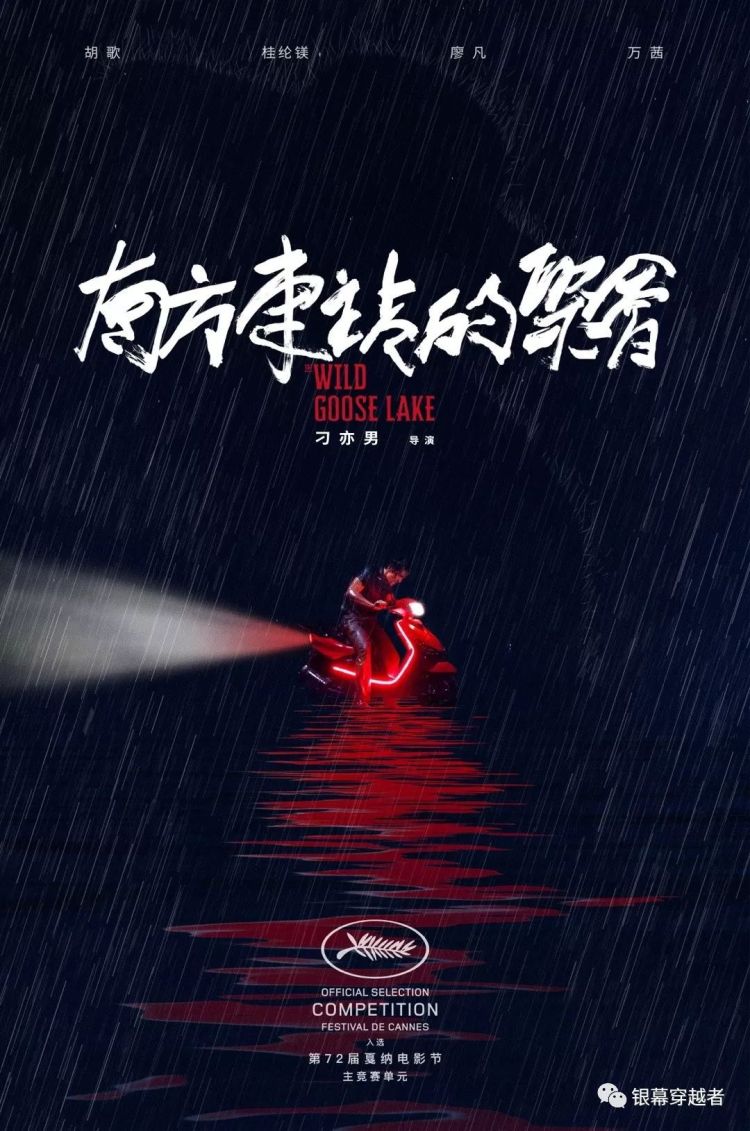
The Wild Goose Lake (南方车站的聚会, Diao Yinan, 2019)

wild goose lake poster 1Chaos and desperation are about as far as it’s possible to get from the image of the modern China the nation’s cinema has been keen to project, but that’s exactly where we find ourselves in the murky world of The Wild Goose Lake (南方车站的聚会, Nánfāng Czhàn de Jùhuì). Diao Yinan’s Black Coal, Thin Ice followup finds the director in much the same territory only this time embracing the absurdity of existential flight as his twin heroes seek impossible escape in the garish neon of a provincial underworld.

Diao opens on the rain-drenched streets as sullen gangster Zhou Zenong (Hu Ge) waits impatiently for a rendezvous with his estranged wife Shujun (Wan Qian), only to be met by a stranger – “bathing beauty” Aiai (Gwei Lun-mei), who explains she won’t be coming. A lengthy flashback reveals that Zenong is currently on the run after getting embroiled in a dispute over turf assignments at some kind of gangster briefing session during in which one of his guys shot one of the Cat brothers’ men in the leg. To settle the matter, the boss proposes a good old-fashioned competition to see who can nick the most bikes in one night with the winner getting the prime spot, but Zenong doesn’t know he’s been set up and mistakenly kills a policeman after being attacked by Cat Eyes. Realising there’s no longer any way out for him, Zenong’s last hope is to keep the police at bay long enough to get back in touch with his wife and convince her to turn him in to the police so that she can claim the reward money.

Like many men of his generation, Zenong couldn’t find the kind of honest work that would allow him to provide for his family and so he left home. Too ashamed to own his no-good gangster ways, he stayed away for five years but all that’s on his mind is family and this is the only chance that he will ever have to provide for them. Shujun isn’t even really sure she wants anything to do with her absentee husband, but is dragged back into his orbit once again harassed by the police every step of the way.

In striking contrast to most Chinese crime dramas, these police are far from a force for order. Describing Wild Goose Lake as a lawless land, they have their very own briefing to formulate a plan to catch Zenong but aren’t averse to underhanded tactics like threatening Shujun and trying to undermine her attachment to her husband through a fabricated story about a pregnant girlfriend. The line between cop and thug isn’t so thick as you’d think it would be, and you can’t trust the police any more than brotherhood or honour amongst thieves.

Devoid of morality, Wild Goose Lake is indeed a chaotic place defined by shifting loyalties and unexpected betrayals. Fights break out without warning, plans change, and there are no safe spaces. Bumbling as they are, the police are everywhere watching everything and trying to blend in. Anyone might be a cop, or secretly working against you. Zenong is on the classic wrong man path, except that he’s the right man and he knows it. He might not have pulled the trigger if he knew it was a policeman he was firing at, but pull the trigger he did and now he’ll have to make peace with it. Trying to outrun the law only so long as to subvert it, he finds himself slipping past checkpoints distracted by pointless officiousness and consistently evading the net.

When Shujun is unable to make it to the rendezvous, Aiai offers to take her place by turning Zenong in and claiming the reward money to pass it on to Zenong’s wife (minus a small fee), meaning they will need to trust each other until the mission is completed. Aiai, a dejected young woman supplementing her income with casual sex work as one of the “bathing beauties” found at the lake, longs to escape her dead end existence, eventually telling the policeman she’d use the reward money to open a small store back in her hometown. Like Shujun, she lives in a fiercely patriarchal, unforgiving society  from which there is little sign of escape or independence. Yet, as afraid of everything Zenong represents as she eventually becomes, Aiai remains steadfast and true, keeping her promise and paving the way towards a brighter future for Shujun and her son away from the haphazard chaos of Wild Goose Lake. An absurdist fable drenched in neon, Diao’s conception of life on the margins of provincial China is as bleak as they come but eventually finds space for positivity on returning to a world more ordinary in which two women walk away from the traumatic past arm in arm and the law has to be content to let them go.


The Wild Goose Lake was screened as part of the 2019 London East Asia Film Festival.

International trailer (English captions)

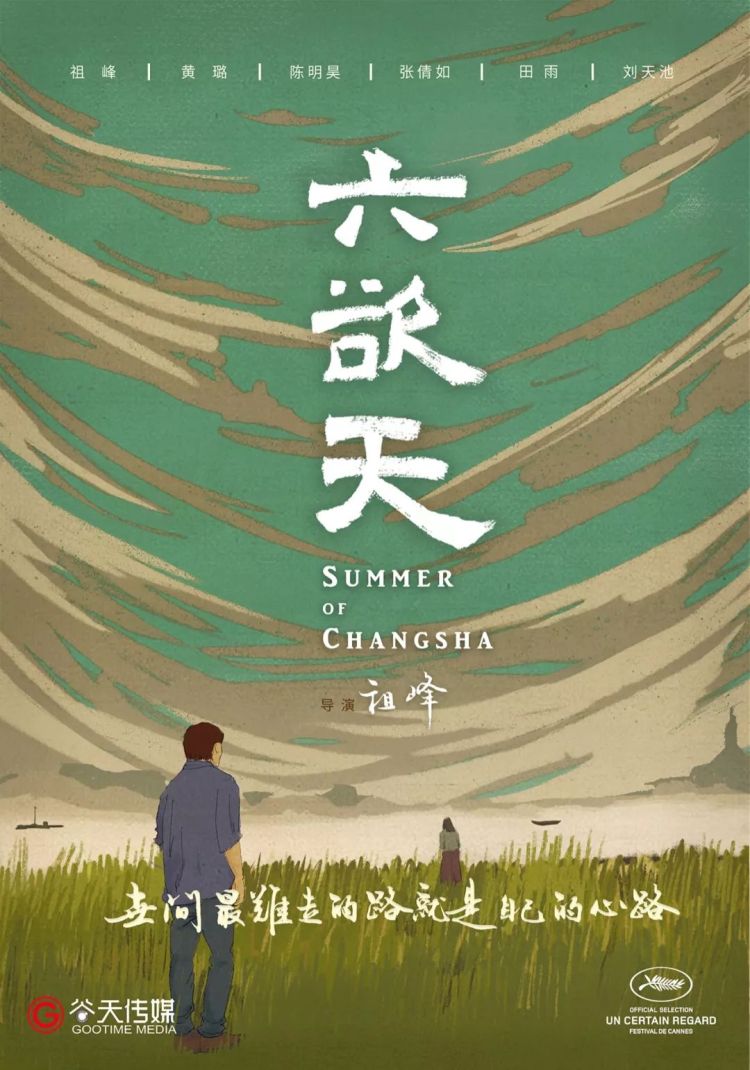
Summer of Changsha (六欲天, Zu Feng, 2019)

Summer of Changsha poster 1Escaping from the traumatic past is fast becoming a favourite theme of Chinese cinema, but Summer of Changsha (Liù Yù Tiān) swerves away from the neon-lit, rain-drenched streets of your average melancholy police procedural for the fetid air of sun-baked provincial China where death haunts the shadows. Each dealing (or failing to deal) with guilt and responsibility, a depressed detective and seemingly emotionless doctor bond through a shared sense of impossibility only to discover that there may be a way out after all only not of the kind they might have assumed.

Detective Bin (Zu Feng) has already handed in his resignation but has no real plans for his post-police life. Consumed by powerlessness and regret over failing to prevent the death by suicide of his girlfriend who had been living with longterm depression, he cannot seem to find a place for himself back in the world. When a severed arm is fished up from a local lake, he gets a new sense of purpose and eventually connects the lonely limb to a missing persons ad found after trawling the internet which mentions a prominent scar on the right hand.

The ad was placed by a doctor, Li Xue (Huang Lu), who emotionlessly confirms to Bin and his earthier partner Lei (Chen Minghao) that she believes the hand to be her brother’s, shocking them by correctly guessing where they might have found it. Xue tells them that her brother Yi appeared to her in a dream and showed her where the rest of his body parts are – something later confirmed to be true when the three drive out to a remote spot and dig up a suitcase buried under a tree.

Strangely, Bin takes the “dream” theory at face value with only Lei seemingly unconvinced. He never quite entertains the obvious conclusion that Xue knows where the body parts are because she put them there, even after discovering that the pair were seen to be arguing recently and that their relationship became strained after a tragic accident during which Xue’s daughter, who was suffering with a heart condition, sadly passed away.

What draws Bin to Xue is a shared sadness, a deepening gulf of introspection which, ironically, convinces them they exist outside of regular society and should not permit themselves genuine human connections. Xue’s animosity towards her brother, it seems, was less because of what happened to her daughter than because of his conversion to Buddhism which had, she felt, allowed him to move on and start to forget about their past. By contrast, Xue condemns herself to a life of suffering as atonement, wilfully carrying on an affair with a married surgeon (Tian Yu) she doesn’t seem to like very much solely because his research area was closely connected to her daughter’s condition and if she’d lived he might have saved her. Bin, meanwhile, criticises his partner Lei for trying to ghost a girlfriend, cute as a button Ting Ting (Zhang Qianru), because he thought she was annoying, but finds himself doing the same thing after he sleeps with her when she approaches him for comfort only for her to become emotionally attached.

Ting Ting wants to help him overcome his emotional pain, but Bin isn’t sure he can. Like Xue, his grief and guilt have made him selfish and self-involved. Reconnecting with his late girlfriend’s family, he has the urge to make some kind of confession in order to ease his burden only for her sister (Liu Tianchi) to rightly round him for the cruelty of what he’s about to do. She was just starting to move on with her life, and now Bin’s sudden chattiness seems primed to stir everything up again. His desire to ease his conscience is entirely for his own benefit whatever he might say about wanting the family to know the truth. Each conflicted by their awkward connection, neither Xue or Bin can see a way out of their suffering because they don’t believe they deserve one.

To stave off the inevitable, they continue investigating the mysteries behind Yi’s death but the answers they find turn out to be depressingly banal. While a mysterious collective of Buddhists release fish back into the rivers (perhaps not as responsible as it first sounds), the pair remain similarly trapped in a solipsistic world of suffering little realising the consequences of their (in)actions on those around them. Yet solving the case in its entirety does at least offer the opportunity of new beginnings, however far they choose to take them. A detached exploration of the entrenched effects of trauma, guilt, and regret, Summer of Changsha is not quite the film it first appears to be but an icy journey from the cold heat of summer into the unexpected warmth of winter snow as its dejected leads learn to look for new directions towards a less uncomfortable future.


Summer of Changsha was screened as part of the 2019 London East Asia Film Festival.

Original trailer (English subtitles)

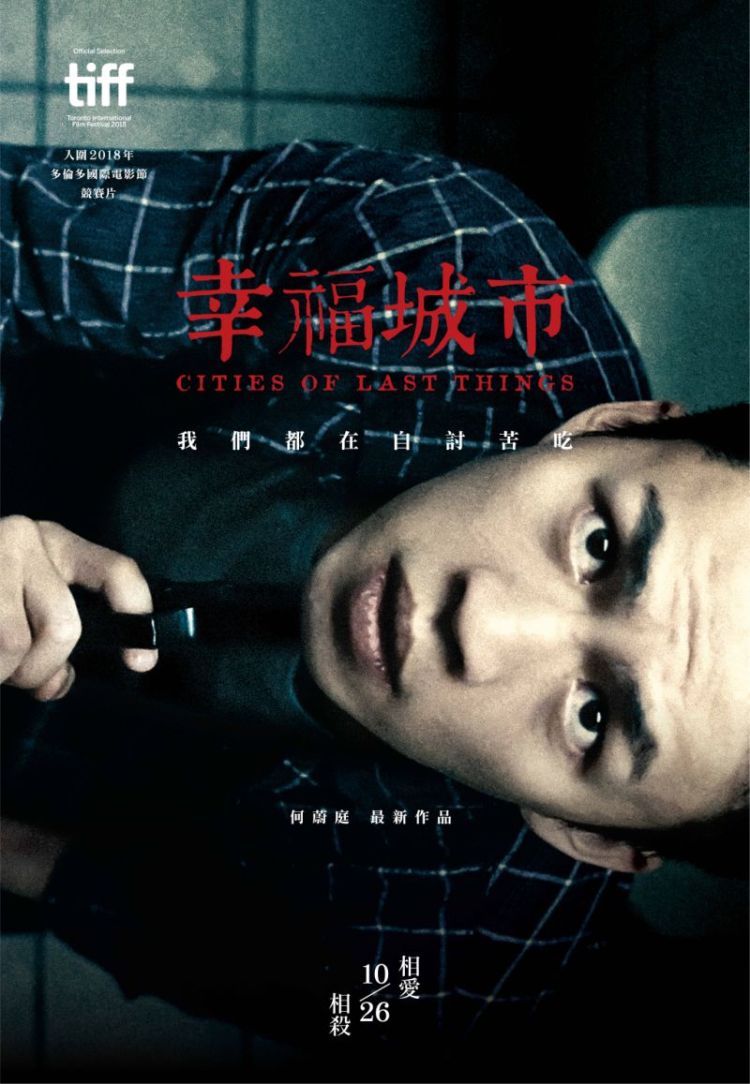
Cities of Last Things (幸福城市, Ho Wi Ding, 2018)

Cities of last things poster 1A sense of finality defines the appropriately titled Cities of Last Things (幸福城市, Xìngfú Chéngshì), even as it works itself backwards from the darkness towards the light. Still more ironic, the Chinese title hints at “Happiness City” (neatly subverting Hou Hsiao-hsien’s “City of Sadness”) but that, it seems, is somewhere its hero has never quite felt himself to be. Embittered by a series of abandonments, betrayals, and impossibilities, he grows resentful of the brave new world in which old age has marooned him. 
Ho opens with a bouncy, retro track advising that one should never be too generous with love only for a body to suddenly rain down from above. As we later discover, the body belongs to 60-something former policeman Dong-ling (Jack Kao) who has grown disillusioned with his futuristic, digital world, stubbornly smoking cigarettes and growing old gracefully while surrounded by vapers and ads for rejuvenating drugs. For reasons we don’t yet understand, he ventures into the red light district to buy a gun, punches his wife’s dance partner, and visits a hard-nosed sex worker who reminds him of a woman he loved and lost thirty years previously.

Love, guns, death and revenge become persistent themes for the older Dong-ling whose only bright spot seems to be a grownup daughter preparing to move abroad with her foreign boyfriend. Thirty years previously Dong-ling (Lee Hong-chi) too dreamed of running overseas. Consumed with rage on discovering his wife’s infidelity, he imagines himself killing her, her lover, and himself but settles only for a petty revenge against a colleague which exposes the entrenched police corruption he had refused to participate in, alienating his fellow officers. Bonding with a French kleptomaniac (Louise Grinberg) on the run from some kind of unresolved conflict with her father, he sees a way out only to have the door cruelly closed on him just as it was so many years before when he was just a teenager picked up for trying to steal a scooter.

In true film noir style, all women are perhaps one woman. Abruptly shifting tone in venturing into the recent past, we are introduced to Big Sister Wang (Ding Ning) – an embittered, disappointed femme fatale running out of road, hemmed in by the choices she has already made. She may already know there’s no way out for her, little needing the policeman’s warning that after her arrest everyone in gangland will assume she talked when they let her go, but she refuses to give in, repeatedly insisting on cigarettes and asserting her dominance while the unsympathetic policemen get on with their grim business.

Cornered, Ara, the shoplifting free spirit, decides to interrogate her interrogator, calling back to the later version of herself in asking why it is that prostitution is illegal. The policeman has no answer for her, save that he does not make the rules only follow them. Dong-ling too wanted to be a force of order, perhaps taking Big Sister Wang’s impassioned pleas to be a good person and not end up like her a little too much to heart. He follows the rules too closely for the comfort of his colleagues but finds himself dangerously exposed by an inability to regulate his feelings, a victim of toxic masculinity humiliated by his wife’s betrayal but unable to stand up to the corrupt superior who so casually closes down the only escape route he has been able to find.

The older Dong-ling is horrified by his daughter’s revelation that she lasered away a birthmark. How else can you recognise someone you lost long ago in the great wide world other than by a mark placed on them when they were born? His daughter rolls her eyes and reminds him that these days everyone is chipped, but there may be something in his rationale that everyone is marked at birth. Dong-ling is surrounded by handcuffs, self-driving vehicles, and locked doors. His fate is sealed, as we know, because we saw him fall, yet like Big Sister Wang he fought back only his resistance was violent and vengeful, abhorrent in its enraged pettiness. His is a tale of fatalistic resentment and of an existence consumed by a sense of hopeless abandonment, coloured only by a longing for lost love. Ho’s decision to end the film with its happiest moment, bright sunshine in place of rain soaked night, is ironic in the extreme but returns us to the grim serenity of the opening as the cheerful retro strains re-echo and Dong-ling catapults himself into a life of misery in the cities of last things where all hope is futile and all love loss. 


Screened as part of the 2019 London East Asia Film Festival, Cities of Last Things is also available to stream online via Netflix.

TIFF trailer (English subtitles)

Liu Wen-cheng – Don’t Be Too Generous About Love

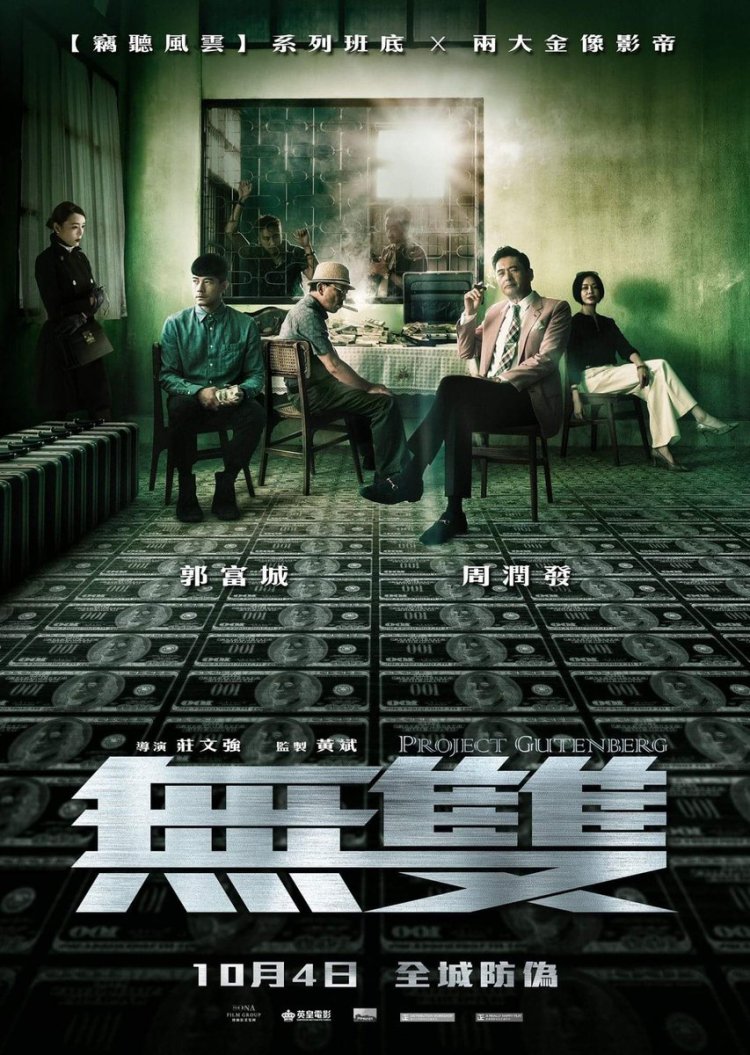
Project Gutenberg (無雙, Felix Chong, 2018)

Project Gutenburg poster“Sometimes a fake can be better than the real thing” intones mild mannered counterfeiter Lee Man in Felix Chong’s cineliterate thriller Project Gutenberg (無雙) . At first glance, Project Gutenberg would seem to have nothing at all in common with the archival programme from which it takes its name but perhaps there is something in its continual questioning of whether a facsimile can replace an original. Chong plays with perception, narrative, and a human need for authenticity but most of all with the legacy of heroic bloodshed as a melancholy young man attempts to rewrite his own history with himself in the lead.

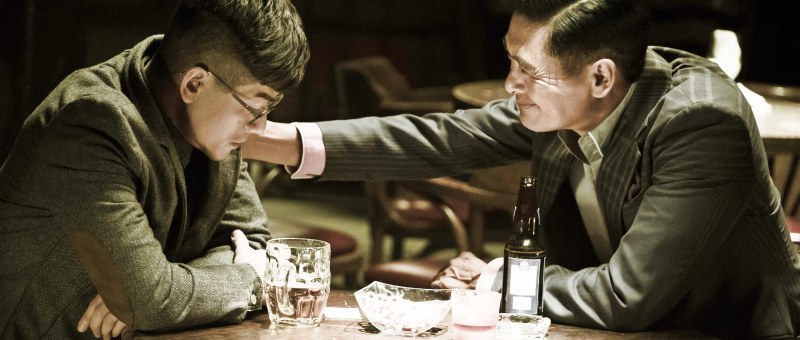
In the late ‘90s, Lee Man (Aaron Kwok) is languishing in a Thai jail from which he manages to get himself rescued by scraping blue powder off the walls and creating an expert forgery of a postage stamp to send a letter of help. Soon after he gets himself picked up by the Hong Kong police who want his help tracking down a notorious counterfeit currency trafficker known only as “Painter” (Chow Yun-fat). Lee is scared witless because Painter has a habit of ruthlessly hunting down associates who talk – something which is well known to HK police inspector Ho (Catherine Chau) who is after him because he killed her Canadian policeman boyfriend. Painter also murdered the fiancé of Lee’s old flame Yuen (Zhang Jingchu) who is the woman he sent the letter to and who has come to his rescue. Which is to say, the situation is much more emotionally complicated than one might expect.

Through flashback, Lee elaborates on how he came to get mixed up with crime. He and Yuen were living on love in 80s Vancouver trying to make it in the art world. While Yuen’s work began to gain traction, Lee’s was going nowhere. Technically proficient, his paintings were thought soulless and derivative but his talent for mimicry soon brings him to the attention of master forgers and thence to Painter who needs someone with expert skills for his next project – forging the US $100 bill.

Lee tells his tale with melancholy relish, dwelling on his days of youthful abandon with Yuen to the extent that Ho interrupts to declare herself disinterested, advising he skip the prologue and get to the bit where Painter shows up. Painter, a suave yet unpredictable criminal type, determines to help Lee become “the leading man” he knows he can be, but to be fair all anyone is ever interested in is the intensely charismatic Painter. As it turns out, there are more reasons for that than it might at first seem, but in the end Lee’s internalised feelings of inadequacy are still the fuel to his fire. Unable to find artistic success, forgery offers Lee the life of a skilful craftsman and he feels himself to have found his niche but in betraying his artistic integrity he also risks forever losing the woman he loves.

Painter has a weird obsession with Lee’s love life, assuring him that once the deal is done he will help him win back Yuen. “A man who gives up on love is destined to fail at everything” Painter tells him. Lee, however, repeatedly gives up on love. He refuses to fight, embraces his own sense of inferiority, and resolves to live on in misery falling ever deeper into Painter’s world of surrealist crime. Leaving aside Painter’s strangely homoerotic relationship with his protege, Lee’s life gets still more complicated when he becomes involved with a woman, Sau-ching (Joyce Feng), who falls in love with him in Thailand and, for complicated reasons, ends up with Yuen’s face thanks to plastic surgery and name thanks to a fake passport. Painter taunts him with a facsimile of his love but berates him for settling for a substitute while Sau-ching resents getting the Vertigo treatment from a man who refuses to let a failed love fade.

Almost offended by her betrayal of true love, Inspector Ho probes Yuen about her fiancé, asking if he was merely a “substitute” for Lee. Yuen asks if the next man Ho will fall in love with will merely be a “substitute” for her fallen colleague to which Ho fires back that there will never be anyone else because her love is “irreplaceable”. Yuen scoffs at her strangely naive romanticism and Ho does indeed appear to meet an echo of her former love in someone new carried once again on noirish cigarette smoke. If you can’t be with the one you love, love the one you’re with the old adage goes but it turns out that inauthentic romance is the hardest kind to bear.

Chong lets Lee’s retelling of his history play out like a heroic bloodshed movie in which Chow re-inhabits the classic characters of his youth. An unreliable narrator, the movie in Lee’s mind is one of honour and glory in which he still cannot allow himself to take the lead. Chong over eggs the pudding with a series of twists and reversals, undercutting all that’s gone before and muddying his message in the process but there’s no arguing with his high stakes style as he turns a simple crime story into an interrogation of authenticity and the power of personal myth making.


Screened as part of the 2018 London East Asia Film Festival.

Original trailer (English subtitles)

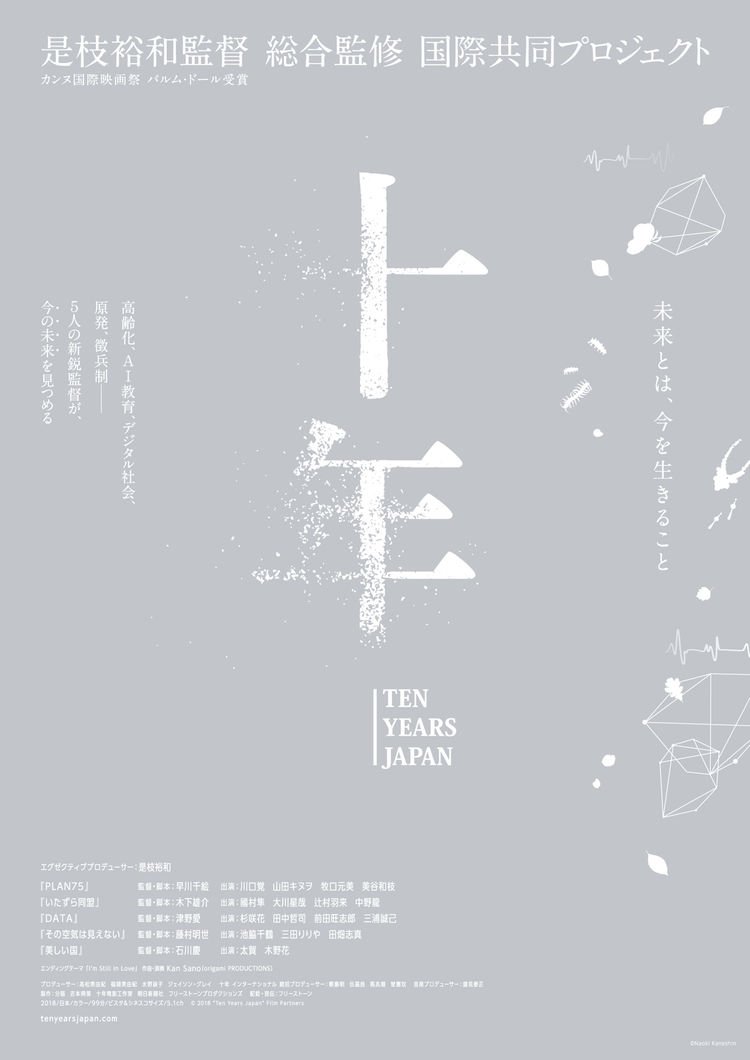
Ten Years Japan (十年 Ten Years Japan, Chie Hayakawa, Yusuke Kinoshita, Megumi Tsuno, Akiyo Fujimura, Kei Ishikawa, 2018)

Ten Years Japan posterBack in 2015, five aspiring Hong Kong filmmakers came together to present a collection of shorts speculating on the fate of their nation in 10 years’ time. Coinciding with if not directly inspired by the Umbrella Movement, Ten Years was a deliberately political project which tapped into the nation’s unique preoccupations almost 20 years on from the end of British rule and a little more than 30 before One Country, Two Systems expires. The film proved an unexpected box office hit and has gone on to become an unconventional franchise with a host of other Asian nations creating their own omnibus movies musing on what may or may not have occurred in a decade’s time.

Unlike the original Hong Kong edition, Japan’s vision (十年 Ten Years Japan) is decidedly less political, perhaps reflecting a greater level of stability. Nevertheless, taken as a whole there are a number of recurrent themes running through each of the segments from the ageing population to the increasing power of the state and the dark possibilities of technology.

In Chie Hayakawa’s Plan 75, the first and darkest of the shorts, a conflicted salaryman (Satoru Kawaguchi) makes his living selling the titular “retirement” plans to those who have reached the age of 75 and decided enough is enough. Japan’s population is ageing faster than any other and caring for the elderly has placed a significant strain on the young. The old and infirm are therefore encouraged to think of themselves as burdensome, that they should do the decent thing and relieve the pressure on their loved ones by going gracefully at the right time. So far so Ballad of Narayama, but age isn’t quite the issue – the rich are excluded because they’re still spending their money and therefore economically useful. The government would rather roll out the invitations to the “unproductive”.

Ironically enough, a little girl who wants to be a vet in Yusuke Kinoshita’s Mischievous Alliance is advised to become a doctor instead and specialise in elder care which is in fact a growth industry. Unlike the elderly in Plan 75, the kids of Mischievous Alliance are not quite so willing to sit back and conform despite being fitted with invasive headsets connected to a monitoring program which “corrects” their bad behaviour whenever they try to break the rules. The hero rejects his oppressive schooling by self identifying with a stabled horse previously used for medical experimentation, longing to run free if only for a few moments.

If the “promise” system at the centre of Mischievous Alliance presented a vision of a future in which privacy and individual agency have all but disappeared, Data asks us if we have the right to reconstruct someone’s identity after they’ve gone by examining their digital footprint. A high school girl (Hana Sugisaki) tries to adjust to the idea of her widowed father’s (Tetsushi Tanaka) new girlfriend by opening up her mother’s “digital inheritance” but learns more than her mother might have wanted her to know. High school videos and pictures of old boyfriends jostle with beautiful flowers and private anxieties, but when it comes right down to it the organic memories are the only ones that count and the only things to make sense of the cluttered imagery in an uncurated personal museum of random digital moments.

Youth’s desire for knowledge and freedom is also at the heart of Akiyo Fujimura’s The Air We Can’t See which is the only one of the shorts to address nuclear anxiety in the post-Fukushima world. After some kind of event has made the surface uninhabitable, humanity has survived underground. A curious little girl, however, is fascinated by the idea of the outside. Longing to hear the birds and feel the rain, she imagines herself an exterior world but also comes to wonder if her home is a kind of prison born of fear and maybe it’s all alright up top if only you have the courage to look.

Meanwhile the apocalypse is still a little way off in Kei Ishikawa’s For Our Beautiful Country which hints obliquely at the growing threat of North Korea as missiles fly overhead with increasing frequency. The references, however, are older. A cynical ad man (Taiga) oversees a campaign promoting Japan’s remilitarisation but is later charged with letting the elderly, eccentric graphic designer (Hana Kino) know her poster is being “substituted” with something more “powerful”. After spending the day with her and coming to understand the subtle act of rebellion which has made her poster unusable for its propaganda purposes, the ad man gets a new a mission. It’s all up to the young now who have both an opportunity and a duty to ensure their country does not fall into the same kind of ugliness that sent young men off to die in the name of beauty.

Bookending the piece, Hayakawa and Ishikawa present the bleakest visions in which the descent into cruel authoritarianism may have already passed the point of no return. The children, however, seem to disagree and universally turn away from oppressive social codes, preferring to find their own truths and committed to exploring their own freedoms. Ten Years Japan may shed the overtly political overtones of its Hong Kong inspiration but finds brief rays of hope in the midst of despair in a child’s ability to break the programming and strive for a better, fairer world free of adult duplicity.


Screened as part of the 2018 London East Asia Film Festival.

Original trailer (no subtitles)

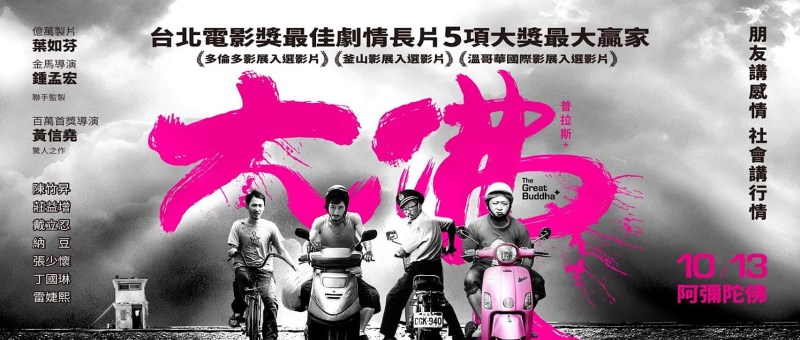
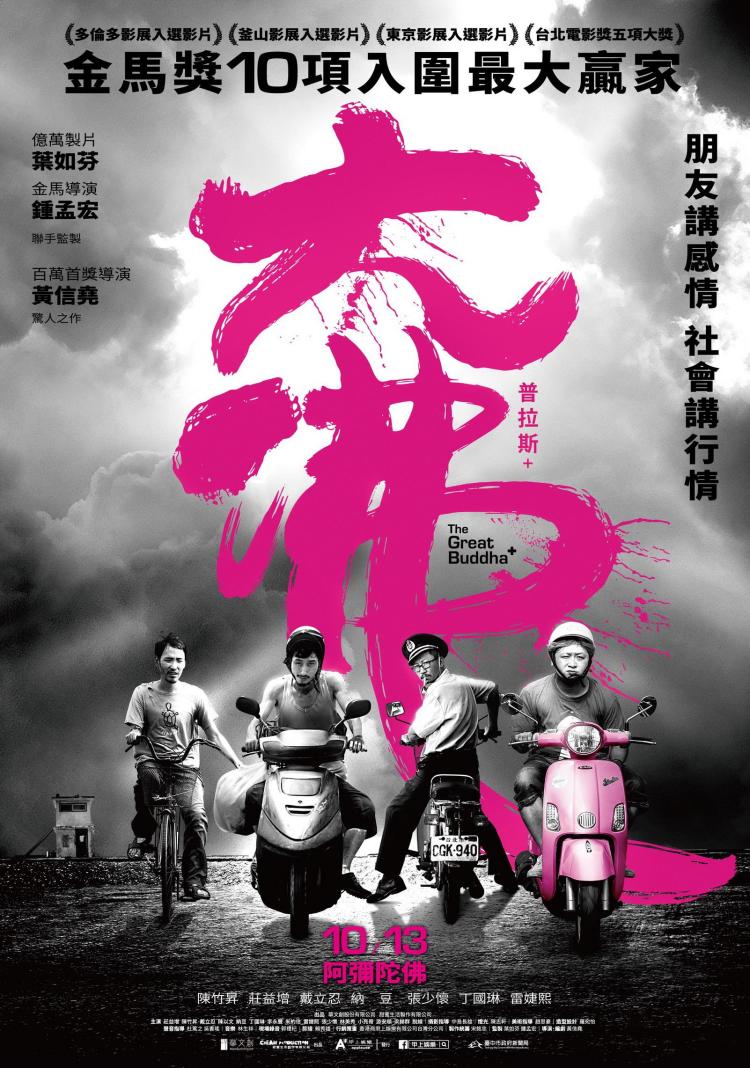
The Great Buddha+ (大佛普拉斯, Huang Hsin-yao, 2017)

Great Buddha + posterFor some, the good life always seems a little out of reach, as if they showed up late to the great buffet of life and now all that’s left is a few soggy pastries and the salad someone’s aunt brings every year that no one really likes. Still, even if you know this is all there is, it doesn’t have to be so bad so long as you have good friends and something to do every day. The “heroes” of documentarian Huang Hsin-yao’s fiction feature debut The Great Buddha+ (大佛普拉斯, Dà fó pǔ lā sī) are exactly this sort – men in late middle age who’ve never quite grown up but have eased into a perpetual boyhood safe in the knowledge that there’s nowhere left for them to grow up to.

“Pickle” (Cres Chuang) is something of a holy fool. His major preoccupation in life is his elderly mother whose increasing medical bills he is continually worrying about paying. He’s taken to banging a drum in a local marching band with a big line in funerals for extra money at which he is terrible but seeing as there’s no one else his job is probably safe for the minute. His “occupation” is nightwatchman at a factory owned by “Kevin” (Leon Dai) – a renowned sculptor working on a giant Buddha statue. Nothing ever happens at the factory at night so no one is very bothered what Pickle does there, which is mostly being “entertained” by his “best friend” Belly Button (Bamboo Chen). Belly Button doesn’t really have a job but earns money through collecting recyclables and selling them on. Looking for a new source of vicarious fun, Belly Button talks Pickle into stealing the SD card from the dash cam on Kevin’s fancy car so they can enjoy riding along with him in their very own private sim. This turns out to be more fun than expected because Kevin is also a womaniser with a thing for car sex even if the cam only captures the audio of his exploits. Nevertheless, the guys inevitably end up seeing something they shouldn’t.

Huang shoots in black and white but switches to vibrant colour for the dash cam footage, somehow implying that nothing is quite so real to guys like Pickle and Belly Button as a fantasy vision of someone else’s glamorous life. After all, if it’s not online it didn’t really happen. Trapped in the gutter of small town life, both men have either failed to move on from or wilfully regressed into a perpetual adolescence in which they waste their days idly on pointless pursuits – leafing through ancient porn mags, gossiping, and eating half frozen curries from half-filled Tupperware boxes. A mild mannered man, Pickle is so innocent that he never quite understands Belly Button’s lewd jokes while Belly Button, who is picked on and belittled by everyone else in town, takes delight in being able to boss him around.

Together the pair of them can only marvel at a man like Kevin with his wealth and talent which allows him to gain the thing they want the most – female company. Kevin, however, is not quite as marvellous as they might assume him to be even if they remain in awe of his caddish treatment of women while perhaps feeling sorry for those unfortunate enough to fall in love with him. In tight with the local bigwigs, Kevin is simply one link in a long chain of bureaucratic corruption in which business is done in the bathhouse surrounded by floozies. Kevin never explicitly lets on whether he knows that Pickle and Belly Button have stumbled on his secret, but their lives begin to change all the same. Their easy nights in the security cabin have gone for good and they feel themselves under threat in a chilling reminder of how easily a little guy can disappear or fall victim to an accident after asking too many questions about a vain and powerful man with money.

Meanwhile, Pickle is left worrying what’ll happen to his mum if he falls out with Kevin. Even if he wanted to speak out about a great injustice, he’d be putting his mother in the firing line. Then again, after a brief visit to Belly Button’s home in which he cocoons himself inside a mini UFO filled with the prizes he’s won from UFO grabber games (he says it’s like “therapy”), Pickle is forced to wonder how well he even knew him – his only friend. As Huang puts it in his melancholy voice over, we might have put men on the moon, but we’ll never be able to explore the universe of other peoples’ hearts.

Huang’s deadpan commentary is among the film’s strongest assets with its New Wave associations and determination to wring wry humour out of the increasingly hopeless world inhabited by Pickle, Belly Button, and their similarly disenfranchised friends. Filled with meta humour and a deep sadness masked by resignation to the futility of life, The Great Buddha+ is a beautifully lensed lament for the little guy just trying to survive in a land of hollow Buddhas and venial charlatans.


Screened as part of the 2018 London East Asia Film Festival.

Original trailer (English subtitles)

Miss Baek (미쓰백, Lee Ji-won, 2018)

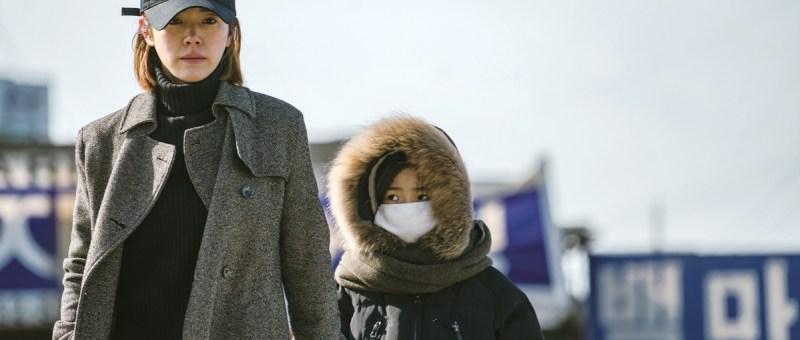
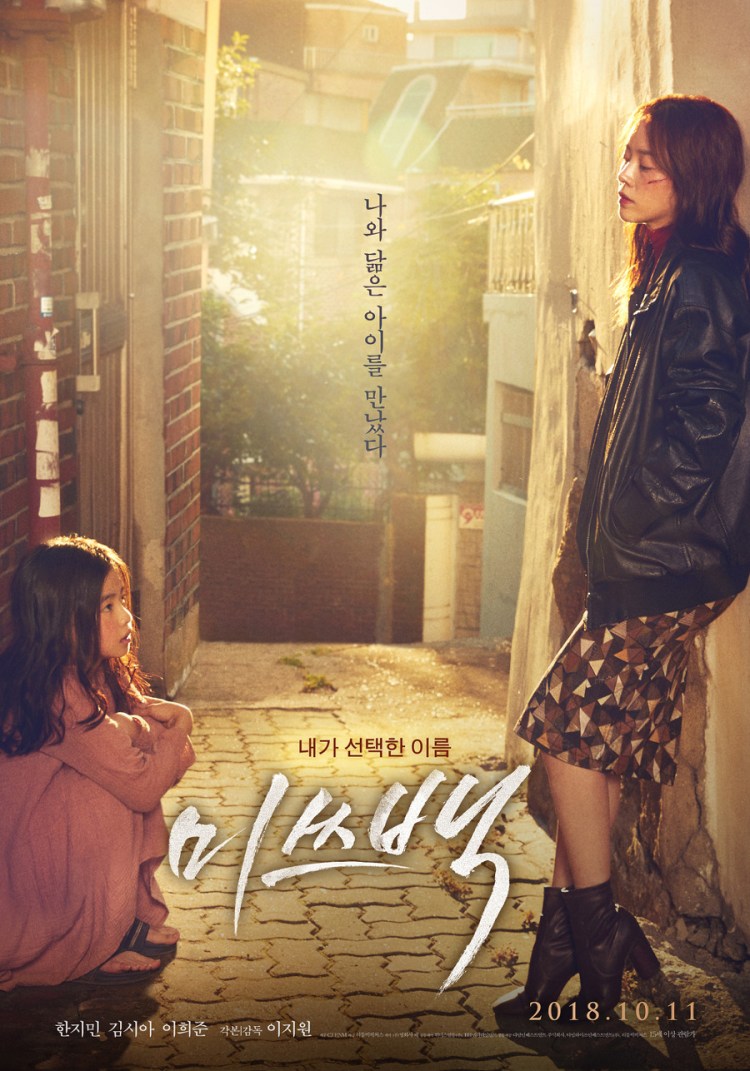
Miss baek posterIn one sense we’ve never been more connected to one another, but our tendency to remain inside our own solipsistic bubbles has never been higher. We ignore those in need, confident that “someone” will do something, that it isn’t our responsibility. Then again perhaps we don’t even notice. It’s freezing cold in director Lee Ji-won’s debut feature Miss Baek (미쓰백) and a little girl is sitting outside in her nightie. No one takes very much interest her even though it’s far too late for a child to be out alone. That is, until the titular Miss Baek (Han Ji-min) overcomes her own sense of alienation and decides to look back.

Now in her mid-30s, Baek Sang-ah is an aloof, near silent woman who ekes out a living through a series of casual jobs from car washing to massage. She is in a kind of relationship with a kindly policeman, Jang-sub (Lee Hee-joon), who wants to marry her, but Sang-ah has long ago ruled out the idea of marriage and family. She never wanted to be someone’s wife or mother. Sang-ah says this not (entirely) because she values her independence, but because of a legacy of trauma and abandonment born of the physical abuse she suffered at the hands of her mother who fell into depression and alcoholism following the loss of her husband. Fearing becoming another link in a long chain of abuse passed from parent to child, Sang-ha has kept herself isolated, avoiding all intimate relationships and vowing to continue on alone causing harm to no one.

One winter day, however, she can’t walk past the girl in the nightie anymore. Taking her to a nearby food stall, Sang-ha finds out the girl’s name is Ji-eun (Kim Si-a) and she’s nine years old. Just as Sang-ha is beginning to ask about the cuts and bruises on Ji-eun’s hands and feet, a well dressed woman who turns out to be her father’s girlfriend arrives and whisks the girl away. Sang-ha tries to forget about her and go on with her life, but she can’t seem to do it. Buying Ji-eun some proper winter wear, she resolves to try and help the girl the way that no one tried to help her.

There is something particularly insidious in the continuous stream of injustice and mistreatment Sang-ha and Ji-eun find themselves subject to precisely because of their lack of social power. Children, most obviously, have no mechanism to defend themselves besides their parents and should they try to speak out against them, they may not be listened to. Managing to escape, Ji-eun tried to tell the police what her parents were doing to her but they sent her home with only a mild warning to her smirking step-mother that she’d best ease back on the “discipline”. Understandably, Ji-eun doesn’t have much faith in the authorities as a source of salvation. Sang-ha experienced much the same but her oppression continued on into adulthood when she was arrested for violently defending herself against a would-be-rapist who happened to be the son of a wealthy and connected man who used his status to do as he pleased while Sang-ah went to jail. Sang-ha’s prison record comes back to bite her again when she tries to talk to the police on Ji-eun’s behalf only for them to lay into her when they eventually run her file.

Meanwhile, Ji-eun’s step-mother Mi-kyung (Kwon So-hyun) is well turned out and scrupulously polite. She has a plausible answer for everything and a talent for middle-class respectability, even crying during church services. Her father Il-gon (Baek Soo-jang), by contrast, is addicted to video games and rarely leaves the house while little Ji-eun is often locked in the bathroom where she cowers under the sink, or cast out onto the balcony in the mild hope that she’ll freeze to death. The only reason Mi-kyung has been keeping her around is the welfare payments, but they’re about to stop. Both “parents” project all of their personal resentments onto the face of a nine year old girl whom they beat, starve, and torture for no discernible reason other than they don’t know any other way to behave.

Ji-eun’s father was also beaten as a child. He wonders where the police were then and what sort of life they think Ji-eun is going to have when she too grew up like this. Sang-ah’s desire to save Ji-eun is also a desire to save herself as she contemplates maternity from both sides in revisiting the complicated relationship with her own mother while wondering if she is a fit person to care for a child with such poor models to follow. She doubts she can break the chain and free Ji-eun from a seemingly inescapable system of abuse and violence but through her deepening attachment to the little girl Sang-ha begins to find a way through her inertia and fear of intimacy to a deeper and more positive connection. A gritty yet always open and empathetic look at an all too often hidden social problem, Miss Baek is a promising and important debut from Lee Ji-won which refuses to look away from the dark and unpalatable but finds hope in the power of simple human kindness against cruelty and indifference.


Screened as part of the 2018 London East Asia Film Festival.

Original trailer (no subtitles)

https://www.youtube.com/watch?v=s5LZUasjAcg

Dark Figure of Crime (암수살인, Kim Tae-kyun, 2018)

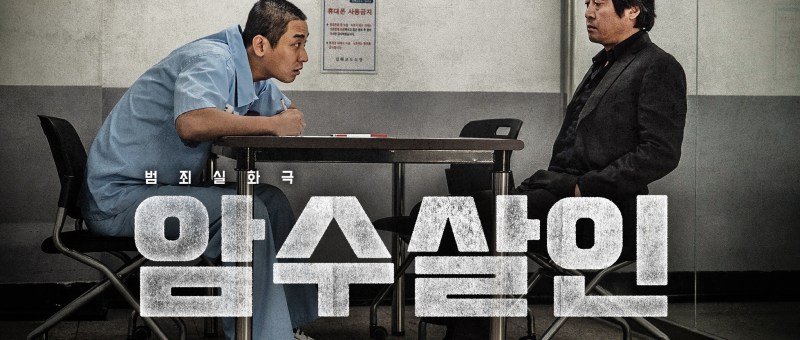
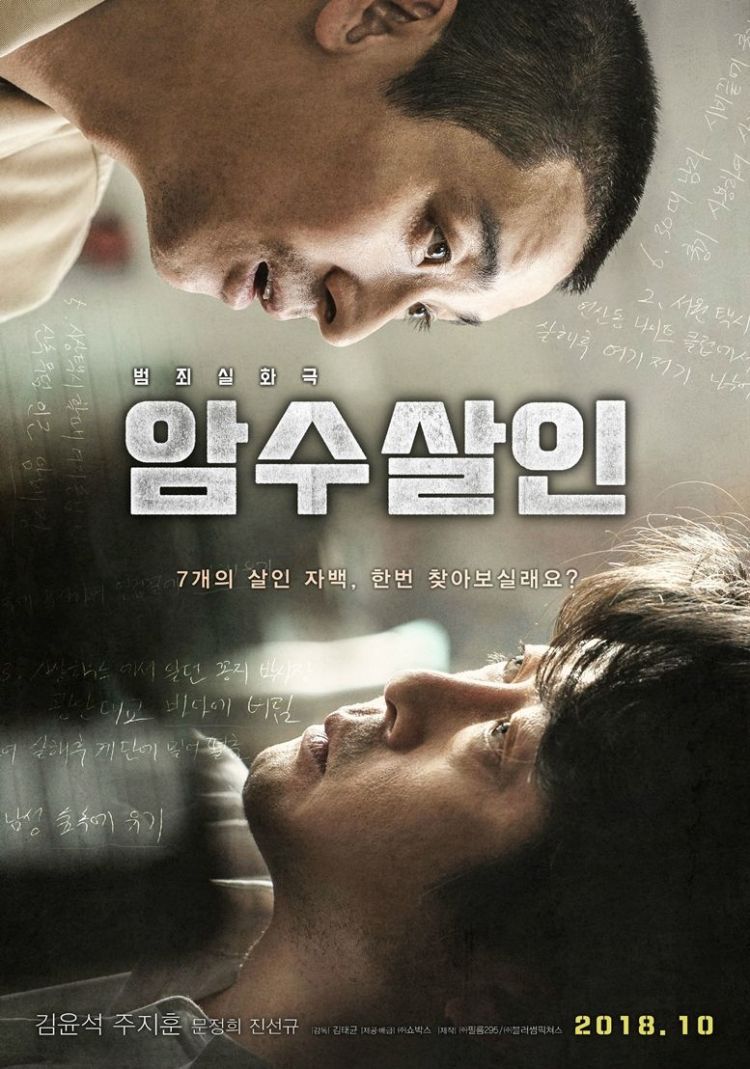
Dark Figure of Crime poster 1No matter how accurate statistics relating to criminal activity might be, there are many more acts of violence and immorality which, for various reasons, will go unreported. Criminologists refer to this phenomenon as the “Dark Figure of Crime”. Kim Tae-kyun’s cerebral thriller takes the strangely poetic term as its title (암수살인, Amsusalin) and does indeed revolve around the perfect murder and a man who claims to have completed six of them before abandoning his system and getting himself caught. Yet unlike many cops and robber dramas, Dark Figure of Crime is not about the killer but about the hidden victims who’ve lived a life haunted by the horrible uncertainty of whether their loved ones abandoned them but are alive and well somewhere else, or have fallen victim to some terrible event.

Narcotics officer Kim Hyung-min’s (Kim Yoon-seok) introduction to a new source of information takes a turn for the unexpected when he first starts telling him about having disposed of a body some years ago and then is promptly arrested by Homicide for the murder of his girlfriend. Tae-oh (Ju Ji-hoon) is convicted and sent to prison, but calls Hyung-min and complains that the police framed him when they didn’t need to. Tae-ho murdered his former girlfriend alright, but the evidence the police submitted was faked which has annoyed him. He draws Hyung-min a map to where he buried the “real” evidence just so he can catch the police out acting improperly and embarrass them as well as earn Hyung-min’s trust for the next part of his plan, which is vaguely confessing to another six murders. Hyung-min can’t know if Tae-oh is on the level or just messing with his head but feels as if he has to investigate all the same.

Not everyone understands Hyung-min’s commitment to this strange series of cold cases. After getting himself a transfer to Homicide, Hyung-min’s new boss warns him about another officer who was tricked by a bored felon and ended up losing everything – once a promising policeman he’s now a divorced carpark attendant. A meeting with the former officer yields another warning – men like Tae-ho know the law and they play with it. He’ll get you to investigate crimes B and C for which he knows there won’t be enough evidence, then he’ll use his acquittals to cast doubt on his original conviction. Hyung-min is wary but also hooked. He knows Tae-ho is playing him, but thinks he can win by giving him the opportunity to slip-up and give something away he didn’t quite mean to.

Tae-ho is certainly a dangerous, unhinged young man no matter how much of what he says is actually true. Hyung-min can’t know if any of this is real or just a bizarre game Tae-ho has cooked up because he’s got 15 years and no one ever visits him, but then he starts turning up suspicious absences. As he tells him in a tense conversation late in the game, none of this is really about Tae-ho. Hyung-min couldn’t care less about his big man act and is not impressed by his “crimes” or the ways in which he got away with them though he does want to make sure he never gets out to hurt anyone else. What Hyung-min cares about is the victims whose family members are living with the unresolved trauma of not knowing what happened to their loved ones. Something Tae-ho could quite easily help with if he had a mind to, but seeing as Tae-ho only wants to play games Hyung-min will have to find out on his own, and he will stop at nothing to do so even if he ends up manning a rundown police box in the middle of nowhere for his pains.

Living with a trauma of his own, not even Hyung-min has much faith in the police hence why he needs to complete this case himself – he simply doesn’t believe anyone else will bother. Police in Korean films are universally bumbling and incompetent if not actually corrupt and selfish. Hyung-min is an exception though his opinion of his profession may not be much different to the stereotypes you see in the movies. He doesn’t care about getting a big promotion or being the guy who catches the big fish, he just wants the truth to be known and the past laid to rest so the indirect victims can begin to move on with their lives. The “dark figure of crime” refers not only to the hidden and unresolved, but to the oppressive spectre cast over those left behind with only pain and worry. The terrifying thing is, there may be countless other dangerous people out there whose crimes go undetected not because they’re criminal geniuses but because no one really cares enough to stop them. Subtly subverting serial killer movie norms, Kim pulls the focus from the self-aggrandising villain to remind us of the very real costs of his actions while making a hero of the dogged policeman who refuses to to give in to a societal expectation of indifference.


Screened as part of the 2018 London East Asia Film Festival.

International trailer (English subtitles)