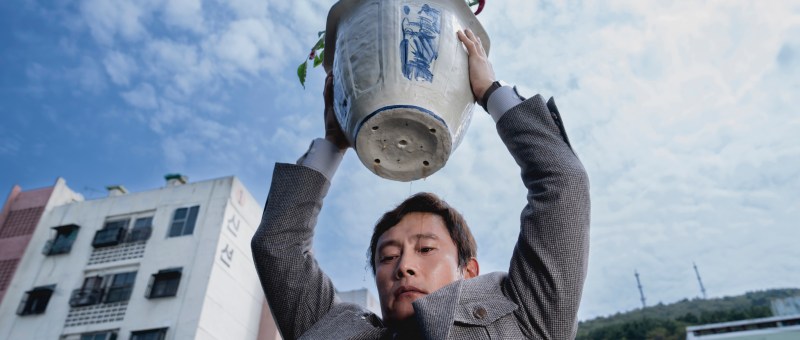
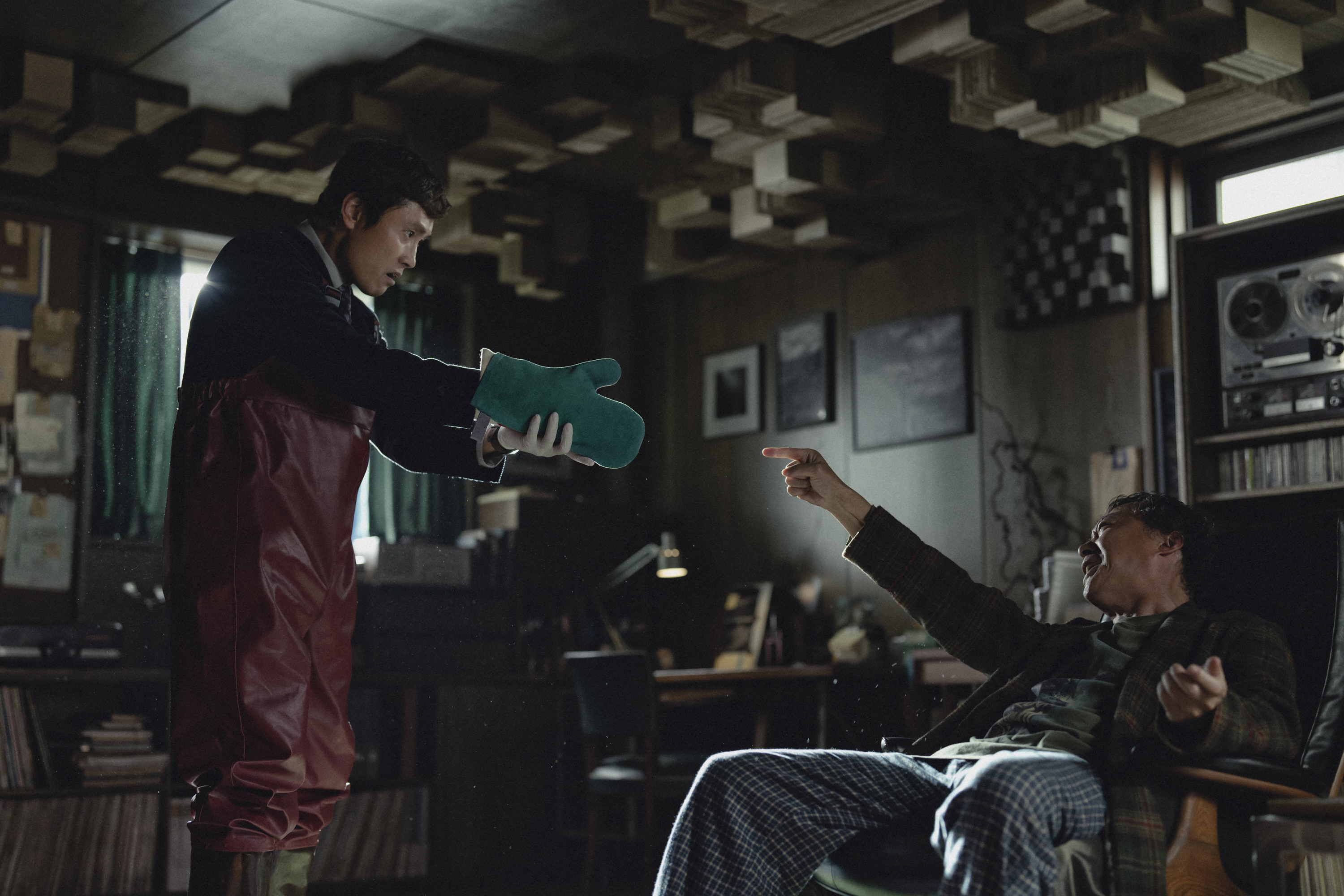
No Other Choice (어쩔수가없다, Park Chan-wook, 2025)

Most of the time, when someone says they had no choice, they’re paradoxically admitting that they had one, but they expect to understand the choice they’ve made because we would have done the same or can’t reasonably expect them to accept the consequences of the alternative. “No other choice,” on the other hand, is self-contradictory, clearly stating that a choice does indeed exist. Perhaps that’s why it seems so irritatingly disingenuous every time it’s said to Man-su (Lee Byung-hun), even if he eventually succumbs to its self-absolving qualities.

In any case, it’s this sense of powerlessness that’s at the centre of Park Chan-wook’s satirical drama as a middle-aged man finds himself suddenly exiled from the upper-middle-class lifestyle he’s worked so hard to build for himself when his company’s taken over by an American firm who have “no other choice” than to shed some staff. Man-su is blindsided by this corporate betrayal, attending self-help sessions that remind him there’s no such thing as jobs for life any more. Losing his job wasn’t his choice, but in some ways perhaps that makes it worse. 

What connects him with the other men in his position is that he’s obsessed with getting another job in the paper industry rather than exploring other options. All of these men are fixated on getting back what they feel has been taken from them. Not only is Man-su dead set on getting another job in paper, but on holding on to the family home from which he was displaced as a child and has only just managed to reclaim. To that extent, what he wants is a return to a past that doesn’t quite exist any more or exists only in his memory and is therefore unattainable.

Losing his job also leaves him displaced within his family as his sudden inability to keep them in the manner to which they’ve become accustomed eats away at his sense of masculinity. They’ve already had to exile the dogs, leaving his young daughter distraught, while his wife, Miri (Son Ye-jin), has started working again, further emphasising his failure as a provider. Witnessing one of the other men’s wives cheating on him with a much younger lover, Man-su too begins to fear that his wife no longer sees him as a man and will cheat on him too with someone who better fulfils the codes of masculinity. Yet it’s his stubborn male pride that undermines his positions much more than the unfortunate fact of having lost his job, which wasn’t after all something he had much control over. The wives are all much more pragmatic and come up with realistic solutions such as ruthless belt tightening and ceding a little ground by voluntarily giving up anything inessentials while encouraging their husbands to be a little more pragmatic and consider new directions rather stubbornly fixating on reclaiming the life they had before. 

That might be Miri decides to just sort of go with it even after beginning to suspect that Man-su has something to do with the disappearance of his rivals. At least he’s being proactive, even if it’s not really the best way to go about it, and by burying a few bodies there, he’s basically made it impossible to sell the house which is one goal achieved. It’s not losing your job that’s the problem, it’s how you deal with it, one of the other men’s wives insists as even Man-su ironically berates him for not listening to any of his wife’s “sensible” suggestions. Then again, the fact Man-su is eventually offered a job training AI replace him invites the suggestion that he’s basically killing all the other workers in the hope of clinging on to the wheel as soon as possible. The managers state they had “no other choice” about that too, and are grinning with the blinkered vision that prevents them from realising there’ll be no need for managers when there’s no one manage. 

In any case, the fact that Man-su walks around for with toothache for a significant amount of time echoes the hero of Aimless Bullet and suggests that perhaps things aren’t all that much different in the Korea of today caught between deepening wealth inequality, exploitative working conditions, and employment precarity presented by the rise of AI and increasingly globalisation. There is something quite sad about the devaluing of these skills in that what Man-su and the other men share is reverence for paper, the beauty and texture of it, along with the craftsmanship and pride in their work that now seems to belong to a bygone era. It seems that the dog-eat-dog world of capitalism leaves Man-su with “no other choice” than to do what he did and leave others with no other choice but him, but all he’s really done is seal his own fate in a futile attempt to hold on to a past that is rapidly slipping away.


No Other Choice screens as part of this year’s BFI London Film Festival.

Trailer (English subtitles)

Concrete Utopia (콘크리트 유토피아, Um Tae-hwa, 2023)

“They were just ordinary people” the heroine of Um Tae-hwa’s Concrete Utopia (콘크리트 유토피아) replies when asked about those who once lived in her apartment block. Considering what happened there, her words have a chilling quality hinting at the ways society breaks down and doesn’t in the wake of disaster and fear brings out our worst instincts. Yet on the other hand, perhaps it’s not so far from where we are now as Um’s housing crisis satire makes plain in a patriarchal and status-obsessed society.

“There’s no high and now low now. Everyone is equal,” according to Keum-ai (Kim Sun-young), head of the women’s association at the Hwang Gung apartment block, but of course that’s not true. An opening sequence featuring stock footage hints at the aspirational nature of post-war high rises that as one woman said were designed to give regular people a chance at homeownership though what most people enjoy is the convenience. The irony is that this is quite literally hierarchal living, though there are hierarchies even within hierarchies. When disaster strikes the city, Hwang Gung is inexplicably the only apartment complex left standing in what was previously a forest of concrete. Refugees from other other apartment blocks have made their way into the building, but some want to evict them and not least because they come from “Dream Palace” a more expensive and snooty complex across the way the residents of Hwang Gun believed looked down on them. 

With all these “outsiders” in the building, tensions begin to bubble. One couple wants to evict the non-residents because it took them 23 years to buy an apartment so they’re incredibly resentful that someone might usurp their privilege. Chaired by Keum-ai, a debate develops as what to what residency means with some firmly believing only home ownership is good enough, questioning the rights of civil servant Min-sung (Park Seo-joon) because he is still repaying his mortgage and therefore isn’t technically the owner of this home. In any case, most are unwilling to share despite knowing that many of the non-residents will die if left out in the post-disaster sub-zero temperatures. 

It’s also telling that when pressed to elect a leader, someone says that it has to be a man. Within the new system that emerges, the residents are divided along strict gender lines with the men serving in a kind of militia under the increasingly authoritarian rule of “Delegate” Young-tak (Lee Byung-hun) and women remaining in the building doing stereotypical female tasks. The rules state that the apartments are for residents only, while rations are awarded in proportion the perceived contribution to the community and it is forbidden to go outside. The residents develop a sense of themselves as chosen people, but are also feared by those around them for their cruelty with the rumour that their raiding parties are practicing cannibalism. 

The moral centre of the film, Min-sung’s wife Myeong-hwa (Park Bo-young) was against evicting the non-residents but largely goes along with the status quo until noticing the ways in which Young-tak’s authoritarianism is changing her husband, destroying his humanity and turning him into an obsequious lackey too afraid to resist. Then again, Min-sung was already a little more selfish and conservative than she may have been, secretly wanting to evict the non-residents in the hope of holding on to his property while unwilling to share the spoils with them. It’s this fear, their fear of displacement on losing the social status that comes with homeownership, that drives some towards cruelty even though in a world like this things like property values and job titles are obviously no longer relevant. 

This is may also explain Young-tak’s short term thinking, sending raiding parties out to find more food in the ruins and rubble rather than exploring options for growing new crops or securing water supplies. Flashbacks to conversations with his family reveal that this may have been a longterm problem for him with his wife criticising that he “never solved anything”. Her criticism undermines his sense of manhood in his inability to protect his family, not only unable to provide financial stability but even to keep a roof over their heads having apparently been swindled out of a house purchase. Male failure and insecurity by turns fuel his need for authoritarian power while the men under him, like Min-sung, mistakenly look to him as a leader and seek to emulate his code of masculinity in the desire to claim their own role as patriarchs protecting their families. 

As another member of the apartment block points out, no matter how bad the situation is there are things you should do and things you shouldn’t. Myeong-hwa does her best to maintain her humanity and is perhaps rewarded for it on encountering another group of good people much like herself while others find only more violence and misery. If they had only agreed to share in the beginning, come together and thought seriously about solutions for a better future all this could have been avoided but in the end traditional social values prove hard to abandon with homeownership still afforded special status amid the ruins of society even as Young-tak institutes a mini authoritarian fiefdom complete with secret police and public self-criticism sessions. Darkly comic in its satirical absurdity, Um’s drama is keen to point out what a crisis can do to “ordinary people” but also offers a ray of hope that there will in the end always be those less inclined to selfish cruelty than to an altruistic desire to find solutions that work for everyone.


Concrete Utopia screened as part of this year’s London East Asia Film Festival.

International trailer (English subtitles)

The Man Standing Next (남산의 부장들, Woo Min-ho, 2020)

“You have my full support. Do as you please” so says the dictator, unambiguously manipulative but still somehow inspiring the loyalty of his many underlings perhaps still too wedded to an idea or at least an ideology to countenance moving against him. It turns out that nothing really changes and whether it’s feudal Joseon or the modern nation state, there is intrigue in the court. Neatly adopting the trappings of a ‘70s conspiracy thriller, Woo Min-ho’s The Man Standing Next (남산의 부장들, Namsanui Bujangdeul) explores the events which led to the assassination of President Park Chung-hee, father of the recently deposed president Park Geun-hye, by a member of his own security team. Many of the names have been changed and historical liberties taken, but the lesson seems to be that there is always a man standing next in readiness to inherit the throne. 

Our hero is KCIA chief Kim Gyu-peong (Lee Byung-hun), preparing as the film opens to halt Park’s (Lee Sung-min) increasing authoritarianism by assassinating him. A combination of the personal and the political Gyu-peong’s eventual epiphany is precipitated by an old friend’s “defection”. Park Yong-gak (Kwak Do-won), former director of the KCIA which operated as a secret police force propping up Park Chung-hee’s oppressive regime, is giving testimony to an American inquiry into the so-called “Koreagate” scandal in which the KCIA is accused of bribing members of Congress to propagate favourable views of the Korean president and reverse Nixon’s decision to pull US troops from South Korea. Yong-gak uses the opportunity to denounce Park Chung-hee, planning to publish a memoir titled “Traitor of the Revolution” as an exposé of the inner workings of the KCIA.  

Somewhat ironically, Gye-peong and Yong-gak are old comrades who fought together in the “revolution” led by Park in the early 1960s following the ousting of corrupt autocrat Rhee Syngman. Yong-gak has become disillusioned with their cause and with Park himself, but this largely ignores the fact that Park’s revolution was mainly a repackaging of Japanese militarism, something signalled by an exchanged between Park and Gye-pyeong in Japanese to the effect that their days of revolution were their best. All of which makes Yong-gak’s wistful eulogising of a betrayed ideal along with his supposed admiration for democracy somewhat ironic. The essential motivator in their loss of faith, however, is also a militaristic one. They learn firstly that like any dictator Park has been embezzling from the state for years and has a collection of slush funds in Switzerland. That’s not the problem, the problem is that to manage them he’s been running a “private” intelligence service unknown even to the KCIA. They’ve been displaced, and their hurt is personal more than it is political. 

Yong-gak calls Park a traitor to their revolution and objects to the continuing human rights abuses for which he himself as a member of the KCIA has been directly responsible. All of this creates a series of crises for Gye-peong who is torn between loyalty to his old friend and Park while increasingly worried for his own safety. He begins to suspect that Gwak (Lee Hee-joon), Park’s security officer who had not fought with them in the revolution, may be the mysterious “Iago” figure Yong-gak had been warned about by the CIA. Increasingly sidelined, Gye-peong continues to do Park’s dirty work but draws attention to himself in his resistance towards the president’s increasingly militaristic rhetoric. Pro-democracy protests have already broken out in Busan in response to Park’s “unfair” treatment of the city’s governor and the opposition party. Gye-peong advises reinstating the governor with an apology. Gwak says frame the protestors as communists and Northern sympathisers and send in the tanks. “Cambodia killed three million people, is it such a big deal if we kill one or two million?” Gwak blurts out in a quip which seems to catch Park’s attention, the president now thinking himself untouchable. A militarist perhaps but an educated man who speaks good English and gets on well with the Americans, Gye-peong does not see the Khmer Rouge as a source of inspiration nor, like Yong-gak, does he think those values align with the ones he fought for bringing Park to power. 

Then again, even in the immediate chaos of the early ‘60s, it’s difficult to see how you could join that particular revolution without assuming it would come to this. Gye-peong has apparently been OK with human rights abuses and mass oppression, but has been quietly reassuring himself and others that Korea is changing, Park is preparing to move aside, and they are progressing towards democracy. In true conspiracy fashion, Woo paints Gye-peong as a tragic hero, unable to reconcile himself with the choices he has made or the radically different version of the world he is now seeing, but taking what is essentially a personal revenge in return for a slighting from a man to whom he’d given his life. Perhaps in a sense he thinks he’s saving Park from himself, or merely protecting the revolution he fought for from a cruel traitor, but in the end lacks the courage to carry it through. He thought Gwak was his Iago, but he missed the “man standing next” in the shadows. As the April Revolution led only to Park, so Park leads only to Chun and second military coup even more brutal than the last. Nothing really changes, but the next revolution will have to be one enacted by more peaceful means because the spectre of authoritarianism is eclipsed only in the freedom from fear.


The Man Standing Next is available to stream in the UK from June 25 and on download July 5 courtesy of Blue Finch Releasing.

International trailer (English subtitles)

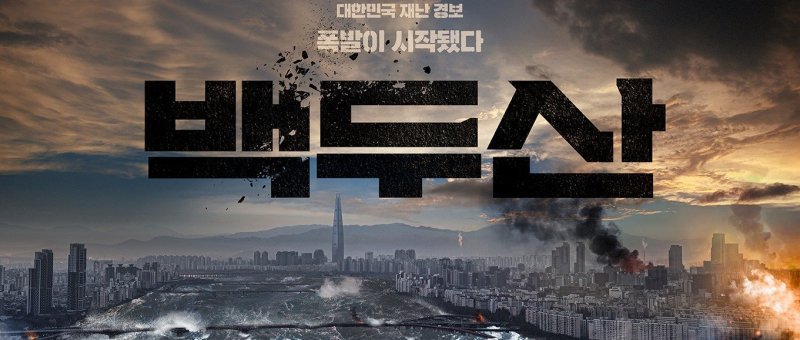
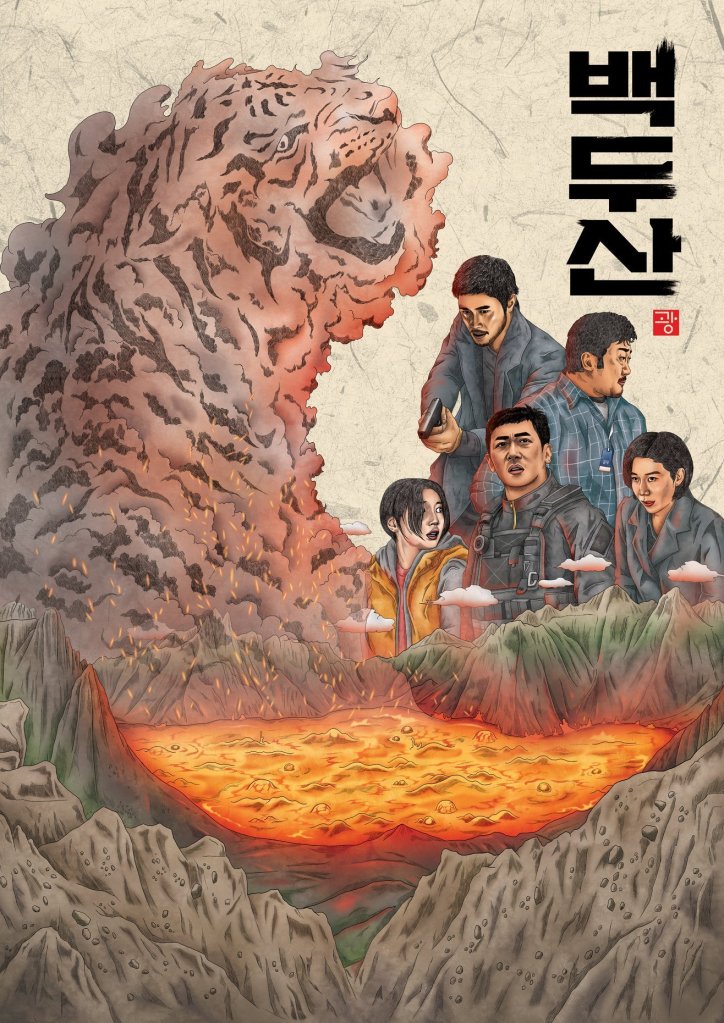
Ashfall (백두산, Lee Hae-jun & Kim Byung-seo, 2019)

The Korean Peninsula once again faces existential threat though this time of a natural genesis, and ironically the only way to save it might be nukes from the North. Ashfall (백두산, Baekdusan) is the latest and the largest of Korea’s big budget disaster movies featuring a veritable host of A-list talent and action sequences on an epic scale, but also doubles down on the less palatable sides of the genre in an overt and sometimes uncomfortable nationalism which nevertheless has its positive sides in its temporary elision of the North/South divide as the heroes pursue their cross-border mission to save the people of Korea not only from volcanic threat but from becoming mere pawns in geopolitical brinksmanship. 

The most obvious problem, however, is that long dormant volcano and pregnant national symbol Mt. Baekdu has erupted, provoking massive earthquakes which quickly reduce most of the high tech capital to mere rubble. This is particularly bad news for heroic army bomb disposal expert Captain Cho (Ha Jung-woo) because, in true disaster movie fashion, today was supposed to be his last day. Cho’s wife (Bae Suzy) is heavily pregnant, and it seems he’s opted for a safer occupation in the light of his impending fatherhood. According to the predictions of previously derided Korean-American scientist “Robert” Kang Bong-rae (Ma Dong-seok, cast brilliantly against type), Mt. Baekdu will continue erupting with the third and most powerful wave taking out most of the peninsula, but he has a plan to stop it. He wants to use nuclear weapons to blow a hole in the side of the chamber, relieving the pressure. To do that, they need to hijack some of the uranium from very recently decommissioned North Korean missiles, which means sending a small military expedition over the border in secret to track down a possible double agent who knows where all the nuclear material is before loading up their own detonators and driving them into a mine under the volcano. 

All of this takes place against the backdrop of North Korea’s long awaited denuclearisation which is in the process of being witnessed by American forces who are very much not in favour of Kang’s plan seeing as it effectively means detonating a nuclear bomb right on the Chinese border. Once again, the film suggests, Korea finds itself the battleground in a proxy war, its sovereignty denied as it attempts to use whatever means it has to save itself but is actively prevented by various kinds of outside forces. Kang, who idolises America to the point that he rejects his Korean name and tries to leave the country as soon as possible on his US passport, eventually makes the ironic statement that the ensuing chaos is all down to this “incompetant government that can’t decide its own fate” as the American army shutdown a Korean operation to put his plan in action while Cho and his guys also find themselves actively targeted by US military acting covertly in North Korea. 

Somewhat unexpectedly, Cho is not quite the heroic action hero one would expect. He’s anxious and inexperienced, out of his depth as a man unused to being in the field, trained to defuse bombs not launch them and unfamiliar with standard weaponry. Because his guys are the good guys, the North Korean mission is supposed to be “non-lethal”, so they’re wading into this with tasers and rubber bullets while his opposing numbers have no such scruples. Ri (Lee Byung-hun), the North Korean double agent, runs rings around them, playing every advantage while his motives remain unclear until finally sitting comfortably within the realms of action movie melodrama as he and Cho develop an awkward mismatched buddy dynamic, bonding over paternal worries and North/South pop-cultural exchange. 

The familiar message is that all things are possible when working together for a common cause, making a possibly subversive argument that North/South solidarity is the most powerful weapon against entrenched American imperialism and a resurgent China while advocating strongly for a greater national sovereignty less beholden to foreign powers for military support. It comes as little surprise that Kang eventually decides to go back to his original name and stay in Korea for good rather than return to a discredited US, having rediscovered his Koreaness thanks to his role in saving the nation. Subtle this is not, but then who ever asked for subtlety from a big budget disaster movie?


Ashfall is available to stream in Europe until July 4 as part of this year’s Udine Far East Film Festival.

International trailer (English subtitles)

A Single Rider (싱글라이더, Lee Zoo-young, 2017)

Single Rider posterAs the old adage goes, you don’t know what you’ve got ’til it’s gone. Having sacrificed it all for “conventional success”, an emotionally repressed salaryman loses everything when his company is exposed for its immoral business practices only to discover that he’s left it all too late and those he meant to keep close have begun to draw away from him. Quietly contemplative, Lee Zoo-young’s debut A Single Rider (싱글라이더) is a gentle meditation on the way life can get away from you. Brainwashed into the salaryman dream, our financier “hero” allows himself to be swept along by the confidence of his superiors, taking friends and family with him, when he knows deep down that if something seems too good to be true, that’s because it is. Sometimes, it really is just too late, and then sometimes, tragically, it isn’t but you miss your chance anyway.

Kang Jae-hoon (Lee Byung-hun) is a broker at a securities company. Buttoned-down and near silent, he cuts a geeky if reassuringly dull figure but there’s a storm brewing under his calm exterior. His top rated company is in a lot of trouble. They’ve all been breaking the rules, and now they’re about to go under taking the savings of hundreds of ordinary, innocent people with them – people that Kang personally assured that their money would be safe because the company would never declare bankruptcy. Not quite as morally bankrupt as he seems, Kang has been depressed for some time and is on some pretty heavy duty medication. Sending what looks eerily like a suicide note to his bosses, Kang appears to rethink. He sent his wife and son to Australia to “upgrade” them through adding English functionality but hasn’t exactly paid much attention to them since. Searching for the address of the house where they live on Google Maps, he spots them captured together outside and makes an abrupt decision. Before he knows it, he’s bought a plane ticket for Sydney, heading straight to the airport with no luggage and leaving his phone behind so his boss can’t bother him.

Far from a joyful reunion, however, what Kang finds is a visual guide to all the ways he has been erased from the lives of his family. Though Kang’s wife Soo-jin (Gong Hyo-jin) and son Jin-woo (Yang Yoo-jin) have been in Australia for a couple of years, Kang does not appear to have visited before and has trouble finding the house. When he eventually locates it, he knocks at the door and gets no answer, only to find his wife laughing and joking with a neighbour – apparently the father of a friend of Jin-woo’s. Unable to bring himself to knock again, or even to find a call box and explain, Kang begins “haunting” his family, creeping around the house while they’re out, spotting pictures of the Australian neighbour, Chris (Jack Campbell), everywhere and none at all of him.

Watching them from afar, Kang is forced to reevaluate his choices. The smallest details trigger memories of his life in Korea – a flapping kitchen door left ajar when his wife had insisted on a deadlock in Seoul because she felt so afraid with him gone so often even though they lived in an upscale high-rise with an electronic entry pad, the violin she gave up for him but now apparently has taken back up, the papers on the kitchen table which imply she wants to stay rather than go “home”. Like many men who work away from their families, Kang forgot that time was passing for them too and assumed they would be waiting for him like toys put away in a box, sleeping until he’s ready to wake them. Now he wonders how close she really is to Chris, if she wants to stay for him, if she’s grown away from her husband, or simply enjoys the wide open breeziness of their spacious Sydney home with its comparatively relaxed rhythms and friendly laid-back way of life. The only thing he can be sure of is that he doesn’t seem to belong in this house anymore and this is very much not his world.

Then again perhaps Australia is not all good – Kang hates the way everyone seems to call his wife “Sue” to make her foreign name easier to remember. He runs into something similar with a young girl he noticed at the station whose name is “Ji-na” (Ahn So-hee) but everyone in Australia seems to call “Gina”. Ji-na’s problems turn out to be bigger than a misremembered name. Despite his obvious familiarity with financial scams, Kang does nothing when he overhears Ji-na on the phone to some dodgy people who want to do a “personal currency exchange”. He doesn’t see them convince her to get in their car, but does catch sight of her coming back the same way later limping and bloody having been deprived of the money she’d carefully been saving up while her labour was exploited as she lingered on after her visa had expired (which is why she can’t go to the police, as her abusers are well aware). Ji-na, like him, made a series of bad decisions though perhaps for “better” reasons and has paid dearly for her mistakes.

To be fair, Kang thought he was making his decisions for good reasons – he convinced himself he was working to provide for his family, even sending them away “for their benefit”, but now he regrets it. He regrets everything – his workaholic lifestyle, the way he allowed his principles to be compromised in pursuit of “success”, the way he bought his swanky Seoul apartment and a middle-class suburban home in Australia through defrauding people who trusted him, and the way he lost his family through a misplaced desire to “better” them rather than simply allowing them to be happy. He thinks it’s too late, that he’s ruined himself and that his family have already moved on. He may be wrong, but he won’t find out by snooping around the house and following Chris about all day to figure out how close he is to his wife.

Kang’s tragedy is that he made a series of bad decisions in which the last was the worst and the most sad. Lee Byung-hun invests Kang with an air of utter defeat, as if the air itself were crushing him while he remains unable to reconcile himself to his new circumstances or bring himself to make contact with his family. A final revelation (or perhaps confirmation of an obvious fact) makes plain why exactly it is that he seems to wander invisibly through the city streets, using public transport but miraculously disappearing from one place to appear in another as if in a trance. Kang’s only option is, perhaps, to learn to be glad that his wife and son finally have a chance to be happy even if it’s without him and be grateful that his son has found another man who’d run until his feet were sore just to keep him safe. Sometimes it really is just too late, but, tragically, sometimes you accept defeat too early when what you thought you’d lost is already on its way back to you only you’ve already given up, not on it, but on yourself.


Original trailer (no subtitles)

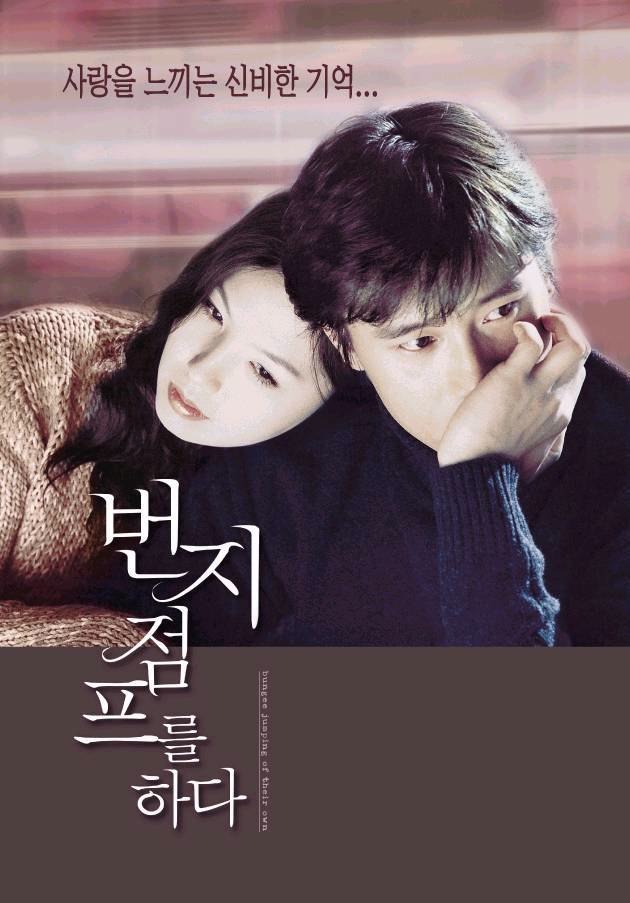
Bungee Jumping of Their Own (번지점프를 하다, Kim Dae-seung, 2001)

Bungee Jumping on theie own posterLove is a continuous stream, according to the debut film of Kim Dae-seung, Bungee Jumping of Their Own (번지점프를 하다, Bungee Jump Hada). The title may sound whimsical, but it’s less the physical act of fall and rebound we’re talking about here than a spiritual bounce, souls which spring from one body to another and eventually find their way home. Kim presents eternity as one great confluence and love as an enduring bond which survives not only death and time but transcends existence itself. Love is a spiritual cause, but, as the rather muddy philosophy goes on to suggest, perhaps not so free of social mores as it would like to believe itself to be.

In 1983 university student In-woo (Lee Byung-hun) meets the love of his life, Tae-hee (Lee Eun-ju), as she steals a place under his umbrella during a violent rainstorm. Shy and introverted, In-woo waits at the bus stop where Tae-hee abruptly left him hoping to see her again, finally encountering her by chance on his university campus. Despite his diffidence, the pair eventually become a couple and are very happy together but In-woo will shortly have to leave for his military service. He asks Tae-hee to meet him at the station, waiting once again only to be left alone on the platform as the trains fly by.

Flashforward 17 years to the start of a new millennium and In-woo is now a slick, confident man entering middle-age, married to someone else and with a small daughter of his own. He teaches high school and is the kind of inspirational teacher many dream of being, well-respected by his students for his patience and faith as he remains committed to stand up for them no matter what. In-woo might have thought he’d put the memory of Tae-hee to the back of his mind to go on living, but a strange young man, Hyun-bin (Yeo Hyeon-soo), begins to reawaken in him the buried memory of his first love. Seeing echoes of Tae-hee in the young male student, In-woo finds himself facing several different kinds of social and internal pressures to which he had previously given little thought.

Arriving in 2001, Bungee Jumping of Their Own is (sadly) one of the first “mainstream” films to touch on the theme of homosexuality, only the film itself is quite determined to negate any kind of homosexual reading into its central love affair – it is, after all, not “Hyun-bin” that In-woo is falling in love with, but the reincarnated soul of Tae-hee, which is to say a “female” soul and not a male one. Though Kim’s metaphor of existence as a great river through which love endures across time and societies ought to make gender and the physical body an irrelevance, same-sex love is relegated to an inappropriate absurdity. In a playful conversation about reincarnation in which In-woo and Tae-hee pledge their love to one another, In-woo jokingly asks what would happen if he were too were reincarnated as a girl, to which Tae-hee replies that they’d just have to wait for the next reincarnation. Despite the endurance of their love, it is apparently not viable outside of a traditional male/female pairing and any other iteration is tragedy to which the only solution is suicide and the hope for a quick reincarnation to find each other again in more socially appropriate forms.

Nevertheless, Kim does also do his best to criticise a still conservative society’s prejudice against homosexuality though this too has its problematic elements in unwittingly conflating two issues which ideally speaking are better not conflated. In-woo is a teacher falling in love with a boy who is not only a minor but also his student – a situation clearly inappropriate in any and all circumstances. However, the while the crusty old dinosaurs in the staffroom lament the new liberal society and fear being branded sex pests for leering at the girls, claiming it’s their own fault for “looking like that”, In-woo comes in for an especial level of vitriol targeted not at a pervy teacher but simply at a “gay” man while Hyun-bin is gradually ostracised by his friends simply for being the object of his affection and therefore tarred with the gay brush.

Meanwhile, the conflicted In-woo goes to see a doctor to correct his “sickness” only to be told that his responses indicate a “normal” heterosexual man with that caveat that he should also regard his interest in men as a “normal” part of life. Desperate to not to acknowledge his same-sex desire, In-woo becomes violent towards his wife in an effort to reinforce his masculinity, unwilling to discuss with her the real reasons their marriage has always been hollow – not his possible bisexuality, but that he has only ever loved Tae-hee and will only ever love Tae-hee in whichever form she appears.

In-woo makes a point of teaching his students that “different” does not mean “wrong” but it’s apparently not a lesson he’s able to internalise. Kim plays with dualities, idealises imperfect symmetries, and shows us that things which might seem “different” from one perspective are in essence the same, yet he walks back his message of acceptance to emphasise the importance of conforming to social norms rather than allowing the love between Tae-hee and In-woo to exist in the physical world in any other iteration than male/female. Nevertheless, Kim’s true intention of painting love as a continuous stream made possible by cosmic serendipity is a romantic notion difficult to resist and even if his reasoning proves occasionally hollow he has perhaps opened a door towards a greater understanding.


Bungee Jumping on Their Own was screened as part of the Rebels With a Cause series at the Korean Cultural Centre London.

Original trailer (no subtitles)

A Bittersweet Life (달콤한 인생, Kim Jee-woon, 2005)

bitterweet life posterAs Boss Kang (Kim Young-chul) tells the hero of Kim Jee-woon’s A Bittersweet Life (달콤한 인생, Dalkomhan Insaeng), no matter how well things are going, it only takes one mistake to make it all float away. Like any good film noir, the forces which conspire to ruin the quiet, orderly life of cooler than thou gangster Sun-woo (Lee Byung-hun) are those of desire as they come in conflict with codes of loyalty and decency. Sun-woo, like many a lonely hitman before him, finally wakes up to the emptiness of his life only to find no point of escape except the one he has often provided for others in precisely the same situation.

Smartly suited, Sun-woo is the trusted manager of the casino bar, Dolce Vita. Taken away from his elegant dessert in the upstairs restaurant, Sun-woo deals with a group of rowdy customers in true gangster fashion by launching in with a series of jump kicks and quickly thrown punches that reveal just why it is Sun-woo rules the roost. Sun-woo’s boss, Kang, has a special mission for his most trusted minion – keep an eye on his much younger girlfriend, Hee-soo (Shin Min-a), while he travels to Shanghai for three days. Kang thinks Hee-soo is having an affair. If she is, Sun-woo’s options are either to call Kang right away or take affirmative action on his own initiative.

Sun-woo investigates, but much to his surprise finds himself taken with Hee-soo. She is indeed having an affair, something which Sun-woo tries to ignore but finally has to be dealt with. A sudden pang of sympathy stops him from contacting Kang or pulling the trigger. Instead he decides to let the pair go on the condition they never see each other again. Thinking it’s all behind him, Sun-woo tries to go back to his regular job but he’s still dealing with the fallout from playing whistleblower on a high ranking gangster’s son.

Kim opens with an arty black and white sequence of tree branches swaying. In the story offered in voice over a disciple asks whether it is the trees or the wind which are moving, but the master replies that is is neither – it is the heart and mind which move. Like the branches, Sun-woo’s heart has begun to stir. Not love exactly, or lust, but movement. Sun-woo gazes at the way Hee-soo’s hair brushes her shoulder, at the way she walks and smiles at him. Listening to her cello rehearsal, his own emotional symphony begins, dangerously unbalancing his previously one-note existence with its identical suits and minimalist apartments.

Yet if Sun-woo’s downfall is Hee-soo and her alluring vitality, it was Kang’s first. An ageing gangster, Kang feels foolish taking up with a young girl but just can’t help himself. He loves the way Hee-soo couldn’t care less about what other people think, but that also worries him because she’ll never care what he thinks. Kang’s childishly romantic gift of a kitschy lamp with two owls huddling together on the base is the perfect symbol of his misplaced hopes – oddly innocent yet ultimately redundant. Notably, the lamp is one of many things shattered when Sun-woo takes Hee-soo’s lover to task.

Realising he has been betrayed, though not quite for the reasons he thinks, Sun-woo vows revenge. Everything has gone wrong, and he no longer believes in any kind of future which has him in it. Pausing only to send a more mature romantic gift to Hee-soo, an elegant lamp she’d admired on one of their shopping trips, he marches off towards certain death no longer caring for own life in his quest for vengeance and retribution. Repeating Kang’s questions back to him, asking for the real reason any of this happened, doesn’t get him very far but even if these two men have shared the same folly, they fail to understand each other even in death.

Returning to the master and his pupil, the closing coda recounts another story in which the pupil wakes up from a dream, weeping. The master asks him if he’s had a nightmare but the pupil says no, he’s had the sweetest of dreams. He’s crying because he’s awake and knows his dream can never come true. Sun-woo too has woken up, he knows there’s nothing for him now except to accept his fate. He has but been asleep, dreaming a sweet dream, and now he must wake and taste life’s bitterness just as he prepares to leave it.


Screened at London Korean Film Festival 2017.

Original trailer (English subtitles)

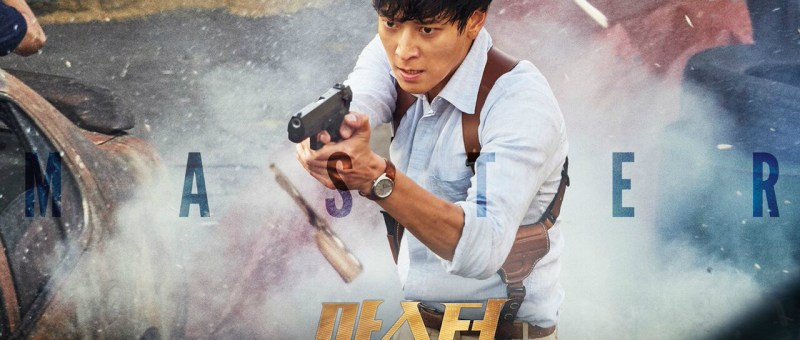
Master (마스터, Cho Ui-seok, 2016)

master posterCorruption has become a major theme in Korean cinema. Perhaps understandably given current events, but you’ll have to look hard to find anyone occupying a high level corporate, political, or judicial position who can be counted worthy of public trust in any Korean film from the democratic era. Cho Ui-seok’s Master (마스터) goes further than most in building its case higher and harder as its sleazy, heartless, conman of an antagonist casts himself onto the world stage as some kind of international megastar promising riches to the poor all the while planning to deprive them of what little they have. The forces which oppose him, cerebral cops from the financial fraud devision, may be committed to exposing his criminality but they aren’t above playing his game to do it.
“Entrepreneur” Jin Hyun-pil (Lee Byung-hun), CEO of the One Network financial organisation which is about to make an unprecedented move into investment banking, is in the middle of an energising speech to his investors. He’s booked a massive stadium with lighting and stage effects worthy of a veteran rock star and is doing his best snake oil speech to convince the ordinary people who’ve invested their life savings in his obviously dodgy pyramid scheme that he’s going to make banking great again by handing ownership back to the masses. Many are convinced by his inspirational attitude, but Captain Kim Jae-myung (Gang Dong-won) of the financial crimes division smells a rat. He knows there’s something very wrong here and is determined to bring Jin down before his exploits ruin the lives of even more innocent families just trying to make a better life for themselves.

Their way in is through Jin’s systems guy, Park (Kim Woo-bin), who’s been in on the scam from the beginning but is pretty much amoral and has been working his own angle on the whole thing. Spineless and opportunistic, Park is primed for police manipulation even if it takes him a few flip-flops before he picks any kind of side aside from his own. Kim is after Jin’s mysterious ledger which contains a host of information on his backers which would cause considerable damage to those involved and give the police the kind of leverage they need to expose Jin’s enterprise for what it really is. However, before they can spring the trap, Jin escapes with his ill gotten gains and goes into hiding leaving hundreds of innocent families who’ve fallen victim to his scams destitute, frightened, and humiliated.

Playing against type, Lee Byun-hun inhabits his sleazy, TV evangelist meets cult leader of a villainous conman with relish as he lies, cheats, steals and weasels his way out of trouble. After a potential liability is killed, Jin enjoys his crimson morning smoothie with unusual delight leaving a bright red bloodstain across his upper lip as he ironically mutters “what a shame” watching the news footage of his flunky’s death. Not content with the vast amount of money he stole by exploiting the innocent dreams of people with little else, Jin tries the same thing again abroad, taking his “wife” Mama (Jin Kyung) with him though even she seems to know Jin is not to be trusted and could turn on her at any moment. Cornered, the only words of wisdom Jin has to offer is that perhaps he made a mistake in trying to run to the Philippines, he should have tried Thailand instead.

Starring three of South Korea’s biggest actors, Lee Byun-hun, Gang Dong-won, and Kim Woo-bin, Master takes on an almost tripartite structure as the upper hand passes between the three protagonists. Systems analyst Park is mostly out for himself and switches between each side more times than can be counted before gaining something like a conscience and committing to a particular cause while Kim and Jin mastermind a cat and mouse game advancing and retreating yet stepping further into each other’s territory. The game is an ugly one. Master is a fitting and timely indictment of those who make impossible promises to vulnerable people desperate enough to take the bait in the hope of making a better life for themselves and their families, yet it also fails to capitalise on its themes, preferring to leave them as subtle background elements to the cerebral games of one-upmanship and fractured loyalties between Jin, Kim, and Park. Over long at 143 minutes, Master is unevenly paced yet picks up for its Manila set, action packed finale which is out of keeping with much of what has gone before but ends things on an entertaining, upbeat note as justice is served, wrongs righted, and the truth revealed.


Master was screened at the 19th Udine Far East Film Festival.

International trailer (English subtitles)

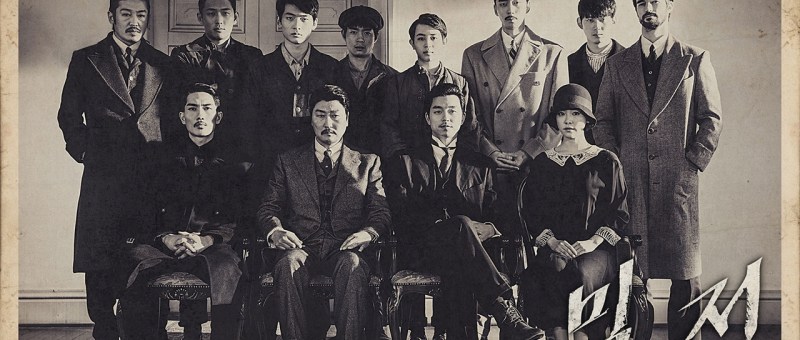
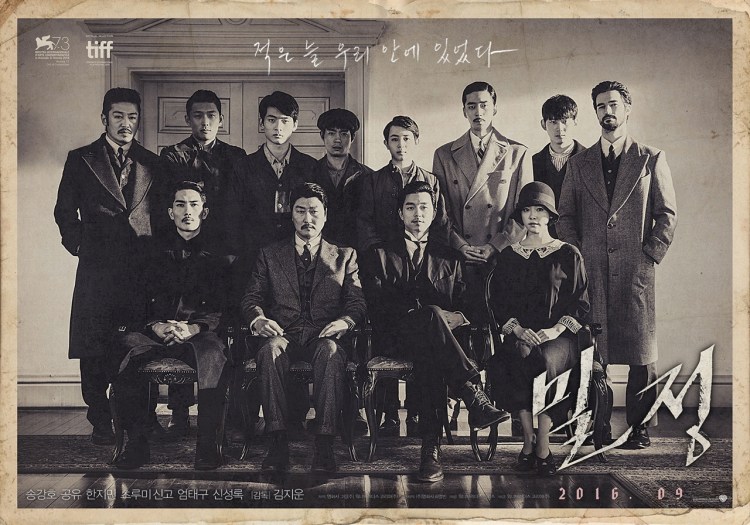
The Age of Shadows (밀정, Kim Jee-woon, 2016)

age-of-shadowsWhen the country of your birth has been occupied by another nation, what do you do? Do you fight back, insist on your independence and expel the tyrants, or quickly bow to your new overlords and resign yourself to no longer being what you once were? Kim Jee-woon becomes the latest director to take a look at Korea’s colonial past with the Resistance based thriller Age of Shadows (밀정, Miljung) which owes more than a little to Melville’s similarly titled Army of Shadows, as well as classic cold war spy dramas The Third Man and The Spy Who Came in From the Cold.

The film opens with an impressive set piece in which two Resistance members, Jang-ok (Park Hee-soon), and Joo (Seo Young-joo) are betrayed whilst trying to sell a Buddhist statue. Joo is captured but Jang-ok makes a run for it as what looks like the entire Japanese garrison of Seoul chases him, running gallantly over the picturesque Korean rooftops. Cornered, Jang-ok is confronted by Korean born Japanese policeman Jung-chool (Song Kang-ho), once a Resistance member himself and a former comrade in arms of Jang-ok. This is the point Jung-chool’s carefully crafted collaboration beings to fracture – his friend, rather than allow himelf to be captured, shouts “Long Live Korea” and blows his own brains out.

His mission a failure, Jung-chool is then moved onto the next investigation which aims to dig out the Resistance top brass in the city. Jung-chool’s Japanese boss Higashi (Shingo Tsurumi) wants him to infiltrate the cell headed by antique dealer and photographer Woo-jin (Gong Yoo) in the hope that it will lead them to head honcho, Jung (Lee Byung-hun). However, Higashi also saddles him with a very young but high ranking Japanese official, Hashimoto (Um Tae-goo), to “help” him bring in Woo-jin.

In Jung-chool’s final conversation with Jang-ok, his friend berates him for the decision to turn traitor and work for the Japanese rather than against them. Jung-chool asks him if he thinks independence is a credible aim, implying he’s long since given up believing in the idea of the Japanese ever being overthrown. Jang-ok evidently believed in it enough to sacrifice his own life, but other comrades have also abanoned the cause and actively betrayed the movement in much more serious ways than Jung-chool’s pragmatic side swapping.

Even if Jung-chool has decided that if you can’t beat the Japanese you may as well join them, he’s coming to the realisation that his superiors, even if they’ve previously treated him warmly, will never regard him as equal to the Japanese personnel. Hashimoto’s sudden arrival undercuts Jung-Chool’s career progress and reminds him that he serves a very distinct purpose which may soon run out of currency. Higashi, having seduced Jung-chool with promises of a comfortable life and praise for his skills, does not trust his Korean underling enough to send him out on his own. This personal wound may do more to send him reeling back to the other side than anything else, especially as his “replacement” Hashimoto is a crazy eyed psychopath who has half a mind to burn the entire city just to be sure of getting his man.

A man who’s been turned once can be turned again and so mastermind Jung decides to prod Jung-chool in the hope that he’ll become an asset rather than a threat. As he puts it, what’s more frightening than feeling your heart move and Jung-chool’s certainty has already been shaken. Song Kang-ho perfectly inhabits Jung-chool’s conflicted soul as his old patriotic feelings start to surface just as he begins to truly see his masters for what they are. Always keeping his intentions unclear, Jung-chool is the ideal double agent, playing both sides or maybe neither with no clear affiliation.

Like Army of Shadows, the final nail in the coffin is delivered by a sentimental photograph. In this chaotic world of betrayals and counter betrayals, there can be no room for love or compassion other than loyalty to one’s comrades and to the movement. Yet against the odds Woo-jin comes to trust Jung-chool implicitly, certain that he will finally choose the side of freedom rather than that of the oppressor. The relationship between the two men provides the only real moments of comic relief, though others members of the group are less well defined including an underwritten part for Woo-jin’s Chinese love interest (Han Ji-min) who isn’t permitted to do very much other than model some elegant twenties outfits.

Maintaining tension throughout, Kim intersperses psychological drama as betrayal piles on betrayal, with intense action sequences including a particularly claustrophobic train based game of hide and seek. Inspired by real historical events, Kim does not claim any level of authenticity but sets out to tell the story of the double dealing inside a man’s heart as he weighs up duty and self interest and asks himself how far he’s willing to go for the sake of either. The age of “shadows” indeed, these are hollow men whose identities have been eroded, living only for today but in certainty of the bright tomorrow. Kim’s examination of this turbulent period is both a big budget prestige picture with striking production values, and a tense, noir-inflected thriller in the mould of Melville, but also a nuanced human drama unafraid to ask the difficult questions which lie at the heart of every spy story.


Reviewed at the 2016 London East Asia Film Festival.

Original trailer (English subtitles)