The Bacchus Lady (죽여주는 여자, E J-Yong, 2016)

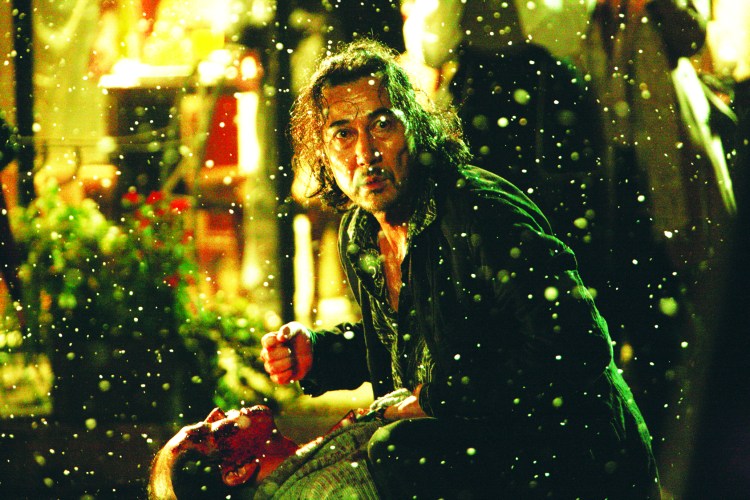
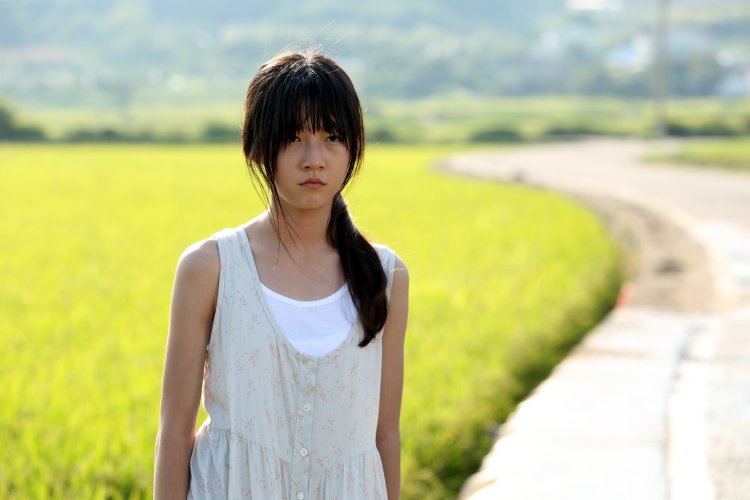
bacchus-ladyRather than a Maenad in a divine frenzy driven by drunkenness, lust, and hedonistic fury, a “Bacchus Lady” is a humorous nickname used for the older women who solicit men in Korean parks by euphemistically offering to sell them a bottle of Bacchus energy drink. E J-yong reteams with veteran Korean actress Youn Yuh-jung to tell the tragic story of Youn So-young, hooker with a heart of gold and now a member of the older generation permitted to slip through the cracks in the absence of familial connections.

Youn So-young (Youn Yuh-jung) is going to have to close the shop for a few days, she has gonorrhoea thanks to a no good customer who (presumably) paid her extra for no protection. As if that weren’t bad news enough, So-young becomes a witness to a public domestic dispute as the doctor’s Filipina former lover and mother to his unacknowledged son tracks him down to his clinic. During the heated argument conducted in English the jilted lover stabs her no good former beau with a pair of scissors and is hauled off by security, instructing her young son, Min-ho, waiting downstairs, to make a run for it.

Not knowing quite why, So-young chases after the boy and ends up taking him home. With the help of her transgender landlady (An A-zu) and younger neighbour with a prosthetic leg (Yoon Kye-sang), So-young cares for the boy before trying to figure out what’s going on with his mother. So-young returns to work after her initial problems are cleared up which brings her into contact with three former clients who each have a very unusual favour to ask of her…

First and foremost, The Bacchus Lady (죽여주는 여자, Jug-yeo-ju-neun Yeo-ja) wants to ask a lot of questions about the status of the elderly in contemporary Korea. Korea has one of the highest rates of older people living in poverty among the developed nations with many forced to keep working to support themselves even as their health fails. Though many older people have extended family networks, the nature of modern society leaves them isolated as their children may have moved away or even to foreign countries and are not able, or simply not interested, in providing later life care for their relatives. Some, like So-young, are on their own. With no familial connections to rely on and only her neighbours to count as friends, she has few options and opportunities for women of her age are thin on the ground.

Speaking to a client who turned out to be a documentary filmmaker, So-young reveals that she chose prostitution out of pride – she couldn’t bring herself to take a street cleaning job and thinks this is better. In fact, her story is more complex and exposes a deep seem of historical social problems as So-young first became a prostitute at the American air base.

There are odd parallels to be found everywhere – So-young was seduced an abandoned by an American soldier just as Min-ho’s mother has been abandoned by her Korean doctor who returned home and married well, leaving her far behind. In fact, Min-ho has a picture of his happy family which is almost identical to one So-young has stashed away in a drawer (only she’s torn out the painful half of hers). Now the Koreans are making the same mistakes as the previously mentioned occupying forces, sowing their wild oats abroad and forgetting all about their foreign adventures when they come home to settle down.

Parents reject their children, and children reject their parents. When one of So-young’s former customers suffers a stroke, his son’s family come back from the States to visit him but the daughter-in-law coldly announces that they won’t visit again for another year (knowing full well he may not have that long). The grandchildren barely speak Korean and aren’t interested in hanging round the sickbed of a man they don’t quite know, grandfather or not. The son says nothing. The daughter-in-law even tries to stop So-young visiting her husband’s father assuming she’s some kind of granny gold digger (got to protect that inheritance after all). No wonder the poor man becomes the first of many asking So-young to help him to die. Loss of youth, loss of health, loss of relationships – the loneliness and the boredom alone are too much to bear, let alone pecuniary worries.

So-young is an impulsive sort of woman. When asked why she does some of the things she does, So-young replies that she doesn’t know, she must be mad. Yet there’s a kindness and a naivety belying her otherwise straightforward personality. Even if she can feel something is probably a bad idea but it might help, she feels compelled to do it anyway, eventually with disastrous consequences. So-young is a nice woman who’s been unlucky and society continues to make her pay for that. Always left feeling as if she needs to atone for an unforgivable sin, So-young lives an oddly ascetic life, taking few pleasures and giving away most of her rewards. Her story may be an extreme one, but hers is the fate of many older women who find themselves abandoned without pensions, savings, or family to help them survive.

An interesting look at life on the fringes of an affluent city, The Bacchus Lady is sad tale though one filled with compassion and good humour. E avoids outward melodrama or unwelcome sentimentality, approaching So-young’s ultimate destination with the necessary pathos. The gentle accordion based score lends the film a whimsical air which is only undercut by the abrupt tonal shift and suddenness of the coda finale, but E’s aim is a serious one. So-young is her own woman, but she also stands for a disadvantaged stratum of society who have been consistently denied the ability to fend for themselves and are suddenly expected to do so in their old age when they most need society’s help. Sympathy for Lady Bacchus? Society would do well to take note.


Reviewed at the 2016 BFI London Film Festival

Original trailer (English subtitles):
Yakuza Apocalypse (極道大戦争, Takashi Miike, 2015)

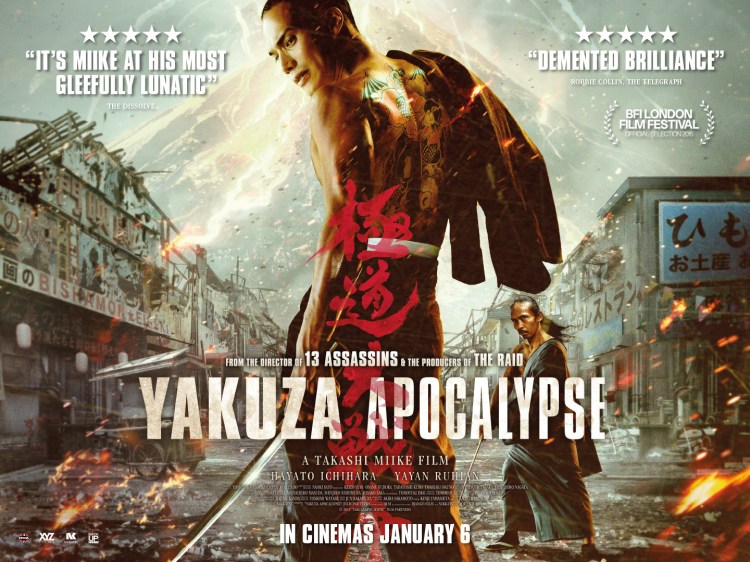
Yakuza-Apocalypse-Quad-HalfSize-NEWBelated review from the 2015 London Film Festival – Yakuza Apocalypse is released in UK cinemas for one day only on 6th January 2016 courtesy of Manga who will also be releasing on home video at a later date.


Takashi Miike shuffles back towards the yakuza plains in the western inspired horror comedy Yakuza Apocalypse (極道大戦争, Gokudo Daisenso) trailing ever more zany humour behind him. Yakuza gungslingers, bloodsucking, high school girls running away from things and, finally, a guy with a magic belly button wearing a frog suit who just happens to be “The World’s Toughest Terrorist”.

We open in media res as vampire yakuza boss Kamiura (Lily Franky) cuts up a storm in settling some local disputes. There’s a handy voice over from our soon to be protagonist, Kageyama (Hayato Ichihara), lamenting the old yakuza world of tough guys and honour codes but things don’t really take off until a very geeky looking guy and a Van Helsing type in 17th century attire suddenly turn up hoping to re-recruit the boss to “The Syndicate”. When he refuses, they fight and the geek twists Kamiura’s head right off. Using his last ounce of strength and in a touch right out of Hausu, Kamiura clamps onto Kageyama’s neck turning him into a vampire. However, in his just turned state, the honourable Kageyama turns a few more vampires of his own – and not only vampires, the bite also transmits yakuzaism too. This increase in bloodsucking gangsters is a bit of a problem for the regular guys as it does mean their pool of victims is being steadily depleted…

Not making much sense is not generally much of a problem in a Miike film. In fact, it’s a pretty much a given at this stage of the prolific director’s career. However, in the case of Yakuza Apocalypse it’s even more pointless than usual to pay any attention at all to any kind of narrative. Looking over Kageyama’s shoulder, we move from set to piece to set piece as, first of all, the non-vampire yakuza guys struggle for power between themselves and then with the vampire variety before the giant frog turns up to ruin everything.

There are some rules, Miike takes a while explaining to us how this yakuza business works with Kamiura as the “good” kind of yakuza committed to protecting his townspeople above all else – essentially, he’s the sherriff around these parts. He’s a vampire, yes, but he only feeds on yakuza who he’s “reforming” by means of an underground knitting circle held prisoner in his basement. Apparently yakuza blood tastes bad and isn’t very good for you but eating civilians is dishonourable and anyway, limited in supply, because when you turn someone they also become a foul mouthed yakuza fighting machine.

The world building is shaky at best, none of this really hangs together making for a fairly disappointing series of one note jokes. There is an attempt at a bit of more sophisticated satire with the regular gangsters suddenly lamenting that there will be no one left for them to prey on if everyone turns yakuza vampire but otherwise it’s crazy piled on crazy. Not a bad thing in itself but somewhat lacking in substance.

Despite that, the film offers some quality performances notably from its lead, Kageyama, played by Hayato Ichihara, as the yakuza who’s so sensitive his delicate skin won’t allow him to get a proper yakuza tattoo. That is, until he becomes a brooding, conflicted vampire mourning the loss of his boss and of those long held tough guy ideals. Lily Franky also offers a high impact though short lived appearance as the honourable vampire boss with a hinted at backstory, though the much publicised cameo of The Raid’s Yayan Ruhian feels a little wasted as he’s just generally hanging around for a handful of fight scenes. That said, the action scenes themselves are extremely impressive, both exciting and often funny too.

Yakuza Apocalypse is not one of Miike’s most well thought out efforts. Its collection of crazy ideas feels thrown together and there’s disappointingly little depth to its world building. Even its media res conclusion looks more like running out of ideas than a deliberate decision. However, that’s not to say it isn’t heaps of fun, which it often is. A crazy frog riding a bicycle who somehow wakes up the giant king of the crazy frog people after some kind of emergency plaster is ripped off his belly button – really, what could be more fun than that? That really is all there is though and those who prefer their absurdist action thrills with a little more substance had best look elsewhere.


Yakuza Apocalypse is in released in UK cinemas for one night only on 6th January 2016. Luckily the film is playing across the UK even if it’s only the one night and you can see if it’s on anywhere near you by checking out this handy link! If it’s not, don’t despair! It’ll also be available in all the normal ways from Manga later in the year.

Reviewed at the 2015 BFI London Film Festival.


Ryuzo and the Seven Henchmen (龍三と七人の子分たち, Takeshi Kitano, 2015)

142984037484393493178_ryuzo-7nin-kobuntachi-g4First published on UK Anime Network – review of Takeshi Kitano’s Ryuzo and the Seven Henchman (龍三と七人の子分たち Ryuzo to Shichinin no Kobuntachi) from LFF 2015.


Most people probably know Takeshi Kitano best for his series of ultra violent ’90s gangster movies, his role as the sadistic teacher in the controversial Battle Royale or as the host of bizarre Japanese endurance game show Takeshi’s Castle. However, in Japan he’s probably best known as a comedian though few of his comedy films have ever made it overseas. This may change with his latest effort, Ryuzo and the Seven Henchmen, which both takes him back to his yakuza roots and celebrates his comedic talents.

Ryuzo “the demon” was once a yakuza more feared the than respected whose very name alone made women swoon and struck fear into the hearts of men. Now though, he’s a grumpy grandpa living with his ultra conservative son who’d rather the neighbours didn’t know he had a gangster living in his house. After some punks make the mistake of trying an “ore ore” scam on him, Ryuzo gets back into the spirit of his gangster days and takes the guy down in a classic intimidation play. However, some of his other yakuza buddies also seem to be getting into trouble with upstart youngsters and once again it’s up to Ryuzo and his seven old timer yakuza buddies to set the town to rights.

The world has changed since Ryuzo and his guys were ruling the streets. In the old days the yakuza were a family, they had rules and ethics and they stuck to them. They saw themselves both as heroic outlaws and as defenders of the rights of ordinary people (even if they made their money through extorting those very people they claimed to protect). This new brand of crooks doesn’t care about honour, or morality or human kindness – they aren’t above conning the vulnerable into falling for obvious telephone scams or loaning large amounts of money to desperate people at ridiculously high interest just to make a buck. These guys are “business men” running a “legitimate enterprise” where the only rules are that you get rich and stay rich.

Ryuzo and co may be old, but they still have their honour and their pride. Watching the old guys trying to relive their former glory days is often funny, if a little sad as their grand schemes take on the absurd quality of little boys playing cops and robbers. It goes without saying that the film is hilarious though perhaps takes certain instances of low humour a too little far. Each of the main eight old timer yakuza has his own particular strength which endures despite their advanced ages though perhaps in slightly different forms and even if they’re coasting on former glory none of them has forgotten their former status.

Though not quite a return to the artistic highs of Sonatine or Hana-bi, Ryuzo and the Seven Henchmen is nevertheless an entertaining mix of Kitano’s tough guy yakuza and absurd comedian personas. Unlikely to walk away with any awards or lasting praise, Ryuzo and the Seven Henchmen is sure to be remembered fondly for its expertly timed and often gleefully absurd humour.


Reviewed at LFF 2015.


Mountains May Depart (山河故人, Jia Zhangke, 2015)

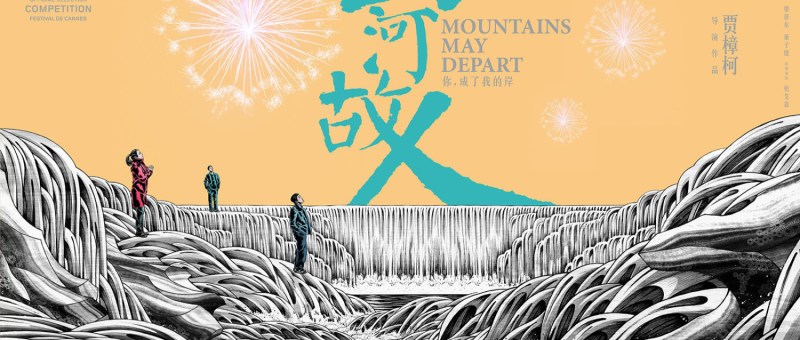
mountains may depart poster verticleJia Zhangke has made something of a career out of charting his nation’s history through the lives of ordinary people caught up in the business of living when everything about them is changing. Mountains May Depart (山河故人, Shānhé gùrén) isn’t the first of his films to span a comparatively wide period of time, though it is the first to venture into the “future” if only by a decade or so. Through a story of dislocation and isolation both cultural and personal, Jia has traversed the melancholy odyssey of those who grow up to discover that all the wrong choices have already been made.
The film begins at Chinese New Year 1999 – the dawning of a new age. Tao line dances and conga lines to The Pet Shop Boys’ Go West before joining in the celebrations by singing a song in the town square. She’s good friends with Liangzi whose company she seems to enjoy and they seem to get on together very well but it’s unclear if there’s anything more to it than that. Obnoxious rich boy Jiangsheng is also VERY interested in Tao and resents her friendship with Liangzi. Eventually things come to a head and Tao has to choose, and she does but in trying not to hurt anyone she ends up hurting everyone. On Tao’s eventual marriage to Jiangsheng, Liangzi, heartbroken, leaves town intending never to return. The segment ends with the birth of Tao and Jiansheng’s son, Dollar.

In 2014, Tao is divorced and Jiangsheng has taken her son to live with him in Shanghai where he’s a high stakes capitalist mogul. Liangzi, meanwhile, has married and had a child but has ended up working in a coal mine and has now become gravely ill. Unable to work he returns home and considers asking friends and family to help him through these difficult times. Sometime later a family tragedy occurs – the one silver lining being that Tao gets to see Dollar again but he barely remembers her and makes constant phone calls to his “mommy” in Shanghai.

In 2025, Dollar and Jingsheng have moved to Australia. Dollar is taking classes in Chinese which he barely remembers while Jingsheng has become a dishevelled and angry old man. Dollar has almost no memory of his real mother or his childhood in China and starts up an oedipal relationship with a lonely, middle-aged Chinese woman.

Jia paints the passing of time through a series of expanding screen ratios – beginning with 4:3 in 1999, to 16:9 in 2014 and finally 2.35:1 in 2025. The world literally gets bigger, wider, and our focus shifts from Tao to a more expansive canvas of displaced Chinese citizens finally reaching far across the seas. The first segment is more like Jia’s earlier films as Tao is caught between two lovers with possibly tragic consequences whereas the second part has more in common with his more recent work but part three takes things in an entirely new direction.

The 2025 segment doesn’t even feature Tao until the very end and focuses on her son – the ironically named “Dollar”. Having lived the last ten years in Australia he barely speaks Mandarin and has become an angry young man determined to drop out of college because “nothing really interests” him. Jinsheng never learned English and the pair can’t communicate. Gone is Jinsheng’s swagger – now he has a paunch, dishevelled hair and an unruly mustache. In 1999 he dressed in the self consciously stylish clothes of someone who has money and really wants you know it, but now his clothes are worn out and typical of any old man you might find sitting reading a paper on the side of a road. Dollar is lost. Eventually he strikes up a friendship with his Chinese teacher that’s founded on the shared loneliness of two people who’ve been separated from their homelands and loved ones. Looking for his mother in all the wrong places, Dollar’s eventual romance is likely to end in tears but luckily his Chinese teacher is a wise and kind woman who is able to offer some of her wisdom and a steady hand of guidance.

Though much has been made of the “futurism” of the 2025 segment, it’s in no way a science fiction experiment. The chief difference, as might be expected, is in technology though even this is subtle – see through tablets, electronic displays rather than blackboards (only a little more advanced than many institutions already use) and a much more intuitive embedding of google translate. More distracting are the strange anachronisms – vinyl records being played on a classroom turntable, visiting a travel agent to book a flight (does anyone even do this now?) and a preference for older cars. Most damaging though is that, as it’s set in Australia, the bulk of the dialogue is in English which somehow never sounds convincing despite the quality performances on offer.

Dollar wants his freedom from his overbearing, failure of a father though freedom itself is also a burden. The son flails aimlessly while the literal motherland, Tao, is alone, abandoned and forgotten. There’s something quite heartbreaking in the way Jia sculpts his overarching story. We begin with so much hope as Tao and her friends dance enthusiastically to the rather ironic choice of Go West in 1999 as her life is just beginning. When she dances to it again, alone, with the snow falling all around her it’s as if she’s crawled inside a memory, reliving a happy day rather than exulting in the now.

Mountains May Depart is a rich and complex film that is heavy with symbolism and metaphor. Jia wants to ask us where we’re going, and where we’ve been – China’s modernisation has occurred at such a breakneck speed that it’s left an entire nation bewildered. Facing a choice between “going west” and “taking care” of Chinese values (Sally Yeh’s 1990 Cantopop hit Take Care forms the opposing musical motif of the film) many, like Tao, have found themselves choosing poorly and paying a heavy price. What’s in store? A lonely, but wealthy, future devoid of all human connection where “sons” forget their “mothers”? The title suggests old friends like mountains and rivers never part but once the erosion sets in mountains crumble and rivers run dry – you have to look around you and remember what it is that’s really worth living for.


This is getting a full UK release from New Wave Films in Spring 2016!

For the curious here is Sally Yeh’s (葉蒨文) 1990 Cantopop hit Take Care (珍重) which does its best to tug at the heartstrings throughout the later part of the film (and largely succeeds).

First published by UK Anime Network.

Love & Peace (ラブ&ピース, Sion Sono, 2015)

UUqPRiT

Another day another Sion Sono – review of Love & Peace from the London Film Festival up at UK Anime Network. Quite liked this one, shame it’s not out in time for Christmas.


Last time we met Sion Sono it was for a street style rap musical about gang warfare. Before that we’ve mostly been admiring him for his epic and irreverent tale of panty shot perverts and bizarre religion Love Exposure, bloody serial killer true crime thriller Cold Fish or poetic exploration of a woman looking for love in all the wrong places in Guilty of Romance, not to mention a tale of teenage rage and post Earthquake anxiety in Himizu or state of the nation address in Land of Hope. Recently prolific and varied enough to give even Takashi Miike a run for his money, it should come as no surprise that Sono’s latest effort is, essentially, a family film about a man’s love for his pet turtle.

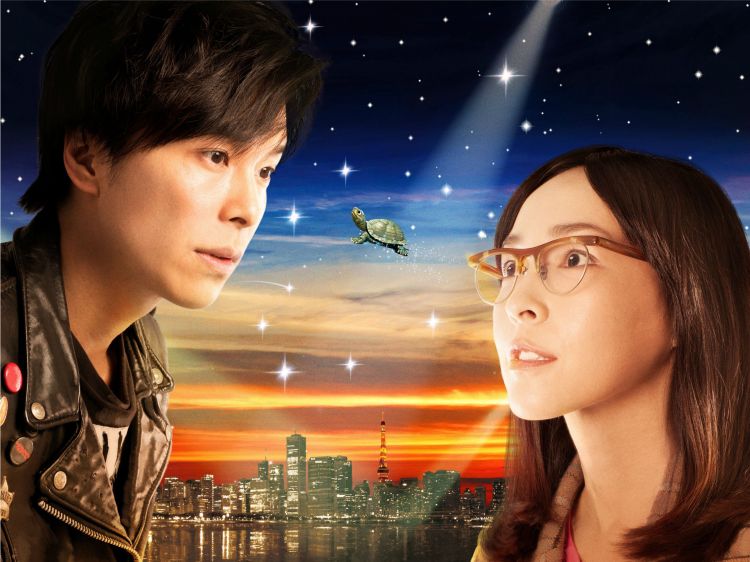
Ryoichi Suzuki is a mild mannered office worker with dreams of becoming a rock star. Belittled by his colleagues, Ryoichi has no friends – that is until he falls hard for a tiny turtle sold by a strange man on a rooftop. Hatching plans together for Ryoichi’s rise to superstardom the pair become inseparable. However, after another round of humiliation at work Ryoichi flushes “Pikadon” down the toilet! Full of remorse, Ryoichi pines for his lost friend meanwhile, Pikadon arrives at the lair of a mysterious sewer dweller who rescues broken and discarded creatures. When Pikadon is given a “wish” pill by mistake, Ryoichi’s life soon begins to change!

In case it needs saying, Love & Peace is in no way a “serious” film – much as that may sound like a pejorative comment, all that means is that it’s delightfully absurd and heaps of fun and where it harks back to some of Sono’s key concerns it does so in a light hearted, even mocking manner. The plot maybe conventional in a lot of ways – down trodden loser suddenly makes something of himself with magical help but ends up becoming arrogant and forgetting his true self before being redeemed by a massive fall from grace but as usual Sono has managed to bring something new to even this comparatively tired tale.

Largely, that’s thanks to his bizarre side story of the land of misfit toys being cared for by a mysterious yet kindly old man who lives in a tiny alcove in one of Tokyo’s sewer complexes. Cheerfully harking back to some of those classic ‘80s kids movies, the strange collection of broken robots, damaged cat toys and lovelorn dolls do their best to tug at the heart strings with their stories of loss and abandonment while the mysterious old man keeps them going with tales of hope and magic pills which grant the power of speech or wishes.

However, as Ryoichi’s dreams grow bigger so does Pikadon himself and its not long before the cute little turtle’s devotion to his master becomes a dangerous threat to the entire city. Ryoichi chose the name “Pikadon” seemingly at random and without realising that it’s become a byword for the atomic bomb. Thus Ryoichi’s eventual ballad of love and regret for his lost turtle buddy is misunderstood as a lament for modern Japan and a pledge to “never forget” the wartime nuclear attacks. Of course, this “subversive political rock song” becomes a giant hit catapulting Ryoichi on the road to superstardom. However, there is more heartbreak for Pikadon to come as he’s continually betrayed by the ever more ambitious Ryoichi who’s only too quick to sell out his beloved friend to get ahead with cruel and potentially tragic consequences.

Of course, the one thing that needs mentioning is the amazing music in the film including the title song which is tailor made for waving a lighter in the air and is sure to become your latest ear worm. Ryoichi only writes a few songs but Sono also manages to throw in a musical self reference to a previous film that makes for a fun Easter Egg for his avid fans to find and the rest of the soundtrack is equally catchy too.

In short, Love & Peace is the Christmas themed punk rock kid’s movie you never knew you needed. Yes, it goes to some very dark places – the least of which is the accidental destruction of the city of Tokyo by the now colossal kaiju incarnation of Pikadon whose only wish is to make his best friend’s rockstar dreams come true, but it does so with heart. In true family film fashion, it addresses the themes of true friendship, the importance of being true to yourself and that the love of man and turtle can be a beautiful, if terrifying, thing. Strange, surreal and totally mad, Love & Peace is the ideal Christmas gift for all the family and Sono’s most enjoyably bizarre effort yet.


I wrote this review before I’d seen Tag which is also “enjoyably bizarre”, it has to be said. Love & Peace will be released in the UK in 2016 courtesy of Third Window Films.

Some other Reviews of Sion Sono movies written by me:

LFF 2015 Round-up

still-loveandpeace2Total films:

  1. Mountains May Depart
  2. A Guy From Fenyang
  3. My Love Don’t Cross That River
  4. Der Nachtmahr
  5. Lost in Munich
  6. Jia Zhangke & Walter Salles Screentalk
  7. Ryuzo and the Seven Henchmen
  8. Salaam Bombay
  9. In the Room
  10. Assassination
  11. Beeba Boys
  12. Ghost Theater
  13. Son of Saul
  14. Invisible Boy
  15. Right Now, Wrong Then
  16. Love & Peace
  17. Black Mass
  18. A Bigger Splash
  19. Our Little Sister
  20. The Assassin
  21. Evolution
  22. Poet On a Business Trip
  23. Cemetery of Splendour
  24. The Witch
  25. The Apostate
  26. Desierto
  27. Madonna
  28. An
  29. Youth
  30. The End of the Tour
  31. A Tale of Three Cities
  32. The Boy and the Beast
  33. Office
  34. Ruined Heart
  35. Murmur of the Hearts
  36. My Golden Days
  37. Happy Hour
  38. Yakuza Apocalypse

Somehow, this list was longer than I thought it was going to be. Not sure how that happened really but I did manage to pack in all of the Asian films plus a fair few others. This year I really did feel victimised by the dreaded LFF clashes meaning I missed out on a few things I really wanted to see but nothing too major. There were only a couple of choices I regretted making, though I suppose I had to see them to find out. Nothing really grabbed me like last year’s A Girl Walks Home Alone at Night – perhaps because I ended up seeing bigger films with more established buzz around them so I wasn’t really caught off guard in that way. Still, some fine discoveries. Now the long wait for LFF 2016 – oh, what wonders shall ye bring?

Top 5 (somewhat arbitrary):

  1. Son of Saul
  2. Mountains May Depart
  3. Murmur of the Hearts
  4. Office
  5. Our Little Sister

Sneaky review previews of stuff coming up on UK Anime Network, might put a few other things up here too:

Exit (迴光奏鳴曲, Chienn Hsiang, 2014)

exit 1Review of this existential character drama from Taiwan up at UK Anime Network. This one was screened at BFI London Film Festival but now it’s at Glasgow too and will be getting a further UK release courtesy of relatively new distributor Facet Films in April!


Sometimes it’s the little things that wear you out; stretching over years, becoming almost invisible until a surge of troubles washes over you and leaves you gasping for air in stormy seas. So it is for Ling, an ordinary, middle aged Taiwanese woman who finds herself alone with her husband working in Shanghai (constantly incommunicado even via telephone) and a teenage daughter, Mei Mei, who’s not very interested in spending quality time with her mother when she’s suddenly made redundant from her job as a seamstress at a factory and also discovers she’s heading into the menopause. Ling has also become the de facto carer for her mother-in-law who’s in hospital (not that her mother-in-law seems to appreciate it very much) where she becomes increasingly fascinated by a badly injured man in the bed opposite who has no family to visit him or take care of his daily needs. In a gesture of kindness, Ling begins by trying to ease some of his discomfort by mopping his brow and dripping water on his parched lips but soon transitions to bed baths. This purely physical relationship with a blinded stranger begins to reawaken something in Ling but will it be enough to save her from life’s disappointments?

Exit is the feature debut from director Chienn Hsiang, an award winning Taiwanese cinematographer (Blue Gate Crossing) and stars frequent Tsai Ming-liang collaborator Chen Shiang-Chyi in the leading role. Unfolding slowly with minimal, naturalistic dialogue the shadow of Tsai looms large (not that that’s ever a bad thing) but Chienn handles this extended moment of existential crisis with a steady hand and interesting compositional choices. Occasionally, his metaphors feel a little overplayed – the sticking lock on Ling’s front door for example and her general trouble with blocked exits are nice ideas but call attention to themselves a little too readily. That said, Chen’s central performance keeps the film well anchored in its everyday mundanity and ordinary despair whilst also ensuring Ling maintains the audience’s sympathies.

At heart, Exit is an intense character study of one woman’s struggles in modern Taiwan as she finds herself caught between several different transitionary moments. Everybody in Taiwan, it seems, is on their way to China. Ling has already lost her husband who never takes her calls any more, she’s just lost her job because the factory owner’s sons are all obsessed with the idea of the mainland – all everyone ever seems to talk about is leaving, there’s no more work here. She lives alone in a pretty run down apartment where the wallpaper is peeling off the walls (she reseals it with sellotape) and she’s plagued by amorous noisy neighbours next door. Her only ray of sunshine is the dance club run by a former work colleague which, aside from also providing a bit of income in the form of costuming and repairs, is the only thing that seems to catch Ling’s attention.

That and the mysterious stranger in the hospital with his strange and terrible injuries. Ling’s encounters with the blind man take on an oddly intimate, sensual quality but as soon as his eye bandages come off she becomes shy or possibly ashamed. Likewise, having made herself a nice new dress and wearing the new shoes suggested by her dance club owning friend Ling goes for a rare night out only to catch sight of her daughter. Once again conflicted, Ling removes her make-up in haste ready to confront Mei Mei (who also rejects her telephone calls) only to discover the girl and her boyfriend have already left leaving only a vague air of shame and discontent behind them.

Exit is a nuanced and engaging snapshot of a moment of crisis in an ordinary woman’s life. It may be true that we all lead lives of quiet desperation but Ling’s troubles are, sadly, of the relatable kind. Trapped in a rapidly changing city and isolated by its social circumstances and cultural constraints it isn’t surprising that Ling’s frustrations finally come to a head but like everyone else Ling has to find a way to go on living and watching her getting back to herself becomes an intensely moving experience.


The World of Kanako (渇き, Tetsuya Nakashima, 2014)

WorldOfKanako-PAnother LFF review up at UK Anime Network – The World of Kanako. I was also lucky enough to interview the director, Tatsuya Nakashima, who was actually very nice and quite chatty in contrast to some of the other interviews I’d read with him! (The consequence being I had way too many questions so it’s sort of a front loaded interview, oh well.) Interview’s already transcribed and in the system so hopefully live soon.


Tetsuya Nakashima is probably best known for his 2010 film, Confessions, which saw a school teacher’s extremely convoluted bid to avenge the death of her daughter at the hands of her students spill out to reveal a whole host of other ‘confessions’ of varying natures from its out of control teenage cast. Though Confessions had its fair share of violence and blood, this is nothing compared to the hellish darkness which fills The World of Kanako. Corrupt cops, teenage femme fatales, wife beaters, child traffickers, pimps and drug dealers make up the cast of this grim exposé of just how wrong you can be about the people most close to you. Those of you with a weak disposition had better step off here – this journey is not for the faint of heart.

Disgraced former policeman Fujishima has a whole host of problems in his life, alcoholism and possible schizophrenia being but two of them. Suddenly he gets a call from his estranged wife who’s out of her mind with worry because their teenage daughter, Kanako, has not been home in a few days. On searching her room in true detective style, he finds a stash of illegal drugs hidden in her school pencil case. This alarming discovery sends Fujishima down an increasingly dark alley way that leads only to the heartbreaking realisation that the kind and beautiful straight A student he believed his daughter to be was no more than a figment of his own imagination.

Fujishima is not a nice guy. There’s not really any other way to put it – he’s an arsehole. A self aggrandising drunk who lives inside a dream where he’s a hero fighting for justice with a loving wife and adorable little daughter waiting for him in their beautiful home. Except that his wife wants nothing to do with him, he hasn’t seen his daughter in a very long time and he’s been kicked off the force and currently works in security. Often drunk and on medication he’s never quite in the moment and therefore neither are we – thrown between flashbacks and unreliable mental images, we begin to float just as freely as Fujishima. It’s testimony to the abilities of the great Koji Yakusho that somehow we still feel a degree of sympathy and a desire to understand Fujishima’s complex psychology despite his deep seated rage which is directed both at himself and others. Deluded beyond belief, his quest to find his daughter is really a thinly veiled attempt to save himself by resurrecting the idealised image he had of her as the one decent thing he’d been able to  build in his life.

His daughter turns out to be daddy’s little girl after all, just not in the way Fujishima originally thought. She may be beautiful and clever, but never kind and her attentions are always part of some grander plan. Like the femme fatales of old and despite her young age, Kanako knows how to get what she wants but what she wants is to cause other people pain. She too lives in a dream, or perhaps a nightmare, as she says at one point falling like Alice in Wonderland through a seemingly endless black hole. There aren’t any ‘decent’ people in this world, everyone is fighting to maintain some kind of delusional self image that will allow them to believe in their own goodness – often through projected images of an idealised family.

Coupled with this intensely dark world, the film wears its influences on its sleeve including ‘60s quirky cool action films, as evidenced by its psychedelic title sequence, and 50s Noir B-movies with their down at heel antiheroes who are often lost in worlds far darker than their imaginings. It’s also true the film is extraordinarily violent in way you don’t generally see in modern times but that doesn’t mean that Nakashima’s gift for intensely beautiful set pieces is entirely absent. The teenager’s world is full of extreme bubblegum pop and purikura garishness coupled with introspective retro tunes and animated sequences which contrast heavily with the adults’ universe of bespoke kitchens and ordered realities.

Ironically, Fujishima turns out to be quite a good detective, though the clues don’t lead him to the answers he really wanted to find. Where they do lead him is ever onward down a dark and dingy rabbit hole with no end in sight. It’s a gloriously bleak tale, but told with an ironic, detached eye that seems to be finding all of this cosmic lack of clarity ever so slightly amusing. The World of Kanako almost redefines the word ‘extreme’ but it does it with so much style that even the most jaded of viewers couldn’t help raising a wry, if slightly depressed, smile.


A Girl at My Door (도희야, July Jung, 2014)

fullsizephoto427951Review of A Girl at My Door from the London Film Festival up at UK-anime.net. This is also playing at the London Korean Film Festival which opens today with a gala screening of Kundo: Age of the Rampant. Director July Jung will be at the LKFF screening on 7th November for a Q&A tootickets still available!


You’d never know it, but A Girl at My Door is actually the first feature film from promising new Korean director July Jung. Produced by well regarded Korean auteur Lee Chang-dong (Poetry, Oasis, Peppermint Candy), the film evidently benefits from some of his expertise but it would be a mistake to over emphasise his involvement. Like Lee’s films A Girl at My Door is a tightly plotted character drama that opens up to explore a whole host of social issues but Jung has certainly been able to put her own stamp on the project and if A Girl at My Door is anything to go by, she is very much a talent on the rise.

Lee Young-nam (Bae Doona) has just arrived in the little hick town she’s been exiled to thanks to some kind of undisclosed infraction committed in Seoul. As the town’s new police chief, she’s thrust into the largely male world of local law enforcement and forced to acclimatise to small town politics with hardly enough time to breathe. Lee is also a high functioning alcoholic who guzzles soju from refilled litre bottles of water though her colleagues don’t seem to have noticed and her work is barely affected. After catching sight of the same young girl who seems to be constantly running away from someone or other, Lee eventually intervenes when a group of teenagers are picking on her. Do-hee is a troubled teenager from a violent home where, abandoned by her mother, she’s ‘cared for’ by a step father and resentful drunken grandmother. Do-hee quickly fixates on Lee and her superficially fearless attitude and eventually Lee has taken the girl in and offered her a place of solace way from the chaos of her home life. However, no matter how good one’s intentions may be, others will twist the facts to their own advantage and doing the right thing can often prove dangerous.

Possibly one of the benefits of having a high profile producer like Lee Chang-dong is that you’re able to get yourself a high profile cast of talented actors for your first film despite not having a proven track record or industry clout of your own. Bae Doona’s performance of the largely silent Lee is nothing short of extraordinary. There’s a sort of defiance in Lee’s silence, an unwillingness to speak because she knows there’s very little point. All we can glean about what happened in Seoul is that her dismissal has something to do with the fact that Lee is gay – something that is accidentally discovered by exactly the wrong person when Lee’s ex-partner comes to town. It’s not so much that she’s keeping that secret from the townspeople, but more that she knows it’s going to be a problem and she’s unwilling to deny it either. After all, she’s been here before and she knows how this scenario plays out. Taking in someone else’s child can be a dangerous thing for anyone, but as one policeman later puts it “it’s different when a homosexual does it” and even the most innocent, well meaning of gestures suddenly becomes something sordid and dirty. Lee’s world weary attitude seems to imply she half expected this would happen, still – there was a girl at her door, what else could she do?

Bae Doona is equally matched by the already fairly experienced teenage actress Kim Sae-ron as the troubled young girl, Do-hee. A mess of contradictions, Do-hee is both vulnerable and dangerous. One of the villagers refers to her as a monster and she certainly has a dark side which can be selfish and manipulative as well as a tendency towards fantasy. However, at the root of things she’s just a lonely, abandoned, unloved and unwanted child. Of course, as soon as someone shows her the slightest hint of kindness she will latch on and become fearful of losing even that extremely slight glimpse of affection. Perhaps therefore, she says things that aren’t quite true without fully understanding their implications and ironically risks ruining the fragile happiness she’s so desperate to cling to. It is quite an extraordinary performance from such a young actress – Kim Sae-ron manages to unify all of Do-hee’s contradictory sides into a convincing, and ultimately quite moving, whole.

A Girl at My Door does have its social issue dimension – the exploitation of illegal immigrants, small town politics, homophobia, sexism and of course unwanted children are all themes at some point touched on through the film, but what is at heart is a character drama about two lonely women who both find new strengths thanks to their unexpected friendship. Jung has crafted a charming and moving film that is only improved by its tremendous feeling of stillness. Beautifully shot and full of intriguing ambiguities, A Girl at My Door is a fantastically assured debut feature which hints at a very interesting career ahead for director July Jung.


LFF 2014 Round-up

lff-2014-identity-1000x750

Total Films
  1. Hill of Freedom
  2. Come Back to the 5 and Dime, Jimmy Dean, Jimmy Dean
  3. Black Coal Thin Ice
  4. Bjork Biophilia Live
  5. Tokyo Tribe
  6. Shrew’s Nest
  7. Still the Water
  8. Giovanni’s Island
  9. The Drop
  10. The New Girlfriend
  11. Dearest
  12. Rosewater
  13. John Stewart Debate Event
  14. War Book
  15. The Wonders
  16. A Girl Walks Home Alone, at Night
  17. Black Souls
  18. The Goddess
  19. A Girl at My Door
  20. No Man’s Land
  21. Betibú
  22. Dragon Inn
  23. Jauja
  24. Leviathan
  25. Furthest End Awaits
  26. Shadow Days
  27. White Haired Witch of Lunar Kingdom
  28. Winter Sleep
  29. Satellite Girl and Milk Cow
  30. Three Hearts
  31. Mommy
Booked but Missed
  1. Pasolini
  2. Exit
  3. White Bird in a Blizzard
Wanted to see but couldn’t (off the top of my head, probably I’ve forgotten most of them)
  1. Duke of Burgundy
  2. The Dinner
  3. pretty much everything else
Top Picks (the ones I liked most, not necessarily the ‘best’ films, also a bit arbitrary )
  1. A Girl Walks Home Alone, At Night
  2. The New Girl Friend
  3. Mommy
  4. Black Coal Thin Ice
  5. The Furthest End Awaits

So, the London film festival is over for another year. Blow for blow I think I feel less ‘wowed’ by this year than others even though most of the films I saw were more than good and I only saw two that I didn’t like so much, hmm – well maybe three.  My selections were a bit random though – started with the ones I most wanted to see and worked around those meaning I missed some of the most popular titles like Hard to be a God, Goodbye to Language, The Tribe etc. I really wanted to see Duke of Burgundy but that’ll get a release soon enough, bit disappointed I had to miss Exit but it was for a good reason. Would have liked to have seen more of the archive stuff – had an idea I didn’t really like Altman but I was kind of blown away by Jimmy Dean. Oddly I saw most of the competition films and agree with the winner, Leviathan – a true masterpiece. I guess that’s it ’til next year – I wonder what that will bring?