Diamonds in the Sand (砂の中のダイヤモンド, Janus Victoria, 2024)

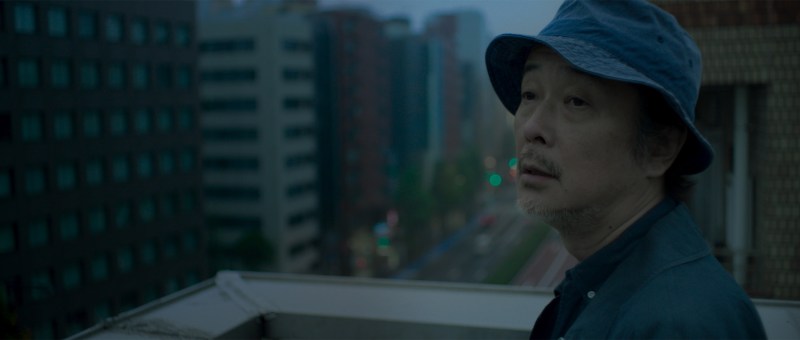
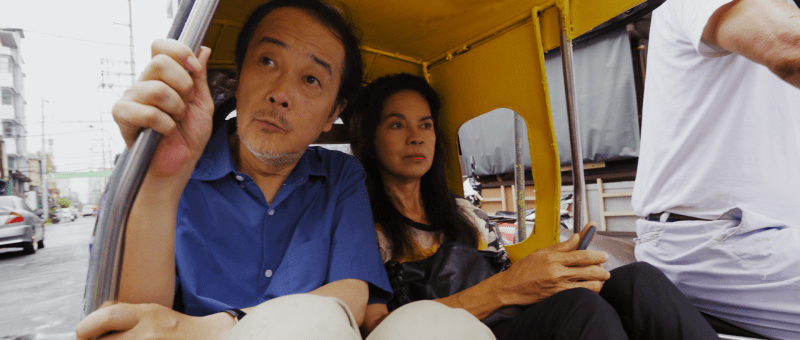
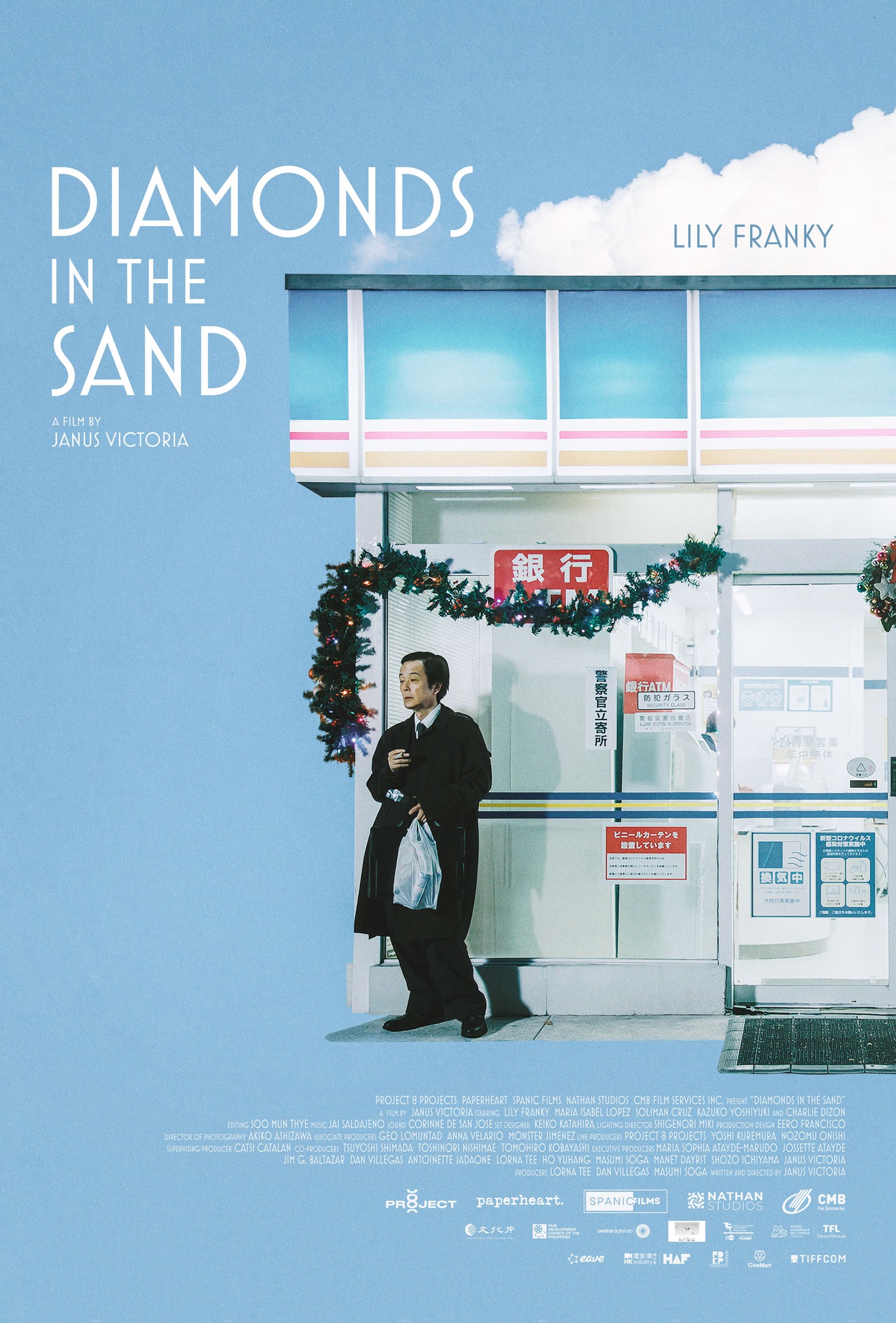
A middle-aged salaryman is awakened to the depths of his loneliness when his upstairs neighbour dies in an apparent lonely death in during the pandemic in Janus Victoria’s Filipino co-production, Diamonds in the Sand (砂の中のダイヤモンド, Suna no Naka no Diamond). Contrasting an epidemic of loneliness with the more literal spread of Covid-19, the film finds its hero trying to redefine his life and discover what gives it meaning in making connections with others. 

Yoji (Lily Franky) is indeed an isolated man whose world is shrinking around him. The DVD department of a large manufacturer where he works has been wound up and he’s been transferred to one that seems to deal in pornography is basically four men in a room with nothing to do. It’s no surprise that he tells his bosses he doesn’t need his computer when they go remote during the pandemic. A large clock seems to tick out his remaining time as if reminding him that his life is running out. Things aren’t much better at home, either. Divorced, he lives in a tiny, colourless flat and seems to have few friends. He’s aloof from even those he does know and always stands slightly outside of the group. One of his former colleagues has been given a big promotion, but it involves moving to Thailand which Yoji seems to regard as a kind of exile or age-based banishment even as he reminds them how much Japan has invested in the nation.

Yoji first becomes aware of the death of his upstairs neighbour when his discomposing body begins leaking through his ceiling. Staring at the stain left behind, he begins to contemplate the reality of his own lonely death and the meaninglessness of his life. He begins going to visit his mother in a care home and trying to rebuild a meaningful relationship with her, but she also asks him if he’s ever really been happy in his life. Though her body is failing and her days are sometimes dull or lonely, the memories of past happiness sustain her. If Yoji doesn’t even that, then his old age would be even more miserable and his life not worth living. The only spark of joy is a colourful pinwheel he bought for his mother on a whim but enlivens each of their worlds with a sense of fun and vibrancy.

This sense of encroaching isolation and emptiness is directly contrasted with the bustling streets of Manila which are alive with colour and life and where, Yoji is told, there is no loneliness. Minerva (Maria Isabel Lopez), the middle-aged woman who looked after his mother in the care home, is one of many working abroad to support a family in the Philippines and experiencing different kinds of loneliness and isolation in Japan. She has an almost grown-up daughter, Angel (Stefanie Arianne), whose father was Japanese, but she was not really accepted by his family and struggles to find a place for herself in either society. After abruptly travelling to Manila in search of a life less lonely, Yoji becomes to her almost a surrogate father offering the reassurance and connection that her own father obviously did not.

But Minerva has a point when she says Yoji lacks compassion and even after being warmly accepted by the community in the Philippines and witnessing their interconnected way of life refuses to become fully a part of it or to help others when they are in need. He sees coverage of extrajudicial killings on the television and is confronted by the fact that life is cheap here too, but is also judgemental and unwilling to fully embrace the community around him. Still, he ironically comes across a kind of graveyard of “surplus” Japanese goods like Mr Suzuki’s bowls that the house clearance staff patiently boxed up and threw away as if erasing his existence. One of the ashtrays still has ash in it. It’s this that perhaps enlightens him to what’s really important in life and convinces him of the necessity of accepting his responsibility to others rather wanting love connection from them without really thinking about giving anything in return. Like looking for diamonds in the sand, it’s the little things that matter and just asking someone if they’ve eaten yet can in its way save a life.


Diamonds in the Sand (砂の中のダイヤモンド, Janus Victoria, 2024) screened as part of this year’s Nippon Connection.

Trailer (English subtitles)
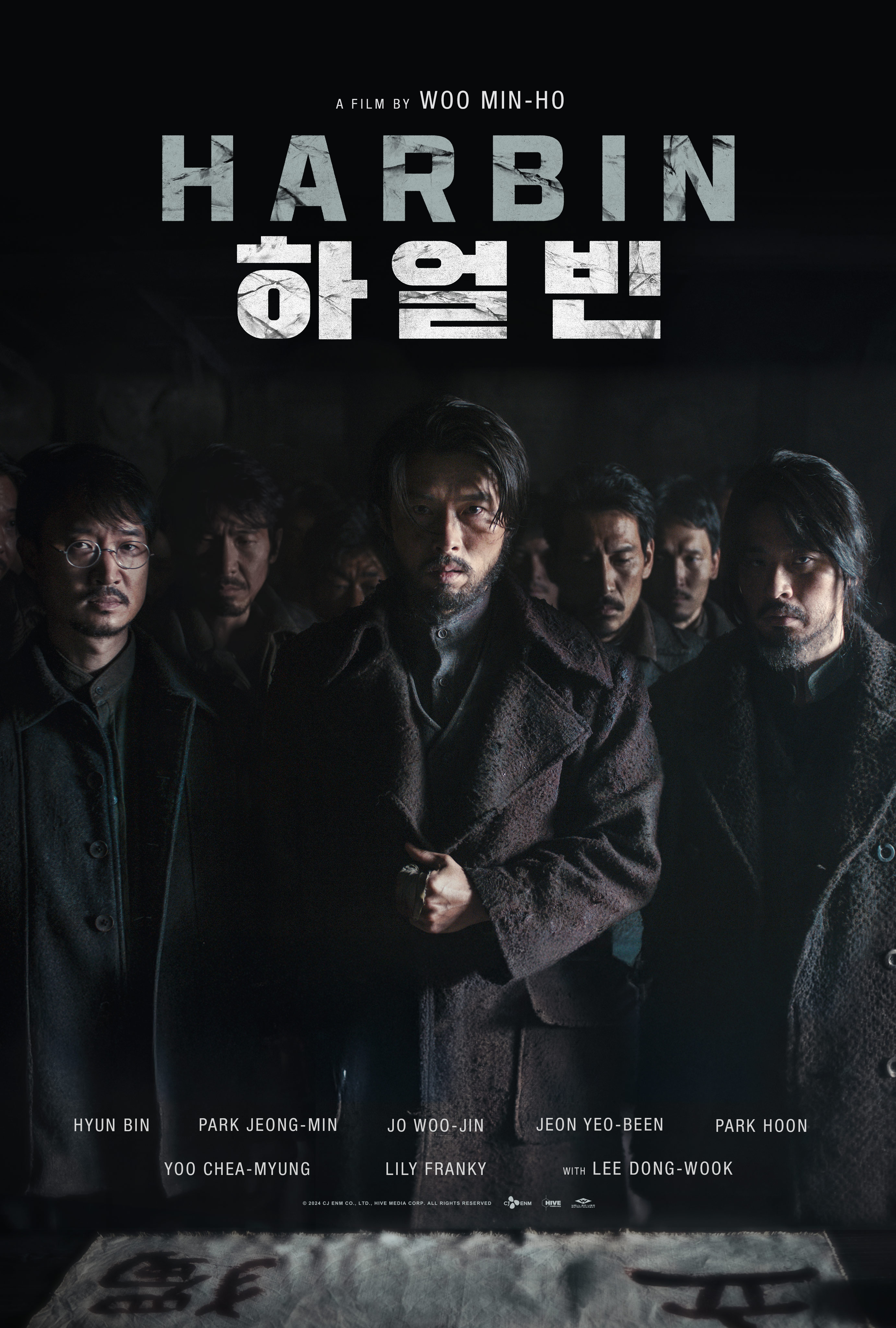
Harbin (하얼빈, Woo Min-ho, 2024)

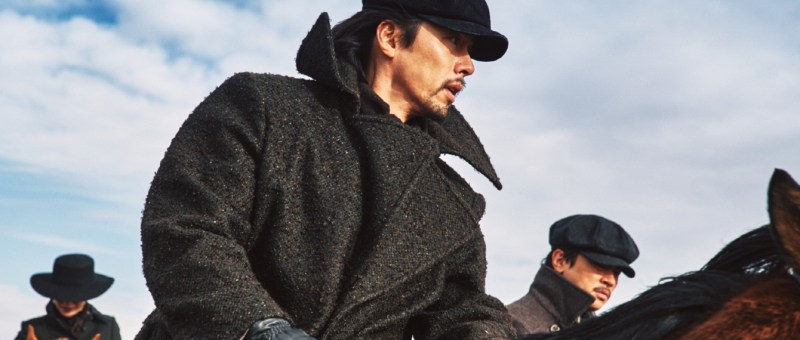
Ahn Jung-geun is one of the most well-known figures of modern Korean history and his story has indeed been dramatised several times before, but what’s unusual about Woo Min-ho’s espionage thriller Harbin (하얼빈) is the way it tries to sublimate Jung-geun the individual in favour of making him an emblem of the common man. As such, the film is more egalitarian than might be assumed and ultimately praises the integrity and resilience of the Korean people who save their country and their culture in a more spiritual than literal sense.

Indeed, Ito Hirobumi (played by Japanese actor Lily Franky), former prime minister of Japan and the first Resident General of Korea after it became a Japanese protectorate, remarks that he has always been sceptical of the annexation because though they have been ruled by “foolish kings and corrupt officials” the Korean people will continue to be a thorn in his side. Toyotomi Hideyoshi’s attempt to invade Korea was defeated by a volunteer army and a charismatic admiral, Yi Sun-sin. Then again, a Japanese soldier remarks that it will be difficult to find such a hero in the Korea of today, a pointed comment that implies Ahn Jung-geun is just such a hero through the film skirts around the fact his assassination of Ito did not in the end prevent Korea’s annexation which was completed in 1910, while the Independence Movement did not succeed in liberating in Korea which regained its independence when the Japanese Empire collapsed at the end of the war and even then was subjected to a period of occupation by US forces before its sovereignty was restored. 

What Jung-geun becomes is a kind of torch bearer for another Korea serving as a moral compass and preventing those around him from becoming just as bad as the Japanese whose cruelty they resist. As the film opens, Jung-geun’s comrades are awaiting his return after going missing following a disastrous encounter with Japanese forces. Despite having won the initial battle while heavily outnumbered, Jung-geun’s decision to release the Japanese commander, Mori (Park Hoon), as a prisoner of war results in a counterstrike in which his forces are all but wiped out. His comrades had been against the decision and now doubt his abilities and judgement along with a new suspicion that should he return he may have been captured and turned by the Japanese to spy on them. But Jung-geun’s decision signals his righteousness and refusal to give in to the cruelties of war. He releases Mori because it is the right thing to do. Executing prisoners of war is immoral by commonly held standards of war, and he pities Mori as a husband and father. He perhaps also hopes that it is a gesture of good will that shows him the Independence fighters are just and reasonable. 

But just and reasonable the Japanese are not, and so Mori betrays his trust. Deluded by the death cult of militarism, Mori is humiliated by Jung-geun’s magnanimity which is after all a show of power and that he has overturned the dynamics by granting Mori his life. Mori asks to die as as loyal soldier of Japan by committing ritual suicide but is denied in this both by Jung-geun who tells him he must live and by Chang-sup (Lee Dong-wook) who wants to execute him. This deep sense of humiliation and shame in remaining alive after defeat spurs Mori into a personal vendetta against Jung-geun to reclaim his honour and that of Japan which leaves him almost indifferent to Ito’s fate though nominally in charge of preventing his assassination at the hands of Jung-geun. Jung-geun is also trying to redeem himself for the loss of his men’s lives and has in a sense declared himself already dead in that he lives only for the souls of dead men and has embarked on what is in effect a suicide mission to kill “the old wolf” as a means of atonement and the eventual liberation of his country. 

But then his comrades are already weary and some are already beginning to ask themselves if it’s really worth it. How many more men will have to die before they win their freedom? Sang-hyun (Lee Dong-wook) laments that if the Japanese write their history, his name will be forgotten and he will have left no mark upon the world. They are grieving what they’ve lost in more personal terms aside from their lost nation. In order to get the dynamite to blow up Ito as a backup plan, the gang have to make contact with a former comrade who has since abandoned the cause to become a bandit (Jung Woo-sung). Having lost his eye and his brother, who was also the husband of another committed revolutionary Ms. Gong (Jeon Yeo-been), he decided it wasn’t worth it anymore and chose a different kind of freedom. “If we all die like dogs, no one will remember us,” Sang-hyun later laments. But Jung-geun, who will be remembered, is less concerned with his legacy insisting that even those who may have betrayed them should be given a second chance for they will eventually see the light. Like Ito, he believes in the Korean people and that they will come together to carry the light into the darkness. 

What he does is light the way, and as the closing scenes imply pass the torch to others who will each keep it alight until the dawn of liberation. Nevertheless, Jung-geun does have an unfortunate habit of getting those around him killed while the horror of the battle scenes, the grimness of decapitated and limbless bodies along with the constant sense of loss and defeat seem to imply that perhaps it isn’t worth fighting in this way lending further justification to Jung-geun’s conviction that taking out the leadership is the only way to turn the tide of this war of attrition. In sacrificing his own life, he becomes a kind of martyr, wearing traditional Korean white clothing as he goes to his death knowing that others will come after him. Rich with period detail and tense in its sense of intrigue, the film ultimately argues for a more compassionate sense of revolution governed by righteousness in opposition to the rather cynical justifications made by Ito for the cruelties of Japanese imperialism.


Harbin is released in the US on on 4K Ultra HD, Blu-ray™ and DVD courtesy of Well Go USA.

International trailer (English subtitles)

Cottontail (コットンテール, Patrick Dickinson, 2023)

A recently bereaved widower travelling to Lake Windermere to scatter his wife’s ashes begins to reclaim an image of family in Patrick Dickinson’s melancholy character study, Cottontail (コットンテール). Having travelled to the Lake District in her childhood to visit her father who was working in the UK at the time, Akiko (Tae Kimura) recalled fondly a sense of familial connection symbolised by a photo she believes to have been taken on the lake’s shores and continued to wear a Peter Rabbit necklace right to her dying day.

In a poignant note to her husband Kenzaburo Lily Franky) written before her dementia worsened and left with a Buddhist priest until the time of her death, Akiko expresses regret that they were never able to go there again as a family while she was alive but would like him to scatter her ashes on Lake Windermere in the company of their Son, Toshi (Ryo Nishikido), who now has a wife and daughter of his own.

As we can see from the opening scenes, Kenzaburo is a man living at odds with the world around him. Emotionally distant, he finds it difficult to relate to his son and often quite literally shuts him out leaving Toshi hurt and resentful. To begin with, Kenzaburo insists he will go to Lake Windermere on his own and only later agrees to allow Toshi and his family to accompany him, making all the travel arrangements. Once there, however, he becomes impatient and after a minor argument over the itinerary takes off alone only to get on the wrong train and end up on the opposite side of the country as he’s kindly informed by a raucous hen party on their way to York. Forced to rely on the kindness of strangers, he’s taken in by a farmer (Ciarán Hinds) and his daughter (Aoife Hinds) who have suffered a bereavement themselves and attempt to help him process his loss while encouraging him to reconcile with his son. Presenting a kind of mirror he may bounce off while mediating these complex emotions in a second language allows Kenzaburo the opportunity to confront himself and his grief along with his feelings of inadequacy as a husband and father.

We can sense his own regret in a flashback to a meeting in a cafe shortly after Akiko was diagnosed with dementia in which she looks to Kenzaburo for reassurance but he remains in denial. She tells him that she’s afraid and can’t bear the idea of losing her family or becoming a burden to them but he simply tells her that it won’t come to that as if he were closing himself off to the reality but also from her in leaving Akiko alone to deal with her fear and loneliness in refusal to confront anything that is emotionally difficult or unpleasant. Yet Kenzaburo refuses to relinquish her memory, stubbornly carrying her ashes in a tea tin and at times holding it up as if he were showing her around and attempting to share this trip with her in a more literal way.

What threatens to devolve into a more conventional road trip drama in which Kenzaburo is helped on his way by a series of improbably kind and sagacious strangers develops into something deeper as he trudges his way through the English countryside which as it turns out is not all that aesthetically different from that of Japan and largely free of the often claustrophobic hedgerows that literally separate us from the surrounding scenery. The landscape further recalls scenes from Kenzaburo’s life as he begins to reflect on his time with Akiko and confront the reality of her loss along with his new life without her.

In effect, he’s journeying towards a recreation of Akiko’s photograph and its capture of a brief moment of familial unity in a gradual process of reconciling with Toshi and his own position as a father. Quiet and unassuming, Dickinson’s film is less a slow voyage through grief and learning to let go as it is one of gaining courage to open a door that had long been closed, Kenzaburo no longer the melancholy octopus hiding deep in the ocean but a bobbing rabbit eager to experience more of the world around him before it’s too late.


Cottontail opens in UK cinemas 14th February courtesy of Day for Night.

UK trailer (English subtitles)

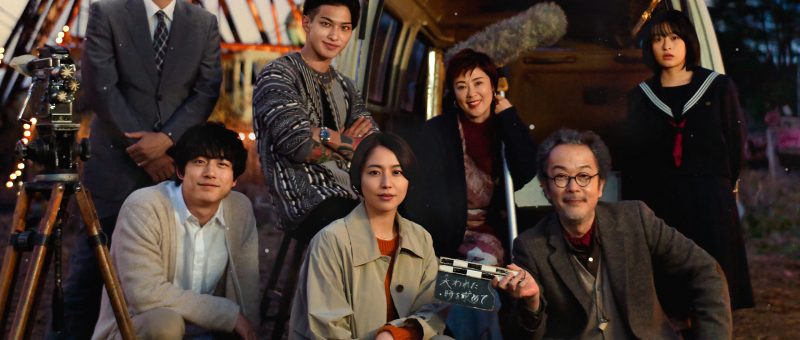
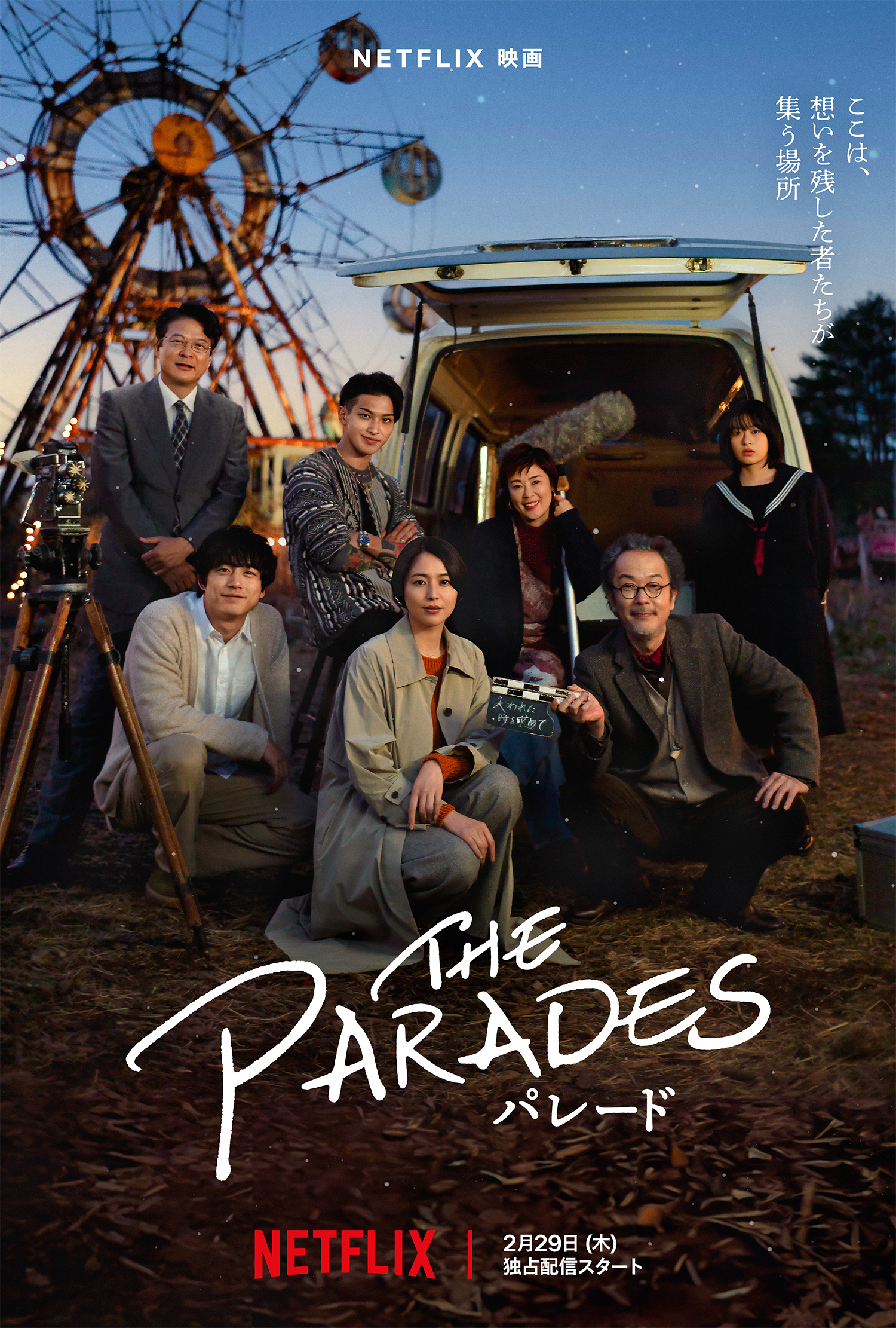
The Parades (パレード, Michihito Fujii, 2024)

Living a life without regrets is easier said than done. The protagonists of Michihito Fujii’s The Parades (パレード, Parade) each have unfinished business that prevents them moving on from this world, but what they discover is an unexpected sense of solidarity among similarly lost souls as they try to lay themselves to rest. After all, all they can do now is observe and reflect while helping others like them with their own lingering doubts and regrets.

Drawing inspiration from the 2011 earthquake and tsunami, Fujii first introduces us to Minako (Masami Nagasawa). A 35-year-old single mother, she wakes up on a beach and frantically looks for her seven-year-old son Ryo (Haru Iwakawa) little realising that the reason no one seems to be able to hear or react to her is because she’s already dead. Picked up by fellow ghost Akira (Kentaro Sakaguchi), she’s taken to a disused fairground that doubles as a hub for wandering souls. Though it takes her a while to accept her new situation, she gradually bonds with others at the camp each of whom have their own unfinished business which isn’t all that different from her own in that they mostly want to be sure the people they left behind will be alright.

The film takes its name from the monthly processions in which wandering souls meet by lantern light to look for their missing people together. This sense of solidarity and empathy seems to echo the best of humanity along with a melancholy longing. There appears to be little rancour in this afterlife, a yakuza who was killed in a gang war simply feels sorry for his father and so guilty about the girlfriend he left behind that he’s been afraid to face her for the last seven years, and a high school girl who took her own life because of bullying first thinks her unfinished business is vengeance on the bullies but later accepts is actually a desire to apologise to her best friend who then had to take the brunt of the bullies’ cruelty on her own.

What the film seems to say is that we should have more of this fellow feeling in life. Former film producer Michael (Lily Franky) constantly references his days as a student protestor remarking that they might not have amounted to very much but at least they had unity. His regret is less his failed revolution than a moment of emotional cowardice that saw the woman he loved marry someone else instead. Constant references to the end of Casablanca echo their plight as if Maiko (Yuina Kuroshima / Hana Kino) married Sasaki (Ayumu Nakajima / Hiroshi Tachi) for the good of the revolution though she really loved Michael who unlike Rick just walked out on it because in the end he wasn’t brave enough to risk the consequences of its success or failure. 

The world building may not always be consistent and the rules of this universe appear unclear. It seems that in general the ghosts don’t linger long. Even the heavenly liaison Tanaka (Tetsushi Tanaka) appears to have been dead not longer than 40 years with Michael seemingly the only other long-stayer with the others’ deaths fairly recent. In general they are only really waiting for themselves or others, wanting to make sure that their loved ones will be alright in their absence even though there’s nothing more they can do for them now other than observe. Though they can walk through this world and interact with physical objects, their presence is otherwise invisible unless the person they wish to contact happens to be in an altered state. To this extent, the resolution may seem like a bit of a cop-out but does lend an additional poignancy and imply that these lessons learned in limbo can still be taken into the mortal realm creating additional empathy and solidarity among the living so that they may be able to live their lives freely and fully perhaps not entirely without regrets but at least with fewer of those that would prevent them from moving on when their time comes. But even if they find themselves trapped in limbo, they’ll hopefully find others like themselves and a gentle sense of hopefulness about what’s to come even as they prepare to leave this world.


Trailer (English subtitles)
Every Trick In The Book (鳩の撃退法, Hideta Takahata, 2021)

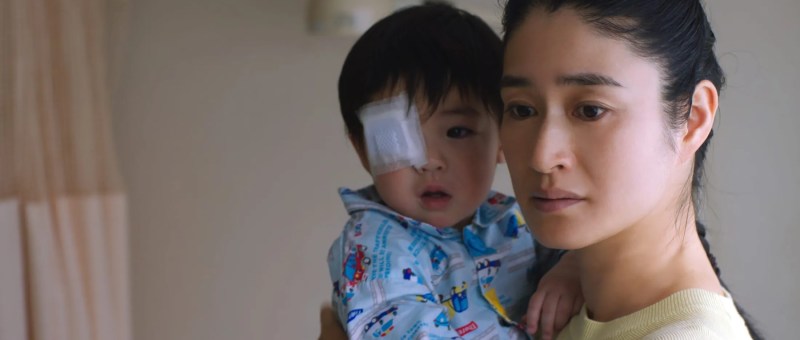
A down on his luck writer finds himself at the centre of a mystery only how much is truth and how much “fiction”? Based on the novel by Shogo Sato, Hideta Takahata’s Every Trick in the Book (鳩の撃退法, Hato no gekitai-ho) ponders the possibilities of literature as the hero seems to create a fictional world around him in which it is largely unclear whether he is solving a real world mystery or simply imagining one based on his impressions of the strange characters he encounters through the course of his everyday life.

That everyday life is however eventful just in itself. Tsuda (Tatsuya Fujiwara) once won a prestigious literary prize and was destined to become a popular author but hasn’t written anything of note for some time and in fact now largely works as a driver ferrying sex workers around on behalf of his shady boss. The mystery begins when he approaches a man, a rare solo reader in an overnight cafe, and promises to lend him a copy of Peter and Wendy by JM Barrie only to later discover that the man went missing along with his wife and the daughter he had explained was fathered by another man. 

Like many of his subsequent encounters it isn’t entirely clear if this meeting really took place or at least as Tsuda said it did or is only part of the novel he is beginning to write. The man, Hideyoshi (Shunsuke Kazama), asks him if it’s a novelist’s habit to begin imagining backstories for everyone he sets eyes on and there may well be some of that even as Tsuda is fond of claiming that amazing things happen around us every day to which we are mostly oblivious. Still, Tsuda probably didn’t expect to be pulled into the orbit of local gangster Kurata (Etsushi Toyokawa) after accidentally passing on counterfeit currency he found by chance. It’s true that most of what’s happening to him is the result of a series of bizarre coincidences or cosmic confluence which has accidentally united this collection of people in an unintended mystery which Tsuda intends to solve in either literal or literary terms. 

“It’s all a novelist can do” he later claims in trying to write a better ending for “characters” he has come to like than the one he assumes they “actually” met. But then his editor Nahomi (Tao Tsuchiya) chief worry is that, like his previous novel, Tsuda’s story will contain too much of the “literal” truth which could cause his publishers some legal problems. Part of the reason Tsuda left the industry is apparently because his last book was inspired by a real life affair which was then considered somewhat hurtful and defamatory. For that reason it comes as quite a blow to Nahomi as she begins to investigate and discovers that much of Tsuda’s story lines up with “real” places and events, but then again as he says if you can draw connections between known facts then you begin to see a “hidden” truth which may in its own way be merely his invention. 

The film’s Japanese title translates more literally as something like “how to fend off a dove” which does indeed have its share of irony especially considering the meaning the dove symbolism turns out to have in the film but perhaps also hints at the essential absurdity of trying to fight back against something that is otherwise harmless and in fact represents peace. Tsuda may be onto something and nothing, embracing the bizarre serendipity of a writer’s life while trying to recover his creative mojo but embellishing it with more danger and strangeness than it actually has to offer. Then again as his editor discovers, there really is an incinerator it seems anyone can just walk up and use to burn whatever they want including dead bodies, while people in general are full of duplicities all of which keeps the “fake” money circulating as people use it to try to buy things that can’t really be bought. Hideyoshi calls them “miracles”, embracing the strange serendipity of his life as an orphan longing for a family to call his own and unexpectedly finding one which is “real” in someways and “fiction” and in others. Then again, if you believe in something does it really matter if it’s “real” or not? Hideyoshi and Tsuda might say it doesn’t, the publishing company’s lawyers might feel differently, but it seems there really are amazing things going on around us every day if only you stop to look. 


Original trailer (English subtitles)

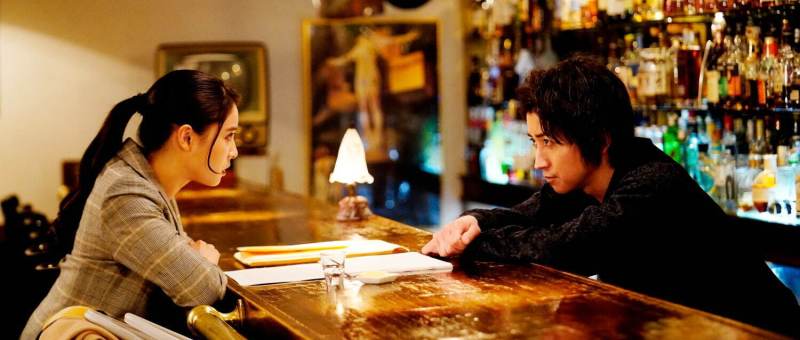
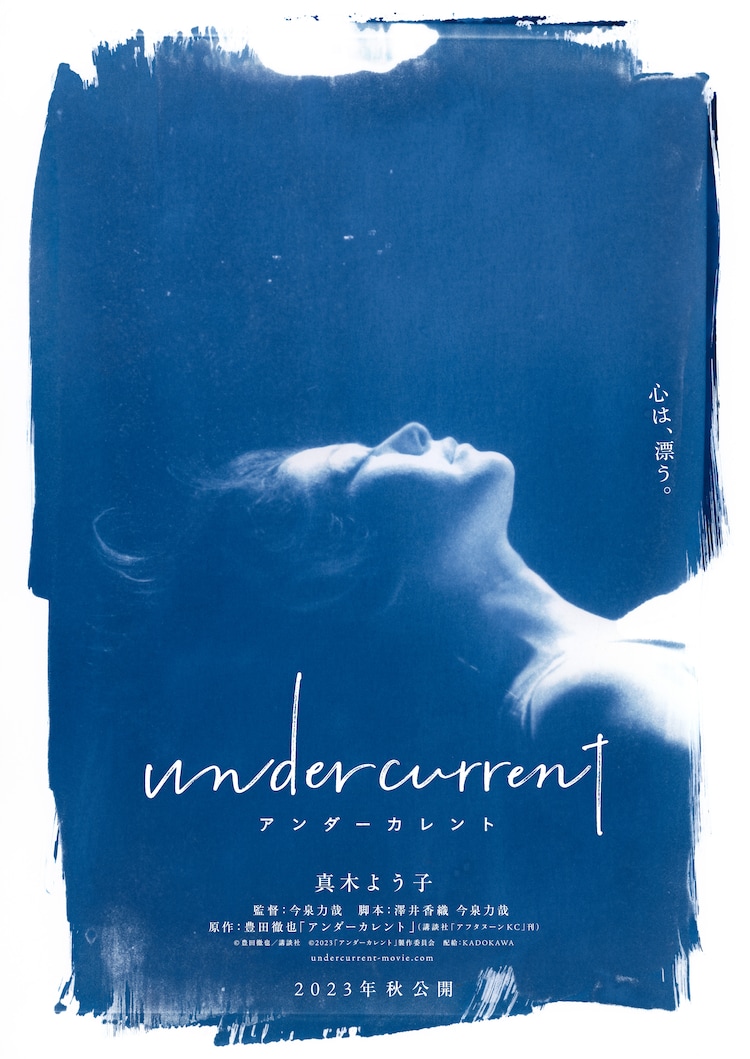
Undercurrent (アンダーカレント, Rikiya Imaizumi, 2023)

Part way through Rikiya Imaizumi’s adaptation of the Testuyua Toyoda manga Undercurrent (アンダーカレント) a detective asks his client what she thinks it means to “understand” someone. Of course, she doesn’t really have an answer, and the film seems to suggest there isn’t one because we are forever strangers to ourselves let alone anyone else. We do things without knowing why or that somehow surprise us, while the actions of others can an also be be worryingly opaque. But then perhaps you don’t really need to “know” someone in order to “understand” them and as someone else later says perhaps it’s true enough that most people don’t really want the truth but a comforting illusion. 

But then Kanae’s (Yoko Maki) illusions aren’t exactly comforting. Her husband of four years Satoru (Eita Nagayama) suddenly disappeared during a work trip a year previously and has not been heard from since. She turns the television off when the news announces details of a decomposing body discovered near a set of electrical pylons, but on another level she’s sure that Satoru is alive and chose to leave her for reasons she can’t understand. Kanae tells a friend that what pains her most is thinking that in the end she wasn’t a person Satoru felt he could share his worries with so she was powerless to help him. Then again, there’s something in Kanae that is equally closed off, a little distant and otherworldly as if she were also putting up a front to keep her true self submerged.

The detective (Lily Franky), whose name is “Yamasaki” yet allows people call him “Yamazaki” because it’s easier for them, says of Satoru that his “cheerful,” ever smiling nature may also have been a kind of masking designed to dissuade people from looking any deeper. Someone else admits that they lied mostly to fit in, be what others wanted them to be, only to be caught out by the gulf between their genuine feelings and and the ever expanding web of their lies. Caught in a kind of suspended animation uncertain if Satoru will ever return and if and how she should continue with her life, Kanae ends up taking in a new assistant at her family bathhouse. Hori (Arata Iura) is the polar opposite of the way her husband is described, silent, soulful and somehow sad. We might be suspicious of him, his arrival seems too coincidental and the way he looks at some children running past in the town perhaps worrying. Yet how can we judge based only on his silence knowing nothing else of his history? Nevertheless, he may understand Kanae much better than anyone would suspect and may be the comforting presence from her recurring nightmares.

In her dreams, she’s plunged into water with a pair of hands around her neck. Unknowingly, Hori asks her if she’s ever really wanted to die and she can’t answer him even if it seems to us that the dreams reflect her desire for death, to be submerged in a sea of forgetfulness. Yet we later learn they come to have another meaning reflecting her long buried trauma and the reason for her own listlessness. These are the undercurrents that run silently through her, waves of guilt and grief that obscure all else. Disappearances have happened around her all life and seem only to increase, another bath house owner seemingly disappearing after a fire having promised to sell her his boiler. Yet through her experiences, she comes to fear them less reflecting that anyone could leave at any moment and that’s alright, as Hori had said nothing’s really forever. 

Even so, she regrets that there couldn’t have been more emotional honesty from the beginning then perhaps no one would need to disappear without a word. Confessions are made and the air is cleared. Someone had said that no one wanted the truth, but it seems Kanae has chosen it as perhaps symbolised in her decision to call Yamasaki by his actual name rather than the one he allows people to use because it’s too much trouble to correct them. Aside from his multiple names, Yamasaki is a strange man who holds meetings in karaoke boxes and theme parks though perhaps because he simply thinks Kanae could use a little cheering up. In more ways than one, it’s the ones left behind who are left in the dark, but they may be able to find their way out of it with a little more light and reflection.


Screened as part of this year’s Japan Foundation Touring Film Programme.

Original trailer (English subtitles)
A Mother’s Touch (桜色の風が咲く, Junpei Matsumoto, 2022)

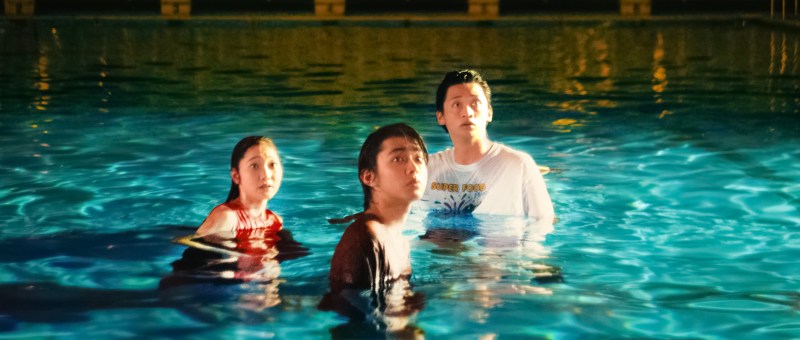
A young man begins to ponder the meaning of his life while losing both his sight and hearing in Junpei Matsumoto’s heartwarming biopic, A Mother’s Touch (桜色の風が咲く,Sakurairo no Kaze ga Saku). The English title aptly hints at the maternal devotion that kept Satoshi (Taketo Tanaka) part of the world even as he feared becoming isolated from it, though the Japanese “when the pink wind blooms” leans towards the poetic in echoing the ways in which he is able to open himself to a different kind of sensory experience. 

Satoshi Fujisawa would later go on to become the first deaf blind university professor in Japan though the films opens with a toddler Satoshi discovering that he has a rare condition that causes the pressure in his eyeball to increase endangering his vision. Though he undergoes various treatments, he eventually loses the sight in one eye and then the other several years later. While in high school he then discovers that he is also beginning to lose his hearing which, along with braille, had been his primary way of experiencing the world around him. 

Matsumoto’s film does not really go into the various ways in which Satoshi is inconvenienced by a largely ableist society aside from his having to leave home and go to Tokyo to attend a school for the blind. Satoshi does, however, experience bullying as a child particularly from an obnoxious gang of boys who egg him on to remove his glass eye in front of them while otherwise isolated by the constant need to rest his eyes with only rakugo to listen to on the radio. Introduced to braille, he is immediately fascinated remarking that the person who came up with it must have been a genius and explaining that he has not given up on his sight but it doesn’t hurt to learn. 

It’s braille that eventually becomes his lifeline as his mother figures out a way to communicate with him by pressing his fingers as she were typing on a braille keyboard while he replies vocally. Her adhoc solution has apparently gone on to provide an important means communication for other deaf blind people across the world and reminds Satoshi that though he may feel as if he as been marooned in deep space he is not alone and is able to interact with the world around him. While still trying to save his hearing, he had decided to try an alternative treatment method which emphasised heavy exercise and bland food designed to boost the immune system though he discovered that it only robbed him of an additional sensory input and a resultant longing to eat something sweet. Though he is unable to see or hear, he can still taste and smell the world around him welcoming the spring in unexpected ways while embracing his potential and independence.

That said, his major philosophy is that life is full of voids designed for other people to fill in the ways that we can all help each other. The film doesn’t shy away from exploring the strain placed on Satoshi’s family as they try to cope with his medical needs which leave his mother feeling guilty that she is often away from her other two children caring for him at the hospital, and his father lonely and overburdened while trying to balance the demands of his working life with that of taking over the domestic space. In any case, they resolve to get through it as a family doing what they can to support Satoshi without robbing him of the opportunity to lead as independent a life as possible. Satoshi comes to believe that his disabilities may be the price for his purpose, that there must be something he is uniquely supposed to do with his life along with places only he could discover. The film eventually finds him in a space of possibility, recalling happy times with his family as a child but also looking forward towards a new potential for pushing the boundaries and moving beyond the limitations others might have placed on him. 


A Mother’s Touch screened as part of this year’s Camera Japan.

International trailer (English subtitles)

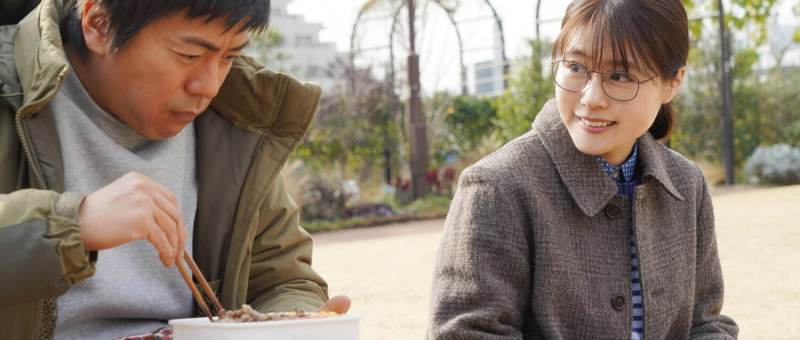
Prior Convictions (前科者, Yoshiyuki Kishi, 2022)

An earnest young woman finds herself questioning her way of life after one of her charges is implicated in a spate of murders in Yoshiyuki Kishi’s social drama Prior Convictions (前科者, Zenkamono). As the double meaning of the English title implies, the issue is as much about preconceived notions and unfair judgements as it is about “crime”, its causes and legacies, while ultimately arguing for a more compassionate approach to law enforcement which prizes healing and rehabilitation over meaningless punishment. 

Kayo (Kasumi Arimura) is what’s known as a volunteer probation officer which is to say that she assists those who’ve recently been released from prison to reintegrate into mainstream society so that they can live comfortable lives within the law. She is not however a civil servant and though making regular reports to an official probation officer has very little power and no pay for her work which can at times be difficult and emotionally draining especially considering that she also needs to work a regular job in a convenience store to support herself. In what seems like a very poor safeguarding decision, she meets most of her clients in her own home where she lives alone one of them even breaking in while she’s not there for an impromptu hotpot party. 

While she is exasperated by some of her charges such as a woman who can’t seem to stick to a regular job no matter how many she finds her, Kayo is incredibly proud of her work with Kudo (Go Morita), a quiet and soulful middle-aged man who was convicted of murder after stabbing a co-worker who had been bullying him so badly that he lost the hearing in one ear. Kudo had been struggling to reconcile himself to his crime, intensely worried that while unable to understand why he did it he might end up doing it again. When Kudo suddenly disappears after being linked to a series of suspicious deaths most assume the worst, but Kayo alone refuses to believe that Kudo could be the killer and is determined to find out what’s really going on if only to vindicate her conviction that her work is good and useful rather than naive and misguided as some including intense police officer Takimoto (Hayato Isomura) seem to see it. 

As Kayo later reveals she’s carrying some baggage herself which contributed to her decision to begin working with those who’ve been convicted of crimes, but is doing it with the aim of reducing suffering and ending the cycle so that there are no more victims or victimisers. Also wounded, Takimoto tells her that murderers aren’t human and can never be rehabilitated, while she’s forced to consider the problem from all angles meeting with a lawyer (Tae Kimura) who defended an abusive husband who murdered his wife and learning that she did so for similar reasons to herself certain that he too deserved a second chance and could perhaps be reformed if given the proper treatment. Kayo sees that many of the people she meets ended up committing crimes because of traumatic personal circumstances and if someone had helped them earlier they may not have offended in the first place. She can’t change the past but at least in helping them now she might prevent further crimes in the future while giving them a source of stability as they attempt to root themselves more firmly in mainstream society. 

Inspired by Masahito Kagawa’s manga, Prior Convictions was previously adapted into six-part WOWWOW TV drama to which the film is technically a sequel though fairly stand alone in its gentle unpacking of Kayo’s own unresolved trauma and subsequent epiphanies as regards her relationships with those she’s trying to help. As one young woman puts it, they find her vulnerability reassuring in contrast to the often authoritarian, didactic approaches taken by law enforcement and social services who only talk down to them from a condescending place of superiority rather than trying to meet them on a more human level. In the end it’s about healing, trying to find an accommodation with the traumatic past and limiting its legacy to break the cycle of pain and violence. The prior convictions which most need addressing are those of a judgemental society that all too often contributes to the mechanisms of violence in seeking to punish rather than to help.


Prior Convictions screened as part of this year’s Camera Japan.

International trailer (English subtitles)
Bad City (バッド・シティ, Kensuke Sonomura, 2022)

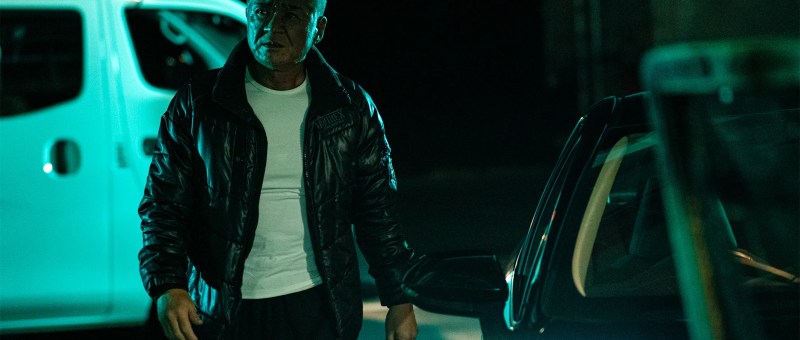
V-Cinema legend Hitoshi Ozawa returns in a tale of big city corruption helmed by Hydra’s Kensuke Sonomura. Scripted by Ozawa himself and apparently created in part as a celebration of his 60th birthday, Bad City (バッド・シティ) is a clear homage to the classic yakuza dramas of the early ’90s while boasting some of the best action choreography in recent Japanese cinema performed by the likes of Tak Sakaguchi along with Ozawa himself who performs all of his own stunts. 

According to dodgy CEO Gojo (Lily Franky) who has just inexplicably been acquitted of extortion and colluding with the yakuza, Kaiko City is riddled with crime and violence which is why he’s announcing his candidacy for mayor. Meanwhile, behind the scenes, a mysterious assassin (Tak Sakaguchi) is cutting swathes through the Sakurada gang who dominate the city’s western district which Gojo has earmarked for a redevelopment project he claims will improve the lives of citizens but is in reality just an excuse to build a massive casino complex intended to enrich himself and his company. The previous mayor had won a landslide victory thanks to his opposition to the redevelopment plan which enjoys little support from the local population but Gojo isn’t exactly interested in winning hearts and minds in the community. 

Really just another gangster himself, Gojo’s machinations are also destabilising the existing underworld equilibrium in seducing treacherous minions from other gangs including vicious Korean gangster Kim Seung-gi whose loyalty to ageing gang boss Madam Kim is clearly waning. Then again, an enemy’s enemy is a friend allowing unexpected alliances to emerge between previously warring factions especially given that the sudden offing of a high status gang boss is frowned upon in the gangster play book. 

With police and judicial collusion the only possible explanation for Gojo’s miraculous escape from justice, an earnest prosecutor sets up a secret task force under the command of Public Security agent Koizumi (Mitsu Dan) and led by veteran officer Torada (Hitoshi Ozawa) who is currently in prison awaiting trial on suspicion of offing Mrs Kim’s only son, Tae-gyun. Torada is an unreconstructed violent cop operating under the philosophy that if you beat up a good guy that’s violence but if he’s bad then it’s justice. He has perhaps learned to see the world as morally grey, not believing himself to be necessarily on the side of right so much as resisting the forces of darkness by doing whatever it takes to survive in this city which is indeed already quite corrupt. Partnered up with two veterans and a junior female officer from violent crimes who were assigned to investigate the Sakurada boss’ murder, the gang do their best to trap Gojo legally by uncovering incontrovertible evidence of his dodgy dealings they can use to nail him in court, or failing that the court of public opinion, that cannot be swept aside by his friends in high places. 

Sonomura opens as he means to go on with a series of bloody assassinations culminating the massacre of the Sakurada gang in a bathhouse, while building towards the final mass confrontation in which Ozawa and his team face off against hordes of foot soldiers trying to fight their way towards a confrontation with Kim Seung-gi. Dynamically choreographed, the action sequences are surprisingly bloody and heavy on knife action but crucially also displaying a high level of characterisation and dramatic sensibility as the earnest cops square off against amoral gangsters willing even to sacrifice their own. 

Though there might be something uncomfortable in setting up the major villain as a rogue Korean gangster, the film paints his defection in part as a reaction to Mrs Kim’s initial loathing of the Japanese while in the end allowing a kind of cross-cultural solidarity to emerge as the Sakurada gang become accidental allies and Mrs Kim receives a lost letter from her son that allows her to change her way of thinking while helping to take down the destabilising force of Gojo, restoring a kind of order at least to the streets of Bad City Kaiko. Ozawa may be an equally dangerous extra-judicial force, but at least for the moment he’s standing in the light where everyone can see him taking out the trash and leaving those like Gojo no quarter in an admittedly violent place.


Bad City screened as part of this year’s Camera Japan.

Original trailer (dialogue free)

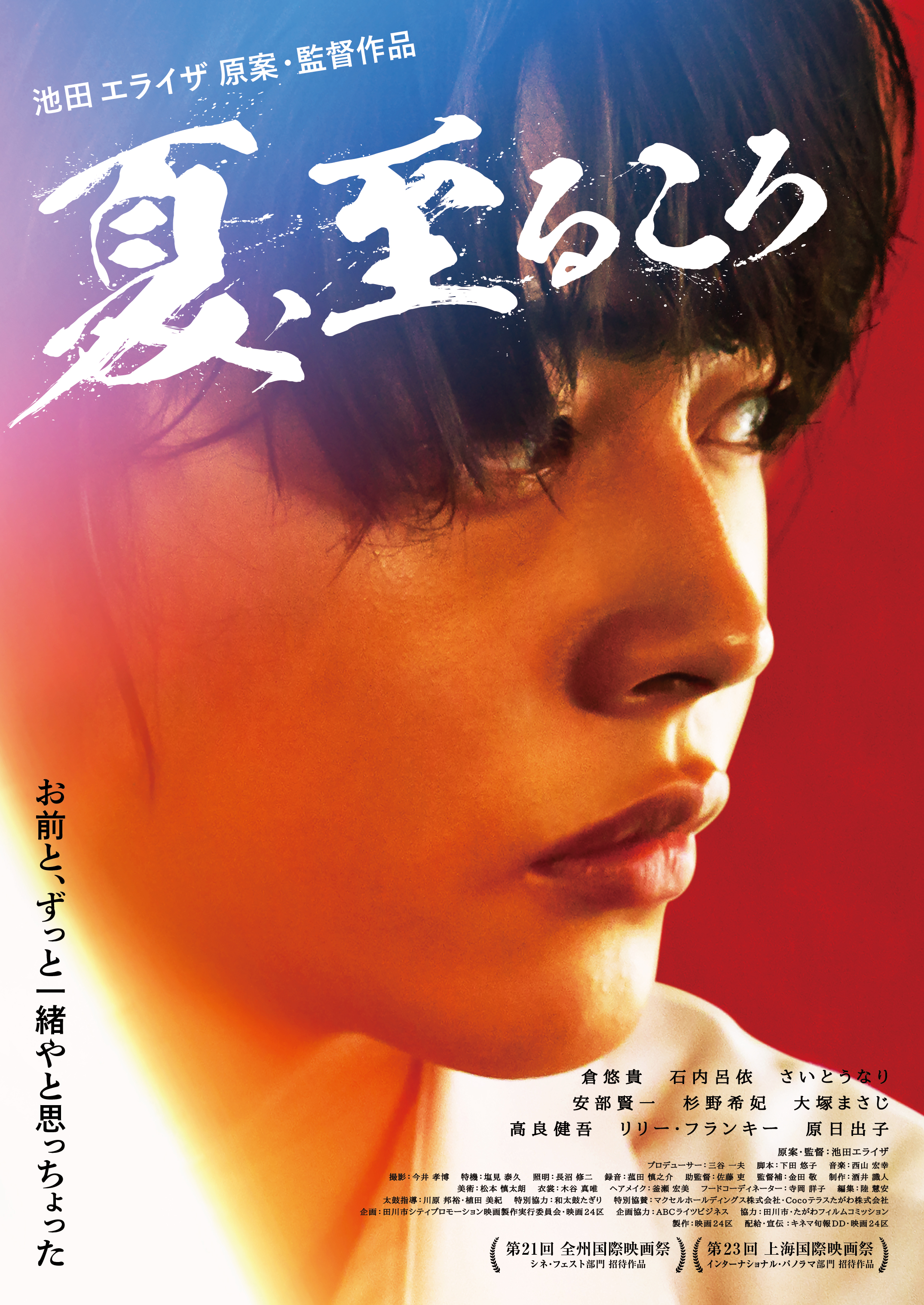
Town Without Sea (夏、至るころ, Elaiza Ikeda, 2020)

“Happiness is something you don’t notice even if it’s right next to you” the hero of actress Elaiza Ikeda’s directorial debut Town Without Sea (夏、至るころ, Natsu, Itaru Koro) is told by a strangely perceptive small child. The nature of happiness is something that seems to be bothering him while he contends with adolescent anxiety little knowing what to do with the further course of his life while fearful in the knowledge that his relationship with his childhood best friend must necessarily change. 

Approaching the final year of high school, taiko-enthusiast Sho (Yuki Kura) has no dreams or aspirations and has been avoiding thinking about what to do after graduation. Pressed by his teacher, all he can offer is that he’d like to become “air”, which is in its own way slightly alarming though it hints at his sense of emptiness and despair. His childhood best friend, Taiga (Roi Ishiuchi), meanwhile has a clearly defined, extremely sensible life plan which is why he’s abruptly giving up taiko so he can attend cram school and get into uni with the aim of becoming a civil servant. As we discover, Sho has been something of a follower making most of his existing decisions based on whatever Taiga was going to do, but he can’t merely follow him this time and will have to come to some sort of decision about his individual future. 

“I can’t walk alone. I don’t know what to do” he confesses to a surprisingly sympathetic teacher (Kengo Kora), while as it transpires Taiga is having similar thoughts. The two boys are much more co-dependent that they assumed, but that very co-dependency begins to drive them apart when coupled with their adolescent anxiety. Taiga fears that he is simply too “boring”, giving up taiko because his carefully honed technique cannot measure up to Sho’s anarchic power. According to him he took up taiko after spotting Sho playing at a festival thinking he looked so “free and cool”, yet Sho equally thinks he’s not as a good a drummer and cannot match Taiga’s meticulous training. Taiga is shifting away from their friendship because he secretly feels inferior and wants to leave before being around Sho makes him feels miserable, a logic Sho is not fully equipped to understand. 

“Why does everybody quit?” he asks in exasperation, meeting a strange young woman who like them wants to pull away from something before she ends up hating both it and herself. Likened by Taiga to the kind of manic pixie dream girl who frequently turns up during the last summer of high school in manga, Miyako (Nari Saito) does not quite come between the two boys in the expected way but does bring out their contradictory qualities before abruptly disappearing from the narrative, ahead of the pair in suddenly deciding that she’ll figure something out on her own. Having decided all he wants is a future of ordinary happiness, Taiga can’t help resenting his friend feeling that whatever decision he makes, getting a job or going to uni, he’ll wind up happy whereas he presumably will not with his unexciting yet sensible life as a civil servant. 

There is an undeniably homoerotic quality to the boys’ friendship, their brief falling out almost like a lovers’ tiff in its melancholy intensity. Sho necessarily fears the loss of his friend, perhaps instinctively knowing he’s chosen a path he likely cannot follow and feeling rejected because of it. He obsessively meditates on the meaning of “happiness” unable to settle on a means of achieving it while unsure of what exactly it means. He asks his friends and family but discovers that happiness means different things to different people, may change over time or not quite be what you first thought it was, or be as simple as a sunny day in your hometown. He does however begin to accept that even if separated, his relationship with Taiga will not necessarily change they will still be “together” if more in spirit than body. Recalling something Taiga had said about the sea which he has never seen, he makes his choice defiant in its independence. Hailing from Fukuoka herself, Elaiza Ikeda’s remarkably assured directorial debut crafts a warm, empathetic coming-of-age tale centring on the intense friendship between two men but discovering a sense of wonder and contentment in the everyday as its conflicted hero finds a sense of rootedness in the strength of his relationships that grants him the freedom to roam. 


Town Without Sea streamed as part of this year’s Japan Cuts.

Original trailer (English subtitles)