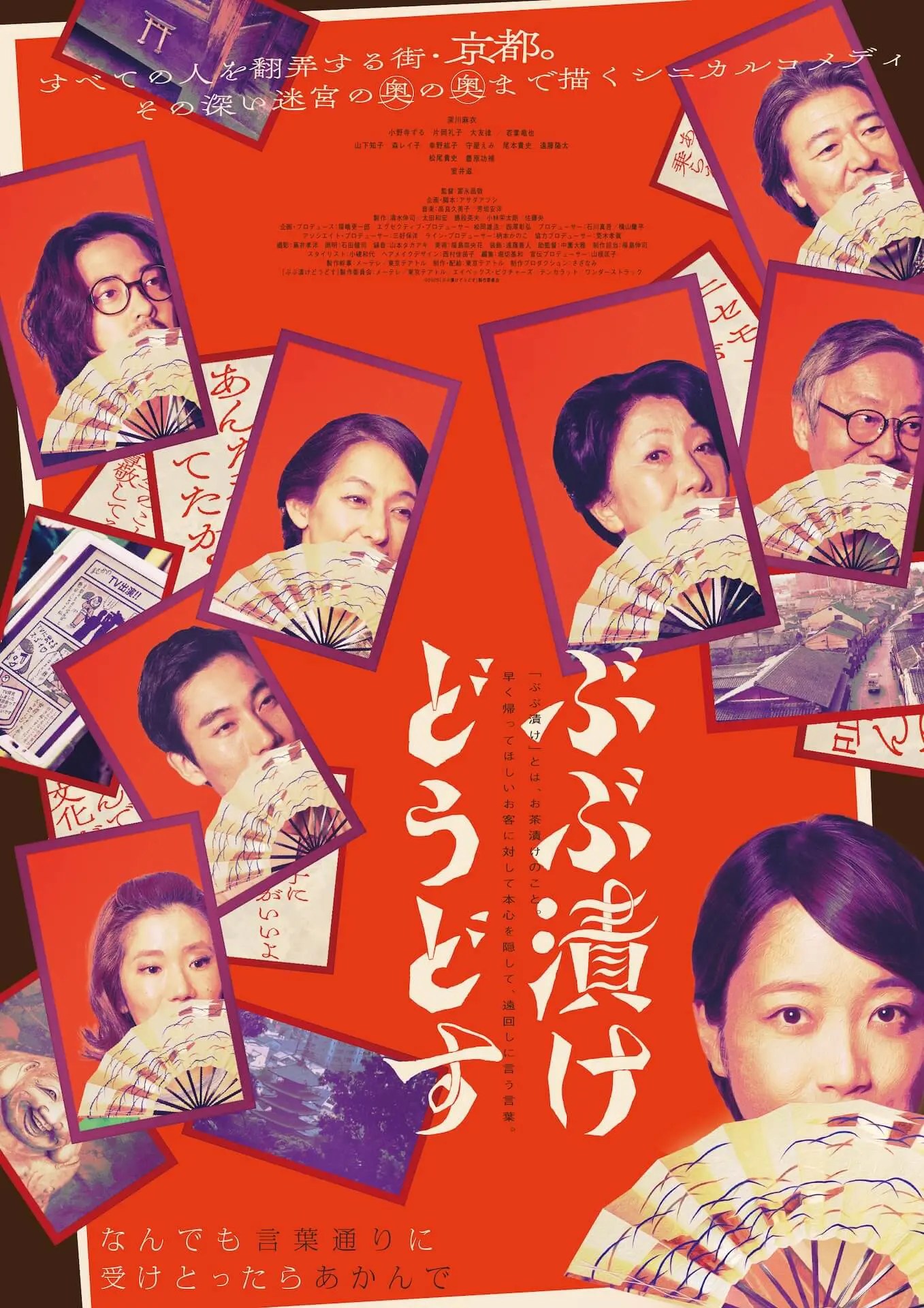
Strangers in Kyoto (ぶぶ漬けどうどす, Masanori Tominaga, 2025)

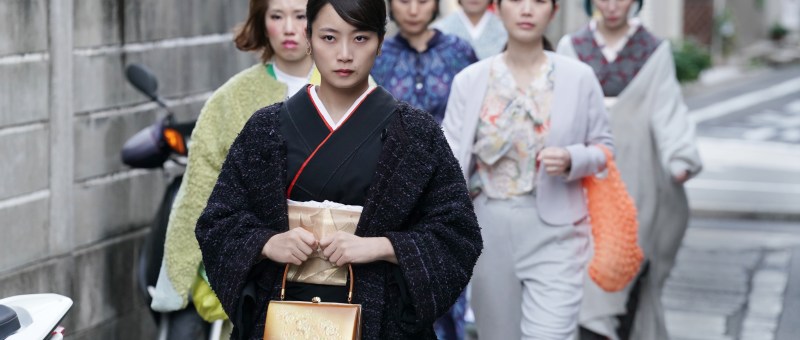
A former capital city, Kyoto is renowned as a historical centre and seat of tradition. But on the other hand, no one wants to live in a museum and while some of these old-fashioned ways of life might seem quaint or comforting, they’re also burdensome and for some an unwelcome imposition. Madoka (Mai Fukagawa), the wife of the 14th heir to a Kyoto fan seller is full of earnest wonder, but she’s also an outsider here and bringing with her own preconceptions and anxieties. 

To begin with, she’s come as a kind of cultural anthropologist directly interviewing local people to gain material for the manga she’s drawing with a friend. When one of the ladies she’s talking to explains that she runs a cafe in a former bathhouse that’s been sensitively adapted so that his traditional space can find new purpose in the modern world, Madoka is visibly disappointed which of course causes offence to her interviewee. Something similar happens when she interviews a woman running a traditional sweet shop who explains that their top-selling items are their halloween specials. They no longer sell anything that would have been on sale when the shop opened a few centuries ago. 

Madoka, who is not from Kyoto, is obsessed with preserving the city’s “true face” and fails to see that these businesses have survived because they’ve been able to adapt to the times when others could not. Repurposing old buildings to house modern businesses is one way of keeping the city alive. Meanwhile, she idolises her mother-in-law’s traditional lifestyle, but is after all experiencing it from the perspective of a guest. It may very well be much nicer to eat rice cooked over an open flame, but she’s not the one who’s got to get up early to stoke the fire or spend hours stirring the pot. She takes her responsibility as the wife of the 14th heir so seriously in part because she doesn’t understand what it entails. Her husband, Mario, meanwhile is keen to remind his mother that he has a life in Tokyo and won’t be returning to take over the shop, at least as long as his father is alive. 

Mario tries to warn Madoka about the complex nature of Kyoto social etiquette, but she fails to understand and makes a series of embarrassing faux pas that gradually destabilise the local equilibrium. In Kyoto, a particular brand of politeness rules in which one’s true feelings are never expressed openly but only through barbed comments that everyone nevertheless understands. So, when someone wants you to know that the party’s over and it’s time you went home, they’ll politely ask if you want any green tea over rice. This level of subtlety is lost on Madoka who comes from a city where size of the community means you have to be explicit.

It never really dawns on her that mother-in-law might have become so fed up with her that it’s easier just to sell the house and end 450 years of tradition than to tell her go home. Then again, it seems like she may be missing some social cues in Tokyo too, while it’s also fairly obvious in any culture that putting her awkward interactions into the manga could end up upsetting those around her. They do, after all, have a point that it’s inappropriate for her to make herself the self-appointed guardian of a place she’s isn’t from and doesn’t live in, disregarding the thoughts and feelings of those who do (not that they really told her what they were). 

Perhaps as she said she’s beginning to understand Kyoto in this regard by fighting back passive aggressively to claim her right to take over the fan shop. She might have a point about the comparatively ugly and utilitarian apartment blocks taking over the city as old buildings are bulldozed to make way for the new, but on the other hand it may not be possible to continue this business as it is and simply bringing in more tourists who’ll just clutter up the place and not buy anything may not be the answer. What the answer is may not be clear, but Madoka at least seems to have found her little niche in the heart of Kyoto, even if it is no longer so polite as to keep its irritation to itself.


Strangers in Kyoto screens as part of this year’s Japan Foundation Touring Film Programme.

Trailer (English subtitles)

Images: ©2025 Strangers in Kyoto Film Partners
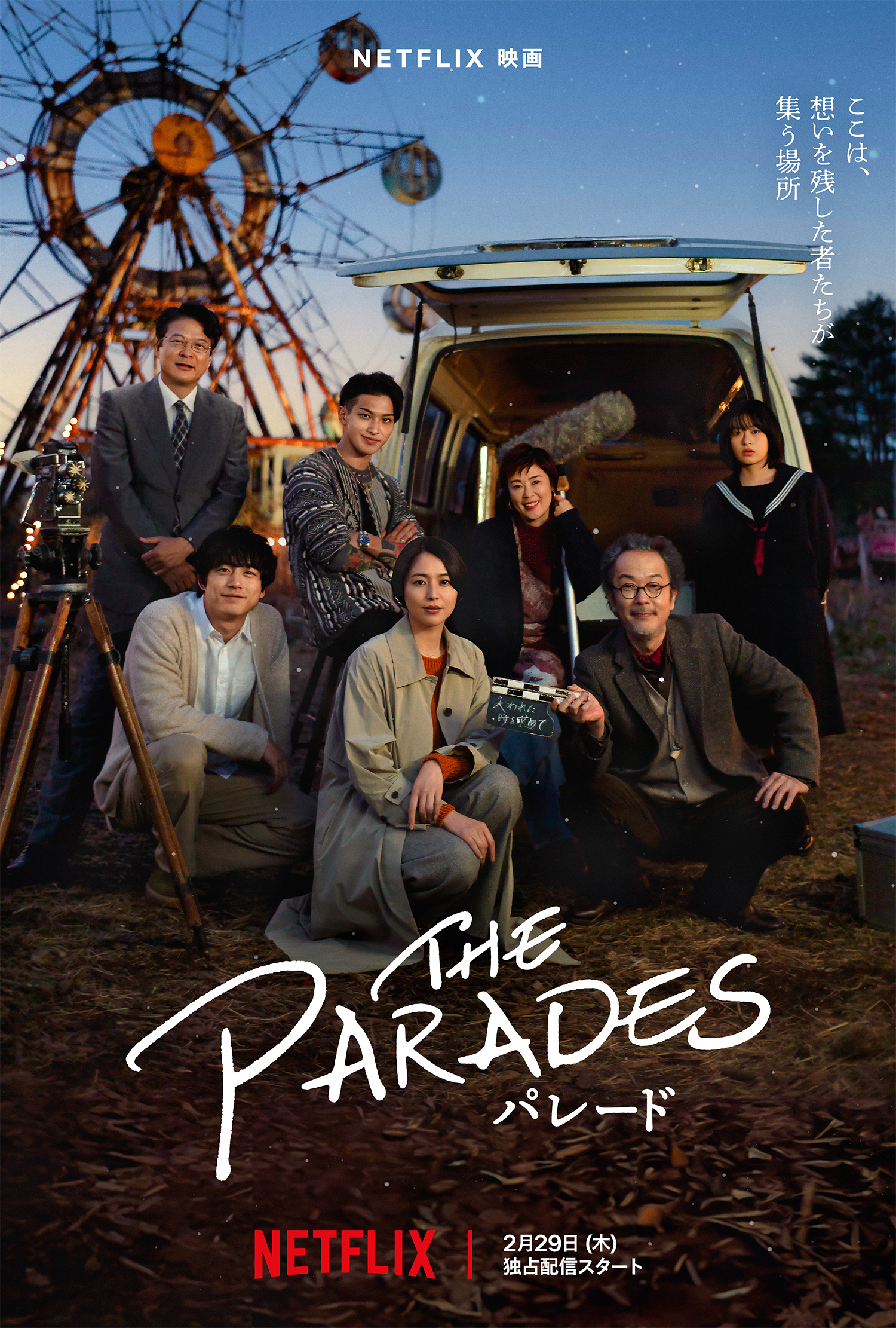
The Parades (パレード, Michihito Fujii, 2024)

Living a life without regrets is easier said than done. The protagonists of Michihito Fujii’s The Parades (パレード, Parade) each have unfinished business that prevents them moving on from this world, but what they discover is an unexpected sense of solidarity among similarly lost souls as they try to lay themselves to rest. After all, all they can do now is observe and reflect while helping others like them with their own lingering doubts and regrets.

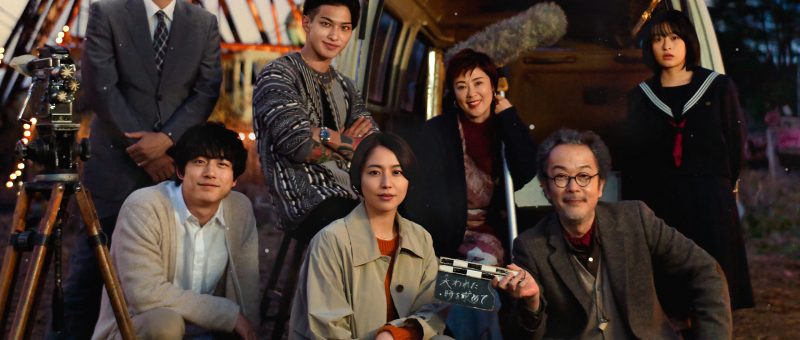
Drawing inspiration from the 2011 earthquake and tsunami, Fujii first introduces us to Minako (Masami Nagasawa). A 35-year-old single mother, she wakes up on a beach and frantically looks for her seven-year-old son Ryo (Haru Iwakawa) little realising that the reason no one seems to be able to hear or react to her is because she’s already dead. Picked up by fellow ghost Akira (Kentaro Sakaguchi), she’s taken to a disused fairground that doubles as a hub for wandering souls. Though it takes her a while to accept her new situation, she gradually bonds with others at the camp each of whom have their own unfinished business which isn’t all that different from her own in that they mostly want to be sure the people they left behind will be alright.

The film takes its name from the monthly processions in which wandering souls meet by lantern light to look for their missing people together. This sense of solidarity and empathy seems to echo the best of humanity along with a melancholy longing. There appears to be little rancour in this afterlife, a yakuza who was killed in a gang war simply feels sorry for his father and so guilty about the girlfriend he left behind that he’s been afraid to face her for the last seven years, and a high school girl who took her own life because of bullying first thinks her unfinished business is vengeance on the bullies but later accepts is actually a desire to apologise to her best friend who then had to take the brunt of the bullies’ cruelty on her own.

What the film seems to say is that we should have more of this fellow feeling in life. Former film producer Michael (Lily Franky) constantly references his days as a student protestor remarking that they might not have amounted to very much but at least they had unity. His regret is less his failed revolution than a moment of emotional cowardice that saw the woman he loved marry someone else instead. Constant references to the end of Casablanca echo their plight as if Maiko (Yuina Kuroshima / Hana Kino) married Sasaki (Ayumu Nakajima / Hiroshi Tachi) for the good of the revolution though she really loved Michael who unlike Rick just walked out on it because in the end he wasn’t brave enough to risk the consequences of its success or failure. 

The world building may not always be consistent and the rules of this universe appear unclear. It seems that in general the ghosts don’t linger long. Even the heavenly liaison Tanaka (Tetsushi Tanaka) appears to have been dead not longer than 40 years with Michael seemingly the only other long-stayer with the others’ deaths fairly recent. In general they are only really waiting for themselves or others, wanting to make sure that their loved ones will be alright in their absence even though there’s nothing more they can do for them now other than observe. Though they can walk through this world and interact with physical objects, their presence is otherwise invisible unless the person they wish to contact happens to be in an altered state. To this extent, the resolution may seem like a bit of a cop-out but does lend an additional poignancy and imply that these lessons learned in limbo can still be taken into the mortal realm creating additional empathy and solidarity among the living so that they may be able to live their lives freely and fully perhaps not entirely without regrets but at least with fewer of those that would prevent them from moving on when their time comes. But even if they find themselves trapped in limbo, they’ll hopefully find others like themselves and a gentle sense of hopefulness about what’s to come even as they prepare to leave this world.


Trailer (English subtitles)

My Father’s Tracks (僕と彼女とラリーと, Renpei Tsukamoto, 2021)

A struggling Tokyo actor begins to re-appreciate small-town wholesomeness after returning home for the first time in many years on learning of his semi-estranged father’s death in Renpei Tsukamoto’s heartwarming drama My Father’s Tracks (僕と彼女とラリーと, Boku to Kanojo to Rally to). As much a celebration of the idyllic countryside villages around the city of Toyota in Aichi, obviously closely associated with the automobile industry, Tsukamoto’s gentle coming-of-age tale sees its hero find his purpose in returning to his roots while gaining a new perspective on his parents’ relationship and the father he’d always resented who became a local hero but was never around when his family needed him. 

At 29 Taiga (Win Morisaki) is still trying to make his mark as an actor in Tokyo, his dejected manager complaining his trouble is that though he’s quick and clever he’s essentially soulless which is why he’s failing to captivate the audition panel. He repeatedly ignores calls from his semi-estranged father Toshio (Masahiko Nishimura) and then answers one on the urging of a friend only to utter some very unkind words before unceremoniously hanging up. The next time he answers his phone, however, the call is from an old friend and neighbour, Miho (Mai Fukagawa), letting him know that his father has passed away suddenly of a heart attack. Though they had not been on good terms, Taiga cannot help feeling guilty that his final words to his father were so harsh especially as he’d called to invite him to visit the following November. 

Though everyone in the town seems to have held Toshio in high regard, he was a frequent fixture on the local TV channel for which Miho works, both Taiga and his older brother Hiroyuki (Ryuta Sato) who has become a cynical and heartless businessman feel only contempt for him for having selfishly neglected his family while travelling all around the world as a mechanic with a champion rally team not even making it home in time to see their mother before she passed away of a longterm illness. Taiga can’t forgive him for leaving his mother lonely, but later comes to reflect that perhaps he wasn’t best placed to fully understand the relationship between his parents and may have misinterpreted something which as he later puts it only a husband and wife can know. Meanwhile, it seems his father had also been a supportive force in the community having given jobs to those who might not ordinarily find them in a mechanic with a criminal record, an old man past retirement age, and a young woman so shy she is largely unable to speak. Taiga can see how important his father was to these people and worries what will happen to them now whereas his coldhearted brother is deaf to their pleas planning to close the business and have it and the family home bulldozed as soon as possible to settle the estate without undue delay. 

Hurt even more deeply that Taiga, Hiroyuki has become cruel and cynical often running his brother down rolling his eyes that no one makes a living from a “hobby” while insisting this isn’t one of his “namby-pamby” plays. He claims that he needs the money to protect his family, something that he feels his father failed to do in spending all his time on a “hobby” of his own even shutting down his own small son’s curiosity and desire to join in with the other kids’ fun. Even so after repeatedly telling him to “man up” and get a real job, Hiroyuki is less than impressed by Taiga’s desire to take over the family business which he admittedly knows nothing about having acquired a driving license solely for a role, only relenting when threatened by a flamboyant human rights lawyer with the name of a legendary samurai (Riki Takeuchi).  

Nevertheless, marshalling the skills he picked up in Tokyo and working alongside the locals Taiga begins to rediscover the sense of purpose he’d been missing while gaining a new understanding of his father and greater sense of future possibility. Despite complaining that there is “nothing here” in comparison to Tokyo only for Miho to remind him of all the things Tokyo doesn’t have or that are freely given in Toyota but need to be paid for in the city, he quickly settles back in to small town rhythms and begins to accept his father’s legacy finally finding his sense of direction and taking his place in the driving seat of his own life. A heartwarming tale of familial reconnection and the power of community, not to mention a celebration of rural small-town Toyota, My Father’s Tracks insists life is a rally, all about the going there and coming back, walking on blazing a trail and never giving up no matter the sharp corners and unexpected turns a life may take. 


My Father’s Tracks streams in the US until March 27 as part of the 14th season of Asian Pop-up Cinema

Original trailer (English subtitles)