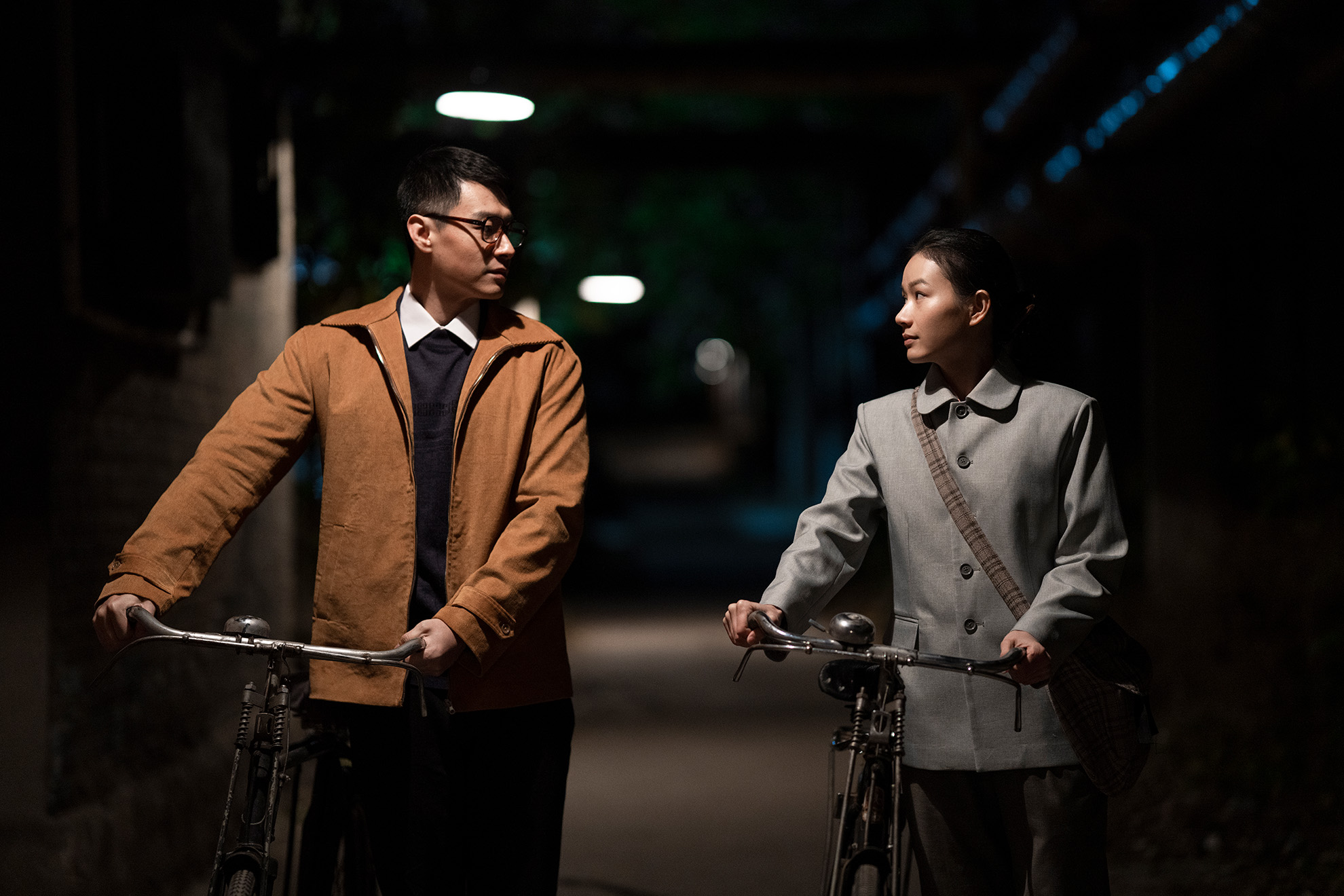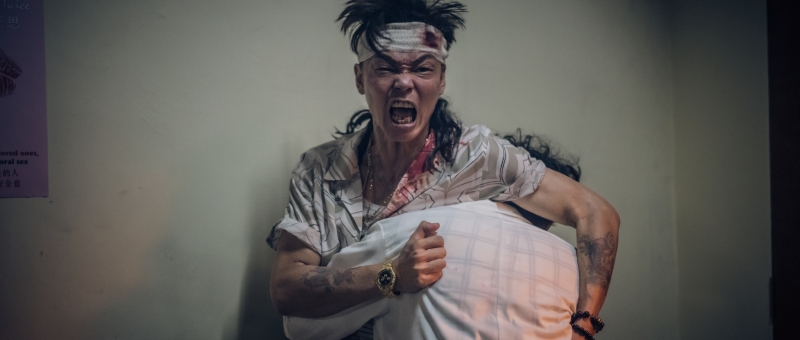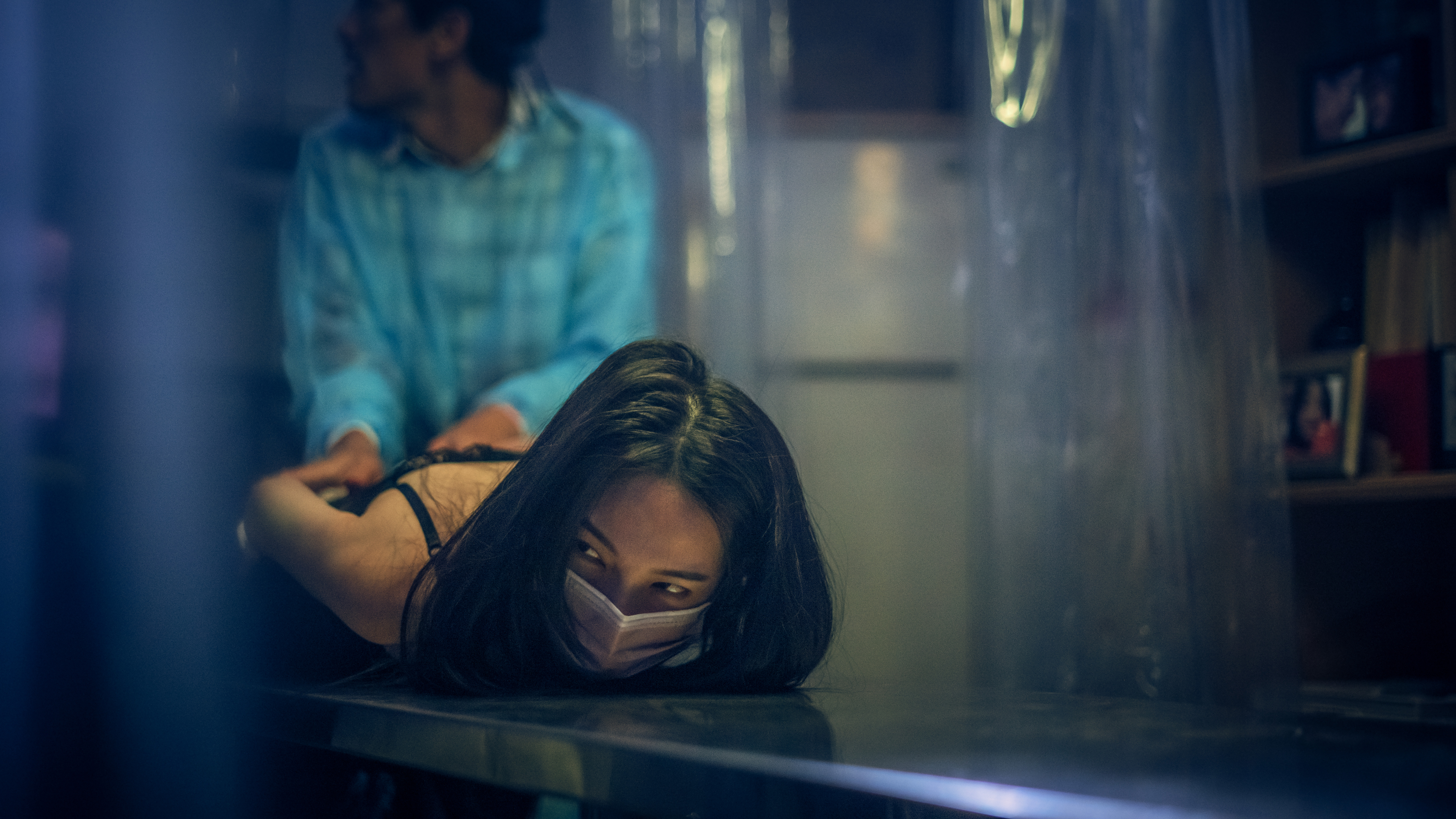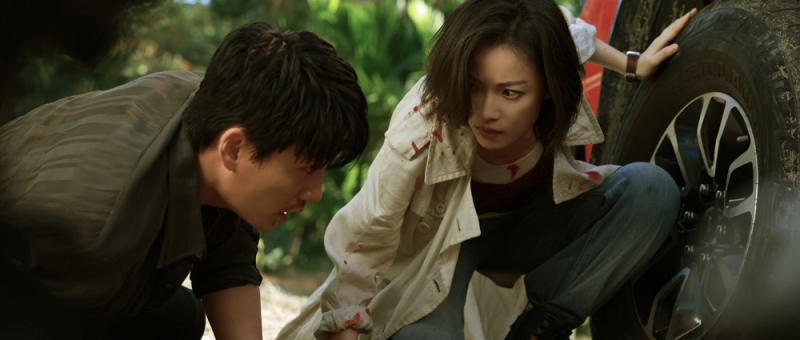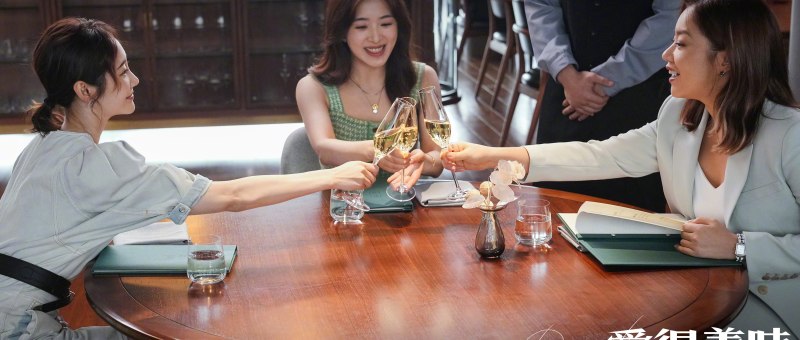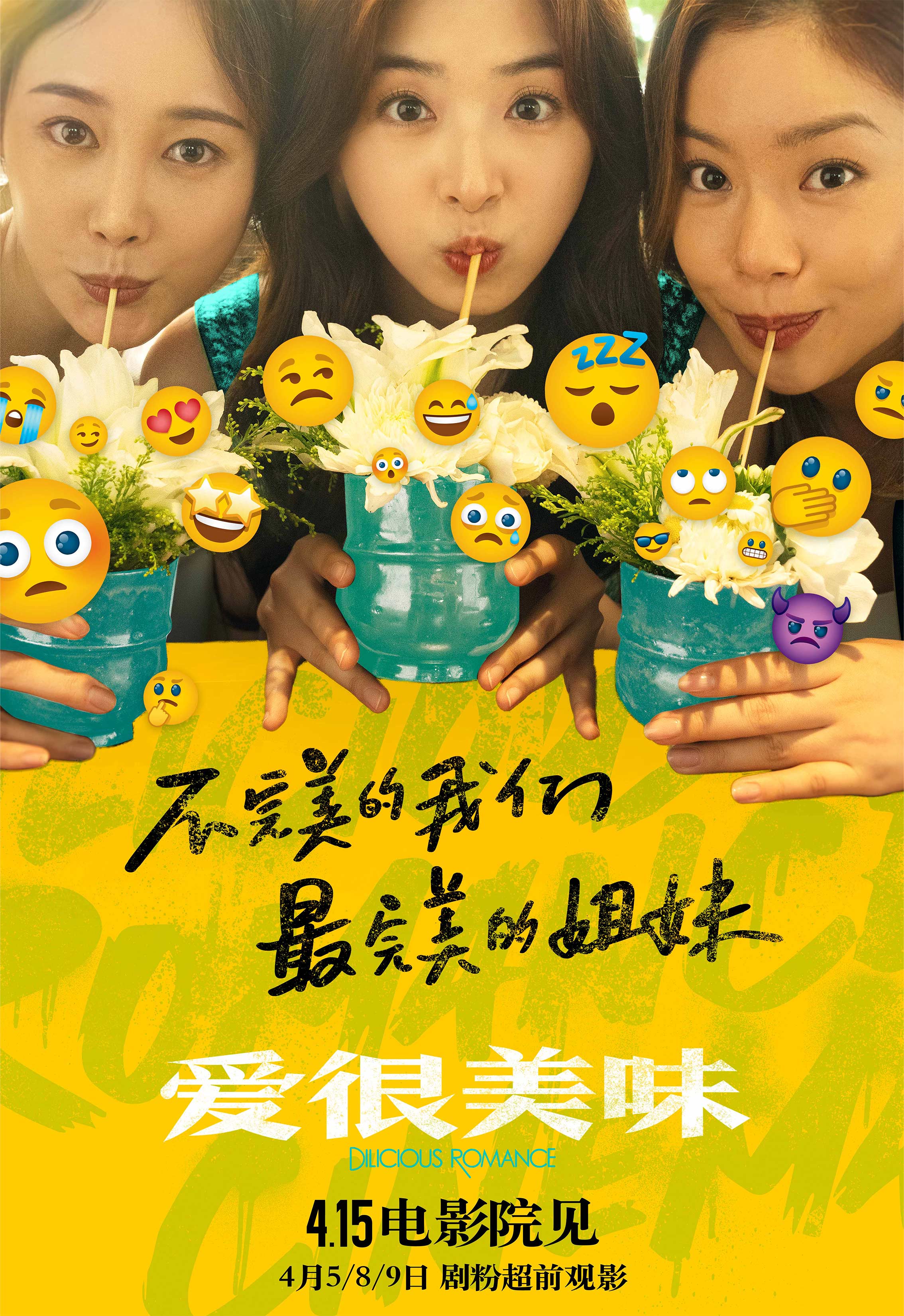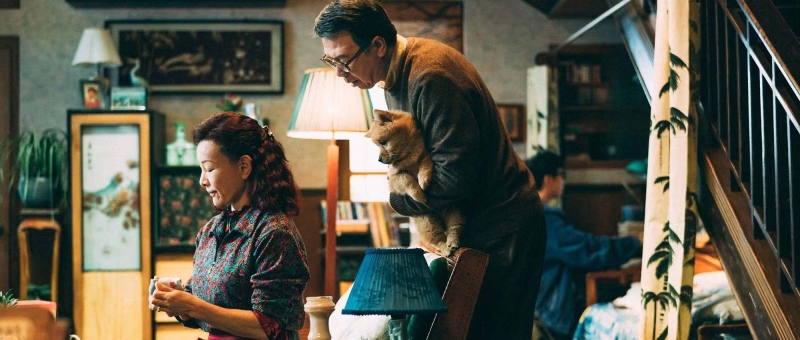
Full River Red (满江红, Zhang Yimou, 2023)

It’s a curious thing, in a way, that the central conceit of Zhang Yimou’s deliciously convoluted Song Dynasty mystery Full River Red (满江红, Mǎnjiānghóng) should turn on the idea that a truth that shames you should not be concealed. Its heroes die for a poem written by a wronged man that according to the closing text at least every child in the China of today knows by heart. Yet one could also say that this tale of intrigue in the court has it parallels in the political realities of the contemporary society, while the ambiguous ending which implies a rejection of the systemic corruptions of the feudal era might also in its way be subversive despite the rabid jingoism of the closing scenes and their thinly veiled allusions to a One China philosophy.

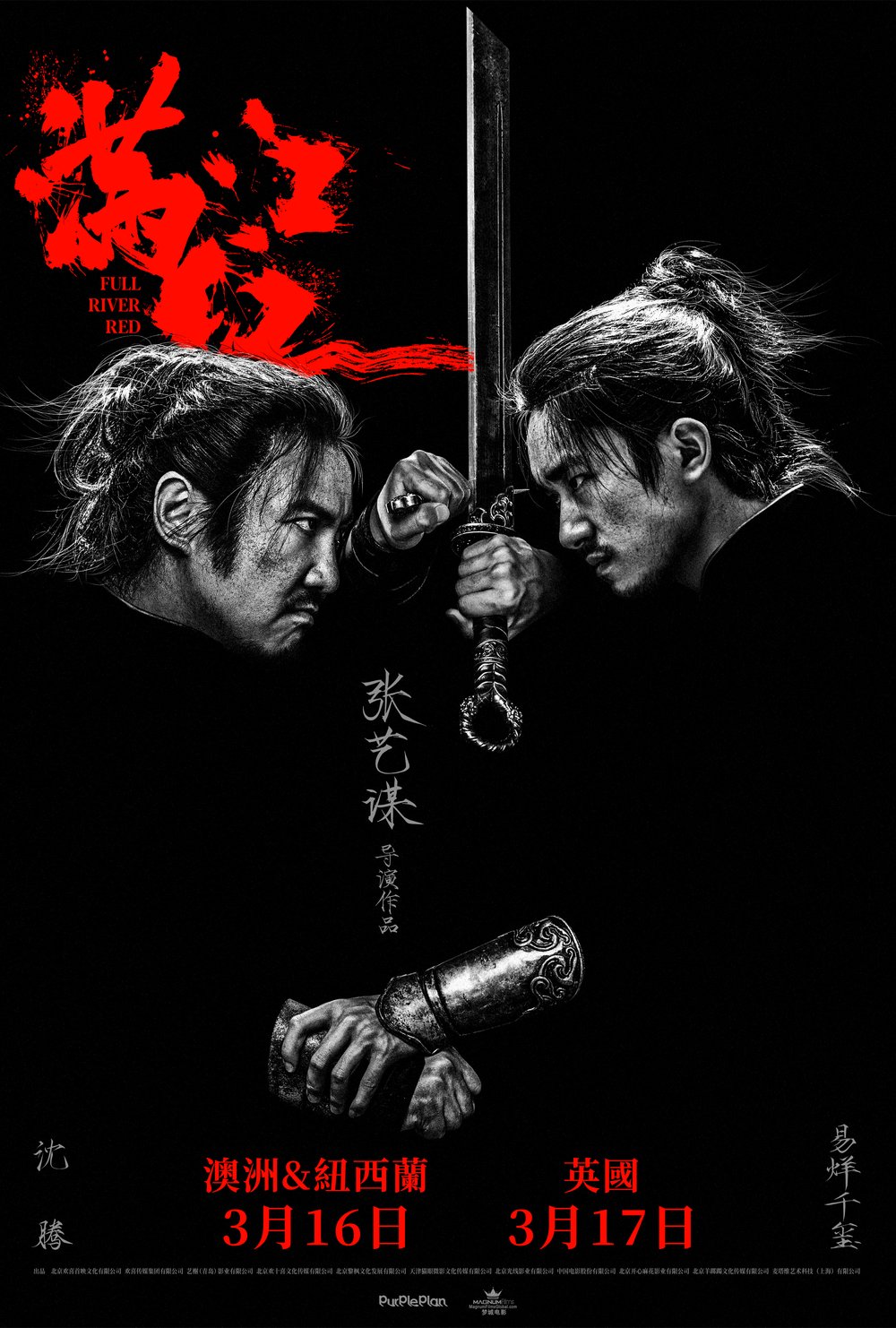
In any case, the film takes its title from a classic poem attributed to general Yue Fei who was put to death on a trumped up charge by corrupt prime minister Qin Hui (Lei Jiayin) who favoured making peace with the warlike Jin over Yue’s bloodthirsty conquest. Qin is about to meet with the Jin on an important matter and it seems to help clear his name only a Jin diplomat is inconveniently murdered in the palace and not only that, it’s also thought he was carrying a highly confidential letter intended for Qin’s eyes only which may implicate him in treachery. For somewhat unclear reasons, buffoonish corporal Zhang Da (Shen Teng) is given two hours to find the letter and figure out who killed the diplomat or prepare to meet his end. Though as he knows find it or not certain death is all that awaits him. 

Zhang uses Shen Teng’s comic background to his advantage, painting Zhang Da as a man desperately trying to talk himself out of trouble whose word for those reasons cannot be relied upon. Though all is not as it seems, and Zhang Da proves unexpectedly astute in navigating the complicated machinations of the courtly life. The letter is something of a MacGuffin, but it’s clear that everyone wants it largely as a safety net, hoping to get kompromat on Qin they can use protect themselves in this hellish prison where death lurks around every corner. This is indeed a world in which blood will have blood, nobody is safe, and no one can be trusted. Getting the letter is like getting an immunity card from palace intrigue, something which diffident courtier Wu (Yue Yunpeng) assumed he already had in a golden seal gifted to him by the emperor only to discover it can’t necessarily protect him from someone with no respect for the system. 

The palace itself is reflection of the feudal order with its labyrinthine corridors barely narrow enough for two men to pass. There’s a constant feeling of constraint and oppression, not least in the persistent greyness of the palace walls. Even Qin seems to have adopted an air of austerity or perhaps because of the illness he affects dresses less elaborately than one might expect as do his colour coded handmaidens in blue and green who have been rendered deaf and mute to prevent them revealing any of his secrets. Zhang Da is paired with the serious commander Sun (Jackson Yee) who in a running gag is actually his uncle though much younger than him. On one level Sun is committed to this system and fully complicit with it even if casting suspicion on himself with his counterproductive habit of killing of potential suspects before they’ve given up any information, but also harbours a lingering resentment in being rendered little more than a tool for a corrupt order for which he is willing to debase him in wilfully waterboarding a friend with vinegar in a bid for redemption in the eyes of the palace.

The tone is however ironic and filled with dark humour as a kind of rebellion against the amoral nihilism of constant betrayals that define feudal life. The heroes are tattooed with the world loyalty on their backs as if standing for a more wholesome humanity though there’s no particular reason to think the system they are loyal to is much better especially given the bloodthirsty quality of Yue’s death poem which is the text that’s really being sought in its talk of national humiliation, lost lands, and feasting on the corpses of one’s enemies. Moving with the comic beats of Peking opera, Zhang scores the film with a mix of classical instrumentation and angry, hip hop-style arrangements of warlike folk songs that reinforce the duality of this tale of so many dualities in talking both of the present day and the ancient past. In any case, the ending most closely resembles a western as the world weary hero recovers his self-respect and rides off into the sunset to live as an ordinary man far away from the corrupt world of the court and finally free of its tyrannous constraints.


Full River Red was released in UK cinemas courtesy of Magnum Films.

Original trailer (Simplified Chinese / English subtitles)

Too Cool to Kill (这个杀手不太冷静, Xing Wenxiong, 2022)

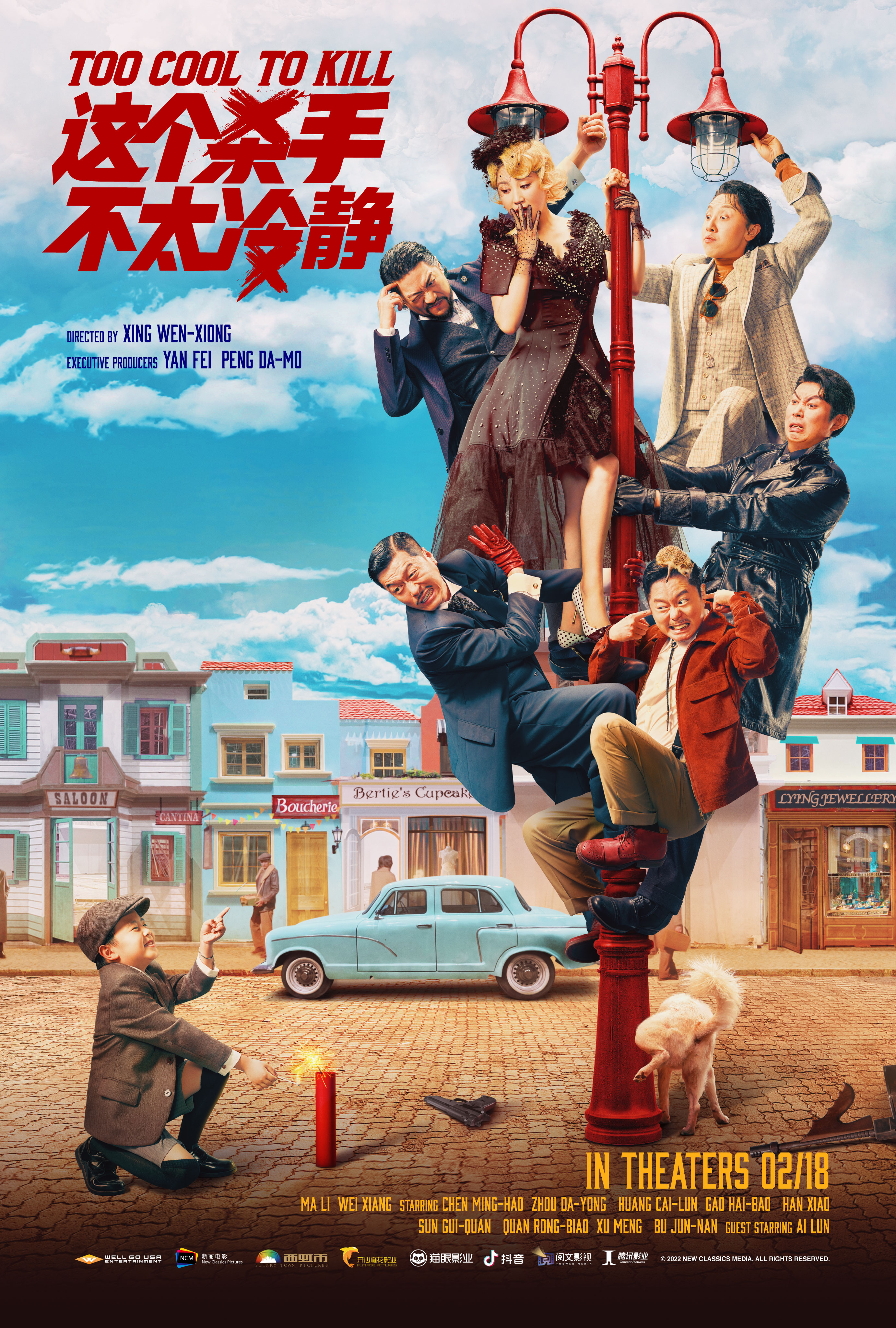
Fantasy and reality begin to blur for a jobbing actor suddenly offered a leading role in an experimental hitman movie in Xing Wenxiong’s meta take on Koki Mitani’s The Magic Hour, Too Cool to Kill (这个杀手不太冷静, Zhè ge Shāshǒu Bú Tài Lěngjìng). A veteran comic actor, Wei Xiang like his character is also playing his first leading role and tearfully thanks the crew for the opportunity in a moment of behind the scenes footage playing over the ending credits proving that there might be “method” in the madness as his utterly guileless hero continues to “act” in a drama that is all too real. 

Big time gangster Harvey of the Magic Gang (Chen Minghao) is currently being targeted by rival outfit Movement. Top hitman Karl (Ai Lun) has been sent to assassinate him, but is ironically caught in the explosion at the quarry Harvey has just opened, his bullet merely grazing Harvey’s ear. Having no idea the injured worker was trying to kill him, Harvey plays the standup guy by visiting him in hospital and ironically swearing vengeance. Meanwhile, he’s also busy putting the squeeze on an actress he fancies, Milan (Ma Li), who has accepted his money to make a movie but has no intention of consenting to his terms. When Harvey threatens to fit Milan and her director brother Miller (Huang Cailun) with some concrete boots, she quickly counters that Karl is a personal friend of hers and she’ll certainly deliver him to Harvey if he gives her some time. But Milan was only bluffing and she doesn’t have enough time to flee the country before Harvey finds out, so she hatches on the idea of getting a random actor to play the part of “Karl the Killer” seeing as no one’s ever seen his face. 

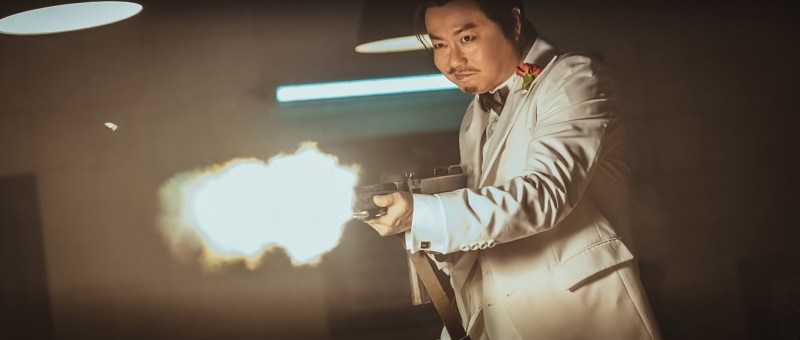
The thing about Wei (Wei Xiang) is that he’s very earnest. He genuinely loves the craft of acting and is always trying to “improve” his performance such as cackling maniacally before he “dies” to show his utter contempt for death. All of this makes him quite irritating on set, but also the perfect fall guy for Milan and Miller who are, somewhat darkly, aware that Wei is not likely to survive his encounter with Harvey which will buy them some time to get away. What they didn’t bank on was Wei’s utter commitment to the role. Because he thinks it’s just a movie, he isn’t scared at all and doesn’t realise there’s a chance Harvey’s guys will actually kill him. Thus he pulls a bunch of ultra-cool, James Bond-style moves assuming he’s improvising an action drama in which he’s the hero so technically can’t “die” or at least not until the final scene. The plan begins to backfire when Harvey is so impressed that he actually offers Wei, well “Karl”, a job in his gang which only leads to further intrigue. 

It may just be that Wei’s behaviour is otherwise so odd that no one really notices, but his constant references to being in a film almost go unacknowledged. While negotiating with an Italian mob boss, he confesses he left the gun they were meant to be selling behind because it was too heavy but they can just fill it in with “special effects” later, while often asking to go for a second take because he’s not convinced the “invisible” cameras captured his best angle. On his first appearance, Wei shows up dressed like John Travolta in Pulp Fiction. Later he reenacts a scene from Desperado and even dances along to Singing in the Rain demonstrating his true love of the movies if somewhat anachronously to the movie’s ambiguous setting, 

Xing later does something similar in suddenly cutting the CGI backgrounds to show us the small island promenade surrounded blue tarp as if laying bare the “magic of the movies”. Echoing Mitan’is original he sets most of the action in a quaint Mediterranean backlot that is indeed a “fake” world to begin with where earnest actor Wei is the only one who’s “real”. Gradually, Milan starts to fall for his guileless goodness, especially on learning that he’s also been playing a role in real life that he’s committed to completely out of kindness and compassion all of which has made her regret her callous decision to feed him to the sharks so she could get out of town. A tribute to movie-loving pros, Too Cool to Kill celebrates the “unreality” of the silver screen but also the sincerity of a try hard actor who finally gains the role he was born to play.


Too Cool to Kill is available digitally in the USA courtesy of Well Go USA.

Trailer (Simplified Chinese / English subtitles)

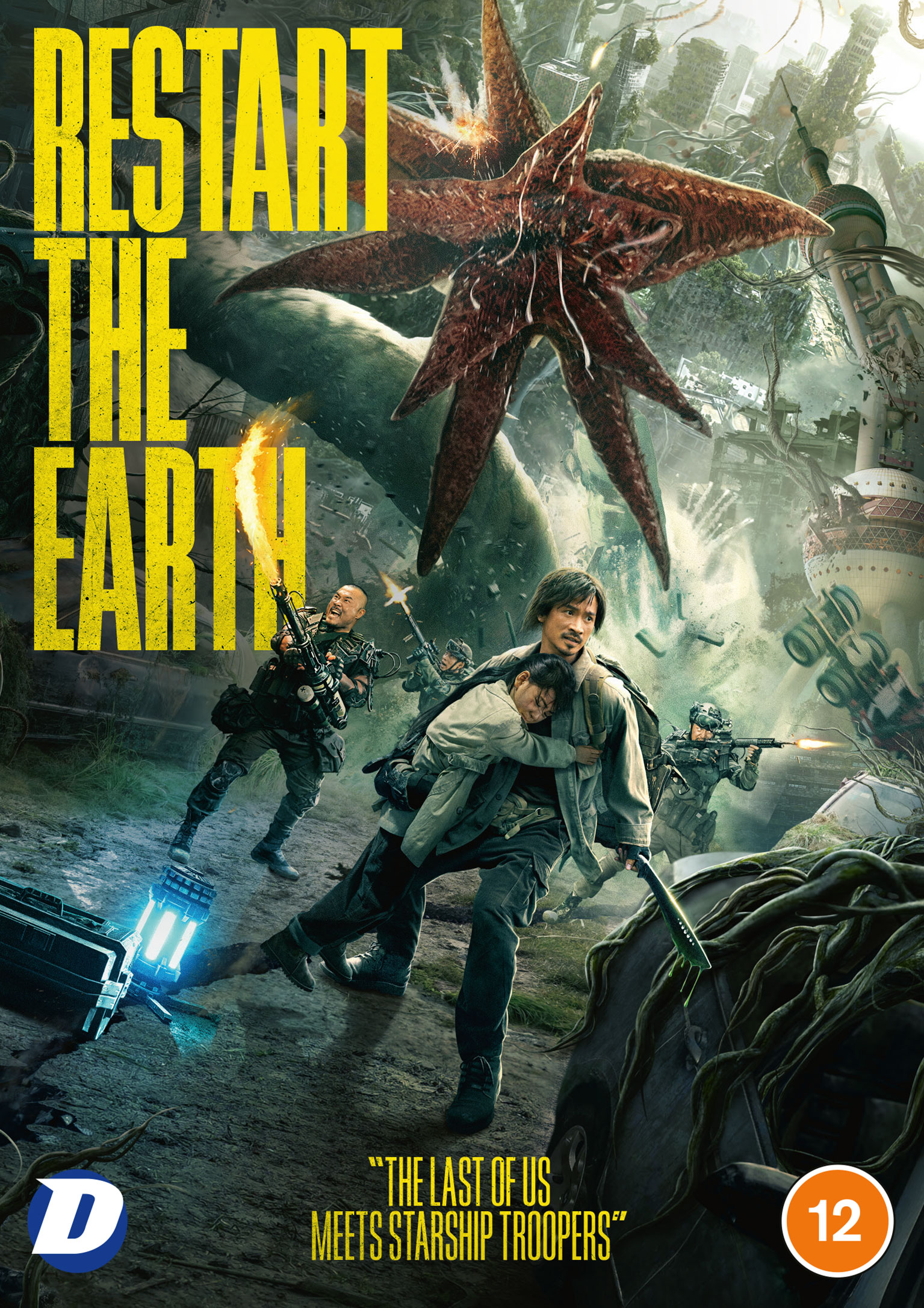
Restart the Earth (重启地球, Lin Zhenzhao, 2021)

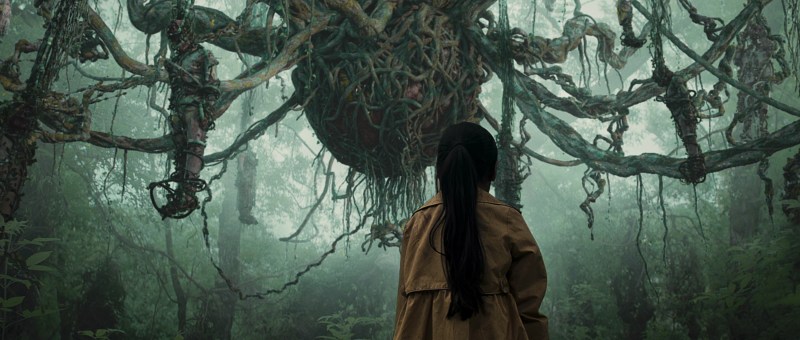
Maybe it’s only fair enough if the plants finally turn against us and reclaim the world from the effects of our industry. We haven’t taken very good care of this planet, after all. In Lin Zhenzhao’s well produced low budget streamer Restart the Earth (重启地球. chóngqǐ dìqiú), humanity ironically tries to use science to repair its scientific mistakes but predictably ends up making everything even worse when an experimental program designed to halt desertification suddenly causes plant life to become sentient and develop a craving for human flesh. 

Yang Hao (He Shengming) lost his wife, a botanist, during the original attack and has spent the last two years safeguarding his little girl Yuanyuan (Zhang Mingcan) from the same fate. He wants to find a shelter, but ends up running into a troop of soldiers after a plant attack who tell him that the plants are about to launch a new offensive and all human life will end in a matter of hours if they are not able to achieve their mission of injecting a neutralising element into the plants’ root base in the core of the Earth. Like any good post-apocalyptic dad, Hao has a choice to make. As he tells Yuanyuan he has no interest in saving the world and only wants to save her, but is shamed into joining the cause by Yuanyuan’s disapproval and decides to accompany the soldiers who are in dire need of his engineering skills. 

Personal sacrifice for the greater good is very much the theme of the film. Several of the soldiers actively sacrifice their own lives either to save Yuanyuan or to make sure the planet-saving serum makes its way to the next checkpoint while reminding us that they too have families who might be waiting for them at home. As Hao later affirms, he’s just an “ordinary Chinese citizen”, somehow convincing several world powers not to give up on saving the planet no matter how hopeless it seems simply by reminding them of the power of hope. But it’s precisely this “ordinary” heroism that later saves the world, sending a message that is both egalitarian and collectivist in insisting that everyone has a role to play in a well functioning society. 

Then again, the “catastrophe” as it’s called is very much manmade. It began with climate change which then led to the scientific experimentation which quite spectacularly backfired. In essence it’s all down to “bad” science (and some bad plants that were brought in from abroad by a foreign scientist). Man likes to think it can master its environment, as someone later puts it, but the environment decided to fight back. Even so the solution lies in more of the same as Hao has the bright idea of harnessing the power of nature to break through the plants’ firewall. 

The plants themselves take on the appearance of dragon-like monsters snaking through ruined buildings or else snapping up humans with claw-like tentacles. As the plant-based ring of terror encircles the Earth, giant hand-like branches seem to sprout from the ground ready to smash and grab. Post-apocalyptic production design conjures a land of ruin half-reclaimed by nature, while Lin pays frequent homage to other similarly themed franchises. The soldiers’ uniforms have more than a touch of Attack on Titan, while he also seems to directly reference Aliens as well as a series of other post-apolypytic dramas in which a tightly bound team of survivors must band together to face off against an insidious enemy. 

The idea is essentially to reboot the Earth, but in another sense perhaps that’s what the plants were also trying to do. Maybe we shouldn’t really be rooting for a human victory though it’s also possible that the supercharged plants would soon consume the planet anyway. In any case, the messages about the dangers of climate change and importance of responsible science are secondary to those of the heroism of personal sacrifice for the greater good along with the determination to keep hope alive when it seems all is lost. Noticeably well put together for a low budget streamer Lin’s post-apocalyptic action drama suggests the end of the world might not be that far away but can at least be held at bay if only by the power of human selflessness.


Restart the Earth is released in the UK on blu-ray, DVD, and Download to Own on 22nd May courtesy of Dazzler Media.

Trailer (English subtitles)

Rebels of the Neon God (青少年哪吒, Tsai Ming-Liang, 1992)

Towards the end of Tsai Ming-liangs’s Rebels of the Neon God (青少年哪吒, Qīngshàonián Nézhā), a young man exasperatingly stuffs a series of rags into the busted drain in his kitchen which has been relentlessly leaking water all over the apartment. In many ways it’s a kind of metaphor for his life as he attempts to staunch the flow of “bad luck” he’s been experiencing over the last few days, but like so many things for him it does not quite go to plan. 

As to why, it’s not exactly clear except that A-tze (Chen Chao-jung) is a kind of outcast beneath the neon skies of a changing Taipei. He and his friend A-ping (Jen Chang-bin) earn their money breaking into telephone boxes and vending machines for loose change before at one point stealing the motherboards from arcade consoles and unsuccessfully trying to sell them back to the person they stole them from. All they get for their pain is a literal battering while A-tze’s frustrated romance with sometime girlfriend Mei-kuei (Wang Yu-wen) similarly flounders in the wake of his ennui. 

The karmic debt he bears is however mainly down to a random act of pointless violence in knocking the wing mirror off a taxi driver’s car for no real reason save momentary impulse. Even so, the taxi driver’s son Xiao-Kang (Lee Kang-sheng) had already been watching him and soon discovers a fascination with the rebellious young man that is ambiguous in quality. What becomes obvious is that Hsiao-kang is at odds with the world in which he lives. His mother (Lu Yi-ching) reveals that a fortune teller told her he is the reincarnation of “Neon God” Nezha, a chaotic child who later killed the authoritarian father with whom he could not get along. Hsiao-kang’s mother tells this to her husband (Miao Tien) as a kind of warning, advising that his authoritarian parenting style is doing his son no good, but Mr. Lee isn’t minded to listen. Finding out that Hsiao-kang has dropped out of cram school and kept the refunded tuition money for himself, Mr. Lee throws him out which of course leaves him free to follow A-tze all around Taipei day and night before childishly damaging his motorcycle. 

In disabling the bike, Hsiao-kang perhaps hoped to ruin A-tze’s freedom, symbolically taking from him independence and a sense of possibility. Then again, perhaps in another way he hoped to engineer a friendship. Riding around on his own scooter, he draws up behind A-tze pushing his to a garage and offers help but A-tze tells him to buzz off. In fact, A-tze never acknowledges Hsiao-kang. He never recognises him or realises that he’s being followed though he does later remember Mr. Lee and is struck by guilty futility not really knowing why he decided to arbitrarily ruin someone’s day while reflecting that all his days are ruined. The water in his apartment continues to rise all around him as if emphasising his mounting sense of despair. Mei-kuei tries to break up with A-tze before asking him to go away with her. They ask each other where they would go, but neither has any answer. 

A remorseful Mr. Lee later comes home and makes the point of leaving the front door ajar, symbolically open to his son’s return while Hsiao-kang remains lost. He visits a telephone dating service having heard Mei-kuei moonlight by answering one while working at the ice rink, but in the end cannot even pick up the phone. Staring at a picture of James Dean, he longs for the sense of rebellion he is drawn to in A-tze but is still the chaotic boy, dancing wildly like a wheelless Nezha and seemingly with no further sense of direction. In the end, it’s the city of Taipei which is the “neon god” of the title, arbitrarily ruling over each of the boy’s lives even as it ironically emerges from the authoritarian past into hypermodern urbanity. Hsiao-kang is little better off than the cockroach he ironically skewers on the point of his compass, and A-tze little than that which circles his overflowing drain carried inexorably on the current on a circular journey towards nowhere in particular. Many of Tsai’s key themes are already here, urban alienation, loneliness, futility, and the crushing sense of emptiness of life in the contemporary era even as he turns his gaze to the overcast skies of a city lit only by despair.


Rebels of the Neon God screened as part of this year’s Queer East .

Trailer (Traditional Chinese / English subtitles)

Young Ip Man (少年叶问之危机时刻, Li Liming, 2020)

In another branch of the sprawling Ip Man tree, Li Liming’s Young Ip Man (少年叶问之危机时刻, shàonián Yè Wèn zhī wēijī shíkè) aims to kickstart a new strand of streaming action drama in following the titular hero in his days as a student in Hong Kong. Li never misses an opportunity to remind us that this is all taking place in the colonial past, a large British flag flying over the prison in which the film opens. Yet perhaps surprisingly, the betrayals that Ip Man (Zhao Wenhao) faces are local and personal in which the corruption of British rule is felt only distantly and in the priggish figure of a bullying police commissioner who as it turns out is really just an unimportant middleman. 

The most literal villain is, however, arch criminal Ma Long (Mu Fengbin) who is sprung from prison by his gang in the film’s high impact opening sequence. Determined to get revenge on corrupt police chief Stewart (Jonathan Kos-Read), Ma somewhat bizarrely decides to kidnap a bunch of rich kids at school for an English speech competition hoping to get his hands on Stewart’s son Jack. The funny thing is he has a connection to Ip Man’s past and later suggests he may have known that he would be involved all of which seems to be quite a flaw in his plan. In the company of his friend Ya Yun, the daughter of the head of the Axe gang, Ip Man defiantly decides to use his martial arts skills to save his fellow students while squaring off against the corrupt figure of Ma.  

Then again, as we discover Ma only became the arch villain he is because of judicial corruption. When someone close to him was killed, he sought justice but was denied because the perpetrators were influential people, the implication being that they were members of the colonial elite which Stewart was propping up. Filled with grief and rage, he’s hellbent on ruining Stewart’s life and doesn’t really care all that much about what he might have to do to do it. As Ip Man points out, he once tried to teach him about the importance of knowing right from wrong, but Ma now believes that the distinction is one made only by the weak for the strong care only about winning. 

The secondary part of Ip Man’s mission is dedicated to saving his old friend Xuehu from becoming another Ma after becoming frustrated that he was prevented from marrying the woman he loved because of his poverty and the class difference between them. He too vacillates, uncertain if he will actually betray his friend to get the money to get married while remaining complicit in kidnap and murder. As usual, the situation gives Ip Man a lot of opportunities to remind others of the martial arts philosophy and the importance of humanity even if others try to convince him that “feelings are worth nothing in this world”.

Still, the battle plays out like a chess game as Ip Man tries to outsmart Ma and win the students’ freedom while inexplicably still believing in his good sportsmanship certain that Ma will honour his word and let the hostages go if only he manages to beat his arbitrary challenges. Ip Man fights off the bad guys, dashing over balconies and leaping from windows to save his friends, while experiencing an internal conflict as he finds himself at odds with men he previously respected hoping he can still redeem them even as they seem intent on his death. In any case, the most surprising element of the film maybe that in the end the corruption goes largely unpunished with the true winner the duplicitous policeman with a habit of selectively enforcing the law. 

Even Ma seems to recognise the hollowness of his revenge in coming to an understanding of his role and position in otherwise corrupt society while Ip Man appears to win the esteem of Ya Yun’s gangster father who despite his overprotective parenting does nothing at all to try to save her other than raising money and waiting patiently outside the school. Despite its low budget, the film packs in a fair few impressive action sequences beginning with daring prison break and culminating in the schoolhouse siege as the young Ip Man gets the chance to show off his skills while fighting for justice in old Hong Kong.


Young Ip Man is available to stream in the US via Hi-YAH! and released on DVD & Blu-ray May 16 courtesy of Well Go USA.

Trailer (English subtitles)

Art College 1994 (艺术学院, Liu Jian, 2023)

In the opening title sequence of Liu Jian’s animated dramedy Art College 1994 (艺术学院, yìshùxuéyuàn), a beetle tries to climb a decaying wall but repeatedly fails until it falls on its back and flails wildly trying to right itself. It might in a way stand in for Liu’s protagonists, each of whom are floundering in various ways amid the contradictions of the rapid social changes of mid-90s China. A potent sense of place lends weight to what is obviously an autobiographically inspired tale of youth’s end coloured by rueful nostalgia. 

The rebellious Xiaojun clashes with his tutors who think he’s overly influenced by Western art movements and lacks the maturity to understand that there is also truth in traditionalism, while his best friend Rabbit begins to worry about more practical matters and their future in a changing society. The boys eventually develop a friendship with music students Lili and Hong who find themselves similarly at odds. Brash and brimming with false confidence, Hong dreams of becoming a famous opera singer and resents the patriarchal social mores of a still conservative China. “Sooner or later we all have to marry someone.” Lili sighs as if feeling the walls closing in on her, only for Hong to ask why no one ever realises they’re “someone” too. 

They have grand conversations about the nature of art, beauty, tradition and modernity, conservatism and social change, belying their naivety but still filled with a sense of freedom and curiosity that is only beginning to be coloured by a concurrent anxiety. “I thought I knew everything. The truth is I know nothing.” Hong finally concedes after a failed romance, arguing with Lili with whom she may always have been on a different page. Shy and bespectacled, Lili is a realist amid a group of dreamers. She nurses a nascent crush on Xiaojun but is courted by a condescending bore who comes with her mother’s approval. Perhaps she’s merely afraid of the risks involved when real feeling is in play, but for all her talk of “freedom” makes her choices intellectually and leans towards the pragmatic. Xiaojun is a penniless painter, but her suitor is a wealthy man who can take her to Paris to study. Amid the contradictions of mid-90s China, who could really blame her for making a “sensible” choice even it means the sacrifice of her emotional fulfilment? 

Xiaojun lets his chance slip away from him, failing to say anything meaningful before revealing he’s going away on a study trip for an extended period of time. But like Lili he meditates on art and the soul while romanticising a poverty he may never really have experienced. The boys hang out with eccentric drifter Youcai who repeatedly failed the entrance exams but hangs around on campus anyway soaking up the atmosphere while prone to sudden attacks of performance art. After a stint living in the artist community in Beijing he returns in the company of crooks and conmen, working as a sign painter to get by while lamenting his own lack of talent. He says he makes money in order to make art, while Xiaojun disapproves of his moral duplicity insisting that it’s right for an artist to be starving because suffering fosters art.

Youcai asks him how you can make art if you can’t eat while insisting that art is one big business, just like everything else it too is suspect because it is dependent on money. Xiaojun disagrees, claiming that that art is the only escape from reality that can bring people spiritual satisfaction. Ironically enough, he says this while sitting directly underneath a billboard advertising Michael Jackson’s Bad, while we’ve already seen him ride his bicycle past a conspicuous piece of graffiti featuring the characters for CocaCola in Chinese. When Lili’s suitor says he’ll buy them dinner, Liu ironically cuts to the two girls sitting outside a McDonald’s eating ice cream. This does seem to be a very dubious sense of “modernity”, mediated through Western consumerism that in contrast to the values Xiaojun places in “art” is spiritually empty. 

Even so his disapproving teacher reminds him that great art is born of sincerity, hinting at a degree of affectation in his insistence that art should change with the times when not all truths need to be revolutionary. In any case, each of the students learns a few hard lessons about life and disappointment as they too succumb to unavoidable realities and accustom themselves to an uncertain society. Liu ends the film with a series of title cards that feel very much like those often added to placate the censors, usually detailing that wrongdoers were caught and punished for their crimes but this time conjuring more wholesome futures for the students that undercut the sense of the frosty melancholy in the closing scenes which leave Xiaojun all alone as he takes up brush and ink. Yet in Liu’s achingly potent sense of place, there is both a poignant nostalgia and an inescapable sense of loss and regret for the missed opportunities of youth. 


Art College 1994 screened as part of this year’s Red Lotus Asian Film Festival.

Trailer (English subtitles)

Bad Women of China (中华坏女人, He Xiaopei, 2021)

“Mum gave all her love to the Party and saved her grudges for family.” As she explains, documentarian He Xiaopei began her documentary Bad Women of China (中华坏女人, Zhōnghuá Huài Nǚrén) as a means of communicating with the mother who remained silent and distant towards her, yet nevertheless contemplates three generations of Chinese women through the prism of her own life as a lesbian who lived much of her life abroad. 

After many years living in the UK, Xiaopei returned to China with her grown-up daughter Qiao whom she ended up asking to interview her mother Yun Li in an attempt to improve her relationship with her. In a sense it works, Yun Li begins to talk about her life and history which as it turns out is very much intertwined with that of the Communist Party. The disconnection between them stems from Xiaopei’s sense of abandonment, unable to understand as a child why her mother decided to live separately from the family in a dorm at the Foreign Languages Institute where she studied and trained diplomats. In the prelude to the Cultural Revolution, Yun Li was branded a “rightist”. Sent to the country for re-education she seems to have overcorrected, leaving her family to prove her devotion to the Party. 

Then again, despite her hurt and longing Xiaopei is later forced to realise that she became a mother much like her own. Though she identified herself as a lesbian at a young age, Xiaopei married at random to have an attachment that was to life more than anything else and then had her daughter but became estranged from the husband with whom she had little in common. She too left Qiao behind for long periods of time while she went to study abroad, first as an economist and then intending to study feminism before eventually moving to the UK with longtime partner Susie and bringing her daughter with her. In the closing scenes of the film which are shot with sound only against a black screen, Qiao confronts her mother in the way Xiaopei was unable to do directly telling her that she felt neglected, that she wanted more love and a sense of reassurance Xiaopei was unable to give her. 

Qiao too is in many ways much like her mother and grandmother, a fiercely independent woman with complicated and fast moving love life. Yun Li had been something of a trailblazer, choosing a husband for herself and getting married on her own only informing her family afterwards in an age which still favoured arranged marriage. She was once struck dumb in childhood when an uncle who was taking care of her refused to let her attend school, and is insistent that a woman should be financially independent rather than rely on a man. Xiaopei broke with convention in divorcing her husband to embrace her authentic self by living openly as a lesbian albeit in the comparatively less conservative UK where she eventually married in 2005 if only to divorce some years later. 

This rebellious sense of autonomy is perhaps why Xiaopei titles the film “bad women” as each of them in some way reject social convention, though there is also the implication that Yun Li’s life was disrupted by her involvement with the Communist Party to which she remains devoted despite the way it treated her and the way she knows it to have treated others. Xiaopei reflects that Yun Li was never interested in fulfilling the stereotypical role of the good wife and mother, and realises that in the end neither was she though she tried to do her best and is in a sense received that Qiao wants her to be a partner and a friend in her life even if she could never fully reconcile with Yun Li who remained frustratingly distant from her. In a certain way, their reconciliation hints at a new sense of liberation in the modern society that allows the women to shake off the roles of mother and daughter and rebuild their relationship on a more equal footing even while the family scatters itself around the world increasing the physical distance between them but shrinking the emotional. 


Bad Women of China screens at Bertha DocHouse 27th April as part of this year’s Queer East 

Trailer (English subtitles)

Lost in Forest (山中森林, Johnny Chiang, 2022)

History repeats itself for a former gangster recently released from prison in Johnny Chiang’s melancholy neo-noir, Lost in Forest (山中森林, Shān Zhōng Senlín). Set in a neon-lit Taipei, Chiang’s moody crime drama finds its hero displaced in the modern society unable to look either forward or back while meditating on all he’s lost and another less corrupt vision of his home city as symbolised by his late father’s missing sausage bike and the changing back streets where it was once parked.

This Taipei is however a less wholesome place as suggested by Chiang’s frequent cuts to Christian churches and the giant neon crosses that sit above them as if looming in judgement on the chaos below. 12 years previously, Sheng (Lee Kang-sheng) opened fire on rival gang members who’d kidnapped his best friend and comrade Seagull (Angus Hsieh) who has now taken over the outfit while he’s been inside. Customarily, Seagull should have had someone come to meet him on his release, but Sheng exits the prison alone and is given a lift back into the city by the entourage collecting his prison buddy Ji despite the fact they are headed to an entirely different part of the country. Without a phone and not knowing where the gang even is anymore, all Sheng can do is hole up in a hotel until he finds out what’s going on. All of which suggests that despite his sacrifice, Seagull may not be particularly glad to reunite with him.

The conflict exists on three levels. Sheng must necessarily doubt his old friend Seagull, especially on realising that his new business model involves exploiting vulnerable women by pressing them into debt via high interest loans and then forcing them into sex work, while simultaneously worried about his guys who claim they have not been well treated while Sheng was away. But then it also becomes clear that much like many contemporary Taiwanese crime dramas, the real villain is institutional corruption as Seagull’s alliances with corrupt politicians and shady businessmen continue to destabilise the underground society thanks to the machinations of anarchic street punk Monkey (Sean Huang) who engineers a gang war by giving the businessman’s son a kicking as leverage in a dodgy land deal. 

On the one hand, Sheng watches history repeat itself as a handsome foot soldier, Chenghao (Prince Chiu), vacillates over leaving the gang for his respectable girlfriend Alice (Puff Kuo), while on the other Sheng becomes attached to sex worker Jing (Lee Chien-na), one of Seagull’s exploited women working for him to pay for her father’s medical bills. Sheng’s former lover tells him that if he really cared about her, he shouldn’t have sacrificed himself for Seagull just as Chenghao shouldn’t put himself in harm’s way out of a pointless sense of loyalty for a gang that has no real loyalty to him. Before his release, the prison warden had advised Sheng not to let his sense of loyalty get the best of him, but as he says Sheng no longer has much of anything else. His parents died while he was inside, the woman he loved married someone else, and Seagull can’t even remember what he did with Sheng’s dad’s sausage bike which is his only path back to a more wholesome existence. 

In a certain sense he’s powerless, unable to escape the inexorable pull of gangland karma until finally forced to reckon with the destabilising force that is Monkey to restore some kind of order and undermine the system of corruption that has arisen between underworld thuggery, local politics, and big business. The warden had also pointed at the fish in his tank and asked Sheng if it was happier in there or back in the sea but Sheng had merely said that it’s up to the fish to decide, hinting that in a certain sense it’s all the same and it’s just that one prison is bigger than another. At least the fish gets fed and is kept safe from predators even in its lonely isolation, which might be more than can be said for Sheng who can never truly escape his past even as he tries to free Chenghao and Jing from a similar fate. A melancholy mood piece, Chiang shoots night-time Taipei as a land of neon emptiness set against a classic jazz score that echoes Sheng’s deadpan ennui in a modern world of electronic smoke and rueful nihilism in which there is no escape from karmic retribution. 


Lost in Forest screens in Chicago April 16 as part of the 16th season of Asian Pop-Up Cinema.

Original trailer (Traditional Chinese / English subtitles)

Day Off (本日公休, Fu Tien-Yu, 2023)

The wholesome small-town values of an ageing hairdresser place her increasingly at odds with her cynical consumerist kids in Fu Tien-Yu’s poignant tale of changing times, yet as she’s fond saying children have their own lives and all that really matters is that you’re satisfied with what you have. Day Off (本日公休, běnrì gōngxiū) is partly a lament for the things we’ve thrown away in the name of convenience but also a celebration of human connection brokered by something as simple and routine as a haircut.

A Rui (Lu Hsiao-fen) has toiled away in her family-run barbershop for most of her adult life and the business has changed little in the time she’s been running it. Old men and their sons have been coming to get a haircut and a shave for the last few decades because as someone else later puts it, men are largely creatures of habit and a hairdresser like a wife is hard to switch. A Rui’s daughter Ling is also a hairdresser but works in a much more modern salon and is planning to open a supercuts-style express service aiming to get people in and out in a short amount of time for a small amount of money. Ling’s philosophy is contrary to everything A Rui was taught, advised by her mentor to take her time and work with precision. He told her that if she provided a good service she’d always have custom and does that does seem to have been the case. 

Then again perhaps times aren’t so different as they seem. Ling is unpopular at her salon because she has poor customer service skills and doesn’t seem to be particularly well suited to the social nature of the job. Her boss always gets all the best clients and that’s largely because he treats them just like A Rui treats hers even if his care and attention is a little more cynical than heartfelt. Ling has also divorced her husband, Chuan, essentially for being too nice after he lent money they were saving for a new flat to a friend in need. A Rui can’t understand why she’d split up with a perfectly good man when they have a small child together, but Ling is an ambitious ultramodernist who values change above all else and looks down on small-town values of community and reciprocity seeing her former husband and mother as merely foolish and living in the past. She can’t understand why her mother bothers to ring up her elderly regulars to remind them they’re due a haircut when she could just set up an automated system to take care of it for her, nor can she get her head round it when A Rui says she’s going to travel to a faraway town to cut the hair of an elderly gentlemen who can’t make it to the shop without even asking for expenses. 

But to A Rui it’s just the right thing to do and an appropriate act of reciprocity for decades of custom. Chuan feels much the same, always willing to put his life on hold to offer roadside assistance and understanding if a client can’t pay him right away knowing that they can’t get the money if they can’t work so it’s better to just fix the car. A Rui worries about her other daughter living with a boyfriend and a dog in a rented flat in Taipei, and about her son who seems to have several failed entrepreneurial projects behind him, but encounters on the road another man who gave up a job as a scientist to become a farmer and seems to be happy with his choice. In the end it might not be that one is better than the other, the only thing that matters being whether or not you’re satisfied with what you have.

There’s a certain poignancy in the disappearing quality of A Rui’s way of life, the hair on one of her customer’s heads slowly turning from black to grey as if she were literally shaving the years off him. “Time flies” she often remarks, realising that she’s known some of her customers all their lives and has become a kind of community hub that they can always return to even if they move away. The knees she once practiced her shaving on are now old and worn from years of standing, but as her customers remind her she can’t retire because no one knows their heads like she does and then where will they get their hair cut? Bittersweet and elegiac, Day Off ends on a note of moving on as A Rui gives the baby of a second generation client their first haircut and prepares to say goodbye to a much a loved friend seeking a more satisfying future while resolving to carry on doing what she does best in providing the best possible service to her regulars and to the world around her.


Day Off screens in Chicago April 15 as part of the 16th season of Asian Pop-Up Cinema.

Original trailer (Traditional Chinese / English subtitles)

Taste of Wild Tomato (野番茄, Lau Kek Huat, 2021)

Towards the conclusion of Lau Kek Huat’s documentary Taste of Wild Tomatoes (野番茄, yě fānqié), a man whose father was murdered during the White Terror gets into a heated debate with a supporter of Chiang Kai-shek who asks him if he thinks things would have been better if the Japanese had stayed. It doesn’t seem to occur to her that Taiwan might have been just fine on its own, a free and independent nation no longer subject to any particular coloniser. Her attitude reflects the contradictions of the contemporary society still trying to understand and make peace with its past. The now middle-aged man thinks that Chiang Kai-shek’s presence in “Liberty Square” is inappropriate, “worshipped by tourists who do not know our history”, and that the lingering national trauma of the 228 Incident, in which a popular uprising against the rule of the KMT government in 1947 was brutally put down, has never fully been addressed. 

Another of Lau’s protagonists also lost her father to the White Terror and her mother to suicide shortly after. It’s her recollections that give the film its bittersweet title as she remembers being taken to her father’s grave as a small child but not knowing what was going on. She didn’t understand why her mother was crying and simply carried on eating some wild tomatoes that were growing near the grave. Their taste has stayed with her all these years as an ironic reminder of the fruits of oppression and the frustrated vitality of the Taiwanese society enduring even during its hardship. 

The film opens with a sequence featuring animation and stock footage from the colonial era over which a man gives a speech likening himself to the Japanese folk hero Momotaro and Taiwan to the island of barbarians to which he traveled. Kaohsiung had been an important military base under Japanese colonial rule, integral to imperial expansion to the South. The voice over describes it as an uncivilised land where they do not speak his language, but then emphasises that Taiwan has been transformed by Japanese intervention and is now the pearl of the empire. “As long as you work hard, you can be the true subjects of the Empire of Japan’” he ominously adds. 

Under the Japanese, the Taiwanese people were asked to give up their names and language, but they were also asked to do so under the KMT under whose rule Taiwanese Hokkien was actively suppressed in favour of Mainland Mandarin. A folk singer explains that traditional folk singing is tailored to the rhythms of the local language, Mandarin simply does not scan and if she cannot sing in Taiwanese then she cannot sing at all. She offers a caustic retelling of history in her songs reflecting on the 228 incident and the “unreasonable and cruel” rule of the KMT governor Chen Yi. Another man who took part in the uprising explains that the widow and son of a man who died next to him only came to ask how he died decades later because it was not only taboo but dangerous to make any mention of what happened on that day. 

Lau’s camera makes an eerie journey into a tunnel built by the Japanese military that was used as an interrogation room during the White Terror. A guide explains that the soundproofing wasn’t present in the colonial era but was added by the KMT so that people couldn’t hear what was going on inside. The woman who had tried to defend Chiang Kai-shek, irritated by the man continuing to speak in Taiwanese and answering him in Mandarin, had not tried to deny that such things had happened only that sometimes it is necessary to do “bad things” to survive much as an elderly conscript had recounted murdering an abusive Japanese officer and eating his flesh while hiding in the Philippine jungle during the war. “Justice always defeats authoritarian regimes” Chiang is heard to say in an incredibly ironic speech in which he also talks of the importance of rehabilitating “those who learned the wrong ideas in the fascist regimes” and making them accept Sun Yat-Sen’s Three Principles of the People (nationalism, democracy, and the peoples’s welfare). 

The woman who lost her parents now cares for her older sister who suffers with dementia, she thinks brought on by the hardship she endured because of her orphanhood. Closing with scenes of an air raid shelter repurposed as a children’s park, the film presents an ambivalent message as to how the past has been incorporated into contemporary life. Something good has been made of these relics of the traumatic memories, but in doing so it might also seem that the past itself has been forgotten or overwritten. The man who lost his father and himself went into exile defiantly holds up banners stating that Taiwan is not “Chinese Taipei” while insisting that the statue of Chiang Kai-shek must be removed from Liberty Square if it is to have any meaning, all while the folk singer continues to sing her song in her own language refusing to be silenced even if society does not always want to hear about its painful past.


Taste of Wild Tomato screened as part of this year’s Hong Kong Film Festival UK.

Original trailer (Traditional Chinese / English subtitles)