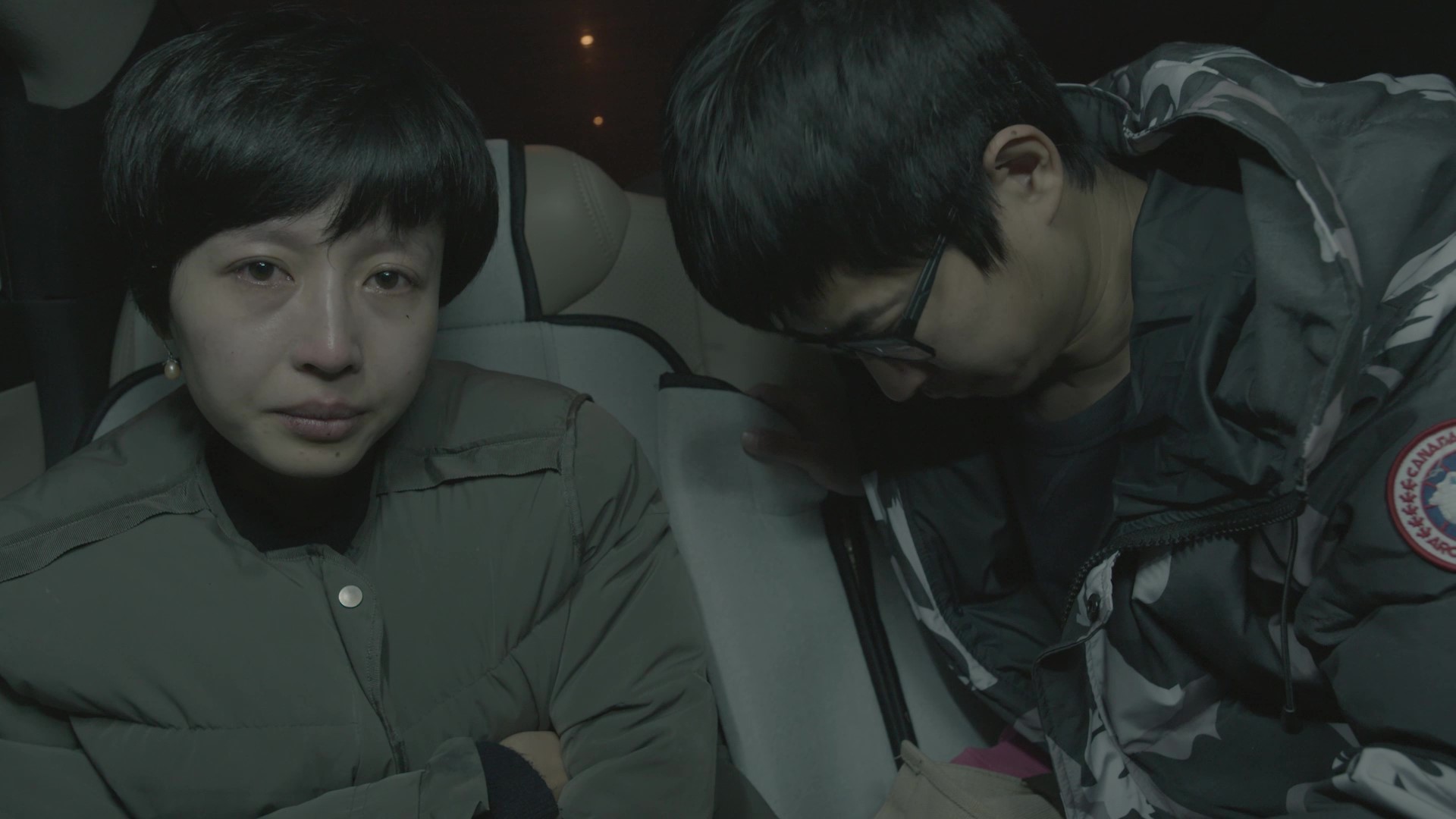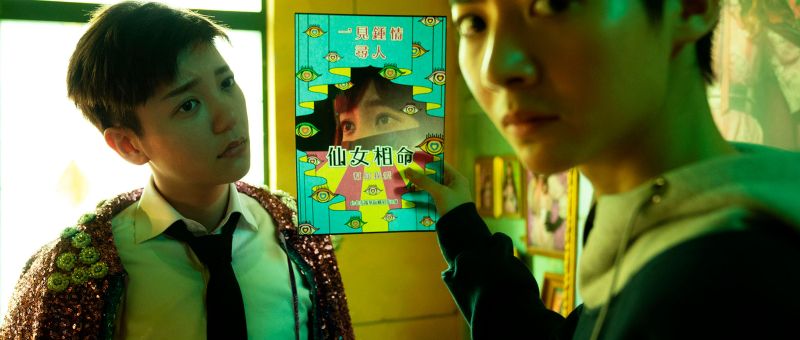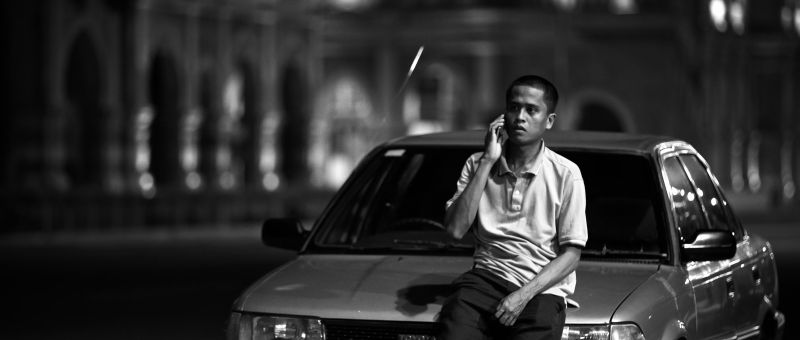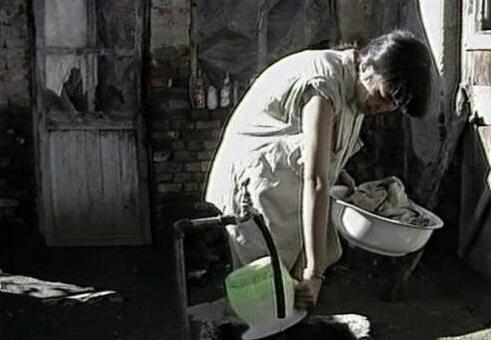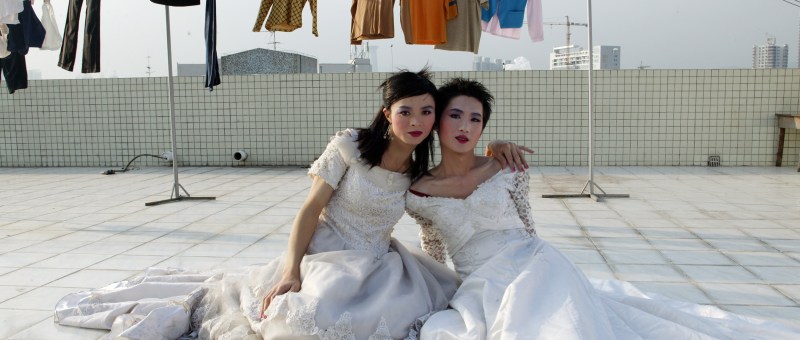
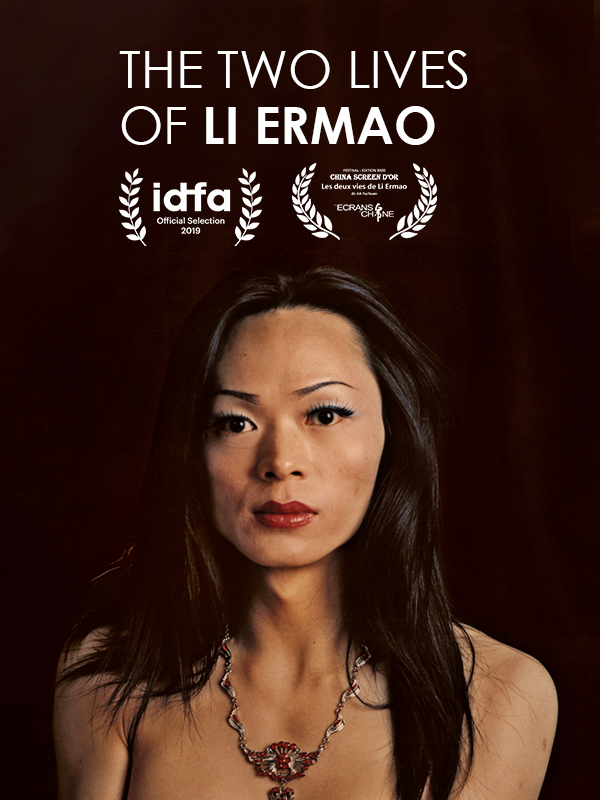
Single Woman (单身女人, Lin Xin, 2018)

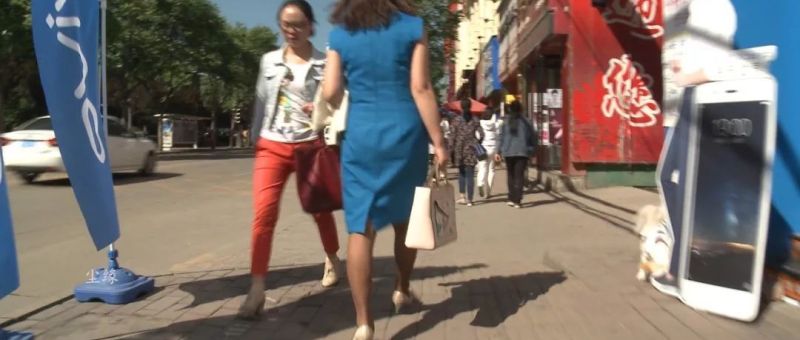
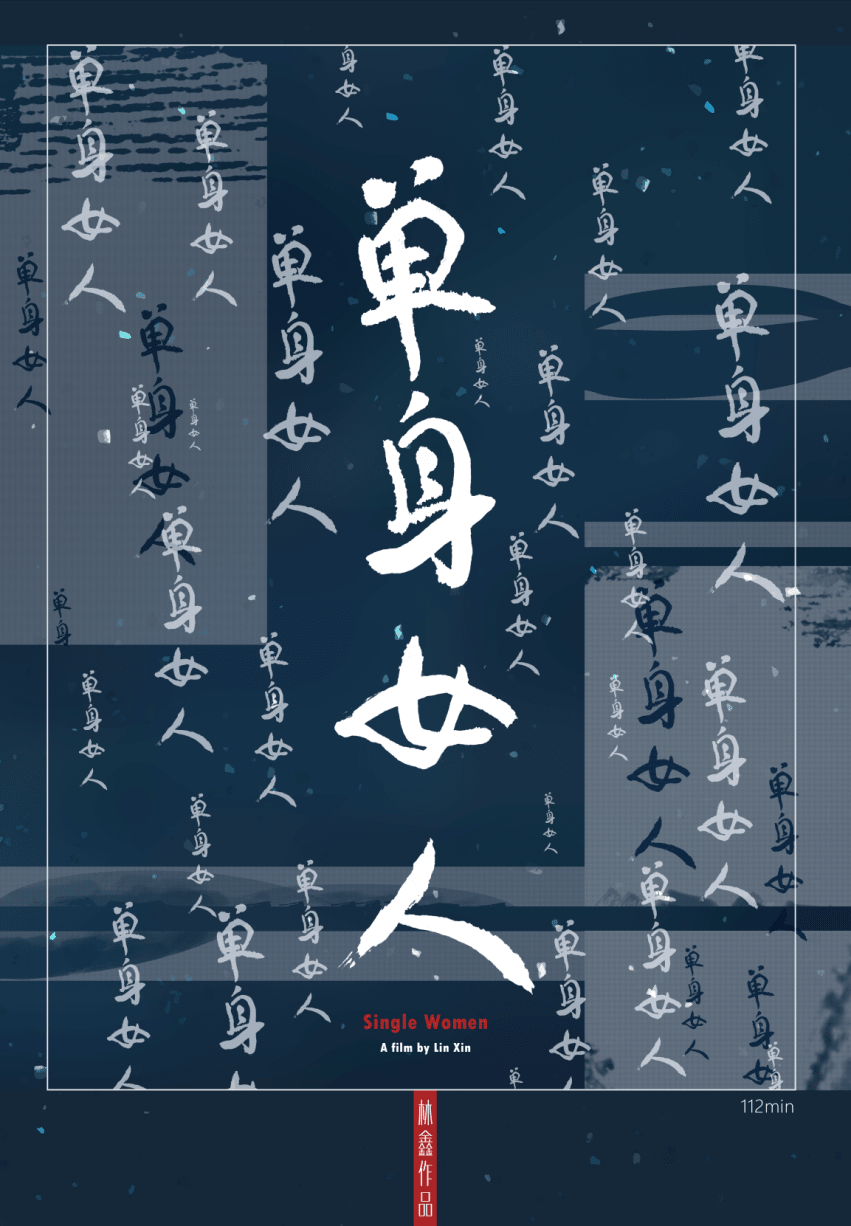
What does it mean to be a single woman in contemporary China? Lin Xin’s talking heads doc Single Woman (单身女人, Dānshēn Nǚrén) is less concerned with the “Christmas cake” phenomenon than with ordinary middle-aged women who are living their lives without men. Many have been married before but are now divorced (Lin does not speak to any widows) while some are not strictly “single” having found someone new, but all have contradictory views on the nature of marriage, relationships, and independence even if united in their sense of disillusionment with modern men raised in a relentlessly patriarchal society. 

The project appears to have originated with local novelist Dong Li who as we discover is known for the erotic quality of her writing and is certainly among the frankest of the women when it comes to speaking of sexual desire. Having divorced her husband in 1997, Li explains that she went on looking for true love but found herself feeling exploited by men who were often overconfident in their sexual prowess and largely viewed relationships as a transactional activity, offering to cure the sexual frustration they stereotypically believed must be plaguing her in return for material favours. Li raises this point consistently while talking with some of the other interviewees who in the main seem to be her friends, even recounting an outlandish story of a married lover who lied about having a wife but bizarrely insisted on eating the genitals of various animals in order to increase his virility. 

Xiao Hua, a teacher, also mentions potential exploitation as an explanation for why she’s cooled on the idea of romance, explaining that after divorcing her adulterous husband even at the risk of losing contact with her son she found herself in a series of unsatisfying relationships with duplicitous men who milked her for money. Her rationale for turning someone down because “he was not qualified to love me” may sound cold and cynical, but has a degree of sense to it given her experiences with men who misused her or attempted to exploit what they saw as vulnerability in her perceived loneliness. 

Like many of the women, Xiao Hua had also been a victim of violence, another factor subtly raised by Dong Li as she talks to her friends about their lives as single women. Ya Lan dated her husband for eight years and married him only after overcoming his family’s objections yet later became a victim of domestic violence and eventually divorced. Unlike Dong Li and Xiao Hua, she found herself entering a relationship with a younger man which was genuine in intent though she later found him lazy and immature, treating her perhaps more like a mother in need of someone looking after him while she longed for someone to look after her. After that relationship ended she declared herself happy with the single life but has since found a more satisfying match in a devoted retiree and now that her son has married is planning to remarry herself. 

On the other hand, Chen Yuan is the only one of the women who has never been married and seems to have accepted the idea that she’ll remain single for the rest of her life though this does not appear to be her desire or intention. In fact none of the women except perhaps Dong Li entirely embraces the legitimacy of a woman’s right not to marry at all. Nevertheless, she firmly believes that a woman should be independent and that it is perfectly possible to be happy without a man even if she looks back with regret on the romantic choices of her youth wondering if she was perhaps too picky turning down a man who sincerely loved her solely because she was not sure he was really the one. Lili meanwhile married the man she loved and forged a conventional family but the relationship later suffered under the demands of everyday life raising children and her husband left her feeling that in the end they were simply incompatible. Despite the way it ended, Lili declares herself happy with married life but has no real desire to try again grateful in a sense to have experienced two different ways of living. 

Her experience could then not be more different than that of Mei Xiang who is actually the first of the women we meet as she tells a disturbing story about being attacked by the husband of her husband’s mistress. The man in question was actually her second husband whom she’d been persuaded to marry on the grounds of his “honesty” despite her misgivings, her first marriage had ended due to animosity from her husband’s parents who tried to convince her to give their daughter up for adoption in order to try again for a son under the demands of the One Child Policy. Her husband was never able to stand up to his family who refused to see the baby and the marriage broke down though now she wonders if they were over hasty and couldn’t perhaps have worked things out if they hadn’t been so young and impulsive. She hasn’t quite sworn off the idea of marrying again, sure that there are good men out there it’s just that she hasn’t yet met one, but seems to have filled her life with her charity work and prioritised self-fulfilment over social expectation. 

Ending on a rather ironic note, Lin takes us back to the school where Xiao Hua works as a group of children engage in a boys vs girls tug of war. Despite Mei Xiang’s declaration that there must be good men out there, Lin’s women haven’t had much luck locating them, each victims of deeply embedded patriarchal attitudes, but most haven’t given up hope of finding love and it seems deciding to be a single woman leading an independent life is still an unthinkable taboo. Nevertheless each of the women, Dong Li included, has found a degree of peace with their life choices and has at least the solidarity of her female friends to help her cope with a still unforgiving patriarchal society. 


Single Woman is currently available to stream in the UK as part of the Chinese Cinema Season.

Weekend Lover (周末情人, Lou Ye, 1995)

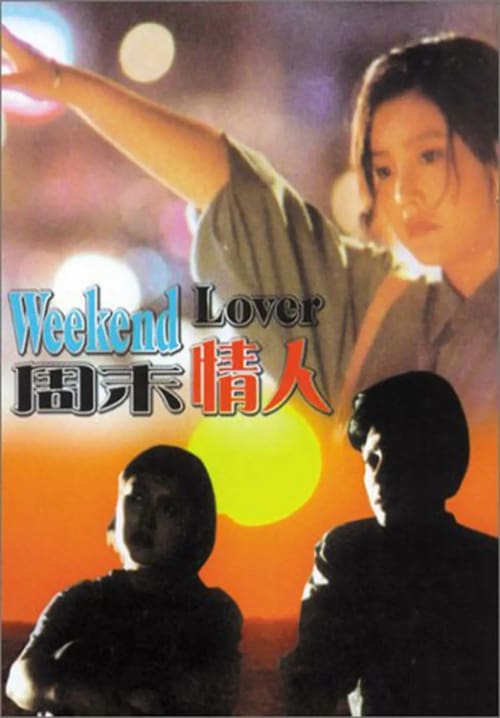
Lou Ye’s troubles with the censors began at the very beginning of his career. Shot in 1993, his first feature Weekend Lover (周末情人, Zhōumò Qíngrén) was held up until late ’95, making ’94’s Don’t Be Young his accidental “debut”. Set in the contemporary era the film nevertheless has a strong sense of melancholy nostalgia coupled with air of nihilism that perhaps distressed the censors more than the otherwise potentially problematic bohemian setting, finding the post-Tiananmen generation floundering in a changing China in which the dream of freedom has long since flown. 

In one of many title cards, Lou opens with a lengthy piece of text claiming that this is a true story, a claim he will return to with the closing card the fantastical quality of which perhaps undermines the idea of its “reality”. The author of the text claims that this is a story some did not want to tell but mostly because it makes them sad to recall bygone days for reasons we will come to understand. Nevertheless, the filmmakers claim to have tracked down the central figure of Lixin (Ma Xiaoqing) who has agreed to share her story, which turns out to be the story of two men, violent thug Axi (Jia Hongsheng) and sensitive musician Lala (Wang Zhiwen), who find themselves bound for confrontation in order to lay claim to the affections of Lixin. 

Axi is the “weekend lover” of the title, a high school boyfriend of Lixin’s who used to spend weekends in her apartment while her parents were out but later went to prison for killing another boy who threatened their relationship. Lixin vows to wait, but ends up meeting Lala in a case of mistaken identity tasked with venturing into the unfamiliar world of back street pool halls to find a man in plaid in order to deliver something on behalf of Axi. The pair start dating, but Axi returns unexpectedly some years later put out to realise that Lixin has forgotten him and quite literally moved on. Hoping to get her back he threatens Lala and later Lixin herself, remaining somewhat obsessed with recapturing the past while little more than a violent street thug with nothing to offer other than intimidation. 

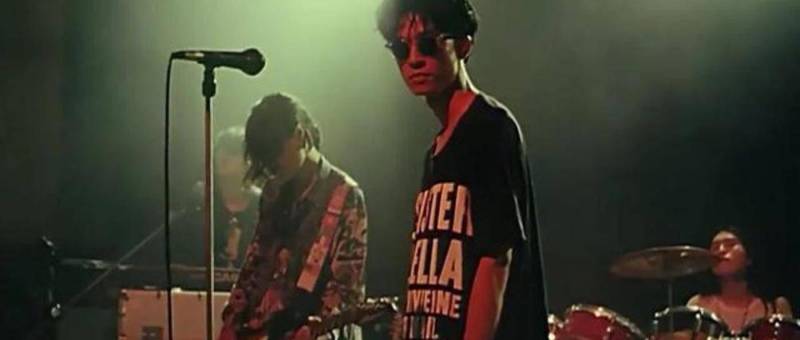
One could see Axi and Lala as embodiments of past and future with Lixin trapped painfully in an interminable present. Lala dreams of becoming a singer, eventually joining a band with whom Lixin also becomes friends hanging out in the beatnik bohemian space of the disused building she decribes as a “jail” they repurpose as their arena. Yet even this potential future is flawed. The band’s leader (Wang Xiaoshuai) explains to Lala that they will disband after their big concert as most of the members are going abroad, perhaps he will even go to America. There is no future for any of them in China while Lala rejects the idea he may stay and marry Lixin, realising she has not completely severed her connection to Axi believing their relationship is doomed to failure. 

Westernisation is indeed a persistent background theme from the discarded Coke cans, Marlboro cigarettes, and Lipton tea in Axi’s rundown room to the fancy new fast-food restaurant where Lixin works going under the name “California Rainbow”. These Bohemians dream of Western freedoms aside from the power of consumerism, longing for the right to seize their artistic potential but finding themselves continually constrained by a society they do not understand. “We drank a lot, always felt we were the most miserable and that society didn’t understand us. Later I came to realise it’s not that society didn’t accept us it’s that we didn’t understand society” Lixin explains in voiceover apparently from the vantage point of “many years” later in which she seems to have in part at least rejected her countercultural youth and developed an understanding of the contemporary society. 

Nevertheless, the film closes with both her wilful self-exile and an improbably optimistic coda which may only be a reflection of her dream followed by the title card which suggests that the couple may find happiness but only “many years later” in another city. “We felt the whole world belonged to us, as if everything would last forever. But we didn’t know what would happen.” Lixin laments, recalling her brief moment of youthful freedom later ruptured by the re-introduction of the violent past in a touch of rather elliptical irony that perhaps evokes Lou’s later taste for non-linear narrative. Moody yet imbued with a kind of youthful ennui, Weekend Lover’s frequent use of title cards, pop music, and self-consciously cool imagery may never quite coalesce beyond their various influences but edge towards an attempt to capture youth in a new age of anxiety caught between the death of idealism and the opportunities of a newly consumerist economy. 


Weekend Lover is currently available to stream in the UK as part of the Chinese Cinema Season.

Musical sequence (English subtitles)

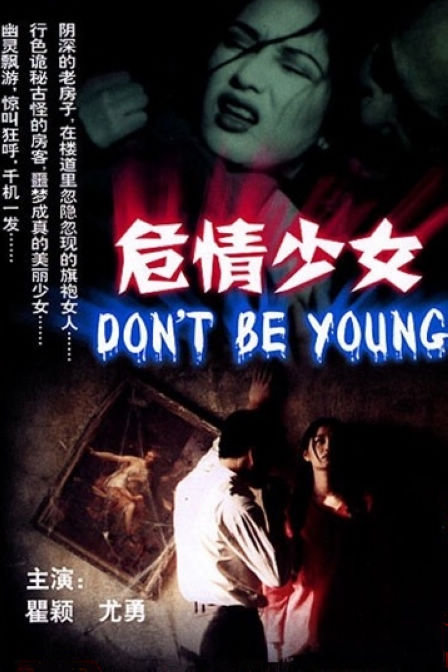
Don’t Be Young (危情少女, Lou Ye, 1994)

Lou Ye’s complicated relationship with China’s censorship board has been well documented though it is certainly not a recent phenomenon and has in fact plagued him from the very beginning of his career. His first feature, Weekend Lover, was shot in 1993 but not passed for release until two years later technically making 1994’s Don’t Be Young (危情少女, Wēi Qíng Shàonǚ) his cinematic debut. This might seem surprising seeing as Don’t Be Young flirts with themes the censors find problematic, an ethereal gothic ghost story perhaps permissible solely because the spectres can be read as existing only in the mind of the troubled, traumatised young woman at the film’s centre though the spirit that haunts is perhaps that of the age and of a traumatised China caught between failed revolution and rapidly expanding economic prosperity. 

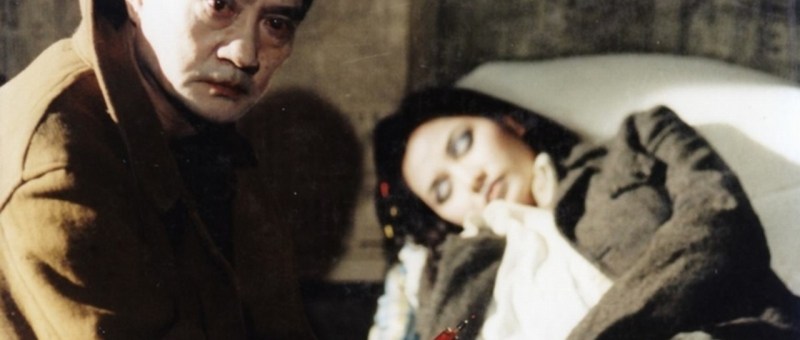
As the heroine, Lan (Qing Yu), tells us this is the story of “another time, another place”. Unable to separate fantasy from reality, she nevertheless goes on to narrate a dream she later claims not to remember and in any case can no longer revisit. On smashing a bottle in the street she retrieves a device which seems to be the engine of a music box that once belonged to her mother and acts as a kind of key to an alternate reality that soon bleeds into her contemporary life. In the present, Lan is a nervous young woman struggling to deal with her mother’s death in an apparent suicide, watched over by her patient doctor boyfriend Lu Mang (You Yong) but after discovering a strange book similar to one her mother owned containing a floor plan and a letter after taking shelter from the rain under the porch of an abandoned mansion she finds herself investigating her own history. 

The dream world, shot in an ethereal blue, seems to exist sometime in the 1950s, Lan’s clothes and those of her boyfriend and the other people around her suddenly shifting without warning as she finds herself crossing over while everyone else appears in pale face as if this were the world of the dead, or a “hell” as an elderly woman later describes it. Lan insists that “everything is real” though the borders between the two worlds become increasingly thin even as the plot developments become ever more outlandish leading to a confrontation with a mad scientist veterinarian and his nefarious attempts at human experimentation with a weird drug that causes those who take it to lose control over their nervous systems. The scientist insists that science makes him a god with the right to dominate the world while the secondary villainess (Nai An) turns out to be a scorned nurse blackmailed into helping to “ruin” Lan over her murder of a patient who tried to assault her by pulling out his oxygen tubes. Only the earnest Lu Mang who is strangely absent for much of the action after leaving to “take an exam” but mostly wandering moodily around noirish rail stations served by atmospheric steam trains, is present to represent “science” as a force for good but ultimately ends up defending Lan in the most prehistoric of ways. 

Nevertheless, what she begins to uncover is a complicated family legacy running through romantic failure, adulterous liaison, and broken connections all contained in the house she inherits after decoding the messages from the dream. Lou throws in a series of unexpected cinematic allusions, including one to Ozu’s Late Spring as a lodger randomly peels an apple with intense melancholy, while drawing inspiration from the Hong Kong New Wave. Yet the key aesthetic is gothic horror as Lan finds herself trapped by generational trauma, witnessing her grandmother bound in cobwebs while attacked by razor-wielding spectres apparently keen to stop her further investigating her traumatic past. Finally she laments that all that remains is an “empty and beautiful end”, apparently returning to the present which is perhaps equally frightening in its sense of oppressive anxiety by abandoning the music box and thereby closing the door on the nightmarish dream world of haunted houses and cursed legacies. Nevertheless, the young couple seem to have beaten back the attempts of the older generation to reassert their control and emerge into a new society with a new sense of freedom if not quite liberation. 


Don’t Be Young  is currently available to stream in the UK as part of the Chinese Cinema Season.

China’s Van Goghs (中国梵高, Yu Haibo & Kiki Yu Tianqi, 2016)

“You can just take a picture!” a frustrated driver calls out to “painter worker” Zhao Xiaoyong as he makes a long delayed attempt to express himself artistically by painting the streets of his rural hometown in the style of European artist Vincent Van Gogh. Xiaoyong is one of several men attempting to survive in a declining industry, a painter of knock off replicas of famous works of art produced for the foreign market in the small town of Dafen, Shenzhen known as one of China’s largest “oil painting villages” since an enterprising Hong Kong businessman kickstarted the movement back in the tumultuous year of 1989. 

Though the title may at first seem ironic, referring to the “fake” paintings at its centre, Yu Haibo and Kiki Yu Tianqi’s strangely moving documentary China’s Van Goghs (中国梵高, Zhōngguó Fán Gāo) explores the conflicts which continue to define the lives of the artists who as they put it paint to live but take their art extremely seriously and possess tremendous technical skill but are forced to stifle their own creative instincts while producing meticulous copies for a mere pittance. As Xiaoyong laments, they find it difficult to attract and keep apprentices because you can earn more at the factory, while one of his colleagues ironically admits that they had to set up a production line in order to complete an unusually large order though following the financial crisis those are largely thin on the ground. 

Xiaoyong is a Van Gogh obsessive, as are many of the artists of Dafen, and longs to visit Amsterdam in order to see the originals up close. Ironically enough, their biggest market is indeed the Netherlands, and his most important client has invited him to visit several times previously though Xiaoyong and his wife continue to argue over the expense. His eventual visit is however heartbreaking, his eyes a deep well of pain and confusion as he finds himself overcome with disappointment and disillusionment. He thought his client owned a fancy gallery, but his paintings are being sold in a pokey knock off souvenir shop for three times what he was paid to paint them which was only around €8 to begin with though they took many hours to complete. Later talking to another artist about his trip he remarks on how overcome he was seeing Van Gogh’s originals, but the experience also destroys the sense he had of himself as an artist, reminding him that he is “just” a craftsman making diligent copies while leaving him with the desire to create something meaningful of his own. 

Earlier in the film, Xiaoyong had travelled back to his rural hometown for the anniversary of his father’s death breaking down in tears while reflecting on the various ways his poverty has defined his life, denied an education and orphaned at young age. Back in Dafen, meanwhile, his teenage daughter who lives with grandparents in order to attend high school visits home and declares herself fed up with education, as if she’s wasting her time unable to keep with the curriculum silently crying in the corner while her parents continue working. Xiaoyong sympathetically laments he didn’t have the opportunity to learn very much but has taught himself to open his mind and has obviously become a skilled craftsman with canny business skills only to find himself falling for his own mystique serious about his craft but unaware of the various ways he is being exploited by the Western art economy.

What he’s doing may in a sense be dubious though no one seriously thinks they’re buying a Van Gogh original for €30, but who is to say what really is “authentic” art or suggest that Xiaoyong’s artistry is worth any less solely because someone painted what he painted before? Can a meticulous copy be in itself a separate work of art resplendent in its technical prowess? Xiaoyong says he fell in love with Van Gogh’s paintings because of his discovery of beauty in poverty, he and his friends tearfully watching the 1956 Hollywood biopic Lust for Life fiercely identifying with the artist’s struggles as they too try to accommodate painting to live with their desire for creative expression. In a strange moment, Xiaoyong recalls a dream he had in which he met Van Gogh and told the artist that he had almost become him, but Xiaoyong’s salvation eventually comes in a meeting of the two worlds, painting a portrait of his ageing grandmother her face a labyrinth of lines born of a long life of rural hardship. Sure, you can just take a picture, but it isn’t quite the same.


China’s Van Goghs is currently available to stream in the UK as part of the Chinese Cinema Season.

Original trailer (English subtitles)

The Reunions (吉祥如意, Da Peng, 2020)

Comedian, actor, and general multi-hyphenate Da Peng (AKA Dong Chengpeng) scored box office hits with his first two features, superhero parody Jian Bing Man and musical dramedy City of Rock, but The Reunions (吉祥如意, Jíxiáng Rúyì), a reworking an earlier short, marks a definite shift in his personal style if not exactly devoid of laughs or warmth. Partly a muted personal meditation on the price of success and the compromises of the modern China, Da Peng’s Spring Festival movie in contrast to the sentimental norm finds a family on the brink of disintegration but discovers within that a sense of sad resignation rather than failure or disappointment. 

Comprising of Da Peng’s earlier short given the English title of “A Reunion”, the first 40 minutes or so act as a kind of verbatim docudrama starring a professional actress, Liu Lu, as Da Peng’s cousin Lili (who later features in the part two “A Final Reunion” making of redux) alongside members of his family including his mother and father playing themselves. Da Peng had apparently intended to film a kind of personal history/tribute to his grandmother exploring the various ways she lived her day to day life preparing for the Chinese New Year celebrations, but during his stay which was his first in many years his grandmother sadly passed away. During the making of sequence, he begins to wonder if his visit home to make the movie may have caused his grandmother’s health to decline or if he was simply unaware that she had already become ill because he failed in his duty as a grandson staying away so long. 

As he puts it, in the city he is a different person with a different life largely forgetting about his family back in rural China. The main crisis of the New Year period is not however his grandmother’s death but the pending decision of what to do with uncle Ji Xiang who suffered brain damage after an illness a few decades previously and is unable to take care of himself. Filial wisdom says the burden falls on Lili, but she too lives in the city and has her own life with a small child to take care of meaning that it would be difficult for her to take her father home to live with her, not to mention the potential difficulties of uprooting him from everything he’s known. The situation is further complicated by the fact that Lili and her father had long been estranged as her mother divorced him after the illness and moved to the city when Lili was a teenager. During the making of sequence, the actress playing Lili asks for clarification in her motivation stating that the one thing she doesn’t understand is why she hasn’t visited her family in over 10 years, but the only answer she receives is an awkward silence. 

Meanwhile, in the absence of the grandmother relations between the siblings begin to fray as old conflicts bubble to the surface, Da Peng’s uncle and aunt complaining that they cared for Ji Xiang and his mother all this time on their own and would appreciate some help but fail to see how any of the secondary suggestions of the other siblings pitching in as grandma had wished are realistic. Others insist that prior to his illness Ji Xiang was the most filial of the siblings, frequently helping out his brothers and sisters with jobs at the oil field where he worked and generally making sure to take care of everyone only to be semi-abandoned by them now he is no longer to look after himself. The presumably engineered argument from the movie later spirals out of control, the actress playing Lili pleading with the siblings to stop, while her real life counterpart looks on impassively from behind the camera, the fate of Ji Xiang still seemingly undecided. 

Yet quizzed by a fan at a Q&A after the screening of A Reunion, Da Peng doesn’t have an answer for why he decided to make the film, any messages he might have hoped to convey beyond a sense of loss and regret lost amid his desire to capture a moment of family life, his mother appearing on camera in a brief interview sequence avowing that she believes that with grandma gone this will probably be the last New Year, the siblings no longer having a common reason to come together. Someone even mentions that the family is only here this time because of Da Peng’s film, calling into question the ethical dimensions of his decision to put his relatives on camera. He closes on a poignant note with some home video from New Year 2008, presumably the last time he was home, featuring his grandmother and Uncle Ji Xiang in happier times harking back to an essential sense of loss in the all the missed opportunities of absent years now that there will be no more next times or home to go back to. 


The Reunions is currently available to stream in the UK as part of the Chinese Cinema Season.

Original trailer (English / Simplified Chinese subtitles)

Dear Tenant (親愛的房客, Cheng Yu-Chieh, 2020)

Taiwan introduced marriage equality in 2019 and is often regarded as the most liberal of Asian nations but that does not necessarily mean that it’s free of prejudice or homophobia whether internalised or otherwise. Cheng Yu-Chieh’s melancholy family drama Dear Tenant (親愛的房客, Qīn’ài de Fángkè) begins in fog, mirroring it seems the hero’s sense of numb confusion consumed as he is with guilt and grief but also perhaps reflecting the miasma of his life in which he is forced to remain silent, prevented from fully expressing himself by a persistent sense of shame and anxiety. 

Chien-yi (Mo Tzu-yi) has been caring for his mother-in-law Mrs. Chou (Chen Shu-fang) and Yo-yu (Bai Run-yin), the son of his late partner Li-wei (Yao Chun-yao), for the past five years, but is described by them merely as a “tenant”, a lodger occupying the upstairs annex not really part of the family. His liminal status is fully brought home during the New Year dinner which he cooks and serves but, as Li-Wei’s brother Li-gang (Jay Shih) has decided to make a rare visit home from an extended stay in China, later excuses himself from as if he were the help not entitled to sit at the family table. Mrs. Chou, meanwhile, grumpily invites him to stay low-key resentful of Li-gang suspecting he’s only come to ask for more money, suspicions which are deepened after he starts talking about retirement apartments. When Mrs. Chou passes away suddenly a few months later Li-gang returns again and is both annoyed to learn that Chien-yi has already adopted Yo-yu and distressed to realise that his mother put the house in Yo-yu’s name which means he’s not getting the inheritance he assumed would be his. Consequently, he accuses Chien-yi of killing his mother to get his hands on the house, a series of events complicated by the autopsy report which suggests Mrs Chou’s death may have been hastened by over medication. 

A shy and reticent man, Chien-yi perhaps has reasons for his silence and his reluctance to speak openly with the police, who are needlessly aggressive and belligerent in their treatment of him, is easily understandable. Questioned by the relatively sympathetic prosecutor he is pressed about his “relationship” with the family and remains somewhat coy, later explaining that Mrs Chou had asked him not to tell Yo-yu that he and his father were lovers continuing to refer to him only as her “tenant” even as he took care of the household. The prosecutor asks him why he didn’t leave after his lover died, a question Chien-yi rightly feels to be absurd asking her if she’d ask the same question of a woman who stayed to look after her husband’s family after her husband died. Of course she wouldn’t, it would be ridiculous and insensitive.

It’s impossible to escape the sense that Chien-yi falls under greater suspicion solely because of his sexuality, the lead police officer quite clearly getting a bee in his bonnet about this particular case. They find him evasive and uncooperative, insensitive to the reasons he may have not to trust them that are later justified by their treatment of him as they again make moral judgements about his use of a dating app they likely would not make if he were picking up women though they might perhaps make of a woman in the same situation. Incongruously hanging out in a gay bar they hassle a former hookup who happens to be a drug user, blackmailing him into incriminating Chien-yi while Li-gang has Yo-yu taken to a psychiatrist in the suggestion that he may have been abused, explaining that he doesn’t want him raised in an “abnormal” environment. Chien-yi finds himself in handcuffs less for the alleged crime than for being a “suspicious” person who must surely be guilty of something even if it’s only his existence. 

It doesn’t seem to matter that Chien-yi tenderly cared for Mrs Chou even while she rejected him, angrily sniping that no matter how good he is to her it won’t bring her son back, or that he’s the only father the nine-year-old Yo-yu has ever really known having lost Li-wei when he was only four, he is condemned for his silence and his “secrets” ostracised by the previously warm parents at the piano school where he teaches after being outed by the insensitive police investigation. Consumed by grief and guilt he does his best to care for Li-wei’s family in his place, but is continually othered by a society which recognises him only as a “tenant” denying him his rightful place as bereaved spouse and step-father. As the melancholy ending perhaps implies, justice and equality are still very much works in progress even a rapidly liberalising society. 


Dear Tenant streams California until May 2 as part of San Diego Asian Film Festival’s Spring Showcase.

Original trailer (English / Traditional Chinese subtitles)

My Missing Valentine (消失的情人節, Chen Yu-Hsun, 2020)

“There’s a lot you don’t remember” the heroine of Chen Yu-Hsun’s quirky rom-com My Missing Valentine (消失的情人節, Xiāoshī de Qíngrénjié) is advised by a mysterious dream gecko arriving with clues retrieved from her subconscious to guide the way towards her romantic destiny. He also tells her that love is a matter of self-hypnosis, and in a sense he might be right in that what Hsiao-Chi (Patty Lee Pei-Yu) apparently needs is a time out, quite literally, to enable her gain a slightly different perspective in order to make peace with the half-remembered past and repair her fracturing sense of self. 

At 30, Hsiao-chi laments that she’s always been slightly out of sync with the world around her, perpetually racing ahead, laughing before the punchline and caught with her eyes closed in photographs. She blames this case of bad timing for her continued romantic failure along with the sudden disappearance of her father ten years previously who went out for tofu pudding and never came back. When she joins in with a dance class in the park and is courted by the handsome teacher (Duncan Chow) who asks her out on Chinese Valentine’s Day she thinks her luck is beginning to change, but when she wakes up with a mysterious sunburn and is told Valentine’s has been and gone she’s left only with a sense of existential confusion. 

As the gecko implies, Hsiao-chi’s existence is defined by the things that she’s “lost”, be they fathers, orphaned memories, or an entire day. The sunburn at least tells her that she experienced Valentine’s outdoors, only she has no memory of it, while she later comes across a photo of herself, unblinking, taken in a place in which she’s sure she’s never been. As it happens, the sweet and funny explanation has its unpalatable qualities, Hsiao-Chi quite literally manipulated without her knowledge or consent unwittingly on an awkward “date” while in a catatonic state but nevertheless guided back towards the hidden secrets of her past the discovery of which will eventually allow her to shift into sync with the world around her.

Meanwhile she remains hopelessly smitten with the improbably suave dance teacher, falling for his obvious scam as he sells her a sob story about his traumatic past and an orphan with a heart condition only for her to ironically suggest they enter a three-legged race in an effort to get money to help her. She resents her pretty colleague at the post office (Joanne Missingham), complaining that ability is irrelevant when all anyone cares about is the superficial while presented with a series of eccentric characters including a chubby guy in search of a wife and a pervert professor, lowkey dismissive of a young man she refers to as the “weirdo” (Liu Kuan-ting) who comes in every day to mail a letter. Living in a rundown house share with another set of unusual people, she penny pinches for all she’s worth while listening to a sympathetic talk radio host and dreaming of romantic fantasy. Ironically what she finds is that she needs to slow down, see things from a different perspective not quite as “superficial” or judgemental as she’s hitherto been while opening herself up to receiving the messages from her past she’d long forgotten were even waiting for her. 

With its retro colour scheme and quirky worldview, Chen’s charmingly sophisticated screenplay marries an intriguing puzzle box structure with a genuine sense of existential questioning as Hsiao-chi ponders the nature of loss wondering if it’s really possible to mislay an entire day even trying to report it to the police as stolen while wondering if her new “boyfriend”, also missing, is more than mere romantic fantasy. The irony is that Hsiao-Chi works at the post office but struggles with communication, finally discovering she can only unlock the secrets of her past through the recollections of others, adding their perspective to her own in order to complete the panorama of their lives and allowing her interior mantra to shift from “love yourself because no one else will” to “love yourself because someone out there loves you”. Hsiao-Chi’s missing Valentine is in many ways the one to her herself as she rediscovers a sense of self-acceptance while finally finding her rhythm in sync with the world around her as she resolves to wait for love hopeful that it too will eventually catch her up. 


My Missing Valentine streams California until May 2 as part of San Diego Asian Film Festival’s Spring Showcase.

Original trailer (English subtitles)

Spider Lilies (刺青, Zero Chou, 2007)

“I have no choice but to live in a virtual world” according to the lovelorn heroine of Zero Chou’s ethereal reflection on love and the legacy of trauma, Spider Lilies (刺青, Cìqīng). Two women connected by childhood tragedy struggle to overcome their respective anxieties in order to progress towards romantic fulfilment, eventually freeing themselves only by destroying the image of that which traps them. 

In the present day, Jade (Rainie Yang) is an unsuccessful camgirl with a habit of shutting down her clients on a whim which doesn’t play well with her boss. In an effort to spice up her live show, she decides to get a raunchy tattoo only to realise that the tattooist, Takeko (Isabella Leong), is in fact her long lost first love, a neighbour she took a fancy to at the tender age of nine. For her part, Takeko appears not to remember Jade but cannot deny the presence of her unusual spider lily tattoo, a version of which hangs prominently on her wall. Hoping to maintain contact, Jade decides to get the spider lily tattoo herself but Takeko is reluctant, explaining that the spider lily is a flower that leads only to hell. 

According to Takeko’s master, there is a secret behind every tattoo and the responsibility of the tattooist is to figure out what it is but never reveal it. Thus Takeko crafts bespoke tattoo designs for each of her clients designed to heal whatever wound the tattoo is intended to cover up, such as the ghost head and flaming blades she tattoos on a would-be gangster who secretly desires them in order to feel a strength he does not really have. Her tattoo, however, is intended as a bridge to the past, a literal way of assuming her late father’s legacy in order to maintain connection with her younger brother (Kris Shen) who has learning difficulties and memory loss unable to remember anything past the traumatic death of their father in an earthquake which occurred while she was busy with her own first love, a girl from school. Feeding into her internalised shame, the tattoo is also is a means of masking the guilt that has seen her forswear romance in a mistaken sense of atonement as if her sole transgression really did cause the earth to shake and destroy the foundations of her home. 

Then again, every time Takeko seems to get close to another woman something awful seems to happen. Jade, meanwhile, affected and not by the same earthquake is burdened by the legacy of abandonment and the fear of being forgotten. Living with her grandmother who now has dementia the anxiety of being unremembered has become acute even aside from the absence of the mother who left her behind and the father last seen in jail. “Childhood memories are unreliable” she’s repeatedly told, firstly by Takeko trying to refuse their connection, and secondly by a mysterious online presence she misidentifies as her lost love but is actually a melancholy policeman with a stammer charged with bringing down her illicit camgirl ring. The policeman judgementally instructs her to stop degrading herself, having taken a liking to her because he says he can tell that she seems lonely. 

A kind of illusionary world of its own, Jade’s camgirl existence is an attempt at frustrated connection, necessarily one sided given that her fans are not visible to her and communicate mainly in text. It’s easy for her to project the image of Takeko onto the figure of the mystery messenger because they are both in a sense illusionary, figments of her own creation arising from her “unreliable” memories. Jade wants the tattoo to preserve the memory of love as a bulwark against its corruption, at once a connection to Takeko and a link to the past, but the tattoo she eventually gets is of another flower echoing the melancholy folksong she is often heard singing in which the lovelorn protagonist begs not to be forgotten. 

“I am a phantom in your dream and you too live in mine” Jade’s mystery messenger types, hinting at the ethereality of romance and fantasy of love. Caught somewhere between dream and memory the women struggle to free themselves from the legacy of past trauma and internalised shame, but eventually begin to find their way towards the centre in making peace with the past in a sprit of self-acceptance and mutual forward motion.


Spider Lilies streams in the UK 26th April to 2nd May courtesy of Queer East

Original trailer (English subtitles)

The End of the Track (跑道終點, Mou Tun-Fei, 1970)

“It’s too dark in there, I can’t see the end” the hero of Mou Tun-fei’s The End of the Track (跑道終點, Pǎodào Zhōngdiǎn) complains though in the end he’ll find himself venturing into the darkness all alone. Like many of his contemporaries, Mou had come to Taiwan from the Mainland as a child during the Chinese Civil War but eventually made only two features on the island spending the bulk of his career working in exploitation cinema for Shaw Brothers in Hong Kong. The second of his two Taiwanese movies neither of which were ever given a mainstream release, The End of the Track continues in the broadly Neo-realist vein of I Didn’t Dare to Tell You while venturing towards the expressionistic in its innovative use of rhythmic editing and sound design to mimic the hero’s sense of confusion and anxiety in an oppressively authoritarian society. 

A middle-class boy, Hsiao-Tung (Chen Da-Wei) is best friends with Yung-Sheng (Tsai Tu-Chuen) whose parents operate a small noodle cart. Despite the class disparity between them, the boys are inseparable spending their time skinny-dipping at local beaches, play fighting, or exploring a disused mine they regard as their place joking about the possibilities of hidden gold. Tragedy strikes however when Hsiao-Tung gets bad vibes about venturing into the mine and suggests they head back to school to engage in a mutual “race”, he with his abacus and Yung-Sheng on the track. Shortly after Hsiao-Tung brings up the fact another boy has called them “queer” which they both laugh off with an intention to beat him up they later think better of because of his pimples, Yung-Sheng begins to tire but thanks to Hsiao-Tung’s encouragement continues to run until finally collapsing in his arms and thereafter passing away. 

The homoerotic undertones of the intense friendship between the two boys have been posited as a possible reason the film was not passed for release, and there is certainly something in the fact that Yung-Sheng dies seconds after the word “queer” is uttered though the underlying subtext seems to be bound up more with their class disparity than with the repression of their latent sexual desire. Academically gifted and from a middle-class family, Hsiao-Tung seems primed for conventional success in a rapidly developing economy while Yung-Sheng whose potential lies in his physicality will most likely be left behind. Hsiao-Tung’s attempt to push him beyond his limit eventually leads to his death in his inability to outrun the restrictions placed on him by his society. The two boys have been on different tracks all along, their paths set to diverge even as they fight desperately to maintain their friendship.

In the depths of his guilt feeling that he hastened Yung-Sheng towards his death in failing to recognise his distress, Hsiao-Tung attempts to atone by helping out at his parents’ noodle stand hoping to make his dream of opening a physical store a reality. Yet while his efforts eventually earn him acceptance from the Lees, the conclusion he comes to is that he cannot take his friend’s place or exchange his life for Yung-Sheng’s. He cannot change “track” to become a noodle stall owner’s son, but neither can he reconcile himself to the petty conservatism that defines the lives of his respectable middle-class parents, angrily throwing back at them the instructions given to children in order to become “model citizens” that they should work hard and mind their own business as his father berates him for his bad grades encouraging him to prioritise himself before others so that he might be of more use to society in the future. Hsiao-Tung finds himself bitterly remarking that Yung-Sheng’s death was then his own fault, reacting to the selfish individualism of an authoritarian society which tells him that his intense grief for his friend is wrong and that care and compassion for others is an inappropriate waste of potential. 

Continuing to visit his friend’s grave, Hsiao-Tung remains lost recalling the many conversations they had in which they were torn in their relationships with their parents feeling as if they ought to obey but also that there were times they desired their own freedom. “Everything is so changeable” he complains, “what’s right and wrong in this world all depends on the time, place and people.” He tells us that he doesn’t want to figure it out anyway, but claims to know now what’s going on coming to an understanding of himself as he re-contemplates the cave less afraid to face the darkness of adulthood as he ventures forth all alone in search of an ending.  


The End of the Track streamed as part of Electric Shadows.

I Didn’t Dare to Tell You (不敢跟你講, Mou Tun-Fei, 1969)

Born on the Mainland in 1941, Mou Tun-Fei was one of many making the move to Taiwan with his family following the Chinese Civil War in 1949. In fact, he made only two films in Taiwan, neither of which were ever released, and spent the bulk of his career in Hong Kong working for Shaw Brothers where he became associated with a brand of extreme exploitation cinema before finally returning to the Mainland, later working on the notorious co-production Men Behind the Sun. 

His debut, however, I Didn’t Dare to Tell You (不敢跟你講, Bù Gǎn Gēn Nǐ Jiǎng), is a gritty social drama inspired by the neorealist movement and the French New Wave even throwing in a few nods to The 400 Blows. No single reason is offered as to why it ultimately went unreleased, it was apparently not because Mou was unhappy with the film, though its mildly subversively digs at contemporary authoritarianism and perhaps problematically left-wing take on structural inequalities may have made it unpalatable to the censors even if its unexpectedly rosy coda feels like a concession made for their benefit. 

The hero, Da-Yuan (Hsu Jian-Sheng), is a lonely little boy tormented by playground bullies and raised by an often absent single-father (Chen Kuo-Chun) who has despite himself pledged his son as an apprentice in settlement for his gambling debts. Da-Yuan, however, wants to stay in education after middle school and is wary of an older man, Uncle Chen, who often drops by the house inspecting his teeth as if he were a horse at market. Consumed by guilt, Da-Yuan’s father eventually decides to honour his son’s wishes and send him to the public high school telling Uncle Chen that the deal is off. Uncle Chen, however, is less than sympathetic insisting that Da-Yuan’s father pay back the money he owes within the month. Spying on his father Da-Yuan overhears their conversation and begins to feel guilty himself, wondering if he should give up on staying at school but later deciding to look for work to help his father pay off the debt entering an arrangement with another boy who had to drop out of education to work in a print house, pulling his shifts while his friend does Da-Yuan’s homework to prepare for entering the high school the next year as his older brother had promised him he could. 

The subject of child labour seems to have been the controversial element that may have upset the censor’s board, suggesting a series of economic and social problems at the heart of a developing society as kids like Da-Yuan find themselves exploited while at the mercy of an irresponsible parent, in this case his father’s gambling which sees him berated by their no-nonsense landlady who makes no secret of her disapproval of his parenting style. Da-Yuan’s father, meanwhile, desperately tries to make amends by thrusting himself into overwork in low pay, exploitative conditions which have left him exhausted and in poor health as his constant coughing hints. Discovering that Da-Yuan has been neglecting his studies to work, he is crushed and betrayed, feeling as if all his sacrifices have been for nothing throwing his son out never knowing that he did it only in an attempt to ease his burden. The truth is eventually only revealed by Da-Yuan’s staunchly loyal friends who eventually “dare” to tell in the interests of justice. 

Meanwhile, a parallel conflict is going on in the heart of Da-Yuan’s school teacher (Grace Gua Ah-leh) who first appears as an austere figure with her hair in a tight bun wearing thick-framed glasses and dressed in a severe suit. Outside of school she finds herself at odds with her beatnik artist fiancé who complains that she’s travelled too far to the dark side and that her newfound conservatism is turning the kids into identical mindless drones devoid of life or creativity. She meanwhile, intensely resents his beard and shaggy hair complaining that he wasn’t “like this” when they first met two years previously, but once he smashes her unfashionable glasses which were merely an affectation designed to add to her sense of authority, her outlook does indeed begin to change. Letting her hair down and dressing in a more comfortable fashion she begins to bond with the kids and develops a sympathy for Da-Yuan investigating why it is he’s always falling asleep in class now determined to help rather than punish. 

In the end, authoritarianism loses out, the teacher’s earlier assertion that pupils need to be obedient members of society replaced by a more compassionate desire to nurture their individual talents and personal happiness. Nevertheless, the coda occurring after a poignant freeze-frame a little after the boy utters the film’s title to his chastened father, seems improbably optimistic, subtly re-enforcing the power of the state in its parade of pristine public high schools as if to say the system works in direct contrast to everything we’ve just seen implying that the dissatisfying reality of boys like Da-Yuan can be fixed by a simple act of truth sharing and an acceptance of mutual responsibility. Shot with unflinching though never preachy naturalism, Mou’s steely drama is otherwise resolute in its anti-authoritarianism condemning both the deadening effects of a rigid educational system and an unforgiving society that actively frustrates the hopes and dreams of ordinary kids like Da-Yuan and his friends. 


I Didn’t Dare to Tell You streamed as part of Electric Shadows.