A Foggy Tale (大濛, Chen Yu-hsun, 2025)

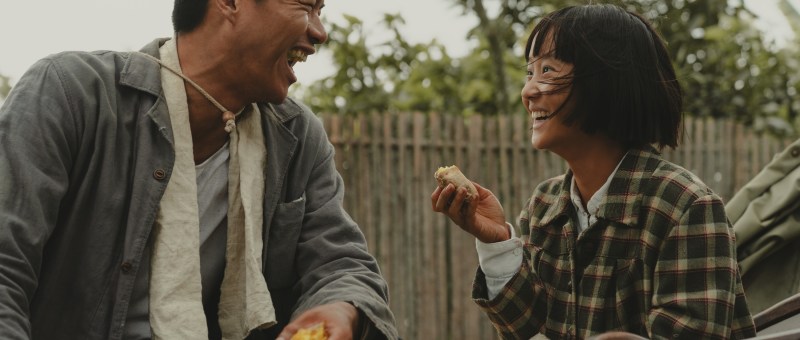
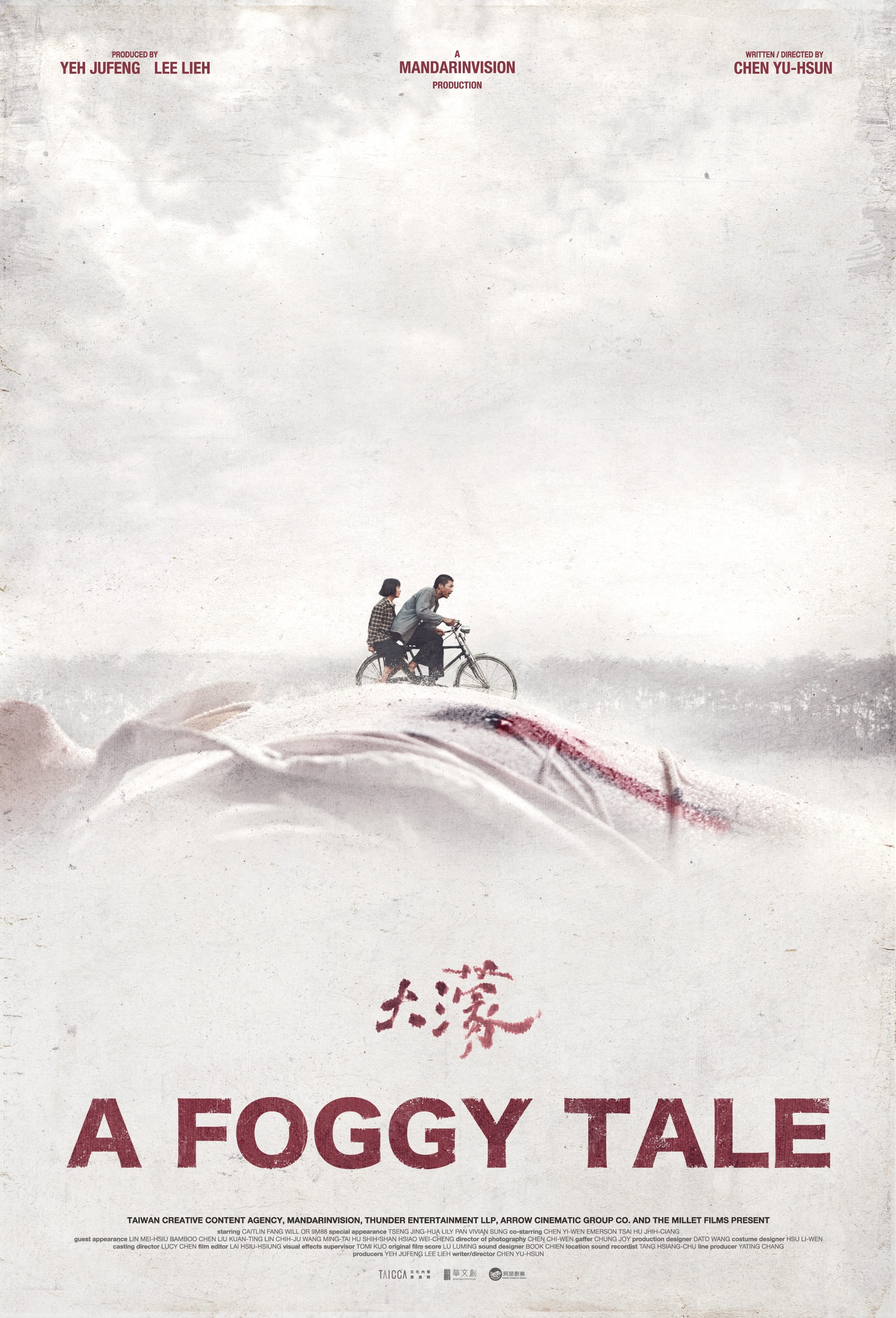
A young girl witnesses the horrors of the White Terror when she travels from her rural hometown to retrieve the body of her brother who has been executed by military police in Chen Yu-hsun’s otherwise light-hearted odyssey through 1950s Taipei, A Foggy Tale (大濛, dà méng). The title refers to a story the heroine’s brother Yun (Tseng Jing-hua), whose name means “cloud”, tells twice. First, it’s a metaphor for a resistance movement as two drops of water join many others to form a cloud that then descends on a patch of land that makes it farmable. Secondly, the second water droplet never makes it to the cloud, but instead becomes trapped half way and dissolves into the mist.

It is, however, into a foggy town that Yue (Caitlin Fang) arrives after leaving alone when her uncle, who has taken over her parents’ house following both of their deaths, explains that he can’t pay to retrieve Yun’s body. Their aunt is already resentful of the money they spent trying to save, and in truth does not want the extra mouths to feed of her niece and nephew. She would much rather have the house, which she regards as her husband’s rightful inheritance anyway, to herself for her sons to be the masters of. While he was in hiding, Yun had approved of Yue’s desire to become a teacher though she’s been taken out of school and, as he says, women in the country generally have little other choice than to become wives and mothers working the land. 

To add to the sense of displacement, Yue has an older sister in Taipei whom she’s never met because she was fostered out as a future daughter-in-law before Yue was born. Hsia (9m88) has since left the family who brought her up after refusing to marry the man she was betrothed to because they had been raised like siblings, though he remains somewhat resentful and badgers her to return. She had been acquainted with Yun while he was a student in the city, but has no idea that he has been killed after being arrested as a possible “communist” for protesting against the regime. 

Though she may not have felt it in the country, the forces of oppression are all around Yue in the city in the very presence of the military police. After being caught sleeping in the street, she’s taken in and beaten up by a policeman for talking back, while they also push her to “explain” where she got her money as a prelude to confiscating it for themselves. A kind yet flawed rickshaw driver (Will Or Wai-lam) who saves her from being kidnapped and sold into sex work, explains to her that the funeral home even charges for the bullets that were used to shoot her brother and she likely needs two or three times as much as she thought or they’ll throw him in a mass grave with the other victims of the regime.

Years later, an older Yue who has fulfilled most of her dreams though she no longer speaks Taiwanese with her adult daughter but Mandarin, sees a news report about the discovery of a mass grave and checks the names of those identified looking for someone she lost. This unearthing of the buried is past of symbolic of the desire to expiate this history, though Yue does not find the answers she’s looking for and the question is left hanging. When times where unbearable, Yun had told her to wind his watch forward and think of the Taiwan years to come that would be better where people could be free from oppression and exploitation. It took longer than expected, but some of that world has come to be, the film seems to say, if not completely and still with this mist hanging in the air that is the victims of the White Terror. Still, Yue’s story has its share of whimsy as she chases through the backstreets of a labyrinthine city. She encounters both kindness from the justice-loving rickshaw driver who tries to help but also scams her out of her brother’s watch only to return it years later as a means of assuaging his guilt, and cruelty from the men who tried to sell her, the secret policeman who apparently went into business, and unforgiving detectives. But in other ways, what she finds is a kind of peace and her place as a part of this nation and society as time continues its eternal march forward.


A Foggy Tale screens in Chicago 10th April as part of the 20th edition of Asian Pop-Up Cinema.

Trailer (English subtitles)
I Didn’t Dare to Tell You (不敢跟你講, Mou Tun-Fei, 1969)

Born on the Mainland in 1941, Mou Tun-Fei was one of many making the move to Taiwan with his family following the Chinese Civil War in 1949. In fact, he made only two films in Taiwan, neither of which were ever released, and spent the bulk of his career in Hong Kong working for Shaw Brothers where he became associated with a brand of extreme exploitation cinema before finally returning to the Mainland, later working on the notorious co-production Men Behind the Sun. 

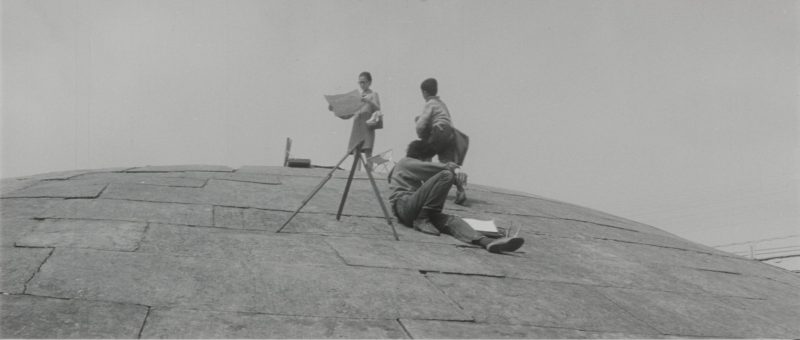
His debut, however, I Didn’t Dare to Tell You (不敢跟你講, Bù Gǎn Gēn Nǐ Jiǎng), is a gritty social drama inspired by the neorealist movement and the French New Wave even throwing in a few nods to The 400 Blows. No single reason is offered as to why it ultimately went unreleased, it was apparently not because Mou was unhappy with the film, though its mildly subversively digs at contemporary authoritarianism and perhaps problematically left-wing take on structural inequalities may have made it unpalatable to the censors even if its unexpectedly rosy coda feels like a concession made for their benefit. 

The hero, Da-Yuan (Hsu Jian-Sheng), is a lonely little boy tormented by playground bullies and raised by an often absent single-father (Chen Kuo-Chun) who has despite himself pledged his son as an apprentice in settlement for his gambling debts. Da-Yuan, however, wants to stay in education after middle school and is wary of an older man, Uncle Chen, who often drops by the house inspecting his teeth as if he were a horse at market. Consumed by guilt, Da-Yuan’s father eventually decides to honour his son’s wishes and send him to the public high school telling Uncle Chen that the deal is off. Uncle Chen, however, is less than sympathetic insisting that Da-Yuan’s father pay back the money he owes within the month. Spying on his father Da-Yuan overhears their conversation and begins to feel guilty himself, wondering if he should give up on staying at school but later deciding to look for work to help his father pay off the debt entering an arrangement with another boy who had to drop out of education to work in a print house, pulling his shifts while his friend does Da-Yuan’s homework to prepare for entering the high school the next year as his older brother had promised him he could. 

The subject of child labour seems to have been the controversial element that may have upset the censor’s board, suggesting a series of economic and social problems at the heart of a developing society as kids like Da-Yuan find themselves exploited while at the mercy of an irresponsible parent, in this case his father’s gambling which sees him berated by their no-nonsense landlady who makes no secret of her disapproval of his parenting style. Da-Yuan’s father, meanwhile, desperately tries to make amends by thrusting himself into overwork in low pay, exploitative conditions which have left him exhausted and in poor health as his constant coughing hints. Discovering that Da-Yuan has been neglecting his studies to work, he is crushed and betrayed, feeling as if all his sacrifices have been for nothing throwing his son out never knowing that he did it only in an attempt to ease his burden. The truth is eventually only revealed by Da-Yuan’s staunchly loyal friends who eventually “dare” to tell in the interests of justice. 

Meanwhile, a parallel conflict is going on in the heart of Da-Yuan’s school teacher (Grace Gua Ah-leh) who first appears as an austere figure with her hair in a tight bun wearing thick-framed glasses and dressed in a severe suit. Outside of school she finds herself at odds with her beatnik artist fiancé who complains that she’s travelled too far to the dark side and that her newfound conservatism is turning the kids into identical mindless drones devoid of life or creativity. She meanwhile, intensely resents his beard and shaggy hair complaining that he wasn’t “like this” when they first met two years previously, but once he smashes her unfashionable glasses which were merely an affectation designed to add to her sense of authority, her outlook does indeed begin to change. Letting her hair down and dressing in a more comfortable fashion she begins to bond with the kids and develops a sympathy for Da-Yuan investigating why it is he’s always falling asleep in class now determined to help rather than punish. 

In the end, authoritarianism loses out, the teacher’s earlier assertion that pupils need to be obedient members of society replaced by a more compassionate desire to nurture their individual talents and personal happiness. Nevertheless, the coda occurring after a poignant freeze-frame a little after the boy utters the film’s title to his chastened father, seems improbably optimistic, subtly re-enforcing the power of the state in its parade of pristine public high schools as if to say the system works in direct contrast to everything we’ve just seen implying that the dissatisfying reality of boys like Da-Yuan can be fixed by a simple act of truth sharing and an acceptance of mutual responsibility. Shot with unflinching though never preachy naturalism, Mou’s steely drama is otherwise resolute in its anti-authoritarianism condemning both the deadening effects of a rigid educational system and an unforgiving society that actively frustrates the hopes and dreams of ordinary kids like Da-Yuan and his friends. 


I Didn’t Dare to Tell You streamed as part of Electric Shadows.