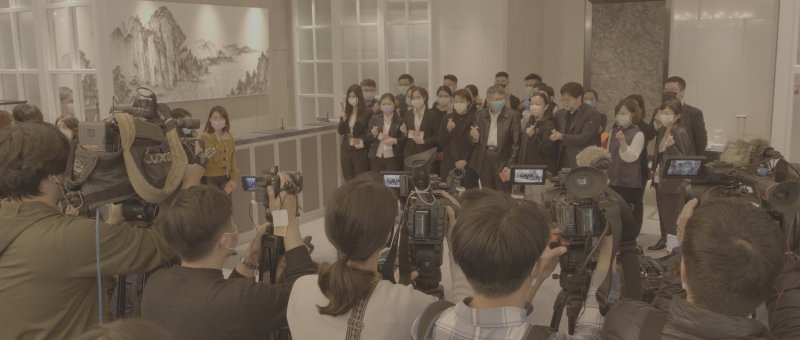
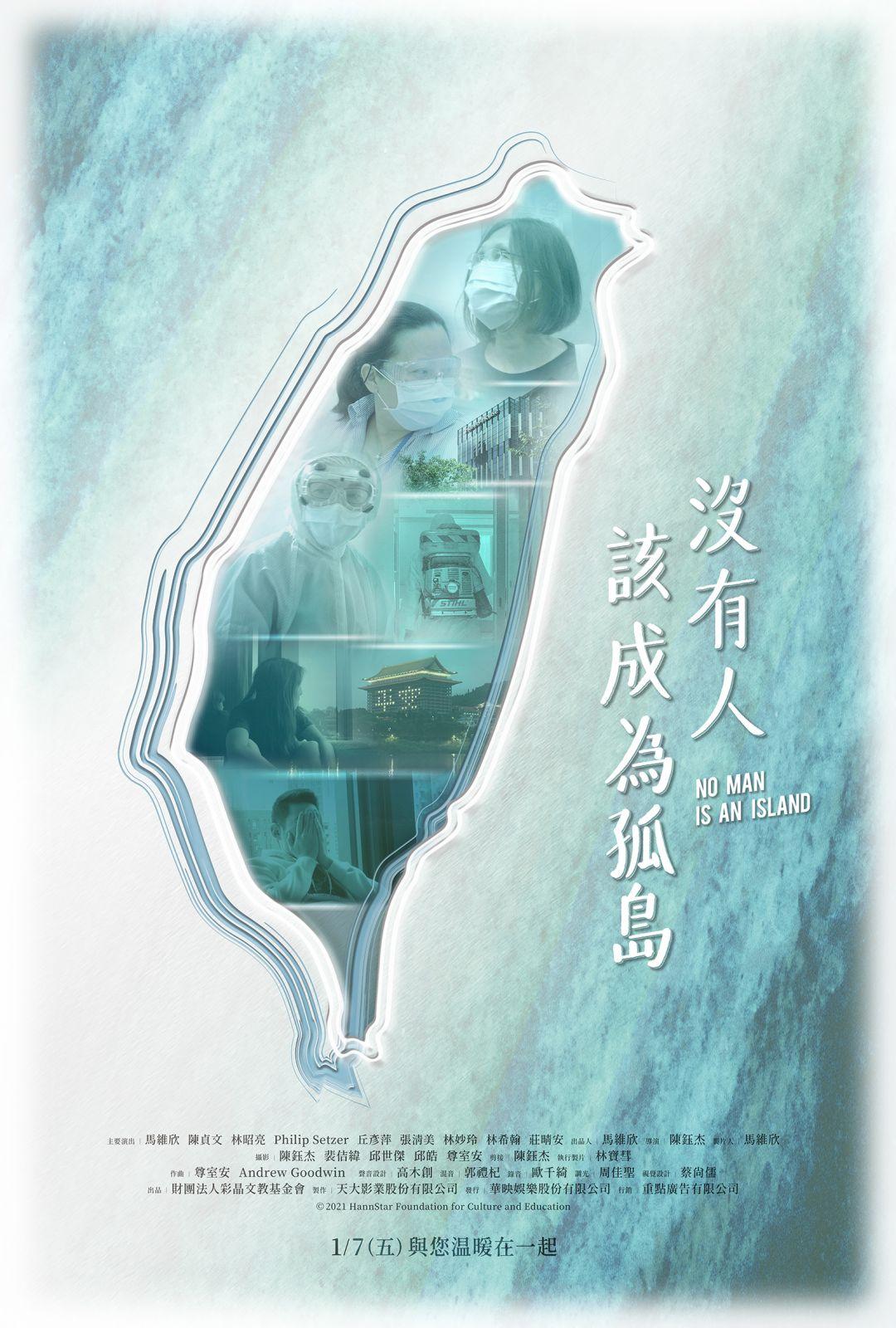
Hill of No Return (無言的山丘, Wang Tung, 1992)

Two orphaned brothers set out to find a literal goldmine, but discover only relentless exploitation and defeat in Wang Tung’s meditation on oppression and colonialism, Hill of No Return (無言的山丘, Wúyán de Shānqiū). The third in a trilogy of films exploring Taiwanese history, Wang’s tragic melodrama finds commonality if not solidarity among a collection of villagers living in a small town sustained entirely by the mine which produces riches only for the Japanese while those who risk their lives underground deprived of the light of the sun delude themselves that if they work hard they too can become rich only to discover each of their attempts to escape the constraints placed against them leading to nothing other than despair. 

As the film opens, brothers Chu (Peng Chia-Chia) and Wei (Huang Pin-Yuan) who have signed long-term five year contracts as farm labourers, are listening to an old man’s story about the grandfather of a local man who followed a frog to a mountain noticing its skin glowing gold and thereafter filling his pockets with gold dust he later used to buy up land and become rich. Chu thinks the man was foolish for not going back and becoming even richer, but the old man explains that he was reminded in a dream that excessive greed would only anger the gods and lead to his downfall. Fed up with their lives as labourers, the brothers take the story to heart and decide to look for their own mountain of gold, their backs too bathed in the light of the sun as they rest while looking for the goldmine town of Jiou-fen, later coming across a grisly and ominous scene shortly before they arrive. 

Both illiterate and speaking only Taiwanese, the brothers are each intent on becoming landowners partly in order to give their late parents, apparently killed by TB, a fitting resting place, but soon find themselves once again exploited, Wei becoming increasingly disillusioned with being trapped underground whereas in the fields at least he’d had the sun. The mine is of course a Japanese concern and its operators care little for the local Taiwanese workforce even if their treatment may not be as deliberately brutal as it might have been elsewhere. The new director is convinced that the miners are pocketing gold before it reaches the surface, instituting several new controls which threaten the local economy and especially that of the Japanese-style brothel which depends entirely on the mine for its survival. 

Like many, Hong-mu (Jen Chang-bin), a young man raised in the brothel by its madam following the death of his mother, looks up to the Japanese colonisers seeing them as innately “better” than the Taiwanese all around him. “People will respect me if I wear Japanese clothes” he tells the madam disappointed on receiving a new outfit in the local fashion. Having been told that his father, whom he has never met and was presumably a client of the brothel, was Japanese he speaks the language fluently and believes himself to be slightly superior by virtue of his birth but only too late learns his mistake in collaborating with the mine owners believing they would help him marry a young Japanese woman working at the brothel as a maid, Fumiko (Mayko Chen Hsien-Mei), and finding himself betrayed. As Fumiko is from the Ryukyu islands (Okinawa), the mine owner doesn’t quite see her as fully “Japanese” either and thinks nothing of using and abusing her in the course of his activities. 

The wily madam quips that you can’t call yourself Taiwanese if you haven’t figured out how to do illegal things legally finding ways of getting around the prohibition on accepting gold from the miners as payment, but that doesn’t stop the military police later raiding the brothel and brutally taking back “their” gold even though it has already changed hands albeit not entirely in good faith. The sex workers too are victims of this same vicious cycle, dependent on the custom of the miners for their livelihood while deprived any real possibility of escaping their desperate circumstances. Meanwhile, the brothers’ grumpy landlady, Ro (Yang Kuei-mei), is a twice-widowed single mother of numerous children left with no choice other than to engage in independent sex work, advertising herself as the more economical, local alternative to the Japanese-style “opulence” of the traditional teahouse. While Wei falls for the melancholy innocence of Fumiko singing Okinawan folksongs in a field of golden flowers, Chu takes a liking to Ro and her many children but though they both dream of the same thing, saving enough money to buy a farm, their tempestuous romance is later frustrated by Chu’s reckless decision to take advantage of chaos at the mine in an attempt to get rich quick by harvesting a mega load of gold while no one’s looking. 

He has perhaps been too greedy, ignoring the lessons from the old man’s story. The brothers are continually forced to pay for their transgressions, Chu cutting off his own fingers when cornered by thugs sent out by his previous employer to satisfy their literal demand for an arm and a leg in satisfaction of the broken contract, while Wei’s foot is later injured in a partial cave in when caught underground during an earthquake. Ro calls Chu foolish in his delusion that hard work will bring him a comfortable life, watching him slaving away to make the Japanese rich but what other choice do either of them really have? Only later does Wei begin to reflect on the possibility that the treasure of the mountain was the bright yellow flowers which covered it, a natural beauty soon destroyed by industrial exploitation. A melancholy chronicle of life in a small mountain town in the colonial era, Hill of No Return finds only despair and impossibility for its orphaned brothers whose eternal quest for ownership of their own land leads to nothing but continual disappointment. 


Hill of No Return streams in the UK until 31st October as part of this year’s Taiwan Film Festival Edinburgh.

Trailer (Traditional Chinese / English Subtitles)

Splendid Float (豔光四射歌舞團, Zero Chou, 2004)

A lonely taoist priest with a sideline as a drag artist falls for the siren song of a drifting fisherman in Zero Chou’s mystical vision of love and loss, Splendid Float (豔光四射歌舞團, Yàn Guāng Sìshè Gēwǔtuán). One of very few out lesbian filmmakers currently working in East Asia, Chou’s films more often deal with love between women but her second narrative feature is a melancholy meditation on grief and impossibility revolving around a performer with an itinerant drag act as she struggles to understand why the man she loved couldn’t stay with her forever. 

A taoist priest performing death rituals by day, by night Roy (James Chen Yu-Ming) becomes Rose a drag performer singing sad songs of lost love from the makeshift stage of converted pickup truck with a rainbow roof. It’s one evening when the van breaks down that she first meets Sunny (Chung Yi-Ching), a handsome swimmer who soon becomes her lover only to disappear the next morning leaving behind only a note saying goodbye and a yellow flower. Heartbroken, Rose tries to find him and begins to suspect the worst later discovering that Sunny has apparently drowned at sea. 

The minor irony is that Rose’s day job is as a taoist priest which to say bound up with the rituals of death and grieving yet she struggles to come to terms with Sunny’s absence and is unable to let go of a tragic, fleeting love. Following the rather lengthy opening sex scene, Rose asks Sunny to stay with her longing for a place to settle down together looking for conventional domesticity as a couple, something about which Sunny appears unsure not it seems because of societal pressure but because he is not made for a settled life. Often seen swimming, Sunny is a kind of mermaid happiest in the water which lends his death by drowning an additionally poetic quality but also perhaps aligns his sexuality with a sense of impossibility suggesting Rose will never be able to achieve the fulfilling romance of which she dreams. 

This is further brought home in her frustrated attempts to make contact with Sunny’s spirit, often seeing his ghost but refusing to let him go. Ironically brought in to conduct a death ritual on behalf of Sunny’s mother and sister, she unwittingly hints at their relationship by using the t-shirt he left behind to summon him and thereafter determines to split his soul taking a funeral tablet with her after tossing coins to try and gain his consent only to ignore the result when it implies Sunny chose to leave her and does not want to be possessed by her in death. “We live amongst tradition but still there’s no place for people like us” one of Rose’s fellow performers laments, “look at you and Sunny, together for so long but what are you, just ordinary friends? It’s not like you can just go and tell everyone you’re his widow and take his icon with you.”

Even Roy’s family members are apparently ambivalent, suspecting he might be gay but unsure how to respond to it. They avoid sending him to funerals because he has a reputation for being overly emotional earning the nickname of “the wailing girl “and feel bad about him being teased while also confused that seems so “effeminate”, “not like a man at all”. His aunt, however, a fairly butch older woman asks if she doesn’t look “like a man” while in her full taoist priest outfit, suggesting perhaps that gender is an irrelevance at least in the course of their work. 

Rose, meanwhile, struggles to come to terms with loss while unable to voice her grief. In this quasi-musical, Rose’s songs are the only way she can express her suffering. “No one knows the pain I must face” she sings in a repeated refrain, “smiling and swallowing my tears secretly casting my sorrows to the sea.” Exploring both the vibrancy of traditional taoist practice, the soul guiding ritual described as the last dance of life, along with the precarious existence of the itinerant drag queens, Chou crafts an etherial fairytale of love and loss in which Rose herself becomes a kind of wandering ghost trapped in a rootless existence while yearning to settle down in perpetual search for safe harbour amid stormy seas. 


Splendid Float streams in the UK until 31st October as part of this year’s Taiwan Film Festival Edinburgh.

Original trailer (no subtitles)

Listen Before You Sing (聽見歌 再唱, Yang Chih-lin, 2021)

A remote mountain school facing closure pins its hopes on showcasing the singing ability of the local indigenous community in Yang Chih-lin’s gentle social drama Listen Before You Sing (聽見歌 再唱, Tīngjiàn Gē Zài Chàng). Set almost entirely within its mountain village, Yang’s cheerful tale is as much about embracing an indigenous identity as it is about the consequences of rural depopulation, economic inequality, and the importance of community while also prioritising the necessity of giving children the confidence of external approval as they learn to discover their own voices. 

There are however only about 50 children left in the small rural village inhabited by the Bunun indigenous community which is why the local school is under threat of closure even though the nearest alternative is over two hours away. The headmaster laments that the reason this school in particular will be merged with another is that they have “nothing special” to offer as reason to save it. Where other schools boast professional sports players among their alumni, the best they can do is that their volleyball team is considered above average for the area. Seeing as the indigenous community is famed for its beautiful polyphonic singing, someone suggests starting a choir hoping that they may be able to gain a reprieve if they demonstrate some kind of success on a national level. Luckily, they’ve just been sent a new substitute music teacher, Yunfan (Ella Chen Chia-hwa), who agrees to provide accompaniment but they also need a conductor and no one it seems is very keen to take on the role until PE teacher Bukut (Umin Boya) reveals an unexpected musical talent. 

Just arrived from the city for a new job at a school which may be about to close, Yunfan is less than impressed with the early preparations for the choir fearing first of all they don’t have enough kids and that there aren’t enough strong singers in the group. Bukut even ropes in his volleyball team to bulk out the numbers but tells them to remain quiet and just mime rather than actually sing lest they disrupt the harmony. The other problem they face is that each of these children has their own particular circumstances with many needing to return home after school either to help with farm work or to care for elderly relatives. Many of them are living either with grandparents or more or less alone while their parents are in the city for work. Of the ones that remain, the father of two boys from the volleyball team is unhappy with them participating in the choir in the first place, viewing it as a waste of time and possibly not as a suitable activity for his sons. 

Even so, the reason for their failure in an early concert is attributed to their attempt to conform to the standard singing style of the other schools rather than embracing the uniqueness of their traditional culture leaving them as the judge puts it failing to stand out from the city kids. Though the indigenous community maintains its traditions, many of the children do not really speak Bunun, communicating with each other in Mandarin if understanding when the elders talk to them in the indigenous language, and perhaps feel insecure in their cultural identity. Only by embracing their Bunun heritage does the choir start come together, reminded that it’s important sing with your ears, picking up the harmony from those around you rather than each singing independently as a collection of individuals. 

While Bukut deals with some personal trauma concerning his musical ability and a bullying teacher, and Yunfan does her best to integrate into the indigenous community which is extremely warm and welcoming eager to share their culture with her, they eventually learn to put themselves and their fears over their job insecurity to one side while doing their best to help the children shine as they learn to find their voices through reconnecting with their indigenous roots. The school may still have to close, there may be no real answer as to how to mitigate the effects of rural depopulation or as to how to preserve traditional culture in an increasingly capitalistic society, but rather than simply giving up the children learn to embrace and be proud of their difference while learning to sing in harmony as part of a community founded on love and mutual respect.


Listen Before You Sing screens in San Diego on Oct. 29 as part of this year’s San Diego Asian Film Festival.

Original trailer (English subtitles)
The Personals (徵婚啓事, Chen Kuo-fu, 1998)

Looking for love in all the wrong places, a Taipei career woman suddenly decides to give up her life and place a personal ad stating that she’s looking for a husband, “Who knows, maybe I’ll find happiness” she unconvincingly explains. Chen Kuo-fu’s sophisticated dramedy The Personals (徵婚啓事, Zhēnghūn Qǐ Shì) sends its heroine on a dating odyssey through the contemporary capital but is at heart the story of a woman learning to see herself while grieving a failed relationship and the married ex who won’t return her calls. 

Tu Chia-wen (Rene Liu Ruo-ying) was a successful eye doctor at a Taipei hospital, explaining to a patient that some people lose the ability to produce enough tears after the age of 30, but abruptly quits her job later claiming that she wanted sever connections with her past which is another reason why she’s decided to place an ad rather than asking friends to set her up with eligible bachelors. Implicitly, it also seems that Chia-wen feels her status as a doctor may be intimidating to some men in the still patriarchal society, if also a clue to her true identity which she has otherwise chosen to keep hidden going instead by the name of Miss “Wu” which just happens to be the name of her lover’s wife. 

Of course, it’s illogical to use a false identity if your end goal is finding a life partner, a factor which later feeds in to Chia-wen’s half-hearted conclusion that it isn’t the fault of the men she’s been meeting that they didn’t hit it off but her own in that she’s so far failed to fully “open up” to any of them. Despite newspaper personal ads not featuring photos, Chia-wen receives 100 messages in the three days after her details are posted from a varied cross section of applicants some more suitable than others. One gentleman who unconvincingly claims to be in his 30s reels off his CV as if he were introducing himself at a job interview while wearing a cheerful farmer-style straw hat. A factory worker chews betel nut and smokes tobacco at the same time while exposing an insecurity over his financial situation in complaining that modern women are too materialistic. One suitor is a woman who struggles to explain her gender and sexual identity with the terminology of the time causing Chia-Wen a degree of consternation. Another potential date is a shoe fetishist with a large suitcase intent on some kind of cinderella role-play closely followed by an executive who enthusiastically explains his only hobby outside of drinking is an encyclopaedic knowledge of S&M porn, while a son brings his father as a potential match because his mum’s “gone abroad” and in a heartbreaking moment a worried mother tries to negotiate on behalf of her son who appears to have learning difficulties and might not be sure what’s going on, hoping to find someone to look after him when she’s gone. 

It may be a biased sample, but it doesn’t speak well for the men of Taipei and that’s without even getting into the guy trying to recruit Chia-wen as a high class call girl, the obvious married man after no strings sex, or the salesman trying to peddle women’s self defence equipment with a case full of tasers and pepper spray. Chia-wen pours out her frustrations in daily calls to her ex’s answering machine, leaving long messages she knows he won’t reply to but somehow it makes her feel close to him. Gradually through her monologues we begin to piece together the trauma that she’s struggling to accommodate while a late and unexpected twist keys us in to the cosmic tragedy of her frustrated romance. “Choose what you can endure” she’s advised by a professor friend who confesses to her that he’s chosen to suppress his homosexuality out of a desire for a “normal” life as a husband and father hinting at the still conservative nature of the contemporary society. 

It’s not until she’s caught off guard by a potential match seeing through her ruse that Chia-wen begins to reconsider her experiment, eventually captivated by a sensitive young man who’s not long come out of prison but has an endearingly awkward smile that reminds her of her own. She meets each of the men in the same cafe where she had her first date with her former lover, taking on a slightly different character as she attempts to interview them about their lives, getting to know their hopes and desires often tinged with a note of loneliness or despair. They seldom seem very interested in her, but instantly propose marriage or at least some sort of serious courtship without even finding out about her hopes and aspirations in life. Chia-wen’s often comical encounters from the teenage boys trying their luck to the old men taking their last chance each expose something of contemporary gender dynamics as well as hinting at increasing urban loneliness and romantic desperation but in the end it’s herself Chia-wen must face in learning to let go of past trauma in order to give herself permission to move on in her ever evolving quest for love.


The Personals streams in the UK 25th to 31st October as part of this year’s Taiwan Film Festival Edinburgh.

Trailer (Traditional Chinese / English subtitles)

Dust in the Wind (戀戀風塵, Hou Hsiao-hsien, 1986)

Geographical dislocation and changing times slowly erode the innocent love of a young couple in Hou Hsiao-Hsien’s nostalgic youth drama, Dust in the Wind (戀戀風塵, Liànliàn Fēngchén). Hoping for a better standard of life, they venture to the city but discover that the grass is always greener while their problems largely follow them and the young man finally alienates his childhood love with his stubborn male pride, imbued with a general sense of futility in the inability to better himself because of the constraints of a society which is changing but unevenly and not perhaps in ways which ultimately benefit. 

Opening with a long POV shot of a train emerging from darkness into the light, Hou finds Wen (Wang Chien-wen) and Huen (Xin Shufen) travelling home from school she bashfully admitting that she didn’t understand their maths homework while he automatically shoulders the heavy rice bag her mother has asked her to collect on the way. Their relationship is indeed close and intimate, almost like a long-married couple, yet there’s also little that tells us they are romantically involved rather than siblings or merely childhood friends. Given his family’s relative poverty and the lack of opportunities available in the village, Wen decides not to progress to high school but move to Taipei in search of work while studying in the evenings. Some time later Huen joins him, but they evidently struggle to reassume the level of comfort in each other’s company they experienced at home, Wen permanently sullen and resentful while Huen perhaps adapts more quickly to the rhythms of urban life than he expected if also intensely lonely and fearful, no longer confident in his ability and inclination to care for her. 

Huen clearly envisions a future for the both of them of conventional domesticity, eventually writing to Wen after he is drafted for his military service that a mutual friend spared the draft because of a workplace injury is moving back to his hometown to get married and is planning to sell off land to build houses one of which will be for them. But Wen is still consumed with resentment, frustrated that he can’t make headway in Taipei and in part blaming Huen for highlighting his failure while also holding her responsible when the motorbike he’d been using for work as a delivery driver is stolen after he gives her a ride to town to buy presents for her family. They only seem to speak through the bars of a small window in the basement tailoring room where Huen works as if something is always between them while she complains of her loneliness, Wen apparently ignoring her for long stretches of time while studying for exams though ultimately electing not to apply for colleges. While he’s away in the army, Huen’s letters to him become increasingly infrequent until Wen’s start coming back return to sender, the other soldiers mocking him for his devotion to his hometown girlfriend while suggesting that she has most likely moved on, a supposition which turns out to be correct in the extremely ironic nature of her new suitor. 

Yet it’s not quite true that everything is rosy in the country and rotten in the city. On a visit home, Wen overhears his father and some of the other coal miners discussing a potential strike action feeling themselves exploited and under appreciated, while later that evening a group of boys who also left for Taipei lament their circumstances afraid to explain to their parents that things aren’t going well and that they’ve been physically abused by their employers. Ironically enough it’s Wen who can’t seem to gel with city life, becoming frustrated by Huen’s ability to go with the flow having a minor patriarchal tantrum when she accepts a drink from his male friends at a going away party for a man about to enlist. She responds by voluntarily removing her shirt for an artist friend to decorate, staring at him with scorn while waiting around in her vest. In the village everyone is disappointed, feeling as if Huen has betrayed Wen in failing to fulfil their romantic destiny though it is often enough he who has alienated her in his prideful stubbornness, continually cold towards her, leaving her lonely and afraid. Had they stayed, perhaps they would have married, had children, grown old and done all the expected things together and in that sense “modernity” has indeed come between them but then again they were children and what teenage lovers don’t assume they’re “supposed” to be? “What can you do?” come the words from stoical granddad (Li Tian-lu), explaining that his transplanted potatoes haven’t fared well in the recent storm. 

While Wen’s father can only lament the toll changing political realities took on his future prospects, literally moving rocks around in drunken bouts of frustrated masculinity, Wen must struggle with his familial legacy while wondering if perhaps it’s better in the village after all ensconced in the beautiful rural landscape far from the consumerist corruptions of increasing urbanity. But then according to granddad, the potatoes only accept the nutrient when severed from the vine, much harder to look after than ginseng, apparently. You have to wander in order to find a home, life is hard everywhere, sometimes painful and disappointing, but what can you do? Like dust in the wind, try your best to ride it out.


Dust in the Wind streams in the UK 25th to 31st October as part of this year’s Taiwan Film Festival Edinburgh.

Trailer (Traditional Chinese / English subtitles)

Peony Birds (牡丹鳥, Huang Yu-Shan, 1990)

Two women struggle with inter-generational conflict and the changing Taiwanese society in Huang Yu-Shan’s melancholy familial drama, Peony Birds (牡丹鳥, Mǔdan Niǎo). Perhaps the love birds of the title, mother and daughter find themselves at odds partly through a series of misunderstandings but also in the strange reversals of their social outlook, the older woman eventually becoming a successful industrialist rejecting the patriarchal social codes of her upbringing while the younger remains prudish and resentful, unfairly blaming her mother for her father’s early death. 

The film opens with two children accidentally releasing a pair of caged birds before the camera lights on the melancholy figure of Ah-chuan (Su Ming-ming), absentmindedly embroidering beneath a large picture which appears to be of herself. The portrait, a source of contention with her husband Cheng, will follow her throughout her life a symbol of herself as a young woman with choices falling in hopeless love with a Japanese-speaking doctor, Kuo, who never gave her a second glance and later married someone else. Seemingly on the rebound, Ah-chuan consented to an arranged marriage to the wealthy son of a rice merchant who thinks himself a member of the local aristocracy, forever throwing around his money and reminding people of his good name, but the marriage is unhappy Cheng frustrated that his wife loves someone else and Ah-chuan unable to let go of her idealised image of Kuo. Soon enough, Cheng drowns, falling into the river stumbling around in a drunken stupor. As they pull his body out of the water, doting daughter Shu-chin remembers her father bitterly exclaiming that her mother loved someone else and, noticing the comforting arm of childhood friend Chin-shui on her shoulder, assumes it must be him.  

It’s this fundamental misunderstanding that continues to colour the frustrated relationship between the two women, the grown-up Shu-chin (Vivian Chen Te-Yung) childishly complaining that Ah-chuan failed in her wifely responsibilities and has never been a mother to her, blaming her for Cheng’s death while criticising her commitment to her career almost as a betrayal of womanhood. By this point, Shu-chin is in her 20s and has a job as a record producer, later attempting to push her mother towards retirement claiming her salary is enough to support both her and her artistic brother but eventually leaving home entirely after beginning an affair with an unsuitable man defiantly ignoring Ah-chuan’s attempts to convince her she is making a huge mistake. 

Meanwhile, Chin-shui resurfaces in their lives having become a wealthy real estate magnate, a career we saw him start back in the village by taking advantage of the post-war land reforms to buy up the redistributed estates of formerly noble families, some of it Cheng’s. In some ways, former sharecropper Chin-shui is a villainous Lopakhin intent on paving over the beautiful Taiwanese countryside with towering high rise buildings, a symbol of the nation’s transformation from agrarian economy to financial powerhouse and of the hollowness it implies. Yet Ah-chuan’s business is floundering partly she claims because of protectionist US trade laws leaving her at the mercy of men like Chin-shui who, though not the man in her heart, has long carried a torch for her despite knowing of her impossible, unrequited love for Dr. Kuo. Shu-chin finds herself in a similar position in her affair with free-spirited colleague Li Kang whose previous girlfriend attempted to take her own life, discovering the mutability of his affections after he becomes famous with one of his solo compositions, while also drawn to a more suitable match in the more traditional Yi-cheng who eventually pledges his love to her, offering to make her a home explaining that having a home is what gives the young confidence to wander. 

Yet “home” is what Shu-chin continually rejects, yearning for her childhood in a more rural, quasi-feudal Taiwan while misunderstanding the tragedy of her parents’ toxic romance, only latterly reawakening to her mother’s love for her and discovering a new sense of security in a changing Taiwan as Ah-chuan frees them both in literally setting fire to the frustrated hopes of the past, reminding her “It’s always been our home”. A touching story of two women finally coming to understand each other while learning how to live in a changing society, Huang Yu-Shan’s maternal drama eventually bridges a generational divide as mother and daughter finally flee the coop but choose to fly together. 


Peony Birds streams in the UK 25th to 31st October as part of this year’s Taiwan Film Festival Edinburgh.

Clip (English subtitles)

Ripples of Life (永安镇故事集, Wei Shujun, 2021)

“I had to let it happen, I had to change” the rather incongruous voice of Madonna insists, finding a note of defiance on reaching the climactic “so I chose freedom” as the movie version of Don’t Cry for Me Argentina erupts over the closing minutes of Wei Shujun’s Ripples of Life (永安镇故事集, Yǒng’ān Zhèn Gùshi Jí). Like much of the film, the use of the song is ironic but still somehow poignant its repurposing perfectly expressing the interior lives of each our “characters” who are all in some way or another looking for escape or at least a way out of personal dissatisfaction while trying to film a movie about the inertia of life in a small town in rural China where nothing ever happens. 

Divided into three segments, Wei’s film is as much about the positioning of rural China as it is about “cinema”. A Beijing film crew descend on this provincial small town with their own preconceived notions of rural life, determined not to “romanticise” country living but nevertheless bending it to their will looking only for signifiers that align with their mental image of the hinterlands of their nation. Only latterly do they realise that for true authenticity the film should be in Hunanese, but none of them speak it which is a significant stumbling block in their efforts to overcome ongoing creative differences over the script. 

Wei is, in part, satirising the recent trend in Chinese indie cinema for gritty stories of rural poverty usually filmed with depressing naturalism determined to stress the harshness of life outside of the cities amid the nation’s ever increasing wealth divide. The first chapter in part does this too, later shifting away from early Jia Zhangke towards the neon yearning of Wong Kar-wai but always undercut with a sense of meta irony not least in its choice of heroine. The infinitely cornered Gu (Huang Miyi) longs for “a different life”, trapped in an unsatisfying marriage to a gruff man she accuses of working night shifts to get away from their toddler daughter whom she is forced to take to work with her while he constantly undermines all her parenting decisions based on articles sent by his mother. A woman at the market coos over the baby and asks when the next one’s due, Gu crestfallen realising she’s trapped in this small-town existence where nothing ever happens. But then the film crew begin to notice her, telling her she has a “real cinema face” and likening her to Kim Min-hee of whom she has never heard. Their admiration is again ironic, considering they were looking for the authentic face of rural China but taken with this cinematic vision, yet it’s also callous and cruel. They give her false hope, allowing her to dream as she puts on makeup and models costumes only to be forgotten once again when the “real” actress arrives, cast back into a life of quiet desperation. 

Perhaps this too is another unfair stereotype assuming that everyone from a small town longs for escape, but Gu’s story does indeed mimic the earlier parts of the screenplay for the film within the film which the director sees as a tale of a small-town woman’s awakening to independence and agency while the screenwriter Chunlei (Kang Chunlei) opts for an old-fashioned take on consumerist corruption. Shifting away from Gu towards formerly successful actress Chen Chen (Yang Zishan), the second arc pulls towards Chunlei as Chen Chen searches for escape from a rut in her career apparently having left her commercial agent to do more earnest work but doing not much of anything for the previous year. In another meta touch, she is from this rural backwater and like her character in the film chose to leave but now admits that sometimes she misses life in the country. As someone else puts it, city folk all want a return to simple rural life but can’t accept the reality of it which is why the plan to rejuvenate the area largely relies on tourism including the building of a waxwork museum of which Chen Chen is expected to be a notable inclusion as a local girl made good. 

Chen Chen’s image has once again been commodified, stripping her of power or agency over her name and face but on returning to Yong’an she is forced to realise that she is no longer of there, this place where nothing ever happens has already changed while she exists on a slightly different plane. Realising the maid covering her room is a childhood friend she cheerfully tries to reconnect but the woman is awkward and evasive, embarrassed perhaps to acknowledge that she is a mere hotel employee while Chen Chen has achieved her dreams of stardom. Attempts to reconnect with two other male friends similarly backfire, the first a typical provincial bureaucrat who uses her for official business without her consent while a meal with the other’s family proves even less joyful as she endures countless barbed comments from his snippy wife who eventually tries something similar in asking her to find a job for her son on the film. As she’s leaving he asks her the same question the screenwriter obsessed over, suggesting that she left for mercenary reasons only for her to answer that she didn’t want to live like his wife, or indeed like Gu, but wanted “a different life”. 

This battle between image and authenticity lies at the heart of the conflict between the director, a hipsterish festival darling with a sideline in hip hop, and the schlubby screenwriter himself perhaps trapped in the previous generation of Chinese filmmaking but also in his way more idealistic believing in cinema as an art form which can move the world rather than mere entertainment created for commercial gain. He accuses the director of hypocrisy, exploiting the arthouse aesthetic for critical credibility and with it a vision of rural China, while the director criticises him for his old-fashioned mentality in seeking melodrama over message. Shot in cooling blues their heated arguments are noticeably dispassionate, Wei even descending into some ironic iconography which sees the pair talking through their issues with a wise man film critic on a boat on a misty river. The ironic conclusion brings the whole affair full circle as the words of Madonna as Eva Peron come to speak for each of the protagonists, Gu now angrier, impatient as she shifts dishes while her husband idles nearby, and Chen Chen forced to pose next to a wax figure of herself during a launch ceremony for this film in which the script has yet to be “finalised”. “But nothing impressed me at all” the song continues, “I never expected it to” hinting at the contradictions of the modern China in the internalised defeatism of small-town dreams and the cynical filmmakers who exploit them. 


Ripples of Life screens on Oct 11 & 12 as part of this year’s BFI London Film Festival

Wuhan Wuhan (武汉武汉, Chang Yung, 2021)

“Safety isn’t the issue right now. We have to keep moving forward” a harried doctor replies to a cabman’s question, like most it seems just getting on with it until it’s over. Like Wu Hao, Chen Weixi & Anonymous’ 76 Days, Chang Yung’s Wuhan Wuhan (武汉武汉, Wǔhàn Wǔhàn) documents the final stretches of the city’s intense lockdown beginning in February 2020 yet where 76 Days was largely a exploration of grief, panic, and confusion Chang’s documentary assembled remotely from 300 hours of footage shot on the ground by local camera crews perhaps reflects a new accommodation with the nature of the pandemic in its empathetic depiction of ordinary people going about their lives as normally possible. 

The first trail Chang picks up is that of factory worker Yin who has begun working as a volunteer driver ferrying medical staff between the hotel where they are being housed during the lockdown and the healthcare facilities where they are working. Yin explains he took the job more or less for something to do rather than be bored at home, but it also places a strain on his relationship with heavily pregnant wife Xu who is intensely anxious about catching the disease or that there may be other complications with the birth but no hospital space available to treat her. Through his various fares, Yin gets to see the other side of the pandemic as the medical staff honestly describe the situation on the ground which is often in contrast with the impression given by official channels. 

As for the medical staff themselves, ER Chief Zheng is quick to point out that much of the PPE they’ve received is not fit for purpose while his staff is already traumatised and close to burnout. Later a team of psychiatrists is sent in to provide support both to the frontline health workers and to the patients, most of whom are extremely grateful to the doctors and nurses if sometimes frightened and angry though one they’ve nicknamed grumpy grandpa continually refuses treatment and otherwise makes a point of pigheadedly insulting his nurse. Psychiatrist Zhang is also however under strain, learning via telephone that her father in her hometown has been diagnosed with a serious illness. Like many she is away from her family with no idea when she’ll be able to return to them. Nurse Susu, in the same position, receives a raw and difficult phone call from her small daughter who breaks down crying, unable to understand why her mother’s not coming home while all she can do is listen in heartbreak unable to explain or make a promise she knows she can keep as to when she’ll back. Zheng likewise makes calls to his wife and daughter, but also reveals that he’s asked an old friend to watch over them should the worst happen. 

Nevertheless, people try to find the small moments of joy where they can. At a temporary hospital for those whose cases are mild to moderate, a mass dance routine breaks out while patients otherwise try to keep active through group tai chi supporting each other while Zhang runs group therapy sessions on the other side of the wall. Worried part of the problem is that the patients can’t bond with them because the PPE erases their identity, some of the doctors print out photos to display on their chests while others are always quick to help, a collection of local hairdressers offering free haircuts to medical personnel to help prevent contamination and make PPE more comfortable. 

The overall impression is of a community managing, working together to get through the crisis while quietly getting on with the job. Chang apparently made his documentary partly with the rise in anti-Asian hate crime in mind, hoping to “humanise” the citizens of Wuhan by showing them as ordinary people living in extraordinary circumstances though others of course may read it slightly differently in its deliberate avoidance of the horrors of the virus save a few scenes of grieving relatives or terrified patients, the only indication of anxiety caused by the system seen in those at the temporary hospital hearing it’s about to close down and fearful of what might happen to them next. Nevertheless Chang’s empathetic documentary is at its best capturing the everyday reality, be it a husband running all over town trying to find somewhere selling a crib or a woman cooking yams in her room because she can cope with the virus but another one of those box meals might push her over the edge. 


Wuhan Wuhan streams in the US Oct. 6 – 12 as part of the 13th Season of Asian Pop-Up Cinema. It will also screen at Chicago’s Chinese American Museum on Oct. 9.

Original trailer (English subtitles)
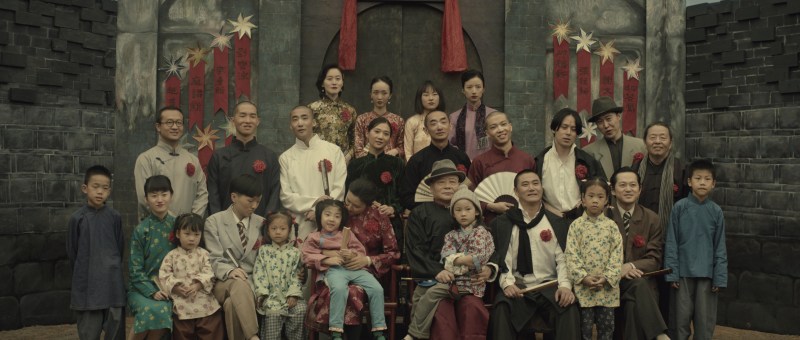
Raining in the Mountain (空山靈雨, King Hu, 1979)

Is it truly possible to retreat from the world and live a pure life free of Earthly desires? Perhaps not, at least not entirely as the monks of King Hu’s joyously comic wuxia Raining in the Mountain (空山靈雨, Kōng Shān Líng Yǔ) later discover in attempting to cure the corruption already eating through their ranks. The old abbot is ill and mindful that his time is short, recruits a series of advisors to help him pick a successor to steer the monastery in his absence yet whether he too is plotting or not there is intrigue at play and not everyone’s motives are strictly spiritual. 

The film opens with Hu’s trademark immersion in the beauty of nature as three pilgrims approach a mountain temple yet there’s something almost suspicious in their manner as they’re met by the abbot’s reliable righthand man, Hui Ssu (Paul Chun Pui). Esquire Wen (Sun Yueh), a wealthy merchant and frequent donor, introduces the woman with him as his concubine, the man obviously a servant given that he’s carrying their pack. Wen has, however, an ulterior motive in that he’s come with the intention of stealing a unique scroll featuring the Mahayana Sutra in the hand of Xuanzang/Tripitaka of Journey to the West fame. The woman is no concubine but a famous thief, White Fox (Hsu Feng), who wastes no time at all before changing into her best sneaking clothes and reuniting with the servant, her minion Chin Suo (Wu Ming-Tsai), to try and break into the sutra room. 

They are not however alone in their endeavours. The abbot has also invited local police chief General Wang (Tien Feng) and his underling Chang Cheng (Chen Hui-Lou) who nominally favour monk Hui Tung (Shih Chun) for the position of abbot but are also there largely with the intention of getting their hands on the scroll which Hui Tung has pledged to give them if he wins. Likewise, though it seems Esquire Wen had forgotten to brief White Fox, rival candidate Hui Wen (Lu Chan) is also in league with them. Just as it looks as if this duality is about to implode, the introduction of a third party, former convict Chiu Ming (Tung Lin) who claims he was framed by Chang Cheng because his family refused to sell him a precious scroll, creates additional uncertainty in the race for succession. 

Secluded in the mountains, the temple ought to be a refuge of enlightenment free from spiritual corruption in its isolation from Earthly desires. Even so, we’re told that the most holy man is the third advisor, Wu Wai (Wu Chia-Hsiang), a Buddhist lay preacher who arrives with a massive entourage of colourfully dressed handmaidens and is said to be “immune to sensual pleasures”. He favours no particular candidate, but acts as a spiritual sounding board at the right hand of the abbot who may or may not be aware that his other two advisors have ulterior motives, or that corruption is already rife in the monastery. Aside from the power-hungry machinations of Hui Wen and Hui Tung, who is so desperate for the position he later consents to murder on temple grounds, many of the younger monks have been bribing a pedlar to smuggle in meat and wine for them, literally passing it over the fence, and not even paying him properly. They are also tested perhaps deliberately by Wu Wai who has his handmaidens frolic in the water where the monks are supposed to be meditating, many of them unable to maintain concentration.  

Yet these are only partial incursions, the monastery is not entirely isolated from the wider society by virtue of its financial dependency. Wu Wai who lives on the outside seems to be fantastically wealthy (still it seems clinging on to material desires), yet the temple is dependent on donations from men like Esquire Wen or else on alms giving. On her arrival, White Fox disdainfully rejects the meal she’s offered and describes the place as a dump, her complaints apparently not unfounded as a ruse to raise rebellion by staging a protest about the the low quality of the catering strikes a genuine note of discord with the monks. The solution posited by the new abbot, opting for austerity rather than opulence, is to tell the young monks they’ve had it too easy and now it’s time they shift for themselves by aiming to become self-sufficient growing their own veg (and thereby lessening their contact with worldly corruption). 

In any case, they cannot purify the temple while the temptation of the scroll exists. “Priceless” to General Wang and Esquire Wen, to the abbot and interestingly to White Fox, the scroll is “worthless” merely a raggedy bit of old paper with no intrinsic value. Yet hoping to raise revenue, the new abbot is advised to borrow on its collateral by the duplicitous Esquire Wen and thereby is forced to accept its “worth” in the secular world perhaps only then realising that if the temple wishes to finalise its divorce the scroll has to go. Essentially a morality tale, Hu hints at the absurdity of these petty corruptions in the cartoonish, farcical shenanigans of the rival thieves as they dance around each other silently fighting over a “worthless” scroll the camera following them with a wry eye while the constant drumming of the background score lends a note of ever present tension. Almost everyone, it seems, is redeemable for the path to enlightenment should be available to all though those who choose not to follow it may find the way of corruption leads to only one destination. 


Raining in the Mountain streams in the US until Sept. 28 as part of the 13th Season of Asian Pop-Up Cinema.

Restoration trailer (English subtitles)
Secrets of 1979 (弓蕉園的秘密, Zero Chou, 2021)

Love is a political act in the latest film from Zero Chou, Secrets of 1979 (弓蕉園的秘密, Gōng Jiāo Yuán de Mìmì). As history repeats itself, a now ageing woman is called back to the past on witnessing the Hong Kong democracy protests triggering memories of the Kaohsiung Incident and her youth fighting for political freedom in martial law Taiwan. Chou’s betrayed heroine dreams of a future in which all voices can be heard and all loves embraced, a future that in some senses may have come to pass, yet tragically too late for some forced to believe that their love must forever remain a secret. 

Malaysian student Shu-lan (Daphne Low) falls for Kuan (Chen Yu), the daughter of a banana plantation owner majoring in art as part of a teacher training programme. The pair draw closer while sharing a room, and a bed though partly because those two things are mainly the same, over the summer while Shu-lan takes a job at the farm but their innocent romance is soon overshadowed by the revelation that Kuan’s brother Siu (Hsu Yu-ting) has become involved with the movement against martial law producing a magazine critical of the government. Though they could never know it, their love will lie at the centre of a political divide, cruelly used against them even while they commit themselves to the battle for freedom and human rights. 

Soon after the film opens, a young man walks into Shu-lan’s classroom with application forms to join the nationalist governing party of the martial law one party state, the KMT. The idea does not seem popular among the students, but some are interested if treating it with a degree of irony explaining that they’d only be joining to take advantage of the generous perks which include free travel back to your hometown to vote and access to scholarships, or else because it may be advantageous in their future careers. Shu-lan is fiercely disinterested and attempts to politely decline, but the recruiter, Chih-hsiang (Sean Sun), has an obvious crush on her and won’t take no for an answer thrusting a form into her hand to think about later while lowkey resentful as she distances herself from him to leave with Kuan. 

Kuan, meanwhile, has just been subjected to an unpleasant grilling in her art class when she tried to stand up for a painter rumoured to be gay provoking a homophobic rant from several of her classmates who then openly mock her for being a lesbian. Perhaps surprisingly the rumour of homosexuality does not cause either of the girls particular problems with the authorities or their fellow students save for further irritating the extremely creepy, generally evil, and cruelly manipulative fascist Chih-hsiang who views it as merely another bargaining chip in his pointless quest to convince Shu-lan who has no interest in men (or members of the KMT) to go out with him. The problems that Shu-lan faces which are partly set up by Chih-hsiang so he can save her from them, are largely to do with her status as a foreign national and involvement with politics accused of collaborating with communists for listening to Chinese folk songs sent by her teacher in Malaysia. 

These are all reasons, along with her treatment at the hands of the authorities, that eventually convince her she must renounce her love for Kuan in order to keep her safe in fear that she too will be implicated as a politically suspicious person. Prior to that, she’d been learning Taiwanese and hoped to stay living on the banana farm with Kuan whose family seem relatively relaxed about the relationship, only for their love to be stamped out by oppressive authoritarianism and the machinations of a petty and jealous man. The bookending sequences set in the present day and featuring a Kuan who seems much older than a woman who’d only be in her mid-60s remind us that though Taiwan may have become a relatively progressive place in which same-sex marriage has been legalised, the battle is never really won as the young people of Hong Kong too campaign for freedom and democracy. But Kuan is left only with her secrets and her sadness stuck in the summer of 1979 and a love never to be told. 


Secrets of 1979 screens at Lexi Cinema on 21st September as part of this year’s Queer East. It is also available to stream in many territories via GagaOOLala.

Original trailer (English subtitles)