A City Called Dragon (龍城十日, Tu Chun-Hsun, 1970)

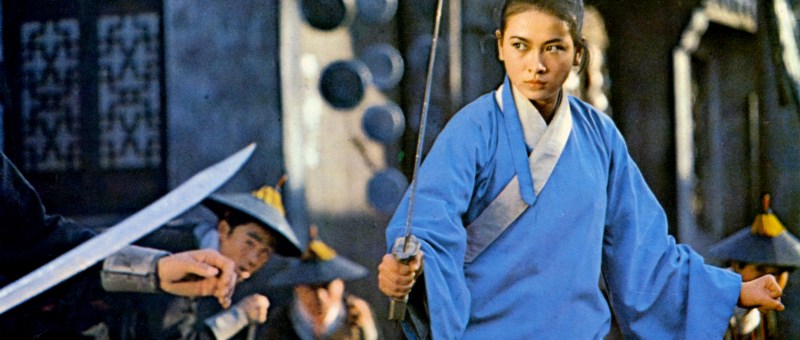
“A young girl like you has to be careful” a well-meaning palanquin driver warns our heroine, little knowing that into the heart of danger is exactly where she means to go. Tu Chun-Hsun’s Taiwanese wuxia A City Called Dragon (龍城十日, Lóngchéng Shí Rì) stars relative newcomer Hsu Feng immediately before her breakout role in King Hu’s A Touch of Zen as a noble Han Chinese revolutionary resisting Manchu oppression in the Song Dynasty bravely venturing into Dragon City currently in lockdown under the increasingly paranoid rule of its new magistrate, Lord Pu (Shih Chun). 

In 1131, “Jade Dragonfly” Shang Yen-Chih (Hsu Feng) leaves the mountain stronghold for Dragon City in order to rendezvous with Chen, a fellow revolutionary in possession of a plan book essential for the coming battle against the oppressive Manchu regime. As the palanquin drivers inform her, however, Chen, along with 80 members of his family, was executed for treason two days previously on orders of the new governor. The city is in a state of paranoid chaos that leaves the drivers unwilling to approach. Nevertheless, Yen-Chih is undaunted knowing she must get her hands on the book before it falls into the hands of the authorities. 

Tu conjures a world of tension and intrigue perfectly capturing the anxieties of Yen-chih’s undercover existence, painfully aware of each and every sound and always on the look out for trouble or betrayal as she wanders the paranoid city. Shortly before she arrives, a group of local men is brought in for questioning on the mere suspicion of visiting Chen’s grave, tainted by association and sent off to be tortured, bearing out the bearers’ assertion that Pu is a dangerously paranoid authoritarian intent on stamping out any and all dissent. If there’s a parallel to the White Terror here is it in implication only, but it’s presence is perhaps felt in the innate dangers of the world in which Yen-Chih now finds herself. In any case, she is perhaps in some instances protected by her appearance, written off as a genteel young woman in need of protection rather than a fearsome revolutionary able to leap tall walls in a single bound and endure days of torture never wavering in her mission. 

Meanwhile, Pu’s Manchu guards are universally corrupt. Yen-Chih makes a nervous entry into the city alarmed by a sudden cry of “freeze” only to realise the soldiers haven’t even noticed her, they are too busy gambling. Later they make a point of carting off her collaborator, tipped off by an obsequious informant hoping for advancement, and then ransacking his pharmacy, burning all his goods in the central square (which considering what they are might not be the best move), careful to pocket any valuables first. In such an atmosphere, perhaps it’s not surprising that Yen-Chih succeeds in finding unexpected allies, radicalising a young thief brought in, ironically, on suspicion of killing a spy she herself killed while they are both in prison. 

The Manchu regime and most particularly Pu’s deputy are indeed corrupt and oppressive, but as expected not quite everything is as we first assumed it to be. The ground constantly shifting beneath her feet, Yen-Chih chases the book but eventually discovers that she has been under a misapprehension as to its keepers and not only that, she’s also in the middle of someone else’s complicated revenge plot. The resolution though not exactly unexpected paves the way towards a surprisingly empathetic finale in which Yen-Chih is moved to discover the the extent to which a comrade has undertaken their duty, protecting her in facilitating her mission and allowing her to return to their shared cause with new hope while they remain behind alone in the increasingly destabilised environment of Dragon City the forces of Manchu for the moment seemingly turned against themselves. 

Breathtakingly tense, Tu’s anxious, low angle camera captures the sense of a city locked down by fear and paranoia while lending a ghostly air to the abandoned Chen estate where Yen-chih encounters its creepy butler before an intense showdown with Pu’s guards once again tipped off by their duplicitous informant. Boasting an extremely accomplished and charismatic performance from Hsu Feng as the intense swordswoman revolutionary and genuinely exciting choreography, A City Called Dragon is a forgotten gem of the ’70s Taiwanese wuxia boom.


A City Called Dragon streams in the UK 21st to 27th September as part of the Taiwan Film Festival Edinburgh.

Trailer (English subtitles)

The Eight Hundred (八佰, Guan Hu, 2020)

“Enjoy Shanghai. Enjoy Your Life” reads a neon-lit sign in the art deco paradise of Shanghai in the 1930s. Across the river, however, a war is raging. Guan Hu’s The Eight Hundred (八佰, Bābǎi), the first Chinese film to be shot in IMAX and boasting an unprecedented budget of US$80 million, was the last in a series of movies to be ignominiously pulled from a festival slot, the opening night of the Shanghai International Film Festival no less, for “technical reasons”. In this case, most have interpreted the nebulous term as a squeamishness on the part of the censors’ board to the fact that the film celebrates the heroism not of the PLA but of Chiang Kai-shek’s Nationalist Revolutionary Army who put up the last stand during the fall of Shanghai, securing a warehouse on the opposite side of the river from the British Concession knowing that there was no hope of stopping the Japanese, but hoping that their defiance would inspire foreign powers over to the Chinese side. 

The action opens in October 1937 shortly after the outbreak of the second Sino-Japanese War. Shanghai is falling and the Japanese will soon be on their way towards Chiang’s capital, Nanking. Nevertheless, the Japanese have resolutely avoided encroachment into the foreign concessions for fear of inflaming international relations in ways which might be inexpedient for their current goals. As a diplomat later puts it, war is always a matter of politics. Ordered to hold the line, the last remnants of the NRA are expected to die as an act of political theatre. There is no practical benefit to their sacrifice save the vindication that they went down fighting, their moral righteousness a tool to garner sympathy firstly with the international community who might be persuaded to intervene at an upcoming conference in Brussels (which is finally postponed because of a corruption scandal engulfing the Belgian PM). 

In Guan’s retelling, however, it is a much more domestic audience which becomes the ultimate target. A contrast is repeatedly drawn between behind the lines China, a wasteland of fire and rubble, and the glittering lights of the foreign concession with its billboards for Hollywood movies, famous actresses surveying the scene while the sound of opera both domestic and Western wafts over the river and business carries on as normal in the large casino run by an eccentric short-haired madam dressed in a Western suit. Cynical journalists chase the story from the comparative safety of a balcony above the bridge, chiding the Chinese reporter, Fang (Xin Baiqing), who has also been working as an interpreter for the Japanese, that he acts as if this war is nothing at all to do with him. The heroism of the 800 is the key to unlocking the latent patriotism of those living in the dream of the foreign concession where war happens only across the water, in another world no more real to them than a movie. They stand by the water and they watch, increasingly grateful to the soldiers for their protection until they too remember that they are also Chinese and this war is also their war. Women extend their hands towards those retreating across the bridge while the Peking opera turns its drums to the rhythms of war and the casino madam gives up first a flag and then a large stash of morphine hidden in her safe for probably obvious reasons. 

The flag might be one of several explanations for the censors’ squeamishness in that it is obviously now the flag of Taiwan and reminds us that these men are members of Chiang Kai-shek’s NRA, more often characterised in ideological terms as traitors rather than heroes. They are not however saints in the propaganda movie mould and it is even perhaps suggested that they are not much better than the Japanese, ruthlessly executing their own men as deserters and using prisoners of war as target practice for untrained, nervous recruits (the Japanese meanwhile publicly dismember their prisoners with the intention of intimidating Chinese forces). The youngest of the soldiers is only 13, a farmer’s son pulled off his land with his older brother who was tricked into the war machine by the desire to see the shining city of Shanghai and perhaps travel to England. Some of them try to run, torn between the desire for escape and a responsibility to their fellow men, each eventually fully committed to their forlorn hope determined to hold the warehouse if only to prove that they held the line for as long as it could be held. 

That same diplomat encourages commander Colonel Xie (Du Chun) that what he does here will be remembered, and that his men are the “real Chinese people” in another statement that probably rankled with the censors. Repeated references to legendary general Guan Yu paradoxically link back to the contemporary context as the narrator of a shadow play echoes that the Han restoration rests with the young while an angry soldier rants about planting a flag on Mount Fuji as revenge for everything they’ve suffered, making the case for the resurgent China beholden to no one something echoed by the moving scenes juxtaposing the ruined warehouse with the ultramodern city which now surrounds it. Yet Guan opens with a peaceful image of pastoral serenity which stands in stark contrast to the chaos of war as his numbed camera slowly pans between one scene of carnage and the next. Men blow themselves up, cry out for their mothers, send letters home, and call out their names as they die to prove that they existed while a beautiful white horse runs wild in the vistas of desolation. Unashamedly patriotic despite its slightly subversive context, The Eight Hundred presents war as the meaningless chaos that it is, but also lionises the men who fought it in the mythic quality of their heroism as they alone stood their ground and finally convinced others to do the same.


The Eight Hundred is in UK Cinemas from 16th September courtesy of Cine Asia.

UK trailer (English subtitles)

Where the Seagull Flies (海鷗飛處, Li Hsing, 1974)

Regarded as the “father of Taiwanese cinema”, Li Hsing was one of many who migrated from the Mainland during the Chinese civil war in 1949. Originally working as an actor, Li shifted into directing with the boom in Taiyupian Taiwanese language cinema in late ‘50s though he himself did not speak it, moving then into documentaries and finally self-financing the Mandarin language indie film Our Neighbors in 1963 becoming known for a particular brand of “healthy realism”. Despite this, however, the later part of the decade saw him enter into a long association with publishing phenomenon and romance writer Chiung Yao for a series of mainstream melodramas starring popular idols of the day. 

Chiung Yao’s novels are known for their depiction of relationships which are often in some way taboo as in Outside the Window the film adaptation of which launched the career of Brigitte Lin as a schoolgirl in love with her teacher. Li’s adaptation of Where the Seagull Flies (海鷗飛處, Hǎi’ōu Fēi Chǔ) by contrast erects barriers between the two lovers which are largely psychological as they struggle to overcome their pride, stubbornness, and fear of intimacy to embrace their love but also ambivalently engages with the changing nature of patriarchal society at once insisting its feisty heroine be softened in order to become a “good wife” while allowing her the agency her society denies her only by going abroad. 

The hero, technically, is melancholy journalist Muhuai (Alan Tang Kwong-Wing) who encounters the heroine Yushang (Chen Chen) for the first time on a boat in Hong Kong where he saves her from committing suicide she later tells him, giving her name as “Seagull”, because she has just murdered her cheating husband by hitting him over the head with a wine bottle. Seagull disappears on him just as he’s trying to get through to the mistress to get her to check if the husband is really dead but he meets her again in Singapore where she gives her name as Ye Xin. Working as a nightclub singer she agrees to show him around the island, telling him that she’s originally from Manila and is supporting a troubled family. This time she doesn’t disappear but arrives too late to see off his plane at the airport. Disappointed that all his letters come back no such address, Muhuai is despondent and then extremely confused to meet the mysterious woman yet again as Yushang, a uni friend of his younger sister Mufeng (Tang Mei-Fang). 

Figuring out that all three women really are one and that Yushang is her “true” identity, Muhuai is extremely annoyed and decides to have his revenge by dating her until she falls in love with him and then ringing her to come out at 3am to tell her he was just having a bit of fun and never really loved her at all. The cause of all the drama is, at root, Muhuai’s male pride in that he resents being “deceived” by Yushang on their first two meetings during which she was essentially engaging in reckless role play as a break from her “boring” existence as a member of the new super rich elite (she can travel so freely because her father is a wealthy businessman who operates all over the world). Yushang, meanwhile, is being pushed towards an arranged marriage with her father’s business associate Shiche (Patrick Tse Yin) while attending college and falling in love with Muhuai. Each feeling spurned, their romance eventually turns dark with Yushang rebound marrying Shiche who turns out to be an abusive gold-digger. 

The barrier between herself and Muhuai then seems insurmountable. Believing she’s made her bed, Yushang quells her fiery, independent nature to conform to the image of the “good wife”, later literally beaten into submission by the cruel and manipulative Shiche. While it could be said that she’s being punished for her betrayal of love, it’s patriarchal social codes which eventually leave her trapped. Though her outwardly conventional mother had always been on her side, cautioning her to follow her heart rather than marry Shiche out of prideful self-destruction, she too thinks that her daughter should “be more like a woman, not a child. Feminine and tender”. When Yushang goes to her parents to suggest a divorce they reject the idea out of hand, refusing to believe that Shiche is really abusive, assuming that she is simply failing to adapt to married life in a refusal to accept her husband’s authority and is possibly realising she made a mistake while continuing to think of Muhuai. Yushang’s father eventually signals he may support her desire for a divorce if the marriage is unsalvageable but not if she’s merely leaving her husband for another man. 

Muhuai meanwhile has sunk into a depression, drowning his sorrows in drink and consumed by his sense of romantic impotence in having failed to fight for love while intensely resenting Yushang for making him feel this way. The barrier he has to overcome is male pride, getting over the literal inauthenticity of his relationships with the first two incarnations to realise that Yushang really is the one he loves no matter who else she might have been at various times in her life including Shiche’s wife. While the multi-country setting perhaps reflects a new globalising Taiwan as well as a rise in economic prosperity, Yushang’s globetrotting exploits are also an attempt to escape the patriarchal constrains of contemporary Taiwanese society, her “boring” life of continual ease and emotional emptiness where everyone is forever telling her that she has to be less, quieter, and above all obedient most particularly to men. 

Even so, the film too uncomfortably insists that Yushang’s feisty independence is “childish” and unfeminine while implying that her abusive relationship with Shiche turns her into a real woman capable of fulfilling her natural role as a housewife. Only by going abroad can she finally free herself of his control, and largely because he simply gets a better offer chasing an American oil heiress. It’s a minor irony that while Yushang’s problem is apparently her manly impulsivity both of her suitors are examples of male failure, Shiche in his laziness as a man who only wants to live off a rich woman rather than support himself, and Muhuai in his romantic diffidence too insecure to admit his love for Yushang. Nevertheless, Chiung Yao and Li Hsing are careful to leave the door open for love, refusing the possibility that it’s ever too late to fulfil one’s romantic destiny as the lovers each concede a movement towards the centre in finally finding the courage to open themselves to emotional authenticity. 


Where the Seagull Flies streams in the UK 21st to 27th September as part of the Taiwan Film Festival Edinburgh.

Trailer (English/Traditional Chinese subtitles)

Love You Forever (我在时间尽头等你, Yoyo Yao Tingting, 2020)

“Don’t overthink it. It’s fiction” the hero of Yoyo Yao Tingting’s tearjerking romance Love You Forever (我在时间尽头等你, Wǒ Zài Shíjiān Jìntóu Děng Nǐ) advises the heroine, attempting to keep his secret right until the very end. Inspired by Zheng Zhi’s novel, the original Chinese title translates to the more poetic “I’ll wait for you at the end of time”, hinting at the central, sci-fi-inflected romantic tragedy in which the hero finds himself selflessly sacrificing his years on Earth to fulfil the dreams of the woman he loves. 

Describing himself as a man who does not exist because there are no memories of him in this world, Lin Ge (Lee Hong-chi) is writing a memoir as a way of recapturing the past. He tells us of his lifelong love for Qiu Qian (Li Yitong), a woman he first met when they were both children in the summer of 1991 shortly after his mother had passed away from illness. Lin Ge describes her dancing like sunshine piercing through the thick clouds, a force which has illuminated his life. Trying to retrieve her lost marble from a pond, he discovers a mysterious clock which inspires their childish games all through that golden summer, yet at summer’s end they are cruelly separated when Qiu Qian moves away. At 17 he meets her again and she playfully pretends not to remember him, later embarking on a tentative teenage romance only for Qiu Qian to be hit by a car and killed on her way home from a birthday date. Activated by his tears, the mysterious clock sends Lin Ge back in time, or more accurately into a parallel universe where he is able to prevent the accident and save her life but only at the cost of his existence. This time Qiu Qian really doesn’t remember him because he never existed. Not even his father (Fan Wei) knows him, and he seems to have aged a good decade which in itself presents a barrier to possible romance. 

There’s something of a poignant metaphor in Lin Ge’s intense desire to crawl back inside his memories by writing them down, neatly laying out the various timelines of his life which he has willingly sacrificed to save Qiu Qian resigned to the fact that, in the final version, she will never know him. Later, she asks him how he knows the woman in his novel would be happy with the future he has engineered for her in which he is a deliberate absence but Lin Ge has no answer for her. The Qiu Qian that we see has achieved her dreams of becoming a prima ballerina with the Shanghai ballet, but she is perhaps unfulfilled aware there’s something missing in her life. About to leave the stage, she’s engaged to an old school friend, Huang (Chao Zhang), who is distant and controlling, actively discouraging Qiu Qian from continuing to dance after they marry and emigrate to America reminding her that she’ll have “more important things to think about” once she’s his wife. Lin Ge, meanwhile, now appearing as a man around 60, has taken a job as a caretaker at the theatre where he watches over Qiu Qian from the wings only for her to discover his memoir and become intrigued by its similarities to her own life. 

“The fate is destined, you will use up your time” an Eastern European fortune teller cautions Lin Ge after realising there’s something not quite right with Qiu Qian’s lifelines, “Don’t change the fate again, otherwise everything will become tragic”. Conflicted in her dance career, Qiu Qian reflects that had she known how it would turn out she’s not sure if she would have pursed her dreams, but Lin Ge, perhaps talking more for himself, affirms that of course she would. Even knowing how it would end, he’d do it all again for the brief moments of happiness he spent with Qiu Qian, “it only counts when we’re by each other’s side” as it says in the diary. Fate, however, keeps conspiring against him even as Qiu Qian undergoes her own parallel quest to solve the mystery of their love story in reverse. A poetic meditation on the lover’s exile, selflessness, the power of memory, and the indelible connection of a fated love, Love You Forever is genuinely romantic in all senses of the word even in its inescapable melancholy for those who pledge to love until the end of time.


Love You Forever is currently on release in UK cinemas courtesy of Cine Asia.

UK release trailer (English subtitles)

I WeirDO (怪胎, Liao Ming-Yi, 2020) [Fantasia 2020]

Being in love can be a little like a sickness, but what happens when the spell wears off? A meditation on fatal attraction syndrome and the duplicitous delusions of “normality’, Liao Ming-Yi’s charming romance I WeirDo (怪胎, Guàitāi) arrives at the most opportune moment in which we’re all “weirdos” now, stuck at home obsessively washing our hands and dutifully remaining “alert” as we disinfect everything we see. Liao’s PPE-clad heroes find love in shared anxiety, but happiness is the enemy of fear and the things that brought you together may in the end drive you apart.

Chen Po-ching (Austin Lin Bo-hong) is somehow able to afford a spacious two-level home working as a full-time literary translator despite the fact it takes him ages because he’s unable to type. A sufferer of severe OCD, he lives by strict routine and is deathly afraid of germs. For most of his life he simply remains at home, but on the 15th of every month he dons full body PPE and braves the outside to pay his bills, do his shopping, and visit a doctor he hopes can help him beat the condition but only gives him mysterious medication which doesn’t seem to make much difference. His life changes one particular 15th when he spots a woman dressed much like himself who is also headed to the supermarket where she shoplifts a bar of chocolate and buys up the remaining stocks of his favourite disinfectant. Chen Ching (Nikki Hsieh Hsin-Ying), as she later gives her name, approaches him to make sure he’s not going to dob her in about the chocolate which she doesn’t even like, it’s just a compulsion. She suffers from OCD too along with a skin allergy that means she’s not supposed to spend a lot of time outdoors. 

Love eventually blossoms. Ching opens up Po-ching’s world, conspiratorially involving him in her shoplifting and inviting him to visit her at work as a life model for a drawing class where she’s asked to pose like a fallen angel with broken wings. They go on weird “dates” taking germ challenges like eating at tiny eateries with questionable hygiene standards and picking up rubbish before Po-ching realises that going “out” so much is placing a strain on Ching’s health so he proposes she move in with him. Luckily she’s an ace typist so she can help with his work as well as the intensive cleaning regime he already has in place. What they’ve made is a blissful world of two, isolated from the confusing pollution of regular society. But paradise can also be a cage, and it’s natural enough to long for freedom. Before long a problematic pigeon and a loitering lizard have them each pondering life in the outside.  

Opening in a boxy, claustrophobic square, Liao eventually swaps narrators and switches to a comparatively open widescreen as horizons quite literally expand, a development which introduces, ironically, a new but distinctly unhelpful anxiety into a relationship both apparently hoped would be unchanging. The couple’s OCD struggles become a stand-in for the giddy obsession of new love as they cocoon themselves happily within their romantic bubble only for the magic to inevitably begin wearing off. Despite all they have in common, the pair have an ideological mismatch. She actively craves their difference, believing OCD is a gift that allows them to lead unique lives, but he secretly yearns for “normality”, to be cured and become a “normal” person living a “normal” life. She’s for staying in, he’s for going out. “Why do we have to be the weirdos?” Ching asks Po-ching seconds after revealing suicidal tendencies. He tells her he’s never given it too much thought. His OCD simply is, it can’t be changed, so he just accepted it. But change, which is of course what they most fear, eventually comes, paradoxically because when you’re “happy” and you feel accepted perhaps you don’t need so much obsessive control over your life. 

Liao undercuts the darker side of a life ruled by intense anxiety through whimsical production design adding a touch of fairytale glamour to the sad romance of the two similarly named protagonists falling in love in an uncertain world. Shot entirely on iPhone, the cinematography is unexpectedly rich and innovative, handsome even in its immediacy and like the protagonists embracing its limitations with wit and charm. Perfectly tailored for the post-corona world, I WeirDo wants to ask us if love can survive our fear of change or if our intense need for control over our lives robs us of the ability to live, if being “normal” is worth the price of love, and if there’s really anything wrong with being a “weirdo” especially if you find someone to be a weirdo with. Po-ching and Ching are still figuring it out, but aren’t we all even in these admittedly strange times? 


I WeirDO streamed as part of this year’s online edition of Fantasia International Film Festival.

Original trailer (English subtitles)

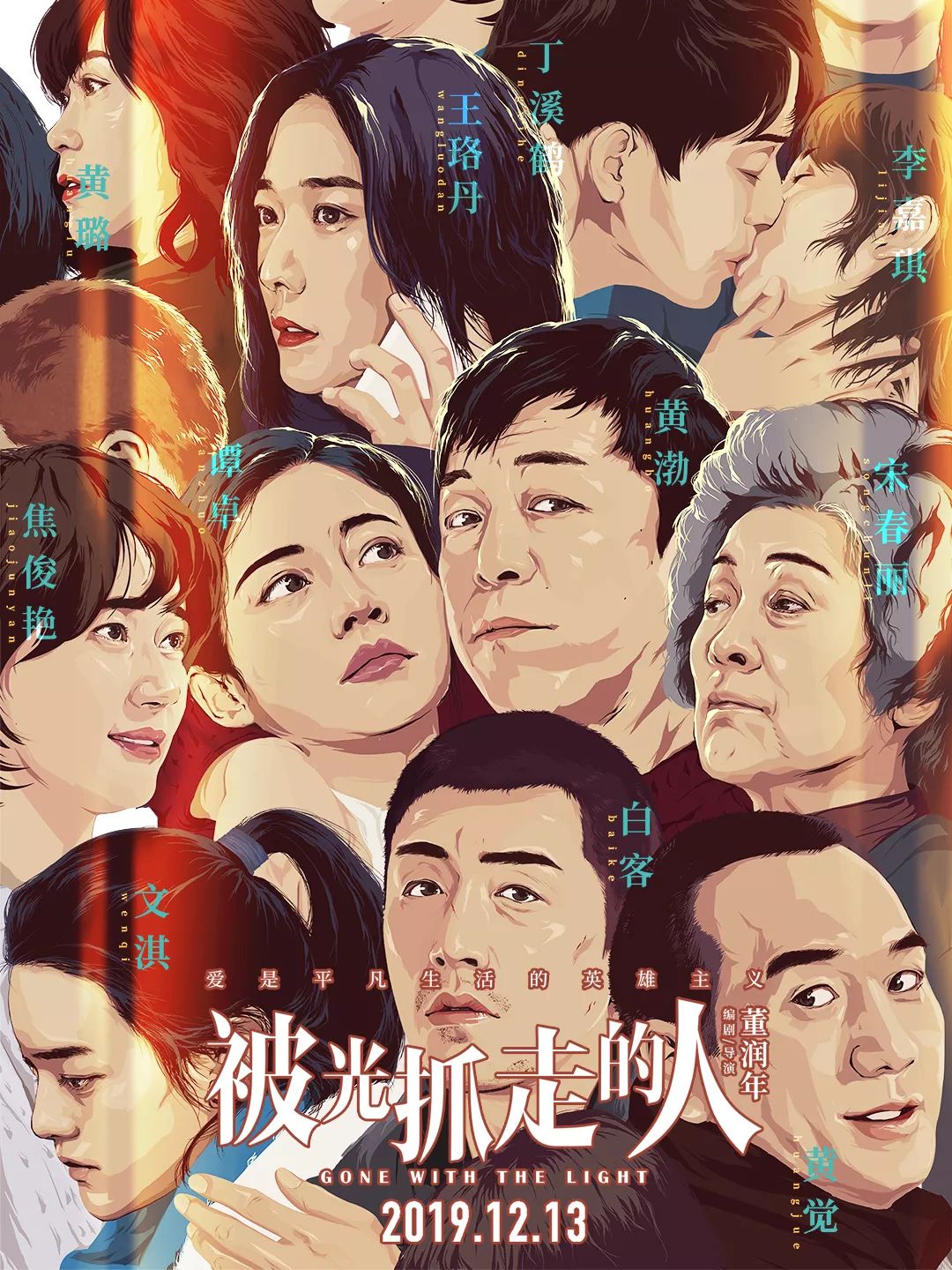
Sheep Without a Shepherd (误杀, Sam Quah Boon Lip, 2019)

“Sheep are happy as long as they have grass to graze, they don’t care if you shear their wool” according to a vox popped farmer in the ironically titled Sheep Without a Shepherd (误杀, Wùshā). Inspired by the Indian film Drishyam, the Mandarin title of Malaysian director Sam Quah’s Chinese remake is simply “manslaughter”, but as the English title perhaps implies if ironically Quah circumvents the censors to issue an oblique broadside to oppressive authoritarianism largely by setting the film in Thailand. 

As the film opens, affable Chinese-Thai IT and internet business owner Weijie (Xiao Yang) is chatting about his favourite thing, movies, with the regulars at his usual haunt, a restaurant run by Uncle Song. Meanwhile, Song tells him about the latest local gossip, the murder of a man who’d recently won the lottery, which is why corrupt cop Sangkun (Shih Ming-Shuai) has been hanging around but not actually doing much investigating. It’s rumoured that hotshot female police chief Laoorn (Joan Chen), who has a fearsome reputation for being able to solve any case, is going to take over. She eventually does just that, fabricating evidence to push the suspect into confessing. Her tactics may be underhanded and unethical, but at the end of the day, as she points out, it doesn’t really matter. She wasn’t framing anyone and isn’t intending to submit the evidence in court, she correctly solved the crime and exerted psychological pressure to trick the suspect into thinking she had something she didn’t so he’d know the game was up. 

“As long as you are not scared, they can’t do anything” Weijie tells his daughter, reminding her that fear is the only leverage of those like Laoorn when they have no real evidence. Unfortunately for him, he’s become involved with the disappearance of Laoorn’s odious son Suchat (Bian Tian Yang) who, we discover, drugged and raped Weijie’s teenage daughter Pingping (Audrey Hui) during an excursion for bright high schoolers, going so far as to film the whole thing in order to blackmail her into providing further sexual favours. Pingping had been keen to go on the trip, somewhat snobbishly looking down on her lower-class family and seeing it as a networking opportunity to make elite friends. She is perhaps the film uncomfortably implies being punished for her unfilial elitism, but eventually finds the courage to tell her mother Ayu (Tan Zhuo) what happened. Ayu accompanies her to the rendezvous with Suchat and confronts him but he is unrepentant, reminding them that his mother is the police chief and his father a politician so he can do as he pleases before trying to force himself on Ayu at which point Pingping hits him with a hoe and knocks him out. Believing that he’s dead, Ayu buries the body with a recently interred family friend and waits for her husband to come home from a business trip repairing the internet in a hotel the next town over. He eventually returns early, worried that he couldn’t get though on the phone because youngest daughter Anan (Zhang Xiran) had left the receiver off the hook. 

A decent and kind man, well liked by everyone, all Weijie wants is to protect his family. What’s done is done, all he can do is try to mitigate it by utilising all his movie knowledge to change the narrative so that they are merely implicated in the crime rather than active suspects. In this, the mini-feud with useless cop Sangkun actually works in his favour. An earlier episode had him offer some advice gleaned from movies to an old man whose grandson had been assaulted by Suchat. Sangkun was in the process of pressuring him to accept a payoff to drop the charges (most of which he’d have pocked for himself). Another business owner privy to the incident apparently reported him anonymously and was attacked in the street only for Weijie to come to his rescue and be accused of assaulting a police officer. It’s very easy for him to claim that Sangkun is trying to frame him out of pettiness, and very easy for people to believe him because that’s exactly something Sangkun would do. 

Sangkun is the embodiment of casual abuse of power. He doesn’t care about serving the people or protecting the vulnerable, he is only interested in validating himself through authority. Laoorn is not quite the same, but she too is an aspect of the all-powerful state as she marshals all her resources against Weijie, an ordinary husband and father, against whom she has no hard evidence only her much vaunted intuition. She will stop at nothing to find out what’s happened to her son, while Weijie is determined to do everything in his power to protect his family. Laoorn underestimates him, as Pingping had, because he is a poor orphan with no education, only later realising that he is clever and resourceful even if he’s pinched his defence strategy from a lifetime of watching crime movies. The pair are engaged in a perfectly matched battled of wits, but only one of them has the power of the state behind her and a gradual erosion of civil rights to allow her to wield it against a personal enemy. 

Filming in Thailand, Quah has a much freer hand to broach the subject of official corruption even if it’s quite obvious that he’s making a point about the overreach of the Chinese state rather than that of Thailand. Weijie’s plight eventually sparks a large scale riot that spreads throughout the country as the populace declares itself thoroughly fed up with the Sangkuns of the world, not to mention the Laoorns or her mayoral candidate husband Dutpon (Philip Keung Ho-Man) who is almost entirely absent from the crisis because all he cares about is the election even if it’s a minor inconvenience not to have his family on show at hustings. Dutpon’s disinterested authoritarian parenting coupled with Laoorn’s indulgence and willingness to enable her son’s crimes through covering them up is perhaps blamed for the “monstrous” young man Suchat was becoming, himself standing in for a generation of wealthy, pampered sons of elites raised with improper boundaries who think they can do as they please because they are somehow above the normal morality. “Good parents” Weijie and Ayu meanwhile find themselves at the mercy of a corrupt faux-aristocracy, abused by Suchat and then rendered powerless in the face of an authoritarian regime. 

Weijie, however, rejects his powerlessness in an attempt to think himself out of the cage in which he finds himself imprisoned. A perfectly plotted psychological thriller, Sheep Without a Shepherd ironically satirises the much cited claim of authoritarians that humanity flounders without a leader as the populace begins to fight back against its toxic relationship with those in power. Nevertheless, its admittedly compassionate and humanitarian conclusion cannot help but feel like an overt concession to the Mainland censors’ requirement that crime can never pay and all transgressions must be owned (even if not directly by those who are literally guilty). Ultimately, however, Weijie redeems himself in the eyes of his daughter, and in doing so subtly reinforces the anti-authoritarian message in instructing Pingping never to be afraid of anything again, freeing her from the oppressive leverage of fear which itself constitutes authoritarianism.


Sheep Without a Shepherd opens in UK cinemas on 21st August courtesy of Cine Asia.

UK release trailer (English / Simplified Chinese subtitles)

Cheerful Wind (風兒踢踏踩, Hou Hsiao-Hsien, 1982)

A leading figure of the New Taiwan Cinema movement, Hou Hsiao-Hsien has sometimes been regarded as difficult or inaccessible but there has always been a kind of playfulness in his wistful romanticism and it is not perhaps as surprising as it might first seem to realise that like many directors of his generation he began his career with a series of idol movies starring top Hong Kong star Kenny Bee. Cheerful Wind (風兒踢踏踩, Fēng Ér Tī Tà Cǎi, AKA Play While You Play) reunites him with Cute Girl co-star and Taiwanese chart topper Fong Fei-fei* who, in true idol movie fashion, sings the title tune the refrain of which is heard frequently throughout. For all that, however, it’s a surprisingly subversive effort in what is often regarded as a conservative genre, painting its heroine as a free spirited modern woman and refusing to punish her either for her breezy approach to romance or for rejecting marriage in favour of individual fulfilment. 

The heroine, Hsiao Hsing-Hui (Fong Fei-Fei), is a keen photographer working for an ad company currently shooting a commercial for detergent in a traditional seaside village. Whilst there she catches sight of Chin-tai (Kenny Bee), a musician she later discovers to be blind and, therefore, not catching sight of her as she had first assumed. Somewhat problematically, Hsing-hui decides to use Chin-tai in the commercial, an essentially exploitative action that plays into various unhelpful stereotypes about the blind as they hope to show that “even” those who cannot see are aware of their brand despite being unaware of the branding. She does something similar after unexpectedly running into him back in Taipei and “helping” him to cross a road he had no intention of crossing, but this does at least provide the opportunity of a second meet cute which kick starts their relationship. 

Hsing-hui, however, is technically already attached to nerdy colleague Lo Zai (Anthony Chan Yau) with whom she is living though apparently in separate rooms. He is keen to move things forward and has already quit his job with the intention of taking Hsing-hui to meet his mother in Hong Kong who has apparently been nagging, but she is in no particular hurry and has in fact already agreed to fill in for her brother teaching at the primary school in her home town while he goes to Australia for a tennis competition. 

This new focus on international travel perhaps symbolises the growing ambitions of a newly prosperous, globalising society. Hsing-hui’s dream is not marriage but to see the world, which is one reason she’s staying with Lo Zai in that they plan to tour Europe together and she fears she may never have another opportunity. Back in Taipei, meanwhile, when Hsing-hui’s country bumpkin father (Chou Wan-sheng) arrives to take a look at Lo Zai, they take him to eat pizza and drink Coca-Cola in a trendy restaurant but he finds himself doubly displaced. He speaks mainly Taiwanese dialect and struggles to understand the capital’s preferred Mandarin, quickly lost after failing to understand directions while trying to find the bathrooms at the station and enduring a series of comic misunderstandings while trying to converse with Lo Zai who hails from Hong Kong. In fact, the family aren’t really that keen on the idea of her marrying a Hong Konger, but in a pleasantly modern touch Hsing-hui’s father is quick to tell her that it’s her own decision and as long she’s sure he’ll support it. 

Chin-tai meanwhile jokes about a wife needing good teeth as if she were a goat or a horse being sold at auction and as sympathetic as her father is, he also brings up dowries while attempting to negotiate with Lo Zai who goes along with it but isn’t actually that invested in the “hassle” of marriage anyway. “I prefer the old ways, they were more romantic then” Chin-tai confesses, and to an extent Hsing-hui does too, a hippieish free spirit even in the country where she’s taken to task by her new boss for getting the kids to paint an undersea mural on the playground wall rather than the government approved slogans they were supposed to be reinforcing. For all of this drive and positivity, this is still a nation trapped under martial law and would be for the next five years which makes the tacit approval of Hsing-hui’s desire to seize her own destiny romantic and otherwise all the more subversive. What she gets is a universal happy ending with a man who has no desire to trap her and vows to wait while she achieves her dreams in the hope that she will then return to him. Hou’s second feature sees him flirt with youthful post-modernist aesthetics and is so absolutely of its time that it almost hurts, but for all of its essential fluffiness is also an infinitely breezy affirmation of a woman being absolutely herself and the men just dealing with it as she steps bravely into a freer future entirely of her own choosing. 


Cheerful Wind streamed in its new restoration as part of this year’s Udine Far East Film Festival.

Festival teaser trailer (dialogue free)

Title song performed by Fong Fei-fei

*The standard pinyin romanisation of 鳳飛飛’s name is Feng Fei-Fei, but she is usually credited as Fong Fei-fei.

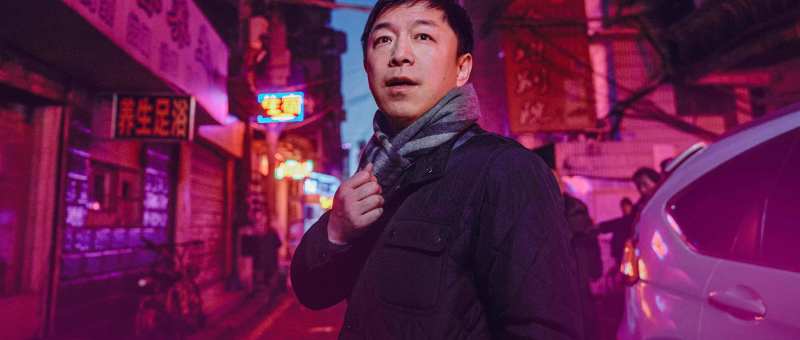
Who Killed Cock Robin (目擊者, Cheng Wei-Hao, 2017)

“Everything in this world has already been decided, no one is free” according to a jaded, psychopathic killer in Tag Along director’s Cheng Wei-Hao fatalistic neo-noir, Who Killed Cock Robin (目擊者, Mùjīzhě) . As the English title implies, each has their part to play when it comes to the orchestration of death, but the peculiar confluence of circumstances sees the central “witness” corrupted by his decision to alter his position, becoming part of the story in a way a journalist never should.

At 30-ish, Chi (Kaiser Chuang Kai-hsun) is a jaded paparazzo tuning in to the police scanners for the latest scoop on potentially scandalous crime. He thinks he’s hit the jackpot in pulling off the road and discovering a local politician in a car wreck with a beautiful young woman he later realises is a top glamour model, but his insistence on pushing the story without proper background checks comes back to haunt him when the politician comes out with documents proving he married the model in secret some months earlier and signals his intention to sue. All of a sudden, Chi’s bright future is slipping away from him. His mentor retires, and he’s abruptly made redundant, effectively fired for the problematic politician scoop. It’s at that point he starts looking back at photos he took of another car crash nine years earlier when he was still a rookie and realises his boss may have deleted some behind his back. 

As his mentor, Chiu (Christopher Lee Meng Soon), eventually tells him, Chi isn’t the sort of man who’d fight for justice for someone he didn’t even know. He’s in this for petty revenge in hoping to expose some kind of scandal involving the boss who got him fired. He’s also, however, meditating on the earnest young man he once was and the jaded hack he’s since become. As an intern he wanted to do hard journalism and make a difference, but after falling in with Chiu he became corrupted by urbanity, seduced by the fancy suits, celebrity contacts, and stylish parties. He does his business by forming “relationships” with useful people such as law enforcement officers though homosocial bonding, i.e. drinking and women. 

Chiu also, perhaps ironically, thanks his wife for helping him make the “relationships” which have enabled his successful life. These complex networks of interwoven corruption are what keeps the city running, but they’re also a web that can be unravelled to reveal the dirty secrets at its centre. Chi seems to know that fate is coming for him. “Things that happened to you come round in circles” he drunkenly laments on learning not only that the used car he was duped into buyng is an illegally remodelled vehicle but also that the chassis belongs to the one from the accident he witnessed all those years ago. Car accidents plague him, as if implying his life is one long car crash bracing for the impact. 

Yet, as Chiu cautions him, he only has a part of the truth. He is lied to and misled, left to reply on the reporter’s instinct he has long since allowed to become rusty. His investigation places others in danger, not least a young woman who was beginning to think she’d escaped the accident’s wake and built a nice life for herself free of past transgression. But Chi still has to make a choice, try to expose this world of infinite corruption for what it is while accepting his own complicity within it, or decide to unsee what he worked so hard to uncover and go back to being the hack reporter dependent on that same web of corruption whose entanglement he was so keen to escape. 

“I just want to know the truth” Chi claims, as a good reporter should, but his subjects ask him “what’s the point?”, “everyone wants to know the truth, but once you know then what?”.  It’s a good question, and one perhaps that Chi doesn’t know the answer to, reducing his dilemma to a sheepish grin and a cynical joke. “I prefer to remember happier things”, he admits. An infinitely compromised figure, Chi finds himself on dark and fatalistic path towards discovering, at least, his own truth. “I believe in myself” he later tells an equally corrupted colleague but something tells us we perhaps should not. 


Who Killed Cock Robin streams online for free in the US as part of Asian Pop-Up Cinema’s Mini-Focus: Taiwan Cinema Online on June 11.

International trailer (English subtitles)

The Gangster’s Daughter (林北小舞, Chen Mei-Juin, 2017)

Do little fish always get eaten by bigger ones, or can they manage to swim free into kinder waters? As the title perhaps suggests, The Gangster’s Daughter (林北小舞, lín běi xiǎowǔ) finds its young heroine battling parental mystery, stepping into her father’s world of crime and dubious morality while he grows ever more disillusioned with his duplicitous lifestyle and the price he has clearly been paying to survive it. Yet they are both in many ways victims of the corruptions of the society in which they live in which others play the system in less overt ways but to the same ends in order to manipulate individual privilege. 

Now a teenager, Shaowu’s (Ally Chiu) parents split up when she was little and she and her mother returned to live with her grandmother in Kinmen, an idyllic island village. Shaowu has no real memories of her father, Keigo (Jack Kao), a Taipei gangster and her grandmother is reluctant to enlighten her. The first time she sees him in many years is at her mother’s funeral at which he makes a notable appearance, an obvious “gangster” in dark sunglasses and sharp suit, backed by a dozen henchmen that, it later transpires, have been hired for the day by his overenthusiastic minions who thought he needed to look “good” while paying his respects to the mother of his child. 

For herself, Shaowu is a rebellious teen who hangs out in a makeshift den where she keeps the various souvenirs she finds of a more violent time in scouring the corn fields for landmines. A pair of horrible boys appear to be bullying her as an orphan with an atypical family background, but Shaowu is unfazed until a nasty prank backfires and harms her only friend. In revenge, she dumps a pail of cow dung over the ringleader while he’s eating his lunch right in the middle of the classroom which would be funny if it weren’t that his dad’s a bigwig with political clout. Reluctant as she is, grandma calls Keigo to help her negotiate with the school, but it ends with a “recommendation” that it might be better Shaowu continue her education in the capital. 

Which is all to say, that father and daughter have quite a lot in common. Shaowu becomes fascinated with the gangster life, acting out scenes from movies with an umbrella only to be stunned when she tries the same thing after finding one of Keigo’s guns and it turns out to be loaded. She finds herself sucked into his homosocial gangster world, dining with big boss Ting who remembers her from when she was a baby and has just returned from an extended stay in Thailand, and making friends with the daughter of another gangster, while Keigo ponders new routes forward as a responsible father trying to protect his daughter from the dangers of the circles in which he moves. 

Twin crises arrive when his underling Dreamer gets into a fight a powerful corrupt cop, Chang, while Boss Ting edges towards moving the gang into drugs which is something Keigo, a noble gangster, cannot condone especially after he finds some stuffed into a cigarette packet one of Shaowu’s new friends asked her to look after. He tries do his best as a modern dad, patiently reminding himself that his daughter’s not a little girl and refraining from laying down the law, but is frustrated by her fascination for everything he regards as a fall from grace in his life as a petty gangster. He wants to get out and dreams of opening a restaurant with his girlfriend but discovers that the gangster world may not be done with him yet. 

Father and daughter are, it seems, divided by an increasingly corrupted society where bent cops like Chang are no better than gangsters themselves while snotty kids know they can do as like they because they have powerful fathers and will never be expected to take responsibility for their actions. Little fish like Keigo don’t stand any kind of chance especially when they insist on swimming against the tide in adhering to the same kind of romanticised ideas of gangsterdom that Shaowu idolises from movies hopped up on jianghu idealism. Taipei or Kinmen, it doesn’t really matter. You’ll still find yourself squatting in the tall grass while others plot against you in the open. In her first narrative feature documentarian Chen Mei-Juin delights in capturing local character from the faded grandeur of traditional island life to the sleazy, neon-lit underbelly of the modern capital but never shies away from the ugliness which underpins it all and disrupts even the most essential of bonds.


The Gangster’s Daughter streams online for free in the US as part of Asian Pop-Up Cinema’s Mini-Focus: Taiwan Cinema Online on June 10.

Original trailer (English subtitles)

Lost and Love (失孤, Peng Sanyuan, 2015)

Because of a series of interconnected social factors, the trafficking of children has become a widespread problem in contemporary China. Many of these children are simply abducted from wherever they happen to be and handed over to brokers who are often working with organised crime. Some of the children are sold on to orphanages working with various organisations who facilitate international adoptions which fetch a high price, but the major demand comes from depopulated areas of rural China who, suffering under the One Child Policy, need more children to help them on the farm or perhaps because their birth children were female and they need a male heir. In any case, though child trafficking is an open secret, very few abducted children are ever traced and reunited with their parents. 

Peng Sanyuan’s debut film Lost and Love (失孤, Shī Gū) does not dwell on the causes of China’s child abduction problem but on the pain and suffering it inflicts on parent and child alike. Lei Zekuan’s (Andy Lau Tak-wah) son Da was taken from his home at two years old. Zekuan has spent the last 15 years travelling all over China chasing every lead desperately trying to find him but drawing a blank at every turn. Turning to modern technology, he’s hooked up with a group of concerned citizens who are always on the look out for missing kids and the gangs that maybe handling them. Though many people are sympathetic towards him and touched by his unrelenting search for his son, there are others that Zekuan meets who, meaning well, ask him if perhaps it’s not better just to let it go and move on. After all, it’s been 15 years. Da was only two, he probably won’t remember his home or family and may not even know he is adopted. Zekuan, however, cannot bring himself to give up, convincing himself that he will one day be reunited with his son while touched by the plight of other parents in the same position, adding the face of a child he sees on a missing poster abducted just recently to the flags on the back of his bike on the off chance that someone might have seen her too. 

Zekuan’s zeal is in part repaid when he’s run off the road and rescued by a young mechanic who sets about fixing his bike. Zeng Shuai (Jing Boran) is touched by Zekuan’s quest but also a little irritated by it. As he later confesses to him, he was an abducted child himself, though too old to have been Zekuan’s son. Taken at four, all he remembers is a suspension bridge, a bamboo grove, and his mother’s hair worn in a long plait. He wonders if his parents ever looked for him in the same way Zekuan looks for his son, but also harbours a degree of resentment towards them for being so careless as to “lose” him. Zekuan assures him that his parents surely miss him dearly and are praying for his return, prompting the young man to consider setting off on a journey to look for the place where he was born, accompanying Zekuan along his way. 

Shuai says that his adoptive parents cared for him well and clearly loved him, but he has also adversely suffered through being an “abandoned” child in ways other than the emotional. Because he was bought illegally, Shuai has no legal status and cannot apply for an ID card which means he had only limited access to education, is unable to apply for exams, cannot get married, cannot open a bank account, and is barred from advanced transportation like planes and trains. Part of the reason he desperately wants to find his parents is to reclaim his identity so he can lead a full life, no longer confined to an underclass of people who legally speaking do not exist and have no rights. 

Yet what’s also obvious is the pain he feels in being disconnected from his roots. Taking the same journey but at cross purposes, the two men generate an easy paternal bond, becoming anxious when they lose each other in crowded markets and having fun messing around washing cars for the money to keep moving forward. But having talked to so many other grief-stricken parents, Zekuan is wary of making a mistake. In one village he’s guided to a boy who fits all the criteria and is said to be living a miserable existence with parents he doesn’t get on with. A kind of connection is made with the young man who perhaps has been hoping that someday someone will come to find him, but the scar which had given Zekuan so much hope turns out to be on the wrong foot, prompting him to doubt himself, wondering if perhaps he’s forgotten which foot it was after all these years and it really might still be him.

That dream is spoiled by the unexpected intervention of the adoptive mother who, unlike the distant father, fights furiously for the rights to her son. The boy seems just as crestfallen as Zekuan, and the sense of heartbreak is all consuming. Asked for advice, a Buddhist priest uses fancy language to tell Zekuan that if he doesn’t look for his son then he’ll never find him, but has no more idea than anyone else if he’ll ever be found. All Zekuan can do is console himself with the search so that when he finds his son he can tell him that he never gave up looking.


Hong Kong release trailer (English subtitles)