Moneyboys (金錢男孩, C.B. Yi, 2021)

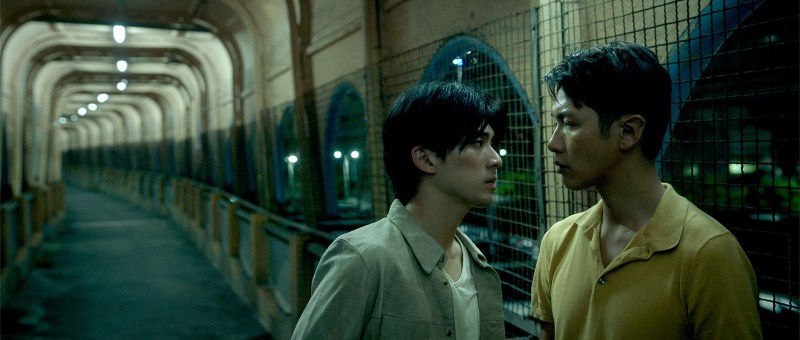
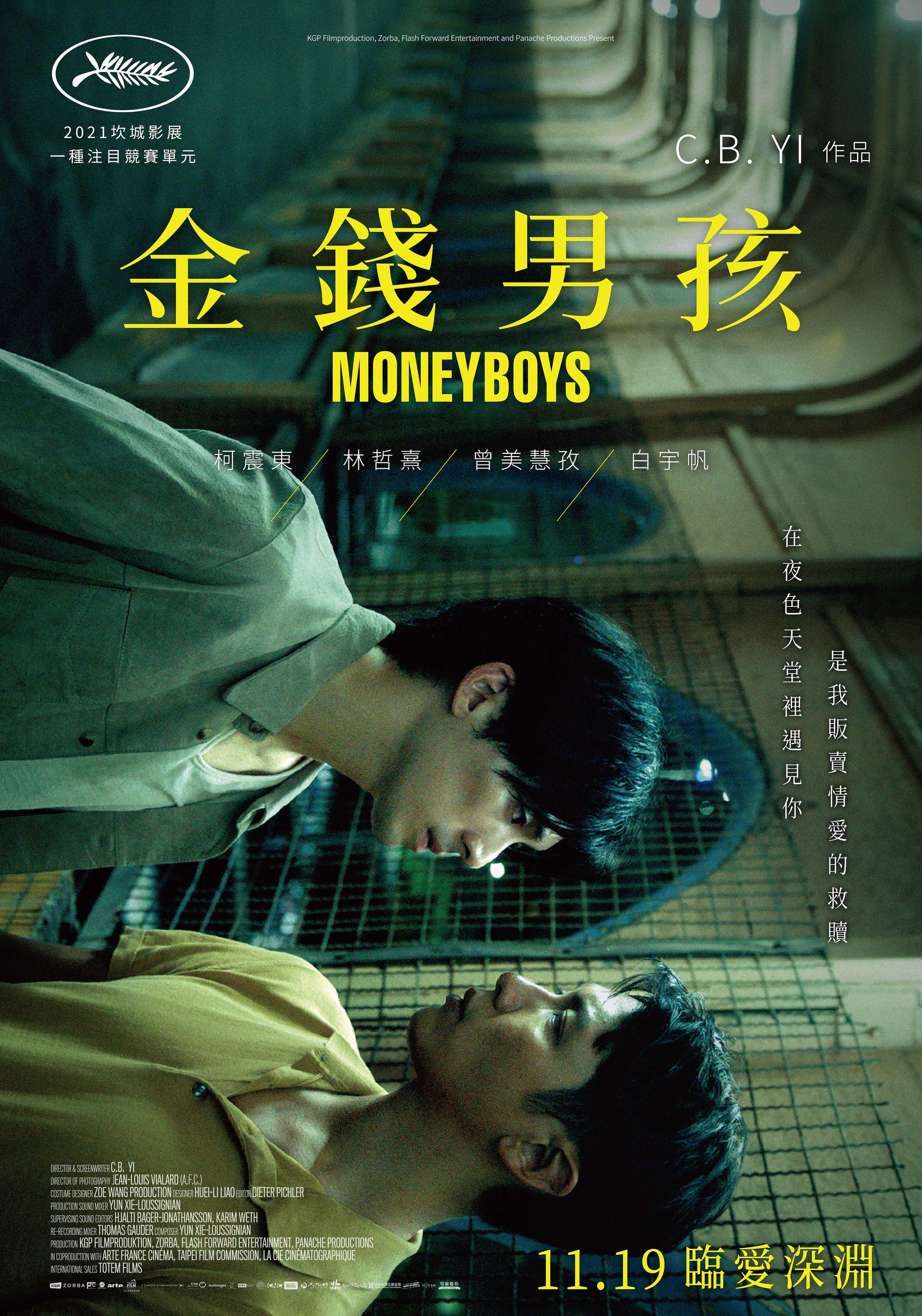
“Who doesn’t sell themselves to make money?” a young man asks in C.B. Yi’s melancholy mainland-set drama Moneyboys (金錢男孩, Jīnqián Nánhái) relating the story of a relative who worked as a tanner all his life, became ill from the effects of the chemicals, and died alone far from home. He may suggest that the exploitative nature of contemporary capitalism will eventually consume you, but it’s an older set of social codes that do for Fei (Kai Ko) who consumes himself in a pathological desire for self-sacrifice as if constantly trying to prove himself worthy of acceptance.

As we first meet Fei he introduces himself as “Jackson”, a naive country boy in the city seeking a means to support his struggling rural family which he finds in sex work. Through his job, he encounters the swaggering Xiaolai (JC Lin) who introduces himself as “Max” and takes him under his wing. Soon they fall head over heels in love, but Xiaolai fears Fei’s desperation and lack of judgment in his choice of client, an anxiety which is later borne out when Fei is badly beaten by a local gangster. Filled with rage, Xiaolai attacks him with a metal bar but ends up badly beaten himself and thereafter sought by the police. Not wanting any trouble, Fei skips town and five years later has started a new, apparently much more successful life, in another city. 

“You’re always living for others” he’s later told by a childhood friend, Long (Bai Yufan), whose long-term crush on him Fei seems to be wilfully ignoring, “the way you sacrifice yourself, you constantly hurt yourself and sometimes others too”. Fei’s self-sacrificing nature does indeed seem to have a masochist component as he wilfully puts himself in dangerous situations to get money to provide for his family. His family, however, reject him precisely because of the nature of the sacrifices he is making. Returning to his home town after being unjustly hassled by local police who attempt to entrap him by getting an undercover officer to pose as a client and searching his home for drugs, Fei is physically attacked by a belligerent uncle who can’t stop ranting about Fei’s marital status beginning by berating him that his family is embarrassed because he has no wife before revealing that they all know about “what you did in the city” and are shamed by it. His father barely looks at him, though his sister appears to know and encourages him to find the right person and hold on to them because life is long and she doesn’t want him to be lonely. 

Later, another woman reassures him that he is “someone who deserves love” though he struggles to accept it. He feels indebted to Xiaolai because he lost a leg for him, unable to move past the transactional nature of love to accept it from someone who wants only the same in return. Consumed by internalised shame he struggles to let go of outdated traditional social codes and unlike Long is unwilling to abandon them in order to live the life he wants. One of his sex worker friends in his new city eventually enters into a sham marriage with a woman who is fully aware of the realities and later pledges to move back to the country and raise a child as a conventional husband and father while tearfully explaining that six years with the gay community have been the best of his life. He too has made a sacrifice of himself for his family but is already torn apart with disappointment and resentment. 

Fei’s tragedy is that he tries to please everyone but himself, revelling in his self-sacrificing suffering and barely noticing when others are caught in the crossfire. Unable to let himself go, he is left only with the memory of the one time he was happy, which wasn’t the one he originally thought it was, and the simultaneous knowledge that he has lost It forever through his own thoughtlessness. Trapped in the past both by the traditional social codes and his thwarted romance with Xiaolai he envisions an ironically progressive compromise but is unable to see the selfishness in his desires perhaps for once putting himself first in failing to consider the feelings of those around him. A neon-lit vista of loneliness, C.B Yi’s melancholy tale of self-imprisonment and the commodification of love discovers only unhappiness in the midst of a repressive social culture defined by the twin poles of rampant consumerism and the filial imperative. 


Trailer (English subtitles)

Love After Love (第一炉香, Ann Hui, 2020)

A naive young woman’s path from besotted teen to tortured yet masterful courtesan amid the colonial realities of pre-war Hong Kong is elegantly charted in Ann Hui’s stately adaptation of the novel by Eileen Chang, Love After Love (第一炉香, Dì yī lú xiāng). A slow-burn romantic tragedy, Hui’s floating drama at once reflects a sense of hopeless rootlessness and the ruinous intensity of a one-sided love but also the transgressive possibilities for freedom and independence in the rejection of traditional patriarchal social codes. 

Displaced from her native Shanghai by ongoing political tension, Weilong (Ma Sichun), the daughter of a once noble house, finds herself impoverished and left with the choice either of accompanying her family in returning to the Mainland where she will be set back a year in completing her studies or remaining behind alone in Hong Kong to graduate high school. Unable to support herself, she decides to turn to an estranged aunt she barely knows, throwing herself on her mercy and asking to be taken in even while knowing of the animosity which exists between her father and his sister. That would be because her aunt, Madame Liang (Faye Yu), turned down all the suitors her family found for her and chose instead to become the mistress of a wealthy man. He now having died, Madame Liang has inherited a sizeable fortune including a European-style mansion where she hosts society parties and enjoys a hedonistic lifestyle which has earned her a reputation as a seducer of young men. 

On her introduction to this world, one of the maids uncharitably describes Weilong’s entrance as like that of a new girl in a brothel and there is indeed something of that in her new role in the household, dangled like a bauble in front of Madame Liang’s collection of wealthy male associates, though Madame Liang apparently intends her only as decoration rather than gift. Tensions come to the fore as Weilong develops a fondness for a dashing young man, George (Edward Peng Yu-Yan), the mixed ethnicity son of coterie member Sir Cheng (Paul Chun), previously eyed by Madame Liang who understands much better than her naive niece that men like George are dangerous in their destabilising faithlessness. For Madame Liang, so perfectly in control, George may be manageable but as she later tells Weilong, unwisely goading her that her life of comfort is a failure because she will never find love, the only danger that exists to her is in unequal affection a prophecy that will in a sense come to pass in Weilong’s single-minded obsession to possess the heart of George. 

Weilong may describe Madame Liang’s lifestyle as ridiculous, yet as she points out her transgressive sexuality is also currency that permits the opulence and luxury in which she lives. Seduced by this world as much as by George, Weilong disapproves but admits that she is no longer the naive girl who arrived even if she also dislikes this new version of herself, considering a return to Shanghai and a possible reset to become someone else again presumably more in line with contemporary notions of social proprietary. She can’t deny that Madame Liang’s rejection of the patriarchal institution of marriage has granted her an unusual degree of independence otherwise unavailable in the contemporary society. She herself faces a choice in approaching the end of her high school days, either progressing to higher education, seeking work, or getting married naively insisting to Madame Liang that she will earn money in order to support George and his lavish lifestyle even as she advises her to enact a plot of romance as revenge. 

While Weilong’s discarded suitor benefits financially in becoming Madame Liang’s lover, she sponsoring his study abroad, Weilong again attempts to reverse traditional gender roles by trapping George as a kind of trophy husband. He had repeatedly told her he wasn’t the marrying kind, in part because of his insatiable sexual desire and perpetual loneliness in having lost his mother young, yet also because of his father’s perfectly acceptable yet socially destructive romantic history which includes several concubines and illegitimate children meaning there will be little in the way of inheritance. If he married, he’d need to marry well but Weilong’s family is impoverished and she has only her connection with Madame Liang to leverage. As she’d warned her it would be, the relationship between them will always be unhappy, Weilong winning a symbolic victory in coercing George towards marriage but unable to accept the limits of her control while he, paradoxically, is emotionally honest only with her but she can only see this as a slight as if he is so indifferent towards her that she is not worth lying to. 

As Weilong gradually morphs into her aunt, George’s sexually liberated sister Kitty lands on a different path later becoming a nun. The three women attempt to muster all of the advantages afforded to them under an oppressive patriarchal system but none perhaps find true happiness. It might be tempting to read a subversive comment on the nature of colonialism in the various frustrated love affairs and persistent sense of rootlessness, Hui’s drama is at heart a romantic tragedy in which two people become locked in a torturous relationship because they cannot understand each other. Their very idea of love is different. Doyle’s floating camera perfectly captures the fleeting opulence of this unreal society itself lingering on an abyss as the lovers continue to dance around each other looking perhaps for the love after love in immaterial comfort. 


Trailer (English subtitles)

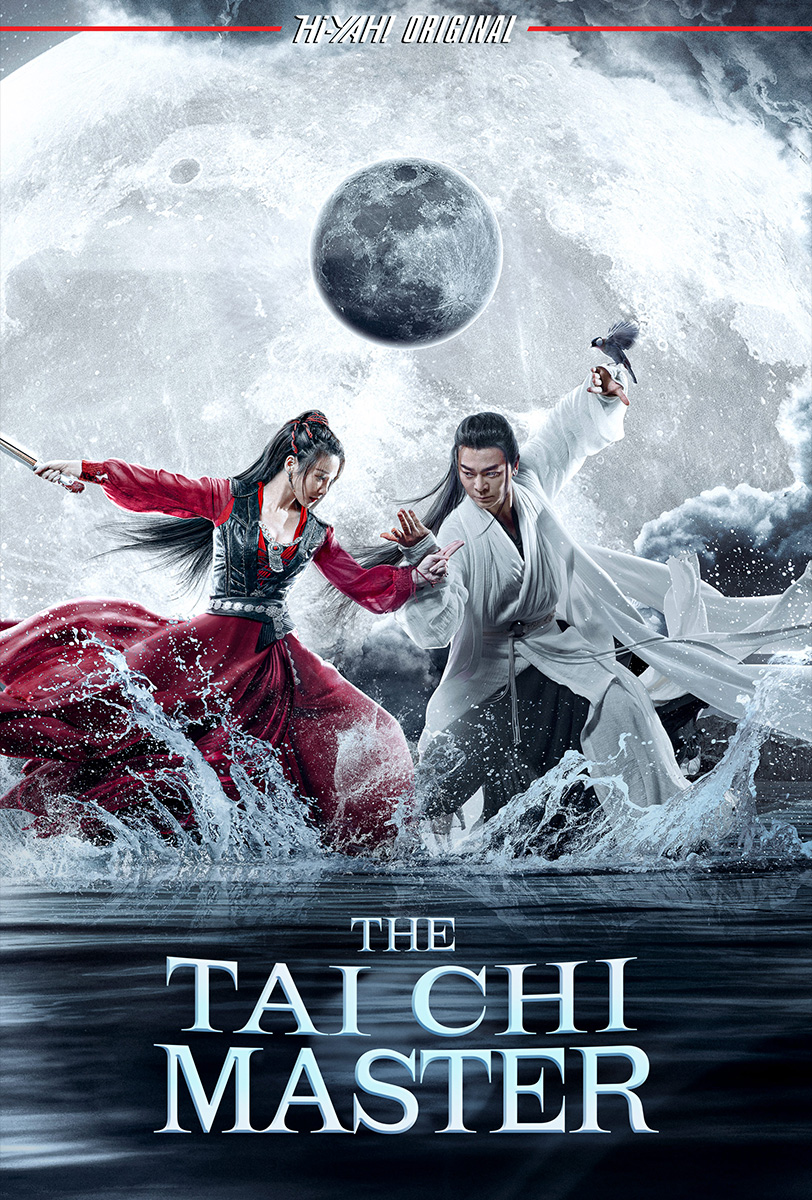
The Tai Chi Master (张三丰, Lin Zhenzhao & Cheng Siyu, 2022)

The funny thing is that, in contrast to contemporary Chinese cinema, Lin Zhenzhao & Cheng Siyu’s The Tai Chi Master casts those who stand up to corruption as the villains. Of course, their insurrection threatens the social order and their subsequent to overthrow the Song Dynasty may be too revolutionary to find much a approval but it’s surprising all the same even if the film also finds fault with officials too focused on the “big picture” rather than the citizens in the townships they’re supposed to be overseeing.

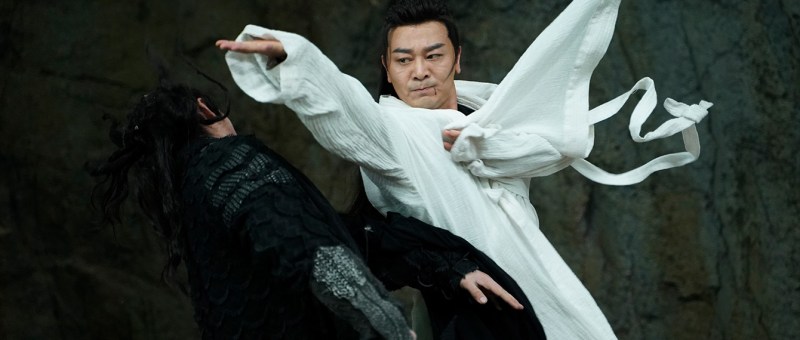
In any case, though it should not be confused with the Jet Li film from 1993 with which it shares both English and Chinese titles, this Tai Chi Master is once again an origin story for the renowned Taoist scholar Zhang Sanfeng which is the name the hero takes at the film’s conclusion having achieved a degree of enlightenment through experiencing near death and tragedy at the hands of the Netherworld Cult. For the most part, he goes by his courtesy name Junbao and is something of a libertine, spending most of his time enjoying fine liquor and trying to craft immortality pills as a member of the Wuji Sect. 12 years previously when the Imperial Court increased taxes to a unreasonable degree, the Netherworld Cult slaughtered the corrupt officials but were condemned by the rest of society for their actions. Junbao has a habit of drinking with Kui Tianxing, the former head of the Netherworld Cult who has been imprisoned in the Wuji’s Sect’s gloomy basement for the last 12 years and in fact transgressively learns from him “evil” techniques claiming that there is no good or bad in martial arts for all depends on the righteous heart of the practitioner.

But there is unrest brewing and it seems some can no longer bear the corruption and indifference of the noblemen supposedly managing their interests on behalf of the court. After taking a liking to a mysterious forest woman who rides a giant silkworm she charms with a flute, Junbao is taken to task for his solipsistic hedonism. She asks him how he can ignore suffering in the world and continue to remain apart from it, but he doesn’t truly gain the desire to oppose injustice until the Wuji Sect is targeted and his master is killed. Even then, his opposition is awkwardly positioned given that the new Netherworld Cult is also motivated by the desire to throw off the authority of corrupt officials, which means in a sense that Junbao is defending that same corrupt social order which he does not otherwise challenge.

In keeping with the teachings of the real Sanfeng, he instead preaches righteousness and harmony but otherwise removes himself from the martial arts and wider worlds, while his brief romance with the mysterious silkworm woman seems to fall by the wayside in his ongoing quest for spiritual enlightenment. Meanwhile, it has to be said that his relationship with the little girl who seems to be in his care is a little uncomfortable at times. In what is presumably supposed to be a sweet and innocent piece of childish banter, she frequently flirts with him, makes statements about becoming his girlfriend, and expresses jealousy towards the silkworm woman all of which seems very inappropriate for a child of no more than 11 or 12.

Nevertheless, the fight choreography is often interesting if sometimes marred by imperfect CGI and mid-level production values for a streaming film. The injection of fantasy-style lore with its demons and underground, cave-like bases gives the film’s internal universe a degree of consistency in reflecting the yin/yang philosophy espoused by the Netherworld Cult in the white-clad, surface-living Wuji Clan and the dark, anarchic world of the often masked rebels. The mysterious silkworm and the flute-playing woman meanwhile seem to occupy a liminal space caught between each world and whatever she says like Junbao not really a part of either until pulled into the final battle. Perhaps troubling or at times contradictory in some of its implications, the film does at least have a degree of charm in its likeable characters and fleshed-out backstories that hint at the possibilities of an ongoing franchise.


The Tai Chi Master is available digitally in the US courtesy of Well Go USA.

Trailer

Dead Talents Society (鬼才之道, John Hsu, 2024)

“Why is it more tiring to be dead than alive?” A fed up ghost asks themselves and with good reason. If you thought you’d be able to rest easy in the afterlife, you’ve got another thing coming because it’s just as much of a capitalist hellscape on the other side as it is here. The central conceit of John Hsu’s Dead Talents Society (鬼才之道, guǐcái zhī dào) is that a ghost must must earn their keep by haunting the living in order to provoke large-scale appeasement rituals and the burning of vast amounts of ghost money or risk disintegration and finally disappearing from this world.

In a certain way, this is the paradox of the ghost. They fear being forgotten and only want to be seen mostly by the living but also by the dead in order to feel the validation that they exist and are appreciated. For Rookie (Gingle Wang) , a teenage girl who it later turns out was almost literally crushed by the weight of parental expectation, this was something she was never able to feel in life partly because of her father’s well-meaning attempts to boost her confidence by telling her she was “special”.  He even went so far as to mock up a fake certificate for her while leaving her to feel inadequate that her sister’s trophy shelves were full while hers were empty. It’s this certificate that’s gone missing during her family’s literal attempt to move on from her death and start again leaving her behind. With no place to return to, Rookie will disintegrate in 30 days if she can’t win a haunting licence which is a problem given her mousey personality and the lack of talent that left her feeling so inadequate in life.

Yet many of the pro ghosts are in the same position. Cathy (Sandrine Pinna) used to be the reigning queen, but her thunder was stolen by a former prodigy, Jessica (Eleven Yao), a very modern ghost who’s figured out how to haunt the internet and go viral for scaring influencers to death. In some ways, the living too are ghosts online haunting an alternate plane of reality while it’s through these online personas that we make ourselves seen. After all, in the modern world, there’s no better way to be “remembered” than by achieving internet fame. By contrast, all Cathy has is her decades old trick of backflipping on guests staying in the hotel room where she died in a lover’s suicide over a man who cared little for her. In a hilarious twist, the gang set up the trick on a harried businessman but he’s so busy he doesn’t even really notice any of their ghost stuff and remains entirely focussed on his work. 

Taken in by the gang, the realisation that rookie begins to come to is that she never really needed to be “special” but only herself and for someone to see her as she really was. Her anxieties are those of contemporary youth burdened by the weight of parental expectation and fearing they can’t live up to it. Manager Makoto (Chen Bolin) experienced something similar in life, struck by anxiety while struggling to make it as a early ‘90s popstar while unable to make his mark in the ghost world by virtue of being unable to scare anyone because he’s too good looking. As he tells it, the best thing about being dead is that you no longer need to worry about what other people think and Rookie is therefore free to become herself or else disappear forever. 

Even so, the irony is that the finale sees the central gangs take on unified appearances as if becoming one with one side doing better than the other in their genuine sense of mutual solidarity as a ghost world family. They watch J-horror-esque movies for tips and muse of the contradictions of fame that perhaps we accord those talented that are merely the most visible while these ghosts struggle to be seen in an increasingly haunted world of hollow influencers and illusionary online avatars. Rookie still doesn’t know what being seen means but has perhaps learned to see and accept herself thanks to her experiences in the afterlife. Charming and somehow warm in its lived-in universe of celebrity ghosts and professional hauntings, Hsu’s zany horror comedy may suggest there’s no escape from the living hell of capitalism but that dead or alive you might as well enjoy the ride as best you can before it all suddenly blinks out.


Dead Talents Society screens Nov. 9/10 as part of this year’s San Diego Asian Film Festival.

Original trailer (English subtitles)

Hotel Iris (艾莉絲旅館, Hiroshi Okuhara, 2021)

You can check out any time you like, but you can never really leave the titular Hotel Iris (艾莉絲旅館) at the centre of centre of Hiroshi Okuhara’s Taiwan-set erotic mystery drama adapted from the novel by Yoko Ogawa. At least, so it seems to be for heroine Mari (Lucia), a youngish woman stultified by a dull existence and controlling, possessive mother while haunted by the memory of her late father murdered when she was still a child. The goddess Iris, so we’re told, could fly to any place she wanted on her rainbow wings as perhaps does Mari, in a sense, in her circular, sado-masochistic, and largely epistolary romance with a middle-aged Japanese translator of Russian literature (Masatoshi Nagase). 

On an otherwise dull if stormy night, Mari is alerted by the sound of a woman screaming while manning the front desk. On investigation she finds an older gentleman violently beating a sex worker who manages to escape down the stairs while he calmly walks his way out. Despite this violent, dangerous episode Mari is intrigued rather than frightened, handed a crumpled note and drawn to the malevolent presence. Spotting him in the town she follows him to the beach where he explains he lives on a near by island across a makeshift bridge cut off at high tide which he likens to that of Iris’ rainbow connecting the worlds of the living and the dead. 

Mari may in a sense be chasing death in the figure of the middle-aged man who also obviously recalls the image of her absent father, she taking him on a kind of date to ice cream (which he does not appear to enjoy) by the sea as her father had done when she was a child. Yet the relationship that develops between them is erotic rather than romantic, Mari discovering a sense of empowerment in submission to the older man’s sexualised violence as he strips and binds her, tearing her clothes while watching himself in the mirror.

The presence of mirrors is central to their relationship, or perhaps to Mari’s fantasy as she reflects on the multiplicities of self it offers her along with a sense of endlessness as if she and the middle-aged man had begun to inhabit a world of two behind the glass. When she questions his true identity he replies only “I am You” which she later returns to him, “You are me”, signalling the selflessness which now exists between them if also leading us to question how much of this is happening merely in Mari’s mind bored behind the counter of the Iris and longing for escape. She borrows the name of an absent childhood friend, “Mary”, for her correspondence with the middle-aged man in order to keep her relationship with him secret from her mother while the main character in his book is also co-incidentally named “Mari” giving her at least three mirrored personas in this already complicated relationship one of which actively controlled by the middle-aged man and another by her mother. 

Meanwhile Mari begins to doubt him, witnessing a display of irrational violence and later hearing that the body of another sex worker has been discovered in the town. He told her he had no family since his wife passed away but turns out to have a mute nephew who later claims to be his stepson said to have lost his tongue to cancer though we later wonder if that is really case. In seducing the nephew/stepson she takes on a more dominant, masculinised role while he is later feminised by the middle-aged man if also becoming an embodiment of the triangular griefs that bind them, the boy for his mother, Mari for her father, and the middle-aged man for the wife is rumoured to have killed. 

Okuhara is not so much interested in solving the literal mystery of the middle-aged man’s potential as a covert serial killer as exposing Mari’s inner psychodrama as she attempts to process the unanswered questions of her father’s death, literally haunted by the image of him wondering whether or not she as loved as a child while straining to break free of her mother’s controlling impulses but otherwise trapped within the oppressive atmosphere of the Hotel Iris. Caught between Taiwan and Japan, Mari occupies a liminal state of constant inertia while spreading her rainbow wings in search of danger and excitement. Shot with a moody ethereality, Okuhara’s poetic psychodrama captures an almost gothic sense of intensity as the heroine investigates the mystery of herself through transgressive relationships with the living and the dead on permanently shifting sands. 


Original trailer (no subtitles)

High Forces (危机航线, Oxide Pang Chun, 2024)

It’s always a worrying sign when the guy in front of you at check-in has brought a parachute. Shot back in 2021 and finally hitting screens three years later, Oxide Pang’s airborne hijack thriller High Forces (危机航线, wēijī hángxiàn), pits veteran star Andy Lau against a gang of crooks who’ve taken his plane hostage in order to convince the CEO of the airline to reveal the password to his accounts so his wife can send them a large amount of money.

Perhaps surprisingly given recent Chinese cinema’s attitudes to wealth, the film remains uncritical of the existence of a luxury airliner with a top deck hotel complete with duty free. The CEO in fact later becomes a hero, fighting alongside Lau’s Haojun in order to save the lives of the passengers, while it’s revealed that it’s his wife’s family who founded the airline he took over that may have been conducting some very shady business dealings. Nevertheless, it’s the economy class passengers the amoral Mike (Qu Chuxiao) starts bumping off before planning to vacate the plane via parachute along with the pilots leaving it to plunge to the ground.

Yet, the hijacking is also Haojun’s chance for redemption seeing as his estranged wife (Liu Tao) and daughter are coincidentally on the same plane while travelling to seek medical treatment for daughter Xiaojun’s (Zhang Zifeng) eyes. Haojun was driving recklessly and got into an accident after which Xiaojun lost her sight and gained a deep-seated resentment towards her father. This reckless streak is attributed to anger issues stemming from untreated bipolar disorder which Hao now believes he now has under control. Mike is also taking the same medication and the two men are presented as reflections of each other. Haojun’s flashes of rage are expressed through the colour red flooding the screen, while Mike’s greed and envy seem to be reflected in green. Whether this is a helpful framing of bipolar disorder or not is up for debate, but the implication is that through defeating Mike Haojun can overcome himself, triumph over his anger issues, and regain his rightful place as a husband and a father.

Ironically he first tries to do this by using a toy walkie-talkie dropped by a little boy whose father seems to have a lot of issues of his own to communicate with Xiaojun who is trapped in first class with the kidnappers. Using his special forces and security skills, Haojun crawls all over the plane trying to pick the kidnappers off one by one until being left with the core group led by Mike. A slightly bum note is struck when one of the stewardess’ suddenly overcomes her aversion to a sleazy colleague who was harassing her after he takes a bullet on her behalf, but she too rises to the occasion helping Haojun fight back against the kidnappers as do several of the passengers who set on the last of Mike’s men making sure he can’t leave the plane. 

Of course, the film ends with the usual set of title cards explaining that all the wrongdoers were caught and punished while Haojun was rewarded for his heroic actions in saving the lives of the passengers and crew. Nevertheless, in the grand tradition of overblown action dramas it also has its share of silliness such as the obvious set up of one of the stewardesses showing off her new skydiving certification. This particular airline should also probably have another look at its hiring procedures and employee vetting. The real enemy is perhaps corporate corruption and shadiness in business though these leads are never really followed in much more than a cursory fashion with the action remaining mainly on the plane even as Mike seems content to simply shoot people just to make a point. Like The Captain, the film’s conclusion is basically a celebration of the nation’s emergency services who all come together to help the plane land safely through a rather improbable solution to its myriad problems. Nevertheless, for much of its runtime it’s a very effective, if occasionally absurd, action drama in which a lone vigilante takes on a plane full of crooks with sometimes surprising violence while trying to fight his way back to his family and restore his image of himself as father if only in his daughter’s eyes.


Original trailer (Simplified Chinese / English subtitles)
Stranger Eyes (默視錄, Yeo Siew Hua, 2024)

In some ways consciously and others not, we behave differently if we have an expectation of being observed than if we are confident we are alone. But the line between actions we think of as private and others public is often thinner than we assume and sometimes broken in moments of heightened emotion. A man sits and cries on a park bench, but he does so because he does not think anyone’s looking and feels himself alone though actually someone is watching. They often are, silently and at a distance that can itself be painful.

But then Yeo Siew Hua’s elliptical drama eventually suggests we are watched most by no stranger eyes than our own. Its “stalker”, Wu (Lee Kang-sheng), remarks that sometimes he feels as if he only watches himself an idea reinforced by the film’s continual doubling that suggests that we are in some ways caught between a series of overlapping timezones or entering a space of interactive memory. With echoes of Rear Window, the police accompany Shuping (Vera Chen), grandmother of a missing child, as she runs a pair of binoculars over the windows of her apartment block as seen from the balcony opposite while putting herself in the shoes of her observer. She stops on a young girl staring sadly from her window before beginning a strange dance that makes us wonder if Shuping is actually observing her younger self or if her own interiority simply colours what she is seeing. 

Shuping, along with her son Juyang (Wu Chien-ho) and his wife Peiying (Anicca Panna), is scanning the horizon for traces of their missing child, Little Bo, while closely examining old videos looking for signs of anything untoward. The ubiquitous presence of these cameras reminds us that we are often being observed if accidentally and the use of these images could put us at risk. Shuping wants to put a video of the family at the park online but Peiying objects, insisting Bo should have the right to decide when she’s older though the implication is that someone could have seen Bo there and been minded to take her. In any case, the irony is there’s nothing useful either in the videos or, the family initially thinks, in the vast networks of CCTV cameras that exchange our privacy for supposed safety. 

Wu relies firstly on his naked eyes, but then starts sending the family DVDs of videos he’s taken of them for unclear reasons but confronting Juyang and Peiying with the cracks in the foundations of their marriage along with the implication they are unfit parents. Juyang at one point simply walks off and leaves Bo sitting in a supermarket trolley while she cries her head off as if he were half hoping to be free of her. He in turn stalks another woman with a baby in a pushchair who turns to the side for a moment to help a man whose baby is crying, taking her eyes off her daughter long enough for Juyang to pick her up without her noticing. He could have easily have walked off with her, though you could hardly criticise this woman for simply having a chat with her daughter sitting just off to the side technically but perhaps not emotionally out of sight. Peiying meanwhile frets that Bo has been taken from her by some cosmic force because she didn’t love her enough and had considered an abortion before she was born again hinting at the fragility of the relationship between the parents who rarely occupy the same space and seem to live very parallel lives. 

Ironically Peiying feels as if it is only Wu who has truly seen her for everything she is rather than solely as a mother or the persona she adopts as a live-streaming DJ. She says she feels as if Juyang only sees her as air, as if he looks right through her while he looks at other women and seems to feel trapped by domesticity or perhaps by Shuping whose obsessive love for Bo and occasionally overbearing grandmothering seems to annoy both parents in overstepping their boundaries. We observe them just as Wu does, making our judgements in our silence though in this case confident they do not see us and that we are not ourselves currently being observed. But this confidence may also be painful to an observer such as Wu who wants to penetrate the screen while also interacting with his own sense of regret and is unable to make himself visible or express what he feels outside outside of the ghostly act of observation. The watchful soul observes itself as reflected in others who exist only in a world lost to them.


Stranger Eyes screened as part of this year’s BFI London Film Festival

Original trailer (English subtitles)

The Mob (龙虎制霸, Zhao Cong, 2023)

The feckless son of the head of the Chamber of Commerce discovers he needs to grow up fast when a rival gang starts selling opium in the Shanghai of 1928 in Zhao Cong’s well appointed action streamer, The Mob (龙虎制霸, lónghǔ zhì bà). There can be few settings as enticing as pre-war Shanghai and Zhao certainly makes the most of his budget with beautifully designed sets along with a number of stylish action sequences and a narrative that’s a little more interesting that your average streamer.

The interesting thing is that the bad guys are the ones who want to work with foreigners, particularly the British, to flood Shanghai with opium which is obviously very bad for everyone and will cause a series of social problems the good gangs and the authorities don’t really want to deal with not least because it will disrupt their other business and increase foreign influence in the city. Evil gangster Zhao Longde doesn’t care about that though and is already making trouble that is only exacerbated by the return of his illegitimate son Yuyang from studying abroad. Yuyang has a serious chip on his shoulder about his relationship with his father and is jealous of Longde’s adopted son, Hai, who is just much better at this whole gangster thing and all thing’s considered the son Longde probably wants as opposed to Yuyang who can’t be trusted with anything.

Across town, Fang is also a feckless son but one on the side of the good guys in that his father is the current head of the Chamber of Commerce and dead against anyone trading opium in Shanghai. If they do, they’ll be kicked out and unable to do business in the city. Though the name sounds legitimate, it’s really just a forum to maintain equilibrium between the various gangs who control the local ports though the balance has already been destabilised with tension between Zhao Lin who runs swanky nightclub New World and Longde who apparently caused his brother to lose the use of his hand. Fang is drawn into the conflict when he comes to the defence of Hai when he’s attacked and outnumbered at New World.

They’re obviously on opposing sides, but the two men discover a respect for each other as fighters and men of honour. Hai is a loyal son to Longde and respected Yuyang out of loyalty to him but privately does not approve of some of the gang’s actions such as flouting the rules of the Chamber of Commerce, bumping off their rivals, and planning to take control of the local opium trade. Fang, meanwhile, is just really directionless and an overindulged little brother who spends all his time reading comic books and gambling on frog racing much to the disappointment of his father. But with all hell breaking loose in Shanghai, he has no choice but to step up to the plate and play his part as a member of the Tongmingtang to restore order and keep drugs out of Shanghai.

Interestingly enough, though perhaps just because it’s a streaming movie set firmly within the pre-Communist past, the film does not end with one of the familiar title cards explaining that justice was done and the wrongdoers punished but in fact justifies Fang’s violence as righteous and adds that he later joined the resistance movement against the Japanese (which sounds like a hook for another interesting film). In any case, Zhao includes plenty of twists and turns, betrayals and counter betrayals, while reserving the most interesting arc for the conflicted Hai who eventually shakes himself free of the sense of obligation he has to a gang that offends his sense of morality realising that like Fang he owes nothing to anyone and is free to make an individualistic choice as regards which side to be on. Fang’s sister Jiayue meanwhile is somewhat underused but is otherwise quite an imposing presence and certainly makes an impact with a hardline stance against the priggish Yuyang. Echoing the era of Heroic Bloodshed, Zhao lends the action an epic quality through his artfully designed set pieces including the rain soaked finale and an impressively staged assassination sequence intercut with scenes of a grieving family at a funeral.


The Mob is available now in the US on Digital courtesy of Well Go USA.

US trailer

Decoded (解密, Chen Sicheng, 2024)

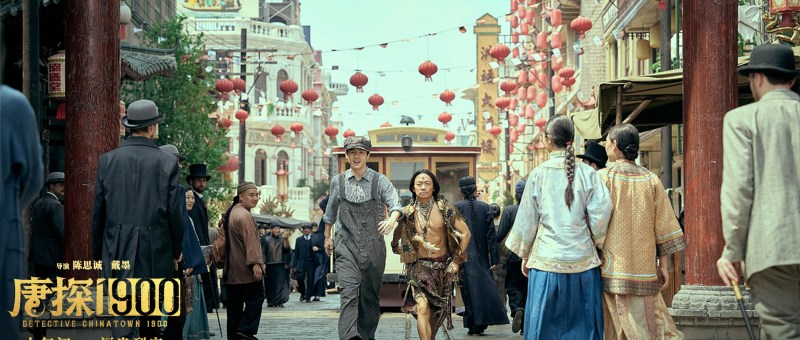
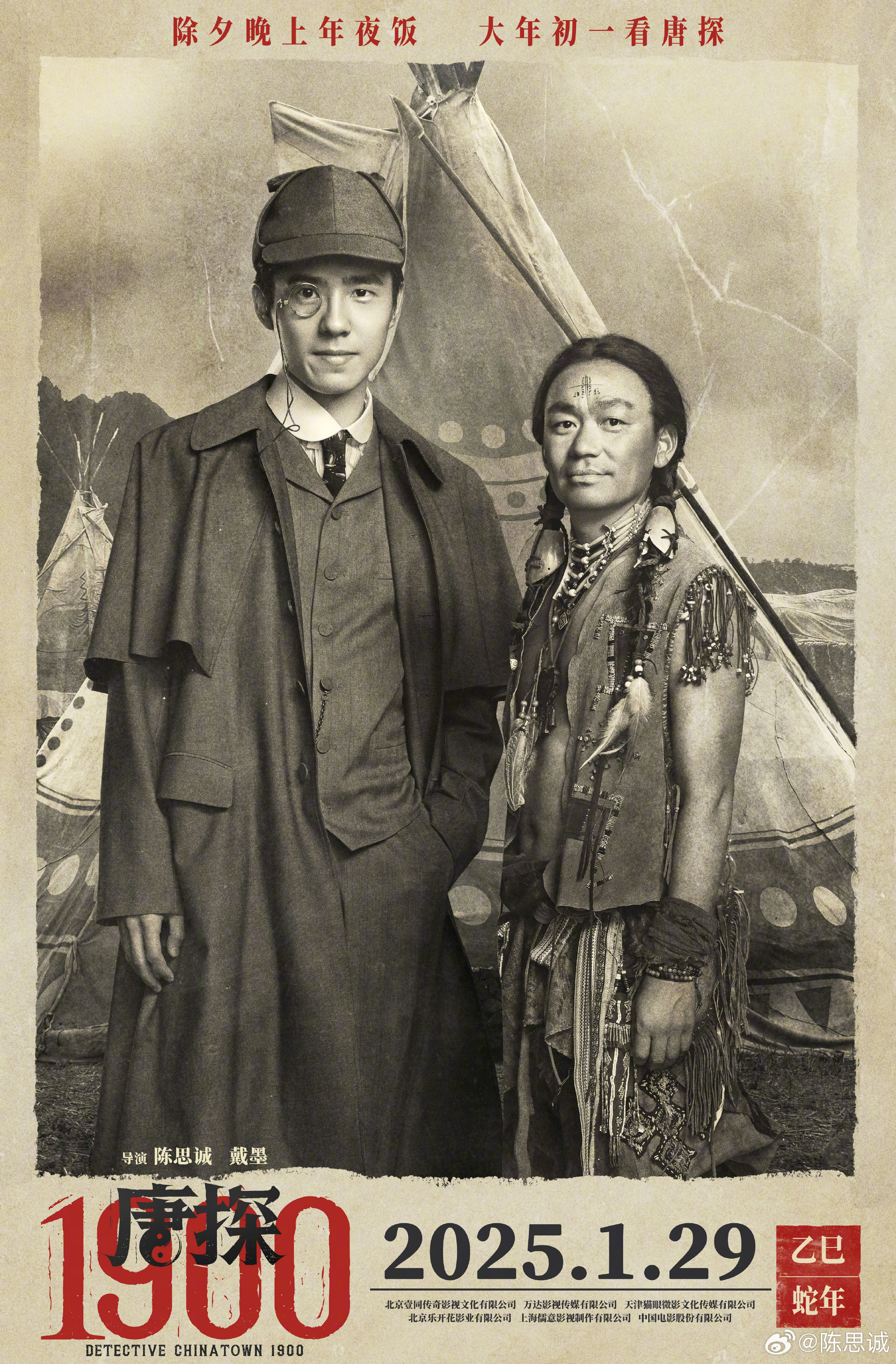
International geopolitics is reduced to a battle wits between two men, each in their way lonely exiles and perpetual outsiders in Chen Sicheng’s adaptation of the novel by Mai Jia, Decoded (解密, jiěmì). Originally an actor (and here making a meta self-cameo), Chen is best known as a director for the smash hit Detective Chinatown franchise which boasts both well-plotted mysteries and zany, lowbrow comedy. Decoded is a slightly different kettle of fish, displaying its own kind of whimsicality but also darker and stranger in its concentric enigmas.

The narrative’s timeline seems to be slightly hazy, but loosely follows an prodigious orphan born to a prominent family though his father, the black sheep, had already died before his mother too died in childbirth. A rather complicated set of circumstances led to Rong Jinzhen (Liu Haoran) being raised by an Austrian dream interpreter who for unexplained reasons kept him locked up in a small hut isolated from the world while teaching him all about dreams with the consequence that by the time the old man dies, 12-year-old Jinzhen is a strange boy with few social skills but a once-in-a-generation grasp of mathematics.

It’s this genius that sees him saved by distant relative Xiaolili (Daniel Wu) who was originally going to send him to an orphanage but decides adopt him instead. Jinzhen then gains early entry to university where he’s tutored by Liseiwicz, an exiled Polish professor who fled his homeland to escape persecution by the Nazis as a Jew. The film seemingly doesn’t mean to, but undermines this backstory through the casting of John Cusack who plays the part as all American and is not convincing as Polish man who ended up in China because he had nowhere else to go and is unable to return to his homeland thereby lessening the intended impact of his speeches about nationhood and patriotism which counter those Jinzheng has already been given by Xiaolili in addition to making him seem suspicious possibly long before she should. 

Nevertheless, this may also add to his sense of untrustworthiness and perhaps duplicitous treatment of Jinzheng which edges towards the exploitative in hoping to make use of his genius for his research into the evolution of computing. In the early days of the Chinese civil war, Liseiwicz is approached by agents from the PLA who want him to decode a telegram that may save thousands of lives. Liseiwicz claims he doesn’t want to get into politics though superficially supportive of the Communist cause only to later be exposed as a collaborator with the KMT on his return to the US where he designs encryption codes to be used between Chiang Kai-shek’s nationalists in Taiwan and the US troops backing him in the hope he’ll retake China and end Communism in Asia. 

Of course, Jinzheng gets picked up by the CCP to work in their secret spy division in which he becomes a virtual prisoner forbidden from leaving the compound while expected to spend all of his time breaking codes such as those designed by Liseiwicz. In truth, it becomes a kind of game between the two but one that the guileless Jinzheng little understands. It takes it him an unreasonably long time to understand that Liseiwicz is just messing with his mind, sending him misinformation as a distraction intended to drive him mad culminating in dispatching a copy of the The Beatles’ I Am the Walrus in order both to disrupt his political consciousness with decadent Western pop music and drive him out of his mind as he struggles to understand how this nonsense verse about egg men and marine animals is supposed to relate to the code.

Then again, there is something a little subversive in the celebration of Jinzheng’s ability to think about the box, instantly understanding that the correct answer to the entrance test is not to waste his time taking it because it’s obvious they’ve already cracked the code concerned. The use of dream interpretation taught to him by his adoptive Austrian father maybe simply be an ability to work things out on a deeper level of consciousness, but it’s also left him with a fragile mental state already unable to discern dream from reality. The strain of constant codebreaking further pushes him towards madness while he perhaps loses sight of his original mission, only later coming to realise that Xiaolili’s vision of nationhood was the correct one after all.

Though Chen appears to have been influenced by Christopher Nolan in his use of oneiric imagery, he crafts a number of beautifully designed, whimsical dream sequences some which later become hellish or strange but reflect an innate innocence in Jinzheng while disclosing to him something of the real world which he had not understood. It’s ironic in a sense that he’s forever trying to decode the world around him, such as in taking instructions from his adopted sister/cousin Biyu (Chen Yusi) on how to know if girls are interested which he nevertheless slightly misunderstands. The film goes to some surprisingly dark places such as in a brief sequence which Biyu and her mother seemingly if potentially anachronistically fall victim to the Cultural Revolution while Jinzheng is the victim of several assassination attempts by KMT agents well into the ‘60s. Even so his story emerges as tragedy more than triumph, a fine mind broken by the society around him and used as an unwitting tool in the nation’s path to perfecting an atomic bomb having seemingly decoded everything but his place within the world.


International trailer (English subtitles)

Mistress Dispeller (以爱之名, Elizabeth Lo, 2024)

Can a relationship ever recover from infidelity? Elizabeth Lo’s mainly observational documentary follows one of China’s many “mistress dispellers”, which is to say an intermediary who attempts to halt affairs and repair families. While it’s tempting to view their existence as morally censorious, Teacher Wang’s approach at least leans towards empathy and as she says is geared towards encouraging the unfaithful partners to want to return to their spouse of their own volition rather than punishing them for what others may consider immoral behaviour or forcing them to do the “right” thing by staying in a marriage that may not be working.

In fact, she has a lot of empathy for the mistress at one point suggesting that she is most likely the person suffering the most in this situation because she is trapped in an incomplete, unfulfilling relationship which has no real possibility of coming to fruition. The conclusion she comes to about Mr Li’s mistress Feifei is that she is most likely just lonely while she herself later reflects that she gravitates towards relationships with unavailable men because of low self-esteem, feeling as if she does not really deserve a full relationship or all of someone’s love. 

The documentary in part links this sense of inadequacy to China’s contemporary marriage mores in which it is very much a buyer’s market and women are considered to have passed marriageable age in their mid-20s. 30-something Feifei feels she has little chance of striking a striking a connection with an eligible bachelor and is relegated to the realms of mistresses while brief flashes to dating agencies and parks where people place ads for potential matches suggest that divorcees and widowers with children maybe the only realistic options for a woman in her position. A lady answering the phone in a matchmaking agency remarks that she’s glad her client is based in Beijing because she’s simply too tall to find a willing match in the local area.

That aside, it might be difficult to see what Feifei sees in Mr Li, a typical middle-aged gentleman she describes as kind and affable. It doesn’t seem that money is a factor in their relationship, nor is she a kind of status symbol for Li who says that being with her is like being in the sun while it’s clear he’s become bored with the mundanity of domestic life. Though materially comfortable, the long married couple appear to have grown apart despite Mrs Li’s conviction that their relationship had previously been close and harmonious to the extent that they were the envy of their friends.

Of course, from her position there is a sense of humiliation and betrayal along with anxiety surrounding her living circumstances and husband’s future plans. She enlists Wang on her younger brother’s recommendation and submits herself to her process which involves introducing her as a “friend” and engineering a series of scenes which allow Teacher Wang to probe Mr Li to figure out his feelings surrounding his affair. In some ways, the process of the documentary is similar. Lo states that Mr Li and Feifei were brought on board believing they were taking part in a documentary about modern love but repeatedly reconfirmed their consent as the film evolved. 

Feifei herself begins to wonder if something’s afoot, feeling as if Teacher Wang, whom she believes to be Mr Li’s cousin, is somehow guiding them but also grateful that she seems to be helping her. We can sense the potential influence of the documentary in Teacher Wang’s anxiety on bringing the wife and the mistress together, explaining that people don’t generally agree to this and it’s not part of her usual process. Nevertheless, it rejects the potential sensationalism of the situation for a more rational discussion from each of the women’s perspectives bringing a sense of closure to both. This is the only real time we become aware of the film crew behind the camera which otherwise sits statically with incredible access to the discussions between all parties lending their honesty an uncanny quality. Even so, with the situation resolved in the best possible way, it seems that no one is really happy even as the Lis attempt to rebuild their relationship and Feifei attempts to move on. Lo hints at the pressures of the contemporary society from outdated patriarchal social codes, a lack of respect for women in general, lingering legacies of the One Child Policy, and the looming authoritarianism of the state, but finally comes down to three lonely people desperately seeking fulfilment but united only in their aloneness.


Mistress Dispeller had its world premiere at this year’s Venice Film Festival.

Original trailer (English subtitles)