Bel Ami (漂亮朋友, Geng Jun, 2024)

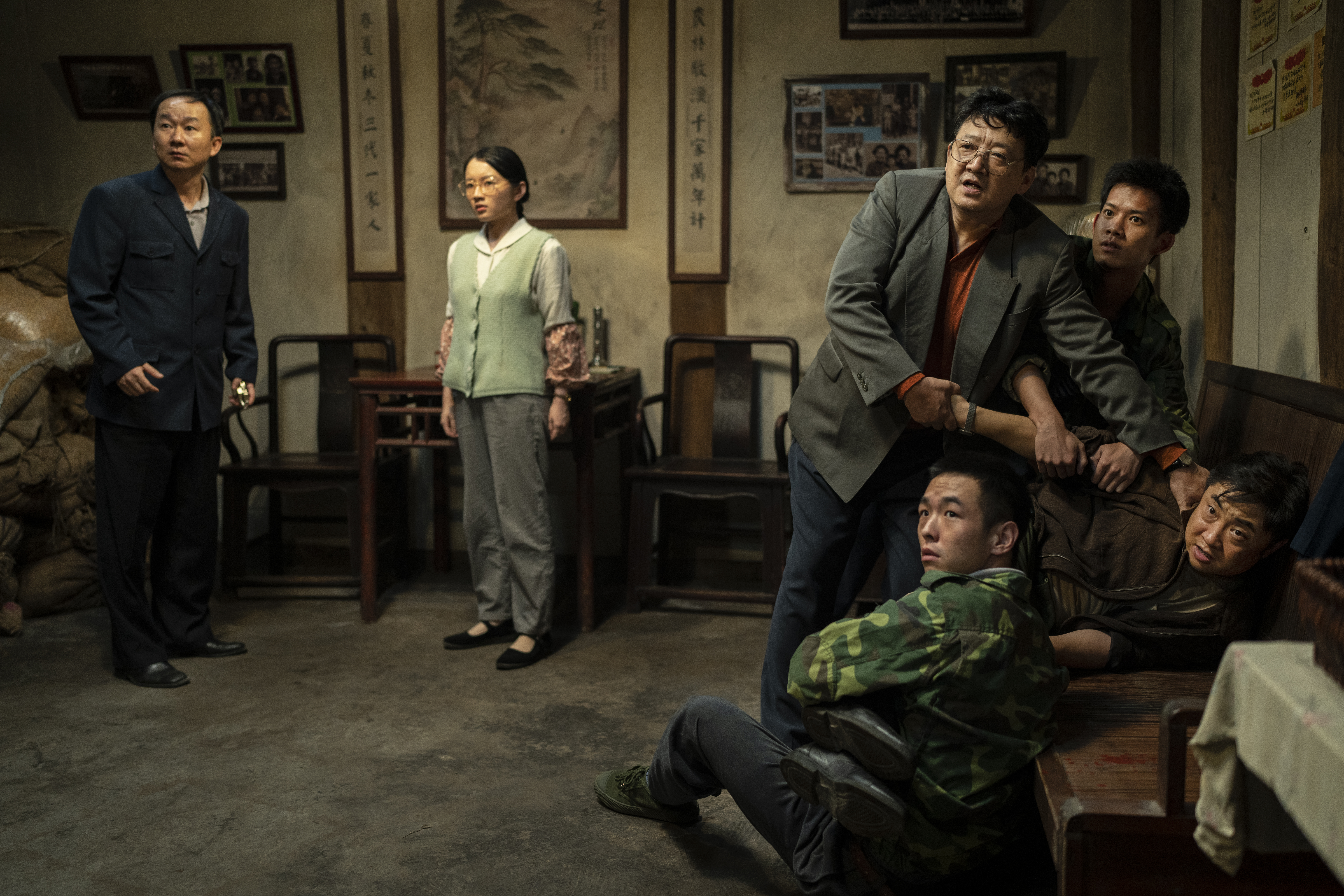
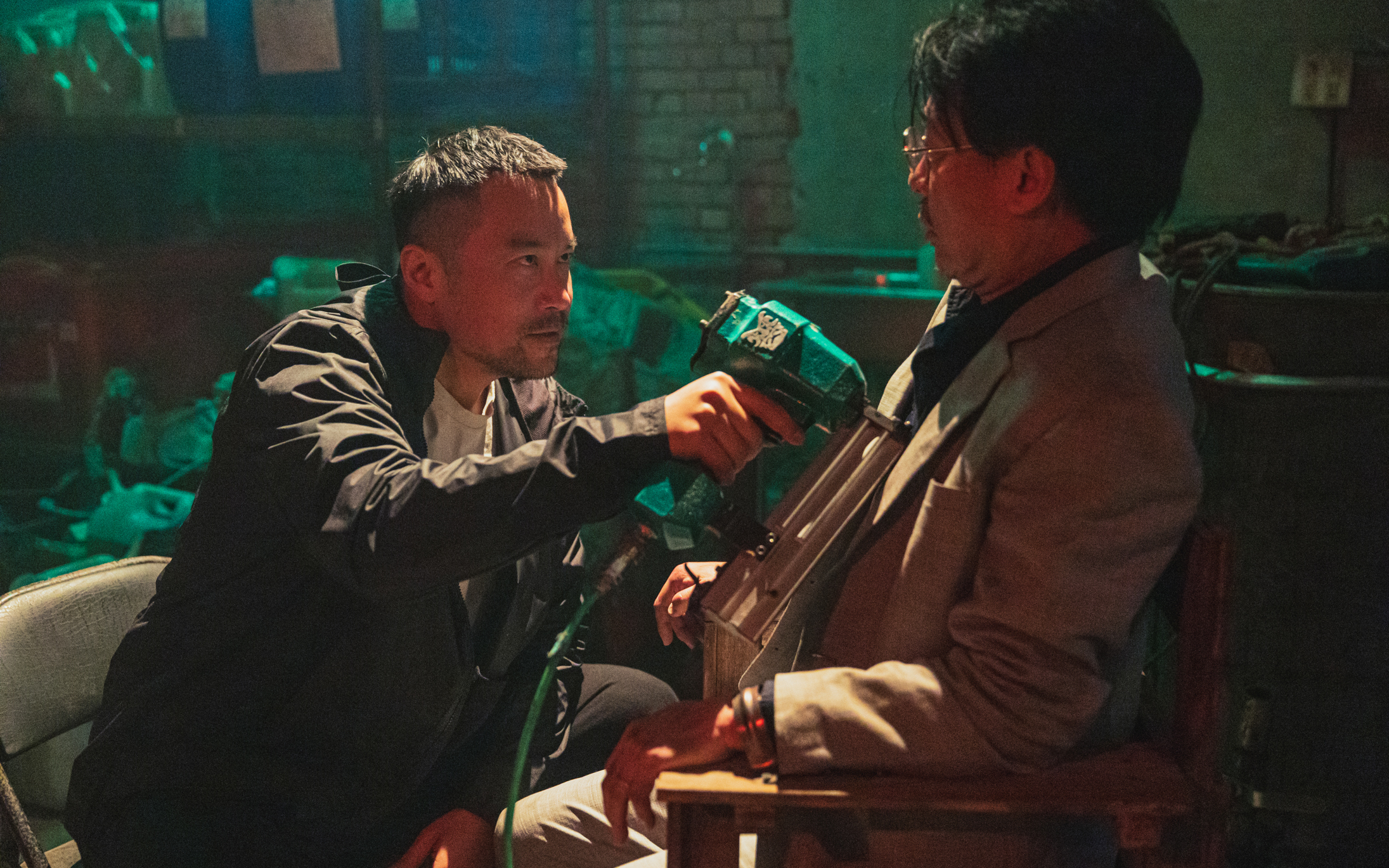
In the opening scenes of Geng Jun’s Bel Ami, a middle-aged man poses for a series of nude photos. The pictures and the poses echo a long history of queer iconography, but at first the man stands with his back to us. We can’t see his face, and he is hiding from us who he really is even as his nakedness suggests a desire for authenticity and a demand that we recognise his identity. “It’s repressive,” another man sighs, complaining that like everyone else he is forced to keep a part of himself hidden and is painfully lonely because of it. 

Like Geng’s other films set in Heilongjiang, Mainland China, the film’s queer themes would not play well with the censor’s board who are notoriously squeamish of any reference to the LGBTQ+ community and has found success only by screening in Taiwan where it won several categories at the Golden Horse Awards. There is a minor irony in play as a certain character makes clear in his rendition of the Internationale that the queer community in China has long referred to each other as “tongzhi” or “comrade” but do so to express solidarity against the oppressive authoritarian government which isolates and others them, preventing them from living authentically as full and free members of society. 

When Zhiyong spots a man he assumes to be gay in a cafe, he addresses him as “tongzhi”, but the man first denies his identity and responds to Zhiyong’s question about why he’s dressed in what he sees as a stereotypically gay manner if he’s not actually gay by saying that his son is really into rock music so he’s trying to look “cool”. He later confirms that he is actually gay and is annoyed his outfit is giving him away while similarly worried that Zhiyong will expose him. By contrast, a pair of lesbians sit in the next booth over and are overt and open in their relationship. They remark that the men behind them appear to be hiding something, while one insists that men have no morals or integrity. 

Xuanyu is, however, the most authoritarian of all as she keeps gay barber Quan, the prospective father of their child, under total surveillance. She insists on micromanaging his life, stalking him and installing a camera hidden in a clock in his barber shop. Her partner tells her love is freedom and asks if that’s what they give each other when they receive little of it from elsewhere, though it’s a question with no answer. Xuanyu is happy with the way that things are. She’d rather adopt than involve a man in their desire for a child and suggests just eloping while her partner says her parents would never accept it. Shooting in a crisp black and white that adds to the film’s breezy, deadpan humour, Geng switches to colour only once as Jing poses in a wedding dress only to be joined by a reluctant Quan suggesting a possible marriage of convenience that will satisfy both of their families and their filial obligations in the birth of their child. Quan leaves the frame as soon as possible, taking his flowers with him, for Xuanyu to enter now dressed in a black suit and occupying the space the groom.

Quan had been the lover of the man in the nude photos, Gang, but abruptly broke up with him. A baker who likes to strike back against an unforgiving society by hiding stands of his hair in his bread, Gang is also isolated and lonely, fearing he won’t be able to find another partner. He ends up meeting Zhiyong at an exclusive and very weird gay membership club run by “K” for King who gives Zhiyong the “codename” “Apollo” and immediately embarks on a sadomasochistic game pressuring Zhiyong for sexual favours as a means of joining the community expressing the way in which the oppressed oppress each other. While semi-stalked by an incredibly lonely and socially awkward restaurant owner, Zhiyong first runs from his queer identity but eventually finds a kind of hope and freedom in his relationship with Gang. They are each searching for connection and the freedom to love and be loved which is also in its way a means of resistance against entrenched authoritarianism. Don’t lose hope, they encourage each other while basking in the isolated patch of sunshine of the freedom they have found. 


Bel Ami screened as part of this year’s Queer East.

The Dumpling Queen (水饺皇后, Andrew Lau, 2025)

There are a lot of ironies and contradictions at the heart of Andrew Lau’s Dumpling Queen (水饺皇后, shuǐjiǎo huánghòu) inspired by the life of Zang Jianhe who founded the international dumpling empire Wanchai Ferry, but there’s no getting away from the celebratory joy it finds in the heroine’s hard-won transition from jilted spouse to successful entrepreneur. Then again, there might be something uncomfortable in the film’s framing and the repeated claim that Jianhe’s dumplings are about the warmth of familial bonds and reunion. Zong’s desire to kick back at American imperialism as manifested in the ubiquity of hamburgers and US-style delivery pizza by making Chinese dumplings accessible across the world is also an advocation for the One China philosophy in which the greater Chinese diaspora is connected as a family through “the taste of home.”

Beginning in 1977, the film is noticeably quiet about why anyone would be risking their lives to escape from Mainland China to Hong Kong, though this is what Jianhe is doing in her quest to be reunited with her husband, Hanzhou, who has been away for four years. Unfortunately, when she reaches the station at the border, Hanzhou’s mother (Nina Paw Hee-ching) rudely explains that she had him marry another woman in Thailand who has since borne him a son. Branding Jianhe a failure for giving birth to only daughters, she tells her that she can come with them but that she will be the second wife subservient to the mother of the family heir. She repeatedly claims this does not make Hanzhou a bigamist because Thai law supposedly gives him the right to marry more than one woman, though it seems the mother-in-law may not be aware that the pair were legally married in Mainland China as Jianhe’s traditional wedding photos would otherwise suggest. 

The fact that Jianhe is discarded for giving birth to daughters contributes to the film’s feminist undertones and sense of female solidarity as Jianhe strives to pass on the dumpling recipe she learnt from her own mother to the next generation of women and beyond. Jianhe must now find a way to fend for herself, which she eventually does through a combination of hard work, excellent business sense, and the supportive community around her. Though Jianhe and her children face some instances of prejudice against Mainlanders when they first arrive, they are helped by various people including enigmatic landlady Hong Jie (Kara Wai Ying-hung) who makes her a part of her boarding house community and tries not to pressure her about the rent out of consideration for the children,

But times are sometimes hard and Jianhe is directly contrasted with the woman across the way whose husband has a gambling problem and beats her. Having been injured in a workplace accident that leaves her unable to work as she had been before, Jianhe begins to feel hopeless and considers taking her own life only to be saved by her children and a neighbour who sells dessert soups, but the other woman is not as lucky and eventually makes a fateful decision, blaming herself for the man her husband has become. Jianhe is also given another shot at romance with a sympathetic policeman (Zhu Yawen) who comes from the same area of Mainland China and is taken by her dumplings, but he also wants to move abroad and Jianhe has already followed one husband to another country and it didn’t work out so well. It’s not so much that she sacrifices love for career success, the policeman could after all simply chose not to go, but that she no longer needs to compromise herself for marriage because she’s fulfilling herself through her business enterprise.

Just as the film doesn’t mention why Mainlanders came to Hong Kong, it doesn’t really go into why some Hong Kongers choose to leave save for a brief onscreen text mention about the beginning of the negotiations for the Handover though Jianhe is repeatedly keen to emphasise the universal Chineseness of her dumplings. She makes a deal with a Japanese department store, but threatens to walk when they try to make her change her packaging to bring it into line with their house style and thereby erase its cultural identity. She also refuses to allow them a monopoly after they demonstrate their lack of trust in her as a businesswoman, quickly realising she’s better off making deals with every supermarket on the island as well international flour companies. Jianhe is pretty quick to cotton to new technologies such as household refrigerators and the possibilities for frozen foods. But at the end of the day, she’s earnest and hardworking, sharing her success with her many friends who helped her along the way and always repaying kindness when she can. It’s an oddly utopian vision at times in which everyone seems to recognise Jianhe’s greatness and get out of her way, including a triad boss who helps her because she reminded him of his mother when she threatened one of his men with a meat cleaver,) but it also reinforces a sense of the One China family with the dumplings, now refined to suit local tastes, as the glue binding it together in the face of an onslaught of hamburgers and pizzas as harbingers of a cultural apocalypse.


International trailer (Simplified Chinese / English subtitles)

Silent Sparks (愛作歹, Chu Ping, 2024)

Recently released from prison, a young man discovers that it might be easier to be free behind bars than amid the incredibly homosocial world of urban gangsterdom in Chu Ping’s poignant LGBTQ+ drama, Silent Sparks (愛作歹, ài zuò dǎi). Pua (Akira Huang Guang-Zhi) is a kind of silent spark himself. As the gang boss describes him, he’s too rowdy and can’t keep his cool, which makes him a liability, but he’s also reticent and lonely, not to mention hurt by the seeming rejection when the man he fell in love with in prison ignores him on his release.

There is indeed a latent violence in Pua that hints at his frustration and inability to express himself. When we see him enter prison, he appears as a small boy lost in his own thoughts and silently crying, though he was sent there for breaking a man’s leg in a fight. Though he’s served his time, Pua is still paying off the monetary compensation he owes to the man whose leg he broke and otherwise struggles to get by, which leaves him almost dependent on the gang boss who agrees to take him under his wing as a favour to his mother. It seems that he once knew Pua’s long-absent father, presumably also a gangster, and plays a quasi-paternal role but only half-heartedly in seeing Pua more as a resource to be employed or otherwise an irritating burden he can’t quite seem to shake.

It was the gang boss who asked Mi-ji (Shih Ming-Shuai), his right-hand man, to “look after” Pua in prison. The boss sneers a little, and claims responsibility for saving him, adding that things could have ended up “real nasty” for him inside, by which he means “getting it up your ass”. The irony is that Mi-ji was Pua’s prison lover and Pua is excited about the idea of his release fully expecting to pick up where they left off. But the reunion between them is awkward. Mi-ji is not happy to see him. He speaks tersely and makes it clear he’s not exactly keen for a catch up while keeping one eye on the room in case anyone is getting the right idea. Though Pua continues to pursue him, Mi-ji is avoidant. Perhaps for him, it really was a prison thing that he’s embarrassed about on the outside, whereas Pua is more secure in his sexuality and less afraid of its exposure, only longing to resume the intimacy they once shared.

Mi-ji’s ambivalence hints at the toxic masculinity and entrenched homophobia of the world around them in which homosexuality is not really accepted and “getting it up your ass” is synonymous with defeat and humiliation. The irony is that Pua and Mi-ji were freer in prison where they could embrace their love without shame. Pua is imprisoned within the outside side world by virtue of being unable to be his authentic self, but is also trapped by his socio-economic prospects, which leave him dependent on the underworld and the dubious paternity of the gang boss. Expressing his frustration through violence damns him further in leaving him with mounting debts he can only hope to satisfy through acts of criminality. It is really on this side of the bars that the “real” prison lies, and it’s from this world that Pua longs to be released to return to the prison utopia of his love with Mi-ji.

Still, he cannot really escape his destiny, as his mother keeps reminding having read his tragic gangster fortune and trying to get him to eat rice noodles for 100 days to change his fate only to get her heart broken realising salvation for her son might mean something quite different than she had imagined and also take him away from her. Gritty in its gangland setting and hinting at the connections between political corruption and organised crime Chu’s slow-burn drama makes a hell of the contemporary society in which men like Pua find themselves trapped by toxic masculinities and hierarchal violence under an intensely patriarchal social order that permits them little sense of possibility or the ability to be their authentic selves and true freedom is to be found only within the homosocial world of a more literal “prison”.


Silent Sparks screens at Rio Cinema 5th May as part of this year’s Queer East.

Trailer (Traditional Chinese / English subtitles)

Come Dance With Me (来来, Liu Yunyi & Wei Bozhi, 2019)

“You need to fight for your place in society,” according to Jiaojiao, one of several regulars at the Lai Lai Ballroom interviewed as part of Liu Yunyi & Wei Bozhi’s documentary, Come Dance With Me (来来, lái lái). As several of them mention, the ballroom had been a refuge for the LGBTQ+ community, though times have now changed. These days, younger people prefer clubs and bars, while many of those who used to come are now elderly and don’t get out as much meaning that the ballrooms are mainly meeting places for the now middle-aged men who first frequented them 20 years earlier.

That they exist at all and this documentary could be made might be surprising given prevalent anti-LGBTQ+ attitudes from the censors’ board and wider community. It’s true enough that Lai Lai became a community hub and its partial closure for the 2016 G20 conference leaves them with no place to go. The various people that Liu & Wei interview come from various walks of life as they demonstrate in the opening sequence in which an old man visits a temple, a younger one visits a park, and Lai Lai’s manager Min walks through the neighbourhood and gets something to eat at a small cafe. 

The old man from the temple best expresses the inherent contradictions both of his religion and the wider society in which he relates that Buddhist monks are supposed to overcome their desires. Young monks are forbidden from taking wives and also from touching women, but technically speaking, the same prohibitions do not exist between men and homosexual acts are not unusual in the temple. Conversely, the young man who went to the park reveals that he has been living with HIV for the last seven years and that he lost his job because of it. In despair, he tried to take his own life only for his godmother to explain to him that people with high blood pressure also need to take medication for the rest of their life so it’s no different from that.

Still, he’s convinced himself of the impossibility of having a relationship sure that no one would stay with him after finding out. He says that he once told a close friend that he had AIDS and the friend quickly distanced himself from him and effectively disappeared from his life. The film later follows him on another day out with a young man, Li Yapeng, but an ill-fated decision to take a five-hour bus trip to go see him backfires when Yapeng not only fails to come and meet him but seems less than enthusiastic about his impromptu visit before abruptly breaking up with him. Another older man relates that he once had a lover who was diagnosed with HIV but told that he could not receive treatment in Shanghai and should return to his hometown. A Shanghai native, the older man resolved that, as he was already old and it would take several years for symptoms to emerge at which point he may be dead anyway, he would deliberately contract HIV and get medicine to give to him. What he didn’t realise is that the treatment isn’t the same for anyone and the medication he was prescribed was no good for his boyfriend, who then went back to his hometown and got treated there. Unfortunately, the treatment didn’t agree with him and he elected to stop taking it, passing away not long after.

Jiaojiao, meanwhile, has been with their partner Fei Er for 26 years, though Fei Er is now having health issues. Fei Er describes their relationship as rock solid and the same as that of any heterosexual couple in that now they’ve been together so long, 26 years is effectively forever and neither of them is ever going to abandon the other no matter what may come. Nevertheless, Jiaojiao also describes an additional layer of stigmatisation in that they have breasts, a fact which it seems they still hide from extended relatives having made the original decision to get them without telling anyone first. Done in a private clinic, the procedure also left them with ongoing medical issues caused by the failure to drain the wound properly. In a later conversation, they suggest that the primary motivation for getting breast surgery was financial. They now work as a dominatrix, but do not like doing it describing some of the men as “disgusting”. Their marginalised status prevents them from gaining more mainstream employment in a still conservative society. They have all found a place for themselves at Lai Lai, but as the press notes reveal, it abruptly closed its doors in 2018 with no one sure when or if it will reopen. Nevertheless, its legacy lives on as a space of warmth and acceptance that gave each of them a place to belong and be joyful no matter the difficulties of the world outside.


Come Dance With Me screens at Centre 151 3rd May as part of this year’s Queer East.

1 Girl Infinite (Lilly Hu, 2025)

There’s a moment in Lilly Hu’s gritty Changsha-set drama 1 Girl Infinite in which the heroine, Yinjia (Chen Xuanyu), watches as a fishmonger bashes a fish to death. He repeatedly smacks its head into the ground and, in a moment of foreshadowing, hits it with his meat cleaver while the fish flails around helplessly, gasping for air and twitching its tail. Yinjia winces and half looks away, but also sees something of herself in the way this poor creature is tossed around and eventually gutted in much the same way that she feels herself to be battered by her society.

Indeed, the film opens with her reading her suicide note in which she states that however she may die it has nothing to do with Xia Yutong (Lilly Hu), though in actuality it has everything to do with her. Abandoned by both of her parents, 19-year-old Yinjia has adopted a quasi-maternal role over Tong Tong who lives in her apartment and shares her bed, though the relationship, from Tong Tong’s perspective at least, remains curiously ill-defined. In the early light of morning, Yinjia silently gazes at her sleeping figure, but Tong Tong often rejects her gestures of intimacy. She won’t let Yinjia hug her in the street because she’s “too heavy,” and there is a clinginess to Yinjia that spills over into possessiveness and control that might be off-putting, but equally it seems that Tong Tong pushes her away because she herself doesn’t know how to process this relationship or her feelings for Yinjia. 

Then again, perhaps it is really about not having anywhere else to go as she unconvincingly tells her friends when they complain she’s brought “that girl,” again. Tong Tong tells them that Yinjia is just some girl who won’t stop following her around and acts like she’s a drag, but is at other times clingy herself and in rare moments of freedom expressing a silent affection for Yinjia. Nevertheless, there is a marked contrast between the more straight-laced Yinja and Tong Tong’s punkish friends who seem to represent two opposing worlds. Yinja glares at them constantly, resenting their indiscriminate use of drugs and the dangerous situations it could get them into, but appears to want to rescue Tong Tong who might not actually want to be rescued.

When Tong Tong gets involved in another ill-defined and possibly transactional relationship with local drug dealer Chen Wen (Bo Yang), it further disrupts their dynamic and pushes Yinjia towards the edge as she falls into a self-destructive obsession while convinced that she will lose Tong Tong. Tong Tong is convinced that Chen Wen will take her to America, which it seems clear that he has no real intention to do, where people live in big houses and everyone has a job. In this way, he represents a more literal kind of escape from the problems of contemporary China in which she is trapped in a dissatisfying socio-economic position from which she sees no way out. After she loses her virginity to Chen Wan, the camera cuts to a Burberry bag containing a designer dress that echoes Tong Tong’s need for consumerist affirmation. 

Tong Tong clearly aspires to his life of wealth and comfort, but it’s equally true that Chen Wen’s financial stability is rooted in illegality and moral dubiousness in his indifference to the harm his line of business causes. When the girls visit his apartment, there’s another woman there that is being fed drugs and is eventually manhandled out when her reaction to them begins to annoy Chen Wen and his henchman. She may be a harbinger of what may become of Tong Tong if she gives in to this bargain and a further provocation for Yinjia who is determined to prevent her from doing so by any means necessary. It’s never quite clear whether either relationship is any more than transactional from Tong Tong’s point of view, or whether she’s really aware of the realities of her relationship with Chen Wen which he clearly doesn’t view with much seriousness, though she continues to refer to herself as his girlfriend and evidently really believed he meant it when he said he’d take her to America. 

Yinjia meanwhile glares at the world around her and strikes back self-destructively. She scores a partial victory in seeming to have impressed Chen Wen in the depths of her devotion and the lengths that she would go to to maintain control over Tong Tong, though it’s also somewhat hollow and ironic given that he almost certainly never meant to take her to America anyway nor keep her around very long. Left with no parental input or societal safety net, the two women are each adrift and left with only each other to rely on. Though locked in a somewhat toxic embrace, the relationship between them is the only hint of purity in their otherwise impure world of betrayal and exploitation.


1 Girl Infinite screens at Rio Cinema 3rd May as part of this year’s Queer East.

Blue Sun Palace (藍色太陽宮, Constance Tsang, 2024)

“It’s funny how  quickly people you love become strangers,” a middle-aged man muses while talking about more than one thing at the same time. Those at the centre of Constance Tsang’s New York-set drama Blue Sun Palace (藍色太陽宮, lánsè tàiyang gōng) are all in a sense displaced and some of them by several levels while they try to accommodate themselves with the lives they’re living now along with their hopes and expectations for the future.

Didi (Xu Haipeng) and Amy (Wu Ke-xi) are old friends working in a massage parlour which has a large sign on the door stating that they do not provide sexual services. The two women huddle on a stairway, finding a private space of isolation that reduces the world to them alone. Didi and her sort of boyfriend Cheung (Lee Kang-sheng) do something similar as they dine in a restaurant and then retreat to a karaoke booth before Didi takes him back to the massage parlour where Amy absents herself to give them some room until awkwardly spotting Cheung leaving in the morning. It’s clear that the massage parlour is itself an isolated world where Mandarin is the only spoken language inhabited only by the female staff members who are all migrants from China. Didi appears to be the lynchpin of this community, keeping the parlour running and looking after the other women while they all seem to look to her for dependability and solidarity. 

Yet there’s a hovering tension between Didi and Amy who seems wary of Cheung, or perhaps merely jealous in an unspoken attachment to her friend, and also reminds her that they’re not supposed to have guests in their room. The exclusively male clients who are mainly though not exclusively non-Chinese men are also intruders in this space and as Didi tries to warn Amy pose a latent threat to them. A very tall man shortchanges them, but Didi stops Amy when she tries to chase after him. She tells her that it’s not worth it and she’ll just make the money up herself. It’s better to be safe, though it’s advice she doesn’t quite take to heart or perhaps lets her guard down at the wrong moment. The men treat them with thinly veiled contempt, perhaps believing they don’t really deserve to be paid in full or to be treated as fully human beings. A customer of Amy’s bullies her into giving him a happy ending and then refuses to pay, becoming violent when challenged but then apologising before running from the room. 

As an escape from the grimness of the Blue Sun massage parlour, Didi has a dream of moving to Baltimore to open a restaurant with Amy and be closer to her daughter who is currently being raised by her aunt. Cheung hadn’t known about the daughter when he idly fantasised about living in a little house by the sea with Didi and a big dog, though she knew about the wife and daughter who have now become strangers to Cheung. In any case, their fantasy was just that and so perhaps it didn’t really matter if neither of them was telling the whole truth. Baltimore seems to have taken on a mythical quality for each of them as a kind of longed for but unreachable paradise in which they might find happiness if only they could get there. 

But in the end, even these bonds are fragile and the community fractured by tragedy and economic realities. In Didi’s absence, Amy and Cheung develop a surrogate bond in their shared grief and loneliness but also remain at odds with each other, ultimately heading in opposing directions in which it seems as if Amy may be able to find new directions while Cheung is bound only for the blue sun of a shoreline in winter and a solitary cigarette. He says he doesn’t want to go back to Taiwan because he wouldn’t know who to be, though as Amy points out none of them know who they are here either. She at least may have found an answer, or if not, reaccommodated herself to a new reality but for others there’s only sadness and inertia along with the cold comfort of lost love and impossible dreams in a world of constant displacement.


Blue Sun Palace screens April 28 as part of this year’s San Diego Asian Film Festival Spring Showcase.

Trailer (English subtitles)

This Love of Mine (我的愛, Chang Yi, 1986)

When an already anxious housewife discovers her husband’s affair, she becomes aware of the extent to which she is already trapped by the patriarchal social codes of the contemporary society in Chang Yi’s psychological melodrama, This Love of Mine (我的愛, wǒ de ài). This very messy situation takes on a meta subtext given that This Love of Mine became the last film Chang Yi and his leading actress Loretta Yang would ever make as the pair were hounded out of the Taiwanese film industry after their affair was exposed by the film’s screenwriter, who also happened to be Chang’s wife, the novelist Hsiao Sa.

Wei-liang (Loretta Yang Hui-shan) is a typical housewife who’s devoted herself entirely to her husband and children, but she’s approached one day by a childhood friend, An Ping (Elten Ting), who tells her that her husband Wei-ye (Wang Hsia-Chun) is having an affair with her sister, An Ling (Cynthia Khan). The news comes as a shock to her and profoundly destabilises her world. When she confronts Wei-ye, he admits everything but makes no real excuses or promises to end the affair. In fact, he does not really do anything but only seems resigned to the situation as if he had no agency over it. 

Wei-liang takes the children to her mother’s and decamps to Kaohsiung to look at apartments but soon realises the impossibility of her situation. She can’t afford the deposit on a flat that she doesn’t like anyway and has no real income nor savings because she poured everything into Wei-liang’s business. Approaching an old friend about a job, she’s told that she’s just too old to re-enter the workforce and will struggle to find anyone who’ll hire her. Even if they do, it won’t be worth her while. The simple fact is that she’s trapped. She’s done everything “right” but has been betrayed and is now left with the realisation that she is powerless. Her husband can do as he pleases because she is economically dependent on him and therefore cannot leave. Wei-liang’s only option is to accept her humiliation and tolerate her husband’s affair.

Her anxieties had begun long before with the early death of her father. Wei-liang resented her mother for remarrying, but she too was faced with this same economic impossibility in the wake of widowhood rather than divorce. Her mother points out that without her stepfather, who does not seem to have treated Wei-liang particularly badly even if he is also a very patriarchal man and expects her mother to wait on him hand and foot, Wei-liang would not have finished her education and what else really could she have done in her situation? It may have been this sense of precarity that most frightened Wei-liang and explains her fixation on the children’s health, panicking about her son eating grapes with the skin on because of the pesticides and insisting on apple juice rather than the sugary drinks and junk food that Wei-ye buys for them. 

Wei-liang taking the children to KFC might be the clearest sign of her despair. Taking a razor blade to her hair, she hacks it all off and gives herself a slightly deranged look while directly attacking her femininity. Thereafter she falls into a depression, increasingly unable to see any kind of solution. Wei-ye says that their problem cannot be solved by divorce, but it’s unclear what kind of solution he favours. The implication is that Wei-liang should pretend to ignore his affair and allow him his desires while continuing to play the role of the perfect housewife. An Ling, meanwhile, has her own degree of intensity in insisting that Wei-liang is trapping her husband in obligation and that she is “cruel” for not letting him go so they can be together. Wei-ye hasn’t even really said whether he wants to leave his wife for An Ling or she’s just a casual thing, though it’s unlikely she wants to raise his children too. 

Nevertheless, when An Ling says the only way Wei-liang can win is if she dies, it opens the door to something darker as An Ling later manipulatively attempts to take her own life in romantic frustration. It becomes obvious that the only “solution” is that one of these women will have die for there are no other ways out of this situation, especially as Wei-ye refuses to make any decisions or play an active part until finally admitting that the status quo is “unfair” to Wei-liang, which just makes it sound as if he has rejected domesticity in favour of the freedom to pursue his desires with An Ling. Wei-liang points out that she had “desires” too, which were largely unmet by Wei-ye, but that she devoted herself to the family as society expected her to do with nothing left for herself, which might also explain her already fragile mental state. While Wei-liang’s daughter plays with a doll’s house in an echo of the Ibsen play, Wei-liang begins to see that her life has been a lie and her family a kind of illusion. There is only really one way out, and Wei-liang must put herself to sleep in one way or another in order to accommodate herself with it.


This Love of Mine screened as part of the BFI’s Myriad Voices: Reframing Taiwan New Cinema.

Trailer (Traditional Chinese / English subtitles)

My Favorite Season (最想念的季節, Chen Kun-Hou, 1985)

After becoming pregnant by her married lover, an otherwise independent young woman decides she must find a husband so that her baby will be legitimised but plans to divorce him a year later in Chen Kun-Hou’s charming Taipei-set rom-com, My Favourite Season (最想念的季節, zuì xiǎngniàn de jìjié). These contradictions perhaps express those at the centre of a changing society as the heroine temporarily shackles herself to a weak-willed man but finds herself both bonding with him and resentful of his attempts to control her, while the relationship itself continually straddles an awkward line.

Pao-liang (Jonathan Lee Chung-shan) is a somewhat nerdy guy who runs a print shop and has become a guardian to his niece because his sister and her husband are struggling artists. Incredibly superstitious, he insists he won’t get married before the age of 30 because it would be bad luck, but is roped into Hsiang-mei’s (Sylvia Chang Ai-chia) scheme by a friend who turned her down. Pao-liang tries to turn her down too, but is also struck by her beauty, his own improbable luck, and a possibly genuine emotional connection the pair may share even though they are in other ways opposites. 

Hsiang-mei works as a journalist for a fashion magazine and has more sophisticated tastes as well as a looser connection to money than the penny-pinching Pao-liang who, as the saying goes, knows the cost of everything but the value of nothing. He doesn’t like it when Hsiang-mei spends her own money on things she wants and insists on keeping a running tally of mutual expenses. When his sister asks him for a loan to tide her over, he immediately refuses despite having a large amount in his bank account, partly because he’s mean with money and partly because he’s essentially selfish. Hsiang-mei gives it to her instead, which annoys Pao-liang on several levels because he realises it’s made him look bad while he is now further indebted to Hsiang-mei. 

She, meanwhile, is from a small town and came to Taipei for a better life. The only girl in her family, Hsiao-mei strives for independence and ironically wanted a husband to secure it so she could have her baby and raise it on her own. As her brother says, “she does what she wants,” but seemingly hadn’t really thought through her plan assuming it would all go smoothly and she and Pao-liang could essentially hang out for a year and then bring the arrangement to an end. She picks Pao-liang partly because they do seem to get on, and possibly because she thought he’d be easy to manage, but is lucky in her choice of man that he presents little danger to her.

He is, however, petty and patriarchal in his mindset. He’s both attracted to Hsiang-mei and resentful of her strong will and independence while also small-minded and incapable of direct communication. It’s obvious that he wants this arrangement to continue, but often acts in ways that endanger it and lashes out at Hsiang-mei rather than explaining how he feels. When Hsiang-mei returns upset having met up with her married lover, Pao-liang shouts at her and accuses her of embarrassing him by sleeping with another man. He does something similar when she encounters unexpected tragedy, blaming and berating her in place of offering comfort even if his cruelty is motivated by frustrated affection. 

But Hsiang-mei is in some ways the same. She doesn’t really say what she wants either or acknowledge that she has grown fond of Pao-liang and his niece. She’s fiercely independent, but felt she still needed to have a husband to have a baby after having an affair with a man who was already married so was to her the ideal boyfriend because he wouldn’t tie her down. She buys a lamp for Pao-liang’s place because lamps make a place a home, but Pao-liang doesn’t want it or approve of the expense while simultaneously insisting on paying for half of it because it’s for a “communal” area. He’s still intent on keeping score and isn’t ready to accept that he and Hsiang-mei live in the house together so everything belongs to them “communally” as a couple. On a baseline level, he won’t cede his space to her nor acknowledge that she still has the upper-hand in this relationship even as the pair inevitably draw closer. Chen’s vision of 80s Taipei is warm and sophisticated as Pao-liang spends his time dancing with the old ladies in the park and loses his keys at opportune moments or drives his car into a ditch but even despite his pettiness and ineffectuality, can still find love and the courage to chase it if somewhat passive aggressively.


My Favorite Season screened as part of the BFI’s Myriad Voices: Reframing Taiwan New Cinema.

Trailer (Traditional Chinese / English subtitles)

Striking Rescue (惊天大营救, Cheng Siyi, 2024)

Once again set in a fictional South Eastern Asian nation largely inhabited by Mandarin speakers, Cheng Siyi’s action drama Striking Rescue (惊天大营救, jīng tiāndà yíngjiù) is a comeback vehicle for action star Tony Jaa who has mostly been relegated to cameos and supporting roles for the last decade or so. It’s also one of a string of recent films with a bee in its bonnet about the drugs trade, and a less obvious one about the powers of large corporations though in this case the fat cat turns out to be a good guy.

To begin with, we can’t be so sure about Bai An. A flashback reveals that his wife and daughter were just murdered in an apparent gangland killing, and now he wants revenge. After targeting a petty drug dealer, Bai An is told the man he’s looking for is He Yinghao (Philip Keung), the CEO of a phenomenally successful logistics business which has nevertheless been implicated for the smuggling of drugs. Something like this happened once before, but Yinghao is well connected and was able to make it go away just as he apparently has this time. Later he also reveals that his company is the only one that is exempt from customs checks, presumably because he’s bribed someone to make that happen.

We can’t really be sure about Yinghao, either. He doesn’t seem to know about the drugs but could be bluffing or attempting to shift the blame. His spiky teenage daughter Ting seemingly resents him for his authoritarian parenting and blames him for her mother’s death. She fires back at him that he behaves as if all problems can be solved with money, and she may have a point. After their convoy is attacked by drug gangs, Ting has no idea who to trust but continues to believe in her father’s innocence while unexpectedly teaming up with Bai, who wants to kill him, and trying to figure out what’s going on. The one thing she’s sure of is that she and her father really hate drugs because they caused her mother’s death, so if it really is him behind the local drugs trade then it’s even worse that she thought it would be. 

As the truth is gradually revealed, it allows both men to reclaim their paternity as Jaa becomes a kind of surrogate father to Ting. He attempts to protect her from this very dangerous world of drug dealers and criminals, though it may not have been all that far from the otherwise life of luxury she was used to leading. Her driver, Wu, had already taught her some martial arts skills for protection while she’s bullied by the thuggish boys at school who pick on her for being Yinghao’s daughter and a foreigner. But it’s Bai An who seemingly shows her what real fatherhood is like, which ironically causes her to reevaluate her relationship with Yinghao. He in turn is somewhat redeemed by his righteousness in the face of the gangsters as opposed to a snivelling new reporter picked up by Clay and forced to choose which son to kill before being killed himself.

Making Yinghao the hero may be a slightly awkward fit given that his business interests do not appear to be all above board which is one reason why he relocated here rather than stay in China where, the implication is, he wouldn’t have gotten away with it for so long. Indeed, the film ends with a series of title cards explaining that all of the wrongdoers, including Bai, were caught and punished. Nevertheless, as Bai later reminds us, it’s every man’s dream to be a hero to his daughter and both men have now a claim on “heroism”, at least in the eyes of the idealistic Ting. Though he could not save his own daughter, Bai steps in to protect Ting on several occasions. Fighting off hordes of thugs and one very weird female assassin, Jaa gets the opportunity to show off his martial arts skills once again while relentlessly pursuing his revenge and quest for answers about the death of his wife and child. But it’s also this defence of her that allows him to reconnect with his humanity and reclaim his image of himself as a father even while mired in his grief and anger towards a world full of corruption and betrayal.


Striking Rescue is available digitally in the US from April and on blu-ray from May 15 courtesy of Well Go USA.

US release trailer (English subtitles)
Autumn Tempest (落山風, Huang Yu-Shan, 1988)

When the autumn tempest comes, it can launch a buffalo into the air, according to a middle-aged woman working at a remote mountain temple. Wen-Hsiang (Yang Ching-huang) is in the spring of his life, but the tempest is coming for him too as he finds himself consumed by the desires he’s supposed to be shaking off after becoming fixated on a lonely, young-ish novice at the temple in flight from a failed marriage.

Su-pi’s (Kang Soo-yeon) decision to become a nun is reflective of the repressive patriarchal social codes under which she was living. We’re told that she’s essentially been rejected because she was unable to produce a male heir. Her husband has since got his mistress pregnant, or so he thinks, and the mother-in-law, who is really the one in charge, has decided to move her in, telling Su-pi she can like it or lump it. Unsurprisingly, Su-pi chose to leave but the temple hasn’t really accepted her either. Su-pi wants to shave her head and be admitted as a nun, but the abbess says she’s not ready. 

Su-pi does indeed have lingering attachments to this world and they seem to lead in two directions, firstly her unfilled and at the time taboo sexual desires, and her resentment towards her husband couple with the sense of righteous anger over her unfair dismissal. This desire to be desired is what draws her to Wen-Hsiang who is probably not all that much younger than her but is also a “kid” too young to know anything of real love. She asks him if she’s still young and pretty and if he loves her to which Wen-Hsiang readily agrees though it’s more that he becomes obsessed with her, drunk on his desire and his own need to be needed.

Wen-Hsiang’s parents’ marriage collapsed some years previously though they’ve never divorced because of the social stigma and now Wen-Hsiang’s mother has taken his sister to the US leaving him behind. Not getting along with his father, his doting grandmother sends him to the temple to help him study so he can fulfil his familial obligations, get into medical school, and follow in his father’s footsteps. No one seems to want Wen-Hsiang, not even the old girlfriend who wouldn’t stop calling when he first went to the temple but has since moved on. But even on decamping to the mountains, Wen-Hsiang can’t leave the city behind. He packs a series of coffee-related accoutrements as well as tapes of Western and Japanese pop music he listens to while he studies. When he finds the Buddha’s eyes intrusive, he simply throws his jacket over them.

But the transgressive sexual relationship they enter into also nearly kills the abbess who is struck down by some kind of psychic force that seems to emanate from it. Though the couple think they’ve kept it quiet, everyone appears to know, the abbess warning Su-pi that young men are impulsive, like bulls who can’t be tamed, and should be avoided. Struck by the weight of this spiritual transgression, Su-pi tries to end it but is both drawn by her own desire and by Wen-Hsiang’s obsession. The realisation that she is pregnant forces her hand, though we might also wonder if in the end her greatest desire was always for revenge or just to avenge herself by forcing her husband to realise the fault lies with him. She is fully capable of fulfilling the role society has forced on her though she may also reject it symbolically by becoming a nun while fulfilling her own desires by telling her husband where to go when he comes crawling back.

Though the film sets out to punish Wen-Hsiang for his transgressions, it cannot help but implicate Su-pi for his downfall, implying it’s is her fault rather than resolutely his own in his inability to overcome his desires. She meanwhile is equally punished by the film’s ambiguous ending in which she may have to live with the unintended consequences of embracing her sexuality as opposed to abandoning it by joining the temple. Even so, there’s something so classical about her features that they almost resemble the face of Buddha, not unlike that Wen-Hsiang’s grandmother prays to in the hope he’ll get into medical school. Huang frequently uses natural imagery to express the tumultuous emotions of the pair of lovers in contrast to the ordered and tranquil environment of the temple but also perhaps suggests that not even here can they really free themselves of the authoritarian oppressions of the city.


Autumn Tempest screened as part of the BFI’s Myriad Voices: Reframing Taiwan New Cinema.