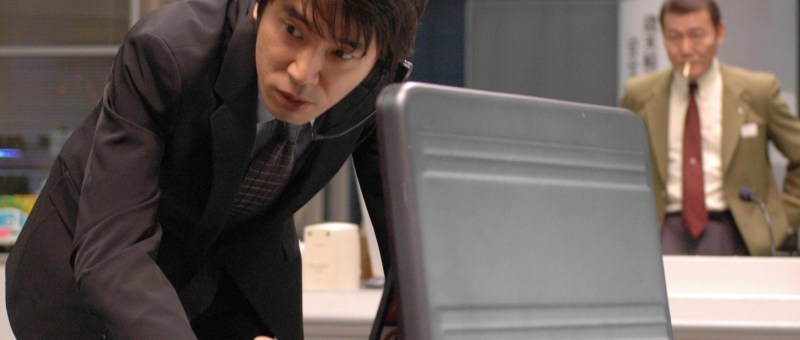
Negotiator (交渉人 真下正義, Katsuyuki Motohiro, 2005)

Beginning as a popular television drama, Bayside Shakedown developed into hugely successful franchise. Released two years after the second theatrical feature, 2005’s Negotiator (交渉人 真下正義, Koshonin: Mashita Masayoshi) is a self-contained spin-off revolving around Japan’s first specialist negotiator Mashita, whose name actually appears in the title. In Bayside Shakedown 2, he’d returned to the Wangan police department having left to pursue specialist training in the city. Though some of his former colleagues make cameo appearances and Motohiro maintains the lighthearted tone the series is known for, Negotiator essentially reverses the position of previous instalments, adopting the outsider’s perspective as Mashita finds himself implanted in the control room of the metropolitan mass transit system. 

For some reason in Japanese cinema, terrorist threats seem to arrive on Christmas Eve with alarming frequency, significantly upping the stakes for Mashita personally as he was planning to propose to fellow police officer Yukino (Miki Mizuno) after a romantic date the details of which he seems to be rather sketchy on. In any case, the crisis at hand is a rogue and unexpected train on the Tokyo subway. It quickly becomes apparent that someone has hijacked a remote-driven experimental “Spider” train designed to automatically switch gauges so that it can travel between differing lines on the complicated transit map. The hijacker will apparently only speak to Mashita, impressed or irritated by his accidental celebrity status following the Rainbow Bridge incident in Bayside Shakedown 2. One of the problems of that crisis had been the police discovering they do not actually have the power to unilaterally close a bridge because it requires the consent and co-operation of numerous other transportation officials (though actually in the end they just do it anyway). 

Something similar happens to Mashita when he fetches up in the control room to help. The official in charge, Kataoka (Jun Kunimura), directly tells him that they don’t require his assistance. He will just be in the way and should sit quietly in the corner while they get on with solving the crisis. In this scenario, Mashita is the outsider akin to the HQ guys descending on the Wangan police station and taking over, though as a trained negotiator he is more aware of the implications of his actions and temporarily agrees to take a back seat while his team set up shop in a meeting room only to be further embarrassed when it becomes apparent that the hijacker is intent on playing a game with him personally while thousands of ordinary passengers, not to mention railway and law enforcement officials, are placed in danger. 

Unlike previous instalments in the franchise, Negotiator is prepared to leave several questions unanswered such as the hijacker’s identity, purpose, and intentions focussing instead on the approach of the police and railways in response to the crisis. As in Bayside Shakedown 2, a solution is only possible once both sides have learned to trust each other letting go of any sense of division so that they can work together in total harmony. Meanwhile, there is also a minor criticism of institutional insularity as it becomes clear that part of Kataoka’s reluctance to cooperate is out of a sense of duty to the rail service in that he feels himself duty bound to withhold “secret” information that would help Mashita solve the case, that being the existence of tunnels and sidetracks not listed on the map because they are intended for use by the government and the military only in the event of an emergency fearing that revealing them would, ironically, present a security risk. Meanwhile, on the other side, Mashita and his team find their investigations hampered by the fact most of the data they need from HQ is stored on outdated media such as floppy disks, Jazz and Zip drives they do not immediately have the capability to open. 

Meanwhile, Mashita is engaged in a game of cat and mouse with a train obsessive who baits him with movie trivia and inevitably threatens his romance by targeting the oblivious Yukino who thinks she’s been stood up again and has no idea she’s actually in the middle of a terrorist incident. Like the previous films in the franchise, however, the central thesis is that in the end you just have to ignore all of the annoying bureaucracy and learn to work together for a common goal which is in essence what a negotiator is for, Mashita smoothing over conflict and differences of opinion with sympathetic politeness while unafraid to put on a show for the hijacker in order to get what he wants. A seasonal thriller, Negotiator is in an odd way about peace and harmony to all men and saving Christmas from the forces of disorder. 


Trailer (no subtitles)
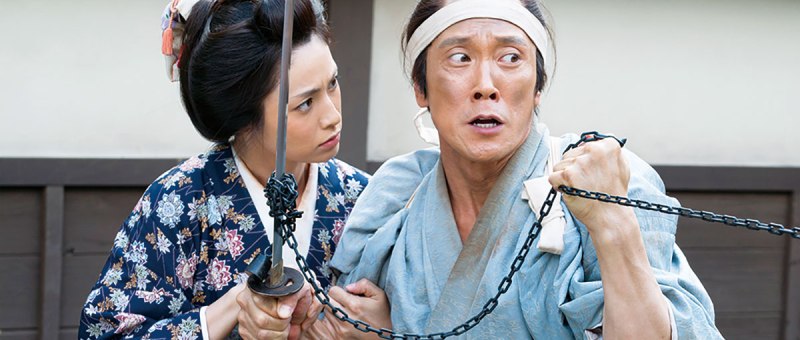
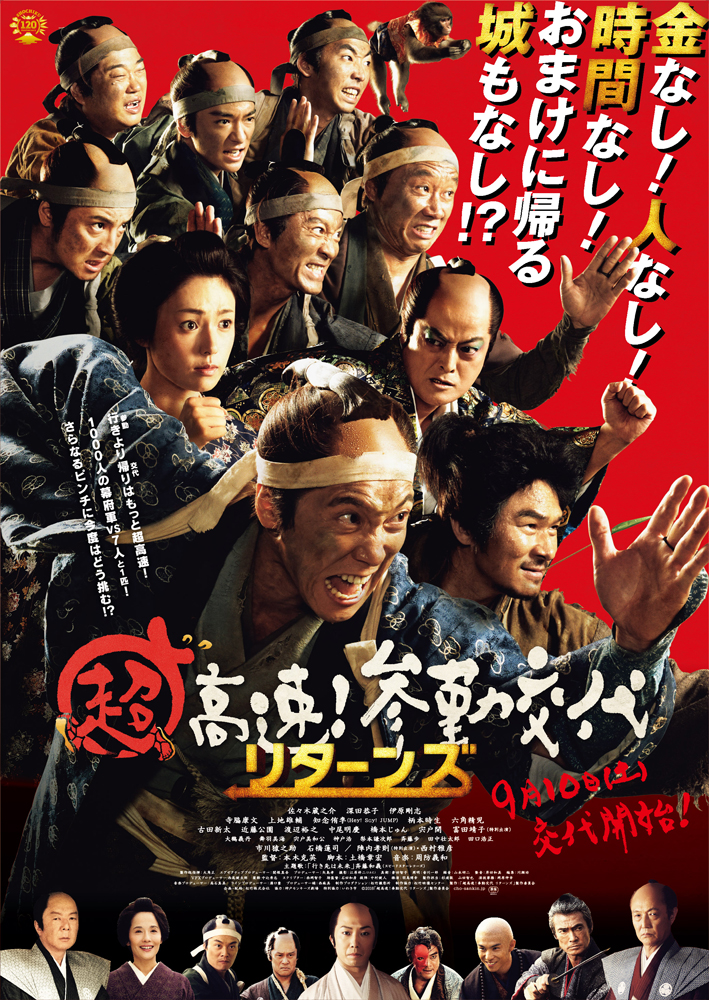
Samurai Hustle Returns (超高速!参勤交代 リターンズ, Katsuhide Motoki, 2016)

At the conclusion of 2014’s Samurai Hustle, it seemed that samurai corruption had been beaten back. Corrupt lord Nobutoki had got his comeuppance and the sympathetic “backwoods samurai” Naito was on his way home having found love along the way. Of course, nothing had really changed when it comes to the samurai order, but Naito was at least carving out a little corner of egalitarianism for himself in his rural domain. 

The aptly named Samurai Hustle Returns (超高速!参勤交代 リターンズ, Cho kosoku! Sankin kotai returns) picks up a month later with Naito (Kuranosuke Sasaki) taking a rather leisurely journey home in preparation for his marriage to Osaki (Kyoko Fukada) only to receive news that there has been a “rebellion” in Yunagaya. Predictably, this turns out to have been orchestrated by none other than Nobutoki who has been released early from his house arrest thanks to his close connections with the shogun but has been humiliated at court and is otherwise out for revenge with a slice of treasonous ambition tacked on for good measure. Just as in the first film, but in reverse, Naito and his retainers must try to rush home to get there before the imperial inspector arrives or else risk their clan being disbanded. 

Meanwhile, the shogun is absent at the wheel after having decided to resurrect an old tradition abandoned because of its expense and inconvenience to make a pilgrimage to Nikko. In an interesting parallel, the farmers are uncharacteristically upset with Naito, blaming him for the destruction of their fields because he wasn’t there to protect them. Naito also feels an additional burden of guilt given that, having run flat out all the way to Edo, he took his time coming back leaving his lands vulnerable to attack while he now risks losing the castle. Nobutoki wastes no time at all looking for various schemes to undermine him while secretly plotting to overthrow the shogun and usurp his position for himself. 

As in the first film, the battle is between samurai entitlement and the genial egalitarianism of Naito’s philosophy. “The real lords of Yunagaya are people like you who are one with the soil,” he tells the farmers, while Nobutoki sneers that “lineage rules supreme in this world, inherited wealth breeds more”. It doesn’t take a genius to read Nobutoki’s machinations as a reflection of his insecurity, that he invests so much in his rights of birth because he has no confidence in his individual talents. Naito counters that it’s the people around him that matter most, “people are priceless. Friends are priceless,” but Nobutoki rather sadly replies that people will always betray you in the end. Even the shogun eventually agrees that “anger brings enemies, forbearance brings lasting peace” but treats Nobutoki with a degree of compassion that may only embolden him in his schemes.

“Nepotism has endangered the shogunate,” the shogun ironically sighs apparently lacking in self-awareness even if beginning to see the problems inherent in the samurai society but presumably intending to do little about them. “No government should torment its people,” Naito had insisted on boldly deciding to retake his castle but even if this particular shogun is not all that bad, it’s difficult to deny that his rule is torment if perhaps more for petty lords like Naito than for ordinary people or higher-ranking samurai. Naito struggles to convince Osaki that she is worthy of his world and only finally succeeds in showing her that she has nothing prove and love knows nothing of class. The people of Yunagaya are impoverished but happy, satisfied with the simple charms of pickled daikon unlike the greedy Nobutoki whose internalised sense of inadequacy has turned dark and self-destructive. 

Then again, Naito is still a lord. He obeys the system out of love for his clan and a genuine desire to protect those around him but otherwise has little desire to change it actively even if his quiet acts of transgression in his closeness with the villagers and professions of egalitarianism are in their own way a kind of revolution in a minor rejection of the shogun’s authority to the extent that the time allows. Nevertheless, with his return journey he once again proves the ingenuity of a backwoods samurai getting by on his wits as he and his men race home to save their small haven of freedom from samurai oppression from the embodiment of societal corruption.


Trailer (no subtitles)
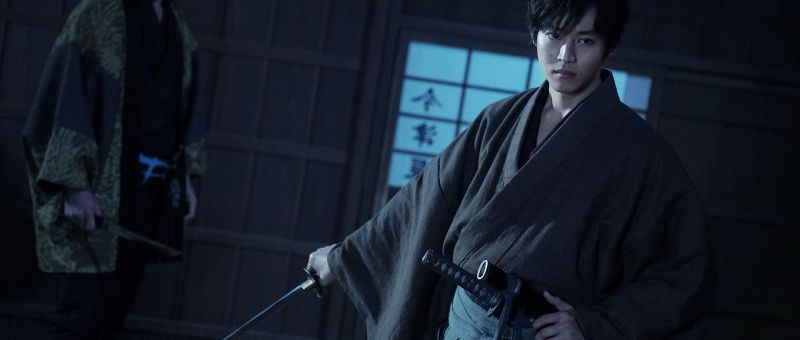
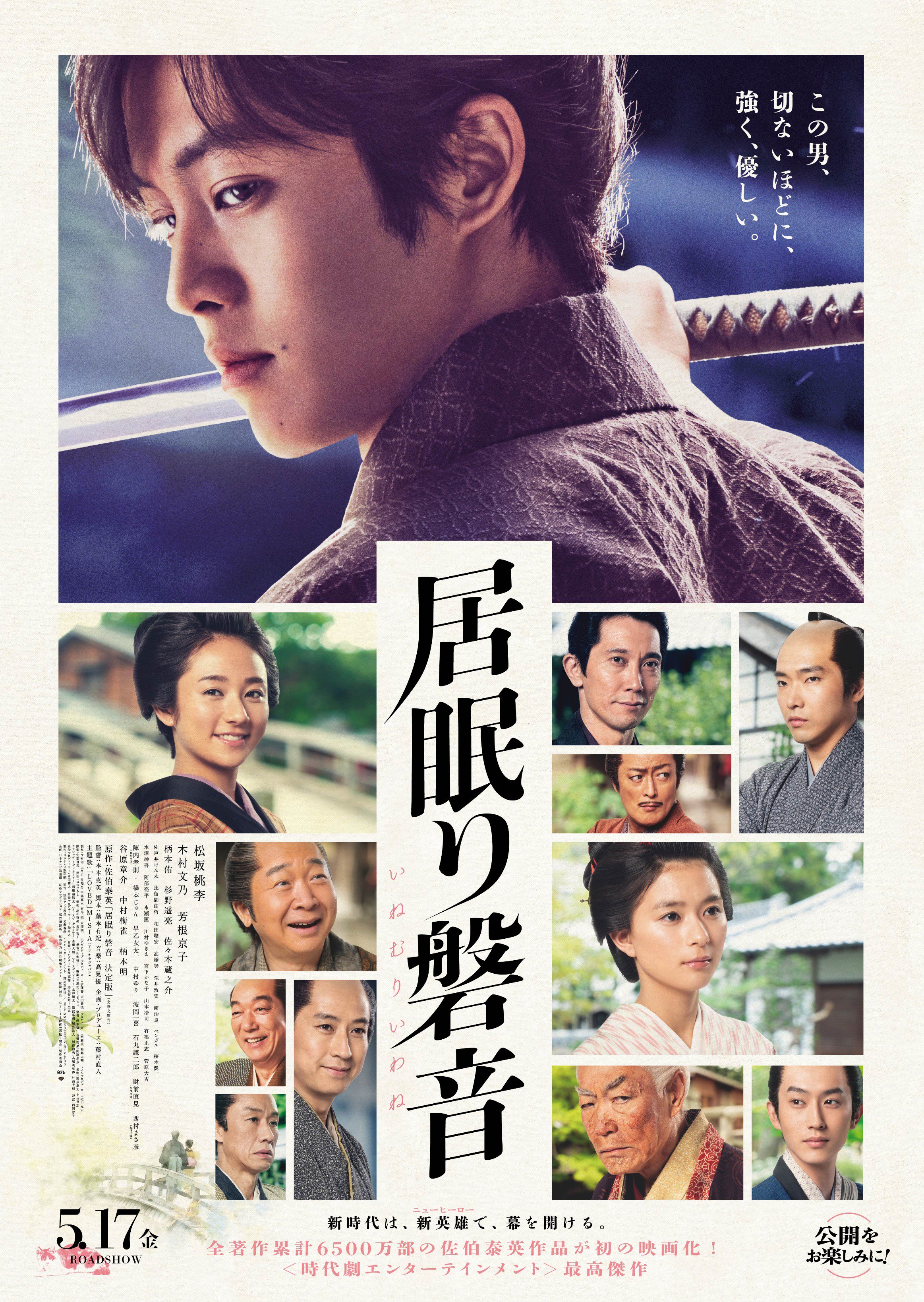
Iwane: Sword of Serenity (居眠り磐音, Katsuhide Motoki, 2019)

The contradictions of the samurai code conspire against one noble-hearted young man in Katsuhide Motoki’s adaptation of the long running series of historical novels by Saeki Yasuhide, Iwane: Sword of Serenity (居眠り磐音, Inemuri Iwane). Yet this truly serene samurai is a stoical sort, learning to bear his pain with fortitude while standing up for justice in an increasingly corrupt Edo where money rules all while an ascendent merchant class continues to challenge the fiercely hierarchical social order. 

Beginning in 1772 which turned out to be a disastrous year, the tale opens as hero Iwane (Tori Matsuzaka) prepares to return home after completing his three year rotation in Edo in the company of childhood friends Kinpei (Tasuku Emoto) and Shinnosuke (Yosuke Sugino). Shinnosuke is in fact married to Kinpei’s sister Mai, while Iwane will himself be married to Kinpei’s other sister Nao immediately on his return so close are they. As Iwane’s father tells him, there are great hopes for these young men that they can “turn our outdated clan around”, but events will conspire against them. Spoiling the happy homecoming, Shinnosuke is accosted by a drunken uncle who convinces him Mai has been unfaithful in his absence with the consequence that he kills her immediately on his return home. Unable to understand this turn of events, Kinpei confronts his friend but eventually kills him, while Iwane is then forced to kill Kinpei after he goes on murderous rampage in revenge for the wrong done to his sister. 

In trying to mediate the case, the argument is put forward that Shinnosuke acted rashly and should have brought his suspicion to the authorities rather than opting for summary execution. The lord however disagrees, condoning Shinnosuke’s actions under the rationale that to do so would have been considered “weak minded” while as Shinnosuke himself had claimed he acted in accordance with the samurai code in which female adultery is illegal and punishable by death. By contrast, he finds Kinpei’s rashness offensive, insisting that he also should have recognised the legitimacy of his sister’s murder and simply left quietly with her body. Having learned the truth in which his childhood friends became victims of clan intrigue, romantic jealousy, and tragic misunderstandings in this Othello-like plot, Shinnosuke and childhood sweetheart Nao are also consumed by the rashness of samurai law each exiled from their clan and cast adrift in Edo-era society. 

Edo-era society is however also itself corrupt. Some months later, Iwane has returned to Edo as a lowly ronin lodging with a kindly old man, Kinbei, who helps him find a job firstly gutting eel then as a bodyguard at a money exchange which has been receiving anonymous threats they assume are from rival broker Awaya who has hatched a nefarious plan to manipulate the currency market to stop the current Shogun introducing a new unit which can be used in both Edo and Kyoto which would understandably cut into his already corrupt business model. Luckily, Imazuya is an honourable man who backs the new currency plan and wants to do the right thing which makes him a perfect fit for Iwane’s innate sense of justice. “You don’t know the way of the merchant” Awaya snaps at him, suggesting both that the samurai are already on their way down as the merchants rise and that his unwillingness to play dirty will be his downfall. Nevertheless, Iwane is the type to adapt quickly, instantly coming up with a way to play Awaya at his own game and kick his destructive amoral capitalism to the curb. 

Meanwhile, he continues to pine for Nao while drawing closer to Kinbei’s earnest daughter Okon (Fumino Kimura). As we discover Nao is also a victim of an intensely patriarchal social order but through the tragedy that befalls them also finds strength and agency making a life changing decision that allows her to become independent while looking after her family if in the knowledge that the childhood romance she shared with Iwane is a thing of the past. Iwane too agrees that he is trapped in a living hell of guilt and grief, yet choosing to go on living anyway as calm and cheerful as he’d ever been while standing up to Edo-era corruption though uncomfortably enough this time against the destabilising influence of the rising merchant class and therefore in contrast to most jidaigeki reinforcing the legitimacy of the samurai order which has paradoxically also ruined his life with its rigid and implacable social codes. In any case, Motoki’s classic chanbara melodrama has a serenity of its own as the cheerfully laidback hero resolves to live his life by a code of his own free of samurai constraint. 


Trailer (no subtitles)

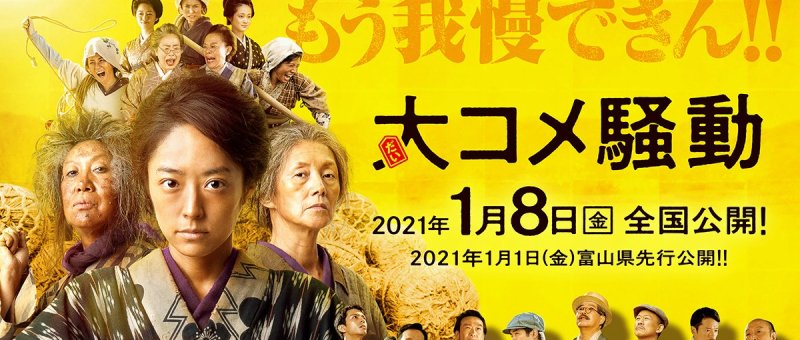
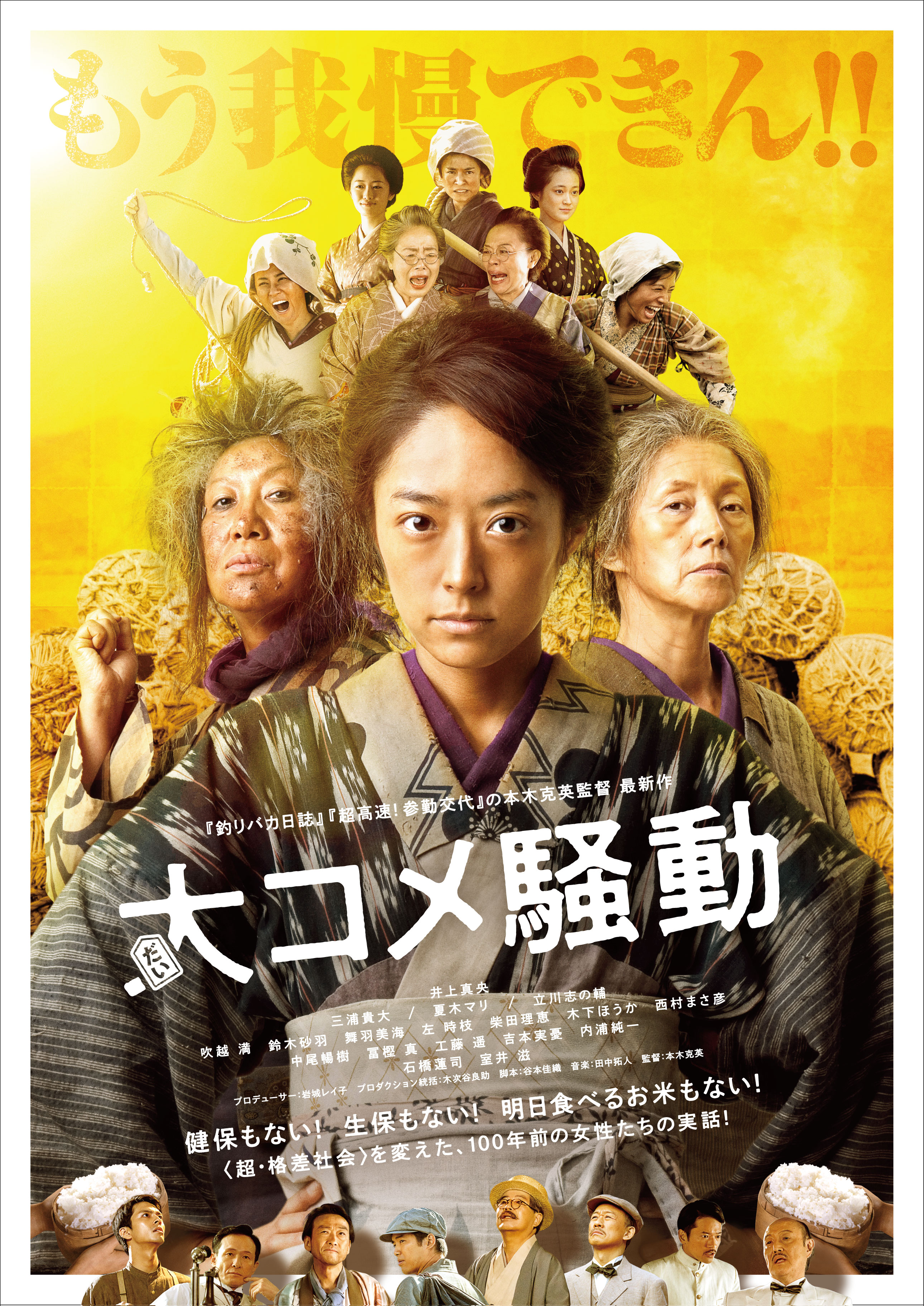
Angry Rice Wives (大コメ騒動, Katsuhide Motoki, 2021)

“Even if women try to do something, nothing will change” a condescending husband insists cautioning his wife not to take part in any more protests lest he lose his protected status and the family its source of income. Set in the middle of the Taisho era, Angry Rice Wives (大コメ騒動, Dai Kome Soudo) dramatises a small moment of revolution in which the resistance movement organised by a community of women towards the spiralling cost of rice sent shock waves through a changing society and in its own way provoked a change of course in an increasingly capitalistic society. 

Beginning in April 1918, the small fishing village of Toyama sees an exodus of its young men who must spend the off-season when the catch is low working other jobs in order to make ends meet, This necessarily means their wives and families are left behind and must make do with what they themselves can earn in doing menial jobs such as transporting rice and the little their husbands might be able to send before their return. A farmer’s daughter who married into the fishing community, Ito (Mao Inoue) is one of the few literate women in the village and looked to as a kind of oracle reporting the contents of the morning paper to the other wives who are keenly interested in the continually fluctuating price rice which seems set to rise still more with news that Japan plans to send troops to Siberia. 

As the voiceover relates, with the catch so low rice is the only form of sustenance available but prices have already exceeded what most of the women can earn in a day leaving them unable to feed their feed their families and giving rise to increasing discontent with the inequalities of the contemporary social order. Taking drastic action and led by eccentric old woman Kiyonsa (Shigeru Muroi), they stage a rebellion by intercepting their locally grown rice in order to stop it being sent to Hokkaido which is reported in the newspapers as an “uprising”. The term is indeed a little grand for what actually took place, but it does at least seem to spark a spirit of rebellion echoing around the country even if nothing much as changes in Toyama. Buoyed by a sense of wider support, the women continue their protests merely asking for the rice merchants to sell at a more reasonable rate (which they are perfectly capable of doing) while decrying the immorality of the obvious profiteering by corrupt authorities including local bigwig Kuroiwa (Renji Ishibashi) who are deliberately stockpiling rice to push the price up while planning to sell it to the government for a hefty price to feed their troops. 

Kuroiwa is entirely unsympathetic to the women’s predicament while the local police chief Kumazawa (Junichi Uchiura) believes himself indebted to him and is therefore entirely under his thumb. Neither of them think the women are much of a threat, Kumazawa randomly arresting a middle-aged man close to several of the women the rationale being as the husband of one puts it that women can never achieve anything no matter how hard they try but a man’s involvement in such rebellious activity would be cause for concern. Similarly, Ito is often told that her education is of no use, partly because the other women feel inferior for not having any, but struggles to find the self-confidence to standup to the corruptions of lingering feudalism owing to her liminal status as a non-native villager despite having given birth to three children there. Even so she is often looked to as a local problem solver and potential successor to Kiyonasa as leader of the village women if only she could learn to embrace the courage of her convictions. 

The children, by contrast have no such qualms, Ito’s young son Soichiro directly telling the profiteering proprietress of the rice store Mrs Washida (Tokie Hidari) that it’s her own fault another child stole food because if she hadn’t insisted in pricing her customers out to the point that they were starving she would never have needed to steal. “What exactly has capitalism done for us?” an opportunistic visitor from the workers party asks but receives short shrift from the cynical Kiyonsa who agrees they should rebel but is non-plussed by the flummoxed canvasser’s admission that he has no real plan for what do afterwards. Washida plays divide and conquer, pitting the women against each other and tempting even Ito with offers of under the table rice deals to feed their starving families if only they back down but though the solidarity of the women is temporarily ruptured it is never truly broken as they stand together to fight for fairness in the face of the Kuroiwas and Washidas of the increasingly capitalistic society. Their resistance eventually forces the government to backdown, realising they can’t simply ignore the plight of society’s poor or take their complicity for granted while attempting to starve them into submission. 


International trailer (English subtitles)

Dreaming of the Meridian Arc (大河への道, Kenji Nakanishi, 2022)

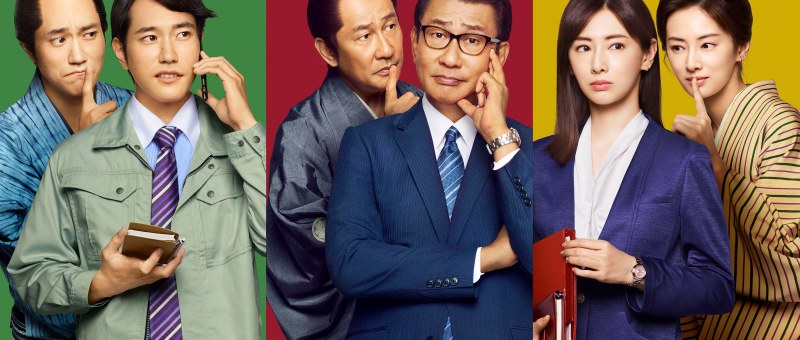
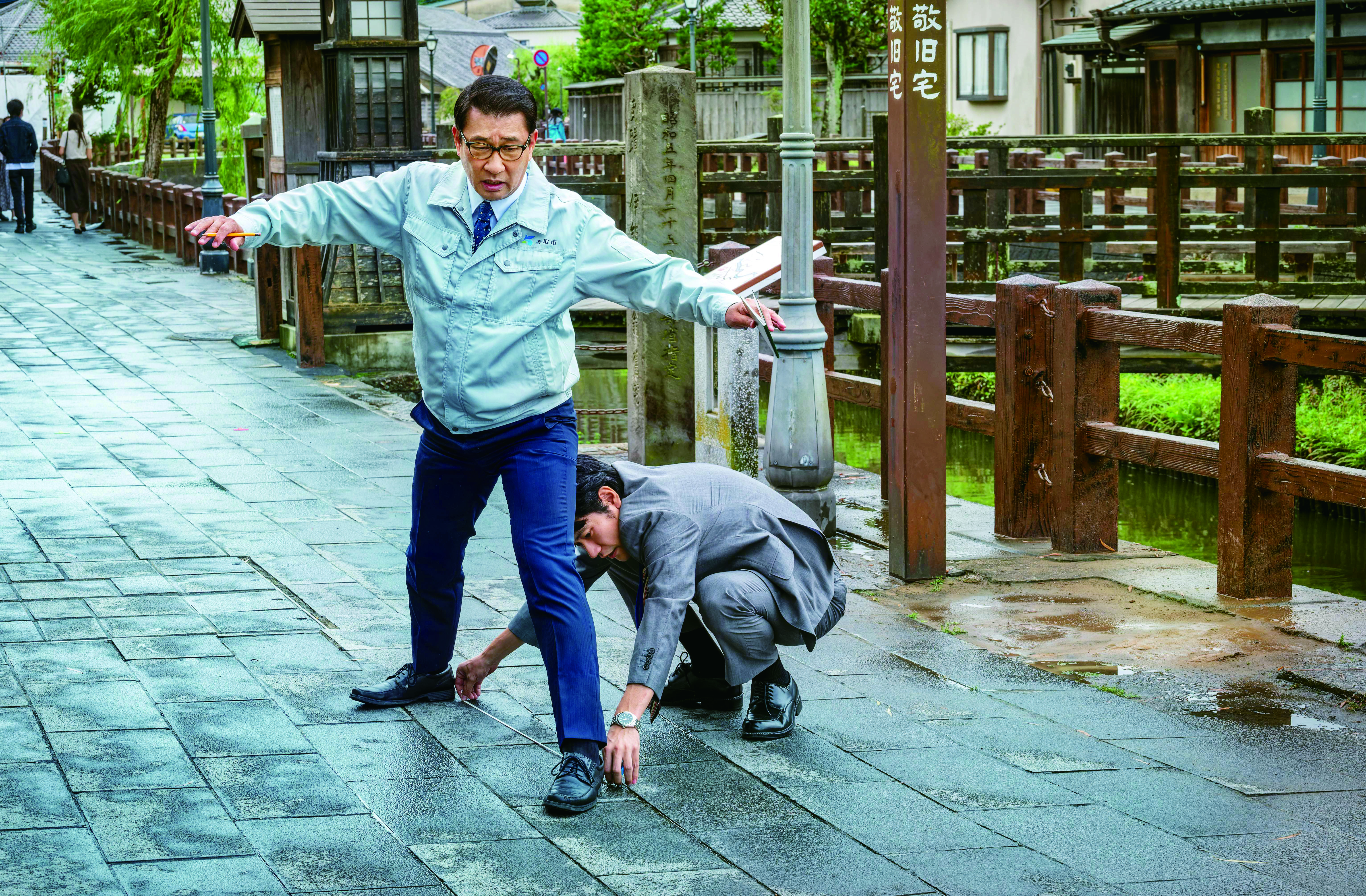
As it turns out, the modern world is not so different from the feudal after all. After realising that their friend and mentor has passed away, a team working together to create an accurate map of Japan in the early 19th century are immediately worried that their project will be axed as a part of a cost cutting exercise at the hands of the penny-pinching Shogun. Inspired by Shinosuke Tatekawa’s rakugo story, Kenji Nakanishi’s heartwarming dramedy Dreaming of the Meridian Arc (大河への道, Taiga e no Michi) tells parallel tales of hardworking civil servants trying to put their town on the map and Edo-era officials trying to avoid incurring the Shogun’s displeasure so they can ensure their late friend’s life’s work will eventually be finished. 

In the present day, the small town of Katori is trying to think of ways to raise its profile but according to junior civil servant Kinoshita (Kenichi Matsuyama) the programme proposed by the tourist board has little to offer in simply imitating the initiatives of other better known cities. As he points out, if tourists want to experience life in olden times there are lots of places they can do that already. Chief of General Affairs Ikemoto (Kiichi Nakai) idly suggests that they try and get local historical personannage Chukei-san, better known as Ino Tadataka the man who completed the first accurate map of the Japanese islands, featured as the subject of a year-long historical TV drama. Of course, Kobayashi from the tourist board (Keiko Kitagawa) thinks it’s a silly idea, but the governor likes it so Ikemoto now has a very difficult job not least because the governor wants him to convince a grumpy writer who hasn’t written anything in 20 years to handle the script. 

The reason Kato (Isao Hashizume) retired from screenwriting is that he too was fed up with placating commercially-minded executives and isn’t prepared to work on anything in which he doesn’t have full creative control which might be a problem a civil servant like Ikemoto could sympathise with if he wasn’t so desperate to bring him on board. It can’t be denied that the story of the map’s creation is itself fascinating if only in its technical detail of how these men were able to complete a map which almost perfectly aligns with modern aerial photography using only the technology of the early 19th century. As Kato points out, Tadataka was already in his 70s and the bulk of the work is simply walking all around Japan measuring it step by step. He’d only begun the project because he wanted to figure out the size of the earth by charting the Meridian Arc, but figured that out right away and still went on to work on the map for reasons largely unknown though later hinting a sense of anxiety in the late Edo society in believing that understanding the shape of the nation’s coastlines was the key to national defence in the wake of a Russian attack that had cost two of Tadataka’s local helpers their lives. 

Yet the drama idea is pretty much dead in the water after realising that Tadataka “died” three years before the map was completed. Fearing they’d lose their funding, Tadataka’s team buried him in secret and told people he was simply out on location while trying to finish the map before anyone found out knowing that their lives were at risk if the Shogun discovered they’d been lying to him and assumed they’d been doing it to continue claiming Tadataka’s stipend. To ram his point home, Nakanishi has the civil servants taking on the role of the mapmakers in Kato’s putative version of the story as they come together as a team to finish their mentor’s project but are eventually forgotten by history in much the same way as Ikemoto and his team will eventually be even as they too work for their betterment of their nation by taking care of the community. Ikemoto becomes something of a Tadataka figure, deciding to pickup a new skill in middle-age and aiming high in perfecting it (while slightly misleading the boss as he does so). A heartwarming tale of the value of teamwork and the perils of bureaucratic cost cutting, Nakanishi’s historical dramedy implies that not so much as changed in 200 years but that’s not entirely a bad thing as the dedicated team of civil servants do their best to put their city on the map.


Dreaming of the Meridian Arc screens at Japan Society New York on Nov. 12 as part of The Female Gaze: Women Filmmakers from JAPAN CUTS and Beyond.

Original trailer (no subtitles)

Images: ©2022 “Dreaming of the Meridian Arc” Film Partners

Princess Mononoke (もののけ姫, Hayao Miyazaki, 1997)

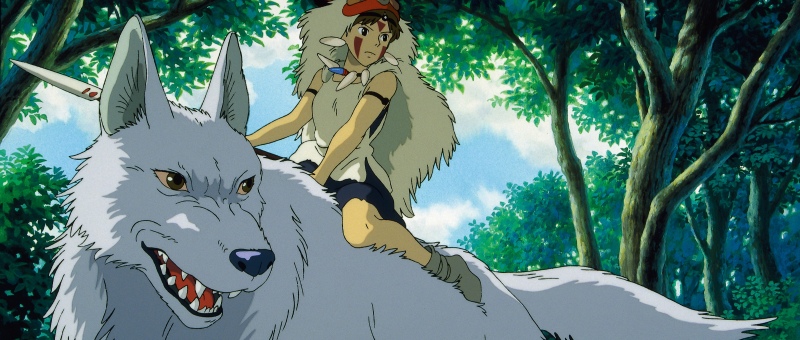
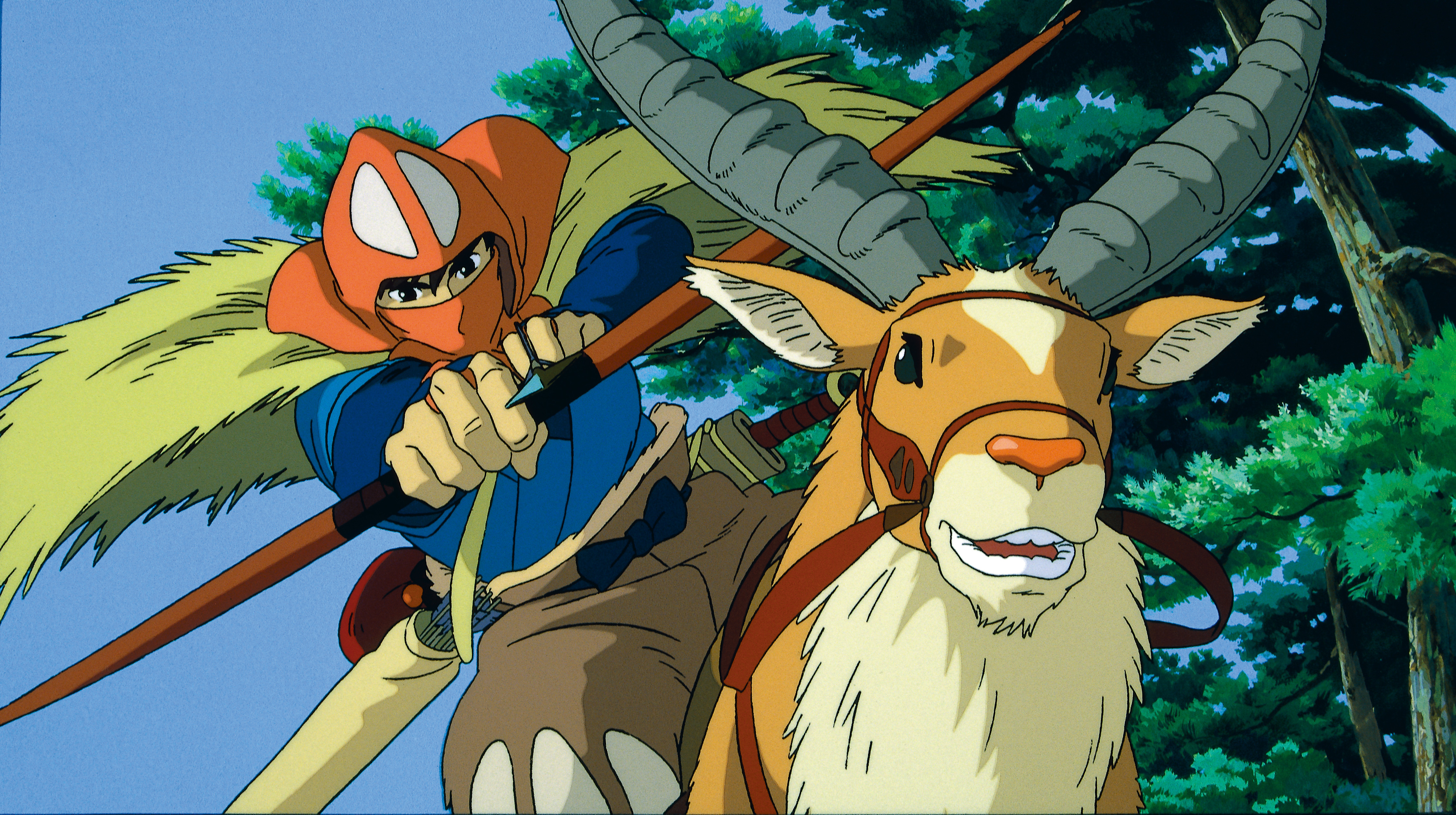
“So you say you’re under a curse? So what? So’s the whole damn world.” The world is indeed cursed in Hayao Miyazaki’s landmark 1997 animation Princess Mononoke (もののけ姫, Mononoke-hime). As the greedy monk insists, “there are angry ghosts all around us. Dead from wars, sickness, starvation. And no one cares”. Yet as an impassioned parable as it is about the destructive forces of industrialisation, Miyazaki’s mystical drama is really about balance and duality along with the necessity of harmony and co-existence with nature red in tooth and claw. 

Young prince Ashitaka (Yoji Matsuda) already lives in what seems to be perfect harmony with the natural world, but his idyllic existence in an ancient clan long exiled by the emperor is disturbed one day by a marauding giant boar chased out of the forest having been turned into a demon consumed with hate and resentment. Ashitaka first tries reasoning with the beast, but is finally forced to put it out of its misery to protect the village and is infected himself in the process. Now unable to stay lest he endanger his community, Ashitaka ventures West in search of the corruption which sent the boar hurtling towards his home. 

What he eventually comes to is an industrial settlement, Irontown, ruled by Lady Eboshi (Yuko Tanaka) who ought by all rights to be a villain in her casual disregard of or active hostility towards unruly nature which her industrialisation pollutes. But then as we can see Lady Eboshi is a good and compassionate leader who has erected a community of the marginalised buying out the contracts of indentured sex workers and freeing them to labour in her ironworks while taking in lepers to manufacture her futuristic firearms. Uncharitably, one could also say that she’s chosen these people because they have little power and will be more likely to put up with hardship and exploitation without complaint because it’s better than the lives they lived before, but it does it does seem that she has her heart in the right place as far as her people are concerned determined to build a community of mutual solidarity between workers. 

Conversely, the titular Princess Mononoke, San (Yuriko Ishida), ought by rights to be the heroine but she and the wolf deities she lives with are also violent and unforgiving in their hatred of humans as determined to wipe out the threat presented by Lady Eboshi as she is them. Ashitaka was dispatched to be a peacemaker, to see with eyes unclouded by hate, in an attempt to find common ground and a way that the forest and humanity can live together because in reality one cannot survive without the other. He is by turns disappointed with each of them but holds compassion for both while a tertiary political threat lingers on the horizon in the machinations of shady priest Jigo (Kaoru Kobayashi) and the emperor who wants the head the of the Forest Spirit because he believes it will confer immortality. Lady Eboshi, who otherwise appears to reject the feudal order, intends to give the emperor the head in order to gain protection from overreaching lord Asano who hopes to capture the capitalistic potential of Irontown for himself. 

Jigo is an embodiment of humanity’s greed and its destructive potential, not caring that severing the Forest Spirit’s head will cause untold destruction in which any financial gain he might make would be all but irrelevant. His role is even more ironic given that he is a priest who has supposedly rejected material desire describing himself as a monk just trying to get by while seemingly willing to manipulate and betray almost anyone in his quest for gold. Lady Eboshi wants to improve conditions for her community while San essentially wants the same but Jigo just wants to improve things for Jigo and no one else. 

What Ashitaka wants is to cure his curse by restoring the balance between the human world and the natural in the creation of a society in which neither need be a threat to the other. Thus he pledges to help rebuild Irontown along less destructive lines while entrusting the forest to San to protect though she finds herself unable to forgive humanity for the destruction it has already wrought and may do again. Even so, as Ashitaka says, “it’s time for us both to live” hinting at a kind of rebirth and a new beginning free from the old authority be it the Forest Spirit or the emperor and the feudal order in a new world of freedom and equality. 


Princess Mononoke screens on 35mm at Japan Society New York on July 22.

Trailer (english subtitles)

My Father’s Tracks (僕と彼女とラリーと, Renpei Tsukamoto, 2021)

A struggling Tokyo actor begins to re-appreciate small-town wholesomeness after returning home for the first time in many years on learning of his semi-estranged father’s death in Renpei Tsukamoto’s heartwarming drama My Father’s Tracks (僕と彼女とラリーと, Boku to Kanojo to Rally to). As much a celebration of the idyllic countryside villages around the city of Toyota in Aichi, obviously closely associated with the automobile industry, Tsukamoto’s gentle coming-of-age tale sees its hero find his purpose in returning to his roots while gaining a new perspective on his parents’ relationship and the father he’d always resented who became a local hero but was never around when his family needed him. 

At 29 Taiga (Win Morisaki) is still trying to make his mark as an actor in Tokyo, his dejected manager complaining his trouble is that though he’s quick and clever he’s essentially soulless which is why he’s failing to captivate the audition panel. He repeatedly ignores calls from his semi-estranged father Toshio (Masahiko Nishimura) and then answers one on the urging of a friend only to utter some very unkind words before unceremoniously hanging up. The next time he answers his phone, however, the call is from an old friend and neighbour, Miho (Mai Fukagawa), letting him know that his father has passed away suddenly of a heart attack. Though they had not been on good terms, Taiga cannot help feeling guilty that his final words to his father were so harsh especially as he’d called to invite him to visit the following November. 

Though everyone in the town seems to have held Toshio in high regard, he was a frequent fixture on the local TV channel for which Miho works, both Taiga and his older brother Hiroyuki (Ryuta Sato) who has become a cynical and heartless businessman feel only contempt for him for having selfishly neglected his family while travelling all around the world as a mechanic with a champion rally team not even making it home in time to see their mother before she passed away of a longterm illness. Taiga can’t forgive him for leaving his mother lonely, but later comes to reflect that perhaps he wasn’t best placed to fully understand the relationship between his parents and may have misinterpreted something which as he later puts it only a husband and wife can know. Meanwhile, it seems his father had also been a supportive force in the community having given jobs to those who might not ordinarily find them in a mechanic with a criminal record, an old man past retirement age, and a young woman so shy she is largely unable to speak. Taiga can see how important his father was to these people and worries what will happen to them now whereas his coldhearted brother is deaf to their pleas planning to close the business and have it and the family home bulldozed as soon as possible to settle the estate without undue delay. 

Hurt even more deeply that Taiga, Hiroyuki has become cruel and cynical often running his brother down rolling his eyes that no one makes a living from a “hobby” while insisting this isn’t one of his “namby-pamby” plays. He claims that he needs the money to protect his family, something that he feels his father failed to do in spending all his time on a “hobby” of his own even shutting down his own small son’s curiosity and desire to join in with the other kids’ fun. Even so after repeatedly telling him to “man up” and get a real job, Hiroyuki is less than impressed by Taiga’s desire to take over the family business which he admittedly knows nothing about having acquired a driving license solely for a role, only relenting when threatened by a flamboyant human rights lawyer with the name of a legendary samurai (Riki Takeuchi).  

Nevertheless, marshalling the skills he picked up in Tokyo and working alongside the locals Taiga begins to rediscover the sense of purpose he’d been missing while gaining a new understanding of his father and greater sense of future possibility. Despite complaining that there is “nothing here” in comparison to Tokyo only for Miho to remind him of all the things Tokyo doesn’t have or that are freely given in Toyota but need to be paid for in the city, he quickly settles back in to small town rhythms and begins to accept his father’s legacy finally finding his sense of direction and taking his place in the driving seat of his own life. A heartwarming tale of familial reconnection and the power of community, not to mention a celebration of rural small-town Toyota, My Father’s Tracks insists life is a rally, all about the going there and coming back, walking on blazing a trail and never giving up no matter the sharp corners and unexpected turns a life may take. 


My Father’s Tracks streams in the US until March 27 as part of the 14th season of Asian Pop-up Cinema

Original trailer (English subtitles)

The Floating Castle (のぼうの城, Isshin Inudo & Shinji Higuchi, 2012)

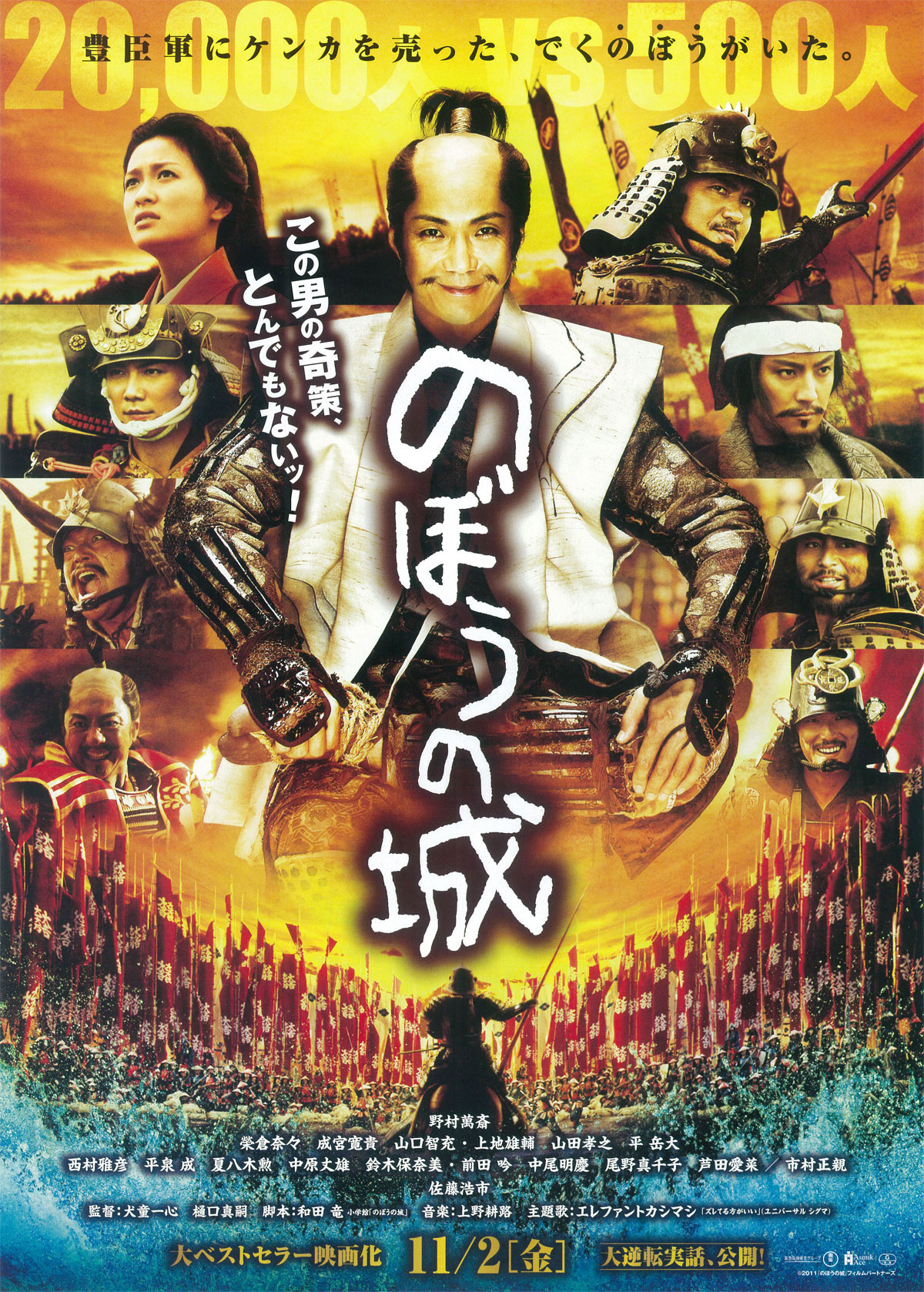
What happens if you call the bluff of those who thought they could take your complicity for granted? As it turns out, at least in the case of a small provincial outpost in Isshin Inudo & Shinji Higuchi’s lighthearted historical drama The Floating Castle (のぼうの城, Nobo no Shiro), something and nothing. Inspired by a real life incident which took place in 1590, 10 years prior to the era defining battle of Sekigahara, the film asks how far standing up to corrupt authority will get you but as history tells us this this is the twilight of the Sengoku warring states period and in the end any victory can at best be only partial and temporary. 

With Hideyoshi Toyotomi (Masachika Ichimura) poised to unify all of Japan under his rule he turns his gaze towards Hojo, the last remaining hold out in the East of Japan. The small castle of Oshi is asked to commit its forces to protecting the main castle at Odawara where lord Ujinaga (Masahiko Nishimura) is to meet with the head of the clan which has decided to resist the Toyotomi invasion. Ujinaga meanwhile is privately doubtful. He knows they do not have the manpower to protect themselves and the only viable course of action is immediate surrender though he cannot of course say this openly even if buffoonish lord in waiting Nagachika (Mansai Nomura) is brave enough to raise the idea of neutrality in front of the messengers. Preparing to head to Odawara, Ujinaga tells his closest retainers to strengthen defences but to open the castle should the enemy approach while revealing that he plans to write to Hideyoshi, whom he apparently knows personally, and privately pledge allegiance in order to avoid destruction. 

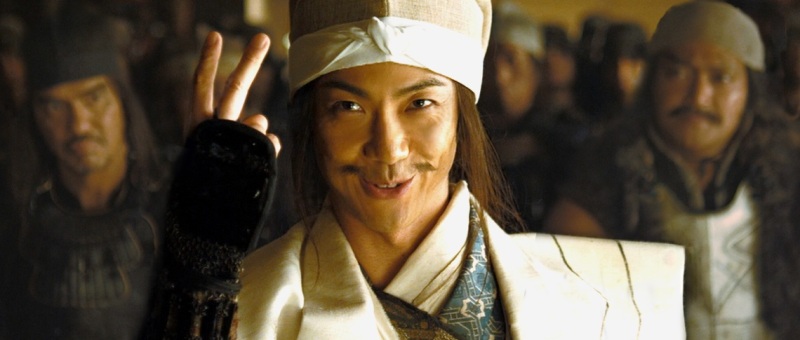
Nagachika, however, eventually makes the decision to resist following the arrogant entreaty from Natsuka (Takehiro Hira), the right-hand man of the Toyotomi retainer leading the assault, Mitsunari Ishida (Yusuke Kamiji). He does this largely because Natsuka makes the unreasonable demand that they surrender their princess, Kai (Nana Eikura), herself a fearsome warrior though somewhat sidelined here relegated to the role of contested love interest, to be sent to Hideyoshi as a concubine but also correctly reads that Natsuka and Ishida are overreaching and actually have little more than their bluster to leverage other than the 20,000 men standing behind them which they may not know how to use. Nagachika may play the clown, but he’s not stupid and knows that the 20,000 men are there for the purposes of intimidation and are not expecting a force of a mere 500 to tell them where to go so it stands to reason to think they are not entirely prepared for battle. 

In this he’s mostly correct. Hideyoshi has essentially given Ishida, previously in finance, an easy ride to improve his reputation among the other lords instructing the more experienced Yoshitsugu Otani (Takayuki Yamada) to ensure he comes back painted in glory. Otani had said that others admired Ishida for his “childlike sense of fair play”, but his sense of fair play is often childish as in his gradual realisation that everyone is surrendering to him because of the 20,000 men rather than his prowess as a general annoyed with his enemies for backing down from a challenge which is why he sends Natsuka to alienate Nagachika hoping to provoke a battle which no rational person could ever describe as “fair”. Having assumed that Nagachika would back down or that the castle would be easy to take with only 500 country bumpkin soldiers defending it, the Toyotomi are in for a rude awakening discovering the extent of the counterstrategies in place to protect the small provincial outpost, forced into a humiliating defeat licking their wounds from a nearby hill. 

But then, as Ishida manically proclaims power comes from one thing, gold, using his vast resources to dam two nearby rivers and then burst them to drown the town as Hideyoshi had done once before. Designed by effects specialist Higuchi the flooding of the town is indeed terrifying, a spectacle which delayed the film’s release as the eerie similarities with the catastrophic tsunami of the year before may have been too traumatic for audiences, and speaks to nothing if not Ishida’s intense cruelty in which he is willing to go to any lengths in order to win even destroying the lives of innocent farmers far removed from these petty samurai games. As the film would have it, his arrogance and entitlement eventually come for him, his trap turned back on himself after an ill-advised potshot at Nagachika, a natural leader beloved by all because rather than in spite of his deceptive clownishness, causes disillusionment with his leadership. 

In any case, we already know how this story ends, Ishida is defeated at Sekigahara and beheaded in Kyoto. Nagachika’s victory can be only partial and in fact does not even win him the thing he went into battle for even if he strikes a blow at corrupt government in refusing to simply give in to intimidation, calling their bluff and showing them they cannot continue to push smaller clans around solely with the threat of extinction. In the end they are all at the mercy of their superiors, a truce imposed and imperfect to each side in an act of compromise which spells the end of an era many of those surviving the battles voluntarily renouncing samurai status as if realising their age is drawing to a close, Nagachika proved on the right of history in cultivating links with the Tokugawa soon to take the Toyotomi’s place as rulers of a unified Japan. His resistance was then not foolhardy but justified, necessary, and principled in standing up to injustice even if it could not in the end be fully stopped. 


The Floating Castle streamed as part of Japanese Film Festival Online 2022.

International trailer (English subtitles)

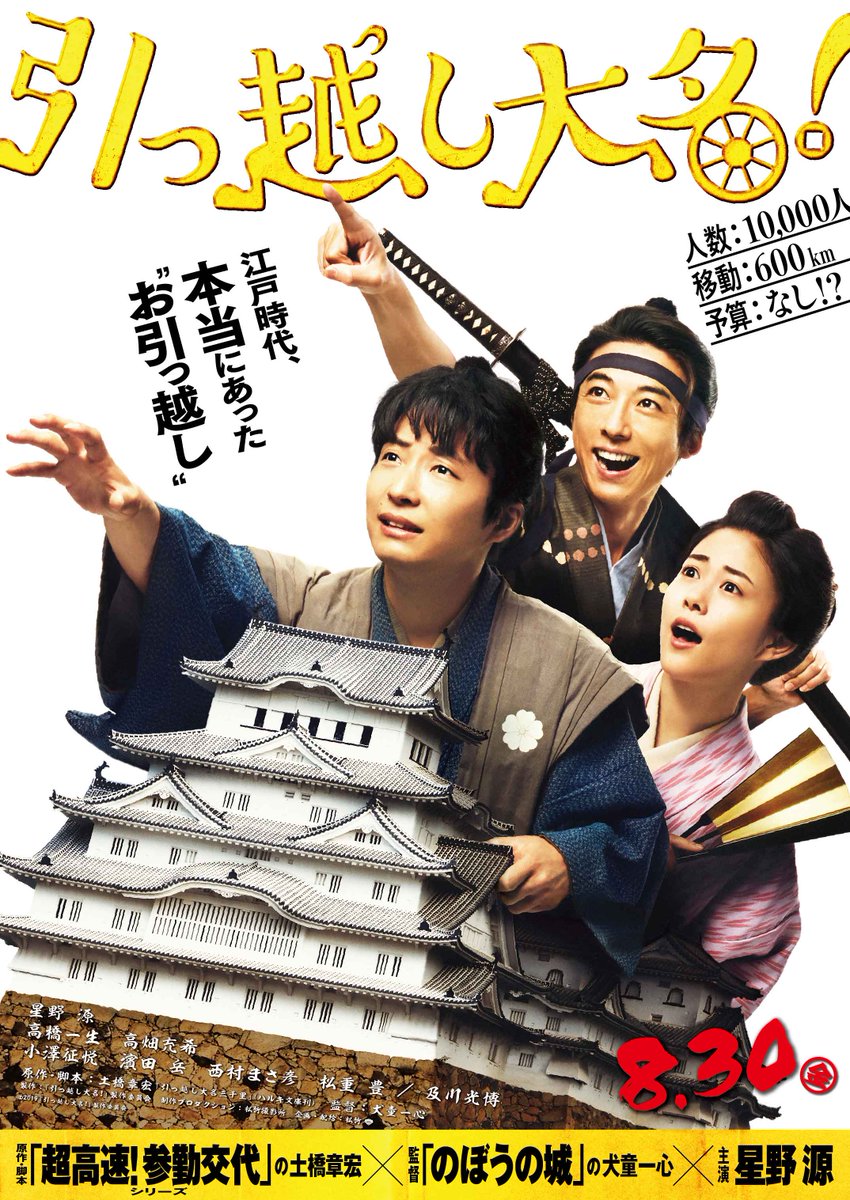
Samurai Shifters (引っ越し大名!, Isshin Inudo, 2019)

Samurai Shifters poster 1Forced transfers have been in the news of late. Japanese companies, keen to attract and keep younger workers in the midst of a growing labour shortage, have been offering more modern working rights such as paid parental leave but also using them as increased leverage to force employees to take jobs in far flung places after returning to work – after all, you aren’t going to up and quit with a new baby to support.

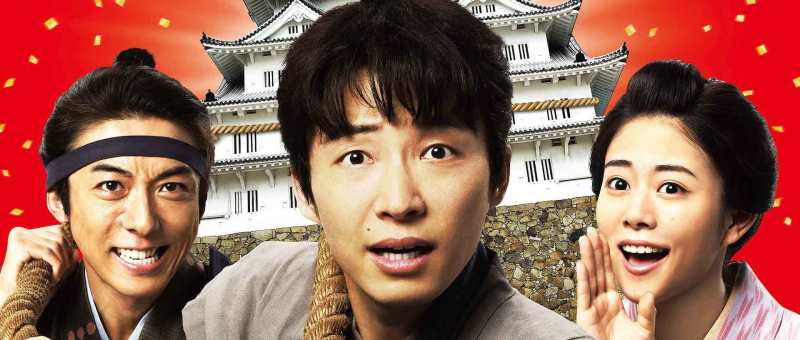
As Isshin Inudo’s Samurai Shifters (引っ越し大名!, Hikkoshi Daimyo!) proves, contemporary corporate culture is not so different from the samurai ways of old. Back in the 17th century, the Shogun kept a tight grip on his power by shifting his lords round every so often in order to keep them on their toes. Seeing as they had to pay all the expenses and handle logistics themselves, relocating left a clan weakened and dangerously exposed which of course means they were unlikely to challenge the Shogun’s power and would be keen to keep his favour in order to avoid being asked to make regular moves to unprofitable places.

When the Echizen Matsudaira clan is ordered to move a considerable distance, crossing the sea to a new residence in Kyushu which isn’t even really a “castle”, they have a big problem because their previous relocation officer has passed away since their last move. Predictably, no one wants this totally thankless job which warrants seppuku if you mess it up so it falls to introverted librarian Harunosuke (Gen Hoshino) who is too shy refuse (even if he had much of a choice, which he doesn’t). Unfortunately for some, however, Harunosuke is both smart and kind which means he’s good at figuring out solutions to complicated problems and reluctant to exercise his samurai privilege to do so.

In fact Harunosuke is something of an odd samurai. As others later put it, he doesn’t care about status or seniority and has a natural tendency to treat everybody equally. When the head of accounts advises him to take loans from merchants with no intention to pay them back, he objects not only to the dishonesty but to the unfairness of stealing hard-earned money from ordinary people solely under the rationale that they are entitled to do so because they are samurai and therefore superior. Likewise, when he finds out that his predecessor was of a lower rank and that all his achievements were credited to his superiors he makes a point of going to his grave to apologise which earns him some brownie points with the man’s pretty daughter, Oran (Mitsuki Takahata), who was not previously minded to help him because of the way her father had been treated.

Harunosuke’s natural goodness begins to endear him to the jaded samurai now in his care. Though they might be suspicious of some of his methods including his “decluttering” program, they quickly come on board when they realise he is not intending to exclude himself from his ordinances and even consents to burn his own books in order to make it plain that everyone is in the same boat. He hesitates in his growing attraction to Oran (who in turn is also taken with him because of his atypical tendency to compassion) not only because of his natural diffidence but because he feels it might be selfish to pursue a romance while urging everyone else towards austerity.

Meanwhile, “romance” is why all this started in the first place. The lord, Naonori Matsudaira (Mitsuhiro Oikawa), is in a relationship with his steward (something which seems to be known to most and not particularly an issue). While he was in Edo, he rudely rebuffed the attentions of another lord, Yoshiyasu Yanagisawa (Osamu Mukai), who seems to have taken rejection badly and has it in for the clan as a whole. In an interesting role reversal, his advisor laments that perhaps it would have been better for everyone if he’d just submitted himself, but nevertheless a few thousand people are now affected by the petty romantic squabbles of elite samurai in far off Edo.

Bookish and reticent as he is, Harunosuke sees his chance to “go to war against the unjust Shogunate” by engineering a plan which allows them to reduce the burden of moving, reluctantly having to demote some samurai and leave them behind as ordinary farmers with the promise that they will be reinstated as soon as the clan resumes its former status. Asking the samurai to drop their superiority and carry their own bags for a change has profound implications for their society, but Harunosuke’s practical goodness eventually wins out as the clan comes together as one rather than obsessing over their petty internal divisions. A cheerful tale of homecoming, friendship, and warmhearted egalitarianism, Samurai Shifters is an oddly topical period comedy which satirises the vagaries of modern corporate culture through the prism of samurai-era mores but does so with a wry smile as Harunosuke finds a way to live within the system without compromising his principles and eventually wins all with little more than a compassionate heart and a finely tuned mind.


Samurai Shifters screens in New York on July 21 as part of Japan Cuts 2019.

Teaser trailer (English subtitles)

JK Rock (JK☆ROCK, Shunji Muguruma, 2019)

JK Rock poster 1The heyday of the idol movie may have passed with the Showa era, but the genre proves itself alive and kicking with the infinitely charming JK Rock (JK☆ROCK). Starring the members of Drop Doll – a band formed by the three actresses from director Shunji Muguruma’s previous short Little Performer: The Pulse of Winds, JK Rock is a spunky coming of age tale in which three lost high school girls end up starting band at the behest of a strange old man (Masahiko Nishimura) who owns a rock and roll bar in bohemian Kichijoji and secretly wants to coax reluctant rocker Joe (Shodai Fukuyama) back to the stage.

Joe was once in a promising band, JoKers – a combination of his own name and that of his best friend and bandmate whose initials are also JK. A year earlier, however, he appears to have got cold feet and left music behind him for good in order to concentrate on a law degree. He still has his adoring fans though, these days he’s known as the “purple prince” because he drives round campus in an ostentatious purple Lamborghini. A fateful meet cute brings him into contact with feisty high school girl Sakura (Chihiro Hayama) when she decides to take a middle-aged man to task for queue jumping in a convenience store only for Joe to calmly point out that she’s now the one holding everyone up. Somewhat grateful for Joe’s life lesson, Sakura is non-plussed when he calls her a weirdo as he leaves. It’s no surprise to discover that Sakura is a regular at Teru’s Rock ’n Roll Cafe where Joe used to play and so fate is set in motion.

The film’s name, “JK Rock” is a witty multilayered pun in that it refers both to the multiple “JKs” and to the more obvious “Joshi Kosei” which means “high school girls”. Sakura is joined by two more frequenters of Teru’s – waitress and track star Mao (Yuina) who takes up the guitar, and fabulously wealthy Rina (Yukino Miyake) who practices bass in secret so her ultra ambitious mother won’t stop her doing what she loves. In true idol movie fashion, everyone seems to be fairly well off in an aspirational sense but each has their own problems which run from an inappropriate crush on a supportive teacher to overbearing parents keen to stamp their own view of success on their kids in order to stop them making their own mistakes.

Meanwhile, Joe is battling the usual early life crises as he weighs up following his dreams against the safety of conventionality. “You can’t fire up my rock spirit and then run away!” Sakura angrily tells him in a line that seems oddly filled with subtext, but running away does seem to be Joe’s problem. He didn’t go with his friend to America, and the other Joe is now big international star. Snapped at by the band’s manager that he had no guts and no love for rock, Joe decided he was unworthy for the stage and had no right to play, forcing himself into a dull but conventionally successful life as a lawyer. Consequently, he is a grumpy, empty shell of a man driving round in a stupidly big and colourful car with a superficial girlfriend who assumes she’ll soon be getting married to an independently wealthy professional grade husband. Through jamming with Sakura he begins to rediscover some of his rock spirit and get his mojo back to realise he’s free to play with whoever he wants on his own terms.

A musical coming of age tale, JK Rock does its best to showcase the musical talents of Drop Doll which appear to be vast. JoKers plays only a minor role in brief flashbacks of what might have been (and perhaps could be again) for the dejected Joe while the girlband studies intently under his, originally reluctant, tutorship to become fine musicians in their own right. Of course, when it comes down it, it’s not just music but youthful solidarity and the true power of friendship which eventually show the way as old wounds are repaired and new bonds formed between the variously troubled youngsters who eventually realise that they’re figuring things out and will probably be OK. A charming, sprightly youth movie filled with true punk spirit and genuine warmth, JK Rock is an improbable delight and sure to make stars of its three leading ladies.


JK Rock was screened as part of the 2019 Udine Far East Film Festival.

Original trailer (no subtitles)

Short version of the music video for the movie’s theme song – Secret Voice

https://youtu.be/ivuhjpQ9_-0