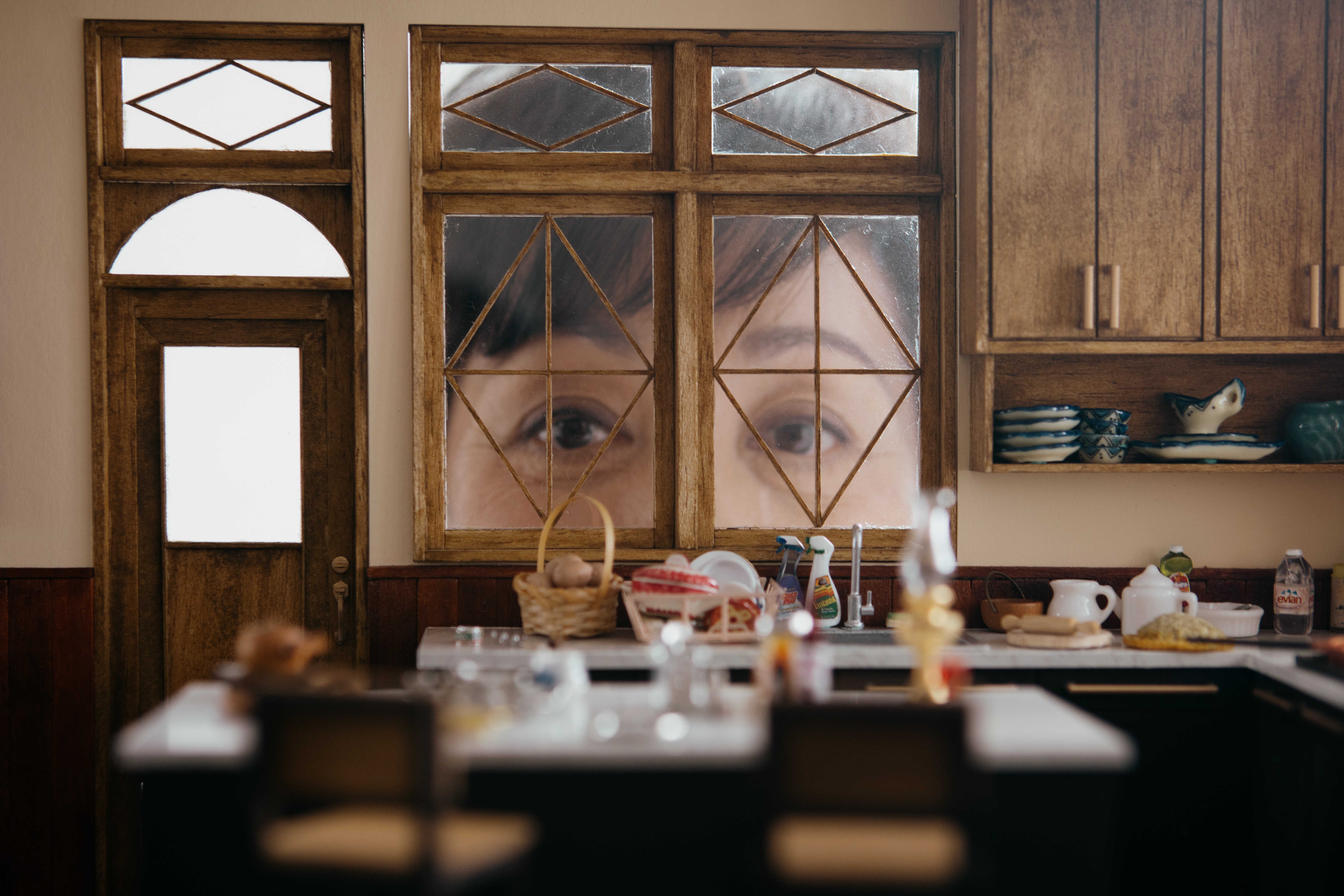
Reclaim (一家之主, CJ Wang, 2022)

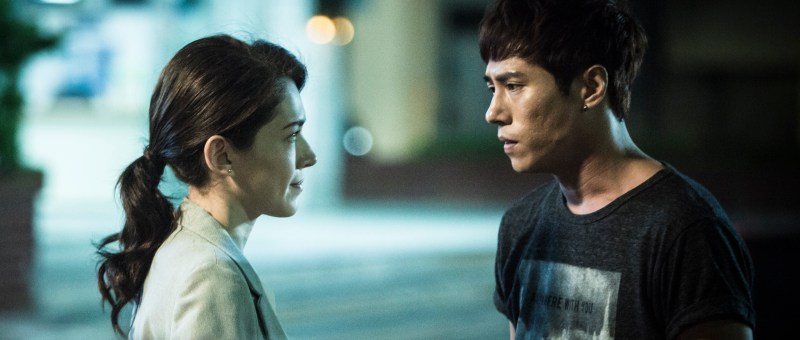
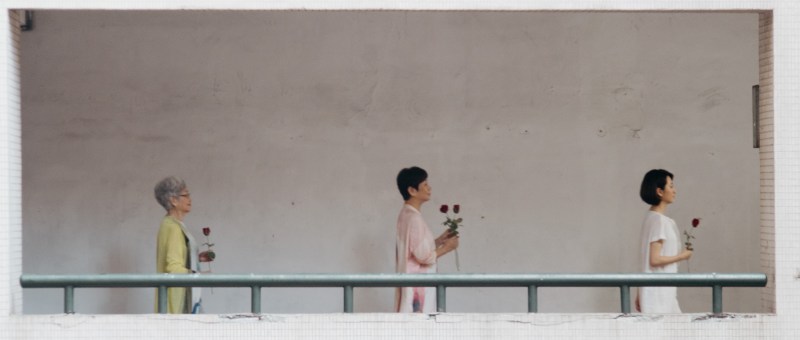
An ordinary middle-aged woman begins to wonder what it’s all been for when dealing with her insensitive, authoritarian husband, distant children, and the sacrifices she continually made to make others happy in CJ Wang’s touching family drama, Reclaim (一家之主, yījiāzhīzhǔ). The Chinese title, master of the house, is in its way ironic in the various ways in which Lan-xin (Nina Paw Hee-ching) is expected to shoulder all of the domestic responsibility with none of the control, though she is indeed attempting to reclaim something of herself as a woman and an individual as distinct from being someone’s, wife, mother, friend, or teacher. 

Lan-xin wanted to study art in Paris, but she got married young and started family and ever since then has led a conventional life doing what she thought to be right thing. Now, however, with her husband David (Kou Hsi-Shun) recently retired and both her children grown up she’s wondering a little what it’s all been for especially as David is a chauvinistic throwback who belittles her work as an art teacher while harping on about ways to make money patiently waiting for his collection of antique teapots to rise in value. Now that her mother’s dementia has intensified and she keeps escaping from her nursing home, Lan-xin wants to bring her to live with them but David is both dismissive and disinterested talking about it in the same way one would to a child who wants to get a dog asking if they really have the space and making it clear that looking after her will be Lan-xin’s responsibility. 

While David holds on to a substantial cheque with the intention of investing it in a series of harebrained schemes from luxury tombs to VR cafes, Lan-xin’s desire is essentially to try and repair her fracturing family by buying a larger apartment where they could all live together. David complains that no one tells him anything, but that’s largely because he’s continually dismissive of their dreams and aspirations blowing a hole in his daughter’s new project designing eco-friendly homes that prioritise individual comfort by telling her that she should just extend the living area into the balcony to trick people into thinking they’re getting more for their money. Jia-ning (Ko Chia-yen) in particular is feeling lost in her life unsure of what role it is she’s supposed to be playing while clearly disillusioned with the nature of the relationship between her parents in which her mother is expected to sacrifice her desires in service of her father’s. It’s clear that neither of the children want the kind of futures their parents envisaged for them, their professor son also preparing to return from the US to live a simple life in the Taiwanese countryside. 

Both of the children, however, take their mother for granted and often treat her poorly. The son orders her to book his plane tickets for him and abruptly hangs up after asking her to clean his room and make his favourite food, while Jia-ning also snaps at her expecting her to handle domestic tasks and locate missing items. Lan-xin forms a quasi-maternal relationship with a former student who has returned from America (Mason Lee) and now works in finance but is faced with the implosion of all her hopes firstly in her daughter’s more immediate needs to claim independence in her working life while avoiding the same compromises she was forced to make, and then by the illusionary nature of her home owning dream buying one home for fragmenting family rather than enduring her dissatisfying living arrangements while investing in separate homes for each of her children. 

There may be a degree of personal myth making in her meditating on the lost opportunity of a Parisian education as implied in an imaginary conversation with her mother, though as her miniature-making hobby implies perhaps she played the role she wanted to play but lost sight of herself somewhere along the way. A voyage into her own memory reunites her with her essential self and allows her to reclaim her name no longer willing to be subservient to her husband’s desires but prioritising her own. As in her dream, all her sacrifices will eventually be repaid while Jia-ning too comes to a better understanding of her mother and grandmother along with her own place in a changing society. Lan-xin is finally a master of herself no longer afraid to take up space in her own home and in full control of her own aspirations and desires. 


Reclaim screened as part of this year’s New York Asian Film Festival. It is also available to stream in many territories via Netflix.

Netflix trailer (English subtitles)

Images: ©2022 Rong Gwan Productions ALL RIGHTS RESERVED

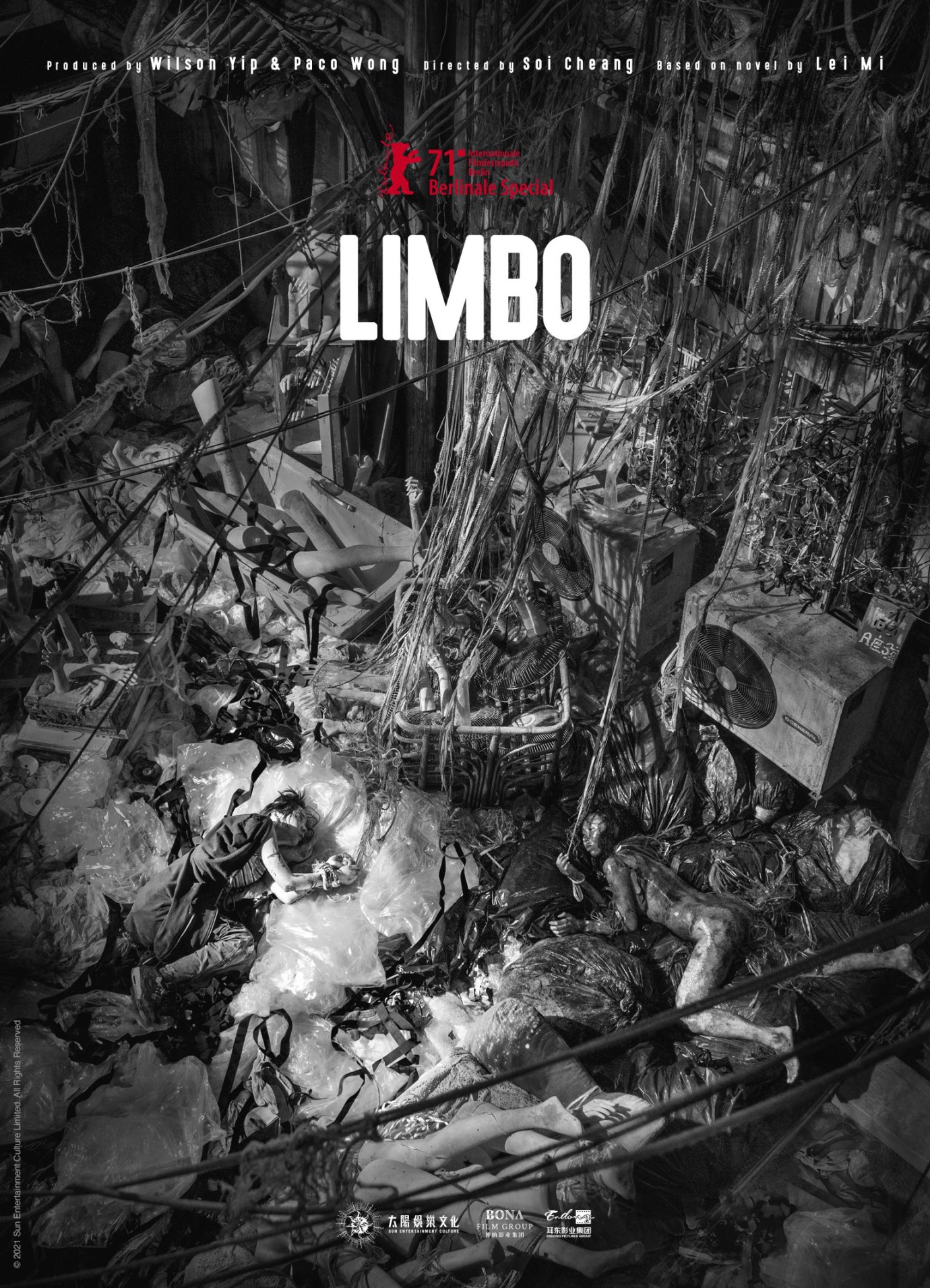
Limbo (智齒, Soi Cheang, 2021)

“I forgive you. Please live well”, a final message from the dying to one attempting to survive the junkyard hellscape of contemporary Hong Kong. Soi Cheang’s stylish thriller Limbo (智齒), shot in a high contrast monochrome lending the city state the rain-soaked aesthetic of cyberpunk noir, is in many senses a purgatorial odyssey as its pregnant title implies sending its duo of morally compromised cops into a world of the dispossessed inhabited by those “thrown away” by their society and thereafter left to rot among the detritus of an uncaring city. 

Hong Kong’s homeless may occupy a liminal space, trapped in an inescapable limbo, but it’s grizzled cop Cham (Gordon Lam Ka-tung) who is the most arrested, unable to move on from the accident which left his pregnant wife suspended in a coma. To escape his own sense of purgatorial inertia, he seeks closure in chasing down petty criminal Wong To (Cya Liu) whom he holds responsible for his fate on discovering she has been granted early parole for good behaviour. As fate would have it, Wong To’s release back into the underworld (after all, where else was she to go?) has unexpected connection to the case Cham is currently investigating in the mysterious appearance of random severed hands each belonging to “social outcasts”, as Cham’s slick rookie partner puts it, they fear may hint at the existence of a serial killer growing in confidence. 

Adapted from a novel by Lei Mi, the film’s Chinese title is simply “Wisdom Tooth”, a tongue in cheek reference to the ongoing toothache which places cop two Will Ren (Mason Lee) in his own kind of purgatorial pain, the offending molar eventually knocked out during his climactic fight with the killer during which he will in a sense transgress, passing from innocence to experience in gaining the wisdom that police work’s not as black and white as he may have believed it to be. “Cops are human too” his boss reminds him as he takes the controversial step of reporting his new partner for inappropriate use of force while pursuing a personal vendetta not exactly connected with his current case. He doesn’t disagree, but points out that police officers have guns and are supposed to uphold the law, not abuse their authority and take it into their own hands. 

But then, who is really responsible for the junkyards of the modern city and their ever increasing denizens abandoned by a society which chooses to discard them along with all their other “rubbish”, little different from the dismembered mannequins which people the killer’s eerie lair. Soi frequently cuts back to scenes of the dispossessed often looking stunned or vacant as they sit on mattresses or abandoned sofas surrounded by the pregnant disrepair of a city in the midst of remaking itself as if they were sitting on skin in the process of being shed by a slow moving snake. It would be tempting to assume the killer has a vendetta against “social outcasts”, his victims sex workers, drug users, and criminals though in truth these people are simply the most vulnerable even if there is no clear motive provided for the crimes save a minor maternal fixation and possible religious mania. A drug dealer ensnared by Cham’s net remains loyal to the killer, “We’re not as crazy as you. We are rubbish, so what? In this world, he’s the only one who cares.” she tells him, unwilling to give up her one source of connection even while aware of her constant proximity to death and violence. 

Cast into this world, Wong To too is trapped in an individual purgatory longing for forgiveness for her role in the death of Cham’s wife, a forgiveness he cruelly denies her even while making use of her desperation to force her to risk her life for him in betraying her underworld contacts to edge towards the killer. “Why are you treating me like this?” she asks, “I don’t want to die”, well aware that denied his direct vengeance by Will Cham is attempting to kill her by proxy. Wong To keeps running, keeps fighting, refuses to give up while seeking atonement and an escape from this broken world of violence and decay. It is she who eventually holds the key to an escape from purgatory, the cycle is ended only in forgiveness. Soi’s stylish drama may paint the modern society as a venal hellscape neglected by corrupt authority, but nevertheless permits a final ray of light in the possibility of liberation through personal redemption. 


Limbo streams in Europe until 2nd July as part of this year’s hybrid edition Udine Far East Film Festival.

Original trailer (English subtitles)

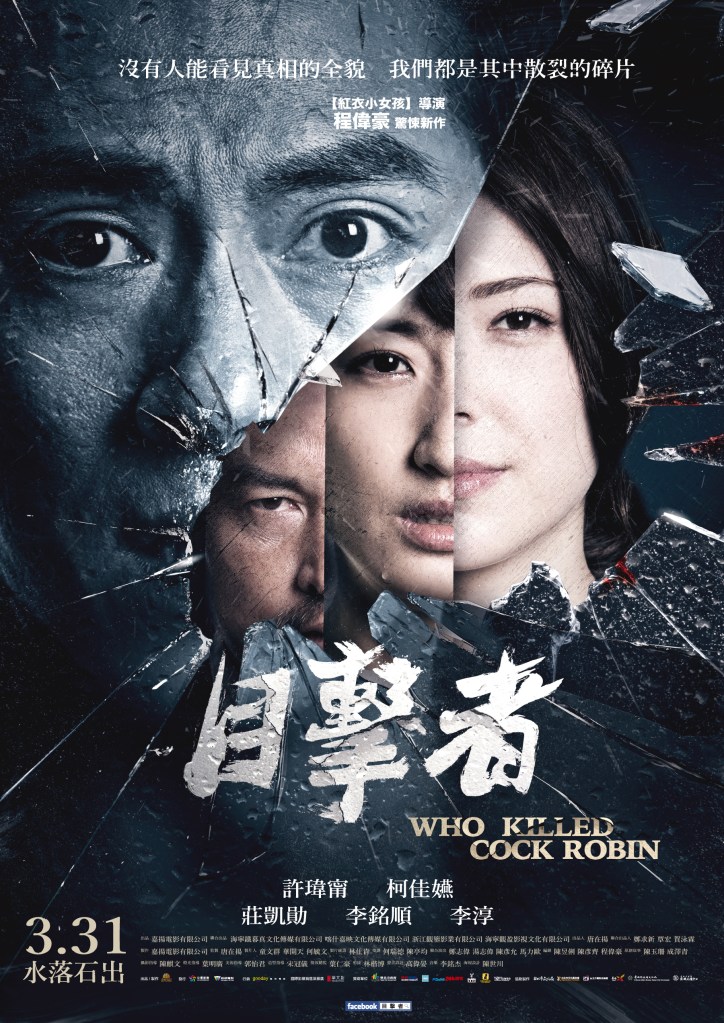
Who Killed Cock Robin (目擊者, Cheng Wei-Hao, 2017)

“Everything in this world has already been decided, no one is free” according to a jaded, psychopathic killer in Tag Along director’s Cheng Wei-Hao fatalistic neo-noir, Who Killed Cock Robin (目擊者, Mùjīzhě) . As the English title implies, each has their part to play when it comes to the orchestration of death, but the peculiar confluence of circumstances sees the central “witness” corrupted by his decision to alter his position, becoming part of the story in a way a journalist never should.

At 30-ish, Chi (Kaiser Chuang Kai-hsun) is a jaded paparazzo tuning in to the police scanners for the latest scoop on potentially scandalous crime. He thinks he’s hit the jackpot in pulling off the road and discovering a local politician in a car wreck with a beautiful young woman he later realises is a top glamour model, but his insistence on pushing the story without proper background checks comes back to haunt him when the politician comes out with documents proving he married the model in secret some months earlier and signals his intention to sue. All of a sudden, Chi’s bright future is slipping away from him. His mentor retires, and he’s abruptly made redundant, effectively fired for the problematic politician scoop. It’s at that point he starts looking back at photos he took of another car crash nine years earlier when he was still a rookie and realises his boss may have deleted some behind his back. 

As his mentor, Chiu (Christopher Lee Meng Soon), eventually tells him, Chi isn’t the sort of man who’d fight for justice for someone he didn’t even know. He’s in this for petty revenge in hoping to expose some kind of scandal involving the boss who got him fired. He’s also, however, meditating on the earnest young man he once was and the jaded hack he’s since become. As an intern he wanted to do hard journalism and make a difference, but after falling in with Chiu he became corrupted by urbanity, seduced by the fancy suits, celebrity contacts, and stylish parties. He does his business by forming “relationships” with useful people such as law enforcement officers though homosocial bonding, i.e. drinking and women. 

Chiu also, perhaps ironically, thanks his wife for helping him make the “relationships” which have enabled his successful life. These complex networks of interwoven corruption are what keeps the city running, but they’re also a web that can be unravelled to reveal the dirty secrets at its centre. Chi seems to know that fate is coming for him. “Things that happened to you come round in circles” he drunkenly laments on learning not only that the used car he was duped into buyng is an illegally remodelled vehicle but also that the chassis belongs to the one from the accident he witnessed all those years ago. Car accidents plague him, as if implying his life is one long car crash bracing for the impact. 

Yet, as Chiu cautions him, he only has a part of the truth. He is lied to and misled, left to reply on the reporter’s instinct he has long since allowed to become rusty. His investigation places others in danger, not least a young woman who was beginning to think she’d escaped the accident’s wake and built a nice life for herself free of past transgression. But Chi still has to make a choice, try to expose this world of infinite corruption for what it is while accepting his own complicity within it, or decide to unsee what he worked so hard to uncover and go back to being the hack reporter dependent on that same web of corruption whose entanglement he was so keen to escape. 

“I just want to know the truth” Chi claims, as a good reporter should, but his subjects ask him “what’s the point?”, “everyone wants to know the truth, but once you know then what?”.  It’s a good question, and one perhaps that Chi doesn’t know the answer to, reducing his dilemma to a sheepish grin and a cynical joke. “I prefer to remember happier things”, he admits. An infinitely compromised figure, Chi finds himself on dark and fatalistic path towards discovering, at least, his own truth. “I believe in myself” he later tells an equally corrupted colleague but something tells us we perhaps should not. 


Who Killed Cock Robin streams online for free in the US as part of Asian Pop-Up Cinema’s Mini-Focus: Taiwan Cinema Online on June 11.

International trailer (English subtitles)

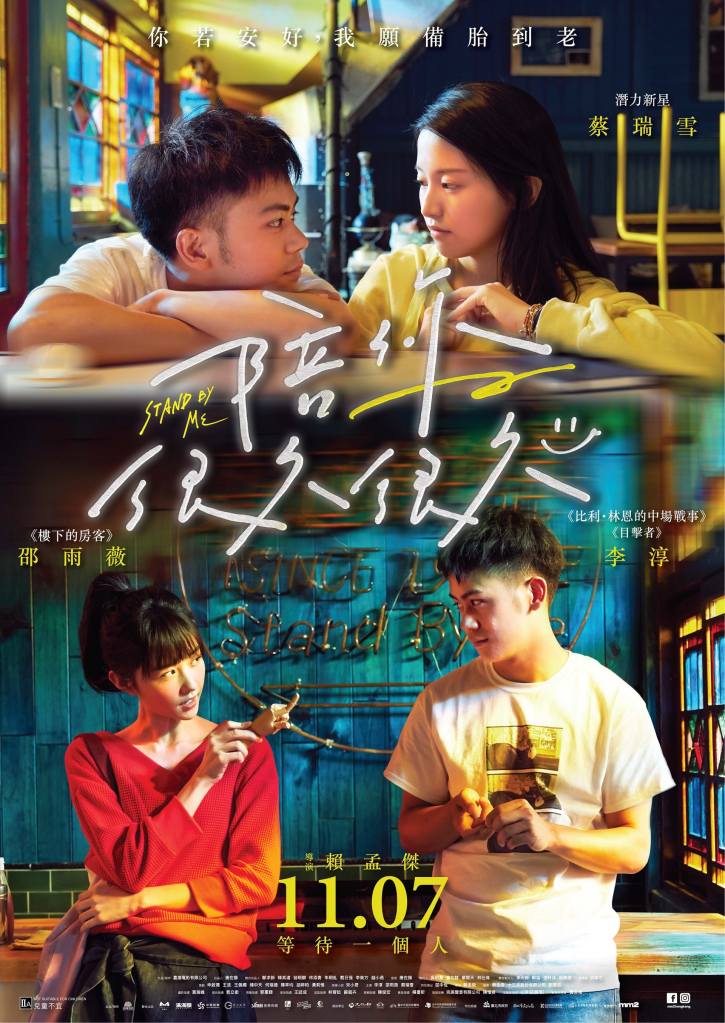
Stand By Me (陪你很久很久, Lai Meng-jie, 2019)

“Teenage days we all need a romance that hurts” exclaims a rejected teen, too shy to declare her crush directly but trying to achieve a kind of closure by literally shouting it from the rooftops in Lai Meng-jie’s charming teenage rom-com, Stand By Me (陪你很久很久, Péi Nǐ Hěn Jiǔ Hěn Jiǔ). For Jiu-Bing (Mason Lee), however, his romance has gone on a little longer than just his teenage years. He’s been silently in love with Bo-he (Ivy Shao Yu-Wei) since he was 12, but their relationship has remained at the innocent level of childhood friendship. Nevertheless, all of his subsequent decisions have been taken with one aim in mind, being at Bo-he’s side to protect her. Now that they’re grown, he’ll have to come to terms with the fact that their relationship is inevitably going to have to change in one way or another. 

As with most youngsters, those changes arrive as they set off for university (he’s enrolled in the same one as her for that reason alone). No matter how close you are, it can be quite claustrophobic having someone buzzing around you all day and Bo-he is beginning to get fed up with Jiu-Bing’s continuing immaturity. He’s promised to “protect” her, but often ends up in trouble himself and needs her to rescue him. It’s Bo-he that finds him a place to stay after he accidentally blows up his new student dorm and gets kicked out, only it turns out to be half of a teenage girl’s bedroom above a family bakery, rented out by high schooler Xia-Tian (Tsai Jui-Hsueh) without her father’s (Chu Chung-heng) permission as an enterprising way to get a little more pocket money. Meanwhile, Bo-he has fallen for a handsome, heroic classmate, Mai-zi (Edison Song Bai-Wai), who is, in every stereotypical way, the perfect man. 

In an ironic twist, Jiu-Bing’s part-time job is as a “pacer”, supporting other runners as they make their way towards the finish line but eventually dropping back himself. He takes pride in being there for people, protecting and encouraging them, but still struggles to accept the fact that his chosen role inevitably means he’ll spend his life celebrating the successes of others rather than his own. Jiu-Bing eventually has this fact thrown in his face when a romantic rival describes him as nothing more than a rebound guy, implying that Bo-he only sees him as a fallback she can rely on when some other boy breaks her heart but will never really want to be with in the long term. 

On one level, Jiu-Bing is fine with that. He really does just want Bo-he to be happy even if it’s with someone else, but still struggles with the decision of whether to speak his feelings out loud and risk ruining their friendship or keep silent and live with the pain of being just her friend forever. As one of his eccentrically nerdy friends puts it, companionship is the “dark matter” that supports a relationship, but the jury’s still out on whether companionship alone is enough to go the distance. Meanwhile, he remains entirely oblivious to the fact that Xia-Tian is beginning to develop feelings for him that place her in exactly the same place as he is with Bo-he. Maybe he just thinks of Xia-Tian as a crazy little sister, and maybe Bo-he just thinks of him as a troublesome little brother who will always need looking after despite his constant protestations that all he wants is to be able to “protect” her. 

What Jiu-Bing learns however is that being a pacer is no bad thing. It’s much better to run with someone than to run alone, but there are times when you just need to set a pace for yourself so you can figure out how far you can run. There are more ways to love than just the romantic, though maybe that’ll come in time but perhaps not from the direction you’d expected. “Being heard and accepted is nothing we can decide” Xia-Tian adds, and what is teenage romance other than coming to an acceptance that sometimes you love people who don’t love you back? But then sometimes they do, and if you never say anything you’ll never know. Jiu-Bing has some growing up to do, and a few decisions to make so he can figure out where it is he ought to be – supporting from the sidelines or waiting with flowers near the podium. Either way, Lai Meng-Jie’s charming teenage rom-com is a refreshingly progressive take on the genre which allows it’s “nice guy” hero to find solace in the authenticity of his generosity while its heroine embraces her own sense of agency entirely independent of her romantic destiny. 


Stand By Me screens at Chicago’s Gene Siskel Film Center on Feb. 17 where the full lineup for the upcoming 10th season of Asian Pop-Up Cinema will also be unveiled. Director Lai Meng-jie will be in attendance for an introduction and post-screening Q&A.

Original trailer (English/Traditional Chinese subtitles)

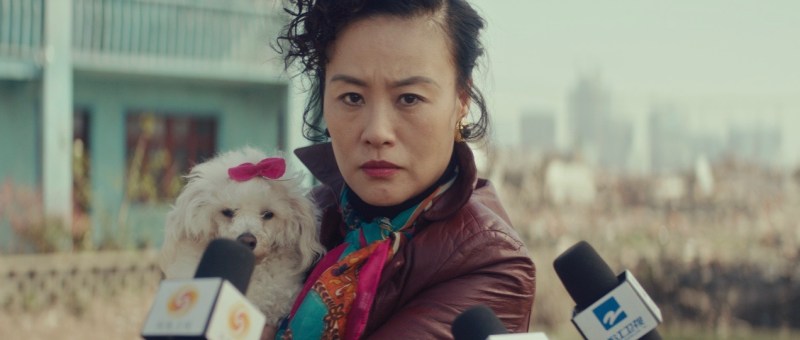
Dead Pigs (海上浮城, Cathy Yan, 2018)

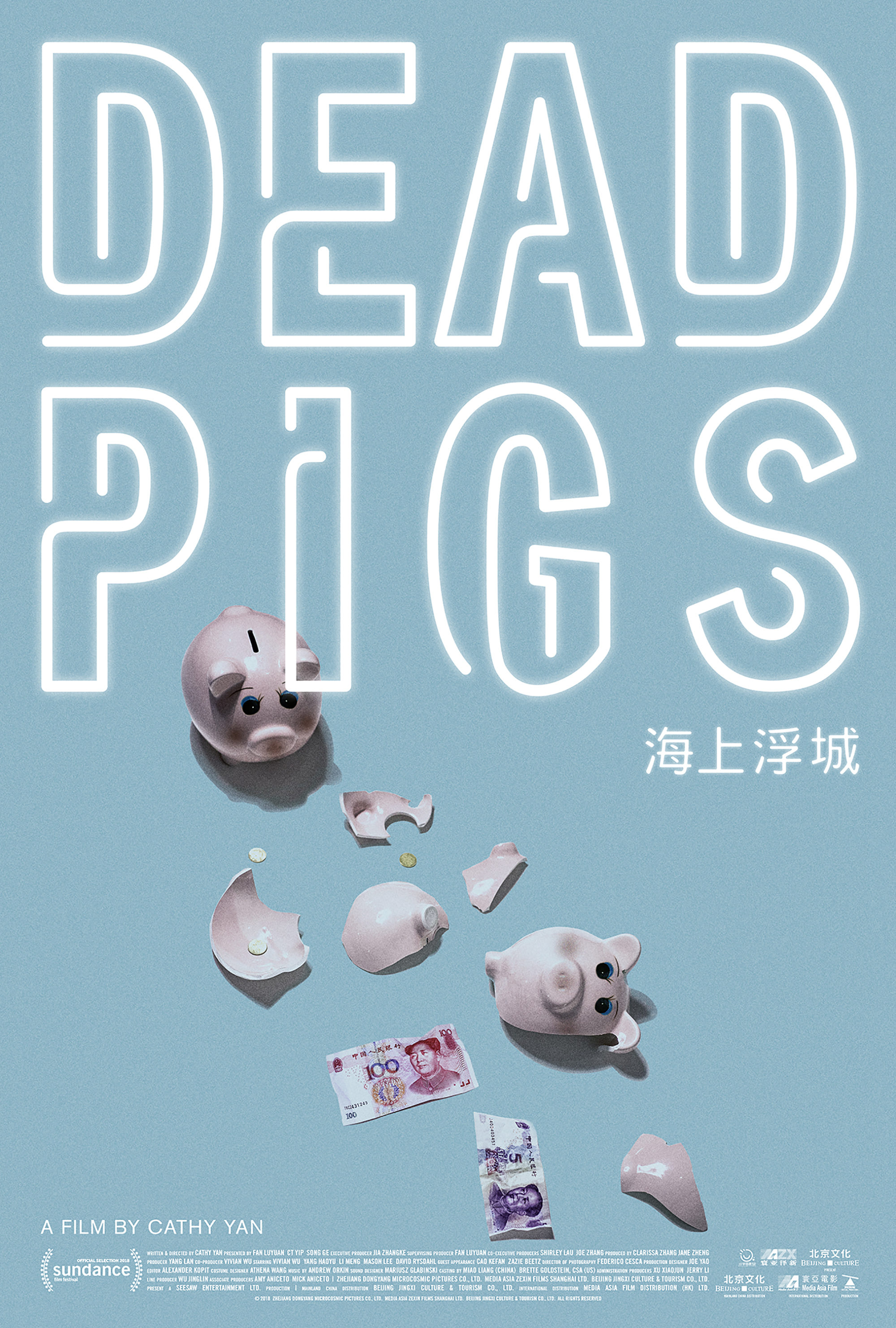
Dead Pigs posterPigs – they have the best life, according to pig farmer Old Wang (Yang Haoyu). All they do is sleep and eat while hard working folks like him go out of their way to keep them comfortable. To Old Wang, it doesn’t seem fair but, ironically enough, he seems to have forgotten the heavy price a prize pig pays for its short life of “luxury”. Nevertheless, all his hard work is about to go down the drain in the debut film from Cathy Yan, Dead Pigs (海上浮城, Hǎi Chàng Fú Chéng). Loosely inspired by the infamous Huangpu River incident, Dead Pigs is a decidedly cheerful satire of modern China’s capitalist revolution and the many changes, good and bad, it has wrought.

When all the pigs in China suddenly start dropping dead, it presents a series of problems for your average pig farmer like Old Wang. With everyone on high alert and no clear indication of what is causing the strange phenomenon, no one is buying pork and getting rid of the carcasses in the “official” way is costly, bothersome, and will alert the attention of the authorities. Therefore, pretty much everyone starts tipping their dead pigs in the river which, besides being unsightly, is also a significant risk to public health.

Old Wang, however, has other problems. When we first meet him, he’s become obsessed with the cutting edge art of VR technology because it feels just like the real thing, delighting in pretending to go swimming when he could actually just go swimming outside if only he hadn’t been polluting the river with pig carcasses. Not content with virtual delusions, he’s also got himself into debt by “investing” in a scheme which turned out to be a scam and lost him all his savings. In debt to loan sharks, Old Wang decides to ask his sister, Candy (Vivian Wu) – a beautician with an upbeat, inspirational marketing campaign, for help. Candy, however, is in the middle of a nasty dispute with a local property developer which has bought up all the other properties in the area to build a brand new housing complex bizarrely inspired by classic Spanish cathedral Sagrada Família and designed by American architect Sean (David Rysdahl) who has ended up in China in flight from failure at home. Old Wang considers asking his son, Zhen (Mason Lee), whom he thinks has a good job in the city, for the money to pay the gangsters, but Zhen is just a waiter (in an upscale bar/restaurant specialising in pork) and is too ashamed to tell his dad he can’t help. Meanwhile, Zhen has also fallen for disillusioned rich girl Xia Xia (Li Meng) who is currently rethinking her elitist lifestyle.

Snapping at the property developers, Candy laments that it’s all “money, money, money” and resents that they can’t see the various practical and sentimental reasons she might not want to move, assuming she’s just an old battle-axe out for more money. In the world of rich kids like Xia Xia, money is indeed all that matters – having the flashiest outfits, jewellery, cars and accessories while being seen at the trendiest bars and restaurants on the arm of the handsomest companions the elite has to offer. No one seems to care very much about how they treat others because every offence can be paid for. Xia Xia, though she perhaps suspected it before, learns the hard way when she winds up in hospital and none of her many “friends” bother to visit her, preferring to send expensive gifts instead.

Meanwhile, Wang Zhen and his dad are two guys left behind by rapid modernisation. Too ashamed to tell his father he couldn’t cut it in the city, Zhen eventually takes to deliberately crashing into oncoming vehicles with his bicycle in the hope of extracting compensation – willingly submitting himself to a system in which money has become a license to do wrong for those who can afford it. American architect Sean feels much the same as he makes plain in an impassioned speech to Old Wang in which he insists that no one has the right to call him stupid or to make out he isn’t good enough for the brave new world they are making. Sean, having ended up in China in an attempt to escape these same feelings of inadequacy and failure in his home country, finds a new niche for himself, uncomfortable as it is, as a professional Westerner for hire in series of bizarre publicity stunts managed by a talent agency specialising in such rarefied fare. 

Yet more than the greed, selfishness, and inhumanity the cruelty of capitalism has engendered, it’s the loss of community that seems to really sting. Candy wants to hold on to her childhood home as a physical expression of a long lost neighbourhood and now absent family. Tellingly, the song she’s always singing, which is later reprised as a community wide karaoke number, is a classic track by Teresa Teng known as “I Only Care About You” in its Mandarin version but originally released in Japanese as “Toki no Nagare ni Mi wo Makase” which literally means “surrender yourself to the flow of time”. You can’t stop progress – perhaps it’s a mistake to cling on to the tangible in a world constantly in flux when what really matters has always been close at hand. The message seems to be, salvage what you can but get out of the way of the bulldozer before it buries you too. Sparkling with whimsy and filled with impromptu song and dance, Dead Pigs is a delightfully surreal examination of a changing nation in which goodness and empathy eventually win out (to a point at least) against the overwhelming forces of rampant capitalist expansion.


Screened at the 2018 BFI London Film Festival.

Original trailer (English subtitles)

Teresa Teng’s I Only Care About You

Original Japanese version (Toki no Nagare ni Mi wo Makase)

https://www.youtube.com/watch?v=orwRnoi01AM

Suburban Birds (郊区的鸟, Qiu Sheng, 2018)

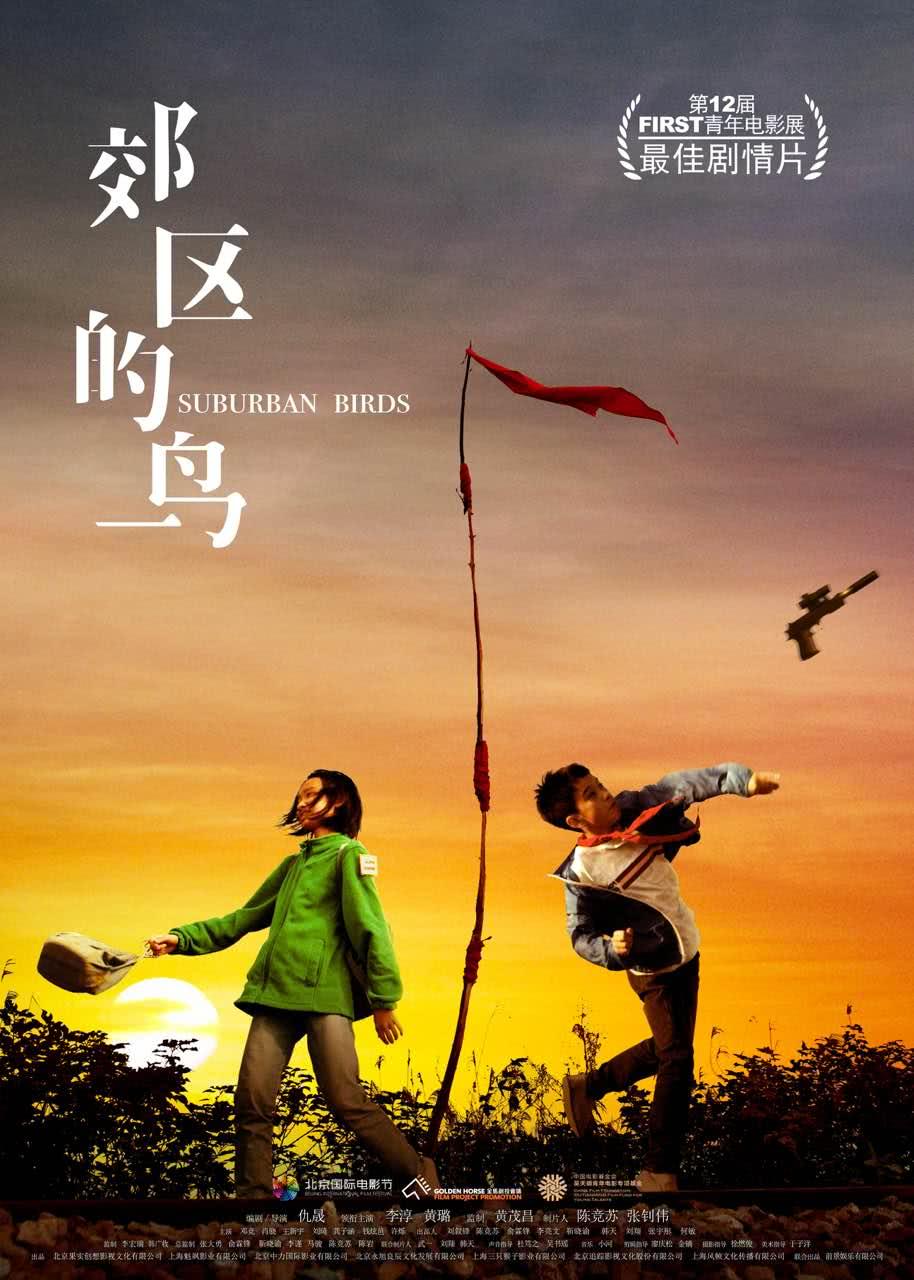
Suburban Birds poster 1Everything is collapsing in the strangely entropic world of Qiu Sheng’s Suburban Birds (郊区的鸟, Jiāo de Niǎo). Time and memory conspire to confuse and confound as man-made structures devour the natural pleasures of human existence, stepping in time with China’s rapid urban development in a hasty march towards a fractured future. Our hero dreams of finding rare avian life, but remains shackled to the earth as an agent of both destruction and creation – literally “engineering” the future while attempting to repair the mistakes of the past.

Xiahao (Mason Lee) is currently working for a government-backed team of surveyors trying to solve a massive subsidence problem which has rendered a brand new estate unfit for habitation. The subsidence problem, besides being dangerous and apparently unpredictable, is also expensive – the city is footing the bill for putting an entire neighbourhood up in a hotel while essential works on a new subway line needed to serve it are also on hold. The engineers are doing their best, but they seem ill equipped to investigate and feel both under resourced and under appreciated. The youngest member of the team, Ant (Deng Jing), is even thinking of quitting because he gets all the rubbish jobs and his girlfriend thinks there’s no future in his career seeing as there’s relatively little scope for advancement save becoming the “boss” which doesn’t actually pay very much. In between drinking, arguing, and investigating, Xiahao strikes up a relationship with one of the evictees – the pretty hairdresser “Swallow” (Huang Lu), to whom he eventually offers to show the elusive birds.

Meanwhile, a second tale takes over when Xiahao investigates an abandoned school and discovers a diary written by another Xiahao (Gong Zihan) which details the various adventures of a group of adolescent friends. Whether in reality or just in the older Xiahao’s imagination, the kids from the book echo people in his adult life from the members of his engineering team to the two female evictees he encounters at the hotel. The younger Xiahao could perhaps even be an echo of the older one’s real or imagined childhood – the aesthetics are distinctly ‘90s but the adventures are infinitely timeless. Little Xiahao and his friends communicate in person and go outside to play, fully existing in tune with their surroundings and as much part of the natural world as the “suburban birds” looking for a perch in a land under permanent construction.

Yet modern China somehow works its way into their idyllic world. The kids play in the ruins of broken broken buildings, are literally injured by the ruptured landscape, and finally begin to disappear one by one. Eventually the streams cross – the young Xiahao and the other boys come across the older Xiahao and his team dreaming away under greying skies while their optical level looks silently on at nothing. The kids stick a piece of chewing gum on the lens – an act which is both intensely irritating for the slumbering adults and a literal proof of their material existence within the same plane if not definitively the same time.

Xiahao’s dreams, as he recounts them to his bored coworkers, revolve around a terrible gushing of water as a powerful drill inexplicably turns to liquid. The loudmouth party man tagging along to chivvy the crew towards a completion of the paperwork even in the absence of a safe and workable solution, has an appropriately bawdy theory but the dream itself is later echoed by the boys who find themselves charged with carrying a large butt of water through their school until its weight gets the better of them. Xiahao is convinced that leakage lies at the heart of the subsidence problem, that shoddy workmanship and bad weather have conspired to ruin the ambitions of human engineering. Public safety is not such a concern as faith in local government. Not only has an all encompassing hunger for progress robbed the land of its beauty but has begun to erode itself from the underneath leaving only a perilous fall to the chasms below.

Xiahao dreams of a more innocent time. His ringtone alarm features bird song which is either so real you can’t tell the difference, or the ironically named Swallow has never actually heard it before outside of the movies. He wants to find the elusive “suburban birds” but turns to the internet to do so, eventually wading back into into a dream in which children play freely among the greenery while singing semi-ominous communist songs about how the future belongs to the young. A riddle besets them all – what is both long and short, fast and slow, and whole yet may be divided into many parts? The answer seems to be time, or perhaps memory, hinting at the way past haunts the future as a squatting tenant of the present which can neither speak nor stay silent. Forgetting, like the water pouring in through the inexpertly poured concrete of a half constructed subway tunnel, erodes the foundations of conscious thought. You can’t build a future on emptiness, and if there’s nowhere for the birds to sit what sort of future is it anyway?


Screened at the 2018 BFI London Film Festival.

Original trailer (English subtitles)

Interview with director Qiu Sheng from Locarno