Full Strike (全力扣殺, Derek Kwok & Henri Wong, 2015)

A former badminton champ begins to rediscover herself after being permanently banned for bullying behaviour when charged with coaching a bunch of former bank robbers in Derek Kwok & Henri Wong’s zany sports comedy Full Strike (全力扣殺). Dedicated to “all the beautiful losers”, the film is less about literal winning as it is about learning to turn one’s life around in moments of profound despair and draw strength from even non-literal victories in simply refusing to be looked down or belittled.

It’s ironic in a sense that Dan (Ekin Cheng Yee-Kin), Kun (Wilfred Lau Ho-Lung), and Chiu (Edmond Leung Hon-Man) became bank robbers because they didn’t want to be bullied having grown up as friendless orphans. Former badminton champ Kau Sau (Josie Ho Chiu-Yee), meanwhile, was such as tyrannical diva that she gained the nickname “The Beast” before being banned because of her unsportsmanlike behaviour and treatment of her long-suffering assistant. But cast out of the sports world, she’s become a dejected layabout not quite working in her brother’s restaurant and otherwise hiding out from the world. Her life changes when she’s publicly mocked after running into her former assistant who has since gone to take her position as a reigning champion. Running out into the night, she spots a shuttle-cock-shaped meteor and is chased to a badminton club by what she assumes is an “alien” but might have just been a frightened homeless man.

In any case, she takes it as a sign she should pick up a racket once again which as Dan later points out she probably wanted to do anyway and was just waiting for an excuse. He can’t explain why he chose the unlikely path of becoming a badminton player to help him turn over a new leaf after leaving prison but reflects that perhaps you don’t really need a reason only the desire to change. Dan, Kun, and Chiu all developed disabilities as a result of their life of crime but slowly discover that they can actually help them on the court in a literal process of making the most of their life experiences no matter how negative they might have assumed them to be while Kau Sau similarly regains her self esteem while acknowledging the destructive patterns of her previous behaviour careful never to bully her new teammates as they all square off against her bullying cousin “nipple sucking Cheung” (Ronald Cheng Chung-Kei) who tries to use his newfound wealth to cover up a lack of skill by hiring Kau Sau’s old teammate. 

Cheung is also trying to overcome low self-esteem and is later forced to realise that becoming a champion won’t really change that much about how he sees himself, though apparently still relying on an ever capable middle-aged woman to fight (literally) his battles for him. Meanwhile, the gang are coopted by a media mogul hoping to make an inspirational documentary about them but also manipulating their lives and hyper fixating on their criminal pasts to the point of staging a fake arrest as they enter the stadium for a competition. Doubting the chances of success in setting up new lives for themselves as badminton players, Chiu is drawn back towards a life of crime while feeling somewhat distanced from the team as a tentative romance between Kau Sau and Dan seems to fall otherwise flat.

A throwback to classic mou lei tau nonsense comedy, the zany gags come thick and fast but are at times over reliant on low humour while the central premise of staking everything on an “unexciting” game like badminton perhaps wears a little thin by the time it gets to the high stakes finale with the heroes fighting twin battles squaring off against their traumatic pasts rather than the literal opponents in front of them. Winning becomes a kind of irrelevance when the contest was within the self. Each rediscovering the spark of life, the players rediscover the will to live while bonding as a team and sticking to their training in pursuit of their goal. Kwok and Wong lay it on a little thick with the martial arts parody in the uphill battle to master badminton but otherwise lend a poignant sense of warmth and genuine goodwill in sympathy with the underdogs’ quest if not quite to win then to own their loserdom on their on terms in reclaiming their self-respect and dignity. 


Full Strike is available to stream in the UK until 30th June as part of this year’s Odyssey: A Chinese Cinema Season.

Original trailer (Traditional Chinese / English subtitles)
Raging Fire (怒火, Benny Chan, 2021)

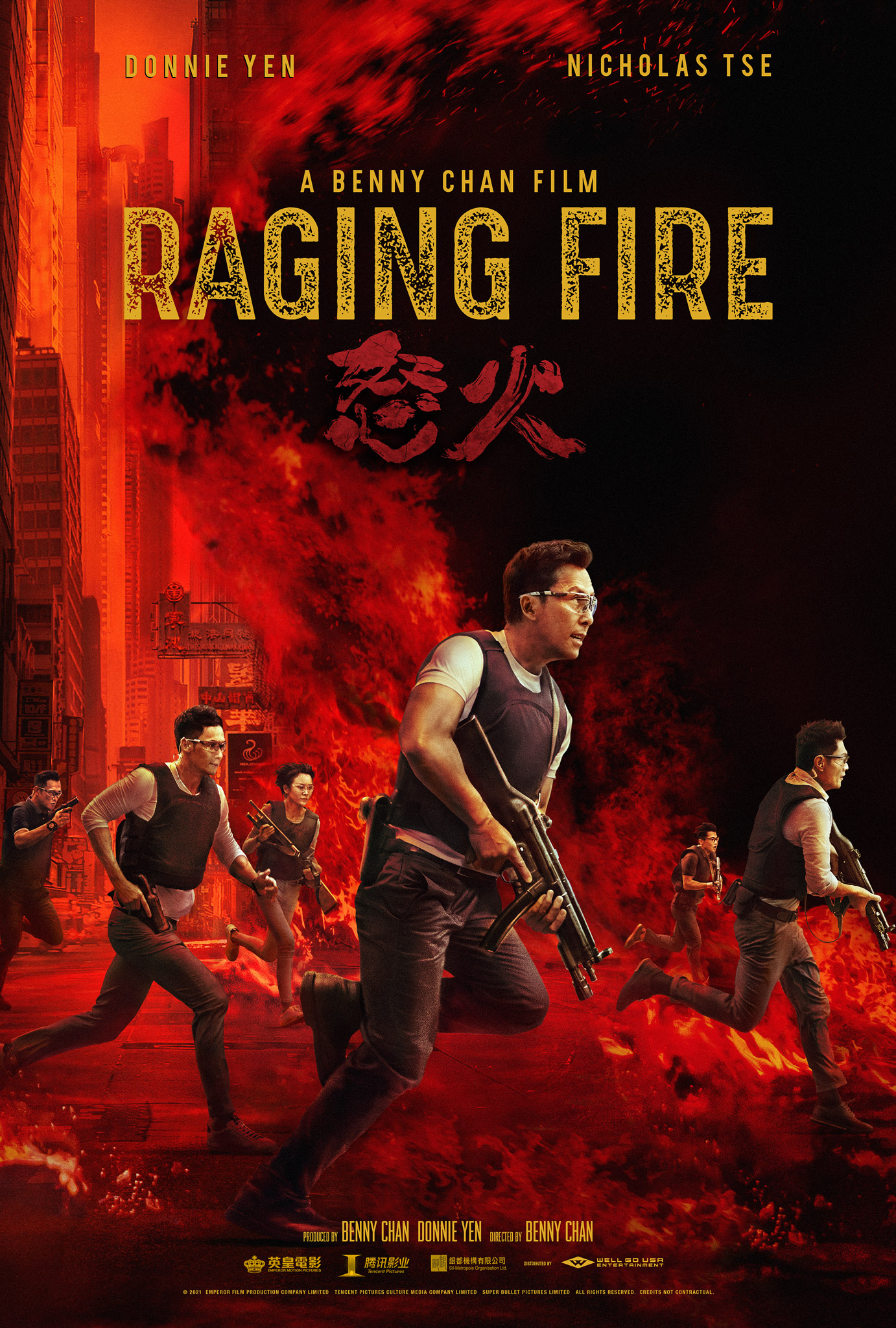
“If you had chased Coke that day, would our destinies have been reversed?” a cop turned villain asks of his righteous colleague, but his friend has no answer for him. The final film from director Benny Chan who sadly passed away last year after being diagnosed with cancer while filming, Raging Fire (怒火) pits a disgruntled police officer wronged by the system against an incorruptible detective but suggests that the real villain is an increasingly corrupt society in which the rich and powerful have a direct line to justice. 

As the film opens, noble officer Cheung (Donnie Yen) is racing towards some kind of altercation in a shipyard but later wakes up next to his much younger and very pregnant wife (Qin Lan). After a years long operation, his team is about to take out a petty criminal involved with a previous investigation which resulted in fellow officers getting sent to prison for excessive use of force. After refusing to to help a wealthy businessman make his son’s drunken car accident go away, Cheung is taken off the case while the raid turns out to have been a trap leaving eight of his friends dead and many more injured. Through his investigations, Cheung begins to realise that his former colleague Ngo (Nicholas Tse), recently released from prison, may be responsible for the deaths of his friends in pursuing a vigilante revenge against the police force he feels betrayed him. 

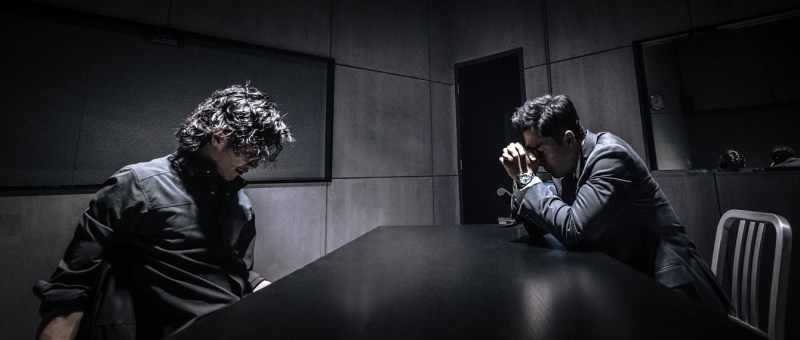
“This society doesn’t reward good men” Ngo later insists, though his total and relatively sudden transformation from earnest cop to bloodthirsty psychopathic killer seems something of a stretch. Cheung aside, the Hong Kong police force is depicted as infinitely corrupt and working at the behest of the rich and powerful to further agendas not always in the interests of justice. The case which caused so much trouble related to the kidnapping of a prominent financier and the secretary he was canoodling with at the time, the financier’s wife having obeyed the kidnappers’ instructions not to call the police by ringing a government contact instead which is why the operation is covert. Ngo and his team were told to do whatever it took to extract information from a suspect who later wound up dead but were hung out to dry by the superior officer who ordered it. Not unreasonably they see themselves as victims of a corrupt system but care little who might get in the way of their vicious bid for revenge. 

For his part, Chueng is also a thorn in the side of his colleagues because of his refusal to play along with the base level corruption all around him. Dragged to the meeting with the businessman by nervous colleague Beau (Patrick Tam), Cheung sips tea rather than the wine everyone else is drinking and eventually storms out making a point of paying for his exorbitantly priced beverage while refusing to be complicit with systemic corruption. So upright is he that he asks a passing driver if he has insurance before borrowing his car to chase down Ngo and when he himself is accused of breaking protocol the entire squad shows up to petition the disciplinary panel on his behalf. Ngo asks him if the situation would have been reversed had it been Cheung who had questioned the suspect that night, but of course it wouldn’t because Cheung would never have beaten a suspect to death in the first place. 

Chan places this debate front and centre by setting the final showdown in a church currently undergoing renovation, Ngo seemingly judged for his moral transgressions while Cheung meditates on the man he used to be in a bromance montage that laments the tragedy of Ngo’s fall from grace. The battle of wits between the two men, Ngo of course uniquely positioned to game the system he rails against, ends only in futility while the system which created him remains unchanged. Chan shoots with characteristic visual flare sending his compromised cops through a golden hellscape of the contemporary city veering between beautifully choreographed, high octane action sequences including a lengthy car chase through a highly populated area, and procedural thrills tinged with ambivalent social commentary in which justice itself has become commodified while police officers exceed their authority and bow to the rich and powerful. A throwback to classic Hong Kong action, Chan’s final film is a fitting finale for the career of a director taken far too soon. 


Raging Fire screened as part of this year’s New York Asian Film Festival and will be released in US cinemas on Aug, 13 courtesy of Well Go USA.

International trailer (English subtitles)

Missbehavior (恭喜八婆, Pang Ho-cheung, 2019)

Missbehaviour poster 1Pang Ho-cheung has become the king of salty, vulgar yet somehow sophisticated Cantonese comedy. Strangely, and then again maybe not, he’s never ventured into the realms of the New Year movie, until now. Missbehavior (恭喜八婆) returns the director to the bawdiness of Vulgaria but brings with it the sense of warmth and cheerful irony that marked his genial Love trilogy. A timely reminder that life’s too short for pointless grudges and maybe you should check in on that friend you haven’t seen in a while, Missbehavior is a grown up New Year treat that as silly as it often is has genuine heart and a cheerful, compassionate spirit.

The central crisis revolves around June (June Lam Siu-ha) – a model employee well used to putting up with the ridiculous requests of her boss who now demands to be known as “Luna Fu” (Isabella Leung Lok-Sze) after returning from maternity leave. Worried the new office girl Irene who is none too bright will end up offending an important client, June is charged with making his coffee but mistakes the milk labelled L.F. in the office fridge as “low fat” rather than belonging to her boss. That’s right, June has just poured her boss’ breast milk into her client’s coffee. He loved it, but Luna probably won’t which is why June calls her friend Isabel (Isabel Chan Yat-ning) who vows to mobilise their WhatsApp group to find June a new bottle of breast milk before 5pm so her boss will be none the wiser.

Once a tightly connected circle of friends, the usual middle-aged problems have led the “Bitches” to drift apart. Policewoman May (Gigi Leung Wing-kei) fell out with Isabel because she was convinced that she stole her boyfriend – her evidence being that his phone “inexplicably” connected to her wi-fi automatically despite his claims of never being in her house before. She is however big hearted enough not to let her animosity towards Isabel stop her helping out June whom, it seems, is the gang’s lynchpin and always there for everyone else in a crisis. Busy on the beat, May sends Isabel looking for some of the others all of whom have petty minor disagreements which make them reluctant to work together like rising ukulele star Minibus (Yanki Din) and her former partner Rosalin (Dada Chan Ching) who has fallen out with just about everyone thanks to writing a best selling book revealing her friends’ most embarrassing secrets.

Rosalin’s book became a hit not because of her writing talent (at least according to her friends) but because of the glamour shot she put on the cover which has earned her an army of adoring male fans which can be mobilised to help them get hold of some breast milk (though it’s unlikely any of them have babies of their own). Rosalin and Isabel chase dubious leads, while Minibus and gay couple Boris (Tan Han-jin) and Frank (Chui Tien-You) who seem to be having a few problems of their own try their luck on the black market.

Pang sends the gang all around Hong Kong (quite literally as he superimposes them on various skyscrapers so we can keep track of where they all are) on a wild goose chase trying to track down the elusive substance through various crazy capers while each of the friends gets a chance to readdress old grievances before finally coming back together again. A zany odyssey through the modern city, Missbehavior packs in the meta commentary with five year olds demanding payments to put towards their apartment funds while riffing strongly off local culture with references to aggressively rude waiters (in a scene stealing cameo from Lam Suet) and a bizarre fire fighting mascot which became an ironic internet hit.

Despite working within the relatively family friendly remit of the New Year comedy, Pang’s humour is (almost) as raucous and surreal as it ever was but he also makes time for more serious intent as in his sensitive inclusion of LGBT issues which eventually sees the gang set up a fake charity to collect milk for gay men raising babies and ends in a delightful set piece with everyone trying to evade shopping mall security by running around in rainbow capes like especially progressive superheroes. Packed out with cameos from Pang regulars, Missbehavior is an appropriately light and fluffy entry perfect for New Year that is above all else a tribute to the power of friendship and to the importance of putting aside petty disagreements and minor differences because a friend in need really is a friend indeed.


Missbehavior was screened as part of the 2019 Udine Far East Film Festival.

Original trailer (English subtitles)