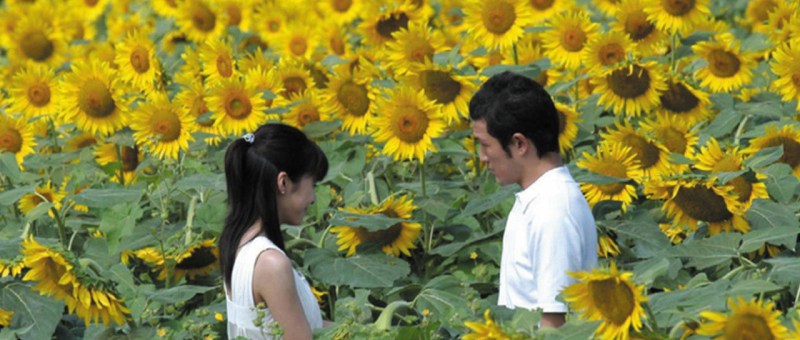
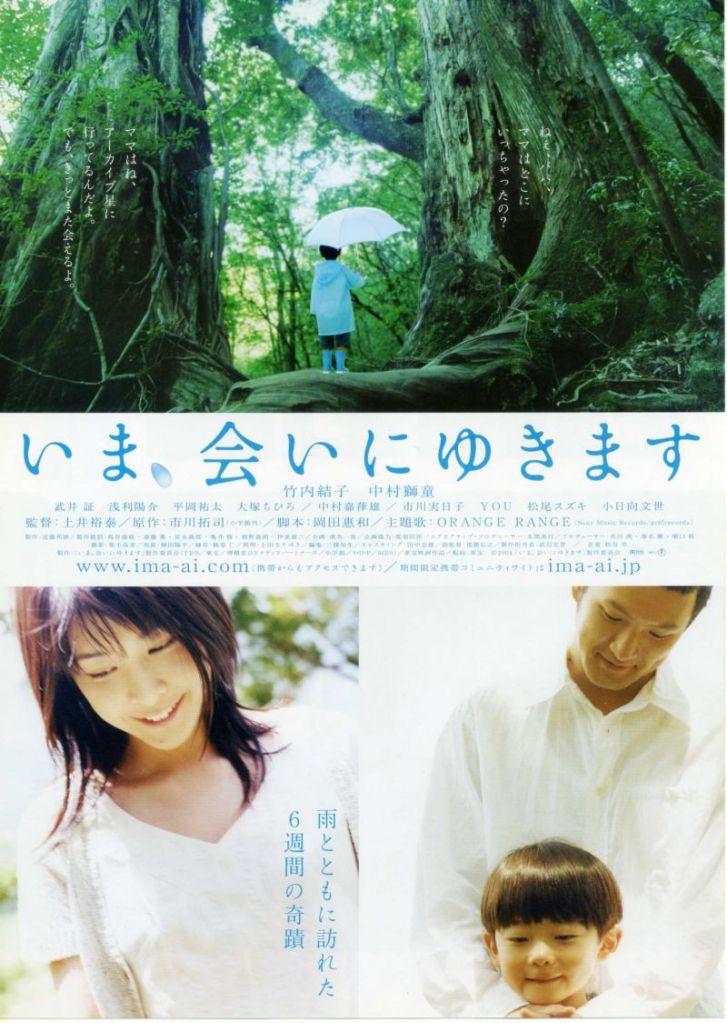
 When it comes to tragic romances, no one does them better than Japan. Adapted from a best selling novel by Takuji Ichikawa, Be With You (いま、会いにゆきます, Ima, ai ni Yukimasu) is very much part of the “Jun-ai” or “pure love” boom kickstarted by Crying Out Love In the Center of the World released the same year but taps into Japan’s long history of supernaturally tinged love stories, filled with the weight of impending tragedy and the essential transience of the human experience.
Like many such tales, Be With You begins with a framing sequence set 12 years after the main events, but unusually it’s directed from the point of view of the soon-to-be 18 year old, Yuji (Yuta Hiraoka). Receiving a birthday cake from a bakery which has apparently only stayed open because of its promise to deliver birthday cakes to him every year until he turns 18, Yuji begins to reflect on the “miracle” which he and his father experienced all those years ago.
Yuji’s mother passed away at the age of 28 when he was only 5 years old. However, before she died, Mio (Yuko Takeuchi) had prepared a special picture book for Yuji to try and help him process what was happening. In the book, Mio has gone to a place called “Archive Star” and will return for the first rainy season a year after her death. Improbable as it is, Yuji and his father Takumi (Shido Nakamura) discover a woman who looks exactly like Mio lost in the forest during the first rains. Stunned the pair take her home but Mio has no knowledge of her former life as a wife and mother. Gradually, Mio begins to fall in love with her husband all over again whilst bonding with her young son, but their happiness is short lived as Mio realises her time with them is limited.
Because Mio can’t remember, we experience the love story between the teenage Takumi and Mio firstly through his eyes as he tells her of his unrequited high school crush when she sat at the desk across from him for two years during in which he was too shy to say anything. Later we hear the same story again from Mio’s perspective through her diary where we learn, not altogether surprisingly, that she felt the same way. The pair mirror each other throughout their courtship, wanting to say something but lacking the courage and looking for excuses to try and push the situation in a better direction. Other than the mutually unresolved attempts at phone calls and an unreturned pen, Mio and Takumi essentially relive their original romance in the brief time they are able to share together from repeated motifs of untied shoelaces and clumsiness with a bicycle, to innocent in pocket hand holding.
Takumi has an ongoing medical condition which interferes with his motor functions, slowing him down and giving him an air of soulful melancholy later compounded by his romantic tragedy. Having been a champion runner on a sports scholarship to college, the diagnosis causes extreme disruption to his life and leads him to the typically jun-ai decision to break up with Mio because he feels as if he’d be a burden to her. A year after Mio passed away, Takumi is doing his best to bring up his son but is a little distant and struggling to take care of the domestic environment. When Mio realises that she can’t take care of them forever, she switches her focus to trying to prepare her husband and son for life alone – teaching Yuji how to fry eggs and do the laundry, whilst renewing her emotional bond with Takumi. There’s no happy ending in store for Mio, the loss cannot be avoided and perhaps it might even be worse to have had this brief respite from the ongoing pain, but the six week rainy season does, at least, provide an opportunity to say those things that might have otherwise gone unsaid.
Nobuhiro Doi films in a typically elegant fashion making great use of the area’s natural beauty to create a fairy tale atmosphere from the mysterious, life giving forest. The poignancy of the tale is all the deeper knowing that Mio eventually understood what would happen to her, but chose a brief life with Takumi and her son over the possibility of a longer one without them. Heartbreakingly sad, yet a testament to the importance of appreciating the present which all too soon becomes the past, Be With You is a genuinely romantic love story, not only between a husband and a wife but an entire family carrying the weight of a tragic loss but easing the burden by treasuring the memory of the intense love shared between them.
Original trailer (no subtitles)
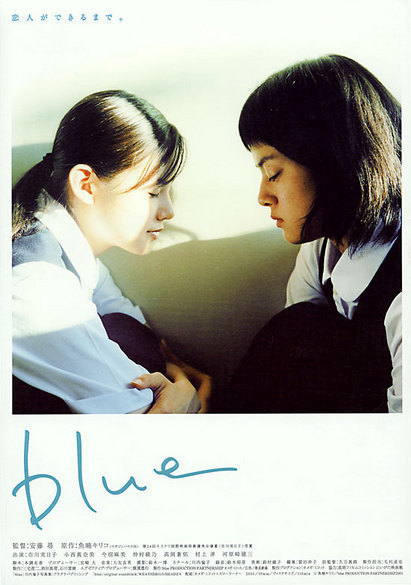 Growing up is hard to do. So it is for the teenage protagonists of Hiroshi Ando’s debut mainstream feature, Blue (ブルー), adapted from the manga by Kiriko Nananan. Like Nananan’s original comic, the cinematic adaptation of Blue is refreshingly angst free in its examination of first love and the burgeoning sexuality of two lonely high school girls. Shot with a chilly stillness which echoes the emptiness of this small town existence, Blue is no nostalgic retreat into cosy teenage dreams but a cold hard look at the messiness and pain of adolescent love.
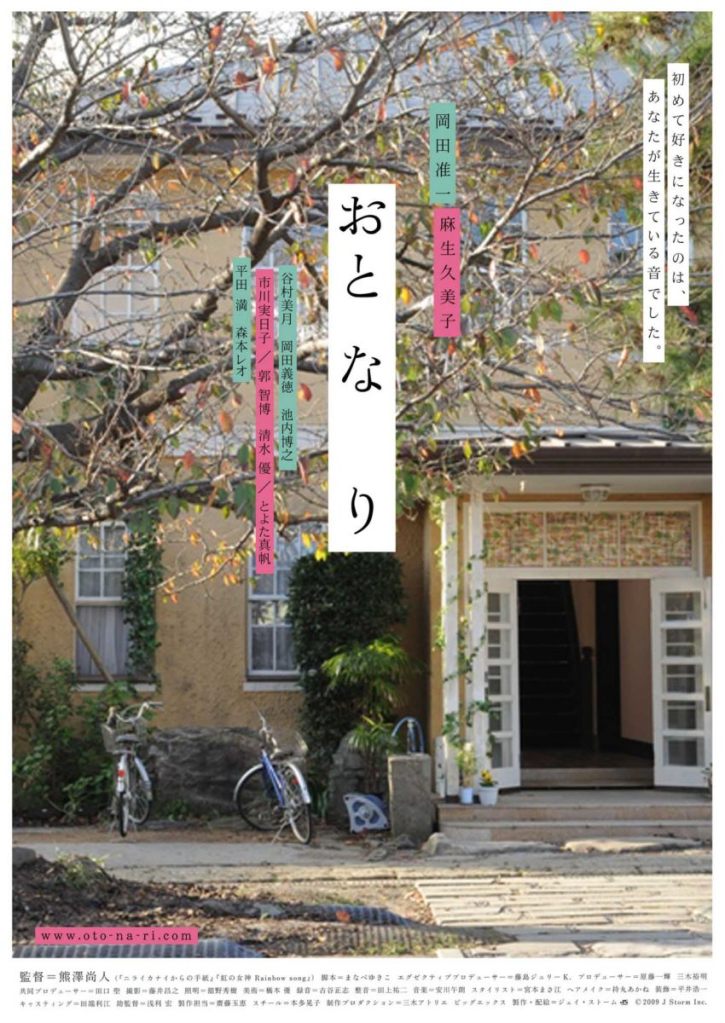 Sometimes when you live in the city it’s difficult to build meaningful connections with other people. You might find yourself a little lost, caught between the rat race and what it was that brought you to the city in the first place, but if you just close your eyes and listen, you can hear that you’re not alone. Romantic Prelude (おと・な・り, Oto-na-ri) is the story of two such people who build up a strange connection even though they’ve never really met.
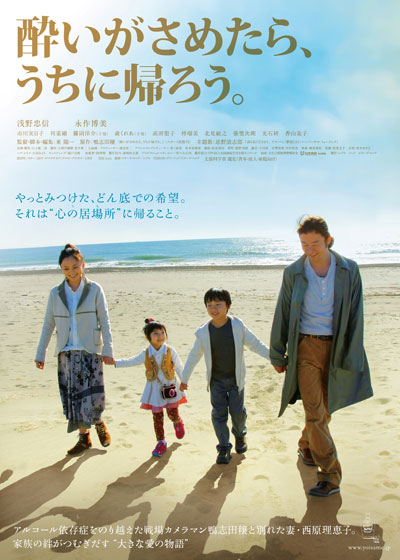 Alcoholism is not a theme which has exactly been absent from the history of cinema. From the booze drenched regret of Days of Wine and Roses to the melancholic inevitability of Leaving Las Vegas and the disdaining irony of Barfly, there has been no shortage of unsympathetic portrayals of drunkenness when it comes to the silver screen. Yoichi Higashi’s Wandering Home (酔いがさめたら、うちに帰ろう, Yoi Ga Sametara, Uchi Ni Kaerou) walks something of a middle road here as it embraces the classic “issue drama” mould but also aims for a naturalistic character study in adapting the true life memoirs of photojournalist Yutaka Kamoshida (husband of well known mangaka Reiko Saibara).
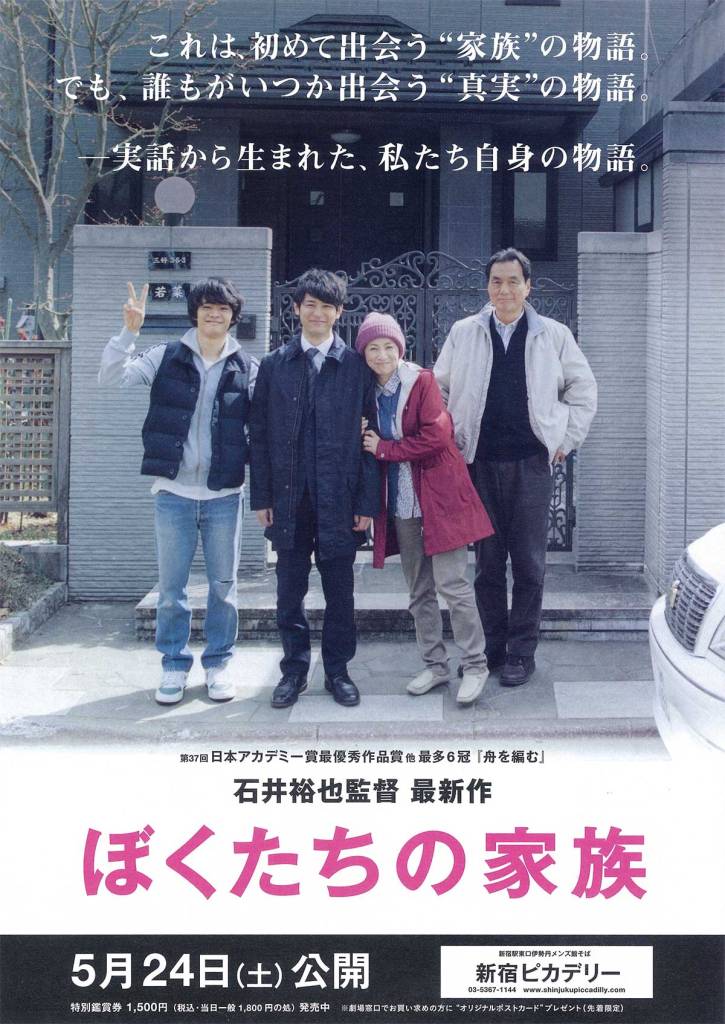 Yuya Ishii’s early work generally took the form of quirky social comedies, but underlying them all was that classic bastion of Japanese cinema, the family drama. If Ishii was in some senses subverting this iconic genre in his youthful exuberance, recent efforts have seen him come around to a more conventional take on the form which is often thought to symbolise his nation’s cinema. In Our Family Ishii is making specific reference to the familial relations of a father and two sons who orbit around the mother but also hints at wider concerns in a state of the nation address as regards the contemporary Japanese family.
 When considering their next holiday destination, many people like to peruse some brochures, have a read of trip advisor or head to a well known tourist spot that is likely to impress the guests at their next soirée but then there are always others who just simply show up somewhere and hope for the best. The central character of Megane, Taeko (Satomi Kobayashi), perhaps wishes she’d done a little research before heading out to a very strange inn on a very strange island but the longer she stays, the more the ways of the laid-back islanders seem to make sense to her.
 Windows on Worlds