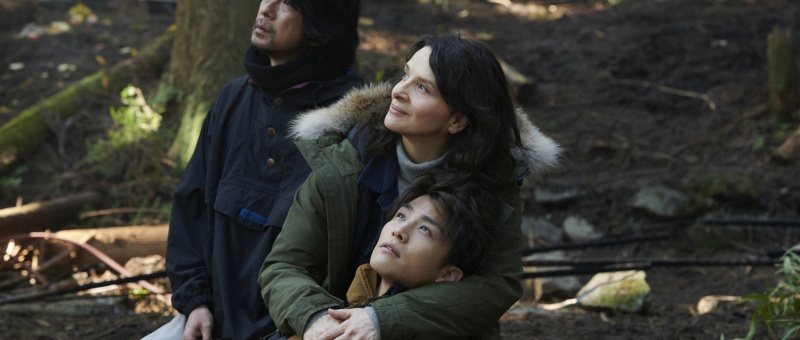

In her most recent work, Naomi Kawase has been moving further towards the mainstream, shooting in a more conventional arthouse register and mainly casting established professional actors in contrast to the amateurs who often took centre stage in her earlier career. Vision (ビジョン) however returns her to her familiar Nara Prefecture with its verdant forests and rolling mists and to more obscure realms of poetic ambiguity and new age philosophy.
French scientist/travel writer Jeanne (Juliette Binoche) has come to Japan in search of a herb so rare it apparently only spores once a millennium but has the capability to “dispel human weakness, agony, and pain”. Tomo (Masatoshi Nagase), a mountain man she ends up lodging with along with her interpreter Hana (Minami), answers only that “happiness exists in each of our hearts”, a somewhat hollow and ironic reply given his general grumpiness and stern expression. He tells them that he’s only lived in the cabin for 20 years having moved to the country because he was “tired” and that his purpose is to save the mountain. Despite his seeming reluctance, he eventually introduces the pair to a blind shamaness who claims to be 1000 years old and was born when the last plant (or as she points out fungus) spored.
Lost in the beauty of nature, Jeanne begins to wonder if she is really in the present, losing the certainty of the moment. We get occasional snippets of what seems to be memory bathed in a golden light and presented as flashback which might hint at the “pain” Jeanne is trying to cure through finding the “vision” herb even as she engages in a halfhearted though apparently passionate affair with the indifferent Tomo. She sees him as “starving” for something, not knowing what it is he’s longing for, though her friend describes him as “happy” as if silent like the mountain he claims to be saving though all we see him do is destroy it by carving up trees even if he does point again to the transience of things in explaining that the lumber he produces is the work of several generations who planted and grew so he could cut down, perhaps hinting back at Jeanne’s claim that when life develops too far it begins to destroy itself.
Tomo doesn’t quite seem to buy her new age philosophies, explaining only that “you see, and hear, touch, you feel, that is everything”, rooting his sense of reality firmly within the realms of the sensual. “Sometimes because we have language we can’t understand each other” Jeanne later says, echoing him though perhaps accidentally while expounding on the human condition to a mysterious young man, Rin (Takanori Iwata), discovered injured in the forest. Aki (Mari Natsuki), the shamaness, advances that there are changes in the forest, that it has become unbalanced, and that it will soon be time for the “vision” to present itself though it seems to take a while for Jeanne to understand what form that may take. Aki dances furiously amid the trees as if bending them to her will, her ritualistic dance later echoed in the climatic final sequence that sets a fire in the mountain but causes Tomo to suddenly declare that it is after all alive.
Jeanne finds her “vision” in an alignment of past and future, a familial, generational reunion which allows her ease her pain just as it was said vision would do. All moments are perhaps one moment. On the train Hana had described a feeling of long forgetten happiness that Jeanne’s travel essay had provoked in her as akin to “nostalgia”, instantly amusing Jeanne who is overcome by the incongruity of this young woman already romanticising a sense of nostalgia for an unlived past. Tomo had declared that it was enough simply to remember that he too was a part of this world, but is suddenly reminded that he is not alone. Literally setting fire to the past they buy themselves the possibility of being reborn, making space for new growth in the knowledge that the mountain is “alive” as indeed are they. Tomo has saved the mountain, and Jeanne has perhaps saved herself. “Isn’t it beautiful?” she exclaims embracing a new vision of a bright and shining future no longer burdened by pain or despair.
Vision streams in the US until Dec. 23 alongside Naomi Kawase’s 1997 debut Suzaku as part of Japan Society New York’s Flash Forward series.
Trailer (English subtitles)


 There are few things in life which cannot at least be improved by a full and frank apology. Sometimes that apology will need to go beyond a simple, if heart felt, “I’m Sorry” to truly make amends but as long as there’s a genuine desire to make things right, it can be done. Some people do, however, need help in navigating this complex series of culturally defined rituals which is where the enterprising hero of Nobuo Mizuta’s The Apology King (謝罪の王様, Shazai no Ousama), Ryoro Kurojima (Sadao Abe), comes in. As head of the Tokyo Apology Centre, Kurojima is on hand to save the needy who find themselves requiring extrication from all kinds of sticky situations such as accidentally getting sold into prostitution by the yakuza or causing small diplomatic incidents with a tiny yet very angry foreign country.
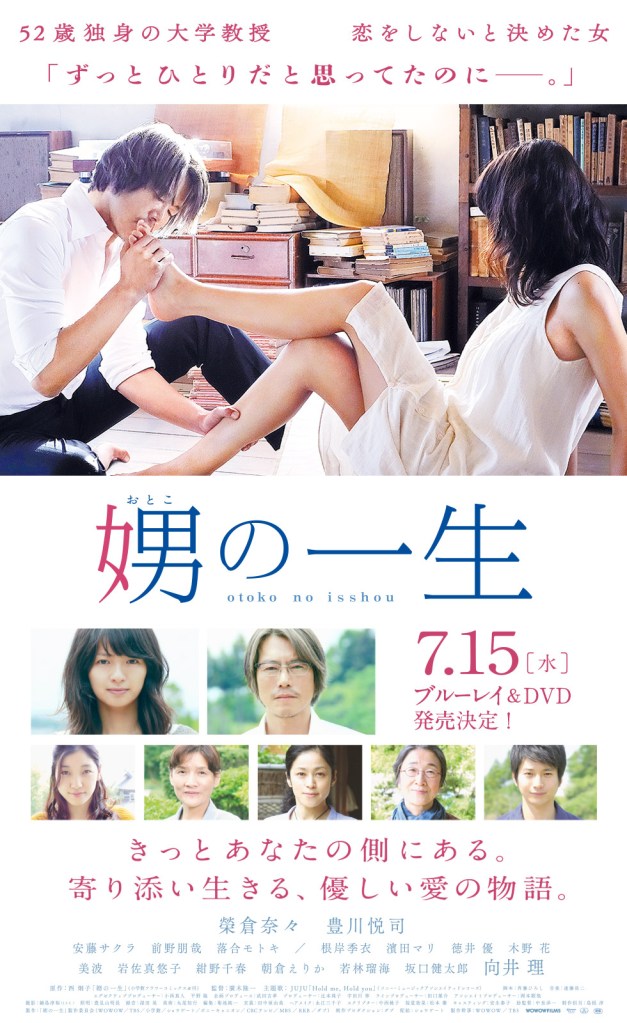 Ryuichi Hiroki has one of the most varied back catalogues of any Japanese director currently working. After getting his start in pink films and then moving into V-Cinema, Hiroki came to prominence with 2003’s Vibrator – an erotically charged exploration of modern alienation, but recent years have also proved him adept at gentle character drama. Her Granddaughter (娚の一生, Otoko no Isshou), though coming with its own degree of strangeness, is another venture into the world of peaceful, if complicated, adult romance.
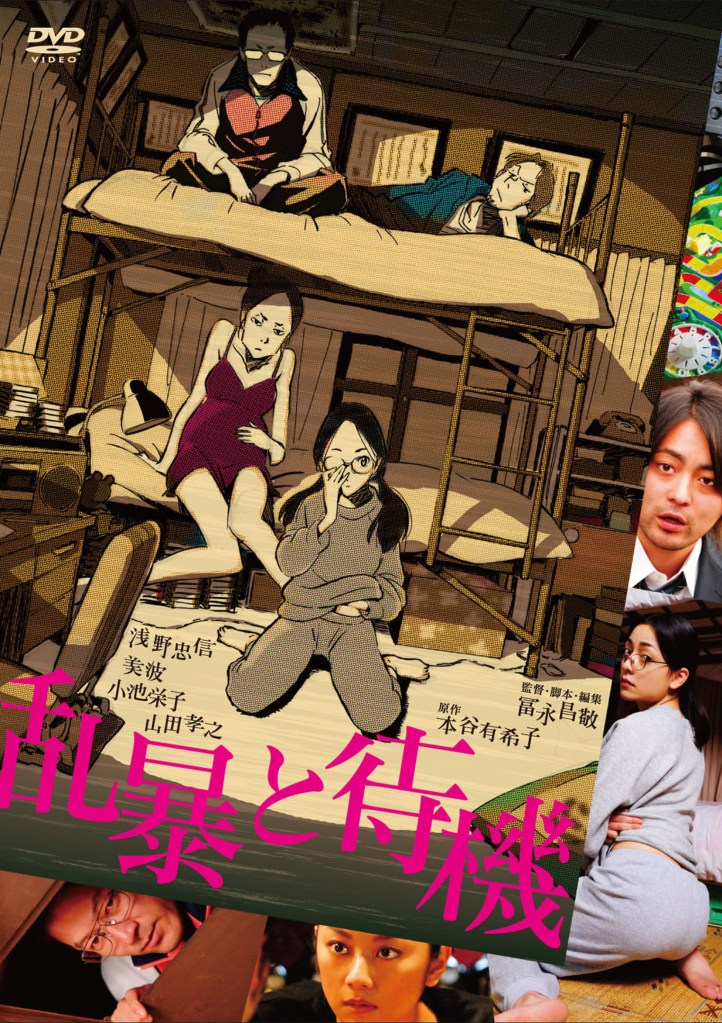 Vengeance is a dish best served cold, but then if you’re going to wait a while perhaps you should make sure to add plenty of salt and spice to the mix to disguise its rather rancid odour. Adapted from a play by Yukiko Motoya, Masanori Tominaga’s Vengeance Can Wait (乱暴と待機, Ranbou to Taiki) is the strange tale of four interconnected people who each become ensnared in a bizarre circle of violent revenge!
 Windows on Worlds