GO (Isao Yukisada, 2001)

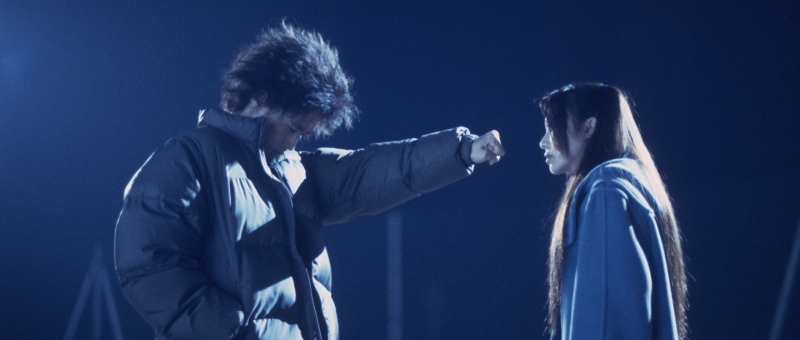
“We never had a country” a student at a North Korean school in Japan fires back, hinting at his feelings of displacement in being asked to remain loyal to a place he never knew while the culture in which he was born and raised often refuses to accept him. The hero of Isao Yukisada’s Go is not so much searching for an identity as a right to be himself regardless of the labels that are placed on him but is forced to contend with various layers of prejudice and discrimination in a rigidly conformist society.

As he points out, when they call him “Zainichi” it makes it sound as if he is only a “temporary resident” who does not really belong in Japan and will eventually “return” to his “home culture”. In essence, “Zainichi” refers to people of Korean ethnicity who came to Japan during the colonial era and their descendants who are subject to a special immigration status which grants them rights of residency but not citizenship. Sugihara’s (Yosuke Kubozuka) situation is complicated by the fact that his father (Tsutomu Yamazaki) has a North Korean passport, making him a minority even with the Korean-Japanese community. He attends a North Korean school where speaking Japanese is forbidden and is educated in the tenets of revolutionary thought which are of course entirely contrary to the consumerist capitalism of contemporary Japan. 

His father eventually consents to swap his North Korean passport for a South Korean one mostly it seems so he can take a trip to Hawaii with his wife (Shinobu Otake) which seems to Sugihara a trivial reason for making such a big decision especially as it caused the lines of communication to break down with his bother who returned to North. Yet it seems like what each of them is seeking is an expansion of internal borders, the right not to feel bound by questions of national identity in order to live in a place of their own choosing. “I felt like a person for the first time,” Sugihara explains on being given the opportunity to choose his nationality even if it is only the “narrow” choice between North and South Korea. 

But on the other hand he wonders if it would make his life easier if he had green skin so that his “non-Japaneseness” would be obvious. Sugihara reminds us several times that this is a love story, but he delays revealing that he is a Zainichi Korean to his girlfriend because he fears she will reject him once she knows. On visiting Sakurai’s (Ko Shibasaki) home, it becomes obvious that she comes from a relatively wealthy, somewhat conservative family. Her father, who is unaware Sugihara is Korean-Japanese, immediately asks him if he likes “this country” but is irritated when Sugihara asks him if he really knows the meaning behind the various words for “Japan” again hinting at the meaninglessness of such distinctions. When he eventually does tell Sakurai that he is ethnically Korean, her reaction surprises both of them as she recalls her father telling her not to date Korean or Chinese men on account of their “dirty” blood. 

Such outdated views are unfortunately all too common even at the dawn of the new millennium. Even so, Sakurai had not wanted to reveal her full name because she was embarrassed that it is so “very Japanese” while conversely Sugihara takes ownership of the name “Lee Jong-ho”. He embraces the “very Japanese” tradition of rakugo, and hangs out in the Korean restaurant where his mother works dressed in vibrant hanbok. Given a book of Shakespeare by his studious friend, he is struck by the quote which opens the film which states that a rose by any other name would smell as sweet and wonders what difference a name makes when its the same person underneath it. 

Perhaps his father’s admission that he always found a way to win wasn’t so off base after all, nor his eventual concession that Sugihara may have it right when he rejects all this talk of “Zainichi” and “Japanese” as “bullshit” and resolves to “wipe out borders”. He insists on being “himself” or perhaps a giant question mark, and discovers that Sakurai may have come to the same conclusion in realising that all that really mattered was what she saw and felt. Yukisada captures the anxieties of the age in the pulsing rhythms of his youthful tale which keeps its heroes always on the run, but is in the end a love story after all and filled with an equally charming romanticism. 


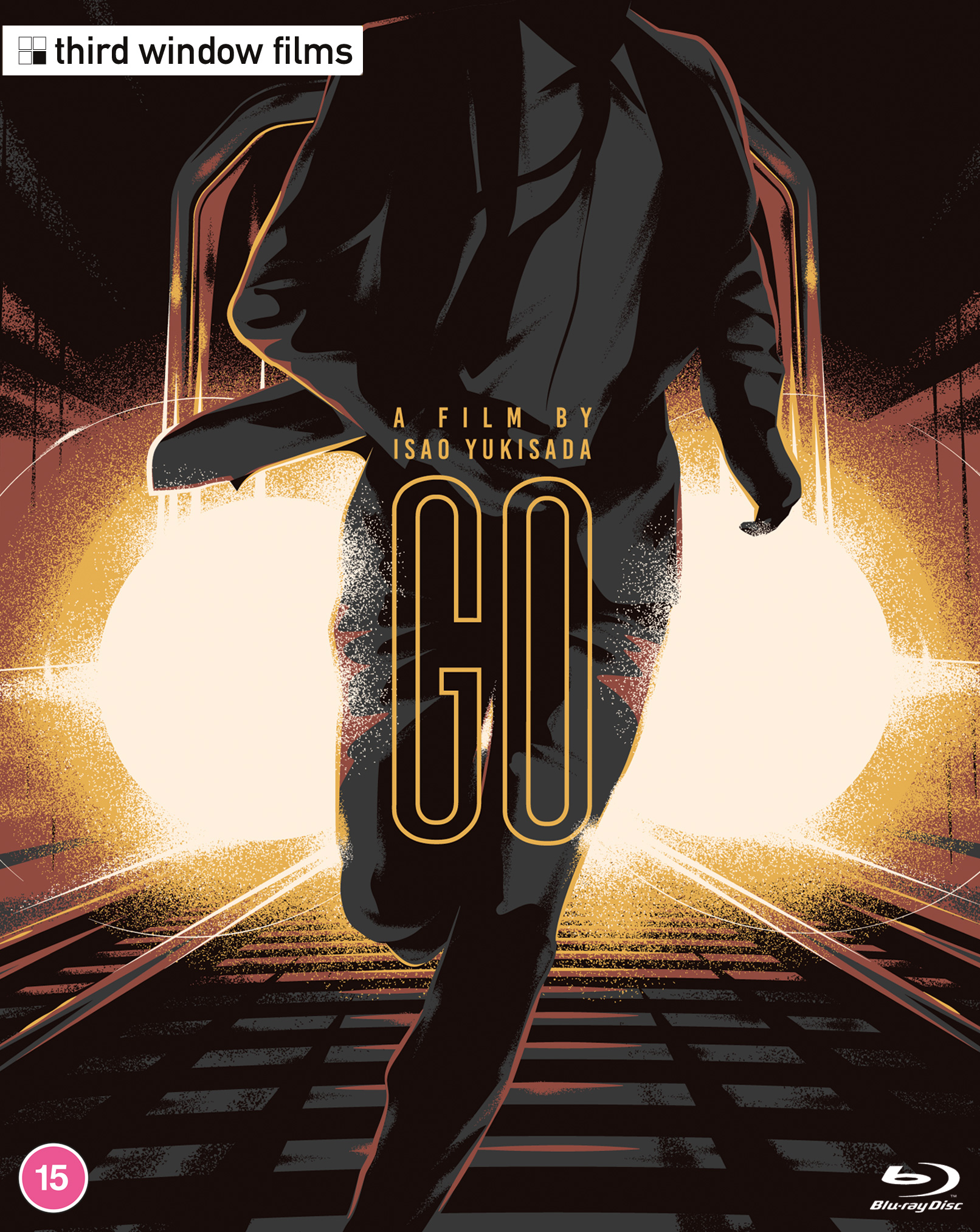
GO is released on blu-ray in the UK on 22nd May courtesy of Third Window Films.

Original trailer (English subtitles)
Karaoke Terror (昭和歌謡大全集, Tetsuo Shinohara, 2003)

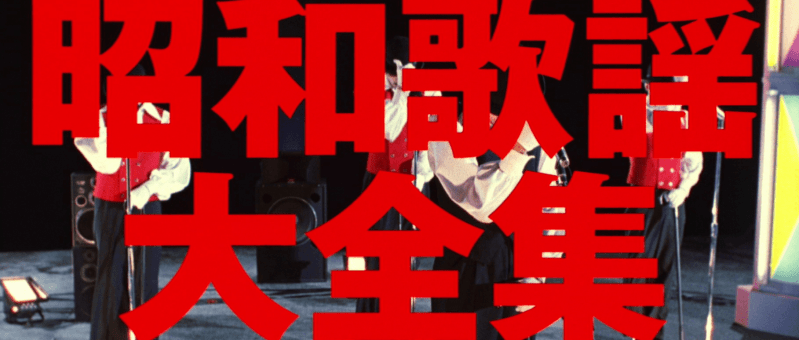
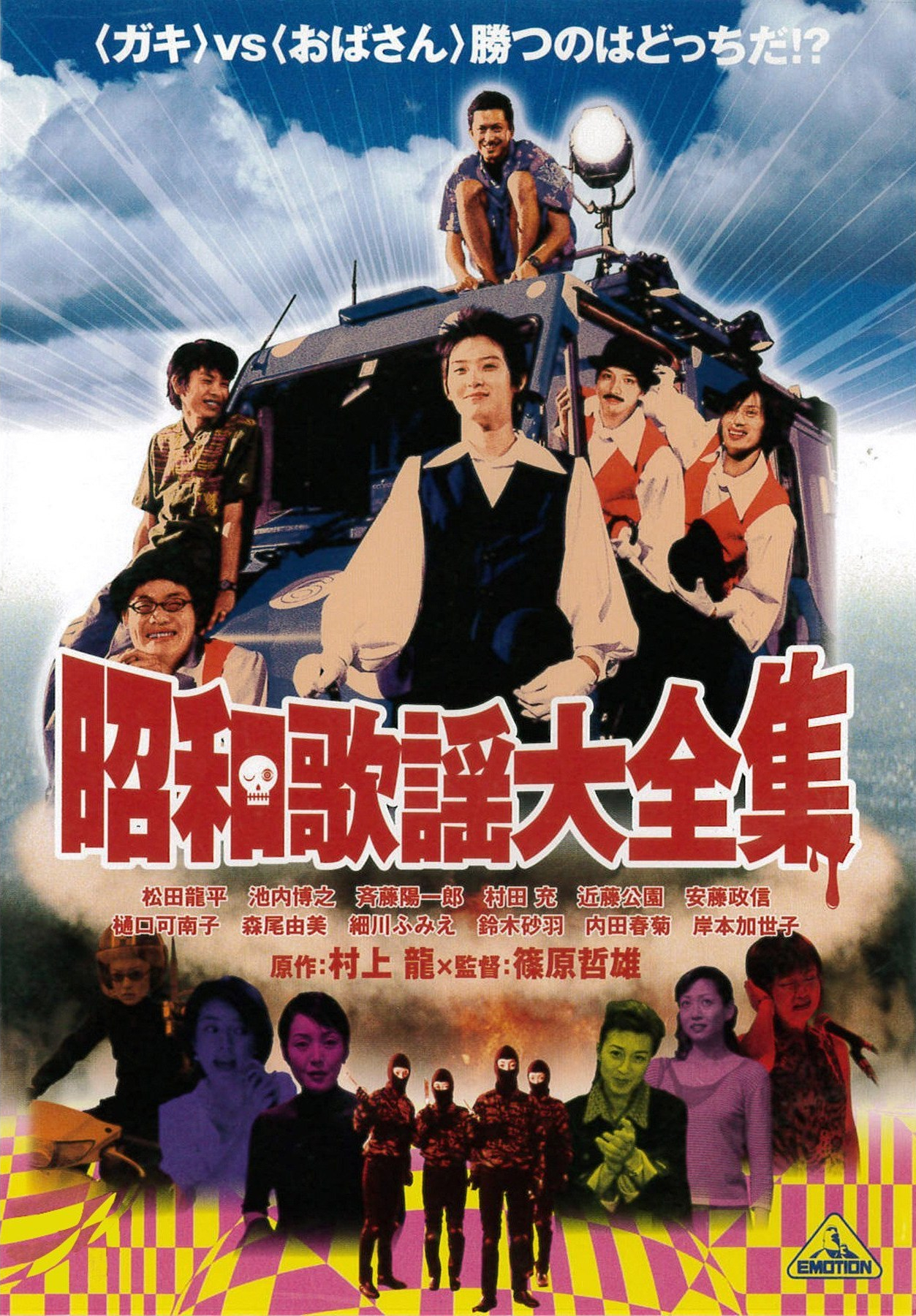
karaoke terror poster.jpgEver since its invention karaoke has provided the means for many a weary soul to ease their burdens, but there may be a case for wondering if escapism is a valid goal in a society which seems to be content in stagnation. The awkwardly titled Karaoke Terror (昭和歌謡大全集, Showa Kayo Daizenshu), adapted from the book Popular Hits of the Showa Era by Audition’s Ryu Murakami, pits two very different groups of karaoke enthusiasts against each other – aimless adolescent males, and jaded middle-aged women. Despite the differences in their ages and experiences, both enjoy singing the wistful bubblegum pop of an earlier generation as if drunk on national nostalgia and longing for the lost innocence of Japan’s hopeful post-war endeavour to rebuild itself better than it had been before.

We open with the slackers and a voice over from the presumed “hero” of the film, Ishihara (Ryuhei Matsuda), who informs us that he can’t really remember how he met most of the guys he hangs out with but that he always knew the one of them, Sugioka (Masanobu Ando), was a bit cracked in the head. In a motif that will be repeated, Sugioka catches sight of a middle-aged woman just on the way back from a shopping trip and decides he must have her but his attempts to pick her up fail spectacularly at which point he whips out his knife and slashes her throat.

Meanwhile, across town, a middle-aged woman, Hemmi (Kayoko Kishimoto), offers to let a co-worker share her umbrella but the co-worker misinterprets this small gesture of courtesy as romantic interest and crudely asks her “how about a fuck?” to which Hemmi is quite rightly outraged. Rather than apologise, the co-worker shrugs and says his “direct” approach works six times out of eight and some women even appreciate it. Once she manages to get away from her odious aggressor, Hemmi ends up stumbling over the body of the woman murdered by Sugioka and realises she knows her. The murdered woman was one of six all named Midori who were brought together for a newspaper article about the lives of middle-aged divorced women and have stayed “friends”. Outraged about this assault not just on their friend and their sex but directly against “women of a certain age” who continue to be the butt of a societal joke, the Midoris decide they want revenge and hatch a plan off Sugioka, but once they have, the slackers hit back by offing a Midori and so it continues with ever-increasing levels of violence.

Which ever way you slice it, you can’t deny the Midoris have a point and Hemmi’s continuing outrage is fully justified. When the boys rock up at a mysterious general goods store out in the country looking for a gun, the proprietor (Yoshio Harada) is only too happy to give it to them when they explain they need it for revenge and that their targets are middle-aged women. The proprietor has a lot to say about ladies of a certain age. In fact he hates them and thinks that bossy, embittered, unproductive women “too old” to fulfil their only reason for existence will be the only ones to survive a nuclear apocalypse that even the cockroaches cannot overcome. The boys appear timid and inexperienced but ironically enough can’t take their eyes off the middle-aged woman from across the way and her sexy dance routines. They feel entitled to female deference and cannot accept a woman’s right to decline. The Midoris are sick of being “humiliated”. They’ve fallen from Japan’s conformist path for female success in getting divorced or attempting to pursue careers. They’ve lost their children and endured constant ridicule as “sad” or “desperate”, made to feel as if their presence in the workplace past a certain age was “inappropriate” and the prices they have paid for their meagre successes were not worth the reward. They strike back not just at these psychotic boys but at a society which has persistently enacted other kinds of violence upon them.

Meanwhile, the boys remain boys, refusing adulthood and responsibility by wasting their time on idle pursuits. Truth be told, karaoke performances involving dance routines and elaborate costumes is not a particularly “cool” hobby by the standards of the time but it appears that none of these men have much else in their lives to invest themselves in. With the economy stagnating and the salaryman dream all but dead, you can’t blame them for their apathy or for the rejection of the values of their parents’ generation, but you can blame them for their persistent refusal to grow up and tendency to allow their insecurities to bubble over into violence.

As it turns out, adolescent males and middle-aged women have more in common than might be thought in their peripheral existences, exiled from the mainstream success which belongs exclusively to middle-aged and older men who’ve been careful to (superficially at least) adhere to all the rules of a conformist society. Neither group of friends is especially friendly, only latterly realising that “real” connections are forged through direct communication. Their mutual apathy is pierced only by violence which, ironically, allows their souls to sing and finally shows them just what all those cheerful songs were really about. Darkly comic and often surreal, Karaoke Terror is a sideways look at two diametrically opposed groups finding unexpected common ground in the catharsis of vengeance only for their internecine warfare to graduate into world ending pettiness.


Original trailer (English subtitles)
The greatest hits of the Showa era:

Koi no Kisetsu – Pinky & Killers

Hoshi no Nagare ni – Akiko Kikuchi

Chanchiki Okesa – Haruo Minami

Shiroi Cho no Samba – Kayoko Moriyama

Linda Linda – The Blue Hearts

Sweet Memories – Seiko Matsuda

Kaze Tachinu – Seiko Matsuda

Minato ga Mieru Oka – Aiko Hirano

Sabita Knife – Yujiro Ishihara

Hone Made Aishite – Jo Takuya

Kimi to Itsumademo – Yuzo Kayama

Mata Au Hi Made – Kiyohiko Ozaki