Love Letter (ラブレター, Shunji Iwai, 1995)

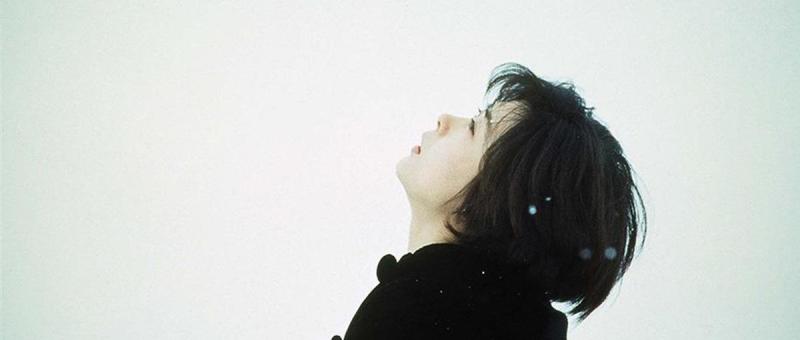
“People are forgotten so easily” a widow laments after an insensitive comment from a family friend, yet there is perhaps a difference between forgetting and letting go as exemplified in the distance between two accidental pen pals in Shunji Iwai’s profoundly moving romantic melodrama, Love Letter (ラブレター). A huge hit and pop culture phenomenon throughout Asia on its 1995 release, Iwai’s first theatrical feature bears many of the hallmarks of his enduring style in its soft focus, ethereal lighting and emphasis on nostalgia as the two women at the film’s centre each restore something to the other through their serendipitous correspondence. 

Iwai opens with a memorial service for Itsuki, the late fiancé of the heroine, Hiroko (Miho Nakayama), who passed away two years previously in a mountain climbing accident. Hiroko has since started a relationship with his friend Akiba (Etsushi Toyokawa) who avoided attending the memorial out of misplaced guilt and gave up mountaineering soon after Itsuki’s death. Akiba is keen to move their relationship forward, but fears that Hiroko is still stuck in the past unable to let go of her love for Itsuki. On a visit to Itsuki’s mother (Mariko Kaga), she finds an old address in his middle school year book for a home that apparently no longer exists and decides to mail him a letter saying nothing more than “How are you? I’m fine” of course expecting no reply. What she didn’t know, however, is that there were two Itsuki Fujiis in her Itsuki’s class, the other being a woman still living at the same address to whom Hiroko has accidentally mailed her correspondence. Confused, the other Itsuki (also played by Miho Nakayama) mails back and eventually finds herself recalling memories of the male Itsuki as an awkward, diffident teen she may have entirely misunderstood. 

Played by the same actress the two women are each in a sense trapped in an eternal present, unable to move forward with their lives. While Hiroko is consumed by grief and fearful of committing to her new relationship with Akiba lest she betray the memory of Itsuki, Itsuki is still struggling to come to terms with the traumatic death of her father 10 years previously who passed away from pneumonia after contracting the common cold leaving her with persistent health anxiety. Meanwhile, she is also struggling to move on from her family home which is in an increasingly perilous state of disrepair. She and her mother (Bunjaku Han) want to move into a modern apartment, while her grandfather (Katsuyuki Shinohara) prefers to stay even though it seems that the house will soon have to be demolished. 

Through their accidental correspondence, both women are forced to deal with recent and not so recent loss, Itsuki in some senses having forgotten the boy who shared her name while Hiroko remains unable to forget. Through his trademark ethereal lighting and frequent use of dissolves, Iwai hints at a sense of perpetual longing for the nostalgic past. The letters may not have been from the late Itsuki in a literal sense but were perhaps a message from him, connecting the two women and eventually freeing each of them as the love letter of the title is finally delivered ironically enough hidden inside a copy of Remembrance of Things Past. 

This sense of grief-stricken inertia is perfectly reflected in the snowy vistas of the lonely northern town of Otaru, thrown into stark contrast with the intense heat of the furnace in Akiba’s glassblowing workshop, or the gentle warmth of the old-fashioned stove in Itsuki’s room as she types replies to Hiroko’s handwritten letters. As Hiroko eventually reflects, they each knew a different Itsuki and have each in a sense both lost him if restoring something one to the other through the exchange of memories that grants Hiroko the understanding she needs to let go and Itsuki the poignant realisation of a youthful missed connection. A bittersweet meditation on love, loss, grief, and memory, Iwai’s epistolary drama has its own sense of magic and mystery in the strange power of this serendipitous connection leading to a tremendous sense of catharsis as a long delayed message finally makes its way home bringing with it a shade of melancholy regret but also possibility in the new hope of forward motion.


Love Letter screens at the BFI on 22/28 December as part of BFI Japan.

Original trailer (no subtitles)
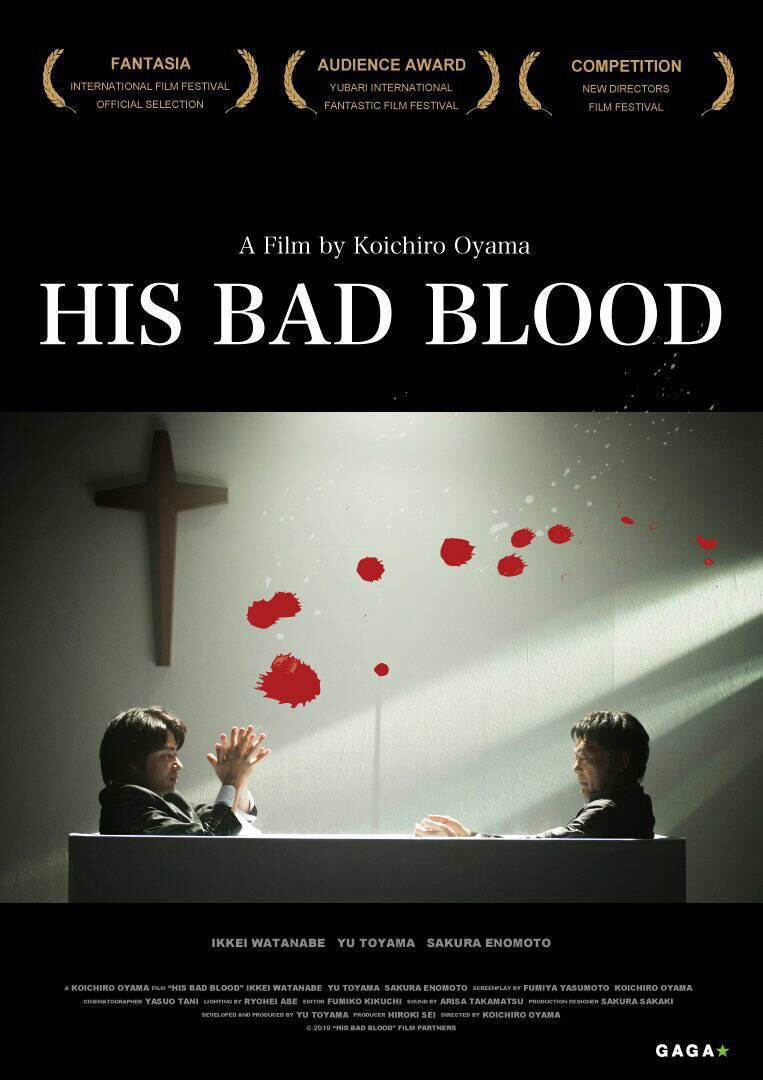
His Bad Blood (いつくしみふかき, Koichiro Oyama, 2019) [Fantasia 2019]

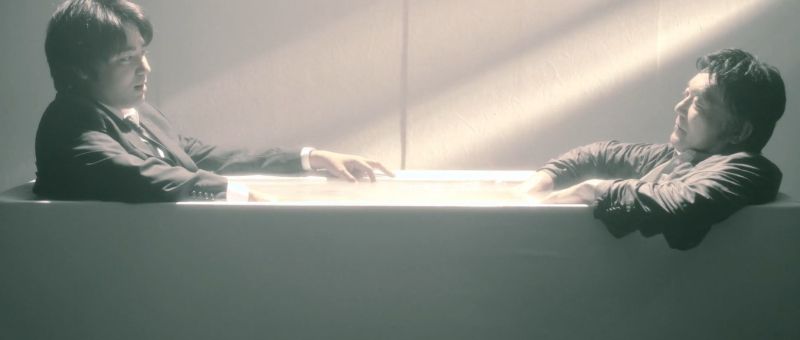
His Bad Blood PosterThe sins of the father are visited on the son. Rural superstitions run deep, but is it really fair to condemn a child for having “bad blood” or will the prejudice itself become a self-fulfilling prophecy? The young man at the centre of Koichiro Oyama’s debut feature His Bad Blood (いつくしみふかき, Itsukushimi Fukaki) struggles to assert himself in a small community where his father’s (minor) crimes are still painfully present, but then perhaps like any other young man he himself needs to lay his father’s ghost to rest in order to find his own path.

Decades ago, no good drifter Hiroshi (Ikkei Watanabe) drifted into a small-town in search of a place to die after his latest business venture collapsed, but there found the kindly Kayoko who gave him a home and a chance to start again. Unfortunately, however, Hiroshi reverted to type and after being sent home to get the baby clothes while his wife was in labour, decided to run off with the family’s savings instead only to be caught in the act by Kayoko’s brother Yoshitaka whom he wounded in a fight that eventually saw him beaten by a mob and hounded out of town.

In the present day, Shinichi (Yu Toyama), the son, is a strange, shy young man who has been unable to hold down a job and is widely disliked by the community and especially by his resentful uncle. When the area is plagued by a spate of burglaries, Yoshitaka jumps to the “obvious” conclusion and attempts to have Shinichi hounded out of town the same way he got rid of his father. Hurt that not even his mother believes he is innocent of the crimes of which he is accused, Shinichi takes refuge with the local preacher (Akio Kaneda) where, unbeknownst to him, his estranged father has also decamped to hide out after a life of petty crime finally catches up to him.

Though set firmly in the present day, Oyama’s debut has a distinctly depression-era dustbowl feel with its rural backwater suddenly stirred up by rumours of the railroad’s eventual arrival while the non-conformist Christian church hands down messages of love and compassion in trying times. Hiroshi, possibly unreformable, even puts on a show of getting religion only to go full snake oil salesman in staging a revival inside the Reverend’s church in which his personal prophet, Tanaka Xavier XVI, makes a “disabled” woman walk and successfully stimulates the record crowd to hand over their cash in hope of salvation while Shinichi and the Reverend look on in confused horror.

To engineer some kind of forward motion, the Reverend pushes the two men together but keeps their connection a secret until finally revealing it in the hope that the pair might finally be able to put some kind of lid on the past. Looking for his father, Shinichi avows he’d like to mess up his life just like his father has done to his, but discovers that Hiroshi’s life is pretty messed up already and likely always has been. His fate was pretty much sealed the day pushed the baby clothes out of the way and opened the family safe instead. Shinichi’s job isn’t to save his dad, no one can, but try and accept him so that he can, a sense, reject his “bad blood” and those who condemn him for it to claim his own identity and walk his own path.

Before he can do all of that, however, he’ll have to escape the secondary curse of the unfair prejudice he faces from his home community as a supposed carrier of “bad blood”, destined for criminality and inherently untrustworthy. Despite all he suffers, Shinichi valiantly refuses to become what everyone says he is while deeply resenting his absent father for saddling him with this unhappy destiny. It is, however, Hiroshi who accidentally gives him forward motion through the unlikely shared dream of making an honest killing in the shortly to boom real estate business when the railroad comes to town. An equally unlikely love affair with a similarly strange young woman (Keiko Koike) provides additional possibilities, but still leaves Shinichi feeling trapped by his past despite her urgings to “just be yourself and live in the future with me”. A melancholy tale of freeing oneself from the judgement of others and learning to step out of a father’s shadow, His Bad Blood is a promising debut from Oyama who addresses a difficult subject with compassionate humanism as his melancholy hero finds the courage to walk away from a toxic past towards a more promising future.


His Bad Blood was screened as part of the 2019 Fantasia International Film Festival.

International trailer (English subtitles)

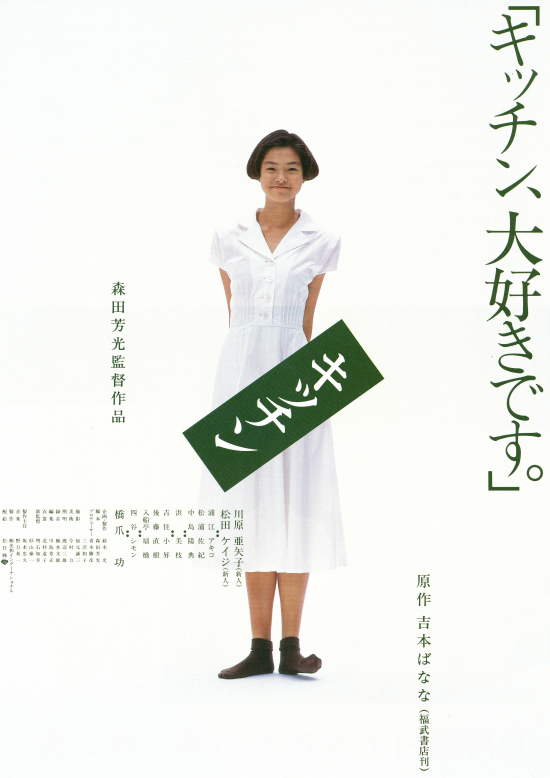
Kitchen (キッチン, Yoshimitsu Morita, 1989)

KitchenBanana Yoshimoto’s debut novel Kitchen was first published in 1988 and instantly became a publishing phenomenon. The first film adaptation came not long after with the identically titled Kitchen (キッチン) directed by Yoshimitsu Morita in 1989. Like most of Yoshimoto’s work, Kitchen deals with people learning to live with grief and cope with the aftermath of tragedy. However, though Morita’s script sticks closely to the novel for the first half of its running time, he later deviates into a conventional romantic youth drama much like his more populist offerings of the time.

The film opens with a strange image of a young woman asleep in front of a fridge in an otherwise entirely darkened kitchen. The young woman is Mikage Sakurai – orphaned at a young age, Mikage (Ayako Kawahara) was raised by her grandmother who has recently also passed away leaving her entirely alone in the world. The one place Mikage has learned to feel at peace is in a kitchen and she has her sights set on a culinary career.

At the funeral, Mikage meets a young man who had apparently become good friends with her grandmother through his part-time job at a florist. After striking up a friendship with Mikage, Yuichi (Keiji Matsuda) invites her to the upscale apartment he shares with his mother, Eriko (Isao Hashizume). Mikage falls in love a little bit with their well appointed and spacious Western style kitchen which is filled to the brim with all the latest gadgets. Soon after, Mikage moves in with Yuichi and Eriko and begins to rebuild her life with a new family beside her.

It’s difficult to avoid spoilers in this respect but for anyone who is familiar with Yoshimoto’s novel, it’s important to note that one particular tragedy which informs the entirety of book has been completely eliminated in this adaptation. The biggest change Morita has made is in his depiction of Eriko who is a trans woman and the father of Yuichi having undergone gender reassignment after the death of Yuichi’s mother.

The film is actually very positive in dealing with Eriko’s character and doesn’t try to elide or make a joke out of her. However, whereas Eriko in the book is described as an extremely glamorous and beautiful woman to the extent that she may seem slightly intimidating at first despite her warm and loving nature, here she is played by a male actor with a man’s haircut and slightly frumpy fashion sense as well as being depicted more like a stereotypically gay male character. Likewise, though Eriko’s friend Chika-chan is still in the movie, we never see anything of Eriko’s life at the gay club she runs or much of her life away from Yuichi and Mikage. That said, the change in question does offer a little more hope and happiness for Eriko than her outcome in the novel.

Morita also gives the film more of the quirky, light hearted feel he adopted in many of his other populist films from the ‘80s. Yoshimoto’s work often successfully straggles a difficult tonal gap in which it’s filled with a kind of existential despair but simultaneously light and cheerful. Though Mikage is numbed with grief throughout the novel which prevents her from assessing what it is she really wants from life, the film is satisfied with depicting her as a fairly ordinary young woman whose problems stem more from trying to step out alone for the first time rather than trying to emerge from a life altering tragedy like the death of your last remaining family member.

However, Morita retains the magical realist qualities of the novel through his use of dream sequences and expressionist imagery. Juxtaposing bright colours of nature with the often extremely dark backgrounds, he creates an impressive sense of differing realities with Mikage’s cheerful on the surface yet depressed inner life recreated through iconography rather than through performance or dialogue. He also retains the use of the moon as symbol for life and happiness, presenting a source bright light in an otherwise dark world which can help to guide the way in times of trouble.

As a film in its own right, Morita’s Kitchen is certainly very much of its time though perhaps not unwatchable, but as an adaptation of Yoshimoto’s novel it ultimately fails on all counts. Veering way off tone in its second half, Kitchen takes on much more of a conventionally romantic narrative eschewing Yoshimoto’s major messages about the need to come to terms with a traumatic past in order to move on and the importance of understanding your true feelings while there’s still time to act on them. Yoshimoto is more concerned with showing that joy and sorrow are two sides of the same coin and you can’t have one without the other but Morita’s story creates a much smoother, more natural path for a romance between Mikage and Yuichi which ultimately robs it of much of its power. That said even if Kitchen disappoints as a literary adaptation it isn’t entirely without interest and does at least offer several examples of Morita’s idiosyncratic gift for composition.


Opening scenes of the film (dialogue free)

Kitchen was also adapted as film in Hong Kong directed by Ho Yim in 1997, starring Yasuko Tomita and Jordon Chan. Banana Yoshimoto’s source novel was first published in English in 1993 (translated by Megan Backus) and is still in print from Faber & Faber in the UK and Grove Press in the US.