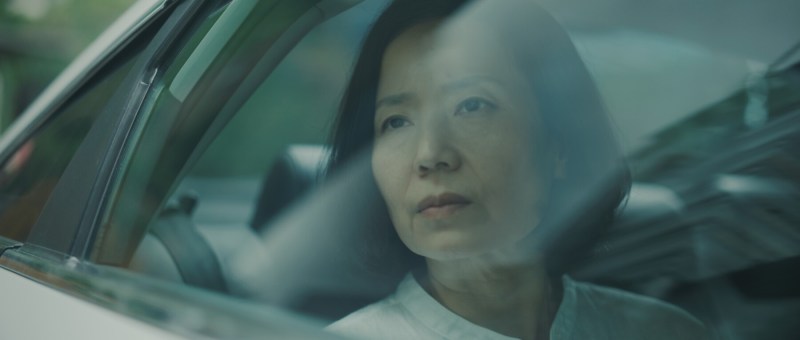
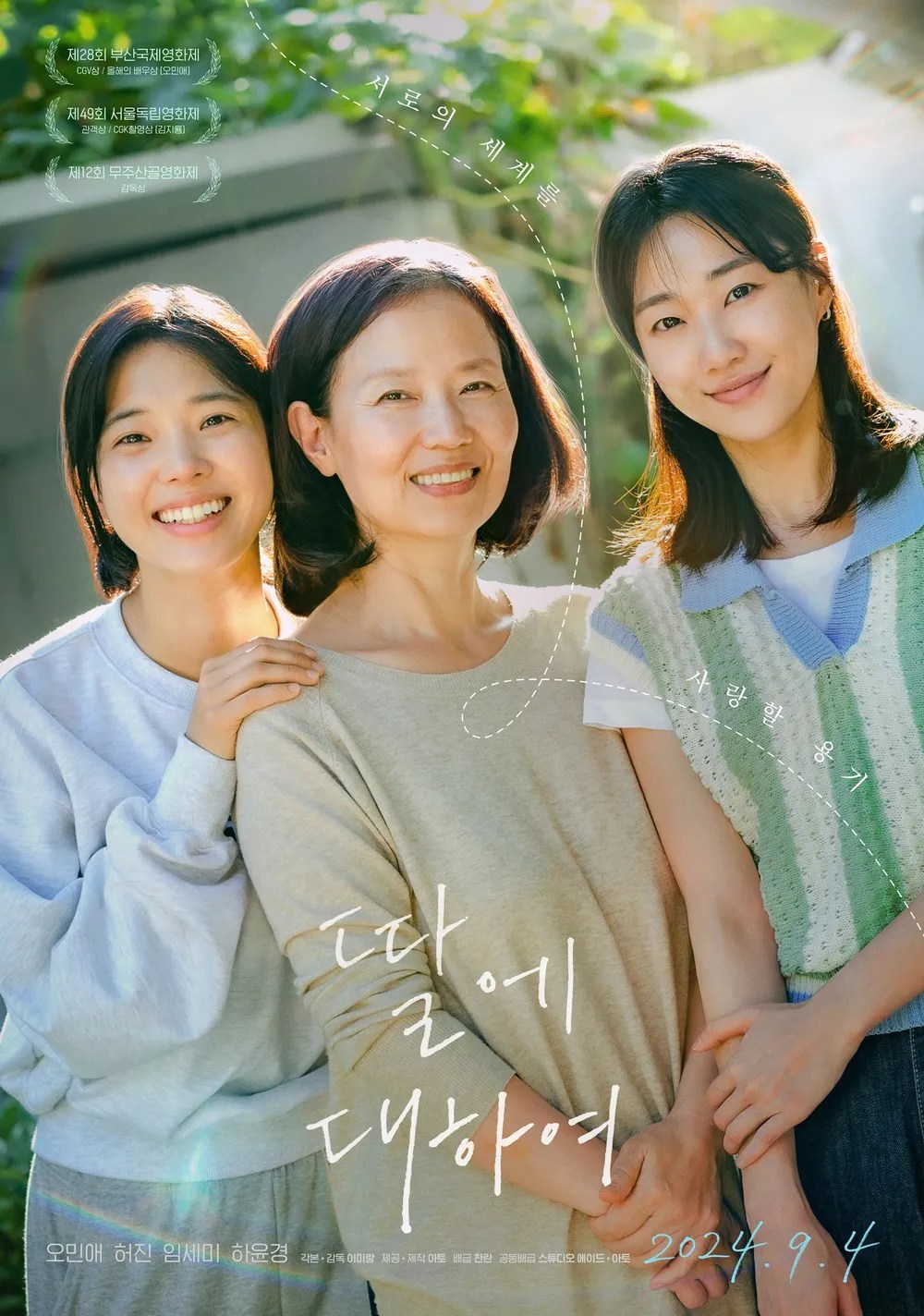
Concerning My Daughter (딸에 대하여, Lee Mi-rang, 2023)

The unnamed mother (Oh Min-ae) at the centre of Lee Mi-rang’s Concerning My Daughter (딸에 대하여) has only one wish, that her daughter will find a nice man to marry and have a few grandchildren. But Green (Im Se-mi) is gay and has been in a relationship with her partner Rain (Ha Yoon-kyung) for the last seven years though her mother doesn’t seem to accept that what they have together is “real” believing it to be some kind of delusion that’s holding Green back from her happy maternal future. 

When she suggests Green move back in with her after her attempt to secure a loan to help her out with the rising cost of housing is denied, it doesn’t seem to have occurred to her that Rain would be coming too while it perhaps seemed so natural to Green that it didn’t occur to spell it out. Green can at times be obtuse and insensitive, unfair both to her mother and to Rain who bears the unpleasant atmosphere with grace and tries her best to get along with her new mother-in-law who is openly hostile towards her and makes no secret of the fact she would prefer her to leave. Of course, some of these issues may be the same were it a heterosexual relationship as the mother-in-law struggles to accept the presence of the new spouse in the family home and the changing dynamics that involves, but Green’s mother’s resentment is so acute precisely because her daughter’s partner is a woman. She cannot understand the nature of their relationship because it will produce no children and to her therefore seems pointless. 

While her attitude is in part determined by prejudice and a sense of embarrassment that her daughter is different, it’s the question of children which seems to be foremost in her mind. Another woman of a similar age at her job at a care home remarks on her maternal success having raised her daughter to become a professor, but she also says that only by leaving children and grandchildren behind you can die with honour. Green’s mother is the primary carer for an elderly lady, Mrs Lee (Heo Jin), who had no children of her own though sponsored several orphans none of whom appear to have remained in touch with her. Now ironically orphaned herself in her old age, Green’s mother is the only one who cares for her while the manager berates her for using too many resources and eventually degrades Mrs Lee’s access to care Green’s mother suspects precisely because she has no family and therefore no one to advocate for her. 

It’s this fate that she fears for her daughter, that without biological children she will become a kind of non-person whose existence is rendered meaningless. Of course, it’s also a fear that she has for herself and her tenderness towards Mrs Lee is also a salve for her own loneliness and increasing awareness of mortality. Green is her only child, and she may also fear that she will not want to look after her as she might traditionally be expected to because her life is so much more modern as exemplified by the bread and pasta the girls bring into her otherwise fairly traditional Korean-style home. On some level she is probably aware that if she continues to pressure Green to accept a traditional marriage they may end up becoming estranged and she will be in the same position as Mrs Lee, wilfully misused by a cost-cutting care industry because they know there’s no one to kick up a fuss about her standard of care.

Even so, it doesn’t seem to occur to her that Rain could care for her daughter into their old age. Resentfully asking her why they “have to” to live together, Rain patiently explains that in a society which rejects their existence, in which they are unable to marry or adopt children, togetherness is all that they have. Green is currently engaged in a battle with her institution which has fired her colleague on spurious grounds but really because of her sexuality with claims that some students are “uncomfortable” with her classes. The violence with which the women are attacked is emblematic of that they endure from their society while even colleagues interviewing her invalidate Green’s concerns because she too is “one of them,” in their prejudicial way of speaking. 

Green’s mother had also, rather oddly, said that her daughter wasn’t like that when Rain reluctantly explained her difficulties at work and again resents that she’s making waves rather than keeping her head down and getting on with her career. Her decision to jump in a car with boxes of biscuits intending to smooth things over with Green’s boss by apologising on her behalf bares out her old-fashioned attitudes, though she too is shocked by the violence directed at Green and her colleague. When her lodgers ask about Rain, she tells them she’s her daughter’s friend, while she avoids the question when her colleagues ask, still embarrassed that her daughter has not followed the conventional path as if it reflected badly on her parenting. 

Yet through her experiences with Mrs Lee and Rain’s constant, caring patience she perhaps comes to understand that her daughter won’t be alone when she’s old and that she too does not need to be so lonely now. There’s something a little a sad in the various ways Green’s mother is told that her attachment to Mrs Lee is somehow inappropriate as if taking an interest in the lives of those not related to us by blood were taboo even if it’s also sadly true that it’s also in Mrs Lee’s best interests to ask those questions to protect her from those who might not have her best interests at heart. What the film seems to say in the end is that we should all take better care of each other, something which Green’s mother too may come to realise in coming to a gradual, belated acceptance of her daughter-in-law if in part through recognising that they aren’t alone and that it’s a blessing that her daughter is loved and will be cared for until the end of her days.


Concerning My Daughter screened as part of this year’s London Korean Film Festival.

Trailer (English subtitles)
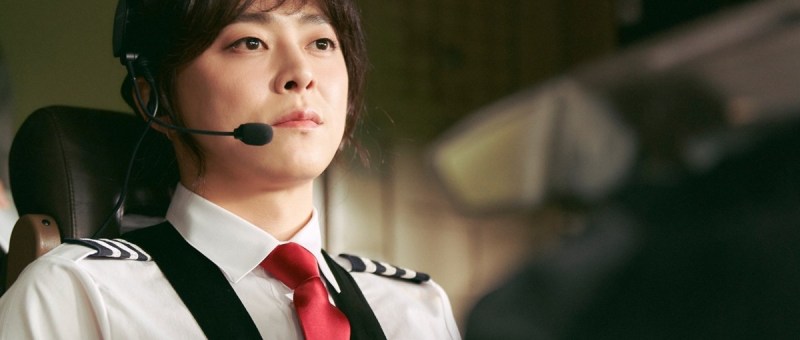
Pilot (파일럿, Kim Han-gyul, 2024)

“You can’t say things like that anymore,” the men of Pilot (파일럿) are fond of chuckling but still they think them and on a baseline level are unable to understand what’s wrong with what they see as merely offering a compliment. Adapted from the 2012 Swedish film Cockpit, Kim Han-gyul’s non-romcom takes its cues from films like Tootsie and Mrs Doubtfire to explore the inherent sexism and misogyny at the heart of contemporary Korean society if perhaps problematically doing so through the means of a male redemption story.

In any case, Han Jung-woo (Jo Jung-suk) is mindless more than anything else later claiming that sometimes it’s better “to say yes and go with the flow” than risk creating unpleasantness. Seemingly excelling at everything, he graduated top his class at the Korean Air Force Academy and was fought over by several large airlines becoming a minor celebrity and apparent pilot influencer. But behind the scenes, he’s somewhat false and self-involved as evidenced by his attempt to show off a video of himself tearfully paying tribute to his mother for raising him and his sister alone but refusing to answer a telephone call from her at the same time. His celebrity fame comes back to bite him when a video of team dinner in which he rejected his boss’ comment about the new intake of stewardesses not being pretty enough by referring to them as a beautiful bouquet is leaked online. The clip goes viral with his boss getting the brunt of the abuse and while he is not visible many are able to identify him by his voice. The airline soon goes bust and unsurprisingly no one else is willing to hire him. 

The issue is that neither his boss nor Jung-woo understand what was wrong with what they said. They just parrot back that what they said was nice so they can’t see the problem with it but fail to understand that their comments are demeaning because they belittle women’s talents and reduce them to objects for male appreciation. Hyun-seok (Shin Seung-ho), who attended the Air Force Academy with Jung-woo, gets him an interview at his airline but it’s run by a female CEO (Seo Jae-hee) who happens to be the sister of his old boss and is apparently on a mission to make her company more egalitarian by having at least 50% female pilots so she’s only hiring women. Nevertheless, she also asks sexist questions at the interview looking closely at a female candidate’s age and asking her if she is married or in a relationship, whether she intends to have children and when. The female candidate fires back a pre-prepared speech that she’s uninterested in marriage and is not planning to have her eggs frozen or anything like that so she can devote herself fully to the job. 

Hyun-seok expresses sympathy, echoing Jung-woo’s earlier comment that all that matters in flying is skill and people should be hired for their merits not their gender. But it’s impossible not to read into his words that he thinks women are inherently not as capable as men and wouldn’t be getting the job at all if it weren’t for this affirmative action, which is to say it’s all about gender after all and only men are suited to the job. He says as much later on when the plane he’s piloting runs into trouble while he’s unwittingly co-piloted by Jung-woo in his female persona Jung-mi, having posed as a woman in order to pass the interview. “Men should step up during times of emergency, not women,” he screams while losing the plot as the plane plunges and refusing to hand over the controls to his female co-pilot until Jung-woo takes them by force. 

Despite being slightly younger and believing himself to be a modern man, Hyun-seok is still incredibly sexist and openly flirts with Jung-mi to the point of sexual harassment even while she bluntly tells him that she isn’t interested. Jung-woo had been flattered and overjoyed the first time someone called him “miss” on the street and alluded to his unconventional, broad-shouldered beauty but quickly discovers that that gets old and becomes aware of how “annoying” or even scary some men can be in their entitled treatment of women, and by extension the various ways in which his own treatment of women may not have been appropriate. Becoming Jung-mi allows him to become himself, rediscovering his love of flying no longer so hung up on the external validation of internet fame and more interested in and considerate of those around him in the absence of the kind of toxic masculinity that infects men like Hyun-seok.

Though his wife divorces him when he loses his job if more because of his persistent emotional neglect than disappointment or financial worry, he becomes more aware of and sympathetic towards his son who, just as he had says yes and goes with the flow by saying a toy aeroplane was fine despite having been engrossed in the Barbie aisle seconds before but presumably afraid of disappointing his father if he told him he’d rather have a doll instead. Nevertheless, the film strangely refuses to engage with ideas of gender and sexuality and becoming Jung-mi does not really unlock Jung-woo’s femininity even if it evidently makes him a better and more considerate person, while his sometime love interest Seul-gi (Lee Ju-myoung) is more or less queer coded and her attempts to stand up for herself as a woman and an equal are not always well respected by the film. Even so the betrayal of CEO Noh who is revealed to be a ruthless businesswomen perfectly willing to exploit other women and throw them under the bus if necessary highlights the ways in which entrenched patriarchy pits women against each other. 

Thus the underlying misogyny of the present society is fully exposed, if ironically by a man experiencing what it is really like to live as a woman which is to be ignored and disrespected, judged by appealingness to men and obedient temperament while skills go undervalued or worse are viewed as a threat to often fragile masculinity. Though the film largely avoids making Jung-woo’s cross-dressing a joke in itself, it does find humour in the absurdity of the demands of performative femininity in a rigid and conformist society in which a woman is rarely permitted to sit in the cockpit of her own life.


International trailer (Simplified Chinese & English subtitles)

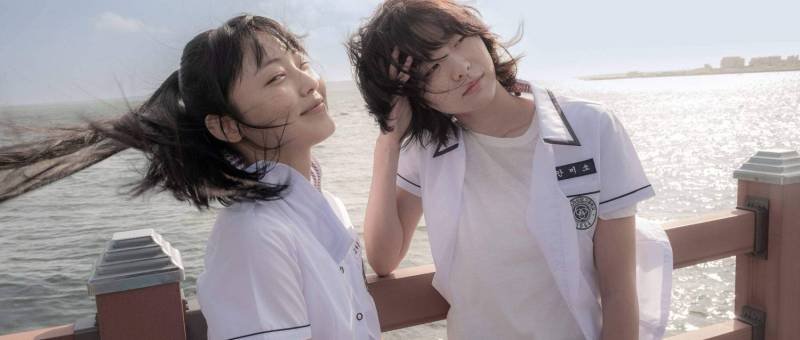
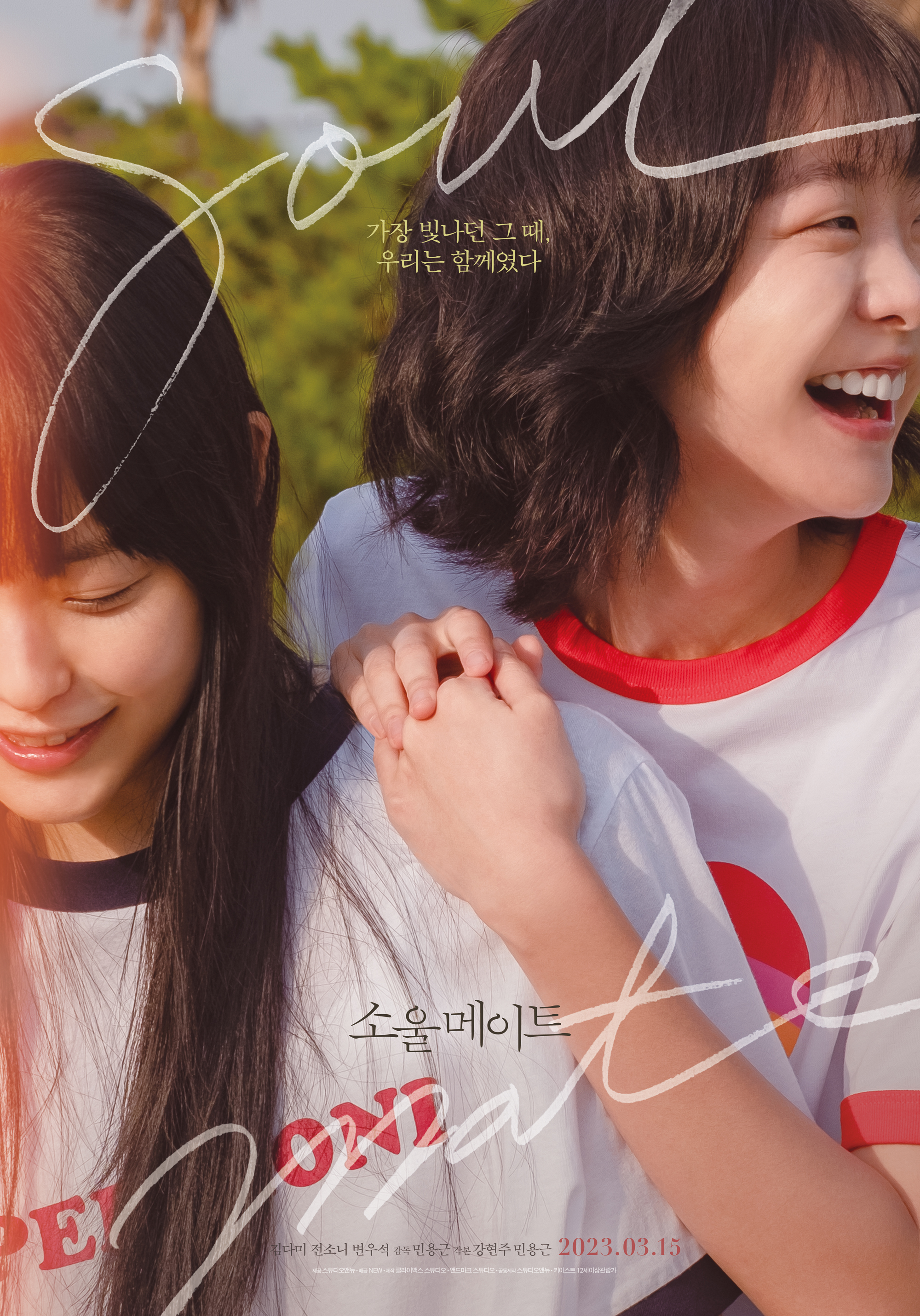
Soulmate (소울메이트, Min Yong-keun, 2023)

“Why should you step out for him?” one friend asks another, seemingly cutting to the quick of the fracture point in their relationship though ultimately unwilling to carry the conversation to its natural conclusion. A remake of Derek Tsang’s Soul Mate, Min Yong-keun’s frustrated love story is warmer and shorn of the icy angst which defined the original if also less certain in its implications and in the end profoundly melancholy in the missed opportunities and awkwardness of an unspoken affection. 

In the present day, a near 40-year-old Mi-so (Kim Da-mi) is called to a gallery to witness a giant and intricately drawn photorealistic portrait of herself attributed only to “Ha-eun.” The gallery owner has reason to believe the two women are friends and asks Mi-so to help her contact the reclusive artist, though she says that she knew only briefly in childhood and hasn’t been in contact with her for many years. This surprises the gallery owner as she’s uncovered a lengthy blog that outlines the entirety of their friendship in sometimes painful detail. 

The portrait staring back at her with her own gaze which is also the gaze of Ha-eun (Jeon So-nee) the artist confronts her with the painful realities of her past and the continuing absence of Ha-eun from her life. All we can know for the moment is that at some point they were separated and that Ha-eun has seemingly disappeared, though the Mi-so we see now seems so different from the one we encounter in childhood who is as Ha-eun describes her “free and also very delicate”. 

Inseparable for much of their youth, the relationship between the two women begins to fracture in adolescence as their paths begin to diverge. Ha-eun meets a boy, Jin-woo (Byeon Woo-seok), which necessarily disturbs their friendship by disrupting its dynamic. Unlike Tsang’s original in which it becomes clear that perhaps neither woman was in the end very interested in the boy who was himself a kind of proxy for the mutual attraction they could not articulate, Min presents him as a more conventional romantic rival albeit one who represents the sense of conventionality that the more conservative Ha-eun continues to cling to in contrast to the free spiritedness represented by Mi-so and her love of Janis Joplin. 

Ha-eun is confronted by the darker sides of Mi-so’s unconventionality during a trip in which she witnesses Mi-so get a bottle of wine out of a collection of drunk businessmen by offering to mix them drinks. An argument about money and power dynamics soon returns them to the fault line in their relationship, Jin-woo and their complex feelings for each other. Wilful misunderstandings lead to irresolvable resentments, each believing they are somehow in the way while equally hurt by the dissolution of their friendship and too proud to say so.

Min’s drama decreases the homoerotic undertones of Tsang’s original and opts instead for the defence of a deeply felt platonic friendship that may have developed into an unconventional family unit if given the opportunity. An exchange of earrings on two separate occasions seems much more convincing as an act of marriage than the more literal union between Ha-eun and Jin-woo. Yet maybe that’s the message the portrait was trying to deliver, a sign of an unspoken love that reunites Mi-so with the childhood self who knew it was possible to draw one’s feelings while seeing herself as Ha-eun saw her, Ha-eun’s own eyes reflected back at her. The two women in a sense switch places, becoming one while split in two and eternally connected if physically separated. 

The irony is that it’s the fear of losing it that erodes their relationship, and pride more than shame that divides them even if it’s ultimately the unwillingness to confront their feelings and the inability to articulate them that keeps them apart. Nevertheless, they eventually come to an acceptance of themselves as sun and moon, two halves one whole continually incomplete happiest only in each other’s company. Then again, there are some very unreliable narrators in play and perhaps we can’t be sure that everything we’ve been told is true yet even if not literally so still speaks of a deeper emotional truth and the deepening wound of lost love comforted only by memory and the act of recapturing it. 


Soulmate screened as part of this year’s London Korean Film Festival.

Trailer (English & Korean subtitles)

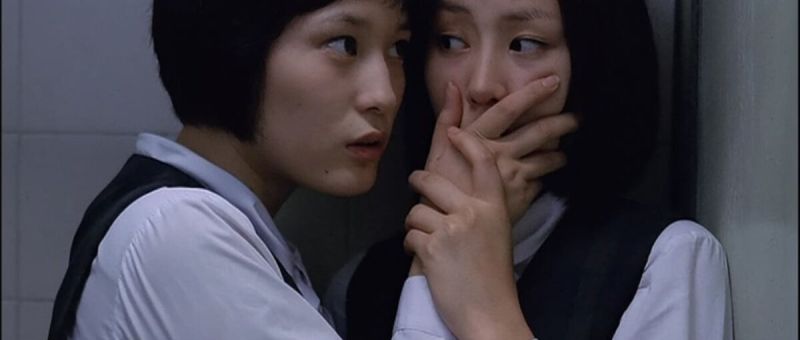
Memento Mori (여고괴담 두번째 이야기, Kim Tae-yong & Min Kyu-dong, 1999)

Internalised shame leads to tragic, unforeseen consequences in landmark South Korean horror Memento Mori (여고괴담 두번째 이야기, Yeogogoedam Dubeonchae Iyagi). The second in a thematic series of high school ghost stories, the film was radical for its time in its presentation of same sex romance in demonising not the love but the world that would not accept it while otherwise painting a fairly bleak picture of the educational landscape in which teachers are only ever symbols of a corrupt authority intent on enforcing oppressive patriarchal social codes.

The film’s heroine is in many ways an audience member, or at least a fairly passive observer of the ongoing drama who only later inserts herself into the narrative. Min-ah (Kim Min-sun) discovers a mysterious “diary” near the sports ground and is quickly hooked on its cryptic contents even before realising that it details a lesbian relationship between two of her classmates who were at one point “close” but have since “drifted apart”. The author, Hyo-shin (Park Ye-jin), is already considered “weird” by her classmates and does seem to have an otherworldly quality, most particularly in her tendency to speak in an uncanny manner. She is also accused of being a “lesbian” by an obnoxious fellow student laying bare the way these teens already enforce a social prejudice which oppresses them all. 

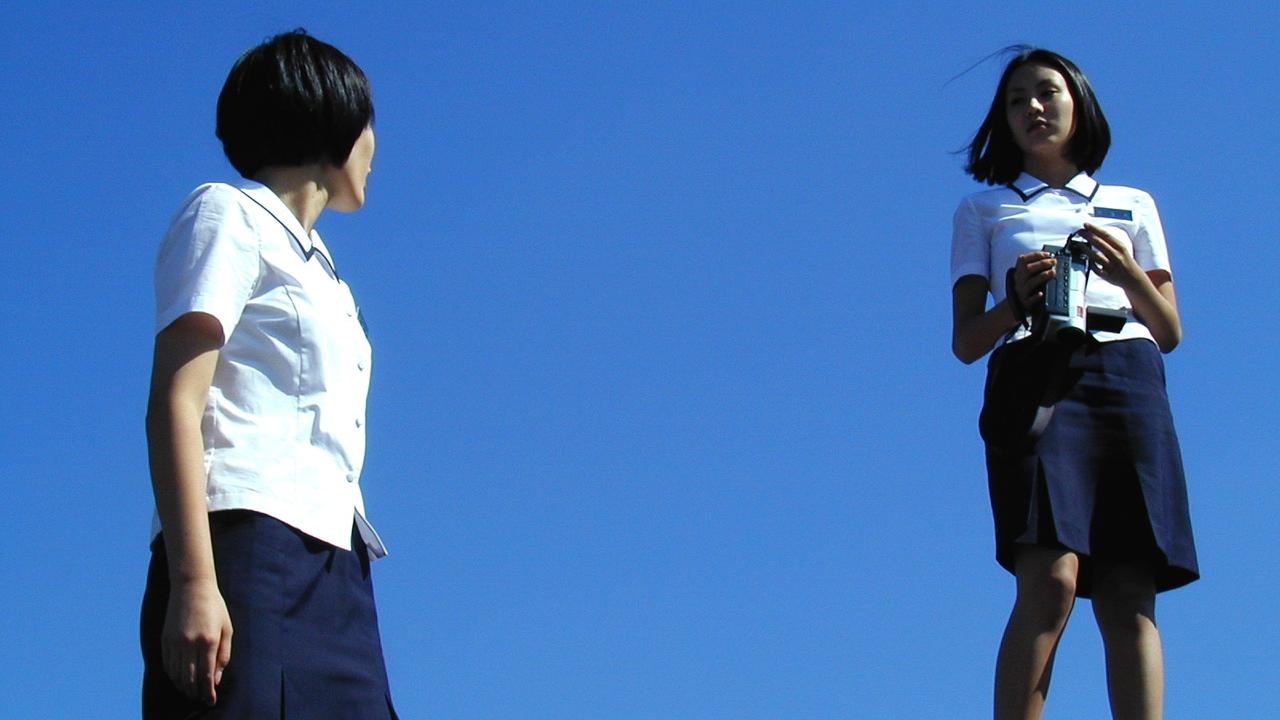
Min-ah’s friend Yeon-an (Kim Jae-in) has been fasting for the last few weeks to try and get her weight down before the school’s physical health check up, while Ji-won (Gong Hyo-jin) is similarly concerned with her chest measurement. This is an all girls school, and there is a clear preoccupation with the ability to conform to notions of conventional femininity while all of the teachers that we see aside from the school nurse are male and enforce discipline with quite shocking levels of violence. Yeon-an and Ji-won land up in trouble for playing around with a video camera they’d brought in to record choir practice when it’s discovered by a teacher who reacts as if he thinks the girls are on some kind of whistleblowing mission. He clearly feels that his authority has been questioned, which also implies that he knows his behaviour is “wrong”, and punishes the girls for their “rebellion” against him. 

After Hyo-shin dies in an apparent suicide, it is rumoured that she may have been pregnant which would certainly explain her desire to get out of the health check. In a flashback, she suggests that she may have drifted into an inappropriate sexual relationship with a dejected teacher, Mr. Goh (Baek Jong-hak), who claims that he doesn’t get on with his “materialistic” colleagues while fed up with the vacuous teenage girls he’s supposed to be teaching. Yet Mr. Goh appears to have suffered little after Hyo-shin’s death despite being the apparent father of her unborn child, leaving only Hyo-shin’s vengeful spirit to enact some kind of justice. 

It’s Mr. Goh who did in some way disrupt the relationship between Hyo-shin and Shi-eun (Lee Young-jin) who seems to feel on some level betrayed while deepening her inner conflict as regards her sexuality. Unlike the other girls, Shi-eun presents in a slightly more masculine fashion, not least because of her athleticism, and is filled with an internalised shame about her relationship with Hyo-shin which she otherwise does not share. In the dreamlike scene which opens the film, Hyo-shin and Shi-eun are plunged into water tied at the ankle by the red string of fate which in popular mythology signifies a true romantic connection. But as they fall together, Shi-eun begins to panic and unties herself. She violently pushes Hyo-shin away who then continues to sink into the murky depths below. This act of physical rejection is repeated several times, most notably when Hyo-shin kisses Shi-eun in front of their classmates shortly after she has been struck in the face by their teacher. Shi-eun pushes her away, and thereafter ignores her before directly stating that she is “ashamed” and does not care what Hyo-shin decides to do with her life. 

It’s this rejection that the film posits as the cause of Hyo-shin’s suicide, though the romance itself is constantly overshadowed by death. Obsessed with the diary, Min-ah eats a “magic” sweet stuck inside which is described as some kind of love poison for which Hyo-shin has an antidote, only in the climax of the film it seems to be the reverse and a kind of prelude to a double suicide. In the dreamworld created by Hyo-shin’s spirit, the schoolgirls assemble for something that looks a lot like a wedding though ostensibly a birthday party in which the couple is accepted by the world around them only in reality it can never happen in part because Shi-eun herself does not permit it to. 

Directors Kim and Min hint at the feverish atmosphere with blown out whites and strange angles even before entering the menacing dreamscape of Hyo-shin’s revenge, lending a note of unsteadiness to Min-ah’s obsessive investigation of the diary that perhaps reveals something of herself even as it draws her towards a dark spiritual destiny. In any case, what it leaves behind is a deep sense of melancholy for the tragedy of the teenage lovers who in the end maybe the ones haunted by the world around them.


Memento Mori screened as part of this year’s Queer East .

Trailer (English subtitles)

Chorokbam (초록밤, Yoon Seo-jin, 2021) [Fantasia 2022]

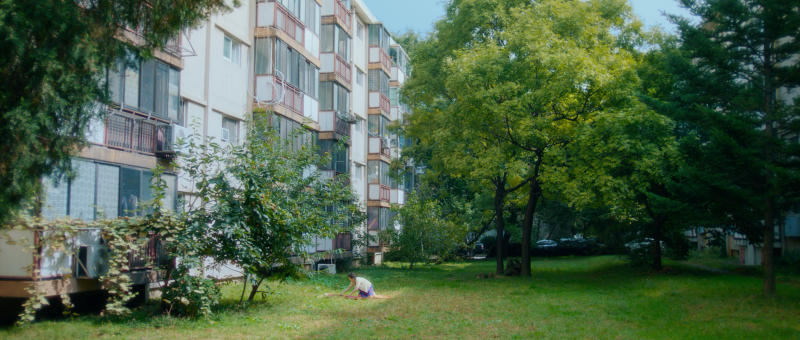
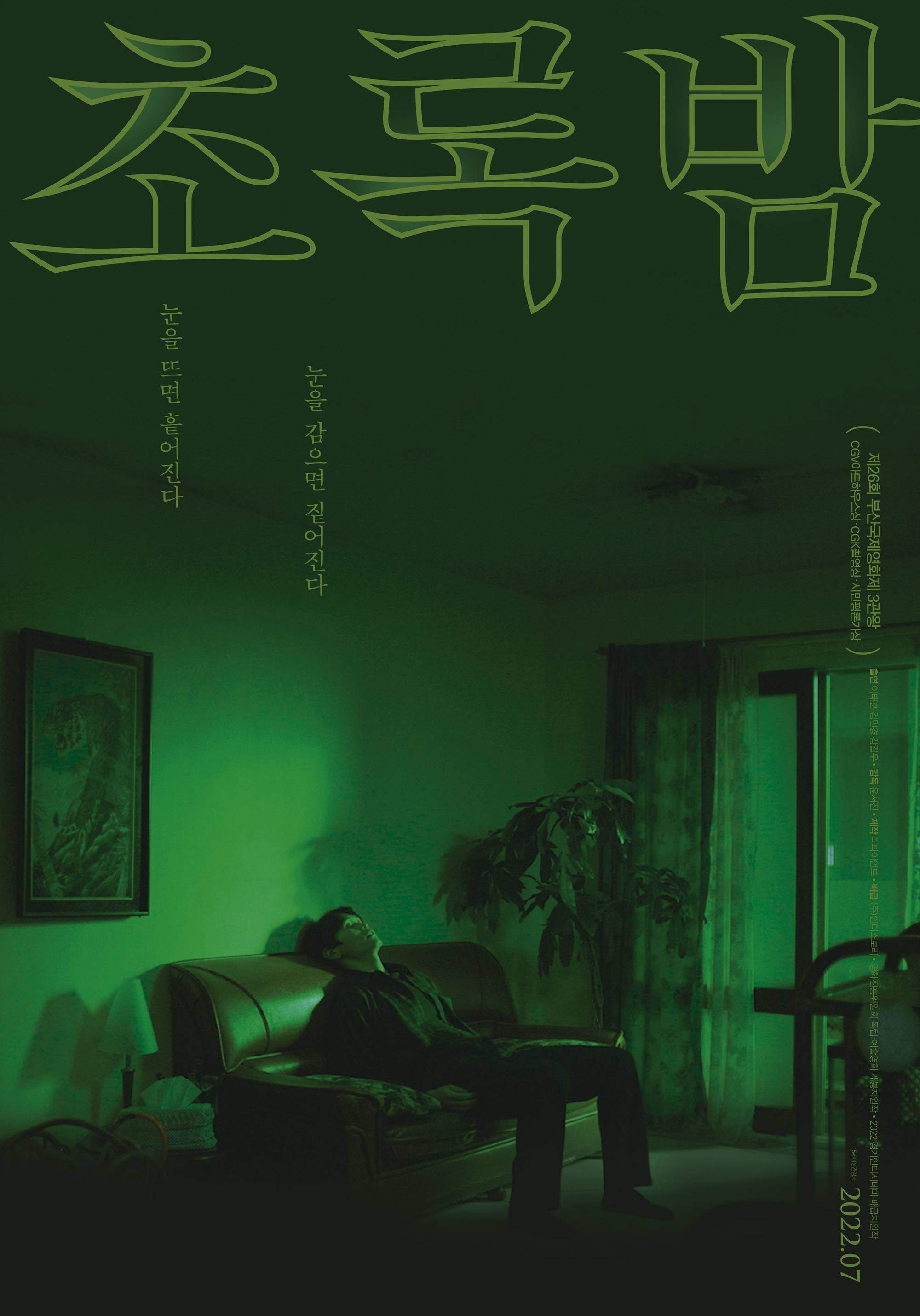
A small family contends with the persistent unfairness of contemporary Korean society in Yoon Seo-jin’s slow burn indie drama, Chorokbam (초록밤). Translated literally, the title means “green night”, the family often bathed in a neon green that seems to reflect their sense of despair and anguish unable to envisage much of a future for themselves in a world ruled by greed and envy which leaves them little option other than to become insensitive to the joy and pain of others. 

As the film opens, the nightwatchman patriarch is busy giving out parking tickets when he suddenly spots a cat hanging from from a children’s climbing frame. Shocked and feeling pity for the small creature, he cuts it down and buries it by the green light of the moon but finds little sympathy when relating his traumatic discovery to his wife. The nightwatchman’s wife is preoccupied with more practical affairs, irritated by her husband’s annoying habits such as leaving the bathroom door open and not washing his hands after finishing his business, while their grown-up son Won-hyung wants to get married but can’t afford a place to live on his salary as a care worker. When it comes to that, they’re soon to be turfed out themselves because their landlord wants to tear the building down. 

Matters come to a head when the grandfather passes away, the nightwatchman’s sisters getting into an actual physical altercation at the wake while loudly complaining about who did or didn’t pay for the funeral. Totting up the condolence money they accuse supposedly cheapskate guests of freeloading, implying they only turned up for a free meal that they have in a sense stolen. Meanwhile, the sisters also want to ensure that their father’s house is sold quickly so they can divvy up the inheritance. What they realise, however, is that there were things about their father’s life they may not have known which raise questions about moral responsibility when it comes to dealing with the affairs of someone who has died. 

The nightwatchman comes to identify with the strangled cat, though the spectre of hanging seems to loom over the rest of the picture with even the nightwatchman’s wife eventually discovering the body of someone whose death she may unwittingly have contributed to. She complains about her husband’s fecklessness, that he, who barely talks at all, makes her deal with anything unpleasant including his hotheaded sisters. She tells him that she regrets marrying into his “horrible” family and is thoroughly sick of dealing with them only to be pursued by a wounded dog with whom she perhaps also identifies. The nightwatchman’s wife is often excluded from the frame, a disembodied voice from behind a wall as she is as she feeds her husband breakfast and again when he asks her to deal with an emotionally difficult situation in a cafe. The nightwatchman simply smokes by a widow as if physically removing himself from the scene. 

Won-hyung meanwhile becomes increasingly resentful with his friends’ wedding coming up, unable to escape the feeling of belittlement in being unable to marry or move forward with his life with little prospect that anything will change. Yoon frames the family’s dilemmas with a deadpan realism, bathing the everyday grimness of their lives in an putrescent green that suggests there may be no escape from this maddening society where all relationships are built on transaction. The family are doing their best but are also estranged from each other, the nightwatchman barely speaking while his wife is left to deal with the uncertainty of their lives alone. She even laments they’ll likely not see the sisters again until the next person dies because their familial connection is essentially hollow and valueless in a society ruled by money. 

The nightwatchman comes to think of himself as a strangled cat, finding himself facing a noose during a poetic dream sequence that encourages him to think of suicide as the only possible escape from his impossible situation. Bleak in the extreme, Kim’s slow burn drama paints an unflattering portrait of the contemporary society as one in which all hope has long been lost leaving only dread and despair in its wake. 


Chorokbam screened as part of this year’s Fantasia International Film Festival.

Original trailer (English subtitles)

Way Back Home (비밀의 정원, Park Sun-joo, 2019)

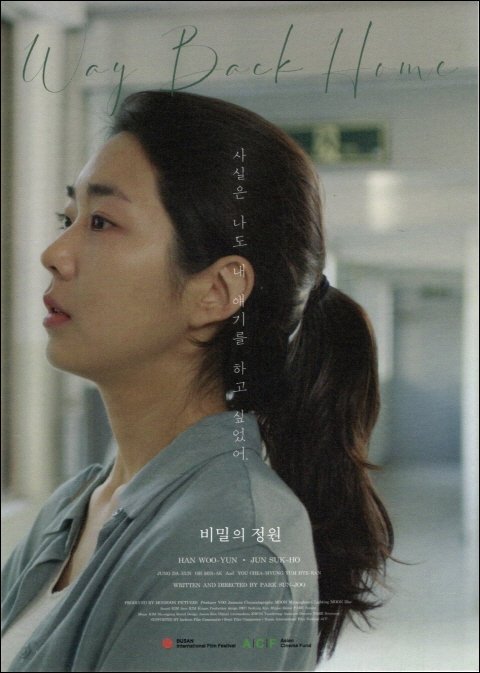
Can you ever really “move on” from trauma, or do you simply have to learn to live with it? The heroine of Park Sun-joo’s Way Back Home (비밀의 정원, Bimil-eui Jeong-won) thought she’d made peace with the past by trying her best to forget it, but an unwelcome intrusion reminds her that it’s not only the echoes of something terrible that happened to her when she was very young that shaped her life, but everything that happened afterwards. Now preparing to move into a new phase, she realises that in order to start a new family she’ll have to repair her fractured relations with the old. 

As a high school student, Jeong-won (Han Woo-yun) was abducted and raped by a stranger who was never caught. 10 years later, she’s in her mid-20s and is preparing to move into a family home with her husband, Sang-u (Jun Suk-ho), a carpenter who works with her uncle (Yoo Jae-myung) and aunt (Yum Hye-ran) in their studio while she also has a job as a swimming instructor. The couple are currently trying for a baby, but Jeong-won recently had a miscarriage and fears that the assault may have affected her ability to bear a child despite the doctor’s assurances that there is nothing medically wrong. Then, she gets an unexpected phone call from a detective in her hometown informing her that they’ve had a hit on the DNA from her case and think they’ve caught the man who raped her but need her to come in and verify a few details. 

Not really wanting to revisit the past she’d convinced herself she’d moved on from, Jeong-won ignores the policeman’s calls but after he contacts her mother (Oh Min-ae) and turns up at her door, alerting Sang-u, she has no choice but to face the matter head on. Sang-u is understandably blindsided, not quite sure how to deal with this very sensitive new information, wanting to be there for his wife but frustrated that she doesn’t seem to want him involved. He tries to talk to her about it, but she flatly explains that it’s not something she’s prepared to discuss with him. 

Intellectually understanding that his wife needs space, Sang-u can’t help but feel shut out, hurt that Jeong-won doesn’t feel comfortable allowing him into this extremely vulnerable space. Jeong-won begins to pull away, pretending that everything’s fine, getting on with packing for their move as if nothing had happened. Meanwhile, he begins to piece things together, realising that her past trauma must have something to do with her strained relationships with her mother and So-hui (Jung Da-eun), the younger sister she always seems to be reluctant to see. 

The traumatic event in itself is not the central source of Jeong-won’s suffering but the sense of rejection she felt from her family along with an internalised shame. Jeong-won’s mother sent her to live with her uncle and aunt because she thought it might be easier to move on in a different environment, but all Jeong-won felt was that her family no longer wanted her around. Jeong-won’s aunt thinks the reason she doesn’t want to see So-hui, who is around 10 years younger and therefore around the age she was at the time of the attack, is resentment in feeling that her mother sent her away to protect her younger sister from the social stigma of being involved with a case of sexual assault, but as might be expected the situation is far more emotionally complex than anyone is able to intuitively understand. 

So-hui, meanwhile, is also hurt, travelling to the city on her own to make sure her sister is alright because she isn’t answering her calls. Fearing rejection, Jeong-won distances herself from Sang-u, mourning the relationship she had with him which was founded partly on the fact he didn’t know and therefore existed in world in which the assault had never happened. She resents being worried over because other people’s concern only reminds her of her victimhood. During his summing up at the trial, the prosecution lawyer argues that Jeong-won’s life stopped in 2008 while her attacker went on living guilt free, leaving her to suffer alone. Jeong-won might not quite agree with that assessment, she thought she’d moved on and lived an otherwise happy, normal life despite the terrible thing which happened to her, but if she wants to move forward she will indeed have to face not only the source of her trauma but the familial fracturing which followed it, finding the way back home through emotional openness and understanding along with a willingness to be vulnerable in a place of safety.


Way Back Home screens on March 11/15 as part of this year’s Osaka Asian Film Festival.

Original trailer (English subtitles)

Introduction to the film by director Park Sun-joo from the Busan International Film Festival (activate English subtitles from the subtitle button)