Carlos (カルロス, Kazuhiro Kiuchi, 1991)

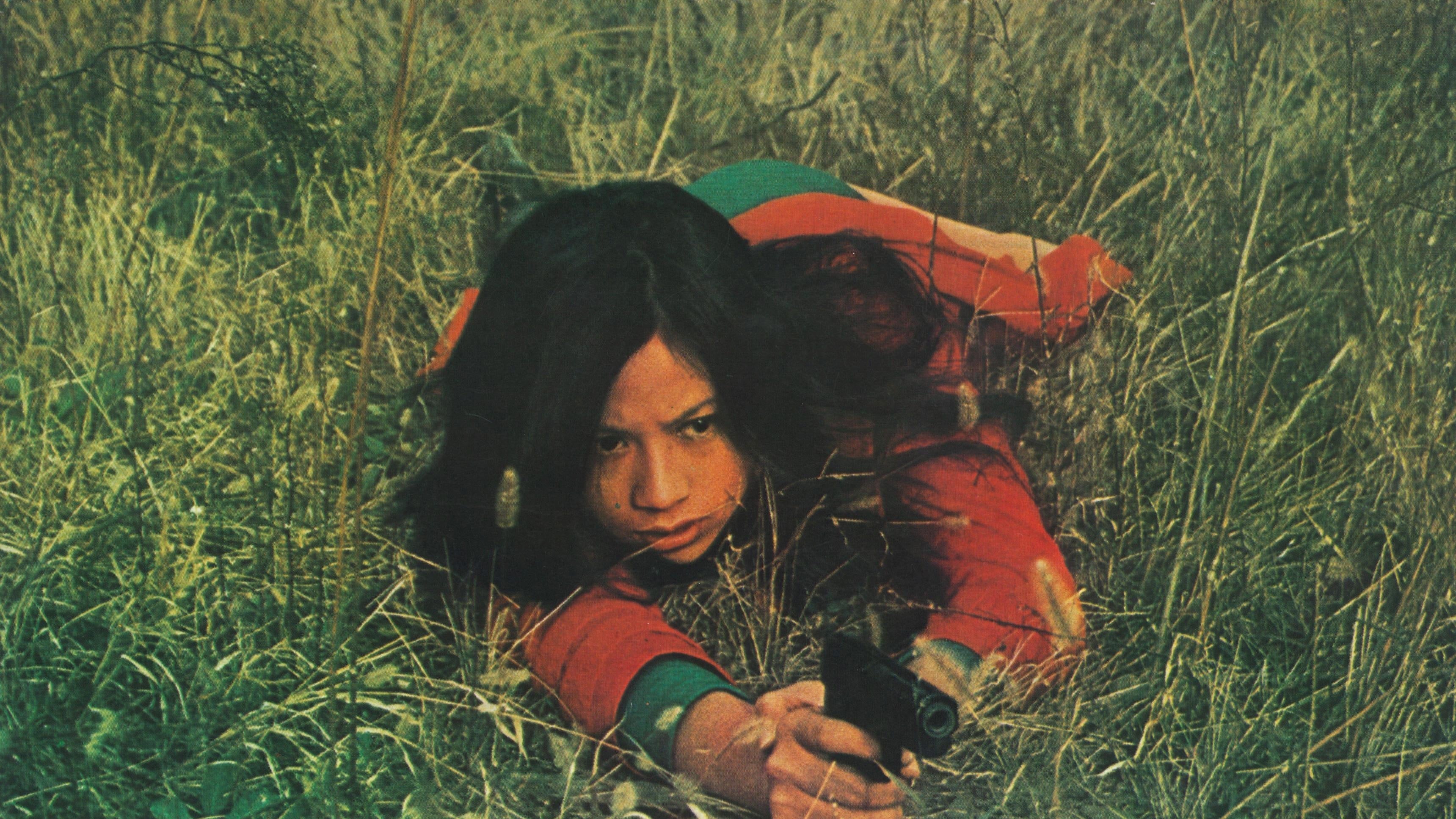
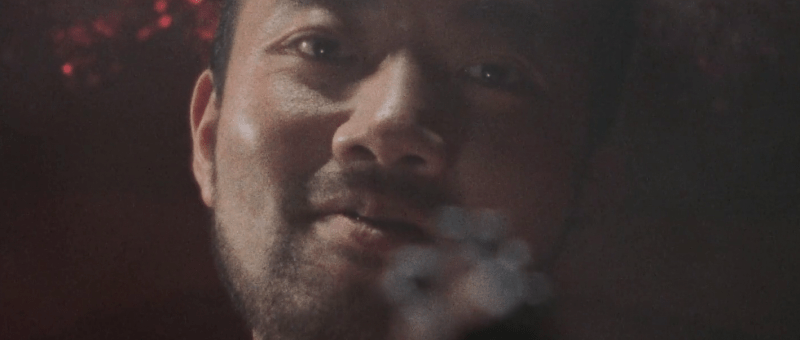
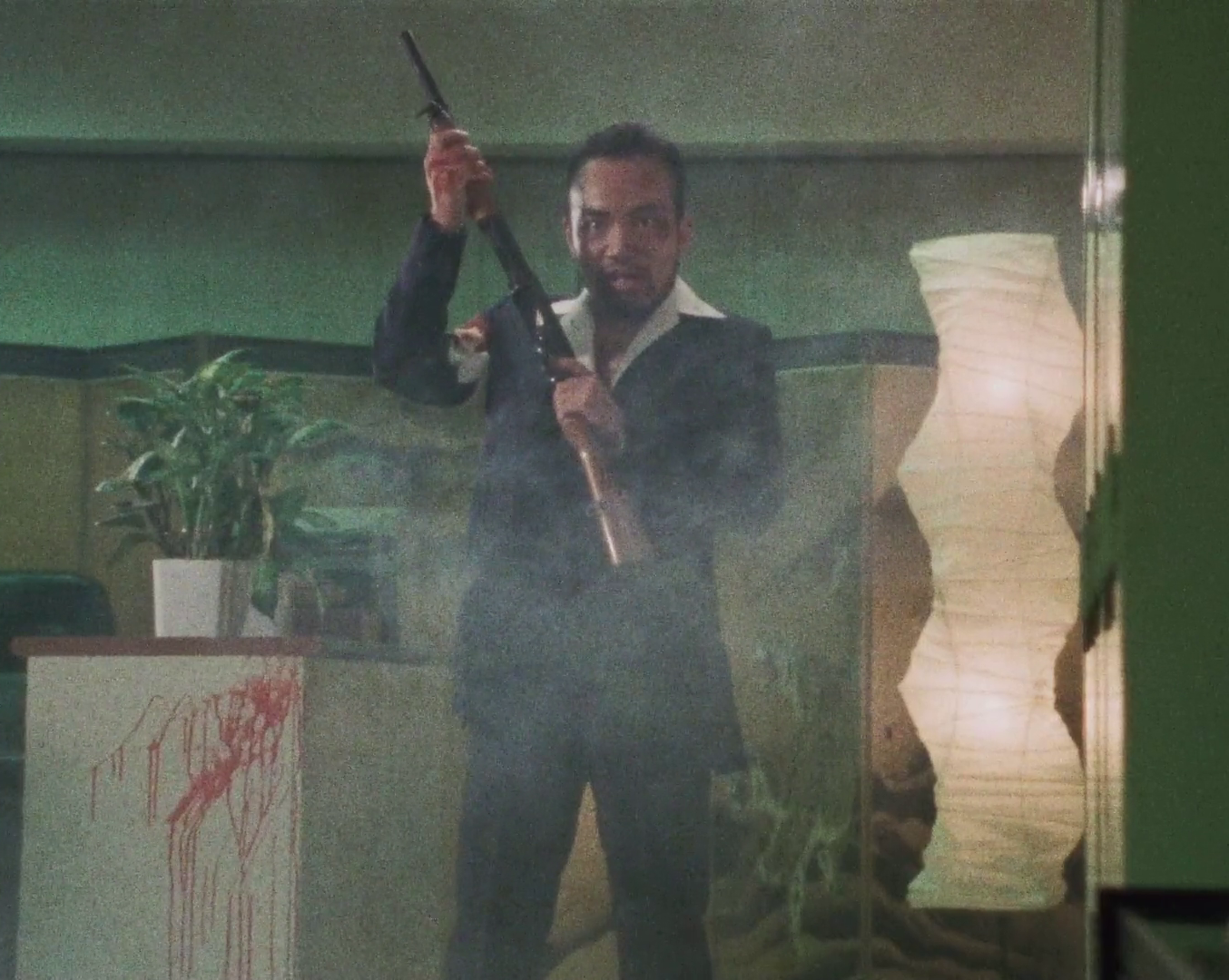
Fleeing a gang war with Columbian drug lords, a Brazilian gangster of Japanese descent tries his luck on the mainland but finds himself a perpetual outsider who can’t get himself taken seriously in Kazuhiro Kiuchi’s moody adaptation of his own manga, Carlos (カルロス). Owing a little bit to Brian De Palma’s Scarface, the tale takes place in a Japan mired in hopelessness and despair amid the spectre of economic collapse, while Carlos tries to play one gang off against another to exploit the terminal decline of the old school yakuza.

What we have here is a succession crisis. The Yamashiro boss (Minoru Oki) is planning to step down due to ill health though in the middle of a long-running dispute with the Hayakawa gang. When two of their guys are randomly killed, they assume only Hayakawa could be behind it little knowing that Carlos (Naoto Takenaka), a Brazilian-Japanese gangster on the run in Japan after killing eight policemen in a gang war in Brazil, killed them because they thought they didn’t need to obey the rules of the underworld with a “foreign” gangster. “We don’t need to treat those Brazilians as equals,” one says while already late to their appointed meeting. They haven’t paid Carlos for the guns he sold them, and when challenged, try to intimidate him into giving them away for free. But Carlos is sick of being intimidated and bumps them off himself. 

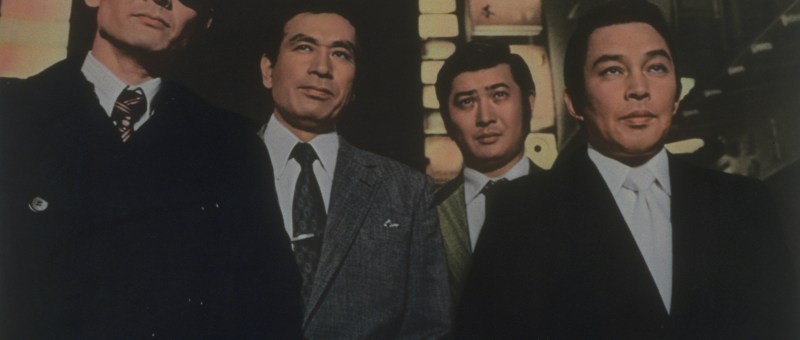
Carlos faces constant microaggressions about not being Japanese enough, though he speaks the language fluently without an accent. “Your crude taste doesn’t fly in Japan,” a yakuza tells him, criticising his outfit for being too informal when yakuza of this era generally dress in fancy suits and style their hair with military precision. That’s not really something that bothers Carlos, but he’s annoyed to be so easily dismissed and it’s true enough that he’s being used because they think he’s disposable. Not only is he not a “yakuza”, but as they don’t see him as Japanese either, they don’t need to accord him even the dignity they’d grant to a gang member. When Katayama hires Carlos to knock of his rival for the succession, Sato, he’s pissed off when Carlos takes things too far and puts on a show that threatens to blow the whole thing wide open by massacring Sato’s guys at baseball practice. To a man like Katayama, this is total idiocy and attributable to Carlos’ foreignness, both in his capacity for unnecessary violence and his lack of understanding of the rules of Japanese gangsterdom.

But the one place Carlos and his brother Antonio are fully Japanese is in the home of his aunt who also migrated from Brazil and their Japanese-born cousin Tomomi. Carlos’ aunt refers to them both by their Japanese names, Shiro and Goro, and cooks them Japanese food like sukiyaki. This pleasant domestic environment seems to represent a more settled life Carlos could have found outside of a crime family, especially as his brother Antonio grows closer to Tomomi, but there are also hints of darkness in his uncle’s early death from cirrhosis of the liver which suggests he may have had a hard life in Japan and taken to drink. Nevertheless, his aunt seems to have made a nice life for herself and her daughter and is overjoyed to expand her family by welcoming Carlos and Antonio.

Yet this sort of life seems outside of Carlos’ reach while he continues to play the yakuza gangs off against each other while simultaneously longing for some kind of recognition and almost willing them to figure out it was him who killed Sugita and Yano, the obnoxious Yamashiro guys. Meanwhile, the weakened yakuza have also turned to a foreign hitman, a brooding and robotic American who lacks compassion or compunction and unlike Carlos seems to be a mindless killing machine. When Carlos bests him, it’s an eerie moment echoing Blue Velvet as his body rocks and then falls. By contrast, when Carlos fights his way to the head of the Yamashiro gang, Yamashiro gets puffed up and draws his sword swearing he’ll teach Carlos what a mistake it is to underestimate the Japanese mob, only Carlos simply shoots him in a moment of clear victory over this outdated adherence to a traditional code. Nevertheless, it’s clear that Carlos can’t win here either and there is no room in Japan for a man like him. His only option is to go out all guns blazing as a means of validating himself as a force to be reckoned with, someone who was worthy of attention and of being taken seriously. Shot by the legendary Seizo Sengen, Kiuchi’s manga-informed compositions dissolve into visions of loneliness and despair but in its final moments reaches a crescendo of defiance if discovered only in futility.

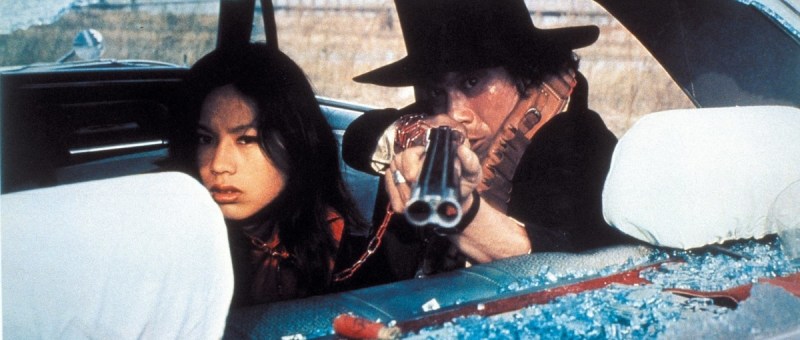
The Killing Machine (少林寺拳法, Norifumi Suzuki, 1975)

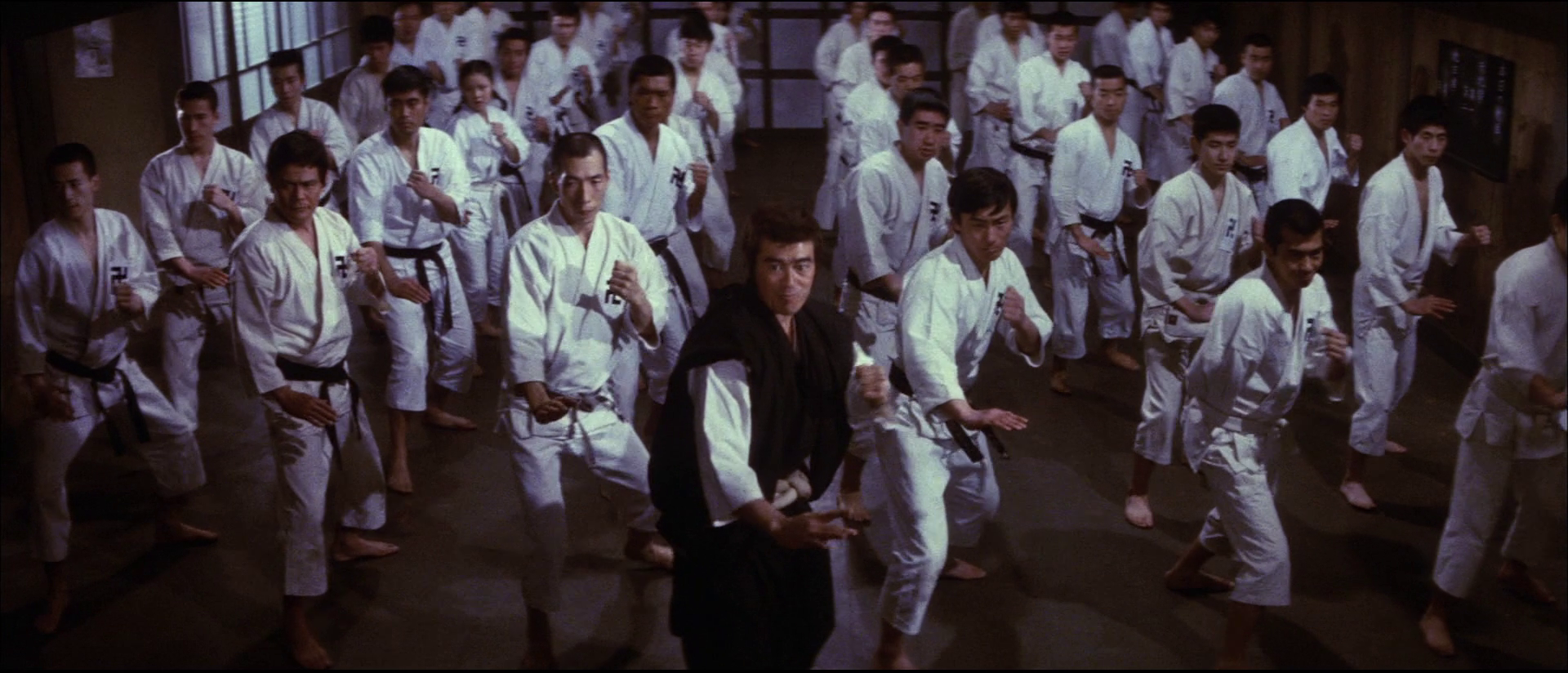
“As long as somebody like you is around, there’s hope for Japan,” an oddly sympathetic prison warden says to the last patriot standing in post-war Osaka. The title of Norifumi Suzuki’s Sonny Chiba vehicle The Killing Machine (少林寺拳法, Shorinji Kempo) maybe somewhat inappropriate or at least potentially misleading as the film is deliberately constructed as a martial arts parable emphasising the spiritual philosophy of self-improvement and compassion that is inextricable from its practice.

To that extent, the hero, Soh Doushin (Shinichi Chiba), is trying to fight his way out of the miasmas of the immediate post-war era. As may be apparent, Soh has taken a Chinese name, though Soh was apparently his along and belonged to a former samurai family whose nobility has been crushed by militarism. As the film opens, however, he’s a Japanese secret service operative in Manchuria blindsided by the news of Japan’s surrender. Soh is it seems a nationalist and a patriot, but a fairly revisionist one who stands up to the abuses of the Japanese army. He later says that he protested the way that the local Chinese population were often treated and he does indeed raise a fist toward an officer who wants to sell a young Japanese woman to a Chinese soldier in return for a guarantee of their safe passage to a boat heading out of the country. The young woman’s mother protests that she is an innocent virgin, a fact that has some later relevance. Soh refuses to let the officers take her, though evidently separated from her later.

When he meets the young woman again in the bomb-damaged backstreets of Occupation Osaka, she is dressed in Western clothing as opposed to the smart kimono she wore in Manchuria and is about to become a “pan pan” or streetwalking sex worker catering to American servicemen. Of course, Soh can’t let this happen either, but as she later tells him, she was raped by Russian soldiers during the retreat and now feels herself to be despoiled. She never wears kimono again and becomes a kind of symbol for a despoiled nation that Soh is reluctantly forced to accept he cannot save in part because his philosophy, which is still uncomfortably rooted in the philosophy of militarism, only valued strength when it should have valued love. The kind of love that Kiku (Yutaka Nakajima) had for her brother that made her willing to sacrifice herself for his wellbeing. 

Even so, Soh is doing his best to issue a course correction by caring for a small group of war orphans and helping them support themselves by running a rice soup stall so they won’t end up becoming dependent on the yakuza or the black market. It’s the yakuza and their increasingly corporatising nature that become Soh’s chief enemies, though standing right behind them are the Occupation Forces. They are, of course, just the biggest gang, as we can see when one of the kids steals a few tins from the gangster’s crate which is marked with text making it clear it came from the mess hall at the American base. The backstreets are full of sleazy soldiers and pan pans or otherwise the starving and dejected, sometimes violent demobbed soldiers filled with despair. It’s these men that Soh wants to buck up, telling them to rediscover their fighting spirit and giving them the opportunity to do so through learning Shaolin martial arts.

Of course there are those who don’t want to learn Chinese kung fu in the midst of their defeat, but what Soh is advocating is something that has a greater spiritual application even than karate can also have. It’s a kind of humanitarian riposte to the futility of the post-war society that might sometimes fail to recognise the depths of the impossibility faced by many in insisting they can be faced by discipline and moral fortitude but at the same time is not really judgemental except toward those who have deliberately abandoned their humanity, such as the trio of goons who rape a school for amusement (the girl is later seen among the students at Soh’s school along with the children from Osaka). The girl’s father reports it to the police, but the police and the gangsters are in cahoots, so nothing gets done. Soh cuts the guy’s bits off so he won’t be doing that again. Strength without justice is violence, he realises. But justice without strength is inability. Strength and love like body and mind should never be separated. The closing shots show an entire mountain covered in white-clad figures practising Shaolin kung fu and joining the humanitarian revolution rather than the cruel and selfish one represented by the gangsters with their red-light districts and black markets. It may be a simplistic solution, but it is in its way satisfying and at least a rejection both of the militarist past and the capitalistic future.


*Norifumi Suzuki’s name is actually “Noribumi” but he has become known as “Norifumi” to English-speaking audiences.

Zero Woman: Red Handcuffs (0課の女 赤い手錠, Yukio Noda, 1974)

“Your sense of duty is too strong! The world isn’t a pretty place,” barks an irate policeman, scolding a female officer with a tendency to take things, in his view at least, too far. Yukio Noda’s kidnap drama Zero Woman: Red Handcuffs (0課の女 赤い手錠, Zeroka no onna: Akai Tejo) is on the extreme end of pinky violence and soaked in the political concerns of the 1970s along with all their concurrent paranoia but nevertheless positions its fearless avenger as a lone arbiter of justice in an incredibly unjust world. 

We know this from the start as we see Zero (Miki Sugimoto) almost date raped by an apparent serial killer who has his own torture suitcase and apparently killed her friend. Knowing that he is a diplomat and therefore has diplomatic immunity, she simply shoots him in the balls in the film’s extraordinary opening sequence. But even though it could be argued what she did was self-defence, Zero is kicked off the force and thrown into a woman’s prison for an indefinite period of detention to keep the lid on any possible scandal. Zero is only reprieved when the daughter of a politician is kidnapped by thugs and, wanting to keep things quiet, they need someone to rescue her and also wipe out all of the kidnappers to ensure no one ever finds out.

Kyoko (Hiromi Kishi), the politician’s daughter, claims that her father will do “anything” to ingratiate himself with the prime minister and has in fact already arranged her marriage to his son. Kyoko, however, already has a boyfriend who, inconveniently, is quite obviously a student protestor given his yellow construction hat and other paraphernalia. The pair are accosted while sitting in a car near an old American base, and as Kyoko is gang raped, firstly by the gang leader Nakahara (Eiji Go) who is wearing a hoodie with the words US Navy printed on the back, US planes fly over her as if she were being raped by America in an obvious metaphor for the legacy of the occupation. 

Indeed, the flashbacks later experienced by Nakahara are of his mother whom he describes as a sex worker who worked at the base suggesting a very literal allusion to the corrupting influence of American servicemen. The gang operate out of a bar called “Manhattan” which is surrounded by other similar bars with Western names in a neon-lit area, while they constantly run across various signs written in English in fact peeing directly on a no peeing sign outside a largely disused residential area on the edge of the base where they later take hostage some kind of amateur dramatics / English-language class currently in the middle of a production of Romeo and Juliet. 

Yet the big bad turns out to be essentially homegrown in the form of the corrupt lackey policeman Osaka, and the politician Nagumo (Tetsuro Tanba), who is more concerned with his political capital than his daughter’s safety keen that the police keep everything out of the papers otherwise the wedding will be called off and he’ll have a problem with the prime minister. Seeing a very pale Kyoko, her clothes torn, barely conscious having been drugged by the gang, he says he no longer cares to think of her as his daughter and perhaps it would be better if she simply passed away in an “accident”, instructing Osaka to care of loose ends like Zero too. 

It’s very clear that women’s lives have little currency in this very patriarchal world, something Zero seems to know all too well even if at the beginning of the film she was content to work for the oppressive organisation of the police force though she later tears up her warrant card in disgust. The fact that division zero, operating like a secret police force on the behalf of an authoritarian government, exists at all is a clear indication that this is already a police state though one subverted by Zero who uses her red handcuffs to deliver ironic justice to all those who deserve it. Then again, unlike other pinky violence films there’s precious little solidarity that arises between herself and Kyoko whom she later describes as nothing more her mission objective seemingly caring little for her as a fellow human being. Noda cuts back between the Diet building and police HQ as if actively critiquing the latent authoritarianism of the early 70s society but even if Nagumo gets a kind of comeuppance it’s abundantly clear that nothing really will change and Zero stands alone wilfully freeing herself of the handcuffs of a controlling society. 


The Last Kamikaze (最後の特攻隊, Junya Sato, 1970)

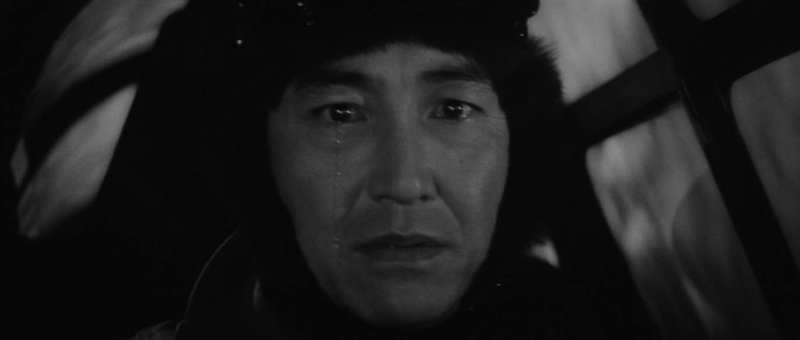
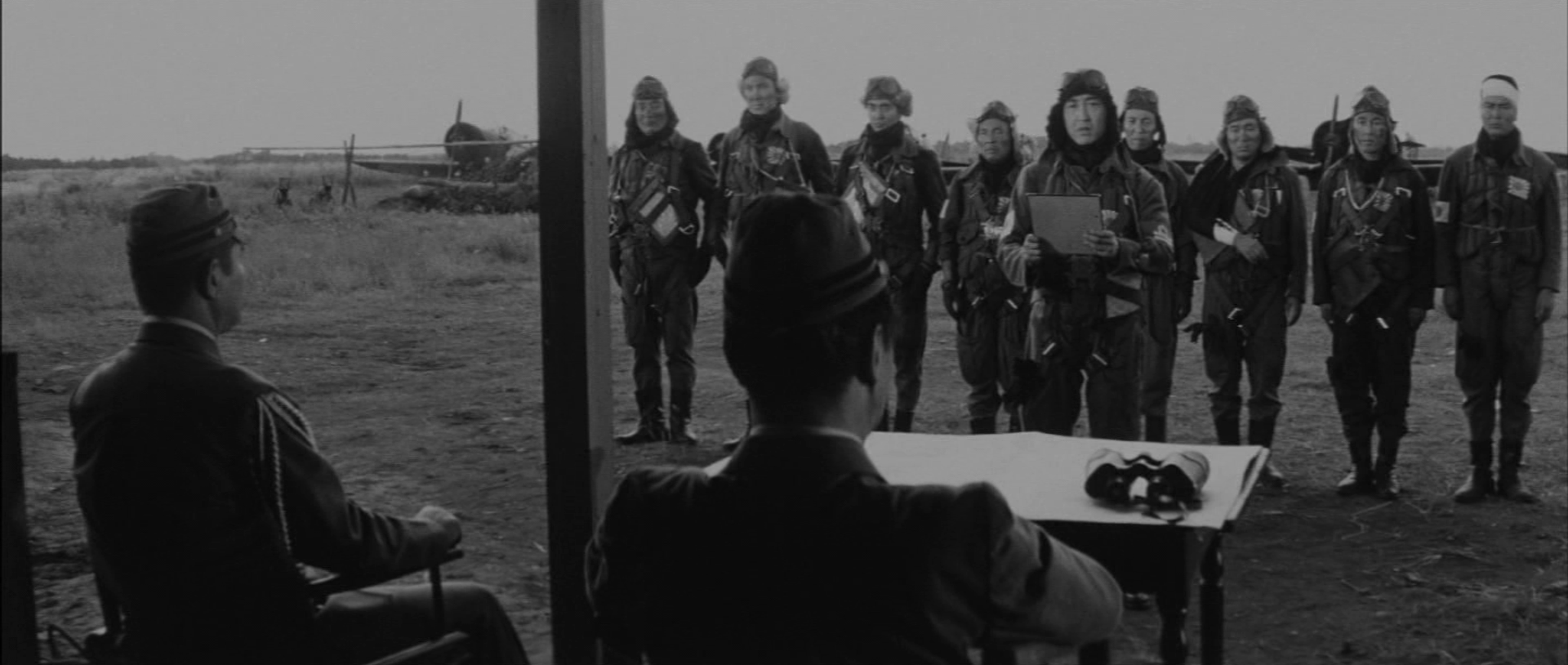
Junya Sato’s The Last Kamikaze (最後の特攻隊, Saigo no Tokkotai) opens with a title card explaining that it has nothing to do with the life of Matome Ugaki, which seems disingenuous at best given that the narrative has tremendous similarities with his life. In any case, 25 years after the war in a very different Japan which is perhaps becoming more willing to reexamine its wartime history, Sato’s film nevertheless walks an ambivalent line clearly rejecting the idea of the kamikaze special attack squadrons as absurd and inhuman yet simultaneously glorifying the deaths of the men who willingly took part in them. 

For sympathetic Captain Munakata (Koji Tsuruta) the issue is one of consent and willingness more than it is of essential immorality. Placed in charge of the very first suicide attack, he elects to go himself rather than ask someone else but is first overruled before deciding to go anyway after appealing for volunteers and coming up one short. His general, Yashiro (Bontaro Miake), who had voiced his opposition to the policy in the opening sequence reminding his own commander than even when men were given impossible missions in previous wars they were always ordered to return home if possible, takes the unprecedented step of climbing into an aircraft himself in an act of protest insisting that this be the last and final time that men were ordered to their deaths. The mission, however, does not succeed. All of the pilots bar Yashiro are shot down before reaching their targets while Munakata, injured and having lost sight of the general, aborts his mission and returns to base only to face censure from his superior officers. 

Sent back to Japan, he wrestles with himself over whether his decision was one of cowardice and he turned back because he was afraid to die rather than, as he justifies, because he did not want to die in vain and did what he thought was right. Far from cowardice, it may have taken more courage for him to ignore his orders and choose to live yet there must also be a part of him that believes dying to be heroic if not to do so is to be a coward. As the situation continues to decline and suicide attacks become the only real strategy, Munakata is recalled for an ironic mission of heading the escort squad designed to protect the pilots from enemy attack so they can reach their targets. He first turns this down too not wanting to be an angel of death but is finally convinced to accept on the grounds that the men will die anyway and at least this way their deaths will have meaning. 

Munakata was greeted on his return to Japan by the sight of his father (Chishu Ryu) being carted off by the military police for expressing anti-war views, stopping only to tell him that people should be true to their own beliefs. Nevertheless, even if Munataka objects to the tokkotai strategy he does not oppose it only emphasise that the men should should be willing and resolved rather than forced or bullied. There is indeed a shade of toxic masculinity in the constant cries of cowardice along with a shaming culture that insists a man who refuses to give his life for his country is not a real man. Munakata comes to the rescue of a young recruit, Yoshikawa (Atsushi Watanabe), who twice returns from a tokkotai mission claiming engine trouble but does not try to save him only to petition his superiors that he be given ground duty until such time as he gets used to the idea of dying. Because of Munakata’s kindness in saving him from a suicide attempt after being rejected by the mother he worried for if he were to die, Yoshikawa is pushed towards a “hero’s death” that does at least help to change the mind of Yashiro’s zealot son (Ken Takakura) who knew nothing of the reasons behind his father’s suicide and believed wholeheartedly in the necessity of the special attack squadrons. 

The younger Yashiro’s rationale had been that to show compassion to a man like Yoshikawa was to shame the memories of the men who had already died, yet even in realising the futility of the gesture he still resolves to proceed towards his own death as do others like him such as a student who had been against the war and ironically consents to the suicide mission in order to end it more quickly. “There’s nowhere to run to” Yoshikawa’s mother (Shizuko Kasagi) had said on his attempted desertion, echoing the words of another that there was no escape from this war, while poignantly crying over her son’s ashes that she wishes she had raised him to be a coward. The human cost is brought fully home as the families storm the airfield fence in an attempt to wave goodbye to their loved ones as they prepare for their glorious deaths, another pilot reflecting on the fact that each of these men is someone’s precious son rendered little more than cannon fodder in an unwinnable war. Even with the escort squads, only 30% of the special attacks succeed. Most of the pilots are so young and inexperienced that even assuming they survive the anti-aircraft fire they are incapable of hitting their targets. 

To add insult to injury, Munakata returns from his final mission to an empty airfield where a drunken engineer (Tomisaburo Wakayama) explains to him that the war is over and the generals knew it 10 days earlier but still sent these men to their deaths anyway. Overcome with remorse, Munakata posits his own suicide mission but is instructed to live on behalf of all those who died only to take off and fly into a technicolor sunset as Sato switches from the period appropriate black and white to vibrant colour elegising Munakata’s death while lending it an otherwise uncomfortable heroism. Casting ninkyo eiga icons Koji Tsuruta and Ken Takakura as the infinitely noble yet conflicted pilots and employing jitsuroku-esque narratorial voice to offer historical context the majority of the audience probably does not strictly need, Sato rams home the righteousness of these men while casting them as victims of their times trying their best to be true to what they believe but finding little prospect of escape from the absurdity of war. 


Violent Streets (暴力街, Hideo Gosha, 1974)

“Nothing’s like it used to be anymore” sighs a woman who’s had to betray herself but has tried to make break for it only to discover there is no way back. Hideo Gosha’s Violent Streets (暴力街, Boryoku Gai) is like many films of its era about the changing nature of the yakuza in an age of corporatised gangsterdom. Now “legitimate businessmen” who claim to no longer deal in thuggery, their crimes are of a more organised kind though a turf war’s still a turf war even if you’re fighting from the boardroom rather than simply getting petty street punks to fight it for you in the streets. 

In a touch of irony, former yakuza Noboru Ando stars as a man who’s tried to leave the life behind but is pulled back into underworld intrigue when his former foot soldiers mount an ill-advised bid for revenge against the clan they feel betrayed them. After serving eight years in prison for participating in the last turf war, Egawa was given flamenco bar Madrid on the condition that he dissolve his family and attempt to go straight as a legitimate businessman. The Togiku gang has since gone legit and distanced itself from most of its old school yakuza like Egawa. But now a yakuza conglomerate from Osaka is moving in on their old turf and the Togiku want the Madrid back as a bulwark against incursion from the west which is why they’ve been sending the boys round to cause trouble in the bar. 

Egawa is the classic ex-gangster who wants to turn himself around but is largely unable to adapt to life in a changing society. He is technically in a relationship with a bar hostess who has a severe drinking problem in part exacerbated by his inability to get over his former girlfriend who left him and married the boss, Gohara, while he was in prison. His former foot soldiers attempt to convince him to get the gang back together and take revenge, resentful of having been used and discarded, but he tells them to let it go, that they’ve all got “honest jobs” and that they should try to live as best they can. Like him, the guys are ill-equipped to make new lives in the consumerist society and cannot move on from the post-war past. Hoping to engineer a turf war between the Osaka guys and Togiku, they kidnap a popular TV personality/pop singer (Minami Nakatsugawa) attached to a station which Togiku controls and frame a rival affiliated with the Osakans for taking her. 

This just goes to show the various ways in which newly corporatised yakuza have expanded their business portfolio, heavily participating in the entertainment industry moving beyond bars, clubs, and the sex trade into mainstream television and idol stars. Egawa’s old friend Yazaki (Akira Kobayashi) is his opposing number, just as caged but trapped within the confines of the new gangsterdom, reprimanded by his boss for raiding the rival studio’s offices and undoing the gang’s attempt to rebrand themselves as legitimate businessmen rather than violent street thugs. “I can’t stand being humiliated” he explains as Gohara points out he’s stepped right into their trap now giving the Osakans an excuse for retaliation. “The Togiku group is a defanged, domesticated dog” Yazaki barks, “I can’t pretend to be an obedient company employee forever and do nothing”. 

Neither man is able to progress into the new era of rising prosperity, both little more than caged animals thrashing around trying to break free but continually crashing into the bars. Just as Egawa’s old guys had tried to engineer a turf war hoping that the two gangs would take each other out and leave a vacuum they could fill, arch boss Shimamura (Tetsuro Tanba) flies above the city in a helicopter as the “worms fight among themselves” and observes the chaos below as he completes his silent conquest of the contemporary economy like some modern day Nobunaga of corporatised gangsterdom. 

Taking over the Togiku through a process of corporate infiltration and gradually ridding themselves of all the old school yakuza ill-suited to the shady salaryman life, the contrast between the world of cabaret bars and back street dives and Shimamura’s smart suits and helicopters couldn’t be more stark. A slightly sour note is struck by the use of a transgender assassin (Madame Joy) who performs a lesbian floorshow by day and kills by night while working with a bald sidekick who carries a parrot on his shoulder, her coldness bearing out the tendency of yakuza movies to associate queerness with sadistic savagery. Gosha rams his point home with the otherwise surreal scene of a pile of abandoned mannequins by a swamp that becomes a popular yakuza kill site homing in on the emptiness of their eyes and the uncanniness of dismembered bodies, mere empty shells just like the men who die in this literal wasteland. Egawa perhaps feels himself to be a man already dead long before being pushed towards his act of futile rebellion, somewhere between sitting duck and caged dog fighting for his life between the chicken coops of a moribund small-town Japan. Marching to a frenetic flamenco beat of rising passions and barely contained rage, Violent Streets leaves its former foot soldiers with nowhere to go but down while their duplicitous masters continue to prosper riding the consumerist wave into a new and prosperous future.


Violent Streets opens at New York’s Metrograph on Dec. 16 as part of Hideo Gosha x 3

Trailer (English subtitles)

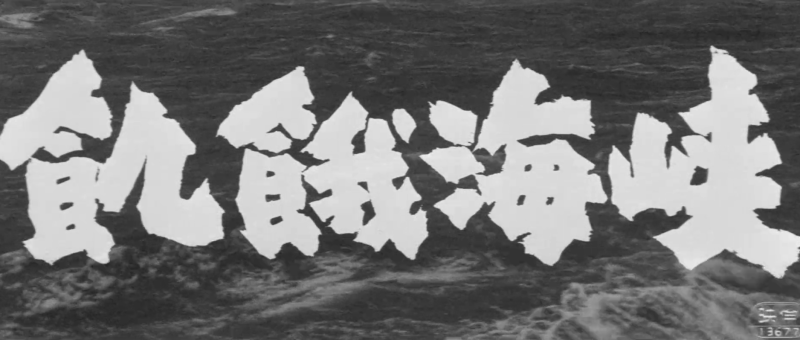
A Fugitive from the Past (飢餓海峡, Tomu Uchida, 1965)

Fugitive from the past“There’s no way back” intones a spirit medium in the throws of a possession early on Tomu’s Uchida’s three-hour police procedural, A Fugitive from the Past (飢餓海峡, Kiga kaikyo, AKA Straits of Hunger). Her message will be repeated frequently throughout the journeys of our three protagonists – a guilty man seeking escape from himself, the hooker with a heart of gold who thinks of him as a “kind person”, and the obsessive policeman whose quest to find him threatens to destroy his own family and chance of ongoing happiness. Beginning in 1947, Uchida’s adaptation of the novel by Tsutomu Minakami is a cutting indictment of post-war inequalities but is also keen to remind us that the war was merely a symptom and intensifier of problems which existed long before and are likely to survive long after.

In 1947, three men in military uniforms attempt to escape from Hokkaido after committing a crime while the island is subject to a typhoon warning. Using a ferry disaster in which hundreds of people have been killed as cover, the men steal a boat and try their luck on the stormy seas. Only one of them makes it. Once all the bodies from the ferry are accounted for, two more are discovered and later identified as recent parolees from Abashiri prison. The dead convicts are then linked to a local robbery, murder, and arson case in which a large amount of money was stolen leaving the third man, described by witnesses as bearded, tall and imposing, the prime suspect in the deaths of the two prisoners as well as the original robbery.

Calling himself “Inugai” (Rentaro Mikuni), the “third man” takes off with all the money and ends up forging an unexpectedly genuine connection with a cheerful prostitute just on the way back from her mother’s funeral. Yae (Sachiko Hidari), claiming to have seen through to Inugai’s kindly soul, seems to reawaken something within him but the next morning he moves on leaving only a vast a mount of money and some nail clippings behind him. Meanwhile, Yumisaka (Junzaburo Ban), the dogged policeman who discovered the convicts’ bodies, tracks him at every turn.

The world of 1947 is a hellish one in which perpetual hunger is the norm and crushing impossibility all but a given. Inugai is starving. With rationing in place the black market is flourishing while the unscrupulous profiteer off the back of other people’s desperation. This is a land of defeat where to survive at all is both shame and victory, yet somehow you have to go on living. Inugai, like many a hero of golden age Japanese cinema, is engaged in an internal war to erase the dark past, drawing a veil over what it took to move from post-war privation to economic prosperity. He does however take his unseeing further than most in adopting a new, more respectable persona, remaking himself as self-made man and wealthy philanthropist keen to “pay back” the society which has been so supportive of his “success”.

Thus when Yae, whose attempt to remake herself in the capital has fared far less well, spots Inugai’s photo in the papers and decides she just must track him down, it’s not that Inugai fears blackmail or even really that she poses a threat but that she shatters the integrity of his carefully crafted post-war persona and reminds him who he really is. A climactic storm mirroring that which illuminated their first meeting also graces their last as “Inugai” finally resurfaces, committing an impulsive act of animal violence which tugs at the strings of his new life and sets the whole thing unravelling.

Yae used Inugai’s money to pay off her debts and get out of the brothel, but even if the Tokyo of 1947 was warmer than that of Hokkaido it was no more kind and her attempt to lead an “honest” life was quickly derailed by underworld crime and unforgiving law enforcement. Realising there’s nowhere left for her to go she resigns herself to life in the red light district but does at least manage to find a “nicer” establishment run by a kindly older couple where the girls are like one big family. Her meeting with Inugai has come to take on mythical proportions in her mind – she even worships a tiny relic of him in the form of one of his nail clippings. Hoping to repay his kindness she commits herself to hard work and barely spends any of her money on herself, dreaming of the day she will one day see him again.

Yumisaka, however, mirrors Yae’s devotion in his all encompassing “hate” for Inugai as his obsession consumes him, costs him his job, and threatens to ruin his family. Alerted by two more bodies washing up out of the sea, a young detective (Ken Takakura) puts two and two together and gives Yumisaka a chance to vindicate his long held convictions but what they discover through the shifting sands of invented truths and corrupted memories is a legacy of suffering and resentment which runs far further back than the recent wartime past. As Yumisaka later puts it, those who’ve never been poor or miserable cannot understand the desperation felt by those who have in the presence of money. Inugai, poor and trapped by circumstance, longed to escape the drudgery of Hokkaido life but couldn’t live with what he did to do it and so conjured up another history for himself.

Still, the truth will out and there really is “no way back”, not for Inugai or for his nation which seems determined to continue unseeing the darkness of the previous 30 years as it begins to find a degree of comfort once again. Incorporating strong spiritual overtones from the sutras Yumisaka is so strangely adept at reciting to the gloomy intoning of the spirit medium, Uchida imbues all with a heavy sense of dread as a man attempts to outrun his fate by running from himself only to be tripped up by sudden moment of panic born of a lack of faith in his only true believer. A chronicle of the post-war era, A Fugitive From the Past makes poverty its ultimate villain but attempts to paper over spiritual corruption with the pretty trappings of conventional success will only end in ruin as the unresolved past eats away at the foundations of a brave new world.


Original trailer (no subtitles)

https://www.youtube.com/watch?v=jHgeiDgxb6E

The Bullet Train (新幹線大爆破, Junya Sato, 1975)

bullet train posterFor one reason or another, the 1970s gave rise to a wave of disaster movies as Earthquakes devastated cities, high rise buildings caught fire, and ocean liners capsized. Japan wanted in on the action and so set about constructing its own culturally specific crisis movie. The central idea behind The Bullet Train (新幹線大爆破, Shinkansen Daibakuha) may well sound familiar as it was reappropriated for the 1994 smash hit and ongoing pop culture phenomenon Speed, but even if de Bont’s finely tuned rollercoaster was not exactly devoid of subversive political commentary The Bullet Train takes things one step further.
A bomb threat has been issued for bullet train Hikari 109. This is not a unique occurrence – it happens often enough for there to be a procedure to be followed, but this time is different. So that the authorities don’t simply stop the train to find the device as normal, it’s been attached to a speedometer which will trigger the bomb if the train slows below 80mph. A second bomb has been placed on a freight train to encourage the authorities to believe the bullet train device is real and when it does indeed go off, no one quite knows what to do.

The immediate response to this kind of crisis is placation – the train company does not have the money to pay a ransom, but assures the bomber that they will try and get the money from the government. Somewhat unusually, the bomber is played by the film’s biggest star, Ken Takakura, and is a broadly sympathetic figure despite the heinous crime which he is in the middle of perpetrating.

The bullet train is not just a super fast method of mass transportation but a concise symbol of post-war Japan’s path to economic prosperity. fetching up in the 1960s as the nation began to cast off the lingering traces of its wartime defeat and return to the world stage as the host of the 1964 olympics, the bullet train network allowed Japan to ride its own rails into the future. All of this economic prosperity, however, was not evenly distributed. Where large corporations expanded, the small businessman was squeezed, manufacturing suffered, and the little guy felt himself left out of the paradise promised by a seeming economic miracle.

Thus our three bombers are all members of this disenfranchised class, disillusioned with a cruel society and taking aim squarely at the symbol of their oppression. Takakura’s Okita is not so much a mad bomber as a man pushed past breaking point by repeated betrayals as his factory went under leading him to drink and thereby to the breakdown of his marriage. He recruits two helpers – a young boy who came to the city from the countryside as one of the many young men promised good employment building the modern Tokyo but found only lies and exploitation, and the other an embittered former student protestor, angry and disillusioned with his fellow revolutionaries and the eventual subversion of their failed revolution.

Their aim is not to destroy the bullet train for any political reason, but force the government to compensate them for failing to redistribute the economic boon to all areas of society. Okita seems to have little regard for the train’s passengers, perhaps considering them merely collateral damage or willing accomplices in his oppression. Figuring out that something is wrong with the train due to its slower speed and failure to stop at the first station the passengers become restless giving rise to hilarious scenes of salarymen panicking about missed meetings and offering vast bribes to try and push their way to the front of the onboard phone queue, but when a heavily pregnant woman becomes distressed the consequences are far more severe.

Left alone to manage the situation by himself, the put upon controller does his best to keep everyone calm but becomes increasingly frustrated by the inhumane actions of the authorities from his bosses at the train company to the police and government. Always with one eye on the media, the train company is more preoccupied with being seen to have passenger safety at heart rather than actually safeguarding it. The irony is that the automatic breaking system poses a serious threat now that speed is of the essence but when the decision is made to simply ignore a second bomb threat it’s easy to see where the priorities lie for those at the top of the corporate ladder.

Okita and his gang are underdog everymen striking back against increasing economic inequality but given that their plan endangers the lives of 1500 people, casting them as heroes is extremely uncomfortable. Sato keeps the tension high despite switching between the three different plot strands as Okita plots his next move while the train company and police plot theirs even if he can’t sustain the mammoth 2.5hr running time. A strange mix of genres from the original disaster movie to broad satire and angry revolt against corrupt authority, The Bullet Train is an oddly rich experience even if it never quite reaches its final destination.


Original trailer (no subtitles)

Female Prisoner Scorpion: Jailhouse 41 (女囚さそり第41雑居房, Shunya Ito, 1972)

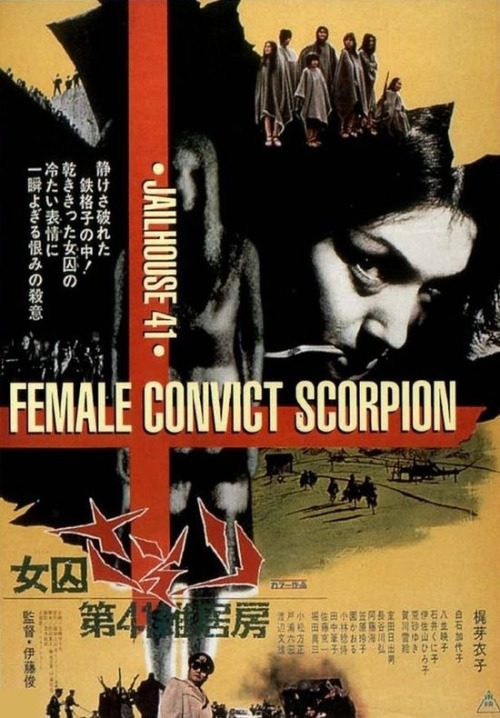
scorpion-2Female Prisoner Scorpion: Jailhouse 41 (女囚さそり第41雑居房, Joshu Sasori – Dai 41 Zakkyobo) picks up around a year after the end of Female Prisoner #701: Scorpion and finds Matsu (Meiko Kaji) tied up in a dingy prison basement, apparently left bound and in solitary confinement for the entire interval. Once again directed by Shunya Ito, the second instalment in the Female Prisoner Scorpion series is another foray into the women in prison field but Ito resolutely refuses to give in to the exploitative genre norms, overlaying his tale of individualistic rebellion with an arthouse sensibility that has a much wider scope than its ordinary vengeance driven narrative may suggest.

Matsu may have been lying bound and gagged in a dingy underground hole for the best part of a year but today is a special day and sadistic prison warden Goda (Fumio Watanabe) is going to let her out to be shown off in front of a visiting inspector who’s paying a final visit before Goda is promoted to a top job in Tokyo. When Matsu makes a lunge for Goda, the inspector is so afraid that he wets himself, sending the other woman into a frenzy and resulting in a riot. Once again the entirety of the prison is punished, but this time Matsu is singled out for a public punishment gang rape by Goda’s goons. This kind of humiliation is too much for her fellow prisoners who instantly turn on her, but their violence provides an opportunity for escape and before long Matsu is on the run, again.

At the end of the first film, Matsu had accomplished her first round of vengeance – against the man who orchestrated her downfall and the men who secured it, but ultimately she wound up a female prisoner once again. Though Goda may have had her hidden away because of her habitual escapism, Matsu had not given up as we see from her attempts to scrape the floor away with her spoon held tight in her mouth. Barely speaking, Matsu is an unstoppable column of pure rage but an elegant one, supported by her self contained restraint.

Her anger this time is directed towards Goda himself, especially after his despicable organised punishment rape that was designed both to break her own spirit once and for all and also to damage her in the eyes of her fellow inmates who are intended to see her defeated and destroyed. The guards are a stand in for society at large, using sexual dominance and social position to keep their women in line. The visiting prison inspector makes a point of telling Matsu that “they” don’t hate her personally – they’re there for her, to help her “recover” and become a functioning member of society. Which is ironic because Goda does hate her personally as he holds her responsible for the damage to his eye sustained in the previous film. His last act before moving on is one against Mastu – an attempt by the forces of authority to crush her individual rebellion and use their victory as a coercive tool to force others to conform.

In this way, Matsu’s position as a member of a subjugated class is less important than her status as an agitator but these are women who have each suffered at the hands of men. As an extremely theatrical sequence sung in the traditional form informs us, the women who escaped with Matsu committed their crimes out of love or jealousy. Poisoned rivals, dead lovers, even children murdered to get back at their philandering father in some Medea level psychotic rage which ruins the perpetrator even more than the intended victim.

Later while the women are enjoying their brief taste of freedom, one of them is brutally raped and murdered by a troupe of feral men who boast about the wartime atrocities they committed before descending on a lone woman like a pack of rabid dogs. The others take their revenge for their friend, but also for all the women who have met a similar fate inflicted by a male dominated society which sees them as something to be controlled and then made use of, little more that cattle hemmed in and milked until dry.

As in the first film Ito makes use of expressionist techniques and strange angles to give his film a more elevated feeling that might be expected but this time he adds in a surrealist, spiritual dimension as with the old woman who sings the stories of our heroines and then dies only to bury herself in leaves and disappear into the ether, like some forgotten deity of misused women. Likewise, when one of the prisoners is raped and murdered, the men throw her body into a nearby river like an empty beer can but the waterfall behind her suddenly runs with blood as an expression of the violence which pollutes the natural world. A bus suddenly splits in two, separating our subjugated women from the violent men who mentally sentence them, given free reign simply because of their sex. Ironically enough, our last glimpse of of Matsu takes place in the reflection of Goda’s glasses and then in his false eye when she is suddenly rejoined by her compatriots for a triumphant dance of freedom on a city rooftop.

Even stronger than in the original Female Prisoner #701 Scorpion, Jailhouse 41 further advances its ideology of free individuals battling the conformist authority of the state all filtered through the prism of the patriarchy. Matsu’s vengeance is personal, she keeps her distance from the other women who do not seem inclined to band together to oppose the forces which oppress them so much as seek a wary, temporary alliance of necessity, but seeing them all reassembled in spirit at the end brings a larger dimension to Matsu’s victory which now seems much less like solving a practical problem than a deliberate strike at a wall which was solely designed to keep a certain group of people in their place. The jail is broken, all that remains is to choose to escape its restraints.


Original trailer (English subtitles, NSFW/gore)