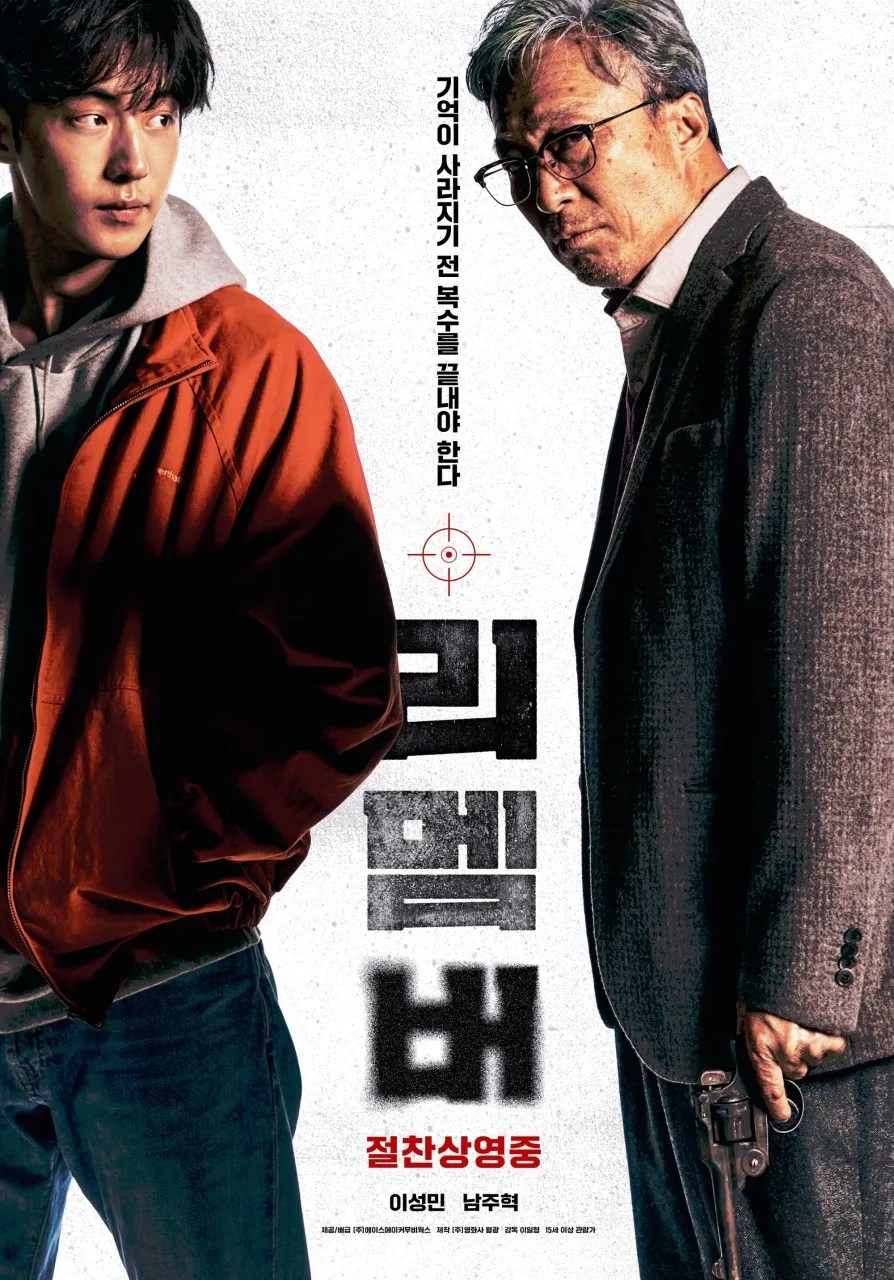
Remember (리멤버, Lee Il-hyung, 2022)

An elderly man suffering with a brain tumour and advanced dementia is determined to expose the abuses of the colonial past all too easily forgotten by the contemporary society in Lee Il-hyung’s remake of the 2015 Atom Egoyan film of the same name, Remember (리멤버). The film’s title works on multiple levels, firstly in the mind of the hero who both wants to remember and doesn’t as he feels his mind slipping away, and then in the minds of the men he seeks asking them both to remember the man who’s come calling with vengeance on his mind and who it is they really are. 

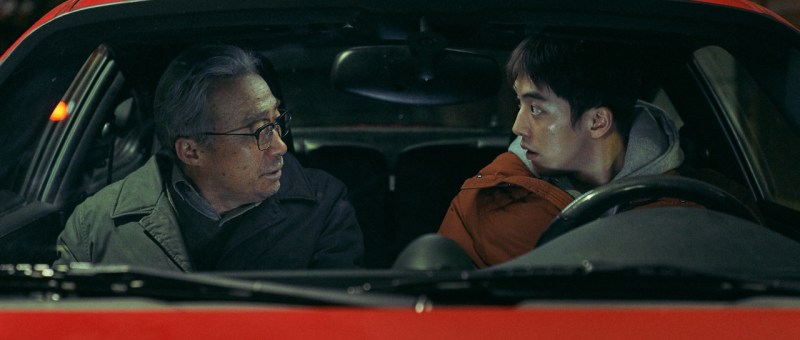
As in many other similarly themed films of recent times, Pli-ju’s (Lee Sung-min) main problem is that those who chose to collaborate with the Japanese during the colonial era and directly contributed to the deaths of all his family members have largely gone on to extremely successful careers at the heart of the establishment. Ironically enough, right-wing Korean nationalist ideology is largely pro-Japan and the legacy of Japanese militarism was a key component in the post-war military dictatorships of Park Chung-hee and Chun Doo-Hwan. To that extent, Pil-ju is the inspector that calls visiting each of the men who caused the deaths of his father, brother, and sister in turn while exposing a series of colonial abuses. One of the men he visits is a working professor who teaches that Japanese colonial rule was actually beneficial in that it helped “modernise” the society though building infrastructure such as roads and railways without really considering that they were largely built with forced labour. 

This casual disregard for human life has continued into the present day with the general Pil-ju targets, Chi-deok (Park Geun-hyung), also the head of the company, in which the Japanese effectively have a controlling share, responsible for a workplace accident that injured the father of Pil-ju’s getaway driver In-gyu (Nam Joo-hyuk) and refused to compensate him. Chi-deok, a hero of the Korean War, even makes a rousing speech instructing the audience that they must remember those who fell in defence of democracy which is a little rich seeing as his values are anything but democratic. Chi-deok also tries to justify himself to the police officer investigating the murder of the first man Pil-ju knocked off that those days were just about survival and that “Korea” no longer existed so all he could do to save it was to become Japanese. But like many of the other men, such as the professor who tricked Pil-ju’s brother into forced labour in a mine where he eventually died, he did so for personal advancement wilfully selling out his fellow countrymen throwing those who refused to change their names or continued to speak Korean in jail while sending off their sisters to become comfort women for the Japanese army. 

The first man that Pil-ju killed tortured his father to death on a trumped up charge so he could steal his land. It’s not even ideology, it’s just greed and oppression. Everyone keeps telling him that no one cares about this kind of thing anymore, but conservative politicians nevertheless continue to weaponise it suggesting that anything is permissible in the battle against communism while imperialism is therefore a lesser evil. Pil-ju’s dementia is a metaphor for the literal erasure of history and the simple act of forgetting, the process by which many of these men have been able to rewrite their pasts to justify their actions. Yet it’s also true that there are things Pil-ju too does not want to remember and actively denies until finally forced to reckon with himself, with his complicity, guilt, and regret that he was as Chi-deok puts it not all that different as a man who survived those times when so many did not. Shot through with a gentle humour, Lee’s admittedly unsubtle drama (a Japanese soldier named Tojo literally says he’s going end the pacifist constitution so Japan can start wars whenever it feels like it) is also a gentle tale of intergenerational bonding as Pil-ju comes to develop a paternal affection for his workplace buddy In-gyu that suggests the past is only exorcised when spoken and passed down to new generations free of justifications or omissions and most importantly remembered as it was by those who really lived it.


Original trailer (no subtitles)
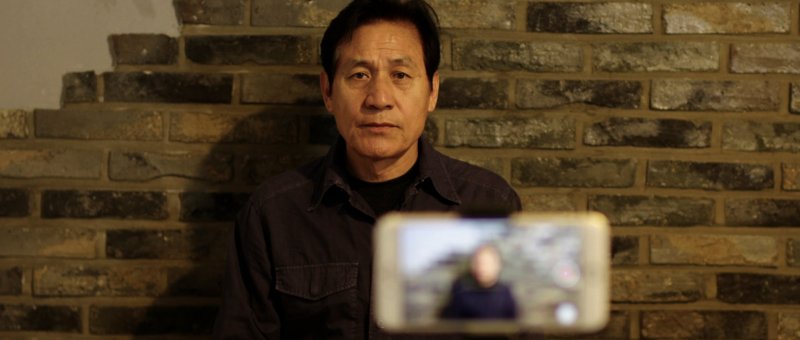
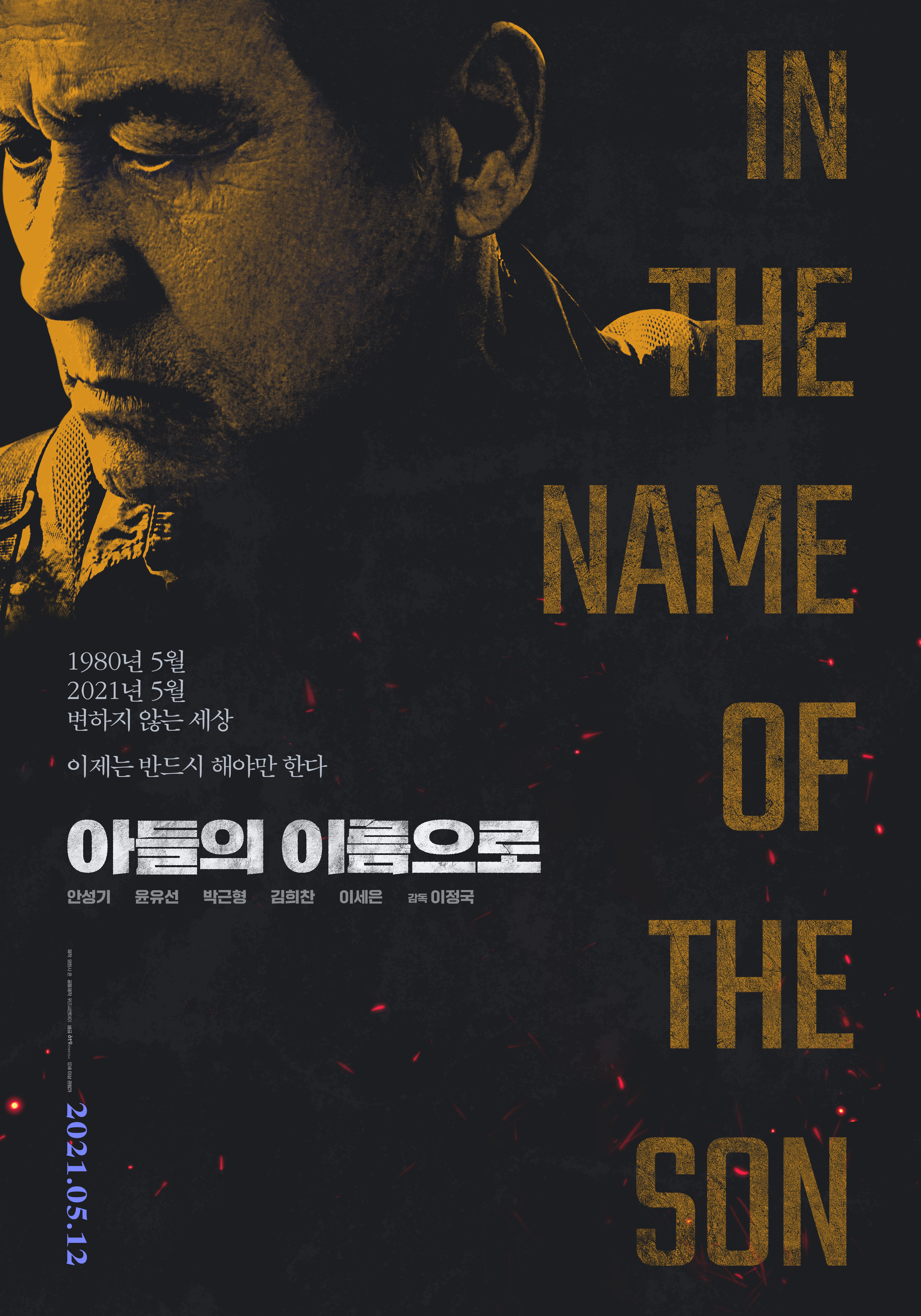
In the Name of the Son (아들의 이름으로, Lee Jung-gook, 2021)

Partway through Lee Jung-gook’s raw exploration of the radiating effects of historical trauma In the Name of the Son (아들의 이름으로, Adeurui ireumeuro), the conflicted hero quotes a line from In Search of Lost Time which his son had recommended to him, “pain is only healed by thoroughly experiencing it”. The quote in itself reflects the hero’s wounded state in having failed to reckon with the sins of the past, a failing which has cost him dearly on a personal level, while simultaneously hinting at a national trauma which has never been fully addressed by the contemporary society. 

When we first meet ageing designated driver Chae-gun (Ahn Sung-ki) he’s preparing to hang himself in a forest before noticing a stray parakeet, presumably an escaped family pet, chirping nearby in desperation. Taking pity on the bird knowing it cannot survive on its own he gives up on his plans and takes it home. We can see that Chae-gun is a compassionate man, softly spoken, perhaps a little shy and distant yet caring deeply for those around him such as the ladies from Gwangju who run a cafe where he is a regular, while he’s frequently seen making phone calls to his son in America. Yet as we later discover he is also a man of violence with an old-fashioned, authoritarian mindset, ominously sliding off his belt to beat up a gang of kids who tried to dine and dash before making them come back to apologise and pay their bill and later doing the same to bullying classmates of the cafe owner’s son, Min-woo (Kim Hee-chan). 

He does these things less out of an old man’s disapproval of the younger generation’s lack of moral fibre than a genuine desire to help and most particularly the ladies at the cafe, but simultaneously takes Min-woo to task for a lack of manliness berating him in front of his bullies for not standing up for himself. These flashes of violence hark back to the hyper-masculine patriarchal attitudes that defined the years of dictatorship while also hinting at the buried self Chae-gun struggles to accept which so contrasts with his innate kindness and sense of justice. He too is angry and confused that those who ordered acts of atrocity such as the 1980 Gwangju Massacre have never been brought to justice and are living comfortable lives often still ensconced in country’s ruling elite such as former general Chairman Park whom he often drives home from a local Japanese restaurant to his mansion in a traditional village in the middle of Seoul. 

As we discover, Chae-gun has his own reasons for being preoccupied with Gwangju in particular, yet it’s the failure to reckon with the buried past that he fears erodes future possibility. In a metaphor that in truth is a little overworked, one of the new assistants at the cafe, also from Gwangju, is mute, literally without a voice until the buried truths of the massacre are symbolically unearthed allowing her to speak. Meanwhile, many of Chae-gun’s generation are succumbing to dementia, an elderly man constantly escaping from his nursing home to wander a local park looking for his teenage son who went missing during the uprising and was never seen again. Chairman Park remains unrepentant, blaming everything then and now on “commies” while explaining to Chae-gun that they were “patriots” not “murderers” bravely defending the Korean state and in any case God forgives all so they’ve no need to blame themselves. 

Park may feel no remorse but the unresolved trauma of Gwangju continues to echo not only through Chae-gun’s wounded soul but through society, a heated debate breaking out between a group young people of critical of the authoritarian past and a collection of older conservative nationalists who object to their criticism of President Park Chung-hee arguing that he rebuilt the economy and gave them the comfortable lives they live today. Yet what Chae-gun feels he owes to his son and implicitly to the younger generation is an honest reckoning with the past and his part in it while those who live with no remorse should not be allowed to prosper, guilt-free, as victims continue to suffer. What he’d say to those who thought that they bore no responsibility is that the greatest sin of all may have been in blindly following orders. Only by fully experiencing the pain of the national trauma can society hope to heal itself from the weeping wounds of the unresolved past.


In the Name of the Son streamed as part of the 14th season of Asian Pop-Up Cinema.

Original trailer (English subtitles)

Ticket (티켓, Im Kwon-taek, 1986)

Ticket posterThe times may have changed but the double standard is still very much in existence in Im Kwon-taek’s Ticket (티켓). Set in a tabang ticket bar – a delivery coffee establishment in which customers may by “tickets” for unspecified “services”, Ticket follows five ordinary women in Kangwon Province who’ve found themselves trapped in the world of casual sex work for various different reasons but each dreaming of finding something better in the difficult mid-80s economy.

Im opens with stern madam Ji-suk (Kim Ji-Mi) selecting three pretty girls from an employment office to work at her bar in rural Kangwon Province. As she explains, the cafe is located in a quiet port town and mainly caters to seamen and tourists. Ji-suk views refinement as one of her selling points and so she expects her ladies to mind their manners and avoid vulgarity. The girls were given an advance on their wages as a signing bonus, but are technically indentured servants until they pay it off which may take some time seeing as Ji-suk is fond of adding fines onto their accounts should they break any of her rules or request any additional advances for work related expenses such as medical fees, clothing, or cosmetics.

While two of the new recruits, Miss Hong (Lee Hye-young) and Miss Yang (Ahn So-young), have had experience of this type of work before, Se-yeong (Jeon Se-yeong) is much younger and struggles to come to terms with the nature of the job, frequently incurring Ji-suk’s wrath by running out on clients who get fresh. Miss Ju (Myeong Hui), who has been working at the tabang for three years with ballooning debts, tries to warn the girls that in order to avoid her mistakes they should abide by three rules – cash only, no mercy, and no repeats. All quite sensible rules in theory but difficult to enforce in practice.

Unlike Miss Hong and Miss Yang who’ve come from impoverished rural backgrounds, Se-yeong is from Seoul but has found herself responsible not only for her immediate family but also for her down on his luck student boyfriend Min-su (Choi Dong-joon) who is currently studying to become a teacher but struggling to support himself. Min-su, not the sharpest knife in the drawer, hasn’t quite figured out that the girls don’t really just deliver coffee but in any case remains conflicted over his dependence on Se-yeong for money. Still struggling to accommodate herself to sex work, Se-yeong eventually decides to seduce a friendly sea captain as a means of easing herself into it while also trying to get Min-su a job on his boat.

Meanwhile, Miss Yang dreams of becoming an actress and is naive enough to think sleeping with a famous actor will help, and Miss Hong concentrates on being the best but usually ends up getting herself into trouble. Miss Ju, a divorcee, misses her son while Jin-suk turns out to have a sad story of her own in which she was driven into sex work after her husband, a dissident poet, was picked up by the authorities in less liberal times. Unable to bear the shame she left him, but still harbours hope he may find her again only to have that hope cruelly dashed with the stark message that life is like a bus – if you miss it, it won’t come back for you. Each of these women has, in a sense, already missed a bus and is stuck in Kangwon for the foreseeable future with no clear way out.

Though Jin-suk seemed the toughest and the least sentimental of the ladies, it’s she who wants “forgiveness” most of all which is perhaps why she goes to the trouble of taking Min-su to task for his unreasonable treatment of Se-yeong. Pointing out that nobody chooses this way of life freely, Jin-suk snaps on realising that there really are no sympathetic men and all now view her and her girls as “dirty” while continuing to use their services. Im closes with an improbably happy ending, if ambiguously, which promises a more positive future for each of our ladies as they manage to find ways out of the rural sex industry and into something more hopeful but even this abrupt tonal shift only serves to reinforce the miraculous nature of their sudden opportunities in a society which appears to remain hostile to their very existence.


Ticket was screened as part of the 2019 Udine Far East Film Festival. It is also available to stream online via the Korean Film Archive’s YouTube Channel.

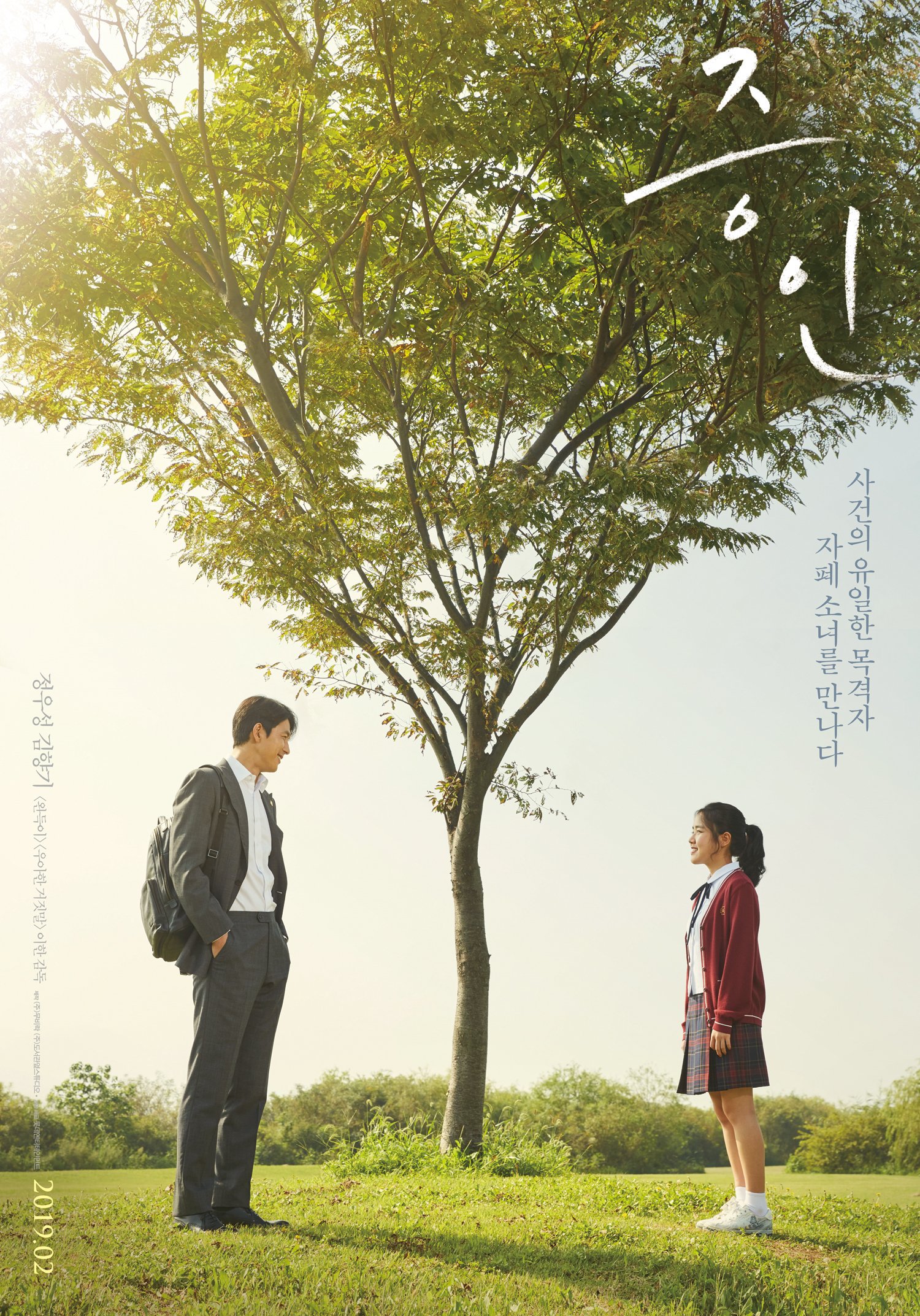
Innocent Witness (증인, Lee Han, 2019)

Innocent Witness poster“Are you a good person?” asks the confused girl at the centre of Lee Han’s Innocent Witness (증인, Jeungin). Her question comes after a series of surprising revelations which have left her questioning all of her relationships and the nature of the world itself, yet it’s one that’s largely impossible to answer. Formerly idealistic lawyer Soon-ho (Jung Woo-sung) thinks he’s been given the kind of case he can get behind, but as usual nothing is quite as it seems and if he wants to get to the truth of the matter he’ll have to learn to think differently.

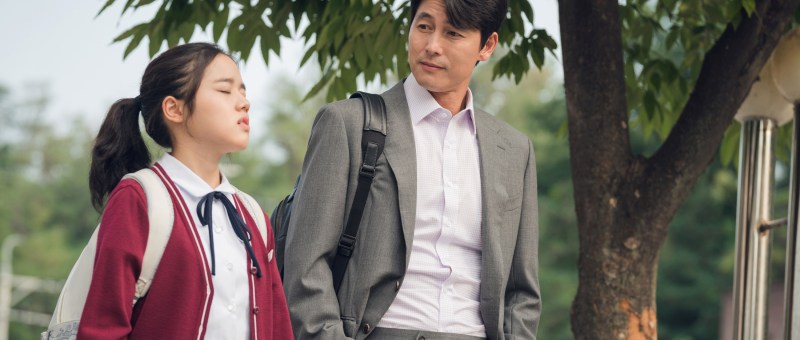
Soon-ho began his career as an activist lawyer working for NGOs, but now he’s “sold out” to join an elite law firm with a dodgy reputation in order to pay back debts his father unwisely guaranteed for a friend. Because of his precarious financial status, Soon-ho has put-off marriage and relationships, despite his father’s nagging, believing them to be out of his reach and is conflicted by his recent career choices which leave him on the opposite side from old friends. When he’s handed a pro-bono case to defend a housekeeper (Yum Hye-ran) accused of murdering her employer he thinks it’s the best of both worlds. All the evidence points to suicide, but there’s a witness testimony which suggests otherwise. Seeing as the testimony is from a 15-year-old autistic girl who witnessed the crime from across the street, Soon-ho feels he can easily have it discounted.

Like many in the film, Soon-ho doesn’t know much about autism and writes Ji-woo (Kim Hyang-gi) off as “mentally impaired”, believing that will be enough for the jury to disregard her testimony especially as it so strongly conflicts with the rest of the evidence. Refused permission to meet with her in person, Soon-ho begins trying to befriend Ji-woo on the way home from school and eventually comes to realise that she is highly intelligent if easily distracted and uneasy in social situations. What he discovers is not that Ji-woo is unable to communicate with the world, but that the world is unwilling to communicate with her. If he wants to bond, he will need to learn her language and earn her trust.

Trust maybe he hard to come by as he witnesses the minor aggressions she goes through every day like the horrible boys at school who taunt her mercilessly and the supposed friend bullying her in secret, not to mention a world full of barking dogs and ringing telephones. When he finally puts her on the stand, his own co-defence chair reads out passages from a book about autism which describe it as a “mental disability” before painting her as a deranged idiot who probably half-imagined what she saw from things she’d seen on television – an act which has profound ethical implications in eroding Ji-woo’s sense of self. Ji-woo told Soon-ho she wanted to be a lawyer because lawyers are good people who help those in need, but Soon-ho has to ask himself whose interest destroying a 15-year-old girl on the stand is really serving.

The law firm Soon-ho joined does seem to be a sleazy one. Despite hiring him to improve their image, Soon-ho’s boss tells him that his new clients won’t be comfortable with him unless he gets himself a little “dirty” while inviting him to awkward parties with call girls in high class hotels. Meanwhile, Soon-ho remains conflicted – especially after potentially losing a 20-year friendship through saying the wrong thing to a still idealistic lawyer and passing it off as an attempt to be “realistic”. Realism is one thing, but Soon-ho seems to have given up and decided if you can’t beat them join them. His dad, sensing his son’s unease, writes him an impassioned letter in which he tells him that the most important thing in life is to be happy with yourself, everything else you can figure out later.

Realising his mistake, Soon-ho begins to see the light. Through bonding with Ji-woo, he learns that seeing things differently can be advantage and that society should have a place for everyone where they shouldn’t have to worry about being themselves. Tellingly, no one ever bothered to ask Ji-woo about the most important part of evidence in her testimony because they all had too many prejudices about her delivery. Only Soon-ho, having bothered to get to know her, was able see what it was that she wasn’t saying. The film perhaps missteps when it has Ji-woo come to the conclusion that she can’t be a lawyer because of her autism, but otherwise presents a sensitive portrayal of a society trying to be better in accommodating difference and doing it with empathetic positivity while subtly waving a finger at the self-serving forces of conservative corruption.


Innocent Witness was screened as part of the 2019 Udine Far East Film Festival.

International trailer (English subtitles)

The Phantom Detective (탐정 홍길동: 사라진 마을, Jo Sung-hee, 2016)

su0mhpqReview of Jo Sung-hee’s The Phantom Detective (탐정 홍길동: 사라진 마을, Tamjung Honggildong: Sarajin Maeul) first published by UK Anime Network.


Comic books and film noir are, in many ways, a match made in heaven. Tough guys lurking in the shadows, larger than life villains and an ever present sense of the strangeness of criminality, lend themselves particularly well to the extremes of both genres which is why the combination is not exactly an uncommon one. In The Phantom Detective , director Jo Sung-hee adds an extra layer of meta textuality in naming the amnesiac hero Hong Gil-dong which is both the Korean “John Doe” and the name of a legendary Robin Hood figure from the 16th century. Like his namesake, this Hong Gil-dong is a preternaturally gifted detective with a faultless memory and an almost supernatural ability to stay ahead of the game, but he’s also a classic film noir hero with a damaged past and hollow heart…

In an alternate 1980s Korea, Hong Gil-dong (Lee Je-hoon) is an ace detective about to break a trafficking ring, which is righteous enough, but he also has another motive – these men may be able to offer him a clue to tracking down a target he’s been chasing for over 20 years. A one eyed man, Kim Byung-duk (Park Geun-hyung), contributed to Gil-dong’s origin story by murdering his mother right in front of him. At least, he thinks so – Gil-dong can’t remember anything about that day save for the visions he sees in his nightmares. In fact, he doesn’t even know his real name or who he really is.

When he finally gets to Byung-duk’s location, Gil-dong discovers he’s already been kidnapped by someone else leaving his two young granddaughters, Dong-yi (Roh Jeong-eui) and Mal-soon (Kim Ha-na), all alone. Taking off with the kids in tow, Gil-dong vows to track down “grandpa” but still has revenge in his heart. As the investigation progresses Gil-dong finds himself getting involved with the strange residents of a tiny town who may be about to fall victim to a dastardly doomsday plan engineered by a shady cult leader…

Ever since his mother’s death, Gil-dong has been unable to sleep thanks to constant nightmares and has lost the capacity for fear and empathy (qualities which serve him well in his line of work). Fiendishly clever, Gil-dong also has a sweet tooth and a sarcastic personality but despite his protestations, usually does the just thing when comes down to a straight choice. Byung-duk’s adorable granddaughters pose something of a problem for him as he begins to warm to their straightforward earnestness, yet his revenge rests in killing their beloved grandfather to avenge his mother’s death. The kids quickly take to Gil-dong, for some reason believing in his essential goodness. Dong-yi follows him around like a deputy detective, meticulously noting everything down in her notebook, whereas Mal-soon has figured out Gil-dong’s talent for deception but hilariously almost blows the gang’s cover on several occasions through her total lack of investigatory acumen.

Through investigating his lead on Byung-duk, Gil-dong hopes to recover his own memories of his early life and the mother he only remembers in his nightmares. The path he finds himself on is a dark one leading straight towards a powerful cult populated by fascism fetish sociopaths. Sure that the “New World is Coming”, the cult have planned a large scale event which threatens the lives of most of the residents of a small, strange town. Now Gil-dong has several reasons to get to the bottom of this long standing mystery ranging from his own desire for answers and revenge to saving the lives of these ordinary people and making sure no one else comes under threat.

Taking inspiration from the comic book world, The Phantom Detective makes use of highly saturated color schemes and deliberately artificial looking backgrounds. Though the approach remains bright and colourful for much of the film which adds to its slightly surreal atmosphere, there’s still ample room for noir with faces cast in shadow, light striking glasses so as to eerily block out the eyes, and Gil-dong’s classic detective outfit and occasional weary voiceover. The pulpy plot doesn’t worry too much about internal consistency, but blusters along well enough on its own even if coasting on Gil-dong’s wisecracking tough guy antics as he unexpectedly bonds with the two plucky little girls temporarily in his care. Cute and funny but also filled with innovative action sequences, The Phantom Detective acts as a worthy secondary origin story for its titular hero whose return will be eagerly awaited!


Reviewed at the 2016 London Korean Film Festival.

International trailer (English subtitles)