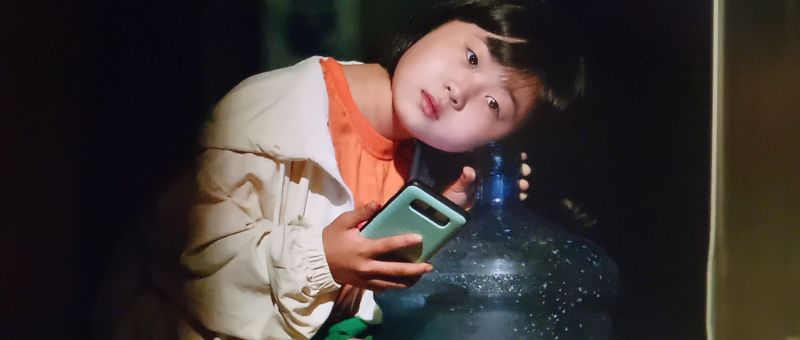

FAQ (막걸리가 알려줄거야, Kim Da-min 2024) [Fantasia 2024]

The sad thing is that Dong-chun, the heroine of Kim Da-min’s charming if also searingly bleak exploration of a Korean education FAQ (막걸리가 알려줄거야), is full of questions the adults around her don’t want to answer. To be charitable, it could be because they want her to have the ability to solve problems on her own, but less so because in the adult world there really is only one correct answer and finding solutions that are entirely your own can make others uncomfortable. 

This is something Dong-chun starts to realise, remarking that she now understands why adults don’t like it when you ask questions when her two imaginary friends ask her how she’s going to explain that she got the winning lottery numbers from a bottle of makgeolli that communicates with her through morse code but in Persian. Even Dong-chun knows, she probably shouldn’t mention that part out loud but there’s something quite poignant about the fact that the makgeolli is her only real friend. Her tendency to ask questions, which is difficult for her because of he shyness, has already seen her labelled as weird as by several of her classmates including the obnoxious Na-young who pretends to get along with her because their mothers are friends but is really much more of a model child try hard already obsessed with being on the right track and getting in the best lane for the university application she won’t be writing for another decade.

That’s something else that’s difficult and inexplicable. The education system keeps changing so you can’t even try to game it because they constantly move the goalposts. The reason why the mothers enrol the girls in Persian classes is because they think top universities will be making special offers to people who speak Persian when they come to apply, but also they might not. Concerned that she’ll be disadvantaged by her short stature, Dong-chun’s mother Hae-jin starts injecting her with a growth serum and advises she go to bed earlier, but the girl points out that she needs to stay up to 11pm to finish all her homework. She has cram school and activities nearly every day including an art class that doesn’t even start until 9pm. No one seems to be asking what effects persistent sleep deprivation may have on her later life and mental health besides impacting her height. 

In short, it’s not surprising if her mind’s begun to crack under the constant pressure of being forced to conform to a very rigid sense of social success which begins in early childhood and largely disregards everything that makes Dong-chun interesting from her insatiable curiosity to her empathetic nature and bashful friendliness. We can also get a glimpse ahead by looking at the life of her mother, Hae-jin, who reveals that she suffers from depression in part because she won a full scholarship to a good university and had a high paying corporate job she was pressured to give up to become a housewife and mother. A therapist perhaps problematically told her that she had the wrong attitude because she was now doing the most important thing in the world by raising a child which is why she begins pinning all her vicarious hopes on Dong-chun as a vessel for her own success as a mother in submitting herself to the nation’s relentlessly patriarchal social codes. 

Dong-chun’s parents aren’t bad people, they love her and are actively supportive. They aren’t angry when she experiences stage fright at a speech competition and later tell her she can sit the next one out if she feels uncomfortable (genuinely, not out of a desire to avoid their own embarrassment). But they’re so focussed on her future they’re missing her present, which is why it takes Hae-jin so long to realise she’s fermenting makgeolli in her room. Later she reflects that perhaps they should move to another country, one where Dong-chun would be free to be herself but it may already be too late. In any case, we can see Hae-jin’s contempt for those who choose to live outside of Korea’s rigid ideas of social success in her reaction on finally finding her long lost brother who graduated from Seoul University and had a big corporate job but dropped out to be hippy living off grid. He doesn’t know it and neither does she, but he ends up forming an unexpected connection with his neice Dong-chun being one of the few people who actually listens to her. 

When it finally speaks, the makgeolli has the voice of her science teacher who was the only person who did actually answer one of her questions if only to explain that know one knows yet but he’ll be sure to pass on the information when they do. In a way, getting this cosmic message and focussing how to solve this great mystery at the centre of her life help Dong-chun find her direction even if it’s leading towards “fermentation” in the great black hole of adulthood. The ambiguity of the ending restores a kind of darkness to Kim’s quirky tale but in any case allows Dong-chun to escape through the imagination and free herself from the constraints of a rigid society in which asking questions, let alone answering them, is very much not the done thing. 


FAQ screened as part of this year’s Fantasia International Film Festival.

International trailer (English subtitles)

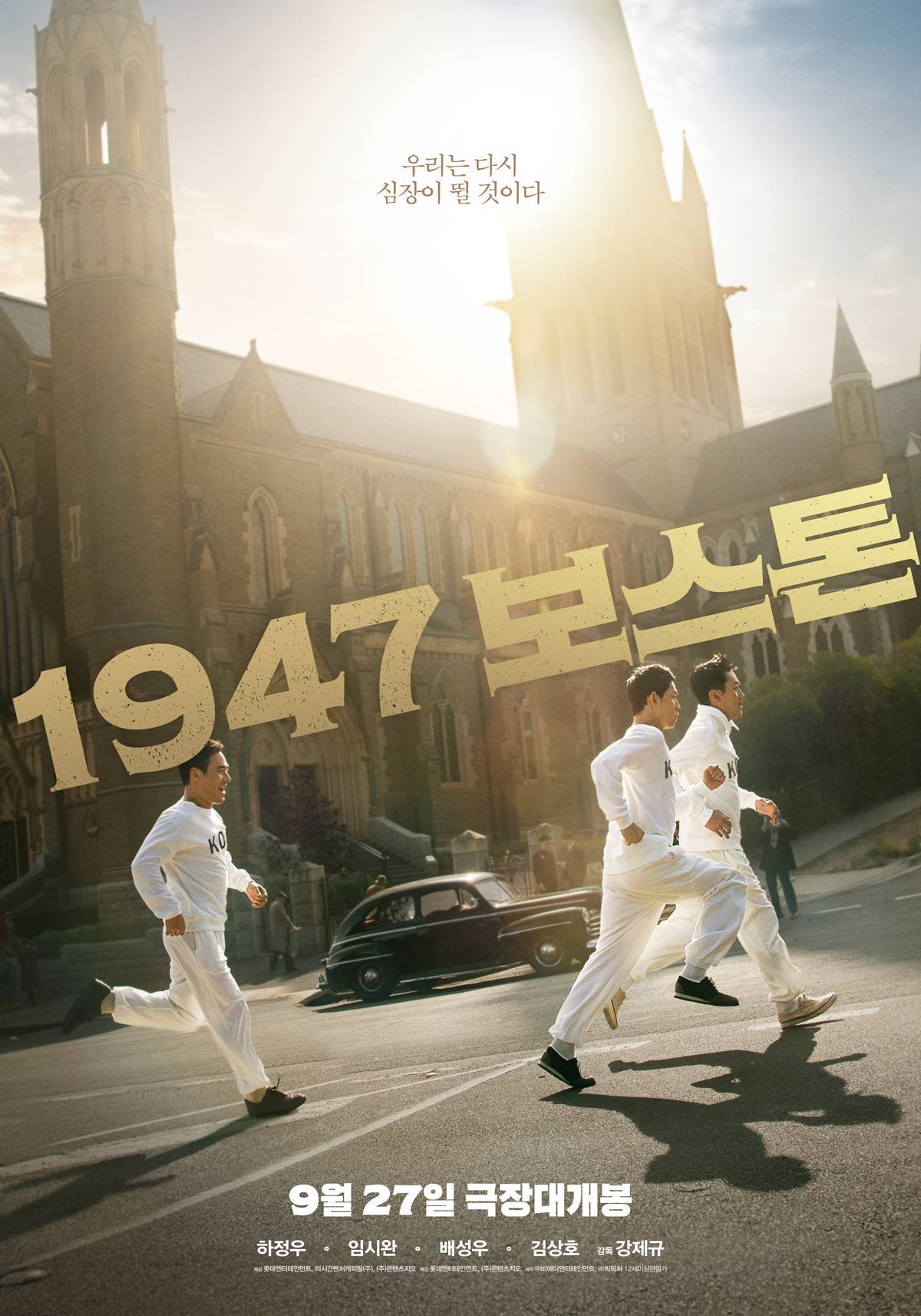
Road to Boston (1947 보스톤, Kang Je-kyu, 2023)

The right to participate in a foreign marathon becomes a victory for the Korean in people in Kang Je-kyu’s sporting period drama, The Road to Boston (1947 보스톤, 1947 Boston). Skewing towards the nationalistic, the film finds two brands of exceptionalism colliding while hinting at the sense of destabilisation in a nation which has not only been divided but rather than the promised liberation only re-colonised by an entirely different military regime who insist that Korea is not a real country merely a protectorate. 

In 1936, Sohn Kee-chung (Ha Jung-woo) won a gold medal for marathon running in the Berlin Olympics but when he stood on the podium they played the Japanese anthem and flew the Japanese flag. They announced his name pronounced the Japanese way, and when Kee-chung covered the Japanese emblem on his uniform he was banned from sports and put under police surveillance. Japan had annexed Korea in 1910, and the victories were accredited to the Japanese Empire. The country had been liberated from Japanese rule at the end of the war, but the nation was divided in two with the Americans occupying the South and the Soviets the North. 

Part of Kee-chung’s bitterness is that his family are trapped over the border and he’s been unable to bring them South, but it’s also that he was not able to run “freely” under the flag of his nation or in his true name. Yet now that they’ve been liberated, it’s as if only the names have changed. Loutish American GIs make trouble in the streets bullying the locals much as the Japanese had while the nation in general remains poor. There’s a chance that Korea could compete in the 1948 Olympics in London, but they’ve been told they don’t qualify because Korea doesn’t really exist and even in the way it does it’s only for a couple of years so they have no track record of international competition, all their previous successes are still attributed to Japan. To qualify, they decide to enter the Boston Marathon, but are told there are additional hurdles because Korea is a “refugee country” and the authorities are worried they might just stay there. 

When they do actually arrive in the US, they get a similar attitude told that winning the Boston Marathon might help them gain US citizenship as if that were some ultimate prize they must be secretly longing for when all they want is to be recognised as Koreans. Because the Military government signed off on their participation, the shirts prepared for them carry American flags, but Kee-chung does not want his protege Yun-bok (Im Si-wan) to suffer the same fate as him and compete under a flag that is not his own as he outlines in a powerful speech to the person in charge of the marathon while cheered on by outraged Asian Americans who also suffer racism and discrimination in the so-called land of the free.

At the press conference, reporters ask offensive and embarrassing questions such as whether Korea has universities, newspapers, or even electricity. The US guarantor Nam-hyeon (Kim Sang-ho) also states that even when he says he’s Korean, people ask him if he’s from China or Japan while Yun-bok receives racial slurs from a runner representing America. America is also presented as the land of immoral capitalism in which the only thing that matters is money in direct contrast to Kee-chung’s claims that runners aren’t in it for the cash. He originally rejects Yun-bok for his “arrogance” and lack of interest in anything that isn’t about money but later changes his mind on realising his crushing poverty and desire to help his ailing mother. 

On the other hand, the runners are constantly reminded how different the US (and elsewhere) is from Korea, asked if they know how to sleep on a Western-style bed or use a shower while reminded that everything in the mini bar you’ll be charged for. Yun-bok comically washes his face in the toilet seeing only a basin of water little knowing what taps are or how to use them. On his first taste of Coca Cola, a symbol of American capitalism, he is captivated and wonders if they should just accept the American flag for the right to run and a quiet life while Kee-chung will not be put through that humiliation again. The right to participate in the marathon under the Korean flag becomes a victory for the Korean people as a whole who had chipped in to crowdfund it in the face of resistance from the US military government. A big wig who made his money in dubious ways might have a point when he asks if it’s right to spend so much on a marathon when people are starving in the streets, but then what Kee-chung is trying to reclaim is national pride which to some at least is worth the price. In any case, the historical victory becomes a crowning moment of Korean independence, no longer a refugee state but (symbolically at least) a sovereign nation and finally free to run just as far as it can go.


Road to Boston screened as part of this year’s London East Asia Film Festival.

International trailer (English subtitles)
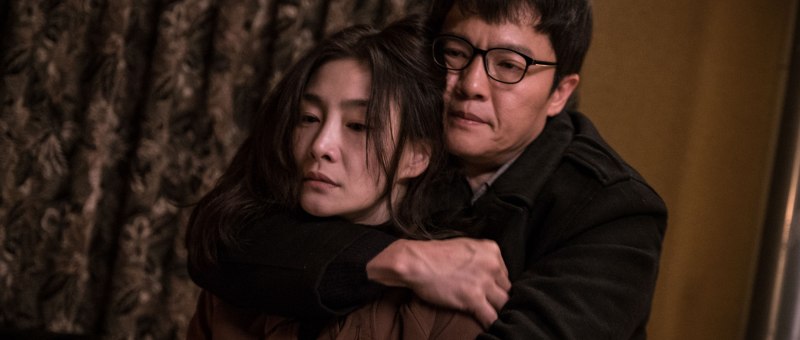
The Pension (더 펜션, Ryu Jang-ha, Yang Jong-hyun, Yoon Chang-mo, Jung Heo Deok-jae, 2018)

The Pension poster“We’re all lonely beings” the proprietor of a small mountain lodge advances hoping to comfort a distressed guest. The temporary denizens of The Pension (더 펜션), a four part omnibus set in a charmingly old-fashioned forest hideaway, are indeed mostly lonely beings making use of this liminal place to process the taboo away from the prying eyes of civilisation, embracing the savagery of the natural world as they cast off conventional morality to pursue their illicit desires be they vengeful, violent, protective or loving.

We begin with darkness as our first pair of guests, a man, Choo-ho (Jo Han-chul), and his wife Mi-kyung (Park Hyo-joo), seem to be all too interested in the family next door. Eventually we discover that the couple have come with ill intentions and revenge on their mind, though the man they’re after doesn’t seem so bad to begin with – he asks them to dinner with his wife and son who seem happy, but the atmosphere grows tenser as he begins to drink and a darkness creeps in. Before long Mi-kyung has set her mind on poetic justice, leaving the other couple’s young son in peril while Choo-ho struggles with his desire to stop his wife making a terrible mistake while not wanting to upset her.

Unhappy families continue to be theme with the second pair of guests – a married couple hoping to rekindle their listless romance in the peace and tranquillity of the remote mountain lodge. While the arrival is pleasant enough, perhaps too much so as the husband (Park Hyuk-kwon) puts on a show of making the effort, despair creeps in when he realises he’d made sure to bring his wife’s (Lee Young-jin) favourite coffee but forgotten the grinder. He wants her all to himself, but she just wants to go home and worries about their young daughter staying with a mother-in-law she doesn’t seem to like very much. Eventually the couple decide they need some time apart and she ends up meeting someone else (Kim Tae-hoon) in the woods to whom she recounts all the loneliness and isolation she experiences in her married life, seemingly trapped by conventionality but unconvinced that anything would be very different if she left.

The hotel owner (Jo Jae-yoon) might agree with her – a lonely soul he is too, though it appears he opened this hotel for just that reason, burying himself away from his heartache by coming to live alone with the transient presence of strangers and peaceful isolation of the woods. His mother, however, is not convinced and is constantly nagging him to get married – in fact, she’s set up a meeting for the following day meaning he’ll have to close the shop. That might be a problem, because he gets a surprise guest in the middle of the night, a distressed woman (Shin So-yul) intent on staying in a very particular room. Finding it odd, he can hardly turn her away with nowhere else to go but a TV programme on the causes of suicide (loneliness, the decline of the traditional family, economic pressures etc) convinces him he ought to check on her. Assuming she is merely lovelorn (as is he), he tries to comfort her with platitudes but pulls away from her emotional need only to find himself eventually wounded only in a much more physical way as he idly fantasises what it might have been like if he’d gone back to her room and been a bit more sympathetic.

Our proprietor is notably absent in the final segment, replaced by a much younger man (Lee Yi-kyung) with much more urgent desires. Despite being there to do a job, the boy has brought his girlfriend whom he alienates by failing to explain a mysterious text from another girl all while making eyes at the attractive young woman (Hwang Sun-hee) staying next door who claims to be “from the future”. When another guest turns up and starts making a fuss about a missing engagement ring she supposedly left behind, everything becomes much more complicated than it seems but one thing is certain – there is precious little love to be found in this hotel where everyone has come to embrace the side of themselves the city does not allow to breathe.

Much more cynical and obviously comedic than the preceding three tales, the final chapter perhaps bears out the message that it’s not so much rest and relaxation people have come to The Pension for, but “privacy” or to be more exact “discretion”. Some came for love, others for lack of it, but all of them are looking for something they are unlikely to find here though the first couple could perhaps have found it if only they had stuck together. Nevertheless, hotels are transient places for a reason – take what you need from your stay and leave the rest behind.


The Pension screens as part of the eighth season of Chicago’s Asian Pop-Up Cinema on April 16, 7pm, at AMC River East 21.

International trailer (English subtitles)
Tazza: The Hidden Card (타짜-신의 손, Kang Hyung-Chul, 2014)

tazza posterYou gotta know how to hold ‘em, know when to fold ‘em, know when to walk away and know when to run. Apparently these rules of the table are just as important in the cutthroat world of the Korean card game Hwatu as they are in the rootinest tootinest saloon bar. Like most card games, having the winning hand is less important than the ability to play your opponent and so it’s more a question of who can cheat the best (without actually breaking the rules, or at least being caught doing so) than it is of skill or luck. A second generation sequel to 2006’s Tazza: The High Rollers, The Hidden Card (타짜-신의 손, Tajja: Shinui Son) is a slick, if overlong, journey into the dark, underground world of gambling addicted card players which turns out to be much more shady than the shiny suits and cheesy grins would suggest.

Wisecracking kid Dae-gil (T.O.P) comes into contact with the first film’s fast talking hustler Go (Yu Hae-Jin) and realises he has a talent for trickery. As a young man he gets himself into trouble trying to save a family member from a gangster whom he winds up stabbing meaning he has to go on the run and leave the girl he’s fallen head over heels for, Mina (Shin Se-Kyung), far behind him with only the promise to come back for her when he’s made something of himself. With nothing to fall back on Dae-gil ends up working for cardsharping gangsters in what is really a series of high level con operations. His first problem occurs when he temporarily forsakes the memory of Mina for the attentions of the alluring Mrs. Woo (Lee Honey) who becomes both his secret girlfriend and the gang’s latest mark.

Things do not go to plan and Dae-gil is left carrying the can for the gang’s heavy losses. Getting into trouble with another mark who turns out to be a high level gangster himself, Dae-gil finds out Mina has been sold into prostitution as payment for a family debt but also winds up losing a kidney as recompense for his mounting gambling debts. Now Dae-gil is out for revenge against pretty much everyone, hoping to rescue Mina and win her heart in the process but his adversaries are old hands at this sort of thing and it’s going to take more than a rigged deck to beat them at their own game.

Taking over from the first film’s Choi Dong-hoon, Kang Hyung-chul opts for a slick and charming Oceans 11 inspired aesthetic full of quirky humour and tricky slight of hand photography. With retro musical choices from a smooth cover of Spooky to the ‘80s synth pop kicking in for an exciting car chase, Kang piles on the nostalgia as Dae-gil rides high as a wisecracking conflicted member of this underhanded outfit. Taking inspiration from its manwha roots, The Hidden Card maintains its breezy tone even whilst the atmosphere darkens as Dae-gil taps out with this gangster credit, beaten up, drugged and waking up in a filthy room with a bandaged hand and a crude scar across his abdomen where his kidney used to be. Apparently making a quick recovery from serious surgery, Dae-gil’s discovery of Mina’s fate is likewise another addition to his quest narrative rather than more evidence of the savagery of this trick or be tricked world.

The Hidden Card’s biggest problem is an unavoidable one given its genre – the sheer structural repetitiveness of moving from one card game to another. Lack of familiarity with Hwatu itself is not exactly a problem even if mildly frustrating, but the nature of the way the game is played means that a great deal of screen time is occupied with watching people watching each other, moodily, only to be left unsure of what’s going on or who’s won at the end of it. This is all the more true of the film’s final showdown which brings back a major player from the first instalment in which the stakes have been raised supposedly to “prevent” cheating, but only really aim to make it more “challenging”. Still, away from the gaming table there are enough high octane fist fights and a lengthy car chase to break up the more cerebral thrills.

Undeniably slick and filled with a host of likeable characters offering snappy dialogue and silly humour, Tazza: The Hidden Card is far too long at two and a half hours. Uneven pacing does not help the feeling of scale and a similarly unbalanced plot structure produces a misleading sense of progression. Still, keeping one step ahead of the card sharks is fun in itself and even if the action drags here and there, there is enough character driven drama and ironic comedy to keep things moving right up until the consciously cool finale.


International trailer (English subtitles)

The Chaser (추격자, Na Hong-jin, 2008)

The chaser movie posterWhen it comes to law enforcement in Korea (at least in the movies), your best bet may actually be other criminals or “concerned citizens” as the police are mostly to be found napping or busy trying to cover up for a previous mistake. The Chaser (추격자, Chugyeogja) continues this grand tradition in taking inspiration from the real life serial murder crime spree of Yoo Young-chul , eventually brought to justice in 2005 after pimps came together and got suspicious enough to make contact with a friendly police officer.

Former cop turned petty pimp Joong-ho (Kim Yun-seok) has a problem. His girls keep skipping out on their debts. Or so he thinks – rousing one of his last remaining “employees”, Mi-jin (Seo Young-hee), from her sickbed (and unbeknownst to him calling her away from her seven year old daughter), Joong-ho finds a phone belonging to a missing girl and realises the last number called is the same as the one he’s about to send Mi-jin off to. Suspicious, Joong-ho rediscovers his detective skills and notices this particular number all over his books. Thinking the john is kidnapping his girls to sell them on, Joong-ho hatches a plan to track Mi-jin and have a word with this bozo but unsurprisingly nothing goes to plan. Mi-jin has fallen into the grip of a vicious serial killer, Young-min (Ha Jung-woo), but may still be alive if only Joong-ho can find her in time.

Joong-ho is not a good guy. Maybe he’s not the worst of his kind but as a former law enforcement official turned unsentimental exploiter of women, Joong-ho is an unlikely saviour. His primary motivation is, unsurprisingly, commercial as the look of concern he gives to one of his ladies encountering a dangerous client betrays, the kind of irritation a taxi driver might display on noticing a large scratch on his expensive car rather than a recognition of the pain and suffering those cuts and bruises bear witness to. He never stops to consider that something untoward has befallen the missing women and is, in one sense, relieved when he thinks they’ve been sold on rather than just skipping out on him. Throughout his quest to find Mi-jin which sees him forming an unexpected paternal bond with her young daughter, Joong-ho begins to rediscover his humanity as he’s forced to confront the similarities between himself and this deranged psycho killer.

Like his real life counterpart, Young-min, is a sexually frustrated misogynist who begins his social revenge through killing off the wealthy before moving on to the less easily missed including local prostitutes which is what ultimately proves his downfall when the various area pimps begin to connect the dots. In actuality it turns out Young-min has previously been questioned in connection with a murder but was released due to lack of evidence. Likewise, this time around the police are not very interested in capturing him and Young-min is once again returned to society due to some political concerns which result in pressure from above. As if having charmed luck with the police weren’t enough, Young-min also exploits the other cornerstone of South Korean society – the church, through which he recruits his victims, subverting their trusting religiosity with his violent perversion.

For a film which largely lives on the chase, winding through the darkened, rain drenched backstreets of downtown Seoul, Na adds in plenty of twists and turns as the case proceeds down one dingy alleyway after another. Joong-ho’s gradual reawakening as a human being rather than cold blooded human trafficker is accompanied by the gradual reveal of his counterpart’s dangerous need for validation through violence but also by the realisation of his total powerlessness in the face of such a nebulous and faceless threat. The police won’t help (perhaps if they’d investigated those parking violations a little more assiduously all of this could have been avoided), the Church is just an ironic distraction, and the politicians are busy squabbling amongst themselves. Joong-ho is an unlikely figure of salvation, but he remains the last best hope for justice so long as he can avoid becoming that which he seeks.


Original trailer (English subtitles)

https://www.youtube.com/watch?v=ai0GambXj-s