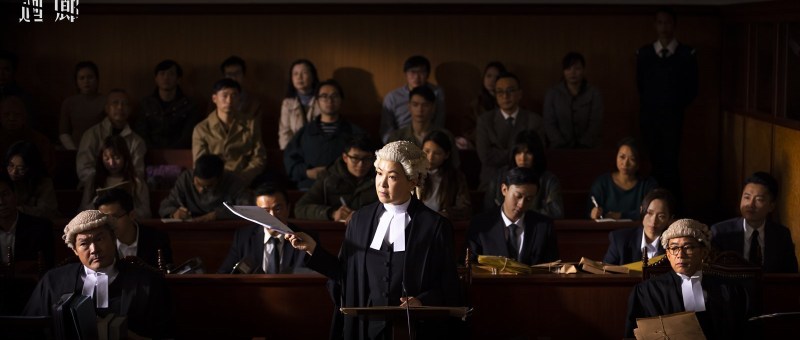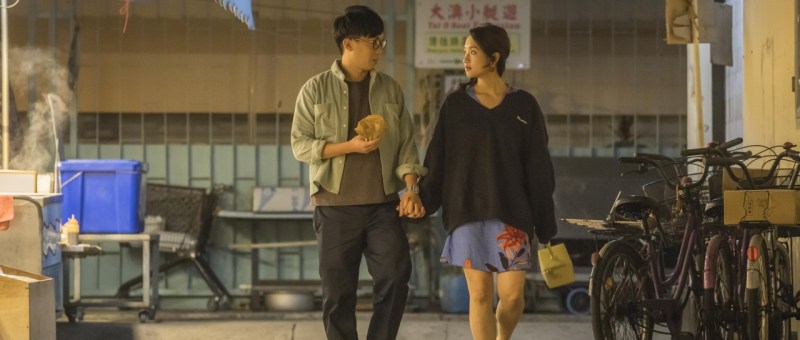
The Last Dance (破·地獄, Anselm Chan, 2024)

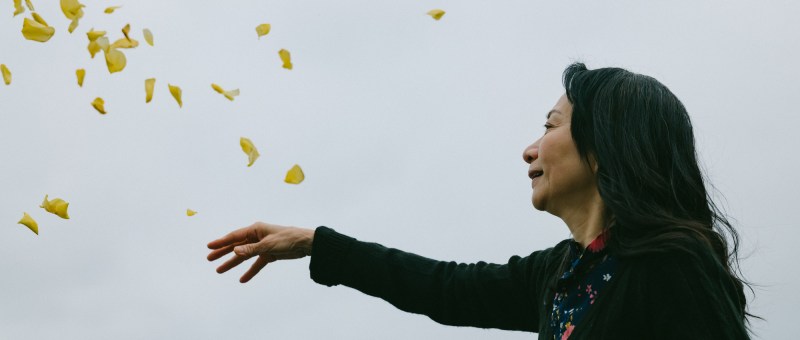
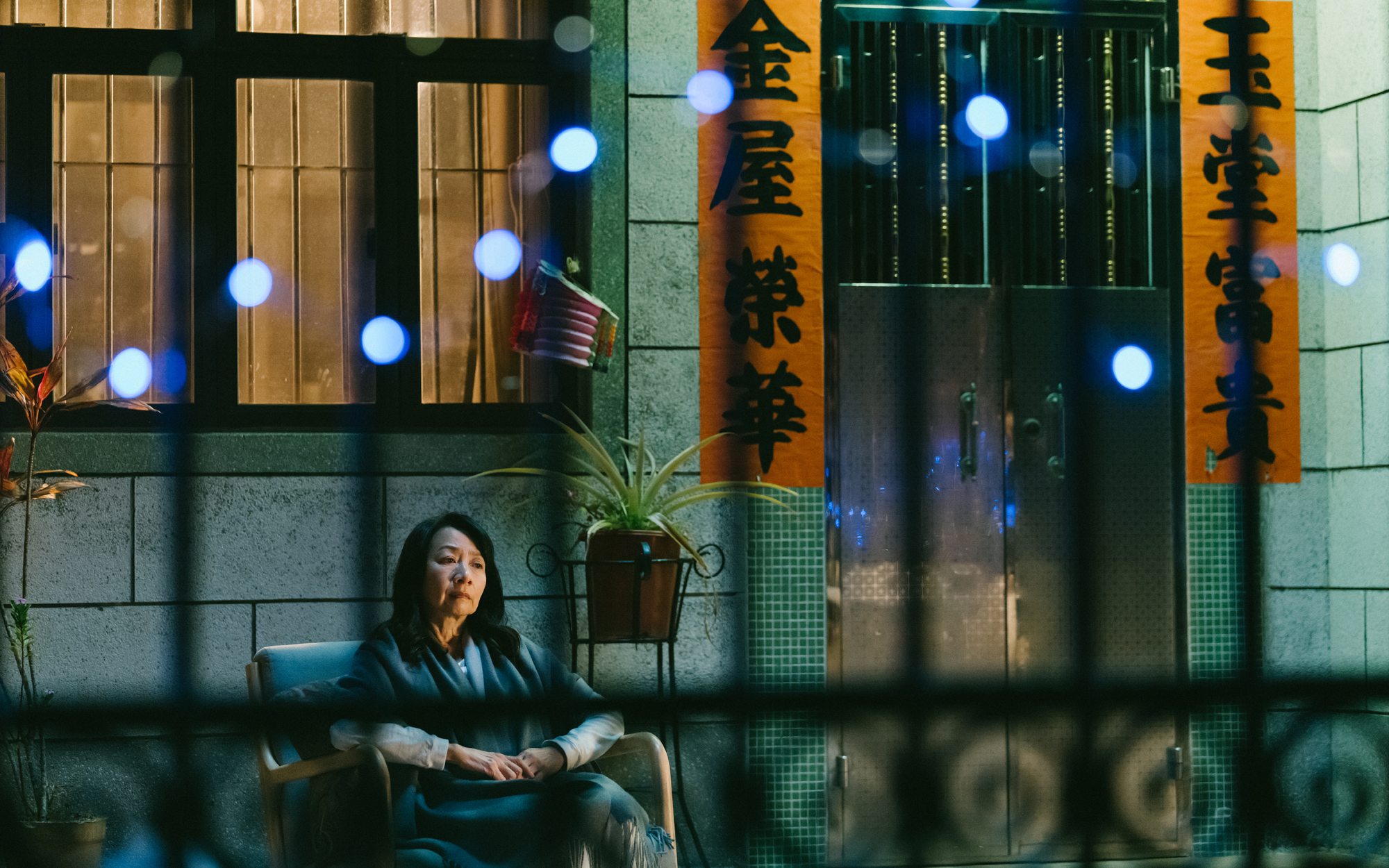
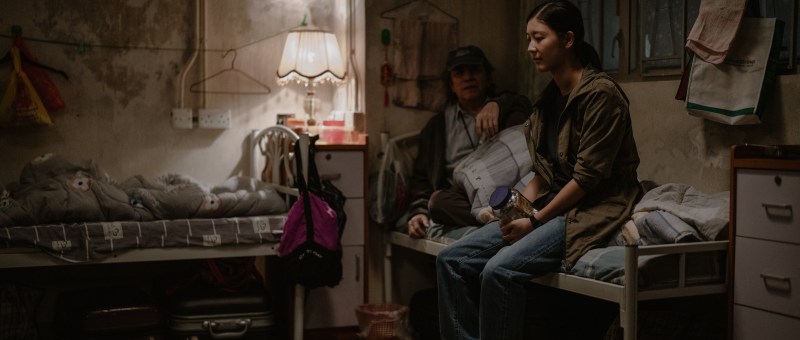
When serving the living doesn’t pay, why not make money from the dead? That’s the advice that’s given to former wedding-planner Dominic (Dayo Wong) in Anselm Chan’s touching spiritual drama The Last Dance (破·地獄), but after pivoting towards organising death rituals it’s the living he continues to serve. In many ways, Dominic stands at the borders of life and death, but he’s also an onlooker in a wider debate about tradition and modernity, what we inherit and what we choose to pass on, along with the departing soul of an older Hong Kong as the young flee abroad leaving those who stay behind to carry what may seem to them a burden too heavy to bear alone.

The irony is that though Dominic had been a wedding planner until the economic effects of the coronavirus pandemic killed his business, he is not in fact himself married and according to his long-term girlfriend Jade (Catherine Chau) did not see the point in a marriage certificate. One might infer that if he thought weddings were essentially meaningless exercises in vanity then he might feel the same way about funerals and his initial behaviour after taking over the funeral parlour run by Jade’s ageing Uncle Ming (Paul Chun) might confirm that suspicion. Not only does he start selling tacky trinkets as some kind of funeral favours, but makes a huge faux pas with an ostentatious stunt at his first funeral that causes upset and offence to the family. At the very least, it would have been useful to confirm how the deceased passed away before trawling their instagram account in an attempt to reconstruct their personality.

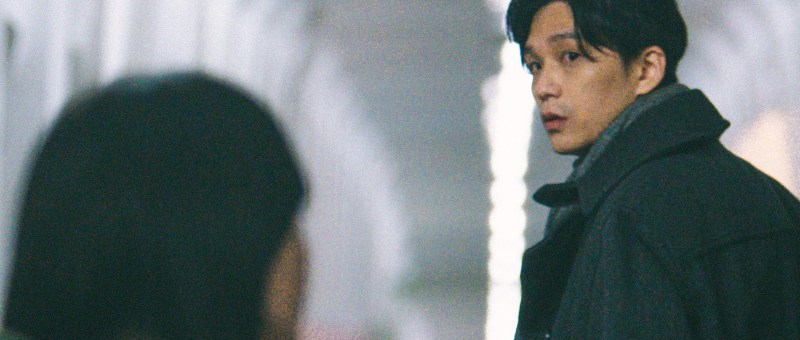
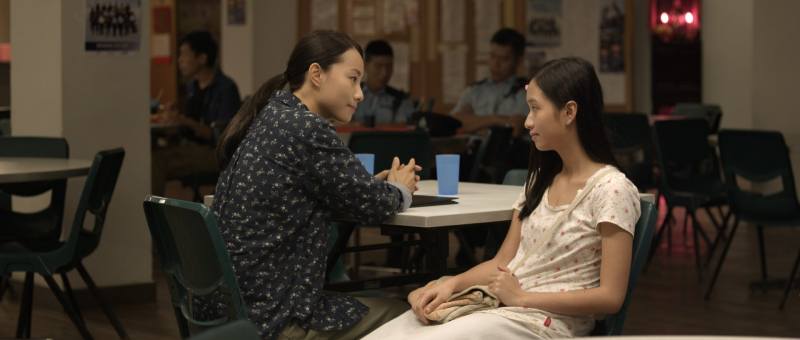
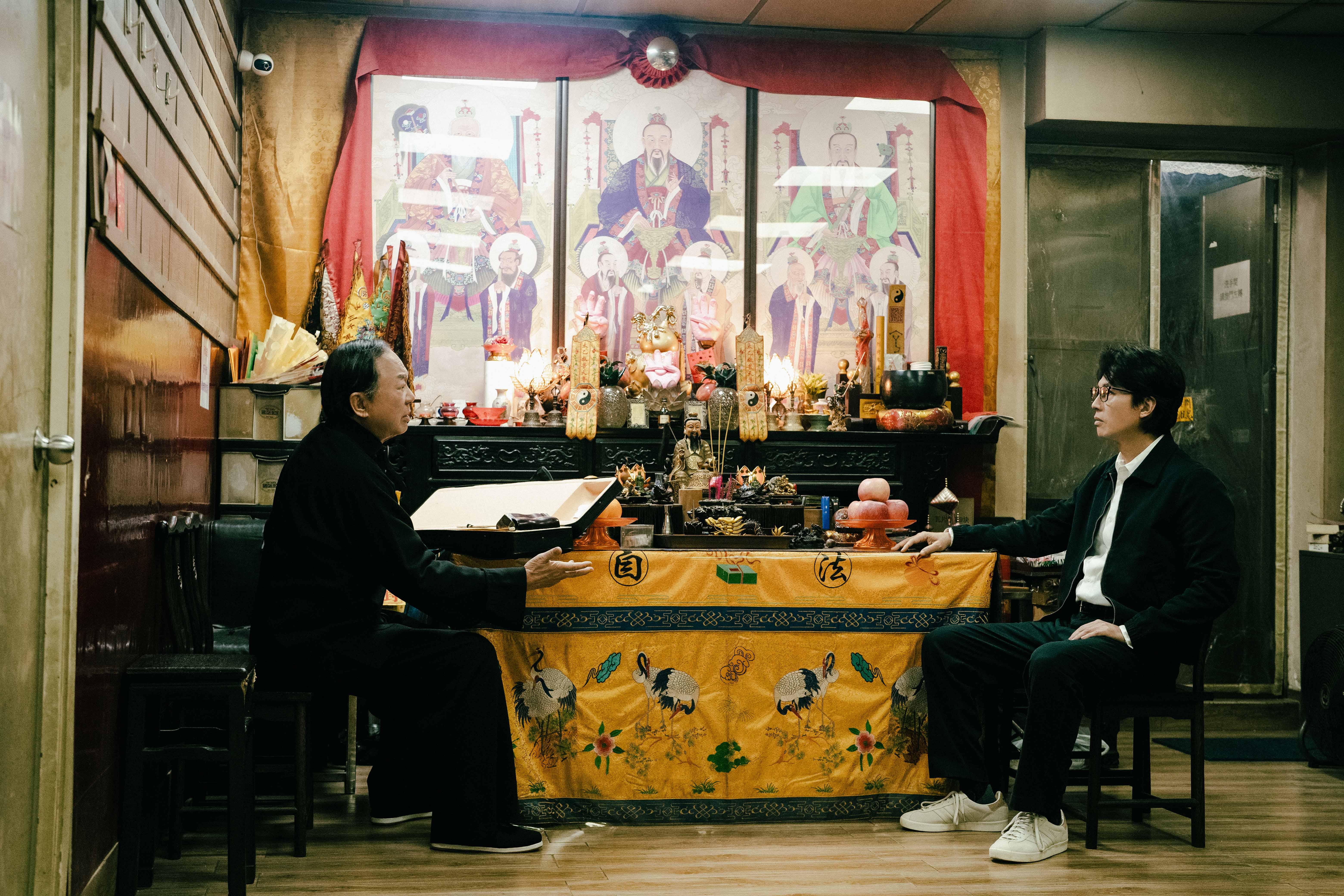
It’s this kind of insensitivity that irritates intensely grumpy Taoist priest “Hello” Man (Michael Hui) who brands Dominic an “amateur” believing that he’s only obsessed with money and intent on exploiting the grief of bereaved families. But on the other hand, Man is only really interested in the sanctity of ritual and doesn’t get involved with the living nor is he very sensitive to the emotional needs of those in the process of sending off a loved one. His entire life has been in service of the ancestors to the point that it’s soured his relationships with his two children. He has no faith in his son Ben (Chu Pak Hong) to inherit his position as a Taoist priest, while Ben resents being forced to inherit a burden he has no desire to carry. Daughter Yuet (Michelle Wai), perhaps ironically a paramedic, would have happily have carried it, but has endured years of being told that “women are filthy” and is prevented from inheriting these traditions because there is a taboo against women undertaking the role of a Taoist priest. The continual sense of rejection has left her with huge resentment towards her father and resulting low self-esteem that sees her engage in a no strings relationship with a married doctor.

Ultimately the film suggests that these traditions themselves are too large to bear, at least in their entirety, and do nothing more than crush and oppress the young. In part, they embody the spirit of an older Hong Kong which is itself in danger of fading away as seen in Dominic’s innovative new bespoke funeral planning services which to traditionalists might seem like they play fast and loose with ancient ritual, but the resolution that each Dominic and Man come to is that funerals are for those who remain behind and while Man liberates the souls of the dead Dominic does the same for the living in taking a more compassionate approach to dealing with those grieving a loss. Not only does his acceptance of the strange requests of a heartbroken mother (Rosa Maria Velasco) branded a “nutcase” and rejected by the local area bring her a degree of comfort, but his decision to allow what seems to be the same sex partner (Rachel Leung) barred from a funeral service the right to say goodbye albeit in secret demonstrates the necessity of doing right by both the living and dead.

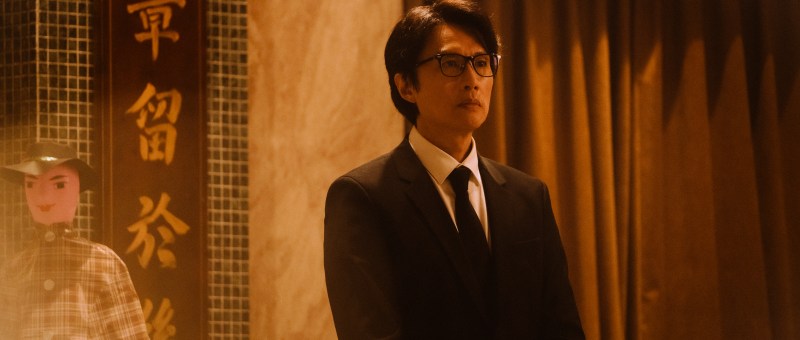
As Man later says, in some ways he’s shown him how to do funerals and awakened him to the ways his oppressiveness in his adherence to tradition has prevented him from being a better father. His decision to wear a western suit for his own funeral might indicate a desire not to take this rigidity into the next world while hoping to liberate his children from the burden of tradition and show them that they were each loved and accepted even if it did not always seem that way. Which is not to say that the tradition should not be saved or that this is itself a funeral for the soul of an older Hong Kong, but only that if you let some of it, such as its inherent sexism, go it will be easier to carry when everyone carries it together. “Living can be hell,” Dominic admits and the funeral is a liberation both for the living and the dead. A touching yet surprisingly lighthearted meditation on life and death, what it comes down to really is that death is coming to us all but there’s no point spending your life worrying about it when you should just try to enjoy the dance until the music stops.


The Last Dance is in UK cinemas from 15th November courtesy of CineAsia.

UK trailer (Traditional Chinese / English subtitles)
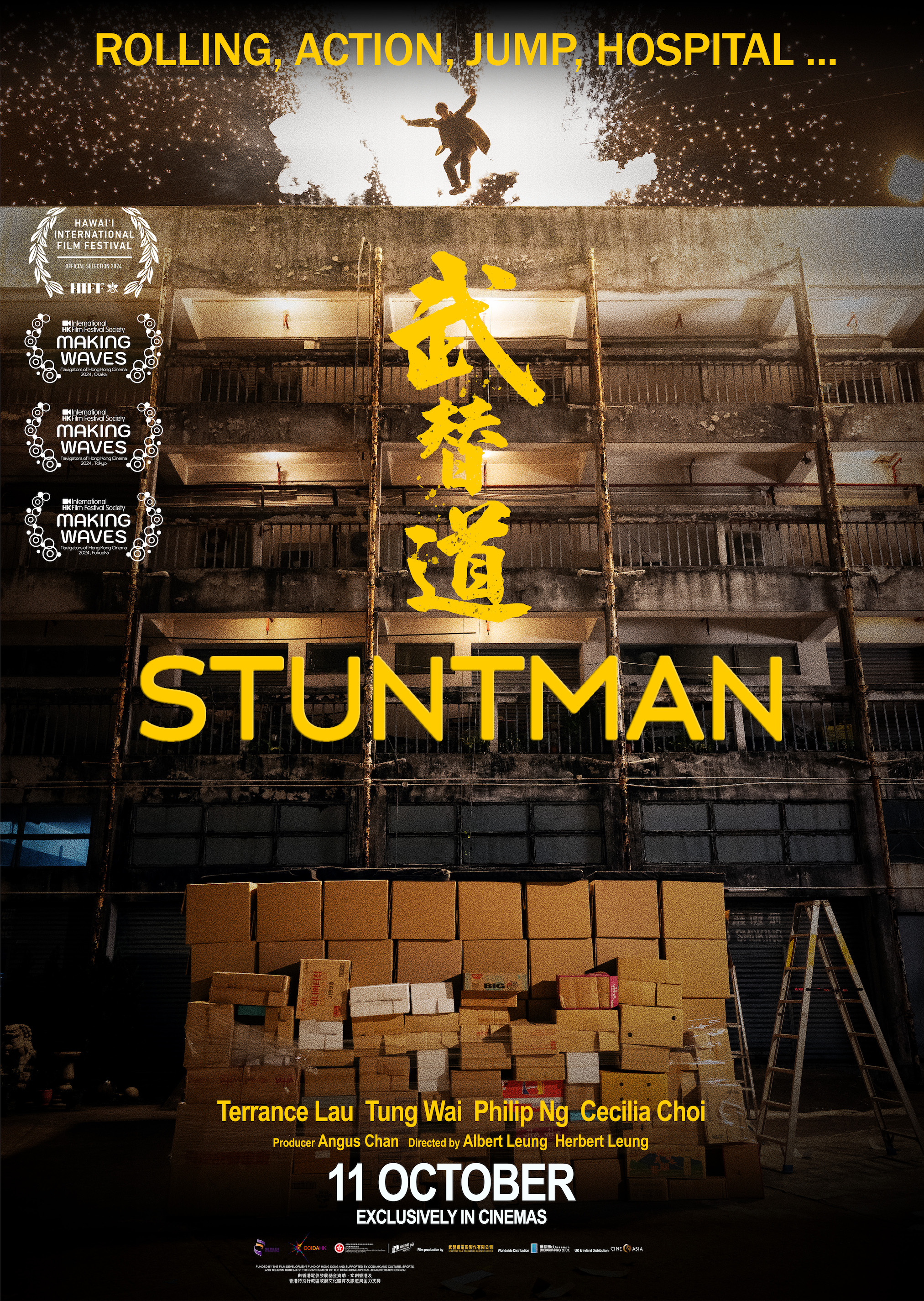
Stuntman (武替道, Herbert Leung & Albert Leung, 2024)

No matter how good a film is, it’s never worth risking someone’s life. Intellectually, “heartless” action choreographer Sam knows that, but once the camera’s rolling all he seems to see is the take and it’s win at all costs. An homage to the glory days of Hong Kong cinema when no one had ever heard the words health and safety, Herbert Leung & Albert Leung’s Stuntman (武替道) is in its way a paean for those who risked their lives for our entertainment but also for a fading Hong Kong which has the film seems to argue lost it’s bite and become rather defeatist if not docile. 

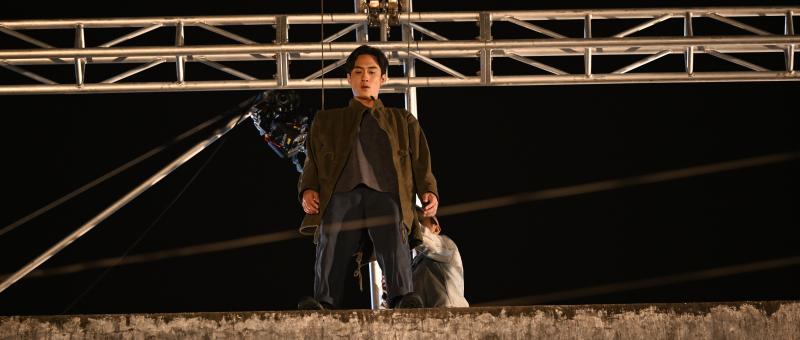
Those around Sam, played by real life action choreographer Tung Wai, seem to be convinced that “Hong Kong cinema is dead,” largely because, for very good reason, it’s no longer possible to make the kind of films they did back then with crazy, death-defying stunts and visceral action sequences. The opening scenes of the film, set in the mid-1990s, find Sam filming what appears to be a Police Story-style chase through a shopping mall that is supposed to end with a stuntman stand-in jumping from a bridge onto a moving car to catch the bad guy. The stuntman, Wai, is young and experienced so he doesn’t make the jump at which point Sam yells at him and asks his assistant, Kam, to to do it instead. But everything that could go wrong does and Kam is seriously injured because of Sam’s singleminded stubbornness in refusing to film the sequence with a cut which would obviously make it safer even if he argues less exciting. 

Sam evidently does feel a degree of guilt for this, especially as it later has other consequences for his personal life, and retreats from the film industry to run a bone setting clinic with posters for classic Hong Kong films on the wall. It’s a reverence for this bygone era that enables him to bond with Long (Terrance Lau Chun-him), a younger and more modern kind of stuntman who isn’t necessarily afraid of taking risks but understands the importance of on-set safety. Long can’t catch a break with demand for stuntmen falling rapidly precisely because of the concurrent decline of action cinema while his brother keeps pressuring him to give up his dreams and join his logistics company instead. It’s Kit’s delivery firm that becomes an accidental villain representing a Hong Kong that’s lost it’s nerve and is determined to play it safe while Sam’s recklessness perhaps represents the opposite, a dangerous desire to risk it all without considering the consequences for those around him.

But as he’s fond of saying, there’s always a way. It doesn’t have to be either or. The film seems to say, Hong Kong cinema isn’t dead, but now it belongs to those like Long to lead in new directions, modernising rather than fading away and taking the best of the past with it while leaving the more problematic elements behind. Originally swayed by Sam’s charisma, Long is somewhat horrified when he’s confronted with the consequences of his old school approach to filmmaking which includes going guerrilla style in the street without paying for permits with the consequence not only of police with real guns getting involved but innocent civilians trying to go about their day getting caught up in their fake robbery, becoming frightened and even injured in the ensuing panic. 

Meanwhile, he teaches old dog Sam a few new tricks in that being deliberately unpleasant is no longer the way to exert authority on set while ordering takeaway for everyone is a nice gesture that reminds them you’re all part of a team. As much as Long is a kind of surrogate son for Sam, he’s also reminded that there are some relationships that can’t ever really be fully repaired even if it’s not too late to try to remake them. His pain on seeing his soon-to-be-married daughter’s (Cecilia Choi Sze-wan) step-father taking pride of place at the wedding is palpable, but in the end he realises he’ll never really change because he’s a relic of an older Hong Kong unable to move forward into this new era. “No matter how strong the wind, keep the flame alive,” he tells Long talking both about the Spirit of Hong Kong and its cinema while in a flashback sequence reminding his young daughter that the fireworks will forever glow in her heart. Lent a degree of pathos by Tung Wai’s impassioned performance, the film is a true homage to classic Hong Kong action while also insisting that there’s always a way and it’s never too late to reclaim something of what’s been lost.


Stuntman opens in UK cinemas 11th October courtesy of CineAsia

UK trailer (English subtitles)

All Shall Be Well (從今以後, Ray Yeung, 2024)

There’s nothing that breaks a family apart as quickly as an inheritance. As a cynical lawyer points out, even mothers and sons fall out when it comes to money, so there’s nothing like it to to focus minds with an us and them mentality to clearly define who is and isn’t included under the umbrella of family. But why is it that meaningless pieces of paper hold so much sway over us when we ought to by be governed by the emotional truths that until a moment earlier ruled our lives?

Angie (Patra Au Ga Man) had been fond of saying “because we’re family.” She never doubted her place in that of her partner who all appear, at least outwardly, to love her and accept her relationship with Pat in the way they’d accept any other marriage. But when Pat (Maggie Li Lin Lin) suddenly passes away in her sleep after one last family celebration the situation changes. Well-meaning family members step in to help with the work that must be done when someone dies, but perhaps unwittingly begin to take over slowly erasing Angie from their lives as not really one of them after all.

Her problems are two-fold. The biggest being that Pat never got round to making a will, nor did she think to put Angie on the deeds to the apartment they shared together or leave her financially provided for seeing as she’d managed all the money they’d made when they owned a factory and ran it together. The secondary problem is that Hong Kong does not recognise same sex marriage and so their relationship was not legally recognised. Had Angie been legally married to Pat, she should have inherited everything anyway because she was her spouse even without a will but with things the way they are she’s at the mercy of Pat’s brother Shing (Tai Bo). She never thought this would be a problem, because they’re family, but slowly realises that perhaps they don’t actually see her that way and with Pat gone no longer feel the need to include her.

Her sister-in-law Mei (Hui So Ying) insists on using a feng shui expert to plan the funeral who quickly puts the kibosh on Angie’s desire to have Pat buried at sea as she’d requested. Leaving aside the possibility that the feng shui master is conning them and receiving financial incentives from the people who run the columbarium, the family quickly begin to ignore Angie’s concerns swayed by the claims that interring her ashes will be more beneficial for her descendants which are Mei and Shing’s children seeing as Angie and Pat had none of their own.

A little disappointed in her kids, Mei at one point insensitively remarks that Angie is lucky not to have any though we’re also told that she almost gave in to parental pressure to marry a man in order to become a mother. Daughter Fanny (Fish Liew) makes lowkey racist remarks about her Indian neighbours as a way of expressing her frustration with her moribund marriage and unsatisfying living arrangements, while son Vincent (Leung Chung Hang) struggled to find employment and now works as an Uber driver thanks to the gift of a car from Angie and Pat which allows him to earn a living. He’s originally upset with his family’s suggestion of kicking Angie out of the apartment, but is also in a difficult position himself when his girlfriend becomes pregnant and they can’t find anywhere habitable to live on the kind of salary an Uber driver can earn. Though in her 60s, Mei is still doing a physically strenuous job as a hotel maid while Shing has taken a position he finds degrading as a nightwatchman at a carpark following the closure of his restaurant some years previously. 

The implication is these socio-economic pressures encourage them the abandon their responsibility to Angie as the beloved aunt they’ve known all their lives. But then there’s also the mild homophobia that rears its head, introducing Angie as Pat’s “best friend” and not allowing her to stand in the front with family at Pat’s funeral as if their relationship wasn’t really real because they were both women. Of course they may have behaved the same way had Pat been a man, squeezing Angie out because she had no legal claim as a common-law spouse, but it certainly seems to make it easier for them to abandon her and take everything she worked so hard to build with Pat as if they were really entitled to it. Shing justifies himself that he has to look after “his” family, which doesn’t include Angie, while cruelly implying that it’s what Pat would have wanted. 

In the end, Angie is left with no other option than to sue for her “rightful” share as a ”dependent” in an effort to force the family to recognise the legitimacy of her relationship with Pat. Thankfully she has another family in her community, though her own still living parents only partially accepted her relationship with Pat again referring to her as a “best friend” and making cracks about how she never married. But her family was Pat, and Pat is gone. Yeung paints a touching picture of grief as Angie reacts all the things she did with Pat but now alone, accompanied only by a sense of absence and comforted by her memories while otherwise exiled from a world that had seemed until then filled with familial love.


All Shall Be Well screened as part of this year’s New York Asian Film Festival.

Trailer (English subtitles)

Time Still Turns the Pages (年少日記, Nick Cheuk, 2023)

A dejected teacher is forced to deal with his own unresolved traumatic past when the draft of a suicide note is discovered screwed up in a bin at the school in Nick Cheuk’s poignant drama, Time Still Turns the Pages (年少日記). Informed by a recent rise in the number of adolescents taking their own lives, the film takes aim at those who refuse to take depression among children and young people seriously while simultaneously adopting conservative social attitudes which insist that children who don’t conform to their ideas of conventional success are somehow lazy and selfish. 

That’s definitely not a view held by empathetic teacher, Cheng (Lo Chun-Yip), though he is frustrated by the school’s inability to take the note at face value while otherwise trying to keep it under wraps to avoid potential embarrassment or disruption with the exam season approaching. Consequently, the desire to find the student who wrote the note has the potential to develop into a witch hunt that might only make their situation worse, though Cheng tries to go about it as sensitively as possible. In any case, he discovers that many of his students feel lost and hopeless with no one around to turn to. One boy who is being relentlessly bullied eventually fights back but ends up getting the blame while well-meaning as he is even Cheng originally misreads the situation and fails to help him. 

Meanwhile, Cheng is also under a lot of stress following the breakdown of his marriage caused in part by his issues with emotional intimacy. Called back towards the past, he begins re-reading the diary of a young boy who details physical abuse at the hands of his authoritarian father (Ronald Cheng Chung-Kei) that left him feeling worthless as if the world had no place for him. Eli struggles academically and particularly in comparison with his younger brother Alan while his hardline father views him only as an extension of himself and is embarrassed on a personal level that his son doesn’t measure up. Consequently, he beats him senselessly while insisting that he is simply lazy and doesn’t apply himself rather than accepting that he isn’t academically inclined and is unlikely to ever master the piano. 

Only his piano teacher, Miss Chan, is kind and patient with him though his father soon ruins that relationship too leaving the boy with nothing. Learning from this example, Cheng vows to become a different kind of teacher who doesn’t become angry with children who aren’t reaching their potential but makes a point of talking to them to figure out what’s wrong and how he can help. Unfortunately, he feels as if he’s failing to become the person he wanted to be in part because there are too many problems in the contemporary society which places intense pressure on people to conform to outdated notions of conventional success largely though academic achievement. 

Yet what Cheng discovers to be more dangerous is a growing sense of loneliness and alienation among young people who feel lost and hopeless in the contemporary society. He reflects that Eli’s despair stemmed from feeling as if no one wanted him and he wasn’t really included as a member of his family who looked down on and rejected him because of his lack of academic success. Cheng doesn’t want anyone else to feel that way, but ironically isolates himself, alienating his wife who fears he’ll never really be ready to move on into a more settled adulthood as a father with children of his own. 

In many ways, Cheng’s desire to end the cycle turning away from his father’s authoritarian violence towards care and compassion in looking after his students even as he struggles to come to terms with his own traumatic past and fears of abandonment. Granted, he doesn’t and perhaps can’t do very much to tackle the causes of the teens’ depression and their roots in the status-obsessed, politically turbulent contemporary society, but he can at least learn to open himself up to be of help to others who like him are struggling and feel as if they have nowhere to turn. Poignant and empathetic, Cheuk’s drama makes a plea for a little more compassion and understanding not only for the young but for those carrying a heavy burden in the best way they can. 


Time Still Turns the Pages opens in UK cinemas 24th November courtesy of CineAsia.

UK trailer (Traditional Chinese / English subtitles)
In Broad Daylight (白日之下, Lawrence Kan, 2023)

A jaded investigative reporter rediscovers a sense of purpose even as her industry flounders while exposing systematised abuse and neglect in privately run care homes in Lawrence Kan’s hard-hitting drama, In Broad Daylight (白日之下). The film’s title hints at its pervasive sense of despair, the problem isn’t so much that no one knew the state of affairs but that no one cared enough to do anything about it while the journalists too find themselves at the mercy of a hyper-capitalistic society. 

A whistleblower close to the end of the film reveals that they’d been anonymously sending photos from the care home where they work because they wanted “to feel human again” and “treat others as humans” only until now no one had taken any notice. They weren’t really expecting that anyone ever would. Top investigative reporter Kay (Jennifer Yu Heung-Ying) is one of only a handful of reporters left on her paper which is threatening to shut down the investigative department altogether if they can’t bring in a big scoop. Kay’s boss is similarly conflicted, not wanting to crush the idealism of rookie recruit Jess in insisting that their work has value in telling the stories that should be told while privately reminding Kay that the care home scandal might not be “explosive” enough to earn them a reprieve from their boss. 

For her own part, Kay is already jaded explaining to Jess that nothing really matters and nothing they write makes any difference when wrongdoers generally get off scot-free. Her desire to pursue the care home story is partly personal in that she’s dealing with a degree of guilt and grief over the death of her grandfather who took his own life in a privately run facility. To investigate one she’s been tipped off is particuarly bad, she poses as the granddaughter of a patient with dementia, Kin-tong, explaining that she’s not visited before because her family moved to Canada when she was a child, and thereafter making an offer to volunteer on seeing how bad things really are there witnessing not only a dead rat in Kin-tong’s room but physical abuse of the residents. 

It would be easy enough to assume that the faults are “isolated incidents” as the regulatory body likes to describe them and mostly down to the presence of the head nurse, Mrs Fong, who is clearly not someone who should be working in a care facillity, but the truth is that these are systemic problems largely born of governmental indifference. A government source tells her that the waiting list for a publicly funded homes stands at 15 years leaving many families little choice but to take what they can afford in the private sector. They are often unable to take care of elderly relatives themselves because they cannot take time off work to do so, or are simply not equipped to respond to their loved ones’ needs. 

But neither are the care homes. The manager, Chief Cheung who is blind himself, in part justifies the existence of his facility on the grounds that it is difficiult for people with disabilities to find homes to take them, painting the community as a happy family home doing its best rather than a callous attempt to exploit the vulnerable run by a dodgy businessman who admits that even if they’re exposed they’ll just change their name and start again somewhere else. Kay asks Kin-tong why he stays but he tells her that they’re all the same anyway. Even when she uncovers evidence of sexual abuse of a resident with learning difficulties she discovers that it’s almost impossible to prosecute because no one wants to put a vulnerable person on the stand opposite their abuser which allows them the confidence to think they can do whatever they want because they’ll never face dismissal let alone criminal proceedings. 

Kay begins to wonder what the point is if, as people are fond of telling her, no one really cares, but also is also forced to reflect on the moral difficulties of the situation. If the home is closed down, it will leave many of the residents with nowhere else to go. Mostly likely they will end up on the streets or in another equally bad private care home while she at least might earn herself a temporary reprieve in achieving the kind of scoop her money-minded editor was looking for. Her boss insists that she can’t change the world, the system won’t change overnight even if people are temporarily outraged. The truth is that these are people who’ve been abandoned by their society and often by their families especially with so many younger people emigrating leaving relatives behind with no one to watch over them. Though somewhat jaded, Kay comes to empathise with the people she meets at the care home and rediscovers a sense of purpose in her work that reminds her it’s worth the fight even if in the end nothing really changes. In many ways bleak, Kan’s empathetic drama is otherwise undespairing in its gentle advocation for mutual compassion and world in which we can truly take care of each other.


In Broad Daylight screened as part of this year’s New York Asian Film Festival. It will also be screening in Chicago on Sept. 16 as part of the 17th season of Asian Pop-Up Cinema.

Original trailer (English subtitles)

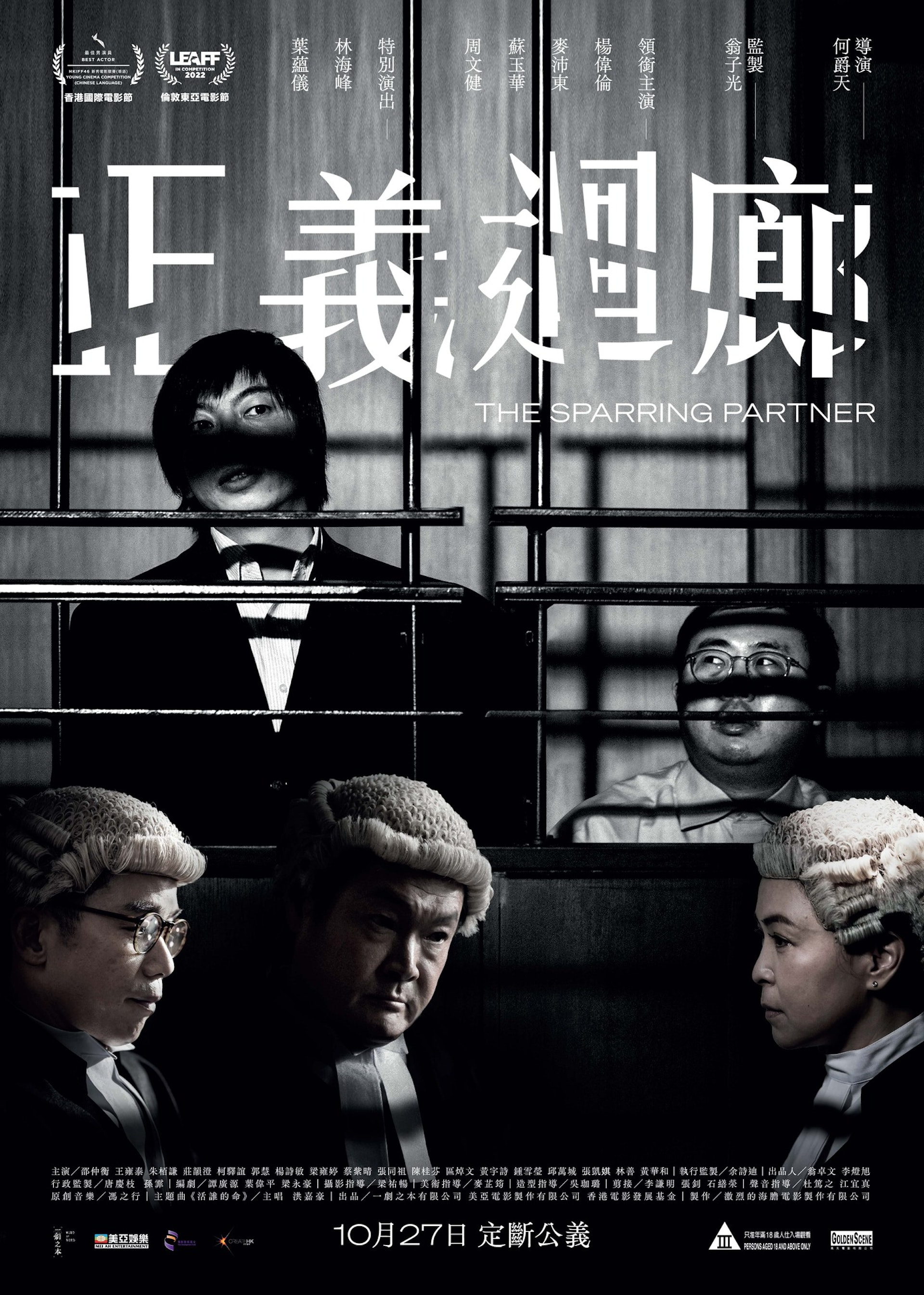
The Sparring Partner (正義迴廊, Ho Cheuk-tin, 2022)

Loosely based on a real life case in which a man murdered his parents then reported them missing and even went to the media for help looking for them, Ho Cheuk-tin’s The Sparring Partner (正義迴廊) distances itself from the sensationalism of the crime to ask a series of questions about human nature and the operation of the criminal justice system. The first of those questions is obviously why, but not just why did he murder the people who raised him but why did he go to the media and why did he eventually decide to confess. 

One reason Henry (Yeung Wai-lun) gives for killing his parents is that his upbringing was abusive, a fact later confirmed by his sympathetic cousin herself a devout Christian. It seems fairly clear that Henry has an inferiority complex for which he blames his mother and father, resentful that they made him play piano and wouldn’t let him play basketball to which he attributes the small stature that led to merciless bullying in school and fractured masculinity in adulthood. Ho often places the camera slightly behind Henry’s shoulder, emphasising his smallness and neatly reflecting the way in which he literally feels as if everyone is looking down on him. He has so far had a life full of failure, studying abroad but failing to make the grade and resentful towards his more successful older brother Ho Jin to whom his parents force him to sign over his share of a flat they bought as an investment after Henry’s gambling debts and inability to find a job left him unable to pay the mortgage. Losing a flat in Hong Kong is worse than losing a life Henry’s lawyer points out at trial, attempting to justify the resentment that led to Henry’s decision to not only murder but brutally dismember his parents. 

Another question mark, however, hangs over Henry’s accomplice and why exactly he chose to take him down with him. Angus (Mak Pui-tung), a man he met at a job interview, seems to have learning difficulties and may not quite understand what is going on. His sister describes him as naive and explains that he has a tendency to make friends with those who only hope to exploit him and may have been manipulated by Henry in fear for the safety of himself and his family or else simply not to lose the friendship. The extent of his involvement with the crimes remains unclear, Henry claiming that he was present and participated in the killing of his mother, while Angus insists that he only took part in the disposal of the bodies. Perhaps uncomfortably the film asks how much we can really trust Angus, suggesting that he may simply be manipulating the sympathy of others and is not really quite as naive as he makes out. 

In any case, his treatment at the hands of the police is as unjust as it comes, intimidated into offering a confession simply to make the interrogation stop so that he sleep and get something to eat. In court the truth hardly matters, a trial is about constructing a credible narrative. The lawyers for joint defendants Angus and Henry attempt to undercut each other, Henry’s arguing he is not responsible on the grounds of mental illness while implicating Angus as the instigator, and Angus’ intent on emphasising his disability suggesting was merely manipulated by Henry. The jurors in the jury room struggle to make sense of the case but also of their own role, tasked not with assessing guilt or innocence but the strength of the argument based on the evidence they’ve been given only for some of them to base their convictions on gut instinct anyway. 

They are perhaps aware that Henry is a master manipulator, he lied to his own brother and fooled all of Hong Kong with his video appealing for support before dramatically confessing online. He has obvious delusions of grandeur and idolises Hitler, claiming that had he been born at the right time he could have done what Hitler did. Ho often dramatises his moments of introspection as fantasy in which Henry poses as Hitler and speaks German to those around him before snapping back to reality and finding him experiencing a moment of clarity that makes him step back. Yet there are moments of heartbreaking authenticity in the “friendship” between the two men such as in their meeting at the job interview as they bond in a shared sense of rejection, the subtext of their crimes inviting the reading that they are intended as acts of vengeance against the society into which neither of them was able integrate. 

In the closing scenes, a policeman remembers evidence left behind during the initial sweep of the crime scene by his incompetent boss and returns to Angus’ apartment to find a migrant family living there who tell him they know there was a murder but they don’t care about things like that and are just grateful to have a home. Henry too continues his dark jokes about permanently devaluing his family’s apartments, but seems genuinely distressed on realising that his brother really may abandon him for his total lack of remorse while Angus finds himself exploited by the tabloid press only too eager for all the gory details. Ho’s closing images which find Angus enveloped in the webs of the spiders which plague his dreams perhaps hints at his place in a complex network of forces which contribute to his exclusion from prejudice towards the disabled to fatphobia along with the manipulation of men like Henry who promise friendship but only take advantage of his inability to resist. Then again, the fact of the matter is that you’ll never really know the truth, whether Henry did it all for the attention and ended up alone anyway or if it really was Angus who planned everything and fooled all of Hong Kong, like the jury all you can do is weigh up the evidence and draw your own conclusions.  


The Sparring Partner screened as part of this year’s London East Asia Film Festival and will open in UK cinemas on Nov. 18 courtesy of CineAsia.

Far Far Away (緣路山旮旯, Amos Why, 2021)

An introverted IT specialist gets a crash course in romance when he accidentally ends up dating a series of women from the far flung corners of the land in Amos Why’s charming romantic comedy, Far Far Away (緣路山旮旯). An occasionally subversive love letter to a disappearing Hong Kong, Why’s elegantly scripted romance also presents a snapshot of the contemporary society in exploring the various reasons each of the women has rejected the high status, consumerist lifestyle of the cities in favour of a more bespoke happiness elsewhere. 

At 28, Hau (Kaki Shum) has had only one relationship and is still unsure why his previous girlfriend, a former co-worker, broke up with him. His sympathetic hometown friends are forever trying to set him up while he nurses a gentle crush on another woman from the office, A Lee, but is too shy to say anything and worried that her reluctance when colleagues suggest he drive her home after a night out implies that she finds his company uncomfortable. That is not as it turns out quite the case, the reason she didn’t want him to drive her home is that she’d moved from an upscale, prestigious area to a small rural town far out of the city because she broke up with her boyfriend and couldn’t afford the rent but didn’t want anyone to know. 

The constant obsession with men driving women home becomes a minor plot point with several of the women actively questioning why it’s necessary and occasionally even offended while forcing Hau to admit that in most cases he’s offering because he wants to spend more time with them rather than out of a general concern for their safety or simple convenience. Having abandoned the dating app he was working on at work to concentrate on a delivery/map service, he ends up bouncing all around Hong Kong visiting various women even venturing to places so far out he needs to apply for a separate permit to enter while beginning to rethink his life choices realising that the reason he’s so set on stubbornly occupying his family’s flat in the city is rooted in his childhood trauma of having lost his mother to illness and his father to the Mainland in a symbolic orphanhood that hints at the anxieties of contemporary Hong Kong. Hau’s recently married friends discuss the possibility of having children but admit that they don’t really want to do it unless they can move abroad, Hau later speculating they will go to Taiwan while his friend who goes by the ironic name “Jude Law” has a British National (Overseas) Passport. Hau himself admits that he’d never really given it much thought until recently when a prospective partner asks him if he’d ever considered moving abroad mostly to confirm he won’t suddenly announce he’s leaving once they start dating seriously because almost no one can see a future for themselves in a changing Hong Kong.

Meanwhile, each of the women has made a decision to prioritise something else rather than join the city rat race from a youthful young woman living in an idyllic coastal town while determined to marry at 29 to Hau’s college friend Melanie (Jennifer Yu Heung-Ying) who chose to work for an NGO because of the better work/life balance that meant she wouldn’t be pressured into endless overtime. Then again another of Hau’s suitors appears to be just as ambitious as any other city dweller while viewing herself superior because her family bought a flat in a provincial area 25 years previously at a preferential rate and then sold it to her at below market value but more than they paid originally which strikes Hau as an odd arrangement between parent and child but speaks to the penny pinching mean spiritedness that leads her to blow up at him because he left a nice tip at a restaurant where service was included in the bill. An artist friend is willing to put up with primitive conditions in a remote mountain village because she’d rather have the stars than city lights, while each of the women also worry that any attempt at romance is always doomed to failure because no matter how keen they are or claim to be sooner or later the guys all ask them to move back to the city prioritising their own convenience while ignoring all of the reasons they chose to live in these very specific places. 

Eventually Hau becomes the exception, realising that the where isn’t the most important question acknowledging that perhaps he’s the one who ought to move in deciding to let go of the childhood trauma in his family home in order to make a new one of his own having figured out what he wants out of life and who he wants to spend it with which in the end dictates the where. Sometimes, love is just around the corner if you’re willing to go and have a look. A gentle celebration of a disappearing Hong Kong both literally and metaphorically, Why’s charming rom-com sends its hero on a roundtrip to love figuring out his place in the world in finding that home really is where the heart is. 


Far Far Away screened as part of Osaka Asian Film Festival 2022

Original trailer (English subtitles)

Images: (C)2021 DOT 2 DOT CREATION LIMITED

Somewhere Beyond the Mist (藍天白雲, Cheung King-wai, 2017)

Somewhere Beyond the Mist posterCheung King-wai, making his narrative feature debut, opens with a quote from Dostoevsky’s The Brothers Karamazov to the effect that people, even bad people, are often far more innocent and pure-hearted than most realise, including we ourselves. The quote, overlaid above the vision of the city at night glowing red like dying furnace, introduces us to the story we are about to hear – one which is dark, too dark perhaps to imagine, but then again all too real. Caught in the twilight half light, Hong Kong is fiery cauldron of hell, yet when the sun rises and the mist rolls in, it’s hard to see what the night made so terrible.

As if to underline the confusion, we begin with a lost old man who is desperately searching either for a way in or a way out. His housekeeper eventually comes to find him and bring him home and we discover he is the father of one of our heroines, Angela (Stephy Tang Lai-yan) – a police detective expecting her first child. Angela’s father, Dr. Ho, is suffering from advanced dementia which is beginning to take its toll on Angela’s home life even if she leaves most of the responsibility to her compassionate husband, Tony.

Meanwhile, the bodies of a middle-aged couple have been discovered at a reservoir. The police set about looking for the couple’s missing daughter, Connie (Rachel Leung Yung-ting), only to find her holed up in the mountains with her best friend Eric (Zeno Koo Ting-hin). Connie reacts with eerie calm when informed of the deaths of her parents, merely repeating that she was already aware before agreeing to accompany the police to the station where she, matter of factly, confesses to having been the one who murdered them.

Cheung’s intention is not to create a murder mystery, Connie freely confesses her crime and isn’t particularly interested in explanations or justifications (though as it turns out, she would have plenty). He is much more interested in the examining the society which made such an “unthinkable” crime possible, exposing the dark heart of an increasingly confused city which finds itself pulled in two directions by various political anxieties.

Back with the original image of the city as a pit of hell, each of our protagonists becomes a link in a circular chain of violence, turning their own feelings of oppression, marginalisation, and despair back on their fellow suffers. Connie, as we find out, comes from an extremely dysfunctional home in which her truck driver father lists small time pimping among his “hobbies”, openly masturbates while watching hardcore Japanese pornography in the family living room only enjoying it more for the thought of taunting his teenage daughter, rapes the family’s disabled mother, and seemingly ignores his grown up son. Catching Connie’s friend Eric hiding in a cupboard in her room, he assumes the pair are up to no good and drags the boy out to viciously beat him with his belt just to remind him who it is that is boss around here, pausing only to remind Connie that “a virgin pussy” is worth more money and if she’s that desperate he can find her a client to satisfy both their needs.

Strangely enough, Eric does not completely object to the beating. He sees it as a sign of validation. Like Connie, Eric is also a lonely, marginalised figure but in his case because he is gay and desperately wants not to be. Being mistaken for Connie’s boyfriend is, in his eyes, a kind of proof of his “manhood” and so it’s a beating he is almost grateful to receive unlike those from his schoolmates who taunt him with broom handles and scream homophobic slurs which only add to his feelings of extreme worthlessness. Eric wanted to be friends with Connie to escape both suspicion and loneliness, but she, in a cutting moment of despair, also uses his insecurity over his sexuality and feelings of inadequacy as a “man” against him to get him to help with her plan to free herself of parental tyranny. Connie hates bullies, but she hates people who don’t stand up to them more. Thus she becomes the gentle defender of another marginalised figure – Jessica, an Indian girl who is targeted because she wears trousers under her school skirt, constantly assailed with slurs about “stinky” curry and various other stereotypical insults that leave her in tears.

Eric points out that his beating at the hands of Connie’s father didn’t bother him because it was “understandable” – a father finds a boy hiding in his daughter’s room and chases him out. The logic is sound, it’s a story you’ve heard before – not like the senseless acts of violence which surround him every day and cannot be explained. Connie’s crime too seems “understandable” given all she’s suffered, a precaution taken to save her from a still more terrible fate she feared might soon come her way. This is the uncomfortable realisation with which Angela is faced during her investigation, forcing her to confront her own difficult relationship with her apparently tyrannical father who made her mother’s life a misery. Angela has to accept that she could easily have been Connie, or Connie her, though she ultimately made the (still taboo) decision to place her father into a home rather than continue to look after him herself. Tube fed and alone, Angela’s father is utterly powerless but however much she wishes she could abandon him she continues to visit even if her resentment is plain. Then again, if a parent breaks the contract first in failing to care for their child in infancy, should the child still be expected to care for them when they are old? Perhaps they owe each other nothing other than civility and an attempt at forgiveness.

Asked why she ran to the mountains, Connie replies that she went to live “the life I deserve”. Dreaming of a world “beyond the mist”, free from the city’s confusion and the constant stream of violence passing from one lonely soul to another, Connie transgressed in order to free herself but has only found greater imprisonment and ongoing mental torment. Beautifully photographed, Cheung’s narrative debut is a bleak and gloomy affair but somehow maintains its belief in a better place Somewhere Beyond the Mist even if it continues to elude us.


Screened as part of the Chinese Visual Festival 2018.

Original trailer (English subtitles)