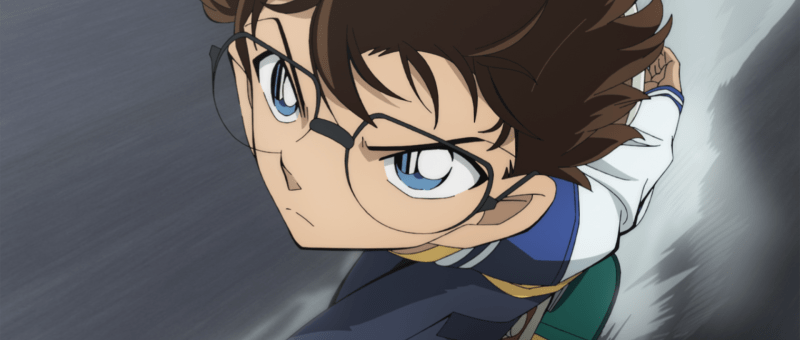

Detective Conan: One-Eyed Flashback (名探偵コナン 隻眼の残像(フラッシュバック), Katsuya Shigehara, 2025)

Detective Conan (Minami Takayama) returns for the 28th instalment in the long-running animated film series, Detective Conan: One-Eyed Flashback, (名探偵コナン 隻眼の残像(フラッシュバック), Meitantei Conan: Sekigan no Flashback) as he finds himself embroiled in another mystery revolving around Inspector Yamato’s (Yuji Takada) near fatal collision with an avalanche, a potential terrorist attack on a radio observatory, and the murder of one of Kogoro Mori’s (Rikiya Koyama) old friends. Meanwhile, justice is under fire as the government are working on reforming the plea deal system which leaves some feeling short-changed by justice and that the criminals are getting off too lightly while victims of crime continue to suffer.

Indeed, there’s a kind of symmetry between Conan’s guardian Kogoro, who took him in after he was shrunk to the size of a child by the evil Black Organisation, and bereaved father Funakubo who blames himself for what happened to his daughter Maki because he sent her back to his gun shop where she got caught up in a robbery. Before she left, she said she had something to tell him, but he never got to hear what it was, just as Kogoro never heard what his former colleague from his police days, Croco, wanted to tell him when he set up a clandestine meeting in a local park but was killed by a mysterious assassin before he could say anything. 

Once again, Conan is on the case, though Kogoro more or less sidelines him and insultingly repeatedly reminds Conan that this is not a game. Nevertheless, Inspector Yamato specifically asks for his help, while Conan begins to suspect something bigger is motion when he’s unsubtly bugged by someone he assumes is probably an undercover Public Security officer. All roads lead back to Amuro (Takeshi Kusao), who handles the situation from the cafe in Tokyo where he works to maintain his cover identity. 

Nevertheless, it all links back to the gun shop robbery and its lingering effects on the victims. Not only was one of the thieves not caught, but the other got off on a plea bargain which has left Mr Funakubo on a constant quest for justice in which he is forever hassling the Nagano Police for updates on his case. Meanwhile, there’s interpersonal drama in play in the relationship between police officers Yamato and Yui (Ami Koshimizu) who are also wrestling with unspoken feelings and the fallout from Yamato’s presumed death in the avalanche in which he lost his memory and wasn’t found until a few months later. The wound to his eye is symbolic of his inability to recall the whole of what happened before he was overcome by the snow. He must have seen the face of the man he was chasing at the time, but he can’t remember it. 

Though the mystery itself may not be as complicated as others in the series, involving few clues or difficult puzzles to be solved and relying instead on Conan’s keen intuition and people skills, it leans heavily into a sense of conspiracy and paints Public Security in an unflattering light as they attempt to bug Conan and then in a post-credits scene, are seen to offer another “plea deal” to a suspect in return for keeping Public Security out of their testimony while blackmailing them that, should they choose to speak out, all their secrets will also be revealed to the public and those close to them will suffer. In any case, Conan gets a few more opportunities to use his all-powerful skateboard amid the film’s increasingly elaborate action sequences as he squares off against the crazed villain hellbent on vengeance and an ironic defence of the law.

Where Public Security come in for scrutiny, the police are depicted as universally good, reminding the suspect that it’s the police’s job the enforce the law without fear or favour while protecting ordinary people both physically and emotionally. As messages go, it might be a little authoritarian, but it’s also true that the police take Conan seriously in ways others may not. While they’re all busy with the crime(s), Conan’s friends are also all in Nagano along with Ran (Wakana Yamazaki) enjoying what’s supposed to be a stargazing holiday before being dragged into the case and providing important backup for Conan. As the tagline says, the truth won’t stay buried forever and Conan does his best to play off Public Security and the police in order to solve the case, avenge Kogoro’s friend, and also protect justice in Japan as the courts debate the plea bargain issue and its effect on criminals and victims alike as they try to rebuild their lives in the wake of crime.


Detective Conan: One-Eyed Flashback is in UK cinemas from 26th September courtesy of CineAsia.

Trailer (Japanese / Traditional Chinese subtitles)

Detective Conan: The Million-Dollar Pentagram (名探偵コナン 100万ドルの五稜星, Chika Nagaoka, 2024)

Now a sprawling multi-media franchise, Detective Conan began with Gosho Aoyama’s manga which published its first instalment in 1994 and is still going strong 30 years later. The series was released in the US in the 2000s under the name Case Closed and in a decision which was perhaps more common then than today anglicised all of the character’s names and settings (the Japanese publisher then began releasing its own English language translation of the manga maintaining all the original Japanese names and plot details). Meanwhile Detective Conan remains hugely popular across Asia and regularly tops the Japanese box office with the annual release of a feature film revolving around a major case for Conan in addition to the ongoing anime and manga.

Which is all to say it has a very well developed universe and vast cast of characters which weave in and out of Conan’s various adventures. The main thing to note about Conan himself, which is explained very briefly in a short introductory sequence to the movie, is that he’s actually a 17-year-old high school detective but his body was shrunk to the size of a small child when he was drugged by the mysterious Black Organisation after witnessing to of their agents getting up to something shady in a park. Only a handful of people know his true identity while he often works with the police solving crimes, and is common with Japanese crime fiction more often than not locked room mysteries.

The Million-Dollar Pentagram (名探偵コナン 100万ドルの五稜星, Meitantei Conan 100-man Dollar Michishirube), the 27th Conan movie, is somewhat different in this regard as it’s more of a treasure hunt in which Conan (voiced by Minami Takayama) and his associate Heiji (Ryo Horikawa) must attempt to figure out the mystery of some missing treasure which might have something to do with a pair of swords stolen by one of Conan’s arch nemeses, Kid the Phantom Thief (Kappei Yamaguchi). Like many of these kinds of stories, the mystery turns on historical detail in this case stemming back to the Meiji Restoration and legendary Shinsengumi boss Hijikata Toshizo, if by way of a long-dead industrialist who got rich quick during the pre-war goldrush in Hokkaido. Some of his estate apparently went missing after his death and now his grandson, who’s messed up the family business, wants to find it and so does Conan but for slightly different reasons. In any case, no one even knows what the treasure is and they may be disappointed when they find out especially as it might not show grandpa Onoe in a particularly good light. 

There is undoubtedly quite a lot going on with a prominent subplot focusing on Heiji’s crush on love interest Kazuha (Yuko Miyamura) and his rivalry with Kid the Phantom Thief with his big plan to finally confess his feelings aligning with the climax of the mystery taking place on Mount Hakodate. A port town in Hokkaido, Hakodate has not often been well served by cinema often appearing in indie films such as And Your Bird Can Sing, Sketches of Kaitan City, and Over the Fence as a moribund post-industrial centre the protagonists can’t escape, but here seems pleasant and relaxed as a kind of Northern Kyoto rich in period history. The film’s success has apparently spiked a mini tourist boom in the area.  

The filmmakers apparently did not want to destroy any of the town’s architecture even in animation, hoping to make the most of the city’s famous night scenes and beautiful scenery. Nevertheless, there are the usual series of impressive action sequences including one of Conan riding a jet-powered skateboard not to mention taking out a suspect with a football while Heiji fights another on the wings of a biplane. As for the mystery itself, it’s not the kind where the audience will be able to work it out seeing as it depends on very specific cultural knowledge that even Conan needs a hint to key into but eventually broadens into something more international involving arms dealers and corrupt businessmen. Long-standing fans of the franchise will want to stay put for a very interesting post-credits sequence and even newcomers will get a kick out of an unexpected punchline to the film’s closing moments. All in all another classic case for the Conan team peppering its key mystery with the humour and warmth the franchise is known for.


Detective Conan: The Million-Dollar Pentagram opens in UK cinemas 27th September courtesy of CineAsia.

Original trailer (Traditional Chinese & English subtitles)

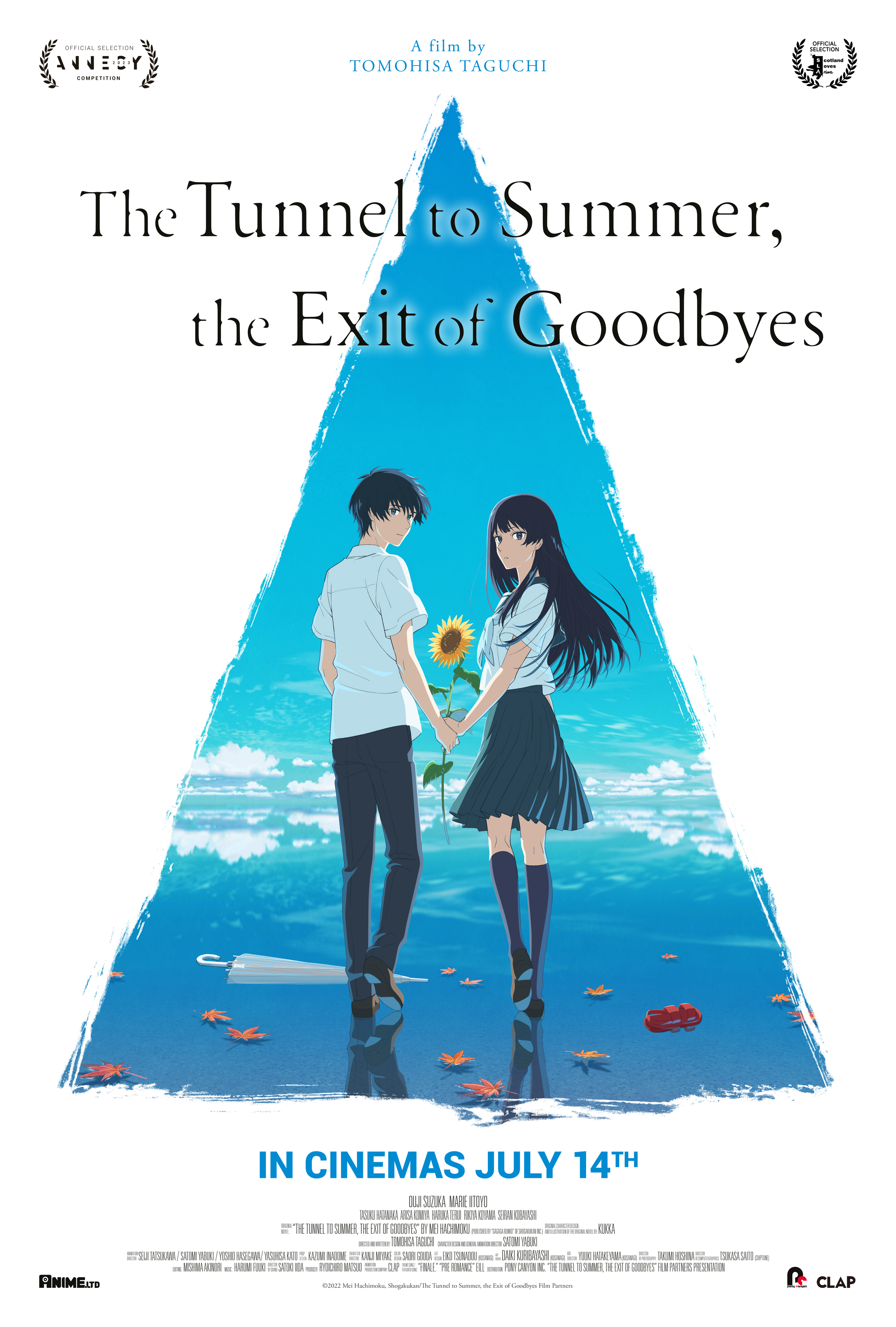
The Tunnel to Summer, the Exit of Goodbyes (夏へのトンネル、さよならの出口, Tomohisa Taguchi, 2022)

A pair of lonely teens begin to find direction in their lives while investigating a mysterious phenomenon in Tomohisa Taguchi’s The Tunnel to Summer, the Exit of Goodbyes (夏へのトンネル、さよならの出口, Natsu e no Tunnel, Sayonara no Deguchi). Adapted from the series of light novels by Mei Hachimoku, the film asks if it’s worth sacrificing the present to reclaim the past for an uncertain future, but also has a few things to say about grief and guilt and the necessity of moving on even if in this case a little further ahead than most. 

The mysterious “Urashima” tunnel is so named in reference to the classic folk hero who spends a few days with a princess at the Dragon Palace and then returns home to find that it is 100 years later and everyone he knew is dead. The princess gave him a box telling him never to open it but of course he does and suddenly becomes an old man. As high schoolers Kaoru (Oji Suzuka) and Anzu (Marie Iitoyo) discover, the tunnel works in much the same way. A few seconds inside is hours out, though they say that if you reach the end your wishes will be granted. Each desiring something, the pair team up to investigate together and gradually fall in love but are also divided by the contradictory nature of their quests. 

Reluctant to reveal the reasons behind her interest in the tunnel, Anzu fears that her desires are trivial in comparison to those of Kaoru who is trying to restore his family by bringing back his little sister Karen (Seiran Kobayashi) who was killed falling from a tree. Kaoru claims that he wants to see the kind of world that Karen had envisaged where everyone was happy, but is also trying to deal with his grief and guilt and looking for the restoration of a sense of stability he once had in his family. Anzu, meanwhile, is insecure in her gifts as an artist and has been rejected by her parents for her desire to make manga like her penniless grandfather. Kaoru tries to convince her that she has talent already but Anzu seems to believe that she needs once in a generation flair in order to be able to make her mark even if they get stuck in the tunnel and emerge hundreds of years later into a world in which manga no longer exists. 

But as Kaoru later finds out, the tunnel only lets you take back something you’d lost. It does not grant wishes for something that never belonged to you. Kaoru never really stops to think about the practicalities of his quest such as the increased age difference between himself and Karen or how he’d explain her sudden resurrection, while Anzu doesn’t really reflect on the how meaningless her success would be if didn’t come from her own efforts even as they work together to solve the mystery of the tunnel as a way of working through their individual anxities. Though their first meeting had been frosty, the pair soon bond in their shared loneliness and fractured families but like most teenagers don’t quite have the confidence to say the big things out loud. 

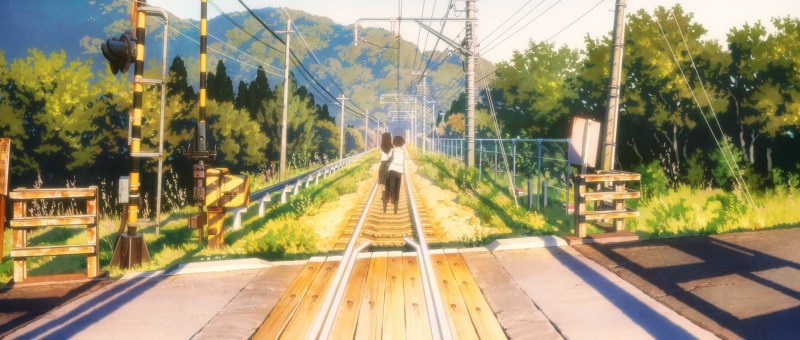
Taguchi makes the most of his summer countryside setting capturing the vibrancy of his surroundings from the cool blue sea to the bright yellow sunflowers near the train station while also hinting at the “boring” nature of small-town life in which there’s not much else to do than create your own adventure. Set in 2005, the film also has a meta time slip quality with its flip phones and minidisc players seemingly taking place in a more innocent age if also emphasising that the reason the teens can disappear for three days researching a tunnel is that their respective adults aren’t very bothered about what they’re doing or where they are. Each of them discover what it is they really wanted out of their mystical journey, if otherwise out of sync, as they learn to deal with their grief and insecurity before discovering the exit from the eternal summer of their youth into a less certain adulthood that no longer scares them but instead offers new opportunities amid the newfound solidarity of their togetherness.


The Tunnel to Summer, the Exit of Goodbyes opens in UK cinemas on 14th July courtesy of All the Anime.

International trailer (English subtitles)

Images: ©2022 Mei Hachimoku, Shogakukan/The Tunnel to Summer, the Exit of Goodbyes Film Partners

Promare (プロメア, Hiroyuki Imaishi, 2019)

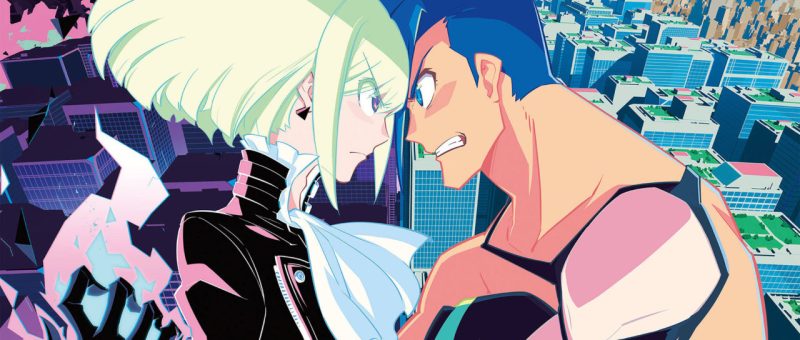
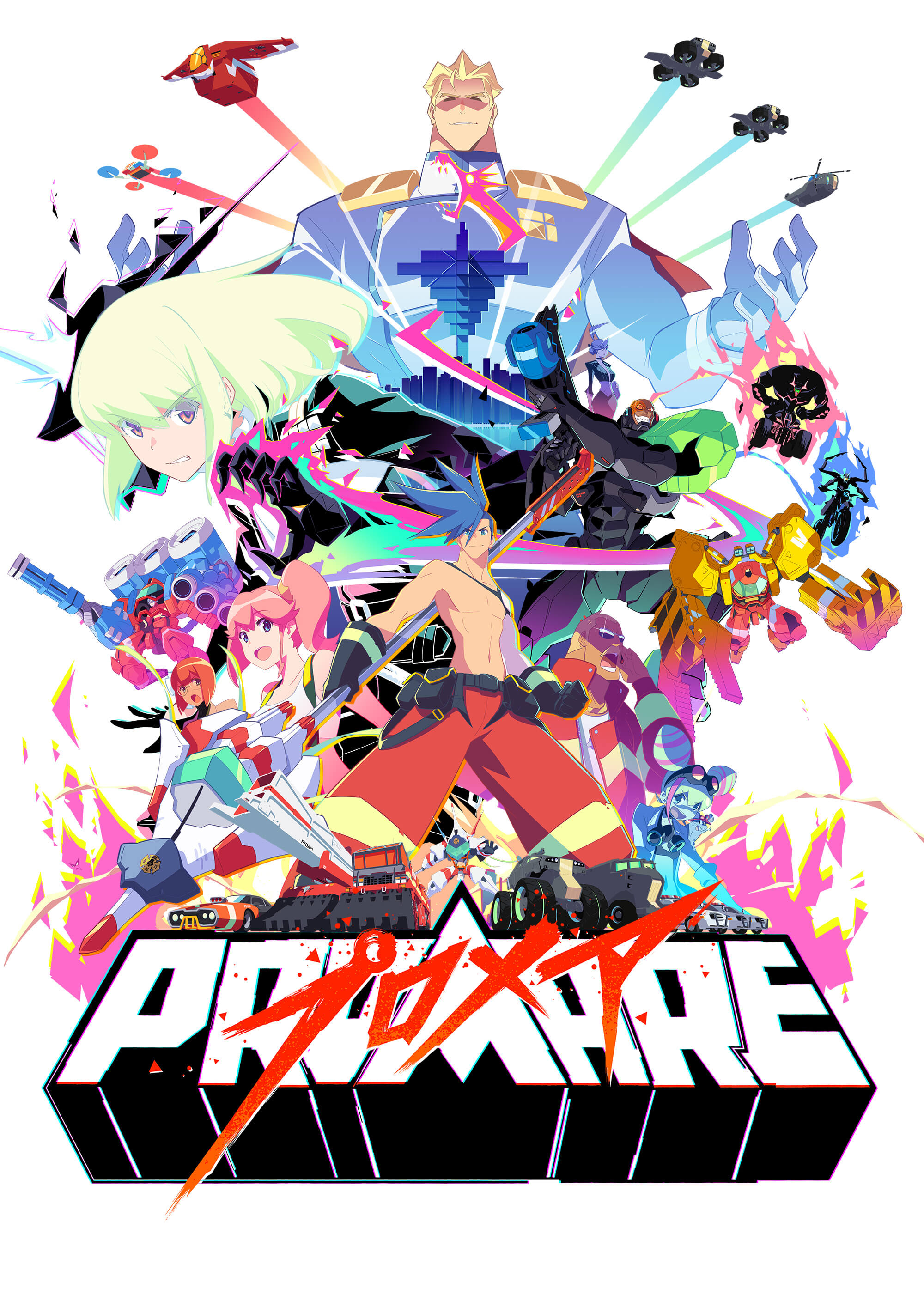
Promare poster 1It’s one of life’s ironies, sometimes the best way to stop a fire is to scorch the earth. The heroes of Studio Trigger’s first theatrical feature co-produced with XFLAG, Promare (プロメア, Puromea), are embodiments of fire and ice – a “mutant” who can shoot flames from his fingertips, and a fireman with a “burning soul”. Yet what they discover is that there is a peculiar power in their innate contradictions, actively harnessing the energy of their opposition to combat a man who thinks nothing of burning the world to save his own skin.

Our hero, Galo (Kenichi Matsuyama), is a firefighter with the Burning Rescue squad who has a talent for cheesy one liners and an overinflated sense of confidence in his own abilities. 30 years previously, the world was plagued by a series of strange incidents of spontaneous combustion later attributed to the “Burnish” phenomenon in which some members of humanity developed a mutation that allowed them to manipulate fire. The danger eventually died down, but the “Burnish” as they came to be known continued to exist in society as a kind of oppressed underclass, viewed with fear and suspicion and largely unable to live “normal” lives even if they wanted to. On a supposedly “routine” job, Galo unexpectedly encounters the leader of the Mad Burnish “terrorist” organisation and determines to bring him in, eventually awarded a medal for his pains.

As might be assumed, however, all is not as it seems. The Burning Rescue squad work for Galo’s mentor, Kray Foresight (Masato Sakai), now the governor and an enormously wealthy, influential man thanks to his advances in scientific firefighting technology. Kray reveals that the Earth is sitting on a volatile layer of magma somehow connected to the existence of the Burnish which threatens to destroy the planet if it cannot be properly controlled. This is a kind of justification for Kray’s ultra hardline stance against the Burnish who are hunted down and captured by the Freeze Force (see what they did there?) simply for living their lives even if they have committed no crimes.

Despite the nature of their work, the Burning Rescue squad are a more progressive bunch. They don’t approve of the social prejudice against the Burnish many of whom are just minding their own business and pose no threat to anyone, nor do they approve of the role the Freeze Force seems to play in their society. Mostly what they care about is stopping fires and making sure people endangered by them are eventually saved. They know that the Freeze Force’s persecution of the Burnish is at best counterproductive and fuelling the kind of resentment that makes them want to burn things. Wandering into the Mad Burnish hideout, Galo sees a different side to their struggle and learns a few home truths about his own side from the dashing rebel leader Lio Fotia (Taichi Saotome).

Burning Rescue and the Mad Burnish ought to be opposing poles but display a curious symmetry in their fierce loyalty to their own and emphasis on team work. Others, meanwhile, think only of themselves, coming up with nefarious plans to let the planet burn and move to a new intergalactic home with a starter stock of the most “valuable” 10,000 humans while everyone else succumbs to the flames. The Burnish become merely fuel, sacrificed for a “greater good” for a “chosen few”.

Galo and Lio think they’re “chosen ones” too, in a sense, but are flatly told that their role in events is really just fortuitous coincidence. Nevertheless, the fate of the world depends on their ability to bridge their differences, harnessing the unique capabilities of fire meeting ice against the forces of cold self-interest. Sometimes the only way to stop a fire is to let it burn out bright, which is what the guys discover in trying to find a way to quell that troublesome magma. Recreating the anarchic spirit of Kill la Kill, Studio Trigger’s first theatrical feature is a colourful riot of post-modern absurdity, but has its heart firmly in the right place with a strong progressive pro-diversity message in which we save the world only by saving each other.


Original trailer (English subtitles)

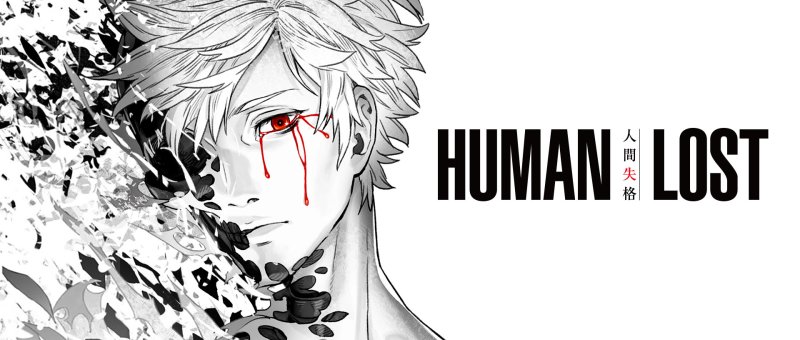
Human Lost (人間失格, Fuminori Kizaki, 2019)

Human lost animeOsamu Dazai’s 1948 masterpiece No Longer Human spins a tale of intense alienation in which a young man unable to connect with the world around him feels himself obliged to put on a mask of buffoonery. Years of trying and failing to fit in eventually take their toll. After meeting a man who turns out to be a bad influence in a painting class, he drifts into a life of dissipation and is committed to a mental institution. After his release, the hero reflects on the harm his actions have caused to others and declares that he is “no longer human”, electing to live a life of isolation rather than risk hurting anyone else.

Human Lost (人間失格, Ningen Shikkaku) is about as loose an adaptation as it’s possible to be, taking only the outlines of Dazai’s original and springing off from the midway point in which the protagonist, Yozo Oba (Mamoru Miyano), is living as a starving, drug addicted artist above a seedy bar. The year is Showa 111 (2036). A series of momentous advances have made natural death a thing of the past and thanks to the S.H.E.L.L. system suffering from disease has been eliminated. However, the future has not been equally distributed and while a cohort of increasingly elderly men and women rule the elite “Inside” as a kind of oligarchy, an oppressed underclass has formed on the outskirts of the city, their “immortal” bodies continually exploited in order to prop up the Inside economy but forever denied the full benefits of system they are prevented from accessing in its entirety.

Meanwhile, those who wilfully disconnect descend into a kind of monstrous barbarity becoming what is known as a “Lost”, a threat to “civilisation” which much be combatted by H.I.L.A.M. – a military organisation which exists to ensure the survival of the S.H.E.L.L. system. When Oba is dragged along by his childhood friend Takeichi (Jun Fukuyama) on a revolutionary raid instigated by the mysterious Masao (Takahiro Sakurai) targeting the Inside, he comes into contact with Yoshiko (Kana Hanazawa) – a young woman who deeply believes in the benefits and possibilities of the S.H.E.L.L. system, convinced that a utopian world in which its benefits are available to all will eventually come to pass.

What ensues is a battle between Yoshiko’s pure hearted idealism, Oba’s despair-fuelled cynicism, and Masao’s embittered nihilism in which he seeks to destroy the S.H.E.L.L. system and “reset” humanity to its original condition. Masao believes that humans need death in order to be human and that its absence from the modern world is an aberration which must be corrected at all costs. He encourages Oba and Takeichi to “take back” their “true form” as a revolutionary act designed to provoke the advent of a saviour who can help him destroy a system he himself created out of love but which later failed him. 

In an ageing society such as Japan’s, it’s impossible to ignore the subtext of a world in which the elderly cling on to power well beyond their right and relegate the young and healthy to a kind of underclass as a consequence. While some humans are “qualified” and afforded special rights, others are labeled as “unqualified” and exist in a kind of underworld locked out from the benefits of a modern society. As Masao points out, those who call themselves “happy” largely do so because of the S.H.E.L.L. system’s programming, while the only truly “free” are those like Oba and Takeichi who wilfully reject it and live a life of suffering.

Of course, Masao exploits them too. He brands Oba his Orpheus, but ironically forgets that the thing everyone knows about Orpheus is that his faith was weak and so he looked back and lost. Yoshiko sacrifices herself for Oba’s potential, further adding to Masao’s awkward metaphor as he declares that “the fate of this woman is to be used”, pushing Oba towards dragging her back from the hell they maybe creating together. Unlike Dazai’s original novel in which the hero is consumed by his sense of otherness and opts for self-exile, Human Lost finds a more positive solution in which Oba commits himself to fighting for Yoshiko’s better world where health and happiness are gifts given to all and not just a privileged few. A mild critique of a hierarchical, inherently unequal society Human Lost makes a passionate plea for idealistic utopianism over introverted despair while suggesting that technological advances set us free only when we share them freely.


Human Lost screens in select US cinemas on Oct. 22 (subtitled) and 23 (dubbed), and in Canada on Nov. 6 (subtitled) and 9 (dubbed) courtesy of Funimation. Check the official website to find out where it’s playing near you!

Original trailer (English subtitles)