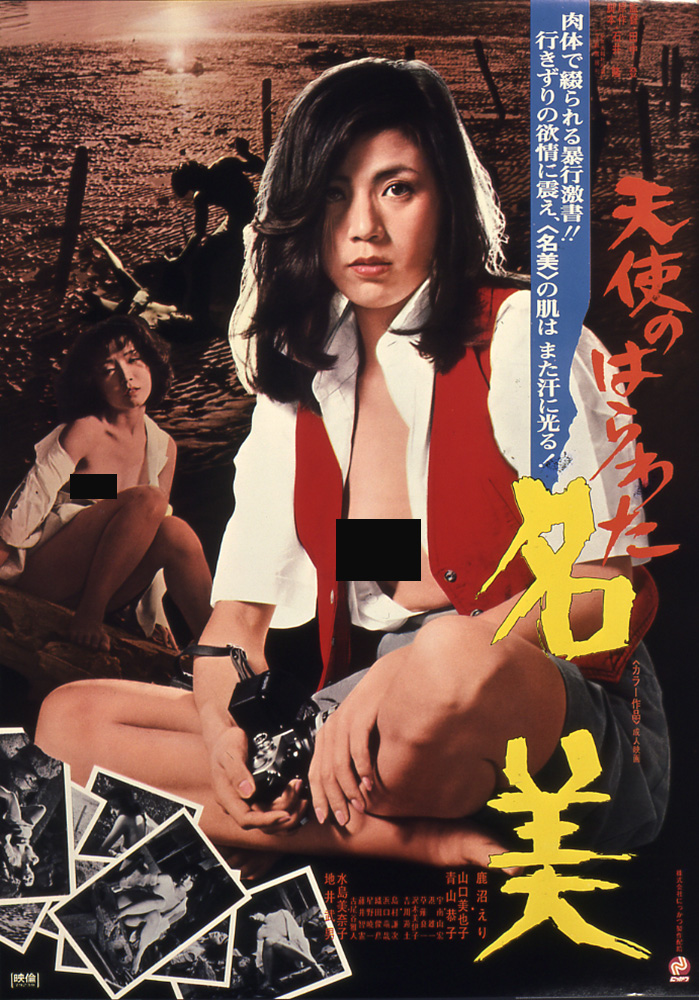
Angel Guts: Nami (天使のはらわた 名美, Noboru Tanaka, 1979)

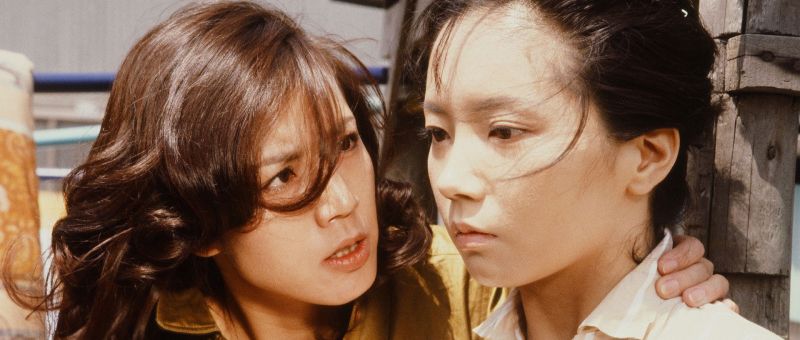
Aspiring journalist Nami Tsuchiya (Eri Kanuma) works for a magazine called “The Woman,” but it soon becomes clear she’s their only female reporter and one of a handful of women in an office otherwise staffed by men. Her editor has her writing a series titled “Rape and its Consequences” in which she attempts to interview women who’ve experienced sexual assault in an attempt to root out the effect it’s had on their lives. At times Nami seems a little conflicted, puffing away on a cigarette with a pensive look on her face, but there’s no denying that she’s sold out other women for a chance to make it in a man’s world by exploiting a suffering she does not herself share.

Muraki (Takeo Chii), formerly a top magazine editor, reminds her that not everyone who reads her magazine is a woman, but there is something perverse about the idea of her article which is otherwise conceived from a perspective that seems very male. The female readership of this magazine would not need to be educated about the prevalence of rape nor its consequences. Nami’s article doesn’t seem to want to find success stories, but to revel in misery. She accosts one of the women she’s hoping to interview and tries to badger her into talking on the record. Yoshiko appears fed up and tells her that recounting what happened would be like being raped all over again, but still Nami doesn’t relent. She tries to guilt her into speaking by suggesting that her testimony would stop other women being assaulted, which is backwards logic seeing as it isn’t the women who are responsible and even if she were advancing a victim blaming narrative that it’s on women to protect themselves, Yoshiko had not done anything that could be seen to be “wrong” nor is there any way she could have prevented what happened to her.

Through her articles, Nami has become complicit in this culture and is effectively an agent of rape herself in her desire to tear into the lives these women have tried to build for themselves and extract even more salacious detail. She describes Yoshiko as “happily married,” but she’s living in a rundown house on the margins of the city. It seems her husband maybe ill and therefore unable to work. Yoshiko may have married him out of a lack of other options and it’s not clear if her husband knows about her past or how he would react if he learned of it now. The fact that Nami’s attempt to interview others about Yoshiko fails bears out the social stigma that can surround those who’ve experienced sexual assault and suggests that Yoshiko has now become an outcast. The photos that they publish only black out Yoshiko’s eyes making it easy for those in her community to identify her which could certainly make her life much more difficult and lead to a loss of employment or social further exclusion.

It’s clear that Nami hasn’t really thought any of this through and is only focussed on impressing her male editors to be given better assignments. This may in part be what she means when she says that she’s been assaulted in her office by the people she works with on gaining more of an insight into the consequences of her writing. Though he threatens to rape her himself, Muraki seems to be a representative of a more compassionate masculinity but at the same time has been emasculated, rendered impotent after his own wife was raped by an intruder and then left him because he couldn’t satisfy her sexually. He connects Nami with a mentally disturbed nurse who was assaulted by a doctor with an autopsy fetish, though the incident was covered up by the hospital. None of these men, except Muraki, is held responsible for their actions. Nami, however, becomes all of these women, envisioning herself abandoned at the scene half-naked and clothes torn, discarded on the rubbish tip of the modern society. At the beginning of the film, a woman smashes the lens of the camera as a man moves towards her, as if she meant to rebuke us for watching, while even Nami finds herself becoming dangerously aroused by watching other women being assaulted or listening to their stories before she too cracks and begins to see herself as nothing more than an anonymous object at the mercy of male society.


Angel Guts: Nami is available as part of The Angel Guts Collection released on blu-ray 23rd February courtesy of Third Window Films.

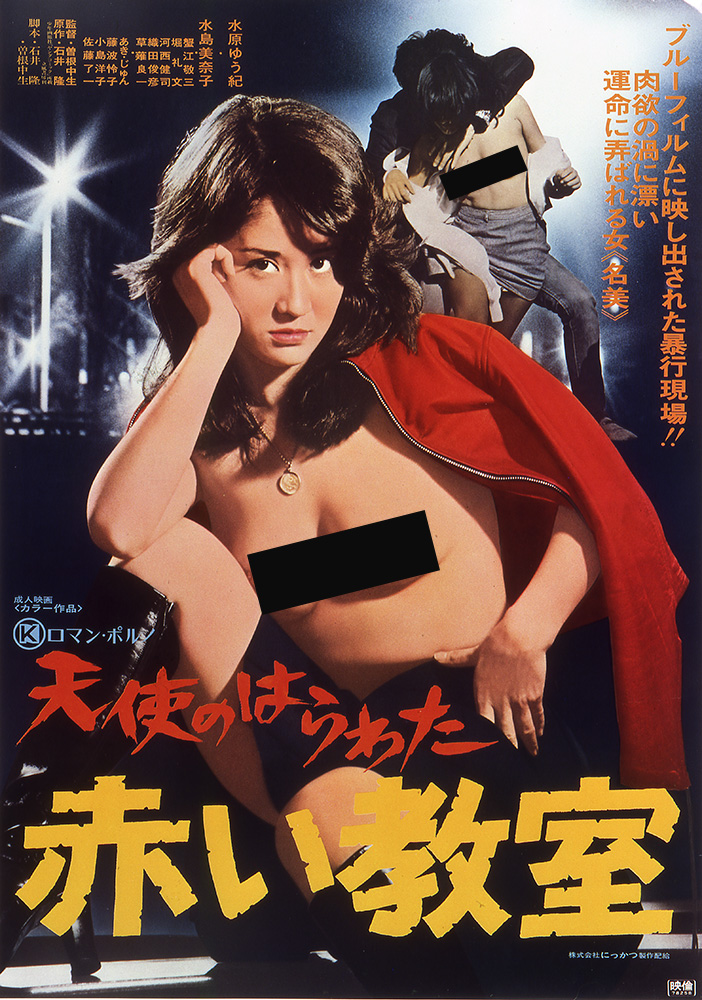
Angel Guts: Red Classroom (天使のはらわた 赤い教室, Chusei Sone, 1979)

Chusei Sone’s Angel Guts: Red Classroom (天使のはらわた 赤い教室, Tenshi no Harawata: Akai Kyoshitsu) opens with grainy 8mm footage of a woman being gang raped, but this turns out to be a film being watched by the protagonist, Muraki (Keizo Kanie), rather than the one we’re actually watching. Nevertheless, in presenting the footage in this way, the film has made us somewhat complicit in witnessing this woman’s exploitation for the purposes of entertainment. A producer of pornographic magazines, Muraki is captivated by the woman’s ruined innocence and becomes obsessed with the idea of finding her.

Though he says he doesn’t think she belongs in this world, Muraki does not so much want to save Nami (Yuki Mizuhara) as get her to work for his magazine. He declares that years of this kind of work have left him numbed and desensitised. Watching her video was the first time he’s felt moved in years. However, it turns out that this may be because the video wasn’t a movie in which the actress had consented to appear, but raw footage of an actual gang rape committed against a trainee teacher. The implication is that this traumatic incident has numbed Nami in the same way Muraki has been numbed by his exposure to pornography, leaving her with a permanently vacant, inscrutable expression and reducing her to nothing but a sexual object. Though the 8mm “blue movie” is an illegal form of pornography that can be watched only in underground clubs, she claims to have run into several men like Muraki who recognise her and has concluded that the only way to get rid of them is to satisfy their desire by sleeping with them. She says she won’t feel anything anyway, but has scars on her wrist and seems to have turned to potentially dangerous sex with random men as a means of self-harm.

Muraki refuses to sleep with her, but in Nami he seems to be looking for his own buried innocence and masking the shame he feels towards his line of work. His parents think he publishes books for children, he tells Nami, but rants to another woman that his magazines are all the same and he doesn’t know how to make them better. He can’t take the kind of pictures he wants to, because he wouldn’t be able to publish them under the increasingly strict censorship laws. Repeated references are made to the need to avoid showing any pubic hair which is considered obscene under Japanese law, though they’re otherwise free to depict scenes of sexual violence and degradation. Ironically, Muraki is unable to meet Nami at their rendezvous because he’s been arrested for breaking the Protection of Minors Act after having photographed a 15-year-old girl, though Muraki claims he was just trying to help her. He says she told him she was 19, recently arrived from Aomori and had been reduced to shoplifting, so he gave her a job out of the kindness of his heart.

It’s things like this that might have Muraki desperate to prove he’s not “scum” but a good man and an artist rather than a purveyor of pornography and exploiter of women. The film has its cake and eats it too, critiquing female exploitation but simultaneously trading on it, if doing its best to make the viewer feel at least conflicted. Three years later, Muraki is in a relationship with a woman he once exploited who couldn’t let him go and has fathered a child, but the papers are full of news about suicides and domesticity does not seem to him provide much of a refuge. He continues to search for Nami in order to reclaim his innocence, but discovers that she has become a vacant sex worker, ironically working at a bar called “blue” and the plaything of a man in a James Dean-style red jacked who has broken dreams of his own. Unlike Muraki, she has only fallen further, and he is ultimately forced to watch what his business has reduced her to as a group of men set on a captive high school girl like a pack of wolves, ironically echoing the opening sequence. Yet in the end, it’s Nami who frees him by literally showing Muraki the way out of this place as he urges her to leave though she seems to say it’s already too late. Looking at her own distorted image in a puddle, she no longer knows who she is and has no identity that is not forced upon her by a violent male gaze.


Angel Guts: Red Classroom is available as part of The Angel Guts Collection released on blu-ray 23rd February courtesy of Third Window Films.
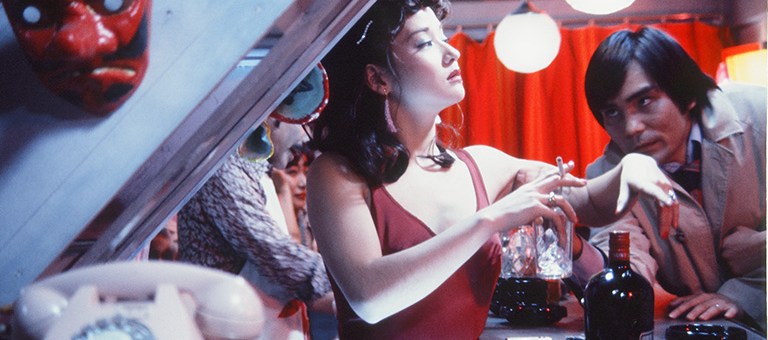
Doing Time (刑務所の中, Yoichi Sai, 2002)

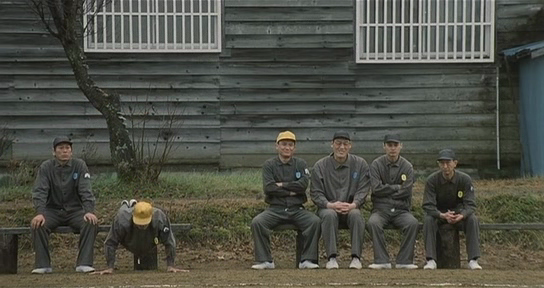
Who ever thought that life in prison could be so…peaceful? Adapted from the autobiographical manga by Kazuichi Hanawa, Yoichi Sai’s 2002 drama Doing Time (刑務所の中, Keimusho no Naka) is a slice of life dramedy somewhat typical of the early 2000s save its unexpected setting in a state penitentiary. Unlike the average prison movie, the main thing that Hanawa discovers is that life inside is incredibly dull, yet he approaches his brief sojourn in this other world with anthropological precision observing and mimicking the behaviour of his fellow prisoners while making the most of this hopefully once in a lifetime experience reflecting that he’ll likely never have the opportunity to wear such worn out undergarments ever again. 

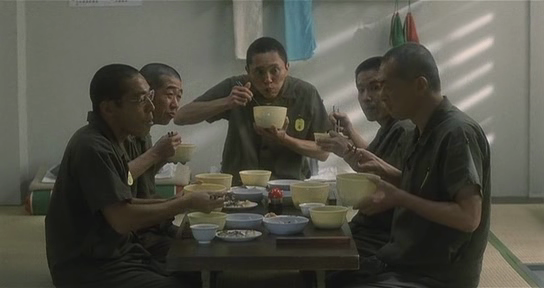
A quiet man already in middle age, Hanawa (Tsutomu Yamazaki) is no dangerous criminal merely a firearms enthusiast who liked to fire modified pistols into bottles of water. He’s got three years for illegal possession of weaponry and explosives, which seems to be quite a harsh penalty considering another man is doing seven for murder after shooting a man he says waved an axe at him when he went to collect a debt. There are clearly men who have committed violent crimes in Hanawa’s immediate vicinity, yet this is not a traditional tale of prison gangs and factional infighting, the only violence we witness concerns one prisoner who appears to have broken the rules accidentally in thoughtlessness or ignorance rather than direct rebellion. Rather it is, ironically enough, almost like a summer camp in which Hanawa and his four cellmates attempt to amuse themselves during the little free time they are offered for contemplation and relaxation. 

Even so, every inch of the prisoners’ lives is micromanaged by the guards from the way they walk to when they are allowed to move or speak. So entirely stripped of their dignity are they, that they must ask for permission even to use the toilet in their own cell while in solitary confinement and dutifully report back once they’ve finished. The communal squat toilets at the back of the workshop where Hanawa works crafting wooden tissue boxes are entirely open with only knee-height doors on each stall for privacy. The prisoners’ days are tightly ordered, early to bed and early to rise with work in-between and only the promise of rest to look forward to on weekends and holidays. 

Ostensibly a shy man, Hanawa dislikes having to ask permission all the time though not so much as an affront to his autonomy as simply bothersome. Surprisingly he begins to warm to the rhythms and routines of prison life discovering in them a kind of liberation, finding his time in solitary for “unauthorised communication” the most enjoyable of his sentence free as it is of the necessity of interacting with other people. Like the bug collector in Woman of the Dunes, he finds freedom in simplicity appreciating the mindlessness of his absurd new job folding paper bags for medical prescriptions. He can abandon any sense of responsibility for his life, submitting himself entirely to the guards’ authority and surrendering the need for control, happy to allow his existence to be managed for him without needing to decide on anything for himself. 

That aside, it’s difficult to see what other purpose prison could serve for a man like Hanawa who merely had an unusual if potentially dangerous hobby save providing him with a unique life experience he seems to be treating as a kind of adventure. He may at times look down on his cellmates who have their own routines, but otherwise appears grateful for their input and advice regarding prison life often listening to their explanations for behaviour he regards as strange such as removing one’s trousers before entering the bathroom and then deciding to do as they do. With so little stimulation the mundane becomes exciting, each meal a culinary adventure listening to a cellmate recount his group treat of a film screening (Takeshi Kitano’s Kid’s Return) as if he had returned from exotic land relishing his description of the chocolate biscuits and cola he was given to snack on. Time is what Hanawa is doing, but he does at least gain the opportunity of experiencing life in slow motion learning to appreciate the beauty of a single dandelion while observing the absurdity of the world all around him which is perhaps no more absurd than that which exists outside. 


The Discarnates (異人たちとの夏, Nobuhiko Obayashi, 1988)

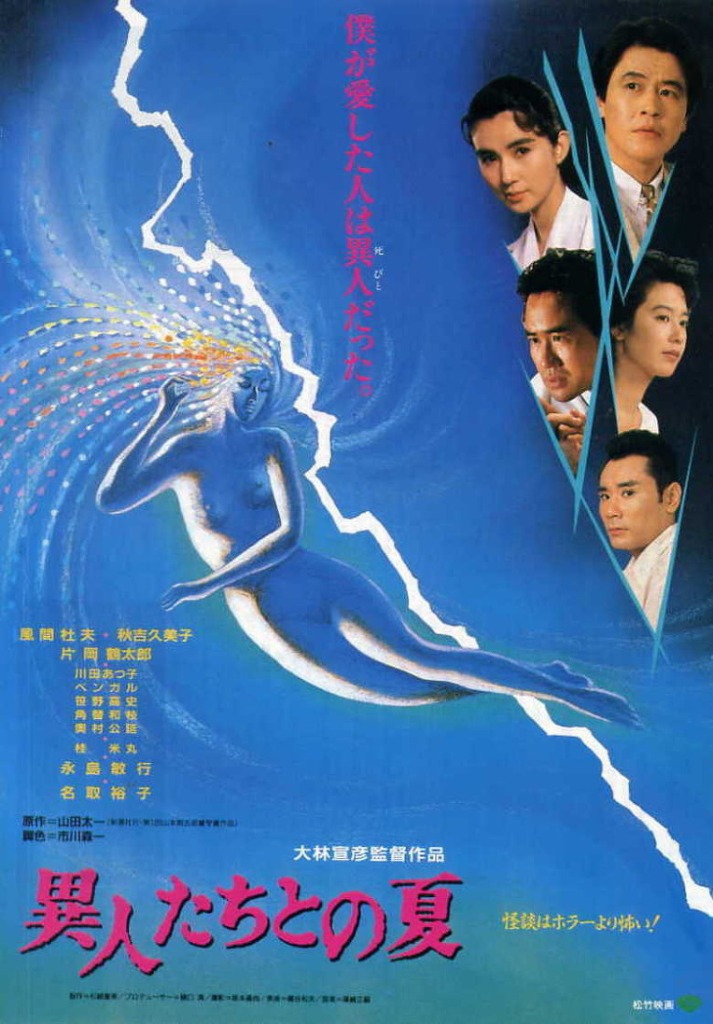
discarnatesNobuhiko Obayashi is no stranger to a ghost story whether literal or figural but never has his pre-occupation with being pre-occupied about the past been more delicately expressed than in his 1988 horror-tinged supernatural adventure, The Discarnates (異人たちとの夏, Ijintachi to no Natsu). Nostalgia is a central pillar of Obayashi’s world, as drenched in melancholy as it often is, but it can also be pernicious – an anchor which pins a person in a certain spot and forever impedes their progress.

Hidemi Harada (Morio Kazama) is a successful TV scriptwriter whose career is on the slide. He’s just gotten a divorce and seems to be conflicted about the nature of his new found bachelordom. As if he didn’t have enough despair in his life, the closest thing he has to a friend – his boss at the TV station, tells him he thinks it’s better if they end their professional relationship because he plans to start dating Harada’s ex-wife and it would all get very awkward.

Feeling unloved, Harada takes a trip to his hometown on a location scout for another project and takes in a few familiar sights along the way. It’s here that he runs into a youngish man who looks just like Harada’s father did when he was a boy. Not only that, accompanying his new found friend home, the man’s wife looks just like his mother, but Harada’s parents died when he was just twelve years old. The mysterious couple are glad to have him in their house and treat him with the warmth and kindness that seemed to have been missing in his life, leaving him the happiest and most cheerful he’s been in years.

Now in a much better mood, Harada feels guilty about rudely dismissing the woman from upstairs who’d come to visit him the day before. Apologising, Harada strikes up a friendship and then a romance with the equally damaged Kei (Yuko Natori) but even if his mental health is improving, his physical strength begins to deteriorate. Looking pale and old, Harada’s teeth rot and fall out while his hair loses its color. Even so, Harada cannot bear to pull himself away from the warmth and security that was so cruelly taken away from him when he was just a child.

Harada doesn’t start off believing that the mysterious couple really are his late parents, but if even if they weren’t these two people who are actually younger than him take him in as a son, feeding and entertaining him. When Harada returns a little while later confused by what exactly has happened, his mother immediately treats him as a mother would – physically taking off his polo shirt and urging him to remove his trousers lest they get wrinkled from sitting on the floor. Having lost his parents at such a young age, Harada has been a adrift all his life, unable to form true, lasting emotional bonds with other people. Lamenting his failure as a husband and a father, this very ordinary kindness provides the kind of warmth that he’s been craving.

However, there is always a price to be paid. Harada’s visits become increasing tiring, taking a physical toll on his ageing body. Each hour spent in the past is an hour lost to the dead. His parents are both dead and alive, existing in a strange, golden hued bubble filled with the comforting innocence of childhood free from the concerns of the adult world. Yet each time Harada succumbs to his weakness and goes to visit them, he is doing so as a way of avoiding all of his real world problems. According to one of Harada’s scripts, the past becomes a part of you and is never lost, but memory can be an overly seductive drug and an overdose can prove fatal.

Contrasted with the warm glow of the post-war world of Harada’s childhood home, his life in bubble era Tokyo is one filled with blues and a constant sense of the sinister. Harada believes himself to mostly be alone in the apartment block save for a mysterious third floor light that hints at another resident who also favours late nights over early mornings. The light turns out to belong to a lonely middle-aged woman, Kei, who is also a fan of Harada’s work. Kei has her own set of problems including a wound on her chest that she is too ashamed to let anyone see. Ultimately, Harada’s self-centred inability to lay the past to rest and fully take other people’s feelings into account will deal Kei a cruel blow.

Harada sees everything with a writer’s eye. His childhood world is a dream, but his life is a film noir filled with shadows and misery. His environments appear too perfectly composed, like a TV stage set and, as if to underline the fact, at the end of each “scene” the colour drains from the screen to leave a blue tinted black and white image shrinking into a rectangle and disappearing like the dot going out in the days when television really did close down overnight. Whether any of this happened outside of Harada’s mind or reflects a constructed reality he wrote for himself in the midst of a mental breakdown, his dilemma is an existential one – return to childhood and the side of his parents by accepting the death of his present self, or say goodbye to remnants of the abandoned child inside him and start living an adult, fully “fleshed” life by killing off this unattainable dream of a long forgotten past which never took place.

Filled with melancholy, longing and regret, The Discarnates is the story of a hollow man made whole by coming to terms with his traumatic past and all of the ways it’s influenced the way in which he’s lived his life. Harada’s parents treat him as their twelve year old son, barely acknowledging that he’s a middle aged man with a teenage son of his own. They feel regret for all of the thousand things they were never able to teach him though they are unable to see the full depths of his inability to escape his interior bubble for the wider world. Unsettling, though not as obviously surreal as some of Obayashi’s other efforts, The Discarnates is one of his most melancholic works speaking of the danger of nostalgia and all of its false promises whilst also acknowledging its seductive appeal.


Original trailer (no subtitles)