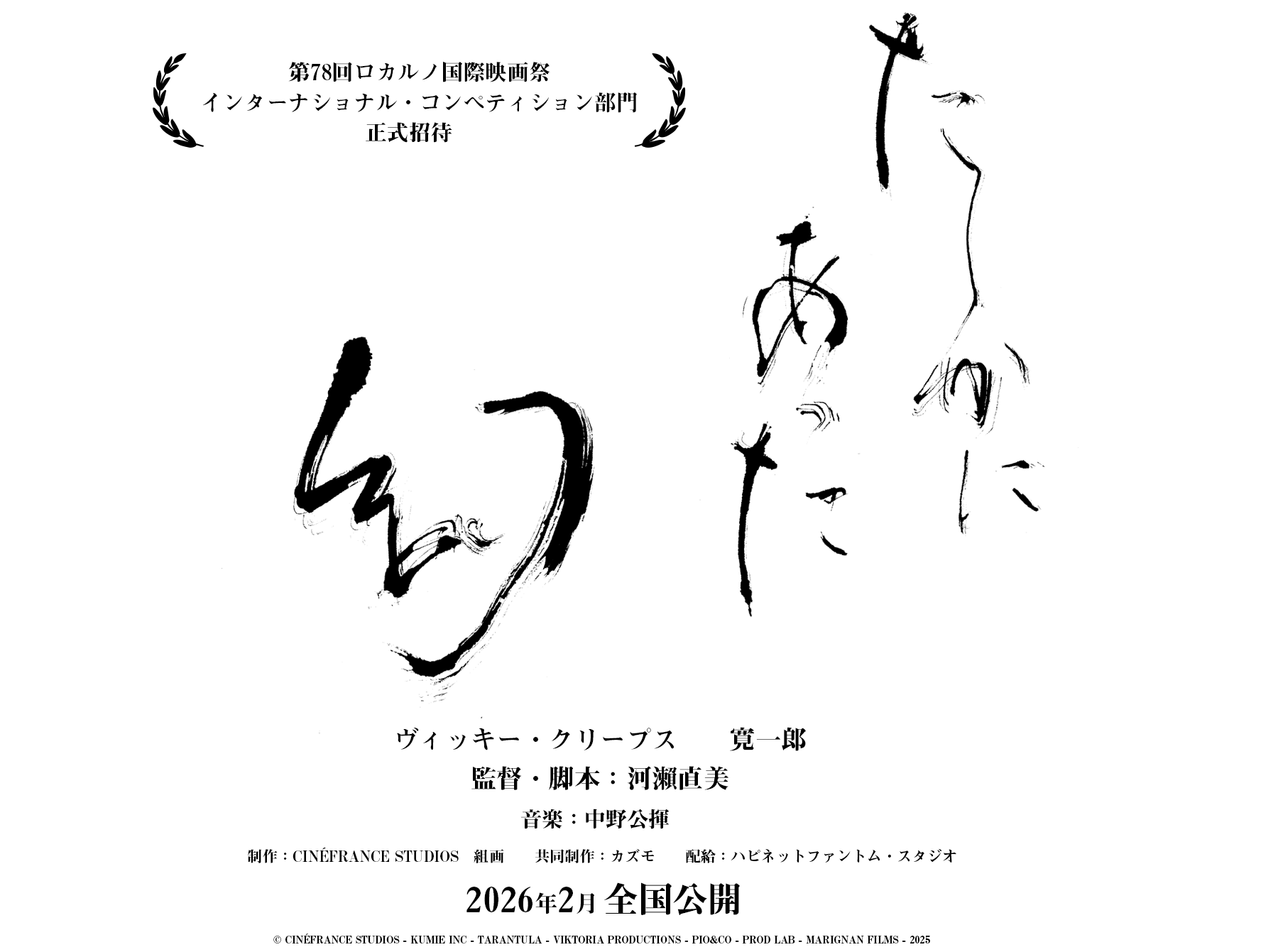
Yakushima’s Illusion (たしかにあった幻, Naomi Kawase, 2025)

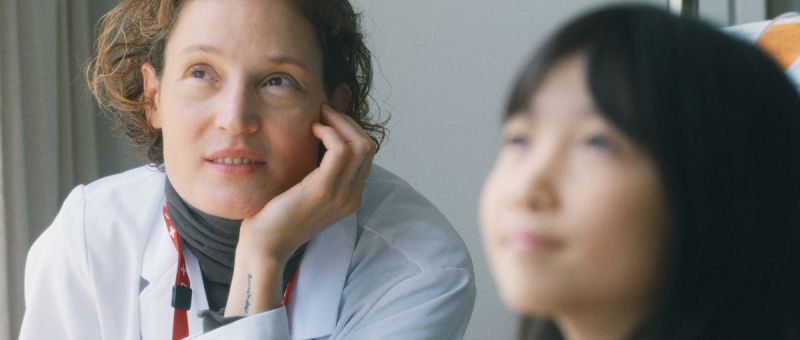
When is it that you can say someone is really dead? Grief-stricken paediatric organ transplant co-ordinator Corry (Vicky Krieps) finds herself pondering just this question while in Japan exploring differing attitudes to transplant surgery in Naomi Kawase’s latest, Yakushima’s Illusion (たしかにあった幻, Tashika ni Atta Maboroshi). Returning to her roots, Kawase includes several documentary-style sequences in which Japanese medical staff discuss traditional notions of life and death along with those relating to organ transplantation which remains taboo even in an otherwise advanced medical society.

One doctor relates that his own child had a transplant and they were plagued with harassment for “stealing” people’s organs. There’s a kind of ghoulishness in play, as if this practice were unholy in some way or were taking on a debt that can never be repaid. But from the perspective of the parents of children waiting for matches, there is indeed an undeniable sense of guilt involved given the knowledge that for their child to survive, another must have died and another parent just like them has suffered a loss. When a match finally comes up for one little boy, his mother feels conflicted knowing that a little girl that was ahead of them in the queue didn’t make it  and now it’s like they’ve taken her slot. Meanwhile the parents of the child that died battle their grief and confusion but decide to allow his organs to be made made available so that he will in some sense at least on. 

In this case, it was a heart transplant which presents the most complicated of existential questions given that traditionally death is marked by the cessation of the heart beating. Even when brain death has occurred, the body is considered to be living which obviously makes something like organ harvesting difficult if the patient is still considered to be “alive”. But on the other hand, it also means that death is infinitely postponed when the cessation of the heartbeat cannot be confirmed. Corry is haunted by the memory of an lover who disappeared without a trace and later discovers his family are trying to have him declared dead to smooth over an inheritance issue, though she objects because to her Jin is still alive even he’s not around.

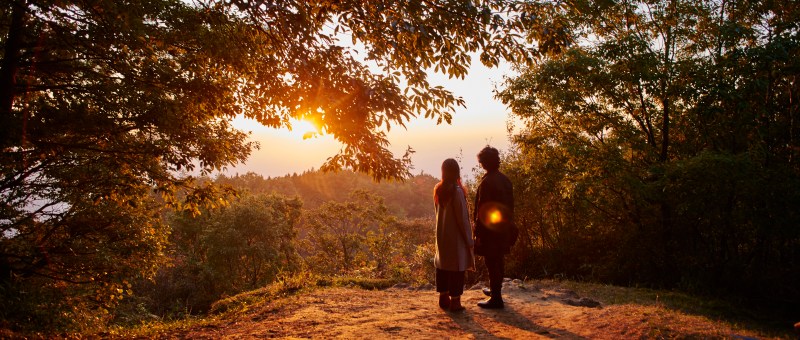
It’s on Yakushima that Corry first meets Jin (Kanichiro), and one could say that he’s the illusion of the title. Indeed the Japanese title hints at his ethereal quality in translating as something like “the apparition that was really there”. He has an otherworldly quality and seems to exist outside of time with his old-fashioned camera and impish personality. Part of the film is set around Tanabata which is rooted in the tale of the Cowherd and the Weaver, Orihime and Hikiboshi, who were separated by a river and permitted to meet only on one day a year. This mythical quality adds to the sense that perhaps Jin was more ghost than man, a figment of Corry’s memory or a manifestation of her desires who was nevertheless himself consumed by loneliness. In a phenomenon known as “johatsu” in which people suddenly disappear without warning, Jin leaves her life as abruptly as he entered it leaving her with a series of regrets and lingering questions. 

It’s this shifting sense of dislocation with which the film plays in moving, as Jin describes it, through the shifting moments of the heart exchanging linear time for emotional chronology. Having lost her mother in childbirth, Corry is consumed by a fear of abandonment and incurable loneliness that is compounded by the fact that people really do disappear from her life with alarming frequency which is perhaps why she is so invested in saving the lives of these young children. Bonding with a couple who lost their son to illness and now operate a bento stand supporting other parents, she searches for a way to let go without letting go which she perhaps finds in the serenity of nature now captured with sweeping drone shots such as that which takes us inside a tree in search of the self. Frequent cameos from former Kawase collaborators such as Machiko Ono and Masatoshi Nagase in small roles add to the elegiac feeling even if the final message seems to be that life goes on in the image of a still beating heart giving new life and new hope even in the midst of death and loss.


Yakushima’s Illusion screened as part of this year’s LEAFF.
The Extremists’ Opera (過激派オペラ, Junko Emoto, 2016)

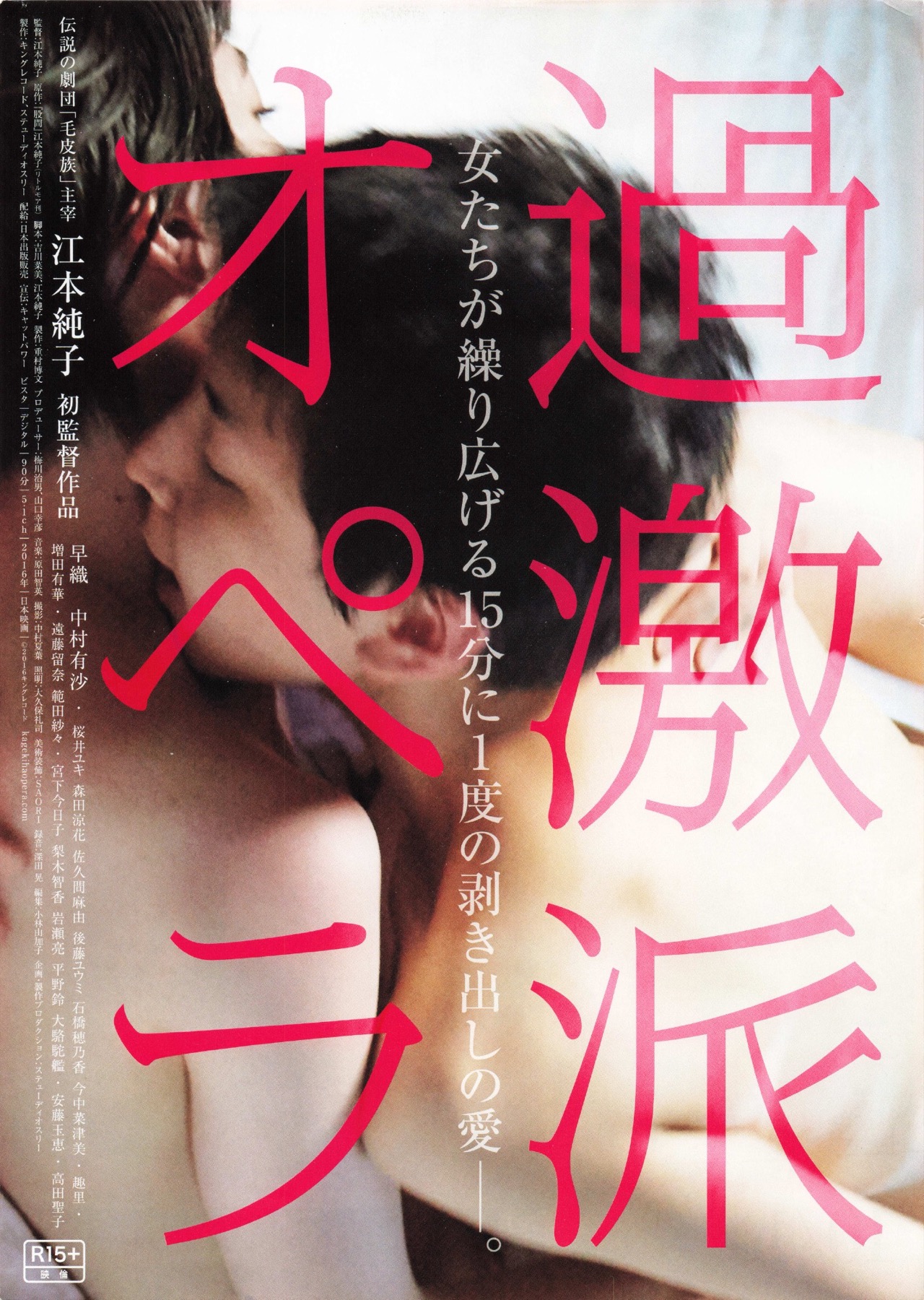
Junko Emoto ironically explores Tokyo’s fringe theatre scene in adapting her semi-biographical novel. Shot with a roving, handheld camera, The Extremists’ Opera (過激派オペラ, Kagekiha Opera) situates itself within an all female, avant-garde experimental theatre company but quickly makes plain that even those with high-minded artistic intentions are not free of the usual human flaws as the borderline abusive, womanising female director finds herself sabotaging everything she’s built through a mix of hubris and wandering desire. 

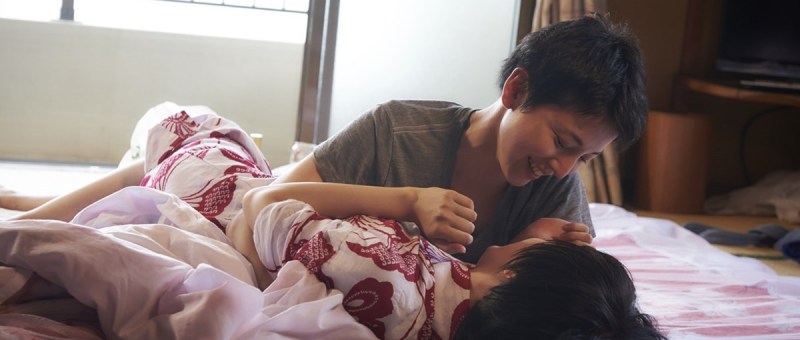
Blanket Cult are a popular company on the fringe theatre scene with a small following devoted to their art. Former banker Ayako bursts into their office determined on an audition and subsequent career change precisely because she can’t get enough of director/playwright Nao’s experimental plays which, she explains, she believes can stop wars. Nevertheless, it’s not Ayako the team are struck by, but the intense young woman who came in behind her, Haru, who more or less demands to be taken on. Nao is captivated, hiring both women on the spot and vowing to write a new piece with Haru in the lead. Of course, she does this partly for not altogether altruistic reasons. Immediately after the first script meeting she asks Haru to stay behind and then propositions her, directly declaring her love with the justification that she’d rather be upfront rather than waste time during the rehearsal process. Haru tells her that she’s not into women, but Nao doesn’t take no for an answer seemingly oblivious to the fact that what she’s doing is harassment and really she’s no better than any other sleazy male director handing out parts to women she wants to sleep with. 

Nevertheless, her persistence even with its undignified pleading eventually pays off. Haru relents, either because she’s fed up of fending off Nao’s advances or discovering that she is on some level receptive, finding that she does in fact enjoy sex with another woman. She agrees to start dating Nao who declares Haru her muse and the pair move in together but their relationship is threatened by their working environment with its petty jealousies and temptations. Emoto opens the film with a graphic sex scene of two naked women 69-ing, rolling around in the empty environment of the garage the troupe uses to rehearse. The two women are Nao and her previous squeeze, a former leading lady she throws over because of her attraction to Haru whose own desire is perhaps signposted after she walks in on them going for a second round and makes a passive aggressive scene that leads the other woman to warn her that Nao is a heartless womaniser with a habit of bedding her leading ladies, sometimes in the wings. 

Yet it’s not only Nao’s misplaced desire that endangers the troupe but her arrogance and abusive directing style. After their play proves a success, she unwisely gives in to ambition and sells out by allowing a mainstream professional actress, Yurie, to join the troupe, a move which disrupts their dynamic while also inflaming Haru’s jealousy as she begins to wonder if she’s already being replaced. Nao snaps at her team and stops giving them proper direction in favour thinly veiled insults. She repeatedly instructs an actress to lose weight while increasingly allowing Yurie to dominate the rehearsals, accepting all of her ideas even while the other members sceptical. She even goes so far as to abandon her usual thriftiness, purchasing elaborate props such as a large vertical tank which leads her into another possibly inappropriate relationship with an older woman who had been pursuing her. Needless to say, the whole thing blows up in her face, ruining not just her relationship with Haru but that with her theatre company who are now all thoroughly fed up with her mistreatment and have entirely lost respect for her as a person and an artist. 

“If you want to pick a fight with society live in it first,” her benefactor irritatedly tells Nao after she’s thoughtlessly caused offence, reminding her that she lives in a kind of bubble that is the fringe theatre scene. Her only real interaction with someone outside of it is with the estate agent who finds her and Haru a flat and is extremely confused as to why they only need one room if they’ll be living together, concerned that female roommates are a liability because sooner or later one gets a boyfriend and leaves the other in the lurch unable to make the rent alone. Unable to learn her lesson, Nao has furiously energetic sex with an apparently wealthy starstruck fan and then immediately asks for money, perhaps getting a taste of her own medicine when she assures her there’s plenty more where that came from as long as she sees her again and also gives her a part in a play. Playfully ironic with its whimsical score and slightly detached gaze, Emoto’s refreshingly explicit drama is both a mild satire of the avant-garde fringe theatre scene and a takedown of its self-involved director whose inability to separate the creative from the carnal proves her downfall both artistic and emotional. 


Trailer (English subtitles)

Hope (望み, Yukihiko Tsutsumi, 2020)

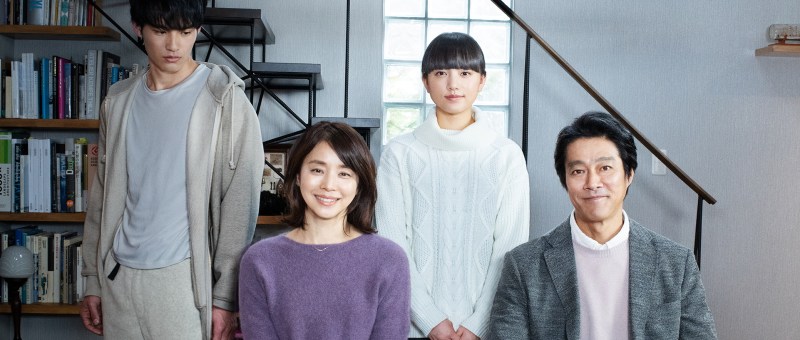
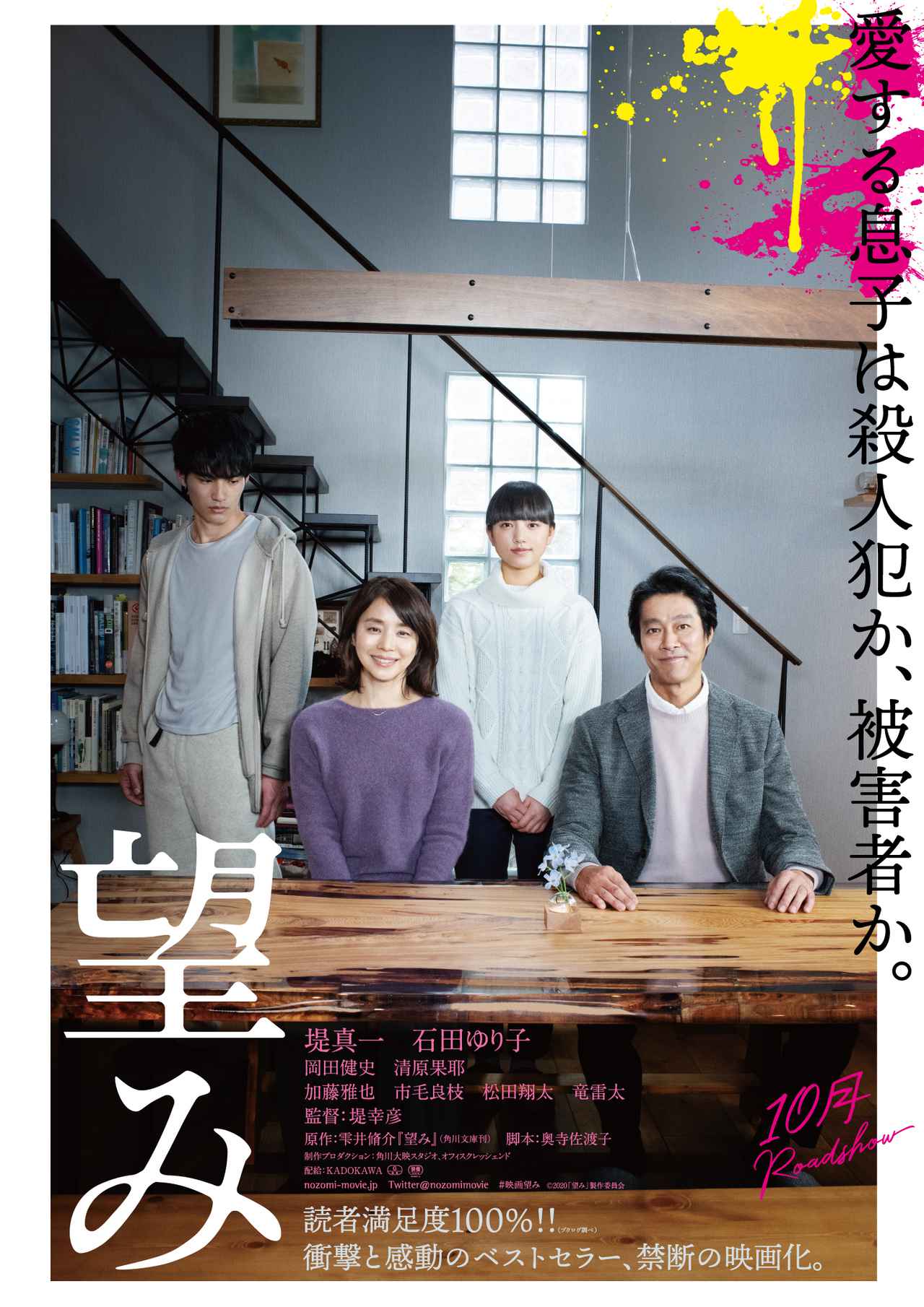
What would you prefer, that your son is alive but a murderer, or that he’s dead but blameless? That’s the dilemma faced by the family at the centre of Yukihiro Tsutsumi’s Hope (望み, Nozomi) who find themselves wondering if they really knew their son at all or had been deluded by an image of familial harmony that was only ever superficial. Meanwhile, they’re also at the centre of a media storm, on the receiving harassment from the press and neighbours, along with the potential financial strain of lost business and fracturing relationships in the local community.

Teenage daughter Miyabi (Kaya Kiyohara) tells her father that she’s read online some families have to move after a relative becomes involved with a crime, that they lose their jobs and place in the community. She’s been studying hard to get into a top high school and is worried that they may not now accept her even if she passed the exam because of something her brother may or may not have done. Some might say that a being a part of the family means that you live or die together, but there is a persistent sense of unfairness felt by all they are being made to suffer because of something over which they had and have no control.

Tadashi (Koshi Mizukami) never explained of this to them and it’s true that he had been behaving differently, was sullen, stayed out all night coming home with bruises, and had in fact recently purchased a knife but it’s difficult for them to believe that he could really have gone on the run after murdering a classmate. At the beginning of the film, architect Kazuto (Shinichi Tsutsumi) had shown off their warm family home to some prospective clients remarking that they wanted to ensure close relationships with the their children and that the design is a good opportunity to plan ahead for the next 10 or 20 years but perhaps there’s something a little hubristic in that statement. Kazuto is trying to sell an image of familial bliss that his house design can bring, but when he knocks on Tadashi’s door the boy is rude and resents the intrusion. Typical teen behaviour, the clients might think, but still it’s a minor crack in the edifice of the image of a perfect family.

But for all that it’s Kazuto who most strongly resists the idea that Tadashi may really have killed his friend and clings fast to the hope that he may be a victim too even though, as mother Kiyomi (Yuriko Ishida) points out, that might mean that he’s already dead and was killed alongside him. For Kiyomi, she just wants Tadashi, whose name means “correctness”, to be alive even if that means he really did do it. If that were the case, the family would also face constant harassment for the rest of their lives, Tadashi would be in prison for the next 15 years, and they would likely have to compensate the other family financially for the boy’s lost future and 50+ years’ worth of lost earning potential. None of that matters to her so long as Tadashi is alive, but to Kazuto it seems more important that Tadashi not be guilty and he reclaim the image he had of his son as a good and honest young man rather than a delinquent killer and bully.

Investigations among the teens turn up contradictory reports, some saying that Tadashi was aloof and arrogant while a group of girls insist on his innocence and even contemplate going to the police to help clear his name. What’s clear is that everyone seems to have taken football far too seriously and a situation among hotheaded young men went way out of control. As a policeman later says, problems often occur at this age because children who are mature enough to think for themselves start wanting to solve their own problems without worrying the adults around them but don’t always know the best way to do it and end up making everything worse. The irony may be that in the end Tadashi may indeed restore a sense of hope for his family that they can turn things around and regain a more genuine sense of familial harmony no matter what the outcome may be.


Hope screens as part of this year’s Japan Foundation Touring Film Programme.

Trailer (English subtitles)

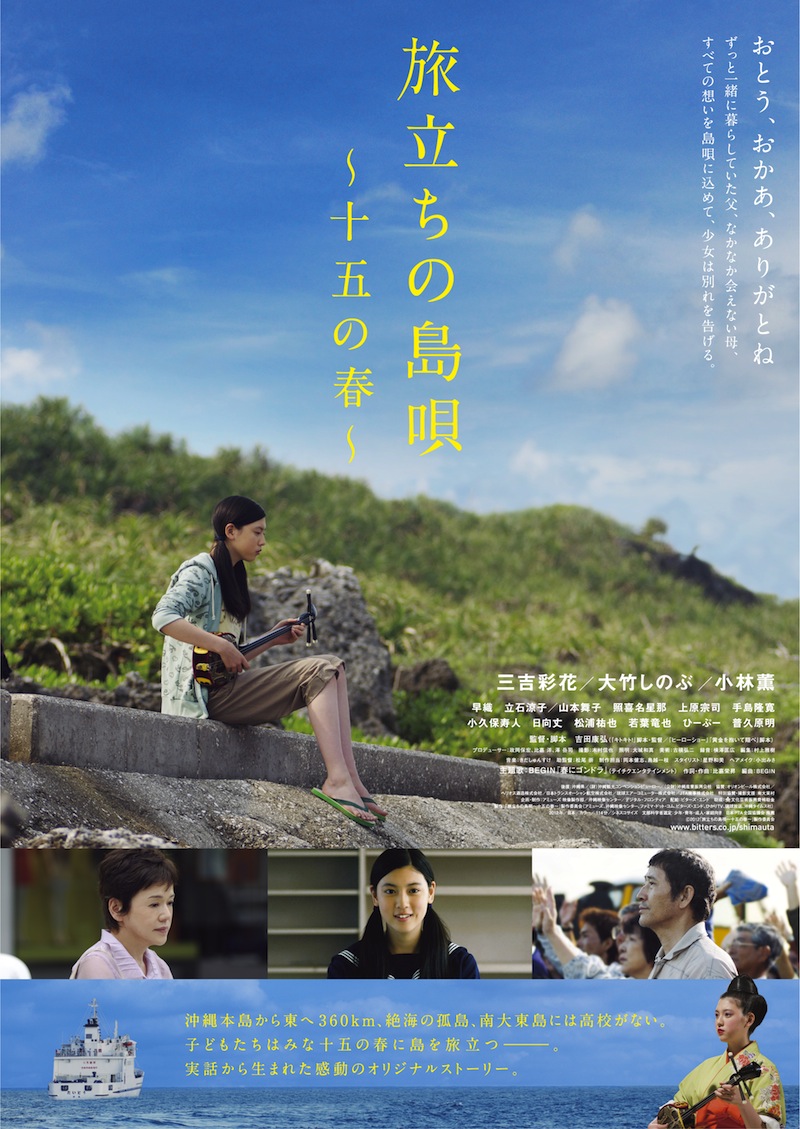
Leaving on the 15th Spring (旅立ちの島唄~十五の春~, Yasuhiro Yoshida, 2013)

“How many of them will come back?” a man on the shore ominously asks as he watches the young people of his island ship out to pursue their education in the comparatively better equipped capital. Rural depopulation has become a minor theme in recent Japanese cinema, but the situation is arguably all the worse in the outlying islands of Okinawa. As the title of Yasuhiro Yoshida’s Leaving on the 15th Spring (旅立ちの島唄~十五の春~, Tabidachi no Shima Uta: Jugo no Haru) suggests, teens from the small island of Minami Daito (South Daito) must leave at 15 if they want to attend high school because there isn’t one on the island.

That said, there are more kids than you’d expect in young Yuna’s (Ayaka Miyoshi) middle school and it’s more than just a handful who leave the island each spring, many of them choosing to make lives for themselves in the wider world rather than return to their childhood home. On Minami Daito, the main industry is sugarcane but the prospect of Japan joining the TPP trade agreement has many worried that it will soon no longer be viable and with even fewer economic opportunities available many will have no choice other than to abandon the island for good. 

We’re often reminded just how far the island is from the Okinawan capital Naha and how difficult it is to get to. To leave, the kids are placed in a kind of cage and lifted onto a larger boat moored by a small jetty. Even to get to the next island Kita Daito (North Daito) it’s some time on a ferry which might not run if the weather is bad. Distance becomes a persistent theme, not just in Yuna’s impending exit but the scattering of her family. When kids leave for high school, a parent often goes with them as Yuna’s mother Akemi (Shinobu Otake) did when it was time for her sister Mina (Saori) to depart. But Mina is now a grown woman married with a child of her own and Akemi has not been back to the island for two years. This forcible separation continues to disrupt familial bonds as couples necessarily grow apart and children begin to choose their own paths in life which often take them away from their parents. 

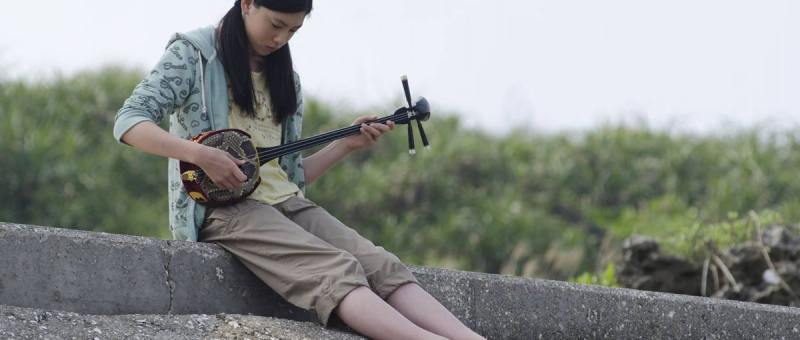
It’s this sense of distance which plays on Yuna’s mind, a kind of countdown starting inside her as she witnesses another girl sing the Okinawa folk song “Abayoi” which means “goodbye” in the local dialect and recounts a young person’s sorrow as they must leave their family and childhood home behind on coming of age. Reminded that she’s next in only a year’s time, Yuna meditates on her past and future while reconsidering her relationships. Abandonment often occurs through a simple lapse in contact. Akemi now rarely phones home while Yuna’s nascent first love with a boy from Kita Daito falters when he abruptly stops calling or returning her letters. Eventually she finds out that despite their pledge to attend the same high school on Naha, he has decided to stay and take over his father’s fishing boat because of his dad’s ill health. 

Kenta has realised that his place is Kita Daito and he will remain there the rest of his life while harbouring a degree of resentment that he couldn’t go to high school or pursue his romance with Yuna. He feels their relationship is doomed simply from the fact that they’re from different islands. He won’t leave his, and she likely would not settle on Kita Daito preferring, either a life in the cities or her childhood home. It’s the same for her parents, Akemi deciding that she prefers life in the city and the degree of independence she has there while her father Toshiharu (Kaoru Kobayashi) would not survive off the island. Both of her siblings have already left, Mina returning with her infant daughter apparently on the verge of separating with her husband partly it seems because of the insecurity the separation of her family has left her with, while Yuna’s brother seems to be a harried workaholic with no family life to speak of. 

Rather childishly she thinks she can reunite her family and dreams of buying a big house on Naha for them all to live together, adult siblings included, without fully accepting that the relationship between her parents has been gradually worn away leaving them strangers to each other and each desiring different kinds of futures. What she comes to is perhaps an acceptance of the distance in her life, the longing for her island home where she says everyone is one big family, as she finds herself choosing independence. A picturesque vision of Minami Daito and its idyllic landscape along with the traditions of the island including its rich musical culture and Okinawan Sanshin, Yoshida’s gentle drama discovers that “abayoi” is a part of life that can’t be avoided but can be sweet as well as bitter once you’ve learned to accept it.


Trailer (English subtitles)

Inch Forward (走れない人の走り方, Su Yu-Chun, 2023)

Why does everything always go wrong just when it was about to go right? Everything has fallen into place for director Kiriko’s upcoming indie film but suddenly she finds herself experiencing a series of crises that are perhaps a bit of a wakeup call teaching her a few things about herself as well as the process of filmmaking. The latest film to tackle the perils of the independent movie scene, Inch Forward (走れない人の走り方, Hashirenai hito no Hashiri-kata) never shies away from the difficulties involved but does suggest they can be overcome with humility and a willingness to get creative.

Part of the problem is Kiriko’s difficulty in making decisions and lack of clarity over her role as a director. Her producer, Takimoto, tries to keep her grounded by pointing out places where the script will be difficult to film and dealing with the actors, but also tells her that she should have a better idea of the message she intends her film to carry and be prepared to answer questions about the script from her cast members. But Kiriko says she doesn’t really intend the film to have a message and thinks creating a character is an actor’s job not a director’s. Whenever Takimoto asks her to reconsider something, Kiriko childishly answers that she’ll think about it probably without really intending to.

But her irresponsible behaviour causes problems for others, particularly when she messes up the company car during a bit of unauthorised location hunting, or fails to shut the front door properly allowing her pregnant roommate’s pet cat to escape and thereby sending her into an early labour. It’s only after these series of crises that Kiriko begins to understand that she needs to make amends and be more considerate in future if she wants to continue receiving help and support from those around her. After all, you can’t make a film all on your own.

Ironically enough she describes her film as like a road movie but on foot about people going to the same place over and over again. Even one of her crew members asks her why it is indie filmmakers like to end at the sea hinting at her screenplay being slightly cliché even as she tries to think her way out of the problem. At a particularly low point, she has a vision of the film being taken away from her as her (all male) crew members and Takimoto remark on how useless she is and vow to take over their section from her. She also has an obsession with her horoscope which is usually a little negative further deepening her lack of confidence and general sense of despair. 

“Don’t worry, just believe in yourself and move forward’” one of her horoscope ads advises and it might indeed by good advice for an indie filmmaker. Learning to be a little more considerate of those around her, she begins to benefit from their help and advice rather than rejecting it in her own insecurity. Despite all of the constraints her friend tells her that she should make something authentic, what she actually wants to do rather than cynically doing what seems the most advantageous, but what’s really important is a sense of balance. As Takimoto told her, she needs to learn to prioritise rather than expect to get everything she wants and be realistic about what’s achievable while still aiming for the film she wants to make. 

Then again in the cinema scenes which bookend the film Su implies that the audience weren’t particularly impressed or perhaps confused by her road movie that doesn’t go anywhere. One audience member was so deeply asleep they had to be woken by an usher. Nevertheless, to overcome her problems Kiriko has to take the lead in more ways than one asserting control over her project but also prepared to work with others, listen to their suggestions, and make firm decisions as they inch forward towards their goal. Warm and quirky, Su’s lighthearted dramedy never shies away from the difficulties of indie filmmaking but finally resolves that it is possible to overcome them with a little mutual respect and solidarity between those on the other side of the screen.


Inch Forward screened as part of this year’s Osaka Asian Film Festival.

Original trailer (no subtitles)

Tsujiura Renbo (辻占恋慕, Daisuke Ono, 2021)

Is there a point at which you should accept your artistic dreams won’t come true, cut your losses, and try to transition into a more conventional life? That’s the dilemma the heroes of Daisuke Ono’s Tsujiura Renbo (辻占恋慕) find themselves contending with while wondering if it’s better to compromise your artistic integrity and surrender to the realities of the contemporary entertainment industry or resign yourself to the idea of your art becoming merely a side gig rather than a full-time occupation. 

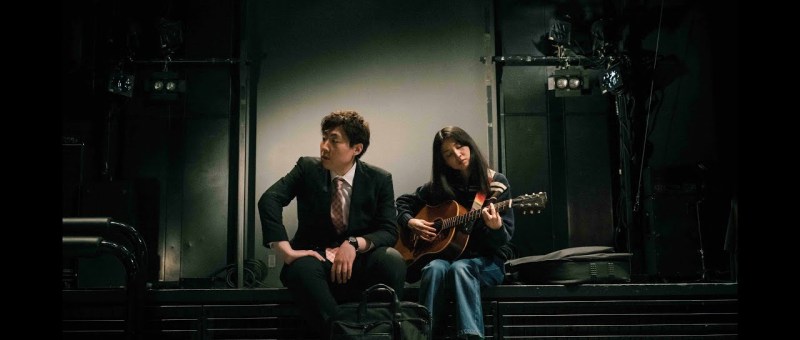
The dilemma is all the more acute for Shinta (Daisuke Ono) because he’s recently turned 30 and is experiencing a moment of existential crisis. The band he’s been in since college has never really got anywhere, and this particular evening his guitarist, Naoya, hasn’t even bothered to turn up. Luckily for him, a sullen young female folksinger, Emi (Saori), offers to accompany him for just the one track so that he can still try and rustle up some interest in a few CDs but it’s clear during their set that Emi has real star power effortlessly outshining him vocalising on his own song. Shinta thinks the gig is up, eventually deciding his efforts might be better placed in helping Emi receive the recognition she deserves becoming her manager after spending a weird night in her apartment which is also the office of her record label which has only one other artist and is essentially the last hurrah of an ancient retiree. 

Part of Emi’s problem is that she’s an old school folksy singer-songwriter with intense Meiko Kaji energy. Even those who support her worry her music’s too old-fashioned for a chart-obsessed industry while her tsundere personality is distinctly at odds with the traditional ways in which female artists are marketed in what is still an incredibly sexist environment. Emi had complained that the club at which she first met Shinta was populated largely by slightly creepy middle-aged men there to see the main act, underground idol star Azuki (Rena Kato) who specialises in upbeat yet bland pop and makes the majority of her money through meet and greet sessions with her top fans who are perhaps sometimes dangerously obsessed with her star persona. These kinds of fans aren’t generally interested in folk music, but even so Emi is repeatedly advised to go down the same path of selling handshakes and autographs to ticket buyers more interested in the fan experience than hearing anything she has to say.

To that extent, it’s odd that neither Shinta nor anyone considers harnessing her tsundere energy to hook a different kind of audience that might be attracted to her defiance rather than the bland cuteness represented by Azuki. Azuki meanwhile may be cynical but perhaps she’s also sensible, explaining to Shinta that after hearing he and the others earnestly discussing music she decided it was better to go in a different direction realising she’d soon age out of the underground idol demographic in which the average career might last only a few months, deciding to turn her idol persona into a marketable brand and more or less ignoring the musical part of her act altogether. Shinta begins to wonder if he’s been marketing her wrong, that he shouldn’t have tried to push Emi towards the mainstream but focus on her unique talent as an old school live act. 

Then again, each 30 years old and already exhausting their budget perhaps it’s simply too late to move beyond the live house circuit. A visit from a colleague of Emi’s at the callcentre where she works to make ends meet, herself an aspiring actress, warns him that Emi may be at her limit but unable to quit in part in fear of letting him down even as their relationship is constantly eroded by the pressures of trying to make their musical dream come true. She has real talent, but doing what it would take to become successful might kill it and her, a music critic from a big paper bluntly telling Shinta that though he can see her newer album is more “commercial” that’s only made it “bland” robbing it of everything that once made it interesting. If playing to crowds of weird old men who’ve only come because Azuki told them to is as good as it gets, maybe it’s best to accept defeat rather than watch Emi tear herself apart. As it turns out the reason Naoya never turned up to the gig was that he won big on pachinko and realised he had much more chance of making a life for himself on that than he ever had with music. Maybe it doesn’t work out in the end and all you have is “nostalgic love” for a period in time, but that might not be so bad in and of itself and the music will always be there for you whether anyone’s listening or not.


Original trailer (no subtitles)

Godzilla Minus One (ゴジラ-1.0, Takashi Yamazaki, 2023)

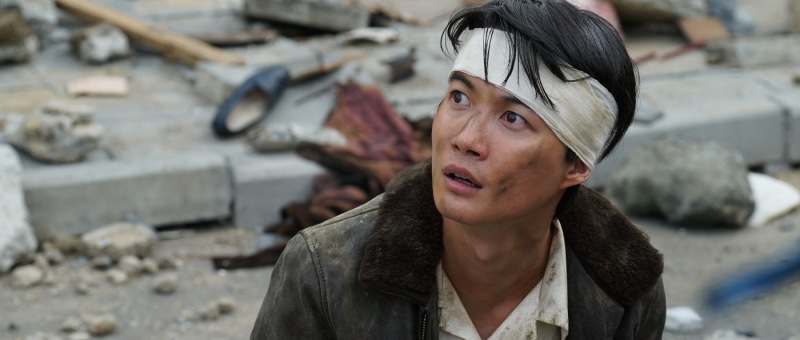
When Godzilla emerges from the waves in Takashi Yamazaki’s entry into the classic tokusatsu series Godzilla Minus One (ゴジラ-1.0), he does so as an embodiment of wartime trauma most particularly that of the hero, Koichi (Ryunosuke Kamiki), a kamikaze pilot who failed die. Some might call his actions cowardice, returning to base siting engine trouble rather than doing what others regard as his duty, though the film implies it’s simply a consequence of his natural desire to live, a desire which the tenets of militarism which in essence a death cult insisted he must suppress. 

But for Koichi as he’s fond of saying the war never ends. He’s trapped in a purgatorial cycle of survivor’s guilt and internalised shame, feeling as if he has no right to a future because of the future that was robbed from other men like him because of his refusal to sacrifice his life. When he first encounters Godzilla on a small island outpost, he is ordered back into his plane to fire its guns at him but freezes while the rest of the men, bar one, are killed. Tachibana (Munetaka Aoki), a mechanic who had already branded Koichi a treacherous coward, gives him a packet of photographs belonging to the dead men each featuring the families they were denied the opportunity to return to. Photographs on an altar become a motif for him, though he has none for his parents who were killed when their house was destroyed by the aerial bombing of Tokyo. A surviving neighbour similarly blames him, directly aligning Koichi’s act of selfish cowardice with the razing of the city.

The return of Godzilla is literal manifestation of his war trauma which he must finally confront in order to move into the new post-war future that’s built on peace and solidarity rather than acrimony and resentment for the wartime past. But then again, the film situates itself in a fantasy post-war Tokyo in which the Occupation is barely felt and the government, which mainly consisted of former militarists, is also absent. Both the US and the Japanese authorities refuse to do anything about Godzilla because of various geopolitical implications making this a problem that the people must face themselves, though they largely do so through attempting to repurpose rather than reject the militarist past. Noda (Hidetaka Yoshioka), a scientist who worked on weapons production during the war, gives a rousing speech in which he explains that this time they will not pointlessly sacrifice their lives but instead fight to live in a better world which is all very well but perhaps mere sophistry when the end result is the same. 

Called back by their old commander, many men say they will not risk their lives or abandon their families once again because they have learned their lessons but others are convinced by the message that they must face Godzilla if they’re ever to be free of their wartime past. Koichi wants vengeance against Godzilla but also to avenge himself by doing what he could not do before. The film seems to suggest that this time it’s different because he has a choice. No one has ordered him to die, and he is free to choose whether to do so or not which is also the choice of being consumed by his war trauma or overcoming it to begin a new life in the post-war Tokyo that Godzilla has just destroyed. 

Despite the desperation and acrimony he returns to, Koichi maintains his humanity bonding with a young woman, Noriko (Minami Hamabe), who agreed to take care of another woman’s child. Even the neighbour, Sumiko (Sakura Ando), who first rejected Koichi and is suspicious of Noriko, willingly gives up her own rice supply for the baby proving that in the end people are good and will help each other even if that seems somewhat naive amid the realities of life in the post-war city ridden with starvation and disease. In any case, it’s this solidarity that eventually saves them, Godzilla challenged less by a pair of large boats than a flotilla of small ones united by the desire to finally end this war. Like Yamazaki’s previous wartime dramas The Eternal Zero and The Great War of Archimedes, the film espouses a lowkey nationalism mired in a nostalgia for a mythologised Japan but as usual excels in terms of production design and visual spectacle as the iconic monster looms large over a city trapped between the wartime past and a post-war future that can only be claimed by a direct confrontation with the lingering trauma of militarist folly.


Godzilla Minus One opens in UK cinemas 15th December courtesy of All the Anime.

International trailer (English subtitles)

River (リバー、流れないでよ, Junta Yamaguchi, 2023) [Fantasia 2023]

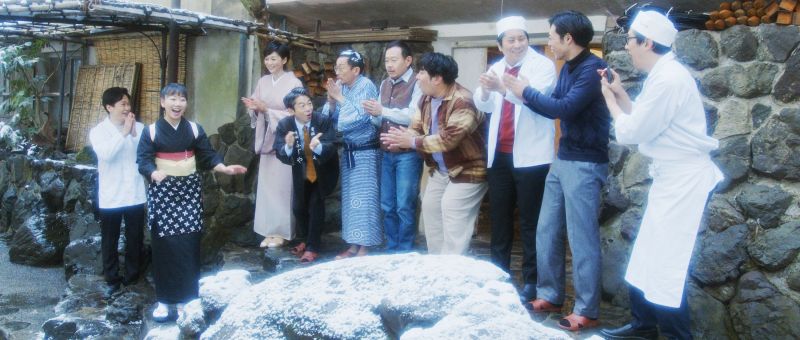
Some might say time stands still in the “peaceful” hot springs town of Kibune, but on this particular day it’s more than usually true in Junta Yamaguchi’s followup to the cult hit Beyond the Infinite Two Minutes, River (リバー、流れないでよ, River, Nagarenai de yo). This time around, the staff of a hotel along with its guests find themselves trapped in an infinite two minute loop in which they retain all their memories but are constantly returned to where they were two minutes previously no matter what they do. 

Depending on the situation, two minutes can be an eternity or an instant (or perhaps it’s always both) and in this case there isn’t much you can do in such a short time. The hotel staff find themselves constantly running up stairs and through corridors trying to coordinate their actions while accepting that nothing is permanent and any changes they try to make to their situation will be wiped out in the next loop. A chef who is also apparently a science enthusiast cautions them against taking any rash actions seeing as they can’t know when time will start flowing normally again, though for some the opportunity to embrace guilty pleasures such as poking a hole in the shoji is too good to pass up. 

As for what’s causing it, no one really knows but as it turns out everyone has a reason they might want to stop time. For maid Mikoto (Riko Fujitani) it’s that she fears her boyfriend plans to move abroad to study French cooking while another pair of guests secretly wanted to ask each other favours but are having trouble plucking up the courage and a blocked writer consumed with guilt for having killed off a key character is glad he can finally take some time out only to be slowly bored out of his mind when faced with an eternity of nothingness. The irony is that people come to places like these precisely because they’re “boring”, free from the chaos and stress of their ordinary lives. Mikoto says as much while wondering if that’s why her boyfriend wants to leave, that he feels as if he’s stagnating in a place where nothing changes and time doesn’t flow and that while he could be “happy” here with her living an ordinary life there’d always be a part of him wanting more.

Still, having this additional time helps each of them find clarity and begin to resolve some of their worries and anxieties. Even if they had “more time” in the more conventional sense, they may never have been able to speak plainly but given the enforced constraints of the time loop in which they quickly run out of other things to do and are more or less forced to talk to each other, they are all able to come to some kind of accommodation with what’s been bothering them. The two male guests are able to clear the air after an argument, the writer comes to a new appreciation of his characters thanks to his own sense of despair being trapped in the loop, and Mikoto realises she’ll have to let her boyfriend go in the hope that he’ll circle back around to her in time. 

The complexities involved are unlike those in Beyond the Infinite Two Minutes given that time constantly resets so the only point of consistency is the initial position of each person though the infinite quality of the looping provokes an additional layer of existential questioning as each of the various protagonists is forced to ask if they’re really moving on with their lives or even notice that time is indeed flowing. The clue that something is continuing to move lies in the differing levels of snowfall in each of the loops hinting at the increasing depths of their despair as they realise that not even death might free them from the maddening cycle of repetition while accepting they’ll have to work together to figure out what’s going on and how to escape the loop. The farcical humour soon gives way to a more poignant sense of reflection but also to a renewed joy and excitement that the future might actually be fun too and maybe it’s less scary to go there than be quite literally stuck in the present for all of eternity.


River screened as part of this year’s Fantasia International Film Festival.

Original trailer (English subtitles)

Radiance (光, Naomi Kawase, 2017)

radiance posterAs a producer claims part way through Naomi Kawase’s Radiance (光, Hikari), the aim of cinema is to connect with other people’s lives. Yet connection is something each of our conflicted protagonists seem to struggle with and something which continues to elude them as they try and fail to find the meaning in the messages of sound and image. Radiance wants to guide us to the light, but its clearest dialogue is with itself or more practically in discussion of translation as an act of intense connection even as its messages flicker in the breeze, caught in a moment of transition from one soul to another. Yet what Kawase finds is that the message is carried, even if it cannot be “translated” into text, or image, or sound, it is felt all the same.

As the film opens a young woman, Misako (Ayame Misaki), observes the world around her and turns her observations into a poetic monologue. Her actions are a kind of rehearsal for her day job which involves creating the script for an audio description that will enable people with visual impairments to enjoy cinema. In order to improve her practice, Misako and her producer hold a number of focus meetings with a group of visually impaired people who can critique her script and point out any potential weak points or moments of confusion. Most of the members of the group are of a mind to be helpful though perhaps overly polite but one, Nakamori (Masatoshi Nagase), is particularly critical of Misako’s approach and unforgiving when voicing his concerns.

Unlike most of the other participants, Nakamori is partially sighted but is suffering from a degenerative condition in which he will eventually lose his sight entirely. This fact is particularly difficult for him to come to terms with as he had previously been an award winning photographer and is losing a key part of his identity in having to face the day when he will have to put his camera down for good.

One of the other ladies at the focus session, pointing out that Misako’s script for the audio description of the film is in effect a subjective commentary, elaborates that what she got from Misako’s narration was a sense of ruined of beauty, of sadness, and the inescapable sense of loss for something that can never be recovered. The film itself is, apparently, the story of a lifelong romance approaching its end as a husband prepares to say goodbye to his wife as she slips away from him. The themes, as we later find out, are ones eerily relevant to Misako who is still mourning the loss of her father while she watches her mother fade away as dementia takes its hold.

The beauty of transience, of the sense of loss before loss, becomes the central message of the film within the film – the message that Misako could not seem to see because she was afraid to look. Fed up with Nakamori’s constant criticisms, she accuses him of lacking imagination but her own act of “seeing” is then exposed as superficial, merely a catalogue of actions without meaning or import but delivered with a subjectivity that, as Nakamori cruelly points out, “gets in the way” of his ability to connect fully with the visual world that Misako is trying to create. 

Misako misses the messages because there are things that cannot be directly understood without conscious effort – the elderly film director tells her that her interpretation of the final scenes is too “hopeful”, as a young woman she cannot comprehend the futility of a old man’s desire for life. Age cannot talk to youth, and sound cannot talk to image but still the attempt is made and a message delivered albeit imperfectly. Nakamori, having given his life to the art of photography, is eventually forced to abandon the thing he loves most only to discover something else existing underneath it while Misako is forced to confront the superficiality of her act of “seeing” which makes her attempt to “translate” image into sound a hollow exercise – something which can only be corrected by a willingness to accept that the medium is not the message. Kawase’s messages may be trite, on one level, but there is something beautiful in continuing to chase the light as it dwindles knowing that in the darkness the flame still burns.


International trailer (English subtitles/captions)