A Quiet Life (静かな生活, Juzo Itami, 1995)

“One person is not a tool for another” the heroine of Juzo Itami’s 1995 melodrama A Quiet Life (静かな生活, Shizukana Seikatsu) eventually writes in her diary quoting her novelist father but also reflecting on herself and her life in which some have indeed attempted to use others for their own ends. Outside of international mega hit Tampopo, Itami is best known for a series of anarchic comedies each starring his wife Nobuko Miyamoto as forthright woman tackling the ills of contemporary Japan from tax evasion and increasingly amoral capitalism to the yakuza and shady cults. Based on a novel by his brother-in-law Kenzaburo Oe, A Quiet Life is therefore something of an outlier yet once again addresses a number of social issues from treatment of disability in the contemporary society to the relationships between parents and children and the dangers of a rapidly modernising society. 

Middle daughter Ma (Hinako Saeki) lives in a large Western-style in the country with her father, internationally renowned author K (Tsutomu Yamazaki), mother and two brothers the oldest of which, Eeyore, has some learning difficulties but is largely independent. Nevertheless, when K, who is experiencing a moment of crisis that leads him to consider suicide when he is unable to fix a problem with the drains and has to resort to a plumber, is offered a job at a university in Australia Ma is left in charge at home and therefore responsible for her brother. Though the family fully accepts Eeyore, it’s clear the world around them is not always so kind. As they approach a centre for the disabled on a walk, others around them openly express disgust, suggesting they are a “bad influence” and wanting to leave the area entirely. 

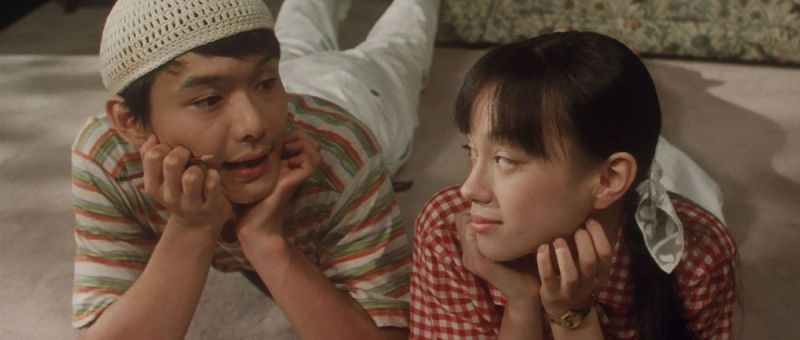
Meanwhile as the film opens two children are locked together in a game of magnets, a collection of adults attempting to pull them apart by force. The shot is later repeated as Eeyore holds his sister in the rain following a traumatic and unexpected incident and demonstrating the close and affectionate bond between the siblings. Yet there is an uncomfortable suggestion from some that Ma is being asked to sacrifice her life to look after her brother who after all is unlikely to marry and will require additional care as long he lives, while she is perhaps slightly overprotective and wilfully self-sacrificing. “Don’t expect another human to sacrifice their life for you” goes another of her father’s lines, “to expect such a thing is the worst kind of depravity”, the family otherwise committed to the insistence that Eeyore has his own life and interiority which must neither be sacrificed, nor sacrificed for, for to do so would be to deny his personhood. Eeyore is not a tool for Ma’s charity nor is she a tool for the family’s duty towards him. 

Nevertheless even she is not immune to negative stereotyping becoming increasingly concerned that her now adult brother may pose a threat to the local community in his lack of understanding and inability to control his impulses. When a child molester is on the loose in the village, she is terrified Eeyore may be involved having read a newspaper report about a similar crime committed by someone with learning difficulties uncomfortably echoing the prejudice of the walkers by the disabled centre not to mention to middle-aged women who openly gossip about it in front of their house. Meanwhile, her own naivety becomes a threat when she allows a smarmy young man, Arai, to give her brother swimming lessons later learning that he has a grudge against her father who he feels “used” him to facilitate his art having bought and drawn inspiration from his experiences of being accused of a crime but leaving readers with the impression that he was a sex offender. 

Arai may indeed be trying to use her for revenge and at any rate is not all he seems even if the implication of her father’s story is that he wanted to sacrifice himself to save the young man. While K works through his artistic block offscreen aided by his wife (whom he soon forgets once he’s well), Ma has a series of epiphanies of her own over an eventful summer you couldn’t really call “quiet” even if there’s a strange tranquility in its anarchy. Going to some dark and unexpected places, Itami’s gentle dramedy veers away from the zany comedies of his earlier career but discovers a kind of serenity in the quiet of life of the siblings getting on with business of living in the sometimes hostile Japanese countryside. 


Original trailer (no subtitles)
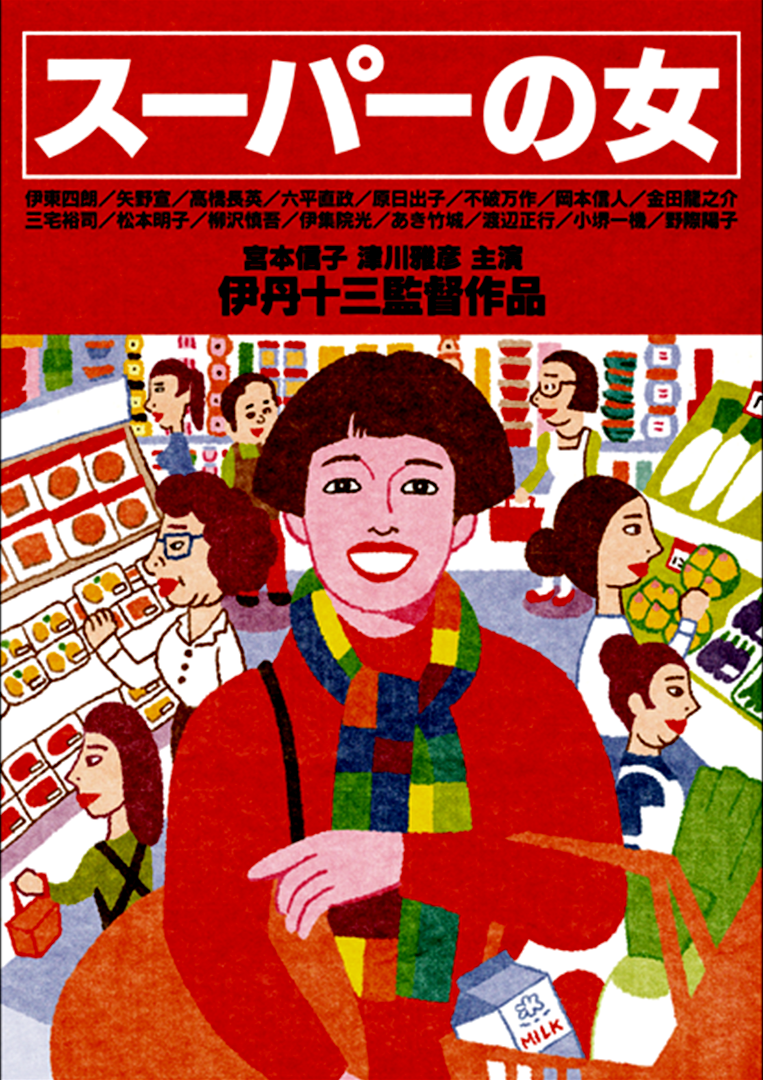
Supermarket Woman (スーパーの女, Juzo Itami, 1996)

By 1996 Japan had entered an extended period of economic stagnation which signalled the end of post-war aspiration but for many at least the false promises of the Bubble era proved hard to dispel. In what would be his penultimate film, Supermarket Woman (スーパーの女, Supa no Onna), Juzo Itami turns his attentions to the insular world of the nation’s family-held, independent supermarkets to ask a few questions about integrity in business which cut straight to the heart of what kind of society post-Bubble Japan intended to be given yet another opportunity to make itself anew. 

As the opening text crawl explains, this is a story not about giant supermarket chains but your friendly indie local. “Honest Mart” is a family-owned, mid-range supermarket in a declining industrial area nominally run by absentee CEO Goro (Masahiko Tsugawa) who was bequeathed the place by his father but is a melancholy drunkard delegating responsibility to his manager. The store has a huge problem in that a rival has recently re-opened under the new name “Discount Demon” and seems primed to steal all their business. On a stakeout of the new place, Goro runs into a childhood friend, Hanako (Nobuko Miyamoto), who is now a widow returning to the area. With her lifelong experience as a veteran housewife, Hanako knows a few things about supermarkets and she’s not very impressed with Discount Demon, doing a few quick calculations to realise the supposed discounts aren’t as enticing as they seem while common gimmicks like the all pervasive red glow that makes their meat look fresher than it really is only irritate her. Goro asks her for a “professional” opinion on Honest Mart without telling her who he is, only to discover she’s even less impressed with them, certain that his place is on the way out thanks to its dated decor, uninviting atmosphere, and low quality produce. 

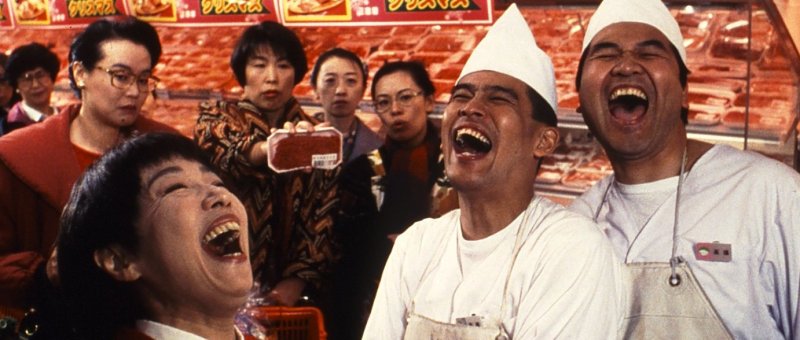
The irony is Honest Mart is not much better than Discount Demon, both stores are subject to the same industry standards in which a certain degree of obfuscation is permissible. “In business honesty doesn’t pay” Hanako is told by the onsite butcher after she questions his tendency to mix meats to pass them off as more expensive cuts, while she later discovers that the store engages in the practice of repackaging unsold meat and fish with new expiration dates and is not very particular about its suppliers when it comes to buying in ready-made products. Brought on board to save the store, Hanako breezes in with a new mission to win the hearts and minds of her customers, and she can’t do that if she can’t have confidence in her stock. In any case, her the customer is always right policy quickly brings her into conflict with the store manager, an older more conservative man who actively resists innovation and resents having his authority undercut by an interloping woman. 

Meanwhile, we can also see that customer attitudes have changed. There’s a problem with availability of trolleys because, perhaps unusually for Japan, customers are just abandoning them willy-nilly in the carpark instead of retuning them to the trolley point like responsible shoppers. One man is even for some reason intent on stealing a large number of shopping baskets, caught by Hanako loading them into his car. Everybody wants cheap, which is understandable especially given the economic situation, and they might even be a little underhanded when it comes to getting it, but they also expect a reasonable level of quality and to be able to trust that the food they’re buying is safe to feed their families. Hanako is most alarmed that the ladies who work in the kitchen area, who are obviously wives and mothers themselves, do not shop at Honest Mart because they know what goes on at the store and they don’t trust it. 

“A housewife knows” Hanako is fond is saying. Her revolution is in essence a vindication of “the housewife”, perhaps the most maligned and dismissed figure of the mid-90s society, putting to good use all of her veteran experience both of running a home and of working a series of part-time jobs including those in supermarkets which she claims to love. Approaching the problem from the point of view of a consumer, she attempts to help Goro achieve his dream of making Honest Mart number one in Japan not through making it the most financially successful but the most loved by listening to women like her in the form of a focus group of local aunties some of whom had previously been serial complainers. 

Then again, some of her decisions are in a sense contradictory as she attempts to streamline the business along classically capitalistic lines in suggesting that the store doesn’t really need its overqualified butcher and fishmonger because the part-timers could be trained to do a “good enough” job. “Good enough” is in a sense her business philosophy, only not in the sense that somewhere like Discount Demon which falsely advertises regular steak as discount Wagyu means it, rather that her customers are after an everyday level of produce and so it’s not surprising that premium meats don’t sell. She wants to get rid of the butcher, who turns out to be on the fiddle, and the melancholy fishmonger disappointed no one wants his top quality seafood, because their “artistic temperament” is disruptive to the flow of the store and their presence is perhaps emblematic of the bloated, pretentious management style which is holding it back. 

Positioning the “housewife’s choice” as the ultimate seal of approval, Supermarket Woman advocates for a return to wholesome, small-town values, prioritising a sense of integrity as Honest Mart projects itself as a corporate force their customers can trust, perhaps anticipating a trend in dedicating itself to providing good quality fresh produce at fair prices in direct opposition to Discount Demon and its underhanded trickery. “Honest Mart keeps its word” Goro assures, pledging to honour a mistaken ad which promised eggs at prices so good it caused minor riot. In the end, it’s all about trust and integrity. If you don’t have that, you don’t have anything and the housewives of post-Bubble Japan will it seems vote with their feet. 


Currently available to stream in the US via Criterion Channel.

Original trailer (no subtitles)