Rewrite (リライト, Daigo Matsui, 2025) [Fantasia 2025]

A mysterious transfer student arrives from the future. You have 20 wonderful days with him, but then he must return to his own time. He tells you that he came back to meet you and experience your time because of a book you will write, and your future self also shows you the book, tells you you did indeed write it, and that everything’s going to be okay. But in 10 years’ time, when you’re your “future self”, you from the past does not show up to get any of this information. Did something go wrong? Is the timeline crumbling? Or did you just imagine all this as a manifestation of “youth”?

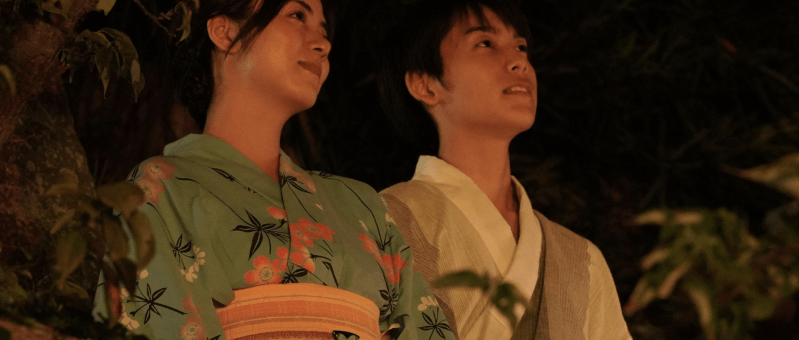
When this happened to her, Miyuki (Elaiza Ikeda) believed that she was “the heroine of that summer,” but the truth is of course that she was always the heroine of her own life and had the right and power to make her own choices. Adapted from the novel by Haruka Honjo, Daigo Matsui’s Rewrite (リライト) is, like Obayashi’s The Little Girl Who Conquered Time, about the dangers of nostalgia and the over romanticisation of youth. What Miyuki gradually comes to realise is that one of the formative experiences of her teenage years may not have been unique or special but happened to literally everyone and changed them too in ways that were not always good. Because she met Yasuhiko (Kei Adachi) from 300 years in the future, she became a writer. But it remains true that her first few books weren’t about him at all. She always had the talent and the inclination. The impetus of destiny was only what gave her the confidence to pursue it. She knew she could, because she already had.

Yet, she’s in her hometown to close a loop on this unresolved romance of her youth despite having built a good life for herself as a successful author with a nice husband she met during the course of her work who is caring and supportive of her career. At the high school reunion she’s cajoled into going to, her former classmates sing the song they were practising for choir, “Cherry” by Spitz, which is also about “rediscovering each other, some day, same place,” echoing Yasuhiko’s cryptic claim that they’d meet again “in the future” (whose he doesn’t say) hinting at the way these feelings have been left hanging with only a yearning for the past and a painful nostalgia in their place. What Miyuki really has to ask herself is if she’s the person she wants to be in the present and is who she is because of the choices she made independently rather than solely because she was trying to fulfil the destiny given to her Yasuhiko.

To do so, she must face the fallacy of the “chosen one” mentality. The film rams this home in the parallel story of one of Miyuki’s classmates who tells her that she wasn’t chosen but actively chose to accept a kind of destiny rather than simply going along with it and that Miyuki too could “rewrite” the past if she wanted. In effect, this is what she’s already done as her husband implies when he repeatedly asks her if the book is “fiction”. Of course, it is, though she believed it not to be because it’s rooted in nostalgia and the personal myth making of the idealised romance of her youth. Matsui too plays with this sense of nostalgia in moving the setting of the story to Onomichi to mimic that of Obayashi’s The Little Girl Who Conquered Time and making frequent visual references to the 1983 film along with casting Toshinori Omi, the original boy who leapt through time, as the class teacher at the 10 years later reunion.

But the truth remains that Miyuki must learn to let go of the past, or else take mastery over it by rewriting her own story to accept that, as her husband says, the past and present are all hers. She can write anything and can finally leave her own time loop by writing her way out of youthful nostalgia and accepting something more like an objective reality along with the life she has now which appears to be happy and successful. Scripted by Makoto Ueda who has a long history of time-travel themed movies from Summer Time Machine Blues to River, Matsui’s poignant drama is shot through with irony and in constant dialogue with pop culture touchstones from the Obayashi film to Shunji Iwai’s Love Letter, while at the same time insisting that while you are the main character in your own life, you’re not the only one and a hundred stories are going on at the same time as yours. What really matters is not hanging on to the memories of an idealised past, but to live the life you want in the present for as long as this particular loop lasts.


Rewrite screened as part of this year’s Fantasia International Film Festival.

Original trailer (English subtitles)

Love Will Tear Us Apart (ラヴ・ウィル・テア・アス・アパート, Kenichi Ugana, 2023)

“This film depicts a pure and genuine love between an awkward boy and a girl with a pure heart,” according to a pop idol starring in a film called “garbage love”, but it’s a true enough description of Kenichi Ugana’s genre-crossing slasher romance, Love Will Tear Us Apart (ラヴ・ウィル・テア・アス・アパート). Co-scripted by Hirobumi Watanabe, the film has a deadpan, surreal sensibility but has a lot to say about entrenched patriarchy and a bullying culture. 

As the film begins, Wakaba is a cheerful little girl who has an all encompassing obsession with a handsome pop idol, but is secretly enduring an oppressive atmosphere of domestic violence in her family home at the hands of her cruel and violent father. In this she might have found a kindred spirit in classmate Koki who is enduring physical abuse at the hands of his mother who openly tells him how much happier she’d be if only he’d never been born. Koki is also being bullied by a pair of mean kids at school and meekly takes it, unable to stand up for himself. When Wakaba steps up and tries to help him, the bullies turn on her too and their teacher (Atsuko Maeda) seemingly does nothing. After the pair bond through a screaming session at a local river, the bullies mysteriously fall out of a window which Koki is then seen ominously staring out of. 

The film jumps on seven years to a teenage Wakaba (Sayu Kubota) who discovers the world is not a safe place for women, repeatedly encountering a series of skeevy guys beginning with her favourite pop band who lure her to a cabin in the woods where they openly talk about getting her drunk to take advantage of her or spiking her drinks. One of the chief victimisers is another woman, Moeka, whose apparent “job” it is to recruit girls for the guys to have fun with. Wakaba’s friend Kanna (Riko) wants to leave, sensing that there’s something not quite right but Wakaba is naive and unable to see the danger. A similar thing happens when she visits Tokyo alone and has a meet cute with a guy who spills coffee on her shirt and offers to buy her a new one, then to show her around, takes her for sushi, declares his love and makes a proposal of marriage. 

As might be expected, many of these men end up dead at the hands of a vicious, chainsaw-wielding serial killer in a white hazmat suit, gas mask, and goggles. You can’t quite blame him for his crimes because everyone he kills is so irrediambly awful while it really does seem that he might be trying to protect Wakaba in some way from the hidden dangers she remains unable to see because of her pure heartedness. While her own father had been cruel and violent, she discovers that Moeka’s, police detective Kamiyama (Mitsuru Fukikoshi), is the opposite but worse in his unsettling obsession with his daughter, whom he believed to “pure and earnest” little knowing that she had been procuring young girls to serve up to the sleazy band members.

In a strange way, the serial killer turns out to be Wakaba’s healthiest relationship even if he’s basically stalking her not to mention murdering people with chainsaws because they threatened her happiness. The film runs through a series of genres from the cute childhood romance that soon turns ominous and the cabin in the woods slasher movie complete with creepy monkey and trainset, to martial arts epic as Wakaba abandons her life to train with a YouTube serial killer catching guru in a tropical resort town but retains its sense of anarchic innocence and internal integrity. As the pop star had implied, it really is a tale of genuine love between an awkward boy and a pure hearted girl in which they gradually realise that they each have a right to be happy and can be so together despite all violence and mayhem around them which includes killing a guy by shoving a grapefruit blender on his head. Strange and absurd the film nevertheless has a heartwarming romantic sensibility along with a desire for a less destructive world defined more by kindness and compassion than bullying and violence. 


Love Will Tear Us Apart screened as part of this year’s Camera Japan.

International trailer (English subtitles)

Between Us (藍に響け, Yasuo Okuaki, 2021)

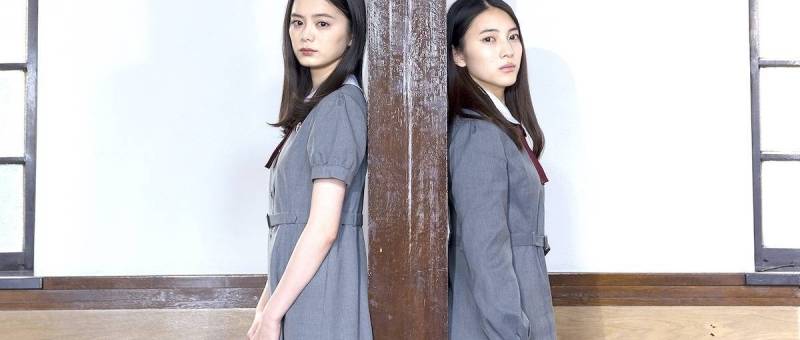
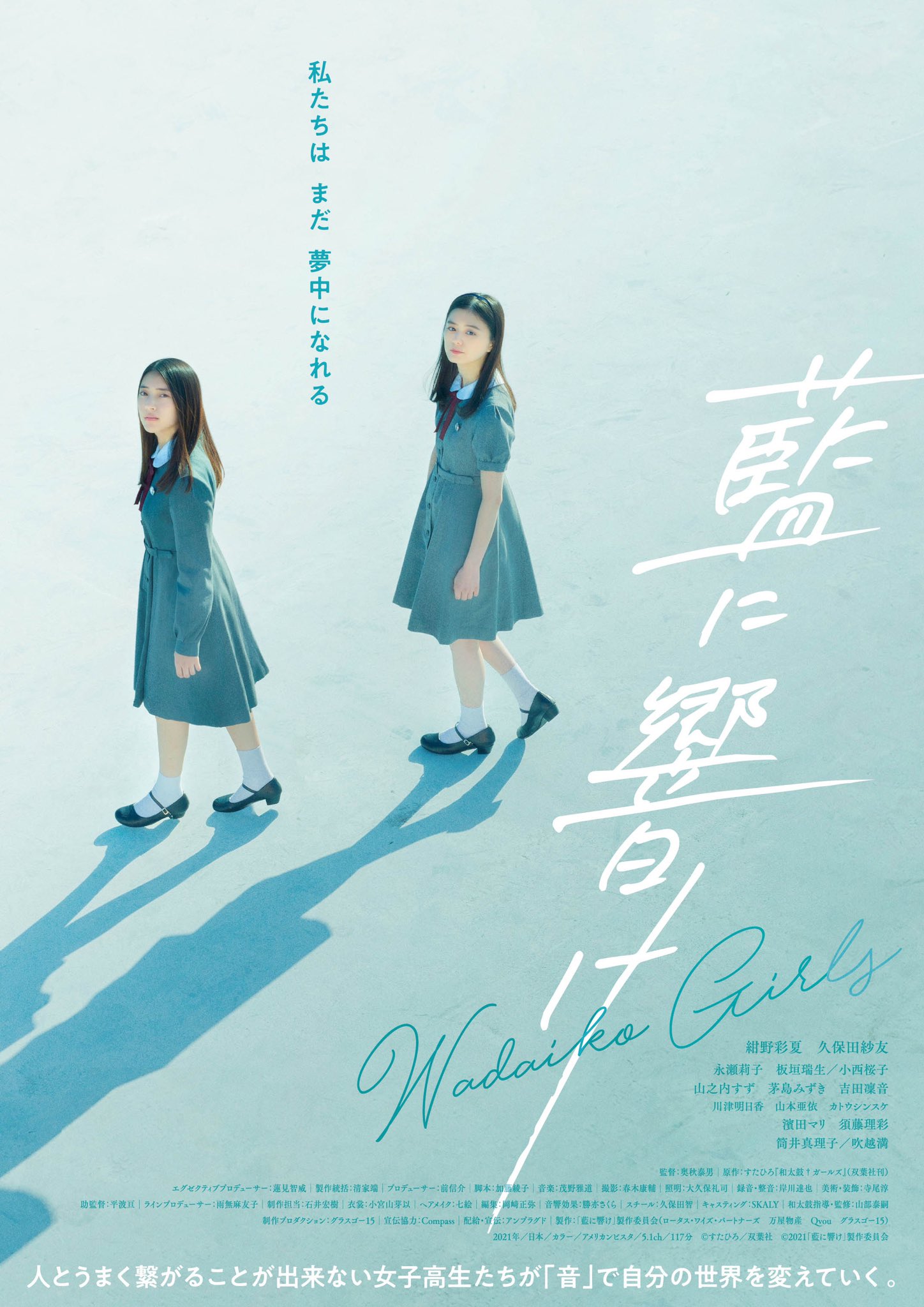
Hyper-individualism goes to war with collective harmony in Yasuo Okuaki’s taiko-themed coming-of-age manga adaptation, Between Us (藍に響け, Ai ni Hibike, AKA Wadaiko Girls). Reminded that “your sound is everyone’s sound” the closed-off heroine begins to realise you can’t always just do your own thing and expect everyone else to deal with it, but in the end shows remarkably little growth as even her otherwise positive contribution of helping a similarly troubled young woman quite literally find her voice is in itself achieved mainly through abrasive bullying not to mention a persistent ableism which otherwise entirely ignores her feelings. 

Okuaki opens with an intense scene as the heroine, Tamaki (Ayaka Konno), burns her ballet shoes alone on the beach at night before staring pensively out at the ocean. As we discover, Tamaki has a lot going on that she is reluctant to share with others. Something has evidently gone wrong at home, she seems worried about money and the modest house she shares with her mother who appears to work late often is filled with packing boxes suggesting they may only recently have moved. She hasn’t told her mum she’s given up ballet, partly it seems because she’s working part-time at the local supermarket which she has to keep a secret because the elite Catholic school she attends has a rule against part-time jobs. Wandering around alone however while her friends, who each seem to come from extremely wealthy families, assume she’s heading to ballet Tamaki becomes captivated by the sound of taiko drumming, eventually spotted by a young woman practicing, Maria (Sayu Kubota), who happens to be mute. 

Despite the impossibility of direct communication, Maria manages to covey her enthusiasm for the drums presumably picking up on something in Tamaki which, for unexplained reasons, she is extremely reluctant to explore. Fellow drummer Kahoko, however, is dead set against her joining the club even setting her a cruel and impossible challenge as a kind of entrance exam. The irony is that even as the sullen Tamaki stands up against low-level bullying from Kahoko who makes a basic training exercise seem like humiliating punishment, Tamaki becomes far too into perfecting the art of taiko, obsessively honing her craft and displaying natural ability but quickly losing patience with her fellow drummers who are mostly playing for fun and friendship. 

Tamaki is and remains distinctly unpleasant to be around while Kahoko seems to soften, becoming a source of support to the other girls, and poor Maria is rounded on by just about everyone including maternal figure Sister Nitche (Mariko Tsutsui) who was once herself a top taiko coach but for reasons unknown gave up the art, got religion, and became a nun. Sister Nitche was known as a demon coach, and the decision to reassume her role does indeed resurface an element of cruelty in her unseen in her role as high school teacher and carer at the attached children’s centre. Maria first bonds with Tamaki in revealing to her that she was rendered mute in a car accident and has been undergoing rehabilitative therapy in an attempt to regain her speech but that it hasn’t been going as well as she’d hoped. Yet both Sister Nitche and Tamaki eventually set on her, insisting that the reason she’s not making progress is because she’s not trying hard enough instead of, perhaps, reassuring her that even if she not able to improve her speaking it would still be fine and there’s no need to rush. 

The conflict seems to be between the ultra-competitive, deeply wounded Tamaki and the ethos of taiko which demands group harmony. There’s no point being a show off because the group must move as one, yet Tamaki struggles to accommodate herself to the idea of adapting to the collective rhythm insisting everyone attempt to match her speed while suggesting that those who can’t aren’t up to the task and should voluntarily resign rather than bring the group down, echoing the rather harsh survival of the fittest philosophy espoused by a transformed Sister Nitche. Just as she had, Tamaki later turns on Maria in the face of her own failure repeatedly insisting that she is a “loser” who wouldn’t fight for taiko or for her voice in a confrontation that leads first to a physical fight and then to an intense taiko battle that bears out the repeated notion of baring one’s soul through the beating of the drum. 

There is an unmistakable though unresolved homoerotisicm in the conflict between the two young women filled as it is with repressed emotion, frustration, and unspoken desires all of which appear to dissipate through the climax of the physically and emotionally intense taiko session. Nevertheless, there is also something in uncomfortable in the fact of Maria’s path towards finding her literal voice arising because of what is essentially abusive bullying rather than encouragement or positive support especially as it also denies her the right to speak her feelings honestly while no one is making much of an effort to listen to her. Tamaki meanwhile remains somewhat unsympathetic even in her silent concern for Maria betrayed by the unexpected warmth of her smile in seeing her deciding to return to taiko, her own buried troubles otherwise unresolved while her unforgiving hyper-individualism is tacitly condoned even as she learns to submit herself to the collective rhythm and finds through it the sense of connection she was perhaps missing. 


Between Us screened as part of this year’s Camera Japan

Original trailer (no subtitles)

Our 30-Minute Sessions (サヨナラまでの30分, Kentaro Hagiwara, 2020)

“I want to move on” a grieving young woman explains, though perhaps ironically heading in the wrong direction. A youthful take on learning to live with loss, Our 30-Minute Sessions (サヨナラまでの30分, Sayonara made no 30-bun) finds a group of college hopefuls shattered by the unexpected death of a charismatic friend leaving them each lost, moving on in one sense but treading water in another uncertain what to do with the unfulfilled potential of their adolescent memories. Yet, through ghostly intervention, what they eventually realise is that nothing’s ever really lost, the echoes of those memories merely add to the great symphony life and all you can do in the end is learn to play along with it. 

That’s something introverted college student Sota (Takumi Kitamura) has however struggled with, unable to emerge from the trauma of losing his mother at a young age. As we first meet him, he’s subjected to a painful group interview for a regular salaryman job at which they ask about the memories he’s made with his university friends but rather than come up with a convincing lie, Sota honestly tells them he has no friends and that’s a good thing because it means he’s free to dedicate himself to work 100%. As expected, he gets a rather brutal rejection text before he’s even reached the lift, pausing only to rudely but perhaps accurately decline an invitation to join a WhatsApp group with the other hopefuls for the reason that it’s “pointless” because they’re unlikely to meet again. 

Sota doesn’t like to share his space with other people, but after noticing a walkman abandoned at a disused swimming pool finds himself a permanent host to Aki (Mackenyu), recently deceased lead singer of up-and-coming college band Echoll. Unlike Sota, Aki is charismatic and outgoing, every inch the rock star but less cocky than aggressively caring. It pains him that the thing he left unfinished has fallen apart in his absence and that all his friends seem to have given up their dreams and aspirations in life. For unknown reasons it seems that when Sota presses the play button on the walkman, it allows Aki to take over his body for the length of a single side of a cassette tape temporarily lending him the swagger and verve hitherto missing in his life even if he claimed not to particularly have missed them. 

In fact, Sota quite enjoys the arrangement because it means he doesn’t quite exist for the time the tape is playing, other people are no threat to him in his literal invisibility. Yet over time, a conflict obviously develops especially as the main thrust of Aki’s mission is healing his former girlfriend’s broken heart. Having lost her love of music, Kana (Sayu Kubota) has spent the last year largely inside working her way through a book of daily soup recipes that only her mother tastes. She claims she’s “moved on”, but in reality has done anything but caught in a kind of limbo unable to let go of her guilt and memories of lost love while conflicted as she bonds with the shy and introverted Sota himself it turns out also a frustrated musician.

A poignant reminder of Aki’s unfinished business as he and his friends attempt to find a degree of accommodation with loss the Japanese title translates more closely to “30 minutes to goodbye”, but there’s also something in the Japanese for playback (再生) equating to “again life” as it grants the late singer a temporary resurrection if one that lasts only the length of a set list. Perhaps a hipsterish affectation, the love of the outdated analogue recording mechanism, besides its practical advantages, provides a tangible proof of life albeit a fallible one in which every attempt to replay necessarily weakens integrity. Yet as a veteran later puts it, no matter how many times the tape is erased and overwritten, traces of previous recordings remain becoming in a sense just one of many layers that add depth and richness to the quality of the whole. 

The bandmates begin to realise that starting over doesn’t mean forgetting Aki or betraying his memory, they don’t have to leave him behind but can in a sense take him with them in the memories they share while Sota eventually begins to see the joy in human interaction and the power of connecting through music shedding his introversion in the knowledge that not all friendships are inauthentic and even if someone makes an early exit they leave traces of themselves behind on which others can build. A stylistically interesting take on the band movie with a fantastic soundtrack of convincing college rock hits, Our 30-Minute Sessions is a classic coming-of-age drama but one dedicated perhaps less to the art of moving on than to that of moving forward adding new notes to an ever expanding symphony of life.


Our 30-Minute Sessions streamed as part of the 2021 Japan Foundation Touring Film Programme.

Original trailer (no subtitles)