 “It’s not all about tofu!” screams the heroine of Akanezora: Beyond the Crimson Sky (あかね空), a film which is all about tofu. Like tofu though, it has its own subtle flavour, gradually becoming richer by absorbing the spice of life. Based on a novel by Ichiriki Yamamoto, Akanezora is co-scripted by veteran of the Japanese New Wave, Masahiro Shinoda and directed by Masaki Hamamoto who had worked with Shinoda on Owl’s Castle and Spy Sorge prior to the director’s retirement in 2003. Like the majority of Shinoda’s work, Akanezora takes place in the past but echoes the future as it takes a sideways look at the nation’s most representative genre – the family drama. Fathers, sons, legacy and innovation come together in the story of a young man travelling from an old capital to a new one with a traditional craft he will have to make his own in order to succeed.
The story opens in the early 18th century when a couple stop to chat to a friend and, while they aren’t paying attention, their small son Shokichi wanders off after a doll show. Fastforward a decade or so and a young man, Eikichi (Masaaki Uchino), arrives from Kyoto intent on opening up a tofu shop in the capital. Enjoying the delicious local water, he runs into cheerful local girl, Ofumi (Miki Nakatani), who insists on helping him find his way around an unfamiliar city.
Ofumi proves invaluable in helping him set up his small neighbourhood store, but as skilled as Eikichi is, Kyoto tofu and Edo tofu are much more different than one might think. Eikichi’s tofu is smaller in size and fluffy where Edo tofu is larger yet solid, and though its flavour is superior, it does not suit the local taste or cuisine. Ofumi helps him out again, and once the shop is doing better the two marry. Flashforward another 18 years and the couple have three children, two sons and a daughter, but as successful as they are, they are no longer free of familial disharmony.
Strange coincidences are in play, such as Eikichi’s tofu making heritage lining up perfectly with that of a lonely couple, Oshino (Shima Iwashita) and Seibe (Renji Ishibashi), still grieving the loss of their little boy whose fate remains an open mystery. Though their son remains lost to them, Oshino and Seibe see something of the man he might have been in Eikichi who is also a practitioner of the trade they intended to pass on to him. Eikichi is a down to Earth southerner – naive, in one sense, yet honest, straighforward, kind and courteous. Though all agree his craftsmanship is first rate and his tofu excellently made, they privately advise he consider firming it up in keeping with local tastes. Eikichi is as stubborn as he is genial – he will not betray the “tradition” which has been passed down to him from his master and which he fully intends to hand down to his sons, purveyors of refined Kyoto tofu in fashionable Edo.
Thanks to Seibe’s generous patronage and Ofumi’s perseverance, Eikichi is a success but clashes with his eldest son and presumptive heir, Eitaro (Kohei Takeda), who resents his role as a kind of sales rep for his dad’s company. Following a volcanic eruption and subsequent poor harvest, grain prices are at a premium yet Eikichi, following the “Kyoto way”, refuses to raise prices, much to the consternation of fellow merchants who take out their displeasure on the young and impressionable Eitaro. One in particular launches a plan to ruin Eikichi’s tofu shop and gain access to the best of the city’s wells by befriending the lonely young son, getting him hooked on gambling and then bankrupting him with the help of local gangster boss Denzo (Masaaki Uchino).
Eikichi’s tofu, as someone later puts it, prospered not only because of his hard work and dedication, but because it was made with the heart. His overwhelming dedication to his craft might seem to blunt his dedication to those he loves but he cares deeply about his wife and children even if his “straightforward” character means he has a funny way of showing it. A running joke circles around Eikichi’s country bumpkin Kyoto accent and though the culture clash goes further than debating the proper texture of tofu, he finds himself a home thanks to the kindness of strangers. Akanezora, like Eikichi’s tofu, proves a little too spongy, its narrative connections too subtle in flavour to make much of an impact when fed only with Hamamoto’s serviceable if plain visuals, the unexpectedly chirpy performance of Miki Nakatani as the energetic Ofumi, and Masaaki Uchino’s impressive double duty as the earnest Eikichi and omnipotent Denzo. Tragedy breaks one family only to bring another back together, somehow restoring a once broken cycle yet even if Akanezora’s rosy skies suggest a resurgent warmth, it isn’t quite enough to solidify its otherwise watery brew.
Screened as part of the Japan Foundation Summer Explorers 3 season dedicated to films about food.
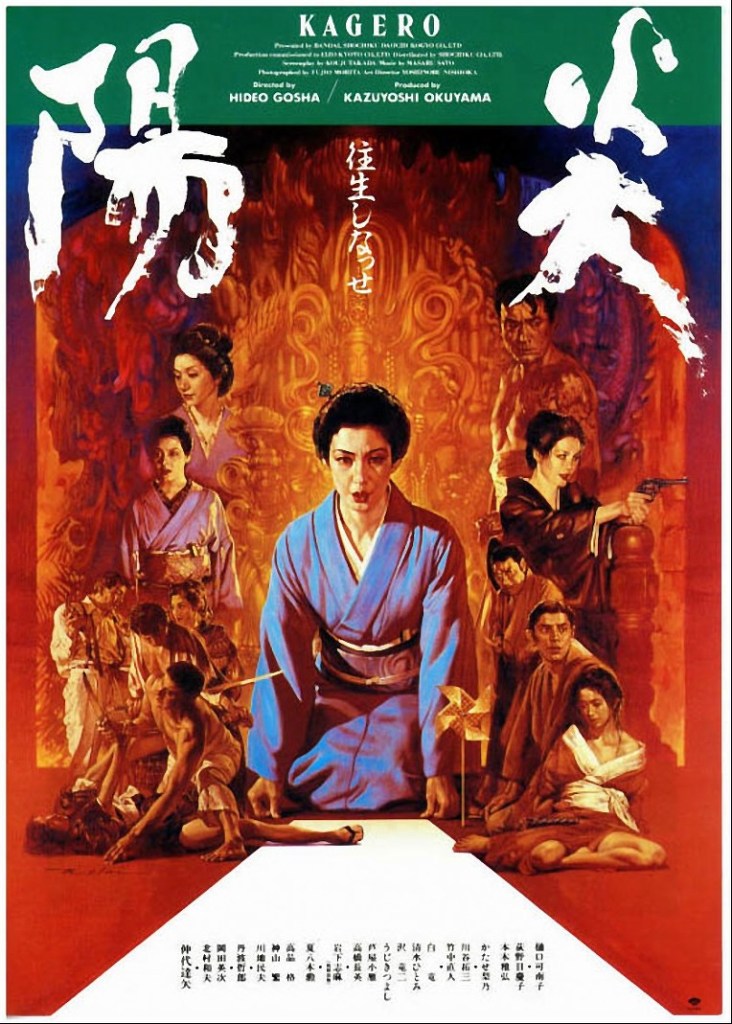 Hideo Gosha had something of a turbulent career, beginning with a series of films about male chivalry and the way that men work out all their personal issues through violence, but owing to the changing nature of cinematic tastes, he found himself at a loose end towards the end of the ‘70s. Things picked up for him in the ‘80s but the altered times brought with them a slightly different approach as Gosha’s films took on an increasingly female focus in which he reflected on how the themes he explored so fully with his male characters might also affect women. In part prompted by his divorce which apparently gave him the view that women were just as capable of deviousness as men are, and by a renewed relationship with his daughter, Gosha overcame the problem of his chanbara stars ageing beyond his demands of them by allowing his actresses to lead.
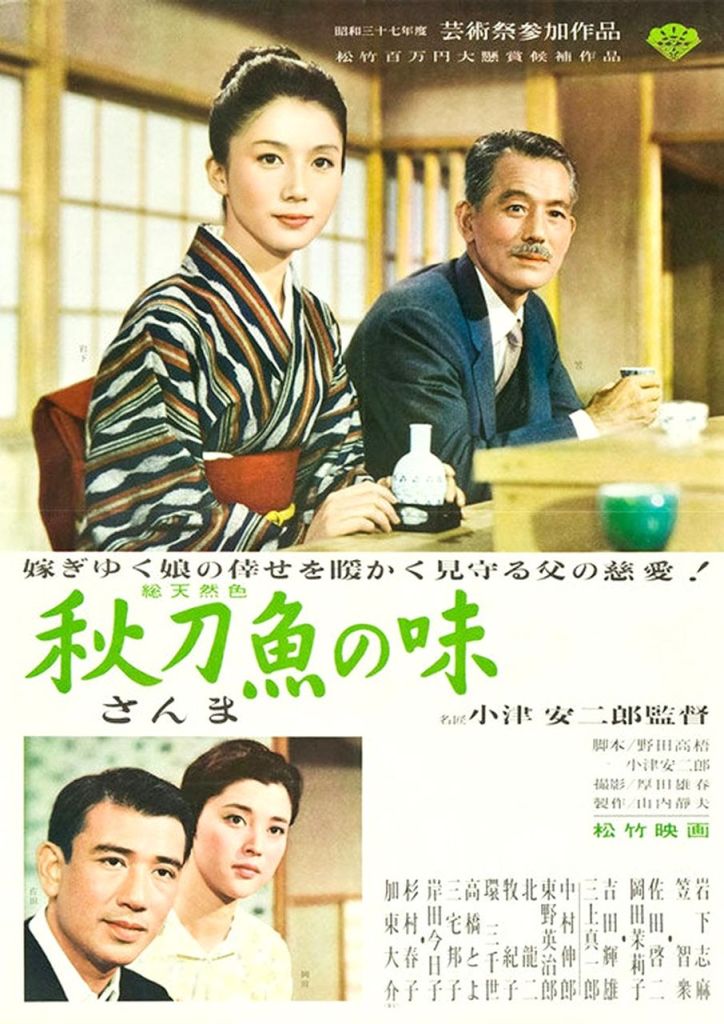 An Autumn Afternoon (秋刀魚の味, Sanma no Aji) was to be Ozu’s final work. This was however more by accident than design – despite serious illness Ozu intended to continue working and had even left a few notes relating to a follow up project which was destined never to be completed. Even if not exactly intended to become the final point of a thirty-five year career, An Autumn Afternoon is an apt place to end, neatly revisiting the director’s key concerns and starring some of his most frequent collaborators.
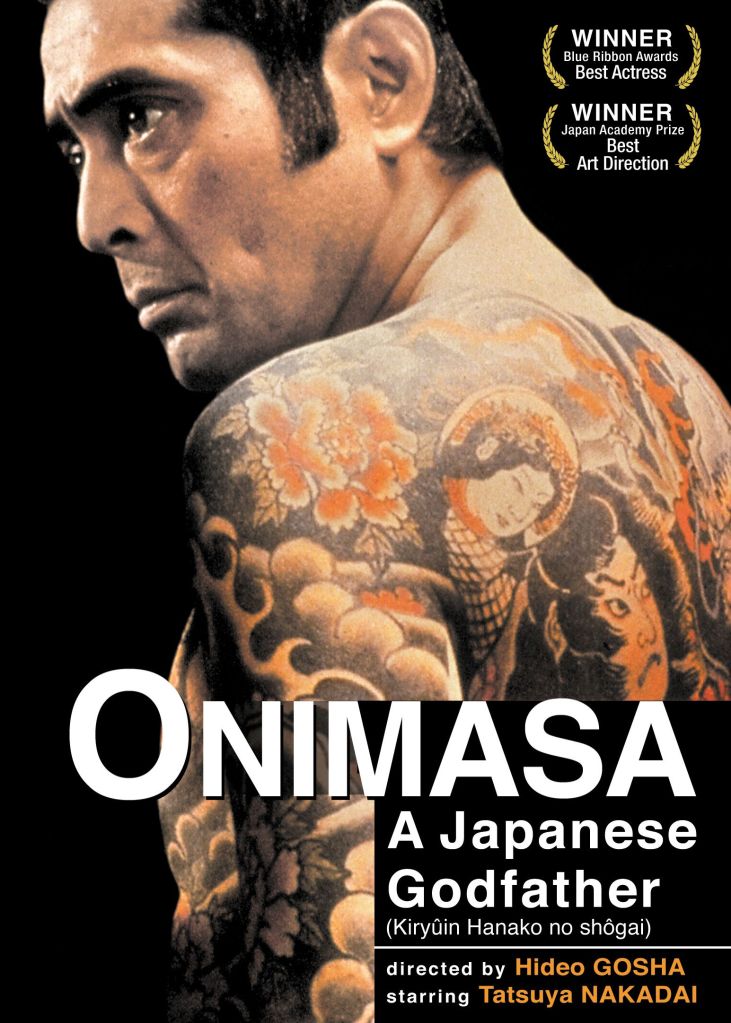 When AnimEigo decided to release Hideo Gosha’s Taisho/Showa era yakuza epic Onimasa (鬼龍院花子の生涯, Kiryuin Hanako no Shogai), they opted to give it a marketable but ill advised tagline – A Japanese Godfather. Misleading and problematic as this is, the Japanese title Kiryuin Hanako no Shogai also has its own mysterious quality in that it means “The Life of Hanako Kiryuin” even though this, admittedly hugely important, character barely appears in the film. We follow instead her adopted older sister, Matsue (Masako Natsume), and her complicated relationship with our title character, Onimasa, a gang boss who doesn’t see himself as a yakuza but as a chivalrous man whose heart and duty often become incompatible. Reteaming with frequent star Tatsuya Nakadai, director Hideo Gosha gives up the fight a little, showing us how sad the “manly way” can be on one who finds himself outplayed by his times. Here, anticipating Gosha’s subsequent direction, it’s the women who survive – in large part because they have to, by virtue of being the only ones to see where they’re headed and act accordingly.
 Every once in a while an artist emerges whose work is so far ahead of its time that the audience of the day is unwilling to accept but generations to come will finally recognise for the achievement it represents. So it is for Sharaku – a young man whose abilities and ambitions are ruthlessly manipulated by those around him for their own gain. Brought to the screen by veteran new wave director Masahiro Shinoda, Sharaku (写楽) is an attempt to throw some light on the life of this mysterious historical figure who comes to symbolise, in many ways, the turbulence of his era.
 Windows on Worlds