Sayon’s Bell (サヨンの鐘, Hiroshi Shimizu, 1943)

Like all directors of his era, Hiroshi Shimizu made a series of National Policy propaganda films though he was often able to circumvent their requirements by focussing on themes that interested him more directly such as teamwork or childhood. Sayon’s Bell (サヨンの鐘, Sayon no Kane) is however an unavoidably propagandist film filled with praise for the Japanese empire and to modern eyes incredibly problematic in its depictions of the indigenous peoples of Taiwan many of whom did “volunteer” to serve in the Japanese imperial army a notable example being that of Li Kuang-hui who was the last Japanese soldier to be discovered hiding in the Indonesian jungle in 1974 having been recruited from the Amis people.

The film opens with a lengthy series of title cards explaining that the film is dedicated to the Takasago Volunteers, “Takasago” being, aside from the title of a famous noh play, the name Japanese gave to the indigenous people of Taiwan believing them to have been “civilised” by Japanese rule. Thus in the opening sequences, we see the role of the Japanese military personnel as essentially paternal. They are policemen, doctors, teachers, instructors, and directors of construction who are dedicated to raising the aboriginal people to level of Japanese citizens through forced assimilation. 

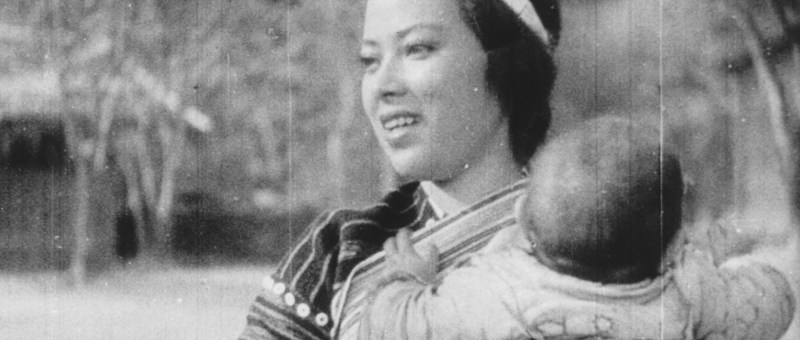
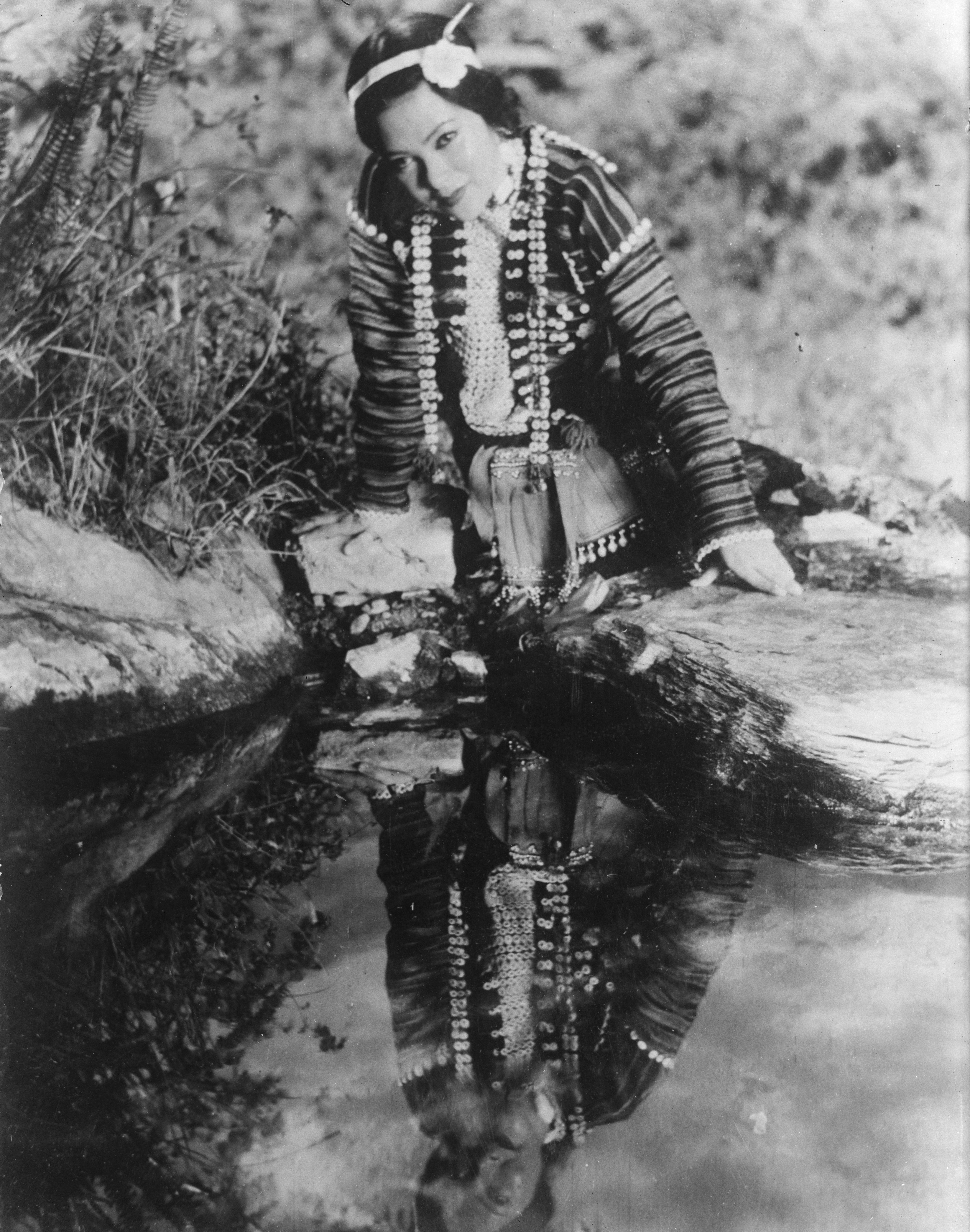
Inspired by a real life incident that also inspired a popular song of an indigenous woman who drowned in a river while carrying the belongings of a Japanese policeman, the film uses the titular Sayon as an arbiter of Japaneseness enhanced by the casting of Li Koran, later known as Shirley Yamaguchi/Yamaguchi Yoshiko, who was actually Japanese but presented as Chinese in the propaganda cinema of the time having been born in Machuria and fluent in Mandarin. Somewhat awkwardly given that Sayon is supposed to be an indigenous woman herself, she is the one schooling the local children in how to be Japanese reminding them that they should “use Japanese properly” rather than their indigenous language and praising one young boy for abandoning his indigenous name and adopting that of “Taro” instead. Japanese rule in Taiwan was not as oppressive as it was in the other parts of the empire and they did have some local support thanks to their investments in infrastructure and modernisation. Nevertheless, they did attempt to enforce the use of the Japanese language and the taking of Japanese names though it should also be noted that the KMT government did exactly the same thing only with Mandarin when it gained control of the island. 

That aside the indigenous people were often treated poorly in comparison to the rest of the of the population and we can see that the framing of them is often racist and derogatory such as when an abandoned baby is taken to the police and they remark that the indigenous community have too many children and they all look alike. The eligible men from the village, including Sayon’s love interest Saburo (Hatsu Shimazaki), have been sent to Japan for a kind of militarist re-education and are eagerly awaiting their opportunity to serve the emperor in the army. Though this may seem surprising, it apparently reflects a real fervour among indigenous men who were convinced to enlist by the money on offer and a campaign of rumours that suggested men who did not do so were unmanly and therefore unattractive to the local women. When the first round of volunteers is selected, a great amount of time is given to consoling the men who were not chosen many of whom protest and plead to volunteer their services. 

In an effort to inject some drama the film includes a love triangle between Sayon, Saburo, and Mona (Kenzo Nakagawa) who is said to be moody out of jealousy and unrequited love for Sayon but later reveals he was only jealous of Saburo in respect of playing second fiddle to him as a worthy man of the village again eager to serve the Japanese emperor. Led by Li Koran, there are several renditions of a patriotic war song singing the praises of the Taiwanese army that read that like a call to arms, though the audience for this film is certainly domestic and it seems unlikely that it would be screened in these mountain villages in Taiwan.

The first part of the film is basically ethnography featuring picturesque scenes of the local scenery and footage of the indigenous people living the “simple, peaceful life” patronisingly described in the opening titles while there is some exoticisation of the aboriginal culture in the elaborate costumes and scenes of indigenous rituals. Perhaps the most shocking aspect is that Sayon is encouraged to break a traditional taboo by entering a sacred lake where women are forbidden to go lest they anger the god Uttofu. With her new cultural re-education, Sayon thinks Uttofu is a myth and goes to the lake to help Saburo assess it because the Japanese are planning to drain it to create a rice paddy. For this she is expected to drown herself in the water to placate Uttofu and is urged to do so by the tribal elders with the Japanese basically agreeing with them deciding that they should catch an animal to sacrifice and if that doesn’t work, while it’s “unfortunate”, Sayon should indeed hurl herself into the lake if the for the good of the empire rather than Uttofu. 

It is quite odd to think that the Japanese military personnel would go along with human sacrifice rather than clamp down on a practice they would otherwise term backward, though in that light it’s impossible not to see her later death by drowning as a rejection of the “modernity” the colonial authorities represent and a re-assertion of indigenous culture. The bell referenced in the title refers to one given to the village to commemorate the incident bearing an inscription of Sayon’s name. When the KMT gained control of Taiwan, they erased the inscription on the bell and removed it as a symbol of Japanese rule though it was later restored after the end of martial law and the monument re-erected beside the bridge which was also named “Sayon’s Bridge” in a evocation of the complicated relationships between the three nations. The film is however rather uncomplicated in its themes which to modern eyes prove extremely unpalatable despite the often beautiful cinematography capturing the idyllic Taiwanese countryside.


Sayon’s Bell screens at the Museum of the Moving Image May 11 as part of Hiroshi Shimizu Part I: The Shochiku Years.
Scandal (醜聞, Akira Kurosawa, 1950)

“Freedom of the press or harassment?” The more things change, the more they stay the same. Akira Kurosawa’s attack on the declining moral standards of the post-war society as reflected in the duplicity of the gutter press has unexpected resonance in the present day in which the media is simultaneously unwilling to challenge authority and in thrall to the populist allure of celebrity gossip with sometimes tragic results. The aptly named Scandal (醜聞) is essentially a morality tale which draws additional power from its seasonal setting and embodies the soul of the contemporary society in a conflicted lawyer consumed by internal struggle against despair and hopelessness. 

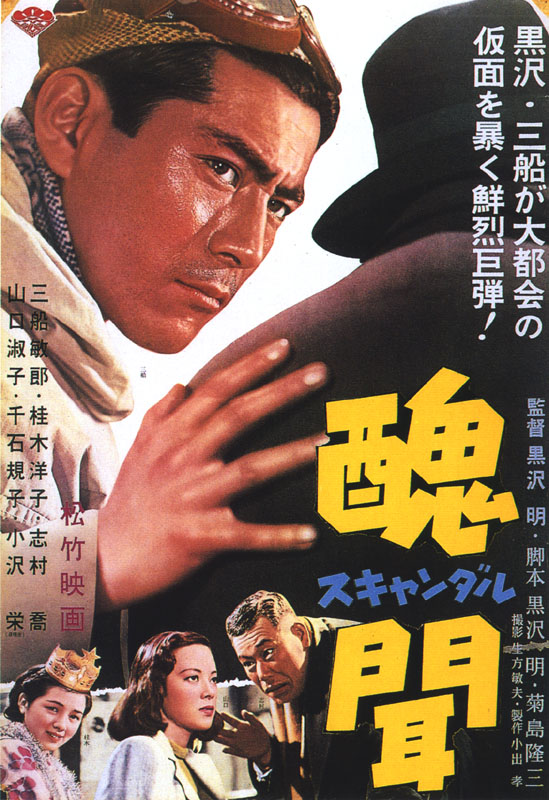
The more literal scandal however revolves around a well known singer, Miyako Saijo (Yoshiko (Shirley) Yamaguchi), and a motorcycle-riding artist, Ichiro Aoe (Toshiro Mifune), who meet by chance while staying at the same remote mountain inn. Having ironically headed to the mountains to escape the various “annoying things” that plague her in the city, Miyako has been pursued by two muckrakers from the tabloid press who take umbrage at her refusal to see them. They are then fairly delighted when they manage to snap a picture of Ichiro and Miyako standing on her balcony looking out at the mountains like a young couple in love. They deliver the photo to their seedy boss, Hori (Eitaro Ozawa), who is over the moon with excitement at his new business prospects. Suddenly Ichiro and Miyako are on posters all around the city with headlines such as “Love on a Motorcycle” and “Miyako Saijo’s secret love – revealed!”. 

Though Ichiro is a semi-public figure himself having been featured in magazine spreads as an artist on the rise, he is not a worldly man and is shocked by the idea that the press can make something up and print it with no consequences. He feels he must resist not just on a personal level angry to have been misrepresented but for the post-war future to ensure that the press is held to account and that it does not misuse its power to breach the privacy of ordinary citizens. To his mind, they only get away with it because most people just ignore them and wait for the scandal to pass, a sentiment born out by Hori who dismisses a concerned underling with the reminder that they’ve never yet been sued so they need have no fear saying whatever they like whether it’s true or not. “The kind of snobs we target think the law is beneath them” he adds, suggesting that most people prefer to think of the gutter press as something they can safely ignore and that it’s only themselves that they show up in their torrid obsession with the lives of others. 

But Hori also ironically defends his right to press freedom and quickly hits back that he’s being oppressed by those who wish to silence his right to free speech even when what he’s saying isn’t true. Lawyer Hiruta (Takashi Shimura) who offers to represent Ichiro in his lawsuit quickly identifies Hori as a duplicitous conman but also allows himself to be manipulated accidentally accepting a bribe after being led to believe that Hori has a top legal expert on retainer and the case is hopeless unless Miyako, who has so far maintained a dignified silence, can be persuaded to join as co-plaintiff. Ichiro had decided to accept Hiruta’s offer of representation largely on meeting his teenage daughter, Masako (Yoko Katsuragi), who has been bedridden with TB for the last five years. Masako is a pure soul whose isolation from the contemporary society has allowed her to maintain her innocence and humanity but it’s also true that it’s the society that made her ill in the first place.

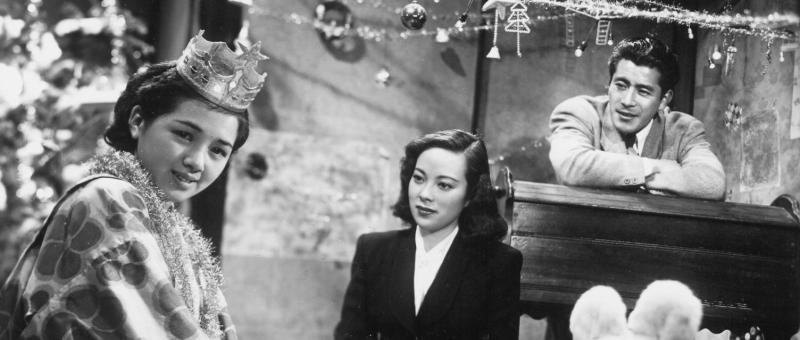
The morality play reaches a climax on Christmas Day as Ichiro delivers a tree on his motorbike while Miyako sings carols for a radiant Masako who is at least sitting up and looking much healthier than she’s ever been before. But the more Hiruta debases himself, caught between an accidental debt to Hori, his own lack of conviction, and the frustrated desire to do right, the sicker she gets as if poisoned by post-war duplicity. Even so, Ichiro continues to defend him insisting that Hiruta isn’t a bad person just a weak one and that in the end he won’t be able to go through with betraying him but will eventually come clean and tell the truth when it counts. Ichiro’s faith is as much in the institutions of the new democratic Japan as it is in Hiruta as he explains at the trial admitting that he may have been naive in placing too much trust in the legal system thinking that he couldn’t lose because he knows he’s in the right. As the opposition lawyer points out, that’s not a very good legal argument because his client thinks he’s in the right too only he doesn’t know that Hori is both a liar and an idiot who’s staked everything on the assumption that Hiruta won’t expose him for bribery, which would at least strongly imply he can’t back up his story, because it would mean destroying himself. 

In the end it’s Hiruta who puts himself on trial, baring his soul to the court which he acknowledges he has betrayed in his negligence and wilful obstruction of justice. It’s a victory for truth and decency and a turn away from the duplicitous, capitalistic mores of men like Hori who think they can do whatever they want and only laugh at those who value fairness and compassion. “In all my 50 years I’ve never seen a more confused age” Hiruta explains speaking of post-war chaos and the forced comprises of the intervening years of despair and desperation. As he coaxes the denizens of a small bar into an early rendition of Auld Lang Syne on Christmas Day, each vowing that this time next year things really will be better, many of them breakdown in frustrated longing drowning their sorrows as they continue to yearn for better times they do not really believe will come. But then like all the best Christmas films, this is also a redemption story of a man who decided that it wasn’t too late after all and that he might have to destroy himself in order make himself anew and be the man his daughter always knew he could be even if in the end he could not save her from the ravages of the post-war society.


Scandal screens at the BFI Southbank, London on 10th & 24th January 2023 as part of the Kurosawa season.

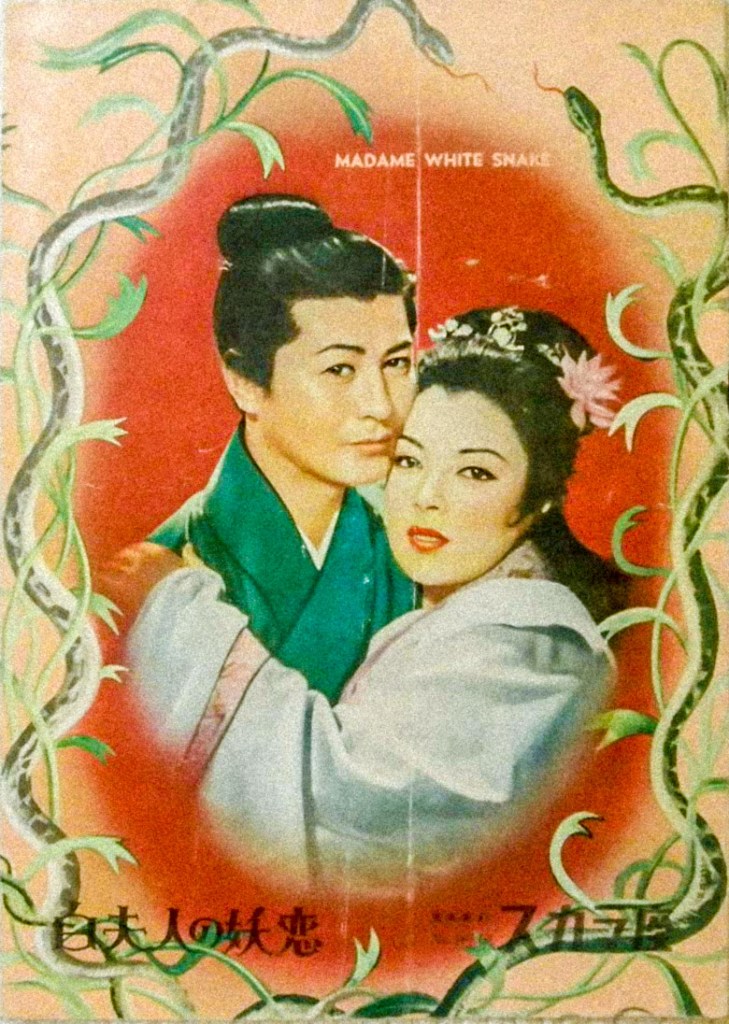
Madame White Snake (白夫人の妖恋, Shiro Toyoda, 1956)

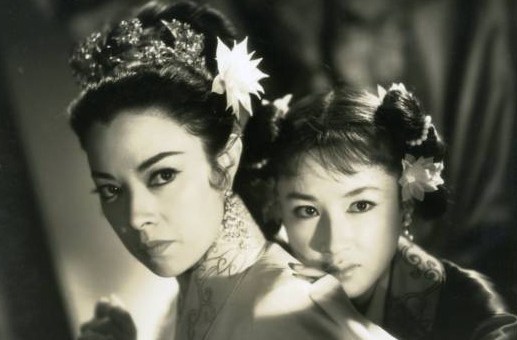
A studio director at Toho, Shiro Toyoda was most closely associated with adaptations of well respected works of literature, often with an earthy, humanist touch. He might then be an odd fit for a tale of high romance co-produced with Hong Kong’s Shaw Brothers and inspired by a classic Chinese legend. Madame White Snake (白夫人の妖恋, Byaku Fujin no Yoren) effectively drops some of Toho’s top talent, including “pan-Asian” star Shirley (Yoshiko) Yamaguchi (AKA Li Xianglan / Ri Koran), into a contemporary Hong Kong ghost movie with Toyoda doing his best to mimic the house style. 

As in the classic legend, fate is set in motion when herbalist Xu-xian (Ryo Ikebe) allows “noblewoman” Bai-niang (Shirley Yamaguchi) and her maid Xiao-qing (Kaoru Yachigusa) to board a boat he is riding to escape a storm. The pair bond because they are both orphans out in the rain to pay their filial respects to their late parents on tomb sweeping day. Disembarking, Xu-xian lends the ladies his umbrella, vowing to visit their house the next day after his rounds to reclaim it. When he arrives, Xu-xian is greeted by a near hysterical and extremely romantic Bai-niang who has apparently fallen deeply in love with him because of his pure heart. She proposes marriage, but Xu-xian is wary. He is after all just a poor boy, a herbalist living with his older sister and her husband. He has no money to get married and Bai-niang is a noble woman from a good family, society simply wouldn’t allow it. Xu-xian tries to escape, but his gentle words of refusal only wound Bia-niang’s heart. 

Hoping to smooth the situation, Xiao-qing decides to give Xu-xian a small fortune in silver taels so the money issue will be solved. Strangely, the plan appears to work. Xu-xian quickly gets over his reluctance to accept money from a wealthy woman who wants to marry him and returns to being in love and excited, selling his newfound hope for the future to his sister by showing her the taels. It is, however, not quite that simple. The silver turns out to be stolen as evidenced by a mark of fire on its surface. Xu-xian falls under suspicion as a thief and comes to resent Bai-niang for placing him in such a difficult and embarrassing position. 

Nevertheless, despite all the strange goings on such as the suddenly “abandoned” house, the green smoke, and vanishing women, Xu-xian does not seem to suspect that Bai-niang is not fully human, and is only angry with her for misusing him. In a motif which will be repeated, however, he is eventually won over. After taking a job in his sleazy uncle’s inn, he re-encounters Bai-niang and realises she really is the one for him. But as they begin to build their life together, launched with an unwise loan from the sleazy uncle who can’t seem to keep his eyes (and occasionally hands) off Bai-niang, doubt begins to creep in. Those small cracks are deepened when Xu-xian is accosted by a man who announces himself as a Taoist from Mount Ji and tells him that he has an evil aura over his head, encouraging him to believe that an evil spirit is slowly capturing his heart which why he’s a little bit afraid to go home. The priest gives him some useful talismans, which are of course quite bad news for Bai-niang who now knows that her husband secretly doubts her. 

Meanwhile, prepared to do “anything” to make the man she loves happy, Bai-niang has come to the strange conclusion that Xu-xian’s moodiness is down to the fact that their medicine shop isn’t doing so well. Unfortunately, her big idea is poisoning the local well to make everyone think there’s a plague so they’ll have to buy more of her potions. It’s a fairly nefarious plan, but apparently all for love. As in the original tale, however, the real crisis once again comes with the randy uncle who uses the pretext of a local festival to try and get Bai-niang drunk on special wine that is known to unmask spirits. Realising that his wife is a little bit otherworldly sends Xu-xian into a coma, while Bai-niang goes to ask the gods for help, only to be undercut by the annoying Taoist priest who wakes Xu-xian up by convincing him his wife’s “evil”. 

If you don’t want people to think you’re “evil”, trying to drown the entire town might not be the best move. Bai-niang’s refusal to give up on Xu-xian even when he constantly tries to reject her places her at odds with loyal servant Xiao-qing who is equal parts enraged on her behalf and exasperated that she can’t see sense. Bai-niang tells the gods that the only witchcraft she used was the witchcraft of love even if that love caused her to try and poison the entire town, but now regards herself as nothing more than Xu-xian’s wife and is willing to renounce her powers in order to save him. Once again, Xu-xian has a sudden change of heart, avowing that there are human women with the heart of a snake, and Bai-niang is a woman to him even if she’s a snake spirit which is, apparently, the only thing that matters. Still, theirs is a love this world doesn’t understand, and so only in a better one can they ever be together.


Original trailer (no subtitles)