
Ya Boy Kongming! The Movie (パリピ孔明 THE MOVIE, Shuhei Shibue, 2025) [Fantasia 2025]

Why in this world does war never cease? Reincarnated in modern-day Shibuya, third-century military strategist Zhuge Liang, known by his courtesy name Kongming, finds himself fighting a different battle in becoming the manager of an aspiring singer whose music he feels could unite the world in peace. Adapted from the manga by Yuto Yotsuba and illustrated by Ryo Ogawa, Ya Boy Kongming! (パリピ孔明 THE MOVIE, Paripi Koumei the Movie) is both a surreal advocation for the power of music and satirical take on the cutthroat entertainment industry.

Having decided to become Eiko’s (Moka Kamishiraishi) strategist, Kongming (Osamu Mukai) has already advanced her career with an appearance at a major festival. He’s also turned himself into a mini celebrity appearing on TV to offer his strategic opinions and starring in a number of adverts. Now he wants Eiko to enter a joint competition between the three leading music labels which ironically echoes his own Three Kingdoms era and requires him to make use of his classic strategies. But he’s also facing his greatest challenge yet in the form of Shin, a street singer whose music calls out to him in a similar way to Eiko’s yet not, he fears, in a good way. He’s plagued by strange visions of his past life and his old lord Liu Bei before being told that his dreams are of something called the “Yumi door” that leads to the afterlife and that he will want to step through it the next time he hears Eiko’s music. 

As some point out to him, perhaps he just shouldn’t listen, then, but to Kongming that would be the same as death and if it helps realise his dream of bringing about universal peace through Eiko’s music then he’ll gladly give up this strange second life he’s been given. Of course, this produces a conflict in Eiko who, on realising that Kongming is actually serious, isn’t sure if she should just not sing ever again to avoid accidentally killing him even though he tells her that her music has the power to save people. Meanwhile, she loses confidence in herself, thinking that he’s gone off her and is about to jump ship to Shin who is currently being managed by a descendent of Kongming’s old enemy Sima Yi, Sima Jun. 

Jun’s mission is then one both of familial revenge and a quest to make his sister a star. But whereas Kongming’s strategies are clever, Jun’s are underhanded and it’s clear he’s gone to the dark side in trying to advance Shin’s career. At the end of the day, Shin might not want to “cheat” either, but even so the teased battle of wits comes to pass as the two men attempt to outflank each other and win the coveted championship which is Kongming’s way of ensuring Eiko will be able to continue after he’s gone. Though her songs are all becoming independent and able to go on alone after someone important is no longer around, Eiko still values Kongming’s support and friendship and obviously doesn’t want him to go anywhere.

Yet what Jun ends up rediscovering is the joy of music and that it really can change people’s lives, a realisation that all the label bosses came to some time ago. Despite the cutthroat nature of their business, they do it because they believe in music too, whether it’s a girl with a guitar in the street or a Chinese boy band making a surprise appearance during their world tour. Jun and Kongming want the same thing, and Shin and Eiko aren’t really rivals but allies fighting for universal peace through music. Boasting excellent production values, the film lends a sense of melancholy nostalgia to the Three Kingdoms era and Kongming’s vaguely homoerotic relationship with the famed Liu Bei whose voice he once thought could unite the world in peace before he lost his life on the Wuzhang Plains and woke up in Shibuya clubland on Halloween thousands of years later. Endlessly surreal, there’s a childlike quality to the warring strategies of Kongming and Jun as they attempt to outflank each other with elaborate schemes, but also a genuine sense of warmth and joy in the love of music, which just might, after all, bring peace throughout the land.


Ya Boy Kongming! The Movie screened as part of this year’s Fantasia International Film Festival.

Original trailer (no subtitles)

BON-UTA, A Song from Home (盆唄, Yuji Nakae, 2019)

Exiled from their homes, the residents of Futaba lost more than just their material possessions when the area was declared uninhabitable following the Fukushima nuclear disaster. With former residents scattered all over the country never knowing when or if they will be able to return, a community has been ruptured and its history is in danger of dying out. Yuji Nakae’s poignant documentary Bon-Uta (盆唄) explores this sense of loss through the prism of the Bon dance while meditating on the notion of exile in comparing the experiences of migrants and Hawaii and their descendants. 

A photographer, Ai, has been photographing Bon dances in Japan and Hawaii and was struck by the Hawaiian response to the 2011 earthquake, seeing as many of the Japanese-Americans living in Hawaii traced their ancestry back to the Fukushima area. Hisakatsu and Haruo, childhood friends from Futaba, travel to Hawaii and observe the Bon dance, reflecting that it is different from that in Japan but perhaps in some ways better. Seeing how they have incorporated many different styles of Bon dance gives them the idea that they could save the Futaba dance by teaching it to the Hawaiian dancers, placing it in a kind of depository so that in 50 or a 100 years if Futaba becomes habitable again, their descendants could relearn it. But what they quickly discover is that it’s difficult to teach something that each of them has spent their whole lives learning in a matter of days, while the fact is that the community itself is central to the dance which loses its meaning when performed by those who’ve never been there. 

Nakae begins to meditate on insiders and outsiders as an older woman returns to her family home in the exclusion zone and uncovers papers from the 19th century which recount the discrimination her own family faced on being encouraged to move to the village following a massive famine which had reduced its population by two thirds. Now outsiders in the areas in which they have resettled, the former Futaba residents lament that they can no longer practise their art because their homes are in much more urbanised locations where neighbours are in close proximity and they fear disturbing them with the noise. The film equates their yearning for their lost community to that felt by those who emigrated to Hawaii in the 19th century hoping to escape rural poverty but often found themselves trapped, unable to return because of the low pay and exploitative conditions of the island’s sugar plantations. 

The Hawaiian migrants sang songs of exile, of how they missed their homes and families and how hopeless felt in the false promises that had been made to them of better lives abroad. Even in this, their culture survived while another, now elderly, woman recounts singing for a Japanese orchestra during the war when such songs were technically forbidden as other young men keen to claim their identity as Japanese-Americans enlisted in the military. The former Futaba residents begin to see new hope that they too could find a way to preserve a sense of their hometown even if they can’t return to it, deciding to organise a Bon dance of their own in another town bringing together the unique dances of each district while honouring the spirits of those who have passed away. 

Hisakatsu writes a new Bon song of his own from the point of view of a cherry tree in Futaba to ward off the “ogres” which stand in for radiation as the tree looks forward to blossoming once again, hoping the people will eventually return. Featuring a lengthy animated sequence recalling the experiences of the 19th migrants to Futaba who found themselves rejected as outsiders while reflecting on the contemporary exile of the former residents, the film eventually discovers a note of positivity and hope that even now scattered and unable to return to their homes the community can survive through the practice of its culture in passing on the unique local Bon dance to successive generations just as the migrants in Hawaii passed theirs on to their children in the hope they too might one day be able to return home.


Trailer (English subtitles)

SAKURA (朽ちないサクラ, Hiroto Hara, 2024)

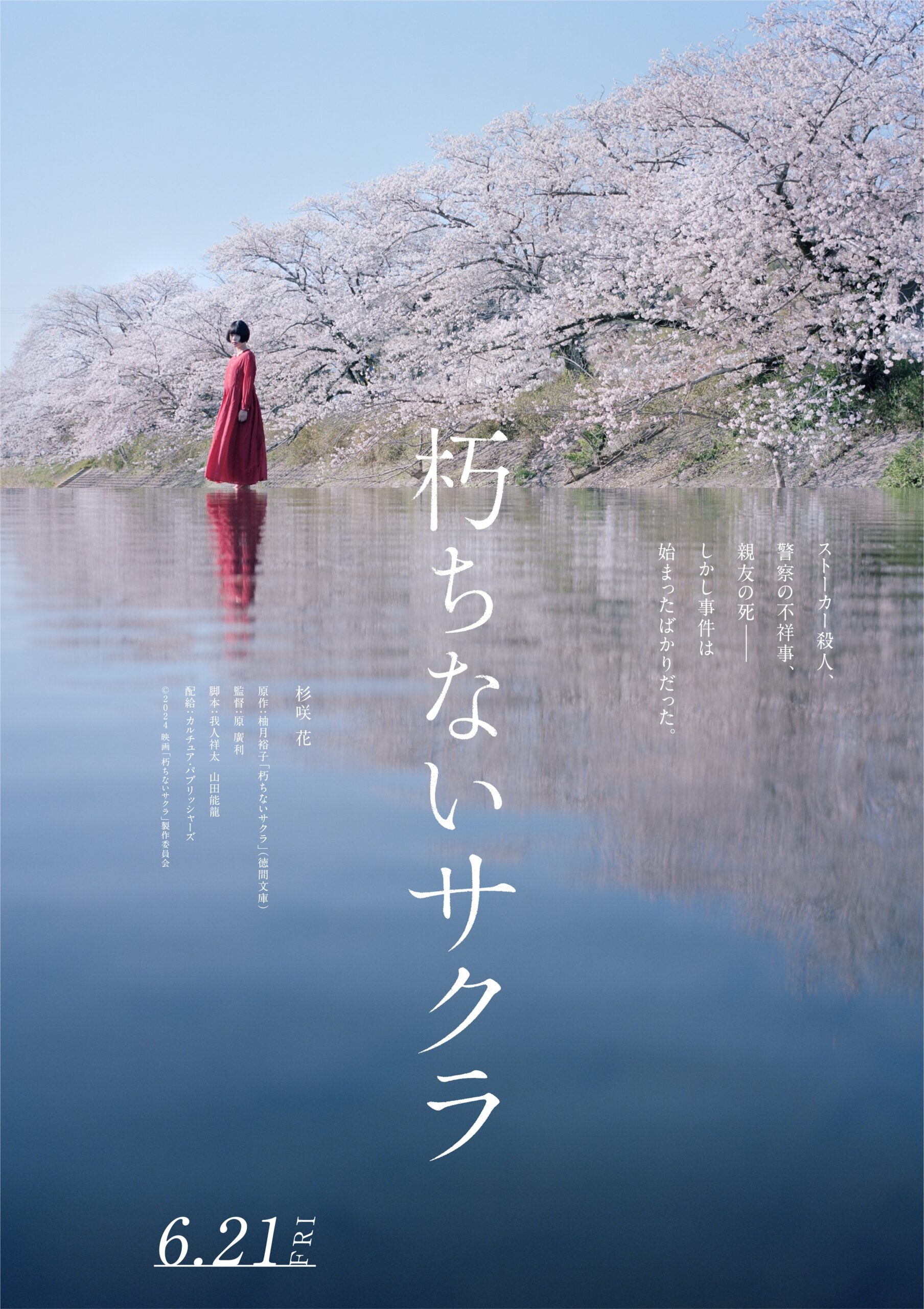
Sakura, or cherry blossoms, are often seen as emblematic of “Japan”. A potent poetic symbol, they blossom only for a short time and then slowly fade away. In the case of Hiroto Hara’s conspiracy drama SAKURA (朽ちないサクラ, Kuchinai Sakura), however, the title refers to a nickname for the security services. In fact, the title could be read either as the “sakura never decays,” or perhaps “will never be tarnished”, “will never die,” echoing the frequent messages that you can never really escape your past for like sakura it will always blossom again while the security services themselves will never fall.

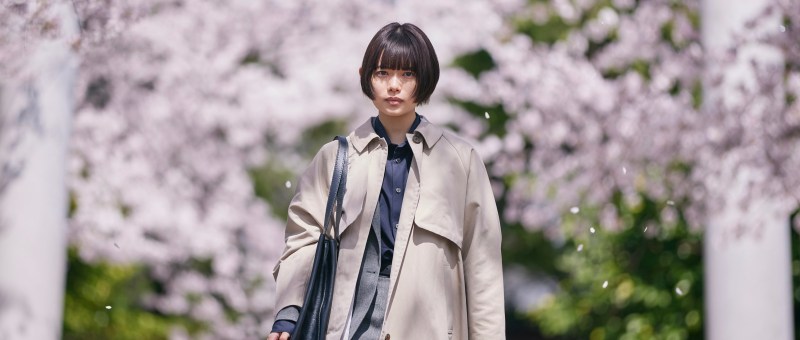
In this case, the event that reverberates is a nerve gas attack on a station that is clearly an allegory for that conducted by Aum Shinrikyo in 1995. Like Aum which is now known as Aleph, the cult in the movie simply changed its name and carried on. Now the head of the police PR department for which the heroine works, former security agent Togashi (Ken Yasuda), is haunted by a mistake he made as a rookie cop and blames himself for not being able to stop the disaster. As fate would have it, the case they’re currently investigating ties back to the cult suggesting a much wider conspiracy in play than the simple intention to cover up a murder.

But there are also two killings here that are likely connected, the first being that of a woman whose allegation of stalking was ignored by the police who, rather than investigate, went off to enjoy themselves on some kind of outing The press is having a field day with the implication the police are both lacking in compassion and negligent in their work. Predictably, the PR division’s main intention is to uncover the source of the leak with Togashi seemingly already suspecting a woman in his department, Izumi (Hana Sugisaki), whose boyfriend, Isokawa (Riku Hagiwara), was himself on that outing. Izumi had accidentally let slip about the police’s activities to her best friend Chika (Kokoro Morita), a reporter who works at the local paper that broke the story. Chika insisted it wasn’t her who wrote the article, but Izumi didn’t believe her. Chika is then found dead after vowing to investigate more fully and prove Izumi wrong with an original hypothesis that she took her own life in guilt over betraying her friend.

Obviously, there’s more to it than that and it soon becomes clear she was murdered probably because she got too close to the truth. Izumi isn’t a detective, but finds herself trying to investigate out of a sense that she contributed to Chika’s death by not believing her when she said she never broke the promise she made not to tell anyone else about the police outing. One might legitimately ask why she is allowed to do this, and the lead detective is not originally happy about it, but as they’re grateful for the leads she turns up, Izumi effectively gets a sort of promotion to investigator. Later events might lead us to wonder if she isn’t being manipulated as part of a wider conspiracy, but then the central intention remains unclear as does the reason the shady forces in play would allow her to investigate Chika’s death knowing the possibility that she may stumble on the “real” truth in the process.

It could be that they simply don’t need to stop her because they know there’s nothing she can do. She has no evidence for her final conclusions and no one would believe her if she spoke out, but it seems odd that conspiracists who’ve already bumped off several other people would allow her to simply walk away knowing what she knows if there were not some grander plan in motion. The question is, is it justified to cause the deaths of a small number of people in order to save the lives of hundreds more who might otherwise die if the cult carries out another terrorist attack before they can be stopped? Sakura apparently have spies and informants everywhere and will do everything they can to protect them in order to facilitate their goal of protecting the nation. Thus the famed cherry blossoms now become another symbol of constant threat and oppression in the spectre of the security services who watch and oversee everything but remain in the shadows themselves. Hara homes in on this sense of paranoia and injustice but in the end cannot resist indulging Izumi’s plucky rookie investigator spirit. Her final decision may not make an awful lot of sense while essentially pitting one authority figure against another. Nevertheless, the tension remains high as Izumi presses forward towards the truth no matter what the danger while like her policeman boyfriend determined to pursue justice wherever it may lie.


SAKURA screens as part of this year’s Japan Foundation Touring Film Programme.

Trailer (English subtitles)

Images: ©2024 SAKURA Film Partners

Iwane: Sword of Serenity (居眠り磐音, Katsuhide Motoki, 2019)

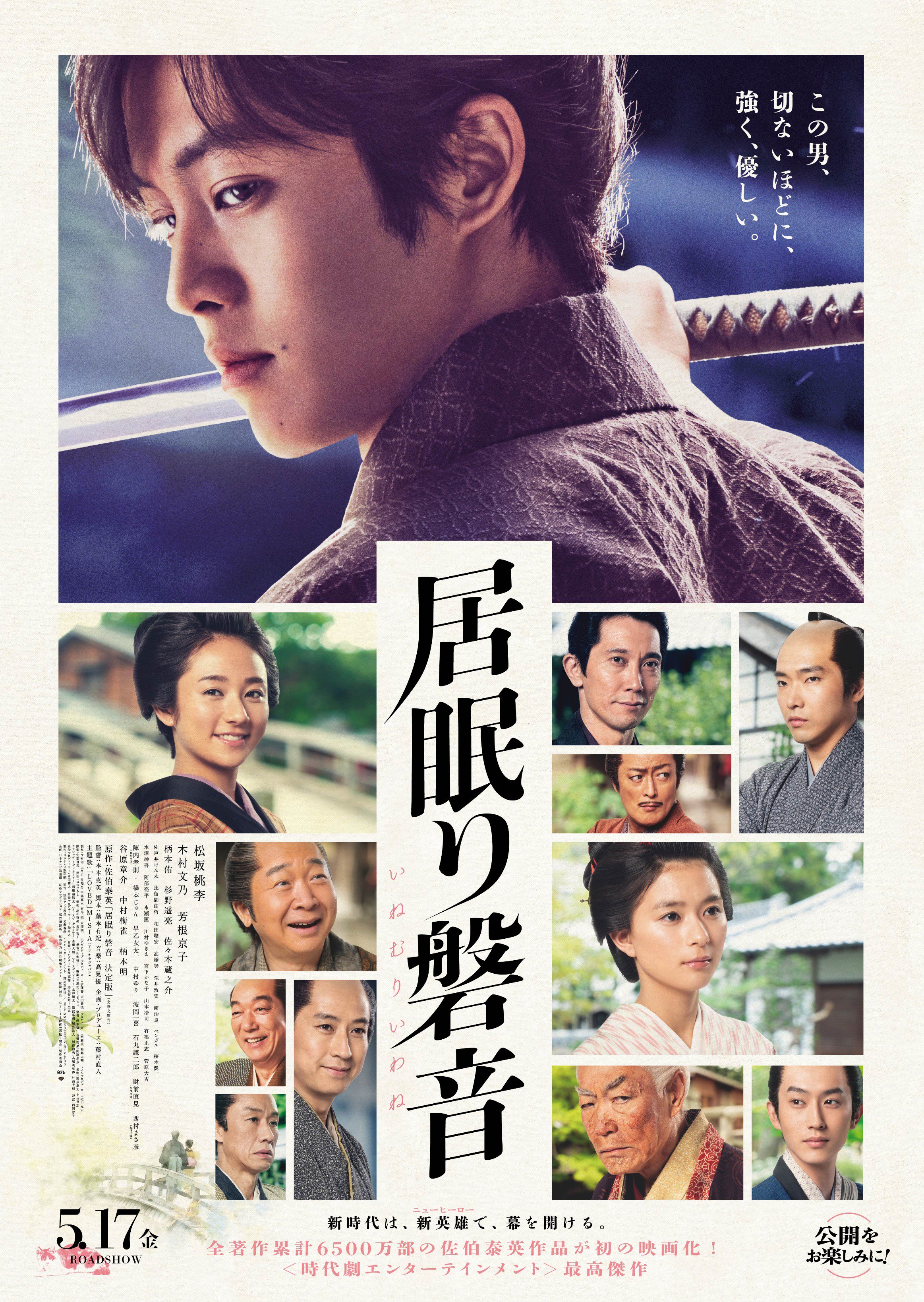
The contradictions of the samurai code conspire against one noble-hearted young man in Katsuhide Motoki’s adaptation of the long running series of historical novels by Saeki Yasuhide, Iwane: Sword of Serenity (居眠り磐音, Inemuri Iwane). Yet this truly serene samurai is a stoical sort, learning to bear his pain with fortitude while standing up for justice in an increasingly corrupt Edo where money rules all while an ascendent merchant class continues to challenge the fiercely hierarchical social order. 

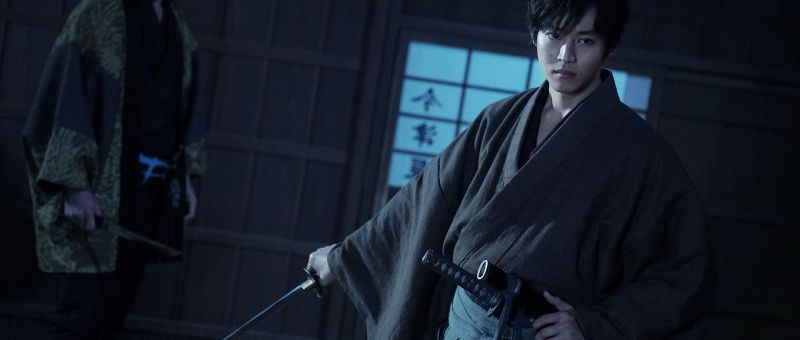
Beginning in 1772 which turned out to be a disastrous year, the tale opens as hero Iwane (Tori Matsuzaka) prepares to return home after completing his three year rotation in Edo in the company of childhood friends Kinpei (Tasuku Emoto) and Shinnosuke (Yosuke Sugino). Shinnosuke is in fact married to Kinpei’s sister Mai, while Iwane will himself be married to Kinpei’s other sister Nao immediately on his return so close are they. As Iwane’s father tells him, there are great hopes for these young men that they can “turn our outdated clan around”, but events will conspire against them. Spoiling the happy homecoming, Shinnosuke is accosted by a drunken uncle who convinces him Mai has been unfaithful in his absence with the consequence that he kills her immediately on his return home. Unable to understand this turn of events, Kinpei confronts his friend but eventually kills him, while Iwane is then forced to kill Kinpei after he goes on murderous rampage in revenge for the wrong done to his sister. 

In trying to mediate the case, the argument is put forward that Shinnosuke acted rashly and should have brought his suspicion to the authorities rather than opting for summary execution. The lord however disagrees, condoning Shinnosuke’s actions under the rationale that to do so would have been considered “weak minded” while as Shinnosuke himself had claimed he acted in accordance with the samurai code in which female adultery is illegal and punishable by death. By contrast, he finds Kinpei’s rashness offensive, insisting that he also should have recognised the legitimacy of his sister’s murder and simply left quietly with her body. Having learned the truth in which his childhood friends became victims of clan intrigue, romantic jealousy, and tragic misunderstandings in this Othello-like plot, Shinnosuke and childhood sweetheart Nao are also consumed by the rashness of samurai law each exiled from their clan and cast adrift in Edo-era society. 

Edo-era society is however also itself corrupt. Some months later, Iwane has returned to Edo as a lowly ronin lodging with a kindly old man, Kinbei, who helps him find a job firstly gutting eel then as a bodyguard at a money exchange which has been receiving anonymous threats they assume are from rival broker Awaya who has hatched a nefarious plan to manipulate the currency market to stop the current Shogun introducing a new unit which can be used in both Edo and Kyoto which would understandably cut into his already corrupt business model. Luckily, Imazuya is an honourable man who backs the new currency plan and wants to do the right thing which makes him a perfect fit for Iwane’s innate sense of justice. “You don’t know the way of the merchant” Awaya snaps at him, suggesting both that the samurai are already on their way down as the merchants rise and that his unwillingness to play dirty will be his downfall. Nevertheless, Iwane is the type to adapt quickly, instantly coming up with a way to play Awaya at his own game and kick his destructive amoral capitalism to the curb. 

Meanwhile, he continues to pine for Nao while drawing closer to Kinbei’s earnest daughter Okon (Fumino Kimura). As we discover Nao is also a victim of an intensely patriarchal social order but through the tragedy that befalls them also finds strength and agency making a life changing decision that allows her to become independent while looking after her family if in the knowledge that the childhood romance she shared with Iwane is a thing of the past. Iwane too agrees that he is trapped in a living hell of guilt and grief, yet choosing to go on living anyway as calm and cheerful as he’d ever been while standing up to Edo-era corruption though uncomfortably enough this time against the destabilising influence of the rising merchant class and therefore in contrast to most jidaigeki reinforcing the legitimacy of the samurai order which has paradoxically also ruined his life with its rigid and implacable social codes. In any case, Motoki’s classic chanbara melodrama has a serenity of its own as the cheerfully laidback hero resolves to live his life by a code of his own free of samurai constraint. 


Trailer (no subtitles)

Shin Ultraman (シン・ウルトラマン, Shinji Higuchi, 2022)

The classic tokusatsu hero rises again to rescue kaiju-plagued Japan from geopolitical tensions and internal bureaucracy in Shinji Higuchi’s Shin Ultraman (シン・ウルトラマン). Scripted by Hideaki Anno, Shin Ultraman shares much in common with Shin Godzilla which the pair co-directed but is also a much more obvious homage to the world of classic tokusatsu or “special effects” franchises which became cult TV hits from the 1960s onwards and have remained popular with children and adults alike throughout Asia. 

This new iteration takes place in a world in which kaiju attacks have become commonplace, so much so that there is a specialised government department, the SSSP, dedicated to dealing with them. Led by determined veteran Tamura (Hidetoshi Nishijima), the team do not engage with the giant monsters directly but are responsible for research and strategy quickly trying to work out what kind of kaiju they’re dealing with, what the dangers associated with it may be, and where it’s weaknesses lie so they can figure out a way to stop it. Just when it looks like an electricity-guzzling lizard monster is about to do some serious damage, a robot-like giant humanoid arrives and saves the day. The team are very grateful to the heroic defender they name Ultraman, but are puzzled that he seems to be aware of all their research while otherwise missing the connection that their near silent colleague Kaminaga (Takumi Saitoh) always seems to be mysteriously absent every time Ultraman arrives.  

At heart, Shin Godzilla had been a satire on government bureaucracy and a mediation on the response to the 2011 earthquake and tsunami. Shin Ultraman might not be so pointed but still has a few bones to pick with the political machine as the team’s boss at HQ moans about the need to keep buying fancy weapons from the Americans (and making sure it’s the Defence Ministry that foots the bill) while cynically suggesting that the government is keen to use the kaiju crisis as leverage to further its policy goal of nuclear re-armament. Meanwhile, it’s also clear that for some reason kaiju attacks only happen in Japan and the International community largely sees them as a Japanese issue which they have to deal with alone, but as soon as Ultraman turns up and is thought to be extraterrestrial everyone is suddenly interested. 

As it transpires these geopolitical divisions are incredibly useful to another extraterrestrial visitor, Zarab (Kenjiro Tsuda), who plans to sow discord among nations so that humanity will destroy itself thereby, ironically, preventing an intergalactic war between planets who may be tempted to fight amongst themselves over the potential enslavement of humanity as valuable bioweapons. Aware of Zarab’s power, the government is manipulated into signing an uneven treaty with him in order to be first out of the gate and gain an advantage over other nations who, for reasons of self preservation, are also keen to ensure no one has sole access to new alien technologies and emissaries. Asked why he picked Japan, all Zarab can come up with it that he happened to land there which is quite a coincidence though he also has a vested interest in taking out Ultraman, the only force capable of resisting him. 

Even so, according to Zarab, the kaiju plague is humanity’s doing in having awakened sleeping monsters through environmental destruction. Hailing from the Planet of Light which has strict rules about what he’s supposed to be doing, Ultraman longs to understand humanity having merged with a human he accidentally killed who had dedicated his life to saving others. What he gains is a sense of communal responsibility along with a desire to care for what he sees as, essentially, babies someway behind his own planet in terms of evolution and in need of guidance. What he doesn’t want to do is endanger their “autonomous progression” by solving all their problems for them, so in grand tokusatsu fashion its up to the team to engineer their own solution in addition to deciding what they will do with this new technology using it for good or ill. Being buddies is all about trust, after all. Higuchi’s composition borders on the avant-garde recalling both that of the legendary Akio Jissoji and those more often associated with anime and manga rather than live action while the effects, even those utilising CGI, are pleasantly nostalgic with retro mono explosions and the iconic ringing of laser beams. Heading in a melancholy philosophical direction in its final moments, Shin Ultraman does at least suggest that the best weapons against a kaiju attack are teamwork and mutual trust especially if one of your friends is an all powerful being from another galaxy. 


Shin Ultraman screened as part of this year’s New York Asian Film Festival.

Original trailer (English subtitles)

Images: © 2022 TSUBURAYA PRODUCTIONS CO., LTD. / TOHO CO., LTD. / khara, Inc. © TSUBURAYA PRODUCTIONS

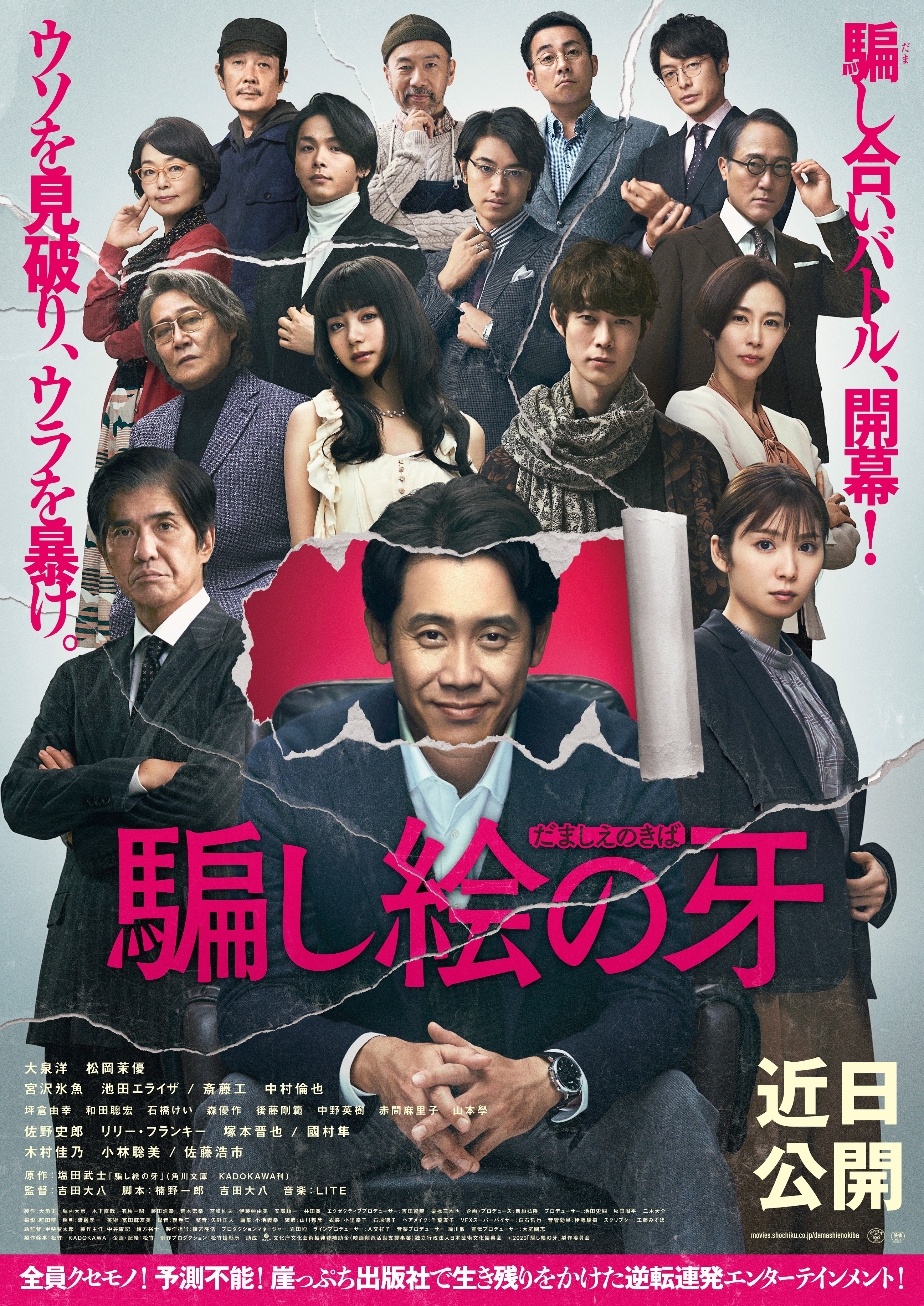
Kiba: The Fangs of Fiction (騙し絵の牙, Daihachi Yoshida, 2020)

“Landscapes don’t stay the same” laments a young woman in Daihachi Yoshida’s slick corporate drama, Kiba: The Fangs of Fiction (騙し絵の牙, Damashie No Kiba), though the more things change the more they stay the same and the push and pull of traditionalists and modernisers seems set to be an unending battle. If someone were brave enough to think of it, there may be a third way, but one thing is clear – it’s adapt or die for the printed word and the real war is over who makes it onto the page and how they do it. 

When the CEO of a major family-owned publishing house dies of a heart attack while walking his dog, it throws the entire industry into disarray and even makes it onto the national news where pundits discuss who might be most likely to succeed while pointing out that publishing is already in crisis seeing as most novels are serialised in literary journals and magazine readership is on its way out. Earnest editor Megumi (Mayu Matsuoka) is forever told that old and new is a false dichotomy and in some ways it may be, but century-old literary journal Kunpu Review is quite clearly mired in a traditionalist past woefully out of touch with contemporary society. 

This Megumi learns to her cost when pulled straight from the CEO’s funeral to a 40th anniversary event marking the debut of their best-selling author Daisaku Nikaido (Jun Kunimura). Encouraged by rival editor Hayami (Yo Oizumi), she gives her honest opinion on Nikaido’s work pulling him up on the latent sexism in his novels by suggesting his sexual politics are at best old-fashioned. This is of course a huge faux pas and a moment of minor embarrassment for all concerned, though it will also become a repeated motif Megumi again trying to bring up a younger author on his subpar portrayal of women but finding her concerns falling on deaf ears. 

Part of the problem is that authors, and particularly well-established ones, rarely undergo a rigorous editing process such as they might outside of Japan. Kunpu is so desperate to keep Nikaido on side that they treat him as a mini god, wasting vast amounts of their budget expensing him for “research” holidays and a healthy interest in fine wines. They simply wouldn’t have the courage to tell him that his drafts are improvable or that elements of his writing may cause offence. 

Hayami, the tricky editor of rival culture mag Trinity, is by contrast deliberately looking for the modern but in other ways is not so different from Kunpu. Poaching an up and coming author Megumi had pitched but was rejected, Hayami embarks on an elaborate PR campaign casting the young and handsome Yajiro (Hio Miyazawa) as a literary idol star. But Yajiro seems to be uncomfortable with the attention, unprepared to deal with demands of being a prominent writer and resenting Hayami’s attempts to manipulate his image by forcing him into photoshoots dressed in outfits he would never wear. Hayami also engineers a publicity stunt implying Yajiro is in a relationship with his other protege, a young model and unexpected firearms enthusiast (Elaiza Ikeda) who is later arrested after shooting a stalker with a homemade pistol. 

What happens to Saki Jojima is either an unintended consequence or direct result of Hayami’s inability to fully control the situation, but it also creates both crisis and opportunity for Trininty when Hayami breaks protocol and decides to run Saki’s issue rather than pulling it entirely with an apology as is usual in Japan when a celebrity is the subject of scandal. This places him in direct opposition to the traditionalist Kunpu, horrified and insistent that his decision stains the integrity of the publishing house. Like Hayami, however, new CEO Tomatsu (Koichi Sato) is determined to do things differently and prepared to take a gamble, secretly working on his own plan to streamline the business and build their own production/distribution facility in Yokohama. 

Everyone is so absorbed in their own plotting that they fail to notice others plotting around them. Megumi, meanwhile, is preoccupied with the survival of her father’s old-fashioned book shop which itself badly needs another literary hit because half the customers are kids who come in to browse the manga and then download the good ones when they get home. One young woman looking for a particular novel even explains that she only wants to read it because there’s no movie or drama adaptation. With all this finagling, it’s easy to think everyone’s forgotten about the books while Megumi desperately tries to get someone to let her do some actual editing because they’re all too busy mollycoddling their authors. Nevertheless there’s more to the Kunpu vs Trinity battle than it first seems as they vie for the future of Japan’s publishing industry little suspecting that there may be another contender with a less acrimonious solution. “If something could be updated it should be” Megumi insists, a sentiment which apparently goes both for dinosaur writers unwilling to reckon with their latent misogyny and the book business itself. 

Once again adapting a literary source, Yoshida’s gentle farce quietly builds the tension with courtly intrigue as the wider society remains rapt over the succession crisis at a publishing firm while its ambitious courtiers plot amongst themselves in order to steal the throne. Casting Yo Oizumi in the role he apparently inspired in the book is another masterstroke of meta commentary as his thrill-seeking manipulator plays the long game but even if the prognosis for Japan’s publishing industry may be bleak there is unexpected glee to be had in the eventual triumph of a righteous underdog over a thoroughbred plotter. 


Kiba: The Fangs of Fiction screens on Aug. 26 and 28 as part of this year’s Japan Cuts.

Original trailer (English subtitles)

A Bride for Rip Van Winkle (リップヴァンウィンクルの花嫁, Shunji Iwai, 2016)

the_bride_of_rip_van_winkle“Being naked in front of people is embarrassing” says the drunken mother of a recently deceased major character in a bizarre yet pivotal scene towards the end of Shunji Iwai’s aptly titled A Bride for Rip Van Winkle (リップヴァンウィンクルの花嫁, Rip Van Winkle no Hanayome) in which the director himself wakes up from an extended cinematic slumber to discover that much is changed. This sequence, in a sense, makes plain one of the film’s essential themes – truth, and the appearance of truth, as mediated by human connection. The film’s timid heroine, Nanami (Haru Kuroki), bares all of herself online, recording each ugly thought and despairing notion before an audience of anonymous strangers, yet can barely look even those she knows well in the eye. Though Namami’s fear and insecurity are painfully obvious to all, not least to herself, she’s not alone in her fear of emotional nakedness as she discovers throughout her strange odyssey in which nothing is quite as it seems.

We first meet Nanami on an internet blind date with the man who will later become her husband. Looking lost and alone, she passively waits for her online suitor to find her in the busy city streets. Tetsuya (Go Jibiki) does indeed turn up and assume control of the situation, to which Nanami submits just as she has to everything else. Bonding over little more than their shared vocation of teaching the pair drift into a relationship and then later into a marriage, as is the natural order of things.

Though she seems happy enough, Nanami vents her frustrations in her caustic online blog. Isn’t this all just too easy? She asks herself. It’s almost like online shopping, she simply added a boyfriend to her basket and now she’s about to check out. A failure to win over Tetsuya’s mother adds to her sense of unease as does the fact she has no close friends or relatives (aside from her soon to be divorced parents) to invite to the wedding. Her decision to take the advice of an online friend and employ the shady fixer Amuro (Go Ayano) to hire a selection of professional party goers to bulk out her side of the hall will prove to be a disastrous one (though perhaps more in the short term), turning her entire life inside out.

Nanami’s essential personality trait is her passivity. Like Rip Van Winkle, she is largely asleep while things happen all around her. Though she dreamed of being a teacher, Nanami has only been able to find temporary supply roles with an agency but even this seems unlikely to last thanks to her softly spoken nature which makes classroom teaching a poor fit for her shy, attention avoidant personality. Discovered at her part time combini job by an old university friend, Nanami is embarrassed and has even been wearing a (useless but endearing) disguise in case any of her students come by despite the fact she chose a store far away from the school. Her friend now works at a hostess bar which Nanami finds a little bit shocking. That kind of unconventional way of living is not something she would contemplate, and so when offered the extremely dull but comfortable life alongside the dull but comforting Tetsuya, Nanami settles.

After Amuro spectacularly derails her non-happiness, Nanami is cast adrift which eventually leads her straight back into Amuro’s web of morally dubious activities. Taking a job as a maid at the cheap hotel she ends up in after leaving Tetsuya, Nanami also works part time as another of Amuro’s professional guests which is where she meets motivator no. 2 – Mashiro (Cocco), “actress” and all round live wire. Bonding over sad karaoke, Nanami and Mashiro later wind up working together as live in maids in a creepy, isolated mansion filled with poisonous animals. Enforced proximity leads to genuine friendship and then to more than that, but, ironically enough, Mashiro has not been entirely honest about her intentions and Nanami is soon adrift once again.

Undergoing a “fake” wedding that’s sort of real (in contrast with the “real” wedding which was sort of “fake”), at least in sentiment, Nanami looks much happier than in the extremely bizarre ceremony which bound her to Tetsuya. Nanami and Mashiro’s union was “engineered” yet mutually beneficial and ultimately genuine despite its artificial genesis. Making a last, heartbreaking speech, Mashiro attempts to explain herself and her life philosophy in a final act of nakedness. She prefers to pay for connection because, she says, the world is too full of kindness. There is so much happiness out there that it’s completely overwhelming. Sometimes there’s more truth in the lie than there is in the reality.

The resurfaced Iwai is both more cynical and more romantic than he has ever been before. He has serious things to say about constructed identities and disconnectedness, that the increasingly open nature of the anonymous online world only makes the real one seem less reliable and harder to navigate. We’ve all been wearing masks but we turned them round when we went online, and now perhaps we’re forgetting that we made them in the first place. Nanami may be adrift again at the film’s conclusion but she finds herself in a world of infinite possibilities. Emerging with more certainty and firmer sense of self, Nanami has retaken control and even if she doesn’t know where she’s going, the choice is entirely her own. Another beautifully nuanced, endlessly affecting character study from Iwai, A Bride for Rip van Winkle is a gloriously rich experience, filled with both hope and despair, but told with all the ethereal warmth and strangeness of the best of dreams.


This review refers to the 180 minute director’s cut, rather than the shorter international or four hour TV version.

Original trailer (English subtitles)