Trespassers (侵入者たちの晩餐, Itaru Mizuno, 2024)

Trespassing. Somehow, it doesn’t sound that serious, does it? You’re always hearing about people being accused of trespassing simply for walking along a footway that someone believes to be on their land. It just means you were somewhere you had no right to be. Not doing anything, just being there. That’s exactly how it is for the heroines of Trespassers (侵入者たちの晩餐, Shinnyuushatachi no Bansan) who basically enter a home without permission, nosy around, then feel guilty and decide to clean the place to make up for it but accidentally find a burglar hiding in a corner! Could happen to anyone, really. 

Of course, there’s a little bit more to it than that. Middle-aged divorcees Akiko (Rinko Kikuchi) and Megumi (Kami Hiraiwa) work for the same exploitative housekeeping company which pays them a pittance while the boss, Natsumi (Mai Shiraishi), a former pin-up model turned influencer and entrepreneur, lives the high life. Though she claims to be an ally to working mothers, she also refuses to hire them because they have additional responsibilities that make it difficult for them to stick to her schedule, apparently. Megumi has heard a rumour that Natsumi is really into tax evasion and is hiding a large amount of undeclared money in her luxury flat, which is a rental in the company’s name that she also writes off. Of course, if someone were to steal that money, Natsumi could hardly go to the cops because then she’d have to admit she’d been cheating on her taxes. Why she wouldn’t just put it in a secret offshore account like everyone else is anyone’s guess, but everyone has their peculiarities and perhaps she just likes to have it handy. 

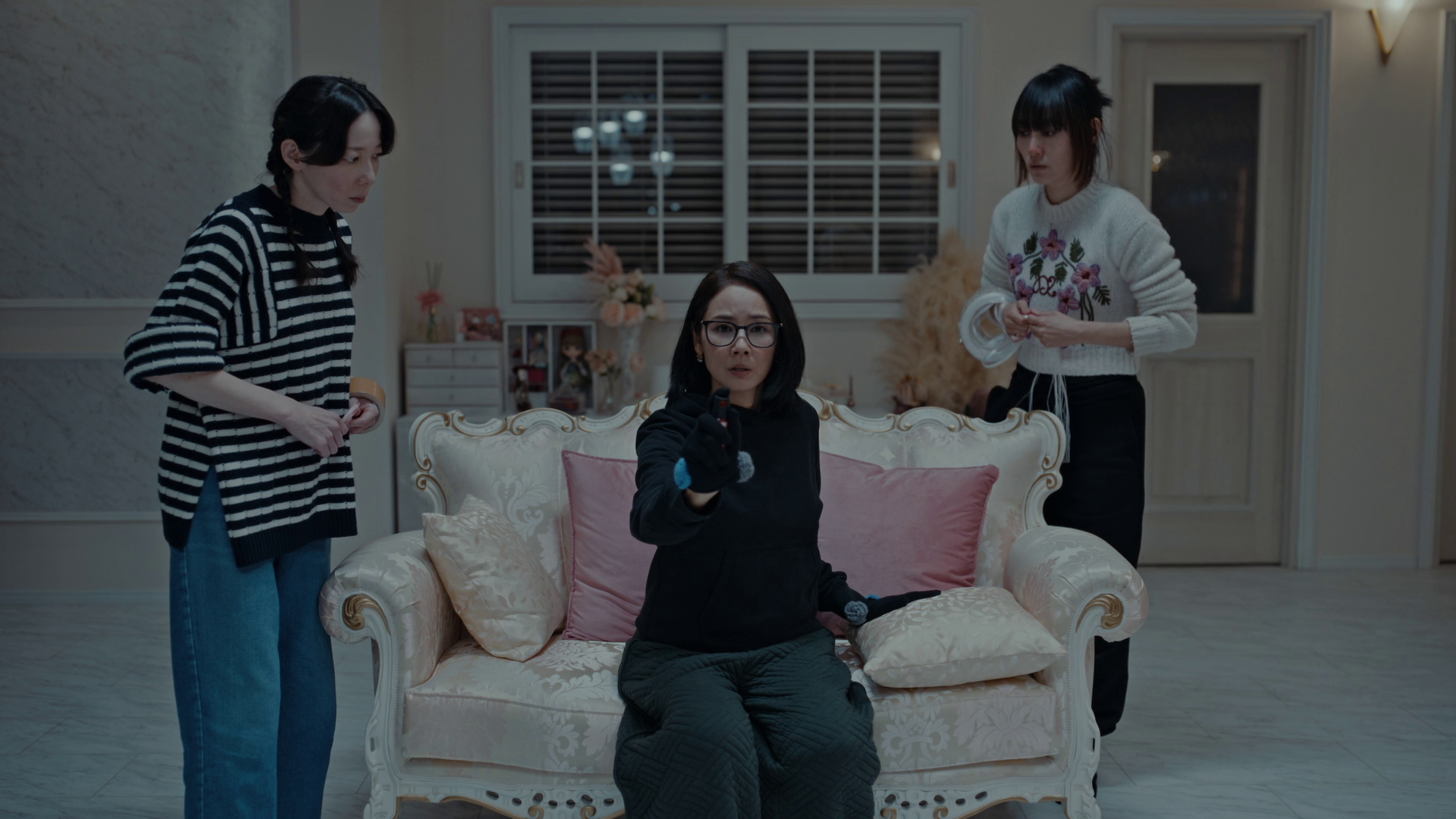
On entering with a cloned key and joined by Megumi’s yoga friend Kanae (Yo Yoshida) who “knows a lot about criminality”, the trio fail to discover the money or any evidence of tax evasion. Rather, Natsumi seems to have several certificates thanking her for donating large amounts of money to various charities which leaves the ladies feeling guilty for doubting her. Akiko had been the most morally conflicted about taking the money and was only persuaded on the condition that they would be giving the majority of it to worthy causes, so they were “helping people” like Robin Hoods rather than just helping themselves like greedy thieves. Megumi meanwhile had been less so and swayed by the rationale that Natsumi was exploiting them twice over by paying them such low wages and then depleting the public purse by thieving the money that should have been paid in taxes. Kanae, just seems to be along for the ride while hoping to open a yoga school with the money, but in a giant and unfortunate coincidence discovers another reason that Natsumi must pay.

Even the burglar, Shigematsu (Sosuke Ikematsu), a failed businessman with massive debts working as a food delivery guy to pay them off, has a sob story, but as the ladies point out it doesn’t really match the righteousness of their tax evasion whistleblowing mission. There is something quite wholesome about how bad they all are at “crime”, and how good Natsumi secretly is at it. It doesn’t even occur to the ladies that Natsumi’s willingness to forgive them is possibly because they’re right and she doesn’t want the police poking round because they might find something she doesn’t want them to. Meanwhile, it’s a little sad that each of them lament it’s been a while since they ate at home with other people rather than at restaurants and there’s something quite nice about their collective decision to make it a tradition though at one of their own homes rather than that of a suspected tax evader.

Indeed, as Akiko says, the real prize was the friends they made along the way. In many ways, they made everything better. Natsumi gets her comeuppance, they get improved working conditions, revenge, friendship and female solidarity too. What they found in Natsumi’s apartment was a family, though sadly they did not discover her hidden stash of hoarded gold. Bakarhythm’s typically witty script addresses a series of societal problems in a lighthearted way from the difficulties faced by middle-aged women and divorcees trapped in low-paying jobs, to hypocritical and exploitative CEOs peddling positive messages of success and empowerment but actually ripping off an entire society while laughing all the way to the bank. Maybe the ladies weren’t the ones trespassing after all when Natsumi too was where somewhere she had no right be.
The Real You (本心, Yuya Ishii, 2024)

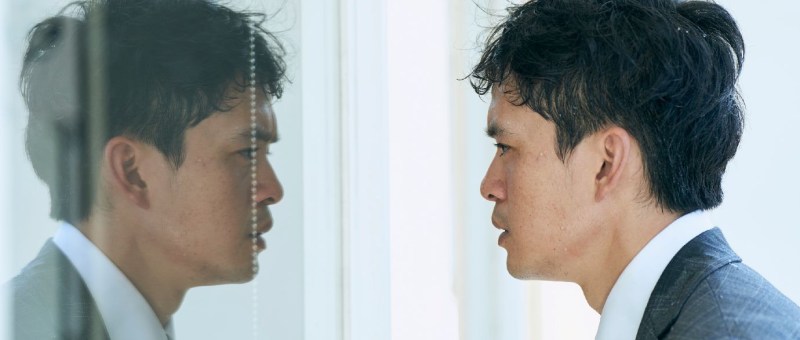
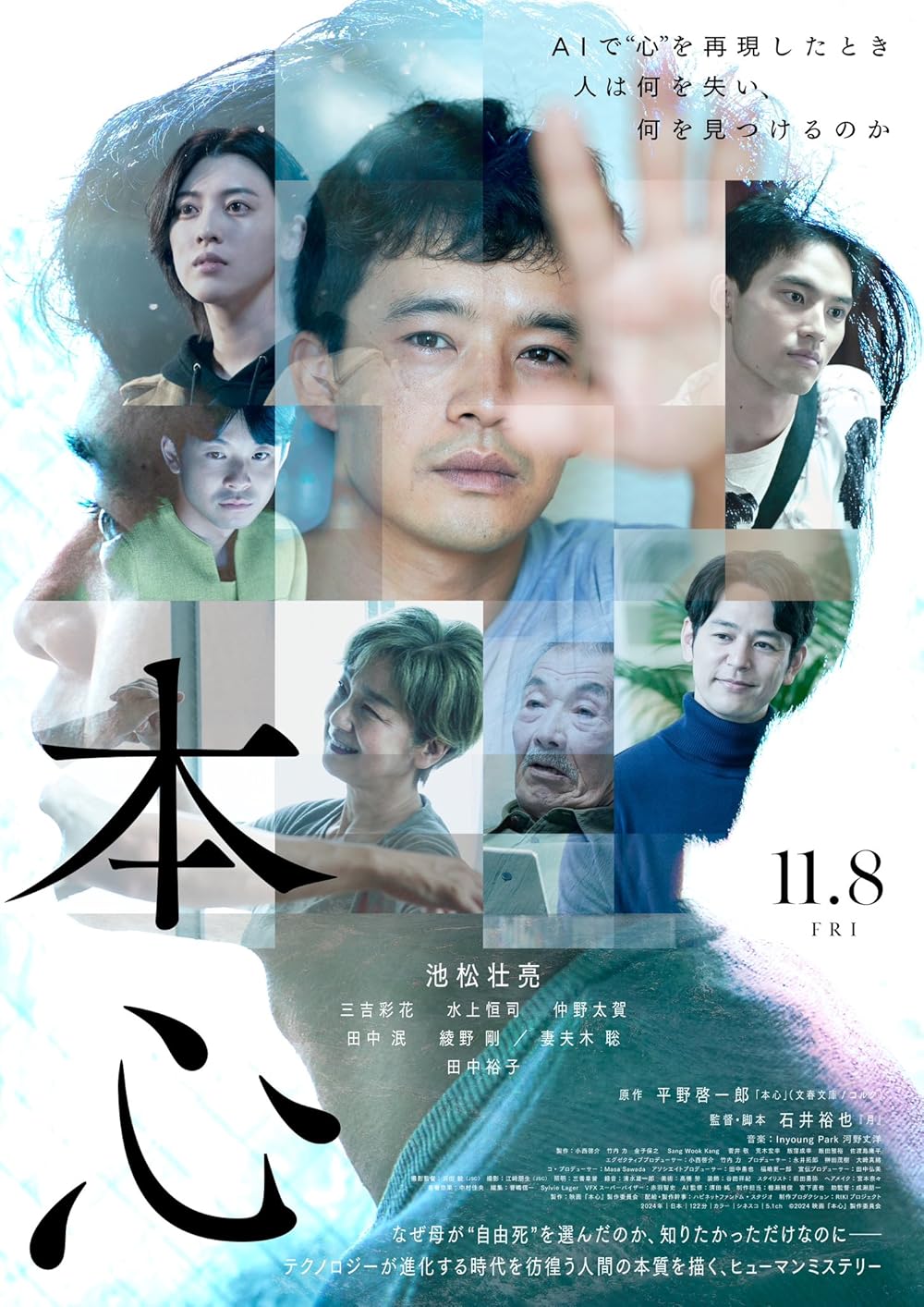
“Putting it into words makes it sound like a lie,” according to a young woman struggling to “be real” and express a truth without any of the awkwardness that interferes with emotional intimacy, but there are ways in which lies can be true and truth can be lies. Based on a novel by Keiichiro Hirano, author of A Man which also deals with similar themes, Yuya Ishii’s The Real You (本心, Honshin) probes at the nature of the human soul and asks if there really is such a thing as the “real” you or if authenticity is really possible in human interaction. 

Both Ayaka (Ayaka Miyoshi) and the avatar of his mother Akiko (Yuko Tanaka) describe Sakuya (Sosuke Ikematsu) as being too pure for this world and to an extent they’re right even if many of his present problems are directly linked to having committed a “crime” in his youth. As the film opens in the summer of 2025, Sakuya is a factory worker watching helplessly as robots take over his work. After all, they don’t care about the heat, or being able to breathe under a heavy welding mask, nor do they get tired and they can get this job done much faster than he can. In any case, he ignores an ominous phone call from his mother, who appears to be showing signs of dementia, despite her telling him that she has something thing important to say and stays out with a friend after work only to spot her by the river in a storm on his way home. When she abruptly disappears, he assumes she entered the water and jumps in to save her but is injured himself and wakes up in hospital about a year later.

Of course, we don’t really know that he wakes up at all and it’s possible that all of this is really just a dream or an attempt to make contact with his authentic self through his relationships with two women, his mother and a young woman who also disappeared abruptly back in high school. Even though it’s only been a year, the AI revolution has marched on a pace and the entire world is now run by robots and avatars. Sakuya’s factory is no more, and the only job he can get is that of “Real Avatar” in which he rents out his physical body on behalf of clients who for whatever reason are unable to complete an action in person. Many of his early customers are elderly people who have opted for “elective death” and are trying to relive a precious memory vicariously through the VR headset before they go.

“Elective death” is one of the things that most bothers Sakuya in that he’s told it’s what his mother had chosen and that he’s getting a tax break and sizeable condolence payment so he can continue living in the family home. This eerie proposition that elderly people are being encouraged to decide that “this is enough” frightens Sakuya and hints at the eugenicist aims of an AI society in which those who are judged to be “weak” or cannot “contribute” in the way expected of them are forced to end their lives as if they didn’t deserve to live. He can’t understand why his mother would have chosen to die, but moreover, why she would have done it without even telling him. He can’t decide if the important thing she wanted to say was just about the elective death or if there was some greater truth he’ll now never know because he ignored her when she tried to tell him.

That’s one reason that he decides to use all his savings plus the condolence money to have an AI Avatar of his mother made in hope discovering what she wanted to say. Later he says that he wanted to know “Akiko Ishikawa,” rather just his mother, but is put off at first when confronted by the gap between the image of the mother he remembered and the objective reality. The creator, Nozaki, suggests incorporating memories from a young woman who was apparently his mother’s only real friend to get a fuller picture, but Sakuya resists insisting that he and his mother had no secrets from each other so she had no “hidden side”. Nozaki (Satoshi Tsumabuki) merely smirks and tells him that everyone has different sides to themselves that they don’t share with others, which Sakuya ought to know because there are things he’s not exactly hiding but doesn’t really want to talk about either.

His friend, Kishitani (Koshi Mizukami), wonders if there isn’t something a little incestuous about Sakuya’s desire to build a VF of his mother rather than his first love as he’d assumed he would, and he might be right in a way. Ayaka Miyoshi, played by the actress of the same name, shares a striking resemblance with the high school girl who exited the young Sakuya’s life, Yuki, and has a similar life story, though it’s not clear if they are actually the same person or not even if the AI version of his mother tells Sakuya that they are. Yet Ayaka is his only way of verifying that what the VF Akiko says is actually “true’ rather than some random hallucination cooked up by the machine based on the incomplete information it’s been fed. Through the VF he finds out things about his mother’s past that shock him, not that he necessarily disapproves, just that they conflict so strongly with the image of his mother he’d always had. Additionally, there’s a degree of hurt that though he believed he and his mother shared everything, she kept this actually quite significant part of herself secret from him in much the same way he admits he didn’t tell Ayaka about his “crime” because he feared she might pull away from him if she did.

Ayaka also avoids talking about her past as a sex worker which has left her with PTSD and fear of being touched for much the same reason even if she suspects that Sakuya already knows and that his mother may have told him before she died. There’s an obvious parallel being drawn between them when Ayako insists that she made a clear choice to do sex work out of economic necessity and refuses to apologise for it, while Sakuya has also been selling his body as a Real Avatar. While some of his clients merely need help accomplishing things physically, others hire him for amusement. They send him on pointless errands running all over the city and then give him a bad review for smelling of sweat, or deliberately make him do degrading tasks. They also ask for things that are clearly illegal, such as another RA’s client requesting to see a man die. But Sakuya continues to wilfully degrade himself carrying out each of the tasks faithfully despite the pitying looks of those around him. When he’s unexpectedly employed by a wealthy avatar designer (Taiga Nakano) who uses a wheelchair, Sakuya again sheds his own identity and finds himself playing reverse Cyrano forced to make Ifi’s declaration of love on his behalf only to the consternation of Ayaka who isn’t sure who it’s coming from and is disappointed in both men for the obvious cruelty of the situation.

Thus this new technology becomes just another means of class-based oppression in which the wealthy use their riches to abuse those without economic means who have no choice but to submit themselves or rebel through criminality while the rich look on with amusement. Sakuya says he isn’t in love with Ayaka, but it’s unclear if he says it because he thinks she’s better off living in material comfort with Ifi, if he really means it, or he’s realised that he was more in love with the image of the girl who disappeared and the missing side of his mother than he really was with her. It seems that Sakuya is really looking for the hidden half of himself through refracted images of the way others see him, while essentially engaging in an internalised dialogue with his own thoughts and memories. He can’t really be sure of the truth behind anything the VF says, a fact brought home by the implication that the great truth he was seeking is a banal platitude and what he undoubtedly wanted to hear yet knew all along. Nevertheless, it’s not until hearing it that he can regain his real self, let go of the past, and be in a position to connect with Ayaka which is also a kind of waking up. Disquieting in its implications for a new AI-based society in which the line between the real and virtual has all but disappeared, there is nevertheless something quite poignant in Sakuya’s gradual path towards saying goodbye but also hello to a new life of greater self-awareness and independence.


The Real You screens in New York July 11 as part of this year’s Japan Cuts.

International trailer (English subtitles)

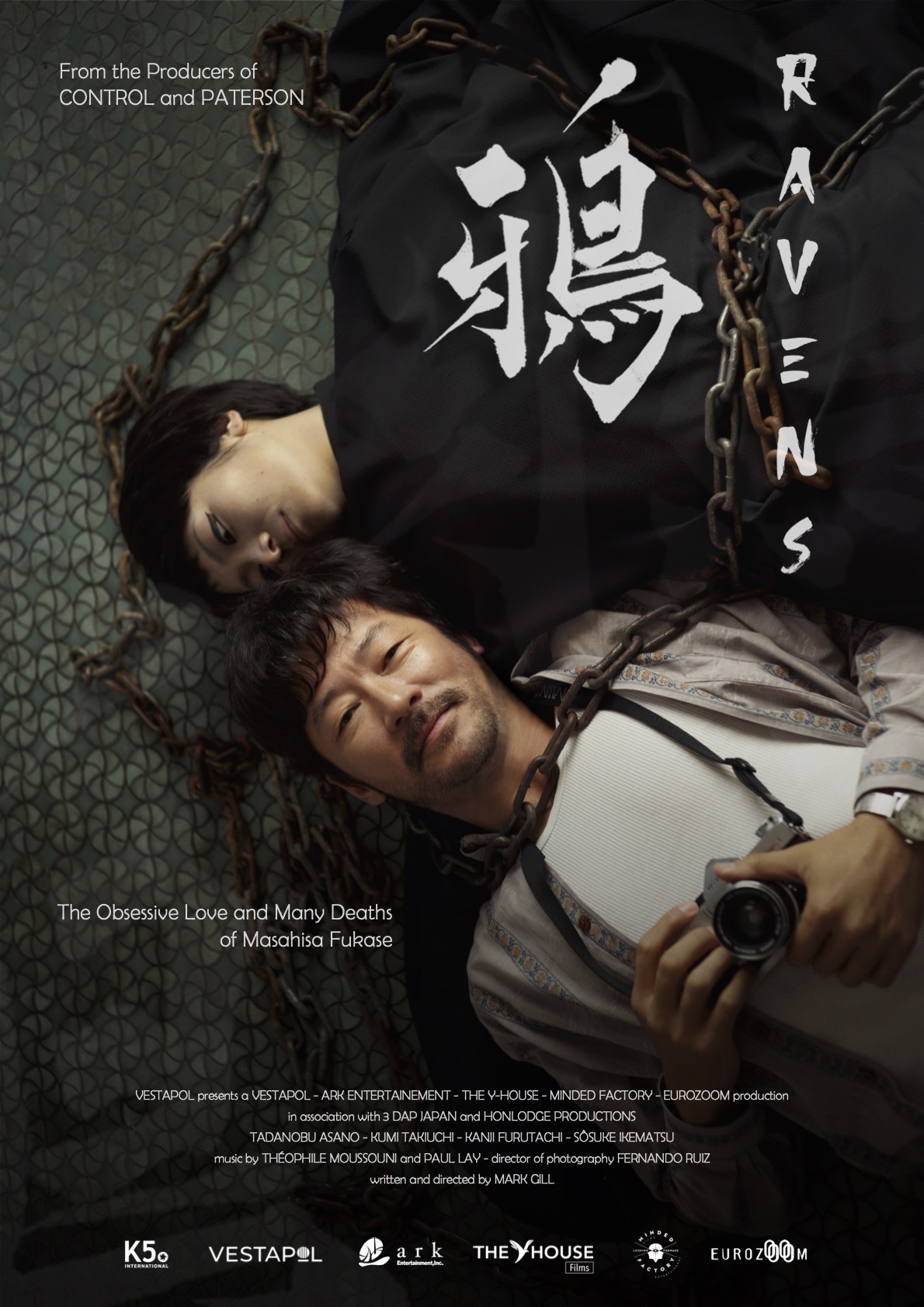
Ravens (レイブンズ, Mark Gill, 2024)

“All I see are self portraits”, the hero’s by then former wife cuttingly remarks on visiting his comeback exhibition in the company of her new husband, seemingly a much more conventional businessman. Japanese films about photographers are similar to those other countries make about writers in that their protagonists are often very flawed people, tortured artists consumed by their own trauma and often turning to drink at the expense of their personal relationships. Tadanobo Asano has in fact played similar roles a few times before. In Yoichi Higashi’s Wandering Home, he played real life war correspondent Yasuyuki Tsukahara who passed away from kidney cancer at the age of 42 after years of alcohol dependency, while in 1999’s One Step on a Mine, It’s All Over he played Taizo Ichinose whose obsession with getting a photograph of Angkor Wat eventually results in his death.

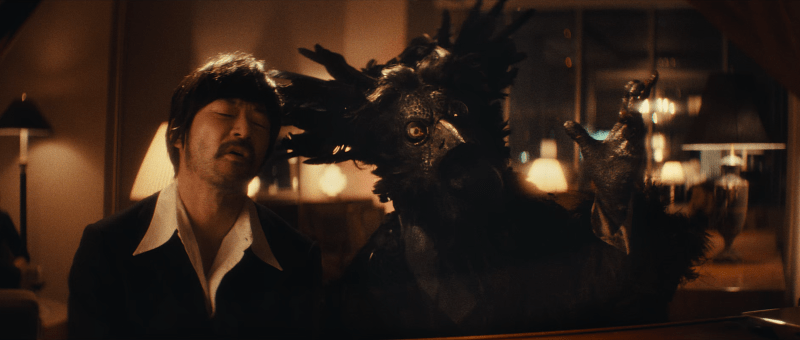
Masahisa Fukase was one of the key photographers of the post-war era and also an incredibly troubled soul. The conceit of Mark Gill’s Ravens (レイブンズ) is that Fukase is accompanied by a giant, anthropomorphised, English-speaking raven (José Luis Ferrer) who gives voice to his darkest thoughts and impulses. A magazine profile describes Fuksase’s work as having dark and occult influences, which the film attributes to the fact that his incredibly conservative father (Kanji Furutachi) used to lock him inside a more literal dark room as a punishment when he was a child. 

Like many of his contemporaries, Fukase’s photographs often express the widening gap between the traditional and the modern in the changing post-war society and the film also uses many of his motifs such as his family photographs to express the changing dynamics between them. Fukase himself is caught in the nexus of this continuing battle in inheriting the legacy of his father’s war trauma. A heavy drinking, violent man, Sukezo insists that as the oldest son Fukase must take over their family photography studio and that taking photogaps is a commercial activity not an artististic one. Fukase’s wife and muse Yoko (Kumi Takiuchi) often says the same thing, undercutting Fukase’s sense of purpose in his work even while he also denies Yoko’s role as a collaborator rather than simply as a subject. “Any woman will do,” the Raven tells him though that turns out not quite to be the case. 

Yoko complains that that Fukase never really looks at her but sees the world abstractedly through the lens of his camera which is really just another way of avoiding reality. She thinks she begins to understand him after belatedly meeting Fukase’s family years after their marriage and witnessing one of his father’s drunken rages first-hand, but it only seems to push them further apart. Despite his claims of artistry, Fukase quickly becomes jealous of the attention Yoko attracts as the star of his photographs as if she has eclipsed him, the artist, and can no longer be controlled by his camera. He clearly wanted the fame and acclaim through his success only seems to deepen his self-loathing and desire for death. His father had told that a man who failed to achieve success by 40 should kill himself, though when Fukase does eventually attempt to take his own life he does so by hanging, hoping that his assistant will photograph it, rather than by using the sword his father shoved at him.

Though Fukase describes Yoko as a very modern woman she too is caught by this cycle in that her mother tells her it’s a wife’s duty to forgive her husband even after he wounds with a knife during a drug-fuelled psychotic episode. Despite separating from him, Yoko continues to visit Fukase in the hospital where he remains after suffering a traumatic brain injury until his eventual death in 2012. In its way, it’s a frustrated love story in which the relationship between them is disrupted by the intrusion of outdated social codes, generational trauma, and Fukase’s own demons which appear to have been with him since childhood. The conviction that Yoko comes to is that all his pictures are actually reflections of himself and that he is incapable of seeing the world through any other lens even as he tells her that the sky is just the sky and ravens are just ravens, nothing means anything. He tells his assistant that he thought he was in search of death the whole time, but maybe it was death that was looking for him. Dreamlike and ethereal, Gill weaves back and fore throughout Fukase’s life from his conservative upbringing to the heady 1970s and gradual comedown of his later years before finally discovering a melancholy sense of serenity as Fukase, finally, dares to gaze back into the lens.


Ravens screens 20th June as part of this year’s Toronto Japanese Film Festival.

International trailer (dialogue free)

My Sunshine (ぼくのお日さま, Hiroshi Okuyama, 2024)

A golden light seems to pour into the life of Takuya (Keitatsu Koshiyama), a nervous young man with a stammer, as he stands transfixed by the elegant movements of a figure skater. As the world around him literally brightens, he begins to discover another side of himself, though it’s never quite clear if it’s Sakura (Kiara Takanashi), a moody teenage girl whose attitude to figure skating seems ambivalent at best, with whom he’s fallen in love or the simple act of figure skating itself. 

Drawing on autobiographical experience, Okuyama studied figure skating himself while his older sister trained to be a champion, My Sunshine (ぼくのお日さま, Boku no Ohisama) otherwise roots itself in the small-town Japan of the late ‘90s and 2000s in which being different was not exactly welcomed. But in fact, most people seem accepting of Takuya, if in a sometimes patronising way, viewing him as a boy with his head in the clouds and cutting him off when he attempts to speak rather than give him the time to finish. When the teacher is going around the class asking the children to read out a stanza of a poem each, he picks on Takuya and tells him to take his time, though the boy’s anxiety is palpable. The teacher may be caught between two options and struggling to decide which is better, not asking him to read at all to spare him from his classmates’ mocking which would also be to exclude him and reinforce a sense of inferiority in his otherness, or to ask him deliberately and try to encourage patience to teach him and the other children that there’s nothing wrong with the way he speaks. 

But in any case, Takuya is already something of an outsider in that he has no aptitude for sports and it’s never clear if he actually enjoys them or just participates because it’s what you do in this town to be man. When a recent arrival to the town and former international pro-figure skater Hiroshi (Sosuke Ikematsu) catches sight of him clumsily trying to teach himself how to dance like Sakura, it enlivens something in him that reminds him of the passion he once felt for skating. He finds himself wanting to help the boy, gifting him his old figure skating skates and teaching him for free before hitting on the idea of training him alongside Sakura as a pair.

Sakura isn’t all that keen to begin with, though at times, it seems as though she may not even like figure skating and is only doing it because her mother makes her. She tells Hiroshi that she isn’t aiming to become the best ice dancer and is a little resentful of being forced to go back to basics to meet Takuya’s skill level but goes along with it because the coach says so. What she thinks of Takuya isn’t exactly clear, though she seems to look down on him a little like the other kids who also mock him giving up ice hockey to do a “girl’s” sport. For her part she seems to have a crush on the handsome and mysterious Hiroshi that, like Takuya, she is unable to articulate. For this reason, along with an insecurity in her talent, she resents the special attention Takuya seems to be getting when it’s her mother who’s paying for the lessons and comes to the conclusion that he’s just more interested in him than her.

She may not altogether be incorrect. In his early coaching sessions with Sakura, Hiroshi doesn’t seem all that invested and is distracted by Takuya in the same way Takuya is distracted by the sunlight or the snow. In trying to help Takuya, he’s trying to help himself and for a time succeeds as the three of them generate a joyful familial relationship, culminating in a day skating on a frozen lake. But he too is unable to be honest about the fact that he came to this rural town to be with his partner who decided to take over the family business when his father passed away. Kai (Ryuya Wakaba) laughs off questions about whether he’s married yet, and the two men seem to live together quietly otherwise isolated from the community around them. When Sakura catches sight of them together, she realises something she may not really be equipped to fully understand, only further deepening her sense of resentment in an unreasonable feeling of betrayal. It isn’t really homophobia that motivates her as much jealousy when she suddenly brands Hiroshi as “‘disgusting” and accuses him of getting a kick out of making a boy do a girl’s sport, excusing her conviction that he prefers Takuya over her and potentially giving herself an out to quit skating (though it seems her mother’s not taking the hint).

But like Sakura, Hiroshi is also uncertain if this is the right place for him or if he and his partner can really live together in this small town permanently. Though he answers “of course” when Kai asks if he’s glad he came, Hiroshi pointedly gives no answer when he’s asked if he really wants to be here. Kai says that he hasn’t talked about skating like this for ages nor seemed so happy, suggesting that there may have been something missing in his life that the relationship didn’t compensate for and may not survive without. How his professional career ended is never explained, though his telling Sakura that he only got to compete internationally because of the lack of male dancers speaks to a degree of insecurity that contributes to a lack of ambition in his personal and professional lives. All three of them are, for varying reasons, unable to say what they really want or how they really feel. Though they find temporary solace in their fragile bond, it is only, as Takuya’s brother cruelly puts it, meant to last until the snow melts. Nevertheless, now dressed in a new school uniform clearly far too big for him that suggests he has some more growing to do, Takuya may have found a means of self-expression in dance that might give him the courage to speak his mind.


My Sunshine screened as part of this year’s Queer East.

Trailer (English subtitles)

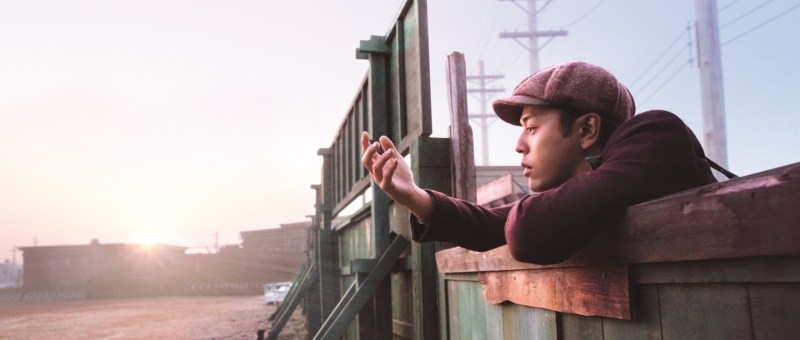
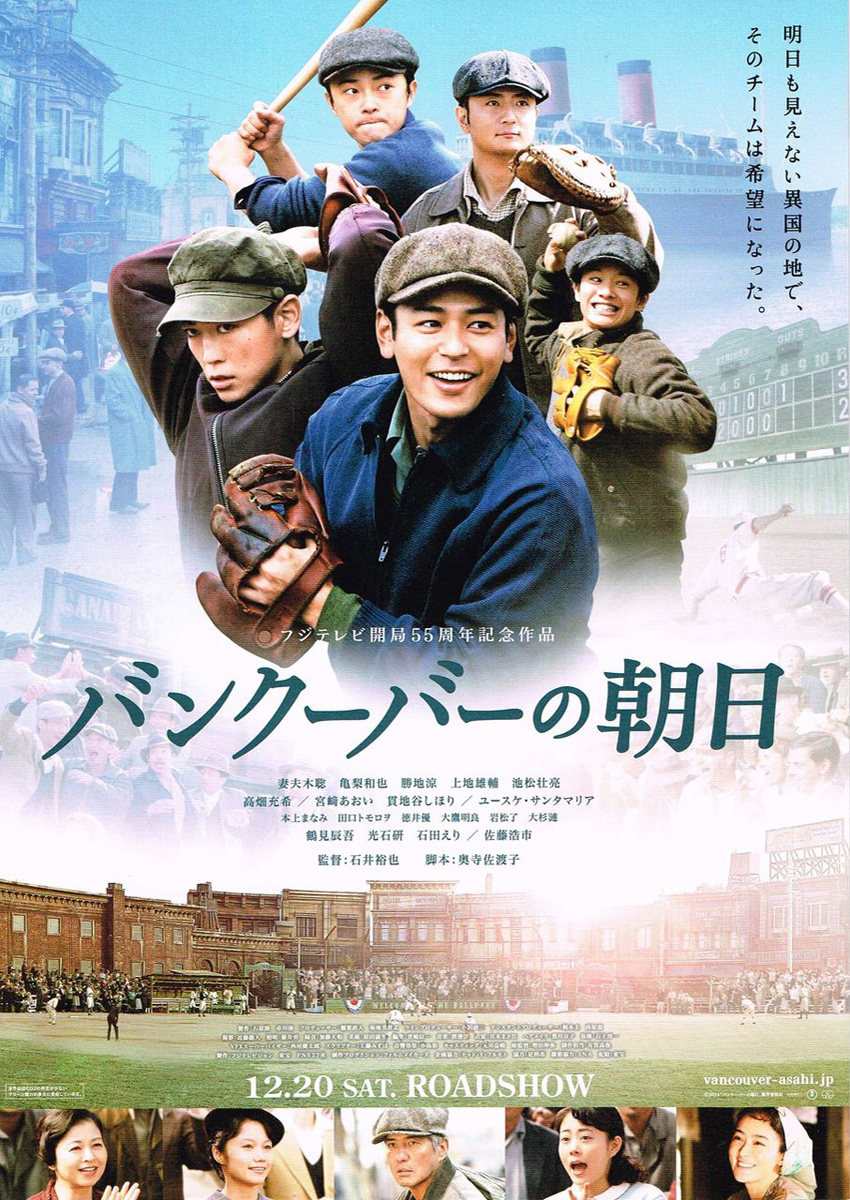
The Vancouver Asahi (バンクーバーの朝日, Yuya Ishii, 2014)

Second generation Japanese-Canadians stake their hopes on baseball in Yuya Ishii’s historical drama The Vancouver Asahi (バンクーバーの朝日, Vancouver no Asahi), inspired by the story of the Vancouver Asahi baseball team which was belatedly granted a place in the Canadian Baseball Hall of Fame in 2003. In many ways a conventional sporting movie in which the underdogs eventually triumph, Ishii does not shy away from the dark shadows of the 1930s even while framing the Asahi’s path to glory as a symbolic punch back against discrimination and oppression. 

As the hero, Reggie (Satoshi Tsumabuki), relates, many like his parents came to Canada at the beginning of the 20th century planning to work for three years and then return to a more comfortable life in Japan only to find themselves trapped in low-paid and exploitative work. Reggie’s main concern is that his drunken and dejected father Seiji (Koichi Sato) still sends the majority of his pay back relatives in Japan meaning their family live like paupers while as he never meant to stay he hasn’t bothered to learn the language or attempt to integrate into the local community. In fact, Reggie is their major breadwinner with his job at the sawmill but the only thing that makes his life worth living is playing baseball with the Vancouver Asahi baseball team even though they are regarded as something of a joke, always at the bottom of the league tables and never actually winning a game. 

The plight of Asahi is closely aligned with that of the immigrant community, divided as it is in its approach to integration with some feeling they should abandon their Japaneseness in order to better get along with Canadians and others fiercely determined to hang on to their traditions. When Reggie admits that they can’t win against the power of the Canadians it feels as if he’s talking about more than just baseball though his solutions are perhaps apt for both in realising that to beat strength you need to be smart. What he comes up with is essentially a bunt and run strategy that plays to their advantages of speed and lightness but also at times feels to him like a trick or a gimmick, an admission that they can’t compete in the normal way. “Why are you always apologising?” Reggie is repeatedly asked, his shyness and mumbling speech always seeking to keep the peace while his desire to offer justification is less as one Japanese old lady puts it “a bad habit of their culture” but a defence mechanism in an environment of potentially violent oppression. 

As Japanese migrants the family faces constant xenophobic micro aggressions, a woman at the hotel refusing to let Reggie’s bellboy friend Frank (Sosuke Ikematsu) carry her bags while they are also suspected as thieves or harassed by the local Canadians. Reggie’s hothead friend Kei (Ryo Katsuji) finds it increasingly difficult to keep his cool, not least as it turns out because his father was killed fighting for the Canadians in the last war and yet he is still treated as a dangerous outsider. Meanwhile, they are paid only half the wages of the Canadian workers, expected to work unreasonable hours, and can be fired without warning. Now an ageing man, Seiji is still a casual labourer fighting for a place on a truck to work at a quarry or construction site often in other towns away from his family in order to get more money. The team is constantly losing players because men lose their jobs and focus on finding new ones or moving away. As one old man laments, there’s no job security and even if you go to a Canadian university it won’t make any difference to your job prospects. Reggie’s sister Emi (Mitsuki Takahata) was on track for a scholarship only to have it pulled at the last minute when parents of the other kids complained it wasn’t right it was going to a Japanese girl. 

After the hotel fires all of its Japanese staff, Frank decides to go “back” to Japan where relatives will help him find work but pointing out to Reggie that he’ll still be seen as an outsider even there and there’s no guarantee anything will be any better in Japan. Poignantly the guys later catch sight of him in a newsreel as a soldier having been sent to the Machurian front. Once war breaks out they are discriminated against again, forced out of their homes and interned leaving all their property behind and destroying their small community, the Asahi included. The team’s unexpected success had forged a bridge between the Japanese and Canadian communities but it was not strong enough to survive the war. Stepping away from the sports movie, Ishii concentrates more on the ways they were betrayed, the team’s success later buried and forgotten while they find the advances they’d made washed away on the shore as if to suggest their strike back against an oppressive society could never be more than superficial while their position remains so precarious. 


Trailer (no subtitles)

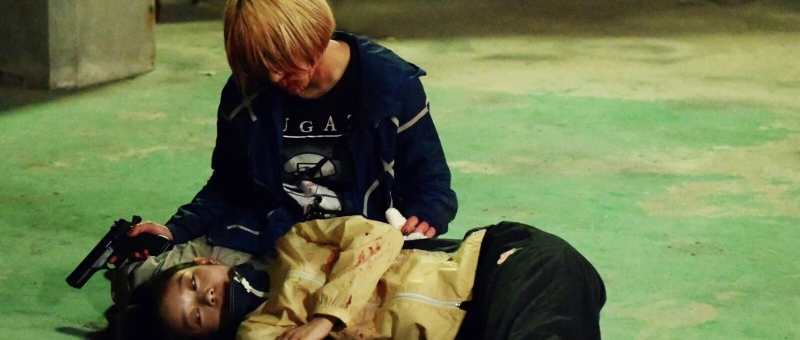
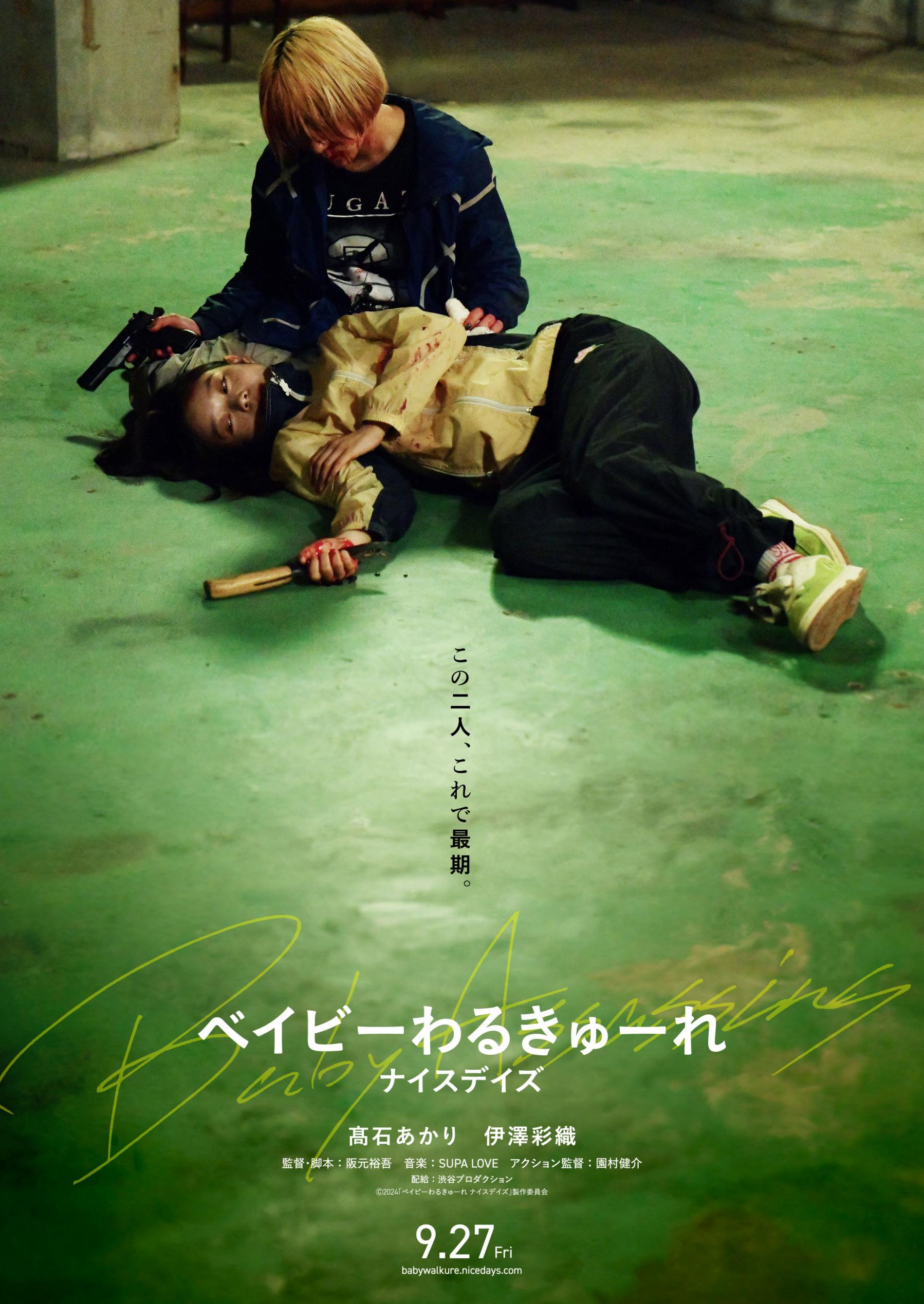
Baby Assassins: Nice Days (ベイビーわるきゅーれ ナイスデイズ, Yugo Sakamoto, 2024) [Fantasia 2024]

After beginning to conquer the demands of adulthood, Mahiro (Saori Izawa) and Chisato (Akari Takaishi) are taking a well-deserved break, or more like a working holiday to be precise, but soon find themselves with another unexpected mission to clean up a messy situation on behalf of the Guild. Baby Assassins: Nice Days (ベイビーわるきゅーれ ナイスデイズ, Baby Valkyrie​: Nice Days), the third in series of deadpan slacker action movies from Yugo Sakamoto, adjusts the balance of the previous two films shifting more towards action than the girls’ aimless lives while setting them against an opponent who is anything but aimless.

In fact with the girls find their way to the home of Kaede Fuyumura (Sosuke Ikematsu), is plastered in ironic motivational slogans that seem to be a kind of parody of salaryman’s kaizen obsession. Fuyumura likes to rank things and wants to make sure he’s at the top, but also wants out of the game because he’s bored with it and also fed up with difficult clients frustrated when one takes ages to decide whether or not he should kill the target resulting unnecessary stress for them and an unsatisfying kill for Fuyumura. That’s largely why he’s agreed to this one last job of killing 150 people who took part in cancelling a university student online. The problem is that Fuyumura is a freelancer which presents a problem for the Guild which has decided he must die for violating their rules and bringing the profession into disrepute. Thus Mahiro and Chisato find themselves in an awkward position when they turn up to kill their latest target and realise they’ve been double booked to take out Fuyumura ’s kill.

The admin mixup, though it isn’t one really, rams home the series’ persistent absurdity that this weird world of assassins isn’t so different from contemporary corporate culture while the girls are still subject to the same problems as any other 20-something. This time around, we’re introduced to another prominent agency which is run out of a farmer’s agricultural co-op and hides weapons inside boxes of vegetables, while Mahiro and Chisato get a pair of supervisors with the de facto team leader Iruka (Atsuko Maeda) going off on lengthy rants about why it’s impossible to work with Gen Z while the girls struggle with her uptight dismissiveness. Yet even when there’s tension or discord, the fact remains that the Chisato and Mahiro are also part of a team and have a vast network of support to rely on including their cleanup squad while Fuyumura is a lone wolf who’s driven himself half out of his mind with his quest to be the best, a message is brought home to him when he approaches the farmer’s union to ask for “a replacement” after getting one of their guys killed only to be told off and reminded the farmers work as one big family rather than a series of disposable minions. 

There is something a little poignant about Fuyumura’s wondering when his birthday is as if this small forgotten detail represented his missing humanity. The only time he feels like a human being is doing something mundane like cleaning his microwave and brushing his teeth. As she had the brothers in the previous film, Mahiro finds a kind connection with Fuyumura as they each discover a worthy match but knowing only one of them can survive. In an introspective movement, Mahiro asks Chisato if they can still hang out together on the other side if the worst happens, but she shuts the question down perhaps more in an attempt to shift Mahiro’s mindset but also berating herself for forgetting her birthday and making hurried plans to coverup her crime against friendship.

For all the absurdity about hitman union rules and rights of employment in an illegal profession, the films has a genuine affection for the relationship between the two girls as well as that between the wider team who are always around to have their back while they also take care to protect each other. Perhaps having to field a work crisis during their “holiday” is their final test of adulthood, and one they largely pass in enforcing their boundaries and defiantly having a good time anyway even if they did have to cancel their reservation at local barbecue restaurant to stakeout the home of a crazed killer. Once again featuring a series of well choreographed and innovative action sequences, the series’ third instalment seems to come into its own expanding the world of the Baby Assassins but setting them free inside it evidently a lot more at home with the concept of adulting.


Original trailer (no subtitles)

Between the White Key and the Black Key (白鍵と黒鍵の間に, Masanori Tominaga, 2023)

The hero of Masanori Tominaga’s Between the White Key and the Black Key (白鍵と黒鍵の間に, Hakken to Kokken no Aida ni) looks up and declares that it’s not Jazz if you can’t the stars, quoting Charlie Parker but mired in artistic compromise amid the heady air of Bubble-era Ginza. Adapted from the 2008 memoir of jazz pianist Hiroshi Minami, the film’s surrealist conceit sees two eras overlap confronting a jaded bandman with his naive, earnest younger self while looking for a path back towards “real” jazz.

The intentionally confusing opening sequences introduces us to Hiroshi (Sosuke Ikematsu), dressed in white, a young man with romantic jazz dreams slumming it in a moribund cabaret bar, and Minami dressed in a smooth black and wearing sunshades now the top pianist at the area’s most prestigious bar. Chaos ensues when Hiroshi, intimidated by a recently released yakuza, innocently plays his request of the Godfather Waltz without realising that the song is prohibited, only the local yakuza chairman is allowed to request it. Minami is, meanwhile, the only musician apparently allowed to play the boss’ favourite tune, but it’s a double-edged sword. He’s come to hate his life of soulless playing and feels trapped as the chairman’s favourite while secretly plotting his escape to study real jazz in America.

Irritated by the attitude of American guest singer Lisa, Minami explains that the musicians are really just decoration. At the height of the Bubble-era the bars are full of people with too much money looking to show it off. No one really cares about jazz or even about music so no one pays them any attention. Minami has long since got used to this, but is also crushed by his sense of artistic inauthenticity and declares himself sick of making music that doesn’t come from his soul.

Perhaps the rest is mere fever dream, but in the cyclical turn of events Hiroshi’s godfather faux pas comes back to haunt him, stalked by the recently released yakuza who follows him like a ghost while simultaneously dealing with the chairman’s apparent crisis which may send him abroad and change the local hierarchy forever. In the increasing surreality, the two periods overlap and influence each other as Minami is confronted by artistic compromise and forced to quite literally confront himself in a dirty alleyway while his opposite number claims that they already are in America and have been for some time.

To that extent it’s Minami who is caught between the black and white keys, looking for the sweet spot between the ability to play real jazz and the economic and social realities of his life as a Ginza bandman suffering with what he calls “bar musician disease”. His former mentor had told him that he needed to learn to play more “nonchalantly” which is advice somewhat difficult to understand but perhaps implies that Hiroshi Minami needs to learn to let himself go, to struggle less with anxiety and just play as if it were as easy as breathing. To that extent, what Minami has discovered is the wrong kind of nonchalance. Told that his job is only really to sit there and add to the false sense jazzland sophistication, he’s lost himself between the gangsters and the high rollers and is at a crossroads of an artistic crisis that maybe about to fracture his mind.

Tominaga does his best to capture an anarchic sense of a world bent out of shape and filled with surrealistic absurdity as Minami seems to see events replay with different outcomes and encounters various bizarre incidents around the back alleys of Ginza clubland themselves an incongruous mix of high class sophistication and sleaziness in which gangsters still rule the roost. Consequently the other players in Minami’s psycho drama remain largely cyphers, themselves part of the furniture in this weird mental landscape in which violence appears cartoonishly and in silence, never really connecting and irony rules in the petty gangsters who see the the Godfather Waltz as their song. In any case, Minami seems to recover himself, partly thanks to a vision of his oblivious mother retuning to him something that was lost, in the simple act of sitting down to play as if it were the beginning once again, or perhaps it really is, more acquainted with the music of his soul.


Between the White Key and the Black Key screens in New York July 10 as the opening night of this year’s JAPAN CUTS.

Original trailer (no subtitles)

Our Huff and Puff Journey (私たちのハァハァ, Daigo Matsui, 2015)

Generally speaking, teenagers aren’t really known for their ability to think things through. If the four high school girls at the centre of Daigo Matsui’s Our Huff and Puff Journey (私たちのハァハァ, Watashitachi no Haa Haa) had stopped to think things through, they’d never have gone on their completely mad, actually quite dangerous, road trip to Tokyo by bicycle but then perhaps adolescence is all about completely mad, actually quite dangerous things a thinking adult would automatically reject. 

Like Matsui’s earlier anthology film, How Selfish I Am!, Our Huff and Puff Journey is essentially a promotional video for the band Creephyp whose music features prominently throughout. The girls are all devoted fans who take band loyalty incredibly seriously and having seen them in concert in their hometown of Fukuoka decide that they need to chase them to the final leg in Tokyo the only problem being they’re teenagers with no money and Fukuoka is a thousand miles away from the capital. Setting off with a great deal of excitement (and total secrecy from their parents), they run out of puff by Hiroshima and end up dumping the bikes to hitchhike the rest of the way. 

It’s after Hiroshima that the novelty and sense of freedom begin to wear off as the cold, hard reality of their plan begins to hit home. Matsui turns the film on its head a little, still proceeding from the point of view of the teenage heroines but revealing how dangerous a place the world can be for a naive high school girl. At one point, they try to get jobs at a hostess bar despite being under age to earn a little money only two of them are deemed not pretty enough and sent home which further strains their already fracturing relationship. Though some of the drivers who give them rides are nice and just want the girls to get where they’re going safely others are not, such as the young man (Sosuke Ikematsu) who transgressively kisses the gang’s leader Settsun for the thrill of trying it on with a high schooler seconds after she gets off the phone with her boyfriend who quite understandably disapproves of the gang’s Tokyo-bound adventure. 

Of course he already knows a lot of what’s going on because the girls keep posting pictures from the trip online including those of them hanging out in clubs and bars. They obviously assume their parents won’t be checking Twitter, but nevertheless soon discover that social media can be a double-edged sword. Though they’d got some interest posting about their mad bicycle trip, an attempt to appeal to netizens for help when they run out of options goes south when they’re widely mocked online as a bunch saddos who’ve taken devotion to their favourite band far too far. It’s this that provokes a major schism when Chie decides to message a band member directly to ask for help with Fumiko left distraught to think that they might have made him worry or feel guilty, aside from hugely embarrassing themselves, only to discover that Chie only came along for a fun trip and doesn’t even really like Creephyp while Fumiko feels she really might die if they don’t make it to the concert. 

Matsui switches between the low-grade handheld of the gang’s video camera and his own his own more abstracted perspective but generally allows the girls to speak for themselves in a manner that feels authentically adolescent and suggests their obsession with Creephyp is at least in part a means of escape from the pressures of their lives with each of them thinking about life after high school. What they discover through their trip maybe a sense of life’s dead ends and disappointments, and that decisions made impulsively rarely work out the way you hoped they would. Looking out at the darkened city Fumiko laments that nothing seems to have changed despite the concert having begun, while later making another impulsive decision that also spectacularly backfires. Even so, Matsui allows them the final thrill of arrival at Shibuya Scramble, four young girls from rural Kyushu taking in the streets of the capital while knowing they will soon have to return to the “reality” of their high school lives and anxiety of what lies ahead. 


Our Huff and Puff Journey screened as part of this year’s Nippon Connection

Original trailer (no subtitles)

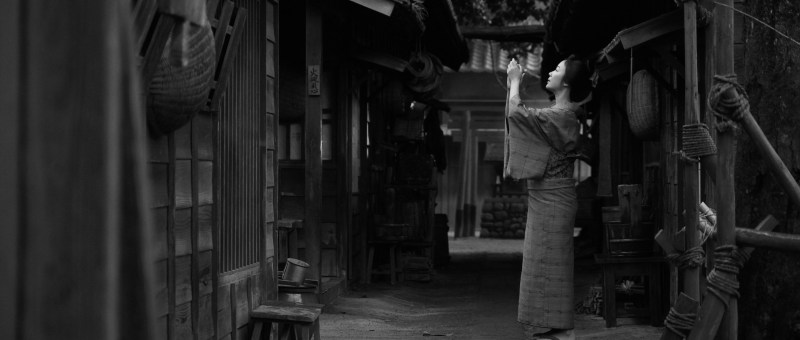
Okiku and the World (せかいのおきく, Junji Sakamoto, 2023)

“Where does Edo’s poop go?” it’s a question a child might ask but the rest of us somehow gloss over. In the modern world, if we were suddenly confronted with a lot of problematic poop, we’d have to pay someone to come and take it away and that person might then get paid twice for selling it on. In old Edo, however, manure merchants had to buy their raw materials (well, aside from those they could produce themselves) in the hope of selling them on to peasant farmers desperate for fertiliser. Junji Sakamoto’s Okiku and the World (せかいのおきく, Sekai no Okiku) takes a wry look at this circular economy in the dying days of the feudal era and in the end asks us if a samurai’s shit is really any better than anyone else’s.

In a sense it might be, given that historically samurai are better fed but even they are beginning to feel the pinch these days. Sakamoto opens in 1858 which is the year the Treaty of Amity and Commerce between Japan and the United States was signed opening the door to trade with other nations after two centuries of isolation. It is also 10 years before the Meiji Restoration and the eventual abolition of the samurai. Okiku (Haru Kuroki) is just one woman struggling with this moment of social change. Her samurai father Genbei (Koichi Sato) has been kicked out of his clan for challenging corrupt authority, so now she supports him teaching calligraphy at a local temple while the pair live in a rundown tenement in a forgotten corner of the city. 

Fittingly enough, Okiku’s name and the film’s title with it is written in hiragana, but the character usually used to write it is that for chrysanthemum which is also of course a stand in for Japan itself. Genbei muses on what the world is, defining it as an expanse of skies and lamenting that those who have only just realised that the world is vast are ironically unable to look past their small corner of it amid the chaos of the bakumatsu era and what he describes as continual “unrest”. But then politics have little relevance to those living in this particular corner of the world or for those who quite literally shovel the shit day in day out just to be able to shit themselves. 

Chuji (Kanichiro) and Yusuke (Sosuke Ikematsu) are manure men who purchase excrement from local communities and fine samurai houses to sell on to provincial farmers, transporting it by boat to a silo out in the country they occasionally bulk out with mud seeing as they’re paid by weight. Yusuke rails against his subjugation, revealing that at one particularly low point he was asked to wipe a samurai’s bum while otherwise constantly humiliated by their doorman who really does seem to think his shit’s better than anyone else’s. But as Yusuke points out, samurai or common man everyone eats and shits even if he describes himself as a literal bottom feeder who is nevertheless essential to the Edo-era economy. Without men like him, the samurai wouldn’t eat either because they’d have no crops to buy. Chuji may berate him for being all mouth and no trousers, but times are changing. Even he later mounts resistance by flinging his produce at a now powerless samurai. 

Okiku meanwhile has been rendered mute, her voice silenced by the cruelties of the feudal order leaving her struggling to rediscover her place. She has fallen in love with Chuji, but they think they come from worlds even as they witness them merging and realise there is only one vast expanse under an unending sky. In a decade’s time, it won’t mean anything that Okiku is a samurai’s daughter and Chuji an illiterate peasant but for the moment every step towards each other is transgressive and requires courage in breaking an unthinkable taboo. Sakamoto homes in on the muddiness of this “hopeless shitty world”, the unending drudgery and nihilistic futility of feudalistic life but finally offers his shit-shovelling heroes a new sense of possibility amid the ever expanding vistas of a new society. Presented as a series of black and white vignettes each except the last ending in a moment of vibrant colour, the film finally discovers a sense of serenity as Okiku prepares to reenter the world having finally come to understand her place within it.


Okiku and the World screened as part of this year’s Nippon Connection.

International trailer (English subtitles)

Just Remembering (ちょっと思い出しただけ, Daigo Matsui, 2021) [Fantasia 2022]

A communication breakdown gradually erodes the love of a young couple in Daigo Matsui’s melancholy romantic drama, Just Remembering (ちょっと思い出しただけ, Chotto Omoidashita Dake). Inspired by Jim Jarmusch’s Night on Earth, Matsui’s city vistas are drenched in loneliness and regret made all the deeper by the enforced isolation of the coronavirus pandemic while echoing the sense of rueful nostalgia that draws the fated lovers back together but unites them only in their shared sadness. 

Told in a non-linear fashion, the film follows taxi driver Yo (Sairi Ito) and lighting technician Teruo (Sosuke Ikematsu) through the course of five year relationship picking up on each of Teruo’s July 26th birthdays as time ticks by with a weary fatalism expressed by an ever present wall clock. As the film opens, a lonely Teruo celebrates a birthday alone watching Night on Earth which we later learn to be his favourite film, a poster adorning the wall above his bed, and something of a touchstone in his relationship with Yo who is like Winona Ryder in the movie a woman who drives a taxi. Echoing the film’s title, each of them repeatedly encounters reminders of their time together from forgotten hair clips to outdated profile pictures that hint at the unresolved nature of their failed romance. In a park that leads to Teruo’s apartment, a man (Masatoshi Nagase) is often seen sitting by a tree waiting for his wife to arrive he says from the future. The man and his wife may perhaps represent an older version of Teruo and Yo though in contrast to his absolute faith and willingness to wait it’s uncertainty and an inability to reckon with intangible feeling that eventually disrupt their connection. 

Awkward and anxious, Yo struggles to express herself in words yet is unable to understand the world without them whereas Teruo communicates through dance and feels words to be largely unimportant unable to fully convey thoughts and emotions. The pair are indeed the most connected when they’re dancing, the otherwise shy and subdued Yo captivated by Teruo’s movement and dropping her guard to dance spontaneously in a quiet back alley while the street guitarist who forever connects them plays quietly behind. When Teruo injures himself and is left unable to dance, it destroys his ability to communicate and places an unbearable strain on the relationship as he retreats to lick his wounds unwilling to bother Yo with his mental and physical pain while she resents the distance he places between them and reads his reluctance to burden her as a fault line in their romance. She tells him that however he may change her feelings won’t, which only sounds to him as if she only loves an abstract idea rather than the reality while he too fears that she won’t like the him that that isn’t a dancer because not even he really knows who that Teruo may turn out to be. 

It’s telling in a way that the central love confession occurs in a taxi that’s being driven by someone else, a bemused older man who encourages the pair that it’s best to say what you want to say while you can and literally stops time for them by pausing the meter as twinkle twinkle little star echoes ironically in the background. Yo says she likes her taxi job because she has a desire to travel but not the ability to choose a destination and driving the taxi allows her to feel as if she’s on the way to something though she’s only following her passengers’ instructions. Her essential trait is passivity, feeling lost and aimless in her life and often allowing others to make her choices for her save when she follows the advice of a lovelorn barman (Jun Kunimura) who tells her that sometimes you have to chase after what you want only to later be disappointed when the wounded Teruo fails to chase after her. The barman tells her that she doesn’t understand love, and perhaps she doesn’t unwilling to trust her romantic destiny while perhaps neither does Teruo, always somehow waiting while gazing at visions of love on ordinary street, high school girls gossiping about boys, an elderly couple helping each other down the stairs, and a mother carrying her infant son. 

It’s tempting to view their romance as doomed because they speak different languages while their continual role reversal suits neither of them very well, Yo quite literally in the driving seat but by her own admission having no idea where they’re going while Teruo struggles to communicate with her in terms she can understand. Yet they also share moments of true connection and vulnerability in which they are each understood by the other in a way they may never be again that leaves each of them with a lingering loneliness and regret for their failed romance. Love is an escape route, according to the wise old barman, but it’s one that continually eludes the two lovers who like the like man at the park are trapped in a state of perpetual waiting for a far off resolution. 


Just Remembering screened as part of this year’s Fantasia International Film Festival.

Trailer (English subtitles)