The Shock Labyrinth (戦慄迷宮3D, Takashi Shimizu, 2009)

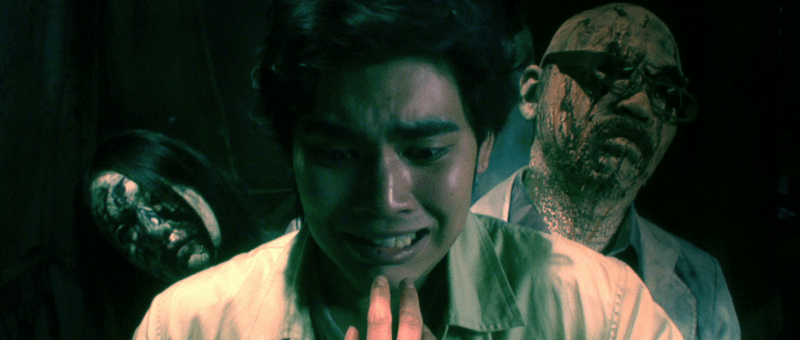
Is it a good idea to advertise your haunted a house attraction by making a movie in which people get trapped inside haunted house? Whether or not Shock Labyrinth (戦慄迷宮3D, Senritsu Meikyu 3D) had the desired effect of luring more guests to Fuji-Q Highland’s Labyrinth of Horrors is probably lost to time, though Takashi Shimizu’s 2009 ghostly drama is also a strange curio produced during the short-lived resurgence of 3D in the late 2000s though this, of course, also means that it was shot with the flattened aesthetics of early digital technology.

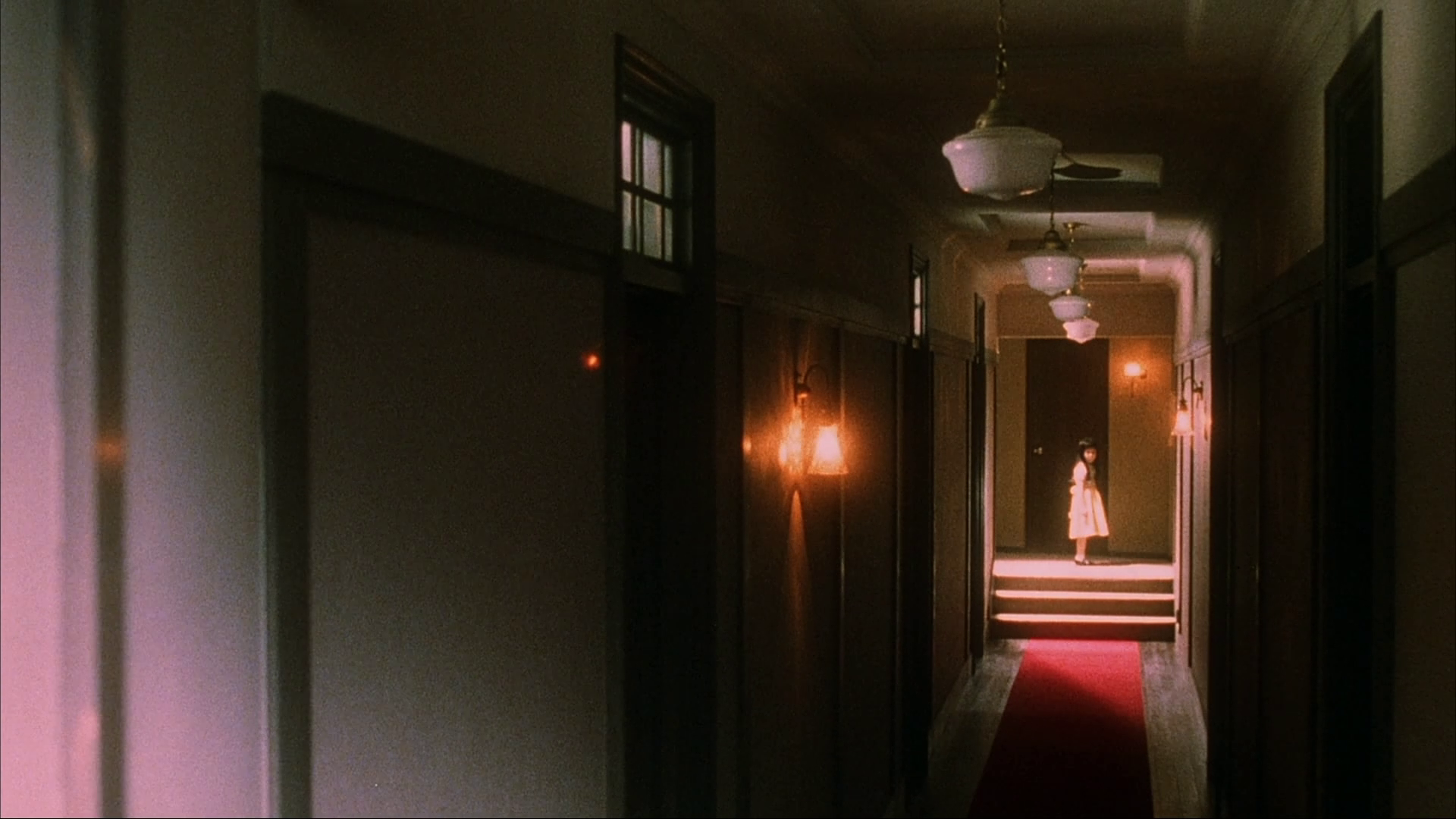
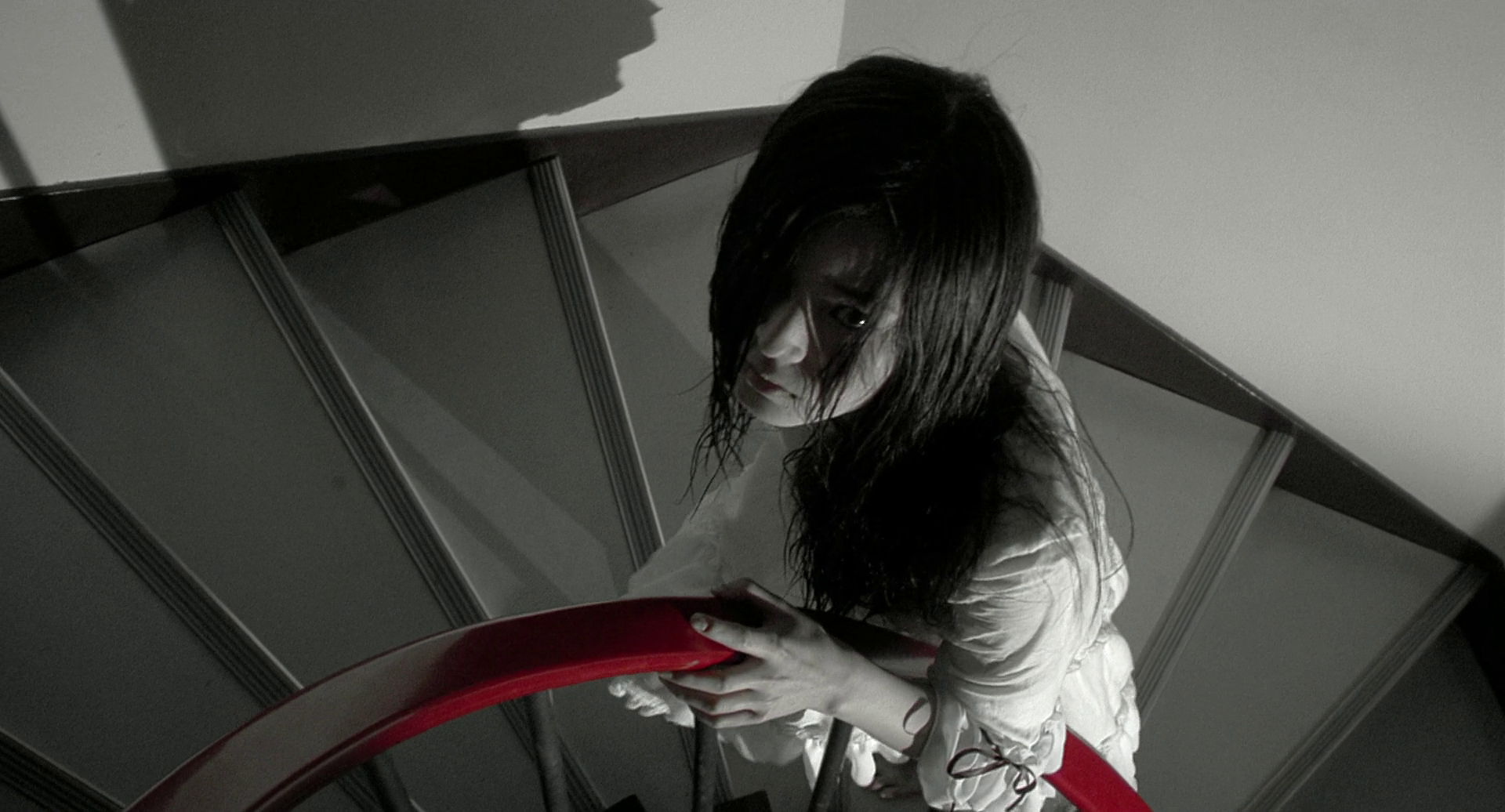
In essence, the film casts traumatic memory as a haunted space of the brain in which the protagonist is plagued by the disappearance of a friend inside the fairground attraction he and his friends snuck into as children. Yuki (Misako Renbutsu) makes a sudden reappearance when Ken returns to his hometown. She claims to have been trapped for a very long time, but has grown along with the others and her clothes have somehow grown with her so that she has the appearance of a ghostly adult woman who behaves like a child. When the gang try to take her to a hospital, they unwittingly end up back at the fake one from the fairground attraction and are forced to face their unresolved guilt and trauma.

Indeed, it seems most of them had completely forgotten about Yuki and got on with their lives. Gradually recovering his memories, Ken (Yuya Yagira) blames himself for Yuki’s death while Motoki, who denies all responsibility, becomes convinced that Yuki’s vengeful ghost brought them back here deliberately to get her revenge for them leaving her there. It’s true enough that the others all ran off after becoming frightened without thinking about Yuki and made no attempt to rescue her, and that they went into the haunted house while knowing they weren’t supposed to, but, on the other hand, they were all children and acted in ways children do. Then again, there were already ructions and petty jealousies dividing the group as it appears Ken was the more popular member liked by both Rin and Yuki, provoking a series of jealousies and resentment from Motoki who declares that he’s not going to bother save Rin because she didn’t love him anyway. Ironically, she’s just told Ken that Motoki was the only one who really cared about her when Ken only helped her out of a sense of pity because she is blind. Miyu, Yuki’s younger sister, had also been jealous of her for being so “perfect and nice” when she was always the “bad” one who got into trouble. 

This shock labyrinth is really the space of repressed memories that Ken talks about. What it seems Yuki wants, like many similar ghosts, is company and to trap her friends with her within this space, or at least as much as she’s a manifestation of Ken’s buried guilt, to prevent him from ever really forgetting her and going on with his life. Ken and the others desperately search for an exit, but are ultimately unable to overcome their traumatic memories. Yuki comes for them as soon as they remember what they did to her, as if they were really being stalked by their own repressed guilt and shame. Still never having dealt with the death of his mother, Ken dreams of her telling him not to go into the haunted hospital or Yuki will him as if she wanted to protect him from this harmful memory though repressing it is evidently as damaging as confronting the truth of the past.

The detectives meanwhile adopt the more rational view that Ken is responsible for everything having taken revenge on his friends for abandoning Yuki when they were children. Perhaps this is all really going on in the shock corridors of Ken’s mind as his traumatic memories have begun to leak out and distort his sense of reality. Then again, perhaps Yuki has found a way to come back for deadly game of hide and seek to keep her occupied in the between space of the fake haunted hospital with its creepy, decomposing mannequins and the unexpectedly gruesome plush rabbit backpack the young Yuki was forever carrying around and refused to let others touch. Either way, it seems Yuki will not let them go but will always be there in the dark corners of their minds to remind them what they’ve done.


Trailer (English subtitles)
Reincarnation (輪廻, Takashi Shimizu, 2005)

Do our memories just vanish when we die? The murderous professor at the centre of Takashi Shimizu’s Reincarnation (輪廻, Rinne) was apparently obsessed with just this question, along with that of where we come from when we’re born and where we go when our corporeal lives have ended. But there’s a curious irony at the film’s centre in the ways in which we consciously or otherwise seek to recreate the past that suggests we are locked into a karmic cycle even while within the mortal realm.

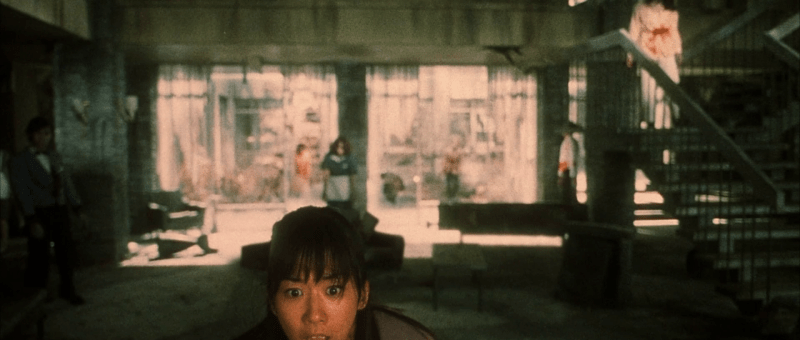
The most obvious sign of that is the director Matsumoto’s (Kippei Shina) obsession with the grisly murder case that took place 35 years previously. He means to recreate it literally by building an exact replica of the hotel where it took place, only he intends to refocus the tale on the victims, leaving the killer a mysterious force in the shadows. It’s clear that this traumatic incident has left a mark on the wider world, not only in its lingering mystery but the darkness with which it is enveloped, while Matsumoto seeks to exploit it either for commercial gain or reasons of his art. We’re told that, perhaps like Shimizu himself, Matsumoto is known for a particular kind of filmmaking, in his case one involving copious levels of blood and gore. 

He’s drawn to aspiring actress Nagisa (Yuka) for unclear reasons, though her affinity for the material connects her intensely with this story as she too finds herself haunted by the figure of a little girl in a yellow dress carrying a huge and actually quite creepy doll. There is a sense that everyone is being drawn back here into the nexus of this trauma to play it out again, ostensibly for entertainment. Another actress at the audition, Yuka (Marika Matsumoto), seemingly kills her chances by bringing up that she has memories of being murdered in a past life and thinks that she might be able to put them to rest by acting them out. She too is connected to the hotel and possibly a reincarnation of a woman who was hanged during the incident, which is why she bears an eerie noose mark around her neck. 

Yuka is more literally scarred by a traumatic legacy, while those around her are merely curious or confused. Yayoi (Karina) has recurring dreams of the hotel which her parents can’t explain, leading to the suspicion that she too is a reincarnation of someone who died there, though all of the women were born long after the incident took place. Her professor at university (Kiyoshi Kurosawa) is cautious when it comes to the idea of the authenticity of memory. He teaches them about the concept of “cryptomnesia”, when a forgotten memory is recalled but not recognised as such, leading to accidental incidents of plagiarism in which the subject assumes their idea is original rather than a regurgitation of something they saw or heard long before but no longer “remember”. There is also, of course, the reality that many of our “memories” are effectively constructed from things others have told us of our childhoods that we don’t actually recall but are a result of our brain trying to fill in the blanks. Perhaps this might explain Yayoi’s dreams, that she came across the famous case at some point when she was too young to understand it and it’s implanted herself in her subconscious as an unanswered question.

Which is to say that perhaps it’s the memories that are being reincarnated in someone else’s head as much as it’s the disused hotel that’s become a place of trauma haunted by past violence and now inhabited by the pale-faced ghosts of those who died unjustly. The events themselves are constantly repeating just as the moments exist contemporaneously rather than in a linear cycle. Indeed, they are eventually preserved both through the film shot by the killer, witnessed as a document, and the film that Matsumoto was making, enjoyed as entertainment, but ultimately in Nagisa’s head where all concerned can indeed be “together forever” if now confined to eternal rest in the space of memory.


Trailer (no subtitles)

Homunculus (ホムンクルス, Takashi Shimizu, 2021)

Is the world we see merely a self-created illusion, or do we each share a concrete, objective “reality”? It’s a question which seems to obsess the antagonist of Takashi Shimizu’s manga adaptation Homunculus (ホムンクルス), though in the end he’ll perhaps find the answer is less clear cut than he’d been willing to believe. “When you look at the other person you can create the world” is the lesson he’s eventually given by his test subject, echoing the film’s somewhat trite message that it’s connection which gives life meaning, a willingness to see and be seen having moved past unresolved trauma in pursuit of the true self. 

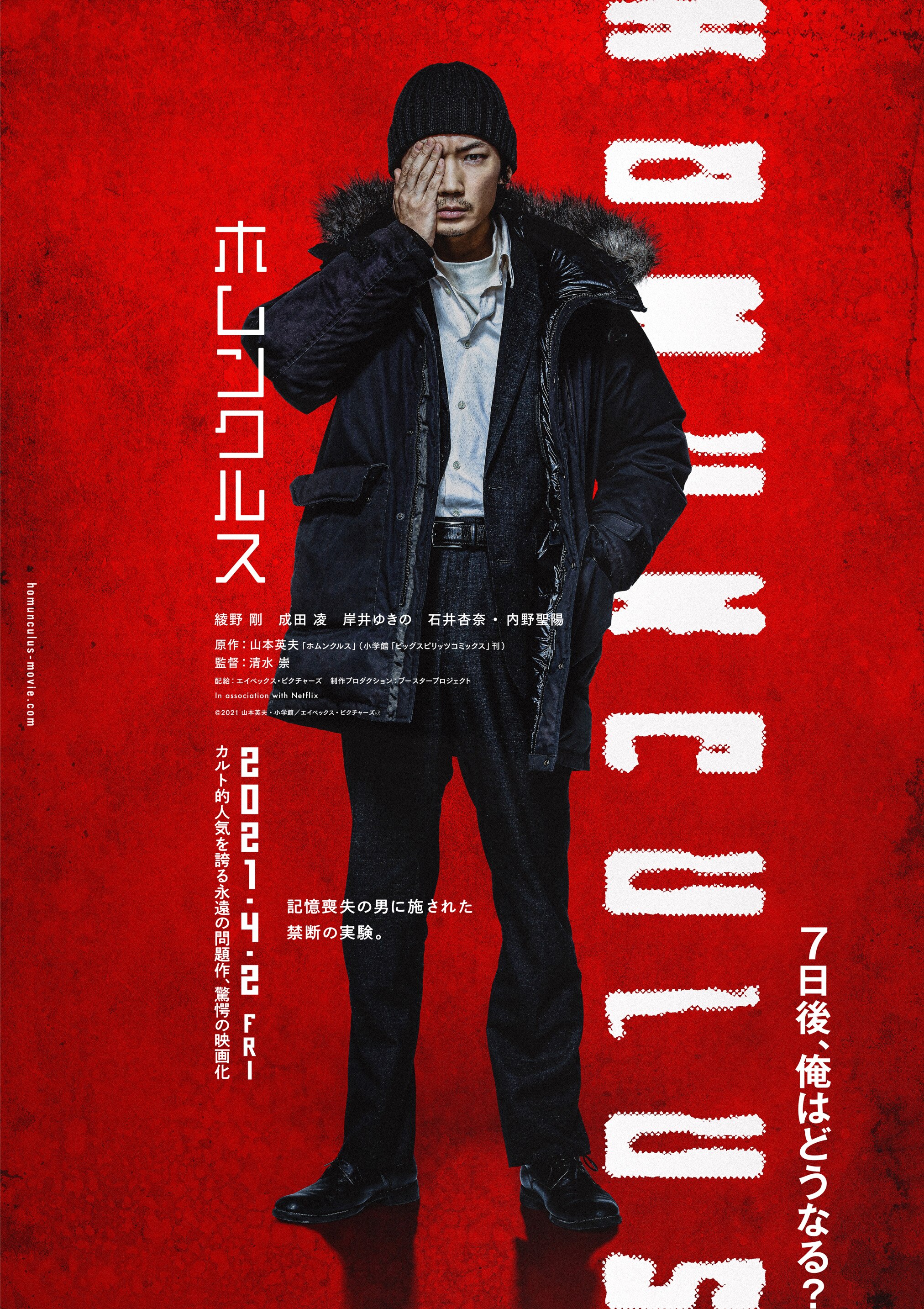
This is something the hero, Susumu Nokoshi (Go Ayano), has apparently been unwilling to do. Formerly a high flying actuary peddling life insurance, literally putting a price on the lives of others, Susumu now claims to have lost his memory and is living in his car next to a park which is home to the local homeless population. One night, a weird young man with strange, staring, goldfish-like eyes knocks on his window and makes him a bizarre job offer. For whatever reason, Susumu allows himself to be convinced by this decidedly odd young man he’s only just met to let him drill a hole in his head which he claims will unlock untold abilities and perhaps even return some of his missing memories. 

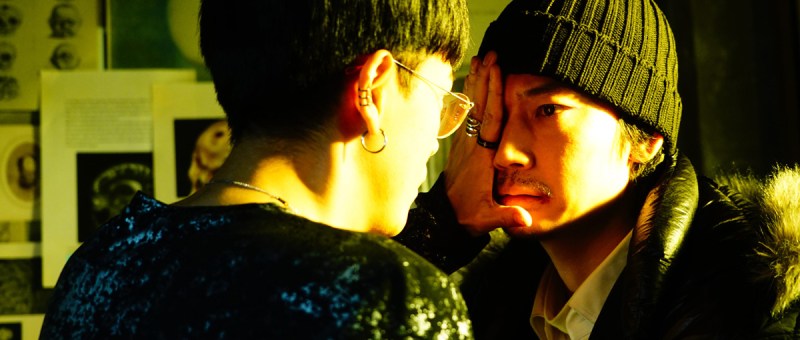
Manabu Ito (Ryo Narita), a medical student and the wealthy son of a successful doctor, claims he wants to use the trepanation experiment in order to prove that the world does not exist but is merely a self-created illusion of the human brain. As a result of the operation, Susumu does indeed develop special powers in that he suddenly starts seeing strange things in the middle of Kabukicho. According to Manabu, he’s developed the ability to see the “homunculus” of others, seeing their inner self-image as a reflection of their deeply buried trauma. 

Despite himself, Susumu begins attempting heal the various traumas of the troubled souls he sees but at the same time perhaps oversteps his right to intervene, acting in instinct and compulsion never considering whether not not they actually want their traumas resolved. His first case is that of a violent yakuza whose inner self is a wounded child encased in robot armour, the implication being that he has buried himself in a life of merciless violence in an attempt to mask unresolved childhood guilt. Yet his eventual “freedom” in having faced his younger self entirely ignores the weight of his later years of violent cruelty, as if all of his subsequent “stress” were wiped out in an instant. Susumu’s second case, however, is still more worrying in that is sees him apparently “fix” a young woman’s control and self-esteem issues effectively by raping her while in some kind of trance. 

His own issues meanwhile lead back into his refusal to deal with the painful past, implying his unusual lifestyle is in fact a fugue state born of trauma response. We learn that he was once wealthy and successful but also deeply empty inside, apparently saved from the soul destroying delusion of consumerist fulfilment by a young woman who saw him for what he really was. He resents his new abilities because he is still unwilling to extend the same courtesy to others, trapped in self obsession desperately wanting to be seen but all the while refusing look even as the hole in his head takes the lid off his emotional repression. 

Nevertheless, there’s a curiously homoerotic subtext between the patient and his mad scientist friend whose eventual descent into machiavellian levels of manipulation is never quite convincing even if it perhaps comes from a place of spurned hurt. Manabu’s unresolved traumas are indeed given short shrift and perhaps in themselves fairly banal, failing to live up to his air of strangeness or prove equal to the darkness inherent in his odd obsession with the art of trepanation coupled with his doubts as to the nature of reality. Neither outlandish enough in its surreality nor, ironically enough, willing to engage with its own unpleasantness in its latent misogyny, Homunculus’ central messages of the essentiality of mutual recognition ring somewhat hollow while its heroes remain mired in their own quests for true selfhood in looking for themselves reflected in the eyes of others. 


Trailer (English subtitles)

Immersion (忌怪島/きかいじま, Takashi Shimizu, 2023)

Technological anxiety was at the heart of millennial J-horror, but perhaps the more things change the more they stay the same. Takashi Shimizu’s latest ghost story Immersion (忌怪島/きかいじま, Kikaijima) sees a grudge-bearing spirit cross over from the virtual world neatly suggesting we take our monsters with us into our simulacra and to that extent the brave new world is not so new at all. Then again, the hero thinks he desires a private world but paradoxically wants to share it and eventually discovers that what he craves is connection.

Tomohiko (Daigo Nishihata) has accepted a job as a programmer helping to build a new virtual world exactly replicating a remote island. He is greeted by his boss, Ide, in the digital space, but shortly after his arrival discovers that she died some time previously along side a man she may have been experimenting on in a project exploring brain syncronicity. When Tomohiko enters the virtual world he is confronted by strange and dangerous visions which suggest there’s a threatening bug in the system. Soon enough, the data breaks loose and somehow awakens in our world.

What no one knows is how a vengeful ghost got in the machine in the first place, though a shinto priestess later likens the new digital space to the “over there”, a perfect simulacrum of our world existing on another plane where spirits and their victims gather. Then again, it seems the problems are mainly on this side with an old man mocked by children and shunned by society because his mother suffered some kind of mental illness and was filled with a lust that was taboo at the time. The man’s mother is linked to the legend of Imajin, a slave raped by her master whose wife then took against her causing her to become a vengeful spirit who drove people out of their minds.

The purpose of the new world Tomohiko is creating isn’t clear, but it’s certainly very well resourced. The implication seems to be that the virtual is already haunting us and we can’t be sure of what we’re “really” experiencing and what we’ve been primed to experience. Tomohiko increases “the reality” of the virtual space by coding to it to activate “real” sense memories such as the smell of the sea or the feel of the sand. He can’t be sure if he’s the ghost in this world or the other while remaining aloof and diffident, unable to communicate effectively with his teammates. Tamaki, the estranged daughter of the dead man asks him if he doesn’t like people, to which he has no real answer though she replies that she doesn’t really like them either. What he realises is that doesn’t really want a world of solitude, but to be with others though it seems it might not matter whether in a “real” or virtual space.

But in contrast to all this modernity, the island is a traditional community with a strong interest in shamanistic lore and ritual. Tomohiko says he doesn’t really believe in any of that stuff, but is still prepared to go along with the shamaness’ advice in order confine the vengeful spirit to another world even if it means sacrificing the virtual space they are trying to build. Perhaps the message is that this kind of technological advance is dangerous and hubristic, unleashing forces we are ill-equipped to understand and would not be able to quell. As the shaman implies, you have to close the door from this side and not the other, which is a serious problem for the engineers who find themselves struggling to destroy the portal of a Torii gate in both spaces while the ghost continues to wreak watery vengeance.

Shimizu conjures an atmosphere of lurking dread in which digital ghosts haunt us in reflections of the ancient past even as our reality is destabilised by the overlay of the virtual. Tamaki reflects that the island is like a ghost town with few figures on the streets save themselves though they too sometimes appear like lingering spirits. What they discover may be a kind of refuge or escape, but perhaps not in the way we might expect while vengeful ghosts aren’t quite so easy to exorcise as they might once have been.


Immersion screened as part of this year’s London East Asia Film Festival.

Original trailer (no subtitles)

Ox-Head Village (牛首村, Takashi Shimizu, 2022)

“A story about nothing” is how one middle-aged man jokingly dismisses a local legend about an ox-headed woman. Are urban legends just one big dad joke? Everybody who hears this story dies, so they say, which is obviously true whichever way you look at it though if it really were a curse it would have to move quickly or there’d be no-one to pass it on. As the heroine of Takashi Shimizu’s summer adventure horror movie Ox-Head Village (牛首村, Ushikubi Mura) discovers, however, there may be something to it after all in uncovering the dark history behind the local folklore. 

In her last year of high school, teenager Kanon (Koki) is beginning to experience strange events such as a series of mysterious scratches on her arm, odd bangs and noises at home, and her phone constantly playing a message about bad pennies and their tendency to keep turning up. Her friend Ren (Riku Hagiwara), who has a crush on her, shows her a viral video of some girls on paranormal live stream that goes wrong leading one, who looks exactly like her, to fall down a lift shaft and then mysteriously disappear. To find out what’s going on the pair head out into the country to the abandoned hotel where the shoot took place but end up battling supernatural malevolence born of the cruelty of previous eras. 

Like the previous two films in the “Village” trilogy, Ox-Head Village revolves around rural folkloric beliefs this time focussing on the suspicion cast against twins which in this village at least seems to have continued until the late 1960s. The root of the curse is the unnatural act of dividing something that should be one into two in attempting to separate pairs of twins leaving the one left behind, lonely, burdened with the residual stigma of being one of multiple births, and perhaps experiencing a little survivor’s guilt. In the film’s second sequence, bathed in yellow and shot with a 70s-style soft focus, two little girls kill a butterfly and bury it with its friends because it would just be lonely on its own. The resolution is that that which has been divided must be reunited in life or in death in order to end the curse, though as we later see that may not quite be the end of it. 

Meanwhile, though a supernatural horror film, Ox-Head Village is also part of a grand tradition of teen summer adventure movies. Kanon and Ren are about to embark on the last summer as high schoolers, the trip they take together as so many are is also about self-discovery as Kanon answers a few lingering questions about her past while searching for her doppelgänger. Her quest is also in its way about rescuing herself and laying to rest the sense of loneliness which has always plagued her. Along for the ride, Ren is perhaps more curious while obviously smitten hoping to cement his romance through a romantic road trip only to be blindsided by supernatural intrigue and country superstition. 

Nevertheless, there is something truly creepy about the innocent flowers the little girls draw along with the pre-modern superstition that informs life in the village. Though the sinister presence may in this case be firmly rooted in the past, they are able to mediate their curse through modern technology such as manipulating Kanon’s phone as a means of communication while using lift shafts to mimic the well which becomes the repository for the darkness of the village. As an old man puts it, a prejudice against twins might have been intellectually understandable in a time of famine, though morally indefensible and obviously absurd and out of place in the modern society. Even so, old beliefs have a way of persisting even if they are no longer clearly understood. 

Along with all the folk horror of ox-headed women, headless buddhist statues and “stories about nothing” there is the lingering dread of the lonely incompleteness visited on the little girls in yellow because of the outdated superstitions of an earlier era. Overcoming the curse requires both self-knowledge and self-sacrifice in order to heal the unnatural act of division which has been carried out but even this may not be enough to repair the damage of centuries of cruelty and prejudice. 


Ox-Head Village screens at Lincoln Center 19th July as part of this year’s New York Asian Film Festival.

Original trailer (English subtitles)

Images: © 2022 OX-HEAD VILLAGE Production Committee