Sham (でっちあげ ~殺人教師と呼ばれた男, Takashi Miike, 2025) [Fantasia 2025]

After a couple of hundred years of corporatising culture, sham apologies have become an unfortunate phenomenon all over the world. Corporations in particular will often offer a fairly meaningless apology that acknowledges a minimal level of responsibility but does not bind them to recompense those they’ve wronged nor put right anything that their conduct has made wrong. The problem is that an apology has become a kind of sticking plaster that allows us all to move on but doesn’t really solve anything and may even prevent us from doing so because it turns us all into accidental liars who are primed to say “sorry” to make the situation go away even it wasn’t actually our fault.

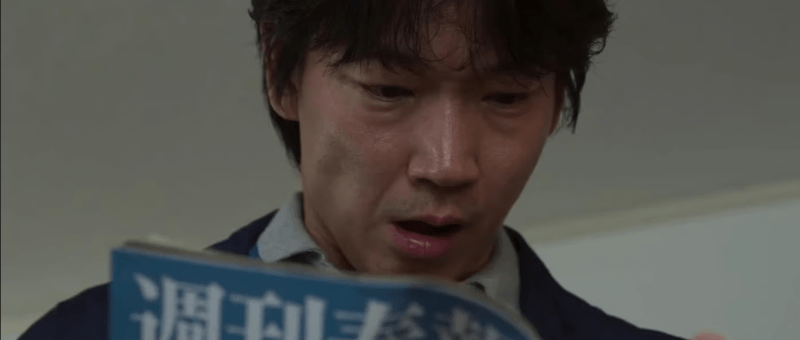
That’s essentially what happens to Seiichi (Go Ayano), previously an unremarkable primary school teacher with a teenage son of his own and an apparently happy home. Inspired by a real life case, Takashi Miike’s courtroom drama Sham (でっちあげ ~殺人教師と呼ばれた男, Detchiage: Satsujin Kyoshi to Yobareta Otoko) flirts with ambiguities but in keeping with its themes eventually descends into a defence of the well-meaning man as its hero becomes so embroiled in the injustice being done to him that he doesn’t see that he is not entirely blameless. Though we’re first introduced to him as the “homicidal teacher” the papers describe him as, the film’s title leaves us in no doubt that his account is the truer. But it remains a fact that during his conversation with Ritsuko (Ko Shibasaki), the mother of the boy Seiichi is accused of racially bullying, he did remark that Takuto’s American grandfather may explain his unique characteristics which is perhaps within the realms of thoughtless things well-meaning people say in awkward conversations but hints at a level of latent societal prejudice. In any case, that the fact his conversation with Ritsuko ended up drifting towards subjects like bloodlines and the Pacific War is not ideal, while Seiichi should probably have been more mindful of his politically neutral position as an educator. 

Likewise, he doesn’t dispute that he tapped Takuto lightly on the cheek to “educate” him that it hurt when he slapped another boy, Junya, who, according to Seiichi, he was bullying. He probably shouldn’t have done this either, even if some may see it merely as common sense in teaching the children that violence is wrong, as ironic as that may be. In any case, the film is on Seiichi’s side and insistent that he did not treat Takuto any differently on account of his non-Japanese ancestor nor spout off any of the racist nonsense that Ritsuko attributes to him. But the major problem is that Seiichi is mild-mannered and also a product of this society. He tries to protest his innocence, but is pressured by his headmaster to apologise anyway which is, of course, a form of lying, something they discourage the children from doing. In the end he goes along with it, because it’s easier to just say “sorry” and hope it goes away rather than address the real issues. 

It’s this sham society that the film seems to be critiquing, even if its message gets lost among its intertwining plot threads as Seiichi effectively finds himself bullied by an empowered tabloid media formenting mob justice against what it brands a far-right fascist teacher as a means of selling papers through generating outrage. While he is scrutinised and scorned, no one bothers to look into Ritsuko’s story which is already full of holes such as why, if she’s so protective as a mother, she waited for her son to be a victim of “corporal punishment” 18 times before complaining to the school. Little motivation is given for Ritusko’s actions, though Miike films her and her husband with an an almost vampiric sense of unease as they appear eerily in black on their way to the school. Unhinged herself, the answers may lie in Ritsuko’s own childhood and her yearning for a protective mother figure, not to mention the sophistication of being a child returning from abroad with good education and prospects for the future.

Seiichi refocuses his closing statement on Takuto, insisting that he doesn’t blame him for “lying”, but it’s perhaps also try that he is a kind of victim too whose own actions can only be explained by a closer look at his relationship with his mother and familial environment. But it turns out that it really is easier to just say “sorry” and move on. Even the psychiatrists seem more interested in treating Ritsuko like a customer whose wishes must be obeyed than earnestly trying to help Takuto even if his issues don’t seem to be as serious as his mother might have it. But according to Seiichi, telling a child off is the purest expression of love. If everyone carries on with sham apologies, nothing really changes and kids like Takuto get forgotten about as everyone falls over themselves to make the situation go away. No one really cares about the truth, and so it becomes an inconvenience to social cohesion in which those who insist on speaking it are hounded down until they agree with the majority and meekly say “sorry” while those in the wrong nod their heads and continue with their lives free of blame or consequence.


 Sham screened as part of this year’s Fantasia International Film Festival.

Trailer (English subtitles)
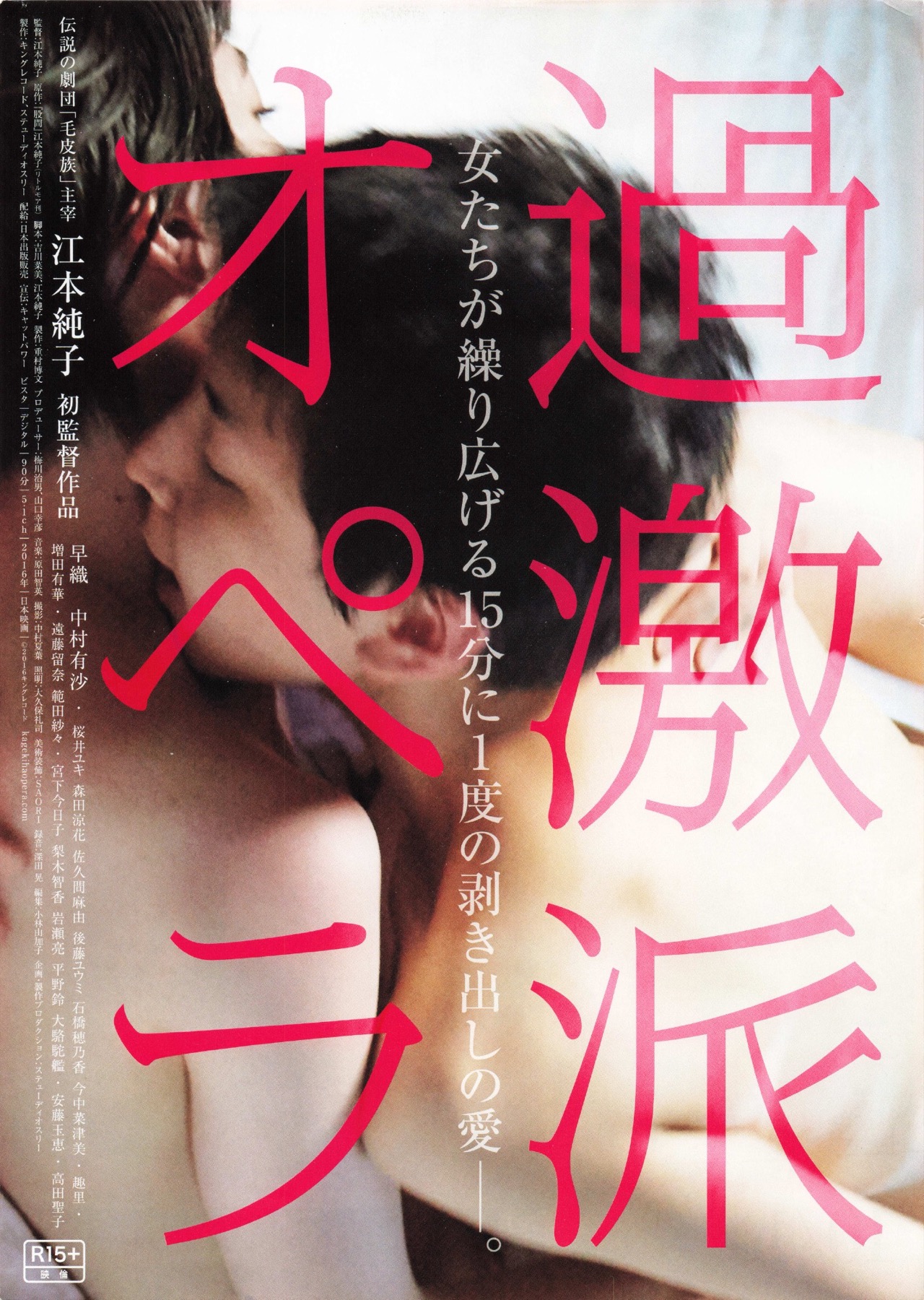
The Extremists’ Opera (過激派オペラ, Junko Emoto, 2016)

Junko Emoto ironically explores Tokyo’s fringe theatre scene in adapting her semi-biographical novel. Shot with a roving, handheld camera, The Extremists’ Opera (過激派オペラ, Kagekiha Opera) situates itself within an all female, avant-garde experimental theatre company but quickly makes plain that even those with high-minded artistic intentions are not free of the usual human flaws as the borderline abusive, womanising female director finds herself sabotaging everything she’s built through a mix of hubris and wandering desire. 

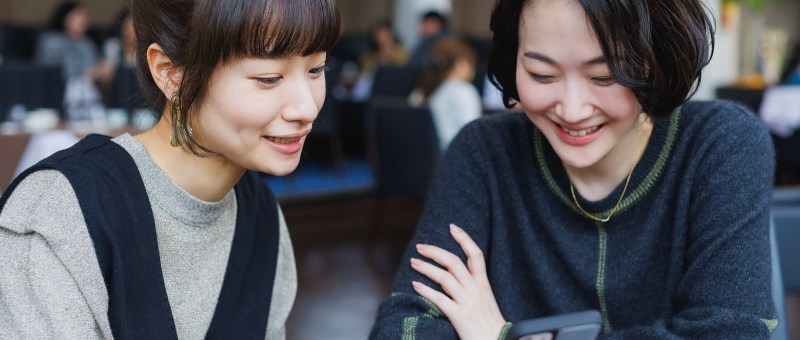
Blanket Cult are a popular company on the fringe theatre scene with a small following devoted to their art. Former banker Ayako bursts into their office determined on an audition and subsequent career change precisely because she can’t get enough of director/playwright Nao’s experimental plays which, she explains, she believes can stop wars. Nevertheless, it’s not Ayako the team are struck by, but the intense young woman who came in behind her, Haru, who more or less demands to be taken on. Nao is captivated, hiring both women on the spot and vowing to write a new piece with Haru in the lead. Of course, she does this partly for not altogether altruistic reasons. Immediately after the first script meeting she asks Haru to stay behind and then propositions her, directly declaring her love with the justification that she’d rather be upfront rather than waste time during the rehearsal process. Haru tells her that she’s not into women, but Nao doesn’t take no for an answer seemingly oblivious to the fact that what she’s doing is harassment and really she’s no better than any other sleazy male director handing out parts to women she wants to sleep with. 

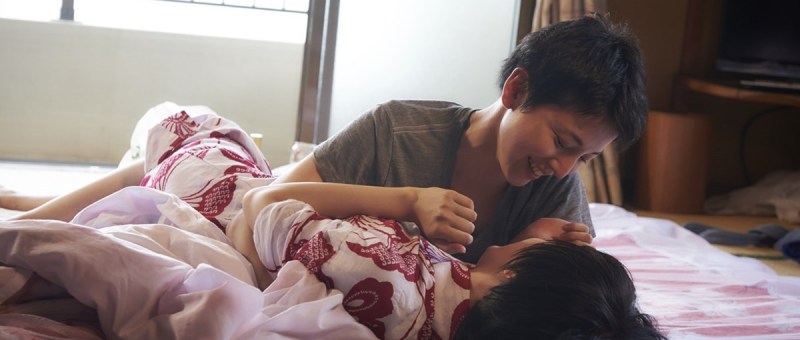
Nevertheless, her persistence even with its undignified pleading eventually pays off. Haru relents, either because she’s fed up of fending off Nao’s advances or discovering that she is on some level receptive, finding that she does in fact enjoy sex with another woman. She agrees to start dating Nao who declares Haru her muse and the pair move in together but their relationship is threatened by their working environment with its petty jealousies and temptations. Emoto opens the film with a graphic sex scene of two naked women 69-ing, rolling around in the empty environment of the garage the troupe uses to rehearse. The two women are Nao and her previous squeeze, a former leading lady she throws over because of her attraction to Haru whose own desire is perhaps signposted after she walks in on them going for a second round and makes a passive aggressive scene that leads the other woman to warn her that Nao is a heartless womaniser with a habit of bedding her leading ladies, sometimes in the wings. 

Yet it’s not only Nao’s misplaced desire that endangers the troupe but her arrogance and abusive directing style. After their play proves a success, she unwisely gives in to ambition and sells out by allowing a mainstream professional actress, Yurie, to join the troupe, a move which disrupts their dynamic while also inflaming Haru’s jealousy as she begins to wonder if she’s already being replaced. Nao snaps at her team and stops giving them proper direction in favour thinly veiled insults. She repeatedly instructs an actress to lose weight while increasingly allowing Yurie to dominate the rehearsals, accepting all of her ideas even while the other members sceptical. She even goes so far as to abandon her usual thriftiness, purchasing elaborate props such as a large vertical tank which leads her into another possibly inappropriate relationship with an older woman who had been pursuing her. Needless to say, the whole thing blows up in her face, ruining not just her relationship with Haru but that with her theatre company who are now all thoroughly fed up with her mistreatment and have entirely lost respect for her as a person and an artist. 

“If you want to pick a fight with society live in it first,” her benefactor irritatedly tells Nao after she’s thoughtlessly caused offence, reminding her that she lives in a kind of bubble that is the fringe theatre scene. Her only real interaction with someone outside of it is with the estate agent who finds her and Haru a flat and is extremely confused as to why they only need one room if they’ll be living together, concerned that female roommates are a liability because sooner or later one gets a boyfriend and leaves the other in the lurch unable to make the rent alone. Unable to learn her lesson, Nao has furiously energetic sex with an apparently wealthy starstruck fan and then immediately asks for money, perhaps getting a taste of her own medicine when she assures her there’s plenty more where that came from as long as she sees her again and also gives her a part in a play. Playfully ironic with its whimsical score and slightly detached gaze, Emoto’s refreshingly explicit drama is both a mild satire of the avant-garde fringe theatre scene and a takedown of its self-involved director whose inability to separate the creative from the carnal proves her downfall both artistic and emotional. 


Trailer (English subtitles)
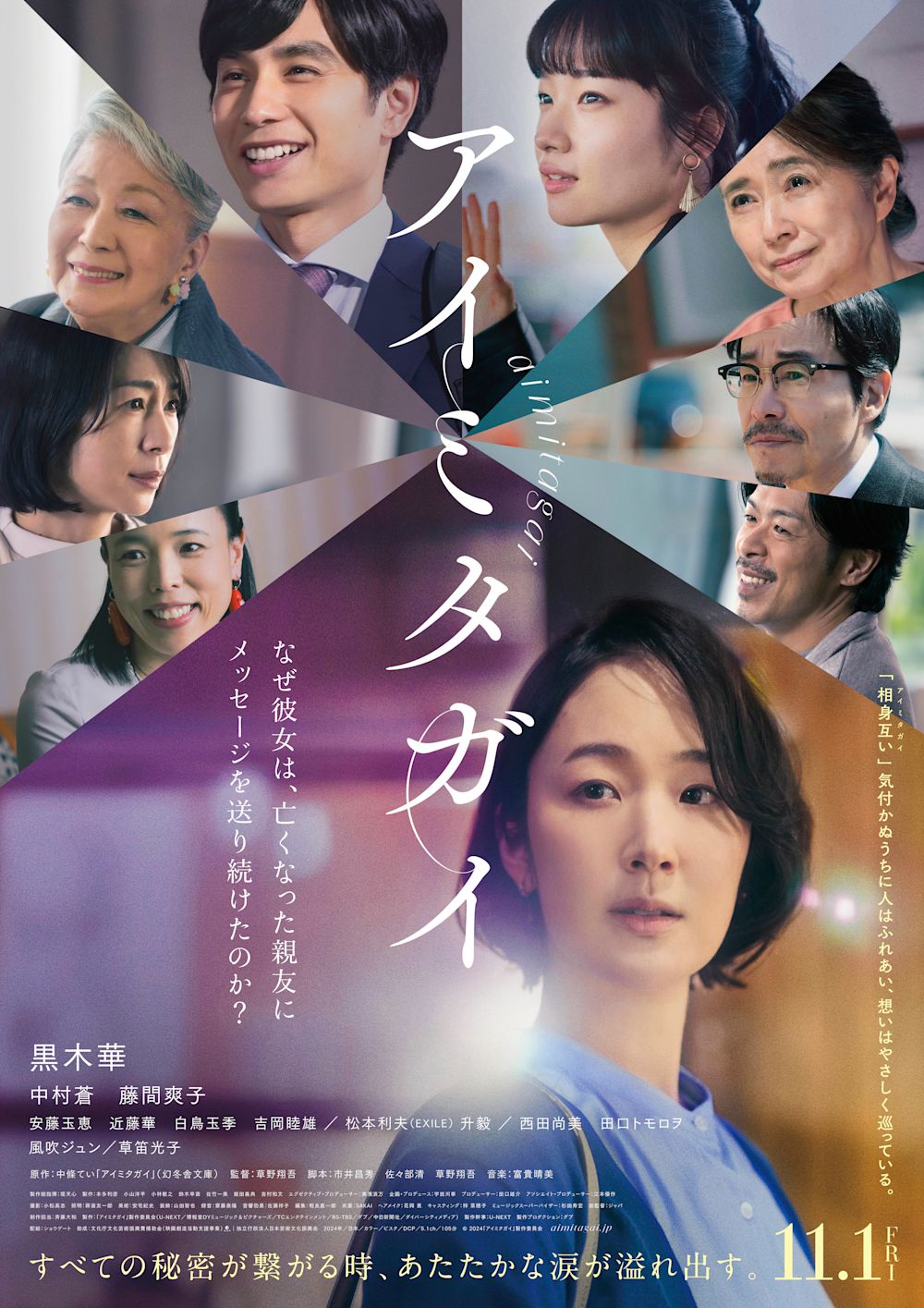
Aimitagai (アイミタガイ, Shogo Kusano, 2024)

When we say, “what goes around comes around”, we usually mean it in a bad way that someone is only getting what they deserve after behaving badly themselves. But the reverse is also true. The smallest acts of kindness people do without thinking can have quite profound effects on the world around them because, in the end, we are all connected. A bereaved father remarks that he thought novels that only had kind-hearted characters were unrealistic, but now he wants to believe that kind of world could exist after realising the impact his late daughter’s kindness had on those around her.

It was Kanami (Sawako Fujima) who saved Azusa (Haru Kuroki) in middle school when she was being bullied for coming from a single-parent family and the pair remained firm friends ever after until Kanami was suddenly killed in an accident while working overseas. Kanami’s loss leaves Azusa struggling to move forward with her life while mired in grief and uncertainty. Having lost her mother some years previously, she has never really dealt with the trauma of her parent’s acrimonious divorce and has a rather cynical view of marriage despite working as a wedding planner where her unmarried status sometimes causes her clients anxiety though it obviously has very little do with her ability to do her job. She’s always been clear with her long-time boyfriend Sumito (Aoi Nakamura) that marriage isn’t something she sees in her future, though he seems to want more commitment, while she repeatedly describes him as “unreliable” and is hesitant to take the next step with their relationship whether it involves getting married or not.

In that sense it’s really Azusa’s inability to surrender herself to the concept of what her grandmother (Jun Fubuki) calls “amai-tagai”, or mutual solidarity, which they experience first-hand while visiting her as another old lady nearby comes rushing in saying her house is on fire. It’s not so much reciprocity as a generalised idea of having each other’s backs, that people help each other as needed without keeping score in much the same way as Azusa was saved by Kanami and as she later realises by Komichi (Mitsuko Kusabue) whose piano-playing soothed her spirit though Komichi intended to play in secret, allowing her music to blend in with the six o’clock chimes as a daily act of atonement for having played the piano for boys who were going off to war many of whom never returned. It is then Azusa who saves Komichi in turn by telling her that she felt comforted by her music and that she does not believe that she has no right to play it simply because of the ways it was misused in the past. 

What Azusa fears is that by getting married she would essentially be cutting herself off from her paternal grandmother who, aside from her aunt (Tamae Ando) who is also Komichi’s housekeeper, is the only other family member she seems to have a meaningful connection with. Unable to let go Kanami, she keeps sending her messages little knowing that her mother is actually reading them and feeling both sorry and grateful that her daughter had such a good friend who like her is also struggling to continue on without her. She and Kanami’s father (Tomorowo Taguchi) find solace in the letters they receive from children at an orphanage where Kanami used to donate cakes and sweets after visiting there on a job. The photos she took are on display at their bathrooms, Azusa said because Kanami wanted them to be in a place where the children felt free to embrace their feelings privately without fear of embarrassment. 

The photographs, letters, and belated gifts are all examples of the ways in which what Kanami sent around is still going around and will continue to do so long after she herself is gone. Through realising the reality of “aimi-tagai”, Azusa learns that the world can also be a kind place, Sumito might be more “reliable” than she thought, and it might not be such a bad idea to trust people after all. Based on the novel by Tei Chujo, the film’s interwoven threads of serendipitous connections and the unexpected results of momentary acts of kindness prove oddly life-affirming if only in the ways in which each realise that Kanami is always with them even if physically absent.


Aimitagai screened as part of this year’s Toronto Japanese Film Festival.

Trailer (no subtitles)

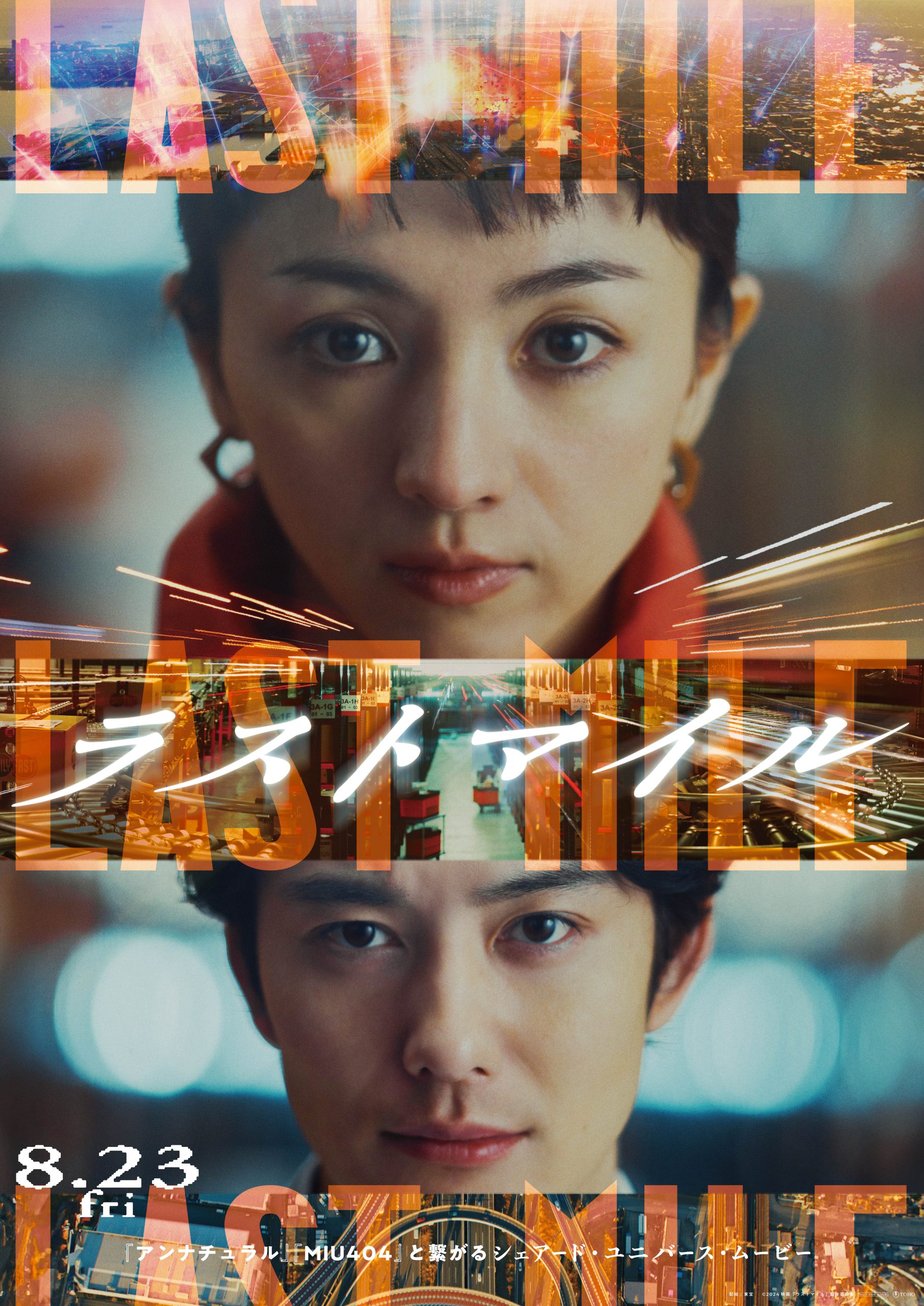
Last Mile (ラストマイル, Ayuko Tsukahara, 2024)

“Customer-centric”, what does that actually mean? The Amazon-like US-based conglomerate at the centre of Ayako Tsukahara’s Last Mile (ラストマイル) prides itself on its customer-centric philosophy, but at the end of the day, what that really means is that they give us what we tell them we want through our purchasing patterns and browsing history. That would be that we want everything as cheap and fast as it’s possible to be and don’t really think about the wider implications or what a world of infinite convenience might be doing to the society around us.

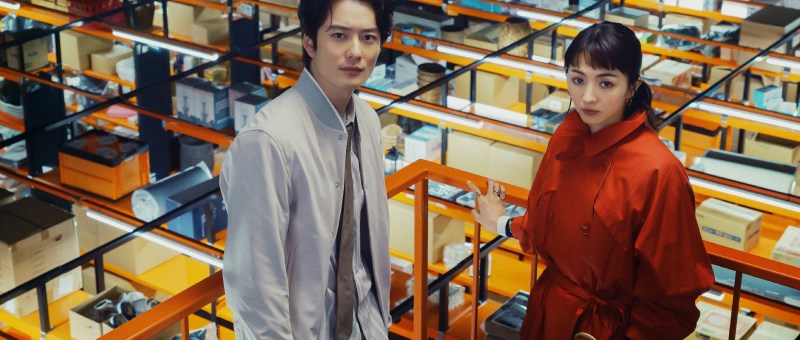
At least from the perspective of corporate lackey Elena (Hikari Mitsushima), recently returned from the US, the reason Daily Fast pressures its delivery staff to lower costs isn’t to maximise their profits, it’s so they can go on providing lower prices to customers which to her is all part of their customer-centric approach. This doesn’t really gel with her off-the-cuff remark about the warehouse not having a safety net to protect the workers from accidental falls or, she ominously adds, prevent people from jumping. That she brought it up at all might signal that she knows something’s not quite with the way this company treats its employees, though as it turns out she may have something else on her mind. In any case, when she arrives on her very first day the entrance to the complex is little better than a cattle market with a man on loud speaker barking instructions about were to go to the 800 members of staff some of whom have only been brought in to bulk up for the upcoming Black Friday sale. 

Which is all to say, it wouldn’t be all that surprising if the fact that some of their parcels have been exploding on delivery were a concerted attack against their ultra-capitalist philosophy, though actively delivering bombs to people who didn’t order them is not very “customer-centric” in any case. Obviously, Elena isn’t keen on this either but is also convinced that it can’t really be their fault because they have strict and dehumanising security measures in place preventing the workers from bringing in anything inessential. Even after she works out that the bomber has actually warned them that there are 12 bombs out there, she wilfully withholds the evidence from law enforcement to avoid damaging their share prices while trying to minimise business interruption rather than do anything sensible like stop delivering people parcels until they’ve figured out what’s going on with the bombs, though the real mystery is why the police don’t really seem to have the power to do that and, in fact, end up working with the warehouse to check each parcel individually to keep the conveyor belts going.

From the aerial view, the city itself resembles the warehouse with the roads taking the place of the belts as delivery vans shuttle along them. Seventy-something delivery driver subcontractor Sano (Shohei Hino) once had a friend who used to say that they were the ones who kept the country running. Yacchan became the number one driver largely because he took 10 minutes to eat his lunch and worked every hour god sent for dwindling pay with the implication that his gruelling schedule contributed to his early death. Sano’s son Wataru (Shôhei Uno) has just started working with him on the van after being laid off from an electronics job. They made quality washing machines that were designed to be efficient and to last, but of course they couldn’t compete with cheaper brands so they went bust.

Elena berates herself for being “too Japanese” for the American company which is to say that she takes pride in her work. That’s not to say that everything about the American business culture is bad as she encourages her assistant, Ko (Hikari Mitsushima), to call her Elena and to feel free to speak his mind rather than equivocate to avoid causing offence. But despite their “customer-centric” approach, it’s clear that the company puts profits above all else and treats its workers, who are not actually employees, poorly, without concern for their wellbeing. Yagi (Sadao Abe), the boss of logistics first Sheep Express which is the prime courier for Daily Fast, laments that he’d love to hire more drivers to help them through this crisis but he can’t because they’re always squeezing his budget and no one will work for their terrible rates except for those who, like Sheep Express itself, have no other options and will have put up with it because they’re dependent on Daily Fast. And because they’re dependent on Daily Fast, it means we all have to keep buying stuff we don’t really want or need just keep the belts going because we’re terrified about what will happen if they stop.

There is a direct comparison between Wataru’s well-made washing machines and the cheap and fast consumerist model that’s gradually taken over that suggests things like craftsmanship and integrity have gone out the window in a world where no one really bothers to go the last mile anymore, though it’s his steadfast engineering that eventually saves the day while even Elena comes to rethink her career trajectory and advises the drivers to strike and end this culture of exploitation because it turns out Daily Fast needs them more than they need Daily Fast. But maybe we don’t really need Daily Fast either, and we’re as much to blame for letting them give us what we think we want without really considering what that actually means. Perhaps a “customer-centric” society’s not all it’s cracked up to be, especially when workers and consumers are often the same people stuck on conveyor belts knowing there’s only one way to stop them.


Last Mile screens 19th June as part of this year’s Toronto Japanese Film Festival.

Trailer (no subtitles)

Ripples (波紋, Naoko Ogigami, 2023)

Sometimes it’s useful to feel like a rock in the stream and let it all flow past us, but our actions affect others in ways we barely understand reverberating and rebounding until ripples become waves and in their time small tsunamis. In Naoko Ogigami’s Ripples (波紋, Hamon), the effects of the 2011 earthquake and the Fukushima Daiichi nuclear disaster continue to radiate while some find themselves reeling unable to reorient themselves in a world which has become somehow threatening. 

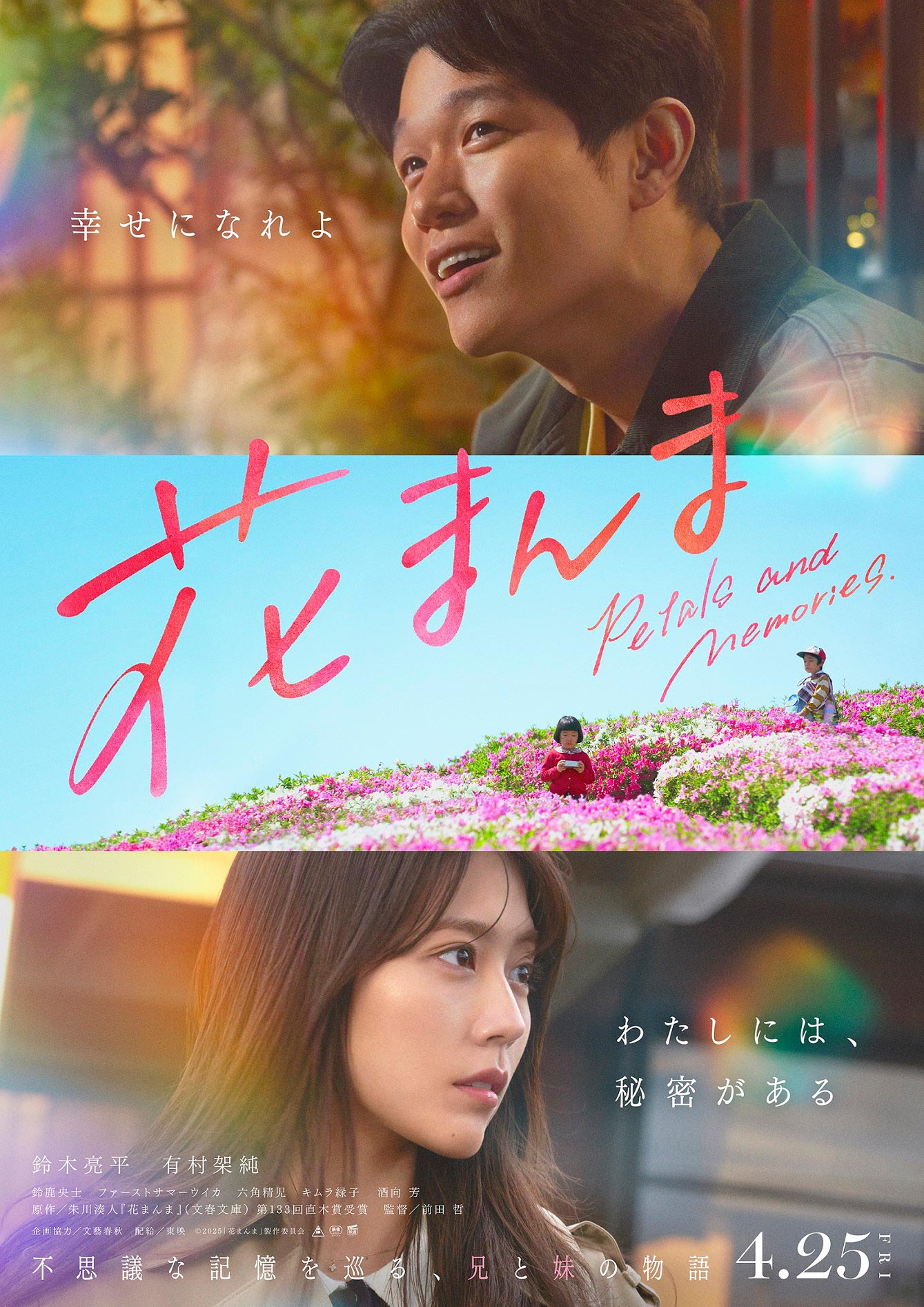
Middle-aged salaryman Osamu (Ken Mitsuishi) suddenly disappears on his wife and teenage son after becoming intensely afraid of radiation only to return years later claiming that he has cancer. In his absence his wife, Yoriko (Mariko Tsutsui), has become a devotee of a strange cult, Green New Life, which peddles special purifying water and preaches otherwise wholesome virtues of solidarity and sacrifice. But even if Yoriko superficially agrees that it’s better to affect tolerance and put others before herself she’s secretly seething with frustration and resentment. She clearly does not want to take Osamu back, remembering how he left her to care for his bedridden father who knowingly or not made inappropriate sexual advances towards her. 

The cult’s anthem preaches that there is no fear if you have faith which might explain Yoriko’s devotion along with that of many others who similarly find themselves attracted to new religions in the wake of unsettling events such as natural disaster or global pandemic. But then can we really say that what the cult promises is any different to that of other organisations which at least portray themselves as scientific authorities. It transpires that the real reason Osamu has returned is that his doctor has recommended an experimental new treatment that is not covered by medical insurance and costs a significant amount of money but all Osamu has to go on is desperation and his faith in the medical establishment that the supposed cure is any more effective than Yoriko’s holy water (it turns out not to be). There is after all a lot of money in fear and people’s desire to be free of it. 

But Yoriko is afraid of many things. Her petty prejudices are exposed when her now grownup son returns home on a business trip with a hitherto undisclosed fiancée in tow who happens to be deaf. Yoriko probably would not have liked it anyway whoever Takuya (Hayato Isomura) had brought but resolutely fails to hide her disgust that he chosen a woman with a disability. She remarks that people at the church find inspiration in seeing disabled people “suffer and endure”, which is a fairly offensive thing to say in any case even if she later confesses his prejudice outright to a colleague at the supermarket where she works claiming that it’s different because it’s her son and she doesn’t see why he had to choose a woman “like that”. While the cult leader pushes her towards what are superficially at least more wholesome values of love and acceptance, Mizuki (Hana Kino) pulls her back towards her darker impulses but also a kind of liberation in her desire not to be bound by the old-fashioned conservative values that encourage her to fulfil the stereotype of the perfect wife over and above her own happiness or fulfilment. 

The dryness of her life is echoed in the zen sand garden she meticulously rakes into the shape of waves each morning while the water many feared contaminated after the earthquake is really a symbol of the life and vitality she continues to deny herself. Yet in an odd way, it’s human connection that perhaps begins to awaken her in her devotion to Mizuki who reveals that she was so overwhelmed with despair that she became unable to fix the damage in her apartment after the quake struck and has been living amid the ruins ever since. Ogigami turns her quirky gaze to life’s absurdities, the ridiculous things we cling to in order not to be afraid, but eventually allows Yoriko to find the courage to dance in the rain rather than fear its arrival having blown straight through her various “faiths” to become something that is at least more resolutely herself. 


Ripples screened as part of this year’s Camera Japan.

Original trailer (no subtitles)

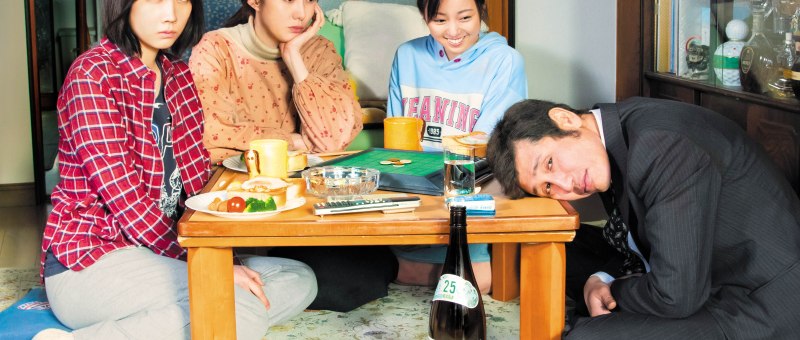
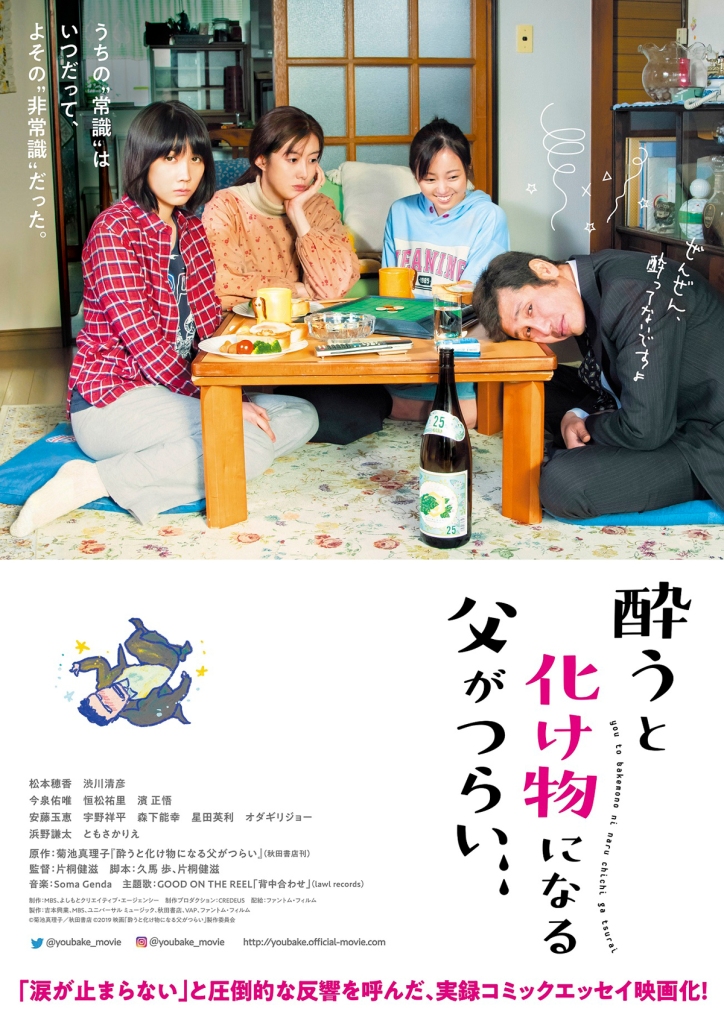
A Life Turned Upside Down: My Dad’s an Alcoholic (酔うと化け物になる父がつらい, Kenji Katagiri, 2019)

A dejected young woman finds herself conflicted in her memories of the father who failed her in Kenji Katagiri’s A Life Turned Upside Down: My Dad’s an Alcoholic (酔うと化け物になる父がつらい, You to Bakemono ni Naru Chichi ga Tsurai). Drawing inspiration from the webcomic by Mariko Kikuchi, Katagiri’s whimsical drama does its best to put a comical spin on the extended trauma of living with an alcoholic dad while laying the blame squarely at the the feet of a society with an entrenched drinking culture in which refusing to imbibe is all but unthinkable. 

The heroine, Saki (Honoka Matsumoto), begins her tale in the late ‘90s when she is only eight years old and unaware that her family circumstances are not exactly normal. Tadokoro (Kiyohiko Shibukawa), her salaryman dad, usually rolls in late and collapses in the hall after staying out all night drinking. This is such a common occurrence that Saki and her younger sister Fumi are completely unfazed by it, marking off dad’s drunken days with a big red X on the calendar and cheerfully helping their mum drag him back into the house. Saeko (Rie Tomosaka), their mother, tries to put a brave face on it, and to the girls it probably still seems a little bit funny, but as she gets older Saki begins to see the toll her father’s drinking has taken on her mother not only in practical terms but emotional in realising that he drinks largely as a means of escaping his responsibility which includes that towards his family. 

Saki asks her mum why dad’s three friends keep coming round to drink while playing mahjong but the only explanation she can offer is that adults need to socialise. Socialisation does it seems revolve around alcohol, and to that extent perpetuates deeply entrenched patriarchal social codes in largely remaining a homosocial activity with the only women present those that run the bar (the wives of Tadokoro’s friends make a point of thanking Saeko for allowing their husbands to drink at her house, they it seems are not invited). Tadokoro’s excuse for his drinking is that it’s a necessary business activity, that you can’t get by as a salaryman without figuring out how to have fun at a nomikai and bond with your clients over sake. His office best friend later discovers this to be true as a teetotaller given the banishment room treatment he attributes to the fact he doesn’t drink which is why his bosses don’t trust him as member of the team. 

Tadokoro might think he’s serving his family through his career, but it’s clear that he neglects them physically and emotionally by refusing to moderate his drinking. He breaks promises to his kids to take them to the pool because he’s still hung over from the night before while his wife finds herself at the end of her tether with his continued indifference later telling the little Saki that she wanted to divorce him even before the kids were born but it’s too late for that now. Saeko escapes from the burden of her life through religion, adhering to a shady Christian-leaning cult which preaches that endurance builds character and character leads to hope, all of which presumably convinces her that she is supposed to just put up with Tadokoro’s problematic behaviour rather than reassuring her that there is no sin in leaving him. 

Saki fears making her mother’s mistake, traumatised by her childhood experiences and drawn into an abusive relationship of her own out of loneliness and low self esteem. She resents her father but also feels bad about it, simultaneously thankful when he takes a temporary break from drinking and mahjong but also aware of how sad it is that she is grateful for things that other families would consider normal. Tadokoro proves unable to quit drinking, and Saki wonders if she’s right to even ask him if, as others say, drinking is his mechanism for escaping loneliness, but also reflects on the sadness she now understands in her mother as stemming from her father’s abnegation of his responsibilities and the loneliness it must have provoked in her. Fumi (Yui Imaizumi), trying to explain why Saki should break up with her abusive boyfriend (Shogo Hama), tells her of an experiment she read about in which a rat was trapped in a box and randomly given electric shocks. At first, it tried to escape, but eventually became resigned to its fate and settled for learning to endure the pain. Saki is perhaps much the same, trapped by filiality in finding herself unable to either forgive or reject the memory of the father who so resolutely failed to live up to the name.


A Life Turned Upside Down: My Dad’s an Alcoholic was streamed as part of this year’s online Nippon Connection Film Festival.

International trailer (English subtitles)
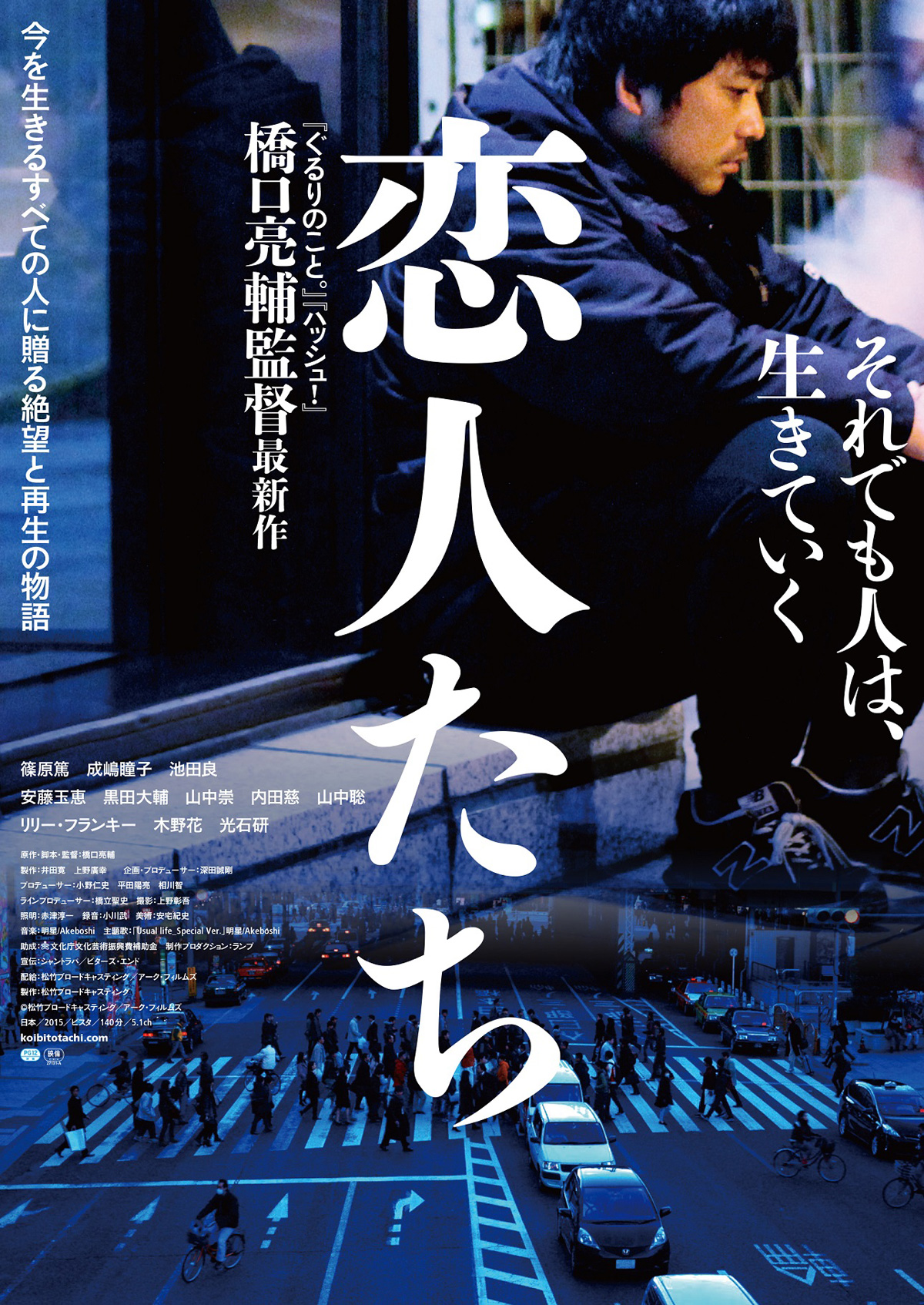
Three Stories of Love (恋人たち, Ryosuke Hashiguchi, 2015)

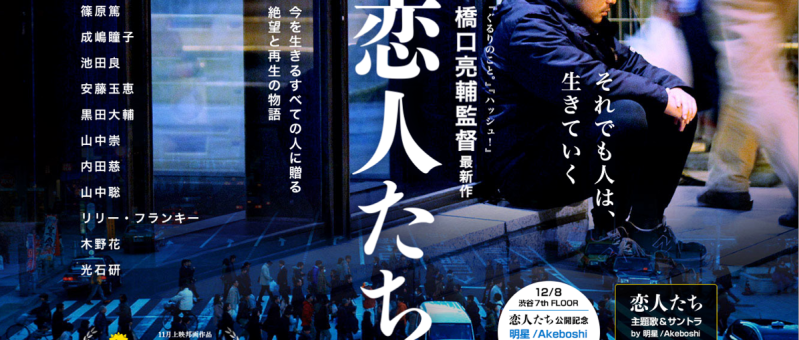
Three Stories of Love posterRyosuke Hashiguchi began his career with a collection of sometimes melancholy but ultimately hopeful tales of gay life in contemporary Japan. In 2008 he branched out with the finely tuned emotional drama All Around Us which followed an ordinary couple’s attempt to come to terms with the loss of a child. Three Stories of Love (恋人たち, Koibitotachi) finds him in much the same territory as he takes three very different yet equally burdened romantics and sets them on a path towards a kind of acceptance while suffering inside a system where everyone seems to be intent on exploiting other people’s unhappiness.

The first of our heroes, Atsushi (Atsushi Shinohara), is a bridge inspector whose wife was murdered in a random street attack three years previously. Ever since then he’s suffered with depression and found it difficult to hold down a job or a life and has become obsessed with getting personal revenge on the killer who pleaded the insanity defence and was committed to psychiatric care rather than to prison. Meanwhile, across town, listless housewife Toko (Toko Narushima) is trapped in a loveless marriage to a domineering husband and living with her snooty mother-in-law. Toko’s only outlet is compulsively rewatching a shaky video of the time she and her friends witnessed Princess Masako briefly exit a building. The third of our heroes, Shinomiya (Ryo Ikeda), is a self involved lawyer with a longstanding crush on his straight best friend from college who has since married and had a young son.

The three strands are only loosely interconnected, occurring as they do in the same city at the same time, though they do each share a sense of defeat and impossibility as each of our heroes struggles either to escape from or come to terms with their difficult circumstances. Atsushi’s case is perhaps the most extreme as he deals not only with his grief and anger but with the persistent stigma of being involved with violent crime. Visited by his bubbly sister-in-law he idly remembers to ask after the man she was about to marry last time they met only to be told that he abruptly dumped her after her sister’s death and not only that, all her friends abandoned her too. Getting revenge has become Atsushi’s only reason for living – he stopped paying his health insurance to get money together for fancy lawyers like Shinomiya who convinced him he could lodge a civil case but were only ever stringing him along to fleece him of money he never really had.

Shinomiya is, in a sense, our villain. He listens dispassionately to his wealthy clients – including one woman seeking a divorce (Chika Uchida) because her husband forgot to tell her he was burakumin until after they were married, but privately mocks them and is so unpleasant to his colleagues that someone eventually pushes him down a flight of stairs, breaking his leg. Intensely self-involved, he cares little for other people’s feelings save for those of his forlorn love Satoshi (So Yamanaka). Satoshi’s wife Etsuko, originally friendly and understanding, eventually takes against Shinomiya either because she doesn’t like the way he fiddled with her son’s ears or resents the two men cooing over the child and accidentally making her feel like an unwelcome outsider. Introducing his much younger boyfriend only seems to make matters worse, though the relationship does seem to have its problematic dimensions even if not in the way Etsuko decides to interpret them as Shinomiya takes pains to run down his partner in public and berate him at home. It’s difficult to resist the interpretation that Shinomiya prefers younger lovers because he can boss them around and, in truth, he doesn’t even seem very attached to this one, but he’s about to get a very rude awakening when it comes to learning that he’s not as permanent a part of everyone else’s lives as he seems to think.

Atsushi is fleeced by the Shinomiyas of the world and his heartless health insurers, but he’s wily enough to spot the obvious scam in the lovelorn office boy’s sudden enthusiasm for magical beautifying water which turns out to be part of a bar lady’s (Tamae Ando) nefarious scheme to resell the tapped variety with some of her own glamour shots attached to the front. Toko is wily enough to see it too, though she eventually succumbs when would-be-chicken-farmer Fujita (Ken Mitsuishi), whom she met at work during a difficult moment with her boss, delivers her some on spec. Lonely and insecure, Toko appreciates the unexpected interest but Fujita is not the white knight she first assumes him to be and is eventually exposed as yet another scam artist gunning for the little money she might have been able to hide away in her rabidly penny pinching home.

Shinomiya might feel himself proud to be among the fleecers rather than the fleeced, but he soon gets a comeuppance in realising he has wilfully pulled the wool over his own eyes, blinded in a sense by love. Toko, meanwhile, has learned to accept the latent feudalism of the modern society in her obsession with royalty though a brief attempt to transcend her feelings of innate inferiority seems destined to end in failure if perhaps engineering a mild improvement in her familial circumstances. Atsushi alone, a man whose job it is to assess the foundations, begins to find a degree of equilibrium thanks largely to nothing more than a good friend willing to listen and share his own suffering. Exploitation of others’ misfortunes and a series of social prejudices conspire against our three lovers but perhaps there is something to be said for learning to find the blue sky from whichever vantage point you happen to be occupying no matter how small and distant it may be.


Three Stories of Love was screened as part of the 2019 Japan Foundation Touring Film Programme.

Original trailer (no subtitles)

The Scythian Lamb (羊の木, Daihachi Yoshida, 2017)

Scythian Lamb posterSometimes life hands you two parallel crises and allows one to become the solution to the other. So it is for the bureaucrats at the centre of Daihachi Yoshida’s The Scythian Lamb (羊の木, Hitsuji no Ki). The prisons are overcrowded while rural Japan faces extinction thanks to depopulation. Ergo, why not parole some of those “low risk” prisoners whose problems have perhaps been caused by urban living and lack of community support on the condition that they move to the country for a period of at least ten years and contribute to a traditional way of life. The prisoners get a fresh start where no one knows them or what they might have done in the past, and the town gets an influx of new, dynamic energy eager to make a real go of things. Of course, there might be some resistance if people knew their town was effectively importing criminality, but that’s a prejudice everyone has an interest in resisting so the project will operate in total secrecy.

Not even civil servant Tsukisue (Ryo Nishikido), who has been tasked with rounding up the new recruits, was aware of their previous place of residence until he started to wonder why they were all so unusual and evasive. Tsukisue likes to think of himself as an open-minded, kind and supportive person, and so is disappointed in himself to feel some resistance to the idea of suddenly welcoming six convicts into his quiet little town, especially on learning that despite being rated “low risk” they are each convicted murderers. Thus when a “murder” suddenly happens in the middle of town, Tsukisue can’t help drawing the “obvious” conclusion even if he hates himself for it afterwards when it is revealed the murder wasn’t a murder at all but a stupid drunken accident.

The ex-cons themselves are an eccentric collection of wounded people, changed both by their crimes and their experiences inside. Many inmates released from prison find it difficult to reintegrate into society, especially as most firms will not hire people with criminal records which is one of the many reasons no one is to know where the new residents came from. Yet, there are kind and understanding people who are willing to look past the unfortunate circumstances that led to someone finding themselves convicted of a crime such as the barber (Yuji Nakamura) who reveals his own difficult past and happiness in being able to help someone else, or the woman from the dry cleaners (Tamae Ando) who is upset by other people’s reaction to her new recruit who, it has to be said, looks like something out of Battles without Honour. Tsukisue doesn’t know anything about these people save for the fact they’ve killed and has, unavoidably, made a judgement based on that fact without the full details, little knowing that one, for example, killed her abusive boyfriend after years of torture or that another’s crime was more accident than design.

Tsukisue later becomes friends with one of the convicts, Miyakoshi (Ryuhei Matsuda), whose distant yet penetrating stare makes him a rather strange presence. Miyakoshi is the happiest to find himself living in the small coastal town, enjoying the lack of stimulation rather than resenting the boredom as some of the other new residents do. Despite his obvious inability to “read the air”, Miyakoshi is quite touched by Tsukisue’s kindness and by the way he treated him as a “normal” person despite his violent criminal past, excited to have made a real “friend” at last. Trouble begins to brew when Miyakoshi joins Tsukisue’s garage band and takes a liking to another of its members – Aya (Fumino Kimura), another returnee from Tokyo with a mysterious past though this time without a prison background. Tsukisue has had a long standing crush on Aya since high school but has always been too shy to say anything. He thought now was his chance and is stunned and irritated to realise Miyakoshi might have beaten him to it and, even worse, given him another opportunity to disappoint himself though doing something unforgivable in a moment of pique.

The bureaucrat in charge of the scheme wanted it kept secret in part because he was afraid the criminals might find each other and start some sort of secret murderer’s club (betraying another kind of prejudice) which actually turns out not to be so far fetched, though the main moral of the story is that kindness, understanding, and emotional support go a long way towards keeping the peace. Meanwhile, another of the convicts has taken to “planting” dead animals inspired by a plate she finds on a refuse site featuring a decoration of a “Scythian Lamb” – a plant that grows sheep which die when severed from their roots, and the evil fish god Nororo sits atop the cliffs in reminder of the perils of the sea. The Scythian Lamb is a poignant exploration of the right to start again no matter what might have gone before or how old you are. It might not always be possible to escape the past, and for some it may be more difficult than others, but the plant withers off the vine and there’s nothing like good roots for ensuring its survival.


Screened at the 20th Udine Far East Film Festival.

Original trailer (English subtitles)

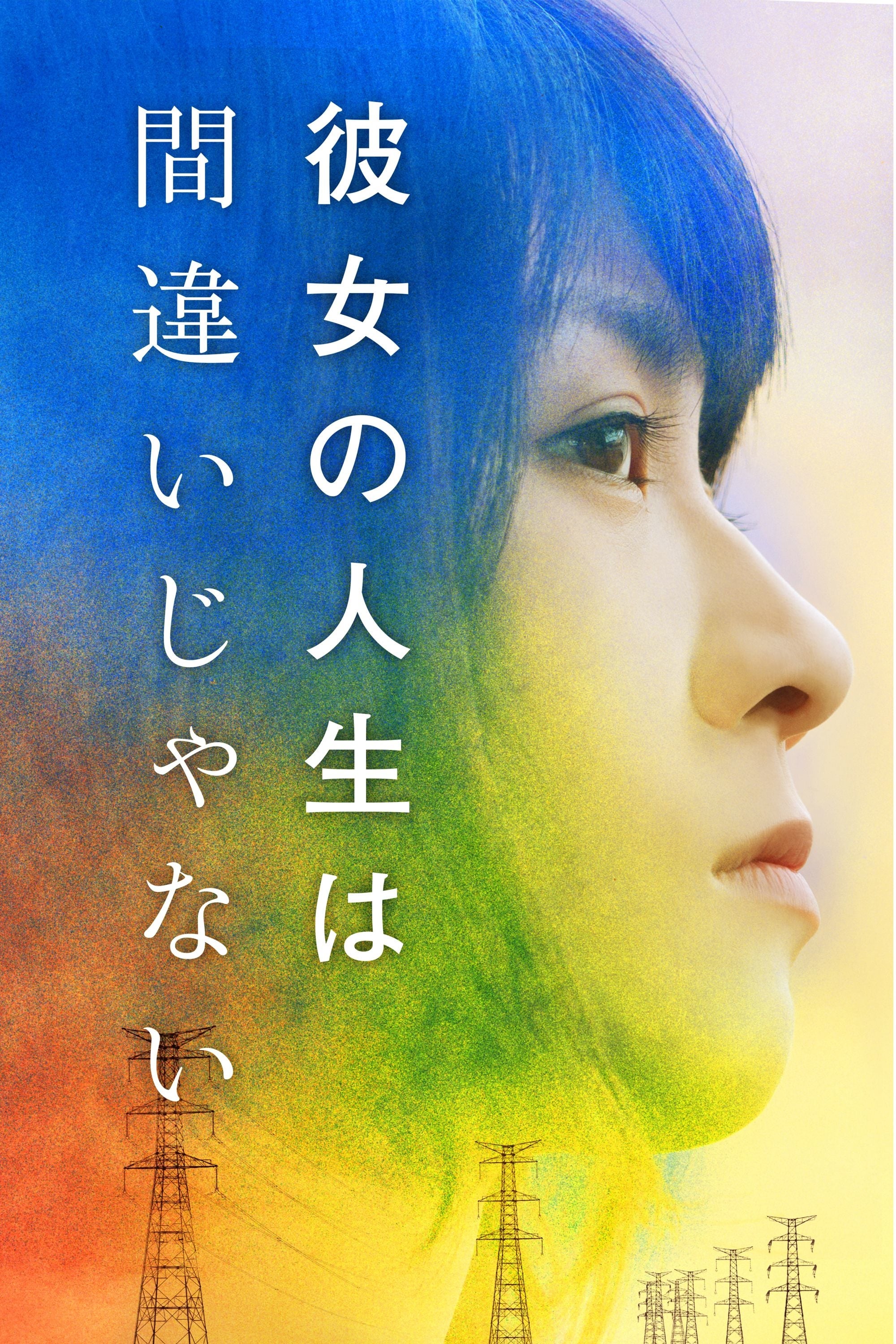
Side Job (彼女の人生は間違いじゃない, Ryuichi Hiroki, 2017)

Side JOb posterFukushima has become a focal point for recent Japanese cinema, not just as a literal depiction of an area in crisis but as a symbol for various social concerns chief among them being a loss of faith in governmental responsibility. Side Job (彼女の人生は間違いじゃない, Kanojo no Jinsei wa Machigai ja Nai) has the distinction of being helmed by a Fukushima native in Ryuichi Hiroki who also wrote the original novel from which the film is adapted. Typical of Hiroki’s work, Side Job is less an ode to the power of perseverance than a powerful meditation on grief, inertia, and helplessness. Though he offers no easy answers and refuses to judge his protagonists for the ways they attempt to deal with their situations, Hiroki does allow them to find a kind of peace, at least of the kind that allows them to begin moving forward if not quite away from the past.

Five years after The Great East Japan Earthquake of 2011, Miyuki Kanazawa (Kumi Takiuchi) is still living in a cramped prefab house with her widowed father, Osamu (Ken Mitsuishi). Miyuki’s mother was lost in the storm and her body never found, leaving the pair bereft and with an unanswered question. Having lost his farm to the exclusion zone, Osamu is left with nothing much to do and mostly spends his time idly playing pachinko and drinking much to the consternation of Miyuki who has a regular job with the city council.

Miyuki may well be angry about the way her father fritters away their money, but that doesn’t quite explain why she boards an overnight coach every Friday and spends her weekends in Tokyo engaging in casual sex work. She appears not to like the work very much and it is occasionally dangerous, but she does seem to have built up a kind of friendship with her “manager” as he drives her around the city to her various clients. Miura (Kengo Kora) claims to enjoy his work because it gives him an opportunity to observe human nature in all of its complexity though if he harbours any conflict about his role as a dispatcher of sometimes vulnerable young women, he is slow to voice it.

The “side job” of the title provides a kind of escape from a boring, conventional life in rural Iwaki, equal parts self-harm and quest for sensation. Miyuki, like many of those around her walks around with an air of irritated blankness, angry at so many things she doesn’t quite know where to begin. Yet for all that she’s also emotionally numbed, held in a state of suspended animation, longing to feel something, anything, even if that something is only shame. Through her double life Miyuki is able to find a sense of control and equilibrium that eluded her in grief-stricken Iwaki. Her manager, Miura, promises to “protect” her, though he makes clear that there are many women he feels a duty to protect rather than just Miyuki. Just as it seems Miyuki has come to depend on him, Miura drops a bombshell of his own though it maybe one which spurs Miyuki on towards a new beginning.

Everything in Iwaki is, in a sense, temporary. Miyuki and her father still live in the tiny prefab house in the hope of one day being able to go “home” while Osamu attends occasional meetings with the farming collective to try and find out what’s going on with his fields. Held in a kind of limbo, repeating the same daily tasks with relentless monotony, Miyuki and Osamu are trapped by a sense of helpless dread, forever waiting for something to happen but having lost the faith that it ever will.

While the pair struggle on, others find themselves unable to bear the weight of their tragedies. The spectre of suicide haunts Miyuki and her father from the woman next-door (Tamae Ando) who has become depressed thanks to the stigma surrounding her husband’s job with the decontamination programme, to the window at the agency which no longer opens following the suicide of one of the employees. Pushed to the edge by financial strain, there are also those who find themselves befriending the vulnerable with an intent to defraud, but it is in the end genuine human relationships which light the way for each of our struggling protagonists. Osamu bonds with an orphaned little boy through playing catch, Miyuki finds strength in Miura’s decision to break with his old life and build a new one, and her assistant at the city council, Nitta (Tokio Emoto), grows into the responsibility of being a big brother while attempting to do the best he can for the people of Fukushima.

What each of them finds isn’t an answer or a “cure” for their trauma but a path towards accepting it in such a way as it allows them to begin moving forward. New seeds are planted in the expectation of a coming future, new lives are celebrated, and the past begins to recede. Memory becomes a still frame, bottled and in a sense commodified but held close as a kind of talisman proving nothing is really ever “lost”. Filmed with an eerie sense of listless beauty, Side Job is an unflinching yet not unforgiving exploration of life after tragedy in which the only possible chance for survival lies in empathy and simple human connection.


Screened at the 20th Udine Far East Film Festival.

Original trailer (English subtitles)


Girl in the Sunny Place (陽だまりの彼女, Takahiro Miki, 2013)

girl in the sunny placeThe “jun-ai” boom might have been well and truly over by the time Takahiro Miki’s Girl in the Sunny Place (陽だまりの彼女, Hidamari no Kanojo) hit the screen, but tales of true love doomed are unlikely to go out of fashion any time soon. Based on a novel by Osamu Koshigaya, Girl in the Sunny Place is another genial romance in which teenage friends are separated, find each other again, become happy and then have that happiness threatened, but it’s also one that hinges on a strange magical realism born of the affinity between humans and cats.

25 year old Kosuke (Jun Matsumoto) is a diffident advertising executive living a dull if not unhappy life. Discovering he’s left it too late to ask out a colleague, Kousuke is feeling depressed but an unexpected meeting with a client brightens his day. The pretty woman standing in the doorway with the afternoon sun neatly lighting her from behind is an old middle school classmate – Mao (Juri Ueno), whom Kosuke has not seen in over ten years since he moved away from his from town and the pair were separated. Eventually the two get to know each other again, fall in love, and get married but Mao is hiding an unusual secret which may bring an end to their fairytale romance.

Filmed with a breezy sunniness, Girl in the Sunny Place straddles the line between quirky romance and the heartrending tragedy which defines jun-ai, though, more fairytale than melodrama, there is still room for bittersweet happy endings even in the inevitability of tragedy. Following the pattern of many a tragic love story, Miki moves between the present day and the middle school past in which Kosuke became Mao’s only protector when she was mercilessly bullied for being “weird”. Mao’s past is necessarily mysterious – adopted by a policeman (Sansei Shiomi) who found her wandering alone at night, Mao has no memory of her life before the age of 13 and lacks the self awareness of many of the other girls, turning up with messy hair and dressed idiosyncratically. When Kousuke stands up to the popular/delinquent kids making her life a misery, the pair become inseparable and embark on their first romance only to be separated when Kosuke’s family moves away from their hometown of Enoshima.

“Miraculously” meeting again they enjoy a typically cute love story as they work on the ad campaign for a new brassiere collection which everyone else seems to find quite embarrassing. As time moves on it becomes apparent that there’s something more than kookiness in Mao’s strange energy and sure enough, the signs become clear as Mao’s energy fades and her behaviour becomes less and less normal.

The final twist, well signposted as it is, may leave some baffled but is in the best fairytale tradition. Maki films with a well placed warmth, finding the sun wherever it hides and bathing everything in the fuzzy glow of a late summer evening in which all is destined go on pleasantly just as before. Though the (first) ending may seem cruel, the tone is one of happiness and possibility, of partings and reunions, and of the transformative powers of love which endure even if everything else has been forgotten. Beautifully shot and anchored by strong performances from Juri Ueno and Jun Matsumoto, Girl in the Sunny Place neatly sidesteps its melodramatic premise for a cheerfully affecting love story even if it’s the kind that may float away on the breeze.


Original trailer (no subtitles)