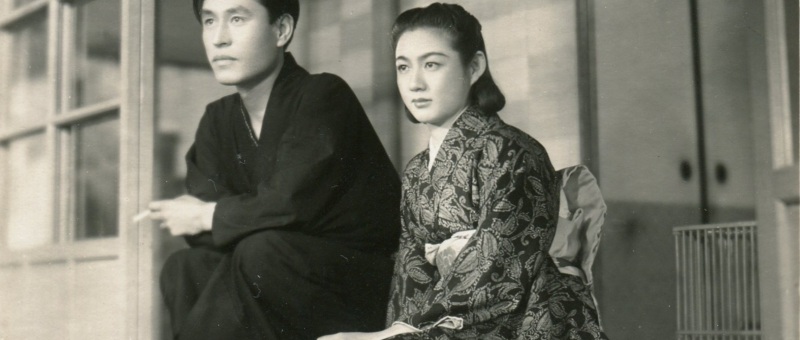
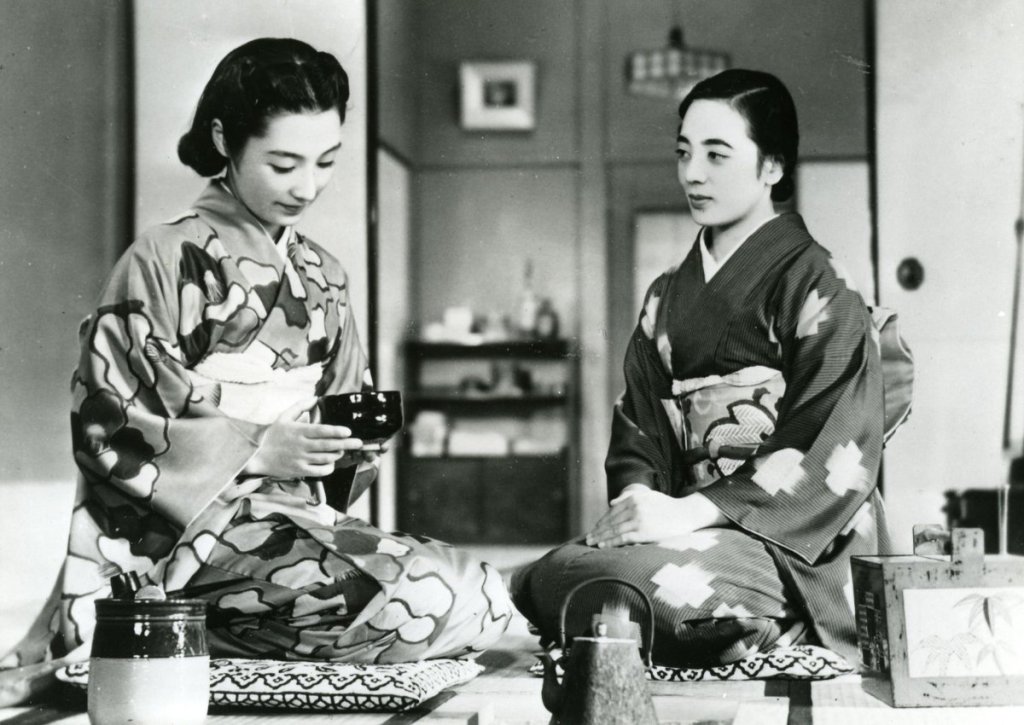
Yasujiro Ozu made only two films during the height of the war. After being drafted for the second time in 1943, he famously sat out the main action from the relative safety of Singapore where he was able to indulge his love of Hollywood cinema to an extent impossible in Japan. Somewhat surprisingly, 1941’s Brothers and Sisters of the Toda Family (戸田家の兄妹, Toda-ke no Kyodai) does not seem to fit the censor’s ideal in that it contains little to no patriotic content and never mentions the war save for presenting the idea of “Manchuria” as a place to start again free of burdensome codes of social oppression but, crucially, embraces classic ideas of filial piety which is presumably how it came to be approved by the powers that be.
Shortly after the Toda family gathers for the first time in quite a while to celebrate Mrs. Toda’s (Ayako Katsuragi) 61st birthday, Mr. Toda (Hideo Fujino) drops dead of a heart attack and it is discovered that the family firm is near bankruptcy. The large, Western-style mansion where the family photo so recently took place will have to be sold and Mrs. Toda and her unmarried daughter Setsuko (Mieko Takamine) will have to move in with one of the married children.
Like the later Tokyo Story, Brothers and Sisters of the Toda Family concerns itself with the failure of filial piety in an increasingly corrupt society. Multigenerational homes might once have been a cultural norm, but perhaps it’s understandable that few people might be excited about the prospect of their mother suddenly moving in with them especially as the traditional Japanese house is not designed with personal space in mind. Power dynamics seem to be the problem at the first home where daughter-in-law Kazuko (Kuniko Miyake) makes no secret of the fact that the two women are in the way. She resents having to shift everything around and reorder her home to give them space upstairs, complains about their noisy pet bird, and is then put out when Setsuko and her mother fail to greet her guests even though she specifically asked them to absent themselves in order to avoid meeting them.
At the next home, however, it’s more a question of maternal heirarchy. Daughter Chizuru (Mitsuko Yoshikawa) has two children and the oldest, her son Ryokichi (Masao Hayama), is very attached to his grandma, so much so that he confides in her about skipping school because he got into a fight and is worried about reprisals. Chizuru’s main objection to them moving in had been that it might distract Ryokichi from his studies, and it’s clear that she finds it difficult to assert her own maternity with her mother hovering in the background. She accuses Mrs. Toda of interfering by keeping her promise to Ryokichi and not telling her about skipping school, making it impossible for them to keep living in the same house.
Rather than descend on the home of the last daughter, Ayako (Yoshiko Tsubouchi), who is hurt but perhaps relieved to hear they won’t be living with her, Mrs. Toda and Setsuko decide to move into a dilapidated summer house the family thought too worthless to sell. They are now thoroughly marginalised, living in a literal half-way home having lost their position in society. Setsuko, naive but earnest, is the keenest to adapt to her circumstances. Her best friend Tokiko (Michiko Kuwano) is from an “ordinary” family and tries to point out, as nicely as possible, that Setsuko is going to find it much more difficult than she thinks to move beyond her privilege. Aware of her precarious circumstances, she expresses the intention to work but is quickly shut down by Chizuru who finds the idea highly offensive and in fact embarrassing. She urges her to think about a socially advantageous marriage instead.
Shojiro (Shin Saburi), the youngest and as yet unmarried son, urges her to do something much the same at the film’s conclusion but also offers his sister the freedom to fulfil herself outside the home by accompanying him to the land of the possible, Manchuria. Previously regarded as a feckless failure, Shojiro decided to take up the opportunity to make something of himself in Japan’s new colonial endevour. On his brief return to mark the first anniversary of his father’s passing, he appears in a China-style suit and fiercely takes his siblings to task for their disrespect of his mother. It has to be said, however, that he does not particularly take Mrs. Toda’s feelings into account and foregrounds his own duty of filial piety in insisting that she live with family rather than alone excluding the possibility that she too may prefer her freedom. In any case, it’s freedom he dangles before Setsuko in suggesting that in Manchuria you can do as you please without needing to worry about what others think. He offers her the possibility of marriage, but also of working and a kind of independence which is bound within the family. For herself, Setsuko wants to bring Tokiko too, positing a possible arranged match between her friend and her brother which other members of the family may find inappropriate in its transgressive breach of the class divide.
The family is both dissolved and restored as the three Todas prepare to remove themselves from a corrupted Japan for, ironically, a new start in the home of old ideas, China, where there is both the promise of modernity and all the “good” aspects of the traditional, to whit filiality. Fulfilling the censors demands in subtly criticising the decadent, selfish, and hypocritical lifestyles of an impoverished nobility while presenting Manchuria as an opportunity remake a better, purer (and subversively progressive) Japan through imperialist pursuits, Brothers and Sisters of the Toda Family offers an ambivalent portrait of contemporary Japanese society in which the young save themselves but only by saving their parents first.
Brothers and Sisters of the Toda Family is available on blu-ray in the UK as part of the BFI’s re-release of Tokyo Story in its recent 4K restoration which also includes an introduction to Tokyo Story from Tony Rayns, and Talking with Ozu: a tribute to the legendary director featuring filmmakers Lindsay Anderson, Claire Denis, Hou Hsiao-hsien, Aki Kaurismäki, Stanley Kwan, Paul Schrader and Wim Wenders. The first pressing also comes with a booklet featuring an essay by Professor Joan Mellen, archival writing by John Gillett and Lindsay Anderson, and a biography of Yasujiro Ozu by Tony Rayns.
It is also available to stream online via BFI Player as part of the BFI Japan Yasujiro Ozu collection.
Titles and opening (no subtitles)
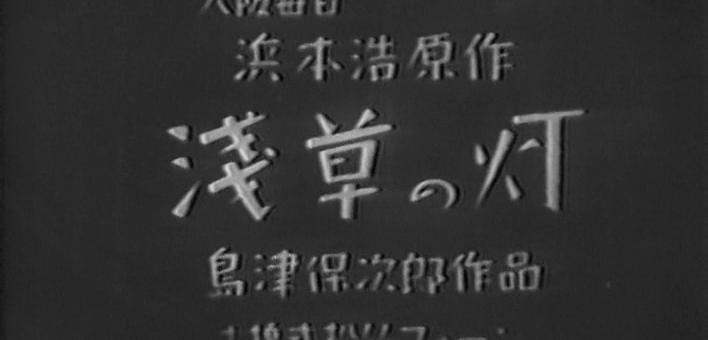

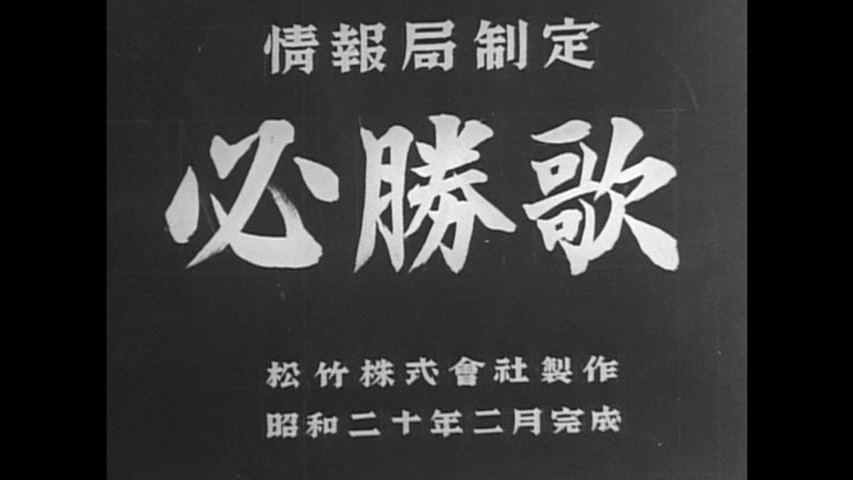 Completed in 1945, Victory Song (必勝歌, Hisshoka) is a strangely optimistic title for this full on propaganda effort intended to show how ordinary people were still working hard for the Emperor and refusing to read the writing on the wall. Like all propaganda films it is supposed to reinforce the views of the ruling regime, encourage conformity, and raise morale yet there are also tiny background hints of ongoing suffering which must be endured. Composed of 13 parts, Victory Song pictures the lives of ordinary people from all walks of life though all, of course, in some way connected with the military or the war effort more generally. Seven directors worked on the film – Masahiro Makino, Kenji Mizoguchi, Hiroshi Shimizu, Tomotaka Tasaka, Tatsuo Osone, Koichi Takagi, and Tetsuo Ichikawa, and it appears to have been a speedy production, made for little money though starring some of the studio’s biggest stars in smallish roles.
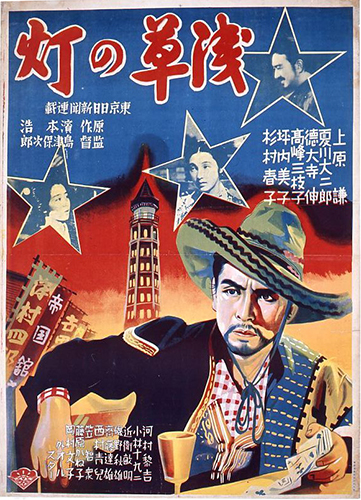
 Japan’s political climate had become difficult by 1938 with militarism in full swing. Young men were disappearing from their villages and being shipped off to war, and growing economic strife also saw young women sold into prostitution by their families. Cinema needed to be escapist and aspirational but it also needed to reflect the values of the ruling regime. Adapted from a novel by Katsutaro Kawaguchi, Aizen Katsura (愛染かつら) is an attempt to marry both of these aims whilst staying within the realm of the traditional romantic melodrama. The values are modern and even progressive, to a point, but most importantly they imply that there is always room for hope and that happy endings are always possible.
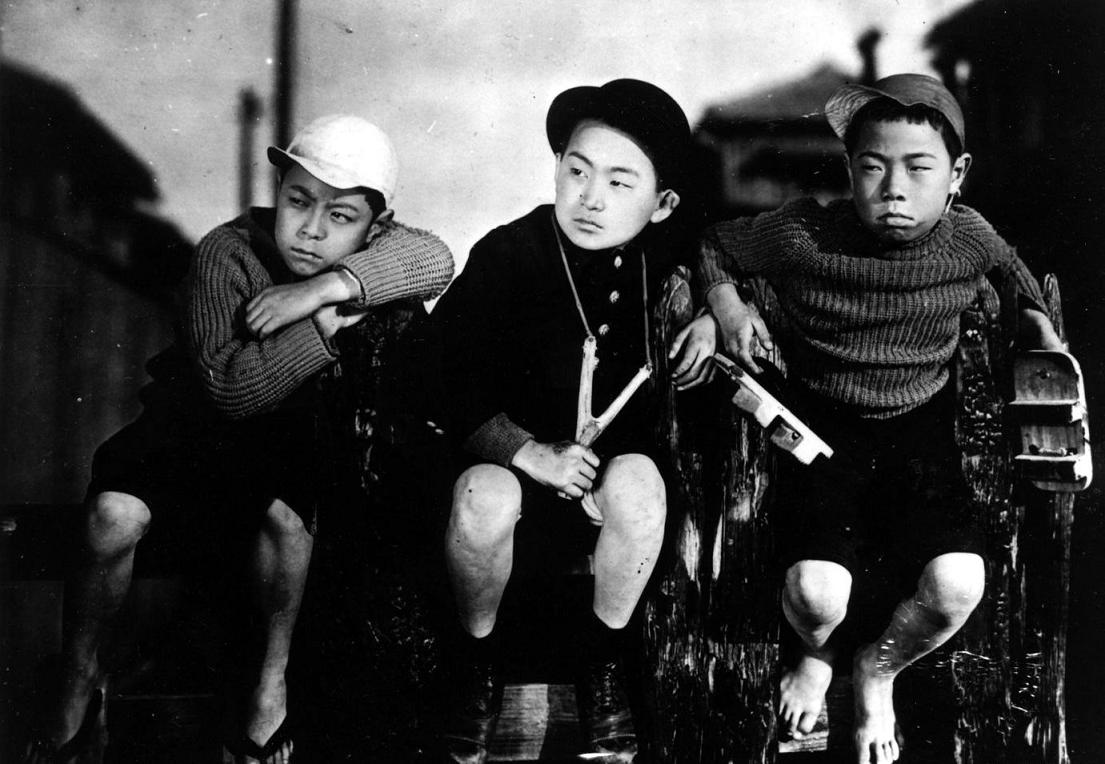 When one thinks of the classic examples of children in Japanese cinema, Hiroshi Shimizu is the name which comes to mind but family chronicler Yasujiro Ozu also made a few notable forays into the genre. I Was Born, But… (大人の見る絵本 生れてはみたけれど, Otona no miru ehon – Umarete wa mita keredo) stars one of the premier child actors of the silent era in Tokkan Kozo (later known as Tomio Aoki) who also worked repeatedly with Shimizu (
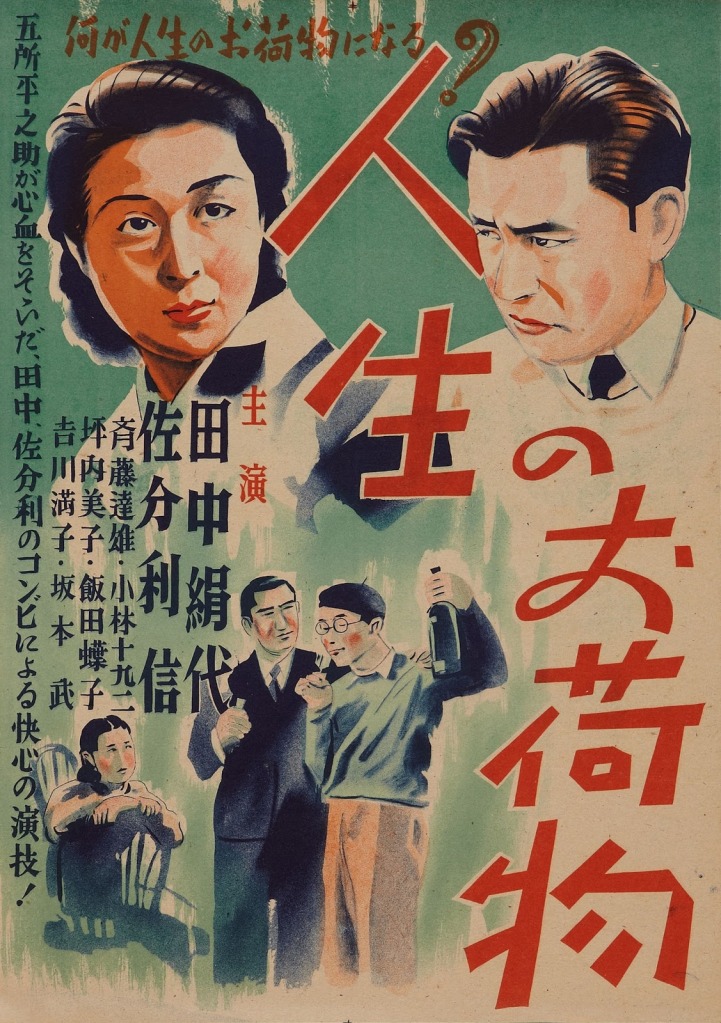 Despite being at the forefront of early Japanese cinema, directing Japan’s very first talkie, Heinosuke Gosho remains largely unknown overseas. Like many films of the era, much of Gosho’s silent work is lost but the director was among the pioneers of the “shomin-geki” genre which dealt with ordinary, lower middle class society in contemporary Japan. Burden of Life (人生のお荷物, Jinsei no Onimotsu) is another in the long line of girls getting married movies, but Gosho allows his particular brand of irrevent, ironic humour to colour the scene as an ageing patriarch muses on retiring from the fathering business before resentfully remembering his only son, born to him when he was already 50 years old.
 Windows on Worlds