The Target of Roses (薔薇の標的, Kiyoshi Nishimura, 1972)

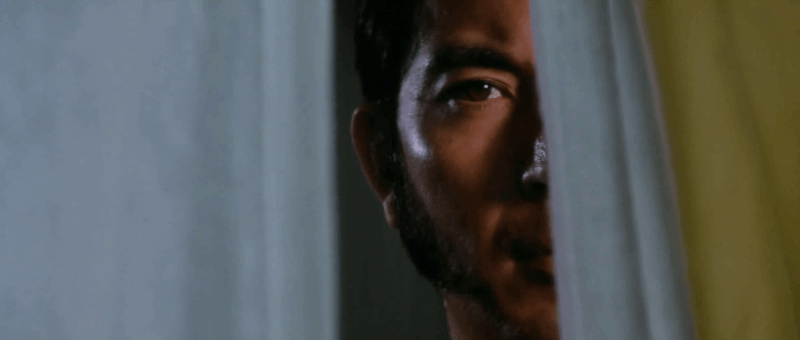
One of a series of internationalist conspiracy thrillers arriving in the early 1970s, Kiyoshi Nishimura’s Target of Roses (薔薇の標的, Bara no Hyoteki, AKA Red Target) finds itself at a particular moment of paranoid anxiety. In the immediate wake of Asama-Sanso, its villains are a band of revolutionaries hiding out in the mountains behind the shield of “New Religion” as they plot the over throw of the state. Yet these villains are not left-wing former student protestors but Nazi holdovers branding themselves as the “Fourth Reich” while insisting that they are not “fascists” but merely trying to create a new world order free of “corrupt governments”. 

The hero, Akira, in keeping with similar roles Yuzo Kayama played in this period, is a former Olympic sharpshooter who fled to America after being implicated in the death of a teammate. You can tell that things haven’t been going well for him by the terrible mutton chops haircut he is forced to wear throughout the film, but his problem seems to be that he has lost all interest in living. That’s one reason he’s recruited by the Fourth Reich’s local leader Tachibana who theorises that Akira is a man who lives for the gun and is good as dead without one. He and his one-eyed associate Nomura (Toby Kadoguchi), a former sharpshooter himself, begin training him with various strange exercises never revealing their true purpose until asking him to shoot a prisoner they’ve tricked into trying to escape from their secret base. Realising the target is human Akira refuses but then changes his mind shooting the man at much closer range as he runs through a forest. 

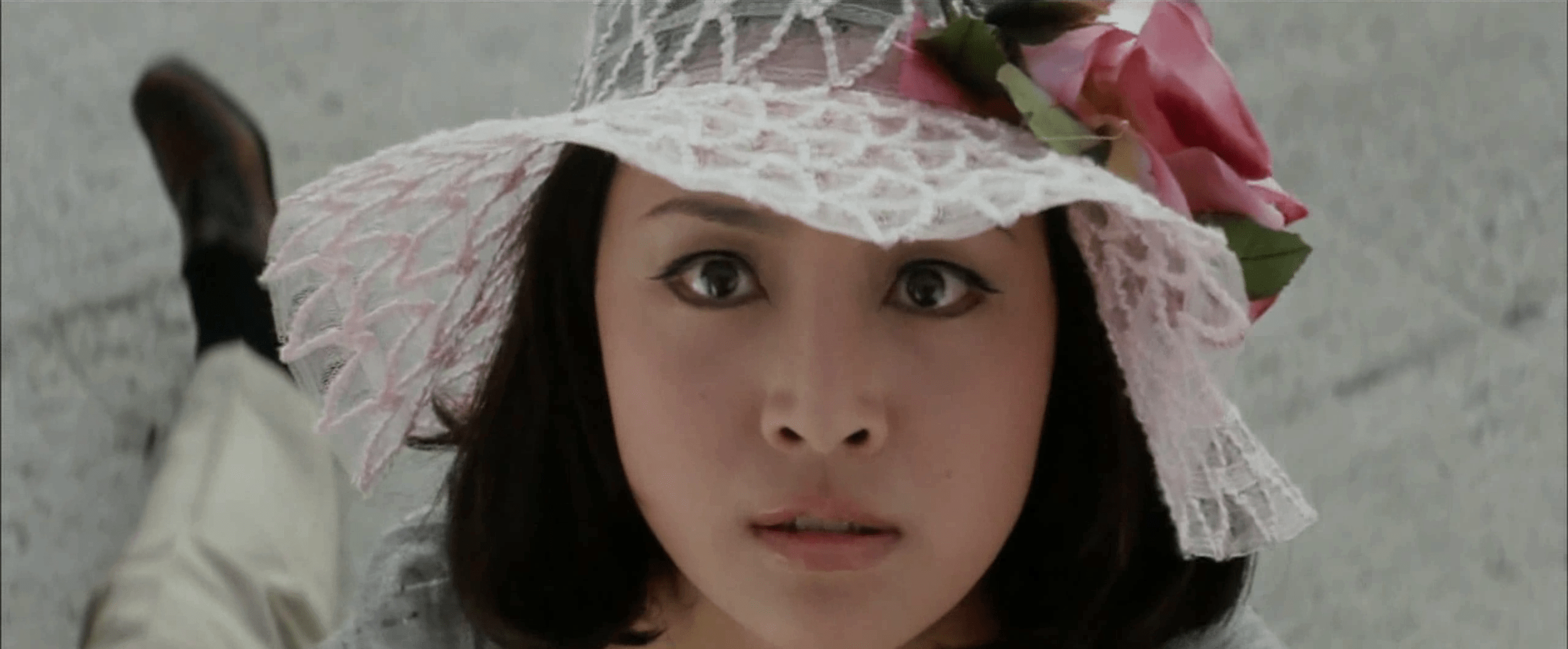
Meanwhile, foreign photographer Robert (Ralph Jesser) and his assistant Ling Ling (Taiwanese actress Chen Chen) accidentally end up finding the secret camp after becoming lost in the forest, Robert returning later to investigate and take more photos. Akira is then sent to Hong Kong where the pair have travelled to visit the grave of Ling Ling’s brother, a war photographer killed by a landmine in Laos, in order to take out Robert before he exposes their operation in the newspapers. Never asking any questions of his new job, Akira is unexpectedly moved on seeing Ling Ling’s distress over Robert’s body, later striking up a relationship with her when she too becomes a target for the Fourth Reich. 

In a surprising contrast to similar contemporary crime thrillers, Hong Konger Ling Ling represents a kind of innocent beauty as symbolised in her interest in photographing flowers rather than the war zones covered by her brother. At one point she and Akira are even seen tiptoeing on the railway tracks just like innocent lovers only for Akira to then reflect on the sight of an obsolete steam train likening it to himself, abandoned and destined to be torn to pieces. His love for Ling Ling gives him new reason to live, breaking the nihilistic spell which he claims had led him to want to destroy everything. To that extent Tachibana is correct when he says that Akira has no interest in the future of mankind, but he has become determined to preserve the world of two which exists between himself and Ling Ling which leads him to oppose The Fourth Reich, of whose activities he had been previously ignorant. 

It has to be said that Nishimura’s repurposing of Holocaust imagery, the failed “trainees” of the Fourth Reich’s re-education programme driven to vacant madness and piled up on wooden bunk beds later to be gassed and burned on mass funeral pyres, may be a little inappropriate in its accidental flippancy. Nomura’s claim that the Fourth Reich is not a resurrection of fascism is somewhat disingenuous even if they seem to have no other ideology than their weird super soldier brainwashing programme designed to create some kind of new society, later suggesting that the conspiracy already has assets within the Japanese government. Yet Akira is indifferent to fascism, as Tachibana had framed him a man of the gun born only to pull a trigger a function he later uses in order to convince him to destroy himself. Often marred by overly theatrical dialogue rendered in sometimes awkward English which plays much less well than it might in Japanese, Target of Roses remains a little on the pretentious side despite Nishimura’s characteristic artistry but nevertheless embraces its nihilistic philosophy in the vast emptiness of its internecine conclusion. 


Resurrection of Golden Wolf (蘇る金狼, Toru Murakawa, 1979)

resurrection-golden-wolfYou know how it is. You work hard, make sacrifices and expect the system to reward you with advancement. The system, however, has its biases and none of them are in your favour. Watching the less well equipped leapfrog ahead by virtue of their privileges, it’s difficult not to lose heart. Asakura (Yusaku Matsuda), the (anti) hero of Toru Murakawa’s Resurrection of Golden Wolf (蘇る金狼, Yomigaeru Kinro), has had about all he can take of the dead end accountancy job he’s supposedly lucky to have despite his high school level education (even if it is topped up with night school qualifications). Resentful at the way the odds are always stacked against him, Asakura decides to take his revenge but quickly finds himself becoming embroiled in a series of ongoing corporate scandals.
Orchestrating a perfectly planned robbery on his own firm in which Asakura deprives his employers of a large amount money, he’s feeling kind of smug only to realise that the bank had a backup plan. The serial numbers of all of the missing money have been recorded meaning he can’t risk spending any of it. Accordingly he decides the “safest” thing to do is exchange the problematic currency for the equivalent in heroine. His plan doesn’t stop there, however. He also knows the big wigs at the top are engaged in a high level embezzlement scam and seduces his boss’ mistress, Kyoko (Jun Fubuki), for the inside track. Asakura is not the only game in town as another detective, Sakurai (Sonny Chiba), is blackmailing some of the other bosses over their extra-marital activities. Playing both sides off against each other, Asakura thinks he has the upper hand but just as he thinks he’s got what he wanted, he discovers perhaps there was something else he wanted more and it won’t wait for him any longer.

Based on a novel by hardboiled author Haruhiko Oyabu, Resurrection of Golden Wolf is another action vehicle for Matsuda at the height of his stardom. Re-teaming with Murakawa with whom he’d worked on some of his most famous roles including The Most Dangerous Game series, Matsuda begins to look beyond the tough guy in this socially conscious noir in which an angry young man rails against the system intent on penning him in. A mastermind genius, Asakura is leading a double life as a mild mannered accountancy clerk by day and violent punk by night, but he has every right to be angry. If his early speech to a colleague is to be believed, Asakura worked hard to get this job. A high school graduate with night school accreditation, he’s done well for himself, but despite his friend’s assurance that Asaukura is ahead in the promotion stakes he knows there’s a ceiling for someone with his background no matter how hard he works or how bright he is.

Under the terrible wig and unfashionable glasses he adopts for his work persona, Asakura has a mass of unruly, rebellious hair and a steely gaze hellbent on revenge against the hierarchical class system. He is not a good guy. Asakura’s tactics range from fisticuffs with street punks to molesting bar hostesses, date rape, and getting his (almost) girlfriend hooked on drugs as a means of control, not to mention the original cold blooded murder of the courier he stole the company’s money from in the first place. The fact he emerges as “hero” at all is only down to his refusal to accept the status quo and by his constant ability to stay one step ahead of everyone else. When the system itself is this corrupt, Asakura’s punkish rebellion begins to look attractive despite the unpleasantness of his actions.

Adding in surreal sequences where Asakura dances around his lair-like apartment in a quasi-religious ritual with his silver mask, plus bizarre editing choices, eerie music and incongruous flamenco, Murakawa’s neo-noir world is an increasingly odd one, even if not quite on the level of his next film, The Beast Must Die. Very much of its time and remaining within the upscale exploitation world, Resurrection of Golden Wolf is necessarily misogynistic as its female cast become merely pawns exchanged between men to express their own status. The tone remains hopelessly nihilistic as Asakura nears his goal of the appearance of a stereotypically successful life with an executive job and possible marriage to the boss’ daughter only to find his conviction wavering. Hopelessly bleak, dark, and sleazy, Resurrection of Golden Wolf is, nevertheless, a supreme exercise in style marrying Matsuda’s iconic image with innovative direction which is hard to beat even whilst swimming in some very murky waters.


Again, many variations on the English title but I’ve gone with Resurrection of Golden Wolf as that’s the one that appears on Kadokawa’s release of the 4K remaster blu-ray (Japanese subs only).

Original trailer (English subtitles)

https://www.youtube.com/watch?v=75mO5ysfwAc

The Beast Must Die (野獣死すべし, Toru Murakawa, 1980)

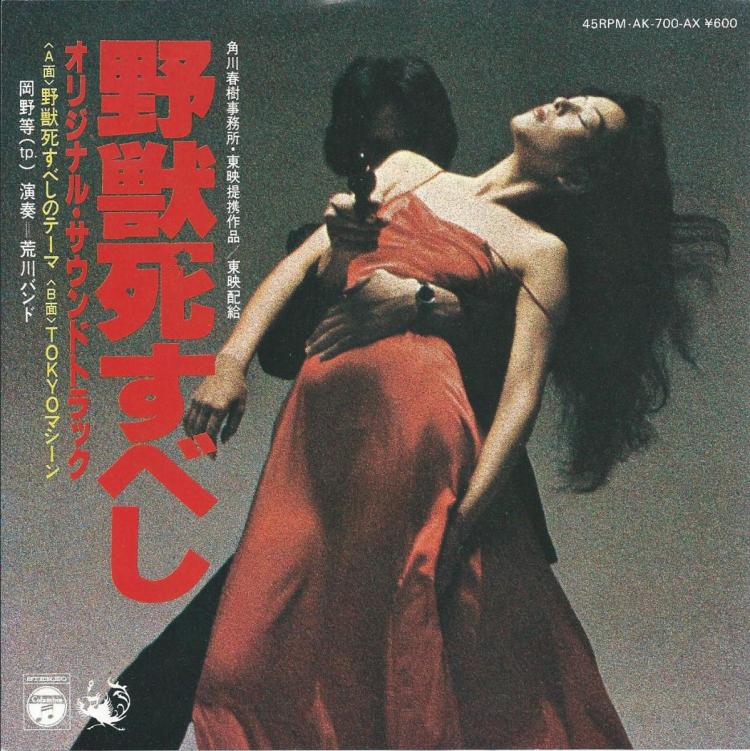
LP Soundrack record cover

Yusaku Matsuda was the action icon of the ‘70s, well known for his counter cultural, rebellious performances as maverick detectives or unlucky criminals. By the early 1980s he was ready to shed his action star image for more challenging character roles as his performances for Yoshimitsu Morita in The Family Game and Sorekara or in Seijun Suzuki’s Kagero-za demonstrate. The Beast Must Die (野獣死すべし, Yaju Shisubeshi, AKA Beast to Die) is among his earliest attempts to break out of the action movie cage and reunites him with director Toru Murakawa with whom he’d previously worked on Resurrection of the Golden Wolf also adapted from a novel by the author of The Beast Must Die, Haruhiko Oyabu. A strange and surreal experience which owes a large amount to the  “New Hollywood” movement of the previous decade, The Beast Must Die also represents a possible new direction for its all powerful producer, Haruki Kadokawa, in making space for smaller, art house inspired mainstream films.

Shedding 25 pounds and having four of his molars removed to play the role, Matsuda inhabits the figure of former war zone photo journalist Kazuhiro Date whose experiences have reduced him to state of living death. After getting into a fight with a policeman he seems to know, Date kills him, steals his gun, and heads to a local casino where he goes on a shooting rampage and takes off with the takings. Date, now working as a translator, does not seem to need or even want the money though if he had a particular grudge against the casino or the men who gather there the reasons are far from clear.

Remaining inscrutable, Date spends much of his time alone at home listening to classical music. Attending a concert, he runs into a woman he used to know who seems to have fond feelings for him, but Date is being pulled in another direction as his experiences in war zones have left him with a need for release through physical violence. Eventually meeting up with a similarly disaffected young man, Date plans an odd kind of revenge in robbing a local bank for, again, unclear motives, finally executing the last parts of himself clinging onto the world of order and humanity once and for all.

Throughout the film Date recites a kind of poem, almost a him to his demon of violence in which he speaks of loneliness and of a faith only in his own rage. Later, in one of his increasingly crazed speeches to his only disciple, Date recounts the first time he killed a man – no longer a mere observer in someone else’s war, now a transgressor himself taking a life to save his own. The violence begins to excite him, he claims to have “surpassed god” in his bloodlust, entering an ecstatic state which places him above mere mortals. A bullet, he says, stops time in that it alters a course of events which was fated to continue. A life ends, and with it all of that time which should have elapsed is dissolved in the ultimate act of theft and destruction. His acts of violence are “beautiful demonic moments” available only to those who have rejected the world of law.

Murakawa allows Matsuda to carry the film with a characteristically intense, near silent performance of a man driven mad by continued exposure to human cruelty. Hiding out in Date’s elegant apartment, Matsuda moves oddly, beast-like, his baseness contrasting perfectly with the classical music which momentarily calms his world. Mixing in stock footage of contemporary war zones, Murakawa makes plain the effect of this ongoing violence on Date’s psyche as the sound of helicopters and gunfire resounds within his own head. The imagery becomes increasingly surreal culminating in the moment of consecration for Date’s pupil in which he finally murders his girlfriend while she furiously performs flamenco during an dramatic thunderstorm. Date is, to borrow a phrase, no longer human, any last remnants of human feeling are extinguished in his decision to kill the only possibility of salvation during the bank robbery.

Anchored by Matsuda’s powerful presence, The Beast Must Die is a fascinating, if often incomprehensible, experience filled with surreal imagery and an ever present sense of dread. Its world is one of neo noir, the darkness and modern jazz score adding to a sense of alienation which contrasts with the brightness and elegance of the classical music world. At the end of his transformation, there is only one destination left to Date though his path there is a strange one. Fittingly enough for a tale which began with with darkness we exit through blinding white light.


There’s also another adaptation of this novel from 1959 starring Tatsuya Nakadai which I’d love to see but doesn’t seem to be available on DVD even without subtitles. This film has a selection of English language titles but I’ve used The Beast Must Die as this is the one which appears on Kadokawa’s 4K restoration blu-ray release (sadly Japanese subtitles ony).

Original trailer (no subtitles)